
Missouri senator Josh Hawley to contest Joe Biden’s Electoral College win

Sen. Josh Hawley, R-Mo., said Wednesday he will raise objections next week when Congress meets to affirm President-elect Joe Biden’s victory in the election, forcing House and Senate votes that are likely to delay — but in no way alter — the final certification of Biden’s win. President Donald Trump has, without evidence, claimed there was widespread fraud in the election. He has pushed Republican senators to pursue his unfounded charges even though the Electoral College this month cemented Biden’s 306-232 victory and multiple legal efforts to challenge the results have failed. A group of Republicans in the Democratic-majority House have already said they will object on Trump’s behalf during the Jan. 6 count of electoral votes, and they had needed just a single senator to go along with them to force votes in both chambers. Without giving specifics or evidence, Hawley said he would object because “some states, including notably Pennsylvania” did not follow their own election laws. Lawsuits challenging Biden’s victory in Pennsylvania have been unsuccessful. “At the very least, Congress should investigate allegations of voter fraud and adopt measures to secure the integrity of our elections,” Hawley said in a statement. He also criticized the way Facebook and Twitter handled content related to the election, characterizing it as an effort to help Biden. Biden transition spokeswoman Jen Psaki dismissed Hawley’s move as “antics” that will have no bearing on Biden being sworn in on Jan. 20. “The American people spoke resoundingly in this election and 81 million people have voted for Joe Biden and Kamala Harris,” Psaki said in a call with reporters. She added: “Congress will certify the results of the election as they do every four years.” White House Chief of Staff Mark Meadows praised Hawley on Twitter for “unapologetically standing up for election integrity.” When Congress convenes to certify the Electoral College results, any lawmaker can object to a state’s votes on any grounds. But the objection is not taken up unless it is in writing and signed by both a member of the House and a member of the Senate. When there is such a request, then the joint session suspends and the House and Senate go into separate sessions to consider it. For the objection to be sustained, both chambers must agree to it by a simple majority vote. If they disagree, the original electoral votes are counted. The last time such an objection was considered was 2005, when Rep. Stephanie Tubbs Jones of Ohio and Sen. Barbara Boxer of California, both Democrats, objected to Ohio’s electoral votes by claiming there were voting irregularities. Both chambers debated the objection and rejected it. It was only the second time such a vote had occurred. As president of the Senate, Vice President Mike Pence will preside over the Jan. 6 session and declare the winner. Asked about Hawley’s announcement, House Speaker Nancy Pelosi, D-Calif., said, “I have no doubt that on next Wednesday, a week from today, that Joe Biden will be confirmed by the acceptance of the vote of the electoral college as the 46th president of the United States.” Hawley is a first-term senator and potential contender in the 2024 presidential primary, and his decision to join the House objectors is a rebuff to Senate Majority Leader Mitch McConnell, who had asked his caucus not to participate in a futile quest to overturn the results. Aware that the Democratic-led House would not support such a challenge and that it would put most of his fellow GOP senators in a bind, McConnell told them on a private call Dec. 15 that it would be a “terrible vote” to have to take. That’s according to two people who were not authorized to publicly discuss the private call and spoke on condition of anonymity. While some Republicans have echoed Trump’s unsubstantiated claims, or at least refused to counter them, McConnell and an increasing number of GOP senators have acknowledged that Biden won and will be inaugurated Jan. 20. The Senate’s No. 2 Republican, South Dakota Sen. John Thune, said earlier this month that if the Senate were forced to vote on a challenge “it would go down like a shot dog.” Thune said it didn’t make sense to put senators through a vote when “you know what the ultimate outcome is gonna be.” A range of nonpartisan election officials and Republicans have confirmed there was no fraud in the November contest that would change the results of the election. That includes former Attorney General William Barr, who said he saw no reason to appoint a special counsel to look into the president’s claims about the 2020 election. He then resigned from his post last week. Trump and his allies have filed roughly 50 lawsuits challenging election results, and nearly all have been dismissed or dropped. He’s also lost twice at the Supreme Court. The group of House Republicans have said they plan to challenge the election results from Michigan, Wisconsin, Pennsylvania, Georgia, and Nevada. All are states that Biden carried. Alabama Rep. Mo Brooks, one of the Republicans who is leading the efforts, has raised questions about the way state elections were conducted. Some of the states made changes to ballots and procedures during the pandemic. While the new procedures may have led to confusion in some places, state and federal officials have said there was no credible evidence of widespread fraud. In addition to having to go on the record with a vote, Republicans are worried about negative effects on the two Senate runoff elections in Georgia on Tuesday. GOP Sens. David Perdue and Kelly Loeffler face Democratic challengers Jon Ossoff and Raphael Warnock in a state that flipped in November for Biden. Republished with the permission of the Associated Press.
Raphael Warnock and Kelly Loeffler work to consolidate voters for runoff
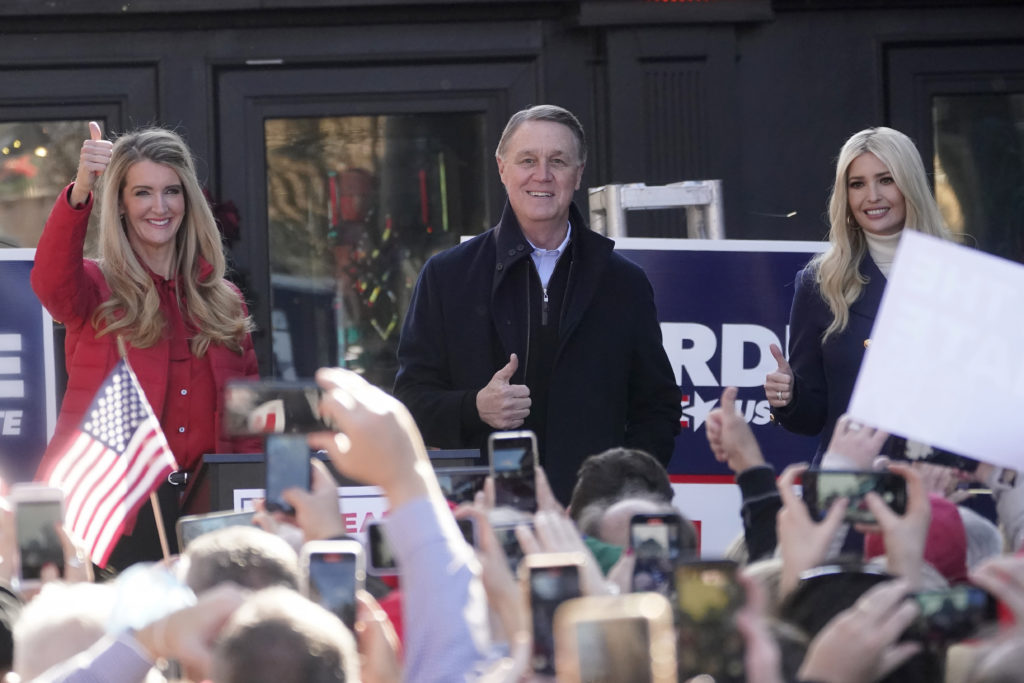
When Georgia Republican Kelly Loeffler and Democrat Raphael Warnock advanced to the Jan. 5 U.S. Senate runoff, they faced the immediate challenge of winning over the 2 million voters who chose one of the 18 other candidates in November’s election. Polls show they have largely succeeded, and that could give Loeffler, the incumbent, a small advantage. Republican U.S. Rep. Doug Collins came in third in the November vote that ended with the Republican candidates winning 48,000 more votes than the Democratic candidates. In Georgia’s second runoff election, Republican U.S. Sen David Perdue started with an even wider lead, having won 88,000 more votes in November than Democrat Jon Ossoff. Since he didn’t get a majority, however, Perdue was forced into a runoff. Turnout could be the deciding factor. Through Wednesday, nearly 2.1 million voters had cast ballots, roughly on pace with the Nov. 3 general election. It’s unclear how the Christmas holiday will affect the pace of balloting. In-person early voting runs as late as Dec. 31 in some counties. On Sunday night, President Donald Trump tweeted that he would visit Georgia on Jan. 4, the eve of the runoff, for a rally in support of Perdue and Loeffler. One thing helping line voters up is the decision of the candidates in both races to run as tickets, with joint appearances and advertisements. J. Miles Coleman of the University of Virginia Center for Politics said the joint effort has helped Warnock wrap up Democratic voters. “He and Ossoff have done a better job of running as a ticket,” Coleman said. “I think overall that’s going to benefit Warnock and help him consolidate some of his support.” With the candidates running as tickets, it’s unlikely the parties will split the seats. Two wins would put Democrats in control of the U.S. Senate with Vice President-elect Kamala Harris breaking a 50-50 tie. A split or two GOP wins would keep Republicans in control. Deborah Jackson, a former mayor of the Atlanta suburb of Lithonia, came in fourth in November, the runner-up Democrat behind Warnock. She benefitted from being a Black woman, a known quantity in the Democratic stronghold of DeKalb County and the first Democrat listed on a ballot so long that Warnock had to remind supporters to go all the way down to find his name. “I had tangible and practical experience,” Jackson said. “I think some people were interested in that.” She said some people were offended that leading state and national Democrats tried to clear the field for Warnock, but said she’s still supporting him without reservation. “The Democrats need to be in control of the Senate, or at least there needs to be a balance,” Jackson said. At least one of Jackson’s supporters agrees. Laura Durojaiye of Stonecrest said she’s already voted for Warnock. “I think he’ll get all her votes,” Durojaiye said, saying she thinks Warnock is someone who will learn in the Senate and back her priorities of addressing climate change and societal inequity. Shane Hazel, the Libertarian who won the key sliver of votes that forced Perdue and Ossoff into a runoff, said his voters may sit the runoff out, telling Hazel “they will never vote for anybody out of fear again.” One of the top early voting counties in the state is Rabun — in Georgia’s northeastern corner — where Trump and Perdue both won 78% of the vote. “I’m convinced the Democrats could run Mother Teresa and get 20%,” said Ed Henderson, secretary of the Rabun County Republican Party. As in the other counties in his northeast Georgia congressional district, Collins was the top vote-getter in the Senate special election. “This was Collins country,” Henderson said. Collins, though, has been a strong supporter of Loeffler and Perdue. Although nearly 40% of Rabun’s registered voters have already cast ballots, Henderson said he worries that Trump’s ceaseless attacks on the integrity of Georgia’s presidential election will hurt Republican turnout there, citing the “godlike reverence” residents have for the president, “My biggest problem this election cycle is there is a distrust of the system,” Henderson said, saying a handful of hardcore Republicans have told him they are sitting the election out, saying they believe Trump was cheated, despite little credible evidence of wrongdoing. Henderson also frets that Loeffler has never been to his county, so far from Atlanta that many watch out-of-state television. “It would be greatly helpful if they would come up here in person and tell our voters they would like to get our vote,” Henderson said of the Republican candidates. Democrats have their own trouble. Early voting is lagging in Georgia’s smaller urban areas including Savannah, Augusta, Macon, and Columbus, and Democratic vote totals have been disappointing in rural areas. “The Democrats have really struggled to turn out Black voters in rural parts of the state,” Coleman said. “Are the Democrats going to be able to do well enough in the rural parts of the state?” Republished with the permission of the Associated Press.
Mitch McConnell warns GOP off Electoral College brawl in Congress
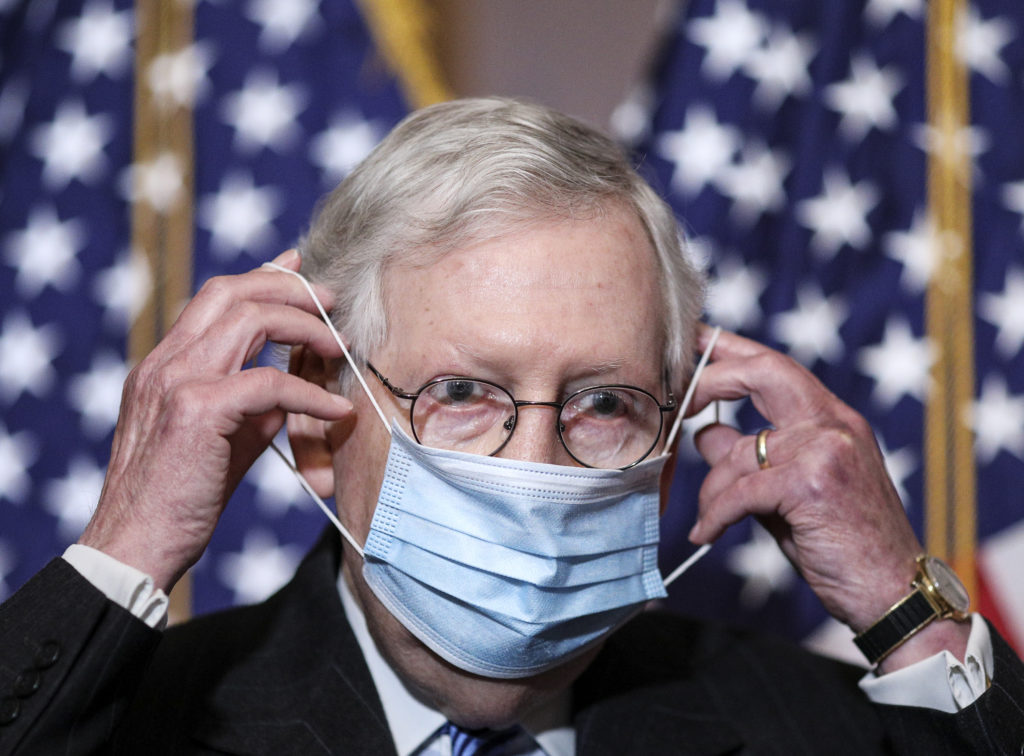
Fending off a messy fight that could damage Republicans ahead of Georgia Senate runoffs, Majority Leader Mitch McConnell warned fellow GOP senators on Tuesday not to join President Donald Trump’s extended assault on the Electoral College results. In public remarks and private warnings, McConnell worked to push ahead to the Biden era and unite a fractured Republican Party ahead of the runoff elections that will determine Senate control. First, the Republican leader heaped praise on Trump’s “endless” accomplishments as he congratulated President-elect Joe Biden during a morning Senate speech. Then he pivoted, privately warning Republican senators away from disputing the Electoral College tally when Congress convenes in a joint session Jan. 6 to confirm the results. That fight would yield a “terrible vote” for Republicans, McConnell told the senators, according to two people granted anonymity to discuss the call, which was first reported by Politico. They would have to choose whether to back Trump or publicly buck him. Republicans are worried about bad effects on the Jan. 5 Georgia runoff election, where two incumbent Republican senators, David Perdue and Kelly Loeffler, face Democratic challengers Jon Ossoff and Raphael Warnock in a state that flipped in November for Biden. McConnell has been a strong supporter of most Trump efforts. But the turn of events six weeks after Election Day showed the Kentucky senator, backed by his leadership team, seeking to normalize relations with the coming Biden presidency while avoiding the spectacle of pitched floor fight that would divide the party as Trump reluctantly leaves office. “I want to congratulate President-elect Joe Biden,” McConnell said as he opened the Senate. “Many of us had hoped the presidential election would yield a different result,” he said. “But our system of government has the processes to determine who will be sworn in on Jan. 20. The Electoral College has spoken.” Biden told reporters that he called to thank McConnell for the remarks and the two had a “good conversation.” As he departed to campaign in Georgia, he said he told McConnell there are “things we can work together on.” The Senate leader’s sprint into action after weeks of silence followed other leading Republicans who spoke up after the Electoral College voted late Monday. They finally said aloud what many Republicans had been signaling privately — that Biden is the winner of the presidential election, and they are essentially abandoning Trump’s election attacks. From there, the floodgates opened. Several GOP senators confirmed they had spoken with Biden, including Trump ally Lindsey Graham of South Carolina and Mitt Romney of Utah, the GOP’s 2012 presidential nominee. Some have had meetings with Biden’s nominees for administration posts. In his phone call, Romney expressed admiration for Biden’s willingness to endure the rigors of a presidential campaign and serve in the nation’s highest office, the senator’s office said. The two also discussed the challenging political environment ahead. Senate Democratic leader Chuck Schumer said now that McConnell has spoken, “enough is enough.” Trump should “end his term with a modicum of grace and dignity,” Schumer said. For his part, Trump continued to push his baseless claims of “voter fraud” in a new tweet on Tuesday. Some GOP lawmakers have vowed to carry the fight to Jan. 6 when Congress votes to accept or reject the Electoral College results. Others have said Trump’s legal battles should continue toward resolution by Inauguration Day, Jan. 20. House Republican leader Kevin McCarthy declined to comment Tuesday when asked if he was ready to acknowledge Biden as the president-elect. One House Republican, Rep. Mo Brooks of Alabama, is planning to challenge the Electoral College results when Congress convenes for the joint session. At that time, any challenge in Congress would need to be raised by at least one member of the House and Senate. It’s unclear if any GOP senator will join in making the case. McConnell and his lieutenants, including Sens. John Thune of South Dakota and Roy Blunt of Missouri, warned the senators off any Electoral College challenge, calling it dead-end since any action would need sign-off by Democrats who have the House majority under Speaker Nancy Pelosi, according to one of the people familiar with Tuesday’s call. The GOP leaders further warned senators that forcing their colleagues into a vote on Electoral College challenges would prove difficult, especially for those facing their own reelections in 2022. No Republican senator spoke up in contradiction. Republican Sen. Ron Johnson of Wisconsin, who as chairman of the Homeland Security Committee is convening a hearing Wednesday on election fraud, has “no plans” to join with House Republicans and challenge the results, according to spokesman Austin Altenburg. McConnell surprised Washington on Tuesday when he opened the Senate addressing the election. The GOP leader called Biden someone “who has devoted himself to public service for many years.” He also congratulated Kamala Harris, saying “all Americans can take pride that our nation has a female vice president-elect for the very first time.” McConnell prefaced his remarks with sweeping praise of Trump’s four years in office, saying the president delivered on a promise to “shake up Washington.” He cited the president’s nomination and Senate confirmation of three Supreme Court justices, among other accomplishments. With states having affirmed the election results, the Republicans faced a pivotal choice — to acknowledge Biden the president-elect or keep standing silently by as Trump wages a potentially damaging campaign to overturn the election. “At some point, you have to face the music,” Thune, the No. 2 GOP leader, said late Monday. “Once the Electoral College settles the issue today, it’s time for everybody to move on.” Historians and election officials have warned that Trump’s unfounded claims of voter fraud threaten to erode Americans’ faith in the election system. Trump is trying to throw out the ballots of thousands of Americans, particularly those who voted by mail, in dozens of lawsuits that have mostly failed. His legal team is claiming irregularities, even though Attorney General William Barr, who abruptly resigned Monday, has said there is no evidence of widespread fraud that would alter the
Early in-person voting begins in Georgia Senate runoffs
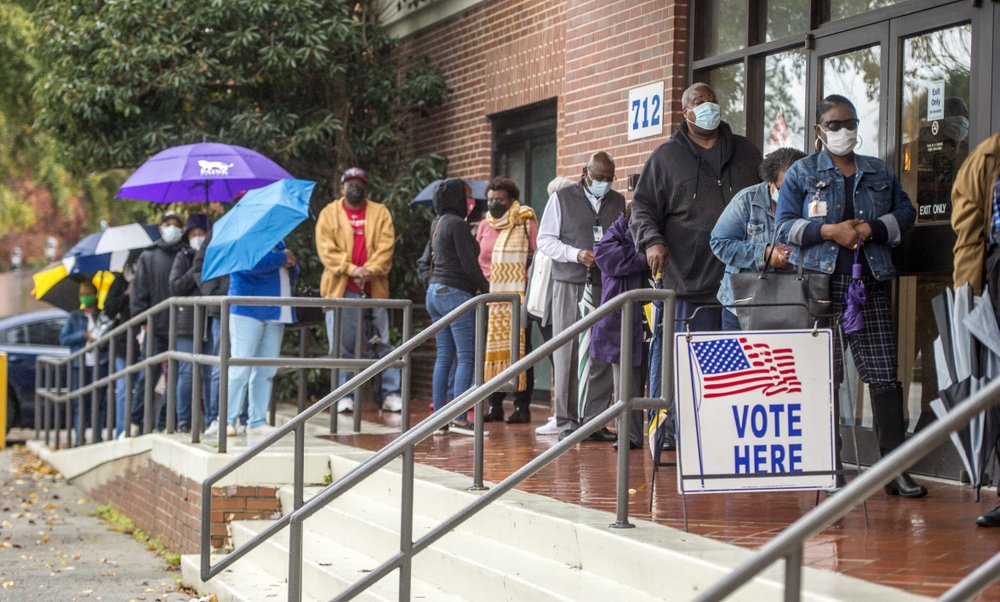
Early in-person voting began Monday in the runoff elections for Georgia’s two U.S. Senate seats, with lines reported to be shorter than in the first days of early voting for the general election last month. More than half of the record 5 million votes in the Nov. 3 general election were cast during its three-week early voting period. Early in-person voting could be even more important in the Jan. 5 runoffs because of the short period for voters to request and return ballots by mail. The two races in which Democrats Raphael Warnock and Jon Ossoff try to oust Republican Sens. Kelly Loeffler and David Perdue, respectively, will decide which party controls the U.S. Senate. No one expects turnout to be as high as it was for the general election. But Bernard Fraga, an Emory University professor who studies voting, said overall turnout could reach 4 million. President Donald Trump has relentlessly pushed baseless claims of widespread fraud in the general election, in which he lost in the state of Georgia. In an overnight tweet just hours before early voting began, he continued his attack on Georgia Gov. Brian Kemp, pushing him to take action or risk harming the chances for Perdue and Loeffler. “What a fool Governor @BrianKempGA of Georgia is,” the president tweeted. “Could have been so easy, but now we have to do it the hard way. Demand this clown call a Special Session and open up signature verification, NOW. Otherwise, could be a bad day for two GREAT Senators on January 5th.” In contrast to the first day of early voting in October, when more than 125,000 people cast ballots and some people lined up for hours, few long lines were reported Monday. One question was how many mail-in ballots will be cast in the election. By Friday, 1.2 million mail-in ballots had been requested and 200,000 returned. In the general election, Democrat Joe Biden won 65% of the 1.3 million absentee ballots that were returned in Georgia, a record fueled by the coronavirus pandemic. Fraga said it’s possible that mailed ballots will be even more favorable for Democrats in the runoff because of attacks on the integrity of mail-in voting by Trump and many Georgia Republicans. That means early in-person voting, which Trump narrowly won in November, could be even more important for Republicans. Both parties may also drive voters toward the early polls with the Christmas and New Year’s holidays looming. Republican attacks on mail-in voting also worry some Democrats. Meghan Shannon, 36, voted in person for Ossoff and Warnock on Monday at State Farm Arena in downtown Atlanta, partly driven by fears that absentee ballots will be overly scrutinized. “I think the absentee ballots are going to be questioned when they count the votes,” the architect said. “I wanted to be here in person so my vote is counted and it’s uncontested.” Melissa McJunkin, 40, voted in Rome, a solidly Republican area in northwest Georgia, and cast her ballot for Perdue and Loeffler, saying they “will help make decisions based on what I think is the right choice.” She’d heard allegations of voter fraud in the general election and was a bit worried about the integrity of the runoff vote. “I’ve never had a problem before now trusting it, but now I feel like there may be something going on that I don’t trust,” she said. Towanda Jones voted in downtown Atlanta for Ossoff and Warnock and dismissed the fraud allegations, which have been repeatedly denied by election officials. “The system is working as it should, and I think our current president is just a sore loser,” she said. The 54-year-old Black hairstylist said police reform was her main priority. “I have two grown sons,” Jones said. “The amount of Black lives that have been lost due to police brutality upset me.” Deborah Harp Gibbs of Lilburn said she voted for Perdue and Loeffler “to keep America great.” Gibbs said it’s important for people to acknowledge the United States as a Christian nation. “I want prayer in school and ‘God Bless America’ and apple pie,” Gibbs said, adding that she thinks the Republicans could keep things on “the right track.” Tony Christy, 62, said he was concerned about the balance of power in Washington as he voted in Kennesaw, a conservative-leaning city just northwest of Atlanta, for the two Republicans. If the Democrats win, there will be 50 senators from each party and Vice President-elect Kamala Harris would be the tie-breaking vote in the chamber. That would give too much power to the Democrats, Christy said, because “then not only will they have the presidency, but they’ll have the House and the Senate, which is not a good balance to have.” But Araya Araya of Lilburn said he voted for Warnock in part to give Biden a chance to get things done. “I didn’t want the Senate to be majority Republican where everything President-elect Biden is preparing to do is going to get blocked,” Araya said. Each of Georgia’s 159 counties must offer at least one early voting location during business hours, with many in metro Atlanta offering multiple sites, extended hours and weekend voting. Early voting will continue through Dec. 31 in some places. Preparation for early voting saw squabbles over cuts to the number of early polling places. The Center for New Data, a nonprofit group, counted 42 early polling sites statewide scheduled to close for the runoff. In some cases, polling places were relocated. Republished with the permission of the Associated Press.
Donald Trump headed to Georgia as turnout driver, but also a threat
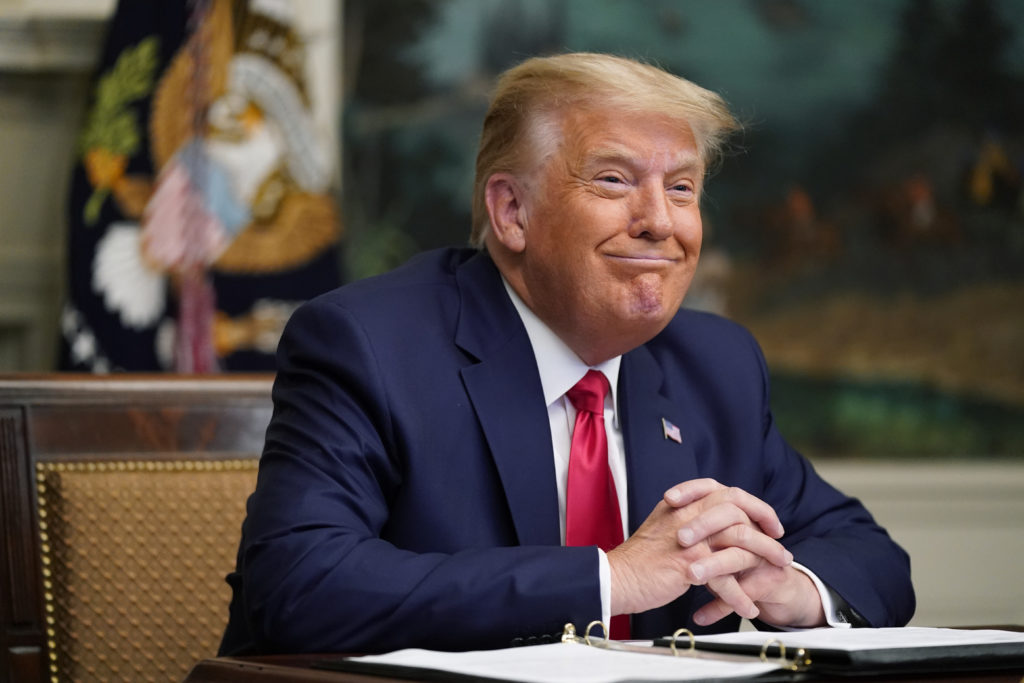
Some establishment Republicans are sounding alarms that President Donald Trump’s conspiratorial denials of his own defeat could threaten the party’s ability to win a Senate majority and counter President-elect Joe Biden’s administration. The concerns come ahead of Trump’s planned Saturday visit to Georgia to campaign alongside Sens. David Perdue and Kelly Loeffler, who face strong Democratic challengers in Jan. 5 runoffs that will determine which party controls the Senate at the outset of Biden’s presidency. Republicans acknowledge Trump as the GOP’s biggest turnout driver, including in Georgia, where Biden won by fewer than 13,000 votes out of about 5 million cast. That means every bit of enthusiasm from one of Trump’s signature rallies could matter. But some Republicans worry Trump will use the platform to amplify his baseless allegations of widespread voter fraud — arguments roundly rejected in state and federal courts across the country. That could make it harder for Perdue and Loeffler to keep a clear focus on the stakes in January and could even discourage Republicans from voting. “The president has basically taken hostage this race,” said Brendan Buck, once a top adviser to former House Speaker Paul Ryan. Especially fraught are Trump’s continued attacks on Georgia’s Republican state officials and the state’s election system, potentially taking away from his public praise of Loeffler and Perdue. “Trump’s comments are damaging the Republican brand,” argued Republican donor Dan Eberhart, who added that the president is “acting in bad sportsmanship and bad faith” instead of emphasizing Republicans’ need to maintain Senate control. The GOP needs one more seat for a majority. Democrats need Jon Ossoff to defeat Perdue and Raphael Warnock to defeat Loeffler to force a 50-50 Senate, positioning Vice President-elect Kamala Harris as the tie-breaking majority vote. Trump on Monday blasted Gov. Brian Kemp as “hapless” for not intervening to “overrule” Secretary of State Brad Raffensperger’s certification of Biden’s win. A day earlier, Trump told Fox News he was “ashamed” he’d endorsed Kemp in his 2018 GOP primary for governor. Kemp’s office noted in response that state law gives Kemp no authority to overturn election results, despite Trump’s contention that Kemp could “easily” invoke “emergency powers.” Meanwhile, Raffensperger, a Trump supporter like Kemp, has accused the president of throwing him “under the bus” for doing his job. Perdue and Loeffler have attempted to stay above the fray. They’ve long aligned themselves with Trump and even echoed some of his general criticisms of the fall elections, jointly demanding Raffensperger’s resignation. But the crux of their runoff argument — that Republicans must prevent Democrats from controlling Capitol Hill and the White House — is itself a tacit admission that Biden, not Trump, will be inaugurated Jan. 20. And at one recent campaign stop, Perdue heard from vocal Trump supporters who demanded that he do more to help Trump somehow claim Georgia’s 16 electoral votes. Republicans see three potential negative outcomes to Trump fanning the flames. Some GOP voters could be dissuaded from voting again if they accept Trump’s claims that the system is hopelessly corrupted. Among Republicans more loyal to Trump than to the party, some could skip the runoff altogether out of anger at a party establishment the president continues to assail. Lastly, at the other end of the GOP spectrum are the moderate Republicans who already crossed over to help Biden win Georgia and could be further alienated if the runoff becomes another referendum on Trump. Josh Holmes, a top adviser to Senate Majority Leader Mitch McConnell, said Republicans “haven’t seen any evidence of lack of enthusiasm in the Senate races.” But none of those potential bad effects would have to be sweeping to tilt the runoffs if they end up as close as the presidential contest in Georgia. “We’ll see how it plays out. It changes day by day and week by week. But so far, so good,” Holmes said. In Georgia, any Republican concerns are more circumspect. Brian Robinson, a former adviser to Kemp’s Republican predecessor as governor, said Trump should “drive a strong, forward-looking message” about what’s at stake for a Republican base that “is fervently devoted to him.” “The best thing he can do for the party,” Robinson said, “is to talk about the importance of having a Republican Senate majority to project his policy legacy and to make sure the Democrats can’t reverse a lot of what he has put in place that Republicans support.” Asked what Trump should avoid, Robinson circled back to what he believes the president should say. Former U.S. Rep. Jack Kingston, a Trump ally, downplayed the potential for GOP splintering, framing an “inner-family squabble” as a sideshow to the “incredible” consequences that define the runoffs. “Followers of Trump will follow Trump, but they’re not blind to the huge stakes. And neither is he,” Kingston said. “He knows to keep his legacy. He’s got to get these people reelected.” Trump, Kingston argued, is “keeping the base interested,” a necessary component of any successful runoff campaign since second rounds of elections often see a drop-off in voter participation. Robinson added that Democrats face their own challenge in replicating record turnout for Biden. “What’s the best motivator? Fear,” he said. Before November, Democrats dreaded a second Trump term more than Republicans feared Trump losing, Robinson reasoned. “Republicans have reason to be scared now,” he said, because of the prospect that Democrats could control both ends of Pennsylvania Avenue. “That could make a difference in turnout” beyond anything Trump says, Robinson concluded. For their part, the senators continue their public embrace of all things Trump ahead of the visit. “I couldn’t be more excited to welcome” the president “back to Georgia,” Loeffler wrote on Twitter after Trump confirmed his plans. Perdue’s campaign quickly retweeted the comment, which Loeffler punctuated with a reminder that the runoffs are “an all-hands-on-deck moment.” It’s not clear, though, if all Republicans will be on hand at all. Kemp, the governor who appointed Loeffler upon Sen. Johnny Isakson’s retirement last year, has on previous Trump visits
Republicans reprise warnings of leftism in Georgia races
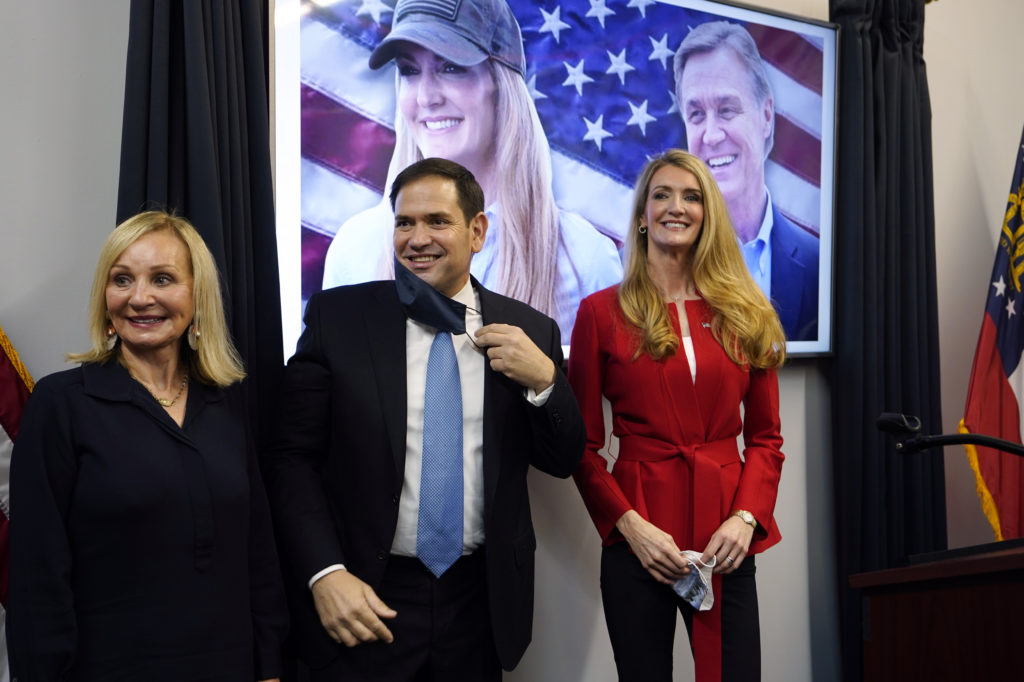
Socialists. Radical extremists. Marxists. Those over-the-top caricatures of Democrats make up Republicans’ opening arguments as they try to protect Georgia’s two U.S. senators who face strong challenges in Jan. 5 runoffs that’ll determine which party controls the chamber at the start of President-elect Joe Biden’s Democratic administration. Florida Sen. Marco Rubio led the charge Wednesday, campaigning in suburban Atlanta alongside Sen. Kelly Loeffler and warning that defeats for her and fellow Georgia Sen. David Perdue would hand over the U.S. government to “radical elements.” Loeffler went so far as to assert, without supporting details, that her Democratic challenger Raphael Warnock has “a Marxist ideology.” Loeffler took no questions after the event that filled the Cobb County Republican Party headquarters with hundreds of enthusiastic voters, many of them not wearing masks as coronavirus cases spike across the country. Warnock’s campaign pushed back, noting the Democrat’s policy preferences fall squarely within the U.S. political mainstream. Terrence Clark, a Warnock aide, said Loeffler is trying to “scare Georgians” while “misrepresenting” Warnock’s candidacy and obscuring her own record. It’s a familiar trope for Republicans to blast Democrats, especially in traditionally GOP-leaning states, as “too liberal” or even “socialist.” But the vehemence to open a two-month runoff blitz underscores the national stakes of Georgia’s unusual twin Senate contests and the sharp focus Republicans are putting on energizing core supporters for a second round of voting. The arguments come as Loeffler, Perdue, and other Georgia Republicans continue suggesting the Nov. 3 election — overseen by a Republican secretary of state — was rife with voting irregularities and tabulation errors, assertions made without evidence but that animate a GOP base still loyal to President Donald Trump even after his national defeat. “Turnout takes care of itself when the presidential race is on the ballot, so it can still boil down to persuasion in the middle,” said Republican consultant Chip Lake, a top adviser on Rep. Doug Collins’ unsuccessful bid against Loeffler. “In a runoff, it’s no longer about persuasion” Lake continued. “It’s about the bases.” Collins, now leading Trump’s recount efforts in Georgia, said the goal is to keep Republicans “fired up because they don’t want to see our country turn to a liberal perspective.” Republicans and Democrats are bracing for an unprecedented national-scale campaign in Georgia, a newfound two-party battleground where record turnout of roughly 5 million split almost evenly. Biden leads Trump by about 14,000 votes, but Secretary of State Brad Raffensperger announced plans Wednesday for an audit with a hand tally of ballots before certifying the results. Perdue, a staunch Trump ally first elected in 2014, led Democrat Jon Ossoff but fell short of the majority Georgia law requires for victory. Loeffler, appointed after Republican Sen. Johnny Isakson announced his retirement last year, trailed Warnock in an all-party primary to finish out the final two years of a six-year term. The Associated Press has called runoffs in both contests but hasn’t called Georgia’s 16 presidential electoral votes. Nationally, Republicans have secured 50 Senate seats to Democrats’ 48. Still, the GOP needs at least one of the Georgia seats to command a majority in January. In a 50-50 Senate, Democrats would have the tie-breaking vote in Vice President-elect Kamala Harris. Rubio and Loeffler warned of dire consequences, even as Rubio implicitly conceded the hyperbole. “To be fair, not all Democrats are socialists,” Rubio said. “But all socialists are Democrats.” Rubio alluded to failed presidential candidate Bernie Sanders, an independent who calls himself a democratic socialist and caucuses with Senate Democrats. Rubio nodded to progressive calls to “defund the police” and Democrats who support policies like “Medicare for All” single-payer health insurance or tuition-free public college nationwide. “All the energy” and “all the money” in the Democratic Party, Rubio insisted, come from such forces. Rubio didn’t mention Biden, who won the nomination and presidency as an establishment figure promising bipartisanship and compromise. Biden often noted as he campaigned that he defeated Sanders and other more liberal candidates for the nomination. “He thinks he’s running against someone else,” Biden quipped at Trump during an Oct. 22 debate when the president sought to label his challenger a socialist. Biden, for example, supports adding a “public option” government health care plan to existing insurance markets, but without ending private insurance. He backs significant public spending on green energy but opposes progressives’ push for quickly phasing out fossil fuels. Warnock and Ossoff have largely aligned behind Biden’s agenda, especially on a public option. Clark, Warnock’s spokesman, noted that Loeffler backs GOP efforts to roll back the 2010 Affordable Care Act that bars insurers from discriminating against customers based on their health history. He also saddled her with the GOP-run Senate’s failure to pass another coronavirus economic aid package as millions of Americans face the loss of jobless benefits, foreclosures, and evictions. Republicans nonetheless are doubling down after GOP Senate incumbents defeated well-financed challengers in more conservative states such as Iowa, Texas, and Montana, while Republican challengers knocked off several House Democrats who’d won moderate districts in 2018. Their bet is that Georgia, long a GOP stronghold before Biden’s performance in the presidential race, follows the same path. Republished with the permission of the Associated Press.
Powerful GOP allies propel Donald Trump effort to reopen economy

The push to revive the economy is being influenced and amplified by a potent alliance of big money business interests, religious freedom conservatives and small-government activists.
GOP senators rave about Brett Kavanaugh; Dems prepare to grill him
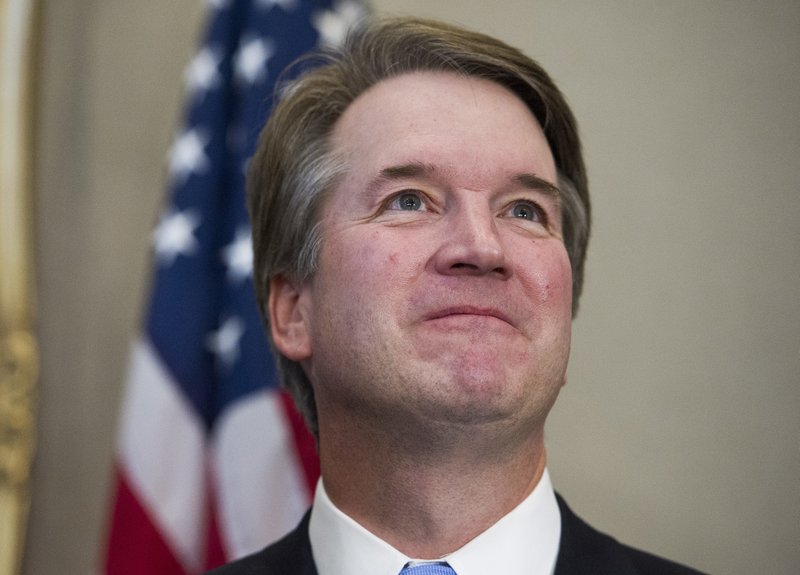
Now that Supreme Court nominee Brett Kavanaugh has met privately with almost every Republican senator, it’s becoming increasingly clear President Donald Trump’s pick for the bench is running into little GOP resistance to confirmation this fall. The conservative appellate judge is breezing past swirling questions over his views on executive power and his approach to gay marriage, abortion and other legal issues. Kavanaugh left some Republicans with the impression that his earlier reluctance to investigate sitting presidents would not impede the Russia investigation of special counsel Robert Mueller. Other senators avoided such queries, preferring more of a get-to-know-you session with the 53-year-old judge to hear his story. Ask the GOP senators what they’re learning in their private chats and they’ll tell you the following: Kavanaugh loves his family. Lives for the law. And, like the president he once worked for, George W. Bush, he’s open and chatty, the kind of guy you’d like to have a beer with. “I just wanted to understand — try to understand — what’s in his heart,” said Sen. John Kennedy, R-La., who added that he was saving his legal questions for Kavanaugh’s confirmation hearings. “He impresses me as the sort of guy that would actually talk and get to know the people who clean his office.” The practice of Supreme Court nominees making “courtesy calls” to senators seems to have begun around 1970, according to the Senate Historical Office. That year, nominee Harry Blackmun made the rounds ahead of his confirmation hearing before the Judiciary Committee. Some senators use the visits to probe the nominee’s judicial philosophy, while others treat it more like a photo op. Since being nominated July 9, Kavanaugh has met with 47 senators — all but one of them Republican — at a rapid clip. The meetings have created growing momentum for Kavanaugh among Republicans that Democrats may be hard-pressed to stop. Even one early skeptic, Sen. Rand Paul of Kentucky, is now a yes vote. Still, the most challenging meetings for Kavanaugh are yet to come. Two key Republican senators, Lisa Murkowski of Alaska and Susan Collins of Maine, remain among the holdouts. They plan to meet with the judge this month. But even those two independent-minded senators, who both support abortion rights, may be unwilling to break with their party and prevent Trump from filling a second seat on the Supreme Court. Kavanaugh is also likely to meet with Democrats in mid-August, and they are certain to press the judge on a variety of hot-button issues. Only one Democrat,Joe Manchin of West Virginia, has met with Kavanaugh so far, and a person familiar with that session said Kavanaugh stressed his independence. The Republicans who have already met with Kavanaugh are leaving the meetings increasingly confident in Trump’s choice. Sen. David Perdue of Georgia said he asked the judge what he holds important. “We talked about how the partisanship really has created this gridlock and therefore it weakens us in terms of standing up,” said Perdue, a close ally of the president. “He says, ’Well, my desire all along has been to be a very studious defender of the Constitution and try to interpret the law, not make law.” Sen. Thom Tillis of North Carolina said he was satisfied that Kavanaugh’s earlier skepticism of special counsel investigations — like Mueller’s probe — was rooted in his work on Kenneth Starr’s team investigating Bill Clinton, rather than the events of today. “I don’t see how the two can be intertwined,” Tillis said. GOP Sen. James Lankford of Oklahoma said he did not broach the topic because he is already convinced Kavanaugh’s writings are not applicable to Mueller’s probe. “I didn’t take it that we shouldn’t do investigations. At all,” Lankford said. “The fact of the matter is Judge Kavanaugh is going to sit on the United States Supreme Court when we’re through,” said Sen. Orrin Hatch, R-Utah. Late last week, Democrats lost ground in their fight to unearth some 1 million documents related to Kavanaugh’s time as staff secretary at the Bush White House, a three-year stint on his resume that Republicans say is irrelevant to his qualifications for the court. Republicans have not asked for the records, and the National Archives has told Democrats it cannot process their request without GOP support. Kristine Lucius, the executive vice president for policy at the advocacy group The Leadership Conference on Civil and Human Rights, is pushing for the full release of the Kavanaugh documents and not those being handpicked by Republicans. She objects to “the notion that we would just have a curtain within three years of his record.” Democrats now plan to take their case directly to Kavanaugh, potentially turning the “courtesy calls” into cross-examination sessions of his thoughts on Bush-era topics like the detention of terrorism suspects and signing statements on legislation. Those subjects are likely covered in the documents Republicans refuse to seek. Republicans counter that there are already plenty of ways to scrutinize Kavanaugh’s record. He has handled more than 300 cases since 2006 as an appellate judge. Already the Judiciary Committee has requested some 125,000 files from Kavanaugh’s other years in the White House counsel’s office and 20,000 from his work on the Starr investigation. And with a 51-49 GOP majority in the Senate, narrowed with the longtime absence of the ailing Sen. John McCain, R-Ariz., Republicans will be able to confirm Kavanaugh if they hold together and prevent defections. GOP Sen. Deb Fischer of Nebraska said she was preparing a floor speech to deliver after her meeting with Kavanaugh, whom she found to be an incredibly open, honest man. “I don’t know how anyone could oppose him,” she said. “I really don’t.” Republished with the permission of the Associated Press.
Congress passes $1.3 trillion budget, averting another shutdown
Congress gave final approval Friday to a giant $1.3 trillion spending bill that ends the budget battles for now, but only after late obstacles skirted close to another shutdown as conservatives objected to big outlays on Democratic priorities at a time when Republicans control the House, Senate and White House. Senate passage shortly after midnight averted a third federal shutdown this year, an outcome both parties wanted to avoid. But in crafting a sweeping deal that busts budget caps, they’ve stirred conservative opposition and set the contours for the next funding fight ahead of the midterm elections. The House easily approved the measure Thursday, 256-167, a bipartisan tally that underscored the popularity of the compromise, which funds the government through September. It beefs up military and domestic programs, delivering federal funds to every corner of the country. But action stalled in the Senate, as conservatives ran the clock in protest. Then, an unusual glitch arose when Sen. James Risch, R-Idaho, wanted to remove a provision to rename a forest in his home state after the late Cecil Andrus, a four-term Democratic governor. At one point, Sen. Bob Corker, R-Tenn., stepped forward to declare the entire late-night scene “ridiculous. It’s juvenile.” Once the opponents relented, the Senate began voting, clearing the package by a 65-32 vote a full day before Friday’s midnight deadline to fund the government. “Shame, shame. A pox on both Houses – and parties,” tweeted Sen. Rand Paul, R-Ky., who spent the afternoon tweeting details found in the 2,200-page bill that was released the night before. “No one has read it. Congress is broken.” Paul said later he knew he could only delay, but not stop, the outcome and had made his point. The omnibus spending bill was supposed to be an antidote to the stopgap measures Congress has been forced to pass — five in this fiscal year alone — to keep government temporarily running amid partisan fiscal disputes. Leaders delivered on President Donald Trump’s top priorities of boosting Pentagon coffers and starting work his promised border wall, while compromising with Democrats on funds for road building, child care development, fighting the opioid crisis and more. But the result has been unimaginable to many Republicans after campaigning on spending restraints and balanced budgets. Along with the recent GOP tax cuts law, the bill that stood a foot tall at some lawmakers’ desks ushers in the return of $1 trillion deficits. Trump only reluctantly backed the bill he would have to sign, according to Republican lawmakers and aides, who acknowledged the deal involved necessary trade-offs for the Democratic votes that were needed for passage despite their majority lock on Congress. “Obviously he doesn’t like this process — it’s dangerous to put it up to the 11th hour like this,” said Sen. David Perdue, R-Ga., who opposes the bill and speaks regularly to Trump. “The president, and our leadership, and the leadership in the House got together and said, Look, we don’t like what the Democrats are doing, we got to fund the government.” White House legislative director Marc Short framed it as a compromise. “I can’t sit here and tell you and your viewers that we love everything in the bill,” he said on Fox. “But we think that we got many of our priorities funded.” Trying to smooth over differences, Republican leaders focused on military increases that were once core to the party’s brand as guardians of national security. “Vote yes for our military. Vote yes for the safety and the security of this country,” said House Speaker Paul Ryan, R-Wis., ahead of voting. But even that remained a hard sell. In all, 90 House Republicans, including many from the conservative House Freedom Caucus, voted against the bill, as did two dozen Republicans in the Senate. It was a sign of the entrenched GOP divisions that have made leadership’s job controlling the majority difficult. They will likely repeat on the next budget battle in fall. Democrats faced their own divisions, particularly after failing to resolve the stalemate over shielding young Dreamer immigrants from deportation as Trump’s decision to end the Deferred Action for Childhood Arrivals program has left it for the courts to decide. Instead, Trump won $1.6 billion to begin building and replacing segments of the wall along the border with Mexico. The Congressional Hispanic Caucus opposed the bill. Also missing from the package was a renewal of federal insurance subsidies to curb premium costs on the Affordable Care Act exchanges. Trump ended some of those payments as part of his effort to scuttle President Barack Obama’s health care law, but Republicans have joined Democrats in trying to revive them. Bipartisan efforts to restore the subsidies, and provide additional help for insurance carriers, foundered over disagreements on how tight abortion restrictions should be on using the money for private insurance plans. Senate Republicans made a last-ditch effort to tuck the insurance provisions into the bill, but Democrats refused to yield on abortion restrictions. Still, Democrats were beyond pleased with the outcome. Minority Leader Nancy Pelosi, D-Calif., chronicled the party’s many gains, and noted they could have just have easily withheld votes Republicans needed to avert another shutdown. “We chose to use our leverage to help this bill pass,” Pelosi said. Senate Minority Leader Chuck Schumer, D-N.Y., said as the minority party in Congress, “We feel good.” He added, “We produced a darn good bill.” Republished with the permission of the Associated Press.
