
U.S. House passes stopgap spending bill in bipartisan vote, in crucial test for new speaker
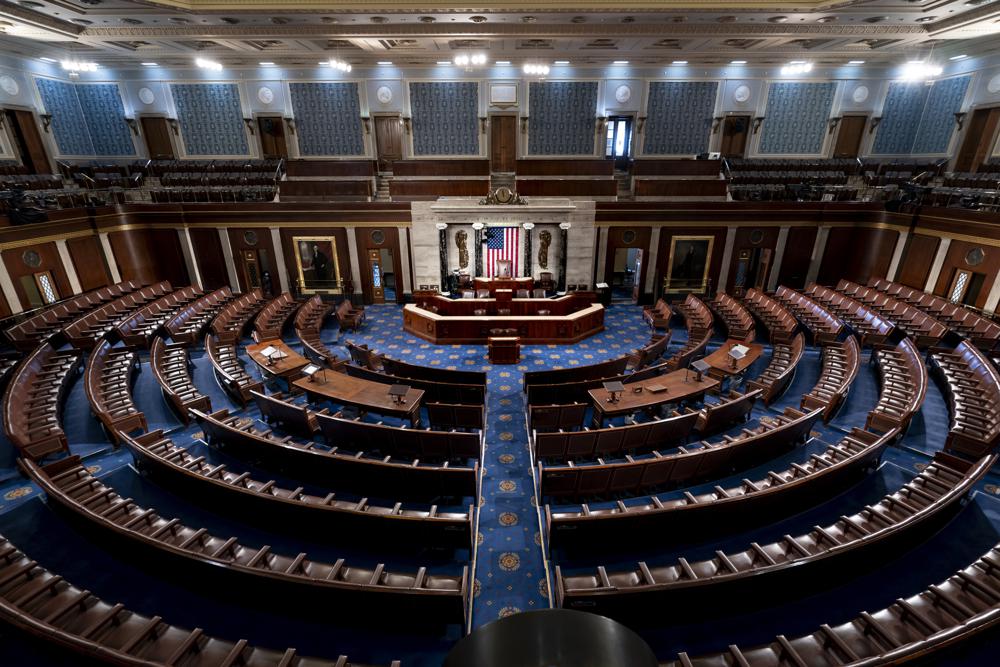
Jennifer Shutt, Alabama Reflector WASHINGTON — The U.S. House took a broadly bipartisan vote Tuesday to fund the government into the new year, though the measure must pass the Senate by the end of the week if Congress is going to avoid a partial government shutdown. The 336-95 House vote was the first major legislative test for Speaker Mike Johnson, the Louisiana Republican who took on the role after the former speaker was ousted after passing a similar bipartisan short-term funding bill in late September. A total of 93 House Republicans voted against the bill, but enough Democrats supported it to send the measure to the Senate. In the Alabama delegation, U.S. Reps. Robert Aderholt, R-Haleyville; Terri Sewell, D-Birmingham, and Dale Strong, R-Madison, voted for the bill. U.S. Reps. Jerry Carl, R-Mobile; Barry Moore, R-Enterprise; Gary Palmer, R-Hoover and Mike Rogers, R-Saks, voted against it. Senate Majority Leader Chuck Schumer, a New York Democrat, said Tuesday that he and Minority Leader Mitch McConnell, a Kentucky Republican, both agree the Senate needs to pass the bill quickly to avoid a funding lapse. “If the House should pass it, and I hope they do, Leader McConnell and I will figure out the best way to get this done quickly,” Schumer said. During a press conference prior to the vote, Johnson defended his decision to move the short-term spending bill, saying it would prevent Congress from passing an omnibus spending package in mid-December before the holiday break. Republicans have repeatedly said they oppose such massive packages, which wrap together all 12 government spending bills, often on short notice. He rejected criticism from fellow GOP lawmakers that he was making a mistake and taking the wrong approach to funding the government. “We’re not surrendering, we’re fighting. But you have to be wise about choosing the fights,” Johnson said. “You’ve got to fight fights that you can win, and we’re going to, and you’re going to see this House majority stand together on our principles.” Johnson said he was optimistic that Congress would be able to pass the dozen full-year appropriations bills before the new deadlines next year, avoiding the need for another stopgap spending bill. “Part of the reason I’m confident about this is, I’ve been drinking from Niagara Falls for the last three weeks. This will allow everybody to go home for a couple of days for Thanksgiving,” Johnson said. “Everybody can cool off.” During that time, Johnson said he would get a group together to “map out that plan to fight for” conservative principles in the final set of 12 spending bills. The current fiscal year ends on September 30, 2024. “I look forward to rolling that out,” he said. “You’ll see much more of that.” Two deadlines The 32-page short-term spending bill, sometimes called a continuing resolution or CR, would fund part of the federal government through January 19 and the remainder of the annual appropriations bills through February 2. The short-term funding measure is intended to give Congress and the White House more time to negotiate the dozen full-year spending bills. But there are several pitfalls along the way. Former GOP Speaker Kevin McCarthy was ousted from his leadership role after moving the short-term government funding bill in late September that will keep the federal government up and running through Friday. The decision by eight House Republicans and Democrats to vote to “vacate the chair” plunged the chamber into gridlock for weeks as GOP lawmakers debated who should lead the party. After nominating three Republicans who couldn’t get the votes on the floor to hold the gavel, the party finally coalesced behind Johnson. But some of the especially conservative members became frustrated this week with his decision to put the stopgap spending bill on the floor. The short-term spending bill would give the House and Senate until January 19 to work out an agreement on the Agriculture-FDA, Energy-Water, Military Construction-VA, and Transportation-HUD spending bills. The remaining eight spending bills — Commerce-Justice-Science, Defense, Financial Services, Homeland Security, Interior-Environment, Labor-HHS-Education, Legislative Branch, and State-Foreign Operations — would have funding until February 2. The House and Senate would need to reach an agreement well before those deadlines on the total amount of spending for the current fiscal year that began back on October 1. The leaders of the Appropriations committees would then determine how much of the money goes to each of the dozen bills. Democrats have said the total spending level should match what Congress and President Joe Biden agreed to in the debt limit law this summer. But some Republicans have pressed for lawmakers to go below that level. Lawmakers sound off on spending Idaho Republican Rep. Mike Simpson, chair of the Interior-Environment spending panel, said that leaders need to clarify the total spending number, though he expects that will ultimately match the debt limit law. “I think it will end up being that, but leadership needs to tell us,” Simpson said. Georgia Rep. Sanford Bishop Jr., the top Democrat on the Agriculture spending panel, said the total spending level for the final slate of bills that the House and Senate will negotiate in the coming weeks and months needs to adhere to the number in the debt limit law. “Some of them, particularly the MAGA Republicans, pretty much don’t agree with it. They want to cut much more drastically than is beneficial for the American people,” Bishop said. “The moderate, reasonable minds of that side think that we probably should do something that is reasonable.” Maryland Rep. Steny Hoyer, the top Democrat on the Financial Services spending panel, said a key challenge to getting full-year bills agreed to is that “Republicans have been unable for eight or nine months to get their act together on fiscal issues.” “And we’d lost a speaker over that,” Hoyer said. “They were unable to elect speakers for some period of time, and there is still no guarantee that we know what the overall spending levels are.” Ohio Democratic Rep. Marcy Kaptur, ranking member
Katie Britt and Jeanne Shaheen reintroduce ‘Access to Breast Cancer Diagnosis Act’
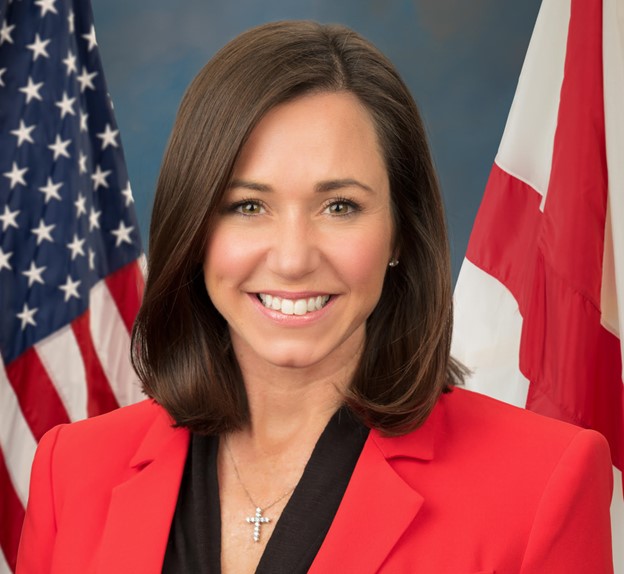
On Monday, U.S. Senator Katie Britt (R-Alabama) recently joined Senator Jeanne Shaheen (D-New Hampshire) in reintroducing the Access to Breast Cancer Diagnosis (ABCD) Act. The bipartisan, bicameral legislation would eliminate copays and other out-of-pocket expenses for breast cancer diagnostic tests, making them more accessible and affordable to women even of low income. Under current law, insurance companies must provide no-copay coverage for breast cancer screenings but not diagnostic testing. If the initial screening shows that a patient may have breast cancer, further testing, including mammograms, MRIs, and ultrasounds, may be needed to make a diagnosis. An estimated 10% of screening mammograms require follow-up diagnostic testing. Regular diagnostic testing may also be recommended for patients who have had a prior breast cancer diagnosis or are genetically predisposed to breast cancer. “The ability for women to receive an initial mammogram as part of their health insurance plan is a crucial, potentially lifesaving tool to detect breast cancer,” said Sen. Britt. “This commonsense legislation would ensure that a warranted follow-up diagnostic examination is also covered by health insurers at no out-of-pocket cost to the patient. No woman across America should be faced with the impossible choice between affording basic necessities such as food or being able to confirm whether she has a life-threatening illness. I’m proud to help lead this effort to provide greater access to mammography so women can be diagnosed as soon as possible, giving them the widest variety of treatment options and the best chance to defeat this disease.” “Detecting and treating breast cancer as quickly as possible saves lives. No one should ever forgo a screening because of cost,” said Shaheen. “I’m proud to reintroduce this bipartisan legislation to require health insurance to cover diagnostic breast cancer testing as they do other preventative screenings. I’ll keep working in the Senate to make sure lifesaving health care is affordable and accessible for Granite State families.” Molly Guthrie is the Vice President of Policy and Advocacy at Susan G. Komen. “It is too hard and too expensive for people to get the breast imaging they require, a contributing factor to the nearly 44,000 breast cancer deaths expected this year alone,” said Vice President Guthrie. “We need this legislation passed as soon as possible so that people don’t face barriers to a timely diagnosis or face the impact of high out-of-pocket expenses for necessary imaging due to their personal circumstances. Thank you to Senators Jeanne Shaheen and Katie Britt and Representatives Debbie Dingell and Brian Fitzpatrick for their leadership on this vital legislation.” The Breast Cancer Research Foundation of Alabama states that 1 in 8 women will be diagnosed with invasive breast cancer during their lifetime, including an estimated 4,500 women in Alabama in 2023. Susan G. Komen estimates that in 2023, over 297,000 new cases of invasive breast cancer will be detected in women across the United States. Additionally, a Susan G. Komen study estimated that diagnostic tests can cost patients between $234 and $1,041. Representatives Debbie Dingell (MI-06) and Brian Fitzpatrick (PA-01) recently introduced a companion bill, along with Reps. Colin Allred (TX-32) and Debbie Wasserman Schultz (FL-25). Senator Britt is a member of the Senate Committee on Appropriations Subcommittee on Labor, Health and Human Services, Education, and Related Agencies. She was elected to the Senate in 2022. To connect with the author of this story or to comment, email brandonmreporter@gmail.com.
Parker Snider: Florida shows school choice doesn’t destroy public education

“This is the day that will go down in the annals of Florida history as the day we abandoned the public schools and the day that we abandoned, more importantly, our children.” -Florida Rep. Debbie Wasserman Schultz (March 25, 1999) In 1999, opponents predicted the worst when the Florida legislature first considered a meaningful school choice program. Governor Jeb Bush’s plan to offer vouchers to students in failing schools would “kill public education,” according to Leon Russell, then the chairman of the Florida Chapter of the NAACP. Howard Simon, the executive director of the ACLU of Florida, likewise wrote that the program “subsidiz[ed] abandonment of the public schools and abandonment of efforts to improve the public schools.” Public education was going to be destroyed. To school choice opponents, it was that simple. This was the end. Florida did not heed their warning. Since the original program offering school choice to students in failing public schools passed in 1999, the state has made school choice more widely available over and over again. Today, many students can choose between their zoned public school, a private school paid for by a state-funded scholarship, or one of the state’s 650+ charter schools. Additionally, many students are able to transfer to a public school outside of their district or, if they desire, enroll in the Florida Virtual School. School choice has grown so much in Florida, in fact, that over 400,000 students are enrolled in schools of choice in the Sunshine State. Simply put, school choice has exploded in Florida. The public school system, if we are to believe school choice opponents, must have been obliterated. If the first school choice program in 1999 was going to kill public education, these further expansions must have done even worse. The problem for school choice opponents (and the good news for everyone else) is that public education in Florida has thrived in the presence of school choice. In 1999, Florida was testing just barely above Alabama on the NAEP, a national standardized test of a state’s public schools. Both states were well below average. Over the last twenty years, however, as Florida has increased school choice opportunities repeatedly, the state has progressed. Now Florida is no longer below average but well above it, scoring at the top of the charts in multiple subjects according to the NAEP. In fact, Florida ranks first, first, third, and eighth on the four core tests of the NAEP, once adjusted for demographics. Meanwhile, Alabama is dead last or close to last in each of these areas. It’s not just the NAEP that suggests things are going well in Florida’s public education system. The College Board announced last year that Florida ranks second in the nation for the number of students that successfully pass its college-level Advanced Placement exams. Furthermore, according to the Florida Department of Education, Florida’s graduation rate is up from 52% in 1999 to 86% today. All of this adds up to a recent ranking placing Florida as third in the nation for K-12 achievement, according to EdWeek. Alabama, on the other hand, ranks 46th. It’s hard to say Florida’s children have been “abandoned” with these numbers. And it’s impossible to argue with a straight face that school choice has “killed” public education in the state. In fact, a study by the National Bureau of Economic Research in 2020 demonstrated that the presence of school choice in Florida actually helped public schools perform better. That’s not to say that all of Florida’s advancements in education have been because of school choice–certainly, other measures, such as increased accountability and transparency, have contributed to Florida’s standing as an exemplary state in education. What is undeniable, however, is that school choice did not destroy public education. Unfortunately, this hasn’t stopped school choice opponents here in Alabama from using these same tired lines and predicting the same dire future. They won’t tell you how competition in other states has made public schools better. No, they’ll just say we’re abandoning our state’s children. Florida tells us that they couldn’t be more wrong. Parker Snider is the Director of Social Policy for the Alabama Policy Institute.
Florida judge who approved FBI warrant for raid on Mar-a-Lago was assigned to Donald Trump lawsuit against Clintons

Magistrate Judge Bruce Reinhart, the Florida judge who approved the warrant for the FBI raid of former president Donald Trump’s Mar-a-Lago estate, was formerly assigned to oversee a lawsuit in which Trump sued Hillary Clinton. He also previously represented former convicted sex offender Jeffrey Epstein’s employees in a sex trafficking case. In the case of Trump v. Clinton, Trump sued Hillary Clinton on March 24, 2022. He also sued the Democratic National Committee, Perkins Coie, LLC, Michael Sussmann, Marc Elias, Debbie Wasserman Schultz, Charles Halliday Dolan Jr., Jakes Sullivan, John Podesta, Fusion GPS, Nellie Ohr, Bruce Ohr, Christopher Steele, Igor Danchenko, James Comey, Peter Strzok, Lisa Page, Andrew McCabe, and many others. The lawsuit alleges that Clinton “and her cohorts … maliciously conspired to weave a false narrative that their Republican opponent [Trump] was colluding with a hostile foreign sovereignty.” The scheme included “falsifying evidence, deceiving law enforcement, and exploiting access to highly sensitive data sources,” and was “conceived, coordinated and carried out by top-level officials at the Clinton Campaign and the DNC.” Reinhart was assigned to the case on April 6, 2022, after the previous magistrate judge, Ryon McCabe, was recused. On April 15, Reinhart conducted a scheduling conference in the case, according to court documents obtained by The Center Square. He oversaw scheduling of a June 2 status conference on May 4 and 31 and oversaw the actual conference. Reinhart also signed another order on June 14, setting another status conference for July 6, but by June 22 Reinhart canceled the conference and recused himself. Less than two months later, on Monday, August 9, he signed a warrant for the FBI to raid Trump’s Mar-a-Lago estate over an alleged dispute over White House documents. The search warrant remains under seal, and Trump’s attorney has told news outlets that they don’t know what the probable cause was to justify issuing the warrant, also maintaining Trump’s innocence and that he didn’t commit a crime. Many officials have called for the warrant to be unsealed, including U.S. Sen. Ted Cruz, R-Texas. U.S. Sen. Marco Rubio, R-Florida, has called for a congressional investigation into the raid, also saying the FBI’s tactics were like those of a third-world dictatorship. Rubio said, “the Justice Department under Joe Biden decided to raid … the home of the former president who might … be running against him … This is what happens in places like Nicaragua where last year every single person who ran against Daniel Ortega for president, every single person that put their name on the ballot, was arrested and is still in jail. That’s what you see in places like Nicaragua. We’ve never seen that before in America. You can try and diminish it, but that’s exactly what happened.” Gov. Ron DeSantis said the raid was a “weaponization of federal agencies against the Regime’s political opponents.” The White House has declined to comment on the raid, saying it was not made aware of it before it took place. The document dispute stems from a disagreement over which documents in Trump’s possession are presidential records or not. Under the Presidential Records Act, some records in question should have been transferred to the National Archives in January 2021 when Trump left office, the institution said in a statement at the time. Instead, Reinhart authorized the FBI to execute the search warrant at Mar-a-Lago, which Trump said was “prosecutorial misconduct.” According to a report by the New York Post, Reinhart previously represented several of convicted pedophile Jeffrey Epstein’s employees in a sex trafficking investigation. His ties to Epstein’s employees was first reported on by the Miami Herald, with whom he confirmed that clients were Epstein’s pilots, his scheduler, Sarah Kellen, and a woman Nadia Marcinkova. Reinhart also donated to Barack Obama’s 2008 presidential campaign, according to the Post. Prior to becoming a magistrate judge in 2018, he spent ten years in private practice, according to Bloomberg News. He previously worked as an assistant U.S. attorney for the Southern District of Florida. According to Law.com, the Palm Beach Federal Court removed Reinhart’s contact information from the court’s website Tuesday. Republished with the permission of The Center Square.
House Democrats mount effort to punish Georgia Rep. Marjorie Taylor Greene
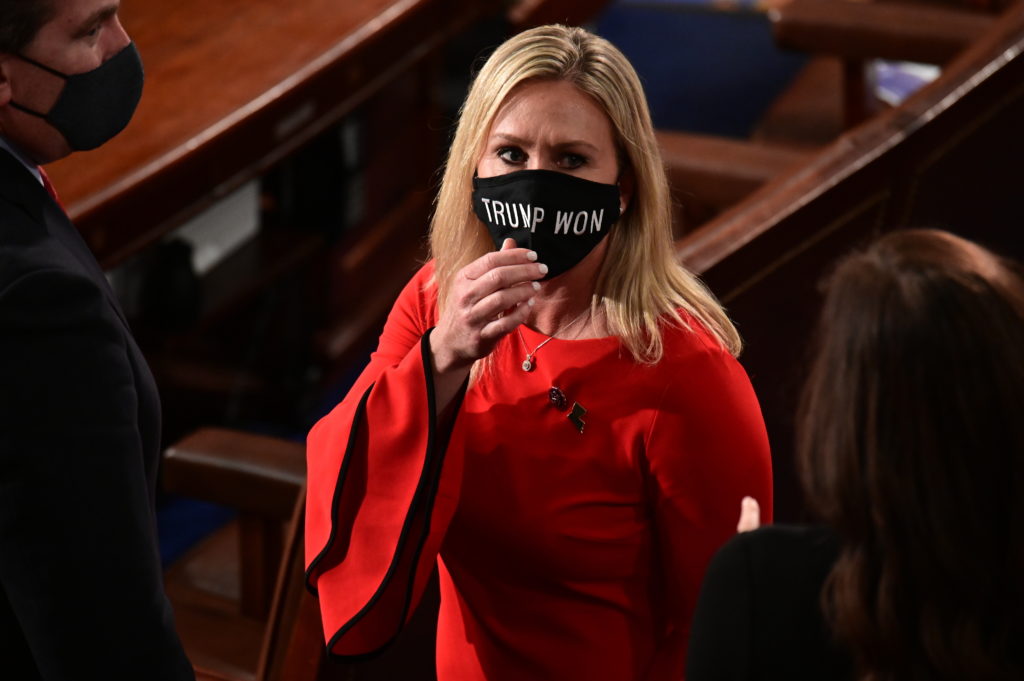
House Democrats are mounting an effort to formally rebuke Rep. Marjorie Taylor Greene, a newly elected Georgia Republican with a history of making racist remarks, embracing conspiracy theories, and endorsing violence directed at Democrats. Democrats have teed up action Wednesday to send a resolution to the House floor that would strip Greene of assignments on the House education and budget committees, if House Minority Leader Kevin McCarthy, R-Calif., doesn’t do so first. “It is my hope and expectation that Republicans will do the right thing and hold Rep. Greene accountable, and we will not need to consider this resolution,” said House Majority Leader Steny Hoyer, D-Md. “But we are prepared to do so if necessary.” Some Democrats have called for going further and expelling Greene from the House — an unlikely outcome that would require backing from Republicans since expulsion requires a two-thirds vote. Another option is censure. Democrats’ willingness to act against a member of the opposing party underscores their desire to confront far-right politicians, like Greene, who are closely aligned with some of former President Donald Trump’s fringe supporters, including extremist groups that were involved in the violent Capitol insurrection. It also shines a light on the GOP’s reluctance to punish Trump supporters in their ranks for fear of alienating some of the former president’s most ardent voters. “If Republicans won’t police their own, the House must step in,” said Rep. Debbie Wasserman Schultz, D-Fla., who is sponsoring the measure to remove Greene from the committees. In a tweet over the weekend, Greene sounded a defiant tone. She also said she had spoken to Trump and was “grateful for his support.” “I will never back down and will stand up against the never-ending bloodthirsty mob,” she tweeted. On Monday, she tweeted that Democrats, if they move forward, will come to regret the “precedent they are setting,” arguing that it would be “used extensively against members on their side once we regain the majority after the 2022 elections.” Greene’s views were in the spotlight even before she joined the House last month. The Georgia Republican has expressed support for QAnon conspiracy theories, which focus on the debunked belief that top Democrats are involved in child sex trafficking, Satan worship, and cannibalism. Facebook videos surfaced last year showing she’d expressed racist, anti-Semitic, and anti-Muslim views. Top Republicans denounced her at the time, hoping to block her from capturing the GOP nomination in her reliably red congressional district in northwest Georgia. But after she won her primary, they largely accepted her. Since then, even more of her past comments, postings, and videos have been unearthed, though many were deleted recently after drawing attention. She “liked” Facebook posts that advocated violence against Democrats and the FBI. One suggested shooting House Speaker Nancy Pelosi in the head. In response to a post raising the prospect of hanging former President Barack Obama, Greene responded that the “stage is being set.” In an undated video posted online, Greene floated a conspiracy theory that falsely suggests that the 2017 mass shooting that killed 58 people at a country music festival in Las Vegas could have been a false flag operation to build support for gun control legislation. “How do you get avid gun owners and people that support the Second Amendment to give up their guns and go along with anti-gun legislation?” Greene said in the video. “You make them scared, you make them victims and you change their mindset, and then possibly you can pass anti-gun legislation. Is that what happened in Las Vegas?” She also “liked” a Facebook post that challenged the veracity of a 2012 mass shooting at Sandy Hook Elementary School in Newtown, Connecticut. Another video captured her confronting Parkland school shooting survivor David Hogg. After her election, she seized on Trump’s false claims that the election was stolen and cheered on his supporters the day before the Capitol was stormed. “It’s our 1776 moment!” she posted on the conservative friendly social media platform Parler. Last week, Pelosi pressed for House Republicans to take action against Greene. “Assigning her to the education committee, when she has mocked the killing of little children” in Newtown, “what could they be thinking, or is thinking too generous a word for what they might be doing?” Pelosi said of Republican leaders. “It’s absolutely appalling.” McCarthy is supposed to meet privately with Greene this week. A spokesperson for the Republican leader declined to comment on Monday. Although it’s not certain he will take action against Greene, McCarthy has punished members of the House Republican caucus before. Former Rep. Steve King, R-Iowa, was stripped of all his committee assignments after expressing support for white supremacists in 2019. Wasserman Schultz acknowledged Monday that it had long been left up to leaders to remove members of Congress of their own party of their committee assignments. But she said Republicans’ reluctance to take action left Democrats with little choice. “Rep. Greene’s appalling behavior both before her election and during her term has helped fuel domestic terrorism, endangered lives of her colleagues, and brought shame on the entire House of Representatives,” Wasserman Schultz said. “Based on her actions and statements and her belligerent refusal to disavow them, she should not be permitted to participate in the important work of these two influential committees.” Republished with the permission of the Associated Press.
Chaotic scene as Republicans disrupt impeachment deposition

Republicans briefly brought the Democrat-led impeachment investigation to a halt when around two dozen GOP House members stormed into a closed-door deposition with a Defense Department official. Democrats said the move compromised national security because some of the Republicans took electronic devices into a secure room. The protest by Republican lawmakers on Wednesday captured national attention, drawing the focus away from the testimony of a top U.S. diplomat who told lawmakers just a day earlier that he was told President Donald Trump was withholding military aid from Ukraine unless the country’s president pledged to investigate Democrats. The maneuver delayed a deposition with Laura Cooper, a senior Defense Department official who oversees Ukraine policy, until midafternoon. The interview began roughly five hours behind schedule, after a security check by Capitol officials, and ended after roughly four hours. As a series of diplomats have been interviewed in the impeachment probe, many Republicans have been silent on the president’s conduct. But they have been outspoken about their disdain for Democrats and the impeachment process, saying it is unfair to them even though they have been in the room questioning witnesses and hearing the testimony. “The members have just had it, and they want to be able to see and represent their constituents and find out what’s going on,” said Ohio Rep. Jim Jordan, the top Republican on the House Oversight and Reform panel. That committee is one of three leading the investigation, and its members are allowed into the closed-door hearings. Lawmakers described a chaotic scene. Rep. Debbie Wasserman Schultz, Democrat – Florida, said she had just walked into the room when the Republican lawmakers blew past Capitol police officers and Democratic staffers. The staff member who was checking identification at the entrance was “basically overcome” by the Republicans, she said. “Literally some of them were just screaming about the president and what we’re doing to him and that we have nothing and just all things that were supportive of the president,” Wasserman Schultz said. Later when the deposition began, Cooper answered questions from lawmakers and staffers in response to a subpoena, an official working on the impeachment inquiry said. She explained to lawmakers the process of distributing military aid and was asked whether the appropriate steps were followed on Ukraine, according to a person familiar with the interview. The official working on the impeachment inquiry and the person familiar with the interview spoke on the condition of anonymity to discuss the closed-door testimony. “The president’s allies in Congress are trying to make it even more difficult for these witnesses to cooperate,” said Adam Schiff, the chairman of the House intelligence committee. Democrats deny that Republicans are being treated unfairly, noting they have had equal time to question witnesses and full access to the meetings. Schiff says closed-door hearings are necessary to prevent witnesses from concealing the truth and has promised to release the transcripts when it will not affect the investigation. They also said the Republicans — several of whom do not sit on one of the three committees — compromised security at Wednesday’s closed-door deposition. The interviews are being held in what is called a Sensitive Compartmented Information Facility, or SCIF, which is a secure room where members can hear classified information. Several lawmakers leaving the facility said that some of the Republicans had their cellphones, even though electronics are not allowed. All members of Congress are familiar with the protocol of the SCIF, since they are often invited to classified briefings, and there are several such rooms around the Capitol. Several Republicans appeared to be tweeting from the secure room. North Carolina Rep. Mark Walker tweeted: “UPDATE: We are in the SCIF and every GOP Member is quietly listening.” Rep. Bennie Thompson, Democrat – Mississippi, who chairs the House Homeland Security Committee, alleged that Republicans “intentionally brought their electronic devices” into the secure area, violating congressional rules and the oath they take to gain access to classified information. The “unprecedented breach of security raises serious concerns” for committee chairs who maintain secure facilities in the Capitol, Thompson wrote in a letter to the House sergeant at arms asking for action to be taken against members of Congress involved in the breach.Sen. Lindsey Graham, Republican – South Carolina, criticized his Republican colleagues for the tactic, calling them “nuts” to make a “run on the SCIF.” “That’s not the way to do it,” he said. Graham later tweeted that he initially believed Republicans had taken the room by force and that it was actually a “peaceful protest,” adding his House GOP colleagues had “good reason to be upset.” The Republicans who took part in the protest were unbowed. Rep. Steve Scalise, the No. 2 House Republican, said Democrats are running a “Soviet-style process” that should “not be allowed in the United States of America.” “We’re not going to be bullied,” he said. The standoff came the day after William Taylor testified that he was told Trump withheld military aid to Ukraine until the country’s president went public with a promise to investigate Democrats. Trump wanted to put Ukraine’s leader “in a public box,” Taylor recalled. Democratic Rep. Ted Lieu of California said Republicans did not want to hear from Cooper because they were “freaked out” by that testimony. “They know more facts are going to be delivered that are absolutely damning to the president of the United States,” Lieu said. Associated Press writers Alan Fram, Robert Burns and Padmananda Rama contributed to this report. By Michael Balsamo and Mary Clare Jalonick Associated Press Republished with the permission of the Associated Press.
Military base cuts affect schools, target ranges, and maintenance facilities

The Pentagon will cut funding from military projects like schools, target ranges and maintenance facilities to pay for the construction of 175 miles of fencing along the U.S.-Mexico border, diverting a total $3.6 billion to President Donald Trump’s long-promised barrier. Projects in 23 states, 19 countries and three U.S. territories would be stalled or killed by the plan, though just $1.1 billion in cuts would strike the continental U.S., according to a list released Wednesday by the Pentagon. Almost $700 million would come from projects in U.S. territories, with another $1.8 billion coming from projects on overseas bases. Trump’s move would take the biggest step yet in delivering on his promise to build a wall to block immigrants from entering the country illegally. But it may come at the expense of projects that the Pentagon acknowledged may be difficult to fund anew. Capitol Hill Democrats, outraged over Trump’s use of an emergency order for the wall, promised they won’t approve money to revive them. A senior defense official told reporters the Pentagon is having conversations with members of Congress to urge them to restore the funding. The official agreed that the department has “a lot of work ahead of us,” considering that Congress has given no guarantee it will provide money for the defunded projects. The official was not authorized to discuss the details publicly so spoke on condition of anonymity. In addition, new stretches of fencing proposed along the Rio Grande and through a wildlife refuge in Arizona promise to ignite legal battles that could delay the wall projects as well.The military base projects facing the chopping block tend to address less urgent needs like new parking at the U.S. Military Academy at West Point, New York, and a variety of small arms ranges at bases in Wisconsin and Oklahoma. But a “cyber ops facility” in Hampton, Virginia, and the expansion of a missile defense field at Fort Greeley, Alaska, face the ax, too. Trump has so far succeeded in building replacement barriers within the 654 miles of fencing built during the Obama and Bush administrations. The funding shift will allow for about 115 miles of new pedestrian fencing in areas where there isn’t any now. “The wall is being built. It’s going up rapidly,” Trump said Wednesday. “And we think by the end of next year, which will be sometime right after the election actually, but we think we’re going to have close to 500 miles of wall, which will be complete.” New stretches of fencing are sure to spark legal battles with angry landowners and environmentalists. The Pentagon plan also fuels the persistent controversy between the Trump administration and Congress over immigration policies and the funding of the border wall. “It doesn’t take any input from the local communities. It will take away from the private property rights,” said Rep. Henry Cuellar, Democrat-Texas. “We are going to do everything we can to stop the president.” Cuellar suggested Democrats will look at a must-pass funding bill this month — required to prevent a government shutdown Oct. 1 — to try to take on Trump. But a more likely venue for the battle could be ongoing House-Senate negotiations over the annual Pentagon policy measure. Lawmakers who refused earlier this year to approve nearly $6 billion for the wall must now decide if they will restore the projects that are being used to provide the money. “To pay for his xenophobic border wall boondoggle, President Trump is about to weaken our national security by stealing billions of dollars from our military,” said Rep. Debbie Wasserman Schultz, Democrat-Florida, who chairs a key military construction panel. “The House of Representatives will not backfill any projects he steals from today.” One of the Senate’s most endangered Republicans in the 2020 election, Arizona Sen. Martha McSally, reported that her state is getting nicked for just $30 million from a project that was being delayed anyway. Georgia, where two potentially competitive Senate races loom next year, would be spared entirely, though powerful Senate Majority Leader Mitch McConnell, Republican-Kentucky, himself facing re-election, would lose a $63 million middle school at Fort Campbell. “We need to secure our border and protect our military; we can and should do both,” McSally said. “I went to the mat to fight for Arizona projects and succeeded.”Elaine McCusker, the Pentagon comptroller, said the now-unfunded projects are not being canceled. Instead, the Pentagon is saying the military projects are being “deferred.” Congress approved $1.375 billion for wall construction in this year’s budget, same as the previous year and far less than the $5.7 billion that the White House sought. Trump grudgingly accepted the money to end a 35-day government shutdown in February but simultaneously declared a national emergency to take money from other government accounts, identifying up to $8.1 billion for wall construction. The transferred funds include $600 million from the Treasury Department’s asset forfeiture fund, $2.5 billion from Defense Department counterdrug activities and now the $3.6 billion pot for military housing construction announced Tuesday. The Pentagon reviewed the list of military projects and said none that provided housing or critical infrastructure for troops would be affected, in the wake of recent scandals over poor living quarters for service members in several parts of the country. Defense officials also said they would focus on projects set to begin in 2020 and beyond, with the hope that the money could eventually be restored by Congress. The government will spend the military housing money on 11 wall projects in California, Arizona and Texas, the administration said in a filing Tuesday in a lawsuit brought by the American Civil Liberties Union. The most expensive is for 52 miles (84 kilometers) in Laredo, Texas, at a cost of $1.27 billion. The Laredo project and one in El Centro, California, are on private property, which would require purchase or confiscation, according to the court filing. Two projects in Arizona are on land overseen by the Navy and will be the first to be built, no earlier
Debbie Wasserman Schultz fires IT staffer following fraud arrest
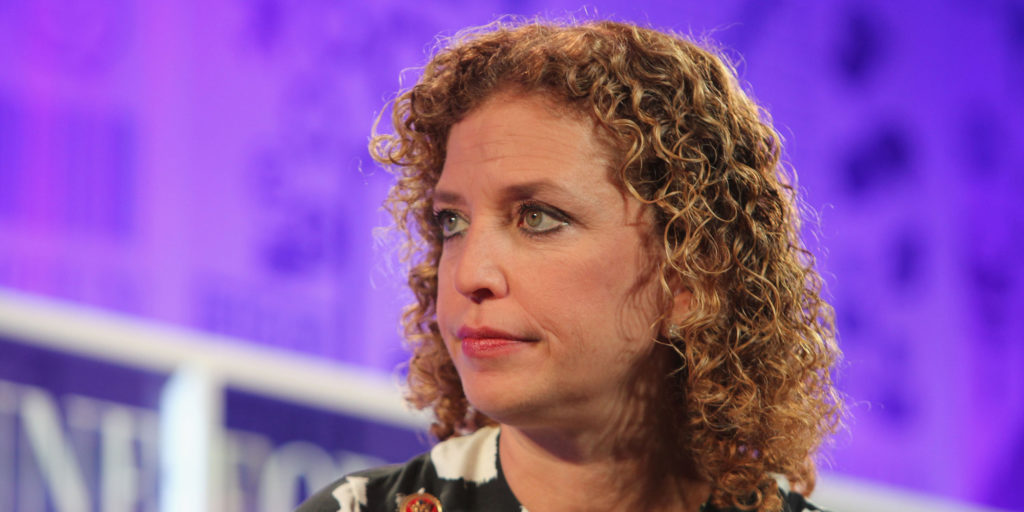
Democratic Rep. Debbie Wasserman Schultz has fired an information technology staffer following his arrest on a bank fraud charge at a Virginia airport where he was attempting to fly to Pakistan. Wasserman Schultz spokesman David Damron says Imran Awan was fired by the Florida lawmaker on Tuesday. Awan’s attorney, Chris Gowen, confirmed that his client was arrested at Dulles Airport on Monday. He says Awan was cleared to travel and had informed the House of his plans to visit his family before the scheduled trip. The 37-year-old Awan of Lorton, Virginia, was arraigned Tuesday in the U.S. District Court for the District of Columbia on one count of bank fraud. He pleaded not guilty and was released pursuant to a high-intensity supervision program, including the restriction that he not travel beyond a 50-mile radius of his home, according to the court. An affidavit filed with the criminal complaint states there is probable cause to believe that Awan and his wife, Hina Alvi, engaged in a scheme to defraud Congressional Federal Credit Union based on misrepresentations made to obtain a loan. FBI Special Agent Brandon Merriman said in the affidavit that the misrepresentations revolved around written assurances that the home serving as collateral for the loan was a “principal residence.” Merriman said that the credit union normally does not provide home equity lines of credit when the home used to secure the loan is a rental. That’s because they are riskier forms of collateral. The investigation, which included physical surveillance and interviews, determined that the couple did not reside at the property used to secure the loan. The agent also attested that bank records show $283,000 was wired to two individuals in Pakistan. He stated that agents followed Alvi in March to Dulles International Airport and that she was allowed to board a flight. She has not returned. She has a return flight for September 2017, but the agent said that he believes Alvi has no intention of returning to the United States. The FBI agent also stated Awan purchased a flight to Doha, Qatar, and then to Lahore, Pakistan. He purchased a return flight for a date in January 2018. Gowen says the federal bank fraud count stems from a “modest real estate matter” and is motivated by anti-Muslim bigotry. He said he’s confident Awan “will soon be able to clear his name and get on with his life.” A preliminary hearing is scheduled for Aug. 21, according to Gowen. Republished with permission of The Associated Press.
Blake Dowling: The almighty email

Ray Tomlinson invented email in 1972. Tomlinson was an ARPANET contractor and picked the @ symbol to reference digital communications between computers. Since then, things have changed — just a wee bit. In a perfect world, organizations use email to share quick bursts of info with clients, colleagues, constituents, etc. But, in the real world, people send massive files, keep enormous inboxes, all while sending the most confidential voter, medical and financial info. Designed as a communicative tool for nonsensitive info, people are now using email as the send-all-be-all of their organizations. If you don’t archive your emails and use a file structure (outside of your inbox) think about giving that some time. Digital organization is greatness. Over the years, I’ve come across a few situations where people have emailed me some very sensitive info by mistake. So, as a best practices rule-of-thumb, if you can’t say it aloud, don’t email it. One client was considering an alternative to our company and sent our proposal to a competitor, asking the other company to break down our proposal and beat our price. They accidentally cc’ed me. In my eyes, their brand is forever tarnished. An hour later, when I received a request to ignore the previous email, I couldn’t help but laugh. It was like a court order to “strike that comment from the record” — the cat is already out of the bag, and said cat holds a major grudge. Recently, my wife was trying to get her air conditioning fixed at a local car shop; they were refusing to honor the warranty. They then sent this gem to 6 internal staff, cc’ing me by mistake. There was nothing up, no one even looked at the car beside them. Now, whenever I think of auto repair, I see them as the clowns of the business. I always will. Had they not sent this email, I would have been none the wiser. One person ruined their national brand. (I bet they got an A in clown school.) We will not name names here, but here is part of the message: “Paul Harvey version was the washer bottle is broken! How does a washer bottle get broken, and AC system over charged ???? We were asking questions since vehicle has not ever been in our stores for repairs or service. Car fax was clean so we are fixing the vehicle under warranty since we cannot prove anything and the Dowling’s are giving us any information other than being very defensive which usually in my book means something up.” The Democratic National Committee learned the power of email — the wrong way. Jobs were lost, trust destroyed. In the aftermath of the Nevada Democratic convention, Debbie Wasserman Schultz wrote about Jeff Weaver, Bernie Sanders’ campaign manager: “Damn liar. Particularly scummy that he barely acknowledges the violent and threatening behavior that occurred.” In another email, Wasserman Schultz said of Sanders: “He isn’t going to be president.” Other emails had her stating that Sanders doesn’t understand the Democratic Party. Bernie got hosed. Email pain is not just for Democrats, Republicans past and present have had their fair share of problems. Email woes have no party affiliation. There should be an email protocol — in writing — for all your staffers, including interns, volunteers, and all the way to the top. We don’t need to go into mail servers (or things like that); email is simply not a secure platform for communication. Don’t talk trash, send credit card numbers, Social Security numbers or anything confidential via email. Yes, there are encryption packages available to secure email communication, if you are willing to make the investment. Nevertheless, use email as designed, and you will have a pleasant and (most importantly) more secure computing experience. Be safe out there. ___ Blake Dowling is CEO of Aegis Business Technologies and can be reached at dowlingb@aegisbiztech.com.
Darryl Paulson: Obama’s electoral legacy: After 8 years, we get a Donald Trump

(Part 2 of the Obama legacy) With the inauguration of Donald Trump, it is a good time to review the electoral impact of eight years of the Obama White House. One of the impacts is the election of Trump which surprised the entire political universe. Whatever Obama may have achieved in public policy, it is that policy which is in great part responsible for setting “the post-World War II record for losses by the White House party,” according to Larry Sabato. Democrats lost over 1,000 seats at the state and national level. However important the Obama policies may have been, it is fair to argue that those policies contained the seeds of Democratic losses. The Wall Street and big bank bailouts led to the creation of the Tea Party. The Tea Party became a primary vehicle to organize disaffected Republicans against bailouts for Wall Street and not Main Street. Combined with opposition to the Affordable Care Act (ACA), mobilized Republicans took over control of both the House and Senate, and effectively denying Obama the needed votes to carry out the rest of his agenda. After the 2016 election, Democrats held 11 fewer Senate seats than they did Jan. 20, 2009, a 16 percent decrease. Democrats hold 62 fewer House seats than in 2009, a drop of 24 percent. They also lost control of the White House giving Republicans complete control of the national government. At the state level, the number of Democrat governors fell from 28 to 16, a 43 percent decline. In 2009, Democrats controlled both houses in 27 states; after 2016, the number dropped to dual control of only 14 states, a 48 percent drop. On top of this, Democrats lost 959 seats in the state legislatures, weakening them for years to come. These losses mean that Democrats will have a difficult time in passing their agenda at the state and national level. It also means that the Democratic bench of future leaders has been wiped out, making it difficult for them to find and finance competitive candidates. Finally, since Democrats foolishly changed the filibuster rules in 2013, cabinet nominees and most court appointees will need only 51 votes to be confirmed. This creates the possibility for more extreme nominees to win confirmation. One of the few positive thing for Democrats is that it is difficult to imagine them losing many more seats. The out-party normally makes gains in midterm elections. Unfortunately for Democrats, they must defend 25 of the 33 Senate seats up for election in 2018, and Trump won 10 of the 25 states that Democrats must defend. If the Democrats could pick up only two Senate seats in 2016 when Republicans had to defend 24 of the 34 seats, it is hard to imagine them doing better in 2018 when they must defend two out of every three Senate seats up for election. Without Obama on the ballot in 2016 and 2018, fewer young and minority voters will turn out at the polls. Although Democrats have dominated among young voters, few of them turn out, especially in off-year elections. Democrats have complicated their problem with young voters by having an array of senior citizen leaders. Nancy Pelosi has been the ranking Democratic leader for 6 terms, as has second-ranking Democrat Steny Hoyer. Third-ranking Democrat James Clyburn has served five terms as leader. Pelosi is 76, and Hoyer and Clyburn are 77. Although Democrats have been devastated during Obama’s tenure, he is not solely responsible. Obama is only the third Democratic president to twice win a popular vote majority, along with Andrew Jackson and Franklin Roosevelt. Democratic National Party Chair Debbie Wasserman Schultz, a Congresswomen from Florida, was widely viewed as an ineffective spokesperson for the party and was eventually ousted for what many Democrats viewed as her favoritism for Hillary Clinton over Bernie Sanders during the Democratic primaries. Obama appointed Wasserman Schultz to become chair of the Democratic Party and, critics contend, for standing by her for far too long. Politics is a strange beast. Six months ago, almost everyone believed the Republican Party was on its last legs, and the Trump nomination would doom them forever. Today the Republicans control all three branches of the federal government, and it appears that the Democrats are on life support. Who knows what tomorrow will bring? ••• Darryl Paulson is Emeritus Professor of Government at the University of South Florida St. Petersburg.
Debbie Wasserman Schultz accuses HHS nominee Tom Price as another of Donald Trump’s ‘swamp’
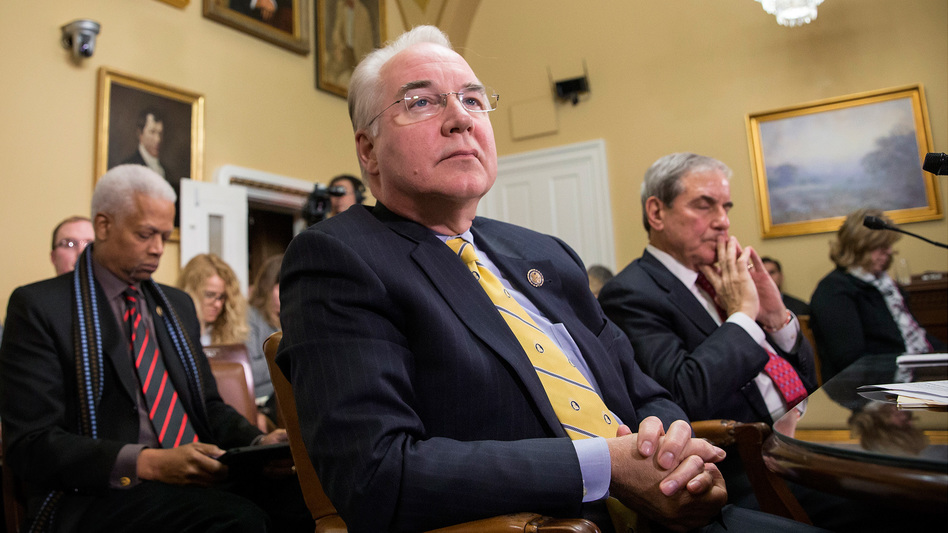
Tom Price, President-elect Donald Trump’s nominee for Health and Human Services Secretary, is poised to be grilled by Senate Democrats when he appears Wednesday before the Senate Health, Education, Labor and Pensions Committee. The six-term Georgia Republican congressman has been one of the leading opponents of the Affordable Care Act in Congress, and an advocate for the restructuring of the Medicaid and Medicare health entitlement programs. Democrats have vowed to fight the nomination of Price, an orthopedic surgeon. Undoubtedly, Price will be asked about his stock holdings in more than three dozen companies, including health care related agencies like Aetna, Biogen and Zimmer Biomet Holdings. It’s his purchase in that latter stock that may get him in some trouble with the committee. CNN reported that in March, Price bought between $1,001 to $15,000 worth of shares in Zimmer Biomet, a medical device manufacturer, before introducing legislation that would have directly benefited the company. That news comes after The Wall Street Journal reported last month that he traded roughly $300,000 in shares over the past four years in health companies while pursuing legislation that could impact them. Democrats pounced on that revelation. “With what we have recently learned about his apparent conflicts of interest — including filing legislation to benefit a medical device company in which he recently bought stock — it’s clear that he’s also another swimmer in President-elect Donald Trump’s ‘swamp,’” declared South Florida Representative Debbie Wasserman Schultz Wednesday. “No Member of Congress or Cabinet secretary — or president for that matter — should be creating the appearance of lining their own pockets on the taxpayers’ dime. Unfortunately, President-elect Trump, whose own record is rife with conflicts of interest, has tapped a number of Cabinet appointees that fit this alarming pattern. Congressman Price’s appalling record on health care policy should be reason enough to reject his nomination, but it should be withdrawn if these allegations prove to be accurate.” Wasserman Schultz also is criticizing Price for his opposition to the ACA and repeatedly proposing “draconian legislation to restrict women’s access to reproductive health care.” “He is committed to dragging American health care back several decades with his proposed cuts to Medicare, our social safety net, and would callously ensure that 129 million Americans who live with a pre-existing condition like me — a breast cancer survivor — will be denied coverage based on our medical history.” Wednesday’s hearing is being called just a “warm up,” because, in fact, Price faces confirmation by another committee — the Senate Finance Committee, and not the group of senators he speaks to Thursday.
U.S. election voted top news story of 2016

The turbulent U.S. election, featuring Donald Trump‘s unexpected victory over Hillary Clinton in the presidential race, was the overwhelming pick for the top news story of 2016, according to The Associated Press’ annual poll of U.S. editors and news directors. The No. 2 story also was a dramatic upset — Britons’ vote to leave the European Union. Most of the other stories among the Top 10 reflected a year marked by political upheaval, terror attacks and racial divisions. Last year, developments related to the Islamic State group were voted as the top story — the far-flung attacks claimed by the group, and the intensifying global effort to crush it. The first AP top-stories poll was conducted in 1936, when editors chose the abdication of Britain’s King Edward VIII. Here are 2016’s top 10 stories, in order: 1. US ELECTION: This year’s top story traces back to June 2015, when Donald Trump descended an escalator in Trump Tower, his bastion in New York City, to announce he would run for president. Widely viewed as a long shot, with an unconventional campaign featuring raucous rallies and pugnacious tweets, he outlasted 16 Republican rivals. Among the Democrats, Hillary Clinton beat back an unexpectedly strong challenge from Bernie Sanders, and won the popular vote over Trump. But he won key Rust Belt states to get the most electoral votes, and will enter the White House with Republicans maintaining control of both houses of Congress. 2. BREXIT: Confounding pollsters and oddsmakers, Britons voted in June to leave the European Union, triggering financial and political upheaval. David Cameron resigned as prime minister soon after the vote, leaving the task of negotiating an exit to a reshaped Conservative government led by Theresa May. Under a tentative timetable, final details of the withdrawal might not be known until the spring of 2019. 3. BLACKS KILLED BY POLICE: One day apart, police in Baton Rouge, Louisiana, fatally shot Alton Sterling after pinning him to the ground, and a white police officer shot and killed Philando Castile during a traffic stop in a suburb of Minneapolis. Coming after several similar cases in recent years, the killings rekindled debate over policing practices and the Black Lives Matter movement. 4. PULSE NIGHTCLUB MASSACRE: The worst mass shooting in modern U.S. history unfolded on Latin Night at the Pulse, a gay nightclub in Orlando. The gunman, Omar Mateen, killed 49 people over the course of three hours before dying in a shootout with SWAT team members. During the standoff, he pledged allegiance to the Islamic State. 5. WORLDWIDE TERROR ATTACKS: Across the globe, extremist attacks flared at a relentless pace throughout the year. Among the many high-profile attacks were those that targeted airports in Brussels and Istanbul, a park teeming with families and children in Pakistan, and the seafront boulevard in Nice, France, where 86 people were killed when a truck plowed through a Bastille Day celebration. In Iraq alone, many hundreds of civilians were killed in repeated bombings. 6. ATTACKS ON POLICE: Ambushes and targeted attacks on police officers in the U.S. claimed at least 20 lives. The victims included five officers in Dallas working to keep the peace at a protest over the fatal police shootings of black men in Minnesota and Louisiana. Ten days after that attack, a man killed three officers in Baton Rouge, Louisiana. In Iowa, two policemen were fatally shot in separate ambush-style attacks while sitting in their patrol cars. 7. DEMOCRATIC PARTY EMAIL LEAKS: Hacked emails, disclosed by WikiLeaks, revealed at-times embarrassing details from Democratic Party operatives in the run-up to Election Day, leading to the resignation of Democratic National Committee chair Debbie Wasserman Schultz and other DNC officials. The CIA later concluded that Russia was behind the DNC hacking in a bid to boost Donald Trump’s chances of beating Hillary Clinton. 8. SYRIA: Repeated cease-fire negotiations failed to halt relentless warfare among multiple factions. With Russia’s help, the government forces of President Bashar Assad finally seized rebel-held portions of the city of Aleppo, at a huge cost in terms of deaths and destruction. 9. SUPREME COURT: After Justice Antonin Scalia‘s death in February, President Obama nominated Merrick Garland, chief judge of the U.S. Court of Appeals, to fill the vacancy. However, majority Republicans in the Senate refused to consider the nomination, opting to leave the seat vacant so it could be filled by the winner of the presidential election. Donald Trump has promised to appoint a conservative in the mold of Scalia. 10. HILLARY CLINTON’S EMAILS: Amid the presidential campaign, the FBI conducted an investigation into Clinton’s use of a private computer server to handle emails she sent and received as secretary of state. FBI Director James Comey criticized Clinton for carelessness but said the bureau would not recommend criminal charges. Stories that did not make the top 10 included Europe’s migrant crisis, the death of longtime Cuban leader Fidel Castro, and the spread of the Zika virus across Latin America and the Caribbean. Republished with permission of The Associated Press.
