
America’s Got Talent’s Jackie Evancho to sing national anthem at Trump inauguration
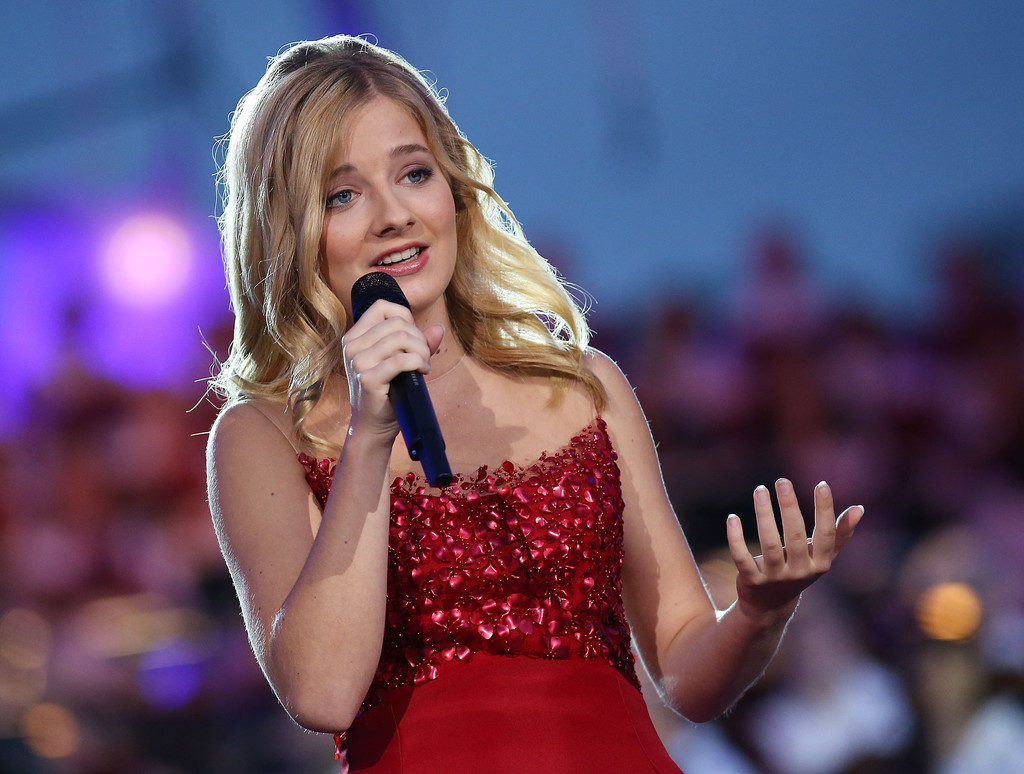
“America’s Got Talent” star Jackie Evancho will sing the national anthem at Donald Trump‘s inauguration on Jan. 20. The 16-year-old Evancho said Wednesday on NBC’s “Today,” ”I’m so excited. It’s going to be awesome.” Trump’s communications director for the inaugural committee confirmed the booking on Twitter, calling Evancho “an inspiration for all Americans.” Evancho is a Pittsburgh native and a soprano who has performed in Washington before. She has performed at the Independence Day concert “A Capitol Fourth” along with the lighting of the national Christmas tree and the National Prayer Breakfast. In 2010, she was the runner-up on NBC’s “America’s Got Talent.” Republished with permission of The Associated Press.
As Aleppo falls, Donald Trump faces test on posture toward Russia
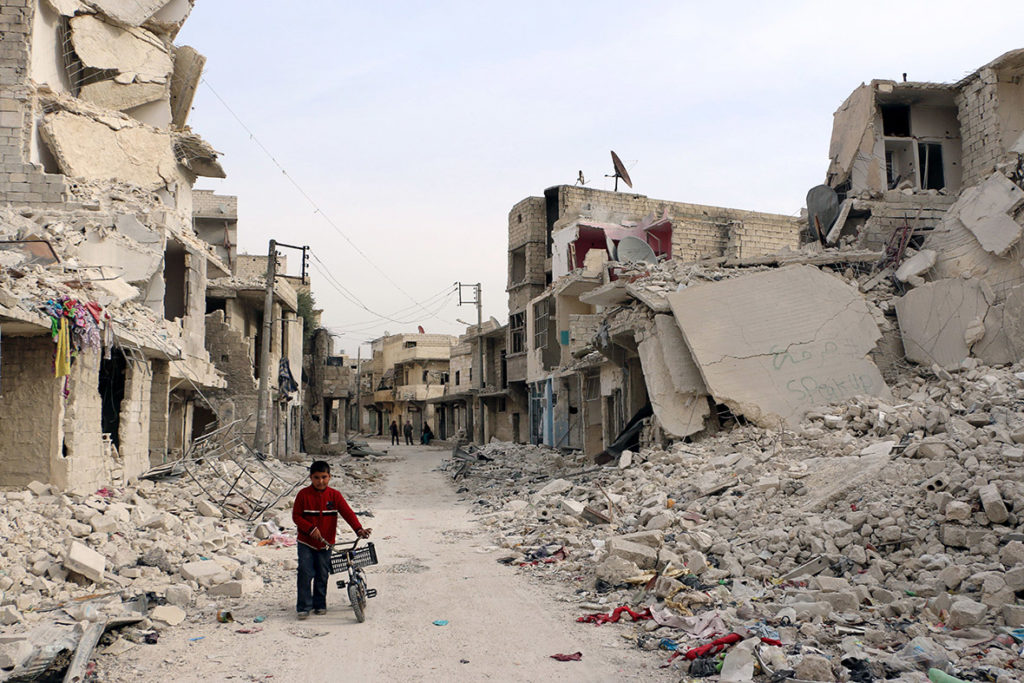
Aleppo’s fall to Syrian government forces is shaping up as the first major test of President-elect Donald Trump‘s desire to cooperate with Russia, whose military support has proven pivotal in Syria’s civil war. The death and destruction in the city is only renewing Democratic and Republican concern with Trump’s possible new path. Though Trump has been vague about his plans to address this next phase in the nearly six-year-old conflict, he’s suggested closer alignment between U.S. and Russian goals could be in order. His selection Tuesday of Exxon Mobil CEO Rex Tillerson, who has extensive business dealings with Russia and ties to President Vladimir Putin, fueled further speculation that Trump will pursue a rapprochement with Moscow. Indeed, Trump was already trying to portray Tillerson’s connections with Russia as a plus. In talking points circulated on Capitol Hill and obtained by The Associated Press, Trump’s transition team said Tillerson would “work closely” with Russia on “defeating radical Islam” but would “easily challenge Russia and other countries when necessary.” “President Putin knows Mr. Tillerson means what he says,” the talking points say. A warmer relationship could alter U.S. policy on nuclear weapons, sanctions, Ukraine and innumerable other issues – but none so clearly or quickly as Syria, where President Bashar Assad‘s defeat of U.S.-backed rebels in Aleppo is poised to be a turning point. Assad and Russia are expected seize the moment to try to persuade the U.S. to abandon its flailing strategy of trying to prop up the rebels in their battle to oust Assad. That decision will fall to Trump. The president-elect has not commented or tweeted about the crisis in Aleppo and widespread fears of humanitarian disaster. Yet his previous comments on the broader conflict suggest he’s more than open to a policy shift. During the campaign, Trump asserted that defeating the Islamic State group in Syria, not Assad, must be the top priority, a position that mirrors Russia’s. “I believe we have to get ISIS. We have to worry about ISIS before we can get too much more involved,” Trump said in October, using an acronym for the extremist group. Prioritizing the fight against IS could put the U.S. in closer alignment with Russia’s public position, in a Middle Eastern take on the adage that “the enemy of my enemy is my friend.” It’s a point Trump appeared to make during the second presidential debate when he noted that he didn’t like Assad, but added, “Assad is killing ISIS. Russia is killing ISIS.” And in his first days as the president-elect Trump suggested he might withdraw U.S. support for the various rebel groups that make up Assad’s opposition, telling a newspaper that “we have no idea who these people are.” Trump’s posture doesn’t just buck President Barack Obama‘s policy, it conflicts with his party’s stance, as well. Trump’s running mate, Vice President-elect Mike Pence, argued during the campaign that the U.S. should strike Assad’s forces if needed to prevent devastation in Aleppo. Trump took the remarkable step of contradicting him. “I disagree,” Trump said, and Pence quickly backed off the threat of military action. Both Democratic and Republican critics say Trump’s brushstroke analysis of Syria’s internal conflicts paints a far rosier picture of Russia’s aims than reality – and even endorses some of the propaganda Assad has used to delegitimize his opponents. “Putin is a thug, a bully and a murderer, and anybody else who describes him as anything else is lying,” Sen. John McCain, R-Ariz., said after word emerged that Trump was picking Tillerson as his chief diplomat. While Moscow has attacked IS at times, the U.S. and its allies say most Russian airstrikes have targeted rebel-dominated areas where IS isn’t active. American officials accuse Assad of a soft approach toward IS, and even of colluding with the group in hopes of marginalizing U.S.-backed rebels. Though the U.S. under Obama has tried to work diplomatically with Russia, Syria cease-fire deals have repeatedly collapsed, with the U.S. accusing Moscow of failing to use its influence to prevent Assad from violating them. Meanwhile, Russia’s military intervention has been successful in helping Assad reclaim the upper hand, making Putin a key player in Syria’s future. So closely aligned are Russia and Syria that it was Russia that negotiated a cease-fire to evacuate the last civilians and opposition fighters from eastern Aleppo, rebels said. The rebels had been squeezed for months into smaller and smaller areas of Aleppo. The city’s status as Syria’s commercial hub makes its capture a key victory for Assad. As world leaders debate what to do next, all eyes are on Trump, who takes office on Jan. 20. Robert Ford, the former U.S. ambassador to Syria and a Middle East Institute scholar, said the horrifying images of suffering emanating from Syria would force Trump to outline a more detailed response. “While the Trump administration may want to avoid getting into the business of regime change, it’s still going to have to address what it does about grotesque violations of international humanitarian law and war crimes,” said Ford. “Just saying ‘we’re not interested in regime change’ is not a response.” Aligning with Russia would make it harder for the U.S. to corral the rebels’ more strident supporters into supporting peace mediation. Assad foes like Turkey, Qatar and Saudi Arabia might become more inclined to give extremists advanced weaponry despite U.S. protestations. Concerns that Trump may soften U.S. policy toward Russia, currently under tough U.S. sanctions over its actions in Ukraine, burgeoned during the campaign amid signs of Russian hacking of political groups. U.S. intelligence agencies now say the hacking was intended to help Trump win. Those concerns grew louder still Tuesday when Trump tapped Tillerson for secretary of state despite his history of arguing against sanctions on Russia, which could affect Exxon’s joint ventures with Russia’s state oil company. In 2013, Putin awarded Tillerson the Order of Friendship in honor of his efforts to improve U.S.-Russia ties. Republished with permission of The Associated Press.
Donald Trump rewards Michigan party chair with national role
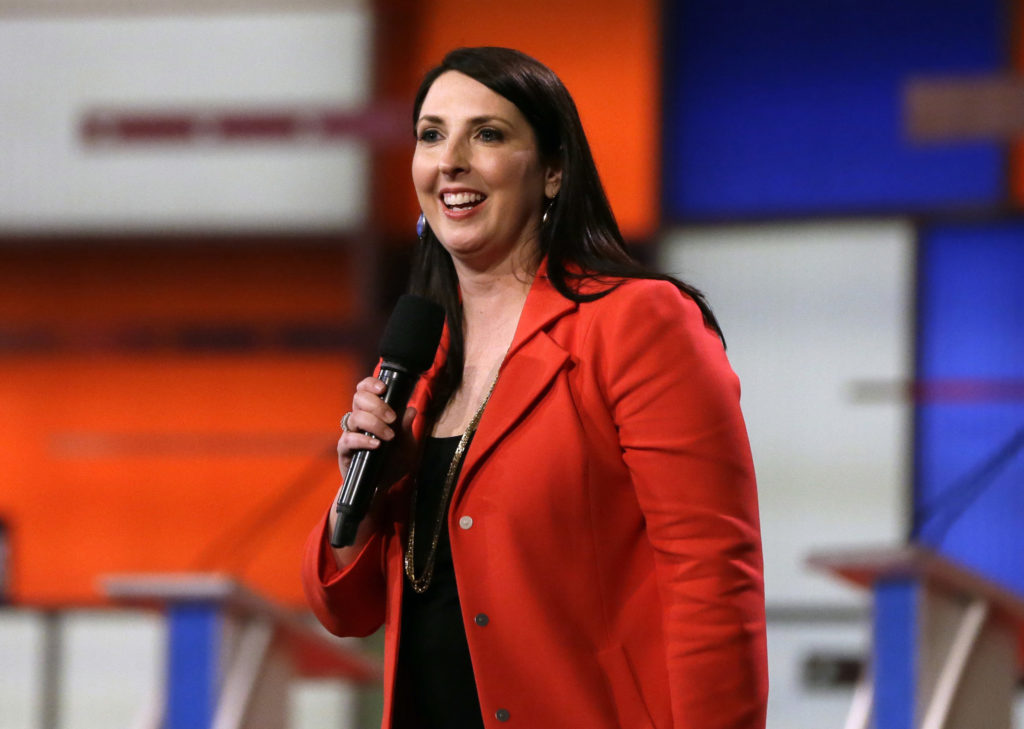
President-elect Donald Trump wants Michigan Republican Party Chairwoman Ronna Romney McDaniel to be national party chairwoman, in part as a reward for the party carrying Michigan for the first time in 28 years. The choice of McDaniel to serve as Republican National Committee chairwoman was confirmed Tuesday night by a person familiar with Trump’s decision. The person asked for anonymity because the announcement has not yet been made. The niece of 2012 GOP presidential nominee Mitt Romney also earned credit with Trump by faithfully supporting him after he won the party’s 2016 nod, despite sharp criticism from her famous uncle. “Ronna McDaniel, what a great job you and your people have done,” Trump told thousands at Deltaplex Arena in Grand Rapids, Michigan, last Friday. “I was very impressed with you. She didn’t sleep for six months!” Trump’s decision also marks a key victory for outgoing RNC Chairman Reince Priebus. As Trump’s incoming White House chief of staff, Priebus, who guided the at times unwieldy Trump through the general election, supported McDaniel as his replacement. Other Trump loyalists were urging him to name Nick Ayers, a close adviser to Vice President-elect Mike Pence. While Trump’s team has said there’s no outright power struggle, Trump’s deliberations over secretary of state were seen as an indicator of influence between Priebus and senior adviser Steve Bannon. Priebus was seen as supporting Mitt Romney to become Trump’s secretary of state. On Tuesday, Trump named Exxon Mobil CEO Rex Tillerson as his choice for the nation’s top diplomat. McDaniel would seem to validate Priebus’ performance as the chairman who turned around the financially strapped committee and ended its presidential losing streak. McDaniel would probably maintain the strategy of early spending in states, digital data and local party infrastructure, RNC insiders said. “They said a Republican could never win Michigan,” McDaniel told the audience in Grand Rapids Friday. “I knew better. You knew better and Donald Trump knew better.” For her work in Michigan, part of a swath of northern states that had eluded Republicans since the 1980s, McDaniel is the right call, said Henry Barbour, a Republican National Committeeman from Mississippi. Trump defied decades of precedent by also carrying Pennsylvania and Wisconsin — once-powerful, working-class Democratic states where manufacturing in smaller cities has declined. McDaniel, 43, would face immediate pressure to hold onto control of Congress in 2018. “I think she can help us hold a lot of these Rust Belt Democrats who voted for Donald Trump with good leadership and execution,” said Barbour. “Plus, she was willing to step out and support our nominee when her very famous uncle was doing the opposite. Now, that’s leadership.” Trump’s choices for RNC chairman and other party leadership positions carry immense sway with its members, who will vote on the team early next year. Should the committee approve Trump’s recommendation, McDaniel would become the second woman to be elected RNC chairman, and the first in 40 years. That’s a good sign for the party and Trump, said Michigan Republican Bob LaBrant, considering the 2005 recordings of Trump making sexually degrading remarks that were released during the campaign. “That sends a signal we need to send right now,” said LaBrant, former political director for the Michigan Chamber of Commerce. “And Ronna is the right one to carry the message.” Republished with permission of The Associated Press.
Jerusalem mayor hopes Donald Trump will move US Embassy to the city

Jerusalem’s mayor said Tuesday that he is confident Donald Trump will move the American Embassy from Tel Aviv to Jerusalem, a break in U.S. policy that is sure to anger Palestinians, who claim the eastern sector of the city for their future capital. Mayor Nir Barkat told The Associated Press that he has been in touch with Trump’s staff about the issue. While previous presidential candidates have made similar promises, Barkat said his conversations have led him to believe that Trump is serious about making the move. “Naturally my intuition tells me that it’s different this time, knowing the people hearing his statements, where we are today,” Barkat said. Transferring the embassy to Jerusalem would be a highly symbolic and politically charged act. The fate of the east Jerusalem is at the heart of the conflict between Israel and the Palestinians. Virtually all embassies to Israel are located in or around Tel Aviv. Israel captured east Jerusalem in the 1967 Mideast war and annexed it in a move that is not internationally recognized. It claims the entire city as its capital. The Palestinians seek east Jerusalem, home to key Jewish, Muslim and Christian holy sites, as the capital of their future state. “The United States of America has embassies in all of the world’s capitals with the exception of Israel,” Barkat said. “That’s absurd, and moving the embassy to the capital of the Jewish people, to Jerusalem, is a straightforward, standard thing to do.” Barkat spoke a day after Trump’s spokeswoman Kellyanne Conway told conservative radio host Hugh Hewitt that the president-elect is determined to move the embassy to Jerusalem when he takes office “That is a very big priority for this president-elect, Donald Trump,” she said. “He made that very clear during the campaign, Hugh. And as president-elect, I’ve heard him repeat it several times privately, if not publicly.” The moving of the embassy, and recognition of Jerusalem as Israel’s capital, enjoys broad support among Israel’s Jewish majority. Speaking to foreign reporters Monday, before Conway’s comments had been reported, opposition lawmaker Yair Lapid called the proposal an “excellent idea.” Moving the embassy to Jerusalem would signal U.S. recognition of Jerusalem as Israel’s capital, a move that would infuriate Palestinians, break decades of American policy and distance the U.S. from most of the international community, including its closest allies in Western Europe. The Palestinians condemned the idea. “Any attempt to move the embassy to Jerusalem will not help achieve peace,” said Adnan Husseini, Palestinian minister for Jerusalem affairs. He urged Trump to instead push for the establishment of a Palestinian state as part of a peace settlement with Israel. Trump has said he would like to broker a peace deal, but he has given few details on how he hopes to do so. He has raised concerns among Palestinians because many of his advisers take hard-line positions that favor Israel, and his campaign platform made no mention of Palestinian independence – a U.S. position for the past two decades. The last round of U.S.-mediated peace talks collapsed over two years ago. Republished with permission of the Associated Press.
Tech leaders couldn’t beat Donald Trump; they’ll meet him instead
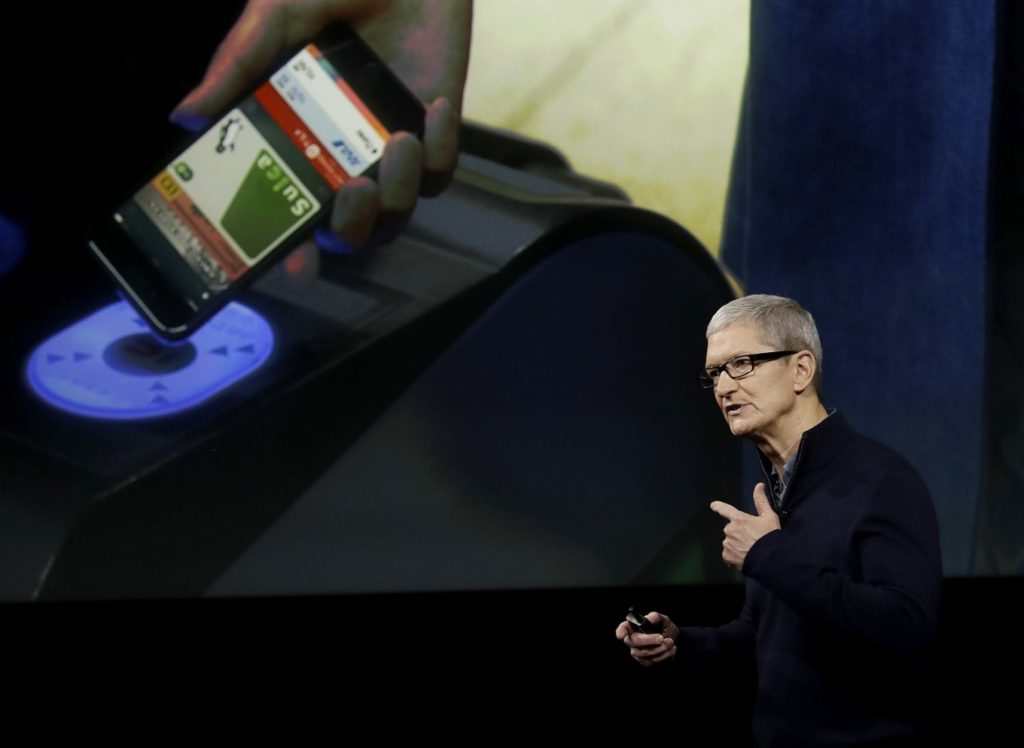
Technology leaders are about to come face-to-face with President-elect Donald Trump after fiercely opposing his candidacy, fearful that he would stifle innovation, curb the hiring of computer-savvy immigrants and infringe on consumers’ digital privacy. On Wednesday, Silicon Valley luminaries and other technology leaders are headed to Trump Tower in New York to make their peace – or press their case – with Trump and his advisers. The CEOs planning to attend include Apple’s Tim Cook, Alphabet’s Larry Page, Microsoft’s Satya Nadella, Amazon’s Jeff Bezos, Intel’s Brian Krzanich, IBM’s Ginni Rometty, Oracle’s Safra Catz and Cisco Systems’ Chuck Robbins. Facebook’s chief operating officer, Sheryl Sandberg, will be on hand instead of its CEO, Mark Zuckerberg, who was one of many tech executives to express misgivings about Trump’s pledge to deport millions of immigrants. TECH VS. TRUMP It could be a prickly meeting. No other industry was more open in its contempt for Trump during the campaign. In an open letter published in July, more than 140 technology executives, entrepreneurs and venture capitalists skewered Trump as a “disaster for innovation.” And Trump’s denigration of Mexicans, his pledge to deport millions of immigrants now living in the U.S. illegally, and his crude remarks about women were widely viewed as racist, authoritarian and sexist by an industry that prides itself on its tolerance. Trump, in turn, sometimes lashed out at the industry and its leaders. He lambasted Bezos for the campaign coverage of his newspaper, The Washington Post, and suggested that Amazon could face antitrust scrutiny if he was elected. Trump also rebuked Cook for fighting a government order requiring Apple to unlock an encrypted iPhone used by a shooter in last year’s terrorist attack in San Bernardino, California. And Trump’s repeated screeds against immigrants raised fears that he might dismantle programs that have enabled tech companies to hire tens of thousands of foreign workers with the skills to write computer programs, design web pages and build mobile apps. The industry is also worried that Trump might try to undermine “net neutrality,” a regulation requiring internet service providers to offer equal access to all online services. Trump’s harsh characterization of the media as dishonest and unfair has raised other fears that he might even try to restrict free speech online. OUT OF STRIFE, PEACE? Some in Silicon Valley think the industry’s best move would be to keep its distance until Trump changes his tone. Former Google executive Chris Sacca, now a tech investor, argues that industry leaders should steer clear of the meeting altogether. Sitting down with the president-elect “would only make sense after Trump has given public assurances he won’t encourage censorship, will stop exploiting fake news, will promote net neutrality, denounce hate crimes, and embrace science,” Sacca said. “If and until then, tech figures who visit are being used to whitewash an authoritarian bully who threatens not just our industry, but our entire democracy.” Most of the companies with executives attending Wednesday’s meeting declined to comment ahead of the gathering. But Oracle’s Catz said in a statement that she plans to tell Trump “that we are with him and are here to help in any way we can. If he can reform the tax code, reduce regulation, and negotiate better trade deals, the U.S. technology community will be stronger and more competitive than ever.” Other tech institutions are also signaling an end to the animosity. The Internet Association, a trade group whose members include Google, Facebook and Amazon, praised Trump in an open letter last month for his use of Twitter and other digital tools to help him get elected. The letter also appealed to Trump’s emphasis on the economy, citing statistics estimating that the internet sector accounted for nearly $1 trillion of the country’s gross domestic product. Some conservatives say they’re actually worried that Trump might get too friendly with tech. Peter Flaherty, the president of the National Legal and Policy Center, charges that big technology companies exploited their close relationship with President Obama “to feather their nests and push for policies that benefit them at the expense of the American worker.” Trump spokeswoman Hope Hicks said by email that the president-elect “looks forward to meeting with this important group of industry leaders and true innovators.” COMMON GROUND: TAX CUTS The technology industry already supports one of Trump’s ideas. He has promised to temporarily reduce the corporate tax on foreign profits from the current 35 percent to 10 percent to give U.S. companies an incentive to bring their overseas cash back home. It’s a cut that Cook has been pushing Congress to make because Apple has $216 billion, or 91 percent of its total cash, in overseas accounts. Other tech companies in line to benefit the most from a tax reduction include Microsoft, Cisco, Microsoft and Google’s corporate parent, Alphabet. But Trump might not be doing many other favors for technology companies given his history of holding grudges against his opponents, said Larry Irving, a former government affairs executive for Hewlett-Packard who now runs a consulting firm. “Everything Trump has done so far suggests that he rewards loyalty and punishes disloyalty,” Irving said. “The tech industry better have some pontoons ready.” Republished with permission of the Associated Press.
New Congress poised to greet Donald Trump with Russia probes

Congress’ Republican leaders are preparing to greet incoming President Donald Trump with investigations into whether Russia intruded into last month’s elections to help him win the White House. Senate Majority Leader Mitch McConnell declined to say Monday whether he agreed with the CIA assertion that Russian hacking and public release of Democrats’ emails during the presidential campaign were designed to aid Trump. But in a noteworthy departure from Trump’s rejection of that conclusion, the Kentucky Republican said the Senate Intelligence Committee would probe the issue. “It’s an important subject, and we intend to review it on a bipartisan basis,” McConnell said. House Speaker Paul Ryan, R-Wis., endorsed an ongoing investigation by the House Intelligence Committee into cyberthreats from other countries and extremist groups and condemned “any state-sponsored cyberattacks on our democratic process.” He said that examination would continue, with his support. “Any intervention by Russia is especially problematic because under President (Vladimir) Putin, Russia has been an aggressor that consistently undermines American interests,” Ryan said in a written statement after McConnell met with reporters. The remarks by McConnell and Ryan drew a contrast with Trump’s oft-repeated praise of Putin and the president-elect’s scoffing at the CIA’s findings. Trump on Sunday called the CIA’s contention “ridiculous” and blamed the disclosures of the agency’s assessment on Democrats who he said were embarrassed over losing last month’s election. McConnell said he has “the highest confidence” in U.S. intelligence agencies. He recounted Russia’s annexation of Crimea from Ukraine in 2014, said Baltic nation leaders are nervous about Moscow and pointedly praised NATO, the alliance that Trump criticized repeatedly during his campaign. “I think we ought to approach all of these issues on the assumption that the Russians do not wish us well,” McConnell said. Besides embracing an investigation by the Senate’s intelligence panel, led by Richard Burr, R-N.C., McConnell also expressed support for a related probe by the Armed Services Committee, chaired by Sen. John McCain, R-Ariz. McCain has been calling for such an examination and has long been wary of Russia. The chairman of the House Intelligence Committee, Rep. Devin Nunes, R-Calif., released a letter Monday to National Intelligence Director James Clapper complaining that recent reports of the CIA’s conclusion clashed with Clapper’s prior statement to the panel that he lacked “good insight” about the connection between Russian hacking of Democratic campaign documents and their release by Wikileaks. Nunes requested a briefing on the subject for this week. The GOP leaders expressed their views after a weekend in which Trump also said he would not need daily intelligence briefings, a staple of presidents’ days for decades and a flouting of a convention common for presidential transitions. The campaign chairman for defeated Democratic presidential candidate Hillary Clinton urged the Obama administration Monday to reveal what it knows about any Russian efforts to help Trump win. John Podesta, whose emails were stolen and posted online, said the administration “owes it to the American people” to release details of the intrusions, which included the hacking of Democratic Party files. Podesta said the Clinton campaign also supports a call by 10 of the 538 members of the Electoral College for Clapper to provide information that intelligence agencies have gathered on the subject. Republished with permission of the Associated Press.
Donald Trump picks Rex Tillerson to lead State Department

President-elect Donald Trump announced Tuesday he has picked ExxonMobil CEO Rex Tillerson to be secretary of state, calling him “among the most accomplished business leaders and international dealmakers in the world.” “Rex Tillerson’s career is the embodiment of the American dream. Through hard work, dedication and smart deal making, Rex rose through the ranks to become CEO of ExxonMobil, one of the world’s largest and most respected companies,” the billionaire real estate mogul said in a pre-dawn news release from Trump Tower in New York. Tillerson “knows how to manage a global enterprise, which is crucial to running a successful State Department,” Trump said. In a tweet, Trump added that Tillerson “has vast experience at dealing successfully with all types of foreign governments.” In an accompanying statement, Tillerson said he was “honored” by his selection and shares Trump’s “vision for restoring the credibility of the United States’ foreign relations and advancing our country’s national security.” But Tillerson has close ties to Russia and President Vladimir Putin, which is certain to draw scrutiny and fuel a potential Senate confirmation fight. Leading Republicans have already expressed anxieties as they contend with intelligence assessments saying Russia interfered with the U.S. presidential election to help Trump. Sen. Bob Corker, chairman of the Senate Foreign Relations Committee that will hold confirmation hearings in January, called Tillerson “a very impressive individual” with “an extraordinary working knowledge of the world.” Corker, who had been considered for the secretary of state job, said Trump called him Monday to inform him of the pick. Reince Priebus, Trump’s incoming chief of staff, said Tuesday that Tillerson was chosen because he is “a diplomat that happens to be able to drill oil.” Tillerson has “had to maintain relationships across the world in many places that aren’t the easiest places to have relationships,” Priebus said on MSNBC. “The good Lord didn’t put oil in all freedom-loving democracies across the world and yet Rex Tillerson was able to make this work. Donald Trump and Rex Tillerson, they hit it off, and they have a similar vision of how to get things done,” Priebus said. Trump has made it clear he sees Tillerson’s deep relations with Moscow as a selling point. As ExxonMobil’s head, Tillerson maintained close ties with Russia and was awarded by President Vladimir Putin with the Order of Friendship in 2013, an honor for a foreign citizen. For weeks, Trump has teased out the secretary of state decision process publicly, often exposing rifts in his organization. Besides Corker, he also considered former Massachusetts Gov. Mitt Romney, a one-time vocal Trump critic. Romney wrote on Facebook Monday that it “was an honor to have been considered” for the job. Trump’s unconventional Cabinet vetting procedures are in keeping with his presidential style thus far, unconcerned with tradition or business as usual. In recent weeks, he’s attacked CIA intelligence, spoken to the leader of Taiwan — irritating China — and has continued his late-night Twitter tirades. Beijing is looking forward to working with the new secretary of state “to push forward greater progress of the bilateral relationship on a new starting point,” China’s foreign ministry spokesman, Geng Shuang, said Tuesday. In Washington, a congressional investigation is in the works over a CIA assessment that Russia interfered in the November election on his behalf, a conclusion Trump has called “ridiculous.” The issue is raising red flags among lawmakers concerned about the sanctity of the U.S. voting system and potentially straining relations at the start of Trump’s administration. On Twitter Monday, Trump pushed back, saying: “Can you imagine if the election results were the opposite and WE tried to play the Russia/CIA card. It would be called conspiracy theory!” Putin, meanwhile, said he was ready to meet with Trump “at any moment.” In the transcript of his interview with journalists which was released Tuesday in Moscow, Putin said “it’s widely known that the elected president of the United States has publicly called for the normalization of the Russian-American relationship. We cannot but support this.” Putin added that he thought a meeting with Trump would be more likely after Trump’s January inauguration. “We understand it will not be a simple task considering the extent of degradation of the Russian-American relationship,” he said. “But we are prepared to do our bit.” If confirmed, Tillerson would face immediate challenges in Syria, where a civil war rages on, and in China, given Trump’s recent suggestions that he could take a more aggressive approach to dealing with Beijing. A native of Wichita Falls, Texas, Tillerson came to ExxonMobil Corp. as a production engineer straight out of the University of Texas at Austin in 1975 and never left. Groomed for an executive position, Tillerson came up in the rough-and-tumble world of oil production, holding posts in the company’s central United States, Yemen and Russian operations. Early in the company’s efforts to gain access to the Russian market, Tillerson cut a deal with state-owned Rosneft. The neglected post-Soviet company didn’t have a tremendous amount to offer, but Exxon partnered with it “to be on the same side of the table,” Tillerson said, according to “Private Empire,” an investigative history of Exxon by Steve Coll. Republished with permission of the Associated Press.
Donald Trump targets F-35, but aircraft means jobs in 45 states

President-elect Donald Trump is vowing to corral the “out of control” cost of the F-35 Joint Strike Fighter. But congressional Republicans and Democrats, aware of the tens of thousands of jobs the aircraft generates in 45 states, will be wary of any plans by Trump to cut the program. A Monday morning tweet from Trump targeting the F-35 doesn’t explain exactly how he’ll save billions of dollars in military purchases while also honoring a campaign vow to rebuild the armed forces. Once Trump is in office, he can propose deep cuts to the F-35 or even elect to cancel the program altogether. But Congress, not the president, controls the government’s purse strings and makes the final decisions about the budget. Built by defense giant Lockheed Martin, the nearly $400 billion price tag for the F-35 makes the program the Pentagon’s most expensive weapons acquisition ever. Despite the huge cost, the program has strong bipartisan support in Congress, where lawmakers view the aircraft as essential to national security. After Trump’s tweet, Lockheed Martin’s shares tumbled, wiping out nearly $4 billion of the company’s market value. The F-35 program made up 20 percent of Lockheed’s total 2015 revenue of $46.1 billion. U.S. government orders made up 78 percent of its revenue last year. “Whoever has this airplane will have the most advanced air force in the world. That’s why we’re building the F35. That’s why it’s important to not only the U.S., our partners and our partners like the Israeli Air force to have this airplane,” said Jeff Babione, general manager of the F-35 program, at a base in Israel. Israel and several other U.S. allies are also buying the F-35, expanding the program’s international footprint. Defense Secretary Ash Carter visited Israel on Monday as Tel Aviv received the first two next-generation F-35 fighter jets that will help preserve the country’s military edge in the volatile Mideast. The F-35, which uses stealth technology to avoid being detected by radar, is being built in different configurations to be used by the Air Force, Navy and Marine Corps. The Navy’s version, for example, is designed to take off and land on an aircraft carrier. Current plans call for the United States to buy nearly 2,500 F-35s. Close to $13 billion will be needed annually between 2016 and 2038 to hit that procurement number, according to the Government Accountability Office. While the F-35 had massive budget overruns early on, the cost has stabilized and even dropped a bit following tough negotiations between the Pentagon and Lockheed Martin, according to Todd Harrison, a defense budget expert at the Center for Strategic and International Studies. “Trump is unlikely to squeeze more blood out of this rock,” Harrison said. Lockheed said that it has worked to lower the price of the F-35 by 60 percent and expected the aircraft to cost $85 million each in 2019 and 2020. But the company’s estimate appears to omit the price of the engine and the cost of development. When those elements are added in, the cost per F-35 in current-year dollars is closer to $138 million, according to Harrison. Companies from 45 states are involved in the F-35’s production, with Texas, Georgia, California, Arizona and Florida playing the leading roles in testing and manufacturing the jet fighter. The company is teamed with more than 1,250 domestic suppliers to produce thousands of components ranging from highly sophisticated radar sensors to parts of the aircraft’s fuselage, according to Lockheed Martin. Overall, the F-35 program is responsible for more than 146,000 U.S. jobs, the company said. The Lockheed Martin plant where the F-35 is being built is located in Texas Republican Rep. Kay Granger‘s district. She’s vice chair of the defense appropriations subcommittee. Rep. Mac Thornberry, the Republican chairman of the House Armed Services Committee, represents the district next door to Granger’s. In a statement Monday, Granger hailed the F-35 delivery to Israel, calling the aircraft “what we need to keep our two countries safe in these dangerous times.” Thornberry’s committee has supported buying more F-35s than the Obama administration had asked for in its budget request. The F-35 will replace an aging inventory of U.S. aircraft that many lawmakers believe are becoming increasingly unsafe to fly. Claude Chafin, a committee spokesman, said Thornberry “shares the president-elect’s determination to have the Pentagon get weapons in the hands of our troops faster, while being better stewards of the taxpayer dollar.” The tweet on the F-35 marks the second time in a week Trump has blasted U.S. aircraft spending. Last week, he tweeted that costs to build new presidential planes by Boeing Corp. were “out of control” and ended the tweet with “Cancel order!” Republished with permission of The Associated Press.
Confirmation hearings for Jeff Sessions scheduled for Jan. 10, 11
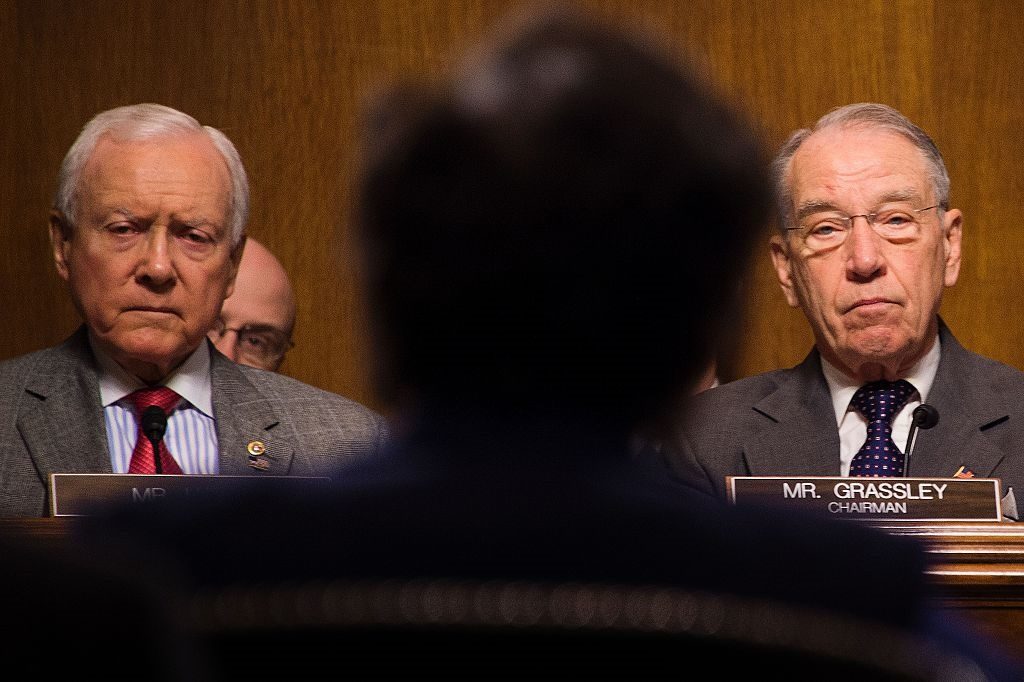
U.S. President-elect Donald Trump‘s proposed Cabinet of top advisers seems headed toward a head-on battle with Senate Democrats, with Dems hoping to give the nominees the a Merrick Garland-esque run-around before any chance of confirmation. Nevertheless, following a long-held tradition in the treatment of incoming presidents, Trump’s fellow Republicans have made Senate confirmation of his Cabinet a top priority. They have already begun to schedule confirmation hearings, in hopes of having the nominees officially confirmed within hours of the president-elect’s inauguration on Jan. 20. Scheduled first for a confirmation hearing is Alabama’s own U.S. Sen. Jeff Sessions, who was tapped Nov. 18 to be Trump’s Attorney General. The Senate Judiciary Committee confirmed on Friday that they have scheduled Sessions’ confirmation hearings for Jan. 10 and 11. “Since President Dwight D. Eisenhower’s nomination of Herbert Brownell to be the 62nd Attorney General in 1953, hearings on a newly-elected president’s Attorney General nominee have been held prior to inauguration,” the Judiciary Committee posted Friday on its official website. “The only exception occurred when President George H.W. Bush retained Dick Thornburgh as Attorney General after he had been confirmed only five months prior under President Ronald Reagan.” According to the Committee, Sessions’s confirmation process will follow the “same timeline as the nomination of Attorney General Eric Holder” under President Barack Obama. More January confirmation hearings are planned to be scheduled in the coming days, ahead of Trump’s inauguration.
Netanyahu hopes to work with Donald Trump to undo Iran nuclear deal
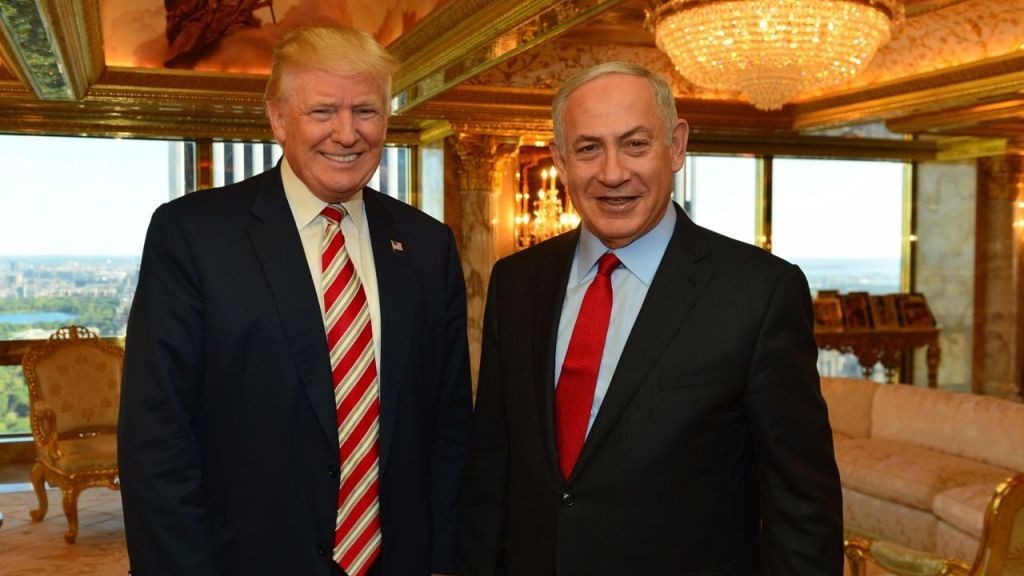
Israeli Prime Minister Benjamin Netanyahu says he believes U.S. President-elect Donald Trump will be a good friend to Israel and hopes the two countries can work together to dismantle the international nuclear agreement with Iran. “I know Donald Trump,” Netanyahu told CBS’s “60 Minutes” in an interview scheduled to air Sunday night. “And I think his attitude, his support for Israel is clear. He feels very warmly about the Jewish state, about the Jewish people. There’s no question about that.” Netanyahu’s remarks are significant in part because critics have accused Trump of tolerating anti-Semitism among some of his supporters. While the two countries are close allies, relations were sometimes tense between Netanyahu and President Barack Obama because of their vastly different world views on the Iran deal and other issues. And there is sentiment in the nationalist Israeli right wing that Trump’s election could usher in a new era of relations with the United States. Netanyahu said in the interview he “had differences of opinion” with Obama and the “most well-known, of course, is Iran.” The Israeli prime minister has been one of the fiercest critics of the nuclear deal. During the campaign, Trump also spoke harshly about it. Iran has long backed armed groups committed to Israel’s destruction and its leaders have called for it to be wiped off the map. Israel fears that Iran’s nuclear program is designed to threaten its existence. Netanyahu said there are “various ways of undoing” the 2015 deal, in which Iran agreed to limits on its nuclear program in exchange for the lifting of international sanctions on its oil industry and finances. “I have about five things in my mind,” Netanyahu said, declining to go into further detail. Republished with permission of the Associated Press.
U.S. defense secretary in Israel as country gets F-35 jets
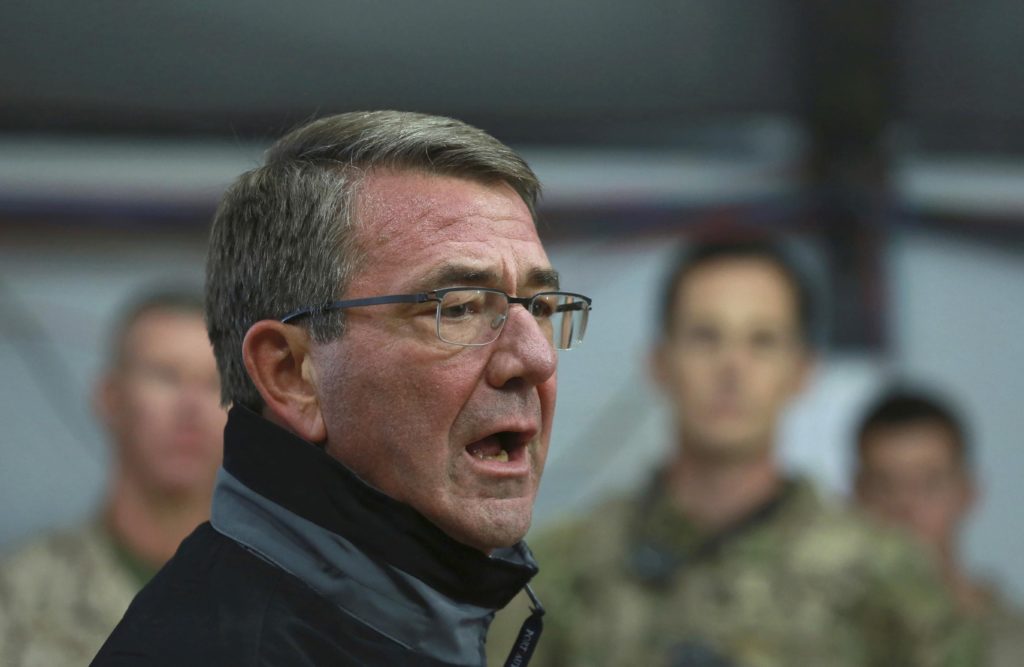
U.S. Defense Secretary Ash Carter was visiting Israel Monday as it prepared to receive the first two next-generation F-35 fighter jets that will help preserve the country’s military edge in the volatile Mideast. The F-35 is the Pentagon’s most expensive weapons program, with an estimated cost of nearly $400 billion. Israel is among a small number of allies to get the plane. Israeli Defense Minister Avigdor Lieberman said the fighter jets “present another component in maintaining air superiority in our region” and expressed gratitude to Carter, who was welcomed with a military honor guard at a Tel Aviv army base. The jets were supposed to touch down in Israel in the early afternoon, but the Israeli military said their arrival was delayed due to weather conditions in Italy. Neither U.S. nor Israeli officials provided further details. The deputy commander of the Nevatim Air Force base in southern Israel said the new fighters will give Israel an upper hand over its neighbors for years to come. “We are going to be very strong for a long time, having these airplanes. And Israel has to be strong in this region for its existence,” said Col. Asaf, who could be identified only by his first name in line with military regulations. “It’s a message for everybody that Israel will keep on holding the high-end technology in this area.” The purchase of the F-35 elevates the entire Israeli air force to a higher level, the colonel said, adding that four Israeli pilots have been trained to fly the planes and that more will be shown how to use them. “This specific airplane is going to be a very good one for the next decades,” he said. In November, a senior Israeli air force official described the arrival of the F-35 as a game-changer, citing its various cutting-edge systems, which would preserve Israel’s ability to act freely in hostile airspace. He cited its long-range capability, its provision of critical data in real time and a stealth system that can evade or delay detection by the world’s most sophisticated radar systems. Speaking on condition of anonymity under military briefing guidelines, he said it would take “more than a few months” for the first planes to be operational. In recent years, Israel has reportedly carried out long-range airstrikes as far away as Sudan, and is believed to have struck Hezbollah-bound weapons shipments in neighboring Syria. Israel has also hinted in the past at making plans to strike Iran, some 1,000 kilometers (625 miles) away, if the Islamic Republic presses forward with its nuclear program. The threat of Israeli action in Iran has dropped since last year’s nuclear accord. The Pentagon’s F-35 program has been criticized by members of the U.S. Congress over testing problems, delays and cost overruns. International buyers include Britain, South Korea, Israel, Italy, Australia, Canada, Turkey and Japan. While the planes were stuck in Italy, U.S. President-elect Donald Trump lashed out against the program. “The F-35 program and cost is out of control,” he tweeted. “Billions of dollars can and will be saved on military (and other) purchases after January 20th,” he wrote. Prime Minister Benjamin Netanyahu‘s office announced last month that his Security Cabinet approved the purchase of 17 additional F-35s. In all, it said, the acquisition will bring the number of planes the air force will receive to 50. Republished with permission of the Associated Press.
US judge rejects Green Party’s Pennsylvania recount case
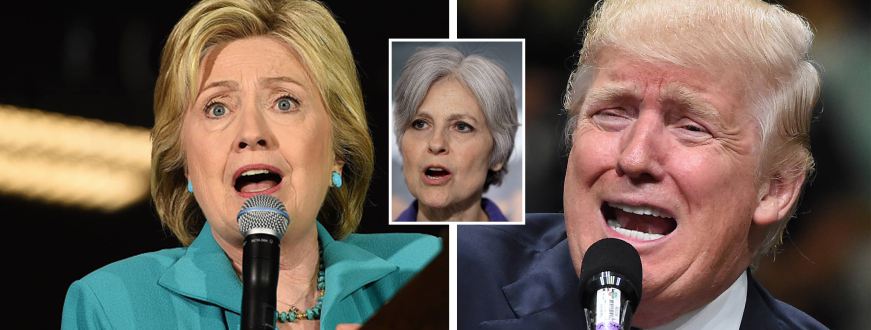
A federal judge on Monday issued a stinging rejection of a Green Party-backed request to recount paper ballots in Pennsylvania’s presidential election, won by Republican Donald Trump, and scan some counties’ election systems for signs of hacking. In his 31-page decision, U.S. District Judge Paul Diamond said there were at least six grounds that required him to reject the Green Party’s lawsuit, which had been opposed by Trump, the Pennsylvania Republican Party and the Pennsylvania attorney general’s office. Suspicion of a hacked Pennsylvania election “borders on the irrational” while granting the Green Party’s recount bid could “ensure that that no Pennsylvania vote counts” given Tuesday’s federal deadline to certify the vote for the Electoral College, Diamond wrote. “Most importantly, there is no credible evidence that any ‘hack’ occurred, and compelling evidence that Pennsylvania’s voting system was not in any way compromised,” Diamond wrote. He also said the lawsuit suffered from a lack of standing, potentially the lack of federal jurisdiction and an “unexplained, highly prejudicial” wait before filing last week’s lawsuit. The decision was the Green Party’s latest roadblock in Pennsylvania after hitting numerous walls in county and state courts. Green Party-backed lawyers argue that it was possible that computer hackers changed the election outcome and that Pennsylvania’s heavy use of paperless machines makes it a prime target. Green Party presidential candidate Jill Stein also contended that Pennsylvania has erected unconstitutional barriers to voters seeking a recount. It is part of a broader effort by Stein to recount votes in Michigan, Pennsylvania and Wisconsin. Trump won all three states narrowly over Democrat Hillary Clinton, while Stein captured about 1 percent of the vote, or less, in all three states. In Pennsylvania, Trump beat Clinton in Pennsylvania by about 44,000 votes out of 6 million cast. A federal judge halted Michigan’s recount last week after three days. The Wisconsin recount was expected to conclude Monday. With about 95 percent of the votes recounted as of Sunday, Clinton had gained 25 votes on Trump, but still trailed by about 22,000. Republished with permission of the Associated Press.
