
Carl Bernstein: Donald Trump ‘thrives in a fact-free environment’
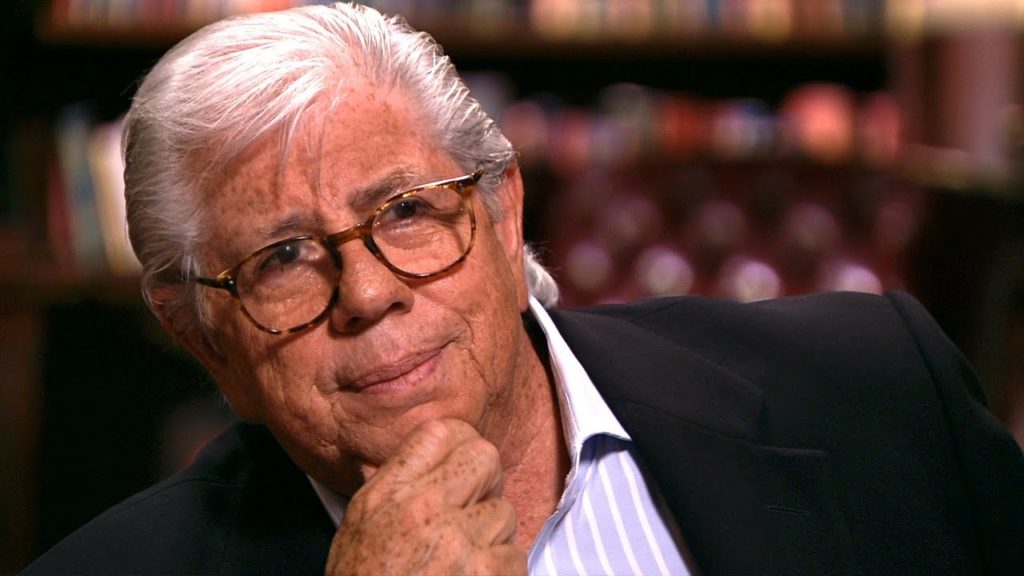
Watergate reporter Carl Bernstein says President-elect Donald Trump “lives and thrives in a fact-free environment.” Bernstein’s reporting with Bob Woodward at the Washington Post in the 1970s exposed the Watergate scandal and eventually led to former President Richard Nixon‘s resignation. Bernstein said during an appearance on CNN’s “Reliable Sources” on Sunday that, “No president, including Richard Nixon, has been so ignorant of fact and disdains fact as this president does.” He says, “it has something to do with the growing sense of authoritarianism he and his presidency are projecting.” He cites as an example Trump using Twitter to slam an Indiana union leader over criticism of Trump’s deal with Carrier. Bernstein says Trump’s approach amounts to “bullying.” Bernstein works as a CNN commentator. The Trump camp didn’t immediately return a request for comment. Republished with permission of the Associated Press.
Bradley Byrne: Early picks show priorities of Trump Administration
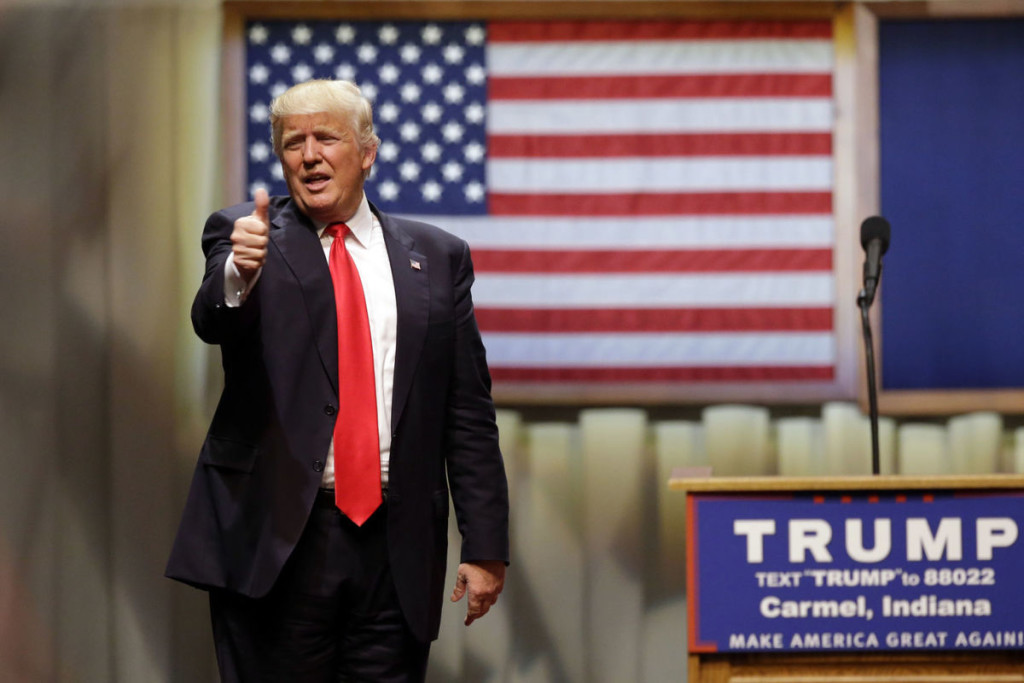
Over the last few weeks, reporters with television cameras have stood watch in the lobby of Trump Tower in New York City to see who is coming and going from meetings with President-elect Donald Trump. Most of the visitors are there to talk to the President-elect about opportunities to serve in his administration, and based on the announcements so far, it is safe to say that President-elect Trump is putting together a great team. I have made clear my strong support for Alabama’s own Jeff Sessions to serve as Attorney General. It was one of the first announcements President-elect Trump made, and it shows that he is going to be serious about enforcing the rule of law and cracking down on illegal immigration. If you haven’t read about General James Mattis, you definitely should. Donald Trump made a fantastic choice in selecting him to lead the Department of Defense. He has a clear record of serving our nation with steadfast leadership, unwavering integrity, and selfless dedication. I know General Mattis will help lead the charge toward a stronger, more capable military. As a member of the House Armed Services Committee, I look forward to working with him to rebuild our military and defeat radical Islamic terrorism. One of the first friends I made upon being elected to Congress was Tom Price, a congressman from Georgia. I was so thrilled to see him selected to lead the Department of Health and Human Services. As an orthopedic surgeon, he understands better than most how Obamacare is ruining our nation’s health care system. Dr. Price has served as chairman of the House Budget Committee for the last couple of years, so he also understands the need to pursue policies that help reduce federal spending and balance the budget. He will do a fantastic job overseeing the repeal and replacement of Obamacare. Elaine Chao, who served as Secretary of Labor under President George W. Bush, has been selected for Secretary of Transportation. We have numerous important transportation projects here in Southwest Alabama, and I look forward to working with Elaine Chao to improve all of our nation’s transportation infrastructure. Dr. Ben Carson is a good choice for the Department of Housing and Urban Development. As someone who grew up in poverty, he has seen firsthand the challenges facing some of our communities. I specifically look forward to working with Dr. Carson to change the way our nation tackles poverty by putting a real emphasis on work and helping connect people with the skills they need to find a job. As a member of the House Education and the Workforce Committee, I am also excited about Trump’s picks for Secretary of Education and Secretary of Labor. Betsy DeVos has dedicated her career to improving educational opportunities for students, and I expect that goal to continue. Andy Puzder, the pick to lead the Labor Department, is a businessman who has seen firsthand how the policies of the last eight years have thwarted economic growth and hurt working families. I am confident that under his leadership, we can swing the pendulum of power away from Big Labor bosses and back in favor of American workers. The selection of Wilbur Ross and Steven Mnuchin to lead the Departments of Commerce and Treasury show that President-elect Trump is serious about always putting American workers first and growing the economy here at home. Each of these cabinet nominees will have to go through the Senate confirmation process, but I am confident the Republican-controlled Senate will expeditiously confirm the nominees so they can get to work. If these picks are an indication of how Donald Trump plans to govern, I think we have much to be excited about in the coming years. • • • Bradley Byrne is a member of U.S. Congress representing Alabama’s 1st Congressional District.
Right to the end, Donald Trump campaign spent less than Hillary Clinton’s
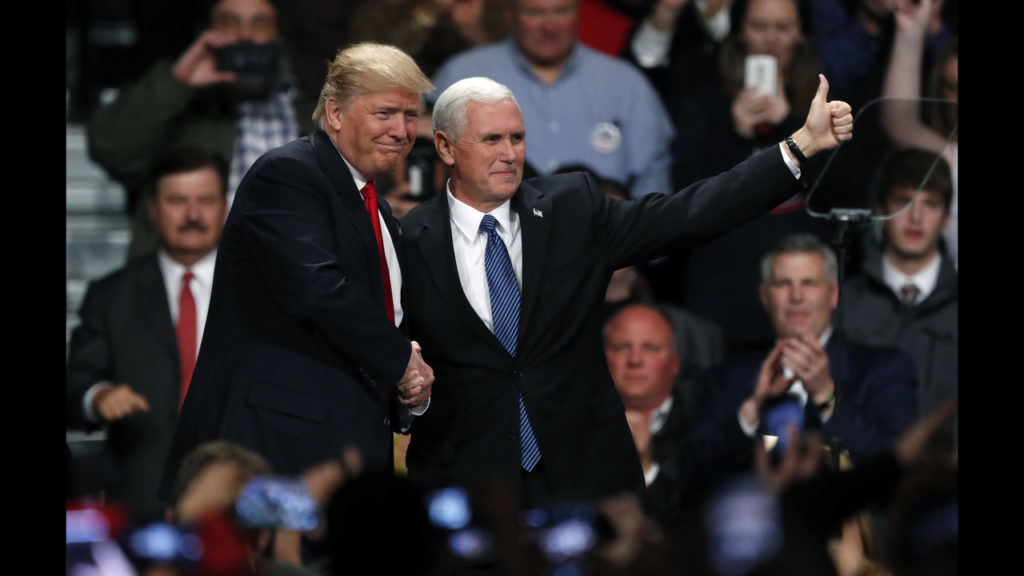
Donald Trump‘s campaign spent about $94 million in its final push for the White House, according to new fundraising reports filed Thursday. The Republican continued his campaign-long trend of spending far less than Democratic rival Hillary Clinton. Her campaign blew through almost $132 million in its closing weeks, according to reports filed Thursday with the Federal Election Commission. The latest reports cover Oct. 20 through Nov. 28. Over the course of the primary and general elections, the Trump campaign raised about $340 million. That included $66 million that the billionaire businessman contributed from his own pocket. The Clinton campaign, which maintained a longer and more concerted fundraising focus, brought in about $581 million. Brad Parscale, Trump’s digital director who was empowered with spending decisions across the campaign, credited strategic last-minute investments with helping propel the political newcomer to victory. Specifically, he told The Associated Press, the campaign and Republican Party spent about $5 million in get-out-the-vote digital advertising targeted in the final few days to Michigan, Wisconsin, Pennsylvania and Florida. That proved critical; some of those states were won by razor-thin margins. “You think, what if we hadn’t spent that?” Parscale said. “We might not have won.” Another investment that he said paid dividends was $7 million to air a two-minute “closing” television commercial. “Our movement is about replacing the failed and corrupt political establishment with a new government controlled by you, the American people,” he said as images from his rallies rolled across the screen. The final FEC report showed the extent of the Trump advertising splurge. The campaign spent nearly $39 million on last-minute TV ads and another $29 million on digital advertising and consulting work done by Parscale’s firm. Clinton’s campaign placed a far greater emphasis than Trump on television advertising, a more traditional way of reaching swaths of voters. She spent $72 million on TV ads and about $16 million on internet ads in the final weeks. The former secretary of state also spent more than $12 million on travel — about double what Trump spent. Clinton, who not only had a money advantage over Trump but a staffing edge, spent more than $4 million on a nearly 900-strong payroll. Still, Clinton’s top campaign aides have acknowledged in post-election appearances that it didn’t always spend money in the right places. Her campaign manager Robby Mook said at a gathering of political strategists and journalists last week at Harvard University that he regretted not putting more staff in Michigan. When the state certified its results — 20 days after the election— Trump had won by just under 11,000 votes. Outside groups that spent money on the presidential election also filed reports Thursday. Trump got help from the super political action committees Future 45, Make America Number 1 and Rebuilding America Now. Future 45 and a partner nonprofit that does not disclose donors spent late in the campaign but became Trump’s biggest outside investors. Las Vegas casino magnate Sheldon Adelson and his wife, Miriam, together gave $10 million to Future 45 in the final weeks of the campaign, the new reports show. Former wrestling executive Linda McMahon, who Trump named this week as head of the Small Business Administration, gave $1 million to the group in October. She’d earlier given $6 million to Rebuilding America Now. Make America Number 1 benefited from a $1 million donation by PayPal co-founder Peter Thiel, now an executive on the Trump transition team. On Clinton’s side, Priorities USA — which raised and spent more than any super PAC in history — landed $16 million in the final weeks of the campaign. That brought its total haul to about $192 million. Some of the group’s final seven-figure contributions came from its most loyal donors: media mogul Haim Saban and investors James Simons and Donald Sussman. The 2016 election is over — but the fundraising continues. The president-elect has raised millions of dollars since Nov. 8. That money is coming in mostly through purchased merchandise such as hats and ornaments and is paying for Trump’s “thank you” tour, which took him to Ohio and Iowa on Thursday. Republished with permission of The Associated Press.
Donald Trump praises Michigan GOP while weighing RNC chairman call
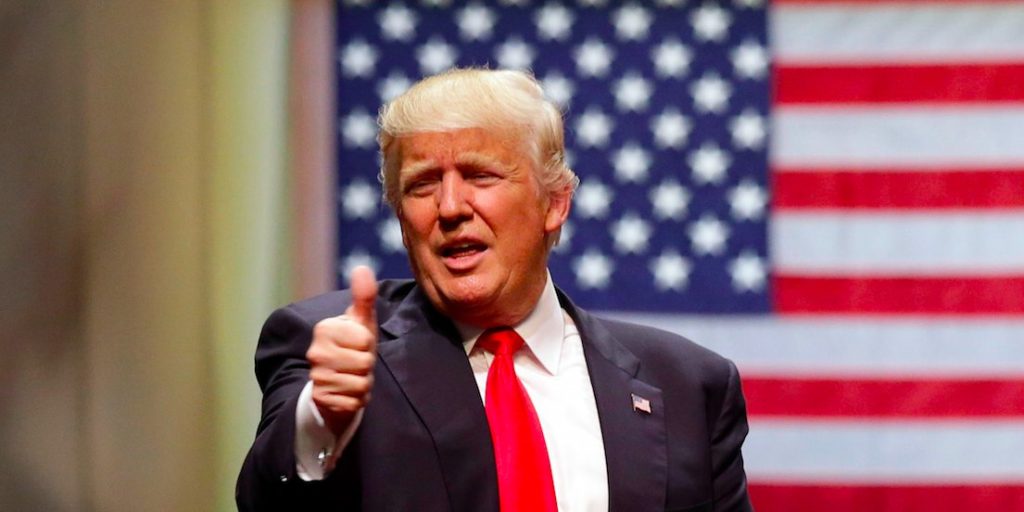
Donald Trump may have more than just his gratitude to offer in Michigan when he visits the state that capped his stunning presidential victory last month. Michigan Republican Party chairwoman Ronna Romney McDaniel is a leading contender for the Republican National Committee’s chairmanship. There was no immediate sign from Trump’s transition team Thursday that the billionaire planned to offer McDaniel the leadership post. The niece of 2012 GOP presidential nominee Mitt Romney is not the only contender. Rising national star Nick Ayers, a senior aide to Vice President-elect Mike Pence, also has vocal support from influential GOP figures. Whoever takes the post will face immediate pressure to hold onto control of Congress in 2018. Along with Trump’s public admiration, McDaniel has factors working in her favor, not the least of which is representing Republicans in a state that, until last month, was carried by Democrats in six consecutive presidential elections. McDaniel is scheduled to speak at a victory rally Trump plans to attend Friday in Grand Rapids. “Ronna’s record speaks for itself. The president-elect owes his success to the Rust Belt. Having a national party chair from here makes sense,” said Bob LaBrant, a Michigan GOP activist and former political director of the Michigan Chamber of Commerce. As Trump assembles his Cabinet, the party’s leadership is also his to recommend. Republican National Committee Chairman Reince Priebus, whom Trump has asked to serve as White House chief of staff, was a close adviser to Trump during the campaign. Priebus’ legacy – investing early in campaign staff and technology in key states – ahead of the 2018 midterms and 2020 presidential election is something an existing RNC member, as McDaniel is, would be inclined to follow, party insiders say. Priebus has been publicly silent on whom he’d like to succeed him. But Trump singled her out for praise during a packed New York City fundraiser Wednesday. Top supporters and donors gathered for a private thank-you session, whose attendees included McDaniel, Michigan Attorney General Bill Schuette and about 1,000 others. “The president-elect gave a big shout-out to Ronna” and said she had a “big opportunity,” Schuette recalled of Trump’s comments. Only a handful of individuals were mentioned by name, Schuette said. “I think that’s pretty significant.” Despite her uncle’s sharp criticism of Trump, the 43-year-old McDaniel fully endorsed the nominee who frustrated many in his party’s establishment. And still she’s widely admired across the RNC’s membership, several RNC members said. “I hold her in high regard,” Arizona committeeman Bruce Ash said. Other assets supporters cite: She is a quick study, has a solid fundraising reputation and has a strong Republican pedigree. Besides Uncle Mitt, the Michigan Romneys include her grandfather, the late former Gov. George Romney. After executing Michigan’s GOP election plan to victory, she next converted the state GOP into Trump’s recount legal team. She retained top lawyers who persuaded the state appeals court this week to deny Green Party candidate Jill Stein’s call for a recount. McDaniel did not requests for comment Thursday but told The Associated Press last month she’d be “interested in whatever Mr. Trump wants.” Some close to Trump are recommending Ayers, who has credentials that seem to defy his 34 years. Ayers was the Republican Governors Association executive director in 2010, a successful year for Republican state executives, and was a key adviser to Pence’s 2012 governor’s race. He joined Trump last summer, mainly helping Pence. He now advises Pence, who is chairman of the transition. “Trump allies are encouraging Nick to run,” Trump spokesman Jason Miller told The Associated Press this week. Ayers counts heavyweights former Mississippi Gov. Haley Barbour, a former RNC chairman, former Texas Gov. Rick Perry and incoming Missouri Gov.-elect Eric Greitens among his backers. “The fact is Nick wins,” said Greitens, whom Ayers advised during his 2016 campaign. “I am 100 percent behind Nick Ayers.” The showdown between Romney and Ayers has the makings of the first power struggle within Trump’s budding administration. Then again, the unpredictable Trump could always surprise. Others said to be interested: Matt Pinnell, RNC liaison to state parties; David Bossie, committeeman from Maryland; David Urban, Pennsylvania GOP operative. One name won’t be in contention. New Jersey Gov. Chris Christie, who had expressed interest, is no longer considering seeking the party chairmanship, Christie aides said Thursday. Republished with permission of The Associated Press.
Donald Trump picks fast food executive Andrew Puzder for Labor
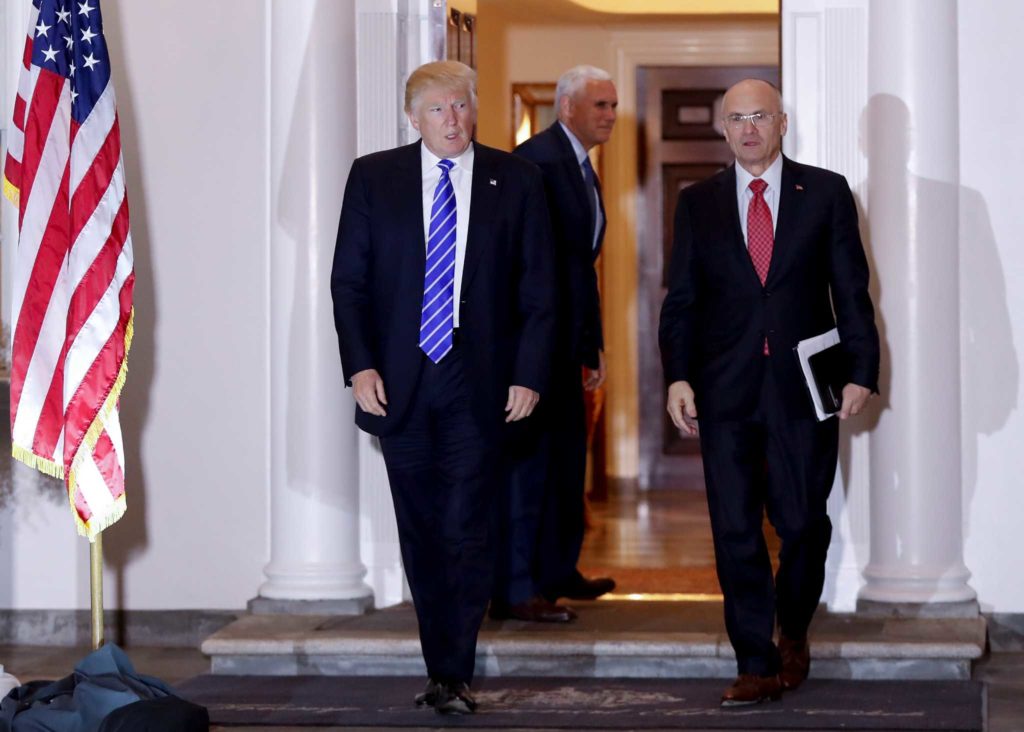
President-elect Donald Trump plans to add another wealthy business person and elite donor to his Cabinet, saying he would nominate fast-food executive Andrew Puzder as labor secretary. Puzder heads CKE Restaurants Holdings, the parent company of Carl’s Jr., Hardee’s and other chains. In 2010, he published a book called “Job Creation: How it Really Works and Why Government Doesn’t Understand It.” “Andy will fight to make American workers safer and more prosperous by enforcing fair occupational safety standards and ensuring workers receive the benefits they deserve, and he will save small businesses from the crushing burdens of unnecessary regulations that are stunting job growth and suppressing wages,” President-elect Trump said in a statement. Puzder, in the same statement, said he was honored “to help President-elect Trump restore America’s global economic leadership.” The Californian was one of Trump’s earliest campaign financiers, serving as a co-chairman of his California finance team and organizing fundraisers well before most major donors got on board with the eventual Republican nominee. Together with his wife, Puzder contributed $150,000 in late May to Trump’s campaign and Republican Party partners, fundraising records show. As one of Trump’s most outspoken defenders, Puzder frequently appeared on cable news and Twitter to talk up the benefits of having a business leader in the White House. A week after Trump’s election, Puzder said he agreed with Trump’s aim to ease business regulations. “We’ve reached the point where overregulation is doing meaningful damage to our businesses,” he said last month at the Restaurant Finance & Development Conference in Las Vegas, citing high labor costs, increased health care costs and “political and social” policies as hindrances. Union leaders decried Puzder as a secretary who would look out for millionaires – but not workers. AFL-CIO President Richard Trumka said in a statement that Puzder’s “business record is defined by fighting against working people.” Incoming Senate Minority Leader Charles Schumer said there’s reason to be skeptical about Puzder. “Turning the Labor Department over to someone who opposes an increase in the minimum wage, opposes the overtime rule that would raise middle class wages, and whose businesses have repeatedly violated labor laws might be the surest sign yet that the next cabinet will be looking out for the billionaires and special interests, instead of America’s working class,” Schumer said in a statement. Trump’s selection won praise from the National Retail Federation, however. “Andrew Puzder is someone with the real-world experience to understand workforce issues and how jobs are created,” said David French, NRF’s senior vice president for government relations. Trump’s recent appointments have reflected his desire to turn to business leaders – who also were campaign donors. Trump tapped former WWE chief executive and top campaign contributor Linda McMahon to lead the Small Business Administration. He also selected his campaign’s national finance chairman Steven Mnuchin, a former Goldman Sachs executive and hedge fund investor, as Treasury secretary. Puzder visited with Trump several times since the election, including a meeting Wednesday afternoon at Trump Tower. He has long been a reliable GOP donor. He was a major financier for 2012 GOP nominee Mitt Romney and has remained close to him. At Romney’s annual donor summit in June, Puzder was one of just a few attendees who aggressively promoted Trump to the dozens who were more squeamish about their party’s new star. He told The Associated Press at the Republican National Convention in late July that he enjoyed the challenge of raising money for Trump, saying he often sought common ground with reluctant GOP donors by talking up Trump’s children. “If he’s such an evil villain,” Puzder said he would tell would-be donors, “how do you explain the kids?” Republished with permission of The Associated Press.
Martin Dyckman: Of Donald Trump and Abe Lincoln
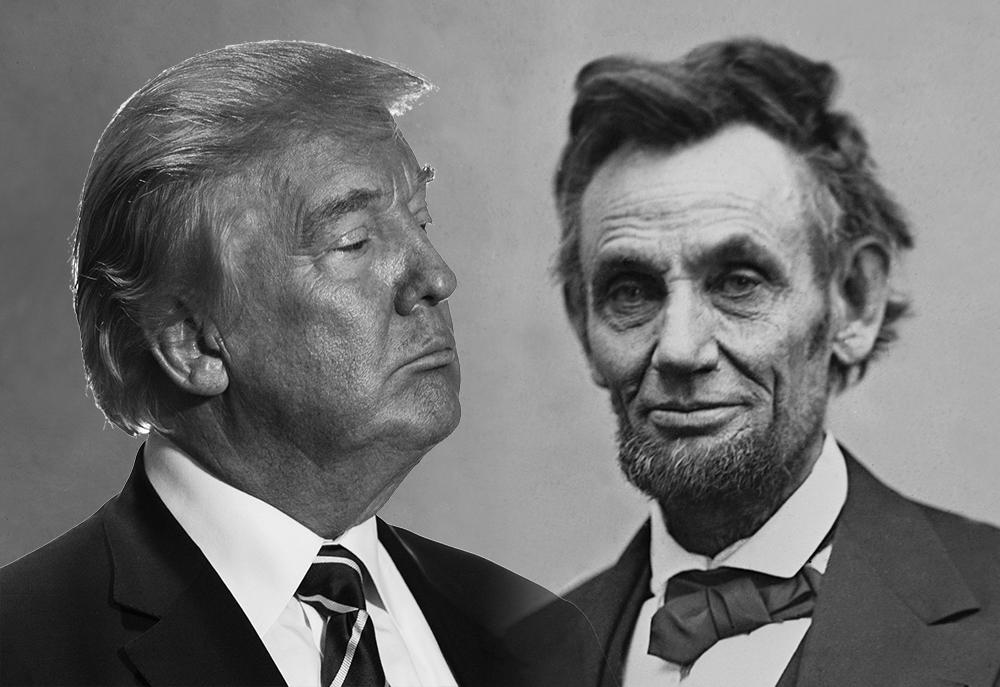
Donald Trump, who stays up late watching himself being satirized on “Saturday Night Live” and snarling at his critics on Twitter, could make better use of his time by reading some American history—specifically, about Abraham Lincoln. Granted, “Trump” and “Lincoln” don’t seem to belong in the same sentence, but there are parallels, and a distinction, that would be in the nation’s interest, as well as his own, for the president-elect to take to heart. For one, he’s on track to become the most reviled president since Lincoln, who was universally honored only after his assassination. Various Lincoln websites recount an unceasing torrent of venom. “He is no more capable of becoming a statesman, nay, even a moderate one, than the braying ass can become a noble lion,” said the Salem Advocate, a newspaper in Lincoln’s home state before his inauguration. “The European powers will despise us because we have no better material out of which to make a President.” It got worse. The Chicago Times called the Emancipation Proclamation “a monstrous usurpation, a criminal wrong, and an act of national suicide.” In 1864, when even Lincoln was sure he would be defeated for re-election, the New York World quoted with approval from the Richmond Examiner, “The obscene ape of Illinois is about to be deposed from the Washington purple, and the White House will echo to his little jokes no more.” Some in the press panned even his inaugural and Gettysburg addresses, now considered among the greatest ever spoken. “He was called a coward, ‘an idiot,’ and ‘the original gorilla’ by none other than the commanding general of his armies, George McClellan,” wrote Mark Bowden in the June 2013 Atlantic. Here’s the distinction. Although Lincoln had nothing like Twitter to bite back at his critics, he would not have used it. “If I were to try to read, much less answer, all the attacks made on me, this shop might as well be closed for any other business,” he told Francis B. Carpenter, a portrait artist who spent six months in the White House in 1864. ” … If the end brings me out all right, what is said against me won’t amount to anything. If the end brings me out wrong, 10 angels swearing I was right would make no difference.” Such wisdom, it’s plain to see, is not one of Trump’s virtues. But if anyone has his ear, he needs to be told that his Twitter outbursts are harmful not only to the country, but to him. Each one inspires more criticism than it answers, and sharpens the perception of him as a narcissistic, thin-skinned and undignified bully. The potential for harm to others is real and it is great. A union leader in Indianapolis received threats against his children after debunking Trump’s claim to have saved as many as 1,100 jobs at a Carrier factory. Trump’s tweet threatening to cancel Boeing’s contracts for two new presidential airplanes, sent shortly after its CEO had warned of the costs of a trade war with China, temporarily carved nearly $1.5-billion out of its market value, a severe loss for any stockholder who was panicked into selling. “The President-elect’s tendency to go after people who criticize him by spreading false and provocative statements about them to his 16 million Twitter followers is not only dangerous to those people,” wrote former labor secretary Robert Reich on Facebook. “The practice poses a clear and present danger to our democracy, which depends on the freedom to criticize those in power without fear of retribution. No President or President-elect in history has ever publicly condemned individual private citizens for criticizing him. Unchecked, this is the start of tyranny.” Trump acts as if thinks he’s Teflon-coated — and his outrageously bad Cabinet choices so far certainly reflect that — but it’s his “petty” and “vindictive” outbursts, as Reich describes them, that will wear thin on the public faster than anything else. Electing a bomb-thrower who’ll “clean the swamp” is one thing. Watching him disgrace the office he won is much different. Among other things, his outbursts stoke the fear of him taking rash actions with disastrous consequences. What is the point, he wondered aloud during his campaign, of having nuclear weapons if we don’t use them? Abraham Lincoln could not have imagined nuclear weapons, but he would have known the answer to that question. Trump’s hot-blooded temper tantrums serve warning that he hasn’t learned it yet. ___ Martin Dyckman is a retired associate editor of the newspaper now known as the Tampa Bay Times. He lives in Asheville, North Carolina.
Chief of staff Reince Priebus? Some Donald Trump loyalists still dubious
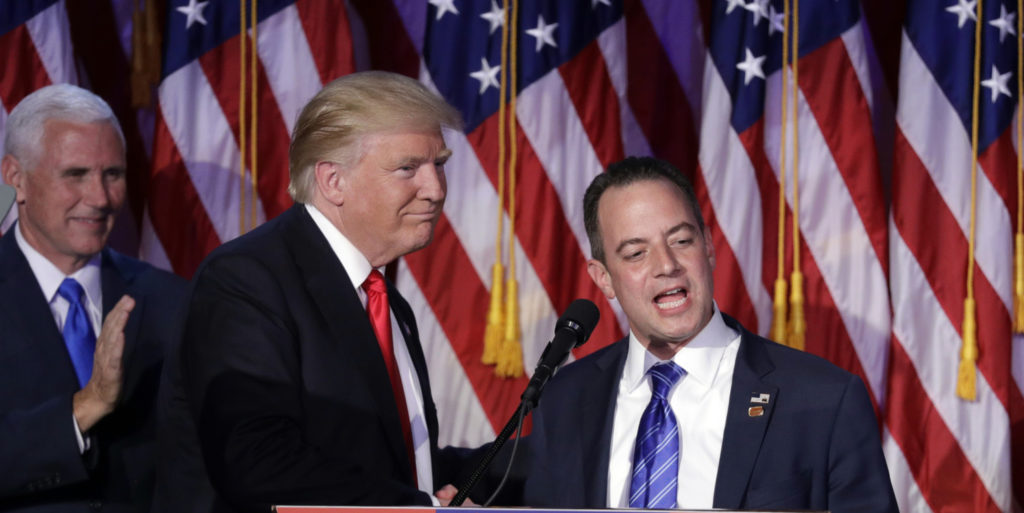
When President-elect Donald Trump tapped Reince Priebus as his chief of staff, Republican leaders cheered the prospect of a close ally having a top White House job. But as Priebus tries to wield his influence and bring more structure to the president-elect’s freewheeling political organization, he’s frustrating some longtime Trump allies who see him as too conventional a pick for an unconventional president. Others fear being left behind as Priebus fills out West Wing jobs. The dismay over Priebus stems in part from a belief among some Trump loyalists that the outgoing Republican National Committee chairman expected Trump to lose the election. They resent the president-elect “rewarding people who thought he wasn’t going to win,” according to one top adviser. Still, Priebus appears to have Trump’s trust. He’s been given wide authority to name senior White House staff, according to people involved in the transition, and in shaping the decision on who will succeed him at the RNC, though deliberations over that post continue. “Reince Priebus has done an outstanding job,” Trump said in a statement to The Associated Press. “All you have to do is look at all of the Republican victories and one in particular.” If Trump runs his White House like past presidents — and that’s hardly a sure thing — Priebus, 44, could hold enormous sway over what issues reach the Oval Office. Chiefs of staff also typically control who has access to the president — no easy task given Trump’s penchant for consulting a wide network of associates before making key decisions. Priebus, a Wisconsin native and father of two young children, comes to the White House with no significant experience in foreign and domestic policy. He has close ties with House Speaker Paul Ryan and other GOP congressional leaders. And he’s seen by those who have worked with him previously as a well-organized manager with little appetite for drama. “One of the things he’ll bring to the White House is an ability to work well with people, to be inclusive, not to get in to intrastaff squabbles,” said Henry Barbour, an RNC member and Priebus ally. Yet internal squabbling and competing factions are a hallmark of Trump’s political and business organizations. He cycled through three campaign managers during his White House run, with the feuds that led up to each shake-up playing out messily in the media. In tapping Priebus as chief of staff, Trump appeared to be setting up another rivalry. He put Steve Bannon, the controversial conservative media executive, at the White House as a senior adviser and called him an equal partner with Priebus. Trump’s influential son-in-law, Jared Kushner, is also weighing a White House role, but will remain a personal power center even without a formal position. Transition officials say Priebus and Bannon have a respectful relationship, and there’s no outright control struggle underway. But Trump’s deliberation over whom to name as secretary of state is seen as an indicator of a tug-of-war, with Bannon among those said to be against Mitt Romney. Priebus is seen as an advocate for Romney and was notably the only adviser who joined Trump for a private dinner with the 2012 GOP presidential nominee. Several Trump advisers described Priebus’ role only on the condition of anonymity in order to speak candidly about the chief of staff. Josh Bolten, who served as President George W. Bush‘s final chief of staff, said he was concerned by the description of Bannon as Priebus’ equal. While presidents usually have multiple influential advisers, Bolten said, it’s imperative for the lines of authority to be clear. “If that were to mean that there’s more than one chief of staff, that’s a recipe for disaster,” Bolten said. Bolten is among several former chiefs of staff Priebus has consulted since the election. He’s spoken at least twice with Denis McDonough, President Barack Obama‘s chief of staff, as recently as last week. Priebus was frequently by Trump’s side in the final weeks of the campaign. After the release of a videotape in which the businessman was heard bragging about predatory behavior with women, Priebus stood by Trump and made clear the RNC would not abandon the party’s nominee. But some Trump advisers contend Priebus and the RNC believed he would lose the election. Indeed, on the Friday before Election Day, top party officials told reporters their data showed Trump falling short by about 30 electoral votes. Some Trump advisers have also blamed Priebus for the messy spectacle around the president-elect’s interview with The New York Times. Trump accused the Times of changing the terms of the interview and tweeted that he would cancel. Then the Times said the terms had not changed, and the interview was back on. One person involved in the situation said it was Priebus who incorrectly led Trump to believe the Times had changed the terms of the interview. “No matter how loyal the overall collection of personalities is to the president, there are always internal rivalries and tugging and pulling,” said John Sununu, who served as chief of staff to President George H.W. Bush and has spoken with Priebus in recent weeks. “It’s up to the chief of staff to deal with all of that.” Republished with permission of The Associated Press.
Alabama Senate Minority Leader gives Jeff Sessions thumbs up as AG

The minority leader of the Alabama State Senate has come forward in support of Republican U.S. Sen. Jeff Sessions’ nomination as Attorney General. Montgomery Sen. Quinton Ross said he has been in close contact with Sessions since he was nominated by President-elect Donald Trump and that he looks forward to working with Sessions if he is confirmed as the next Attorney General. “We cannot ignore the fact that he is on the winning team. No matter what side of the political spectrum you are on,” Ross said. Ross was high school student in Pontiac, Mich., when Sessions failed to be confirmed to a federal judgeship in the 1980s due to allegations of racism, though as an education administrator and an elected official Ross said he has had a positive working relationship with Sessions over the past 20 years. “I have worked with Sen. Sessions on education policy and securing federal funding for our schools,” Ross said. “Additionally, I have spent time with him at the Magic City Classic and at Heritage Barbershop in Montgomery. I know him personally and all of my encounters with him have been for the greater good of Alabama.” Ross added that he didn’t think Sessions’ application of the law would be biased and that he sees value in having a person in Washington who will be accessible to his constituents. “We’ve spoken about everything from Civil Rights to race relations and we agree that as Christian men our hearts and minds are focused on doing right by all people,” Sen. Ross said. “We both acknowledge that there are no perfect men, but we continue to work daily to do the right thing for all people.”
Donald Trump’s choice for top China diplomat has long ties to Xi
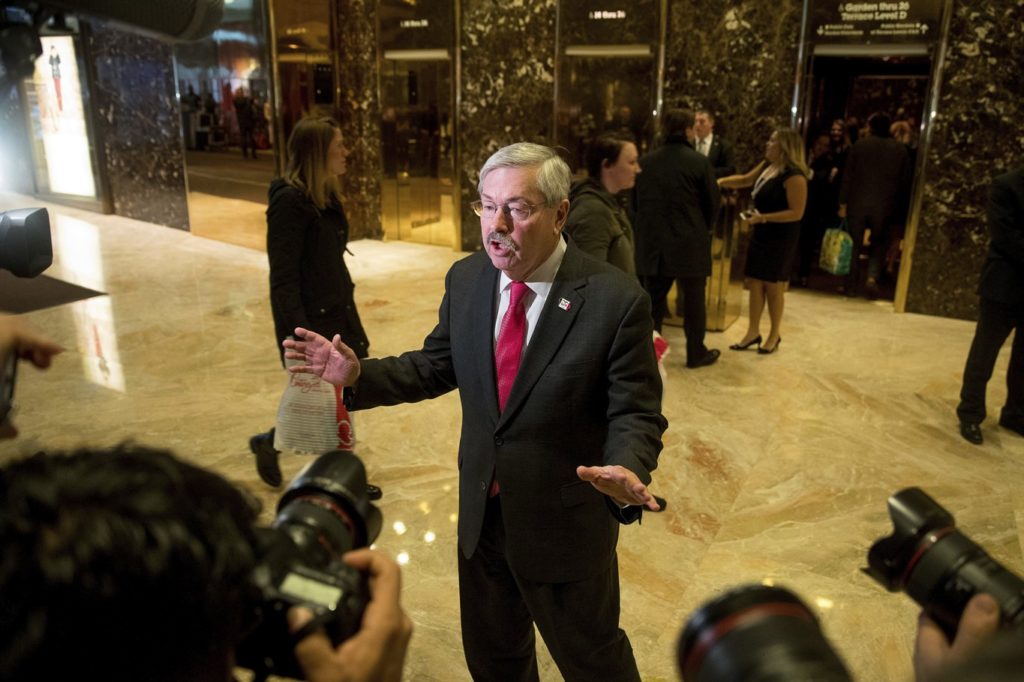
It may seem odd for the governor of a lightly populated agricultural state to be chosen as U.S. ambassador to China, especially amid escalating talk of a trade war with the major U.S. trading partner. But Iowa Gov. Terry Branstad boasts a 30-year relationship with Chinese President Xi Jinping, the most powerful Chinese leader in decades. “Given Xi’s penchant to keeping things close-hold, it is important for the U.S. to have a reliable and direct communication channel to him,” said Bonnie Glaser, senior adviser for Asia at the Center for Strategic and International Studies. “Branstad has met Xi periodically since 1985 and has a personal relationship with him that could be very useful.” This relationship, begun when both men were political upstarts, could be put to the test in coming months if Branstad is confirmed. President-elect Donald Trump, who announced his choice of Branstad on Wednesday, said during the campaign that his administration would make closing the U.S. trade deficit with China a top priority. Through the first 10 months of the year, government figures show the United States is running a $288.8 billion deficit with China on the trade of goods, a sharp decline from the same time a year ago. But Trump has suggested imposing 45 percent tariffs on Chinese products and has labeled the country a “currency manipulator.” Chinese officials have warned that the U.S. is bound by World Trade Organization rules, which restrain countries from imposing sanctions without making a persuasive case. In that way, Trump’s selection of Branstad appears to be savvy. Patrick Cronin, senior director of the Asia-Pacific security program at the Center for a New American Security, said that by selecting an ambassador who has forged commercial ties between his state and China, Trump was signaling to Xi that as leaders they will have the same fundamental priority in seeking economic growth. In 1985, Branstad was nearing the end of his first term as governor, then the nation’s youngest at age 39. Xi was a rising leader seeking ideas in Iowa for crop and livestock techniques to help his own agriculturally rich region. In 2013, he returned to Iowa as China’s incoming president and met with Branstad for a formal dinner in Des Moines between meetings in Washington with President Barack Obama and a trip to California. If Trump’s threats suggest the U.S.-China relationship could be bumpy, Branstad’s longtime relationship with Xi could help smooth things. His personal touch could go a long way in avoiding conflict caused by miscommunication or misinterpretation. Trump angered China by speaking to Taiwan’s president last week in a breach of diplomatic protocol. China still regards the island as part of its territory and would consider it unacceptable for the U.S. to recognize Taiwan’s leader as a head of state. China’s state-run news agency Xinhua said in a Thursday commentary that Branstad’s appointment is a “positive signal sent amid a mixture of messages from Trump,” a reference to Trump’s call with Taiwan leader Tsai Ing-wen and his criticism of China on trade and geopolitical issues. At a daily news briefing on Thursday, Chinese Foreign Ministry spokesman Lu Kang said China considered the position of U.S. ambassador to Beijing to be “an important bridge” and that “Governor Branstad is an old friend of the Chinese people.” Cronin said he wouldn’t overstate the importance of the role of an ambassador in the modern era or the depth of Branstad’s personal ties with Xi. “I don’t think anyone is a drinking buddy of Xi Jinping, but familiarity is useful and could advance U.S. diplomacy,” he said. Branstad’s rapport with Xi could also outweigh the courtly, 70-year-old Midwesterner’s lack of formal diplomatic experience, though he has made multiple trips to China to pitch Iowa’s robust harvests, as recently as last month. Knowing the Chinese leader personally is even more important than it might have been in the past. Previous Chinese leaders ruled by consensus, but Xi has consolidated power in his hands, ousting rivals in an anti-corruption campaign and taking on responsibility for economic policy, typically the purview of the government’s No. 2 official, now Li Keqiang. Republican Sen. Marco Rubio appeared to criticize the choice Wednesday, calling for the Trump administration to press China’s government and ruling Communist Party to respect human rights and uphold the rule of law. “It is my hope that this new administration will appoint an ambassador to China that reflects these priorities, not simply someone who is going there to catch up with old friends,” Rubio said without mentioning Branstad by name. Trump, who met with Branstad Tuesday in New York, travels Thursday to Iowa. Republished with permission of The Associated Press.
You’re Hired? Inside the interviews as Donald Trump picks Cabinet
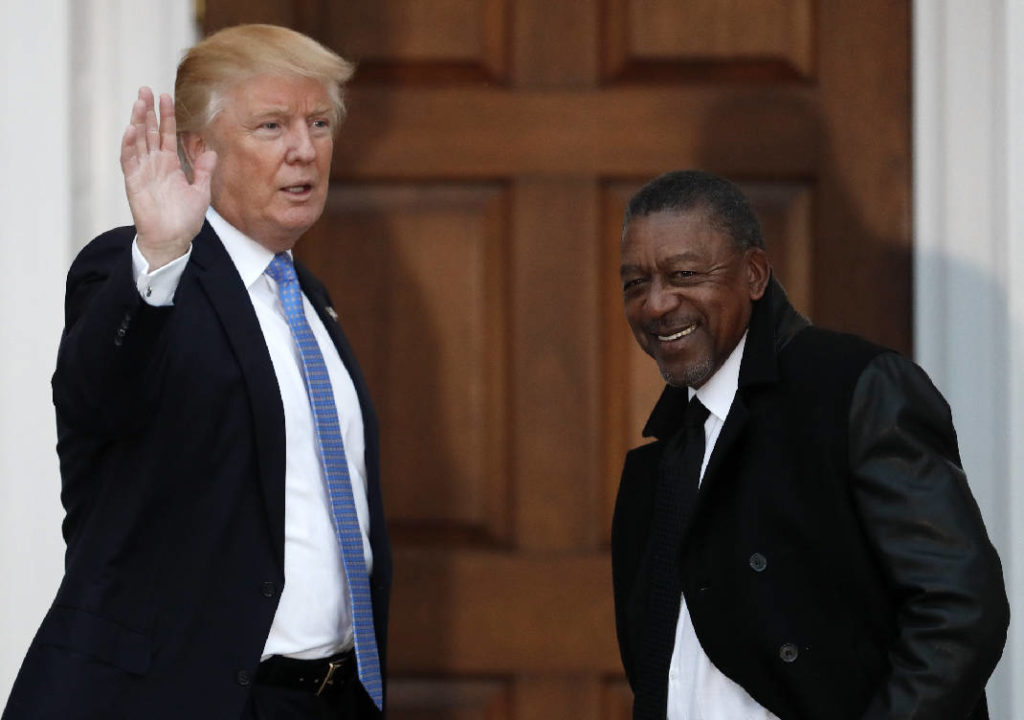
When Robert Johnson, the founder of Black Entertainment Television, arrived to a recent meeting with Donald Trump, the president-elect greeted him with a blunt question. “Did you think I was going to win?” Trump asked. The entertainment mogul, who has known Trump socially for years, offered an honest and candid response: “No,” he said, drawing a smile from Trump. Johnson is one of dozens of people who have paraded into Trump’s properties in New York and New Jersey in recent weeks for job interviews and other consultations. Several described the meetings as serious, yet conversational, with the president-elect leading the discussion and asking questions extemporaneously, with few notes in front of him. Senior adviser Steve Bannon and incoming White House chief of staff Reince Priebus sit in on most of the interviews, occasionally jumping in with their own questions. Jared Kushner, Trump’s son-in-law, has also participated in some of the discussions. The meetings, which run up to an hour, are bare-bones affairs, with glasses of water the only refreshment offered. “It wasn’t a cookies and cream kind of deal,” said Sonny Perdue, the former Georgia governor who is in the mix for Trump’s Agriculture secretary. “It was a business meeting, with a CEO interviewing an applicant for a job.” In the month since his victory, Trump has announced picks for about half of the Cabinet, assembling an eclectic group of political insiders, wealthy financiers and campaign loyalists. He’s moving at a faster clip than President Barack Obama, who ran a more traditional and secretive selection process, assigning teams of lawyers to pour through potential nominees’ backgrounds and carefully guarding the names of those being interviewed. Trump, a one-time reality television star, is carrying out his process with a showman’s touch, at times even deliberating about his choices publicly. Interviewees walk past a gaggle of journalists assembled in the lobby of Manhattan’s Trump Tower or on the driveway of his Bedminster, New Jersey, golf club before being whisked into their meetings. The Manhattan meetings take place in the president-elect’s business office, which features an expansive view of Central Park. Trump sits behind his desk, surrounded by memorabilia and stacks of reading material, the walls dotted with magazine covers and other photos of the real estate mogul. John Allison, the former chairman of BB&T Corp. who was invited to interview for Treasury secretary, said he was not asked to submit any personal or financial information to Trump’s team ahead of the interviews. Still, he said Trump and his senior team had “obviously researched my background.” Others who described their interview process to The Associated Press said they, too, were not asked by Trump’s team to provide vetting information, raising questions about how the candidates’ background and financial ties are being scrutinized. Trump advisers did not respond to inquiries about the extent of the vetting process. Perdue, who was also not asked to submit any personal information, said it appears Trump is interested in the public’s reaction to his potential picks and the issues that surface in the media after their meetings. “I think they kind of slowly let this stuff out to see what bubbles up,” Perdue said. “That’s part of the process.” Vice President-elect Mike Pence, who is running Trump’s transition, has helped arrange some of the meetings, but is not sitting in on all of them. Those who are invited to meet Trump arrange their own transportation, including secretary of state candidate Mitt Romney, who was spotted waiting in a taxi line at New York’s John F. Kennedy airport. While most of Trump’s meetings have been held in Manhattan, Romney’s first meeting with the president-elect took place at the Bedminster golf club. Johnson, the BET founder, also met Trump there, huddling with his longtime acquaintance in a conference room on the property. Johnson said Trump quickly cut to the chase, asking if he would be interested in joining the Cabinet. Johnson said he didn’t have any interest in working in government but did want to offer his views on issues related to black voters. “It ended with me telling him, ‘I want to be helpful to you if I’ve got an open door to make my case that I think are in the best interests of African-Americans,’ Johnson said. Allison said his interview focused on economic policy, including taxes and regulation and the Dodd-Frank Wall Street reform bill, which Trump vowed to dismantle during the campaign. However, Allison said Trump now appears more focused on a major restructuring of the legislation during their hour-long discussions. “We agreed that while it would be good to repeal Dodd-Frank, it would be difficult politically,” Allison said. Following his meeting with Trump, Allison said he spent about 20 minutes with Steve Mnuchin, who ran the Trump campaign’s finance operations. Trump ultimately picked Mnuchin for the Treasury job, the one Allison had come in to discuss. Allison also learned he’d been passed over for the job from Mnuchin. He left him a message with the news. Republished with permission of The Associated Press.
Union president Chuck Jones challenges Donald Trump on Carrier
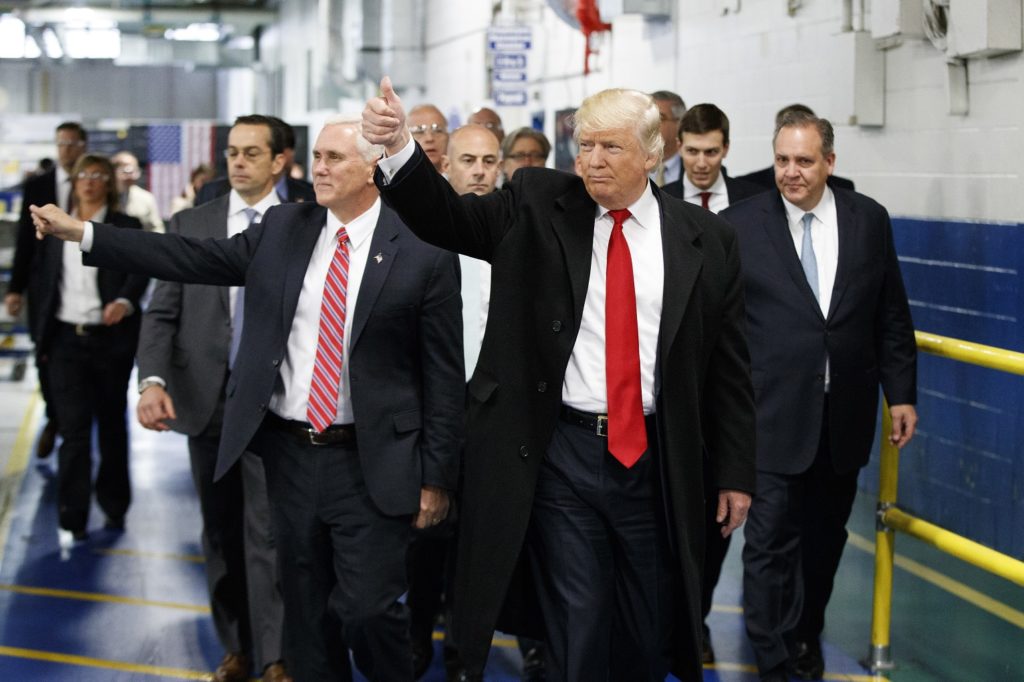
The union president slammed by Donald Trump on Twitter challenged the president-elect Thursday to back up his claim that a deal to discourage Carrier Corp. from closing an Indiana factory would save 1,100 American jobs. “He overreacted, President-elect Trump did,” United Steelworkers 1999 President Chuck Jones told CNN. “He should have come out and tried to justify his numbers.” Trump and Vice President-elect Mike Pence – governor of Indiana – visited Carrier’s Indianapolis factory Dec. 1 to celebrate the deal. Trump suggested then that the number of jobs saved could top 1,100. Jones says the total is much less because more than 400 jobs will still be lost from the Indianapolis plant. “A lot of the people thought at that time thought that they were going to have a job” who might not, Jones said Thursday. Late Wednesday, Trump tweeted: “Chuck Jones, who is President of United Steelworkers 1999, has done a terrible job representing workers.” That local union branch represents workers at Carrier’s Indianapolis plant. In a second tweet, Trump suggested Jones should “Spend more time working – less time talking” and the union should “Reduce dues.” About 30 minutes after Trump tweeted about Jones, the union leader started getting harassing phone calls, he told MSNBC. He said one caller asked: “What kind of car do you drive?” Another said: “We’re coming for you.” He told the cable news outlet he wasn’t sure how the callers found his number. “Nothing that says they’re going to kill me, but, you know, you better keep your eye on your kids,” Jones told MSNBC. “I’ve been doing this job for 30 years, and I’ve heard everything from people who want to burn my house down or shoot me … I can deal with people that make stupid statements and move on.” Republished with permission of The Associated Press.
Donald Trump’s new tone on immigrant kids divides GOP

Donald Trump‘s promise to “work something out” for immigrants brought here illegally as kids is dividing fellow Republicans, underscoring how difficult it will be for Congress to take any action on immigration, whether it’s building a wall or dealing with immigrant youths. Complicating matters, the president-elect’s advisers worked to walk back his comments almost as soon as they were published, with one transition aide demanding anonymity to deny that Trump intended to set any new policy. Trump’s remarks about the young immigrants, known to their supporters as “Dreamers,” came in a Time magazine interview in connection with his designation as “Person of the Year.” During the campaign Trump pledged to “immediately terminate” President Barack Obama‘s executive actions on immigration, including the 2012 Deferred Action for Childhood Arrivals, known as DACA, which has extended work permits and temporary deportation relief to more than 700,000 immigrants brought illegally to this country as youths. But in the interview published Wednesday he adopted a far more sympathetic tone. “We’re going to work something out that’s going to make people happy and proud,” Trump said. “They got brought here at a very young age, they’ve worked here, they’ve gone to school here. Some were good students. Some have wonderful jobs. And they’re in never-never land because they don’t know what’s going to happen.” Trump did not offer details, and Time said that he did not back off his pledge to undo Obama’s executive actions. But Republicans who’ve supported congressional action to help immigrant youths welcomed Trump’s new tone. “I can tell you I’m very relieved at his comments today and I think folks back home in my district and across the country are going to be very relieved as well,” said Rep. Mike Coffman, R-Colo. “Obviously Dreamers is one part of the equation, I clearly hope we do more. But I think that’s got to be the top priority to do.” Trump’s comments were also welcomed by some Democrats. Senate Democratic leader Harry Reid of Nevada cited them in an interview Thursday on NPR as evidence that Trump is “not as bad as I thought he would be.” For immigration hard-liners, on the other hand, Trump’s comments set off alarm bells. “We have an obligation to restore the rule of law and you can’t do that while you’re rewarding people who break it,” said Rep. Steve King, R-Iowa. “It’s the principle of the rule of law that’s at stake and I’m hopeful that prudent heads will prevail.” Because immigrants must reapply for DACA and work permits every two years, even if he doesn’t proactively undo DACA Trump could effectively cancel out the program over time by taking no action to renew it. But a transition aide, demanding anonymity because he was not authorized to speak on the record, downplayed Trump’s comments and said his original promise to roll back Obama’s executive actions stood. Obama announced the DACA program after Congress failed to pass legislation giving a path to legal status for Dreamers. Subsequently, a comprehensive, bipartisan bill passed the Senate in 2013, but it stalled in the GOP-controlled House. Obama ultimately took another, broader, executive action, aimed mostly at protecting adult immigrants with U.S. citizen children, but that one got blocked in court. Lawmakers’ repeated failures during the Obama administration to come together on immigration overhaul legislation leaves it uncertain whether Congress will be able to pass anything at all on the divisive topic with Trump in the White House, despite his tough campaign rhetoric about building a border wall and ousting criminal immigrants. Trump could take some steps on his own, but would need Congress for major policy changes, including any permanent protections for Dreamers. Sens. Lindsey Graham, R-S.C., and Dick Durbin, D-Ill., planned to introduce a bill Thursday to address status for Dreamers. House Republicans want to pass a border security bill to make good on Trump’s repeated campaign promises to build a wall on the 2,000-mile U.S.-Mexico border, but key lawmakers and Trump himself have already suggested that it could end up including fencing or a “virtual” wall that falls short of the big wall Trump promised Mexico would pay for. And even if a border security bill does pass the House, Senate Democrats are likely to balk at passing it without also taking steps to offer legal status to the 11 million immigrants living in this country illegally, something that House Republicans could reject in turn. The opposing views suggest that, despite the prominence of immigration as an issue in the presidential campaign, inaction may be the likeliest end result on Capitol Hill. Republished with permission of The Associated Press.
