
‘Orange skies’: Joe Biden raising federal pay to fight wildfires

The Biden administration said Wednesday it is hiring more federal firefighters — and immediately raising their pay — as officials ramp up response efforts in the face of a severe drought that is setting the stage for another destructive summer of intense wildfires across the West. President Joe Biden announced the moves during a virtual meeting with governors from Western states and as a huge swath of the Pacific Northwest endures one of the worst heat waves in recent memory. Temperatures in Portland, Oregon, soared to a record 116 degrees Fahrenheit on Monday, a fact Biden cited as “a wake-up call to the rest of the public” about the realities of climate change. “The truth is we’re playing catch-up″ on preparing for extreme heat and wildfires, Biden said, calling federal efforts “under-resourced″ compared with the deadly threat posed by climate change and extreme drought. “That’s going to change and we have to do it,″ Biden told the governors. “We can’t cut corners when it comes to managing our wildfires or supporting our firefighters. Right now we have to act and act fast.″ Recalling horrific scenes from wildfires in California and other states last year, Biden said, “Orange skies look like end-of-days smoke and ash.″ Biden’s plan would ensure that no one fighting wildland fires is making less than $15 per hour and would add or convert to full-time nearly 1,000 firefighters across a host of agencies. “Because of climate change, wildland firefighting is no longer a seasonal endeavor,″ the White House said in a statement. “With fire seasons turning into fire years, it is imperative to have a year-round workforce that is available to respond at any time … and is available to undertake preventive actions” such as cutting down small trees and brush that serve as fuel to fires that are increasing in size and intensity. Western states have been parched by severe drought and record heat that has burned more than 2,300 square miles (5,900 square kilometers) this year. That’s ahead of the pace in 2020, which saw a near-record 15,000 square miles (40,000 square kilometers) burned, killing dozens of people and destroying more than 17,000 homes and other structures. “Climate change is driving a dangerous confluence of extreme heat and prolonged drought,″ Biden said. “We’re seeing wildfires of greater intensity that move with more speed.” Biden has expressed dismay at the starting pay for federal firefighters, which is significantly lower than at many local and state fire agencies. Pay for new federal firefighters typically starts at $13 per hour. The pay raise will come in the form of retention incentives and by providing additional bonuses to those working on the front lines. More experienced permanent firefighters could also be eligible for a 10% retention incentive. Temporary firefighters will be eligible to receive some incentive pay under the plan. Wednesday’s meeting included eight Western governors, including six Democrats and two Republicans. California Gov. Gavin Newsom, a Democrat, said he was pleased to be working with the White House, rather than as “sparring partners,″ as he described his state’s relationship with the Trump administration. “We were debating raking policies″ in forests, Newsom said, referring to comments by then-President Donald Trump that the state should “rake” its forests to reduce the risk of wildfires. With climate change, the wildfire seasons are only to get worse, Newsom and other governors said. “The hots are getting hotter, the dries are getting drier,” Newsom said. Three Republican governors, Greg Gianforte of Montana, Brad Little of Idaho, and Doug Ducey of Arizona, said they were disappointed at their exclusion from the White House meeting. “It is critical to engage governors fully and directly to have a productive discussion about how the federal government can improve its wildfire response and prevention efforts,″ Gianforte and Little wrote in a letter to Biden. A White House spokesman said the invited governors represented “a cross-section of states impacted by wildfires” and said Biden will continue to work with governors from both parties on the issue. The meeting with the governors came as the White House released a memo confirming its commitment to a clean energy standard, tax credits, and 500,000 charging stations for electric vehicles, among other climate goals as officials pursue a two-track approach on infrastructure. A memo by climate adviser Gina McCarthy and White House senior adviser Anita Dunn also pledges at least $10 billion to conserve and restore public lands and waters, address environmental injustice and create a Civilian Climate Corps to complete projects related to climate change and clean energy. The memo responds to criticism from environmental groups and other progressives who are frustrated that many climate-related initiatives were cut out of a bipartisan infrastructure plan announced last week. “We know more work needs to be done, which is why President Biden will continue championing″ the nearly $1 trillion bipartisan infrastructure bill and a separate, larger plan Biden and fellow Democrats aim to approve along party lines, the memo said. On wildfires, administration officials have pledged to work with Congress to find a permanent fix to increase firefighter pay and convert more seasonal wildland firefighters to year-round workers. The U.S. Forest Service and Interior Department combine to employ about 15,000 firefighters. Roughly 70% are full-time and 30% are seasonal. Those figures used to be reversed, but have changed as fire seasons have grown longer and more severe. Oregon Sen. Ron Wyden, a Democrat who has pushed the administration to ramp up its wildfire response, said Congress “can and should bolster these efforts” with legislation to lift a cap on overtime pay, create a permanent firefighting workforce and expand work to remove hazardous fuels to lessen fire risk. “The ongoing infrastructure debate in Congress gives us an essential chance to get this and other wildfire prevention efforts done,″ Wyden said. The meeting with governors came as Arizona marked the eighth anniversary of a 2013 wildfire that killed 19 members of an elite firefighting team. First lady Jill Biden, visiting a middle school in Phoenix, said
Kay Ivey wants Joe Biden to prioritize getting states 2020 Census data
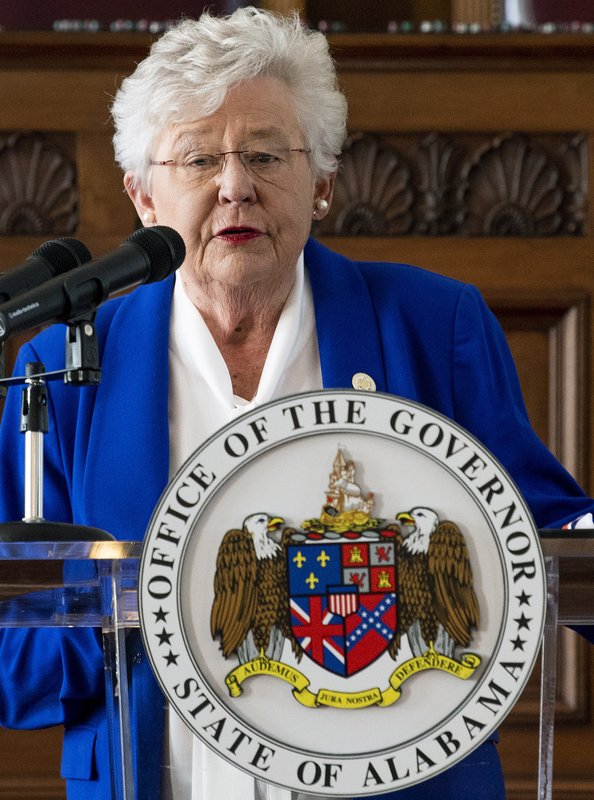
Gov. Kay Ivey and fourteen other governors wrote a joint letter to Secretary of Commerce Gina Raimondo urging a swift release of the census redistricting information. The letter addresses the main issue: the delay in releasing the data has made state legislatures unable to redraw district lines before the 2022 election cycle. The letter stated, “While we recognize the difficulties associated with completing a decennial census amid a pandemic, the ongoing delay in the release of 2020 Census redistricting data places our states in a nearly impossible situation to redraw lines prior to the 2022 election cycle. Consequently, we urge you to release redistricting data this month or as soon as possible prior to the delayed release date of September 30, 2021, and the release of the “legacy format” data on August 16, 2021.” The 2020 Census became a challenge to complete during the pandemic. In July 2020, Ivey warned the state’s current participation rate was 59.8%, or two percentage points behind the national average. At the time, Alabama was in danger of losing House seats because of a lack of participation. On Twitter, Ivey commented, “The stakes were high for Alabama in the #2020Census, and because of our efforts on the local and state levels, we succeeded. I’m proud to join fellow governors in urging the Biden Administration to not further delay the release of the redistricting data.” The stakes were high for Alabama in the #2020Census, and because of our efforts on the local and state levels, we succeeded. I’m proud to join fellow governors in urging the Biden Administration to not further delay the release of the redistricting data. #alpolitics @SecRaimondo pic.twitter.com/oMxsIodsoK — Governor Kay Ivey (@GovernorKayIvey) June 22, 2021 The letter continued, “Districts for the U.S. House of Representatives cannot be drawn until the data has been released. Districts for state legislatures also cannot be drawn until this data has been released. Districts for county, parish, township and municipal governing bodies cannot be drawn until states have had the opportunity to draw congressional and state legislative districts. Lastly, districts for school district seats cannot be drawn until county, parish, township, and municipal governing bodies have had the opportunity to draw their own respective districts. As a result of such negative impacts to our constitutional responsibilities, we seek the release of redistricting data as soon as possible—and in line with traditional timelines—so that states may begin to perform important redistricting tasks on behalf of our constituents.” Other governors signing the letter were Asa Hutchinson (AR), Brian Kemp (GA), Ron DeSantis (FL), Doug Ducey (AZ), Kim Reynolds (IA), Mike Parson (MO), Pete Ricketts (NE), Greg Gianforte (MT), Mike DeWine (OH), Henry McMaster (SC), Bill Lee (TN), Greg Abbott (TX), and Mark Gordon (WY), Doug Burgum (ND).
Kay Ivey joins 19 other governors urging action at the U.S. border
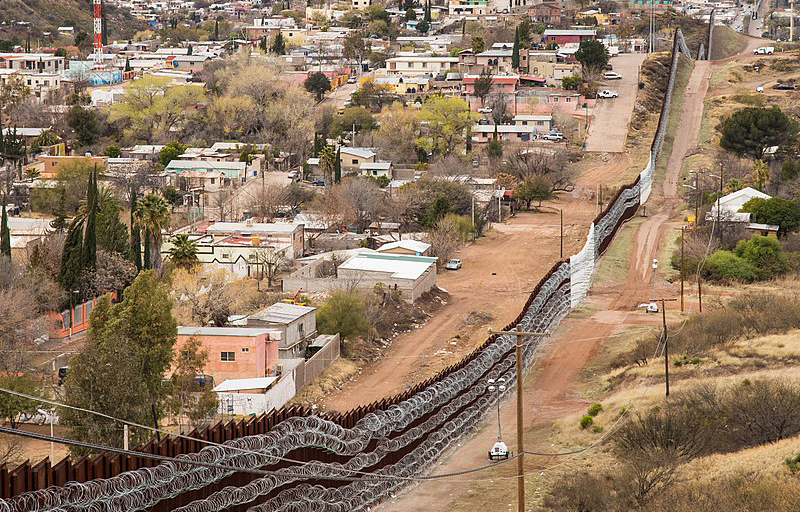
Today Gov. Kay Ivey joined 19 other governors in a call for Joe Biden to take action and reverse their policies regarding the U.S. border. The group wrote a letter to President Biden and Vice-President Kamala Harris describing worsening conditions at the border. In April, Arizona’s governor Doug Ducey declared a state of emergency at the southern border and deployed the Arizona National Guard to support law enforcement agencies in border regions. In May, the Associated Press reported that the State Emergency Council voted to allocate approximately $2.5 million to help pay for the deployment of 250 National Guard personnel to free up law enforcement officers in border towns along the Arizona-Mexico border. Part of the letter states, “This Administration has enticed a rush of migrants to our border and incentivized an influx of illegalcrossings by using irresponsible rhetoric and reversing a slew of policies—from halting border wall construction to eliminating asylum agreements to refusing to enforce immigration laws.” The letter concluded, stating, “At a time when our country is trying to recover from a once-in-a-generation pandemic, the last thing weneed is a self-created crisis that exploits families, undermines public safety, and threatens our national security. We urge you to take action to end the humanitarian crisis and secure our southern border immediately.” Gov. Ivey stated on Twitter, “I’m proud to sign on to this letter with fellow governors urging @POTUS & @VP to take immediate action on the crisis happening at America’s southern border. The crisis is too big to ignore & is now spilling over the border of all of our states.” I’m proud to sign on to this letter with fellow governors urging @POTUS & @VP to take immediate action on the crisis happening at America’s southern border. The crisis is too big to ignore & is now spilling over the border of all of our states. #alpolitics @WhiteHouse pic.twitter.com/lyX6AQsyaE — Governor Kay Ivey (@GovernorKayIvey) May 11, 2021 Other governors who signed the letter are Governors Bill Lee, Tennessee; Doug Ducey, Arizona; Asa Hutchinson, Arkansas; Brian Kemp, Georgia; Brad Little, Idaho; Eric Holcomb, Indiana; Kim Reynolds, Iowa; Tate Reeves, Mississippi; Mike Parson, Missouri; Greg Gianforte, Montana; Pete Ricketts, Nebraska; Chris Sununu, New Hampshire; Doug Burgum, North Dakota; Kevin Stitt, Oklahoma; Henry McMaster, South Carolina; Kristi Noem, South Dakota; Greg Abbott, Texas; Spencer Cox, Utah; and Mark Gordon, Wyoming.
Fear, lack of funding hurt census in Sunbelt, advocates say; Alabama keeps seats
According to the new census, the booming Sunbelt isn’t booming quite like the experts thought. Population counts released Monday came as a shock to many demographers and politicians who expected to see growth that could add numerous congressional seats to a region that’s apparently been gaining people rapidly all decade. Instead, the census found more modest growth that added only three seats total in Florida and Texas. Arizona, the second-fastest growing state in 2010, didn’t add a seat at all. The questions that advocacy groups and officials are now asking are whether all the new subdivisions and shopping centers are a mirage; whether those states erred in not investing more in encouraging residents to fill out census forms — and whether Latinos in particular were reluctant to trust the Trump administration with their information. Many demographers caution it’s too early to conclude that the nation’s once-a-decade count missed any specific population groups. That won’t be known until more local data is released later this year and the Census Bureau has completed an independent survey measuring the accuracy of the 2020 head count. But one thing is indisputable — when compared to the most recent population estimates, the three Sunbelt states underperformed during the count used for determining how many congressional seats and Electoral College votes each state gets. Texas got two extra seats instead of three; Florida added only a single new seat instead of two, and Arizona failed to gain the seat it was expecting to add. All three states are led by Republican governors who devoted less resources than other states to encouraging participation in the 2020 census. And in all three states, Hispanics have accounted for about half of the population growth over the decade, according to American Community Survey data. In Arizona, activists blamed Gov. Doug Ducey for supporting the Trump administration’s failed effort to add a citizenship question to the 2020 census questionnaire. Those efforts intimidated Latinos and kept them from fully participating in the census, they said. “What we saw from the government, Ducey and the Trump administration, was intimidation from Day 1 on the census,” said Eduardo Sainz, national field director for Mi Familia Vota, a political advocacy group. “Because of this narrative of fear and this narrative of not funding, we lost that seat.” The Ducey administration released a statement from the state demographer saying that more data is needed to determine why the count fell short of estimates of Arizona’s growth. During outreach efforts to get people to fill out their census forms, Hispanic residents would ask Adonias Arevalo about Donald Trump’s push on citizenship. Arevalo, state director for Poder Latinx in Phoenix, said, ”Despite the fact that we said a citizenship question will not be present, folks didn’t trust the Trump administration.” He said Arizona’s undercount is partly the legacy of Republican leaders, including former Sheriff Joe Arpaio, and anti-immigration laws. “For years, people have distrusted the system,” Arevalo said. “People fear to participate in these processes due to years of criminalization.” Arizona, Florida, and Texas were laggards compared to other states in efforts to form statewide committees aimed at driving census participation. Arizona only named members to its committee in August 2019, and Florida set one up in January 2020, just weeks before the national headcount began in a rural Alaska village. Texas never even set up a statewide committee, which some census activists attributed to Texas lawmakers not wanting to take a stand on the citizenship question by promoting the census. Democrats slammed the GOP for those moves. “From the very beginning, we knew our state was particularly at risk of undercounting our neighbors,” State Rep. Chris Turner, the Texas House’s Democratic Caucus Chair, said in a statement. “A concerted, organized outreach effort is essential to ensuring maximum participation in the census and getting the most accurate count,” he added in an interview. But state demographer Lloyd Potter in an interview contended there’s little evidence that massive state spending increases census accuracy. Instead, he said, Texas has a lot of the types of people who routinely get undercounted — rural citizens and African-Americans and Latinos. “Those are factors for all states and may have been more of a factor for Texas,” Potter said. “We have a lot of rural areas in Texas, we have a very significant and growing Latino population.” Texas Republicans released a statement after the census count that said: “Representation in Texas must be based upon citizenship, and strategically we can ascertain why the left wants to flood Texas with thousands of illegals.” In Florida, a spokeswoman for Gov. Ron DeSantis didn’t respond to an email inquiry. Paul Mitchell, a redistricting expert in California, a state that spent $187 million on census outreach, said there was a clear pattern in the numbers. States that funded major census-participation campaigns did well, while Republican-led ones, who viewed efforts like that as criticisms of then-President Donald Trump, did not, he said. “Texas, Florida, Arizona, they didn’t do big outreach efforts to improve the count,” Mitchell said. “In Texas, particularly, it was anathema to say anything in the Legislature that could be seen as critical of Trump.” Mitchell said the dynamic with Latinos seems clear given the populations of the underperforming states. He noted that some states that did comparatively better, like his own California, promised to protect their immigrants while low-spending GOP ones did not. “It does just kind of stare you in the face,” Mitchell said of the pattern. The actual population count from the 2020 census for Arizona was 3.3% short of what previous population estimates had shown. Florida and Texas were short by 0.7% and 0.5%, respectively. On the flipside, the population counts in two states that had been expected to lose seats, Alabama and Rhode Island, exceeded their estimates by 2% or more. During this census cycle, Rhode Island for the first time devoted $1.5 million in public and private money on census outreach efforts. That, along with the fact that Rhode Island hosted the only test run
Calls to reopen classrooms grow as teachers get vaccinated
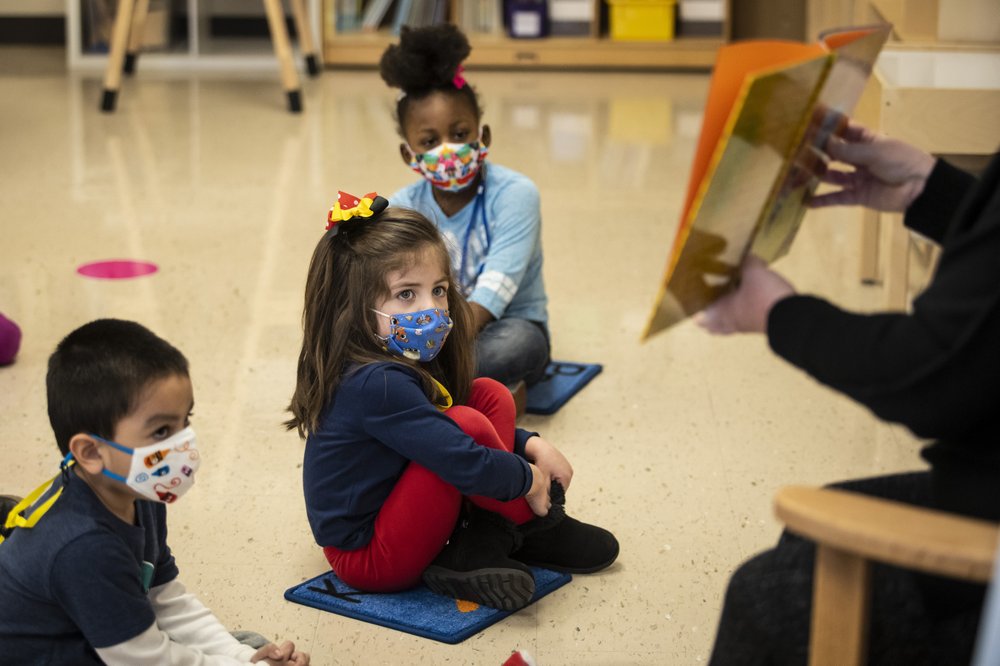
State leaders around the U.S. are increasingly pushing for schools to reopen this winter — pressuring them, even — as teachers begin to gain access to the vaccine against the raging pandemic. Ohio’s governor offered to give vaccinations to teachers at the start of February, provided their school districts agree to resume at least some in-person instruction by March 1. In Arizona, where teachers began receiving shots this week, the governor warned schools that he expects students back in the classroom despite objections from top education officials and the highest COVID-19 diagnosis rate in the nation over the past week. “We will not be funding empty seats or allowing schools to remain in a perpetual state of closure,” said Republican Gov. Doug Ducey. “Children still need to learn, even in a pandemic.” Leaders of Arizona’s major hospitals disagreed with the governor’s position, noting at a news conference Wednesday that the state is teetering on the brink of having to ration life-saving care. “We understand that learning and bringing our children together is very important,” said Dr. Michael White of Valleywise Health. “But at this time with uncontrolled spread of the virus, we need to do things that we know will reduce the chance that the virus will spread and that is not gathering with people we don’t live with.” The U.S. recorded an all-time, one-day high of 4,327 deaths on Tuesday, according to Johns Hopkins University. The nation’s overall death toll from COVID-19 has topped 380,000, closing in fast on the number of Americans killed in World War II. Confirmed infections have reached about 23 million. President-elect Joe Biden initially pledged to reopen a majority of the nation’s schools in his first 100 days but recently revised the goal to most of the country’s K-8 schools. He has said teachers should be eligible for vaccinations as soon as possible after those who are at highest risk. Some states aren’t waiting, but the process can be scattershot. Meika Mark, a ninth-grade English teacher in Orange County, New York, got vaccinated Tuesday at a hospital, using a link a friend texted her. “It’s just word of mouth: ‘Here’s a link and hopefully you get a slot,’” said Mark, who contracted the virus in March and spent the rest of the school year teaching remotely. “I know of a woman who had her husband sit in front of a computer literally all day and just click the refresh button until an appointment came up.” Mark, 34, is now doing some in-person teaching and is grateful for the added layer of protection. High school band director Michael Crookston was among the first teachers to get a vaccination in Utah, which is among the earliest states to give priority to educators. Crookston has been in the classroom since the new school year began, despite having diabetes, which puts him at greater risk from the coronavirus. “It’s been a thing I’ve been looking forward to, a little bit like Christmas,” said Crookston, who teaches at Davis High School, north of Salt Lake City, where he used a parent’s donation to buy 12 air filters for his band room. Students also wear face masks and use covers on their instruments. Utah Gov. Spencer Cox has said he wants to vaccinate all teachers by the end of February. Salt Lake City has been hit hard by the virus and was the only district in Utah to stay all-remote this school year. That has angered some GOP leaders, who have threatened to deny the city’s teachers the $1,500 bonuses promised to the state’s educators. An estimated 10.3 million Americans have received their first shot of the vaccine, or about 3% of the U.S. population, according to the Centers for Disease Control and Prevention. That is an increase of about 1 million from the day before, indicating the vaccination drive is picking up speed after a slow start. But the U.S. is still well short of the hundreds of millions who experts say will need to be inoculated to vanquish the outbreak. A report released Wednesday by the CDC adds to the evidence suggesting that children aren’t the main drivers of community transmission. It found that increases in reported cases among adults were not preceded by increases among children and teens. Young adults, it appears, may contribute more to the spread than children do. Chicago began a phased-in reopening of its schools this week, with about 6,000 pre-kindergarten and special education students expected to return to classrooms and other grades set to follow in the coming weeks. Illinois teachers are not eligible for vaccines yet, but Chicago officials are providing virus tests on school grounds for staff. Chicago teachers who were punished for refusing to show up for classes over COVID-19 concerns demonstrated Wednesday outside the school board president’s home. Roughly 150 employees were initially docked pay and locked out of the school system, meaning they can’t teach remotely either. District officials said late Wednesday the number dropped to 100 as employees returned to work or had a valid excuse. “I don’t believe it’s safe to reopen the schools. I don’t believe it’s safe for my family, I live with an elderly mom. I don’t believe it is safe for the city’s children or their families,” said Kirstin Roberts, a pre-kindergarten teacher. New York State expanded vaccine eligibility to teachers this week. But in New York City, the nation’s largest school district, with 1.1 million students, Mayor Bill de Blasio said Wednesday that middle and high schools will remain closed indefinitely. California Gov. Gavin Newsom has proposed a $2 billion plan to pay for testing, protective equipment, and other safety enhancements to reopen the lowest grades as soon as Feb. 16. But educators said it is too soon to know when California’s 600,000 teachers can expect to be vaccinated. Jeff Freitas, president of the California Federation of Teachers, said vaccinations have to come first, then schools can talk about reopening. “We cannot put our own lives, the lives of
Donald Trump defies coronavirus rules as ‘peaceful protest’ rallies grow
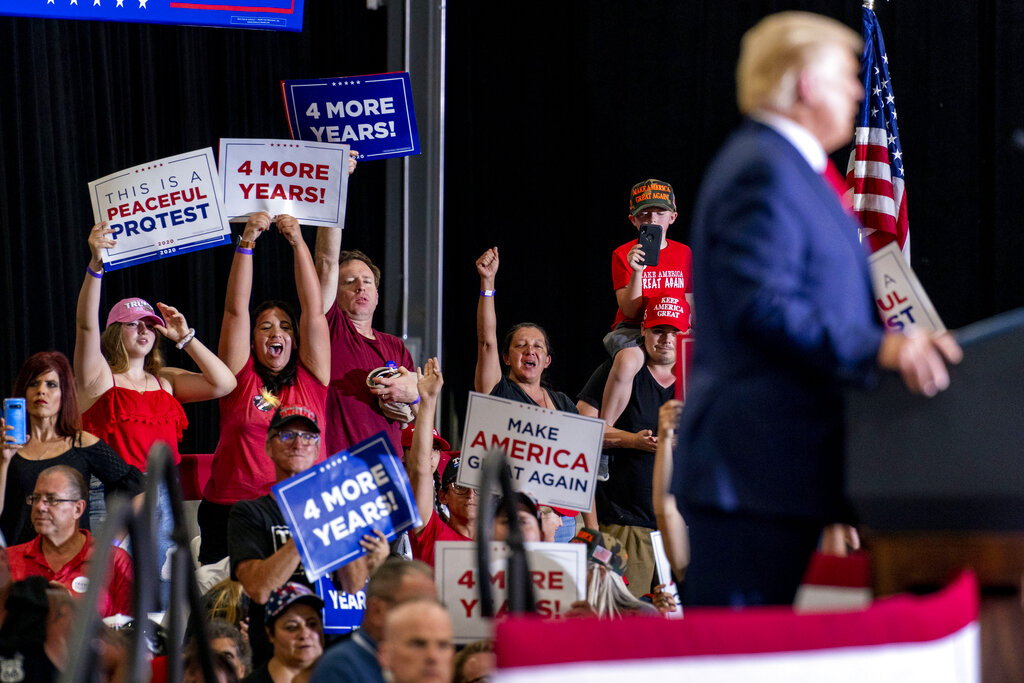
Democratic governors and local leaders have urged the president to reconsider the events, warning that he’s putting lives at risk.
U.S. sees coronavirus resurgence
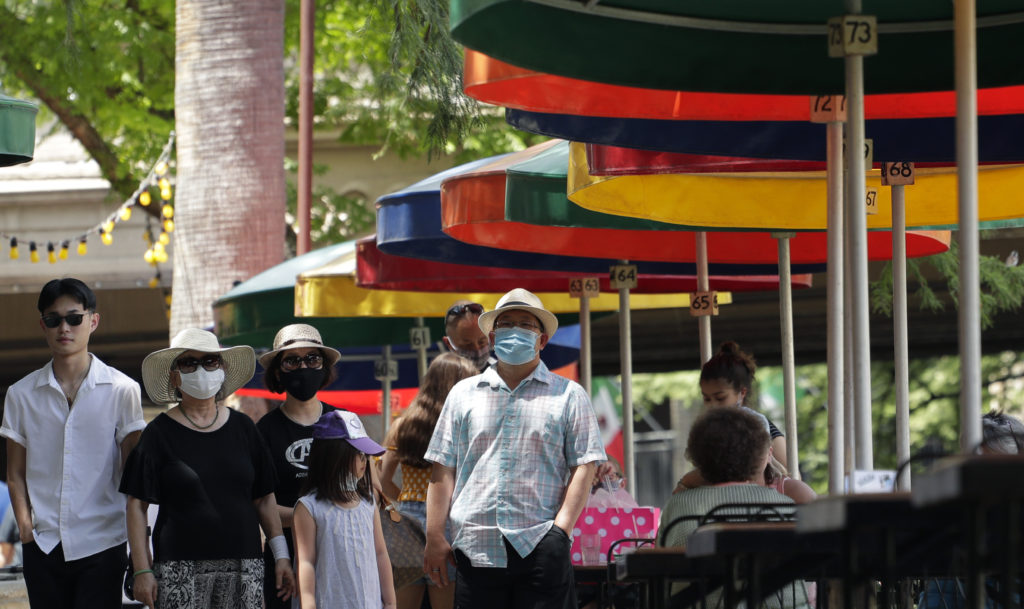
The virus has been blamed for over 120,000 U.S. deaths.
Presidential primaries in 4 states will go on as planned
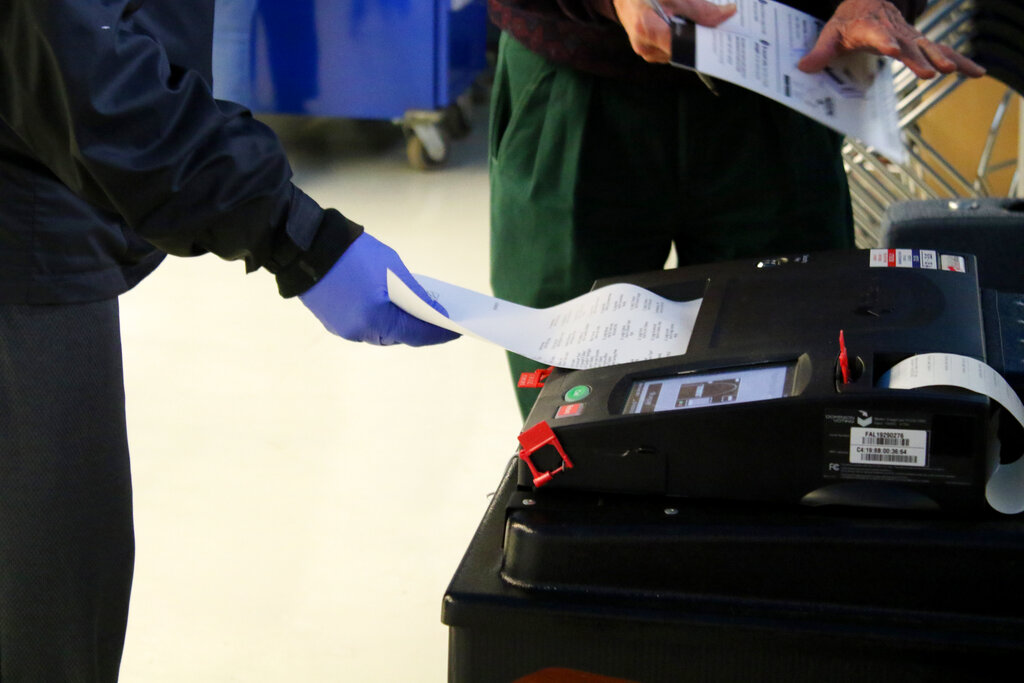
Some states have postponed their primaries.
Asylum seekers jam U.S. border crossings to evade Donald Trump policy
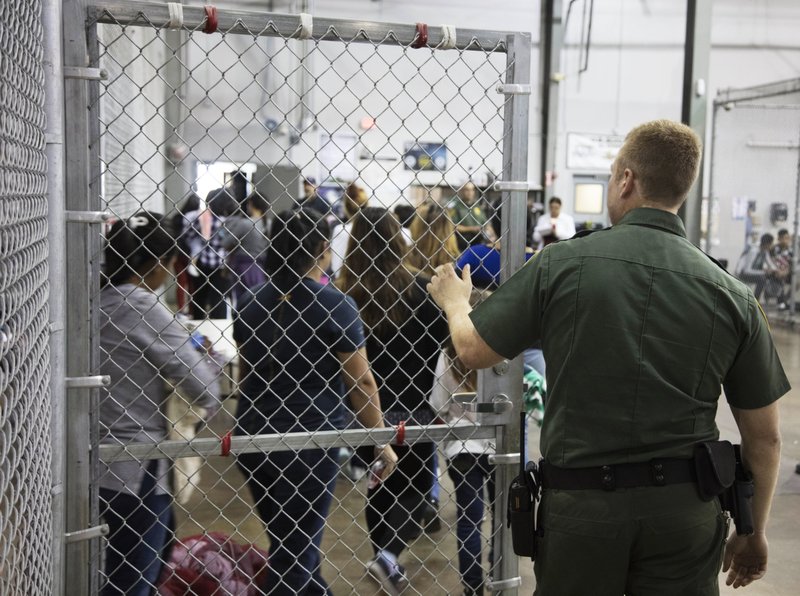
For months, asylum seekers have been prohibited from filing their claims at U.S. border crossings under a much-criticized Donald Trump administration policy. Now some are sprinting down vehicle lanes or renting cars to try to make it inside the U.S. The migrants’ efforts are causing traffic delays at Arizona crossings because U.S. Customs and Border Protection officials had to barricade lanes used by cars legally entering the U.S. from Mexico, officials said. Shoppers, teachers and visitors traveling to the U.S. through Nogales, Mexico, endured up to five-hour waits Monday and over the weekend, causing concerns among local officials whose tax base relies on Mexican shoppers, especially during the holiday season. In a statement, Customs and Border Protection said it’s committed to the safety of border crossers, adding that there’s been an increase of incursions through vehicle lanes “by asylum seekers attempting to evade established entry processes.” “These tactics interfere with CBP officers conducting their responsibilities and exacerbates wait times for daily commuters,” the agency said in a statement. “CBP will not allow ports to be overrun, or unauthorized entry.” The traffic jams could hurt sales at stores in Nogales, Arizona that depend on Mexican shoppers during the holiday season, said Mayor Arturo Garino. Garino, a part-time teacher, said some students and teachers who live in Mexico but attend and work at schools across the border in the U.S. have been leaving their homes as early as 5 a.m. to arrive on time. Garino said Mexican authorities were not doing enough to stem the problem. The Arizona Daily Star reported the Nogales, Sonora, police officers were checking cars headed north to the border on Monday afternoon. The metal barricades are large and are meant to seal off traffic lanes. About 3,000 migrants are living in Nogales, Mexico as they wait their turns to seek asylum, said Katie Sharar, communications director for the Kino Border Initiative, a religious-based group that provides meals to needy migrants on the Mexican side of the border. Under a policy by the Trump administration known widely as “metering,” the asylum-seekers must wait in an unofficial line in Mexico until U.S. authorities call them up in a process that usually lasts several months. Another policy, colloquially known as “Remain in Mexico,” requires asylum seekers to return to Mexico after they have made credible fear claims to justify their asylum requests and wait there while their immigration cases are pending. “I think there’s just a lot of desperation and uncertainty. They don’t know what’s happening to them, they don’t know how the policy changes are gonna affect them,” Sharar said. Sharar said she wasn’t familiar with the migrants who have run through vehicle lanes. Customs and Border Protection did not respond to email and phone messages regarding questions about the migrants who rushed the border, what countries they come from and whether they were detained or faced criminal charges. Arizona Gov. Doug Ducey, a Republican, said his first concern is public safety and that he is confident that U.S. officials will resolve the border traffic problems. Associated Press writer Bob Christie in Phoenix contributed to this report. Republished with the Permission of the Associated Press.
Former Arizona U.S. Sen. Jon Kyl to replace John McCain
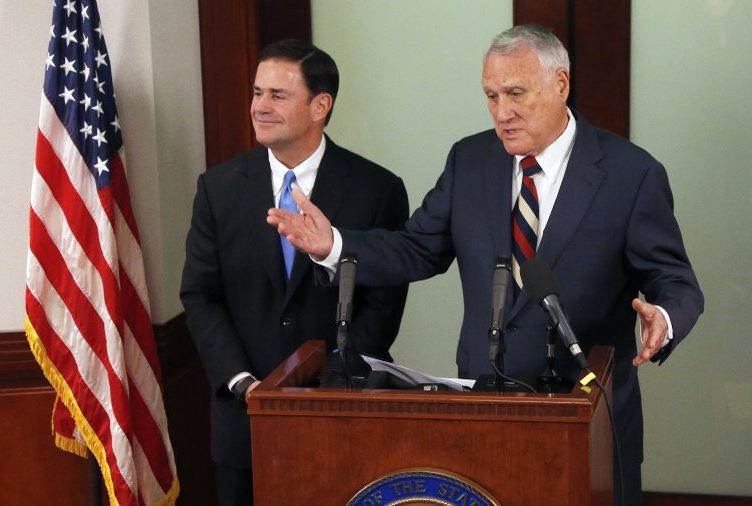
Prolonging the uncertainty over who will fill the late John McCain’s U.S. Senate seat, the governor of Arizona on Tuesday announced the appointment of former Sen. Jon Kyl but said he has only committed to serve until the end of the year. Kyl, a Republican who retired from the Senate in 2012 to spend more time with his family, is currently shepherding Trump’s nomination of Brett Kavanaugh to the U.S. Supreme Court. Kyl’s appointment will make it possible for him to vote for the nomination. But it’s unclear what more Kyl, 76, will do in Washington. He said he agreed to serve briefly out of a “sense of duty” and will not run for the seat in 2020, when Arizona voters will decide who fills the seat through 2022. The seat will then be up again for a full six-year term. Gov. Doug Ducey, also a Republican, said Kyl was “the best possible person, regardless of politics” for the job, and he hopes Kyl serves past the end of the year. If Kyl does leave the Senate after the end of the current congressional term next Jan. 3, Arizona’s governor can appoint another senator for the remaining year. By state law the senator will have to be a member of the same party as the departing one, in this case the GOP. For now, Kyl will pad Republicans’ margin in the narrowly divided Senate. They hold a 51-49 majority but that dwindled to a single vote while McCain stayed in Arizona for much of this year being treated for the brain cancer that killed him on Aug. 25. The GOP is hoping Kyl will be a more reliable partisan vote than McCain, whose opposition to a partial repeal of President Obama’s health care law pitched the party into turmoil last year. Kyl is well-respected in Arizona and has been able to avoid many of the battles with activists that complicated McCain’s career and that of the state’s other senator, Jeff Flake, who is retiring because his feud with Trump made his re-election impossible. Kyl’s entire career in Washington overlapped with McCain’s, and he served with the state’s senior senator for three terms before stepping down. Kyl carved out a profile as a reliable conservative vote and a foreign policy expert. McCain’s widow, Cindy, tweeted: “Jon Kyl is a dear friend of mine and John’s. It’s a great tribute to John that he is prepared to go back into public service to help the state of Arizona.” Doug Cole, a veteran Republican consultant and former McCain aide, said Kyl was a good, safe pick. “I think McCain would be very happy with the pick. Honors his legacy while putting some major horsepower for Arizona in the seat, at least for now,” he said. An attorney, Kyl speaks in a formal, reserved manner that is a sharp contrast to President Trump, and he belongs to an older, less populist vanguard of the GOP. At a news conference where he was introduced as McCain’s replacement, Kyl said in a response to a question that he’s only met Trump once, though he noted he is working for the White House by serving as Kavanaugh’s so-called “sherpa.” With a nod toward McCain, Kyl said the president’s “desire to jump into the middle of or be in the middle of a fight — and by the way that reminds me of somebody — can be detrimental in the end to what he’s trying to achieve.” The unusual timing of Kyl’s appointment could work out for another Arizona Republican who wants to become a U.S. senator — Rep. Martha McSally. She’s currently locked in a tough campaign against Democratic Rep. Kyrsten Sinema for the Senate seat Flake is vacating. Should she lose, McSally — a former Air Force colonel who once worked on Kyl’s staff — could be appointed to the McCain seat if Kyl vacates it in January. Filling McCain’s seat marks a turning point in Arizona political history. The seat has been held by two men who were heralded as giants of the Senate: McCain took the seat once held by Sen. Barry Goldwater after McCain had served in the House of Representatives. The choice of Kyl will also have political consequences for Ducey. He’s up for re-election this November against Democratic challenger David Garcia. For Republican voters who are on the fence about Ducey, a choice they dislike could cause them to withdraw their support for the incumbent or stay home on Election Day. Republished with the permission of the Associated Press.
After long fight against brain cancer, John McCain ends treatment
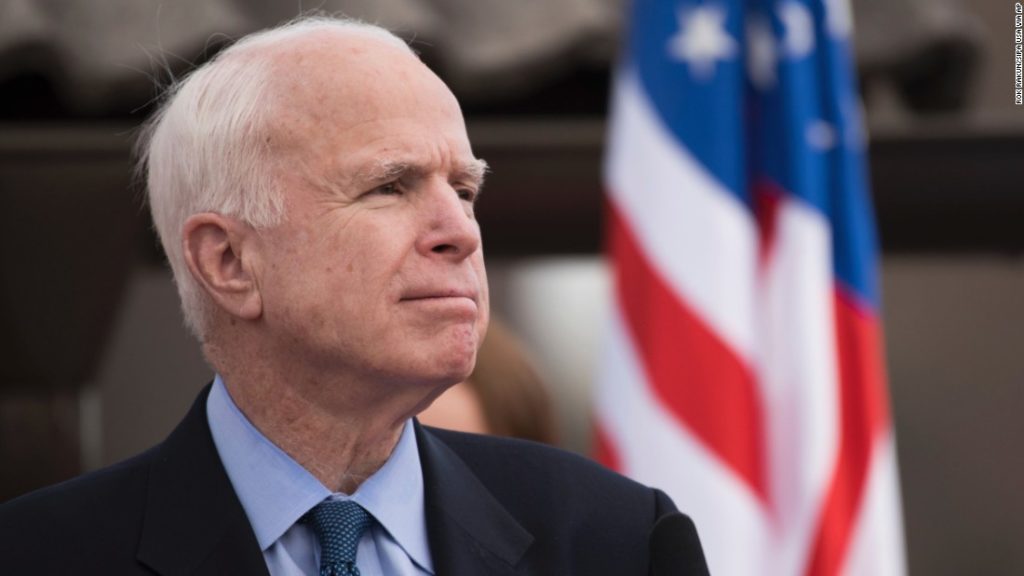
Arizona Sen. John McCain has discontinued medical treatment for an aggressive form of brain cancer, his family says. It’s a likely indication that the war hero, onetime presidential nominee and longtime lawmaker is nearing the end of his life. The 81-year-old McCain has surpassed expectations for survival, but “the progress of disease and the inexorable advance of age render their verdict,” the family said in a statement. “With his usual strength of will, he has now chosen to discontinue medical treatment.” The six-term GOP senator, whose birthday is Aug. 29, has been away from the Capitol since last December. McCain’s wife, Cindy, said in a tweet Saturday that the McCain family was “overwhelmed by the outpouring of love and support from around the world” after Friday’s announcement. If McCain should resign his seat or die soon, Republican Arizona Gov. Doug Ducey would name a replacement to serve until the 2020 election. The winner of that election would serve the remainder of McCain’s term through 2022. The entire McCain family is overwhelmed by the outpouring of love and support from around the world. Thank you. — Cindy McCain (@cindymccain) August 25, 2018 In more than three decades in Congress, McCain became known as a political maverick willing to stick to his convictions rather than go along with party leaders — an independent streak that has drawn a mix of respect and ire. Most recently, he has been a thorn in the side of President Donald Trump, keeping up his criticism of the White House even while undergoing severe medical treatment in Arizona. In July, he issued a searing rebuke of Trump’s summit with Russian President Vladimir Putin, calling it a “tragic mistake” and “one of the most disgraceful performances by an American president in memory.” The strained relationship between Trump and McCain dates back to 2015, when Trump suggested the Vietnam veteran, who spent more than five years in a North Vietnamese prison after his Navy plane was shot down, was not a war hero. The ill will grew after McCain voted in 2017 against a Republican replacement for the Obama-era health law. He doomed the bill with a dramatic thumbs-down on the Senate floor. Complaints about McCain’s vote have become a staple of Trump’s campaign speeches. He doesn’t mention McCain by name but makes clear his intent by mockingly imitating the thumbs-down gesture. The feud between the two men has persisted even amid the decline in McCain’s health. While political leaders of both parties paid tribute to McCain and offered prayers Friday, Trump and the White House remained silent. Trump did not mention McCain or the health care vote in a speech Friday night at a fundraising dinner in Ohio. Earlier this month, Trump signed a military policy bill named for McCain, but he made no mention of McCain at a signing ceremony. The son and grandson of Navy admirals, McCain is a former Navy pilot. He was elected to Congress in 1982 and to the Senate four years later, replacing the retired Barry Goldwater. Despite his famous stubborn streak and occasional orneriness, McCain is widely admired on both sides of the aisle, and tributes poured in Friday after the family announced the treatment decision. “We are so fortunate to call him our friend and colleague,” Senate Majority Leader Mitch McConnell said on Twitter. “The entire McCain family are in our prayers at this incredibly difficult hour.;; Ducey called McCain “an American hero” who always put his country before himself. A “spirt of service and civility” guided McCain’s life, standing as a model for Americans regardless of political affiliation, Ducey said. McCain had surgery in July 2017 to remove a blood clot in his brain after being diagnosed with an aggressive tumor called a glioblastoma. It’s the same type of tumor that killed Sen. Edward M. Kennedy, D-Mass., at age 77 in 2009. McCain rebounded quickly, however, returning to Washington and entering the Senate in late July to a standing ovation from his colleagues. In a dramatic turn, he later cast the deciding vote against the Republican health care bill, earning Trump’s enduring wrath. McCain’s condition worsened last fall, and he has been in Arizona since December. A source close to McCain who asked not to be identified said Friday the senator was at his Arizona ranch with his family. He is a long-term survivor of melanoma, a deadly skin cancer. But doctors classified his brain cancer as a “primary tumor,” meaning it’s not related to his former malignancies. McCain ran unsuccessfully for the Republican presidential nomination in 2000, then won it in 2008 before losing the general election to Obama. When Republicans took control of the Senate in 2015, McCain embraced his new influence as chairman of the Armed Services Committee, pushing for aggressive U.S. military intervention overseas and eager to contribute to “defeating the forces of radical Islam that want to destroy America.” Asked how he wanted to be remembered, McCain said: “That I made a major contribution to the defense of the nation.” Former Connecticut Sen. Joseph Lieberman, a close friend, said Friday that “becoming John McCain’s friend has been one of the great blessings of my life. Today I am praying for him and his family.” Mitt Romney, the GOP’s 2012 presidential nominee, said on Twitter, “No man this century better exemplifies honor, patriotism, service, sacrifice and country first than Senator John McCain. His heroism inspires, his life shapes our character. I am blessed and humbled by our friendship.” Republished with the permission of the Associated Press.
National Guard members begin arriving at U.S.-Mexico border
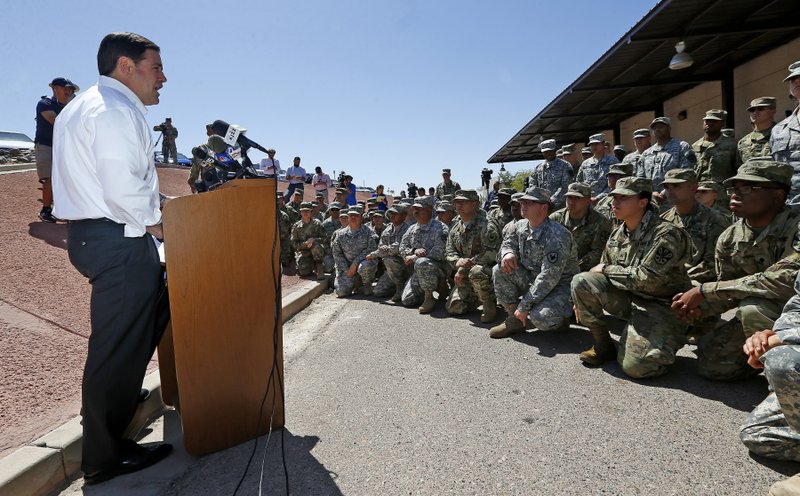
Some National Guard members have started arriving at the U.S.-Mexico border with more expected as federal government officials continue to discuss what they’ll do about illegal immigration. The Republican governors of Texas, Arizona and New Mexico on Monday committed 1,600 Guard members to the border, giving President Donald Trump many of the troops he requested to fight what he’s called a crisis of migrant crossings and crime. The only holdout border state was California, led by Democratic Gov. Jerry Brown, who has not announced whether troops from his state’s National Guard will participate and has repeatedly fought with Trump over immigration policy. Under the federal law Trump invoked in his proclamation calling for National Guard troops, governors who send troops retain command and control over their state’s Guard members and the U.S. government picks up the cost. Brown’s spokesman, Evan Westrup, said California officials still are reviewing Trump’s troop request. Trump said last week he wants to send 2,000 to 4,000 National Guard members to the border, issuing a proclamation citing “the lawlessness that continues at our southern border.” Trump administration officials have said that rising numbers of people being caught at the southern border, while in line with seasonal trends in recent years, require an immediate response. Apprehensions are still well below their historical trends during the terms of former presidents George W. Bush and Barack Obama, both of whom also deployed the Guard to the border. In Mexico City, a caravan of Central American migrants that had been heading north stopped in the Mexican capital. The caravan had sparked furious criticism from Trump, followed days later by his National Guard border protection deployment plan. Organizers said they never intended to go to the U.S. border. Arizona Gov. Doug Ducey told a group of soldiers preparing to deploy from a Phoenix military base that their “mission is about providing manpower and resources” to support agencies on the border and denied that there was a political motive. “I don’t think this is a partisan issue or an identity issue,” he said. “You show me somebody who is for drug cartels or human trafficking or this ammunition that’s coming over a wide-open and unprotected border here.” Texas Gov. Greg Abbott told San Antonio radio station KTSA that he would add about 300 troops a week until the total number reaches at least 1,000 troops. Some Guard members will be armed if they are placed in potential danger, Abbott said, adding he wanted to downplay speculation that “our National Guard is showing up with military bayonets trying to take on anybody that’s coming across the border, because that is not their role.” There is no end date for the deployment, Abbott said: “We may be in this for the long haul.” New Mexico Gov. Susana Martinez’s office said that more than 80 troops would deploy later this week. They will be the first of an expected 250 Guard members from New Mexico to serve on the border. South Carolina Gov. 6 a Republican, offered to send members of his state’s Guard as well. South Carolina sent troops to the border during Operation Jump Start, the border deployment ordered by Bush in 2006. Trump has said he wants to use the military at the border until progress is made on his proposed border wall, which has mostly stalled in Congress. Defense Secretary James Mattis last Friday approved paying for up to 4,000 National Guard personnel from the Pentagon budget through the end of September. Mexico’s foreign relations secretary said his government is evaluating its cooperation with the United States. Luis Videgaray said in a Monday interview with local media that he will give results of the analysis to President Enrique Pena Nieto in coming weeks. The country’s Senate passed a resolution last week saying Mexico should suspend cooperation with the U.S. on illegal immigration and drug trafficking in retaliation for Trump’s move. But Videgaray said “no decision has been taken to reduce or suspend any mechanism or cooperation.” Joel Villarreal, the mayor of Rio Grande City in Texas, said he did not agree with what he characterized as “the militarization of the border.” “It’s not good for business, to be frank with you,” Villarreal said. Republished with the permission of the Associated Press.
