Three more Alabama counties eligible for FEMA aid for storms
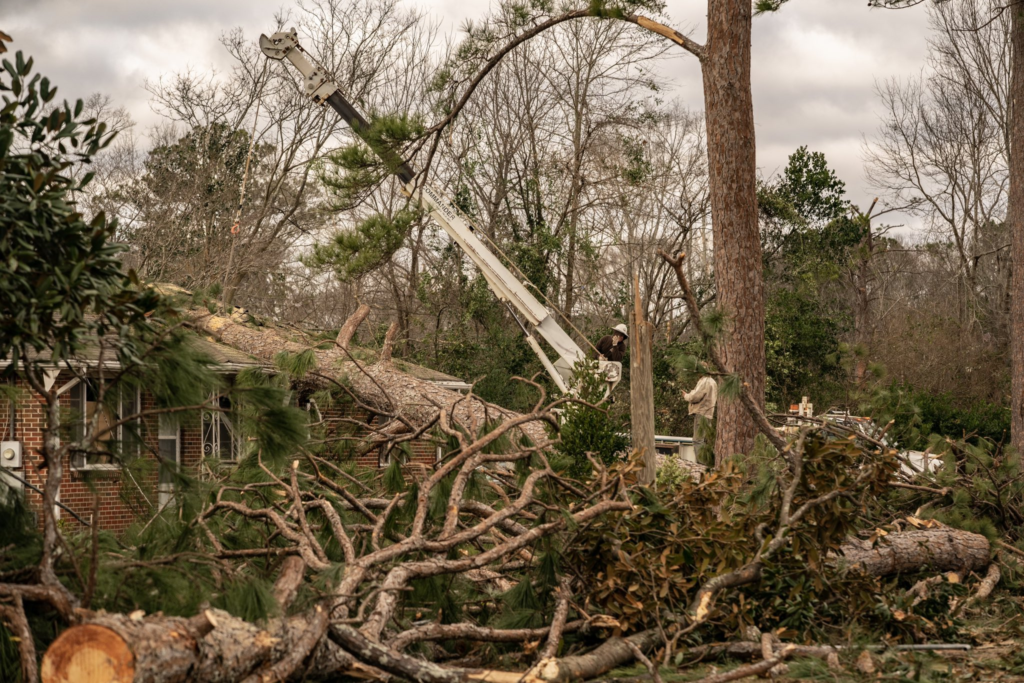
More Alabama counties are now eligible for federal help after last week’s storms and tornadoes. Emergency Management Agency Director Ernie Baggott said Federal Emergency Management Agency assistance in the designated disaster area will be extended beyond Autauga and Dallas counties to include Elmore, Coosa, and Hale. The January 12 storms killed six people and left a trail of destruction in its wake, news outlets reported. Residents in those five counties can now apply for FEMA Individual Assistance, which could include temporary housing help, basic home repairs, and some uninsured disaster-related needs, the agency said in a news release. Residents can apply for help at disasterassistance.gov or by calling 800-621-3362. The helpline is open from 6 a.m. to 10 p.m. CDT. Republished with the permission of The Associated Press.
Mike Rogers announces grant for Cleburne County first responders

Congressman Mike Rogers announced on Wednesday that the Turkey Heaven Volunteer Fire Department will receive a $29,523.80 grant from the U.S. Department of Homeland Security. The funding will help the fire department purchase new operations and safety equipment. “Cleburne County’s first responders work around the clock to keep the community safe,” Rogers said. “This grant will provide Turkey Heaven Volunteer Fire Department with funding to continue to protect the community.” The grant was awarded under the Fiscal Year 2021 Assistance to Firefighters Grant Program (AFG). This essential federal program supports first responders across Alabama and the nation. “It’s our goal to always provide the best equipment and the best response as possible to the community we serve,” the Turkey Heaven Volunteer Fire department said on social media. “We are excited to have preliminary plans to expand and grow! However, with growth, there are growing pains, ours is limited revenues.” In addition to this grant, the Turkey Heaven Volunteer Fire Department recently took possession of a Stewart Stevenson military truck provided by the Alabama Forestry Commission. This truck, once completed, will serve as a brush truck serving the rural areas where road conditions may not be accessible easily as well as the off-road terrain near residences that other trucks simply cannot reach. The Department of Homeland Security administers the grant program. The purpose of the program is to award funding directly to fire departments, nonaffiliated EMS organizations, and state fire training academies. These awards aim to enhance first responders’ ability to protect the health and safety of the public, as well as that of first-responder personnel, with respect to fire-related hazards. As of September 14, 2022, FEMA has made 1442 awards totaling $260.9 million. Since 2001, AFG has helped firefighters and other first responders obtain critically needed resources necessary for protecting the public and emergency personnel from fire and related hazards. Congressman Rogers is serving in his tenth term representing Alabama’s Third Congressional District in the U.S. House of Representatives. Prior to his congressional service, Rogers represented Calhoun County in the Alabama House of Representatives and the Calhoun County Commission. To connect with the author of this story, or to comment, email brandonmreporter@gmail.com.
Alabama’s House delegation calls on FEMA to address supply chain shortages affecting Alabama’s electric cooperatives
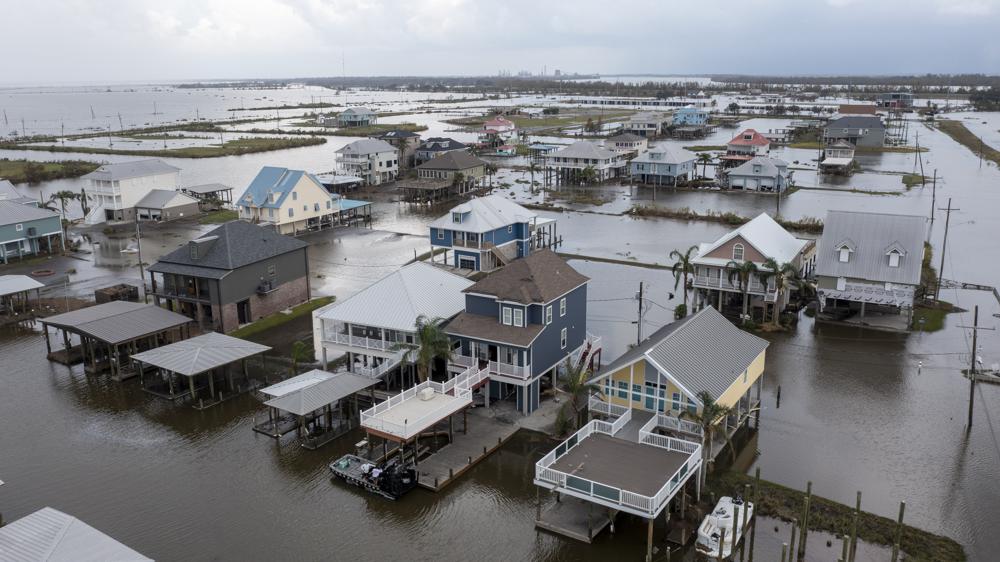
U.S. Rep. Jerry Carl issued the following statement regarding a letter he sent to FEMA Administrator Deanne Criswell regarding supply chain shortages affecting Alabama’s electric cooperatives and municipalities. The letter was cosigned by all seven members of Alabama’s House delegation. “Alabama is no stranger to severe weather. In the aftermath of serious storms, our local electric utility providers play a critical role in repairing and replacing damaged parts of the power grid,” Carl commented. “Unfortunately, supply chain issues have slowed down local utility providers’ ability to prepare for potential threats, leaving Alabama’s power grid more open to damage when disaster occurs.” The letter called on FEMA to provide electric providers with the equipment needed for hurricane season. “With the high chance of an above-average 2022 hurricane season, FEMA must do its part to ensure our local electric providers have access to important equipment before the first hurricane, tropical storm, or natural disaster impacts communities in Alabama. I’m grateful to all my Alabama colleagues for joining me on this letter, and I look forward to hearing back from FEMA Director Criswell with a detailed plan,” Carl concluded.
Federal program offers cash to cover COVID-19 funeral costs

When Wanda Olson’s son-in-law died in March after contracting COVID-19, she and her daughter had to grapple with more than just their sudden grief. They had to come up with the money for cremation. Even without a funeral, the bill came to nearly $2,000, a hefty sum that Olson initially covered. She and her daughter then learned of a federal program that reimburses families up to $9,000 for funeral costs for loved ones who died of COVID-19. Olson’s daughter submitted an application to the Federal Emergency Management Agency, received a deposit by June, and was able to reimburse her mother the $1,974. “Had this not been available, we would have been paying the money ourselves,” said Olson, 80, of Villa Rica, Georgia. “There wasn’t any red tape. This was a very easy, well-handled process.” As of December 6, about 226,000 people had shared in the nearly $1.5 billion that FEMA has spent on funeral costs that occurred after January 20, 2020, the date of the first confirmed case of COVID-19 in the U.S. With the nation’s coronavirus death toll topping 800,000, it’s clear that many families who are eligible for reimbursement have yet to take advantage of the funeral benefit. Her son-in-law was traveling a lot, working on air conditioning systems in theaters, restaurants, and businesses, when he began feeling ill, Olson said. After a few days at home, he went to the hospital and was put on a ventilator. He died several weeks later. “He could never overcome it,” she said. To be eligible for reimbursement, death certificates for those who died after May 16, 2020, must indicate that the death was attributed to COVID-19. For deaths that occurred in the early months of the pandemic — from January 20 to May 16, 2020 — death certificates must be accompanied with a signed statement from a medical examiner, coroner, or the certifying official listed on the certificate indicating that COVID-19 was the cause or a contributing cause of death. The percentage of individuals who have been reimbursed varies dramatically from state to state — from nearly 40% in North Carolina and Maryland to fewer than 15% in Idaho and Oregon, according to state-by-state data compiled by FEMA. While the reimbursement must go directly to individuals, some funeral directors have taken on the task of informing grieving families of the benefit. After the benefit was first announced, David Shipper, owner of the Sunset Funeral Home, Cremation Center & Cemetery in Evansville, Indiana, took out ads to let people know that help was available if they qualified. “Nine thousand dollars — that’s a lot of money. We wanted to find a way to tell people about it,” he said. “We stopped advertising some time ago, but when we have a new family with a death from COVID, we tell them about the program.” Workers at the home will sit down with families, gather the needed paperwork, contact FEMA on the phone and help walk them through the process if they ask, he said. Many families may simply be unaware of the benefit, but others may opt against seeking the cash out of reluctance to revisit the pain of the death, Shipper said. He said the better time to seek help is when planning the funeral. “They’re much more likely to take advantage right then than if they’ve already spent the money and don’t want to open it up again,” Shipper said. The largest states account for some of the biggest shares of the FEMA reimbursement money. The program has paid out more than 21,000 reimbursements in California and Texas, which have both reported more than 74,000 COVID-19 deaths. Residents applied for more than $141 million in each state. The fewest number of reimbursements have occurred in Vermont, where 123 people were awarded a total of about $704,000. Expenses covered under the FEMA program include funeral services, cremation, and interment, as well as the costs for caskets or urns, burial plots or cremation niches, markers or headstones, transportation or transfer of remains, clergy or officiant services, and the use of funeral home equipment or staff. The program has been funded using federal stimulus funds, and money remains available. No online applications are allowed. After all required documents are received and verified, it typically takes fewer than 30 days to determine if an individual is eligible, according to FEMA. Once eligibility is confirmed, applicants who request direct deposit may receive the money in a matter of days. It may take longer for applicants who request a check. The reimbursement is one way of helping ease the emotional and financial burden that the pandemic has wreaked on communities across the country, according to Ellen Wynn McBrayer, president of Jones-Wynn Funeral Homes & Crematory in Villa Rica, Georgia. She recalled one woman who lost her mother, husband, and one of her children to the disease in the span of six months. One of the workers at the funeral home also succumbed to the virus. “To have to help a grieving family is hard on a normal day, but to see so many deaths,” she said. “COVID has just broken a lot of hearts and taken a lot of lives.” Republished with the permission of the Associated Press.
Donald Trump taps Jeffrey Byard, another former Alabama official, to lead FEMA
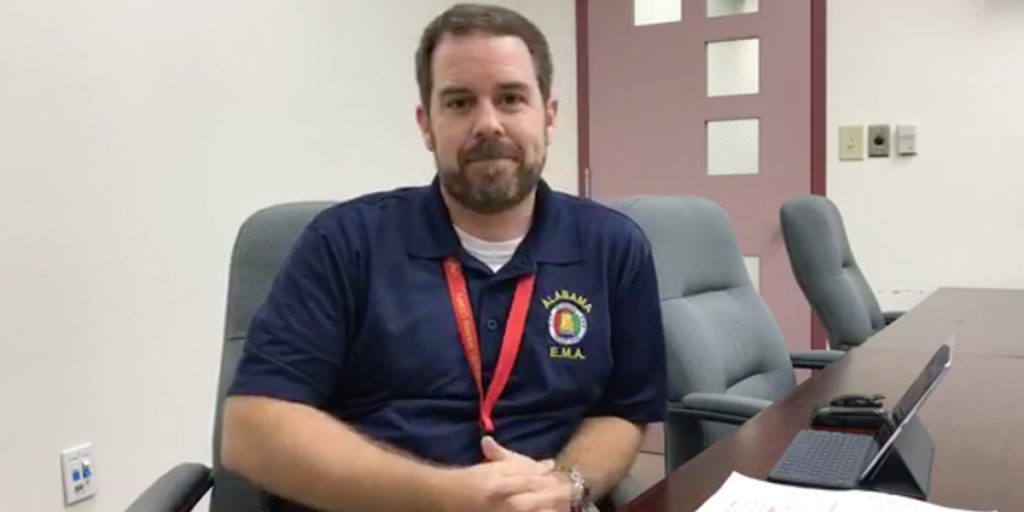
Following the resignation of Federal Emergency Management Agency (FEMA) Director Brock Long, who previously served as Director of the Alabama Emergency Management Agency (AEMA), President Donald Trump announced he will nominate another former Alabama official to head the federal agency. Trump will nominate Jeffrey Byard, who first joined FEMA in Sept. 2017 during the agency’s response efforts to Hurricanes Harvey in Texas and Irma in Florida, when he was appointed as the Associate Administrator for the Office of Response and Recovery (ORR). Byard had previously served as Executive Operations Officer at AEMA. During his tenure with there, Byard was responsible for the creation and implementation of the Alabama field response structure, which resulted in a more effective and efficient response and recovery model. He also served as the Deputy State Coordinating Officer for the nation’s first large scale host state evacuation event during Hurricane Gustav. From 2006-2007, he served as the Director of Alabama’s Transitional Recovery Office where he led and coordinated the timely delivery of FEMA’s disaster recovery and assistance support to state and local governments.
FEMA Chief, former Alabama leader, Brock Long resigns
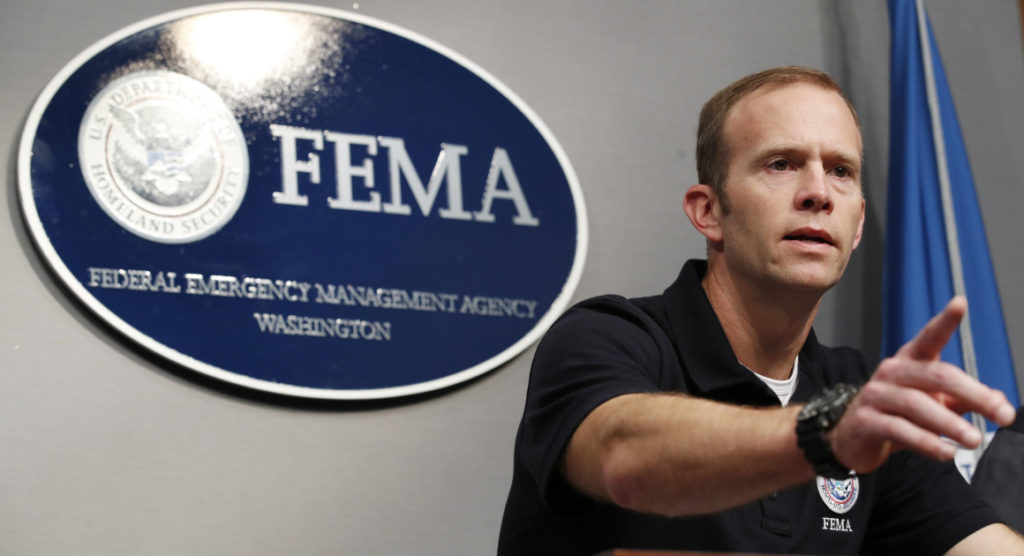
Former Director of the Alabama Emergency Management Agency (AEMA) and current Federal Emergency Management Agency (FEMA) Director Brock Long announced his resignation on Wednesday. “It has been a great honor to serve our country as @fema Administrator for the past two years. While this has been the opportunity of the lifetime, it is time for me to go home to my family,” Long tweeted. It has been a great honor to serve our country as @fema Administrator for the past two years. While this has been the opportunity of the lifetime, it is time for me to go home to my family. You can read my full announcement here: https://t.co/2HXa7tQtV8 — Brock Long (@FEMA_Brock) February 13, 2019 Long’s resignation comes month after an internal investigation by the DHS inspector general (IG) found that he used government vehicles without proper authorization. He did not lose his job over it. Long served at the helm of the AEMA from 2008 to 2011, where he worked on the Yellowhammer State’s response to the Deepwater Horizon oil spill and numerous other natural disasters. As Director, he served as the State Coordinating Officer for 14 disasters, including eight presidentially-declared events. Prior to that he was a FEMA Regional Hurricane Program Manager from 2001 to 2006. Deputy Administrator Pete Gaynor will now serve as acting head of the agency. This story is breaking.
Rauf Bolden: Flood drainage in Orange Beach
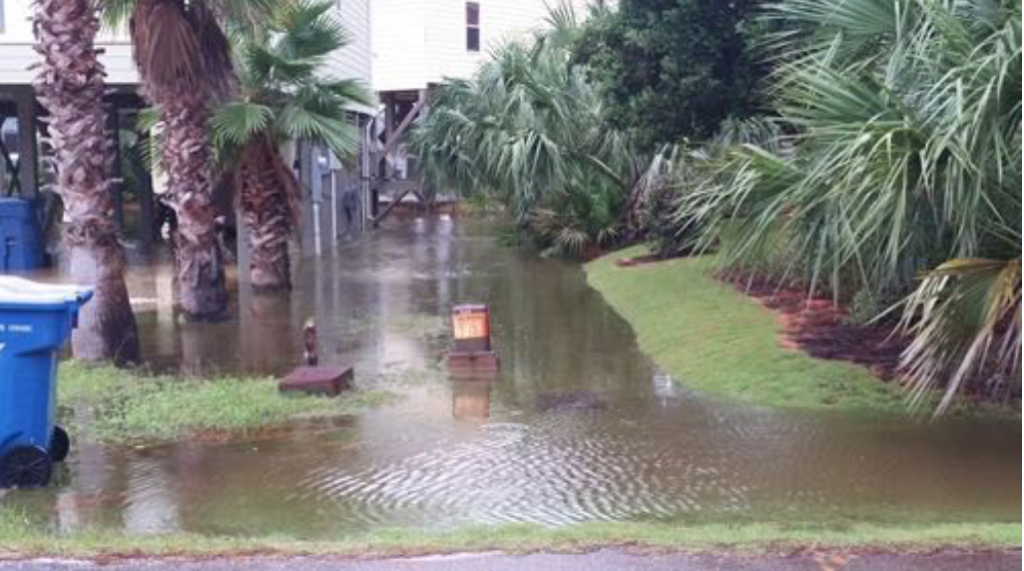
Flooding in Bear Point, Orange Beach is a yearly occurrence. Tropical Storm Gordon, September 5, 2018, dumped five inches of rain, flooding my neighbor’s yard. Luckily his mobile home was undamaged. Across the street they worked for hours, keeping water out of their mother-in-law suite on the ground floor. Bear Point is a diverse neighborhood on the eastern end of the island, being home to people who get up and go to work in the mornings. The residents are held hostage in a cringe-inducing cycle of low-capacity drainage systems, and the “one foot above the street” rule for new construction. FEMA’s coastal flooding maps, and FEMA’s river flooding maps paint the flood zones with digital precision, letting residents know they are living in the flood plain, being something residents accept but they wonder why the city cannot build a computerized drainage system, controlling the pumps, mitigating storm damage. “Public Works [City of Orange Beach] is responsible for the maintenance of [and improvements to] the drainage infrastructure within the rights-of-way of Bear Point,” said Kit Alexander, Director of Engineering in an email to Renee Eberly, City Clerk at the City of Orange Beach. “The city by ordinance requires the finished floor [when building new homes] to be elevated one foot above the street. These are basic flood prevention measures. The one foot above the street requirement comes from the building code section R403.1.7.3,” said Howard Stuart, Plans Examiner, at the City of Orange Beach. “Kit Alexander [Director of Engineering] is in charge of all drainage and is the only person allowed to grant waivers on a case by case basis to allow floor levels to be lower than one foot above the street.” “With the new flood maps from July 2017 there are areas [in Orange Beach] that require the floor [of newly-permitted homes] to be as much as 10 feet higher than existing grade [street],” added Stuart. This property-elevation rule sets up a situation for flooding neighboring properties. Bear Point’s flooding is partially caused by poor-drainage systems. Recent building ordinances enacted on new construction are also a contributing factor, allowing builders to flood neighboring properties, because of the “one foot above the street” rule. “They built a new house next door to me, and according to the new code you have to build a foot above the road level. My house is a lot lower than that property is now, causing flooding in my apartment unit downstairs. The last time we had a fairly decent rain [Hurricane Gordon, September 9, 2018] it caused flooding. I really wish the city would address some of our drainage issues down here in Bear Point. See if we could get some engineers in to figure out the best way to do this, and stop people from having water inside their homes,” said Jerry Shields, resident of Bear Point. Linda Morrill, a twenty-year resident of Bear Point said, “Twenty years ago we did not flood. They have built the road up too high, so the water just runs off. Any rain and my yard is at least ankle deep in water. They put a pump in, and it doesn’t work. I am very unhappy and the city is not doing anything to help us, and I don’t understand.” “All this system [drainage] does is pull water from other low areas in the neighborhood to this one spot [boat launch Bear Point]. There is no force to push this water out [into the bay], which could be simply resolved by putting in a spillway down there [north of boat launch dock], and making that spillway high enough that when the water comes up, it spills over into the bay, and not back up into here [residential area],” said John D. Davis, a fifteen year resident of Bear Point. Do homeowners of newly built homes have legal responsibility, ensuring their storm-water runoff does not flood neighboring properties, or does the City of Orange Beach have liability, adopting the “one foot above the street” ordinance for new construction? Let’s look at the process. The homebuilder submits plans to the city for a new home, including a drainage plan. A city engineer approves these. City professionals inspect the finished home before issuing the final document, a Certificate of Occupancy. The homeowner thinks they are in the clear, having met all the city’s criteria for flood and drainage. After a rain the new homeowner gets a knock on the door. The neighbor is wondering what to do about his mother-in-law suite. It is flooded. The Mayor and City Council adopted basic flood prevention measures. Department heads require homebuilders to comply, seeking to maintain a premium insurance rating for residents of the city. Council voted with good intentions, perhaps not fully understanding the consequences of new homes flooding their neighbors. Finger pointing prevails, the homeowner pointing to the city, the city pointing to the building codes, and the building codes pointing to the insurance industry. Simply buying additional coverage for flood and liability is your only win-win, building a new home in Orange Beach. ••• Rauf Bolden is retired IT Director at the City of Orange Beach, working as an IT & Web Consultant on the Beach Road. He can be reached at: publisher@velvetillusion.com.
Rauf Bolden: Should you stay in Orange Beach during a hurricane?
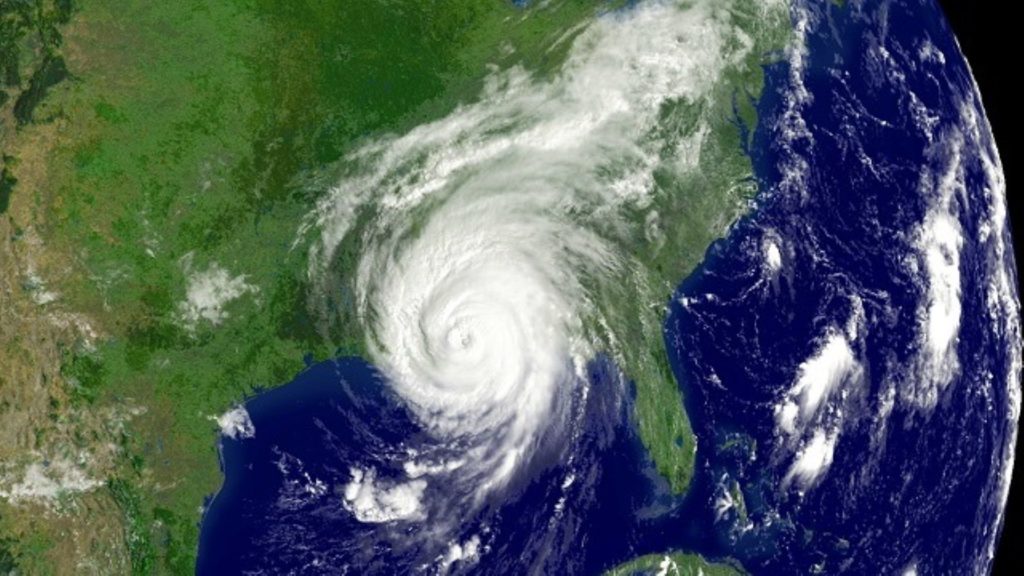
Living on intimate terms with hurricane disaster is something Orange Beach residents accept, being mentally prepared, understanding how hurricanes work, securing their property against flooding, actively debating the decision to evacuate or not. The community conversation is often peppered with residents’ stories of past evacuations, like not being able to get back after Hurricane Ivan (September, 2004), shading residents’ decisions in favor of staying. “The majority of natural disasters over the last ten years involved flooding. Flood related events including hurricanes, severe storms, heavy downpours, and others, accounted for more than seven out of ten presidential disaster declarations.” according to a report from the Federal Emergency Management database of Disaster Declarations. “Summarizing [the number of] Presidential Disaster Declarations (PDD) from 2008-2017: 73 percent were Flood Related, and 27 percent were Non-Flood Related,” according to a report on Vox. For those planning to stay in Orange Beach during a hurricane, reviewing your family’s plan is essential, taking input from each family member, including the children, allowing them to buy-in as a main component, helping provision food, water (filling the bathtubs), paper products, pet treats, medicines, bandages, disinfectant, propane, and fuel. “I moved here from the frozen tundra of the midwest seven years ago at age 50. I live on the beach. I’m a property manager there. I’ve got a lot personally and professionally invested in Orange Beach, but if an evacuation is called for during the next hurricane, I will most certainly leave,” said Sarah DeLazzer, a condo resident. Remaining during a hurricane is the biggest game-day decision of your life, knowing your vessel or home is fortified and up to the task, inspecting its structural integrity for weathering the storm will give you confidence, not arrogance. You must feel self-assured, knowing you will not need to call 911, because they are not coming! Carol Belmonte, a 30-year veteran of hurricane evacuations in Orange Beach will stay, having purchased her home in Bear Point 25-years ago. She said, [when you leave] it takes two weeks to get back on the island. They let all the FEMA people and contractors on before us [home owners]. As illustrated throughout Hurricane Florence (September 9, 2018) preparation for flooding is key. The Baldwin County Emergency Management Agency (EMA) has the most comprehensive resource database for Orange Beach residents, supplying information for family, home, business, special needs, the elderly, and pets (see video). “The best thing I’ve seen all day [Hurricane Florence] was three households of these older neighbors pitching in to clear a tree from another neighbor’s front yard [near Wrightsville Beach, North Carolina] while the storm was still very active,” according to a report by Jerry Tominack on Fox News. “We’ve not had much wind [Hurricane Florence] but all ditches are full and the rain isn’t really stopping. It just keeps sprinkling between short heavy rains. We’re getting prepared to help folks from flooded areas,” said Ann Slaughter in a telephone call from her home in the small hamlet of Haw River north of Graham, North Carolina. The public-awareness campaign ahead of Hurricane Florence [September 2018] was stunning, giving people adequate time to evacuate. The government changed lanes on the evacuation route, accommodating outgoing traffic. This advance-warning system is available in Orange Beach, arming residents with reliable information on wind strength and storm surge. If you choose to stay, understanding how tropical storms develop, feeding off the warm waters in the Gulf will give you a mental advantage, during the height of the event. As old sailors say, easterly winds and a falling barometer are the first signs, the weather will get worse. Southerly winds indicate the eye-of-the-storm is to the west of you, and you are in the worst quadrant. Northerly winds show the eye-of-the-storm is to the east of you, and you are in the best quadrant. Westerly winds and a rising barometer are good signs, the worst is over, remembering torrential rains and flooding hold the biggest danger to life and loss-of-property. “Most private insurance policies don’t protect against damage from floods caused by rain, overflowing rivers or storm surge. For that damage, the National Flood Insurance Program, which is run by FEMA, provides most of the coverage,” according to a report by CNN. Perhaps you should buy flood insurance if you live in a hurricane-prone state. Look at all the victims of Florence, Harvey and Lane without coverage. Three 1000-year storms in the past four years is an indicator of more storm-based flooding in the future as the planet’s oceans warm. “’Florence’s heavy rains will cause ponding and flooding in places that neither the FEMA coastal flooding maps or [sic] the FEMA river flooding maps are going to do a good job of predicting,’ said Joe Fargione, science director at the Nature Conservancy,” according to a report on Vox. Luckily we have better pre-storm information than we did during Hurricane Ivan (September 2004), providing accurate five-day assessments for wind and flood preparation, raising the question of why state taxpayers should spend tens-of-millions on a second-evacuation bridge in Orange Beach, knowing there is enough advanced notice to organize your affairs and leave the island. Orange Beach, Alabama Mayor Tony Kennon is obsessed, seemingly clawing at the institutions of government, lobbying any state legislator who will listen for an unneeded bridge west of the Foley Beach Express. Midterm election victories may inspire newly-elected officials, giving them the courage to pause funding for a second bridge in Orange Beach ($87 million in state funds), re-allocating these monies to a multitude of infrastructure repairs across the state. Mayor Kennon said on Facebook (June 2018), “[You should] come to a council meeting so that u can get the facts, the real truth and stop being educated into further ignorance [by this Facebook Group of 2800+ members]”: End The #BridgeToNowhere. In all fairness we should hear him out, perhaps a venue where Mayor Kennon does not hold the gavel, possibly an Alabama House of Representatives Special-Select Subcommittee with power to subpoena email, calendar and text
FEMA Chief, former Alabama leader, Brock Long won’t lose job following investigation
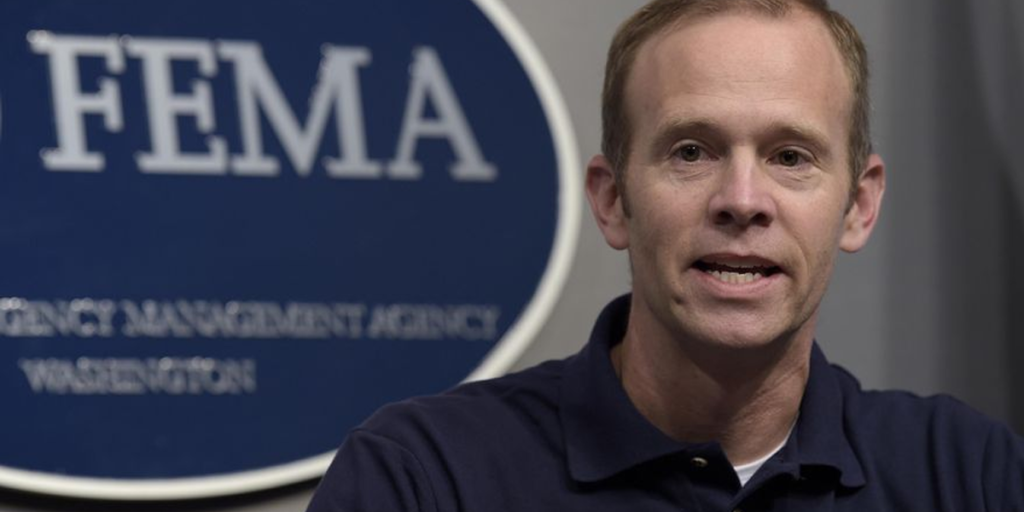
Federal Emergency Management Agency (FEMA) Chief Brock Long did use government vehicles without proper authorization, but he’s not going to lose his job over it. That’s according to Department of Homeland Security (DHS) Secretary Kirstjen Nielsen following an internal investigation by the DHS inspector general (IG). Long, who previously served as director of the Alabama Alabama Emergency Management Agency (AEMA), came under fire last week amid allegation that he misused of government cars for personal use. According to POLITICO, who originally broke the story, “Long started using a staff driver to get him home to North Carolina at the beginning of his tenure at FEMA last year. On the weekends Long spent in North Carolina, aides were put up in a hotel at taxpayer expense, according to one of the current officials.” Nielsen, who released a statement released Friday night, said there was in fact “inappropriate use” of the government vehicles. “[U]se of Government vehicles to provide home to work transportation for the FEMA Administrator was never authorized in accordance with applicable law,” she said. Long will reimburse the government, rather than lose his job, for the misuse of government vehicles. “As the leader of this agency, I accept full responsibility for any mistakes that were made by me or the agency,” Long said in a statement.
FEMA Chief, former Alabama leader, Brock Long faces multiple investigations
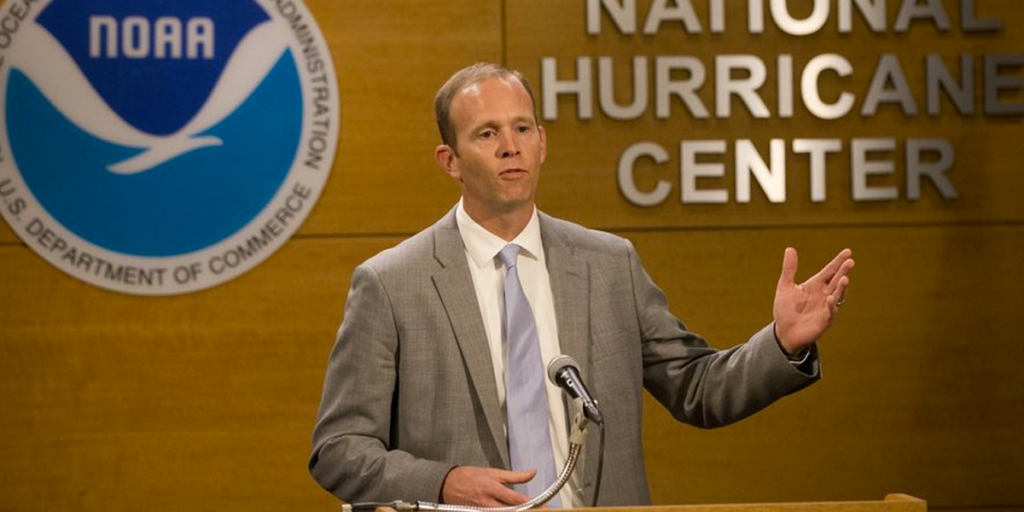
A Department of Homeland Security (DHS) inspector general (IG) investigation into Federal Emergency Management Agency (FEMA) Chief Brock Long, is being referred to federal prosecutors to determine whether or not criminal charges should be pursued, the Wall Street Journal reported Monday afternoon. Meanwhile, House Republicans are launching an investigation of their own into the FEMA Chief’s alleged actions. News broke last week of allegations against Long, the former director of the Alabama Alabama Emergency Management Agency (AEMA), for misusing government cars. According to POLITICO, who originally broke the story, “Long started using a staff driver to get him home to North Carolina at the beginning of his tenure at FEMA last year. On the weekends Long spent in North Carolina, aides were put up in a hotel at taxpayer expense, according to one of the current officials.” House investigation South Carolina-Republican U.S. Rep. Trey Gowdy, chairman of the House Oversight and Government Reform Committee, heard last week’s news and on Monday wrote Long a letter requesting documentation and other pertinent information related to his use of government vehicles. Gowdy gave Long a deadline of Oct. 1. “Official travel on the part of federal employees must be ‘by the most expeditious means of transportation practicable’ and ‘commensurate with the nature and purpose of the employee’s duties,’” Gowdy explained in the letter to Long. “This does not include using government-owned or government-leased vehicles for exclusively personal reasons.” Specifically Gowdy asked Long to: Identify each time you have used a government-owned or government-leased vehicle during your tenure at FEMA for personal reasons. For each usage, please provide the names of all FEMA staff who accompanied you, destinations, accommodations, dates of use, purpose, and cost of each trip. Produce policies relating to the use of government-owned or government-leased vehicles. All documents and communications referring or relating to FEMA employees being tasked with accompanying you on trips to or from North Carolina. Long denies any wrong-doing. “I would never intentionally run a program incorrectly,” Mr. Long told reporters during a call last Thursday. “Doing something unethical is not in my DNA.” He briefly addressed the investigation during a Thursday FEMA briefing as well. “Bottom line is, we’ll continue to fully cooperate with any investigation that goes on and own up to any mistakes and push forward and keep going,” he said. “I would never intentionally run a program incorrectly,“ Long added. “Doing something unethical is not part of my DNA and it is not part of my track record in my whole entire career. We will work with the OIG.”
Former Alabama leader, FEMA Director Brock Long under investigation for misuse of official cars
As Hurricane Florence bears down on the East Coast, with tropical storm-force blasting the shoreline, the government’s lead disaster official is under an internal investigation for his alleged misuse of government cars, POLITICO reports. The former Alabama Alabama Emergency Management Agency (AEMA) director, and current director of the Federal Emergency Management Agency (FEMA) Brock Long is being investigated by the Department of Homeland Security (DHS) inspector general (IG) as to whether or not he misused government vehicles and personnel during six-hour commutes from his home in North Carolina and FEMA headquarters in Washington, D.C. According to POLITICO, “Long started using a staff driver to get him home to North Carolina at the beginning of his tenure at FEMA last year. On the weekends Long spent in North Carolina, aides were put up in a hotel at taxpayer expense, according to one of the current officials.” Long briefly addressed the investigation during a Thursday FEMA briefing. “Bottom line is, we’ll continue to fully cooperate with any investigation that goes on and own up to any mistakes and push forward and keep going,” he said. “I would never intentionally run a program incorrectly,“ Long added. “Doing something unethical is not part of my DNA and it is not part of my track record in my whole entire career. We will work with the OIG.” Jessica Nalepa, FEMA director of external affairs, also responded to the investigation saying FEMA “fully cooperates with all investigations conducted by the DHS OIG.” “Administrator Long and the FEMA workforce are focused on preparing for, responding to, and recovering from Hurricane Florence and other active tropical systems,” Nalepa tweeted in response to the POLITICO report. “Having worked directly with him for over a year, I know administrator Long to be an experienced and respected emergency manager.” “All questions about any potential investigation by the Office of the Inspector General should be directed to the IG. At this time, we are fully focused on preparing for, responding to, and recovering from Hurricane Florence and the storms in the Pacific,” DHS press secretary Tyler Houlton added to POLITICO in a statement. From 2008 to 2011 Long served was at the helm of the AEMA where he worked on the Yellowhammer State’s response to the Deepwater Horizon oil spill and numerous other natural disasters. As Director, he served as the State Coordinating Officer for 14 disasters, including eight presidentially-declared events. Prior to that he was a FEMA Regional Hurricane Program Manager from 2001 to 2006.
Amid budget overages, Montgomery Fire/Rescue receives much-needed $3.5M grant
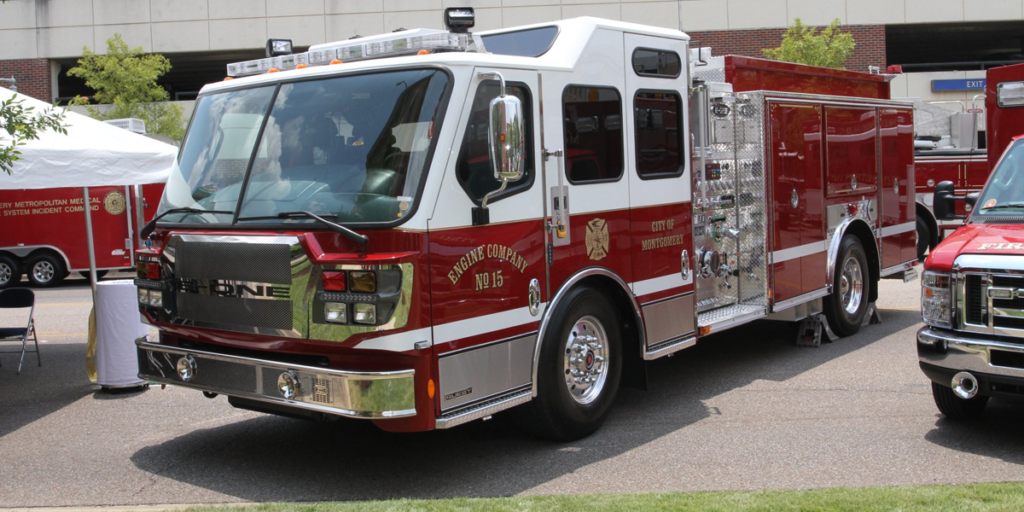
Just when things were starting to looking fiscally grim, as news broke that the Montgomery Fire/Rescue (MFR) Department had shockingly exceeded its overtime budget by over $2M thus far in 2018, the city was awarded a much-needed federal grant that will help keep operations running smoothly. U.S. Senator Richard Shelby on Tuesday announced the $3,553,843 award as a part of the Federal Emergency Management Agency’s (FEMA) Staffing for Adequate Fire & Emergency Response (SAFER) grant program. “The funding will ensure the city has the proper resources and staff to adequately respond to emergency medical, fire, and rescue incidents throughout the area. I am proud that FEMA has awarded this SAFER grant to facilitate increased safety and security in the City of Montgomery,” said Shelby. As of mid-August, MFR had spent $2.2 million on overtime. That amounts to $2,079,470 more than expected, or 1,411 percent over budget. The $3.5 million grant will be used to help hire additional firefighters and first responders over a three year period to achieve and maintain proper staffing levels. “We could not be more grateful to Sen. Richard Shelby for his role in helping Montgomery secure this SAFER grant to increase the number of firefighters who serve and protect our capital city,” said Montgomery Mayor Todd Strange. “The additional 33 firefighters provided by this grant will help us meet the increasing demand for suppression and emergency medical services. Sen. Shelby’s support for this grant award speaks to his abiding commitment to the public’s safety and his unflagging work on behalf of our city and state.” SAFER grants are awarded to fire departments and national, state, local, tribal, or territorial organizations that represent the interests of firefighters.