
Donald Trump issues disaster declaration for Ala. counties following delegation letter
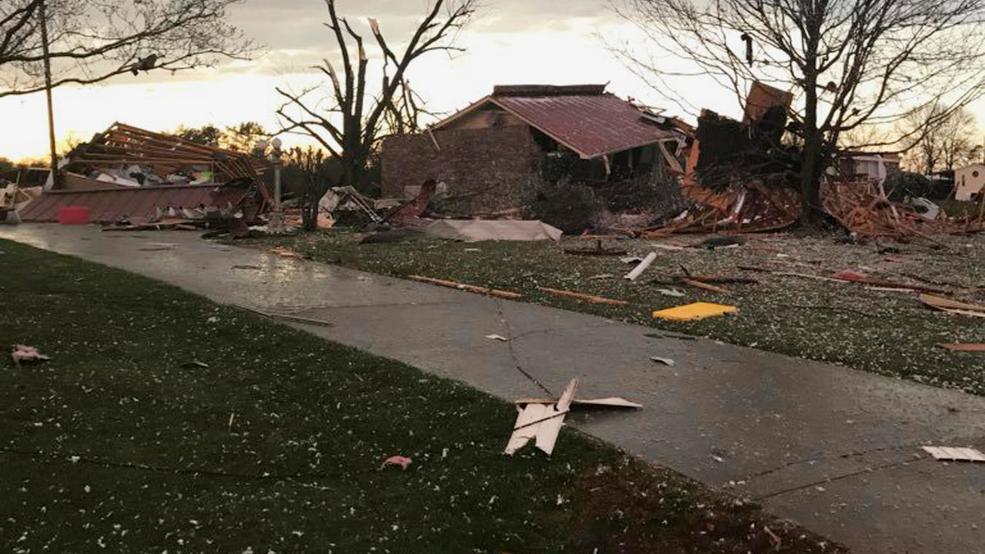
Following a letter from the Alabama delegation, President Donald Trump directed the Federal Emergency Management Agency (FEMA) to make federal disaster aid available to the State of Alabama to supplement state and local recovery efforts in the area affected by severe storms and tornadoes during the period of March 19, 2018 through March 20, 2018. The congressional delegation letter — led by Sen. Richard Shelby, signed by entire delegation including U.S. Sen Doug Jones, along with U.S. Reps. Bradley Byrne (AL-01), Martha Roby (AL-02), Mike Rogers, (R-Ala.), Robert Aderholt (AL-04), Mo Brooks (AL-05), Gary Palmer (AL-06), and Terri Sewell (AL-07) — encouraged the President to issue the disaster declaration that would trigger the release of federal funds to help people and communities recover from the severe storms and tornadoes that occurred March 19-20, 2018. During the night of the 19th into the morning of the 20th, severe storms spawned tornadoes, damaged homes and downed trees as they moved across the Southeast. “This disaster declaration is critical following the significant destruction that occurred throughout the state, but specifically in these four Alabama counties,” said Shelby. “I am grateful that the President has decided to send federal recovery resources to assist in the rebuilding of our communities.” Gov. Kay Ivey also requested Trump grant disaster assistance. “The recovery process following a disaster is a long and tough road and I appreciate President Trump for approving this major disaster declaration request,” Ivey said. “This declaration will provide much needed assistance to Alabamians affected by the March 19th storms and will ease the burden on local governments as they continue the recovery process.” The President’s action makes federal funding available to affected individual homeowners and renters in Calhoun, Cullman and Etowah counties. Residents within the counties may now apply for federal disaster assistance for uninsured and underinsured damage and losses resulting from the March 19th storms. Assistance for eligible survivors can include grants for temporary housing and home repairs, and for other serious disaster-related needs, such as medical and dental expenses. Long-term, low-interest disaster loans from the U.S. Small Business Administration (SBA) may also be available to cover losses not fully compensated by insurance and that do not duplicate benefits of other agencies or organizations. “I cannot thank our federal partners enough for their support during the joint damage assessments as well as the constant communication as we awaited final approval,” Director Brian E. Hastings said. “Recovering from disasters requires the whole community. Volunteers, first responders and local Emergency Management officials have done an exceptional job during the response phase and now we are pleased to have federal assistance to help with the long recovery process.” For information on how to register with FEMA, you can do so by phone or online: Online at DisasterAssistance.gov, or On the FEMA Mobile App, or by Calling 800-621-3362 (FEMA). Applicants who use Video Relay Service may also call 800-621-3362. People who are deaf, hard of hearing or have a speech disability and use a TTY may call 800-462-7585 directly; for those who used 711 or Video Relay Service (VRS), call 1-800-621-3362. The toll-free numbers are open from 7 a.m. to 11 p.m. ET, seven days a week. Federal funding is also available on a cost-sharing basis for hazard mitigation measures. The purpose of the program is to reduce the loss of life and property due to natural disasters and to enable mitigation measures to be implemented during the immediate recovery from a disaster. Read the letter from the Alabama delegation: Mr. President: As members of the Alabama delegation, we write in strong support of Governor Kay Ivey’s request for a federal disaster declaration for Cullman, St. Clair, Calhoun, and Etowah counties. On March 19, 2018, severe storms and tornadoes touched down in the eastern part of Alabama and caused catastrophic damage in 27 counties across the state. In less than 24 hours, Governor Ivey declared a State of Emergency. Local emergency management agencies aided the impacted residents and, with assistance from regional FEMA officials, prepared their Preliminary Damage Assessment. State officials have estimated substantial damages across these counties. Considering the scope and intensity of this natural disaster, we ask that you carefully review Governor Ivey’s request and approve a federal disaster declaration. In doing so, you will allow thousands of Americans to begin the slow process of rebuilding their lives after this terrible incident.
Donald Trump says Puerto Rico can’t get hurricane aid ‘forever’
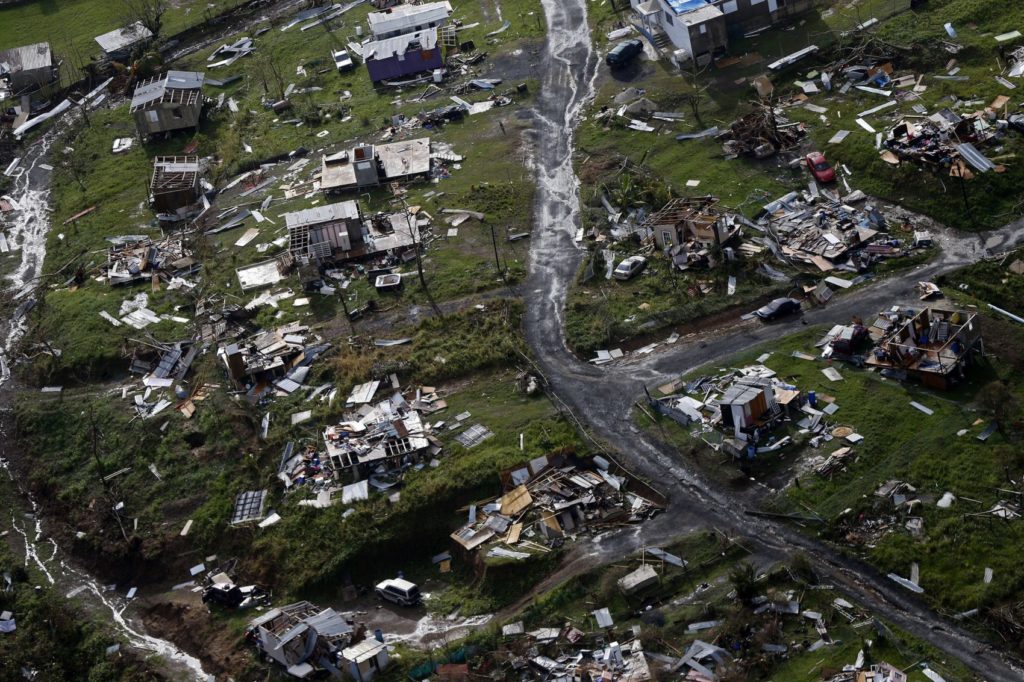
President Donald Trump lashed out at hurricane-devastated Puerto Rico on Thursday, insisting that federal help will be limited and blaming the U.S. territory for its financial struggles. The broadside came as the House headed toward passage of a $36.5 billion disaster aid package, including assistance for Puerto Rico. Puerto Rico has been reeling since Hurricane Maria struck three weeks ago, leaving death and destruction in an unparalleled humanitarian crisis. Forty-five deaths in Puerto Rico have been blamed on Maria, 90 percent of the island is still without power and the government says it hopes to have electricity restored completely by March. Trump tweeted: “We cannot keep FEMA, the Military & the First Responders, who have been amazing (under the most difficult circumstances) in P.R. forever!” In a series of tweets, the president said “electric and all infrastructure was disaster before hurricanes.” He blamed Puerto Rico for its looming financial crisis and “a total lack of accountability.” Democrats said Trump’s attacks were “shameful,” given that the 3 million-plus U.S. citizens on Puerto Rico are confronting the kind of hardships that would draw howls of outrage if they affected a state. One-third of the island lacks clean running water and just 8 percent of its roads are passable, according to government statistics. “It is shameful that President Trump is threatening to abandon these Americans when they most need the federal government’s help,” said Maryland Rep. Steny Hoyer, the second-ranking House Democrat. The legislative aid package totals $36.5 billion and sticks close to a White House request. For now, it ignores huge demands from the powerful Florida and Texas delegations, which together pressed for some $40 billion more. A steady series of disasters could put 2017 on track to rival Hurricane Katrina and other 2005 storms as the most costly set of disasters ever. Katrina required about $110 billion in emergency appropriations. The bill combines $18.7 billion for the Federal Emergency Management Agency with $16 billion to permit the financially troubled federal flood insurance program pay an influx of Harvey-related claims. An additional $577 million would pay for western firefighting efforts. Up to $5 billion of the FEMA money could be used to help local governments remain functional as they endure unsustainable cash shortfalls in the aftermath of Maria, which has choked off revenues and strained resources. House Speaker Paul Ryan, R-Wis., planned to visit Puerto Rico on Friday. He has promised that the island will get what it needs. “It’s not easy when you’re used to live in an American way of life, and then somebody tell you that you’re going to be without power for six or eight months,” said Resident Commissioner Jenniffer Gonzalez-Colon, who represents Puerto Rico as a nonvoting member of Congress. “It’s not easy when you are continue to suffer – see the suffering of the people without food, without water, and actually living in a humanitarian crisis.” The GOP-run Congress had protracted debates last year on modest requests by former President Barack Obama to combat the Zika virus and help Flint, Michigan, repair its lead-tainted water system. Now, it is moving quickly to take care of this year’s crises, quickly passing a $15.3 billion measure last month and signaling that another installment is coming next month. Several lawmakers from hurricane-hit states said a third interim aid request is anticipated shortly – with a final, huge hurricane recovery and rebuilding package likely to be acted upon by the end of the year. Republished with permission from the Associated Press.
Another Alabama emergency management officer, Jeff Byard, joins FEMA leadership
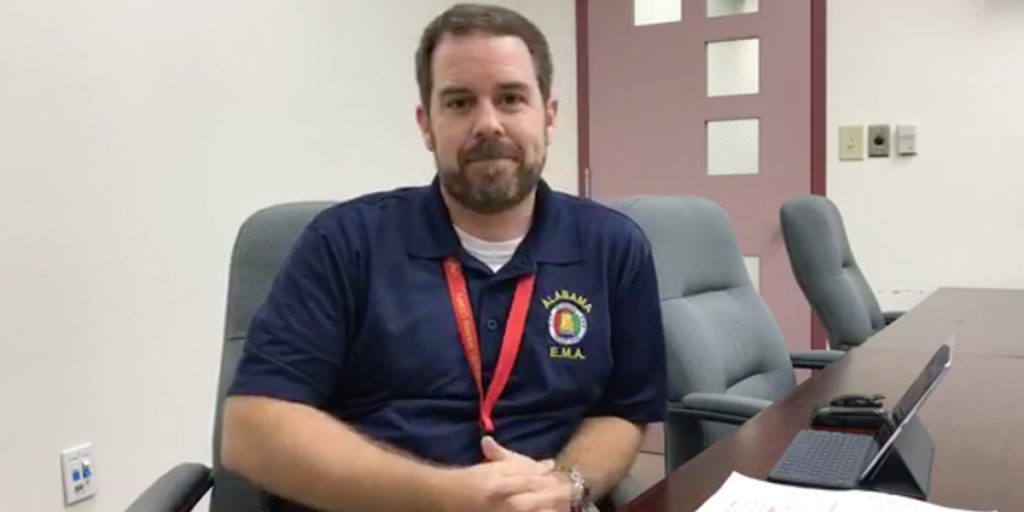
Alabama is losing another emergency management leader to the Federal Emergency Management Agency (FEMA). Alabama Emergency Management Agency (AEMA)’s Executive Operations Officer Jeff Byard has been appointed the Associate Administrator for the Office of Response and Recovery (ORR) at FEMA. Byard joins fellow AEMA alum, FEMA Director Brock Long who joined the agency last month, in his new post where he will focus on the agency’s ability, and those of its partners and stakeholders, to respond to all catastrophic events through building, sustaining, and improving response and recovery capabilities. During his tenure with the AEMA, Byard was responsible for the creation and implementation of the Alabama field response structure, which resulted in a more effective and efficient response and recovery model. He also served as the Deputy State Coordinating Officer for the nation’s first large scale host state evacuation event during Hurricane Gustav. From 2006-2007, he served as the Director of Alabama’s Transitional Recovery Office where he led and coordinated the timely delivery of FEMA’s disaster recovery and assistance support to state and local governments. Byard holds a Bachelor of Science degree from Troy University, and is a graduate of the Alabama Public Safety Leadership Academy at Alabama. He was sworn in to his new position Monday morning in the National Response Coordination Center.
House moving swiftly on $7.9B Harvey relief bill
The House on Wednesday moved swiftly toward approving $7.9 billion in Harvey disaster relief as Democratic leaders signaled they would back the measure along with a short-term increase in the nation’s borrowing limit to avoid an economy-rattling default. The announcement by House Minority Leader Nancy Pelosi, D-Calif., and Senate Minority Leader Chuck Schumer of New York is aimed at retaining Democratic influence and trying to ensure the Republican-controlled Congress addresses health care and immigration as the hectic fall agenda kicked off. “Given Republican difficulty in finding the votes for their plan, we believe this proposal offers a bipartisan path forward to ensure prompt delivery of Harvey aid as well as avoiding a default, while both sides work together to address government funding, DREAMERS, and health care,” Pelosi and Schumer wrote. Democratic votes are needed to quickly pass a debt limit increase, even though Republicans control Congress. Many Republicans simply won’t vote to increase the debt limit without cuts elsewhere in government spending. Wednesday’s House vote comes as the government’s response to Harvey is draining existing disaster reserves, with Federal Emergency Management Agency‘s disaster accounts hovering at $1 billion or less. FEMA is warning lawmakers that disaster funds run out on Friday, even as a much more powerful hurricane, Irma, is bearing down on the eastern U.S. This week’s measure is to handle the immediate emergency needs and replenish reserves in advance of Irma. Far more money will be needed once more complete estimates are in this fall, and Harvey could end up exceeding the $110 billion government cost of Hurricane Katrina. The move by Pelosi and Schumer is aimed at winning assurances that minority party Democrats will be treated fairly as Congress advances through its daunting to-do list, which includes extending a popular children’s health program, federal flood insurance, and, perhaps, a budget that would ease tight limits on Pentagon and domestic spending. The statement came out as the House Wednesday took up a $7.9 billion request by President Donald Trump‘s for a $7.9 billion first installment of relief for victims of Harvey. House action on Wednesday would set up a Senate debate that, as of Wednesday, would follow an uncertain path. GOP leaders have signaled that they want to use the urgent Harvey aid bill to solve perhaps the most vexing issue facing Congress this month: Increasing the U.S. debt limit make sure the government can borrow freely again to cover its bills, including Harvey aid. Senate Majority Leader Mitch McConnell, R-Ky., said again Wednesday that increased Harvey costs show the importance of acting swiftly to increase the government’s debt cap to make sure there’s enough borrowed cash to pay out the surge in disaster aid. “I think it’s a terrible idea,” said House Freedom Caucus Chairman Mark Meadows, R-N.C., who conceded that conservatives were getting outmaneuvered. “I think at this point there are bigger issues that we have to focus on,” Meadows said. “I have opposed a debt ceiling increase every time it has come up for a vote,” said Rep. Roger Williams, R-Texas. “I am heavily opposed to lumping these two separate issues together.” Analysts at the Bipartisan Policy Center, a Washington think tank, say Harvey aid wouldn’t cause a cash crunch for weeks. “We’re dealing with all these things at this point in time anyway,” said House Democratic Caucus Chairman Joe Crowley of New York. “Democrats have said we’re for a clean debt ceiling and we’re also for making sure the people from Texas, Louisiana, and elsewhere who’ve been severely damaged by these storms – with one more on the way as well – that their needs need to be addressed as well.” Republished with permission from the Associated Press.
Former Alabama leader, FEMA Director Brock Long faces first first big test
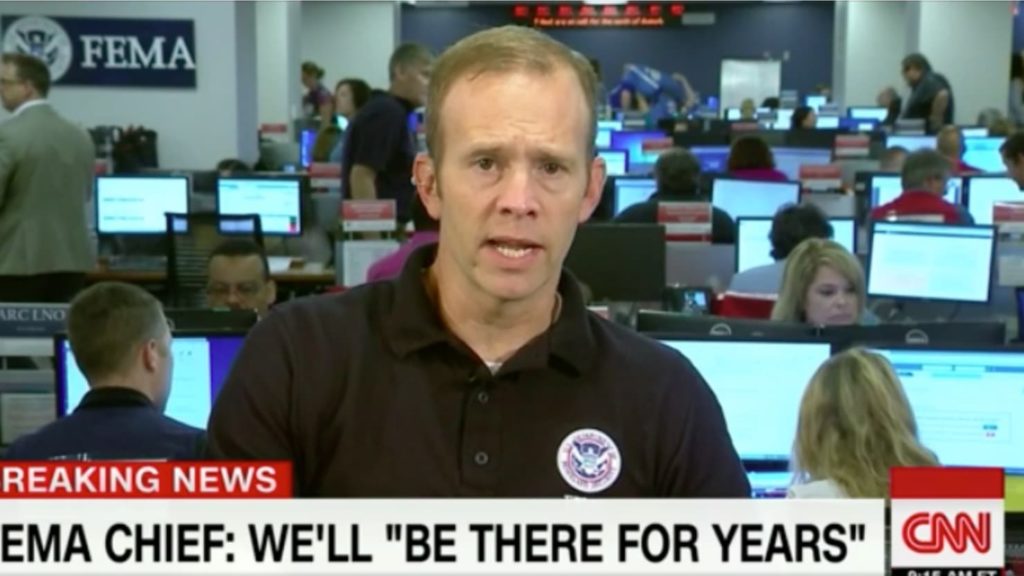
Brock Long, the Director of the Federal Emergency Management Agency (FEMA), is getting ready to face one of the toughest challenges of his career — coordinating the federal response to the damage done by Hurricane Harvey in Houston, Texas. While he’s only been on the job for two months, Long will be relying on years of experience in working with natural disasters in the weeks, months and years of Hurricane Harvey clean-up that lies ahead. From 2008 to 2011 Long served was at the helm of the Alabama Emergency Management Agency (AEMA), where he worked on the Yellowhammer State’s response to the Deepwater Horizon oil spill and numerous other natural disasters. As Director, he served as the State Coordinating Officer for 14 disasters, including eight presidentially-declared events. Prior to that he was a FEMA Regional Hurricane Program Manager from 2001 to 2006. Long’s already relying on his experience as the storm continues to do damage to the Lonestar State. On Monday, he asked for all Americans to help in what will be a lengthy recovery from the historic flooding caused by Hurricane Harvey. “Helping Texas overcome this disaster is going to be far greater than FEMA coordinating the mission of the entire federal government,” Long said at as news conference in Washington. “We need citizens to be involved. This is a landmark event. We have not seen an event like this. You could not draw this forecast up. You could not dream this forecast up.” “This is a whole community effort,” he added. The extent of the damage remains unknown, and the rainfall is not expected to let up for several days. Long urges individuals and organizations to check the website nvoad.org or call 1-800-621-FEMA to find out how to help.
Robert Bentley requests federal assistance for storm-hit counties
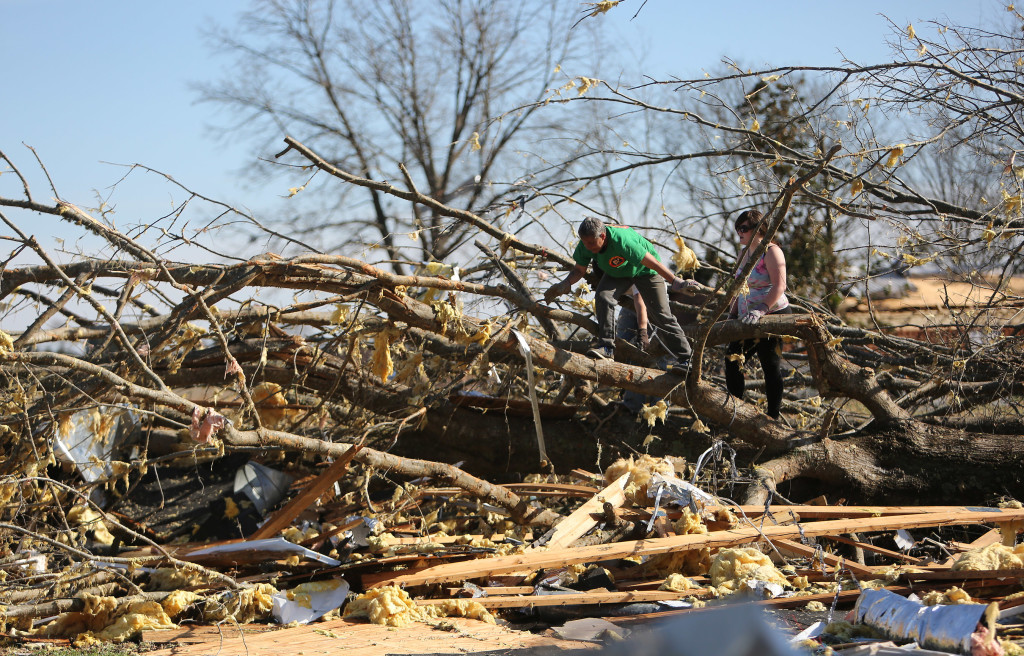
Alabama Gov. Robert Bentley has requested federal disaster assistance for counties hit by the severe storms this past month. Bentley said Thursday that 39 counties will receive assistance through the Federal Emergency Management Agency. The governor declared a state of emergency amid widespread flash flooding that followed several days of intense weather throughout the Southeast beginning Dec. 24. Counties to receive assistance include Autauga, Barbour, Blount, Bullock, Butler, Chambers, Cherokee, Clay, Cleburne, Coffee, Colbert, Conecuh, Covington, Crenshaw, Cullman, Dale, DeKalb, Elmore, Escambia, Fayette, Franklin, Geneva, Henry, Houston, Jackson, Lamar, Lawrence, Lee, Lowndes, Macon, Marion, Marshall, Monroe, Pike, Perry, Russell, St Clair, Walker, and Winston. The Public Assistance Grant Program provides assistance for debris removal and emergency protective measures. It also includes repair, replacement or restoration of disaster-damaged, publicly owned facilities, and infrastructure. Republished with permission of the Associated Press.
Angi Stalnaker: Remembering April 27
Every Alabamian has their own story of April 27, 2011, the day of the largest natural disaster in the state’s history when more than 230 Alabamians lost their lives. On that day towns like Hackleburg, Pratt City, and Phil Campbell moved became communities forced to unite after facing unimaginable destruction. Fifty years from now, people will still recount how more than 60 monster tornadoes tore across the land, destroyed homes and schools, and permanently changed the topography of our future. I remember the events of that and subsequent days from the perspective of a staffer for Gov. Robert Bentley. I saw the tragic events as they unfolded and the recovery as a first-hand witness to leadership in the wake of tragedy. Speaking directly to the people By midafternoon that day, countless tornadoes had wreaked havoc on thousands of square miles of the state. The EMA director kept Governor Bentley constantly updated. I saw pictures and video of the devastation from my computer screen in the chief of staff’s suite. The National Guard and every governmental agency and available person were trying to help tornado victims. I was with several other staff members in the governor’s office when he told us he wanted to speak directly to the people of Alabama. A short time later, we crowded into studio at the bottom of Dexter Avenue as the newly inaugurated governor began his address. During the live broadcast, Bentley spoke in a calm authoritative tone. He gave information for those who needed help, numbers to call and other pertinent information. But most of all, he projected the reassuring knowledge that he cared, was in charge, and that help was on the way. Just before that broadcast, Tuscaloosa had been hit by a monster twister. We didn’t know the extent of the damage or how many lives had been lost, but we knew it was bad, really bad. The tornado had just hit head on the governor’s home city, home to three of his sons and six of his grandchildren, and home to his church and to his friends . Yet Governor Bentley delivered his address in a calm and reassuring way. It must have taken great strength to deliver that address, a strength of leadership I don’t know that I’ll ever possess to put the personal aside and do what was best for the state. In that moment, though, and for months afterward, that’s is exactly what he did. 100 days You don’t go into government inherently knowing everything you need to know. There are always things to learn from names and office locations to procedures and policies. This administration was no different and because April 27, 2011, was only the 100th day of the Bentley administration, we were all still very new to the executive branch. We had just made it through inauguration and into our first legislative session. Now we faced the largest natural disaster in Alabama’s history. Nothing prepared us for that, but that may have been an advantage because not knowing how things had been done in the past allowed us to follow the governor’s lead and do what he thought best. That allowed the recovery to go much smoother than anyone anticipated. A little common sense goes a long way. Where do we go? What do we do? When Bentley asked me to be his campaign manager for the 2010 gubernatorial election it was the greatest honor of my life. One opportunity it afforded me was the chance to meet the University of Alabama students who were campaign volunteers and interns. The Bentley Gubernatorial Election Headquarters was at the corner of 15th Street and McFarland just a few blocks from campus so we were always a favorite hangout for politically interested college students. Shortly after the tornado hit Tuscaloosa, many of us who had transitioned to government from the campaign tried to contact the students we had gotten to know. Telephone lines were down, cell phone towers were destroyed, and calling into Tuscaloosa was extremely difficult. For hours, I heard nothing from anyone I tried to reach. At about 8 p.m. my phone rang and the voice on the other end said, “Miss Angi, where do we go? What do we do?” It was a young man from Chicago who had worked feverishly on the campaign. We affectionately referred to him as “Research Joe.” I could tell he was scared and worried. He was with a group of friends but their apartments were mostly destroyed or heavily damaged. They were OK, though, and he asked what to do next. I told him to make it to the campus rec center where there would be people to help. I often wonder what that sweet kid from Chicago thought when he emerged from his tornado-safe place to see what happened around him. I often wonder whether he questioned his decision to come to Tuscaloosa. He graduated with honors and is now in a Northern law school. I’m fairly confident that he will be president one day. As the night progressed, I heard from almost every one of those campaign volunteers who had remained in Tuscaloosa. They were all shaken and scared but alive and uninjured. A tremendous relief, it gave us all a little hope. “Make sure they are fed” As the storms subsided in the evening, the focus turned to recovery. About six of us were with Governor Bentley in his office when he ended a phone call with Art Falkner and Jeff Byard from the EMA Headquarters in Clanton. By that point, the EMA bunker had filled with people well-trained in disaster response. They were going to be in that Chilton County bunker a very long time. Bentley sat silent for a few minutes, then he stood to take out his wallet. He handed me money, and asked me to go buy food and take it to Clanton. I will never forget his words: “We have to make sure they are fed.” I did as instructed
