
Challenger Gerrick Wilkins criticizes incumbent Gary Palmer over his yes vote on compromise NDAA
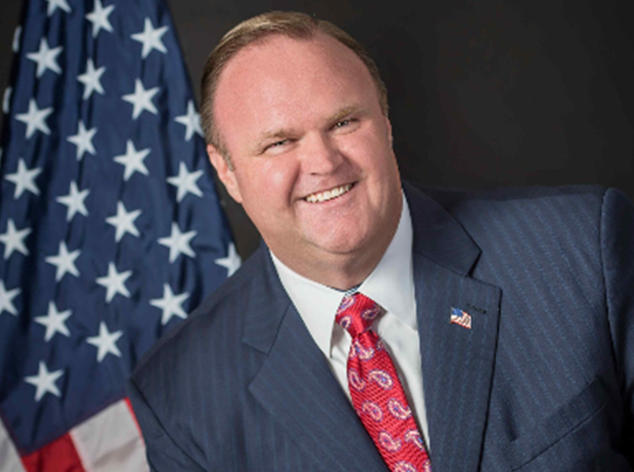
Congressional District 6 challenger Gerrick Wilkins released a statement highly critical of incumbent Gary Palmer for voting in favor of the conference version of the 2023 National Defense Authorization Act (NDAA). The 3,000-page final version of the NDAA sets defense spending at $886 billion for fiscal year 2024 and establishes defense policy for the United States. Wilkins stated that the version of the NDAA that passed the House of Representatives on Thursday incorporates provisions that run counter to conservative values. He pointed out that Congressman Palmer’s support for the NDAA, which included funding for abortion, is a stark departure from the principles upheld by many conservatives. Wilkins firmly believes that taxpayer dollars should not be allocated to procedures that contradict the deeply held beliefs of a significant portion of the electorate. Wilkins also criticized Palmer’s vote in the bill for a short-term reauthorization of FISA Section 702 surveillance provision. The Section 702 reauthorization will be reconsidered in April. Wilkins claimed that this raises concerns about potential infringements on the privacy rights of American citizens. He advocates for robust safeguards to protect individual liberties and questions Palmer’s judgment in supporting legislation that may compromise privacy rights. According to Wilkins, the NDAA also contains provisions indirectly endorsing activities such as drag shows, a stance that he claims stands at odds with traditional conservative values. Wilkins expressed his view that legislation should prioritize aligning with the values and morals of the constituents they represent. “I commend Senator (Tommy) Tuberville and Congressman Barry Moore for their principled stance in resisting the pressure to pass this massive and controversial bill without thorough scrutiny,” said Wilkins, expressing gratitude for those who stand up for the Constitution and freedom. Wilkins emphasized what he describes as stark differences in values and priorities between himself and Congressman Palmer. If elected, Wilkins says he is committed to being a voice for conservative ideals, advocating for limited government, fiscal responsibility, and the protection of individual liberties. The House passed a Republican led version of the NDAA in July. That bill was rejected by the White House and the Democrat-controlled U.S. Senate, sparking a five-month delay in passing the final legislation, which was supposed to go into effect on October 1. Speaking to the his vote on the final bill Tuberville said, “I voted for this year’s defense bill for two reasons: because it’s good for Alabama and it’s good for our national security.” Tuberville went on to say, “This bill could have been a lot stronger, but Chuck Schumer rigged the negotiation process to prevent conservatives from getting key wins on issues like taxpayer-funded abortion and DEI. We didn’t get everything we wanted this time, but we got a lot. And my fellow conservatives in Alabama and across America can be sure that I’m determined to get the rest of it in next year’s bill.” “Despite our many policy wins, the reality of a divided government means that Republicans did not get everything we wanted,” Robert Aderholt explained in his statement on the passage of the bill. “I am deeply disappointed that Senate Democrats were able to strip out of a House-passed provision that would overturn President Biden’s unconstitutional policy of reimbursing servicemembers’ abortion travel costs. However, we were able to take an axe to the leftist, woke agenda that Democrats have been forcing on our military. We have put a hiring freeze for social justice warriors in the DoD, prohibited the use of federal funds to promote critical race theory, and undone the injustice done to our service members who were wrongfully punished for refusing the COVID-19 vaccine.” Congressman Barry Moore was the only member of the Alabama delegation to vote against the conference committee version of the NDAA. “This version of the NDAA forces American taxpayers to fund abortion travel, sex reassignment surgeries, a one-year reauthorization of FISA with no reforms, which allows weaponized government to spy on Americans, and critical race theory initiatives teaching that our nation’s enemies are not abroad, but within our own citizens and military,” said Moore said in a statement. “Earlier this year, I proudly supported the House version of this legislation, which was truly focused on military readiness and service member needs. I am disappointed that divisive policies which hold service members and taxpayers hostage to the Democrats’ radical agenda have been included in this bill, and I cannot support it.” The bipartisan version of the NDAA passed the House in a 310 to 118 vote. Forty-five Democrats and 73 Republicans voted against the final version of the NDAA. It passed the Senate on Wednesday and is now on the President’s desk. He is expected to sign it. Gerrick Wilkins is a businessman with over 24 years in the automotive industry. He is also a husband and father. He has a bachelor’s degree from Pensacola Christian College as well as a degree in theology from Liberty University and a master’s in business administration from Samford University. Wilkins has experience managing large-scale automobile dealerships and helping other community-based dealers grow. Wilkins, Palmer, and insurance agent Ken McFeeters are all running for Alabama’s Sixth Congressional District in the Republican primary on March 5. The eventual Republican nominee will then face Democrat Elizabeth Anderson in the November 5, 2024 general election. To connect with the author of this story or to comment, email brandonmreporter@gmail.com
Mike Rogers: The American people deserve to know the truth
There is nothing more fundamental to our Republic than free elections, equal justice under the law, and honest government. Any threat to them can shake the foundations of our Constitution. Recently, some very disturbing information about the actions of a few high- ranking officials at the FBI and Justice Department has come to light. This information describes an effort to use the most sensitive law enforcement techniques to discredit and potentially nullify the 2016 election. We’ve all heard by now about the shady Steele dossier. We are learning the Democratic National Committee (DNC) and possibly even some officials at the FBI were behind the dossier. Then that same unreliable information was used by the FBI to get a secretive surveillance warrant to spy on the Trump campaign – or in other words, a warrant to spy on fellow Americans for political purposes. We have also learned of a small group of senior FBI officials seemingly scheming to get Donald Trump. Talks of an “insurance plan” against Mr. Trump, of secret “offsite” meetings and over 50,000 texts over 50,000 missing text messages many of which highlighted these efforts. And remember one week we are told the 50,000 texts were forever lost due to a technical error and the next week we are told the FBI Inspector General was able to recover them. Sounds a lot like missing emails doesn’t it? There is growing interest in the public release of a four-page document written by my colleague, Congressman Devin Nunes (CA) who serves as Chairman of the House Intelligence Committee that outlines many of these suspicious actions. Especially the potentially illegal use of the Foreign Intelligence Surveillance Act (FISA) to spy on President Trump. This document, which I had the opportunity to read in secured area in the U.S. Capitol, was very troubling to me. The memo must be released to the public. The American people have the right to know the truth. ••• Mike Rogers is a member of U.S. Congress representing Alabama’s 3rd Congressional District. Sign-up for his e-Newsletter by visiting www.mikerogers.house.gov. To stay up to date, you can also like him on Facebook at Congressman Mike D. Rogers, follow him on Twitter, Pinterest and Instagram at RepMikeRogersAL, on Tumblr at www.repmikerogersal.tumblr.com.
Donald Trump adviser: Secret warrant may have caught hacker contact
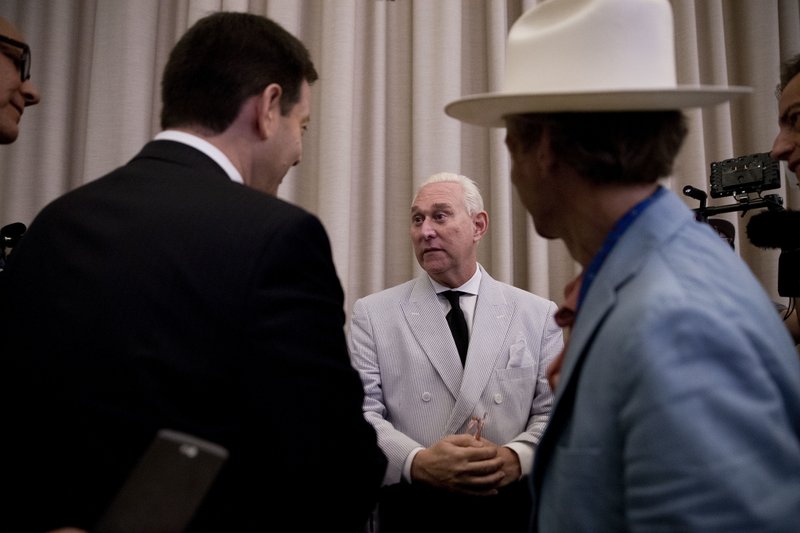
Longtime Trump adviser Roger Stone says he believes his contacts with a Russian-linked hacker who took credit for breaching the Democratic National Committee may have been obtained through a FISA warrant, which allows the government to collect the communications of individuals suspected of being agents of a foreign power. Stone is among a handful of President Donald Trump‘s associates who are under scrutiny for possible links to Russia during the presidential race. In a statement to The Associated Press, Stone said he’s retained two attorneys to explore whether he can compel the government to “either charge me or admit they have no case whatsoever.” The Republican operative has acknowledged having a Twitter exchange with Guccifer 2.0, a hacker that U.S. officials believe has ties to Russia. Stone said he was “unaware at the time of the brief exchange of allegations that the hacker in question is suspected of being a Russian asset.” “I have no relationship with the Russian state, Russian Intelligence or any other Russians,” said Stone, who split with Trump’s campaign in August 2015 but remains in touch with the president. Stone’s messages with Guccifer 2.0 were first reported by the website The Smoking Gun. He said the story contains information that “could only be learned by surveillance of my domain and eavesdropping on my e-mail, phone calls and texts.” “If these where obtained through a FISA warrant as I believe and the information was leaked to the Smoking Gun, that would constitute a felony,” Stone said. He also suggested, without evidence, the government had Trump under surveillance during the presidential campaign. Trump has accused former President Barack Obama of wiretapping the New York skyscraper where he lived and ran his campaign, though he has provided no evidence to support his explosive allegation. On Monday, the White House started softening Trump’s claims, with spokesman Sean Spicer saying the president was referring to general surveillance that may have been approved by the Obama administration. The FBI, as well as House and Senate committees, are investigating Russia’s interference in the 2016 election and possible contacts between Trump associates and Russians. Trump has asked the congressional committees also to investigate his wiretapping allegations, though the Justice Department missed a Monday deadline to provide evidence to the House committee. Sen. Lindsey Graham, R-S.C., says he’s waiting to hear from FBI Director James Comey whether a warrant was issued that would have allowed the Obama administration to tap Trump’s phones during the campaign. Graham says he asked Comey to answer by Wednesday and also to say whether the FBI is investigating Russian interference in the 2016 campaign. If Comey doesn’t comply, Graham says Congress “is going to flex its muscle.” “We’ll issue a subpoena to get the information, we’ll hold up the deputy attorney general’s nomination until Congress is provided with the information to finally clear the air as to whether there was ever a warrant issued against the Trump campaign,” Graham, who heads the Judiciary Committee’s crime and terrorism subcommittee, said Wednesday on NBC’s “Today” show. Republican Sen. John McCain has singled out Stone as a Trump associate who should answer questions about his ties to Russia. The Arizona lawmaker suggested in an interview Sunday with CNN that Stone may have ties to ousted Ukrainian President Viktor Yanukovych. Stone denied any connection to Yanukovych or his political party. Stone said he did work for a “small pro-Western splinter party” of Ukrainian politician Volydmyr Litwin, calling the effort to help win seats in parliament a “low budget operation.” Stone said he is willing to testify in any Senate hearings that occur “in public and not behind closed doors.” He’s retained former U.S. Attorney Kendall Coffey and South Florida lawyer Grant Smith to represent him. Last year, Coffey represented Trump campaign manager Corey Lewandowski when he was charged with simple battery after an altercation with a female reporter. The prosecutor later dropped the charges. Republished with permission of The Associated Press.
Donald Trump claims Barack Obama had phones wiretapped; Obama denies it
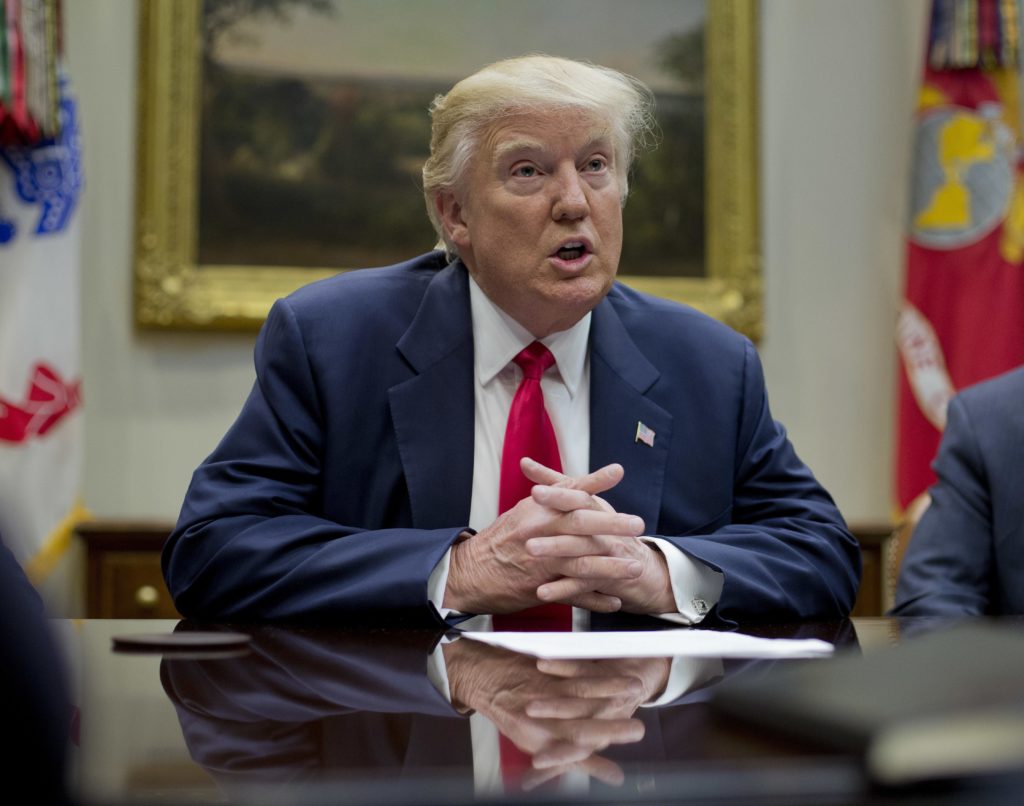
President Donald Trump on Saturday accused former President Barack Obama of having Trump Tower telephones “wire tapped” during last year’s election, a startling claim that Obama’s spokesman said was false. Trump did not offer any evidence or details, or say what prompted him to make the allegation. Trump, whose administration has been under siege over campaign contacts with Russian officials, said in a series of early morning tweets that he “just found out that Obama had my ‘wires tapped’ in Trump Tower just before the victory. Nothing found. This is McCarthyism!’ Obama spokesman Kevin Lewis said a “cardinal rule” of the Obama administration was that no White House official ever interfered in any Justice Department investigations, which are supposed to be conducted free of political influence. “As part of that practice, neither President Obama nor any White House official ever ordered surveillance on any U.S. citizen,” Lewis said, adding that “any suggestion otherwise is simply false.” The White House did not immediately reply to inquiries about what prompted the president’s tweets. Trump, who used to speak of having a warm relationship with Obama, compared the alleged activity by his predecessor to behavior involving President Richard Nixon and the bugging of his political opponents. “How low has President Obama gone to tapp my phones during the very sacred election process. This is Nixon/Watergate. Bad (or sick) guy!” he tweeted, misspelling ‘tap.’ Trump said the wiretapping occurred in October. He ran the presidential transition largely out of Trump Tower in New York, where he also maintains a residence. Trump’s tweets came days after revelations that Attorney General Jeff Sessions, during his Senate confirmation hearing, didn’t disclose his own campaign-season contacts with Russia’s ambassador to the United States. Sessions, a U.S. senator at the time, was Trump’s earliest Senate supporter. Trump’s opening tweet Saturday mentioned Sessions and claimed the first meeting Sessions had with the Russian diplomat was “set up by the Obama Administration under education program for 100 Ambs …” U.S. intelligence agencies have concluded that Russia interfered in the campaign with the goal of helping elect Trump over Democrat Hillary Clinton — findings that Trump has dismissed. The FBI has investigated Trump associates’ ties to Russian officials. Congress is also investigating. Trump has blamed Democrats for leaks of information about the investigation and the contacts. Rep. Adam Schiff of California, the senior Democrat on the House Intelligence Committee, said in a statement that Trump was making “the most outlandish and destructive claims without providing a scintilla of evidence to support them.” Schiff added: “No matter how much we hope and pray that this president will grow into one who respects and understands the Constitution, separation of powers, role of a free press, responsibilities as the leader of the free world, or demonstrates even the most basic regard for the truth, we must now accept that President Trump will never become that man.” It was unclear what prompted Trump’s new charge. The president often tweets about reports he reads on blogs and conservative-leaning websites. The allegations may be related to anonymously sourced reports in British media and blogs, and on conservative-leaning U.S. websites, including Breitbart News. Those reports claimed that U.S. officials had obtained a warrant under the Foreign Intelligence Surveillance Act to review contacts between computers at a Russian bank and Trump’s New York headquarters. The AP has not confirmed these contacts or the investigation into them. Steve Bannon, Trump’s chief strategist in the White House, is a former executive chairman of Breitbart News. FISA is a 1978 law that created a system to hear requests to surveil foreign intelligence agents. It differs from a regular criminal warrant because it does not require the government to provide probable cause that a crime has occurred. Instead, under FISA, the government must simply provide evidence that the target of an investigation is an agent of a foreign power. Such targetable agents would include Russian diplomats such as Sergei Kislyak, the ambassador who spoke with a number of Trump aides. But a FISA warrant could also include others for whom investigators could muster probable cause, potentially including entities directly connected to Trump. Obama could not order a FISA warrant. Obtaining one would require officials at the Justice Department to seek permission from the FISA court, which is shrouded in secrecy. Judges could order prosecutors to share FISA information with defendants if they deem it necessary for challenging a search’s legality, but courts have consistently agreed with the government that disclosing the material could expose sensitive intelligence secrets. One exception to this practice is the president himself, who has the authority to declassify records. In Trump’s case, he could confirm any such surveillance of his campaign or business undertaken before he took office in January. Trump is spending the weekend at Mar-a-Lago, his waterfront estate in Palm Beach, and he spent several hours at his golf club in nearby West Palm Beach on Saturday. Trump also tweeted about Arnold Schwarzenegger‘s decision to leave “The New Celebrity Apprentice.” Schwarzenegger replaced Trump as host of the show while the president remained its executive producer. Trump was scheduled to have dinner Saturday at Mar-a-Lago with Sessions, Homeland Security Secretary John Kelly, Commerce Secretary Wilbur Ross, who has a home in Palm Beach, Bannon and other White House advisers. The president planned to return to the White House late Sunday. Republished with permission of The Associated Press.
