
Presidential Primary Brief: 435 days until Election Day
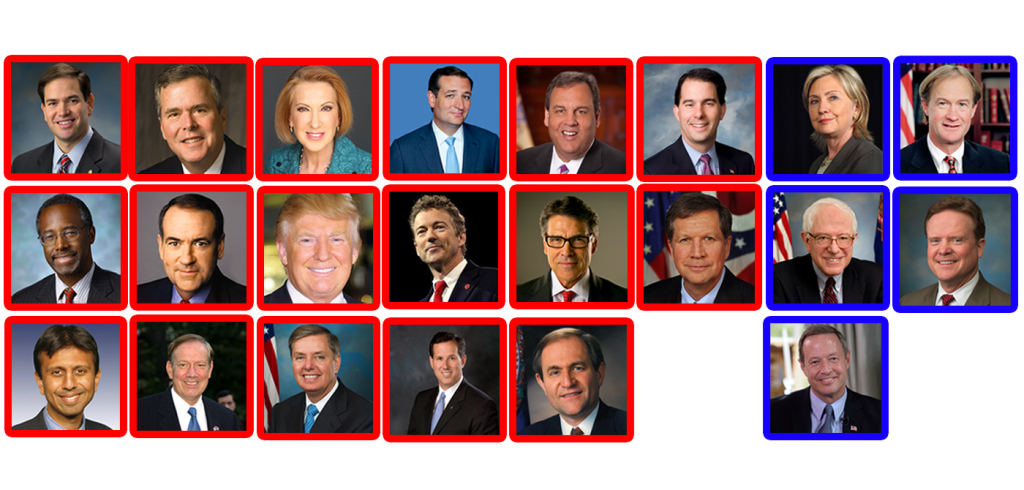
181 days until AL Presidential Primary 435 days until Election Day Convention Dates: Republican July 18-21 2016, Democratic July 25-28 2016 Weekly Headlines: Hillary Clinton summons top campaign bundlers to New York Poll: Biden outperforms Hillary in general election; Trump leads GOP field Rick Perry presidential run on death watch Press Clips: Scott Walker to outline foreign policy blueprint (NBC News 8/28/15) After a week of calling on the White House to cancel next month’s state visit for the Chinese president, Wisconsin Gov. Scott Walker will lay out his own foreign policy blueprint, laying out a plan to take on terrorism and saying “America will not be intimidated.” During a speech to cadets at the Citadel in South Carolina, Walker will continue his attacks against what he has called the “Obama-‐Clinton” foreign policy, calling it filled with “delusion and wishful thinking,” according to excerpts released by his campaign. Huckabee lands Aaron Trost as Iowa director (Politico 8/27/15) Former Arkansas Gov. Mike Huckabee will announce Thursday that Aaron Trost, who managed the insurgent campaign of Sen. Deb Fischer (R-‐Neb.), will be his Iowa state director. Trost comes to Iowa after making his name in neighboring Nebraska, where he engineered a come-‐from-‐behind primary victory for Fischer in 2012, then managed her general-‐election victory over former Sen. Bob Kerrey. Gov. Dan Malloy questions Sanders’ stance on guns (Politico 8/26/15) Connecticut Gov. Dannell Malloy questioned Bernie Sanders’ record on gun control during a meeting Tuesday with New Hampshire organizers for Hillary Clinton’s campaign. Campaigning for Clinton in the Granite State, the Democratic governor contrasted the former secretary of state’s record on guns with that of the independent Vermont senator, according to a report from Hearst Connecticut Media Group. Carly Fiorina’s camp cries foul in attempt to get on debate main stage (Politico 8/26/15) Faced with the very real possibility that she will again be relegated to a lower-‐tier debate, GOP presidential candidate Carly Fiorina’s campaign is going after the Republican National Committee and the news organization the RNC picked to host the next debate, CNN. Fiorina has surged in the polls since a widely praised performance in the “happy hour” debate earlier this month. But she has a problem: There haven’t been enough polls to catapult Fiorina from 14th place, where she stood going into that debate, into the top 10 ranking for CNN’s Sept. 16 debate. Donald Trump’s newest media brawl (Politico 8/26/15) The Univision anchor in the front row of Donald Trump’s pre-‐rally news conference in Iowa on Tuesday night piped up to ask a question as the Q&A began. Then Jorge Ramos quickly became the surprise star of the news cycle, the latest to present itself in Trump’s unapologetic, take-‐no-‐prisoners spectacle of a campaign. “Mr. Trump, Mr. Trump!” said Ramos, one of the country’s most influential Hispanic journalists. “Sit down, sit down. You weren’t called,” Trump responded gruffly. As stock market drops, so do Hillary’s chances (Politico 8/25/15) U.S. stocks continued their sharp decline on Tuesday, fueling talk of a worst-‐case scenario for both Wall Street and the broader U.S. economy heading into 2016. And it is one that could make it all but impossible for Hillary Clinton or any other Democrat to win the White House. Under this scenario, a further collapse in China reignites fear in U.S. markets. A strengthening dollar hurts exports while job growth, which is already slowing, stalls out completely. Meanwhile, Janet Yellen and the Federal Reserve make a huge policy mistake and raise interest rates too soon, choking off what little growth we have. Tom Vilsack endorses Hillary Clinton (Politico 8/25/15) Hillary Clinton scooped up a key endorsement from the Obama administration’s agriculture secretary on Tuesday. Tom Vilsack, a former Iowa governor who had a brief run in the 2008 campaign, endorsed the Democratic front-‐runner in an op-‐ed in the Cedar Rapids-‐based Gazette. Vilsack said he will proudly caucus for Clinton and praised her record on the economy, energy and education.
Iran deal sets 2016 clash between Hillary Clinton and GOP hopefuls
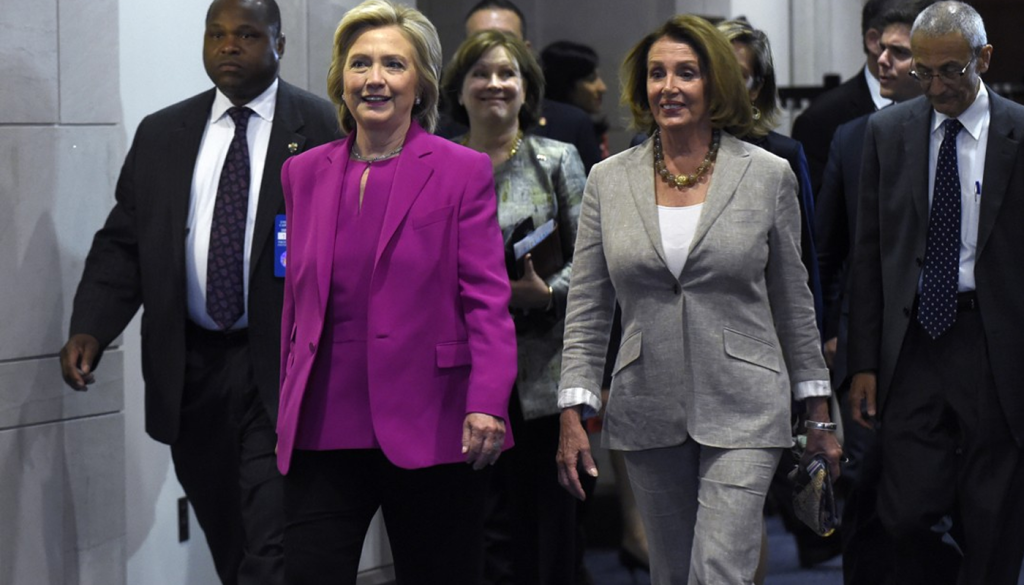
Hillary Rodham Clinton embraced a landmark nuclear deal with Iran on Tuesday, calling it the most effective path for the U.S. to prevent Iran from acquiring nuclear weapons. But she warned it would need strict enforcement, underscoring the tension between President Barack Obama‘s foreign policy legacy and the White House aspirations of his first secretary of state. In a lengthy statement released late Tuesday, Clinton said she supported “the agreement because it can help us prevent Iran from getting a nuclear weapon.” But her written statement, following a day of meetings with Democratic lawmakers in Congress, also called for a “clear-eyed” assessment of the threat Iran represents to the U.S. If elected, she vowed a tough response if Iran failed to live up to its end of the bargain. “We can never permit Iran to evade its obligations or to place any suspicious site off limits to inspectors,” Clinton wrote. “And the response to any cheating must be immediate and decisive – starting with the return of sanctions but taking no options off the table, including, if necessary, our military options.” Clinton has largely supported the Obama administration’s negotiations over the past two years. She has stayed involved with their progress with regular briefings, according to aides who spoke on the condition of anonymity because they weren’t authorized to publicly discuss private meetings. But navigating the political nuances of a historic agreement with a decades-long U.S. enemy heading into a presidential election year may end up being far more complicated. On Tuesday, Republican candidates signaled that Clinton would be forced to defend her position in the general election and warned of violent chaos in the Middle East as a result of the agreement while calling on Congress to try to halt it. Campaigning in Iowa on Tuesday, former Florida Gov. Jeb Bush called Obama’s actions “naive and wrong.” “This isn’t diplomacy – it is appeasement,” said Bush, one of the many Republicans who lashed out over the agreement. Wisconsin Gov. Scott Walker said the bargain “will be remembered as one of America’s worst diplomatic failures.” Florida Sen. Marco Rubio, who, like Walker, has vowed to rescind the agreement should he be elected president, said: “I believe this deal undermines our national security.” Though a slim majority of Americans back diplomacy with Iran, 56 percent consider Iran an enemy of the U.S., according to a new Associated Press-GfK poll taken before the deal was announced. Israeli leaders – who hold sway with some Jewish voters – see the agreement as a threat to their country’s very existence. And Republicans have already spent months trying to link Clinton to Obama, who has seen approval ratings for his foreign policy sink in his second term. Clinton’s current place in the Iran debate marks a striking role reversal for the second-time presidential candidate and her long-ago rival. In 2008, she called Obama’s offer to meet with Iran’s leader without preconditions “irresponsible and, frankly, naive.” And when Clinton said she would “obliterate” Iran if the country used nuclear weapons against Israel, Obama likened her “bluster” to the “tough talk” of then-President George W. Bush. Four years later, as secretary of state, Clinton dispatched a top adviser, Jake Sullivan, to participate in the secret meetings with Iran through the sultan of Oman that led to the start of the international negotiations. Sullivan, who could serve as Clinton’s national security adviser if she’s elected, declined to speak for Clinton during a breakfast with reporters. When asked for his own views, Sullivan said: “I believe that this deal is the best and most effective way to prevent Iran from getting a nuclear weapon. That’s my personal view.” Clinton, however, has long wondered publically whether a deal would ever take shape. She told an American Jewish organization last year that she was “skeptical the Iranians will follow through and deliver.” She said she had “seen many false hopes dashed through the years.” Now, skeptical congressional Democrats are looking to Clinton for direction as they weigh the completed agreement. With the deal between the world powers now finalized, Congress has 60 days to assess the accord and decide whether to pursue legislation imposing new sanctions on Iran or try to prevent Obama from suspending existing ones. If Clinton wins, her commitment to implementing the agreement will play a huge factor in its potential success. “She’s one of two of the most important, most influential voices in this debate, the other being President Obama,” said New York Rep. Steve Israel, who met with Clinton on Tuesday morning. “Her opinion is critically important.” Though Clinton praised the deal, she warned that the agreement would not end Iran’s “bad behavior” in the region, such as sponsoring terrorists, and noted that the country remains a major threat to Israel. The Democratic Senate leader, Sen. Harry Reid of Nevada, said Clinton had told the rank-and-file privately “let’s find out for sure what’s in it.” After meeting earlier with Clinton, House Democrats said she offered a far more positive assessment behind closed doors, though they noted that Clinton did not explicitly urge them to vote in favor of the deal. “She endorsed it. Full-throated,” said Virginia Rep. Gerry Connolly, who attended the closed-door meeting. “She was not equivocal at all in her support of the deal as she understands it.” Republished with permission of The Associated Press.
Where they stand: Jeb Bush on key topics of 2016 campaign
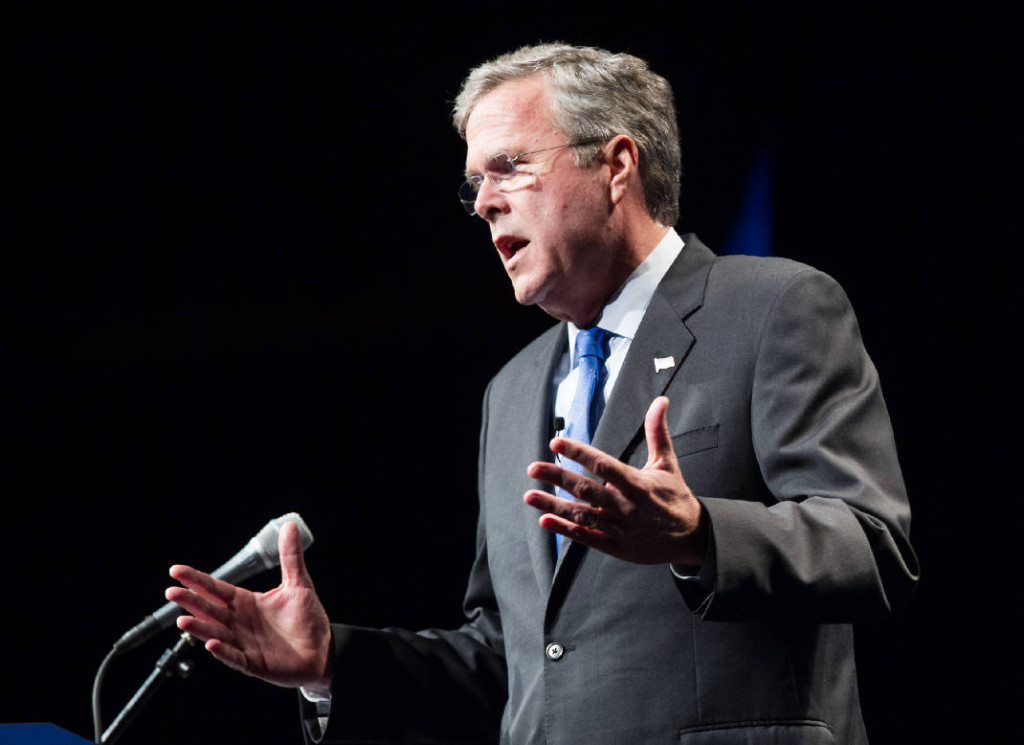
Former Florida Gov. Jeb Bush will run for the 2016 Republican presidential nomination, aides say, and plans to announce that June 15. Here’s where he stands on some of the issues likely to be debated in the campaign. Immigration Bush supports a system that would allow immigrants in the country illegally to stay, if they plead guilty to illegal entry, pay penalties and past-due taxes, learn English and perform community service. Bush views such a system as vital to accelerating economic growth in the U.S. He took grief from the right with his statement that people come to the U.S. illegally as an “act of love” for their families, but remains insistent that illegal immigration must be addressed in ways that accommodate many who are here. Foreign policy Bush says the U.S. “needs to regain its position militarily in Iraq to bring some order to the Iraqi military.” But what that means, exactly, is unclear. He hasn’t said whether he thinks the U.S. should add more troops. Bush opposed removing Cuba from the U.S. list of state sponsors of terrorism “before it changes its authoritarian ways and stops denying the Cuban people their basic human rights.” He criticized Congress for weakening post-Sept. 11 surveillance powers and disputed the argument those powers infringe on civil liberties. After stumbling over the question at first, Bush said he would not have ordered the 2003 invasion of Iraq, knowing now that the intelligence about its weapons capability was flawed. Budget and entitlement programs As Florida governor Bush cut taxes and the state government workforce and vetoed plenty of spending items in the state budget. As a White House contender, Bush says he would support raising the age to qualify for full Social Security benefits for future retirees, over time. He’s also praised a House Republican plan to partially privatize Social Security by letting people choose private accounts as an option to guaranteed Social Security benefits. He opposes tax increases but also has been against signing pledges to rule them out. Education Bush stands out as a supporter of Common Core education standards. He’s couched his position in milder terms recently as he has traveled to early-voting states where Republican support for the voluntary benchmarks are viewed as a federal mandate. Bush continues to urge states to adopt higher reading, math and language arts standards than they have, assessed with regular testing. But he doesn’t support additional testing or federal intervention in creation of the standards. Social issues Bush became a national figure with abortion opponents as governor when he intervened in the case of Terri Schiavo, a woman who had been kept alive in a vegetative state for 15 years by life support and whose husband wanted her feeding tubes removed. Bush ordered the feeding tubes reinserted only to be overruled by a federal court. Bush’s action was celebrated by anti-abortion groups as affirming the sanctity of life. As governor, Bush signed legislation requiring parental consent for abortions for minors. He opposes abortion rights except when women are victims of rape or incest, or when the woman’s life is endangered by continued pregnancy. He says he opposes gay marriage yet same-sex couples “making lifetime commitments to each other” deserve respect. Climate change Bush accepts the scientific premise that the climate is changing and calls examining the causes a priority. But he says: “I don’t think the science is clear on what percentage is man-made and what percentage is natural.” Those who say they know are guilty of “intellectual arrogance,” he says. He attributes the decline in U.S. carbon emissions to innovations in lower-carbon energy production by hydraulic fracking and horizontal oil and natural gas drilling. Republished with permission of The Associated Press.
