
Baron Coleman doubles down against gas tax, promises to run against Reed Ingram
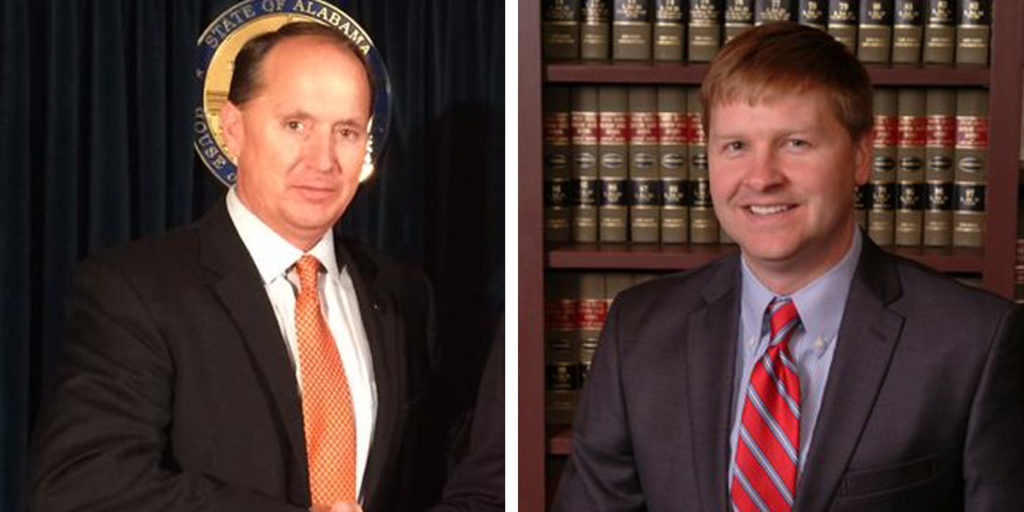
With the gas tax debate heating up on Goat Hill, Alabama residents across the state are waiting to see whether or not their representatives support the new tax. Baron Coleman — lawyer, radio talk show host and political consultant — is no different. On his radio show Wednesday, Coleman took a hard stand against Gov. Kay Ivey‘s gas tax and pledged to run against his own Representative in Montgomery, Reed Ingram, should he vote in favor of the tax. Ingram, who represents House District 75 (Pike Road), was first elected to office in 2014. A challenge from Coleman would be Ingram’s first — he easily sailed into office having not opposition in the Republican primary in both 2014 and 2018. Coleman presumably has a high name ID and would give Ingram quite the challenge. His conversational radio show, News and Views airs each week day from nine to noon on WACV 93.1 FM in the Montgomery market.
Five things you need to know about Alabama’s gas tax increase proposal
Last week, Alabama Gov. Kay Ivey announced her Rebuild Alabama Infrastructure Plan that proposes raising the state’s gas tax 10-cents to pay for infrastructure improvements. Here are the top 5 things you need to know about the proposed tax increase: Current gas tax rate: Alabama’s current state gas tax is 18 cents per gallon. Proposed gas tax rate: Ivey’s proposal includes a plan that increases a total of 10 cents over the course of three years, as follows: up 6 cents effective October 1, 2019, up another 2 cents, effective October 1, 2020, and up another 2 cents, effective October 1, 2021. Last time the gas tax increased: 1992. Since then there have been several proposals to increase the gas tax, but they’ve yet to pass the State Legislature. Number of votes needed to pass the tax in the House: Should Ivey call a special session on the gas tax, a simple majority will be needed to pass the proposal. With 105 members of the State House of Representatives, just 53 members need vote in support of it. Total cost of the proposal to the average driver: $55 a year, or $4.58 a month. That’s according to the Alabama Transportation Institute based on 12,000 annual miles and 22MPG.
J. Pepper Bryars: Why we should avoid an immediate special session for the gas tax
Many Alabamians, including the conservative-leaning Alabama Policy Institute, agree our state needs to increase funding for roads and bridges. And Governor Kay Ivey hasn’t yet ruled out calling the state legislature into a special session to raise the gas tax when lawmakers convene Tuesday in Montgomery. But is fast-tracking a $300 million tax increase a good idea? Probably not. True, calling lawmakers into a special session would free them from having to multitask the dozens of other issues they’d normally be dealing with. State senators, state representatives, and their staffs could focus intently on the legislation, and committees could schedule hearings and votes without worrying about competing events. But maybe we need to respect the normal process instead. Putting aside everything else and concentrating solely on something this big might normally make sense, but moving immediately into a special session this week may cause more problems than it’d solve. First, a third of the members of the legislature are brand new and this puts them in a very tight spot. They lack the benefit of having studied and debated this issue in recent years. Asking them to immediately cut their legislative teeth on a problem this monumental, this controversial, and this complicated may not be entirely fair. Besides, I can hear their opponent’s radio ad playing already: “We sent ol’ Billy Bob to Montgomery and the very first thing he did was vote to raise our taxes.” Ouch. They might not hear that ad until three years from now, but when they do, it sure will sting. Second, a special session may create the unintended appearance of ramming a tax increase through because of the shorter period of time needed and the lower hurdles required for passage. Spending only a handful of days on the issue — between introduction, debate, passage, and enactment — could look bad. It seems rushed, and begs the question: what’s the hurry? And needing fewer votes than normal for passage could also send the wrong message. That’s because in a normal legislative session, a 3/5th vote is needed in each chamber to advance a bill before the state budgets are done. In a special session that vote doesn’t happen. Removing that rather high bar — a safeguard that exists for a reason — begs another question: why not go through the normal process? And third, while a special session may afford lawmakers plenty of time since it’ll be what they’re working on all day long, such a rapid process wouldn’t give regular folks enough time to learn about the details, discuss the pros and cons of the bill in their communities, and let their state senators and state representatives know what they think. A special session could circumvent the normal feedback loop between elected officials and their constituents. That loop is especially important when it comes to tax increases. Lawmakers should also take note of what happened when tax increases were perceived to be rammed through the process recently in other states. Last week, Wyoming’s state legislature adjourned having failed to pass a tax increase that was strongly supported by its leadership in both chambers along with the state’s Republican governor. Why? Aside from the particulars, many voters felt things were moving way too fast. The bill was introduced in the House of Representatives on a Tuesday and passed out on a Friday. It then went to the upper chamber, where it was initially supported by a majority of senators seeking a quick vote until they began feeling the heat from angry constituents. Things fell apart, and their effort failed. And then there’s what happened to the chairman of the transportation committee in the Tennessee House of Representatives, State Rep. Barry “Boss” Doss. He was accused by some of breaking the chamber’s rules in 2017 so he could speed up the process and “ram” through the gas tax increase. Doss ended up drawing a challenger in the Republican Primary and ultimately lost his seat, one of only two GOP incumbents to lose that year. Some believe his parliamentary maneuvers were partly to blame. Alabama stands on the threshold of something big. We have the opportunity to bring real reform to our tax code — ending the practice of siphoning gas tax revenue to fund things unrelated to transportation, increasing the resources needed to improve our state’s roads and bridges, and lowering taxes that could help our poorest neighbors or increase economic activity. And as proposed by the Alabama Policy Institute and others, we can, and should, do all of that without increasing the overall tax burden. But we need to be patient, take our time, listen to others, and build a plan we all can support. Haste makes waste, and considering our state leaders are seeking to raise the gas tax by $300 million every year, waste is the last thing Alabama needs. J. Pepper Bryars is a native of Mobile who lives in Huntsville, is a senior fellow at the Alabama Policy Institute. Follow him on Twitter at @jpepperbryars.
Who is Bill Poole? Republican sponsoring gas tax increase bill
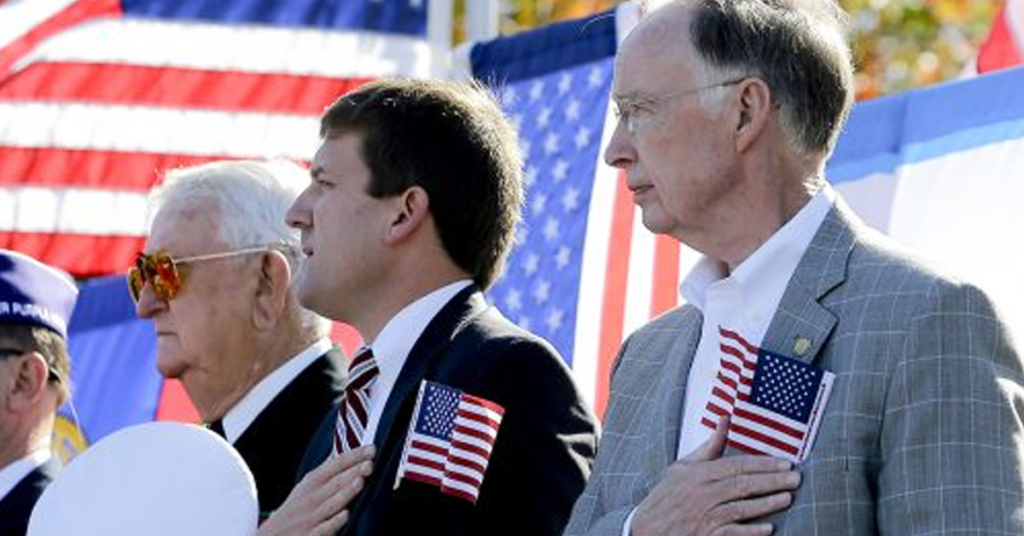
State Representative Bill Poole is sponsoring the bill which would call for a 10 cent tax increase. A proposal that is supported by Governor Kay Ivey and numerous business groups including the Business Council of Alabama (BCA). “The road to our future must be paved,” said BCA President and CEO Katie Boyd Britt. “Alabama’s transportation system is the backbone of the state’s economy and is crucial to our economic growth, and I commend Governor Ivey for making this a priority of her Administration.” Poole currently holds the legislative seat vacated by former Governor Robert Bentley. He won it in 2010 after defeating John Fisher (who was since arrested on several felony charges related to drug sales and stolen property.) From the biography of Poole posted on the Alabama Republican Party website, “Bill grew up in rural Marengo County and is a resident of Tuscaloosa, Alabama. Poole is a practicing attorney and is a member of the Alabama State Bar Association, the Tuscaloosa County Bar Association, the Alabama Law Institute and the National Conference of Commissioners on Uniform State Laws. In 2010, Poole was elected to serve House District 63 in the Alabama House of Representatives. This important district includes the University of Alabama and much of the City of Tuscaloosa. Following graduation Poole began his professional career as a Staff Assistant for the U.S. House of Representatives Committee on Ways & Means (then chaired by Bill Archer R-TX), as an International Trade Analyst for the international law firm Sandler, Travis & Rosenberg, P.A. in Washington, D.C., and as an Assistant Manager for Federal Affairs for the Pharmaceutical Manufacturers of America (PhRMA) in Washington, D.C. Poole returned to the University of Alabama to attend law school in 2001 and was admitted into the Alabama State Bar Association in 2004.” In 2013 Poole was named chairman of the House Education and Budget Committee by then Speaker Mike Hubbard. Al.com reported from a statement released at the time in which Hubbard said, ““In his time in the House, Poole has quickly earned the respect of his colleagues and proven that he has the skills and know-how required to make the tough decisions this position requires.” Once rumored to be a top contender to replace Hubbard as speaker of the house, after Hubbard’s conviction, Poole spoke to Montgomery Advertiser saying, “I have three young children…With a young family, with respect to my professional career and a full-time job, I’m not sure I’m in a position to pursue the office of speaker.” In an editorial published after the 2017 session, Gordon Stone, the executive director of the Higher Education Partnership, an advocacy organization for the state’s public universities, praised Poole said “For the Higher Education Partnership and the 14 public universities that it serves, the work of Chairman Poole has been extraordinarily positive. He understands that appropriations must recognize all of the education entities for the state and its people to benefit from the dollars invested in public education. He is a friend to K-12, post-secondary and higher education because he treats all segments as valuable. He is quick to contact the educational providers and let them know if a problem is around the corner. He wants to work with each entity to make sure that there is equitable funding.” According to an announcement he made at the time in 2016 Poole was named to the Aspen Institute-Rodel Fellowship. Part of the nationally-selected group of 24 elected officials, Poole was to participate in the two-year fellowship designed to bring together lawmakers from across the country who have demonstrated an outstanding ability to work responsibly across partisan divisions and bring greater civility to public discourse. At the time Poole said, “I believe Alabama is best served when its leaders surround themselves with the best information, the most innovative ideas, and leading experts in their fields to solve the important issues that face our state.”
Gas tax supporters optimistic as bill goes to divided House
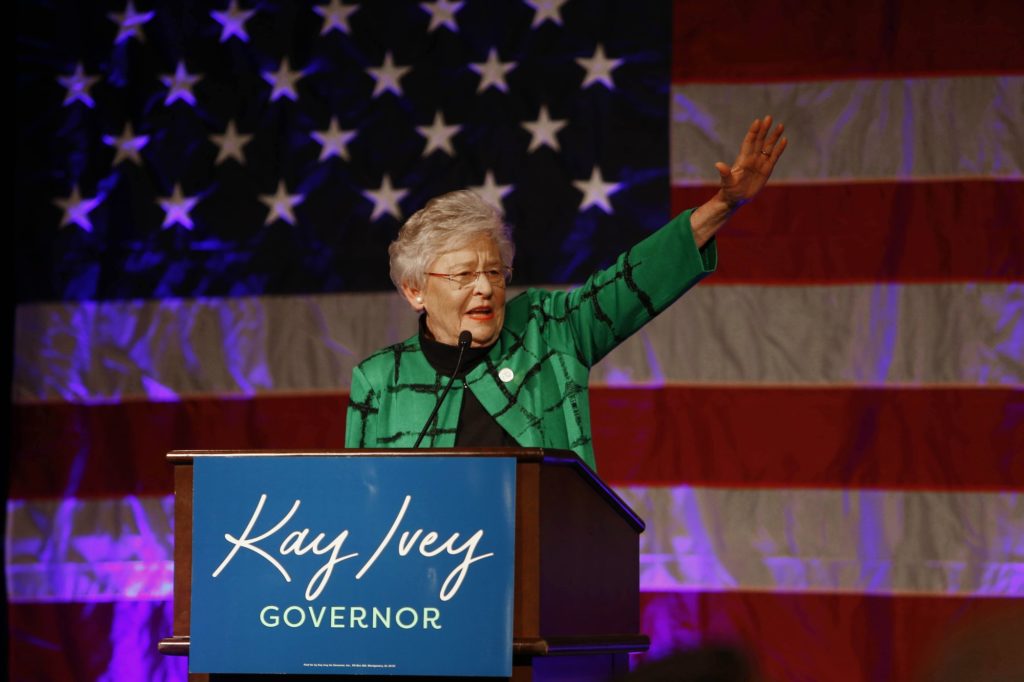
As she stakes out an agenda for her first full term as governor, one of Republican Gov. Kay Ivey’s initiatives is a proposed 10-cent-a-gallon gas tax increase to fund road and bridge construction. But to be successful, she first must clear attempted roadblocks from some members of her own party. Republican leaders in the GOP-dominated Alabama Legislature lined up in support of Ivey’s proposal, and said they are optimistic it will win approval. But the Alabama Republican Party executive committee passed a resolution opposing the increase and some Republican lawmakers say they are opposed. Ivey pitched the issue as a necessity to address crumbling infrastructure, holding a press conference by an aging rural bridge that local officials say could soon be closed because of safety concerns. “This is an issue that is felt by every Alabamian,” Ivey said. Rep. Bill Poole, the sponsor of the gas tax legislation, said he is “optimistic we will be able to secure the support that will be necessary to pass it.” “It’s a hard issue. It’s is going to be a passionate debate. It is perfectly fine for folks to disagree on options, but at the end of the day this is the best option that we have to address this issue in my opinion,” Poole said. The proposed 10-cent gas tax increase would be phased in over three years. The tax would then be indexed to construction costs so it could be adjusted up to a penny every two years without legislative approval. Alabama’s current state gas tax of 18 cents a gallon has been unchanged since 1992 and is among the lowest in the nation, according to comparisons from the American Petroleum Institute. Lawmakers anticipate that Ivey will call a special session to focus attention on the bill and bypass a tough procedural hurdle that requires a three-fifths vote to bring bills up for debate before state budgets in a regular session. Debate on the bill will begin in the 105-member House of Representatives where lawmakers appear divided. Rep. Tommy Hanes, a Republican from Bryant, said he will vote no. “I will be a no simply because working people with families and senior citizens on fixed incomes cannot live with new taxes,” Hanes said. Hanes said the people of his district are telling him to vote against the gas tax increase. Additionally, the Alabama Republican Party Executive Committee last week approved a resolution opposing the increase because it would increase people’s total tax burden unless there is a tax cut somewhere else. The resolution opposing the gas tax increase passed with 61 percent approval. The 105-member House has 27 freshmen members. House Speaker Mac McCutcheon said during the election that he had counseled Republican candidates that this is an issue they could see in their first session. McCutcheon expressed optimism about the bill’s chances. “I’m getting responses and they are all positive from the members in the House. They are beginning to study the bill,” McCutcheon said. House Minority Leader Anthony Daniels said House Democrats have mixed views. Daniels said some lawmakers support the tax because of the need to improve local road and bridge conditions, particularly in rural areas. Others are opposed or can’t commit until they see the legislation. “I don’t think anybody disagrees that there is a need for infrastructure and support for infrastructure. I don’t think anyone is disputing that. There is also a need for Medicaid expansion to save our rural hospitals,” Daniels said. The legislative session begins Tuesday at noon. Republished with permission of the Associated Press
Conservative groups unite to host ‘Stop the Gas Tax’ rally Saturday
Activists from around the state will be taking to the steps of the State House on Saturday, March 2 to protest the proposed gas tax increase that the state legislature is expected to take up this session. The rally is being promoted by a coalition of groups that include the Alabama Legislative Watchdogs, Common Sense Campaign (a Mobile based tea party organization), the Libertarian Party of Alabama, the Alabama Conservative Coalition, the Constitution Party, and others. Earlier this week, Gov. Kay Ivey announced her proposal to raise the state’s gas tax 10-cents to pay for infrastructure improvements. The Stop the Gas Tax Increase rally will take placeSaturday, March 2 from 12:00 – 1:00 p.m. on the State House steps across from the Alabama Capitol in Montgomery.
BCA backs Kay Ivey’s gas tax, infrastructure improvement plan
The Business Council of Alabama (BCA) on Wednesday praised Governor Kay Ivey’s newly unveiled plan to raise the state’s gas tax 10-cents to pay for infrastructure improvements. Dubbed, the Rebuild Alabama Infrastructure Plan, the plan will provide additional funding to enhance and improve Alabama’s transportation system at both the state and local levels. “The road to our future must be paved,” said BCA President and CEO Katie Boyd Britt. “Alabama’s transportation system is the backbone of the state’s economy and is crucial to our economic growth, and I commend Governor Ivey for making this a priority of her Administration.” “Alabama’s drivers are more likely to be killed in a traffic accident in Alabama than 44 other states. Last year, 282 people lost their lives in Alabama because of our road conditions,” Britt added. “Alabama’s current infrastructure challenges create a serious safety concern for all those who travel our roadways while also hindering job creation and eroding our businesses’ bottom lines. An investment in our roads and bridges is an investment in the safety and quality of life of all Alabamians.” “Economic development and infrastructure go hand in hand. We are on an unsustainable course and can no longer afford to do nothing, and I urge the legislature to pass the governor’s package,” Britt concluded. The BCA has produced a fact sheet that outlines their belief in the for need for an investment in our state’s infrastructure system. “Alabama must be competitive with our sister southeastern states, many of which have already addressed this issue,” said Jim Page, the chairman of the Alliance for Alabama’s Infrastructure, a grassroots advocacy coalition focused on fixing Alabama’s infrastructure crisis. “It’s imperative in the 2019 legislative session that we finally address this issue for the first time since 1992.”
Kay Ivey proposes 10-cent gas tax hike to pay for road improvement plan
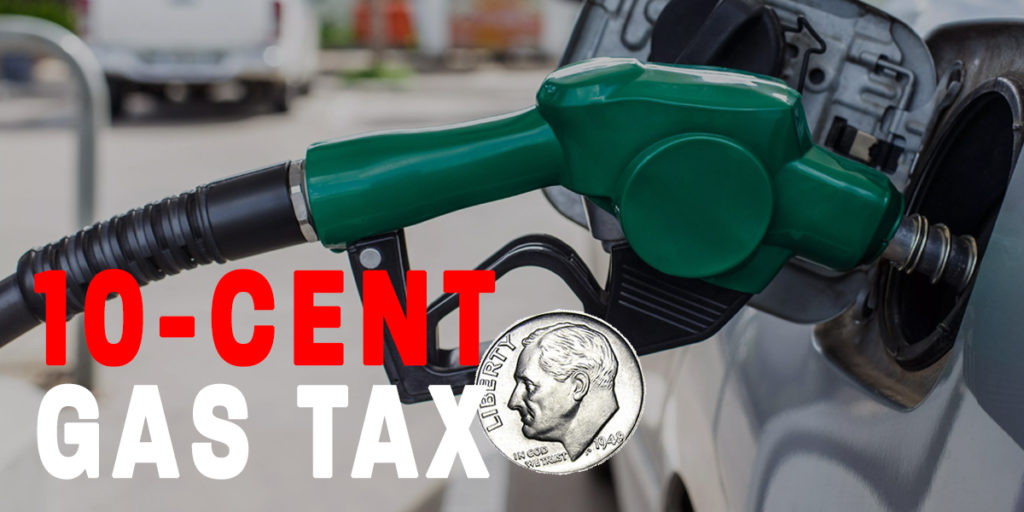
Gov. Kay Ivey announced her Rebuild Alabama Infrastructure Plan at a press conference on Wednesday that proposes raising the state’s gas tax 10-cents to pay for infrastructure improvements. Alongside a host of legislators, stakeholder groups and other state and local officials in Maplesville, Ala. Ivey proposed the fuel increase with an index designed to coincide with the rising costs of building roads. The state currently imposes a flat excise tax of 18 cents-per-gallon on gas and 19 cents-per-gallon on diesel, without adjusting for inflation and other construction and maintenance costs. This combined fuel tax revenue generates 80 percent of Alabama’s transportation funding. The plan’s 10-cent increase will be phased in over the next three years. New revenue generated by the increase will be dispersed between state, county, and municipal governments in Alabama. According to Ivey, these funds are to be used for transportation infrastructure improvement, preservation and maintenance projects. A separate portion of the revenues will go to pay a bond to be issued to finance improvements to the ship channel providing access to the facilities of the Alabama State Docks. “My Rebuild Alabama Infrastructure Plan is a comprehensive approach to a glaring issue affecting citizens in every corner of the state,” Ivey said announcing her plan. “After 27 years of stagnation, adequate funding is imperative to fixing our many roads and bridges in dire need of repair. By increasing our investment in infrastructure, we are also making a direct investment in public safety, economic development, and the prosperity of our state.” Moving the plan to state legislature Tuscaloosa-Republican state Rep. Bill Poole will sponsor the Rebuild Alabama bill during the 2019 Regular Legislative Session. “Today’s announcement is a major step in the right direction to improving Alabama’s infrastructure. I appreciate Governor Ivey for leading the charge and allowing me to help develop this plan,” Poole said. “A number of studies have concluded that Alabama’s aging infrastructure cannot continue to operate in its current state without severe consequences; these are simply facts we can’t ignore.” Pratville-Republican, State Senator Clyde Chamblisswill carry the bill in the Senate. “With one of the South’s biggest ports and the state’s growing economic development success, improving our poor infrastructure system allows us to remain competitive nationally and globally,” Chambliss said. “As a civil engineer, I applaud Governor Ivey’s efforts to address this pressing issue and look forward to working with stakeholders, from all levels of government, to ensure her infrastructure bill is successful.” Alabama’s infrastructure woes A 2019 report by the University of Alabama’s Alabama Transportation Institute and Alabama Transportation Policy Research Center found that cars and trucks are putting approximately 69 billion miles on Alabama’s roadways annually, a 17 percent increase over the past 15 years. With more travelers on the road, areas of congestion and public safety are a major concern to state officials. One-third of all traffic fatalities are estimated to be a direct result of a deficient roadway feature, according to the American Society of Civil Engineers. According to TRIP, a national transportation research group, 30 percent of major roads and highways in Alabama are in poor or mediocre condition because of inadequate state and local funding. In 2015, Alabama’s roads received a D+ grade in a report card released by the American Society of Civil Engineers. Ivey’s office says that ideally, county road resurfacing should operate on a 15-year schedule; yet, county governments are currently operating on a 56-year schedule. Additionally, a striking 1,200 bridges are classified as structurally deficient in Alabama, ranking the state as 17th in the nation. Even worse, counties should be operating on a 50-year bridge replacement schedule, but they are actually operating at a rate of 186 years. State government currently provides 40 percent of Alabama’s total transportation funding, while the rest comes from the federal government. However, increasing uncertainty about federal infrastructure funding has created a sense of urgency for states to have reliable funding sources. Over the past five years, 37 states have increased revenue in some way for their transportation budget.
Kay Ivey to announce infrastructure plan, expected gas tax hike
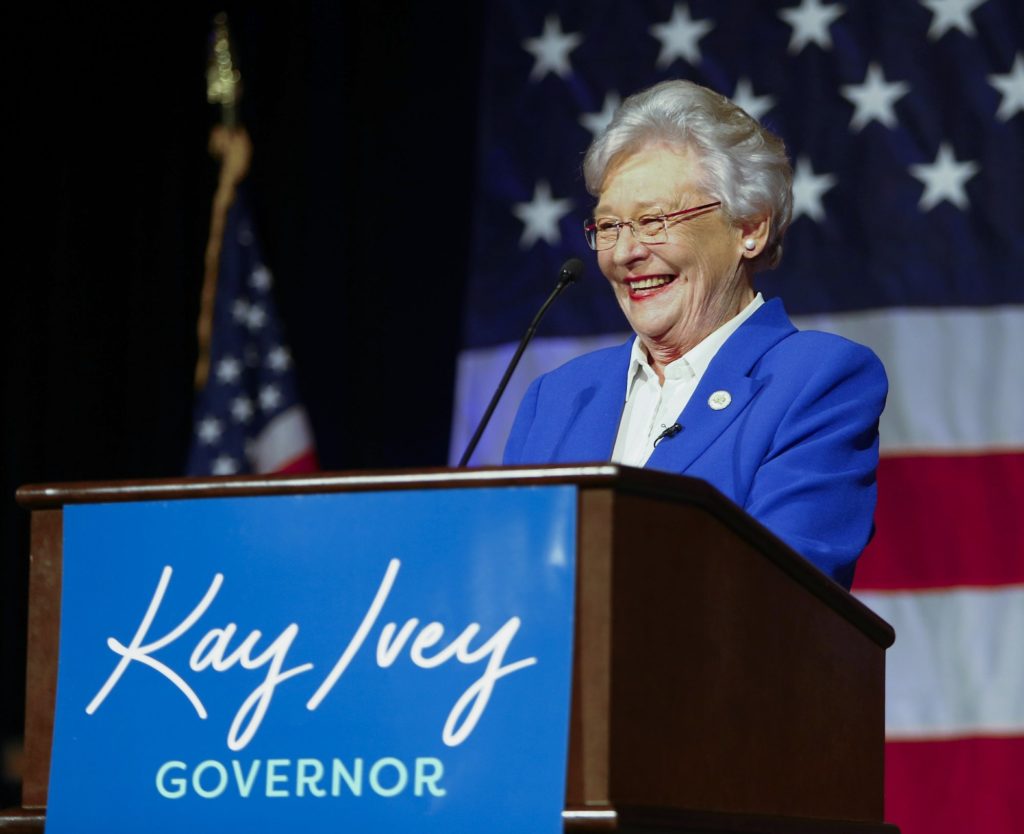
With just a week to go before the 2019 Legislative session begins, Gov. Kay Ivey is scheduled to announce her plan to improve Alabama’s infrastructure system on Wednesday, which is expected to include a gas tax hike. Ivey will hold a press conference on County Road 17 in Maplesville, Ala. to discuss the details of her plan. Many presume a bill on the gas tax and to fund infrastructure improvements will be a key component of her plan. “I support the legislature’s bold move to invest in infrastructure upgrades and public safety. Road and bridges are an essential service of government, and investing in them will bring more jobs and businesses to our state, creating opportunities for everyone,” Ivey said in 2017 in support of a then-proposed gas tax adjustment. The gas tax was last raised in 1992.
J. Pepper Bryars: Gas tax increase should be ‘Even Steven’ – raise one tax, lower another
Can Alabamians support raising our gas tax for better roads while remaining true to our belief in limited government and protecting a beneficial, low-tax environment for our businesses, our families, and our future? Yes … if taxes are lowered elsewhere so that the overall amount of money taken from the people doesn’t increase. The concept is called “revenue neutral tax reform.” It essentially means that if Alabama raises one tax by $100 million next year, then it should have a comparable decrease in something else. So, if you’re going to pay an extra $400 at the gas station, you should save an extra $400 at the grocery store. Even Steven. A solid majority of Alabamians support the revenue neutral approach, as well. Nearly 62 percent of respondents said they’d support raising gas taxes if grocery taxes were decreased by the same amount, according to a statewide poll commissioned earlier this month by the Alabama Forestry Association. But why shuffle taxes around if it doesn’t ultimately change the government’s total haul? Because taxes change behavior, encouraging some actions while discouraging others, and they also impact people differently. Everyone who pays taxes on a gallon of gas uses roads and bridges. Fair enough. But the rich man and the poor widow pay the same tax on a gallon of milk. That may not be entirely fair, or at least not kind, especially if that tax is relatively high. Shuffling things around can also simplify things, making taxes predictable and sustainable for both the citizen and the state. And lowering those that discourage economic growth may actually produce more revenue in the long term. In our nation’s great laboratory of democracy, Alabamians can look near and far to find examples of how raising the gas tax has worked well in other states. In 2017, Tennessee raised its gas tax by 6 cents, its natural and liquefied gas tax by 8 cents, and its diesel fuel tax by 10 cents. To balance the scale, it cut the sales tax on food from 5 to 4 percent, decreased certain taxes on its state’s manufacturers, and eliminated taxes on some income from bonds, notes, and stocks. In one swoop, Tennessee improved its roads, lowered the cost of food, and removed obstacles to job growth and investment. And in the end, they were Even Steven. Americans for Tax Reform, the watchdog group known for its fierce opposition to tax increases, didn’t oppose Tennessee’s plan. Its president, Grover Norquist, found it didn’t violate their popular Taxpayer Protection Pledge that many candidates sign during election season. Tennessee’s voters were pleased with the result and reelected the Republican majority to the legislature the following year. Americans for Tax Reform also supported former Gov. Chris Christie’s efforts to raise the gas tax in New Jersey in 2016. His plan raised gas taxes there from 14.5 cents to 23 cents per gallon, but eliminated the state’s death tax, lowered its sales tax from 7 percent to 6.6 percent, and increased the earned income tax credit. Even Steven. Same goes for South Carolina. Americans for Tax Reform supported then Gov. Nikki Haley’s plan to combine an increase in gas taxes with a significant decrease in the state’s income taxes on individuals, families, and small businesses. Again, Even Steven. Unfortunately, there are other examples of how gas taxes were raised without the benefit of lowering anything else. They either failed to pass or, ultimately, harmed the communities they sought to help. We must remember that high taxes are one of the chief reasons why people and businesses are fleeing places like New York for places like Alabama. And there are also other reform measures that Alabamians should consider during this debate that were raised in a recent report issued by the Alabama Policy Institute. Meanwhile, our lawmakers should remember another lesson from Tennessee’s experience raising their gas tax – the need for open debate about the details. The chairman of the transportation committee in the Tennessee House of Representatives, State Rep. Barry “Boss” Doss, was accused by some of breaking the chamber’s rules so he could “ram” through the gas tax increase. He ended up drawing a challenger in the Republican Primary and ultimately lost his seat, and some say his parliamentary maneuvers were partly to blame. They say history doesn’t repeat, but it does rhyme. If that’s the case, let’s hope Alabama’s lawmakers will be less like Boss Doss by being transparent in the process and more like Even Steven by balancing any increase in the gas tax with decreases elsewhere. J. Pepper Bryars is a senior fellow at the Alabama Policy Institute. Follow him on Twitter at @jpepperbryars.
Ahead of gas tax debate, API proffers three guiding imperatives to Alabama policymakers
With the 2019 Legislative Session less than a month away, and it’s no secret the sessions is expected to be dominated by discussions of how to fund Alabama’s road and infrastructure needs. One of the big proposals expected to considered this session is the gas tax, which is why on Monday the state’s right-leaning Alabama Policy Institute (API) released it’s tax position paper on said tax. In the position paper, API lays out their position on the gas tax by first asserting their support for increased investment in Alabama’s infrastructure. US Supreme Court Justice Oliver Wendell Holmes famously said that “taxes are what we pay for a civilized society.” The Alabama Policy Institute freely acknowledges that infrastructure is neither free nor is it unwanted. No rational voice would debate the need for a strong system of roads, bridges, ports and e-commerce. API also acknowledges with candor that there is no question that the cost of maintenance and construction of vital infrastructure has increased over time while Alabama’s chief source of state generated infrastructure revenue, the gas tax, has not increased one cent since 1992. But none of these candid admissions should be construed to mean that API suggests that conservatives should propose or accept a bare-bones tax increase as the only solution. The current governing majority must consider how best to govern in this revenue-depleted environment in such a way as to inspire confidence in their constituent consumers. API suggests that such confidence can be generated by considering certain conservative imperatives in the gas tax debate. The three imperatives for conservative policymakers API is referencing are: Taxes should always be the last resort: API believes that government should always look first to the goal of realigning the existing balance between current expenditures and resources before asking for taxpayers to sacrifice more. Taxes should never be raised without reforms: API believes that government should always strive to better its processes, increase its transparency, and mitigate waste. No tax should ever be raised without an equal decrease in other taxes: API acknowledges that government cannot provide essential services without the revenue to pay for those services. At the same time, however, there is a responsibility to be measured in the collection of revenue from the public. To further display their imperatives in action, API proffered two examples of “revenue enhancing legislation,” which follow them: Proposed bill #1 Would address reform measures that API deems “desperately needed” to stop a siphoning of funds from the current Road and Bridge Fund. Stop the practice of rebating gas taxes to organizations that use Alabama roads and bridges. Legislatively create an offset to the taxpayers by reducing the state portion of the existing grocery tax. Alabama is one of only seven states nationwide that fully taxes grocery sales, and one of only twelve that taxes groceries at any level. Allow for the general public to see where and how infrastructure dollars are spent. The Joint Legislative Transportation Committee should be given the ability to review and approve 5-10 year infrastructure plans that are set by well-reasoned criteria. Proposed bill #2 According to API, bill number two “represents the long game in infrastructure funding.” “The public should made aware of the little known fact that Alabama has a trust fund that currently holds in excess of $3.2 billion generated by offshore oil and gas exploration,” explained API. “The Alabama Trust Fund belongs to no one else but the people of this state.” Should be an immediate lobbying of the Trump administration to extend the State’s offshore boundaries by an additional 5-10 miles. The extended maritime limits would create additional revenues from oil and gas. Revenues from extended limits could then be appropriated, by a vote of the citizens of this State in the form of a constitutional amendment, to fund infrastructure. “It is possible to be a conservative and still debate an increase in taxes,” API explained.
Jim Zeigler to release ‘Plan Z’ to fund roads without gas tax increases
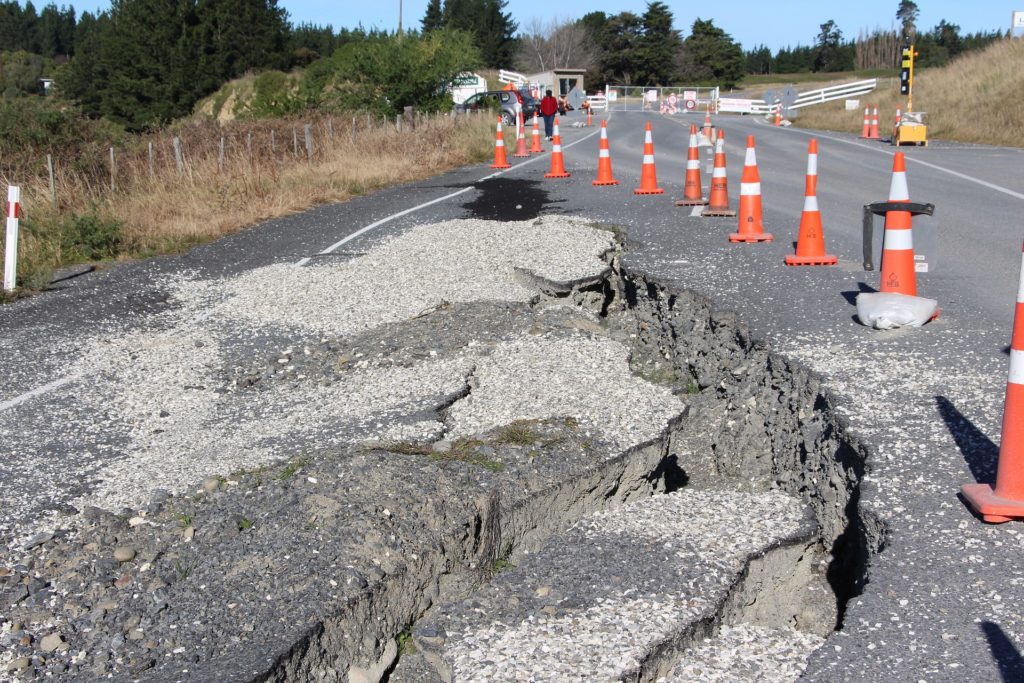
Alabama State Auditor Jim Zeigler on Monday will release his plan to fund Alabama’s road and infrastructure needs without a hike in gasoline taxes. Zeigler has scheduled a news briefing on his plan today at 11 a.m. in the State Auditor’s office in th State Capitol building in Montgomery, Ala. Zeigler calls his proposal “Plan Z,” which stands for “zero tax increases and zero congestion on our roads.” He says Plan Z can provide about $900 million in new road construction funds from present revenues and he will release copies of Plan Z and brief news media and others present at the Monday news briefing. The state legislature convenes March 5 for the 2019 regular session. They are expected to consider increasing the gasoline tax for roads and infrastructure, though no specific bill or proposal has been released
