
CIA’s Gina Haspel can tap undercover work in Russian operations
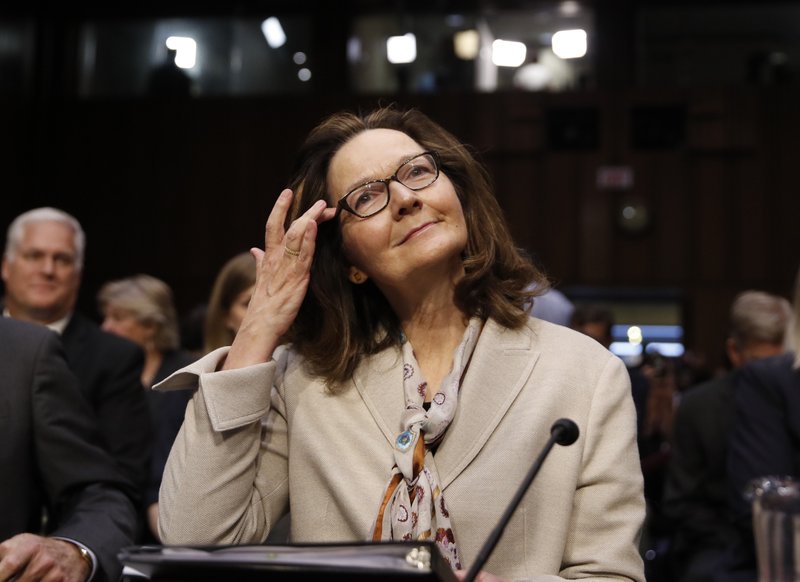
Scrutiny of the 33-year spy career of new CIA director Gina Haspel has focused on her undercover role in the harsh interrogation of suspected terrorists, but she cut her teeth in intelligence operations against Russia. She’s sure to tap that latter experience as she takes over at the nation’s premier intelligence agency at a time of rising tension with Moscow. President Donald Trump has characterized it as worse than during the Cold War, and it’s been aggravated by investigations into Moscow’s interference in the election that brought Trump to power. The 61-year-old Haspel, confirmed by the Senate this past week as the CIA’s first female director, began her career in the mid-1980s when the Soviet Union was in its twilight. Even after the communist power disintegrated, U.S. and Russian spy services held to Cold War mode. Haspel worked in the shadows to counter Kremlin efforts to infiltrate the U.S. government. Russia has been a priority target throughout her career. That was clear when former Sen. Evan Bayh, D-Ind., introduced Haspel at her Senate hearing: “She is a clear-eyed, hard-nosed expert on Russia,” he said. Haspel, an Air Force brat from Ashland, Kentucky, joined the CIA in January 1985 when she was 28. At the time, then-CIA Director William Casey was working to counter Soviet expansion, curtail Moscow’s influence, win the Cold War, and bolster up U.S. intelligence operations. She didn’t become a reports officer, analyzing information from the field; that was the most likely career track for a woman in the CIA at that time. Instead, Haspel chose to be a case officer out in the streets, meeting assets and collecting intelligence. Details of Haspel’s career are sketchy because much of it remains classified, including places where she was posted, but the CIA has provided an overview. Her first posting was in Africa, where she had a memorable encounter with Mother Teresa. On her return, Haspel spent time learning Russian and Turkish. By then, the Berlin Wall had fallen and the Soviet Union was about to break apart. Frosty relations between Washington and Moscow warmed. Within a few years, President Bill Clinton was trading jokes with Russian leader Boris Yeltsin in what was dubbed the “Boris and Bill” show. But the CIA saw a continuing threat from Russian intelligence. “The Soviet Union collapsed, but their intel services did not collapse,” said former senior CIA official Dan Hoffman, who knows Haspel well and agreed to talk to The Associated Press about her career. “They were still running penetrations of the U.S. government.” The CIA also knew it had a KGB mole in its midst, but it wasn’t until February 1994 that Aldrich Ames was arrested. The turncoat had disclosed the names of Russians who had been helping the CIA. Several were later executed. The arrest of Ames and other double agents underscored the need for a strong counterintelligence capability “and that means recruiting Russians,” said Hoffman, who was finishing his first tour in Moscow when Haspel was working in Russian operations. “That was what we were doing.” Haspel would go on to serve as deputy group chief of Russian operations in the CIA’s Central Eurasia Division, which manages Russian spy cases around the world and efforts to target and develop potential sources, according to John Sipher, who replaced Haspel in that position. Those involved in Russian operations at the end of the 1990s had a front row seat to a time of great transition in Russia, said retired senior CIA official Mark Kelton, who also worked with Haspel on Russia. Vladimir Putin, a KGB agent, had moved to Moscow, becoming acting president of Russia on the last day of 1999 when Yeltsin resigned. “Russia is a formidable, strategic challenge now so understanding where these people came from and how they got where they are is crucially important,” Kelton said. “The Russian services remain the most professional adversaries we face.” In all, Haspel has spent 17 of her 33 years in the agency overseas. Kelton said her ability to synthesize information quickly was “quite impressive” and she also ably handled the “rough school” of Russian operations. “There wasn’t a lot of wasted time on small talk,” Hoffman said about Haspel’s demeanor. “That’s not her style. She was just right down to business — let’s get the job done.” In addition to Russia, Haspel also was deeply involved in the CIA’s fight against terrorism. As station chief in an undisclosed country in Eurasia, she helped in the successful arrest of two al-Qaida associates linked to 1998 bombings of U.S. embassies in Kenya and Tanzania that killed 158 people, including 12 Americans. Their capture also led to the seizure of computers containing details of a terrorist plot, according to a U.S. intelligence official with knowledge of the incident. The official was not authorized to publicly discuss the case and spoke only on condition of anonymity. After 9/11, Haspel joined the CIA’s Counterterrorism Center, and it was during this time that she supervised a secret site in Thailand where suspected terrorists were subjected to harsh interrogation, including waterboarding, which simulates drowning. Her work in the program drew impassioned protests from human rights activists and other critics and made her confirmation vote the closest for any CIA director in seven decades. One of the detainees at that site was Abd al Rahim al-Nashiri, a Saudi accused in the bombing of the U.S. Navy destroyer Cole off the coast of Yemen that killed 17 American sailors. Al-Nashiri is aware that Haspel was picked to lead the CIA, according to Dr. Sondra Crosby, who met with him this past week at the U.S. military prison at Guantanamo Bay, Cuba, where he’s been detained since 2006. Crosby, who has treated 20 people tortured in the fight against terrorism, including two at CIA secret sites, is happy that Haspel has pledged not to allow the CIA to engage in the use of such harsh interrogation techniques again. Still, she’s wary. “Mr. al-Nashiri is probably the most severely damaged person
ALGOP Chair Terry Lathan slams Doug Jones over opposition of CIA nominee
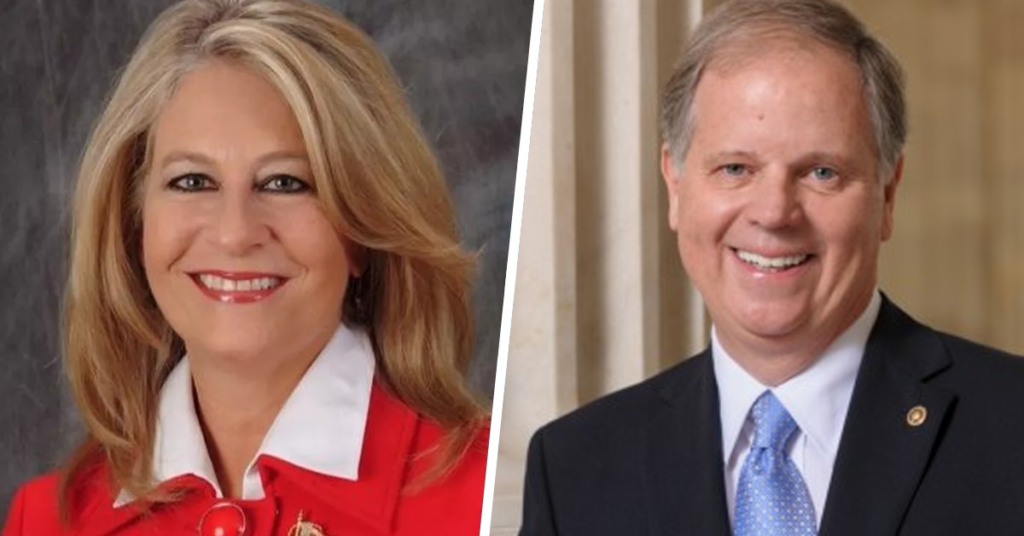
On Tuesday, Alabama’s newly elected junior senator, Democrat Doug Jones cast his vote again Gina Haspel to be confirmed as Director of the Central Intelligence Agency (CIA). Now, the Chairman of the Alabama Republican Party is calling him out for opposing the confirmation. Lathan says Jones “is choosing to put partisanship over our nation’s security.” And that “Alabama voters will remember this when they head to the polls to choose their next U.S. Senator in 2020.” Read Lathan’s full statement below: Alabama United States Senator Doug Jones’ decision to deny a vote to confirm Gina Haspel, a highly qualified CIA veteran with three decades of experience, is shameful at best. The recipient of several prestigious awards (including the prestigious George H.W. Bush Award for Excellence in Counterterrorism) and positive recommendations by three former CIA directors, Ms. Haspel is more than deserving of a confirmation by the U.S Senate. Senator Jones says he will not vote to confirm Ms. Haspel because of her stance on the agency’s former torture policy which she denounced as wrong and as a practice that will not be continued. Several Democrats and the Senate Intelligence Committee have approved Gina Haspel for a confirmation as CIA director. With this much steady support for the nominee, what valid reason does Senator Jones have to not cast a yes vote for this confirmation? In voting no to confirm Gina Haspel, Senator Jones is choosing to put partisanship over our nation’s security. Alabama voters will remember this when they head to the polls to choose their next U.S. Senator in 2020. Alabama and President Trump vow to put America First. This decision by Senator Jones simply does not do that.
CIA nominee Gina Haspel wins Senate panel backing, confirmation expected
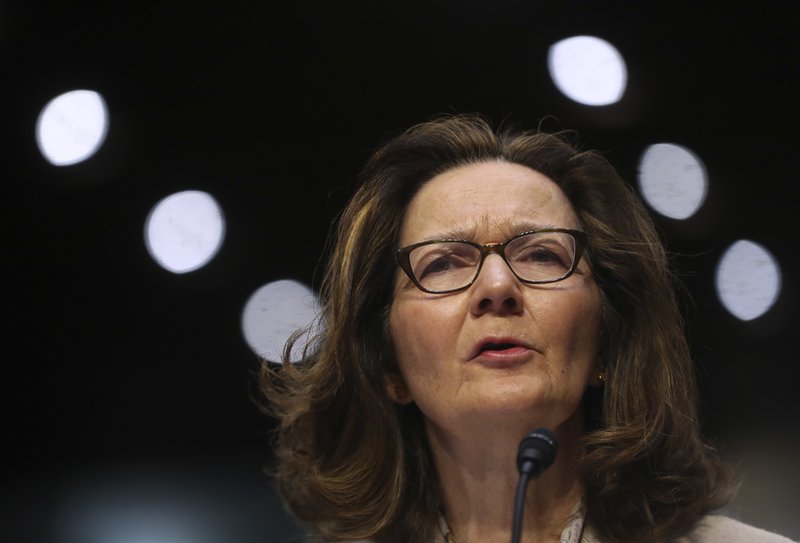
Gina Haspel, President Donald Trump’s nominee to head the CIA, won the backing of the Senate intelligence committee on Wednesday, paving the way for her expected confirmation to lead the spy agency. The panel voted 10-5 to advise the full Senate to confirm Haspel, whose nomination has renewed debate over the harsh interrogation program the CIA conducted on terror suspects after 9/11. Haspel, who supervised a CIA detention site in Thailand in 2002, has told Congress that the agency shouldn’t have used those harsh tactics and has vowed not to restart them. The committee released the result of the vote, conducted in closed session, without giving further details. However, all eight Republicans and two of the seven Democrats on the panel earlier expressed support for Haspel. The remaining five Democrats had announced their opposition. The confirmation vote by the full Senate could occur before the end of the week. “Gina Haspel is the most qualified person the president could choose to lead the CIA and the most prepared nominee in the 70 year history of the agency,” said Chairman Richard Burr, R-N.C. “She has acted morally, ethically, and legally, over a distinguished 30-year career and is the right person to lead the agency into an uncertain and challenging future.” She also had the support of the committee’s top-ranking Democrat, Sen. Mark Warner of Virginia. “As director of the CIA, Gina Haspel will be the first operations officer in more than five decades to lead the agency,” Warner said. “Most importantly, I believe she is someone who can and will stand up to the president if ordered to do something illegal or immoral — like a return to torture,” he said. Sen. Ron Wyden, D-Ore., who has staunchly opposed Haspel, called her nomination one of the most “self-serving abuses of power in recent history” because Haspel, as acting CIA director, was in a decision-making role in determining what parts of her undercover career were declassified. He likened that to a “stacking of the deck” and said he would continue to seek the declassification of details about her past activities at the agency. Warner said he would continue to seek the declassification of a Justice Department report about the destruction of more than 90 videotapes showing the harsh interrogation of one terror suspect. No charges were filed as a result of that report. Haspel drafted a cable that ordered the tapes destroyed, but the cable was sent by her boss, Jose Rodriguez, who has repeatedly taken responsibility for the order. The interrogation program became one of the darkest chapters of the CIA’s history and tainted America’s image worldwide after the Sept. 11 attacks. Haspel has not disclosed any details of what she did in connection with the program or say whether she thought it had been immoral. But during her confirmation hearing last week, she said she doesn’t believe torture works as an interrogation technique and that her “strong moral compass” would prevent her from carrying out any presidential order she found objectionable. “With the benefit of hindsight and my experience as a senior agency leader, the enhanced interrogation program is not one the CIA should have undertaken,” according to Haspel’s written answers to some 60 additional questions from lawmakers. Bolstering the comments she made during her hearing, Haspel wrote, “I do not support use of enhanced interrogation techniques for any purpose.” Attention now turns to the vote by the full Senate, which has yet to be scheduled. Haspel has already won the backing of several Democrats. They include Mark Warner of Virginia, Joe Manchin of West Virginia, Joe Donnelley of Indiana, Bill Nelson of Florida and Heidi Heitkamp of North Dakota. The only Senate Republicans who are not expected to vote for her are Kentucky’s Rand Paul and Arizona’s John McCain, who is battling cancer and is not expected to be present for the ballot. Haspel’s opponents, however, continue to weigh into the debate. “Ms. Haspel is cynically trying to offer mere words in an attempt to win votes to support her confirmation,” said Gen. Charles Krulak, former commandant of the Marine Corps. “The definition of moral courage is doing the right thing at the right time for the right reasons when no one’s looking. Gina Haspel failed that test,” said Krulak, who organized a letter signed by more than 100 retired generals and admirals expressing concern over her nomination. Daphne Eviatar with Amnesty International on Tuesday called Haspel’s nomination an “affront to human rights.” “This country has not held any officials accountable for the use of torture, so it’s even more outrageous that the government is considering someone to the chief intelligence position in spite of her alleged participation in that clearly illegal and immoral activity,” she said. Republished with permission from the Associated Press.
Second Democratic senator publicly backing Donald Trump’s CIA pick
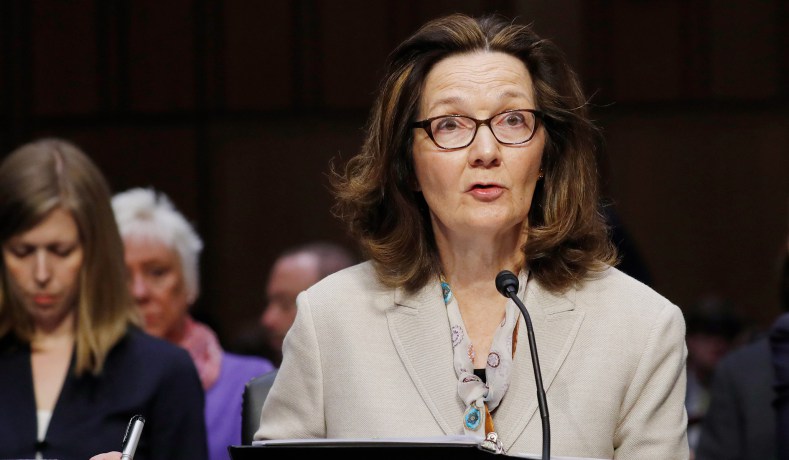
A second Democratic senator has announced his support for President Donald Trump’s CIA nominee. Joe Donnelly of Indiana says in a statement Saturday that he made his decision after “a tough, frank and extensive discussion” with Gina Haspel, the spy agency’s acting director. The other Democrat who’s come out for Haspel is West Virginia’s Joe Manchin. Both Democrats are considered to be among the most vulnerable Senate incumbents in the November election. So far two Republicans have announced their opposition to Haspel: Kentucky’s Rand Paul and Arizona’s John McCain, who’s battling cancer and isn’t expected to be present for the voting. Supporters are pushing for votes by the Senate intelligence committee and the full Senate before the Senate’s Memorial Day break. The GOP holds a 51-49 edge, and Vice President Mike Pence can break a possible tie. Haspel has run into criticism because she was once involved in the CIA’s harsh interrogation program. “I believe that she has learned from the past, and that the CIA under her leadership can help our country confront serious international threats and challenges,” Donnelly says in the statement. Donnelly came under attack from Trump at a rally in Indiana on Thursday, two days after the state’s primary election determined that his Republican opponent in November will be former Indiana lawmaker Mike Braun. Trump, who was joined at the rally by Vice President Mike Pence, a former Indiana governor, urged GOP voters to mobilize and prevent Democrats from regaining control of Congress. The president called Donnelly “Sleepin’ Joe” and criticized the senator for opposing his tax plan and attempt to end the Affordable Care Act. Donnelly responded by saying “problems only get solved when you roll up your sleeves and put in the hard work,” and his campaign said he had voted with Trump 62 percent of the time. Republished with permission from the Associated Press.
Donald Trump defends CIA nominee, says she is ‘tough on terror’
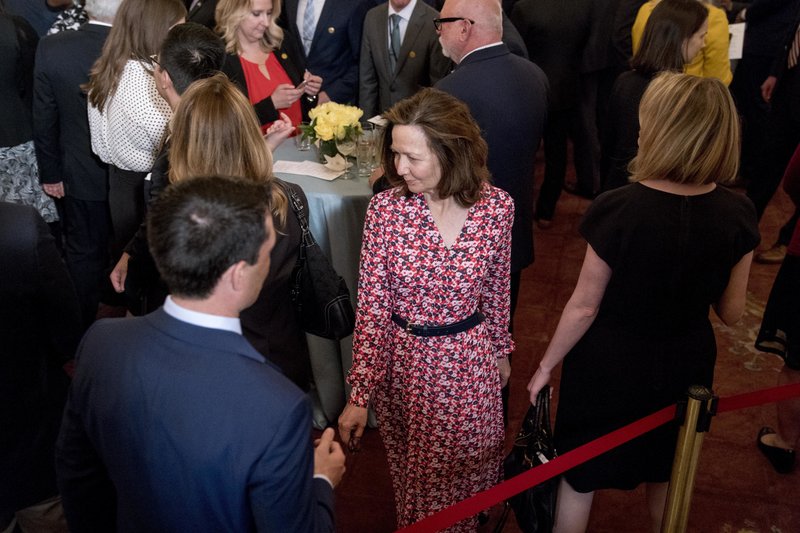
President Donald Trump on Monday defended Gina Haspel, his nominee to head the Central Intelligence Agency, dismissing debate over her involvement in a harsh interrogation program and arguing Democrats want her out because she “is too tough on terror.” Trump said on Twitter that Haspel has “come under fire because she was too tough on Terrorists.” He added that “in these very dangerous times, we have the most qualified person, a woman, who Democrats want OUT because she is too tough on terror. Win Gina!” Haspel offered to withdraw her nomination, two senior administration officials said Sunday, amid concerns that a debate over a harsh interrogation program would tarnish her reputation and that of the CIA. White House aides on Friday sought out additional details about Haspel’s involvement in the CIA’s now-defunct program of detaining and brutally interrogating terror suspects after 9/11 as they prepared her for Wednesday’s confirmation hearing. This is when she offered to withdraw, the officials said. They said Haspel, who is the acting director of the CIA, was reassured that her nomination was still on track and will not withdraw. The officials spoke on the condition of anonymity to discuss internal deliberations. The news was first reported Sunday by The Washington Post. Haspel, who would be the first woman to lead the CIA, is the first career operations officer to be nominated to lead the agency in decades. She served almost entirely undercover and much of her record is classified. Democrats say she should be disqualified because she was the chief of base at a covert detention site in Thailand where two terrorism suspects were subjected to waterboarding, a technique that simulates drowning. She has told lawmakers in recent weeks that she would stand firm against any effort to restart the brutal detention and interrogation program, administration officials told The Associated Press on Friday. She is expected to reiterate that publicly this week. Haspel, one official said, was wary of suffering the same fate as failed veterans affairs nominee Ronny Jackson and of dredging up the CIA’s troubled past. She took over last month as the acting CIA director after the previous director, Mike Pompeo, was sworn in as secretary of state. After Haspel’s offer to withdraw, White House aides worked to reassure her that she had the president’s support. As with other nominations, this one hit a roadblock but is back on track, said a third administration official familiar with the effort to get her confirmed. Haspel’s conversations with senators continue ahead of Wednesday’s confirmation hearing at the Senate Intelligence Committee and a later full vote in the Senate. In addition, the CIA has sent materials to the Senate, some classified, that the lawmakers can read to better understand not only her work in the Counterterrorism Center, which oversaw the harsh interrogation program, but also other aspects of her 33-year career, including more than 30 years undercover. She has received robust backing from former intelligence, diplomatic, military and national security officials, who praise her extensive intelligence career. On the opposing side are groups such as the American Civil Liberties Union, which says she should have stood up against the interrogation practices then. Raj Shah, a White House spokesman, on Sunday called Haspel a highly qualified nominee. “Her nomination will not be derailed by partisan critics who side with the ACLU over the CIA on how to keep the American people safe,” he said. Republished with permission from the Associated Press.
After close vote, panel sends Mike Pompeo nomination to Senate
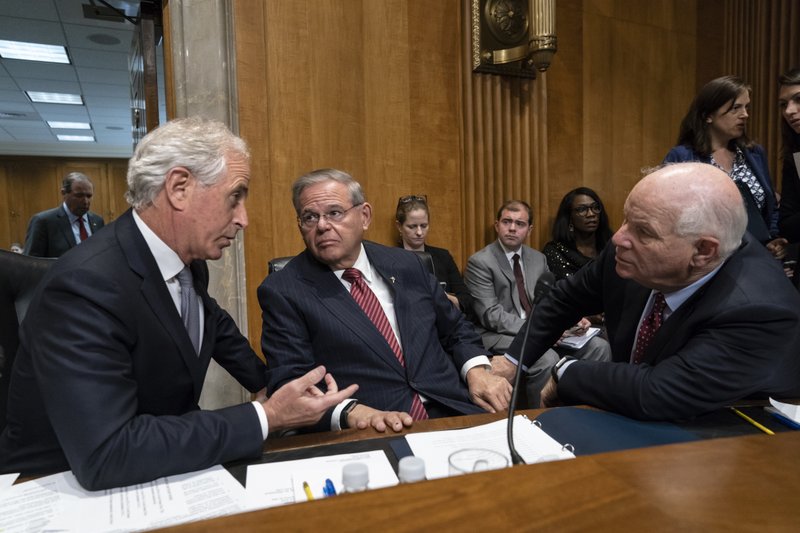
Mike Pompeo, President Donald Trump’s choice for secretary of state, avoided a rare rebuke Monday as the Senate Foreign Relations Committee narrowly recommended him, but the vote served as a warning shot to the White House as nominees to lead the CIA and Veterans Affairs are hitting stiff resistance. Pompeo, who’s now CIA director, received the panel’s approval only after Trump’s last-minute overtures to Sen. Rand Paul, R-Ky. Pompeo’s nomination now goes to the full Senate, where votes are tallying in his favor and Senate Majority Leader Mitch McConnell said he looks forward to voting to confirm him later this week. Trump has been quick to fire his top cabinet secretaries, but Senate Democrats are not so fast to confirm replacements. A grilling is expected Wednesday of Ronny Jackson, the White House physician nominated to head the VA, and Pompeo’s potential replacement at the CIA, Gina Haspel, is also facing scrutiny. It’s also a reminder of how tough it could be to replace Deputy Attorney General Rod Rosenstein. Trump has publicly mused about firing Rosenstein, who is overseeing special counsel Robert Mueller’s investigation into Russian interference in the 2016 election. “Hard to believe,” Trump tweeted Monday about what he called “obstruction.” ″The Dems will not approve hundreds of good people… They are maxing out the time on approval process for all, never happened before. Need more Republicans!” Republicans hold just a slim Senate majority, 50-49, with the prolonged absence of Sen. John McCain, R-Ariz. Pompeo’s bid to become the nation’s top diplomat was in the hands of a few senators, but received a boost Monday when two Democrats, Sen. Joe Manchin of West Virginia and Sen. Joe of Indiana, announced their support. Pressure is mounting on senators from all sides. White House allies are unloading ad campaigns against Democrats from Trump-won states, but progressive groups are pounding senators’ offices in opposition. As soon as Sen. Heidi Heitkamp, D-N.D., announced her support for Pompeo, one group called on her to switch. Ahead of the Foreign Relations Committee’s vote, chairman Bob Corker, R-Tenn., said of the full Senate, “It does appear Mike Pompeo has the votes to be secretary of state.” Supporters point to Pompeo’s resume as a West Point and Harvard Law School graduate who has the president’s confidence, particularly on North Korea. Opponents are focusing on his hawkish foreign policy views and negative comments about gay marriage and Muslims. Paul’s earlier objections to Pompeo, along with overwhelming opposition from Democrats, had set the secretary of state nominee on track to be the first since 1925, when the committee started keeping records, not to receive a favorable recommendation. But Trump and Paul talked repeatedly, including a chat just moments before the vote. “I have changed my mind,” Paul said, explaining he received reassurances that Pompeo agrees with the president that the Iraq war was a “mistake” and that it is time for U.S. troops to leave Afghanistan. Paul’s office said he “got a win” — the promise that Pompeo sides with Trump on those issues — out of the situation, but declined to provide details. “I want Trump to be Trump,” Paul said. Asked about Paul’s change of heart, Trump said, “He’s a good man.” Senators are anxious to have Pompeo in place before international meetings scheduled for later this week and ahead of North Korea talks. Republicans blamed partisan politics for opposition, saying Pompeo is just as qualified as past secretaries of state nominees Hillary Clinton or John Kerry, both of whom received overwhelming support. “A majority of Democrats continue their pointless obstruction to score cheap political points with their base as a willful attempt to undermine American diplomacy,” said White House spokeswoman Sarah Huckabee Sanders. But Democrats resisted easy confirmation of the nation’s top diplomat, and support peeled. Sen. Maggie Hassan, D-N.H., who had been among more than a dozen Democrats who supported Pompeo for CIA director, announced her no vote Monday. “I am concerned that Mr. Pompeo has not demonstrated an understanding that the Secretary of State has an obligation to the American people to stand up for our core values,” she said. Sen. Chris Coons, D-Del., who was among the last Democrats on the foreign relations panel to announce his no vote, said he is concerned that Pompeo “will embolden, rather than moderate or restrain” Trump’s “most belligerent and dangerous instincts.” In a late setback Monday, the panel was short one Republican vote needed for a favorable recommendation because Sen. Johnny Isakson was delivering a eulogy in his home state of Georgia. Rather than postpone voting until his return very late Monday, Coons agreed to allowed his vote to be recorded as “present” so the committee could finish its work. Republished with the permission of the Associated Press.
