
Alabama transportation director John Cooper arrested on misdemeanor harassment charge
Alabama Transportation Director John Cooper was arrested Monday on a misdemeanor harassment charge, jail records show. Cooper, 75, was arrested shortly before noon and booked into the Marshall County Jail on a charge of harassment. The longtime transportation director was released on $500 bond about 40 minutes later. Chief Deputy Willie Orr, of the Marshall County Sheriff’s Department, said the arrest stemmed from a private citizen making a complaint against another. He declined to elaborate on the nature of the dispute. He said Cooper came to the jail around midday and turned himself in. Cooper has been the director of the Alabama Department of Transportation since 2011. He is a member of Alabama Gov. Kay Ivey’s cabinet. Ivey spokeswoman Gina Maiola said the governor’s office was gathering information on the arrest and did not have any immediate comment. Republished with the permission of The Associated Press.
Tommy Tuberville expresses concerns about new federal red snapper limits

The new U.S. Department of Commerce regulation on red snapper harvest is expected to cut the amount of fish that Alabama’s red snapper fishermen are allowed to harvest during Alabama’s red snapper season. U.S. Senator Tommy Tuberville expressed his concerns about the new regulation on Monday. The Department of Commerce’s new rule requires the National Marine Fisheries Service to convert all fisheries into a single federal system. Tuberville said that this will have negative implications for Alabama’s red snapper industry. “Once again, the Biden administration is trying to force its one-size-fits-all approach and ignore the adverse effects of its decisions,” said Senator Tuberville. “Red snapper fishing is a huge part of Alabama’s Gulf Coast economy, which is why I’ll continue pushing back against the Department of Commerce’s disastrous proposal to decrease limits for red snapper anglers based on inaccurate data.” Last August, Tuberville joined his congressional colleagues in urging Commerce Secretary Gina Raimondo to reverse the department’s proposed rule to undo the National Marine Fisheries Service’s standard of setting quotas and annual catch data on a state-by-state basis. Instead, the department proceeded with its rule to implement a standardized catch limit in all states, even Alabama, with fishery programs certified by the National Marine Fisheries Service. This rule is expected to severely cut Alabama’s red snapper catch limits for 2023 by 51 percent, according to the Alabama Department of Conservation and Natural Resources (ADCNR). In 2021, the Gulf of Mexico Fishery Management Council decided to delay the calibration of red snapper allocation until January 2023 and approve a moderate increase in the 2021 annual catch limit rejecting the National Oceanic and Atmospheric Administration’s (NOAA) attempts to cut Alabama’s red snapper season in half. Under a final rule published by NOAA Fisheries on December 1, Alabama’s private recreational anglers will see a 51% decrease in the 2023 red snapper quota. The rule went into effect on January 1, reducing Alabama’s private recreational quota from 1,122,662 pounds in 2022 to just 558,200 pounds in 2023. Critics of the new federal regulation claim that there are three times as many red snapper in the Gulf than previously estimated. Scott Bannon is the Commissioner of the Alabama Department of Conservation and Natural Resources “Each Gulf state is accounting for their recreational harvests using different data programs from what the federal government is using,” Bannon stated. “Under the other final rule that created state management of red snapper in 2018, there was a requirement to align the landings into the same currency through a calibration method. Alabama and Mississippi have very accurate reporting systems, and we feel the harvest estimates from NOAA are inflated and unreasonable. “Since before state management of red snapper was initiated, we have pushed the Gulf of Mexico Fishery Management Council (Gulf Council) that we should manage the amount of fish off each state. From Alabama’s perspective, this is in part due to the investments made by the state and private individuals in artificial reef building from which a significant number of red snapper and other reef species are produced in Alabama’s reef zones.” Bannon points to Alabama’s investments in creating artificial reefs to provide habitat for the snapper and other reef fish as one reason Alabama’s quota should be higher. Federal regulation of the red snapper season has been a point of contention with state officials for years. Federal authorities are essentially ignoring years of data that state wildlife managers have collected on red snapper numbers. The new rules mean that red snapper fishermen will be able to spend fewer days on the water pursuing the fish this year and that while doing so, they will be allowed to keep fewer fish. Fishermen who customarily fill their freezers with red snapper for their family’s protein needs will have to pursue a different fish species this year and be prepared for this dramatic change in their fishing habits and strategy. Alabama Today will continue to follow this story and have more details when the 2023 red snapper season rules are finalized. Tommy Tuberville has represented Alabama in the United States Senate since 2021. Tuberville unseated incumbent Sen. Doug Jones in the 2020 election. To connect with the author of this story or to comment, email brandonmreporter@gmail.com.
Personnel Update: Mike Lewis joins Kay Ivey team
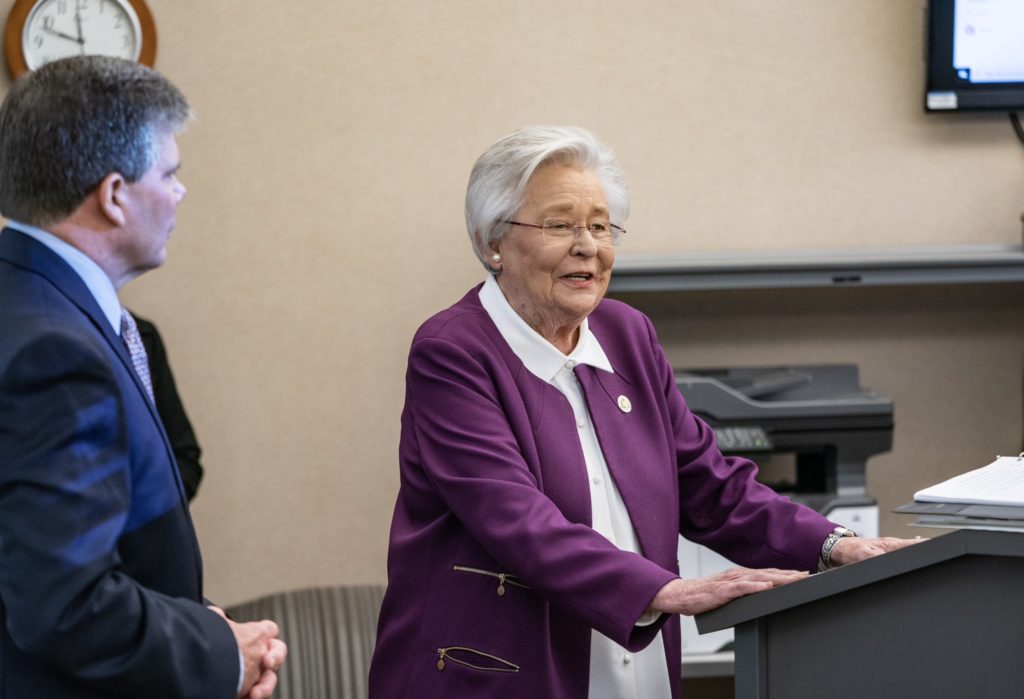
On Friday, Gina Maiola, Governor Kay Ivey’s Communication Director, announced that Mike Lewis would be joining the Governor’s communications team as deputy communications director. “I am excited to share Governor Ivey has appointed Mike Lewis to serve as deputy communications director,” Maioloa said.” We are thrilled to have him add to the strong team we have in the Governor’s Press Office. Many of you already know Mike from his time serving as communications director for the attorney general or his years on the Hill.” Lewis joins Maiola, Charles Murry, Alyssa Turner, and Hal Yeager on Governor Ivey’s Communications team. Lewis previously served as Communications Director for the Alabama Attorney General’s office. Lewis is a graduate of Troy University with a major in journalism. He has held the position of press secretary for former Congressmen Bill Dickinson and Terry Everett. He also served as communications director for Congressman Jo Bonner (R-Mobile) and as a speechwriter and senior policy adviser for Ohio Congressman Mike Turner. He is a native of Alexander City. To connect with the author of this story or to comment, email brandonmreporter@gmail.com.
Faith leaders urge independent review of Alabama executions
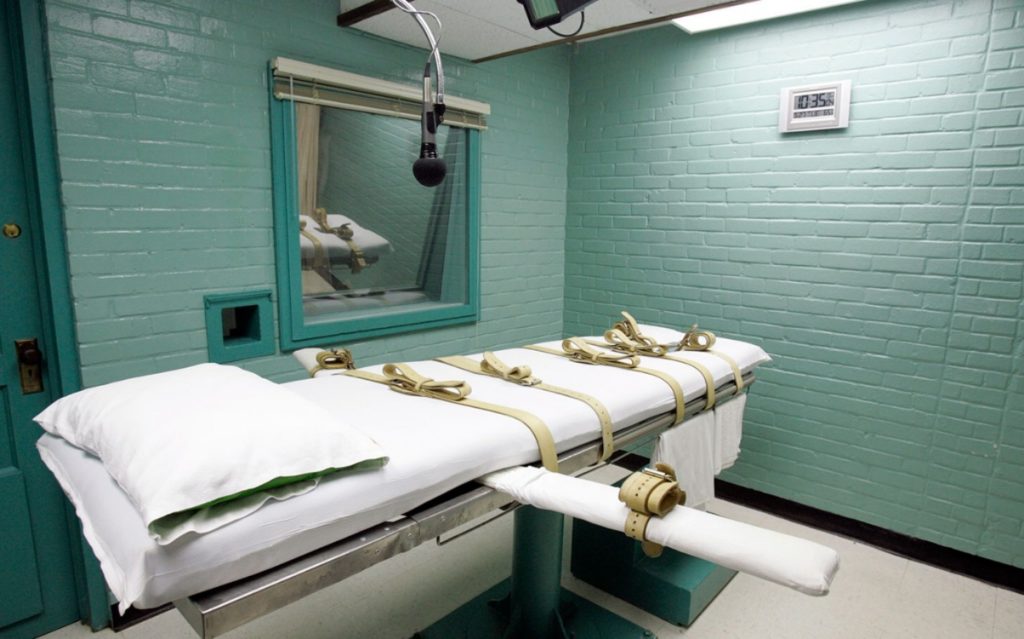
More than 170 pastors and other faith leaders on Tuesday urged Alabama Gov. Kay Ivey to authorize an independent review of execution procedures, as Oklahoma and Tennessee did after a series of failed lethal injections in those states. The group applauded Ivey for taking the “bold and necessary step” of ordering a review of Alabama execution procedures following problems locating intravenous lines during three lethal injections but said that review should be done by those outside the state prison system. Ivey, in November, ordered the Alabama Department of Corrections, which carries out executions, to undertake the review. “Given the gravity of what has transpired, we respectfully request a comprehensive, independent, and external review of Alabama’s death penalty procedures,” they wrote in a letter delivered to Ivey’s Alabama Capitol Office on Tuesday. The faith leaders said the review should be conducted openly — and by a person or group other than the Alabama Department of Corrections. “The fact of the matter is that an agency that has failed repeatedly to get its own house in order cannot be trusted to privately conduct an investigation into problems it is causing,” they wrote. The group cited the example of Tennessee Gov. Bill Lee, who authorized a state review after acknowledging that the state failed to ensure its lethal injection drugs were properly tested. A former U.S. attorney conducted the review. It found Tennessee had not complied with its own lethal injection process ever since it was revised in 2018, resulting in several executions that were conducted without proper testing of the drugs used. A review was also conducted in Oklahoma after the 2014 execution of Clayton Lockett. After the first drug was administered, Lockett struggled on a gurney for 43 minutes before he was declared dead. The review was conducted by a separate state agency from the prison system. It was later learned that members of the execution team had improperly inserted an IV into a vein in Lockett’s groin. The independent Oklahoma Death Penalty Review Commission also scrutinized state procedures. Ivey cited concerns for the victims and their families in ordering the review in Alabama. “For the sake of the victims and their families, we’ve got to get this right,” Ivey said. Carrying out an execution is the state’s responsibility to uphold the law and to ensure justice, Ivey spokesperson Gina Maiola wrote in a statement. “This is a responsibility Governor Ivey takes very seriously, and as she has made very clear along the way, this will review remain transparent as is appropriate while also protecting sensitive information,” she continued. The Alabama review has so far yielded changes to make it easier to carry out death sentences. At Ivey’s request, the Alabama Supreme Court gave the state a longer amount of time to carry out executions by allowing death warrants authorizing an execution to last for more than 24 hours. Ivey announced the pause on executions after a third failed lethal injection in the state. The state called off the November execution of Kenneth Eugene Smith after failing to get an intravenous line connected within the 100-minute window between when courts cleared the way for it to begin and the death warrant’s midnight deadline expired. In September, the state called off the scheduled execution of Alan Miller because of difficulty accessing his veins. Alabama, in 2018 called off the execution of Doyle Hamm because of problems getting the intravenous line connected. Hamm had damaged veins because of lymphoma, hepatitis, and past drug use, his lawyer said. The state completed an execution in July, but only after a three-hour delay caused at least partly by the same problem with starting an IV line. Republished with the permission of The Associated Press.
Alabama extends time for executions, ends automatic review
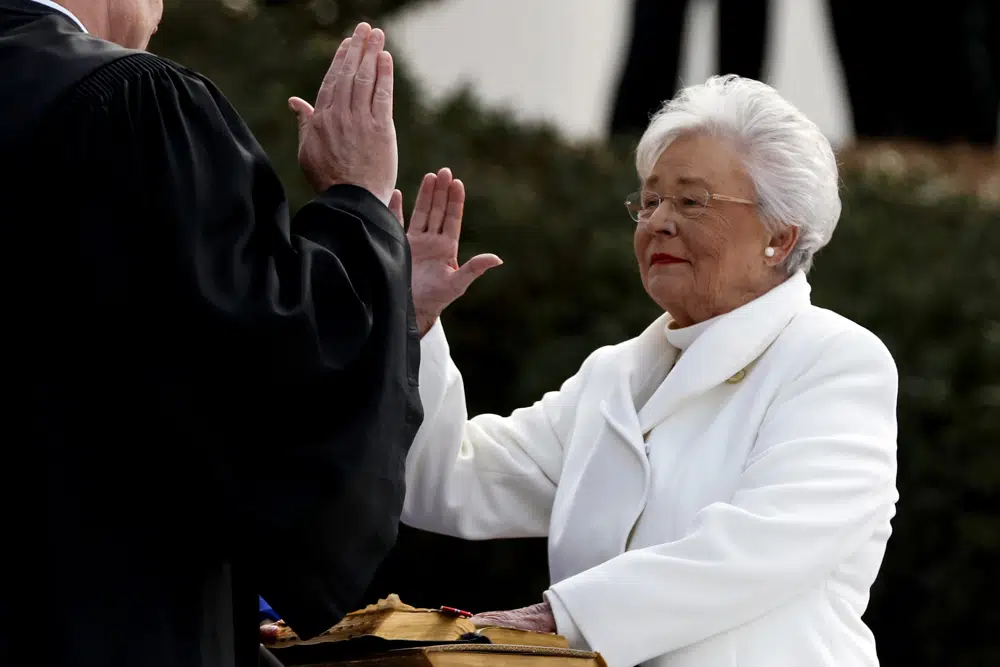
Alabama has changed death penalty procedures to give the prison system more time to carry out executions — a move that comes after a string of troubled lethal injections in the state — and also eliminated an automatic review for trial errors in death penalty cases. Alabama Gov. Kay Ivey’s office called the time window change a “win for justice,” and supporters said the appeal change would ease the burden on the court system. But a noted death penalty lawyer said the changes end a crucial avenue of review and increase the likelihood of “more cruelty and potential torture.” The Alabama Supreme Court announced the changes to appellate procedure last Friday. At Ivey’s request, the court abolished the previous one-day time frame to carry out a death sentence. Instead, the governor will set a window of time for the execution. A divided court in a 6-3 decision also eliminated an automatic “plain error review” where the Alabama Court of Criminal Appeals automatically reviews death penalty cases for a clear error at trial even though the defense lawyer did not object. Justices said judges on the appeals court may undertake the review but are no longer required to do so. “I think the combination of these two rules increases the likelihood that we’re going to see more wrongful convictions, more unjust sentences, and more cruelty and potential torture,” said Bryan Stevenson, founder of the non-profit Equal Justice Initiative. Stevenson said that nearly 40% of the reversals in Alabama death penalty cases have come under the plain error review. He said the rule has been in place since the death penalty was reinstated in Alabama in 1976, and its repeal is “shocking.” Justice Jay Mitchell wrote in a concurring opinion that the change will relieve the court’s burden, so they are no longer required to “scour the record in search of such errors, nor will it be compelled to analyze claims of error.” He said lawyers for death row inmates can present the issues in other appeals. “Plain-error review requires already overloaded appellate courts to spend hundreds, if not thousands, of hours per case scrutinizing trial-court records for possible errors and then explaining why those errors are (or are not) reversible,” Mitchell wrote. However, two justices who are former members of the Court of Criminal Appeals dissented in the decision. Justice Kelli Wise wrote that she could not support a complete repeal despite the time required. “In these cases, the defendants’ very lives are at stake, and I believe that such cases are entitled to heightened review on direct appeal,” Wise wrote. The court also granted Ivey’s request to expand the amount of time that Alabama has to carry out an execution. Ivey asked for the change after announcing a “top-to-bottom” review of execution procedures. The review came after an unprecedented third failed lethal injection in the state following problems with intravenous lines and late-running appeals. Death warrants issued by the Supreme Court had been limited to a single day, resulting in a midnight deadline to get the execution underway. Now, after the court issues a death warrant, the governor will set a time window to carry out the execution. Justices left it up to the governor to decide how long that time window will be. “I view this as a win for justice. As we initially interpret the order, it secures an extended time frame, which was a primary request of the governor’s,” Ivey spokeswoman Gina Maiola said in an email. She said the governor’s staff will review the order with the prison system. Stevenson says while other states give longer than a day, no state allows a governor that kind of power. He said it would allow already problematic executions to go on for longer. The state in November called off the execution of Kenneth Eugene Smith, which was the state’s second such instance of being unable to put an inmate to death in the preceding two months and its third since 2018. The state completed an execution in July, but only after a three-hour delay caused at least partly by the same problem with starting an IV line. Republished with the permission of The Associated Press.
Gov. Kay Ivey seeks more time to carry out executions

Alabama Gov. Kay Ivey on Monday said she wants to give the state additional time to carry out an execution after a series of failed lethal injections. The Republican governor sent a letter to the Alabama Supreme Court asking justices to alter a longstanding rule that limits execution warrants to a single date. It is the first change requested by Ivey after announcing a “top-to-bottom” review of execution procedures. The review is ongoing, Ivey spokeswoman Gina Maiola said Monday. Alabama prison officials called off two recent scheduled lethal injections — for Kenneth Eugene Smith in November and Alan Miller in September — as midnight approached after last-minute legal appeals and difficulties by the execution team in connecting an IV line to each inmate. Under Ivey’s proposal, the state corrections commissioner could immediately designate a new execution date if a last-minute stay or some other delay prevents the state from carrying out an execution on the original date listed on the death warrant. Currently, if the state can’t get the procedure underway by midnight, officials must ask the Alabama Supreme Court to set a new execution date. The governor said other states do not have the strict one-day time frame. “In several recent executions, last-minute gamesmanship by death row inmates and their lawyers has consumed a lot of valuable time, preventing the department from carrying out its execution protocol between the conclusion of all legal challenges in the federal courts and the expiration at the death warrant issued by your court,” Ivey wrote. While Ivey placed the blame on the single-day time frame and last-minute appeals, lawyers for inmates and advocacy groups have said the repeated difficulties with establishing an IV line shows something is wrong with Alabama’s procedures. In a court filing opposing the setting of a new execution date for Smith, his lawyers wrote that his treatment “does not fall within society’s standards for a constitutional execution. The botched execution was terrifying and extremely painful for Mr. Smith.” Ivey last month requested a pause in executions after the state called off Smith’s lethal injection. It was the second time this year and the third time since 2018 that the state was unable to put an inmate to death. The state completed an execution in July, but only after a three-hour delay caused at least partly by trouble starting an IV line on Joe Nathan James Jr. Ivey said the state is also looking at moving up the current 6 p.m. start time for executions to give the Department of Corrections more time. Corrections Commissioner John Hamm will make a recommendation to her for a new time, she told justices. Republished with the permission of The Associated Press.
DOJ finds Alabama’s foster care system violates law
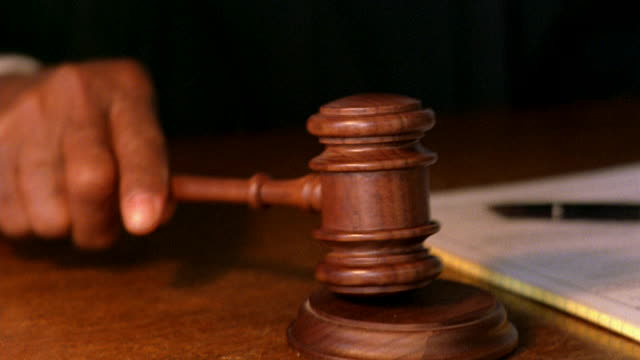
The federal government on Wednesday said the state of Alabama illegally discriminates against children in foster care with behavioral and emotional disabilities. The U.S. Department of Justice, in a news release, said the state’s foster care program has illegally placed hundreds of students with disabilities into “segregated and inferior educational programs,” a direct violation of Title II of the Americans with Disabilities Act. “Students with disabilities in Alabama’s foster care system are among the most vulnerable in the state’s care, and they deserve better than placement in segregated and inferior schools,” Assistant Attorney General Kristen Clarke, of the department’s Civil Rights Division, said in a statement. “The Civil Rights Division will defend every child’s right to equal educational opportunities in schools where they can be supported and challenged.” The department’s findings follow an investigation into allegations that the state denies children in foster care equal opportunity to basic educational services on the basis of disability. Gina Maiola, communications director for Gov. Kay Ivey, said in a statement that the Alabama State Department of Education and the Department of Human Resources have been “working proactively since 2018 to address the needs of our specialized treatment centers.” “These two agencies have been in communication with the Department of Justice to inform them on the steps being taken in that regard. I know the ALSDE and DHR will address any specific concerns given by the USDOJ. Bottom line, a top priority of the Ivey Administration is to ensure every Alabama student has the ability to receive a quality education,” Maiola said. The state is required to provide educational services for children in the foster care system, including when children are placed in psychiatric residential treatment facilities. According to the DOJ, students who are placed in such treatment facilities are automatically enrolled in segregated on-site schools without an appropriate educational assessment. In these segregated placements, the DOJ said students lack access to age-appropriate study materials, adequate instruction, and facilities such as libraries, science labs, and gyms. “These unnecessary placements, which can extend for long periods of time, sever children’s ties to their home schools, teachers, social activities, and peers,” Clarke’s office said. “The department concluded that, in most cases, these children could be appropriately served in general education settings where they would receive the many documented academic and social benefits of inclusion.” Republished with the permission of The Associated Press.
Justin Bogie: Excuses are easy — Meaningful policy change takes bold leadership
As summer turns to fall, the drumbeat for the Alabama Legislature to enact meaningful tax reform legislation has picked up its pace. But there is still no action — only discussion of temporary relief and the same old excuses as to why long-term reforms will be challenging to pursue. While major policy reforms are rarely easy, it should not be this hard. The state is likely to begin 2023 with a more than $2 billion revenue surplus, building on last year’s then-record $1.5 billion surplus. When Alabama’s government has more revenues than at any point in history, providing long-term relief to citizens should be a no-brainer. But despite having a Republican super-majority legislature and Republicans elected to all state-wide offices, Alabama continues to fall further behind other states when it comes to tax reform. Citizens are paying the price. Part of the problem is a lack of strong leadership. In August, Governor Kay Ivey’s spokeswoman, Gina Maiola said, “Right now, Alabamians and Americans alike are feeling the pinch, though, and Gov. Ivey wants to be able to help Alabamians in whatever ways we can.” I am glad that Gov. Ivey recognizes that Alabamians are feeling the pinch of inflation, but where is the action? She alone has the power to call legislators to Montgomery for a special session. Ivey could do that within days, but it seems apparent that there is unlikely to be any real movement on tax reform until at least next March, when the 2023 regular session begins. Meanwhile, 32 other states have enacted tax relief legislation this year. Missouri is currently in the midst of a special session, called by Gov. Mike Parson, aimed at passing $700 million in permanent tax cuts. That is what we need in Alabama. Instead, we are getting more excuses. Just last week, General Fund budget committee chairman State Sen. Greg Albritton (R-Atmore) said, “While y’all are focusing on how flush it appears that we are, I’m looking at what the problems are and how we’re going to resolve them.” First, the state does not appear flush with cash. It is flush with cash. In the past two years, it has collected more taxes from Alabamians than ever before. Instead of using that cash to take less money from citizens in the coming years, Albritton suggested that the best way “to help people in the long run in perpetuity is to take that money and put it into a trust account much like the Alabama Trust Fund (ATF),” and then use that fund for education. Alabama already has numerous trust funds and budget savings accounts that are intended to ease the impacts of an economic downturn. The state could draw more than $850 million from the ATF alone in 2023, if necessary. The state has not touched the account, which has a total balance of more than $3.35 billion, since 2012. Even during the onset of the COVID-19 pandemic, the reserve funds remained untapped. It was a rainy day for many Alabamians, but not for the government. The state does not need another savings account. The idea of establishing one shows how out of touch lawmakers are with Alabamians. When a recession hits, the government should not be protected at the expense of citizens. It should at the least be sharing in the pain. Another argument made against tax reform is that Alabama’s current stretch of strong economic growth will not last, and the record high surpluses are because of conservative budgeting. Legislative fiscal officer Kirk Fulford recently said, “You were conservative in both of those budgets, and because of that, and because of the enhanced federal money that came into the states, you are going to wind up with ending balances in both budgets that are far and above greater than any you’ve had in quite a while.” I am sorry, but would most Alabamians describe increasing spending at a faster pace than California or New York as remotely conservative? I do not think so. In April, Gov. Ivey praised the Legislature for sending her the “sixth consecutive balanced budget” she has signed as governor. It is easy to balance a budget when you are taxing citizens more than ever. A balanced budget in and of itself is not a sign of conservatism or fiscal responsibility. In Alabama’s recent history it represents the historic expansion of government. More taxes from you have kept the budget balanced. There is also the argument that inflationary pressures may prevent the state from being able to afford to provide long-term tax relief. In August, Representative Steve Clouse (R-Ozark) said, “We want to see if maybe the budget we passed and goes into October is adequate enough on the inflationary pressures hitting right now.” Again, shouldn’t the pain being felt by Alabamians outweigh any hardships felt by the state government? Moreover, the inflation argument makes little sense. Inflation was 8.3 percent when the two state budgets were enacted in April. At the end of August, it was still 8.3 percent. If the Legislature really did pass conservative budgets just five months ago, inflation should already be accounted for. The bottom line remains that Alabama’s state government has more of your taxpayer dollars flowing into it than ever. Instead of looking for excuses to not provide relief to citizens, it is time for bold leadership and action. Justin Bogie is the Senior Director of Fiscal Policy for the Alabama Policy Institute.
Gov. Kay Ivey’s office dismisses rumors of health concerns
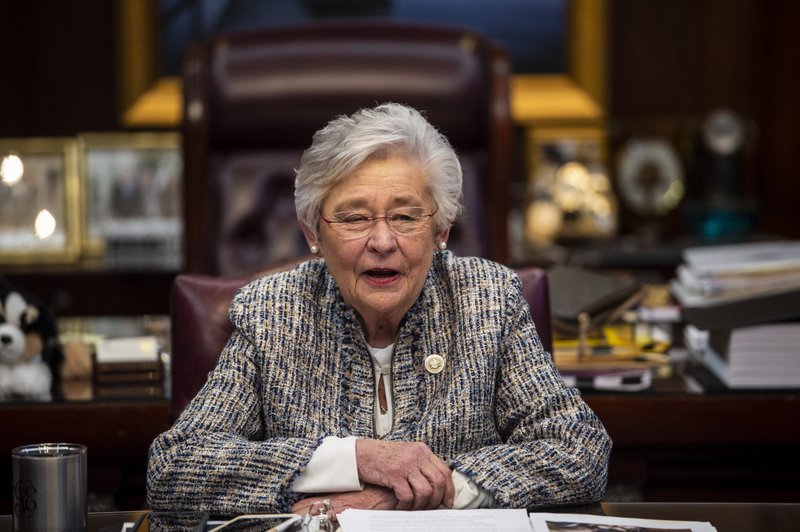
Alabama Gov. Kay Ivey’s office said Thursday that the 77-year-old governor remains “healthy and cancer-free” and dismissed rumors that she is having health issues. Ivey spokeswoman Gina Maiola issued the statement after a week of rumors and media inquiries about Ivey’s health and whereabouts. The press office issued the statement after previously deflecting inquires. “While I did not want to give any credibility to these bogus rumors, I do want to be sure to clear the air and set the record straight. Governor Ivey is doing great, and she continues to thank the Good Lord for keeping her healthy and cancer-free. We look forward to her leading the state of Alabama for years to come,” Maiola said. Maiola told The Associated Press that the governor’s last public appearance was last week at an Aug. 2 groundbreaking ceremony in Prattville for the expansion of a fiber cement siding manufacturer. Ivey spoke at the event. The governor’s office did not immediately respond to questions asking about Ivey’s upcoming schedule, whereabouts this week, and whether she had been in the hospital in the past four weeks. “We will continue keeping you all updated on the governor’s public appearances and any other pertinent information,” Maiola responded in an email. The Republican governor announced in 2019 that she had been diagnosed with early-stage lung cancer and would undergo radiation treatments. She announced in 2020 that the cancer appeared to be gone and that her doctor considered her cancer-free. Ivey is up for reelection in November after defeating a slate of primary challengers this spring. One of the oldest governors in state history, she faced thinly veiled accusations about her age and health during her 2018 gubernatorial race, with opponents challenging each to release health records publicly, but Ivey easily won the race. Republished with the permission of The Associated Press.
Juneteenth marked as state holiday in Alabama this year
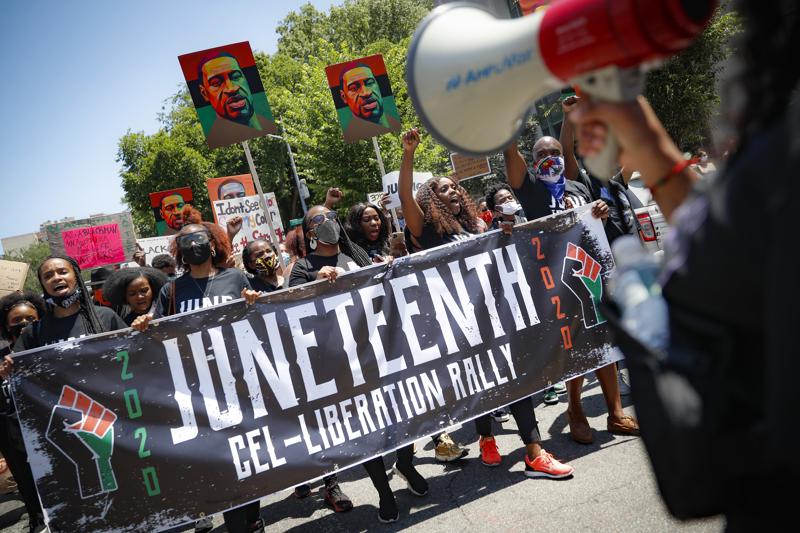
Alabama Gov. Kay Ivey has authorized Juneteenth Day — the federal holiday marking the end of slavery — as a holiday for state workers this year in Alabama. Ivey issued a memo earlier this month authorizing the day as a holiday for state workers. State offices will be closed on June 20 for the holiday. Juneteenth, or June 19, falls on a Sunday this year, so the holiday will be recognized the following Monday. President Joe Biden signed legislation last year to make Juneteenth, or June 19, a federal holiday to recognize the end of slavery. Ivey authorized the holiday for state employees since it’s designated at the federal level, spokeswoman Gina Maiola wrote in an email. “However, it is important to remember that ultimately the Legislature must decide if this will become a permanent state holiday,” Maiola wrote. Alabama law recognizes all other national holidays in the state as permanent state holidays, with the exception of Juneteenth. Juneteenth commemorates June 19, 1865, when Union soldiers brought the news of freedom to enslaved Black people in Galveston, Texas — two months after the Confederacy had surrendered. That was also about 2 1/2 years after the Emancipation Proclamation freed slaves in the Southern states. Alabama has three state Confederate-related holidays that close state offices for the day. Alabama marks Confederate Memorial Day in April and the birthday of Confederate President Jefferson Davis in June. The state jointly observes Robert E. Lee Day with Martin Luther King, Jr. Day in January. There have been various efforts to abolish or change the name of Confederate-related holidays, but none has been successful. Republished with the permission of The Associated Press.
State signs prison construction contract, quiet on details
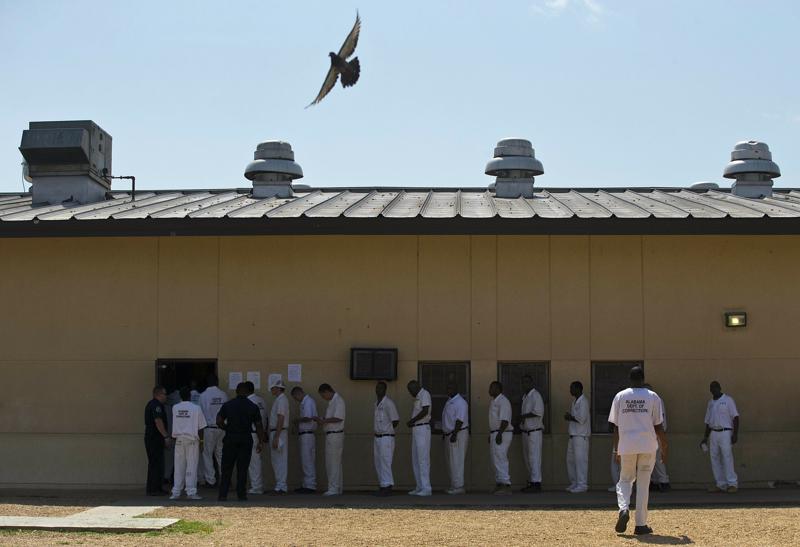
Alabama officials have signed a contract to build a new state prison — part of a $1.3 billion construction plan partly using pandemic relief funds — but have not released many of the details. A spokeswoman for Alabama Gov. Kay Ivey confirmed the state signed a contract with Caddell Construction Co., effective April 15 for construction of a specialized men’s prison facility in Elmore County, “that will provide enhanced medical and mental health services.” “The new facility will create a safer security environment for inmates and security personnel. Our construction timeline continues to remain on schedule,” Gina Maiola, a spokeswoman for Ivey, wrote in an email. The Alabama Department of Corrections on Wednesday declined to release a copy of the contract. A spokeswoman said it needed to be redacted and that would take some time because it is a lengthy contract. The department did not immediately respond to an email seeking information about the cost or the size of the prison. Ivey’s office indicated the prison system should be able to provide a copy of the “publicly available contract documents in the coming days.” Alabama lawmakers this fall approved a $1.3 billion prison construction plan that will use $400 million from the state’s share of American Rescue Plan funds to help pay for the construction. The construction plan included a new prison in Elmore County with at least 4,000 beds and enhanced space for medical and mental health care needs. It also included another prison with at least 4,000 beds in Escambia County, a new women’s prison, and renovations to existing facilities. Lawmakers had expected one of the construction contracts to go to Montgomery-based Caddell Construction. The legislation specified that, instead of the normal bid process, the state instead could negotiate directly with entities that were part of development teams that qualified for the projects under a lease plan Ivey’s administration had pursued but abandoned. Lawmakers said that would save time and build on the work already done. Ivey in October called the construction plan, “a pivotal moment” for improving the state’s criminal justice system. Critics of the plan said it did not address the underlying problems, such as low staffing, and was not a proper use of pandemic relief funds. Republished with the permission of the Associated Press.
Special session possible on relief fund spending

Alabama lawmakers say there may be a special session on how to spend the state’s remaining pandemic relief funds. Key lawmakers said there are discussions with the governor’s office on calling a special session in which lawmakers would focus only on the relief money allocation during a portion of the upcoming regular session that begins Tuesday. A spokesperson for Gov. Kay Ivey said the governor “wants this to be an early priority for the Legislature.” “She has stressed time and again that we need to invest this one-time money, not just casually spend it. Governor Ivey will continue having conversations with the Legislature, who is ultimately tasked with allocating these funds. The sooner these dollars reach the people of our state, the better,” Gina Maiola said via text message. Congress allocated $2.12 billion for Alabama through the American Rescue Plan. The state received the first half in June and has $580 million remaining after steering $80 million to hospitals and nursing homes and $400 million on a controversial prison construction plan. The state will receive a second $1.060 billion in May or June of this coming year. The state also has $191 million allocated through the America Rescue Plan’s Capital Projects Fund. State House Ways and Means General Fund Chairman Steve Clouse, R-Ozark, has said he expects lawmakers will allocate the $580 million this session and leave decisions on the $1 billion — which the state won’t receive until after the session is concluded — until a later time. Clouse said he supported the idea of a special session to isolate the issue and to get money flowing for infrastructure projects. “We need to go ahead and get the money in the pipeline because it’s going to be hard to get these projects completed in a timely manner over the next few years,” Clouse said. House Minority Leader Anthony Daniels said he also supports the idea. “It probably should be isolated by itself, so we are only focused on that. I can see the point for having a special within the regular session to isolate how, and what, to spend those COVID dollars on,” Daniels, D-Huntsville, said. Republished with the permission of the Associated Press.
