
Last in math: Alabama politicians look for ways to close gap

Alabama students for years have ranked at the bottom in a national math assessment. That has led one lawmaker to propose an overhaul in math instruction that would include more math coaches in schools, summer programs, and interventions. Eventually, fifth-grade students would need to show they were meeting certain math benchmarks to move to the sixth grade under the proposal, he said. Republican Sen. Arthur Orr, who chairs the state education budget committee, is working on the proposal for the legislative session that begins in January. He said it would be a math counterpart to the Alabama Literacy Act, which puts a similar promotion requirement on third-grade reading skills. “When you are 50th in the country you have no choice but to improve,” Orr, R-Decatur, said. He said the persistent lagging scores shows the need for the state to put a heavy emphasis on math. The proposed promotion requirement is likely to be controversial since lawmakers pushed last year to delay the reading promotion test because of the pandemic. Orr emphasized the math promotion requirement for fifth graders wouldn’t kick in until the latter part of this decade and only after students had been in the revamped math program since first grade, he said. Orr said he supports the retention component because students must have basic math skills — adding, subtraction, multiplication, division, and fractions — to function well in life or to be ready to take on advanced math. “You need to have a comfort level with those fundamentals,” he said. Alabama’s math performance in fourth and eighth grades ranked dead last among states in the 2019 National Assessment of Educational Progress, often called “The Nation’s Report Card.” Education officials have expressed concern that the pandemic led to learning losses. Test scores from last spring, after the pandemic interrupted classrooms, showed just 24% of fourth-graders and 14% of eighth-graders were considered proficient in math. Students took a new assessment last year called the Alabama Comprehensive Assessment Program, complicating comparisons with prior years, but officials said the test results were concerning. Alabama Gov. Kay Ivey told state Board of Education members this week that she is supportive of developing a math counterpart to the Alabama Literacy Act. “In the weeks and months ahead, I look forward to working with you to place the same sense of urgency on mathematics as we have rightfully placed on reading,” Ivey said Asked if the governor supports a requirement to hold back fifth graders who don’t meet math benchmarks, spokeswoman Gina Maiola said, “improving mathematics education in Alabama will require a comprehensive plan that is informed by all stakeholders. The 2019 Alabama Literacy Act will require third graders to meet reading benchmarks to be promoted to the fourth grade. The promotion requirement is set to take effect this spring. However, Ivey said she will ask lawmakers to delay the promotion requirement for one year. Orr said he is working with subject-matter experts on the proposal. “It’s no secret the state is last in math,” said Mark Dixon, president of the A+ Education Partnership. “We need a statewide commitment to improving math achievement.” Republished with the permission of the Associated Press.
Kay Ivey directs agencies to resist COVID vaccination mandate
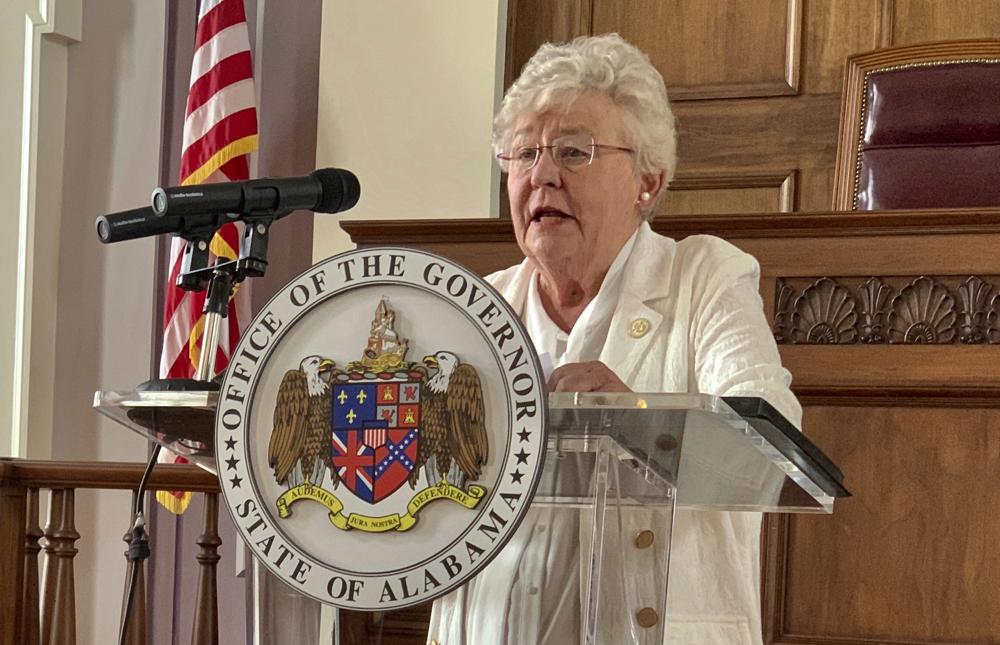
Alabama Gov. Kay Ivey on Monday directed state agencies not to cooperate with the federal COVID-19 vaccine mandate, where possible, and instead help with the state’s efforts to file a lawsuit challenging the vaccination requirements. The directive is part of Republican officials’ efforts to resist the Biden administration’s vaccine mandate, but the impact of the Alabama order is unclear since it can only cover state executive branch agencies. Ivey signed an executive order forbidding executive branch agencies — which include agencies such as Medicaid, Mental Health and Human Resources — from penalizing employees or businesses for non-compliance with the federal vaccine mandate. If federal law requires the penalty, Ivey directed the state entity to take steps to notify the affected business or individual that Alabama does not condone the penalty. Gina Maiola, a spokesperson for Ivey, said the governor issued the executive order because some state agencies could potentially fall under the federal vaccine mandate or have enforcement duties. Maiola did not immediately respond to an email seeking examples. “The federal government’s outrageous overreach has simply given us no other option, but to begin taking action, which is why I am issuing this executive order to fight these egregious COVID-19 vaccine mandates,” Ivey said in a statement. The executive order comes three days after the state’s largest universities announced employees must get vaccinated because of the federal mandate. However, Ivey’s executive order would not impact those plans announced by the University of Alabama System and Auburn University to require employees to be vaccinated for COVID-19 by Dec. 8. The universities were created by the Alabama Constitution and are under the management and control of a board of trustees. The schools said the Alabama campuses in Tuscaloosa, Birmingham, Huntsville, and Auburn all are federal contractors, so they have to comply with an executive order signed last month by President Joe Biden. Ryan Easterling, a spokesperson for the Alabama Department of Public Health said that agency is still investigating how it is affected by the federal mandate, but wrote in an email that, “we intend to comply with (the) Governor’s order.” Biden in September ordered sweeping new federal vaccine requirements for as many as 100 million Americans. The expansive rules mandate that all employers with more than 100 workers require them to be vaccinated or test for the virus weekly. Roughly 17 million workers at health facilities that receive federal Medicare or Medicaid also will have to be fully vaccinated. Biden is also requiring vaccination for federal employees of the executive branch and contractors who do business with the federal government. Conservative Republican in several states have vowed resistance to the mandate, calling it a federal overreach, but so far have limited options in trying to undercut the requirements. The issue is likely bound for court after GOP attorneys general vowed to sue. The White House has previously accused Republican officials to putting politics ahead of safety, noting the effectiveness of vaccines at preventing people from dying from a virus that has already killed more than 730,000 Americans. Alabama Attorney General Steve Marshall said earlier this month that his office is preparing to challenge the mandate on employers once the rule is unveiled. Ivey’s executive order directed executive agencies to cooperate with Marshall’s office in “furtherance of litigation brought by the State to challenge any federally imposed COVID-19 vaccination requirement.” In a statement Monday, the Alabama Democratic Party said vaccine mandates are “nothing new,” noting that states and the federal governments mandate a number of things to protect people — including seat belts, restaurant inspections and numerous other vaccinations that are required to go to school or join the military. “What’s wrong with a mandate that protects public health and keeps our hospitals from overcrowding?” the party stated. Republished with the permission of the Associated Press.
Kay Ivey promotes Gina Maiola to communications director
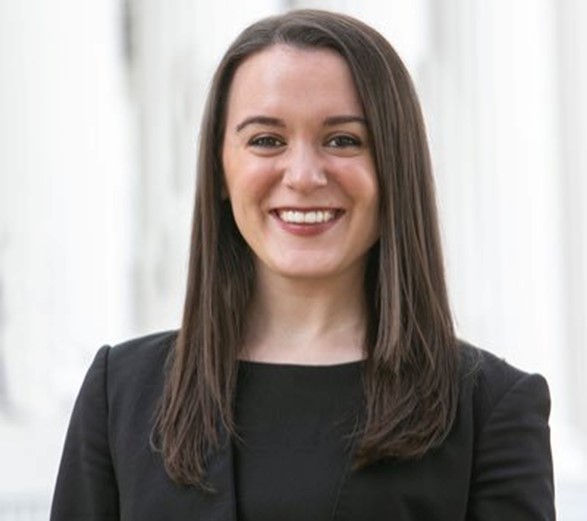
Gov. Kay Ivey announced Gina Maiola will serve as communications director, effective October 16. Maiola currently serves as the governor’s press secretary. Maiola is taking the helm after current communications director Leah Garner accepted a job in the private sector. In a press release, Ivey stated, “I am proud to announce Gina Maiola has been promoted to communications director. Gina has been a major asset to the administration since my very first day as governor. Gina is well respected, has strong relationships with media outlets across the state, and I am confident she will continue to do extremely good work in her new role.” Maiola has been Ivey’s primary spokesperson since June 2019. Before her promotion to press secretary, Maiola was deputy press secretary for communications for Governor Ivey. Maiola functioned as the chief speechwriter, advising the governor on speeches such as her 2019 state of the state address, where Governor Ivey famously championed the Rebuild Alabama Act. Maiola earned her bachelor of arts in communication and information sciences along with University Honors from The University of Alabama in 2016.
Alabama National Guard adjusts to looming budget shortfall

States around the nation are facing budget shortfalls for their National Guards following long stints in Washington D.C. after they were called upon to protect the U.S. Capitol. Gov. Kay Ivey activated the Alabama National Guard in January. The 750 soldiers were activated soon after the Capitol protests and returned home the day after the Inauguration. During The Dan Morris radio show on 93.1 Newstalk last week, guest host Apryl Marie Fogel* fielded a call stating that some Alabama National Guard training camps and drills were being canceled. Fogel reached out to Gina Maiola in Governor Kay Ivey’s office, who referred her to the National Guard. Sandra D. Lucas, the Deputy Director of Public Affairs for the JFHQ Alabama National Guard, replied that Lucas responded, “The FY21 federal reimbursement to the National Guard Bureau has been delayed, causing a funding shortfall for the remainder of the fiscal year. This is due to supported events that were not planned for, or were underfunded, or underestimated. Although we are going to have to make changes to our schedule, every effort is being made to minimize impact to readiness. “As we are preparing to minimize expenses due to a shortage of fourth-quarter funding, the Alabama National Guard is adjusting the remaining FY21 annual training requirements. Readiness is our main priority, therefore, individuals who require annual training days will be given the opportunity to attend annual training to meet their 15-day active training requirement. “The head of the National Guard Bureau, Gen. Daniel Hokanson, publicly warned lawmakers in May that the Guard must be reimbursed by August to avoid impacts on training in the final months of the fiscal year. In the ensuing months, those warnings have become more stark. A July 6 National Guard report warns of far-reaching effects on training, vehicle, and aviation readiness as well as facility sustainment efforts if lawmakers don’t approve more money by the beginning of August.” “Without timely reimbursement by August 1, 2021, the National Guard will experience critical readiness impacts across its entire enterprise,” the report states. The report was shared by the offices of Steve Womack and Rep. Cheri Bustos (D-Ill.), who are pressing House and Senate leadership to quickly reimburse the Guard. “We are preparing to minimize expenses due to a shortage of fourth-quarter funding, but none of this is a new challenge for the Alabama National Guard. If the past year has proved anything, it’s the capability and adaptability of Guardsmen to meet any demands regardless of unforeseen circumstances.” Lucas concluded, “We are confident in the resilience of our Soldiers and Airmen. Whether we drill 12 months per year or only 10, we will remain Always Ready and Always There.” *Editorial Disclaimer: Apryl Marie Fogel is the owner and publisher of Alabama Today.
Jim Zeigler asks Kay Ivey to ban door-to-door vaccine squads in Alabama

Alabama State Auditor Jim Zeigler has asked Gov. Kay Ivey to ban door-to-door squads in Alabama for the COVID vaccine. Citizens on Zeigler’s social media pages are e-mailing Ivey asking for the ban. On Sunday, Zeigler asked Ivey to “use the strongest steps to clearly direct federal agents and their recruits that their entry onto home properties in Alabama could legally be considered trespassing.” Zeigler’s request followed an announcement by President Joe Biden Tuesday that workers would be recruited to go to targeted households or the general public checking vaccine compliance and promoting vaccination. Biden stated, “Now, we need to go to community-by-community, neighborhood-by-neighborhood, and oftentimes, door-to-door — literally knocking on doors — to get help to the remaining people protected from the virus.” Two state governors quickly objected to the door-to-door canvass in their states. South Carolina Gov. William Masters stated, “A South Carolinian’s decision to get vaccinated is a personal one for them to make and not the government’s.” McMaster wrote in a letter to health board chairman Mark Elam, “Enticing, coercing, intimidating, mandating, or pressuring anyone to take the vaccine is a bad policy which will deteriorate the public’s trust and confidence in the State’s vaccination efforts. The prospect of government vaccination teams showing up unannounced or unrequested at the door of ‘targeted’ homeowners or on their property will further deteriorate the public’s trust and could lead to potentially disastrous public safety consequences.” Missouri Gov. Mike Parson stated, “I have directed our health department to let the federal government know that sending government employees or agents door-to-door to compel vaccination would NOT be an effective OR a welcome strategy in Missouri!” While Ivey has not made a statement yet, her press secretary made what Zeigler called a “weak press statement with no action.” Gina Maiola, Ivey press secretary, stated Friday, “We are all for educating people on the COVID-19 vaccine, but from the little we know about this program, it does not seem like the answer. Governor Ivey has no plans to put in a request for government workers to knock on people’s doors here in Alabama.” Zeigler said, “Gov. Ivey should go much farther and clearly ban home intrusions by vaccine squads in Alabama.” The White House later clarified that the door-to-door workers could be community people recruited for the task. Zeigler’s requested to the governor, “I ask that you immediately take the strongest steps to clearly direct federal agents and their recruits that their entry onto home properties in Alabama could legally be considered trespassing. The Biden plan to have door-to-door visits by agents of the government or even local recruits is wrong on several levels. The decision to take or not take the COVID vaccine is each individual’s decision. A federal intrusion onto the home properties of Alabama citizens would be a troubling infringement of the Fourth and Tenth Amendments.” Zeigler says some door-to-door vaccine visits were already made in Jefferson County, Alabama’s largest county.
Kay Ivey faces decision on promotion requirement for 3rd graders

After the COVID-19 pandemic interrupted classrooms, Alabama Gov. Kay Ivey faces a decision whether to delay next year’s high-stakes requirement to hold back third-graders who aren’t reading on grade level. Ivey has through Thursday to sign legislation by Sen. Rodger Smitherman, a Democrat from Birmingham, that would push back the promotion requirement from the 2021-22 school year to the 2023-24 school year. If she does not sign the bill, the legislation will die by what is known as a pocket veto. Ivey spokeswoman Gina Maiola said the bill is under review. The governor’s office is getting lobbied both by people asking her to approve the delay and others seeking a veto of the bill. Supporters of a delay argue it will be unfair to force the requirement on students who were out of the traditional classroom for long stretches during the pandemic. But opponents argue it will be a disservice to students to delay the promotion requirement — a part of a broader state program to boost literacy — or that the state should wait until the latest test scores are available to decide. The Alabama Education Association, the state lobby representing public school employees, said teachers have called and emailed asking Ivey to sign the bill and approve the delay. The group said many Alabama teachers have not received the training required under the 2019 law. “Students also need more time to make up for learning loss. It is not feasible to implement the law as it currently stands while students and educators are trying to recover from this unprecedented school year,” the AEA said in a statement on the legislation. Republican Rep. Terri Collins of Decatur, who sponsored the original measure in 2019, said she is hopeful Ivey will veto the bill. Collins has said lawmakers should wait and see the latest test scores before deciding if a delay is needed. “To continue moving forward is the best thing for the children,” Collins said. The Republican representative said lawmakers will have have “plenty of time” to approve a delay in the 2022 legislative session if the test scores show large numbers of children might be held back. Collins said she met with the governor Tuesday. Alabama lawmakers in 2019 approved several initiatives to try to boost reading scores. It included that beginning in the 2021-22 school year, third graders would be required to meet reading benchmarks before moving to the fourth grade. Students would have to make a minimum score on a reading assessment or demonstrate mastery of all third-grade state reading standards as evidenced by a student reading portfolio. Republished with the permission of the Associated Press.
Alabama Gov. Ivey signs ban on transgender athletes
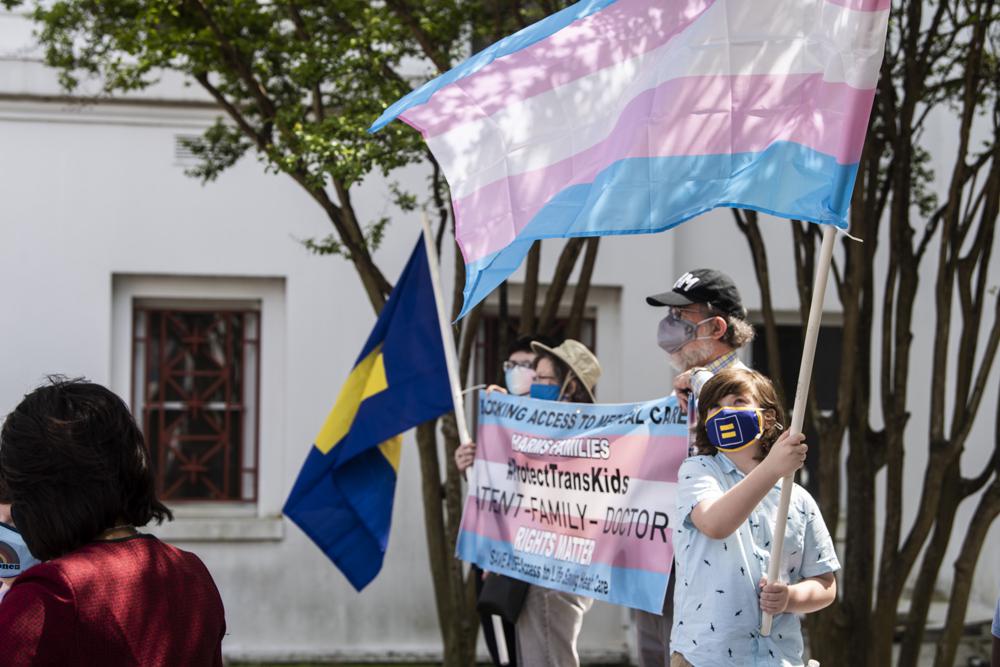
Republican Gov. Kay Ivey on Friday signed legislation restricting transgender students from participating in K-12 sports, making Alabama the latest conservative state to ban transgender girls from playing on female sports teams. Ivey’s office announced in an email that she had signed the bill that says a public K-12 school “may never allow a biological male to participate on a female team.” Asked if the governor had a comment on the decision, spokeswoman Gina Maiola said she could confirm the governor signed the bill but did not elaborate. Supporters of the bill, HB 391, say transgender girls are born bigger and faster and have an unfair advantage in competition. Opponents argue the bills are rooted in discrimination and fear and violate the federal law barring sex discrimination in education. “HB 391 is nothing more than a politically motivated bill designed to discriminate against an already vulnerable population. By signing this legislation, Gov. Ivey is forcefully excluding transgender children. Let’s be clear here: transgender children are children. They deserve the same opportunity to learn valuable skills of teamwork, sportsmanship, and healthy competition with their peers,” Human Rights Campaign President Alphonso David said in a statement. The Alabama House voted 74-19 for the bill sponsored by Republican Rep. Scott Stadthagen of Hartselle. The Alabama Senate voted 25-5 for the legislation. “I want to thank Governor Ivey for her leadership and for protecting the rights of Alabama’s female athletes. Standing up for what is right is not always easy, but it is always the right thing to do,” Stadthagen said Friday. During Senate debate on the bill last week, Republican Sen. Garlan Gudger of Cullman said it is “unfair for biological males to compete and beat females in high school sports.” He said the bill is needed to protect the integrity of female athletic programs. Across the country, Republican legislators have been hard-pressed to come up with actual instances in which a transgender girl’s participation has caused a problem on a girls sports team. The Associated Press recently reached out to two dozen state lawmakers sponsoring such measures around the country as well as the conservative groups supporting them and found only a few times it’s been an issue among the hundreds of thousands of American teenagers who play high school sports. Mississippi Republican Gov. Tate Reeves last month signed a bill to ban transgender athletes from competing on girls or women’s sports teams. Idaho last year became the first state to pass such a ban, but it faces a legal challenge. Kansas Gov. Laura Kelly on Thursday vetoed a bill banning transgender students from girls and women’s school sports. She said the GOP-backed measure is a jobs killer that harms children. Critics of such bills are worried that the measures could cost states from hosting sporting events. Senate Minority Leader Bobby Singleton said last week that the bill will give Alabama a “black eye” as the state tries to recruit industries and sporting events to the state. “We are spending too much time on craziness like this,” Singleton said. As similar bills crop up across the county, the NCAA, which regulates college athletics in the U.S., expressed support for transgender athletes and warned that championships will only be held in locations “free of discrimination.” “We will continue to closely monitor these situations to determine whether NCAA championships can be conducted in ways that are welcoming and respectful of all participants,” the NCAA statement read. The NCAA currently requires transgender women to get drug treatment to lower their testosterone levels before they can compete in women’s sports. Republished with the permission of the Associated Press.
Lottery vote could come this week in Alabama Legislature

Alabama senators could vote on a lottery bill this week as lawmakers try to get the issue of gambling — with or without casinos — before state voters for the first time since 1999. Republican Sen. Jim McClendon of Springville said he hopes to get a Senate vote on his bill that would authorize a lottery where tickets could be sold at stores, kiosks and through a phone app. The Senate Tourism Committee approved the bill last month, but it has yet to get a floor vote as negotiations continue over whether to include casinos. Earlier this session, a proposal to start a state lottery and up to 10 casinos failed by two votes in the Alabama Senate. “The lottery is not dead by any means,” McClendon said in a brief telephone interview. McClendon said his intention is “to take a vote on a straightforward lottery bill” that does not include casino gambling and see how much support that has. McClendon said he believes voters, at least in his district, are more interested in a lottery than casinos. “I sure have heard from many, many, many people that just want to be able to vote on a lottery,” McClendon said. Alabama is one of five states without a state lottery. McClendon’s bills would divide lottery revenue evenly between the state education and general budgets, but doesn’t earmark the money for any specific purpose. Any gambling proposal would have to be approved by three-fifths of lawmakers and a majority of state voters. Alabama voters in 1999 rejected then-Gov. Don Siegelman’s proposed state lottery, but lawmakers in both parties say they believe voters are now more welcoming to the idea. McClendon said Gov. Kay Ivey plans to meet with him and other lawmakers Tuesday. A spokeswoman for Ivey said, “Gov. Ivey is actively having conversations with the Legislature and others to determine our next steps.” “It is clear that the people of Alabama want the opportunity to vote on the issue of gaming one way or the other, and Gov. Ivey has committed to them that she is ready to dig her heels in and work with the Legislature to get that accomplished,” Ivey spokeswoman Gina Maiola said. Republished with the permission of the Associated Press.
Kay Ivey promises Joe Biden request will not change mask mandate end
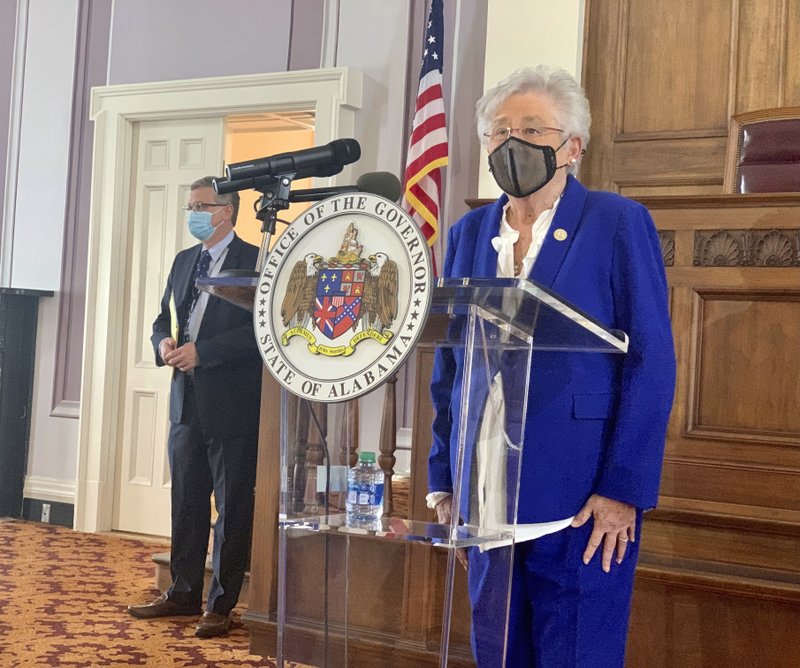
A spokeswoman for Alabama Gov. Kay Ivey said Monday that the state’s mask mandate will end April 9 despite the president’s request for states to reinstate, or maintain, restrictions. “As Governor Ivey has previously stated, Alabama’s mask mandate ends April 9. We have made progress, and we are moving towards personal responsibility and common sense, not endless government mandates,” Ivey spokeswoman Gina Maiola said in a statement. The governor’s spokeswoman issued the comment after the White House asked states to maintain restrictions. President Joe Biden and a top health official on Monday appealed for mask requirements and other restrictions to be maintained or restored to stave off a “fourth surge” of COVID-19. Alabama has kept a mask mandate in place longer than surrounding states, but Ivey has made clear it will not be extended. The governor has urged Alabamians to keep wearing them as a matter of personal responsibility. “After April 9, masks will no longer be a mandate, but they remain one of the most successful tools we have to keep folks safe from COVID-19,” Ivey said last week. Her office released sign templates that businesses could use to request their patrons wear masks. Republished with the permission of the Associated Press.
Medicaid expansion incentives under review

Alabama Republicans for years have opposed expanding Medicaid eligibility. Now, they may be cracking the door. Alabama Gov. Kay Ivey and legislative leaders said they are reviewing details of the nearly $2 trillion coronavirus relief package that includes new financial incentives for the states that have opted against expanding Medicaid to provide health coverage for more low-income Americans. A spokeswoman for Ivey said the governor is “open to the discussion” on expansion but that state leaders need additional information about the long-term cost projections. “Ensuring every Alabamian has access to quality health care is important to the governor and always has been a priority of hers. However, as she has made clear, the problem has always been how to pay for it. She is open to the discussion, but right now, we simply do not have all the facts,” spokeswoman Gina Maiola said. Alabama is one of 12 states that have taken no action toward expanding Medicaid eligibility under the Affordable Care Act. Previous studies have estimated that expansion would add around 300,000 people to state Medicaid rolls. Republican leaders have in the past expressed opposition to expanding Medicaid, at times citing both political opposition to the Affordable Care Act passed under former President Barack Obama and concerns about cost. Medicaid expansion under the Affordable Care Act allows people with family incomes less than 138% of the federal poverty limit— or around $17,000 for an individual and $29,000 for a family of three to qualify for Medicaid. Currently, Alabama’s Medicaid program covers very few able-bodied adults. “The bulk of the people who will gain coverage are people who are working,” said Jim Carnes, a policy analyst with Alabama Arise, an advocacy group for low-income Alabamians. Already, the federal government would pick up 90% of the cost of the expansion. A 2019 study by a University of Alabama at Birmingham projected the state’s cost would be about $250 million per year, but that the state would see a resulting boost in economic activity. The federal relief bill offers a new incentive by giving states a 5% boost to the federal match over the next two years for the people they currently cover. Democrats in the Alabama Senate have estimated that would generate an additional $900 million for the state. “I just want to say to Governor Ivey, if not now, when?” Senate Minority Leader Bobby Singleton said in the press conference. “I don’t care if we call it ObamaCare. We could call it Kay-Care. It could be Alabama Health Care. We need to expand Medicaid and the time to do it is right now,” Singleton said. Dr. Don Williamson, president of the Alabama Hospital Association, said the calculations are complex because of the intricacies of how Alabama funds Medicaid. The cost will also depend on how many people are added to the rolls. “To me, the most important thing that Medicaid expansion does is it absolutely improves health outcomes. You get earlier cancer diagnosis. You get lower infant mortality rates. You get earlier diagnosis if diabetes,” Williamson said. State Rep. Steve Clouse, the chairman of the Alabama House of Representatives general fund budget committee, said state officials are trying to gather information about the incentives and what would be the state’s share of costs in the long run. Sen. Greg Albritton, the chairman of the Senate budget committee, expressed some skepticism about the incentives. He said the incentives sound enticing but said the state has “got to have the answers” before making a commitment. “I’m not surprised this would be the same old song, the same old dance. … Buying a new car now. Nothing down, but the payment is due in two years,” Albritton said. Senate President Pro Tem Greg Reed said the analysis will continue over the coming weeks. The 12 states that have held out against the Medicaid expansion are: Alabama, Florida, Georgia, Kansas, Mississippi, North Carolina, South Carolina, South Dakota, Tennessee, Texas, Wisconsin and Wyoming. Republished with the permission of the Associated Press.
Lottery, casino bill heads to Alabama Senate vote

The Alabama Senate will debate a gambling bill soon, the bill’s sponsor said Monday, signaling the first major test of the proposal to begin a lottery and allow as many as eight casinos statewide. Republican Sen. Del Marsh of Anniston said Monday that he expects his bill will come to the Senate floor Tuesday. The proposal, which would have to be put before Alabama voters if approved by lawmakers, would authorize a state lottery, five casinos locations and a compact with the Poarch Band of Creek Indians for casino games at their three sites. Marsh stressed, however, that many final details were still under negotiation. “One way or the other, a bill is coming out tomorrow and we are going to vote. That’s where I am,” Marsh said, expecting debate to begin as early as Tuesday. “I’ve been optimistic since day one. I just think the mood is there to get something for the people to vote on,” Marsh said. Senate Rules Chairman Jabo Waggoner, R-Vestavia Hills, was less certain the bill would get a vote Tuesday, saying it was a bit “up in the air” with last-minute negotiations and Marsh’s discussions with House members and others. “Some of the senators don’t want to cast that vote knowing it is just going to die in the House,” Waggoner said. Waggoner said he supported the idea of a lottery, but wanted to see the “final product” as far as the casino proposal. The most recent version of the bill proposes establishing a state lottery and five casinos — one at four existing dog tracks plus a fifth site in north Alabama that would be run by the Poarch Band of Creek Indians. It also would authorize a compact with the Poarch Band for casino games at their three existing sites that currently have electronic bingo machines. Other smaller operators, including sites in Lowndes and Houston counties, have asked to be included. Marsh said that, for now, the bill is limited to the five sites. Marsh said governor Kay Ivey was “very clear” that she didn’t want a large number of casinos in the state. Asked if the governor wants to limit the number of sites to five, a spokeswoman said, “Governor Ivey wants to be able to support the final gaming proposal from the Legislature” and “has expressed this to Senator Marsh and others, and we still have some work to be done.” “Ultimately, we must be able to control and regulate gambling if it is going to be legal in Alabama, and the intention is certainly not to have a casino on every corner. The governor supports the people of Alabama having the final say,” Ivey spokeswoman Gina Maiola said in a text message. Republished with the permission of the Associated Press.
UAB Physician: Too soon to ease Alabama mask mandate
Alabama “isn’t out of the woods yet” with COVID-19 and it’s too early for Gov. Kay Ivey to lift a mask order that has been in place since July, a top health expert said Wednesday as state pandemic deaths topped 10,000. Dr. Sarah Nafziger, vice president of clinic support services at the University of Alabama at Birmingham, told a news briefing she favors retaining the requirement, which is set to expire Friday afternoon without an extension. Previously, Dr Nafziger has served as the Assistant State EMS Medical Director for the Alabama Department of Public Health where she worked on implementation of regionalized specialty systems of care for time-dependent illness and injury, disaster preparedness including the Ebola response, and EMS protocol development. Other Republican-led states including Texas and neighboring Mississippi are easing health restrictions as vaccination numbers rise and illnesses linked to the new coronavirus decline, and Ivey is facing pressure to eliminate the mask order. On social media, some are sharing the phone number to the governor’s office and asking callers to voice opposition to the rule. Hospitalizations are at the lowest point than any time since June, and Nafziger said a reduction in testing indicates fewer people are having symptoms that prompt them to seek a test. But easing restrictions before more people are vaccinated could reverse the overall trend of improvement since mask-wearing reduces illness and infection, Nafziger said. “Is it time to do away with the mask mandate in Alabama? No,” she said, adding: “We have a lot of vulnerable people in our population, and the last thing we want is for them to get sick or die.” Ivey scheduled a news conference for Thursday morning to discuss the pandemic. Citing the decline in cases, Republican Lt. Gov. Will Ainsworth asked Ivey to end the mask requirement, which he has opposed all along. Local governments and businesses can make their own rules if needed and individuals can make decisions for themselves and follow safety rules until vaccinations and immunity levels are sufficient, he said. “But we can do all of these things without a Big Brother-style government mandate looming over us,” he said in a statement. The Alabama Senate on Wednesday evening also approved a resolution urging Ivey to end the mask mandate. While the coronavirus causes only mild to moderate symptoms for most people, it is particularly dangerous for the elderly and people with other, serious health problems. The Alabama Hospital Association has asked Ivey to extend the mask rule, which requires facial coverings in indoor public places and outside when social distancing can’t be maintained, but the governor’s office has not said what she will do. Ivey has said she prefers “personal responsibility” to government mandates and the state is headed in the right direction, yet “we still have some work to be done,” spokeswoman Gina Maiola said Monday. The state’s death toll from COVID-19 hit 10,029 on Wednesday, state statistics showed, and more than 497,000 people have tested positive. Of more than 1.4 million vaccine doses delivered to providers in the state, almost 973,000 shots have been administered to patients. With the state lagging behind others in delivering immunizations, Nafziger said UAB — one of the top shot providers in the state — isn’t “sitting on doses.” Shipments typically arrive with little notice and in varying amounts, she said, so most scheduling has been “very last minute.” Patients don’t like the system, she said, “and we hate it.” Republished with the permission of the Associated Press.
