
Greater Birmingham Humane Society calls for legislative action after ‘very sad week for animals’
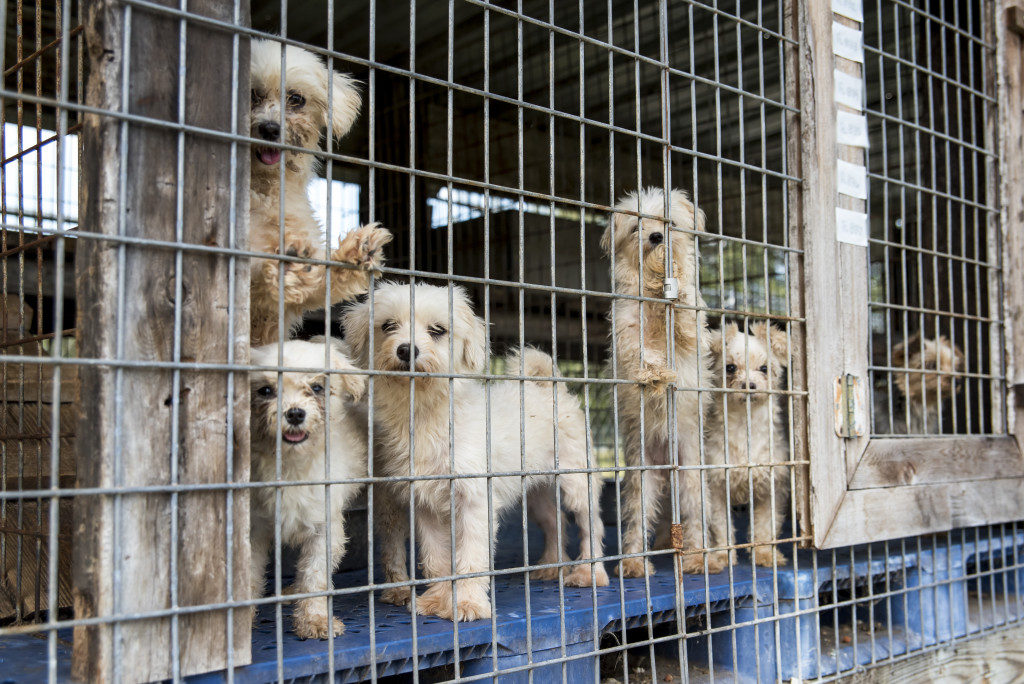
The Greater Birmingham Humane Society (GBHS) is calling for legislative action against puppy mills in the state following a puppy mill bust in Trussville, Ala. The GBHS rescued 83 dogs from the property which was deemed unfit for all the animals this week; the property owners were selling parakeets as well. According to AL.com, the property owners voluntarily surrendered all the animals but might face criminal charges of animal cruelty and operating a business without a license. GBHS CEO Allison Black Cornelius took to Facebook, to plead with voters and local legislators to file legislation in the next session to protect animals within the state. “It has been a very sad week for animals in our community with the passing of a dog left in a car in extreme heat and a puppy mill bust,” the group posted on Facebook. “GBHS Chief Executive Officer, Allison Black Cornelius, urges citizens to remember these two cases when the next legislative session begins and offer your support to promote legislation that protects animals in our state.” The shelter is accepting donations of puppy pads, puppy food and adult dog food. Last year, Jacksonville-Republican state Rep. K.L. Brown and Bessemer-Democrat state Sen. Priscilla Dunn both introduced bills drafted by the Alabama Puppy Mill Project, HB45 and SB17, in their respective chambers, which require commercial breeders of dogs and cats to be licensed and inspected annually in hopes to put an end to inhumane practices like puppy mills. The bills did not pass in the session.
Alabama “puppy mill” bill gets a name — Atti’s Bill
Man’s best friend has two new allies in the Alabama Legislature — Jacksonville-Republican state Rep. K.L. Brown and Bessemer-Democrat state Sen. Priscilla Dunn. The duo introduced bills drafted by the Alabama Puppy Mill Project, HB45 and SB17, in their respective chambers, which require commercial breeders of dogs and cats to be licensed and inspected annually in hopes to put an end to inhumane practices like puppy mills. On Thursday both bills finally got a name, and face, of their own — Atti’s Bill. Named after rescue pup Atti, short for Atticus Finch, along with her sister from a breeder in Troy, Ala. The bill now carries Atti’s name. According to the Alabama Puppy Mill Project, “they were riddled with parasites and had Parvo. They did everything they could to give them every ounce of veterinary care they could to save their lives. They were both fighters but Atti succumbed to the Parvo and died several days later.” The bills have now been renamed in her honor and memory. While neither bill directly refers to “puppy mills” they would apply to cat and dog breeders who have more than 10 female animals. They’d have to be licensed and inspected by the Alabama Dog and Cat Breeders Commission, which the legislation also creates. The state Department of Agriculture and Industries would have jurisdiction over the commission and funding would be covered through breeders’ licensing fees. According to the American Society for the Prevention of Cruelty to Animals (ASCPA), Alabama is one of only 20 states that doesn’t have regulations for puppy mills — a large-scale commercial dog breeding facility where profit is given priority over the well-being of the dogs. HB45/SB17 hopes to put an end to that.
Senate Rules panel quickly moves array of bills to Special Order Calendar
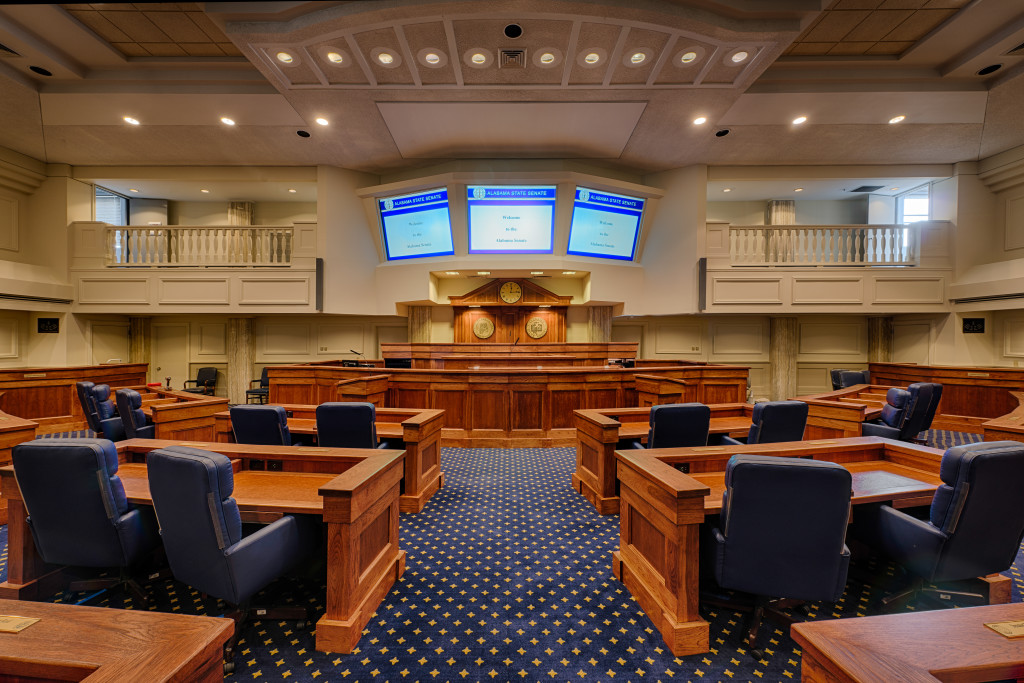
In a meeting that lasted less than 10 minutes, the Senate Rules Committee approved a number of bills for addition to the Special Order Calendar. Unlike other committees, the Rules Committee does not give favorable or unfavorable reports. It simply approves or disapproves of bills slated to be added to the daily calendar of bills headed for their respective bodies. With little discussion, the committee approved the entire slate of legislation that included 20 bills. Among those approved for a move before the full Senate was SB136 from Sen. Vivian Figures (D-Mobile), which would raise money for Medicaid via a 5-mill increase in the state’s low property tax. Figures noted in an earlier committee meeting that the move would net about $280 million by 2019 and every year thereafter. The committee also approved SB268 from Sen. Cam Ward (R-Alabaster), which would revoke the Medicaid benefits of city and county jail inmates while incarcerated. SB285 from Sen. Arthur Orr (R-Decatur) was also approved by the committee. Orr’s bill would put further restrictions on public assistance programs, such as Supplemental Nutrition Assistance Program (SNAP) and Temporary Assistance for Needy Families (TANF) benefits. The bill specifies that SNAP benefits should be terminated if a recipient is late on child support or any “court-ordered support payments.” The bill would also put a lifetime limit of 36 months on TANF benefits and require the Medicaid Agency to better track the income and assets of benefit recipients. Further, the bill would require out-of-state purchases with TANF money to be tracked and a person’s citizenship to be questioned if too many such purchases are made. The committee also approved the Unborn Infants Dignity of Life Act, HB45 from Rep. April Weaver (R-Alabaster), which provides for the “dignified final disposition of the bodily remains” of infants and prohibits the already-illegal sale of fetal tissue. Weaver’s bill has already cleared the House and its addition to the Senate calendar poises it to approach final passage.
Alabama legislative agenda preview: March 7 – March 11, 2016
Alabama lawmakers will return to Montgomery Tuesday as the legislative session resumes, with the House convening at 1 p.m. and the Senate an hour later. Both chambers are still planning to tackle the General Fund and Education Trust Fund budgets before spring break, as well as a host of issues slated to be taken up this week. The Senate will debate SB89 from Sen. Arthur Orr (R-Decatur), which would require all Alabama public school students to pass a civics test to graduate – private schools could opt-in if they chose to. Also on the Senate’s agenda is SB148 from Sen. Jim McClendon (R-Springville), which would require all passengers in a vehicle to wear a safety belt. The legislation came up in last week’s session but was stalled due to opposition regarding further legislation on people’s car-riding habits. The Senate will also take up SB114 from Sen. Paul Sanford (R-Sanford), which would regulate “fantasy contests” in the state, and SB14 from Sen. Gerald Allen (R-Tuscaloosa), which would allow people to carry a firearm in their vehicle without a permit. Allen’s legislation was hotly contested in a recent committee hearing, when state law enforcement officers argued that the bill would make their jobs more difficult and dangerous. The House will also take up a bill aimed at regulating so-called “fantasy contests,” as well HB2 from Rep. Tommy Hanes (R-Scottboro), which would require wireless communications providers to supply law enforcement agencies with location information upon request. Perhaps the bills with highest interest to be taken up in the House this week are HB46 from Rep. Alan Boothe (R-Troy), which would allow Alabama distilleries to begin selling bottles for off-premise consumption, and HB13 from Rep. Alan Harper (R-Northport), which would allow the public to vote on whether or not to institute a state lottery. Committee hearings will get underway Tuesday morning before the start of session, though the majority will take place on Wednesday. The Senate Committee on Health and Human Services will hear discussion on two bills that will likely attract the outrage of Democrats – HB45 from Rep. April Weaver (R-Alabaster), which would outlaw the already-illegal practice of selling fetal tissue, and SB9 from Allen, which would prohibit abortions if providers don’t first determine a fetal heartbeat. The Senate Committee on General Fund Finance and Taxation will hear from Sen. Vivian Figures (D-Mobile) regarding SB136, a bill which would put forth a constitutional amendment to add an additional 5-mill tax to state properties, with the proceeds going to help Medicaid. The House Economic Development and Tourism Committee will hold public hearings regarding two alcohol-related bills – SB219 from Sen. William Beasley (R-Clayton), which would allow retail licensees and state liquor stores to conduct liquor and wine tastings, and HB325 from Rep. James Buskey (D-Mobile), which would allow businesses with a building split between wet and dry counties to serve alcohol. The House Committee on General Fund Ways and Means will take up the General Fund via SB125, which has already passed the Senate,
Alabama legislative agenda preview: Feb. 15-Feb. 19, 2016
The Legislative Session will resume Tuesday, with the House convening at 1 p.m. and the Senate an hour later. Many of the bills which passed through committee last week will likely make it to the floor this week, including the “Uniform Wage and Right-to-Work Act,” which would prohibit cities from raising the minimum wage, and a bill providing for distilleries to sell their product for off-premise consumption. Further, the House will renew its discussion of HB45, the legislation sponsored by Rep. April Weaver (R-Shelby) to outlaw the sale of fetal tissue, which did not come up for a vote last Thursday. Though a handful of committee meetings will be held prior to the start of session Tuesday, the majority will be held Wednesday. The House Committee on Economic Development and Tourism will meet to tackle a slew of alcohol-related bills, including HB176, which would allow Alabama brewpubs to sell for off-premise consumption. A public hearing on the bill will likely garner a wide array of input. The House Committee on Ethics and Campaign Finance will meet to consider HB68, a bill aimed at preventing “an agency of the Executive Department of the state,” which is funded via the General Fund or the Education Trust Fund, from lobbying or entering into agreements with outside lobbyists. The “Alabama Heritage Protection Act” will again be the topic of discussion when the Senate Governmental Affairs Committee meets on Tuesday to complete a round of public discussion which began last week. The committee will also look at SB184, a bill naming the Lane Cake the official state cake. The Judiciary Committee will meet to examine SB114, a Sen. Paul Sanford (R-Huntsville) sponsored bill aimed at regulating “fantasy contests,” and SB14, a bill from Sen. Gerald Allen (R-Tuscaloosa) stating that the lawful possession of a firearm doesn’t “in and of itself” constitute disorderly conduct.
House members clash over 2 Republican-sponsored bills
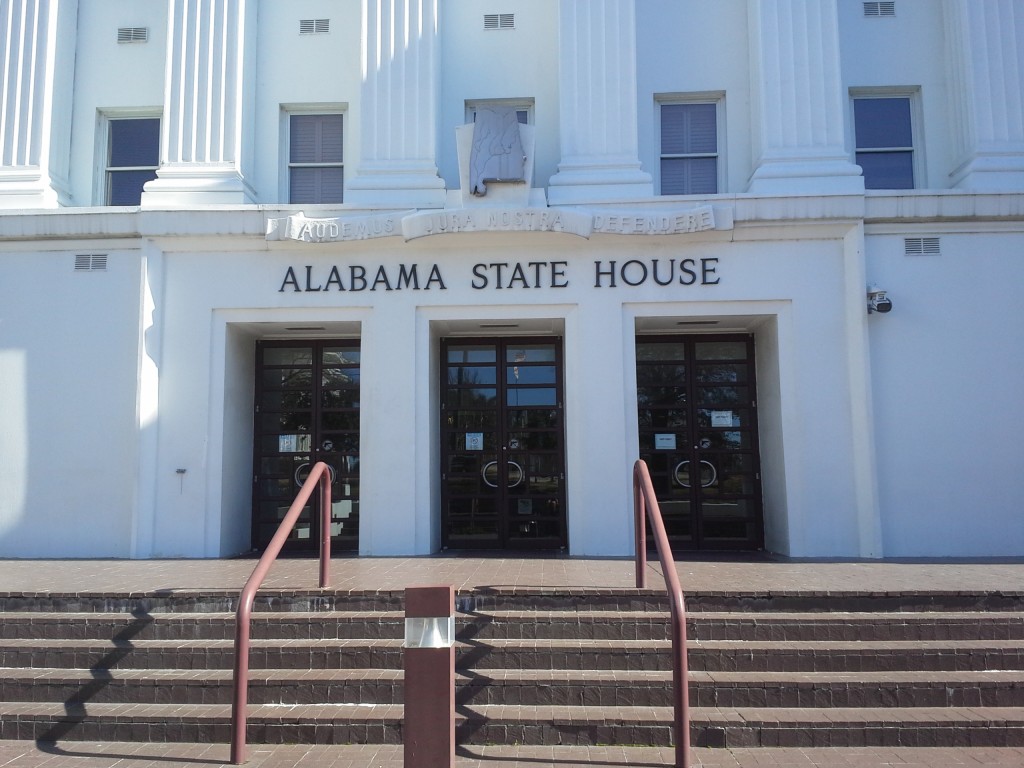
House Democrats started today’s session by fighting vehemently against a bill brought forth by Rep. Arnold Mooney (R-Birmingham), HB37, which would add Alabama’s status as a “Right-to-Work” to the state constitution. The bill would further prohibit employers from requiring membership in a union or dismissing employees for their status as a union or non-union member. Though a handful of House Republicans spoke in favor of the bill, noting that Alabama’s status as a “Right-to-Work” state has attracted large businesses like Polaris and Mercedes, the vast majority of comment on the bill came from House Democrats in opposition to the bill. Members of the party took turns at the podium, stalling a vote on the bill for more than two hours. “I know y’all call it ‘right to work,’ but it’s really ‘right to fire,’” Rep. John Rogers (D-Birmingham) said. Several other opponents noted that Alabama is already a “Right-to-Work” state by statute and wondered why there was a need for the bill. Mooney clarified that having Alabama’s “Right-to-Work” status codified in the constitution would encourage more businesses to locate to Alabama. Rep. Patricia Todd (D-Birmingham) also voiced opposition to the bill over the fact that Alabama’s constitution is already among the longest in the world, saying that while other states can carry a pocket-sized version of their constitution Alabamians would “need a cart to carry our constitution around.” Rep. John Knight (D-Montgomery) concurred, adding that there are many issues that are more deserving of codification in the state constitution. Knight offered an amendment to the bill guiding new businesses to give preferential hiring treatment to veterans. “This will send a strong message to veterans across this state that we support them,” Knight said before the amendment was approved, 67 to 28. According to statistics from the Bureau of Labor Statistics, the three states with the lowest unemployment rates in the nation, North Dakota, Nebraska and South Dakota, are “Right-to-Work” states. Contrarily, the states with the highest unemployment rates in the nation, New Mexico, the District of Columbia and Alaska, are not. After a bit more discussion, Mooney’s bill was defeated by a margin of 60 to 24. Next the House took up HB45 from Rep. April Weaver (R-Shelby), which outlaws the sell of fetal tissue and provides parents with the right to respectfully dispose of a deceased child’s remains. Again only a few comments were made in support of the bill with the majority of comment coming from opposing Democrats, especially those who linked the legislation to the recently debunked Planned Parenthood sting videos. “I’m not going to argue the merits for or against abortion,” Todd said. “But I am going to point out the hypocrisy of this bill. It seems like (Republicans) only care about those nine months when they’re in the womb.” Todd added that the House should take up measures to ensure that children aren’t forced to live in poverty or go without basic needs. Though debate on the bill had not yet completed, the House adjourned until 1 p.m. Tuesday.
