
The Latest: House passes rules package for impeachment probe
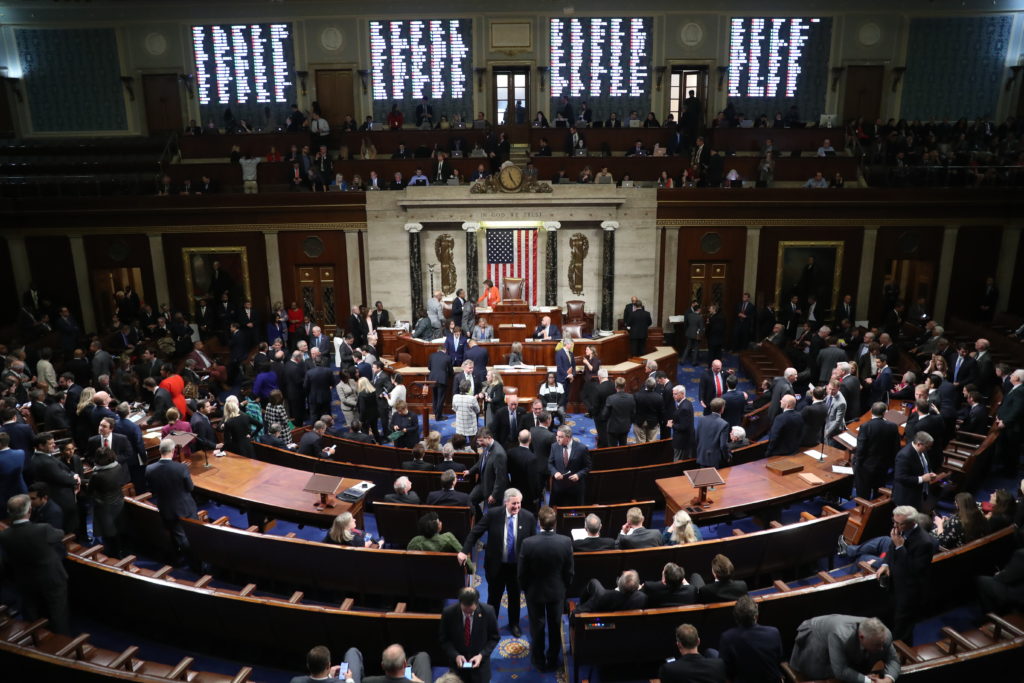
The Latest on President Donald Trump and the House impeachment resolution (all times local): 9:25 p.m. Democrats have swept a rules package for their impeachment probe of President Donald Trump through a divided House, as the chamber’s first vote on the investigation highlighted the partisan breach the issue has only deepened. By 232-196, lawmakers have approved the procedures they’ll follow as weeks of closed-door interviews with witnesses evolve into public committee hearings and — almost certainly — votes on whether the House should recommend Trump’s removal. All voting Republicans opposed the package. Every voting Democrat but two supported it.Trump tweeted, “Now is the time for Republicans to stand together and defend the leader of their party against these smears.” 12:10 p.m. House Minority Leader Kevin McCarthy says Democrats are abusing their power and discrediting democracy by “trying to impeach the president because they are scared they can’t defeat him at the ballot box.” The California Republican is speaking out against a package of impeachment rules approved Thursday. McCarthy says that ever since Donald Trump’s election, Democrats have waged a “permanent campaign to undermine his legitimacy. They have predetermined the president’s guilt. They have never accepted the voters’ choice to make him president. So, for 37 days and counting, they have run an unprecedented, undemocratic and unfair investigation. This resolution only makes it worse.” McCarthy says Democrats are “using secret interviews and selective leaks” to portray Trump’s legitimate actions as an impeachable offense. He is referring to the closed-door hearings in the House as Democrats gather evidence in the impeachment inquiry. 12:05 p.m. Ivanka Trump is quoting a letter from Thomas Jefferson to his daughter following the House near party-line vote approving rules for its impeachment inquiry into her father. Ivanka Trump tweets “Some things never change, dad!” after quoting a portion of the Jefferson letter that talks about being surrounded by enemies and spies “catching and perverting every word that falls from my lips or flows from my pen, and inventing where facts fail them.” Ivanka Trump has generally avoided weighing in on the impeachment probe. The probe is focused on the president’s effort to have Ukraine investigate Democrats and a potential 2020 rival, Joe Biden, while the administration was withholding military aid to the Eastern European ally. It’s illegal to seek or receive foreign help in U.S. elections. Trump says he did nothing wrong. 11:40 a.m. The White House says the House vote approving rules for its impeachment inquiry has enshrined “unacceptable violations of due process into House rules.” Press secretary Stephanie Grisham says in a statement moments after the House vote that the process “is unfair, unconstitutional, and fundamentally un-American.” Thursday’s near party-line 232-196 vote was a victory for Democrats, who will control the investigation in the House. It gives them the ability to curb the ability of Republicans to subpoena witnesses and of White House lawyers to present witnesses. Grisham says President Donald Trump “has done nothing wrong” and that Democrats have an “unhinged obsession” with impeachment. Her statement was echoed by Trump’s reelection campaign which accused Democrats of trying to legitimize their process after the fact. Campaign manager Brad Parscale says: “Voters will punish Democrats who support this farce and President Trump will be easily re-elected.” 11:30 a.m. A sharply divided House has approved the rules for its impeachment inquiry of President Donald Trump. Thursday’s near party-line 232-196 roll call was the chamber’s first formal vote on a process that’s likely to take months, possibly stretching into the early weeks of the 2020 election year. Underscoring the gravity of the vote, House Speaker Nancy Pelosi presided over the chamber as it voted on the rules package. The vote was a victory for majority Democrats, who will control the investigation in the House. It gives them the ability to curb the ability of Republicans to subpoena witnesses and of White House lawyers to present witnesses. Republicans said the process was skewed against them and the White House. The vote showed how neither side has budged in their fight over whether Trump’s effort to squeeze Ukraine for dirt on his Democratic political foes merits forcing him from office. 10:25 a.m. House Speaker Nancy Pelosi says a vote to approve ground rules for their impeachment inquiry of President Donald Trump is a solemn but necessary duty for lawmakers. In a floor speech before Thursday’s vote, Pelosi said, “This is not any cause for any glee or comfort.” Standing next to a large U.S. flag in the well of the House, Pelosi said the impeachment inquiry was necessary to defend the Constitution and prevent an abuse of power by Trump.“The times have found each and every one of us in this room,” Pelosi said. She urged lawmakers to vote in favor of the impeachment rules “to protect the Constitution of the United States. What is at stake in all of this is nothing less than our democracy.”The investigation is focused on Trump’s efforts to push Ukraine to investigate his Democratic political opponents by withholding military aid and an Oval Office meeting craved by the country’s new president. 9:37 a.m. Speaker Nancy Pelosi is asking all Democratic lawmakers to come to the House floor as a show of solidarity for the impeachment inquiry resolution. The House is set to take its first vote Thursday on the resolution that affirms the investigation into President Donald Trump and outlines the process for public hearings and possibly drafting articles of impeachment. Pelosi sent out word for lawmakers to join the floor debate as proceedings were getting underway, according to a person familiar with the situation and granted anonymity to discuss it. Few Democrats are expected to oppose the plan in a vote that is expected to fall largely along party lines. 12:08 a.m. House Democrats and Republicans alike are rounding up votes on the ground rules for considering the impeachment of President Donald Trump. A near party-line vote is expected Thursday on the eight pages of procedures, which are certain to be passed
Donald Trump confronts limits of his impeachment defense strategy
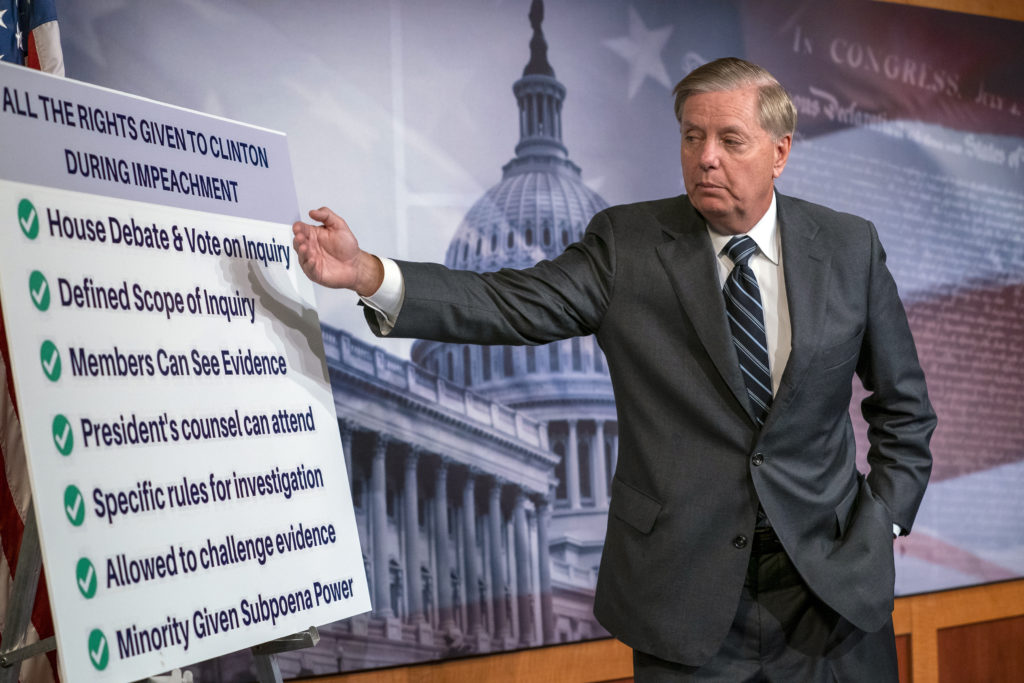
President Donald Trump is confronting the limits of his main impeachment defense. As the probe hits the one-month mark, Trump and his aides have largely ignored the details of the Ukraine allegations against him. Instead, they’re loudly objecting to the House Democrats’ investigation process, using that as justification for ordering administration officials not to cooperate and complaining about what they deem prejudicial, even unconstitutional, secrecy. But as a near-daily drip of derogatory evidence emerges from closed-door testimony on Capitol Hill, the White House assertion that the proceedings are unfair is proving to be a less-than-compelling counter to the mounting threat to Trump’s presidency. Some senior officials have complied with congressional subpoenas to assist House Democratic investigators, defying White House orders. Asked about criticism that the White House lacks a coordinated pushback effort and could do a better job delivering its message, spokeswoman Stephanie Grisham said, “It’s hard to message anything that’s going on behind closed doors and in secret.” “It’s like you’re fighting a ghost, you’re fighting against the air. So we’re doing the best we can,” she said on Fox News Channel. It was a rare public admission from the White House that despite the Republican president’s bravado, real risks remain. White House officials, who have been treating unified Republican support for Trump as a given, have grown increasingly fearful of GOP defections in a House impeachment vote and a potential Senate trial. While they do not believe there will be enough votes to remove the president, as Democrats hope, the West Wing believes more must be done to shore up Republican support to avoid embarrassment and genuine political peril. Trump has been upset with his own top aides — including Grisham and acting chief of staff Mick Mulvaney — for not sufficiently changing the story line. Instead he relies on his Twitter account and Q&A sessions with reporters to launch daily attacks on the probe. And while Trump’s personal lawyer Rudy Giuliani has added to the smoke screen, much as he did during the Russia probe, the former New York City mayor has dramatically scaled back his media appearances since several of his associates were arrested in connection with Ukraine. Complaining privately and publicly that Democrats “stick together” better than the GOP, Trump has leaned on Republican congressional allies to do more, according to White House officials and Republicans close to the West Wing. They spoke on the condition of anonymity because they were not authorized to publicly discuss private conversations. At first, Trump was angry that his surrogates failed to defend him effectively. Those included House Minority Leader Kevin McCarthy, who stumbled through a “60 Minutes” interview. Trump urged the GOP earlier this week to fight back, a lesson that was taken to heart by a group of conservative Republicans, including members of the Freedom Caucus, who stormed a Capitol Hill hearing room on Wednesday to disrupt testimony in the probe.Trump allies cheered that maneuver, believing it showed that Republicans throughout Washington were coming to grips with the severity of the situation. But the GOP complaints still are largely about process and may have limited potency: Trump’s defenders are complaining that the interviews are being conducted in secret, which may soon change, and that Republicans are not involved, though GOP members can ask questions right alongside the Democrats. The contradictions are telling. On Thursday, GOP Sen. Lindsey Graham of South Carolina, a top ally of Trump, introduced a resolution condemning the Democratic-controlled House for pursuing a “closed door, illegitimate impeachment inquiry.” Senate Majority Leader Mitch McConnell is a co-sponsor of that measure. But Graham also said he’s talked to Mulvaney about what seems to be a lackluster White House pushback. During President Bill Clinton’s impeachment, Graham said, “he had a team that was organized, had legal minds that could understand what was being said versus the legal proceedings in question. And they were on message every day.” Republicans have been complaining for weeks that the Trump White House has no such defense system in place — partly a result of the inability to identify qualified talent but also Trump’s own qualms about projecting concern in the face of the investigation. “I think they’re working on getting a messaging team together,” Graham said. Democrats reject Trump arguments that the House interview process is unfair, and White House officials privately acknowledge their legal objections may not win the day. But they believe it’s a political argument that will hold sway with the American people. However, the White House strategy comes with an expiration date: In coming weeks, the closed-door testimony will give way to public hearings. Democrats are expected to call a narrow group of witnesses to testify that Trump encouraged Ukraine to conduct investigations that could benefit him politically in 2020 and to address whether those requests were tied to conditions for giving Ukraine military aid and a White House meeting. Some Trump allies believe the White House can’t afford not to directly address what’s already been revealed. They note that as more Trump appointees offer disparaging information to Congress, and as it is corroborated by official sources, the president will have increasing difficulty simply complaining he is the target of a new “witch hunt.” The president continues to insist he has done nothing wrong, a contention that can be difficult to square with the testimony coming on a nearly daily basis from the other end of Pennsylvania Avenue. Tuesday’s testimony by the top U.S. envoy to Ukraine, William Taylor, only raised the stakes as he gave House impeachment investigators a detailed roadmap of Trump’s efforts to squeeze that country’s leaders for damaging information about his Democratic political rivals. Taylor, who read a lengthy opening statement, is expected to be a star witness at the Democrats’ planned public hearings. Though the White House derided Taylor’s testimony as third-hand information, he vividly described, with the help of contemporaneous notes, his concerns about a parallel foreign policy apparatus run by Giuliani that involved American military aid being withheld unless
House democrats not easing up on their impeachment probe
The impeachment inquiry is revealing vivid new details about the high-level unease over President Donald Trump’s actions toward Ukraine and those of his personal lawyer Rudy Giuliani as the swift-moving probe by House Democrats shows no signs of easing. The testimony from the witnesses, mainly officials from the State Department and other foreign policy posts, is largely corroborating the account of the government whistleblower whose complaint first sparked the impeachment inquiry, according to lawmakers attending the closed-door interviews. One witness, former White House aide Fiona Hill, testified that national security adviser John Bolton was so alarmed by Giuliani’s back-channel activities in Ukraine that he described him as a “hand grenade who is going to blow everybody up.” Another, career State Department official George Kent, testified Tuesday he was told by administration officials to “lay low” on Ukraine as “three amigos” tied to the White House took over U.S. foreign policy toward the Eastern European ally. A former top aide to Secretary of State Mike Pompeo is scheduled to testify Wednesday.Speaker Nancy Pelosi, despite intensifying calls from Trump and Republicans to hold a formal vote to authorize the impeachment inquiry, showed no indication she would do so. She said Congress will continue its investigation as part of the Constitution’s system of checks and balances of the executive. “This is not a game for us. This is deadly serious. We’re on a path that is taking us, a path to the truth,” Pelosi told reporters after a closed-door session with House Democrats.With Ukraine situated between the United States’ Western allies and Russia, Pelosi noted the inquiry raises fresh questions about Trump’s relationship with Russian President Vladimir Putin. “All roads seem to lead to Putin with the president,” she said. Democratic leaders had been gauging support for a vote to authorize the impeachment inquiry after Trump and Republicans pushed them for a roll call. Holding a vote would test politically vulnerable Democrats in areas where the Republican president is popular. Trump calls the impeachment inquiry an “illegitimate process” and is blocking officials from cooperating. But several Democratic freshmen who are military veterans or had careers in national security before joining Congress spoke up during the meeting Tuesday, warning Pelosi and her leadership team a vote was unnecessary and would be playing into Republicans’ hands, according to a person granted anonymity to discuss the private session. The inquiry is moving quickly as a steady stream of officials appears behind closed doors this week, some providing new revelations about the events surrounding the July 25 phone call between Trump and Ukrainian President Volodymyr Zelenskiy. It is on that call that Trump urged Zelenskiy to investigate a firm tied to political rival Joe Biden’s family and Ukraine’s own involvement in the 2016 presidential election. In a daylong session Tuesday, House investigators heard from Kent, who was concerned about the “fake news smear” against the U.S. ambassador to Ukraine, Marie Yovanovitch, whom Trump recalled in May, according to emails obtained by The Associated Press. Kent told the lawmakers that he “found himself outside a parallel process” and had warned others about Giuliani as far back as March. He felt the shadow diplomacy was undermining decades of foreign policy and the rule of law in Ukraine and that was “wrong,” said Rep. Gerry Connolly, Democrat-Virginia. Connolly said Kent described the results of a May 23 meeting at the White House, organized by Trump’s acting chief of staff, Mick Mulvaney, where three administration officials — U.S. ambassador Gordon Sondland, special envoy Kurt Volker and Energy Secretary Rick Perry — declared themselves the people now responsible for Ukraine policy. “They called themselves the three amigos,” Connolly said Kent testified, and they said as much to Zelenskiy in Ukraine when they visited. Kent also told them that Trump, through the Office of Management and Budget, which Mulvaney previously led, was holding up military aid to Ukraine while pressing Zelenskiy to investigate a company linked to Biden’s son. “He was clearly bothered by the role Mr. Giuliani was playing,” Connolly said. In 10 hours of testimony Monday, Hill, the former White House aide who was a top adviser on Russia, recalled to investigators that Bolton had told her he was not part of “whatever drug deal Sondland and Mulvaney are cooking up,” an apparent reference to talks over Ukraine. She testified that Bolton asked her to take the concerns to National Security Council lawyer John Eisenberg. As White House lawyers now try to learn more about the handling of the Ukraine call, Eisenberg is coming under particular scrutiny, said one White House official. He was both the official who ordered that the memorandum of the call be moved to a highly-classified system, and the one who involved the Justice Department in a complaint from the CIA general counsel. The latter caught the attention of the president, according to the official.Giuliani said Tuesday he was “very disappointed” in Bolton’s comment. Bolton, Giuliani said, “has been called much worse.” Giuliani also acknowledged he had received payments totaling $500,000 related to the work for a company operated by Lev Parnas — who, along with associate Igor Fruman, played a key role in Giuliani’s efforts to launch a Ukrainian corruption investigation against Biden and his son Hunter. The two men were arrested last week on campaign finance charges as they tried to board an international flight. Trump’s team won’t comply with the Democratic inquiry. Giuliani and Vice President Mike Pence became the latest officials refusing to cooperate, saying through their lawyers they would not provide information requested by House Democrats as part of the impeachment inquiry. The chairman leading the impeachment investigation, Rep. Adam Schiff, D-Calif., said the stonewalling simply bolsters the charge that Trump is obstructing Congress. “The case for Congress continues to build,” Schiff said. He said Defense Secretary Mark Esper told investigators Sunday that he would comply with a subpoena request, only to be “countermanded” by a higher authority, likely Trump. Sondland, whose text messages with other diplomats are part of a
New whistleblower may give house democrats fresh information
House Democrats leading an impeachment inquiry of President Donald Trump’s dealings with Ukraine may have fresh information to work with after a new whistleblower stepped forward with what the person’s lawyer said were firsthand knowledge of key events. With Congress out for another week and many Republicans reticent to speak out, a text from attorney Mark Zaid that a second individual had emerged and could corroborate the original whistleblower’s complaint gripped Washington and potentially heightened the stakes for Trump. Zaid, who represents both whistleblowers, told The Associated Press that the new whistleblower works in the intelligence field and has spoken to the intelligence community’s internal watchdog. The original whistleblower, a CIA officer, filed a formal complaint with the inspector general in August that triggered the impeachment inquiry. The document alleged that Trump had used a July telephone call with Ukraine President Volodymyr Zelenskiy to investigate a political rival, Joe Biden, and his son Hunter, prompting a White House cover-up. The push came even though there was no evidence of wrongdoing by the former vice president or his son, who served on the board of a Ukrainian gas company. Trump and his supporters deny that he did anything improper, but the White House has struggled to come up with a unified response. A second whistleblower with direct knowledge could undermine efforts by Trump and his allies to discredit the original complaint. They have called it politically motivated, claimed it was filed improperly and dismissed it as unreliable because it was based on secondhand or thirdhand information. A rough transcript of Trump’s call with Zelenskiy, released by the White House, has already corroborated the complaint’s central claim that Trump sought to pressure Ukraine on the investigation. Text messages from State Department officials revealed other details, including that Ukraine was promised a visit with Trump if the government would agree to investigate the 2016 election and a Ukrainian gas company tied to Biden’s son — the outline of a potential quid pro quo. Rep. Jim Himes, Democrat-Connecticut, a member of the House Intelligence Committee, said word of a second whistleblower indicates a larger shift inside the government. “The president’s real problem is that his behavior has finally gotten to a place where people are saying, ‘Enough,’” Himes said. Democrats have zeroed in on the State Department in the opening phase of their impeachment investigation. The Intelligence, Oversight and Foreign Affairs committees have already interviewed Kurt Volker, a former special envoy to Ukraine who provided the text messages, and least two other witnesses are set for depositions this week: Gordon Sondland, the U.S. ambassador to the European Union, and Marie Yovanovitch, who was abruptly ousted as the U.S. ambassador to Ukraine in May. Sen. Lindsey Graham, Republican-South Carolina, one of Trump’s most vocal backers, provided perhaps the strongest defense of the Republican president. He said there was nothing wrong with Trump’s July conversation with Zelenskiy and said the accusations look like a “political setup.” As for Trump, rather than visiting his nearby golf course in Sterling, Virginia, for a second day, he stayed at the White House on Sunday, where he tweeted and retweeted, with the Bidens a main target. “The great Scam is being revealed!” Trump wrote at one point, continuing to paint himself as the victim of a “deep state” and hostile Democrats. Aside from Trump’s attempt to pressure Zelenskiy, the July call has raised questions about whether Trump held back near $400 million in critical American military aid to Ukraine as leverage for an investigation of Burisma, a Ukrainian gas company. Hunter Biden served on the board of Burisma at the same time his father was leading the Obama administration’s diplomatic dealings with Ukraine. Though the timing raised concerns among anti-corruption advocates, there has been no evidence of wrongdoing by either Biden. Joe Biden, a leading candidate for the 2020 Democratic presidential nomination, wrote in The Washington Post that he had a message for Trump and “those who facilitate his abuses of power. … Please know that I’m not going anywhere. You won’t destroy me, and you won’t destroy my family.” Additional details about the origins of Trump’s July 25 call with Zelenskiy have emerged over the weekend. Energy Secretary Rick Perry had encouraged Trump to speak with the Ukrainian leader, but on energy and economic issues, according to spokeswoman Shaylyn Hynes. She said Perry’s interest in Ukraine is part of U.S. efforts to boost Western energy ties to Eastern Europe. Trump, who has repeatedly has described his conversation with Zelenskiy as “perfect,” told House Republicans on Friday night that it was Perry who teed up the July call, according to a person familiar with Trump’s comments who was granted anonymity to discuss them. The person said Trump did not suggest that Perry had anything to do with the pressure to investigate the Bidens. Himes appeared on CBS’ “Face the Nation” while Graham spoke on Fox News Channel’s “Sunday Morning Futures.” By Eric Tucker, Richard Lardner and Jill Colvin Associated Press Associated Press writers Alan Fram, Ellen Knickmeyer and Mary Clare Jalonick contributed to this report. Republished with the permission of the Associated Press.
House Dems introduce measure to revoke Donald Trump border edict
House Democrats on Friday introduced a resolution to block the national emergency declaration that President Donald Trump issued to fund his long-sought wall along the U.S-Mexico border. House Speaker Nancy Pelosi, D-Calif., immediately announced that a vote would come on Tuesday. The move sets up a fight that could result in Trump’s first veto. It starts the clock on a constitutional clash between Trump and Democrats and sets up a vote by the full House as soon as next week. The Democratic-controlled House is sure to pass the measure, and the GOP-run Senate may adopt it as well despite Trump’s opposition. Any Trump veto would likely be sustained, but the upcoming battle will test Republican support for Trump’s move, which even some of his allies view as a stretch — and a slap at lawmakers’ control over the power of the federal purse. A staff aide introduced the measure during a short pro forma session of the House in which Rep. Don Beyer, D-Va., presided over an almost empty chamber. “What the president is attempting is an unconstitutional power grab,” said Rep. Joaquin Castro, D-Texas, the sponsor of the resolution, on a call with reporters. “There is no emergency at the border.” Pelosi added that the measure would “reassert our system of checks and balances.” Should the House and the Senate initially approve the measure, Congress seems unlikely to muster the two-thirds majorities in each chamber that would be needed later to override a certain Trump veto. The measure to block Trump’s edict will be closely watched in the Senate, where moderates such as Susan Collins, R-Maine, and Lamar Alexander, R-Tenn., have signaled they would back it. Majority Leader Mitch McConnell, R-Ky., is only a reluctant supporter of Trump on the topic. The battle is over an emergency declaration Trump issued to access billions of dollars beyond what Congress has authorized to start erecting border barriers. Building his proposed wall was the most visible trademark of Trump’s presidential campaign. Congress last week approved a vast spending bill providing nearly $1.4 billion to build 55 miles (89 kilometers) of border barriers in Texas’ Rio Grande Valley while preventing a renewed government shutdown. That measure represented a rejection of Trump’s demand for $5.7 billion to construct more than 200 miles (322 kilometers). Besides signing the bill, Trump also declared a national emergency and used other authorities that he says give him access to an additional $6.6 billion for wall building. That money would be transferred from a federal asset forfeiture fund, Defense Department anti-drug efforts and a military construction fund. Federal officials have yet to identify which projects would be affected. Castro said he has already garnered support from a majority of the Democratic-controlled House as co-sponsors and that he has at least one GOP sponsor, Rep. Justin Amash of Michigan. Castro’s measure says Trump’s emergency declaration “is hereby terminated.” Castro chairs the 38-member Congressional Hispanic Caucus. Pelosi wrote that the Republican president’s “decision to go outside the bounds of the law to try to get what he failed to achieve in the constitutional legislative process violates the Constitution and must be terminated.” Republished with permission from the Associated Press.
Tops on House Democrats’ to-do list: Try to end shutdown
House Democrats are sweeping into power this week on a campaign promise of improving government for ordinary Americans. But first, they’ll have to get government reopened from the partial shutdown. As the Congress gavels in for the 116th session the early votes will be the usual ones — establishing the House rules and electing the House speaker, presumably California Democrat Nancy Pelosi. But the new majority will quickly pivot Thursday to a pair of bills to fund the parts of the government that have been shuttered in the dispute over money for President Donald Trump‘s border wall with Mexico. It’s a cold opening for the new majority, setting up an early confrontation with the Republican-led Senate and the White House and testing the House Democrats’ ability to make good on their campaign pledge to focus on kitchen-table issues in the new era of divided government. “Our first order of business will be to end the reckless Trump shutdown and reopen the government,” Rep. Hakeem Jeffries of New York, the incoming caucus chairman, said in an interview. Then, he said, “we will turn our attention to bringing our democracy to life and returning our government to the people.” So far, House Democrats appear largely unified in their plan to vote to reopen government without the money Trump is demanding to build the border wall. Jeffries said that while Trump wants to “waste millions in taxpayer dollars on a medieval border wall,” Democrats are drawing “a line in the stand” against the spending they say won’t make the border any safer. “The partisanship, rancor and dysfunction of the Trump shutdown is exactly what voters rebuked in November,” said Rep.-elect Joe Neguse of Colorado, a new leader of the freshmen class, in the Democrats’ weekly address. “And that is why on Jan. 3rd, when the new Democratic House majority arrives, we will bring the hope, vision and goals of effective governance back to the forefront.” But with Trump dug in over the $5 billion he wants to build the wall, the shutdown could drag on. Senate Republicans are reluctant to consider the House bills unless they know the president is on board. The first signal Trump has given that he may be willing to talk about the wall impasse came Tuesday, when he tweeted, “Let’s make a deal?” He’s invited Democratic and Republican congressional leaders to a White House meeting Wednesday on border security. Democrats are eager to move forward in the House on multiple fronts. They’re set to approve a rules package on Thursday that sets a new tone for governing. For example, it requires that legislation first be considered in committees before bills are brought to the floor for votes. It bans lawmakers from serving on corporate boards. And it recognizes the diversity of the new freshmen class by easing a century-old rule against wearing hats on the chamber floor to allow Rep.-elect Ilhan Omar, a Muslim-American from Minnesota, to wear a head scarf. By early next week, House Democrats are expected to consider a resolution to defend the Affordable Care Act in legal proceedings after a Texas judge ruled it largely unconstitutional in a legal challenge brought by Republican attorneys general from several states. H.R. 1, the first bill of the new House majority, is a good-government package that tackles campaign finance reforms and other issues. It will begin making its way through the newly bolstered committee process. And they will continue their oversight of the Trump administration and Russian interference in the 2016 election. Incoming Rules Committee Chairman Rep. Jim McGovern, D-Mass., insists the new majority can “walk and chew gum” at the same time. Still, corralling a large House majority has never been easy, and Democrats are ushering in the largest class since the Watergate era. Republicans under retiring Speaker Paul Ryan all but gave up trying to the muscle the conservative House Freedom Caucus in line. It was the Freedom Caucus leaders who urged Trump to fight for the border wall money and reject legislation that would have prevented the shutdown days before Christmas. Pelosi is expected to regain the gavel Thursday, securing the votes to become speaker even after some new and returning lawmakers signaled they wanted new leadership. She would be the first woman to hold, then return, to the office. But divisions remain, rearing up even before the newly elected members are sworn into office, as many are eager for change and ready to confront Trump. Rep.-elect Alexandria Ocasio-Cortez of New York has been critical of the leader’s plans to create a Select Committee on the Climate Crisis. She prefers a panel that focuses on renewable energy investments and whose members refuse campaign donations from oil and other fossil fuel industries. “Our ultimate end goal isn’t a Select Committee,” Ocasio-Cortez tweeted as the panel was being formed. “Our goal is to treat Climate Change like the serious, existential threat it is by drafting an ambitious solution on the scale necessary – aka a Green New Deal – to get it done. A weak committee misses the point & endangers people.” Trump and Republicans have been eager to widen those divisions, especially as the shutdown stretches into its second week. Republican Rep. Kevin McCarthy of California, the incoming minority leader, panned the Democratic effort to reopen government without wall money. Democrats vow to stay united as they work to reopen government, and press on with the priorities. “As my mother used to say, ‘This too shall pass,’” Jeffries said. “We will get past this shutdown and there will be ample opportunity for us to communicate with the American people and get things done on their behalf.” Republished with permission from the Associated Press.
Top House Dems raise prospect of impeachment, jail for Donald Trump
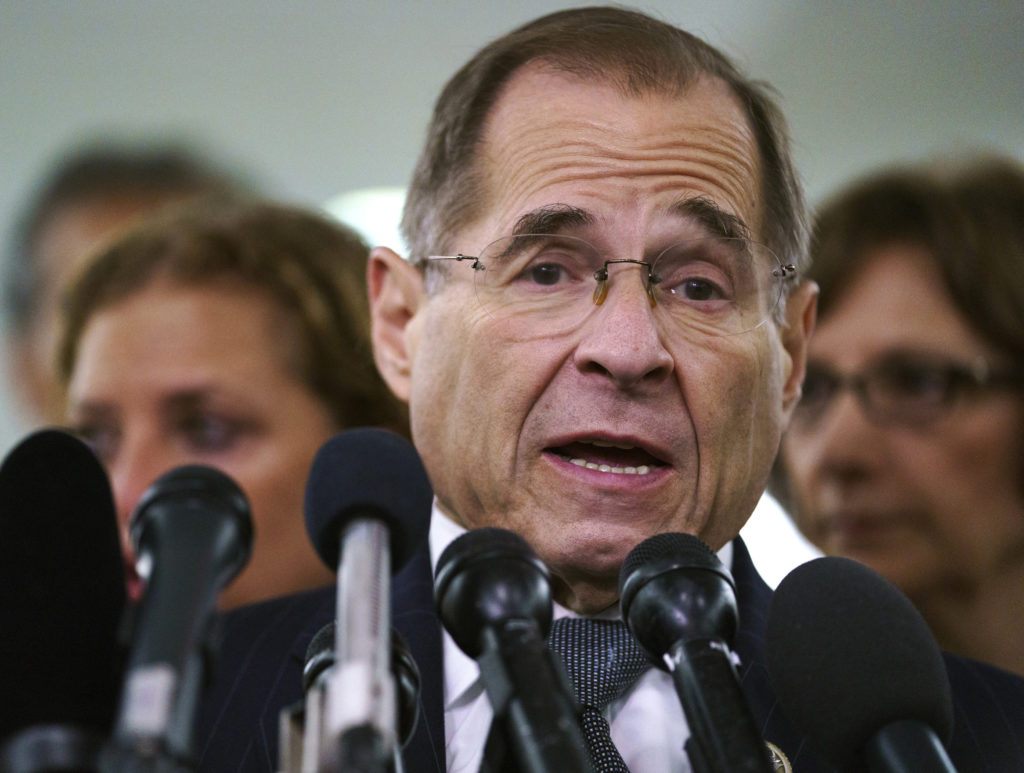
Top House Democrats have raised the prospect of impeachment or the real possibility of prison time for President Donald Trump if it’s proved that he directed illegal hush money payments to women, adding to the legal pressure on the president over the Russia investigation and other scandals. “There’s a very real prospect that on the day Donald Trump leaves office, the Justice Department may indict him, that he may be the first president in quite some time to face the real prospect of jail time,” said Rep. Adam Schiff, the incoming chairman of the House intelligence committee. “The bigger pardon question may come down the road as the next president has to determine whether to pardon Donald Trump.” Rep. Jerry Nadler, the incoming chairman of the House Judiciary Committee, described the details in prosecutors’ filings Friday in the case of Trump’s former personal lawyer, Michael Cohen, as evidence that Trump was “at the center of a massive fraud.” “They would be impeachable offenses,” Nadler said. In the filings, prosecutors in New York for the first time link Trump to a federal crime of illegal payments to buy the silence of two women during the 2016 campaign. Special counsel Robert Mueller‘s office also laid out previously undisclosed contacts between Trump associates and Russian intermediaries and suggested the Kremlin aimed early on to influence Trump and his Republican campaign by playing to both his political and personal business interests. Trump has denied wrongdoing and has compared the investigations to a “witch hunt.” Nadler, D-N.Y., said it was too early to say whether Congress would pursue impeachment proceedings based on the illegal payments alone because lawmakers would need to weigh the gravity of the offense to justify “overturning” the 2016 election. Nadler and other lawmakers said Sunday they would await additional details from Mueller’s investigation into Russian election interference and possible coordination with the Trump campaign to determine the extent of Trump’s misconduct. Regarding the illegal payments, “whether they are important enough to justify an impeachment is a different question, but certainly they’d be impeachable offenses because even though they were committed before the president became president, they were committed in the service of fraudulently obtaining the office,” Nadler said. Mueller has not said when he will complete a report of any findings, and it isn’t clear that any such report would be made available to Congress. That would be up to the attorney general. Trump on Friday said he would nominate former Attorney General William Barr to the post to succeed Jeff Sessions. Nadler indicated that Democrats, who will control the House in January, will step up their own investigations. He said Congress, the Justice Department and the special counsel need to dig deeper into the allegations, which include questions about whether Trump lied about his business arrangements with Russians and about possible obstruction of justice. “The new Congress will not try to shield the president,” he said. “We will try to get to the bottom of this, in order to serve the American people and to stop this massive conspiracy — this massive fraud on the American people.” Schiff, D-Calif., also stressed a need to wait “until we see the full picture.” He has previously indicated his panel would seek to look into the Trump family’s business ties with Russia. “I think we also need to see this as a part of a broader pattern of potential misconduct by the president, and it’s that broad pattern, I think, that will lead us to a conclusion about whether it rises to the level to warrant removal from office,” Schiff said. In the legal filings, the Justice Department stopped short of accusing Trump of directly committing a crime. But it said Trump told Cohen to make illegal payments to porn actress Stormy Daniels and former Playboy model Karen McDougal, both of whom claimed to have had affairs with Trump more than a decade ago. In separate filings, Mueller’s team detail how Cohen spoke to a Russian who “claimed to be a ‘trusted person’ in the Russian Federation who could offer the campaign ‘political synergy’ and ‘synergy on a government level.’” Cohen said he never followed up on that meeting. Mueller’s team also said former campaign chairman Paul Manafort lied to them about his contacts with a Russian associate and Trump administration officials, including in 2018. Republican Sen. Marco Rubio of Florida called the latest filings “relevant” in judging Trump’s fitness for office but said lawmakers need more information to render judgment. He also warned the White House about considering a pardon for Manafort, saying such a step could trigger congressional debate about limiting a president’s pardon powers. Such a move would be “a terrible mistake,” Rubio said. “Pardons should be used judiciously. They’re used for cases with extraordinary circumstances.” Sen. Angus King, an independent from Maine and a member of the Senate intelligence committee, cautioned against a rush to impeachment, which he said citizens could interpret as “political revenge and a coup against the president.” “The best way to solve a problem like this, to me, is elections,” King said. “I’m a conservative when it comes to impeachment. I think it’s a last resort and only when the evidence is clear of a really substantial legal violation. We may get there, but we’re not there now.” Democratic Sen. Chris Murphy of Connecticut urged Mueller to “show his cards soon” so that Congress can make a determination early next year on whether to act on impeachment. “Let’s be clear: We have reached a new level in the investigation,” Murphy said. “It’s important for Congress to get all of the underlying facts and data and evidence that the special counsel has.” Nadler spoke on CNN’s “State of the Union” Sunday, Rubio was on CNN and ABC’s “This Week,” and Schiff appeared on CBS’ “Face the Nation.” Murphy spoke on ABC, and King was on NBC’s “Meet the Press.” Republished with permission from the Associated Press.
Nancy Pelosi’s path back to speaker’s gavel is firmly in sight
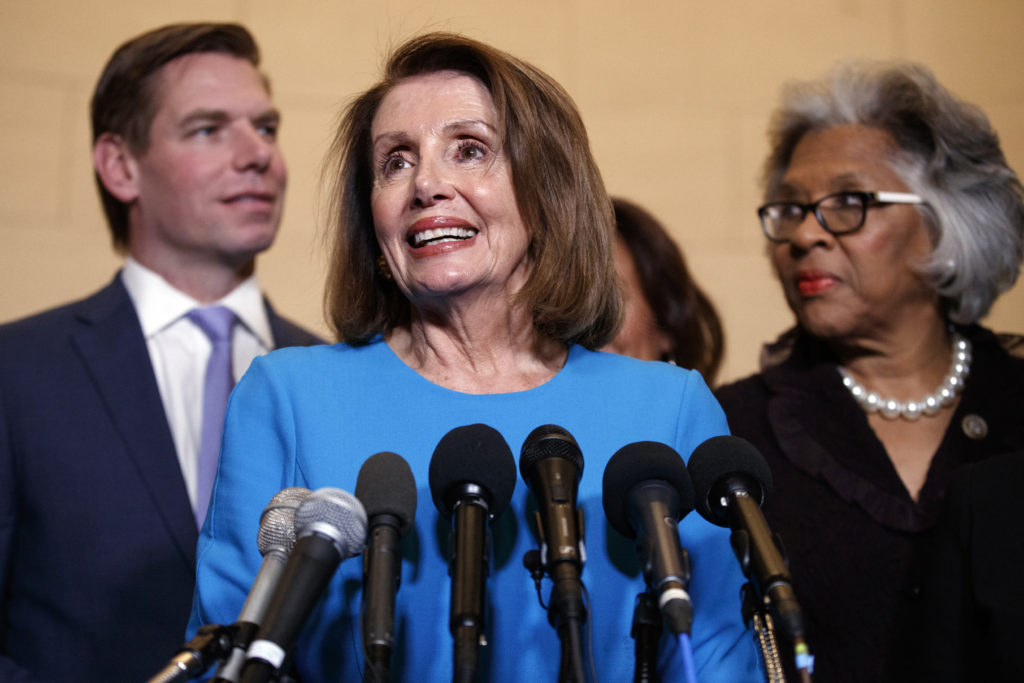
Nancy Pelosi isn’t speaker of the House just yet, but her path back to the gavel is now firmly in sight. Pelosi was overwhelmingly nominated to become House speaker in an internal Democratic caucus vote Wednesday. The final tally, 203-32, puts her within range of the 218 threshold needed in January to be elected speaker when the new Congress convenes. She’s not quite there. Her actual support is at 200, adjusting for delegates who can’t vote in the full House and one supporter who missed the caucus session. But without a challenger and with several weeks to dole out — or withhold — favors, Pelosi is not too far from returning to the speaker’s office. “Are there dissenters? Yes,” the California Democrat told reporters as the ballots were being counted. “But I expect to have a powerful vote going forward.” Pelosi entered the caucus election in an unusual position — running unopposed for the nomination despite the clamor by some Democrats for new leadership. They worry about their re-elections when Pelosi appears as a punchline at President Donald Trump‘s rallies and in countless Republican-fueled TV ads against them. But Pelosi has been deftly picking off opponents — including nine who announced their support Wednesday as voting was underway — a trend she’ll need to accelerate in the weeks ahead. A deal was reached with the Problem Solvers Caucus, a bipartisan group whose nine Democratic members were withholding their support as they pushed for rules changes to allow a more open legislative process. Another group, led by Rep. Seth Moulton of Massachusetts, Rep. Tim Ryan of Ohio and Rep. Kathleen Rice of New York, left the leader’s office empty-handed. They asked Pelosi to publicly release her plans to transition out of leadership before the end of the next term in 2020. She declined, they said. “There has to be some succession plan,” Rice said. As House Democrats met in private in the Capitol, they faced a simple “yes” or “no” choice on Pelosi for speaker. Those trying to oust Pelosi say they always knew the internal caucus election would fall in her favor. She only needed a simple majority of Democrats, who have a 233-seat majority with several races still undecided, to win the nomination. But in January she’ll need closer to 218 votes, half the full 435-seat House, if all Republicans vote against her, as is likely — though she could win with fewer votes if some lawmakers are absent or vote present. Opponents insist there will be more than enough votes to stop Pelosi at that time. Organizers say only with a floor fight in view will new leaders emerge. They say plenty of Democrats could step up to the job. “The battle is the floor,” said Rep. Linda Sanchez of California, among those who signed a letter calling for new leadership. But the strength of Pelosi’s candidacy was shown in the long line of those nominating her, starting with Rep. Joe Kennedy of Massachusetts, the grandson of Robert F. Kennedy, and no fewer than eight colleagues seconding the choice, including Rep. John Lewis of Georgia, the civil rights leader, and three newly elected lawmakers. Rep. Adam Schiff of California, who is set to chair the Intelligence Committee when Democrats take control next year, choked up with emotion, according an aide in the room granted anonymity to discuss the private meeting. “I ask you to support her for this,” Schiff told his colleagues. “Everything we care about is now at risk. Families desperate to obtain health care for their families. Children desperate to be reunited with their families, auto workers being laid off. The gap between rich and poor exploding. The press characterized as the enemy of the people. The independence of our justice system being undermined.” Pelosi’s ability to stand unopposed Wednesday showed the staying power of her brand of machine politics. She was the first female speaker, from 2007 to 2011, until Republicans took control, and hopes to return to a role few men have reclaimed — most recently, legendary Speaker Sam Rayburn a half-century ago. She lost fewer votes than she did during a leadership challenge two years ago, and fewer than retiring Republican Speaker Paul Ryan faced in his internal caucus election for the job. “The reality is there is no alternative,” said Rep. Brian Higgins, D-N.Y., who had signed on opposing her but reversed course. In fact, Democrats voted to return their entire top leadership team, including Rep. Steny Hoyer of Maryland in the No. 2 spot as majority leader and Rep. Jim Clyburn of South Carolina in the No. 3 spot as whip. They were running unopposed. Down-ballot was where the House Democrats pushed a new generation of leader to the forefront. They elected Rep. Hakeem Jeffries of New York as caucus chairman, elevating the charismatic 48-year-old from the Congressional Black Caucus. The No. 4 slot as assistant leader went to Ben Ray Lujan, 46, who helped lead Democrats back to the majority as campaign chairman. Between now and January, those who oppose Pelosi will face internal pressure to reconsider their options. Colleagues will be asking if they really want a stalemate on the House floor as the first act of the new Democratic majority. And Pelosi will work the levers of power by doling out the many committee seat assignments, subcommittee chairmanships and other perks as incentives. “She’s making a lot of headway,” said Rep. Joyce Beatty of Ohio, an ally. “Has she negotiated and given them some of the things that they want? Yes. But she’s only giving things to people who can deliver.” Republished with permission from the Associated Press.
Impeach the president? House Democrats saying not so fast
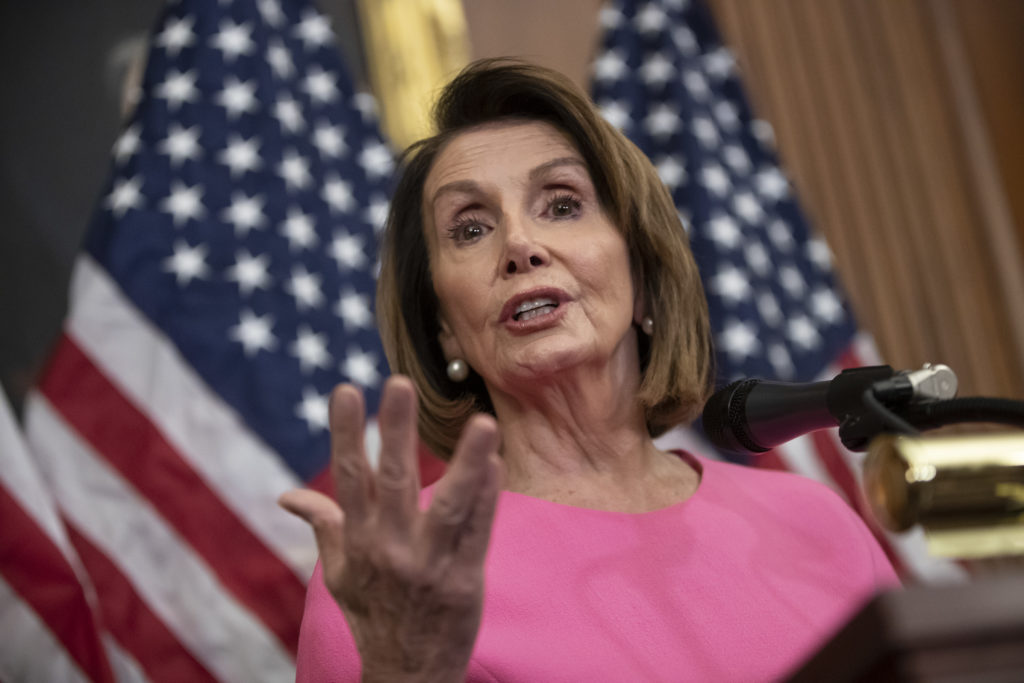
Whatever happened to trying to impeach President Donald Trump? As House Democrats begin laying out the vision for their new majority, that item is noticeably missing from the to-do list and firmly on the margins. The agenda for now includes spending on public works projects, lowering health care costs and increasing oversight of the administration. It’s the balance that Democratic leader Nancy Pelosi is trying to strike in the new Congress between those on her party’s left flank who are eager to confront the president, and her instinct to prioritize the kitchen-table promises that Democrats made to voters who elected them to office. “We shouldn’t impeach the president for political reasons and we shouldn’t not impeach the president for political reasons,” Pelosi recently told The Associated Press. The California lawmaker, who hopes to lead Democrats as House speaker come January, calls impeachment a “divisive activity” that needs to be approached with bipartisanship. “If the case is there, then that should be self-evident to Democrats and Republicans,” she said. Those pressing for impeachment acknowledge they don’t expect action on Day One of the new majority, but they do want to see Democrats start laying the groundwork for proceedings. “We’re for impeachment. We’re not for get-sworn-in-on-Jan.-1-and-start-taking-votes,” said Kevin Mack, the lead strategist for billionaire Tom Steyer‘s Need to Impeach campaign. “Our argument is the Constitution outlines a process to remove a lawless president.” In a new ad, Steyer says Democrats “just need the will” to act. He says he’s calling on Americans to join the 6 million who have already signed on to his group to “give Congress the courage to act.” “The American people are tired of being told to wait,” Mack said. “Our argument to Congress is you are a co-equal branch of government. It’s time to do what is morally correct.” Twice over the past two years since Trump was elected, Democrats have tried to force votes on impeachment proceedings, winning a high-water mark of more than 60 supporters, far from the 218 needed. Republicans are counting on, and possibly even hoping for, impeachment fervor to overtake Democrats, leading them astray from campaign promises or dealmaking with Trump. “We know the Democrats have a plan: They want to disrupt, they want to try to impeach,” said Republican Rep. Kevin McCarthy of California after winning the GOP’s internal election to serve as minority leader in the new Congress. Pelosi has made it clear the new majority will not engage in what she calls a “scattershot” approach to investigating the administration. Instead, the incoming Democratic leaders of House committees will conduct oversight of the president’s business and White House dealings. Democrats are also trying to ensure special counsel Robert Mueller completes his investigation of Russian interference in the 2016 election. They may try to add legislation to protect that probe to the must-pass spending bill in December to help fund the government. They want Mueller’s findings made public. “You have to be very reluctant to do an impeachment,” Rep. Jerry Nadler, D-N.Y., the incoming chairman of the House Judiciary Committee, said recently on ABC. Nadler, who served on the committee during President Bill Clinton’s impeachment, cited “the trauma of an impeachment process.” Democratic leaders also know that moving quickly on impeachment would not sit well with their newly elected members, who helped the party win a House majority in the recent midterms. Many come from swing districts where impeachment could prove unpopular. “I didn’t work 18 months listening to people in my district to get involved in a political back and forth for the next 18 months,” said Rep.-elect Elissa Slotkin of Michigan. “People want to talk about health care. It’s not a coincidence that most of us who won in tough districts, we won because we talked about issues, not because we talked about internal Washington stuff.” For now, outside liberal groups are largely standing by Pelosi’s approach, putting their emphasis on pushing Democrats to chart a bold agenda on the domestic pocketbook concerns that won over voters. Pelosi has some experience with impeachment, serving as a newer lawmaker when Republicans led impeachment proceedings against Clinton. When she became House speaker in 2007 she resisted pressure from her liberal flank to launch impeachment proceedings against President George W. Bush over the Iraq War. Pelosi believes that if Democrats had tried to impeach Bush when she was speaker, voters may never have elected Barack Obama as president in 2008. Politically, Democrats may be right. In 1974, Americans only came to agree that President Richard Nixon should be removed from office on the eve of his resignation, according to Pew research. Voters responded to Clinton’s impeachment by electing more Democrats to the House. “If we had gone down that path, I doubt we would have won the White House,” she said. “People have to see we’re working there for them.” Republished with permission from the Associated Press.
In threat to Nancy Pelosi, 16 Dems say they’ll back new leadership
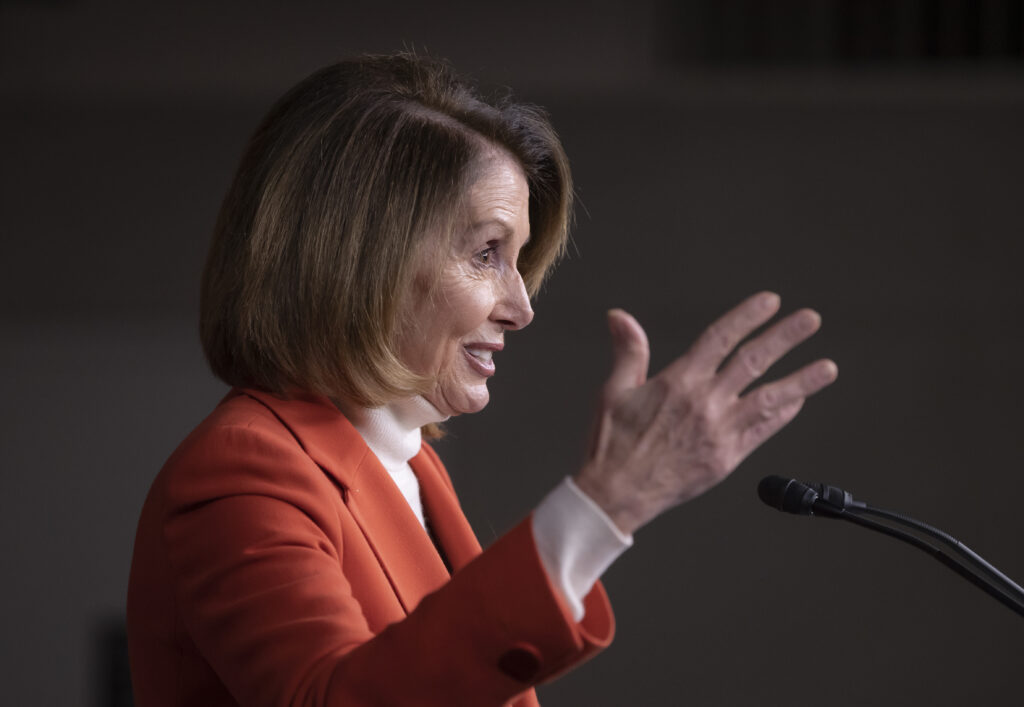
Sixteen maverick Democrats have released a letter saying they’ll vote for “new leadership” when the House picks leaders in January. That poses a threat to Nancy Pelosi‘s effort to become speaker. The California Democrat is favored by most Democrats to lead them, as she has done since 2003, when the new Congress convenes in January. Pelosi seems sure to win her party’s nomination to be speaker when Democrats vote on that after Thanksgiving. A small group opposes her. Their letter says Democrats won on “a message of change,” and they say they plan to deliver that. Democrats have won 232 seats and might win a few more. Sixteen votes against Pelosi might block her from getting the 218 votes, a House majority, that she’d need to win the speakership. Republished with permission from the Associated Press.
Nancy Pelosi has ‘candid’ talk with potential rival for speaker
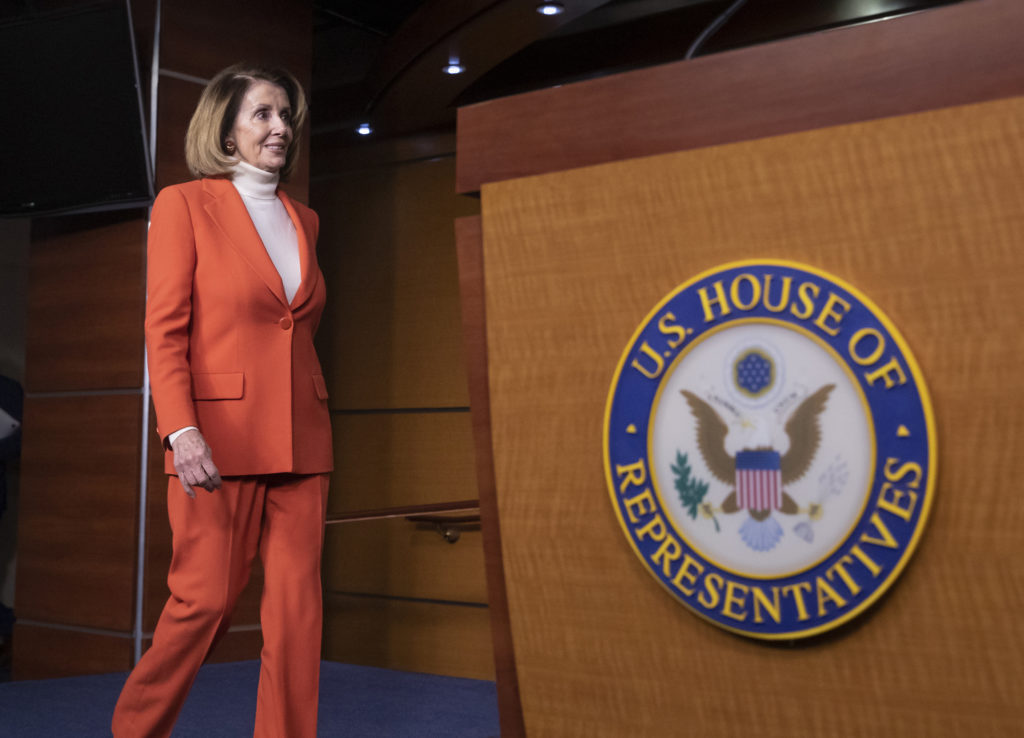
Nancy Pelosi met privately Friday with her top potential rival for House speaker, Rep. Marcia Fudge, as the Democratic leader works to gather support and fend off a challenge from a small but persistent group determined to stop her from reclaiming the gavel. Fudge said the two had “a very open and frank discussion,” including about “the feeling in the caucus of people who are feeling left out and left behind” and the need for a transition to new leadership. “We talked about some succession planning,” Fudge told reporters. “She did not share them with me. But I think it is something our caucus is interested in knowing.” The Democratic leader and the Ohio Democratic congresswoman met in Pelosi’s stately office, steps from the House floor, for about 45 minutes as lawmakers left town for the Thanksgiving recess without a resolution to the leadership struggle. “We had a candid and respectful conversation,” Pelosi said. Fudge said she shared with Pelosi “the growing support that I have and why I’m considering a bid to run for speaker.” Democrats are expected to take an internal caucus vote when they return after Thanksgiving and Fudge said she would decide by then if she is running. “To her credit, she wanted to know what my concerns were. We discussed them,” Fudge said. “What she asked me was, basically, how we could get to a point where I’m supportive.” If it was up to most of the Democratic Party, Pelosi would be the obvious choice to become speaker of the House in the new Congress, when Democrats have the majority. But within the ranks there’s a small but persistent group pushing to topple her return as the first woman with the gavel. Some say it’s time to give younger lawmakers a chance to rise. Pelosi, 78, made history when she became the first female speaker of the House in 2007. She assumed the post after Democrats took control of the House in midterm elections during former President George W. Bush‘s second term. She appears be winning the outside game for a return to the speakership, amassing endorsements from a who’s who of the nation’s Democrats: former Vice President Al Gore and former Secretary of State John Kerry. Inside the Capitol she has support from influential lawmakers, Rep. John Lewis, D-Ga., the civil rights leader, and Rep. Adam Schiff of California, who’s in line to chair the Intelligence Committee, among others. Most recently Pelosi got the nod from MoveOn.org as a coalition of liberals sound the alarm against an overthrow being orchestrated by mostly centrist Democrats who want to prevent the San Franciscan from being the face of the party. It noted her work passing the Affordable Care Act and tweeted: “Were it not for her skilled and effective leadership, the ACA would not be law today. Dems must reject attempts to defeat her and move caucus to the right.” The Congressional Progressive Caucus also met Thursday with Pelosi and emerged pleased with her commitment to boost their ranks on key committees and provide funding for lower-level leadership offices that set policy and communications for the caucus. The group has not yet endorsed anyone, but Rep. Pramila Jayapal, D-Wash., a co-chair of the caucus, said Democrats need a leader who can hit the ground running “to deliver real results.” The show of strength is a reflection on Pelosi’s 15-year tenure as party leader but also her place in history as the first woman to hold — and potentially return — to the speaker’s office after an election that ushered in a record number of women candidates. It’s not lost on supporters that a group made up of mostly men is leading the effort to oust her. On the list of 17 names who’ve signed onto a letter against her, just three are women. Pelosi’s opponents started rallying Thursday behind Fudge’s possible bid for the job, even though her potential campaign is splitting votes in the powerful Black Caucus. Fudge, recently re-elected to a 7th term, is an ally of Ohio Democratic Rep. Tim Ryan, who mounted an unsuccessful campaign against Pelosi two years ago and is a leader of the current effort to topple her. “The country needs to come together, our caucus needs to come together,” Ryan said. “We need to heal and Marcia Fudge is one of the people who could make that happen.” Pelosi has fended off challenges before, but this one — fueled by newcomers calling for change and frustrated incumbents who feel shut out of leadership after her many years at the helm — poses perhaps the biggest threat yet. With a narrow Democratic majority, now at about 230 seats, she does not have much cushion to secure the 218 votes needed on the floor if all Republicans vote against her, as expected. Some House races remain undecided and the Democratic majority could grow slightly. There is a chance the math could shift in Pelosi’s favor if lawmakers are absent or simply vote “present,” meaning she would need fewer than 218 votes for an absolute majority. The full chamber will elect the next speaker Jan. 3. Pelosi has said she has “overwhelming support” to become the next speaker. Republished with permission from the Associated Press.
Meet the House Democrats who will be running the show
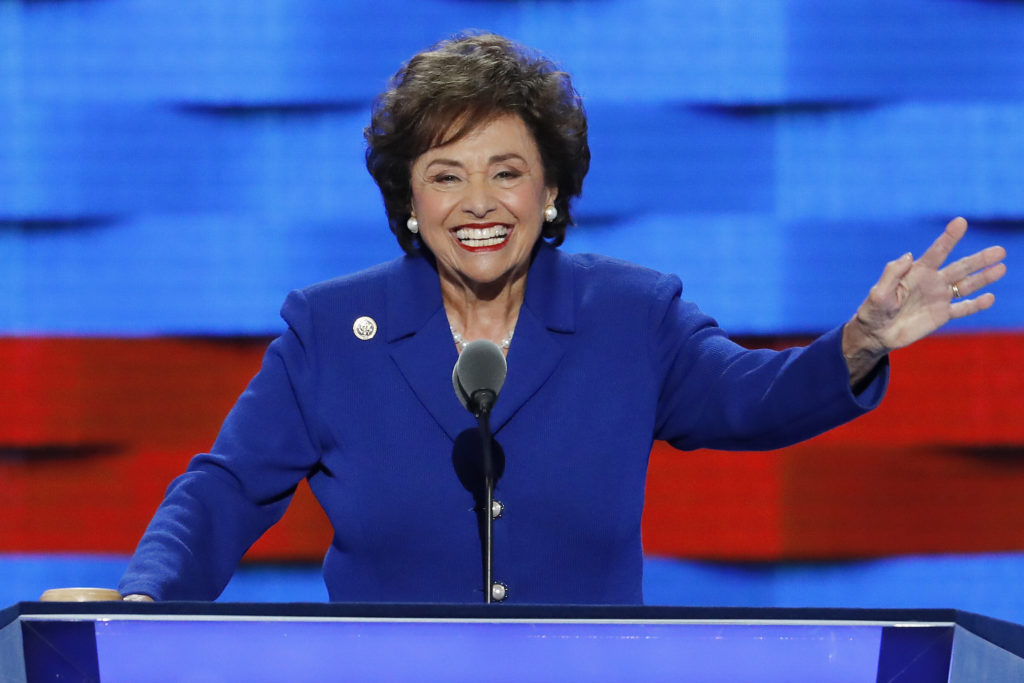
Now that Democrats have captured control of the House for the next two years, the party’s most senior members are poised to regain the wide-ranging power of committee chairmanships. While some of the Democrats have gained fame in feuds with President Donald Trump, others are relatively little-known outside of Capitol Hill. A look at the Democratic lawmakers expected to wield the gavels and shape the party’s top priorities: ___ NITA LOWEY Appropriations Committee Lowey, 81, would be the first woman to oversee the committee that determines where the federal government spends its money. The New York Democrat, who represents the lower Hudson Valley, said the committee will seek to increase funding for infrastructure and for safety-net programs such as Head Start and Pell grants. The committee will also work to increase budget caps so lawmakers can avoid steep cuts to defense and nondefense programs. The committee can also conduct oversight of any Trump administration action that involves government funding, such as how much Cabinet members are spending on travel or how much it is costing the Pentagon to send troops to the U.S.-Mexico border. ___ ADAM SCHIFF Intelligence Committee Schiff, 58, represents parts of Los Angeles, including Hollywood and Burbank. As the top Democrat on the intelligence panel, he has been one of Trump’s favorite foils in Congress. Schiff has repeatedly criticized the House’s Russia investigation, which his GOP colleagues conducted, saying it was inadequate. Now Schiff will get his chance to conduct his own targeted investigation into Trump’s 2016 campaign and its ties to Russia. He has said that he wants to look at whether Russians used laundered money for transactions with the Trump Organization. He also wants more information about communications the president’s eldest son, Donald Trump Jr., had with his father and others about a June 2016 meeting between Trump campaign officials and a Russian lawyer. ___ ELIJAH CUMMINGS Oversight and Government Reform Committee Cummings, 67, will likely head the committee that could make life the toughest for the Trump White House because of its broad investigative powers. Cummings would likely seek Trump’s business tax returns and other company-related financial records. He said he will work to make the president accountable, but will also challenge Republicans to uphold their oversight responsibilities, saying, “I think we as a body can do better.” The Maryland Democrat, who represents parts of Baltimore city and most of Howard County, has said he would also like the committee to examine prescription drug prices and whether some states have engaged in voter suppression. “We cannot have a country where it becomes normal to do everything in Trump’s power to stop people from voting,” Cummings said Sunday on ABC’s “This Week.” He would also seek to bring Commerce Secretary Wilbur Ross before the committee to testify about the decision to include a citizenship question in the 2020 census. ___ JERROLD NADLER Judiciary Committee Nadler, 71, has been in Congress since 1992 and has served on the Judiciary Committee for much of that time. He represents a large swath of Trump’s hometown of New York. He is expected to make one of his first priorities as chairman protecting special counsel Robert Mueller‘s investigation and requesting that Mueller’s materials are preserved in case he is fired. Nadler said Sunday on ABC’s “This Week” that Matthew Whitaker, whom Trump named acting attorney general last week, “should recuse himself” from Mueller probe because he “expressed total hostilities to the investigation” and “if necessary” the Judiciary Committee will “subpoena” him to appear before the committee The Judiciary panel would also oversee impeachment proceedings, if Democrats decided to move in that direction. But Nadler has expressed caution about the idea, saying there would have to be “overwhelming evidence” from Mueller and some bipartisan support. The panel is also expected to look into family separation at the border and the Trump administration’s management of the Affordable Care Act. ___ MAXINE WATERS Financial Services Committee Waters, 80, is expected to chair a committee with oversight of banks, insurers and investment firms. She has opposed Republican-led efforts to roll back the Dodd-Frank financial reform law and is promising colleagues that she will prioritize protecting consumers from abusive financial practices. The California lawmaker, whose district centers on south Los Angeles County, can also conduct aggressive oversight of the Consumer Financial Protection Bureau and steps it has taken to reduce enforcement actions against student lenders, pay-day lenders and others. The president railed against Waters on the campaign trail this year, frequently mentioning her during his rallies. Waters accuses Republicans of serving as Trump’s “accomplices.” ___ COLLIN PETERSON Agriculture Committee Peterson, 74, is a moderate from a heavily rural congressional district in western Minnesota. He is a strong critic of Trump’s trade policies and could use his platform to highlight how farmers have been harmed by retaliatory tariffs from China and other nations. His top priority now is to get a farm bill passed, if not in the current Congress, then in the next one. Peterson will also have the committee take a close look at the reorganization underway at the Agriculture Department, including the push to move its top independent research office out of Washington. ___ JOHN YARMUTH Budget Committee Yarmuth, 71, is serving his sixth term from Kentucky, where he represents much of the Louisville area. He’ll put together a budget blueprint that includes Democratic lawmakers’ top priorities. He also has said he will hold hearings on a single-payer health plan modeled on the Democratic push to create “Medicare-for-All.” ___ ELIOT ENGEL Foreign Affairs Committee Engel, 71, who represents parts of the Bronx and New York City’s northern suburbs, has been a consistent critic of the president’s foreign policy. He has told colleagues that one of his top priorities will be to investigate where the Trump administration’s foreign-policy actions are intertwined with the president’s business interests. Protecting the State Department is also a priority for him, including looking into whether career officials have been “purged” because they were deemed insufficiently loyal to the
