
Alabama Department of Revenue provides extra security for tax returns

The Alabama Department of Revenue (ADOR) has announced the implementation of the electronic ID app (Alabama eID) which will safeguard residents from state income tax refund theft. According to Lifelock, there were a reported 100,000 cases of tax-related identity theft in 2017, ADOR hopes to combat that statistic. “We’re proud Alabama is leading the nation in securing taxpayer identities against state income tax fraud,” said Commissioner of the Alabama Department of Revenue, Vernon Barnett. “Not only will we protect taxpayers against criminals, taxpayers who use the Alabama eID app will also receive priority processing of their refund.” Global leader in identity security, IDEMIA, is providing ADOR with the app. “The app brings the highest level of security with a simple user interface to create the leading edge technology in protecting state income tax refunds,” stated Ed Casey, CEO of IDEMIA Identity & Security North America. “The technology’s unique ability is its secure link to the identity verification process residents underwent to receive their Alabama driver’s license or state ID. This authenticated connection between digital identity and physical identity is what ensures only you can claim your state income tax refund.” To operate the app, each user must complete a brief enrollment process during which their identity is verified. Using their driver’s license or state-issued ID and taking a selfie with their phone, Alabama eID matches the users information to the data and photo on record in the driver’s license database to verify the person enrolling with the app is who they declare to be. As well as offering advanced safety measures, those who use the Alabama eID app will be receiving priority processing for their tax refund.
Florida woman guilty of Alabama credit card skimming

A Florida woman was found guilty of helping to orchestrate a multi-state scheme to use skimming devices on gas pumps to steal credit and debit card numbers, Alabama Attorney General Steve Marshall announced Tuesday. Eunises Llorca-Menses, 30, of Naples, Fla. was found guilty by a federal jury Friday on charges of conspiracy to commit wire fraud, wire fraud, and aggravated identity theft in January. She faces a maximum sentence of 30 years in prison. “This conviction should send a strong message to debit card skimmers seeking to target unsuspecting Alabamians: you will be caught and brought to justice,” Marshall said in a statement. On February 15, 2017, Llorca Menses and her co-defendant Reiner Perez-Rives were charged. Perez-Rives pled guilty in July to conspiracy and identity theft charges. As part of the scheme, Llorca-Menses and Perez-Rives, would rent vehicles and travel between Florida, Alabama, Tennessee and Virginia. During their travels, they would visit several gas stations and install a skimming device inside gas pumps. Through the skimming device, they collected gas station customers’ credit/debit card information and used that information to activate or reactivate credit, debit, or gift cards, and make unauthorized ATM cash withdrawals at gas stations and purchases at several places around the Southeast. Law enforcement officials uncovered the elaborate scheme following multiple reports from victims concerning the unauthorized use of their debit cards. Working with financial institutions, the Ozark Police Department, along with state and federal partners, discovered that many of the victims had used their cards at the same gas station in Ozark, Ala. At this station, they found a skimming device with Bluetooth capability installed on a gas pump. The Bluetooth technology allowed the defendants to collect a gas customer’s credit/debit information while sitting up to thirty-feet away from the gas pump. At the time of their arrest on December 21, 2016, Llorca-Meneses and Peres-Rives were found to be in possession of thirty-nine credit/debit cards that had been re-encoded with stolen credit/debit card numbers, along with an additional 317 gift cards. A Wal-Mart gift card that contained the stolen account information from a victim’s Capital One credit card and a key used to gain access to the inside of a gas pump was found in Llorca-Meneses’ purse. Law enforcement also found a homemade device with connectors that matched the connections on the skimming device found in the gas pump in Ozark in their luggage. “It is incredibly difficult for the average person to determine if a gas pump has a skimmer,” stated Acting U.S for the Middle District of Alabama A. Clark Morris. “This is because many are placed inside the gas pump with no visible evidence of tampering. While the crooks may be getting smarter, law enforcement continues to work hard to stay a step ahead. This conviction shows that our office will continue to work with our partners to identify criminals that seek to victimize our citizens.” To avoid becoming a victim of this type of fraud, customers should pay inside the store or use pumps that are visible to store employees and video surveillance cameras. Criminals commonly target pumps that allow them to install skimming devices undetected. This case was a joint investigation involving the Ozark Police Department, the Alabama Attorney General’s Office, the United States Secret Service, and the Baldwin County Sheriff’s Office. Assistant United States Attorney Denise O. Simpson and Assistant United States Attorney Steven Lee prosecuted this case.
IRS strikes back as agents make big dent in identity theft
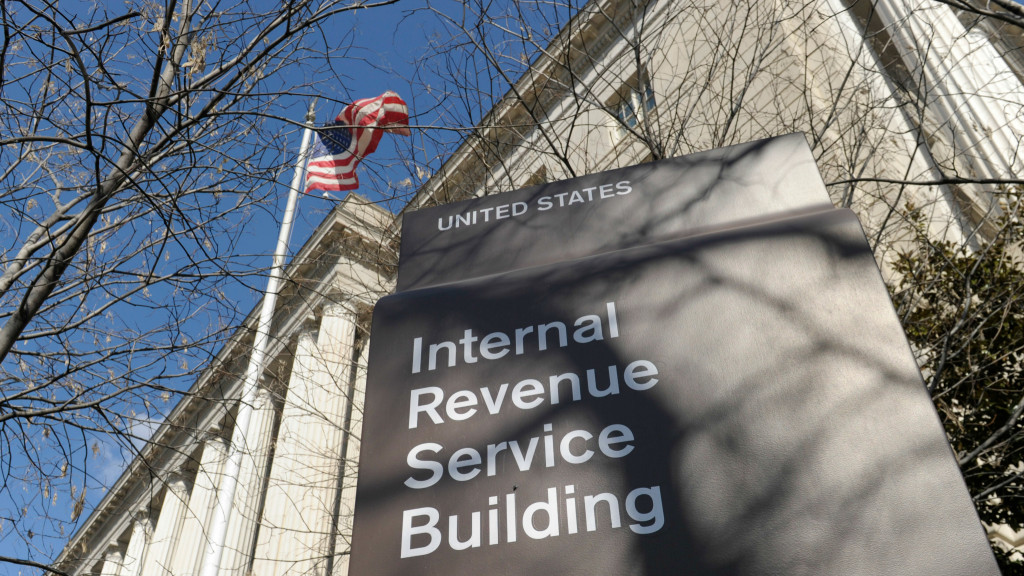
The IRS strikes back: The tax agency reports that the number of identity theft victims plummeted last year after agents struggled for years to combat what has become a multibillion-dollar industry. The number of victims dropped by 46 percent, to 376,000, the IRS said. These taxpayers had their identities stolen by criminals who used their Social Security numbers and birthdates to obtain fraudulent tax refunds. The IRS stopped nearly 1 million fraudulent refunds from being issued last year. They totaled almost $6.6 billion, the agency said. “It’s a much more challenging time for the cybercrooks,” said Mark Ciaramitaro, vice president for retail tax products and services at H&R Block. “All of the easy paths have been closed.” Identity theft exploded from 2010 to 2012, and “for a time overwhelmed law enforcement and the IRS,” said John Dalrymple, deputy IRS commissioner for services and enforcement. At the IRS, it peaked in 2014, when the agency identified more than 766,000 victims. That same year, the IRS blocked 1.8 million in fraudulent refunds from being issued. They totaled $10.8 billion. “We’ve driven a lot of the fraud out of the system,” Dalrymple said. The IRS is a popular target for sophisticated identity thieves because the agency issues more than $300 billion in tax refunds each year. Several years ago, it was as simple as using another person’s Social Security number and birthdate to fill out a fake tax return claiming a big refund. If thieves filed the return early in the tax filing season — before the legitimate taxpayer — they could get refunds before the IRS received verifying financial information from employers, banks and brokers. To make it easier, thieves can get fraudulent refunds on prepaid debit cards that are not linked to bank accounts. “I think everybody got caught by surprise by how inventive the criminals were here,” Dalrymple said. “I don’t think it was just the IRS. I think in general, the whole idea of identity theft caught everybody by surprise.” Criminals can steal victims’ personal information from hospitals, doctor’s offices, universities, prisons — any entity that collects Social Security numbers and birthdates. In 2015, federal authorities broke up a massive identity theft ring in Alabama and Georgia that netted $10 million in fraudulent refunds. Among the victims: Soldiers injured in Afghanistan who were being treated at Fort Benning’s hospital. Last year, authorities broke up a ring in the District of Columbia that tried to obtain more than $20 million in fraudulent tax refunds. Among the victims: people in assisted living facilities, drug addicts and prison inmates. In recent years, the IRS has beefed up its computer filters to identity potential fake tax returns. If there are dramatic differences in a taxpayer’s return from year to year, it might get flagged for additional review. Two years ago, the IRS also teamed up with major tax preparers and state tax agencies to share information and improve security. Identity theft is “the No. 1 issue that the IRS talks to us about,” said Brian Ashcraft, director of tax compliance at Liberty Tax. “It’s been a huge focus.” Online tax preparers are working to better confirm the identity of their customers through stronger passwords and by using more than one way to verify them, said Julie Miller of Intuit Inc., which owns Turbo Tax. For example, after online customers enter a password, they might receive a text from the company with an additional code to enter. Congress has also given the IRS more tools to prevent criminals from getting fraudulent tax refunds. This year, employers are required to report wage information to the IRS by Jan. 31. In the past, most employers had until the end of March to report wage information, often long after refunds had been issued. Also, the IRS is now required to hold refunds until Feb. 15 for families claiming the earned income tax credit or the additional child tax credit. These credits are available in the form of payments to people who don’t make enough money to owe any federal income taxes, which makes them attractive to identity thieves. The provision, however, delays tax refunds for millions of low-income families. Tax preparers and the IRS said identity theft is still a major threat as criminals become more sophisticated. To combat it, they regularly share information about new threats and scams, especially during tax season. “This is not a time to celebrate,” said Ciaramitaro of H&R Block. “It’s not fixed but I think that cooperation has led to measurable improvement.” Graphic shows figures for tax identity theft since 2013; 2c x 3 inches; 96.3 mm x 76 mm Republished with permission of The Associated Press.
How seniors can prevent rising online scams, identity theft during 2016 tax season

As April 15 quickly approaches and Americans start to file tax returns, a large number of people will be in for a shock. And it’s not a bigger-than-expected refund. Many will learn their taxes have already been filed – by someone else using their identity. Identity theft and tax fraud are on the rise in 2016, with an increasing number of fraudulent tax filings to the Internal Revenue Service through such popular online programs as TurboTax, H&R Block, and eFile. Con artists use information such as Social Security numbers to file taxes and get a job falsely – resulting in the IRS having inaccurate taxpayer income data. One such case was a 29-year-old Okeechobee woman who filed a report in January with the local Sheriff’s office after discovering a tax return was previously submitted in her name, giving the thieves a refund of $1,500. According to the IRS, there were nearly 736,000 reports of fraudulent contacts since 2013, a majority of those by scammers posing as IRS agents. Phone rip-offs have cost taxpayers more than $23 million, the agency says. With more taxpayers turning to the Internet to file taxes quickly and easily, the problem of identity theft is far from a minor nuisance. The IRS estimates it prevented $24.2 billion in identity theft in 2013; a report by the U.S. Government Accountability Office shows the IRS still paid $5.8 billion in fraudulent refunds, up from $3.6 billion the year before. Seniors and immigrants are particularly vulnerable to identity theft, IRS officials say. Usually, the scam begins with a call to victims asking for Social Security numbers. “Callers claim to be employees of the IRS, but are not,” the IRS website advises. “These con artists can sound convincing when they call. They use fake names and bogus IRS identification badge numbers. They may know a lot about their targets, and they usually alter the caller ID to make it look like the IRS is calling.” In a recent Context Florida op-ed, Apryl Marie Fogel of the 60 Plus Association, a nonpartisan senior advocacy group, warns that the use of technology and a lack of online security will only increase the problem. “There are literally millions of online accounts that criminals can use to prey on legitimate taxpayers, stealing their identity and pocketing their hard-earned money,” she writes. “Everyone is at risk, especially seniors.” As an example, Fogel points to the 2015 instance of two former TurboTax employees who acknowledged the existence of accounts that “were 100 percent used only for fraud.” The pair accused TurboTax management of “forbidding” either flagging or turning off the fake accounts while refusing to implement security measures to stop widespread fraud. In Florida, Attorney Gen. Pam Bondi’s office released a checklist to help safeguard taxpayers from fraud and identity theft: File tax returns early; Research tax preparers thoroughly before providing personal information; When filing electronically, Use a secure Internet connection. Do not use unsecured, publicly available Wi-Fi hot spots; Mail tax returns directly from the post office, not from home; Many taxpayers are eligible for an Identity Protection PIN from the IRS. Should someone enrolled in the IRS IP PIN program and file a return with an incorrect PIN, the IRS will reject or delay the return until submitted with the correct PIN and the taxpayer’s identity is confirmed. To obtain an IRS IP PIN IRS.gov; The IRS will never initiate contact by email, phone, text or social media. If the IRS needs information, it will first contact by mail; and If a Social Security number has been compromised, contact the IRS ID Theft Protection Specialized Unit at (800) 908-4490. Also, the 60 Plus Association issued a news alert/fact sheet with tips, precautions and things to keep in mind to avoid being scammed, which includes information about the IRS services available for seniors and others with low incomes. 60 Plus also provides an online resource with more information geared toward older adults: www.60Plus.org/StopIRSScams.
Know a vet getting the government run around?
Soon our nation will be celebrating Memorial Day. More than a three-day weekend marking the beginning of summer, Memorial Day is time to pay tribute to the soldiers who made the ultimate sacrifice for our nation. It’s also a time to say thank you to our nation’s many vets and our current service members who are still manning the front lines to protect this great nation. Often times our nation’s veterans and military have issues with the federal government and need help. Did you know that you your Congressman and Senators are often your best resource when you can’t get an answer from a federal agency in a timely fashion, or if you feel you have been treated unfairly. For those currently in the military, or their families, experiencing difficulties with the U.S. Department of Defense and/or any of its military branches (Army, Navy, Air Force, Marines, Coast Guard, and the U.S. Merchant Marines), TRICARE, or the Defense Finance and Accounting Service (DFAS) a Congressional office can often intervene and help you receive a fair and timely response to your problem. For veterans, a Congressional office can assist efforts to obtain military records and medals, in answering questions they have concerning eligibility for benefits provided by the U.S. Department of Veterans Affairs (VA), or those who might be having difficulties with the VA Health Care System or the VA claims and appeals process. Offices are also available to assist with a myriad of other constituent services areas that include, but are not limited to: Citizenship and Immigration Services: dealing with USCIS — relating to the process of becoming a U.S. Citizen, how to renew a Permanent Resident (Green) Card Consumer Complaints: complaints about a product or business General Financial and Emergency Assistance: facing financial difficulties and looking for temporary financial assistance Internal Revenue Service: federal tax-related problems, tax-fraud Medicare: problems with Medicare Part A, Medicare Part B, Medicare Part D Prescription Coverage, a Medicare Advantage Plan (also known as Medicare Part C) or CMS Passports: figuring out where you should submit your application, figuring out which application to use, and deciding when you need to submit application to ensure that you get your Passport prior to your travel date Preventing Identity Theft and Fraud: provide information about steps that individuals may take to as a way to proactively protect themselves from identity theft and what can be done to protect your credit information from use in fraudulent ways Small Business Administration: provide information on any available government financing, counseling, and training programs to individuals who are interested in starting or expanding Alabama-based business Social Security Administration: difficulties with the Social Security Administration with obtaining disability benefits, Supplemental Security Income (SSI), retirement or other Social Security-related benefits, or if you simply need some help in obtaining documents If you’re facing an issue with the federal government, don’t hesitate to reach out to your respective Representative or one the Senators for assistance. Alabama’s 1st Congressional District: Rep. Bradley Byrne Alabama’s 2nd Congressional District: Rep. Martha Roby Alabama’s 3rd Congressional District: Rep. Mike Rogers Alabama’s 4th Congressional District: Rep. Robert Aderholt Alabama’s 5th Congressional District: Rep. Mo Brooks Alabama’s 6th Congressional District: Rep. Gary Palmer Alabama’s 7th Congressional District: Rep. Terri Sewell Statewide: Sen. Jeff Sessions State-wide: Sen. Richard Shelby Not sure of your congressional district or who your member is? You can use this easy service to find out.
