
Small businesses blast IRS over new tax credit announcement
Small businesses are crying foul after the Internal Revenue Service announced it would delay processing of a key tax credit, the latest in a series of delays for the agency. The IRS announced it will significantly slow its processing of Employee Retention Tax credits that have already been filed and not accept any new claims of this kind until next year. The agency says a flood of fraudulent attempts means it will have to take extra care to avoid fraud. The tax credit was meant to help businesses and nonprofits hold on to employees during the pandemic. Now, Small businesses say the IRS moving slowly means they will pay the price. “The IRS is increasingly alarmed about honest small business owners being scammed by unscrupulous actors, and we could no longer tolerate growing evidence of questionable claims pouring in,” IRS Commissioner Danny Werfel said in a statement. “The further we get from the pandemic, the further we see the good intentions of this important program abused. The continued aggressive marketing of these schemes is harming well-meaning businesses and delaying the payment of legitimate claims, which makes it harder to run the rest of the tax system. This harms all taxpayers, not just ERC applicants.” The National Federation of Independent Business, a leading small business group, blasted the IRS after the announcement, “While misleading marketing for the Employee Retention Tax Credit remains a problem, the IRS should not penalize the hundreds of thousands of small businesses that have followed the eligibility rules, correctly filed claims, and need help now,” Kevin Kuhlman, NFIB Vice President of Federal Government Relations, said in a statement. “NFIB has heard from many small business owners who are frustrated by the delays in processing claims and lack of communication from the IRS.” A recent NFIB survey found that small businesses are already hurting, in large part because of rising inflation. According to federal data, inflation spiked in August well beyond expectations. The NFIB poll of small business owners found that they cite inflation as their number one business concern, more than the labor shortage or anything else. Pandemic-era fraud led to hundreds of billions of dollars being taken from taxpayers across several government programs. Werfel, citing this kind of concern, seemed to suggest that processing could be delayed even further if needed to avoid fraud. “For those people being pressured by promoters to apply for the Employee Retention Credit, I urge them to immediately pause and review their situation while we look to add new protections and safeguards to stop bad claims from ever coming in,” Werfel said. “In the meantime, businesses should seek out a trusted tax professional who actually understands the complex ERC rules, not a promoter or marketer hustling to get a hefty contingency fee. Businesses that receive ERC payments improperly face the daunting prospect of paying those back, so we urge the utmost caution. The moratorium will help protect taxpayers by adding a new safety net onto this program to focus on fraudulent claims and scammers taking advantage of honest taxpayers.” Kuhlman said the IRS delay will only make things harder on small businesses. “By further delaying the processing of existing claims, the IRS is making it more difficult for small businesses to operate, keep employees, and create jobs,” Kuhlman said. Republished with the permission of The Center Square.
IRS data shows Alabama gained 21,000 taxpayers, $7.4B in income in 2020

According to recently-released Internal Revenue Service (IRS) data, the state of Alabama gained 21,532 taxpayers in 2020, which trails many of its neighboring states. Those taxpayers added more than $7.4 billion in adjusted gross income to the Yellowhammer State. The biggest destinations for Alabamians leaving the state were Georgia (14,323 new taxpayers), Florida (13,280), Tennessee (7,759), and Texas (7,265). The IRS data is based on tax returns filed in 2020 and 2021 that showed those who moved between 2019 and 2020. Non-filers are not represented in the data. The data showed that suburban populations are growing at the expense of Alabama’s largest cities, except for Huntsville. Madison County added 3,381 new residents. The county that added the most taxpayers was Shelby County, with 6,617 new residents, followed by Baldwin County, which added 6,061. Most of those who moved south on Interstate 65 to Shelby County were from neighboring Birmingham (Jefferson County), which lost a state-worst 4,892 taxpayers. Mobile also lost 1,195 taxpayers, most of those to Baldwin County across Mobile Bay. Montgomery County also had 1,018 taxpayers move out, mostly to suburban Elmore County. Florida enjoyed the biggest gains, with 257,487 taxpayers moving to the Sunshine State, followed by Texas, North Carolina, South Carolina, and Tennessee. Republished with the permission of The Center Square.
Pressure from lawmakers grows as IRS begins new tax season with ‘continued confusion’

Lawmakers on both sides of the aisle are pressuring the Internal Revenue Service over ongoing problems and unaddressed issues from last year’s filing season, even as this year’s season is in full swing. A bipartisan group of more than 100 lawmakers from the U.S. House and Senate sent a letter to the IRS raising concerns about “continued confusion” and “numerous problems” with the agency. “We remain concerned that the IRS does not have a comprehensive plan to remedy the numerous problems affecting taxpayers, despite the fact that this filing season is already well underway,” the lawmakers wrote to IRS Commissioner Charles Rettig. “For example, there is continued confusion about which notices may be unilaterally suspended by the IRS, beyond the notices the IRS has already suspended, among other issues.” The problems began in the aftermath of President Joe Biden’s Child Tax Credit, a monthly payment program that began last summer and continued through the end of the year. That federal program, administered by the IRS, distributed monthly payments to parents based on the age and number of their children. The hefty bureaucratic undertaking, along with stimulus check distribution, resulted in major delays at the IRS. The National Taxpayer Advocate (NTA) published its federally commissioned report in December, which said that the IRS had 6.2 million unprocessed individual returns, 2.4 million unprocessed amended individual returns, 2.8 million unprocessed business returns, and 427,000 amended business returns. The NTA also reported the IRS had roughly 4.75 million pieces of unprocessed correspondence from taxpayers. Republicans on the House Oversight Committee sent a letter to the IRS in February with a similar theme, demanding the IRS remedy bureaucratic issues. Those Republicans also pointed to “COVID-19 related telework policies” allowing most IRS employees to work remotely. “For many Americans, their tax refund can equal six weeks of take-home income,” the letter said. “The volume of tax returns and refunds completed each year shows the far-reaching impact that processing delays could have for the average American. Processed returns are also essential for those who may be entitled to apply for other government benefits such as loans administered by the U.S. Small Business Administration. It is therefore imperative that the IRS take steps to mitigate any processing delays, which can delay refunds and access to economic relief programs.” The Congressional inquiries have placed a steady stream of pressure on the agency. A bipartisan group of 214 lawmakers sent a letter to the IRS and Treasury Department in January, emphasizing the negative impact on small businesses. “In many cases, the delayed processing of amended returns has been devastating to small businesses in our communities whose applications for emergency loans from the Small Business Administration have been caught in limbo nearly two years after the COVID-19 pandemic began,” the letter said. “The situation has deteriorated to a point that the Taxpayer Advocate Service (TAS) will no longer accept cases solely involving the processing of amended returns. This has made it impossible for frustrated taxpayers to find any help.” The IRS issued an “urgent reminder” in January, warning Americans to file electronically “to help speed refunds” this year. Republished with the permission of The Center Square.
Barry Moore joins legislation to address IRS backlog
Rep. Barry Moore joined his colleagues to introduce the IRS Priorities Act to demand the IRS address the staggering backlog of over 8 million unprocessed tax returns. The bill would also bar the IRS from hiring any new enforcement officers until the backlogs of the past two years are processed. According to a Washington Post report in February, nearly 24 million taxpayers are still waiting for the IRS to process their tax returns from last year — a number far larger than previously reported by the agency. In the past, the agency usually only carried 1 million or fewer returns into the next tax season. The IRS’s productivity dropped during the pandemic as thousands of employees worked from home for months without access to returns, audits and other business. Because of the excessive backlog, IRS’s Taxpayer Advocate Service will not accept cases solely involving amended tax returns, thereby leaving millions of Americans without help. IRS Commissioner Charles Rettig said the problem has been compounded by a lack of funding to hire new staff and the need to modernize iaging computer software systems, some of which date to the 1960s. According to democrat Richard Neal, the GOP is to blame. “For decades, Republicans have starved the IRS of funding, and now American taxpayers are paying the price,” stated Neal, chairman the House Ways and Means Committee. “The backlog of tax returns is but one symptom of the fundamental issue that has been ailing the IRS for too long: inadequate resources.” Moore was critical of President Joe Biden, arguing that instead of prioritizing this backlog and the taxpayer, Biden has made it clear that his priority is turning the IRS into a surveillance and enforcement watchdog. “President Biden clearly does not have a plan to address the historic backlog at the IRS, and it’s time for Congress to step in and ensure hard-working Americans recover the money they already earned,” stated Moore. “We must ensure that the IRS actually does its job of assisting taxpayers with the convoluted tax code, before even considering hiring any more enforcement officers.”
Taxpayers could experience major refund delays this year from backlogged IRS
Americans around the country will begin filing their income taxes as the filing period opened this week, but many could experience major delays from the Internal Revenue Service, which still has millions of unprocessed returns from last year. The IRS warned Americans this week with an “urgent reminder” to file electronically “to help speed refunds.” The IRS cited “several critical tax law changes that took place in 2021 and ongoing challenges related to the pandemic” for the delays. Americans hoping to receive tax refunds also could see delays, especially if they do not file electronically. “None of this is new, with the IRS admitting last year that returns which previously took three weeks to process were taking up to four months,” tax expert at the American Enterprise Institute Matt Weidinger wrote. “….Record child tax credit payments are pending in the coming tax season, payable to a record number of recipients, even without the passage of further legislation.” Some have argued the IRS needs more funding to handle the returns, but others point out that the shift toward e-filing should have more than lifted the load for the federal tax-collecting agency. “In the 1980s, the IRS was processing paper returns, today 81% of returns are e-filed. With the technology and tools available today, the IRS should be far more efficient,” Heritage Foundation economic and tax experts Rachel Greszler and Preston Brashers said in a joint statement. The National Taxpayer Advocate released its federally commissioned report in mid-December, which said the IRS had 6.2 million unprocessed individual returns, 2.8 million unprocessed business returns, 2.4 million unprocessed amended individual returns, as well as 427,000 amended business returns. For those corresponding with the IRS, their messages are awaiting processing along with 4.75 million pieces of correspondence from taxpayers around the country. “The IRS is in crisis and needs to apply resources to its core mission – processing returns and paying the corresponding refunds,” the group said. Another factor for the backlogs is that Congress expanded the IRS’ power and responsibilities significantly in recent months. That expansion included a monthly child tax credit program that handed out funds to millions of American families based on income and the number of children they have. Critics say this expansion, and the ensuing backlogs, are evidence the IRS has gone beyond its bounds. “As part of the American Rescue Plan, during 2021, the IRS issued monthly checks to the families of roughly 60 million children,” Greszler and Brashers said. “More generally, Congress has continued to expand ‘refundable’ tax credits, payments from the IRS to individuals who pay no income tax. Because they offer checks in the mail, refundable tax credit programs are rife with fraud, as well as improper payments through no fault of the recipient. These programs are extremely costly to implement while ensuring checks are going out to whom they were intended. If Congress wants to eliminate backlogs going forward, it should focus on simplifying the tax code, and it should stop expanding the scope of what the IRS does.” The backlogs are fueling Congressional Republicans, who have been demanding answers from the Biden administration for months on mismanaged and wasted tax dollars. Republicans sent letters to the IRS in April and November last year, pressing these same questions. Members sent a letter again in December raising questions about the backlog. “This massive backlog is causing significant and unnecessary burdens for families and small businesses who can’t get answers from the IRS about why their returns have not been processed,” the letter said. “The IRS is in danger of falling into a vicious backlog cycle that will harm millions of taxpayers. “As the Internal Revenue Service (IRS) prepares for the 2022 tax filing season, we write with great concern regarding the backlog of unprocessed returns from the current 2021 and 2020 filing seasons,” the letter adds. By Casey Harper | The Center Square Republished with the permission of The Center Square.
Proposed amendment to halt funding for more armed IRS agents rejected

On Monday, Rep. Jerry Carl introduced an amendment to the Build Back Better Act to prevent the Internal Revenue Service (IRS) from using new funds for hiring additional armed IRS agents. However, the proposed amendment was rejected. Democrats are proposing an additional $45 million to be allocated to the IRS for “enforcement.” According to Carl, the IRS has around 2,000 armed agents who have a track record of frequently mishandling and misusing their firearms. Carl stated, “While Democrats are working around the clock to beef up the IRS and hire tens of thousands of additional agents to snoop on the banking transactions of innocent Americans, I have been fighting to ensure none of this money can be used to hire even more armed IRS agents.” Carl argued that the agency has not properly trained these agents, and hiring more would be an abuse of power. “These agents have a horrible track record of misusing and mishandling their firearms, so the last thing we need is to hire more of them. Democrats have rejected my attempts to prevent any further expansion of the IRS’s army of armed agents, but I will continue fighting this horrible abuse of power because it does nothing more than endanger the lives and property of Americans,” he commented. The group Americans for Tax Reform reported on a study by the Treasury Inspector General for Tax Administration. the article stated that special agents at the IRS Criminal Investigation Division (IRS-CI) accidentally fired their weapons more often than they intentionally fired them. The report stated, “According to documentation provided by all 26 CI field offices, the NCITA, and the TIGTA OI, there were a total of eight firearm discharges classified as intentional use of force incidents and 11 discharges classified as accidental during FYs 2009 through 2011.”
Alabama Senators fight against additional IRS surveillance
Sen. Richard Shelby and Senator Tommy Tuberville joined their Republican colleagues to introduce a second bill that aims to prevent the Internal Revenue Service (IRS) from getting access to American’s banking transaction information. Senator Tommy Tuberville introduced the first bill addressing the problem Protecting Financial Privacy Act; leading the charge in Congress as the first Member to sound the alarm about Democrats’ latest example of big brother government overreach at the expense of American’s financial privacy. A Tuberville spokesman pointed out that, “Since then, Democrats have been on the run as negative media coverage and outrage from everyday Americans dominate headlines. Senator Tuberville is glad to see his Republican colleagues in both the House and the Senate join efforts to block this expansion of the role of the IRS and looks forward to working with all involved to fight this radical policy.” Shelby, the former chairman of the Senate Banking Committee, supports the Prohibiting IRS Financial Surveillance Act, saying that the language of the current pending legislation pushed by democrats goes too far-reaching. The bill would block President Joe Biden’s proposal for financial institutions to report all transactions of $600 or greater to the IRS. Current regulations require financial institutions to report all cash transactions of $10,000 or more. Senator Shelby stated, “The Biden administration’s misguided plan to let the IRS monitor law-abiding citizens’ private financial information is dangerous and invasive, and will have far-reaching, adverse consequences. This should concern all Americans who value their privacy. I am proud to join many of my conservative colleagues in the fight to keep this deeply-flawed proposal from becoming law.” The sponsor of the bill second bill, Tim Scott believes Americans should be concerned about this surveillance plan. Scott stated, “The Democrats’ plan to allow the IRS to spy on the bank accounts of nearly every person in this country, even those below the poverty line, should be deeply concerning to anyone who values privacy and economic inclusion. Of the more than 7 million American households that are currently unbanked, the majority are low-income, rural, and minority Americans. Implementing the Biden reporting scheme will disproportionately harm those who need greater access to our financial institutions and people living paycheck to paycheck. My colleagues and I will not stop fighting the Democrats’ wrong-headed proposal to implement more federal government intrusion into our lives.” “Every American should be wary of giving the IRS more power and more tentacles into private financial transactions,” said Sen. Scott Crapo, ranking member of the Senate Finance Committee. “The IRS bank reporting proposal is one of the biggest expansions of the agency’s authority we’ve ever seen and is fundamentally flawed. I’m proud to support Senator Scott’s legislation to stop this proposal in its tracks and protect Americans’ personal, private financial information.” Sen. Tommy Tuberville also spoke out against giving the IRS more power, arguing that he believes most Americans disagree with . “I am sorry to see that my Democratic colleagues oppose protecting the financial privacy of American taxpayers. That’s a real shame. I think you would be hard-pressed to find a Member of the United States Senate who can honestly say that a majority of their constituents support President Biden’s proposal for the IRS to monitor a $600 or more transaction,” Tuberville stated. “We ought to be able to stand up together in a bipartisan fashion to reject this radical proposal. I’m confident that the American people will continue to put pressure on their elected representatives here in Washington to reject this plan.”
Democrats eye Donald Trump’s tax returns but expect a long fight
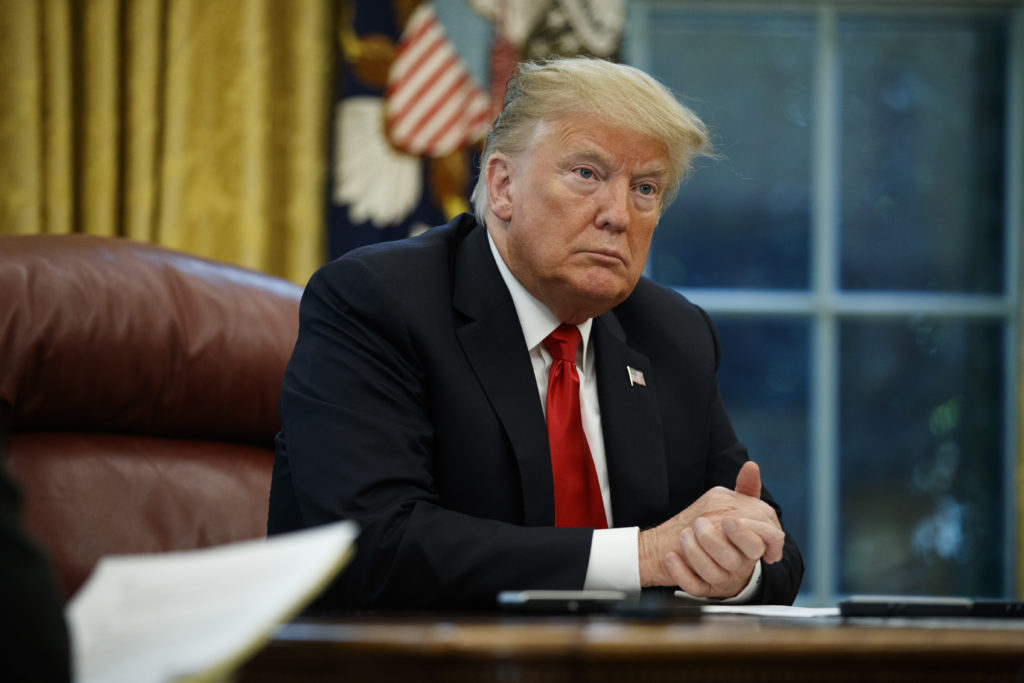
Getting President Donald Trump‘s tax returns is high on the list of Democratic priorities now that they have won the House. By law, the leaders of tax-writing committees in the House and Senate can obtain tax returns and related information from the Internal Revenue Service. Democrats will control the House panel next year. Yet there’s no guarantee that the Trump administration will provide the president’s returns. That sets up the possibility of a legal battle over the request that could take years to resolve. Trump broke with political tradition in 2016 by refusing to release his income tax filings. He says he won’t release them because he’s under audit, and he claimed at a press conference this week that the filings are too complex for people to understand. The Democrats tried and failed several times to obtain Trump’s returns as the minority party in Congress. Now, having gained some control, they see them within their grasp. Eyes are on Rep. Richard Neal of Massachusetts, who is now the senior Democrat on the powerful Ways and Means Committee and will become its chairman in January. When asked Wednesday whether the committee under his control would ask for the documents, Neal said, “Yes, I think we will.” If the Trump administration refuses and mounts a legal challenge, Neal said, “Then I assume that there would be a court case that would go on for a period of time.” A legal fight could potentially even stretch beyond the 2020 presidential election, suggested Andy Grewal, a professor at the University of Iowa College of Law. Grewal has maintained that a request for Trump’s returns, if made for “purely political purposes,” may exceed the limits of Congress’ authority. Starting with the 2016 campaign, Trump broke with political tradition by repeatedly refusing to release his income tax filings. Those filings are deemed sacredly secret for citizens, but traditionally not for presidents. Trump has said he hasn’t released them because his taxes are under audit by the IRS — even though experts and IRS officials say such audits don’t bar taxpayers from releasing their returns. Asked about releasing his filings, Trump reaffirmed that justification during a post-election news conference Wednesday. “They’re under audit. They have been for a long time,” the president said. “They’re extremely complex. People wouldn’t understand them.” Giving a slight opening, Trump said that if the audit was completed, “I would have an open mind to it. I would say that.” But, he added, “Nobody turns over a return when it’s under audit.” In 2017, more than a million people signed a petition to the White House urging Trump to make the returns public. Questions loom: Was the swaggering longtime businessman and real estate mogul really worth $10 billion when he entered the White House, as he has claimed? Are there conflicts of interest lurking? How has his global panoply of properties and other assets been valued for taxation purposes? What are the sources of his income and to whom might he be beholden as a result? Does Trump stand to gain personally from the sweeping Republican tax law enacted late last year, which he championed, and, if so, how specifically? Among the sought-after details: Trump’s charitable giving, the type of deductions he claimed, how much he earned from his assets and what strategies he deployed to reduce his tax bill. House Democratic leader Nancy Pelosi declined during a press conference Wednesday to specifically address the question of Trump’s returns, saying only that Congress has “a constitutional responsibility to have oversight” and citing examples such as the government’s environmental policy that would be ripe for Congress to investigate. The high interest — Democrats would say the urgency — in lifting the veil on Trump’s taxes ramped up last month when The New York Times published an extensive report suggesting that the Trump family cheated the IRS for decades, undervaluing reported assets and using dubious tax maneuvers and outright fraud in some cases. A lawyer for Trump disputed the Times’ findings of possible tax fraud or evasion and said that parts of the report were “extremely inaccurate.” The newspaper said its report was based on more than 100,000 pages of financial documents, including confidential tax returns from Trump’s father and his companies. That could spur the Democrats on the Ways and Means Committee to ask for Trump’s returns going back many years. By law, the chairmen of the House panel, the Senate Finance Committee and the Joint Committee on Taxation can make a written request for any tax returns to the Treasury Secretary, who oversees the IRS. The law says the Treasury chief “shall furnish” the requested information to the members of the committee for them to examine behind closed doors. The IRS, with custody of Trump’s returns, has been headed since Oct. 1 by a commissioner who worked as a private tax attorney for nearly four decades representing individuals and companies in cases before the agency. During the 2016 campaign, the commissioner, Charles Rettig, defended Trump’s refusal to release his filings. He promised at his Senate confirmation hearing to uphold the IRS’ political independence from the White House. Treasury Secretary Steven Mnuchin “will review any request with the Treasury general counsel for legality,” the department said in a statement Thursday. Trump’s attorney Rudy Giuliani has said the Democrats could have a hard time proving their demand was intended for pursuing legitimate congressional oversight, not a political scavenger hunt. If the administration refuses to hand over the returns, the Democrat-led committee might punch back with subpoenas, move to hold officials in contempt of Congress or sue the administration. There’s no roadmap or historical precedent for the situation. Some observers anticipate that the Trump Justice Department would file a lawsuit against the House to block release of the returns. In that case, the administration might try to prove that the Democrats’ demand was politically motivated, as Giuliani indicated. The University of Iowa’s Grewal is among the experts who believe the administration may seek to make
Tea party groups get $3.5 million payout in settlement with IRS

A judge gave final approval on the settlement between the Internal Revenue Service (IRS) and hundreds of tea party groups groups across the country. The decision closes the class action suit, which lasted more than five years, that alleged the IRS illegally targeted the conservative groups when applying for tax-exempt status during the 2012 election. The IRS agreed to pay $3.5 million to the disgruntled, targeted groups. “It shows that when a government agency desires to target citizens based on their viewpoints, a price will be paid,” said Edward Greim, a lawyer who led the class-action case in federal court in Cincinnati, according to the Washington Times. Judge Michael R. Barrett deemed the settlement “fair, reasonable and adequate.” History of IRS targeting tea party groups Republicans were outraged in 2013 when the IRS admitted the targeting, in part by zeroing in on groups with words such as “tea party” or “patriot” in their names. Many had their applications delayed for months and years. Some were asked improper questions about their donors and even their religious practices, an inspector general’s report found. The Obama Justice Department announced in 2015 that no one at the IRS would be prosecuted. It said investigators found mismanagement but no evidence that the tax agency had targeted a political group based on its viewpoints or obstructed justice.
Terri Sewell proposal passes in IRS reform package
The House voted Wednesday to pass the Taxpayer First Act, bipartisan legislation aimed at transforming taxpayer interactions with the IRS for the first time since 1998 by strengthening the transparency and accountability at the Internal Revenue Service (IRS) and improving taxpayer services. H.R. 5444 passed the House 414-0 with the full support of the Alabama delegation. Among the bill’s many components was a provision proposed by Alabama 7th District U.S. Rep. Terri Sewell and her colleague Missouri-Republican Rep. Jason Smith. Originally introduced as the Preserving Taxpayers’ Rights Act, the provision aims to streamline and improve IRS audit processes and restore a more collaborative approach to resolution of disputes between taxpayers and the agency. “This legislation is a chance for us to strengthen the relationship many taxpayers have with the IRS. Tax season is a stressful time for millions of Americans, and the compliance burden on the average American and small business owner is unnecessarily difficult,” Sewell explained. “Today, Congress took important steps to make the tax filing experience more sensible, fairer, and more efficient.” Sewell continued, “The bill we passed today includes a bipartisan provision which I drafted with Rep. Jason Smith that improves efficiency and customer service at the IRS and gives taxpayers a chance to resolve disputes with the IRS without being forced to litigate in court. While our fight for a friendlier, more efficient tax system is not over, today’s vote is a victory for all taxpayers.” The Preserving Taxpayers’ Rights Act, which was included in the underlying legislation that passed the House today, contains provisions which: maintains taxpayers’ legal right to have cases heard by the IRS Office of Appeals; further defines which IRS cases can be designated for litigation; further defines when tax liability assessments can be levied; and eliminates the use of outside law firms for federal tax audits.
Daniel Sutter: Lessons from Tax Day

Income taxes were just due, and I hope that filing this year wasn’t too painful. Despite the Internal Revenue Service’s (IRS) fearsome reputation, our tax system relies extensively on voluntary compliance. Tax Day thus reminds us why it is important for Americans to believe that our government serves our interests, an impression which seems endangered today. It may seem odd to think that we voluntarily pay taxes. Few Americans fill out tax forms for fun, and many pay professionals to avoid the stress. We file because the IRS makes us, right? Well, yes and no. Filing a tax return is legally required, which is the yes part. But what are the consequences of filing a less than truthful return? An IRS audit could reveal your tax evasion or underpayment of taxes. But the likelihood of an audit is less than you probably think: half of one percent of individual income tax returns annually. Audit rates differ based on a taxpayer’s reported amount and nature of income. The IRS examines (their euphemism for audit) only one in five hundred taxpayers making less than $200,000 with no business income. More than just our individual income tax system relies on voluntary compliance. About one percent of corporate income tax returns are audited, and the sales tax relies on retailers accurately reporting sales. Environmental, workplace safety, and other government regulations depend on accurate reporting of information by businesses. Voluntarily paying taxes improves our standard of living. The cost of auditing even a quarter of tax returns would be staggering: a huge increase in IRS agents, and enormous monetary, time, and emotional costs for taxpayers. Social science research suggests that treating people like lawbreakers can undermine respect for the law. If so, then having the IRS audit more taxpayers might conceivably increase tax avoidance, especially if some ways to hide or shelter income always exist. We pay taxes voluntarily because they fund activities we want government to perform. The American Revolution established that in America, government would serve citizens. By contrast, throughout most of human history, people served kings or emperors. Libertarians like to say that taxes are theft, and this contains a kernel of truth. Ultimately armed federal agents will seize property for unpaid taxes; armed robbers similarly take property, and injure owners if they resist. Taxes are not theft because, and only because, we approve of what government does with our money. Not each and every dollar spent, obviously, but the package as a whole. Many Americans express a willingness to pay taxes. In 2017, 88 percent of Comprehensive Taxpayer Attitude Survey respondents agreed that cheating on taxes was not acceptable, while 95 percent agreed that paying taxes is a civic duty. Americans seemingly accept that taxes are the price we pay for civilization. Today perhaps more than ever, however, Americans seem to view government as out of control. President Trump’s campaign promise to “Drain the Swamp” seemed to resonate with millions of Americans. (Whether the President is engaged in swamp draining is a different question.) Many young Bernie Sanders voters also seemed alienated from mainstream politicians. Such attitudes bode ill for a system based on voluntary compliance. To be fair, perceptions of a disconnect with government are hardly new. Thomas Jefferson viewed his election victory over John Adams in 1800 as a second American revolution, which implies that President Adams was emulating Britain’s King George III. The student protests and urban riots of the 1960s left some political scientists wondering if America was ungovernable. Ronald Reagan claimed that Washington was the problem, not the solution. Conservatives’ concern today about a liberal deep state conspiracy against President Trump may just be old wine in new bottles. Taxes are not theft because we believe that government ultimately serves us. Tax Day reminds us that if Americans stop believing that government reflects our values and interests, our tax system will no longer function as it has. And the resulting changes will almost certainly be for the worse. ••• Daniel Sutter is the Charles G. Koch Professor of Economics with the Manuel H. Johnson Center for Political Economy at Troy University and host of Econversations on TrojanVision. The opinions expressed in this column are the author’s and do not necessarily reflect the views of Troy University.
Hurricane victims may qualify for earned income tax credit
The IRS is encouraging those who were effected by last year’s hurricanes; specifically hurricanes Irma, Harvey, and Maria, to see if they meet the requirements for the Earned Income Tax Credit (EITC). A special calculation, available only to those who resided in one of the hurricane disaster areas during 2017, may allow them to claim the EITC or claim a larger than usual credit. Using this calculation, taxpayers whose incomes dropped in 2017 can choose to use the credit utilizing their 2016 earned income instead of their 2017 earned income. Qualified taxpayers should calculate the credit in both ways; using 2017 earned income and using their 2016 earned income in order to estimate which method will yield the larger EITC. Eligible taxpayer’s should meet the basic requirements and have earned income from working for someone or being self-employed to qualify for EITC. Methods of earning an income include: owning a business or a farm, home-based businesses, and or employment in the service, construction and agriculture industries. Certain disability payments may also qualify as earned income for EITC purposes. The EITC assists working people who don’t earn a high income and meet other qualifications and because it’s a refundable credit, those who claim it may pay less federal tax, pay no tax or even get a refund up to a $6,318. On average, EITC adds almost $2,500 to refunds. However, exact credit amounts vary based on family size and income. Taxpayers without an authorized child who have incomes below $20,600 may also be eligible for a smaller credit of up to $510. Friday, Jan. 26 the IRS and national partners will hold the annual EITC Awareness Day to alert millions of taxpayers who may be missing out on this and other refundable credits. One easy way to support this outreach effort is by participating in the IRS Thunderclap to help promote EITC Awareness Day.
