
On Twitter, President Donald Trump says he will order an investigation into voter fraud
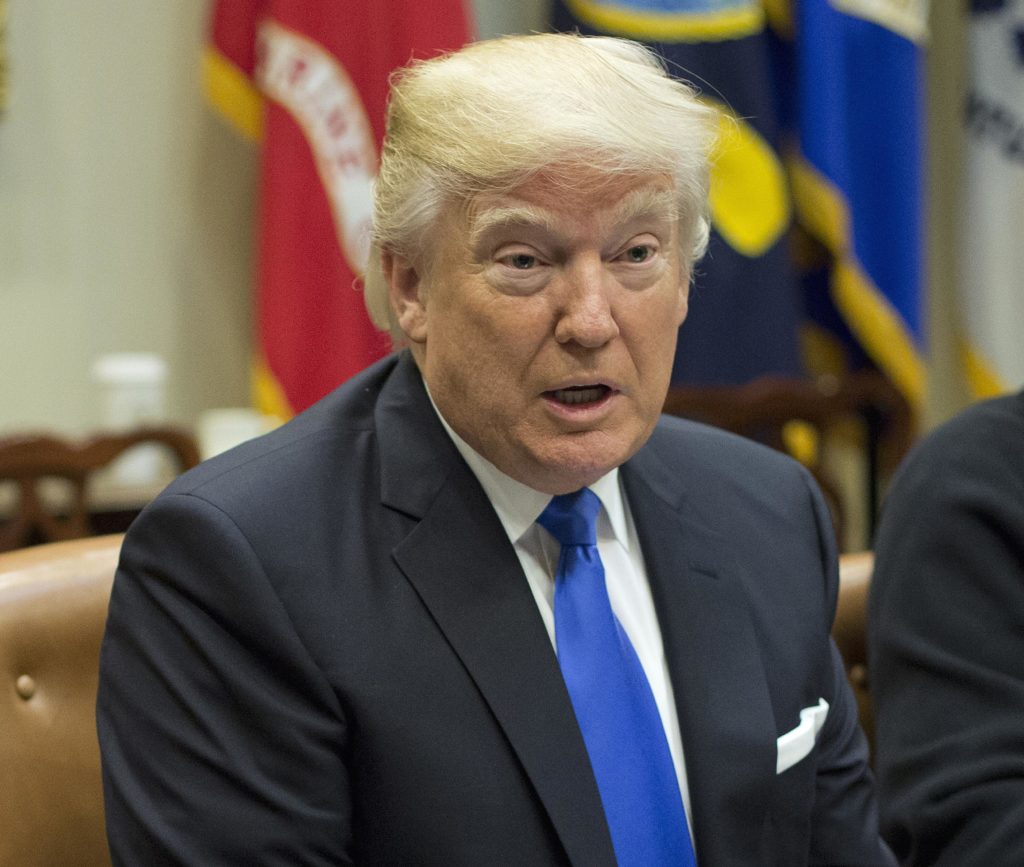
President Donald Trump says he will order an investigation into voter fraud. The president tweeted early Wednesday that the measures will affect those registered to vote in more than one state, “those who are illegal and even, those registered to vote who are dead (and many for a long time).” Trump says that “depending on results, we will strengthen up voting procedures.” Trump repeatedly made disputable claims of a rigged voting system before the election, but now in the White House, he continues to raise concern over fraud. Trump has been fixated on his loss of the popular vote in the election and a concern that the legitimacy of his presidency is being challenged by Democrats and the media, aides and associates say. Trump’s own attorneys dismissed claims of voter fraud in a legal filing responding to Green Party candidate Jill Stein‘s demand for a recount in Michigan late last year. “On what basis does Stein seek to disenfranchise Michigan citizens? None really, save for speculation,” the attorneys wrote. “All available evidence suggests that the 2016 general election was not tainted by fraud or mistake.” Secretaries of state across the country have dismissed Trump’s voter fraud claims as baseless. After the president’s morning tweets, Ohio Secretary of State Jon Husted wrote on Twitter, “We conducted a review 4 years ago in Ohio & already have a statewide review of 2016 election underway. Easy to vote, hard to cheat.” Trump’s exaggerations about inauguration crowds and assertions about illegal balloting have been distractions as advisers’ have tried to launch his presidency with a flurry of actions on the economy. His spokesman, Sean Spicer, has twice stepped into the fray himself, including on Tuesday, when he doubled down on Trump’s false claim that he lost the popular vote because 3 million to 5 million people living in the U.S. illegally cast ballots. All 50 states and the District of Columbia have finalized their election results with no reports of the kind of widespread fraud that Trump is alleging. “He believes what he believes based on the information he was provided,” said Spicer, who provided no evidence to back up the president’s statements. If the president’s claim were true it would mark the most significant election fraud in U.S. history — and ironically, would raise the same questions about Trump’s legitimacy that he’s trying to avoid. Rep. Elijah Cummings, ranking Democrat on the House Oversight and Government Reform Committee, said Wednesday his panel has already sent letters to the attorneys general in all 50 states asking for reports of any election irregularities. “The president can join me and my staff,” Cummings said on MSNBC. He also said he wants Congress to restore voting protections, citing a Supreme Court ruling that “gutted” key sections of the Voting Rights Act, particularly the provision requiring southern states to get clearance in advance from the Justice Department before legislating changes in voting laws and procedures. Some Trump allies say he is justified in using his platform to defend his standing. They point to Georgia Democratic Rep. John Lewis‘ pre-inauguration statement that he did not see Trump as a legitimate president, as well as U.S. intelligence agencies’ assessment that Russia meddled in the election in order to help Trump win. “Segments of his own government keep driving this narrative,” said Roger Stone, a longtime confidant. “I don’t think it hurts to point it out.” Key advisers in Trump’s inner circle concede the focus on crowd claims and alleged voter fraud have been a distraction. After Friday’s inaugural festivities, the new president grew increasingly upset the next day by what he felt was “biased” media coverage of women’s marches across the globe protesting his election, according to a person familiar with his thinking. Trump was particularly enraged with CNN, which he thought was “gloating” by continually running photos of the women’s march alongside the smaller crowds that attended his inauguration the day before, according to this person, one of several White House aides and associates who spoke on the condition of anonymity because they were not authorized to speak publicly about private conversations. Tuesday night on Twitter, Trump slammed CNN again, referring to the network as “FAKE NEWS @CNN” while praising rival Fox News Channel. Trump has had a tumultuous relationship with the press, frequently calling the media dishonest and insulting individual reporters by name at his rallies and on Twitter. Still, two people close to Trump said he expected his coverage to turn more favorable once he took office. Instead, he’s told people he believes it’s gotten worse. The bad press over the weekend has not allowed Trump to “enjoy” the White House as he feels he deserves, according to one person who has spoken with him. The result has been a full display of Trump’s propensity for exaggeration and more. During an appearance at the CIA Saturday, he wrongly said the inaugural crowds gathered on the National Mall stretched to the Washington Monument, despite clear photo evidence to the contrary. And during a reception with lawmakers from both parties Monday night, he repeated his false assertion that millions of illegal immigrants provided Hillary Clinton‘s margin in the popular vote. Republished with permission of The Associated Press.
Jill Stein plans to donate leftover money raised for recounts
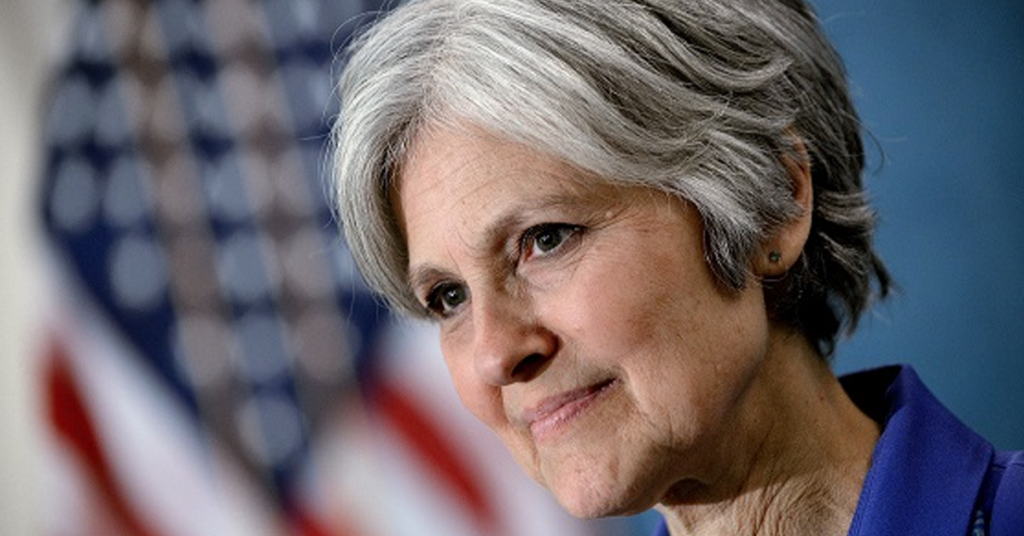
Green Party presidential candidate Jill Stein said Tuesday that she will donate any money left over from her bids to force election recounts in three states to groups dedicated to election reform and voting rights. Stein’s campaign raised about $7.3 million to fund her recount efforts in Wisconsin, Pennsylvania and Michigan, and she said she expects there to be some leftover money once all expenses are paid. There are currently $7.4 million in recount expenses, but that’s expected to decrease once the Wisconsin and Michigan costs are finalized. Republican Donald Trump narrowly defeated Democrat Hillary Clinton in all three states on his way to victory. Wisconsin was the only state that completed a recount, finishing Monday with little change in the results. Trump beat Clinton by nearly 23,000 votes in the state. A federal court halted Michigan’s recount after three days and another federal judge didn’t allow a recount in Pennsylvania. “The final Wisconsin vote is in and guess what – we just picked up an additional 131 votes,” Trump tweeted after Wisconsin completed its recount Monday. “The Dems and Green Party can now rest. Scam!” Trump planned to hold a rally Tuesday night near Milwaukee as part of his victory tour, giving him a chance to comment in Wisconsin about the just-completed recount. Among the criticism that Trump and his supporters have leveled at Stein was that she was pursuing the recounts to raise her own profile and pad her campaign coffers. Stein only won about 1 percent of the vote in the three states. Stein said Tuesday that she had raised $7.33 million from nearly 161,300 donors. Even if she doesn’t keep any leftover money, the recounts helped her build a database of donors that could be sold to others or tapped for future efforts. Stein hoped to add to that list by soon launching an online survey asking donors who they would like any leftover money to be given to. Stein said the names of groups getting the money will be made public “in the coming weeks.” Stein also provided an accounting of what she has spent money on so far. The most, nearly $3.5 million, went to Wisconsin to pay for its recount. If the final cost is higher, Stein’s campaign would have to pay for it. But if it is less, she would be refunded the difference. Those expenses aren’t expected to be finalized until the end of December. The next largest Stein expense, more than $1.6 million, was for legal fees. Other expenses included payments to recount observers, consultants and nearly $1 million to Michigan for its aborted recount, some of which Stein expected to be refunded. Stein insisted throughout that her goal was not to overturn the results, potentially handing the election to Clinton, but rather to ensure the integrity of the vote and voting systems. She alleged, without evidence, that voting patterns in all three states raised concerns about potential hacking or security breaches. Election officials in all three states, along with judges who heard lawsuits filed both by Stein and pro-Trump forces, said there was no evidence to support such claims. Republished with permission of the Associated Press.
US judge rejects Green Party’s Pennsylvania recount case
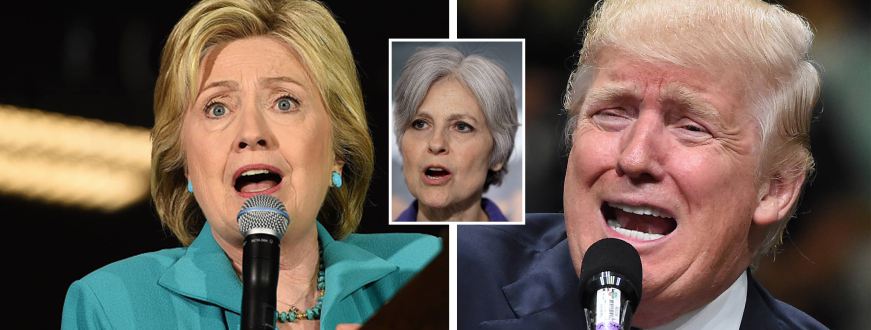
A federal judge on Monday issued a stinging rejection of a Green Party-backed request to recount paper ballots in Pennsylvania’s presidential election, won by Republican Donald Trump, and scan some counties’ election systems for signs of hacking. In his 31-page decision, U.S. District Judge Paul Diamond said there were at least six grounds that required him to reject the Green Party’s lawsuit, which had been opposed by Trump, the Pennsylvania Republican Party and the Pennsylvania attorney general’s office. Suspicion of a hacked Pennsylvania election “borders on the irrational” while granting the Green Party’s recount bid could “ensure that that no Pennsylvania vote counts” given Tuesday’s federal deadline to certify the vote for the Electoral College, Diamond wrote. “Most importantly, there is no credible evidence that any ‘hack’ occurred, and compelling evidence that Pennsylvania’s voting system was not in any way compromised,” Diamond wrote. He also said the lawsuit suffered from a lack of standing, potentially the lack of federal jurisdiction and an “unexplained, highly prejudicial” wait before filing last week’s lawsuit. The decision was the Green Party’s latest roadblock in Pennsylvania after hitting numerous walls in county and state courts. Green Party-backed lawyers argue that it was possible that computer hackers changed the election outcome and that Pennsylvania’s heavy use of paperless machines makes it a prime target. Green Party presidential candidate Jill Stein also contended that Pennsylvania has erected unconstitutional barriers to voters seeking a recount. It is part of a broader effort by Stein to recount votes in Michigan, Pennsylvania and Wisconsin. Trump won all three states narrowly over Democrat Hillary Clinton, while Stein captured about 1 percent of the vote, or less, in all three states. In Pennsylvania, Trump beat Clinton in Pennsylvania by about 44,000 votes out of 6 million cast. A federal judge halted Michigan’s recount last week after three days. The Wisconsin recount was expected to conclude Monday. With about 95 percent of the votes recounted as of Sunday, Clinton had gained 25 votes on Trump, but still trailed by about 22,000. Republished with permission of the Associated Press.
Focus of recount effort shifts to Michigan, Pennsylvania
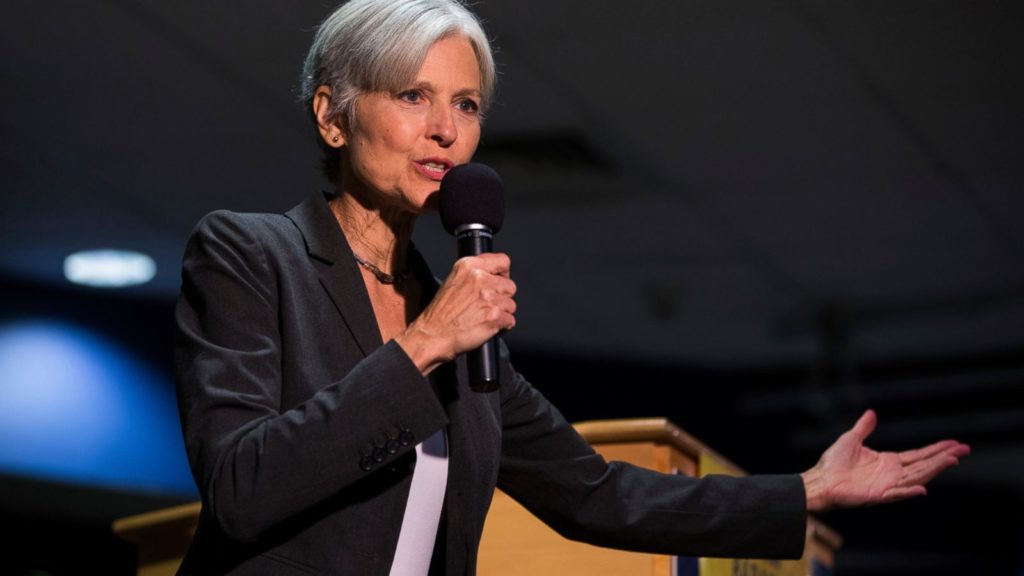
Presidential candidate Jill Stein‘s fight to force ballot recounts in three states focuses Monday on Pennsylvania, where her Green Party is seeking an emergency federal court order for a statewide recount, and Michigan, where a federal judge has ordered a hand recount to begin by noon. The recount is underway in Wisconsin. President-elect Donald Trump narrowly defeated Democratic candidate Hillary Clinton in all three states. The recounts were not expected to change enough votes to overturn the result of the election. Stein, who received about 1 percent of the vote in all three states, says her intent is to verify the accuracy of the vote. She has suggested, with no evidence, that votes cast were susceptible to computer hacking. She also scheduled a rally and news conference for Monday morning outside Trump Tower in New York. Here’s what’s going on in each state and in Nevada, where a partial recount of the race was requested by independent presidential candidate Roque De La Fuente: — WISCONSIN The recount began Thursday and continued over the weekend, with little change so far in the unofficial results as reported on election night. A federal lawsuit was filed late last week by a Trump voter and two super PACs seeking to stop the recount. The judge rejected a request to halt the recount while the lawsuit is pending and scheduled a hearing for Friday. State and local election officials have all said they don’t expect Clinton to surpass Trump in Wisconsin, where he won by about 22,000 votes. — MICHIGAN A federal judge late Sunday night in Detroit ordered a statewide hand recount of roughly 4.8 million ballots to start by noon Monday. Trump won the state by about 10,700 votes, or two-tenths of a percentage point, over Clinton. Stein argued that a law is unconstitutional that requires a break of at least two business days after the Board of Canvassers’ final action on a recount request. Judge Mark Goldsmith found that Stein had “shown the likelihood of irreparable harm” if the count was delayed even by two days and rejected the state’s arguments about the cost to taxpayers. Republican Attorney General Bill Schuette, the Trump campaign and super PACs have filed separate lawsuits asking state courts to prevent the recount, arguing that Stein, as the fourth-place finisher, is not “aggrieved” because she has no chance of winning in a recount. — PENNSYLVANIA The Green Party filed a federal lawsuit on Monday seeking a statewide recount – a move that came after the party on Saturday dropped a case set to be argued Monday in state courts. An updated count Friday by state election officials showed Trump’s lead shrinking to 49,000 from 71,000 over Clinton, out of 6 million votes cast, as more counties finish counting overseas ballots and settled provisional ballot challenges. That is still shy of Pennsylvania’s 0.5 percent trigger for an automatic statewide recount. Final counts are outstanding in some counties, but there are not enough uncounted votes to change the outcome, officials say. — NEVADA A recount of a sample of ballots has begun in Nevada at the request of De La Fuente. Clinton won Nevada and De La Fuente finished last, but he requested and paid about $14,000 last week for the recount, which he called a counterbalance to the review sought by Stein in Wisconsin. Nevada Secretary of State spokeswoman Gail Anderson said late last week that the recount of ballots from Carson City and Douglas, Mineral, Nye and Clark counties should be completed by Friday. If the sample shows a discrepancy of at least 1 percent for De La Fuente or Clinton, a full recount will be launched in all 17 Nevada counties. Clinton defeated Trump in Nevada by 27,202 votes out of 1.1 million votes cast. Republished with permission of the Associated Press.
Lawsuits seek to block or halt Wisconsin, Michigan recounts
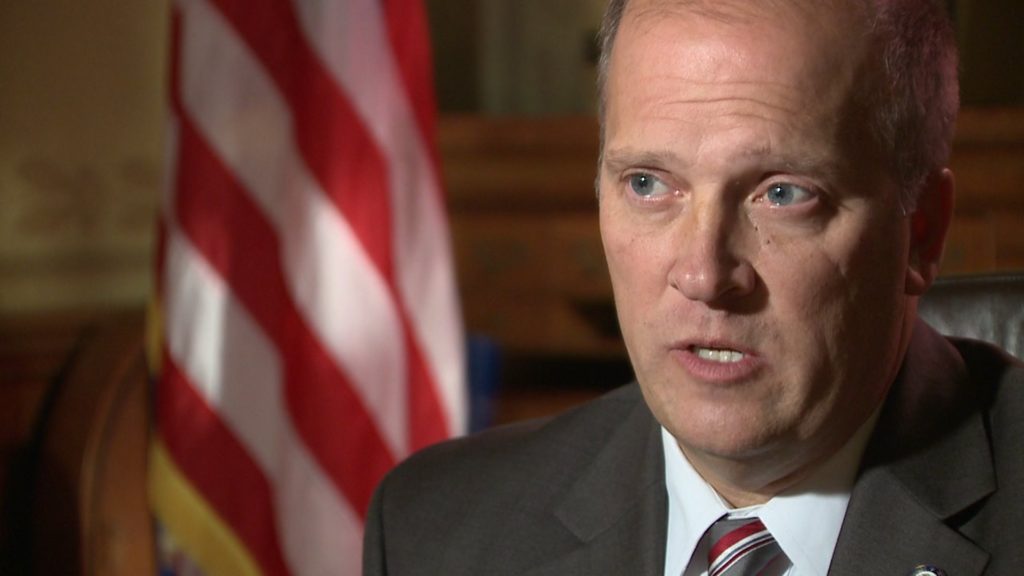
Supporters of Republican Donald Trump filed a federal lawsuit trying to halt Wisconsin’s ongoing presidential recount, and Michigan’s attorney general on Friday sued to stop a recount from happening in his state. The Wisconsin lawsuit and motion for a temporary restraining order was filed late Thursday in U.S. District Court in Madison by the Great America PAC, the Stop Hillary PAC and a Wisconsin voter, Ronald R. Johnson. The legal filings contend that the recount is unconstitutional because it doesn’t satisfy equal protection requirements under the law and may not get done by the Dec. 13 federal deadline to certify the vote, putting Wisconsin’s electoral votes in jeopardy. No court hearings had been scheduled as of Friday morning. The Wisconsin Department of Justice was reviewing the lawsuit, said Johnny Koremenos, spokesman for Attorney General Brad Schimel. Green Party candidate Jill Stein, who requested both recounts and a third in Pennsylvania, has suggested that Trump and his backers would try to delay the recounts to make them hard or impossible to complete by the Dec. 13 deadline for states to certify their election results or have their electoral votes be decided by Congress, which is controlled by Republicans. A spokeswoman for Stein’s campaign didn’t immediately respond to a message seeking comment Friday. With workers in Wisconsin busy re-counting votes for a second day, Michigan’s state elections board was meeting about the Trump campaign’s request to deny Stein’s recount request. In his request to the Michigan Supreme Court to block the hand recount, Attorney General Bill Schuette, like the Trump campaign, argued that Stein cannot seek the “frivolous” recount because she was not “aggrieved” to the point at which a potential miscounting of votes could have cost her the election. She garnered 1 percent of the vote in Michigan. The earliest a Michigan recount could start would be next week. In Pennsylvania, a hearing is scheduled for Monday on Stein’s push to secure a court-ordered statewide recount there. Elections officials in all three states have expressed confidence in their results. President-elect Trump won all three states by narrow margins. Wisconsin Gov. Scott Walker echoed that sentiment Friday, telling reporters that he doesn’t expect his state’s recount to significantly change the results. “Anytime there’s a canvass or a recount there’s slight adjustments, but I don’t think you’re going to see a significant adjustment,” the Republican governor said. Walker also said he’s open to changing the state’s election laws to prevent minor candidates from being allowed to request recounts. Stein finished a distant fourth in Wisconsin with a little more than 1 percent of the vote. Trump won Wisconsin by about 22,000 votes, or less than 1 percentage point, over Clinton. Stein requested the recount which began on Thursday and had to be done by Dec. 13. There is a “realistic risk” the recount may not be done in time of the deadline and the “chaotic rushing necessary” to meet the deadline “creates an imminent unreasonable risk of error that can lead to votes being erroneously counted, disregarded, or diluted,” the motion for a temporary restraining order in Wisconsin contends. Michigan’s elections board on Friday was considering Trump’s request to block a hand recount of all 4.8 million ballots cast in the state. He defeated Clinton there by about 10,700 votes. In their filing to the election’s board, Trump’s lawyers argued that Stein, a “bottom-dwelling candidate,” shouldn’t be allowed to force an expensive and time-consuming recount. They also said in their objection that Stein waited until the last minute to file her recount petition Wednesday, making it impossible to finish by the Dec. 13 deadline. Stein countered Thursday that Trump’s “cynical efforts to delay the recount and create unnecessary costs for taxpayers are shameful and outrageous.” The first reporting of recount results was expected Friday in Wisconsin. Recounts were not expected to flip nearly enough votes to change the outcome in any of the states. Stein has argued, without evidence, that irregularities in the votes in all three states suggest that there could have been tampering with the vote, perhaps through a well-coordinated, highly complex cyberattack. Republished with permission of The Associated Press.
Wisconsin first state to start presidential election recount
The first candidate-driven statewide recount of a presidential election in 16 years began Thursday in Wisconsin, a state that Donald Trump won by less than a percentage point over Hillary Clinton after polls long predicted a Clinton victory. The recount requested by Green Party candidate Jill Stein carries none of the drama of the Florida presidential recount of 2000, when the outcome of the election between Al Gore and George W. Bush hung in the balance. Almost no one expects Stein’s push for recounts in Wisconsin, Michigan and Pennsylvania to result in a Clinton victory over Trump. “This is certainly not Bush v. Gore,” said Wisconsin’s chief elections administrator Mike Haas. Even so, the campaigns for Trump, Clinton and Stein all had observers spread throughout the state to watch the recount. County election officials hired temporary workers, expanded hours and dusted off recount manuals to prepare for the work of re-tabulating nearly 3 million ballots. Most counties will manually recount the ballots, although Stein lost a court challenge this week to force hand recounts everywhere. The state’s largest county, Milwaukee, was planning to recount the ballots by feeding them through the same machines that counted them on election night. In Dane County, where Clinton won 71 percent of the vote, the ballots will be counted by hand. Workers in Dane County were being paid $20 an hour and will work two shifts for about 12 hours a day to get the recount done by the 8 p.m. Dec. 12 deadline, said County Clerk Scott McDonell. He didn’t expect much change in the results. “I think we will be very close to what was reported on election night,” McDonell said Thursday. Clinton lost to Trump by about 22,000 votes in Wisconsin. Wisconsin election officials have less than two weeks to complete the recount. Dec. 13 is the federal deadline to certify the vote to avoid having the fate of Wisconsin’s 10 electoral votes decided by Congress. Even if that were to happen, the votes would almost certainly go to Trump, since Republicans control both chambers of Congress. Stein has argued, without evidence, that irregularities in the votes in all three states suggest that there could have been tampering with the vote, perhaps through a well-coordinated, highly complex cyberattack. “Verifying the vote through this recount is the only way to confirm that every vote has been counted securely and accurately and is not compromised by machine or human error, or by tampering or hacking,” Stein said in a statement Thursday. “The recount does not benefit one candidate over another. It benefits all voters across the political spectrum. This is an essential first step to restore confidence in our elections and trust in our democracy.” Stein’s critics, including the Wisconsin Republican Party, contend that she’s a little-known candidate who is merely trying to raise her profile while raising millions of dollars. Stein had raised nearly $7 million, about twice as much as her longshot presidential campaign, to pay for the recounts. The Wisconsin recount was estimated to cost about $3.9 million, while Stein paid $973,250 for the recount in Michigan, which is scheduled to begin Friday. Stein filed a lawsuit Monday in Pennsylvania to force a recount there. Republished with permission of The Associated Press.
Jill Stein makes Michigan third state for presidential recount
Green Party presidential nominee Jill Stein on Wednesday requested a full hand recount of Michigan’s presidential vote, making it the third state narrowly won by Republican Donald Trump where she’s asked for another look at the results. Stein previously requested recounts of the presidential votes in Pennsylvania and Wisconsin. President-elect Trump defeated Democrat Hillary Clinton by 10,704 votes out of nearly 4.8 million ballots cast in Michigan, but Stein alleges that irregularities and the possibility that vote scanning devices could have been hacked call the results into question. Elections officials in all three states have expressed confidence in their election results. Michigan’s recount could start as early as Friday, though a challenge to the recount by Trump could delay it. Trump’s victory is highly unlikely to be reversed in any of the states, but Stein has said the recount will ensure the integrity of the election. Republicans have said a Michigan recount would cost taxpayers far more than the $973,000 Stein must pay when filing her recount petition. Meanwhile in Wisconsin, where Trump defeated Clinton by roughly 22,000 votes, Stein’s campaign said Wednesday that it won’t appeal a judge’s ruling that Wisconsin’s recount can be done without counting every ballot by hand. Stein spokeswoman Margy Levinson said in an email that the campaign decided not to appeal the ruling due to the tight time constraints for completing the Wisconsin recount, which begins Thursday. Most Wisconsin counties plan to recount their ballots by hand even though the judge’s ruling means they can choose to feed the ballots into tabulation machines to double-check the results. Levinson said Stein’s focus will be on verifying the vote on the ground and she encouraged counties to voluntarily conduct a hand recount. The Wisconsin Republican Party filed a complaint with the Federal Elections Commission on Wednesday alleging that Stein’s recount effort amounts to illegal coordination with Clinton designed to circumvent the law and public scrutiny. Stein campaign manager David Cobb said in a statement that Stein is not coordinating with anyone and dismissed the complaint as a “PR stunt to push a false narrative that will ultimately have no impact on the recount in Wisconsin.” Trump defeated Clinton in Pennsylvania by about 71,000 votes, or about 1 percentage point. Republished with permission of The Associated Press.
Clinton team sees recount effort as waste of resources
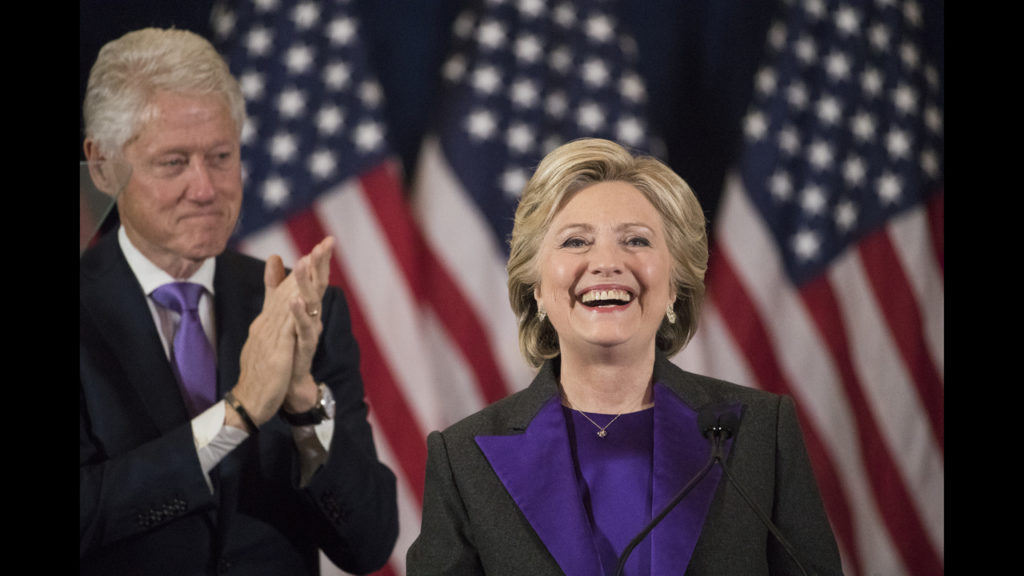
Hillary Clinton‘s aides and supporters are urging dispirited Democrats to channel their frustrations about the election results into political causes — just not into efforts to recount ballots in three battleground states. The former Democratic presidential candidate and her close aides see the recount drive largely as a waste of resources, according to people close to Clinton. The effort is being fueled by Green Party candidate Jill Stein, who’s formed an organization to try to force recounts in Wisconsin, Michigan and Pennsylvania. “Believe me if there was anything I could do to make Hillary Clinton the next president of the United States I would,” said former Pennsylvania Gov. Ed Rendell, a longtime Clinton supporter. “But this is a big waste of time.” Aides say Clinton is focused on moving past her unexpected defeat and has devoted little attention to the recount or thinking about her political future. She’s been spending time with her grandchildren and going for walks near her Westchester home. Sightings of Clinton hiking with her dogs and shopping at a Rhode Island bookstore went viral on social media. “There have been a few times this past week where all I wanted to do was curl up with a good book and our dogs and never leave the house again,” Clinton said in an emotional speech at a gala for the Children’s Defense Fund, her one public appearance since her loss. Former President Bill Clinton, meanwhile, has been poring over the election results, second-guessing decisions by top campaign aides and intensely trying to figure out how his wife lost the white working-class voters who were the base of his electoral coalition, say people familiar with the campaign. Clinton’s team was aware of possible discrepancies soon after the election, telling top donors on a conference call four days after the election that they were looking into potential problems in the three states. But while many campaign staffers believe Russian hacking influenced the outcome of the election, blaming foreign actors for incursions into campaign and Democratic National Committee emails, they’ve found no evidence of the kind of widespread ballot box tampering that would change the results of the race — or even flip a single state. Still, some dejected Clinton supporters have been unwilling to accept the results. Stein has raised $6.5 million for her recount campaign, according to a count posted on her campaign website on Tuesday. That’s nearly double the roughly $3.5 million she raised during her entire presidential bid. Some former Clinton aides have asked frustrated supporters to donate their dollars to what they view as more constructive causes, like state parties or the Democratic candidate in Louisiana, where a Dec. 10 runoff will be the party’s last chance to pick up a Senate seat this year. “I wouldn’t give a dollar to Jill Stein,” said Adam Parkhomenko, a longtime Clinton aide. “Volunteers, supporters and Democrats, they want to pick themselves up and get back out there. The best vehicle to do that is the Louisiana Senate race.” Clinton’s team conducted an exhaustive investigation into the possibility of outside interference in the vote tally, tasking lawyers, data scientists and political analysts to comb over the results. They contacted outside experts, examined the laws governing recounts and double-checked all the vote tallies. The campaign found no “evidence of manipulation,” wrote Marc Elias, the general counsel for Clinton’s campaign, in an online essay. But, he said, Clinton agreed to minimal participation in Stein’s effort, largely to make sure that her interests are represented. They put out a call for volunteers to monitor the proceedings and are relying on local lawyers to handle filings and other legal matters. Clinton is under pressure to participate from her supporters, some of whom have struggled to accept the election results given her lead in the popular vote, which has grown to more than 2.3 million in the weeks after the Nov. 8 election. “Now that a recount is underway, we believe we have an obligation to the more than 64 million Americans who cast ballots for Hillary Clinton to participate in ongoing proceedings to ensure that an accurate vote count will be reported,” Elias wrote. Clinton’s lawyers filed motions with a Wisconsin judge on Tuesday looking to join Stein’s lawsuit demanding that Wisconsin officials recount ballots by hand. The state elections commission will formally began the recount on Thursday. Stein’s organization has also filed for recounts in six of Pennsylvania’s largest counties and says it plans to file a petition Wednesday demanding a Michigan recount. “It’s election law malpractice to not have your lawyers sitting around the table with Jill Stein’s lawyers,” said Adam Ambrogi, elections program director at the bipartisan Democracy Fund. “It is just due diligence.” Republished with permission of The Associated Press.
Donald Trump taps Tom Price to lead HHS, plans 2nd meeting with Mitt Romney

President-elect Donald Trump moved to fill out his Cabinet Tuesday, tapping Georgia Rep. Tom Price to lead the Department of Health and Human Services. Aides signaled that at least one other Cabinet nomination was imminent. The president-elect appeared to still be torn over his choice for secretary of state. He summoned former Massachusetts Gov. Mitt Romney to New York for dinner Tuesday night to discuss the post for a second time. He was also meeting with Tennessee Sen. Bob Corker, the chairman of the Senate Foreign Relations Committee who was getting new attention from Trump’s team. On Monday, Trump spent an hour with retired Gen. David Petraeus, another new contender. Trump’s decision to consider Romney for the powerful Cabinet post has sparked an unusual public backlash from some of his closest aides and allies. Campaign manager Kellyanne Conway has warned that it would be a “betrayal” to Trump supporters if he selected Romney, who was a fierce critic of the president-elect. Three people close to the transition team said Trump was aware that Conway planned to voice her concerns about Romney in public and they pushed back at suggestions that the president-elect was angry at her for doing so. Even as he weighed crucial Cabinet decisions, Trump appeared distracted by outside forces — or eager to create distractions himself. He took to Twitter early Tuesday to declare that “nobody should be allowed to burn the American flag.” He warned that those who do should face “perhaps loss of citizenship or year in jail!” Trump offered no context for his message. The Supreme Court has ruled that flag burning is protected by the First Amendment. The president-elect spent the weekend tweeting his opposition to a recount effort in up to three states that is led by Green Party candidate Jill Stein and joined by Hillary Clinton‘s team. He also falsely claimed that millions of people had voted illegally in the presidential election and provided no evidence to back up the baseless charge. Trump won praise from Republicans Tuesday for his pick of Price to serve as health and human services secretary. A six-term congressman and orthopedic surgeon, Price has been a leading critic of President Barack Obama‘s health care law. If confirmed by the Senate, he’ll be a leading figure in Republican efforts to repeal the measure. Incoming Senate Democratic Leader Chuck Schumer said Price “has proven to be far out of the mainstream of what Americans want” for programs that help seniors, women, families and those with disabilities. His nomination, Schumer said, is “akin to asking the fox to guard the henhouse.” Trump’s team also announced Tuesday that Seema Verma had been chosen to be administrator of the Centers for Medicare and Medicaid Services. Jason Miller, a transition team spokesman, said at least one other Cabinet post would be announced in the afternoon. He did not elaborate. Transition aides said Trump was likely at least a few days away from a decision on secretary of state. Romney has supposed from Vice President-elect Mike Pence, who is heading the transition efforts. Romney was fiercely critical of Trump throughout the campaign, including his preparedness for the foreign policy and national security decisions that confront a president. Still, he is said to be interested in serving in the administration and held a lengthy initial meeting with Romney before Thanksgiving. Other top Trump allies, notably Conway, have launched a highly unusual public campaign against a Romney nomination. Conway’s comments stirred speculation that she is seeking either to force Trump’s hand or give him cover for ultimately passing over Romney. Former New York City Mayor Rudy Giuliani, a loyal Trump ally, was initially seen as the leading contender to helm the State Department. But questions about his overseas business dealings, as well as his public campaigning for the job, have given Trump pause. Trump is now said to be considering Giuliani to head the Homeland Security Department, according to those close to the transition process. Republished with permission of the Associated Press.
Donald Trump drama rolls on: Disputes, falsehoods hit transition

The drama, disputes and falsehoods that permeated Donald Trump‘s presidential campaign are now roiling his transition to the White House, forcing aides to defend his baseless assertions of illegal voting and sending internal fights spilling into public. On Monday, a recount effort, led by Green Party candidate Jill Stein and joined by Hillary Clinton‘s campaign also marched on in three states, based partly on the Stein campaign’s unsubstantiated assertion that cyberhacking could have interfered with electronic voting machines. Wisconsin officials approved plans to begin a recount as early as Thursday. Stein also asked for a recount in Pennsylvania and was expected to do the same in Michigan, where officials certified Trump’s victory Monday. Trump has angrily denounced the recounts and now claims without evidence that he, not Clinton, would have won the popular vote if it hadn’t been for “millions of people who voted illegally.” On Twitter, he singled out Virginia, California and New Hampshire. There has been no indication of widespread election tampering or voter fraud in those states or any others, and Trump aides struggled Monday to back up their boss’ claim. Spokesman Jason Miller said illegal voting was “an issue of concern.” But the only evidence he raised was a 2014 news report and a study on voting irregularities conducted before the 2016 election. Trump met Monday with candidates for top Cabinet posts, including retired Gen. David Petraeus, a new contender for secretary of state. Trump is to meet Tuesday with Tennessee Sen. Bob Corker, who is also being considered more seriously for the diplomatic post, and Mitt Romney, who has become a symbol of the internal divisions agitating the transition team. Petraeus said he spent about an hour with Trump, and he praised the president-elect for showing a “great grasp of a variety of the challenges that are out there.” “Very good conversation and we’ll see where it goes from here,” he said. A former CIA chief, Petraeus pleaded guilty last year to a misdemeanor charge of mishandling classified information relating to documents he had provided to his biographer, with whom he was having an affair. Vice President-elect Mike Pence, who is heading the transition effort, teased “a number of very important announcements tomorrow” as he exited Trump Tower Monday night. Pence is said to be among those backing Romney for State. Romney was fiercely critical of Trump throughout the campaign but is interested in the Cabinet position, and they discussed it during a lengthy meeting earlier this month. Other top Trump allies, notably campaign manager Kellyanne Conway, have launched a highly unusual public campaign to warn the president-elect that nominating Romney would be seen as a betrayal by his supporters. Conway’s comments stirred speculation that she is seeking to either force Trump’s hand or give him cover for ultimately passing over Romney. Three people close to the transition team said Trump had been aware that Conway planned to voice her opinion, both on Twitter and in television interviews. They disputed reports that Trump was furious at her and suggested his decision to consider additional candidates instead highlighted her influence. Conway served as Trump’s third campaign manager and largely succeeded in navigating the minefield of rivalries that ensnared other officials. Trump is said to have offered her a choice of White House jobs — either press secretary or communications director. But people with knowledge of Conway’s plans say she is more interested in serving as an outside political adviser, akin to the role President Barack Obama‘s campaign manager David Plouffe played following the 2008 election. The wrangling over the State Department post appears to have slowed the announcements of other top jobs. Retired Gen. James Mattis, who impressed Trump during a pre-Thanksgiving meeting, was at the top of the list for Defense secretary, but a final decision had not been made. Trump was also considering former New York City Mayor Rudy Giuliani for Homeland Security secretary, according to those close to the transition process. Giuliani was initially the front-runner for State and is still in the mix. But questions about his overseas business dealings, as well as the mayor’s public campaigning for the job, have given Trump pause. Those close to the transition insisted on anonymity in commenting because they were not authorized to publicly discuss the private process. Even as Trump weighs major decisions that will shape his presidency, he’s been unable to avoid being distracted by the recount effort. He spent Sunday on a 12-hour Twitter offensive that included quoting Clinton’s concession speech, in which she said the public owed Trump “an open mind and the chance to lead.” His final tweets challenging the integrity of an election he won were reminiscent of his repeated, unsubstantiated assertions during the campaign that the contest might be rigged. Those previous comments sparked an outcry from both Clinton and some Republicans. Clinton lawyer Marc Elias said the campaign has seen “no actionable evidence” of voting anomalies. But the campaign still plans to be involved in Stein’s recount to ensure its interests are legally represented. Trump narrowly won Wisconsin, Pennsylvania and Michigan. All three would need to flip to Clinton to upend the Republican’s victory, and Clinton’s team says Trump has a larger edge in all three states than has ever been overcome in a presidential recount. Republished with permission of the Associated Press.
For Hillary Clinton, struggle to change public perception persists
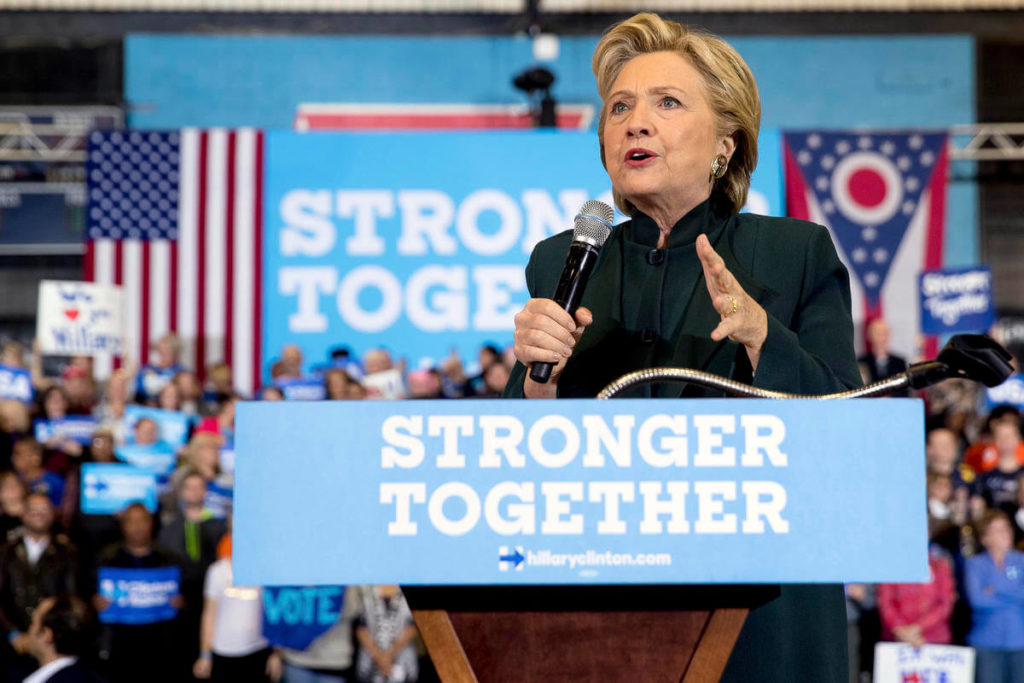
Hillary Clinton bested Donald Trump in three debates. She leads in many preference polls of the most competitive states. Barring a significant shift in the next two weeks, she is in a strong position to become the first woman elected U.S. president. But Clinton will end the campaign still struggling to change the minds of millions of voters who don’t think well of her, a glaring liability should the Democratic nominee move on to the White House. While many see her as better prepared to be commander in chief than Trump, she is consistently viewed unfavorably by more than half of the country. Most voters also consider her dishonest. Clinton’s advisers have spent months trying to erase that perception. They’ve set up small events where she had more intimate conversations with voters. They’ve tested a seemingly endless stream of messages aimed at assuring the public that the former secretary of state was in the race to do more than fulfill her own political ambitions. As Clinton starts making her closing argument to voters, her team appears to have come to terms that the mission remains unfulfilled. “Honest and trustworthy has become our most talked about metric because it’s not great,” said Jennifer Palmieri, Clinton’s communications director. “But we’ve never thought it’s the metric people make a decision on.” If Clinton wins, that theory may be proven true. Just 36 percent of voters believe Clinton is honest and trustworthy, according to a recent Washington Post/ABC News poll. That’s compared with about 60 percent who believe she has the qualifications and temperament to be commander in chief. The public’s perception of Clinton has bounced up and down throughout her time in public life. Her favorability rating fell below 50 percent at times during her years as first lady, but rose to its high water mark then and while she was as secretary of state under President Barack Obama. Democrats blame some of the current negative personal perceptions of Clinton on the hard-charging tactics she’s used to try to discredit Trump, though they believe her sustained assault on Trump’s character and temperament has been crucial. Party operatives also say Trump’s personal attacks on Clinton have made it all but impossible for more positive messages to break through. He’s called her a “liar,” a “nasty woman” and pledged to put her in jail. “When you’re under relentless assault from a reality TV star, it’s hard to come out of that with anybody feeling good about anyone,” said Bill Burton, a former Obama aide. Still, Clinton’s advisers acknowledge that some of her troubles have been of her own making, including her penchant for privacy. She’s spent nearly the entire campaign struggling to explain why she used a private email server in the basement of her home while she led the State Department. She hid a pneumonia diagnosis this fall from nearly all of her senior staff, then left the public unaware of her condition and whereabouts for 90 minutes after the illness caused her to rush out of a public event in New York. “She is a politician that does not seek to be the center of attention and is inherently more private than most politicians, certainly presidential candidates,” Palmieri said. “That doesn’t always serve you great in a campaign for president.” Clinton frequently shoots down questions about the public’s negative perceptions by saying she’s viewed more positively when she’s doing a job rather than running for one. There’s some evidence to back that up. When she ran for re-election to the Senate from New York in 2006, she won with 67 percent of the vote, a big jump from the 55 percent share from her first race in 2000. Her approval rating when she left the State Department, where her job kept her out of day-to-day politics, sat at an enviable 65 percent, according to the Pew Research Center. But if Clinton is elected president, she won’t have the luxury she had as secretary of state to stay away from the political fray — with Republicans in Washington in the opposition, and possibly Trump, too. The businessman keeps flirting with the idea he could contest the election results if he loses. There are also persistent rumors that, if he loses, he might try to harness the enthusiasm of his millions of supporters into some type of media venture. “The notion that Trump is going to go quietly into the night and wish her Godspeed is highly unlikely,” said David Axelrod, another former Obama adviser. “She’s going to have to contend with that and whatever it is he chooses to make his vehicle.” Clinton has begun acknowledging the challenge that could await her in the White House, if she wins, centering her closing argument to voters on a call for unity after a bitter campaign. “My name may be on the ballot, but the question really is who are we as a country, what are our values, what kind of a future do we want to create together,” she said Friday at a rally in Ohio. Some Democrats see the transition — the two-month-plus stretch between the Nov. 8 election and the Jan. 20 inauguration — as a crucial opportunity for her to signal, if she wins, that a Clinton White House would be different from a Clinton campaign. In a nod to bipartisanship, she could nominate a Republican for her Cabinet. Clinton could start moving on some of her more broadly popular policy proposals as a way of boosting her appeal, assuming no crisis demands immediate action. Still, Axelrod said changing the public’s view of Clinton will be a “long-term project.” “There’s no silver bullet to turn around years of wear and tear on her image,” he said. Republished with permission of the Associated Press.
Conservative presidential candidate Evan McMullin fails to make Alabama ballot
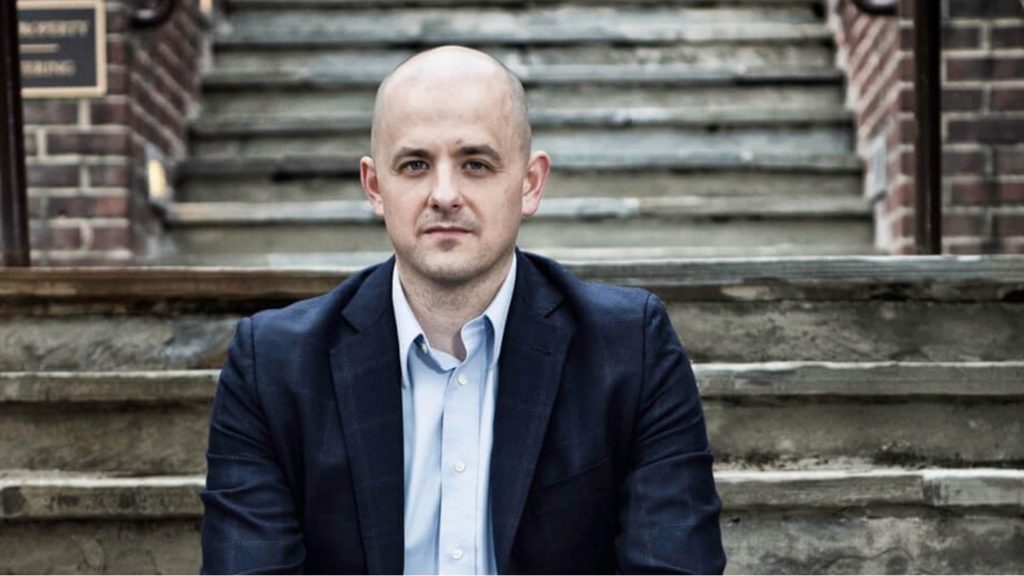
Evan McMullin will not be on the ballot in Alabama. POLITICO reports the newly announced conservative independent presidential candidate failed to submit required signatures for a spot on Alabama’s general election ballot The deadline for independent candidate filing, writes Caroline Kelly, was 5 p.m. Thursday, as verified by the Alabama secretary of state’s office. “We haven’t gotten any, none at all,” said Deputy Chief of Staff John Bennett of McMullin signatures. Bennett confirmed the office did receive signatures for Libertarian candidate Gary Johnson, Green Party candidate Jill Stein, and Rocky de la Fuente, running on the Reform Party ticket. Signatures of registered Alabama voters still need verification before the final results are announced, Bennett told POLITICO. Although McMullin will be on both the Colorado and Utah ballots, the former CIA employee failed to make nearly one-third of the 24 states with remaining deadlines. Thursday was also the deadline for Tennessee, which required 250 signatures, but Secretary of State Director of Communications Adam Ghassemi could not confirm to POLITICO that McMullin, who had announced his candidacy last week, had submitted any signatures. Filing deadlines are Friday for Iowa and Louisiana.
