
Steven Kurlander: Debating debatable debates
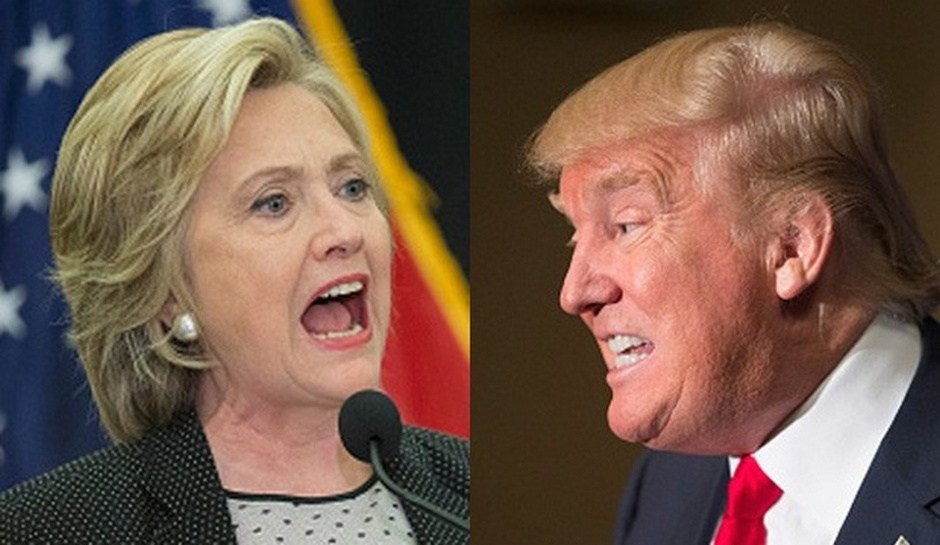
In 21st century American politics, it’s a given that if you are running for office, you should expect to debate your opponent(s) during the campaign — no matter whether you are running for school board or president. Debating your opponent is part of proving your mettle for the job you are running for. Normally, it’s not a good move for a candidate not to show up to debate your opponent. Bob Greene wrote in 2012 “Today debates between the candidates — even when one of them is the incumbent — are all but mandatory. A candidate would be seen as chicken for not agreeing to debate. “ It appears that Donald Trump may think otherwise. He set off a controversial debate about the presidential debates themselves when first tweeted he was debating skipping the three upcoming presidential debates, which are set up by the “nonpartisan, nonprofit” Commission on Presidential Debates. CNN’s Rachel Sklar wrote: “Donald Trump is complaining. Of course, that’s nothing new — the notoriously thin-skinned Republican nominee is an inveterate pouter, openly sulking about perceived injustices like lawsuits presided over by “Mexican” judges, accurate press coverage and Megyn Kelly being mean to him. At 70, he may be the grumpiest old man on Twitter.” A visit to any American retirement community would confirm that grumpy, thin-skinned old men don’t like to debate anything, let alone the political issues of the day. But in this day and age of social media, a 24-hour news cycle, and an American electorate already inundated with instantaneous presidential election news, Trump may be right to question the antiquated formats of these debates and particularly the moderators who nowadays show no semblance of neutrality at these events. In 2016, if you ask Americans whether they rather tune into a presidential debate between Hillary and Donald or an NFL game being broadcast at the same time, it’s easy to predict that they’d rather eat their Doritos and wings watching football. Political debates used to carry the aura of significance in terms of having great impact on elections and how voters decide who to vote for. Students of history were taught of the impact on American history of the infamous seven Lincoln-Douglas debates in 1858 Illinois Senate campaign and the Nixon-Kennedy debates of the 1960s. But since the Nixon-Kennedy debates, presidential debates have devolved in terms of their quality of political discourse, their fairness in how they are conducted and their true impact on voters. The true question is not whether Trump should debate or not, but whether the upcoming presidential debates carry any significance at all. At this point, most Americans are voting against, not for, either Clinton or Trump. They both carry big negatives among American voters. The debates, no matter what is said, won’t matter in this regard. Americans also have been already subjected to 13 GOP presidential primary debates and 10 Democratic presidential primary debates, and most of those debates, particularly the Republican ones, already proved trivial in dialogue and insignificant in terms of affecting how voters cast their ballots in the primaries. Given all this, aside from being called a chicken by the mainstream press that despises him anyway, Trump has nothing to lose by refusing to debate Hillary Clinton. There’s only one way the upcoming three presidential debates can change voters’ minds, and that’s if third party candidates can participate in them. The Commission on Presidential Debates right now doesn’t allow third party candidates to participate in the debates unless they reach a 15 percent polling threshold in five polls among voters. If Gary Johnson of the Libertarian Party or Jill Stein of the Green Party were allowed to take the stage with Clinton and Trump, then there’s no debating that these debates would suddenly become very significant in the 2016 race. Allowing Johnson and Stein on the debate platform on three occasions would guarantee that Americans would hear some serious political discussion (that they crave at this point) — and that a third-party candidate could have a serious impact on the race, or even win the White House. This is not debatable: If Johnson and/or Stein take the stage, a serious Donald Trump would definitely show up and the presidential debates for the first time in decades would be a truly historical event. ___ Steven Kurlander blogs at Kurly’s Kommentary. He is a communications strategist and an attorney in Monticello, New York, writes for Florida Politics and is a former columnist for the South Florida Sun-Sentinel. He can be emailed at kurly@stevenkurlander.com.
Poll: Most young whites think Hillary Clinton knowingly broke law

Young Americans are divided over Hillary Clinton‘s handling of her email account while she was secretary of state, with most young whites saying she intentionally broke the law and young people of color more likely to give Clinton the benefit of the doubt. The new GenForward poll of young Americans ages 18-30 also finds both Clinton and Donald Trump viewed negatively by a majority of those polled. GenForward is a survey by the Black Youth Project at the University of Chicago with the Associated Press-NORC Center for Public Affairs Research. The poll is designed to pay special attention to the voices of young adults of color, highlighting how race and ethnicity shape the opinions of a new generation. Things to know about how young people view the presidential contest: — CLINTON’S EMAILS Among all young adults in the GenForward poll, 43 percent say Clinton intentionally broke the law in her use of a private email address on a personal server while she was secretary of state, and another 20 percent think she did so unintentionally. As for the rest, 27 percent think she showed poor judgment but did not break the law, and 8 percent say she did nothing wrong at all. More than half of young whites – 54 percent – think Clinton intentionally committed a crime, and another 17 percent think she did so unintentionally. Young African-Americans, Asian-Americans and Hispanics view Clinton’s actions in a more sympathetic light, though few clear her of all wrongdoing. Just 32 percent of Hispanics, 29 percent of Asian-Americans and 21 percent of African-Americans think Clinton intentionally broke the law, with most of the remainder saying she either did so unintentionally or showed poor judgment that did not amount to lawbreaking. — NOT LIKING THEIR OPTIONS Neither Trump nor Clinton is well-liked by young adults overall, with just 38 percent saying they have a favorable view of Clinton and even fewer – 21 percent – saying they have a favorable view of Trump. While majorities of young African-Americans, Asian-Americans and Hispanics do have a positive view of Clinton, 7 in 10 young whites have a negative opinion. Trump is viewed negatively by more than 8 in 10 young blacks, Hispanics and Asian-Americans and by about two-thirds of young whites. Large majorities of young adults across racial and ethnic groups consider Trump to be unqualified to be president. On the other hand, most young African-Americans, Hispanics and Asian-Americans think Clinton is qualified to be president, but most young whites say she’s not. More than 7 in 10 young Americans don’t see Trump or Clinton alike as honest and trustworthy. For Clinton, that perception is greater among young whites, while young people of color are more likely to doubt Trump’s honesty than Clinton’s. — SANDERS SUPPORTERS The GenForward poll, which was conducted before the political conventions, showed an uphill battle for Clinton in consolidating support among young people. Young people across racial and ethnic groups were more likely to support Sanders than Clinton in their primary contest, the poll shows. And among those who supported Sanders during the primary season, less than half were prepared to say they’ll support Clinton over Trump in the fall. Still, few said they’d support Trump. The rest said they were undecided, will vote for a third-party candidate, or will not vote. — WHAT’S THE ALTERNATIVE? Young people are largely in agreement that the two major American political parties are lacking when it comes to representing the public. Just 28 percent of young adults, including 31 percent of African-Americans and Hispanics and 26 percent of whites and Asian-Americans, say the two parties do a good job of representing the American people. Although they’re not happy with their options, young people across racial and ethnic groups are mostly unfamiliar with their alternatives. Seven in 10 say they don’t know enough about LibertarianGary Johnson to have an opinion about him, and nearly 8 in 10 say the same about Jill Stein of the Green Party. An AP-GfK poll also conducted in July found similar levels of unfamiliarity among adults of all ages. — The poll of 1,940 adults age 18-30 was conducted July 9-20 using a sample drawn from the probability-based GenForward panel, which is designed to be representative of the U.S. young adult population. The margin of sampling error for all respondents is plus or minus 3.8 percentage points. The survey was paid for by the Black Youth Project at the University of Chicago using grants from the John D. and Catherine T. MacArthur Foundation and the Ford Foundation. Respondents were first selected randomly using address-based sampling methods, and later interviewed online or by phone. Republished with permission of the Associated Press.
Bernie Sanders supporters emboldened after WikiLeaks takes down Debbie Wasserman Schultz

Bernie Sanders will address the Democratic National Convention Monday night, with the expectation he will give a “full-throated” endorsement of Hillary Clinton to be the next president of the United States. But if a small sampling of the hundreds of people who gathered at JFK Plaza in downtown Philadelphia Sunday afternoon is any indication, his most fervent supporters aren’t taking any endorsement from their candidate as a mandate to not follow their conscience. “I’m voting for my conscience and not out of fear,” said Tara Orlando, from Floyd, Virginia. She seemed to believe, as did several of the protesters that FloridaPolitics.com spoke with, that somehow a Sanders victory was still in the cards. “I hope the superdelegates wake up, especially after WikiLeaks has released all those emails to prove that it was hoodwinked,” Orlando said, “and if they want to do the right thing, they’ll nominate Bernie Sanders for the Democratic Party.” The WikiLeaks revelations have ratified the sentiments Sanders, and certainly his most fervent supporters, have felt from very early on in the Democratic primary contest since last summer — that it was rigged for Clinton to ease her way to the nomination. “It’s more of a vindication of something that we believed all along, and it does feel good when you’ve got people more polarized on either side,” said Moira Gearan, also from Floyd, Virginia. “It may be a done deal, but at least people know that things were DONE.” “We felt all along that the process was rigged from the beginning, especially the issue with the superdelegates,” said Reuben Matreger from Fenton, Michigan. Oh yes, the superdelegates, which the Sanders campaign and their supporters abhor as being indicative of a bloated, elitist group of party insiders that is supposed to stop them from nominating an unelectable candidate, a la George McGovern in 1972 and Howard Dean in 2004. The superdelegates are party insiders — in some cases, members of Congress — and they like it the way it is. But on Saturday, the Democratic Party’s Rules Committee ultimately voted to bring a “minority report” to a floor vote this week. What that apparently means is the superdelegates will do their thing this week and overwhelmingly support Clinton for the nomination, but it could be altered going forward. Several Democrats in the crowd said they could not vote for Hillary Clinton under any circumstances. Celeste McKissick from Cleveland held up a sign reading “Hill No.” “If Bernie is not the nominee, it will be Jill Stein who I’ll vote for,” she said, adding Clinton hasn’t been able to do anything to “buy” her vote yet, so she doesn’t believe there’s anything she could say or do before November to be persuaded to vote for the Democratic nominee for president. “I will very likely leave the party,” said Gearan when asked what she’ll do after Clinton accepts the party’s nomination later this week. Long Beach, California resident Dea Montford was a lifelong Democrat, and also said she’s leaving the party if Sanders isn’t nominated this week. She said she’d been turned off by Democratic politics after what she said happened in California during that state’s primary election last month. “What they did there to disenfranchise SOOO many people from voting. No, I can’t support the Democratic Party and the DNC and Wasserman Schultz and Hillary? No.” Sanders addresses the DNC later tonight.
