
Ben Pollara: A Democrat’s unsolicited advice for the GOP that created Donald Trump
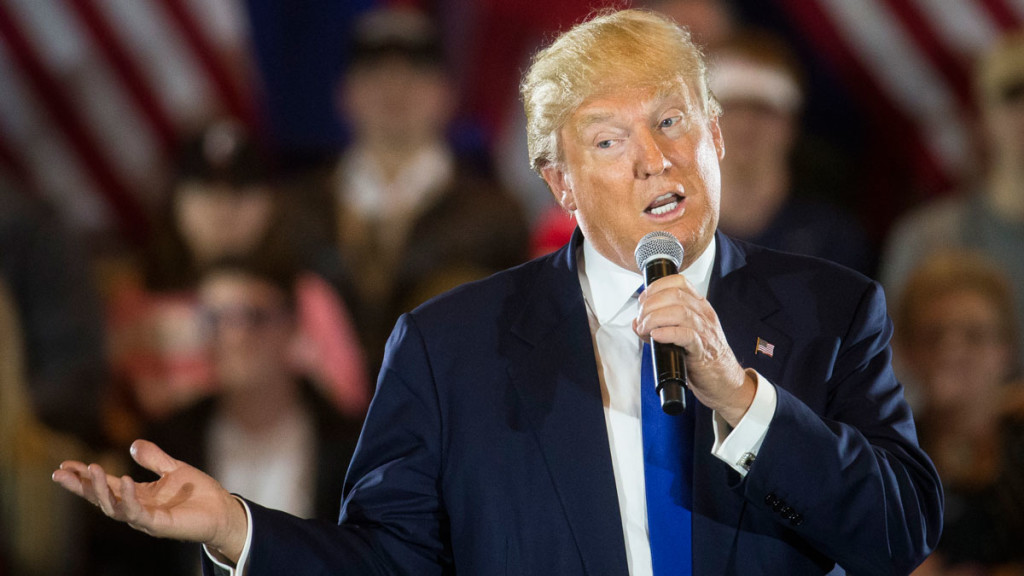
What is more appealing for Democrats like me? Donald Trump as the Republican nominee, or a fractured convention that produces a nominee who received no Republican primary votes, like Paul Ryan? Honestly, both sound pretty good and likely to culminate in a Hillary Clinton presidency. But it’s not up to Democrats like me, and the questions Republicans should be asking themselves have more serious consequences for both their party and our system of governance. Beyond my partisanship, I hold a core belief in the essential function of the two-party system and the imperfect, yet better than the alternatives, manner in which it maintains the values of our republican democracy. Assuming Trump enters Cleveland with a plurality but not majority of delegates, to deny him the nomination would shatter the Republican Party for a decade to come, and with it the two-party system that balances the most extreme tendencies of American political ideology. The media reacted with shock at Trump’s assertion that a brokered convention that denied him the nomination would lead to rioting. Trump has said many outrageous things, many of them without basis in fact. This was not one of them. Just as Vietnam and Civil Rights nearly tore apart the Democratic Party in 1968, denying Trump the nomination through Byzantine delegate rules would succeed in doing the same to the Grand Old Party. The party of Lincoln must come to terms with the reality that it now holds that moniker by historical fact only. The Republican Party has, by virtue of a political strategy to build a winning national coalition post-New Deal, become the party of Richard Nixon, Ronald Reagan, and yes, Donald Trump. To survive, Republicans must face down that which they have wrought through two generations of “dog whistle” racism and us-vs-them fearmongering that, until recently, served the cynical corporatists and political elites in the party quite well. The Southern Strategy and the rise of fundamentalist religious extremism paved the way for the K Street Project and 20 of 28 years of Republican White House occupancy; the Tea Party and Birtherism gave rise to the Koch-era and hegemony of the legislative branch in D.C. and most state capitols. But the craven decisions that led to these triumphs are causing the Republican Party to collapse under the weight of its own base. What fueled government shutdowns over previously benign issues like raising the debt ceiling and funding Planned Parenthood (and the ultimate ouster of John Boehner as Speaker of the House) is precisely what is fueling Donald Trump’s success. It is willful ignorance and intellectual dishonesty of the first degree for Republicans to bemoan the “Make American Great Again” movement and its accompanying rhetoric of angry xenophobia without owning responsibility for creating the environment that spawned it. You reap what you sow. Give Trump the nomination he has earned; you fostered the environment that incubated him. Let Trump fail spectacularly in November. Then look in the mirror and begin to rebuild the Republican Party in the image of Abraham Lincoln, rather than David Duke and his ilk. The alternative is a splintering of the very foundation of our political system and a generation of Democratic hegemony, which may have pundits in the not distant future bemoaning that “Barack Obama wouldn’t have been able to win a single state’s primary in today’s Democratic Party. He was basically a Republican.” Republicans should ask themselves, what is scarier? Four more years of a Democrat in the White House, or a future where that statement is true? • • • Ben Pollara is a political consultant and a founding partner of LSN Partners, a Miami Beach-based government and public affairs firm. He runs United for Care, the Florida medical marijuana campaign and is a self-described “hyper-partisan” Democrat.
Seeds of GOP splinter in opposition to all things Barack Obama
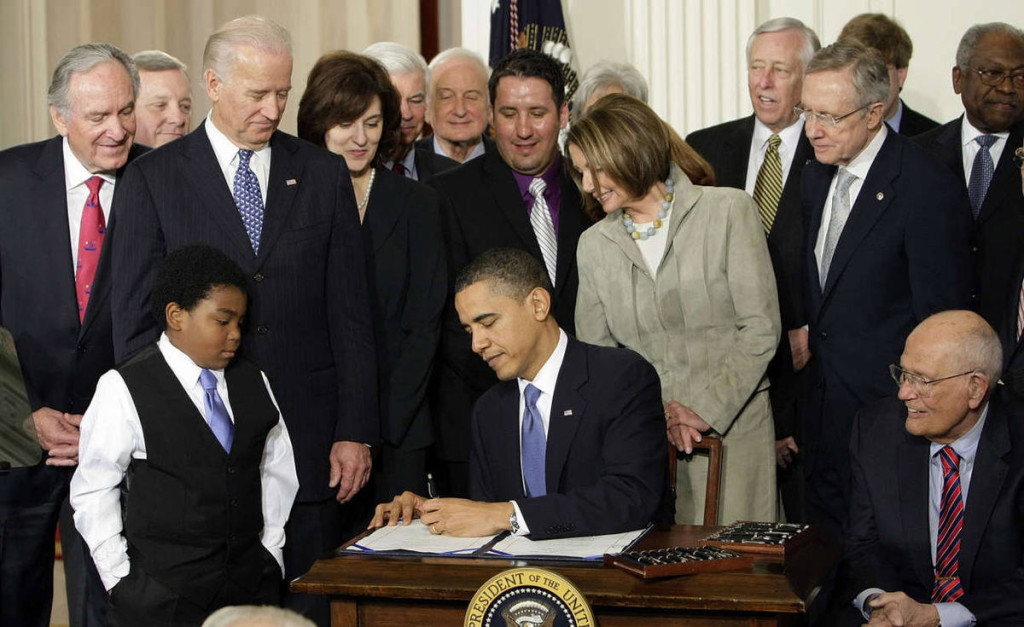
Republicans can blame their united stand against President Barack Obama for their party’s splintering. Conservatives’ gut-level resistance to all things Obama — the man, his authority, his policies — gave birth to the tea party movement that powered the GOP to political success in multiple states and historic congressional majorities. Yet contained in the movement and its triumphs were the seeds of destruction, evident now in the party’s fracture over presidential front-runner Donald Trump. Obama’s policies, from the ambitious 2010 law overhauling the health care system to moving unilaterally on immigration, roiled conservatives who decried his activist agenda and argued about constitutional overreach. “Quasi-socialist,” says Tea Party Express. Republicans rode that anger to majority control of the House in 2010 and an eye-popping net gain of 63 seats as voters elected tea partyers and political outsiders. Four years later, the GOP claimed the Senate, too. For all the numbers, though, Republicans were unable to roll back Obama administration policies or defeat the Democratic president in 2012, further infuriating the GOP base. Now the party of Abraham Lincoln is engaged in a civil war, pitting establishment Republicans frightened about a election rout in November against the unpredictable Trump, who has capitalized on voter animosity toward Washington and politicians. “There would be no Donald Trump without Barack Obama,” said Sen. Lindsey Graham, R-S.C. No fan of Trump, Graham argued that resentment of Obama plus his own party’s attitude toward immigrants are responsible for the deep divide and the billionaire businessman’s surge. Mainstream Republicans are hard-pressed to figure out a way forward with Trump, who has pledged to build a wall on the Mexican border, bar Muslims from entering the United States and equivocated over former Ku Klux Klan leader David Duke‘s support. The candidate has assembled a growing coalition of blue-collar workers, high-school educated and those craving a no-nonsense candidate. “I think they are at a loss to try to reconcile this nihilist wing of the Republican Party with conservative principles,” said Sen. Dick Durbin of Illinois, the No. 2 Democrat in the Senate. The health care fight proves illustrative. The disaffected Americans embracing Trump echo the angry voices that filled town halls in the summer of 2009 as fearful voters taunted lawmakers over efforts to overhaul health care. Obama and Democrats were undaunted, pushing ahead on a remake of the system despite unified Republican opposition. In January 2010, thanks to tea party backing and conservative outrage, Republican Scott Brown won a special election in Massachusetts, claiming the seat that liberal Sen. Ted Kennedy had held for 47 years. That sent people a message that “if you could win in blue Massachusetts, we could win in my state,” said Sal Russo, co-founder and chief strategist of Tea Party Express. “That changed the movement from a protest movement to a political movement.” Three months later, in March 2010, Democrats rammed Obama’s health reform through Congress as mobs of protesters chanted outside the Capitol. Not a single Republican backed it. “Completely partisan,” said Sen. John Barrasso, R-Wyo. That November, the tea party propelled Republicans shouting repeal health care to victory, among them Sens. Marco Rubio of Florida and Rand Paul of Kentucky. They defeated establishment GOP candidates more likely to compromise in Washington. Dozens of other tea party candidates captured House seats; many were making their first foray in politics. Losers in 2010 were some of the moderate and conservative Democrats who had backed the health care law. Along with Obama’s re-election in 2012 came another group of congressional tea partyers, including Sen. Ted Cruz of Texas. The movement’s strength ran headlong into Washington reality: Obama was president and Democrats still controlled the Senate. Efforts by Cruz and House conservatives to torpedo the health care law led to a partial, 16-day government shutdown in 2013. Republicans triumphed a year later, capturing control of the Senate and knocking out some of the more moderate Democrats such as Louisiana’s Mary Landrieu and Arkansas’ Mark Pryor. In the House last year, they toppled House Speaker John Boehner, R-Ohio, a victim of his pragmatism. Expectations among uncompromising conservatives were sky-high. So was the disappointment. Obama’s health care plan remained the law of the land. “It definitely led to a wave in 2010 that gave us the majority, and then, what have we done since then,” said Rep. Dennis Ross, R-Fla. “That’s our responsibility to show what we have done since then, in spite of this president.” Trump has tapped into voter frustration even though he’s not considered tea party. At the Conservative Political Action Conference on Friday, Jenny Beth Martin, co-founder of Tea Party Patriots, made clear that their man was Cruz. Still, Republicans recognize the power of his candidacy and the ramifications. “The American people are fed up,” said Rep. Tom Marino, R-Pa., one of a handful of Trump backers in Congress, “and if elected officials don’t realize it, we’ll be out of jobs.” Republished with permission of the Associated Press.
‘Tis the season for dreams of brokered political convention

‘Tis the season — no, not THAT season. It’s that point in the presidential election cycle when speculation starts swirling that the primaries won’t produce a clear winner and one of the parties’ big nominating conventions will dissolve in chaos. This time, it’s the Republican side of the race that’s looking particularly unsettled. After a crazy year in which Donald Trump‘s ability to stay on top in a supersized pack has repeatedly confounded the conventional wisdom, the what-if chatter is wilder and louder than usual. What if no one gets a majority of delegates in the primaries and caucuses? What if Trump leads the delegate count but party elites want to derail his route to the nomination? What if delegates to the Cleveland convention deadlock on multiple votes and then try to turn to someone completely new, perhaps House Speaker Paul Ryan?!? Ridiculous, says Ryan. Silly, says Republican Party Chairman Reince Priebus. “I don’t think that’s going to happen,” says Trump. Veteran politicos agree such scenarios are unlikely. The outlook will clarify once people start voting in February, they insist. But they also acknowledge that the chances of an unsettled outcome are higher than usual in the current unconventional political environment. Ben Ginsberg, the lawyer who was counsel for the Mitt Romney and George W. Bush presidential campaigns, says that because this GOP election cycle offers three lanes of candidates instead of two — a “Trump” lane in addition to the traditional “establishment” and “conservative” lanes — “it becomes more likely that no one will have a majority of delegates.” “The odds are still really small,” Ginsberg continues, then offers this caveat: “I did say on the day before the 2000 election that there would never be another presidential recount.” This from the man who went on to play a central role in the Florida recount at the heart of the Bush v. Gore battle for the presidency. The large field of GOP candidates and Trump’s wildcard candidacy aren’t the only factors at play in speculation that the 2016 primaries could end in uncertainty. The GOP in recent years has been shifting to a more proportional way of allocating delegates from each state than the old winner-take-all approach. And that means the momentum Romney achieved after winning a couple of big states in 2012 “is just not going to be as likely” this time, says Mark Stephenson, a Republican consultant who handled delegate strategy for Scott Walker‘s short-lived presidential campaign and worked on the Romney campaign in 2008. Even if the field of candidates has been winnowed to three or four after the first four states award 130 delegates in February, the winner in the big Super Tuesday round of voting on March 1 still might come up with just 300-400 delegates of the 600-plus to be awarded that day, says Stephenson. That’s a far cry from the 1,237 delegates needed to clinch the nomination. Stephenson agrees that a contested convention is unlikely, but says that between the unusual campaign dynamics at play this year and the proportional delegate allocation rules, “as people start playing with the math, it’s certainly an interesting exercise to come up with scenarios” under which nobody gets to a majority before the convention. This, then, is the time of joy for delegate geeks who love to nerd out on the fine print of presidential politics and speculate on the what-ifs of a divided convention. “We do this every four years,” says Joshua Putnam, a political science lecturer at the University of Georgia whose frontloading.blogspot.com wallows in the intricacies of the primaries. “We want it to happen just for the sheer excitement of it all,” Putnam says of a contested convention. “But the chances of it happening are pretty slim.” The idea of a brokered convention harks way back to when power brokers in smoke-filled rooms could twist arms and party bosses could steer their preferred candidate toward the nomination. More likely these days, if still a longshot, is a contested or deadlocked convention that opens without a presumptive nominee. The last time a Republican convention opened without a clear nominee was 1976, when Gerald Ford led in delegates but lacked a majority coming into the convention. There was plenty of drama as Ford beat back a challenge from Ronald Reagan and eked out the nomination on the first vote. You have to go all the way back to 1952 for a true brokered convention at which delegates turned to someone new. Democrats drafted Adlai Stevenson, who won on the third ballot. Putnam says a rule approved at the GOP convention in Tampa in 2012 could add intrigue in 2016. It requires a candidate to have a majority of delegates in eight states to win the nomination, up from the previous requirement of a plurality of delegates in five states. In a large field, this higher hurdle to the nomination could be daunting. But it’s also a temporary rule that the party can change if the outlook is muddled coming out of the last round of primaries in June. Talk that party elites might try to derail a Trump presidency at the convention runs into all sorts of pushback against the idea of disregarding the will of GOP voters. “I’m an ANTI-Trump guy, but if the GOP elites (of whom I might be one) attempt to smother the will of Republican primary voters, I will spring to Trump’s defense,” GOP consultant Rich Galen said in an email. As for the Paul Ryan scenario, the House speaker declares it “dumb speculation” that should stop. Of course, it was just two months ago that Ryan was pooh-poohing pleas that he become speaker after John Boehner resigned. Republished with permission of the Associated Press.
Ted Cruz’ attacks on immigration puzzle Marco Rubio
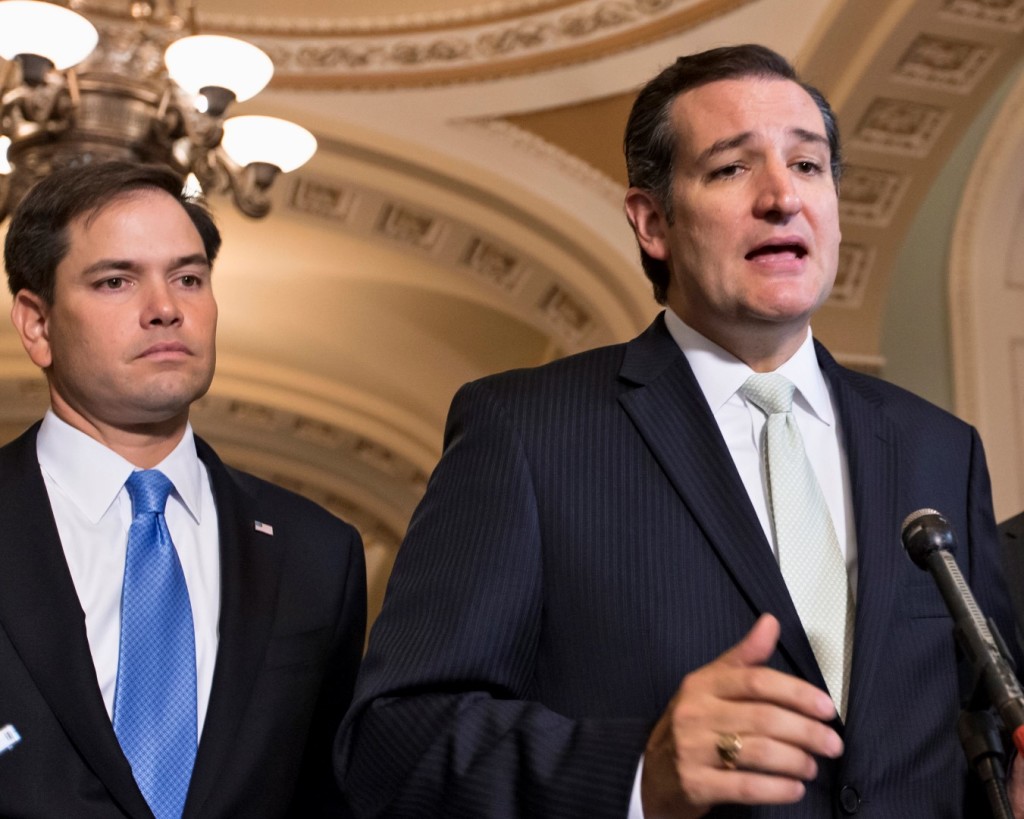
Marco Rubio says he and Ted Cruz have similar stances on immigration, which is why the Texas senator’s shots at his record on that volatile subject the past few days have surprised him. “I’m puzzled and quite frankly surprised by Ted’s attacks, since Ted’s position on immigration is not that much different than mine,” Rubio told a crowd of reporters in Orlando at the Republican Party of Florida’s Sunshine Summit. “He’s a supporter of legalizing people who were in this country illegally,” the Florida senator said at a news conference immediately after he spoke at the event. “If he’s changed that position, then he certainly has the right to change his position on that issue, but he should be clear about that.” Rubio then said that on other immigration issues Cruz has gone further than he has in trying to accommodate undocumented immigrants. “He wanted to double the number of green cards. He wanted a 500 percent increase in the number of HB-1 visas, so everybody running for president on the Republican side, in one way or shape, supports some form or fashion the legalization of people who are in this country illegally.” Rubio said the question now is what’s the most responsible way to deal with the issue. He then repeated his stance since he began distancing himself from his support as one of the “Gang of Eight” bipartisan Senate group who wrote a comprehensive immigration reform bill that the Senate passed in summer 2013, but that former House Speaker John Boehner never brought before the House. Rubio’s stance is that there needs to be tighter border security to get the illegal immigration situation under control before there can be any discussion about what to do with the undocumented. He blames the migratory crises of the summer of 2014 and President Barack Obama‘s executive actions a year ago in trying to shield millions from deportation as being the major obstacles against the current Congress working on immigration reform. “The biggest lesson from 2015 for me was how little trust there is in the federal government to enforce the law. Once you prove it to people that it’s working, than I think you’re going to have the support and political space that you need to move forward on modernization and ultimately on dealing realistically with those who are in this country for a significant period of time,” which Rubio says should be about 10 years. For his part, Cruz isn’t backing down one bit in the verbal battle, telling conservative talk show radio host Mike Gallagher earlier Friday, “From Day One I led the fight against the Gang of Eight amnesty bill, stood shoulder to shoulder with Jeff Sessions … and we defeated it.”
Alabama lawmakers welcome Paul Ryan as House speaker
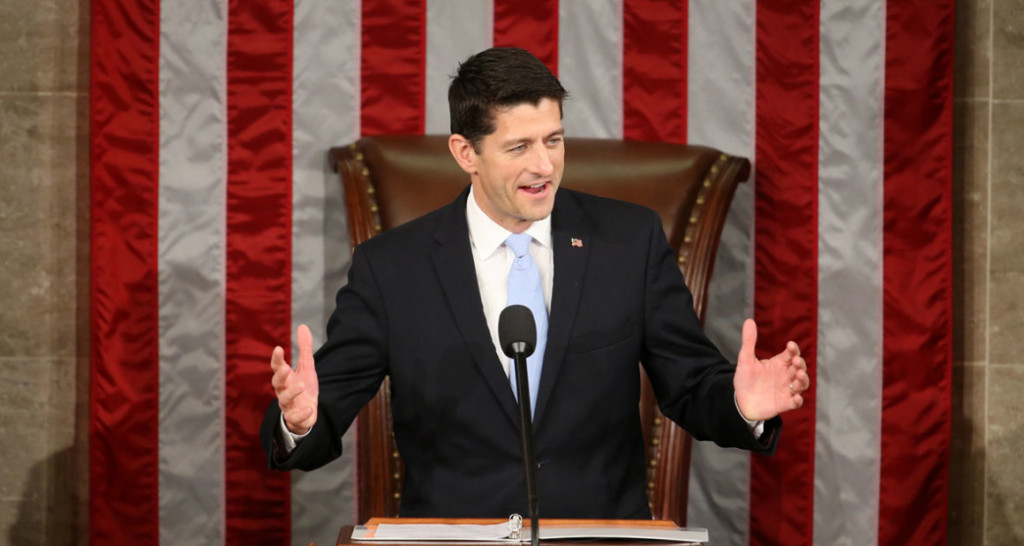
Alabama lawmakers welcomed the newly elected Speaker of the U.S. House of Representatives, Republican Rep. Paul Ryan (R-Wis.) as he took over the post from outgoing speaker Rep. John Boehner (R-OH) Thursday morning. Ryan won his Party’s nomination Wednesday afternoon before being elected speaker by the full House chamber Thursday morning. Here’s what the Alabama delegation has to say about speaker Ryan: U.S. Rep. Bradley Byrne (AL-01): Paul Ryan is a leading conservative thought leader who can unite the Republican Party and allow us to focus on advancing conservative solutions. With today’s leadership change, it is my hope the House will return to regular order and allow all Members to have a role in the legislative process. Pleased to hear @SpeakerRyan commit to regular order and a focus on empowering all Members of Congress. That’s how the House should operate. — Rep. Bradley Byrne (@RepByrne) October 29, 2015 U.S. Rep. Martha Roby (AL-02): I’m pleased House Republicans have come together to support Paul Ryan for Speaker. I’m a conservative, so I want a bold leader who can unite Republicans and advance a conservative agenda. Paul Ryan is uniquely qualified to do that, so he has my support, and I hope he will be able to lay out a path to success despite a tough political environment. New leadership is a good thing sometimes, but it doesn’t mean everyone is going to start agreeing on every issue, every time. What’s important is to have a Speaker who will listen, be fair to all the Members, and follow through with commitments. No matter who is Speaker, my job is to look out for the interests of those I represent and to fight on their behalf in Washington. Well said, @SpeakerRyan. Congratulations! https://t.co/46yZH75Gs2 — Rep. Martha Roby (@RepMarthaRoby) October 29, 2015 U.S. Rep. Mike Rogers (AL-03): I believe that Paul Ryan is the right leader to become Speaker of the House. I thank him for putting the future of our country ahead of his own ambitions, and believe now is the time for conservatives in Congress to unite together in opposition to President Obama’s reckless policies like Obamacare and Planned Parenthood. Prior to the nomination by House Republicans, U.S. Rep. Mo Brooks (AL-05) sent Ryan a letter asking him to agree to terms on immigration before it cast his vote. Upon Ryan’s agreement, Brooks said: Based on Paul Ryan’s representations and my trust that Paul Ryan is a man of his word, I will vote for Paul Ryan for House Speaker on the House Floor if he is the Republican nominee. U.S. Rep. Gary Palmer (AL-06): Speaker Ryan has been granted the opportunity by a majority of his colleagues to lead the House. I believe he is capable. This has never been about the person or personality, but about process, about restoring regular order and having the House function as the Founders designed it to and as it should. We can restore constitutional governance, representative government, which is what we have all been elected to do. After hearing Speaker Ryan’s speech, I believe we have taken a major step forward. I look forward to working with Speaker Ryan and all of my colleagues as we pursue this goal.
Paul Ryan wins Republican nomination for House speaker
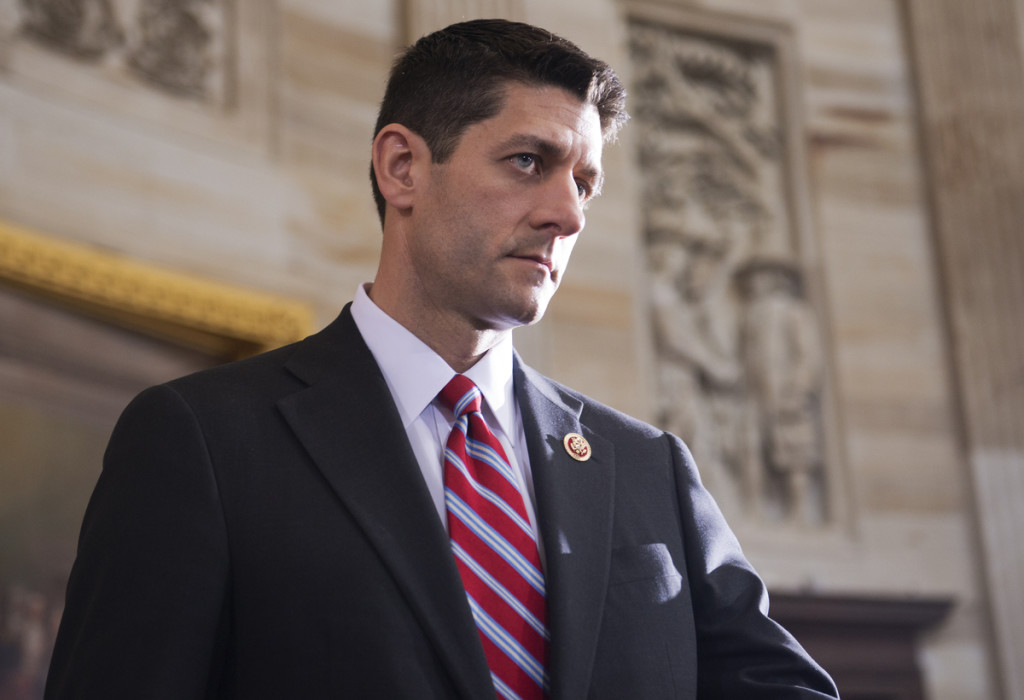
Republican Congressman Paul Ryan (R-WI) moves one step closer to becoming the next House speaker, winning his party’s closed-door nomination for the top Congressional position Wednesday afternoon. Ryan, the GOP’s vice-presidential nominee in 2012 and the current chairman of the House Ways and Means Committee, won the nomination the secret-ballot defeating rival Rep. Daniel Webster of Florida. Ryan received 200 votes compared to Webster’s 43. Next up, an official vote will take place Thursday morning on the House floor, where the House Ways and Means Committee chairman needs to secure a required 218 votes to replace retiring speaker Rep. John Boehner (R-OH), who is scheduled to leave Congress Friday. Pending tomorrow’s vote, the 45-year-old will be the youngest House speaker since Rep. James Blaine (R-ME) when he was speaker in 1869, at age 39. Last week, Ryan wrote a letter to his GOP colleagues announcing his run for speaker. Read his full letter below: Dear Colleague: Over the past few days, I’ve been thinking a lot about our country, and it’s clear to me that we’re in a very serious moment. Working families continue to fall behind, and they are losing faith in the American Idea: the belief that if you work hard and play by the rules, you can get ahead. At the same time, a weaker America has led to a more dangerous world. Our friends and rivals alike wonder whether we will pull ourselves out of this stupor. Instead of rising to the occasion, Washington is falling short—including the House of Representatives. We are not solving the country’s problems; we are only adding to them. But now, we have an opportunity to turn the page, to start with a clean slate, and to rebuild what has been lost. We can make the House a more open and inclusive body—one where every member can contribute to the legislative process. We can rally House Republicans around a bold agenda that will tackle the country’s problems head on. And we can show the country what a commonsense conservative agenda looks like. That’s why I’m actually excited for this moment. I’ve spoken with many of you over the past few days, and I can sense the hunger in our conference to get to work. I know many of you want to show the country how to fix our tax code, how to rebuild our military, how to strengthen the safety net, and how to lift people out of poverty. I know you’re willing to work hard and get it done, and I think this moment is ripe for real reform. That’s because, whatever our differences, we’re all conservatives. We were elected to defend the constitution. We share the same principles. We all believe America is the land of opportunity—the place where you should be able to go as far as your talents and hard work will take you. We all believe in empowering every person to realize his or her potential. And we have the know-how to apply these principles to the problems of today. I never thought I’d be speaker. But I pledged to you that if I could be a unifying figure, then I would serve—I would go all in. After talking with so many of you, and hearing your words of encouragement, I believe we are ready to move forward as a one, united team. And I am ready and eager to be our speaker. This is just the beginning of our work. There is a long road ahead. So let’s get started. Sincerely, Paul Ryan
Speaker John Boehner pushes for budget deal before leaving House
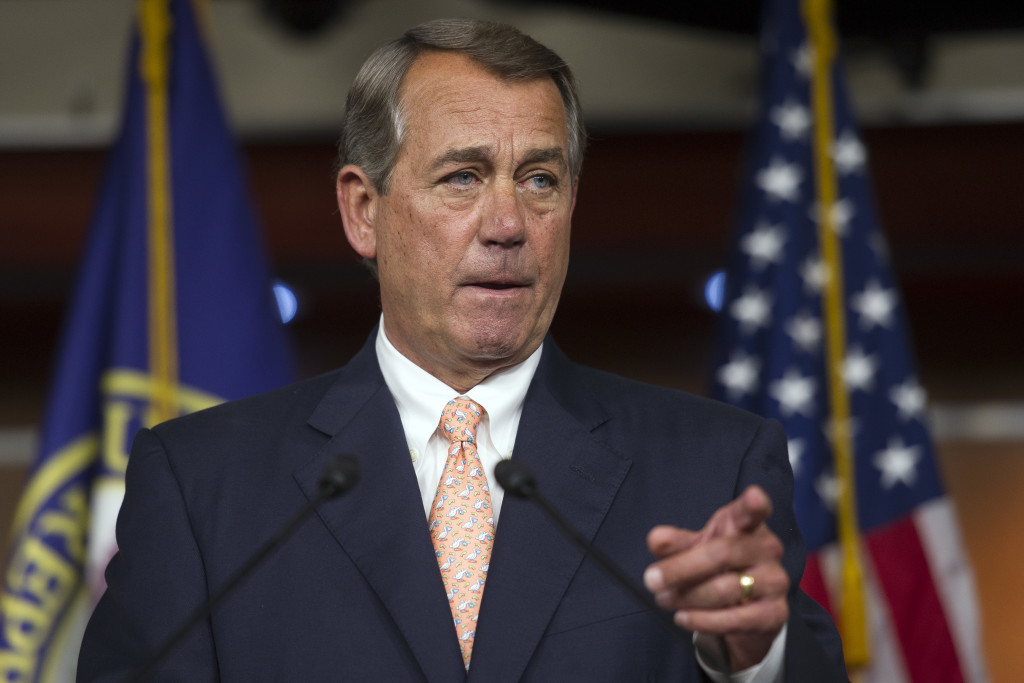
Speaker John Boehner is trying to make one last deal as he heads for the exits, pushing to finalize a far-reaching, two-year budget agreement before handing Congress’ top job over to Paul Ryan this week, congressional officials said Monday. The deal, in concert with a must-pass increase in the federal borrowing limit, would solve the thorniest issues awaiting Ryan, who is set to be elected speaker on Thursday. It would also take budget showdowns and government shutdown fights off the table until after the 2016 presidential election, a potential boon to Republican candidates who might otherwise face uncomfortable questions about messes in the GOP-led Congress. Congress must raise the federal borrowing limit by Nov. 3 or risk a first-ever default, while money to pay for government operations runs out Dec. 11 unless Congress acts. Top House and Senate aides have been meeting with White House officials in search of a deal that would give both the Pentagon and domestic agencies budget relief in exchange for cuts elsewhere in the budget. The measure under discussion would suspend the current $18.1 trillion debt limit through March 2017. After that it would be reset by the Treasury Department to reflect borrowing over that time. The emerging budget side of the deal resembles a pact that Ryan himself put together two years ago in concert with Sen. Patty Murray, D-Wash., that eased automatic spending cuts for the 2014-2015 budget years. Many conservatives disliked the measure and many on the GOP’s right flank are likely to oppose the new one, which would apply to the 2016-2017 budget years. “Fiscal negotiations are ongoing,” McConnell said as he opened the Senate on Monday afternoon. “As the details come in and especially if an agreement is reached, I intend to consult and discuss the details with our colleagues.” “We’re just trying to get something done as soon as we can,” Senate Democratic Leader Harry Reid of Nevada said earlier on Monday. Negotiators hoped to officially file the legislation Monday night but it’s not clear if they’ll meet the goal. GOP defense hawks are a driving force for an agreement. Democrats and the White House are pressing hard as well, demanding increases for domestic agencies on par with any Pentagon hikes. At the White House, press secretary Josh Earnest said: “Not everything has been agreed to. That means nothing at this point has been agreed to.” Obama wants roughly $74 billion in additional defense and non-defense spending this year to ease agency budget curbs imposed by strict spending caps set under a 2011 debt and budget deal. The measure wouldn’t provide full relief demanded by defense hawks and would award equal increases to defense and domestic programs. The pending talks focus on setting a new overall spending limit for agencies whose operating budgets are set by Congress each year. It will be up to the powerful House and Senate Appropriations committees to produce a detailed omnibus spending bill by the Dec. 11 deadline; those talks are likely to be arduous, especially as Republicans press policy provisions, known as “riders,” on a variety of topics, including the environment, travel to Cuba, and regulation of the Internet. Details were sketchy but the tentative pact anticipates designating increases for the Pentagon as emergency war funds that can be made exempt from budget caps. Non-defense spending would get an increase as well, though not the full amount demanded by Obama in his February budget. Offsetting spending cuts included reforms to the Agriculture department’s crop insurance program, a “site neutral” proposal that would curb Medicare payments for outpatient services provided by hospitals, and extending a 2 percentage point cut in Medicare payments to doctors through the tail end of a 10-year budget “window.” Lawmakers hoped to address two other key issues as well: a shortfall looming next year in Social Security payments to the disabled and a large increase for many retirees in Medicare premiums for doctors’ visits and other outpatient care. Social Security’s disability trust fund is projected to run out of money in late 2016. If that is allowed to happen, it would trigger an automatic 19 percent cut in benefits for 11 million disabled workers and their families. Congress and the White House have been discussing a temporary reallocation of payroll taxes from Social Security’s retirement fund to the disability fund. The move would be paired with changes to the disability program to fight fraud and to encourage disabled workers to return to work. Officials who described the discussions did so on condition of anonymity because they were not authorized to speak publicly about confidential negotiations. Just days are left for the deal to come together before Ryan, R-Wisconsin, is elected on Thursday to replace Boehner, R-Ohio, who is leaving Congress under pressure from conservative lawmakers disgusted with his history of seeking compromise and Democratic votes on issues like the budget. The deal would make good on a promise Boehner made in the days after announcing his surprise resignation from Congress last month. He said at the time: “I don’t want to leave my successor a dirty barn. I want to clean the barn up a little bit before the next person gets there.” Republished with permission of The Associated Press.
Mess awaits as Paul Ryan prepares to ascend to House speaker
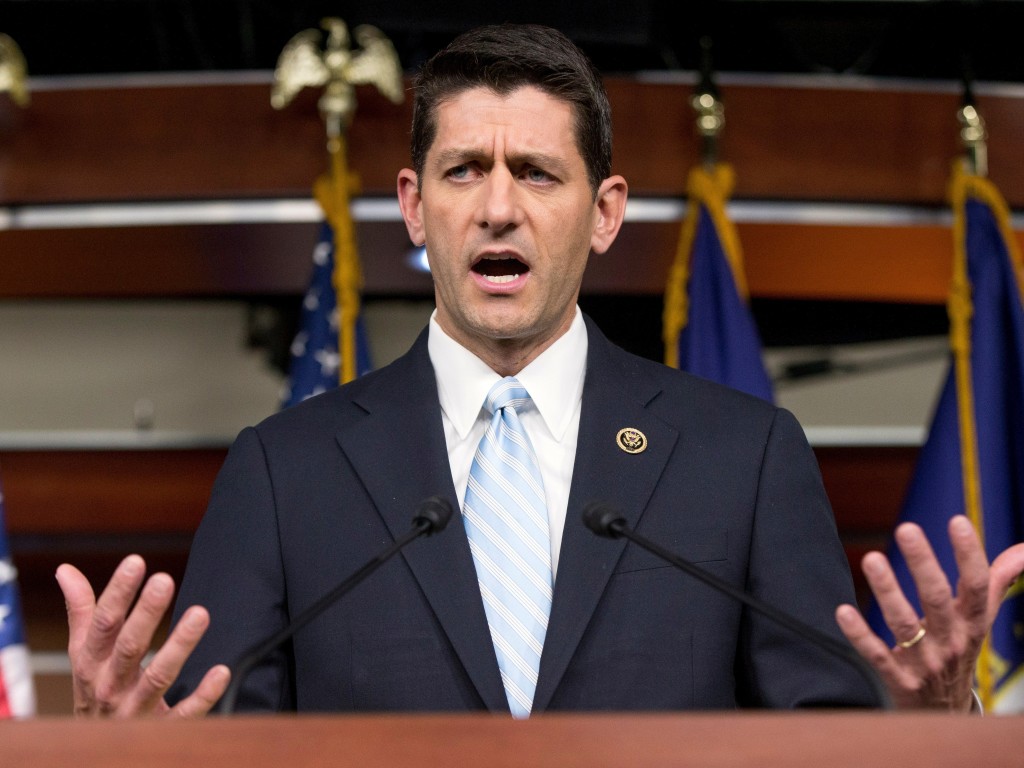
The honeymoon might be over before it even begins for House Speaker-in-waiting Paul Ryan when he is elevated to the top job this week. The Wisconsin Republican, on track to prevail in secret-ballot GOP elections Wednesday and in a full House vote Thursday, would take over at a moment of chaos notable even for a Congress where crisis has become routine. Lawmakers are barreling toward a Nov. 3 deadline to raise the federal borrowing limit or face an unprecedented government default, and there’s no plan in sight for averting it. Crucial highway funding authority is about to expire, requiring a short-term extension that no one supports. And early December will bring the next chapter in the government shutdown wars, with a must-pass deadline for spending legislation a ripe opportunity for brinksmanship. It’s all happening amid fierce fighting among Republicans, on Capitol Hill and in the presidential campaign, as angry voters demand change and establishment-aligned politicians do battle with outsiders and hard-liners. This is the atmosphere that produced Ryan’s candidacy for speaker after the incumbent, Rep. John Boehner, R-Ohio, announced his resignation under conservative pressure, and Majority Leader Kevin McCarthy, R-Calif., abruptly bowed out of competition for Boehner’s job. That led party leaders to draft a reluctant Ryan. Now Ryan, the GOP’s 2012 vice presidential nominee, will face immediate – and perhaps competing – tasks: passing must-do debt and spending bills likely to be opposed by a majority of Republicans, even while he attempts to unite a badly fractured House GOP. “I don’t know that it’s going to be the honeymoon suite. It might be some economy version,” said Rep. Matt Salmon of Arizona, one of the conservative rebels who forced Boehner out by threatening what would have amounted to a vote of no confidence on the House floor. But Salmon and other Republicans said Ryan would get leeway for how he navigates the immediate crises he inherits, including the debt ceiling, if it’s not dealt with before he assumes the speakership. “If we get six months down the road and nothing’s really changed, if we get eight months down the road and nothing’s really changed, then I think it’s, ‘Everybody needs to get a helmet’ time,’ ” said GOP Rep. Mark Amodei of Nevada. “There’s a reason John Boehner decided to resign.” After announcing his surprise plans last month to leave Congress on Oct. 30, Boehner expressed a desire to “clean the barn” of messy must-pass legislation, rather than leave it for his successor. The debt limit was at the top of the list, given the impending deadline and the reluctance of most Republicans to pass an increase without accompanying spending cuts the White House is ruling out. But Boehner has yet to announce his approach, after leadership backtracked on tentative plans to get the ball rolling with legislation linking a debt limit increase to deep spending cuts and a balanced budget plan. That bill faced certain rejection in the Senate, and partly as a result was looking short of votes among House Republicans. Now, though GOP leaders won’t yet say so, it seems inevitable that the House will end up voting on a “clean” debt ceiling increase devoid of spending cuts or other attempts at reform. Such legislation would pass with almost entirely Democratic votes. As of now GOP leaders are claiming they may not even be able to muster the 30-odd Republicans who would be needed to get it through. It’s a situation certain to provoke howls from the GOP base, especially if it ends up being the first item on a newly installed Speaker Ryan’s to-do list. Although most GOP lawmakers, including tea party-backed conservatives, seem inclined to give Ryan a pass, the same may not be true of voters egged on by conservative talk radio and outside groups. “If we have to do a clean debt limit vote on the first day … if certain people want to say that’s a signal of things to come, that it’s more of the same, that’s kind of unfair,” said GOP Rep. Tom Rooney of Florida. Ryan formalized his candidacy for speaker only after winning the support of the three major caucuses in the House GOP, representing moderate Republicans, mainstream conservatives and hard-liners. But his support from the latter group, the Freedom Caucus that pushed Boehner to the exits, will be contingent on making good on promises of changes to House rules and procedures, aimed generally at including rank-and-file lawmakers in decision-making and opening up the legislative process. Ryan’s speakership will rise or fall largely on whether he can make a sustained peace with the obstreperous Freedom Caucus, which has routinely banded together to bring down leadership-backed legislation it opposes or force confrontation on issues like immigration or trade. For now, at least some of the hard-liners are sounding an optimistic tone of unity for the House GOP. “For several years we’ve been dealing with eating crumbs off the table,” said Salmon, a Freedom Caucus member. “Now we’ve got the opportunity to sit at the table and actually partake in the meal and I think that’s a new day.” Republished with permission of the Associated Press.
AP poll: Republicans want principles, not compromise
As GOP lawmakers in the House decide whether to unite around Wisconsin Rep. Paul Ryan as the next speaker, an Associated Press-GfK poll finds Republicans nationally prefer congressional leadership that will stand on conservative principles, not compromise — even if it leads to a government shutdown. Neither party’s supporters are particularly happy with their leaders in Congress, the poll suggests. Some things to know about public opinion on Congress and its leadership from the AP-GfK poll: ___ PRINCIPLES OVER COMPROMISE Among Republicans in the poll, 62 percent say they would prefer a new speaker who will stick with conservative principles even if doing so leads to a government shutdown. Just 37 percent prefer someone who will compromise with President Barack Obama and Democrats to pass a budget. That’s a struggle the next speaker will need to handle soon. The continuing resolution that funded the government and avoided a shutdown last month expires in December. More generally, 56 percent of Republicans say they prefer leaders from their party in Congress to stick to their principles even if it makes passing legislation difficult, while just 43 percent want leaders who will compromise with the other side. There’s a deep divide within the Republican Party on the issue of principles versus compromise. Seven in 10 conservative Republicans prefer a speaker who will stick with conservative principles even if it causes a shutdown, while less than half of moderate or liberal Republicans say the same. More than 6 in 10 conservative Republicans, but just 4 in 10 moderate to liberal ones, say they generally prefer congressional leaders to stick to their principles even if it makes it difficult to pass legislation. ___ DEMS, INDIES PREFER COMPROMISE Among all those questioned, more say they would prefer that leaders from their party in Congress compromise to pass legislation rather than stick with their principles, 60 percent to 37 percent. Also, 63 percent say they want the next speaker to be someone who will compromise to pass a budget. Democrats want their own party’s leaders to compromise with the other side rather than stick to their principles at the expense of passing legislation, 76 percent to 23 percent. A majority of independents also prefer party leaders to compromise. ___ NOT FEELING LEADERSHIP LOVE People don’t feel particularly happy with current congressional leadership of either party. Majorities say both Republican and Democratic leaders in Congress don’t represent them well. Even Democrats sizing up Democratic leaders and Republicans judging GOP leaders don’t have great feelings about how well they’re represented. Just 37 percent of Democrats say Democratic leaders in Congress represent their views extremely or very well, while 47 percent say they’re represented only moderately well and 15 percent say they’re not represented well. Among Republicans, even fewer — just 22 percent — think Republican leaders in Congress represent them very well, 45 percent moderately well, and 33 percent not well. Liberal Democrats are more likely than moderate to conservative ones to feel very well represented by Democratic leaders in Congress, 50 percent to 30 percent. There’s no such difference between conservative Republicans and moderate to liberal ones, who are about equal in their opinions that congressional Republican leaders do a mediocre job of representing them. Independents feel poorly represented by congressional leadership regardless of party. Six in 10 say leaders of each party in Congress represent them not very well or not well at all. ___ CONGRESS DEEPLY UNPOPULAR Whoever takes the helm as speaker will preside over a deeply unpopular institution. Just 16 percent of respondents approve of the job Congress is doing more generally, while 83 percent disapprove. Twenty percent of Democrats and 13 percent of Republicans approve of the job Congress is doing. ___ The AP-GfK Poll of 1,027 adults was conducted online Oct. 15 to Oct. 19, using a sample drawn from GfK’s probability-based KnowledgePanel, which is designed to be representative of the U.S. population. The margin of sampling error for all respondents is plus or minus 3.3 percentage points. Respondents were first selected randomly using telephone or mail survey methods, and later interviewed online. People selected for KnowledgePanel who didn’t otherwise have access to the Internet were provided access at no cost to them. Republished with permission of the Associated Press.
Paul Ryan seeks unity from House GOP to run for speaker
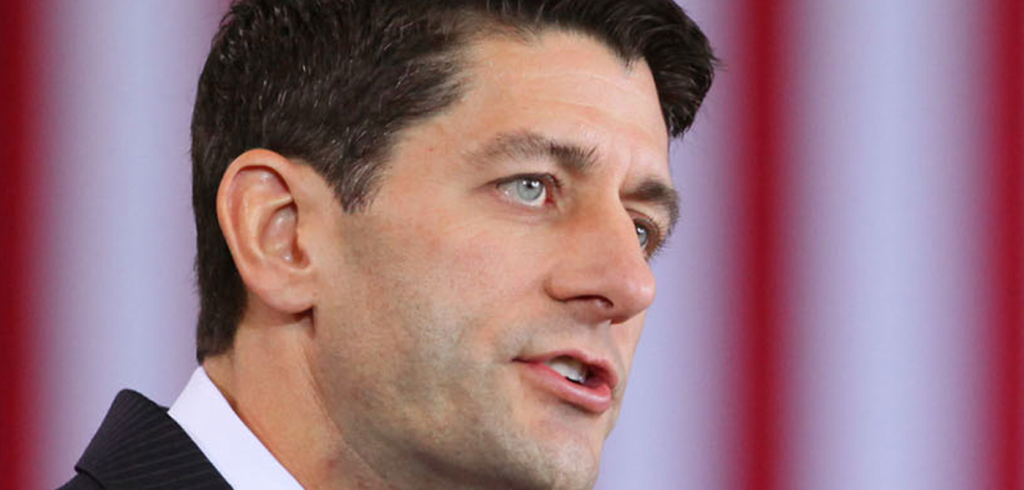
Wisconsin Rep. Paul Ryan says he’s got to have unity from divided House Republicans before he will serve as their speaker, a tall order as the split between GOP pragmatists and hardliners all but paralyzes Congress and roils the presidential race. Ryan’s message to his colleagues: Embrace him as their consensus candidate by week’s end or he won’t seek the job, plunging the House into deeper chaos with deadlines on an unprecedented government default and the budget fast approaching. It’s a big “if” for a House GOP that’s careened from one crisis to another in recent years, with a compromise-averse band of conservative hardliners forcing a partial government shutdown two years ago, ultimately driving current Speaker John Boehner to announce he’ll resign and then scaring off his No. 2. Boehner is moving quickly to try to resolve the issue, telling Republicans Wednesday morning that the GOP will meet next Wednesday to vote on a candidate to replace him. The full House would then choose its new speaker on Thursday. That’s if all goes according to plan. Meanwhile, Ryan, the GOP’s 2012 vice presidential nominee, has been dragged into seeking a job he never wanted. As he announced late Tuesday that he would seek the speakership, Ryan made clear he would do so only with conditions. He wants the endorsement of the major caucuses of the House, including the hardline Freedom Caucus. That’s the group whose threats against Boehner pushed him to announce he would resign by month’s end and forced Majority Leader Kevin McCarthy to abruptly drop his campaign to replace him. Members of the Freedom Caucus quickly expressed reservation about some of Ryan’s conditions for pursuing the job, including his insistence on cutting back on the responsibilities to spend time with his wife and three school-age children. “No other speaker candidate came in and said here’s the list of my demands, either meet those or I’m not going to do this,” said Rep. Tim Huelskamp of Kansas. “Speaker’s a big job. And it’s not a 9-to-5 job. So there are a lot of questions to be answered.” “There is a plethora of candidates for speaker of the House out there who have the time necessary to do the job,” said Rep. Mo Brooks of Alabama. Boehner said he was fairly confident the various factions would coalesce around Ryan. “I think Paul is going to get the support that he’s looking for,” the speaker told reporters. “He laid out a very clear vision of how he would run the speakership. I thought the members responded very well to it.” Coming days will tell if Ryan can indeed win the support he needs, or become the latest victim of the GOP divide. Outsider candidates, especially Donald Trump, have shaken the GOP presidential campaign to the consternation of mainstream party leaders who fear the fighting could lead to a third straight Democratic White House administration. “I came to the conclusion that this is a very dire moment, not just for Congress, not just for the Republican Party, but for our country. And I think our country is in desperate need of leadership,” Ryan said. “What I told members is if you can agree to these requests and if I can truly be a unifying figure, then I will gladly serve, and if I am not unifying, that is fine as well – I will be happy to stay where I am.” Ryan had avoided getting drawn into the speaker’s contest, saying he would prefer to stay on as chairman of the tax-writing Ways and Means Committee, which he’s described as his dream job. But with chaos ahead and the prospect of even more of it if he passed on the job, Ryan reconsidered under pressure from party leaders. Congress is hurtling toward an early November deadline to raise the federal borrowing limit or invite a first-ever default, and a deadline to pass spending legislation or risk a government shutdown will follow in early December. The 45-year-old Ryan gave his colleagues until Friday to express their support. Members of the Freedom Caucus said they would meet with Ryan later Wednesday, but for now were sticking with their endorsement of another candidate, Rep. Daniel Webster of Florida, a former speaker of the House in Florida who’s focused on “pushing down” on what he calls the “pyramid of power” in the House. Webster and the other potential candidates, a dozen or so in all, lack Ryan’s stature and broad support and it’s not clear if any of them could gather the needed backing to become speaker. “If Paul Ryan can’t get 218, no one can,” said Rep. Carlos Curbelo, a Florida Republican, citing the number of votes needed for a majority on the House floor. Ryan laid out a number of conditions under which he would serve, aimed at defusing an atmosphere of constant chaos and crisis that has hung over the House as Tea Party-backed lawmakers pushed for confrontation with the White House and demanded changes that the strictures of divided government never could deliver. He said he encourages changes to rules and procedures – something eagerly sought by members of the Freedom Caucus who claim they’ve been shut out of legislating in the House. But he said any such changes must be made as a team, with input from all. Ryan also sought a change in the process for a “motion to vacate the chair” – the procedure conservatives were threatening against Boehner, which would have resulted in a floor vote on his speakership and ultimately drove him to resign. “He said he’s willing to take arrows in his chest, but not in his back,” said Rep. Peter King of New York. But several conservatives said they were particularly troubled by Ryan’s demand to change the motion to vacate, with some calling it a non-starter. Republished with permission of The Associated Press.
Prospective speakers multiply in House as all wait on Paul Ryan
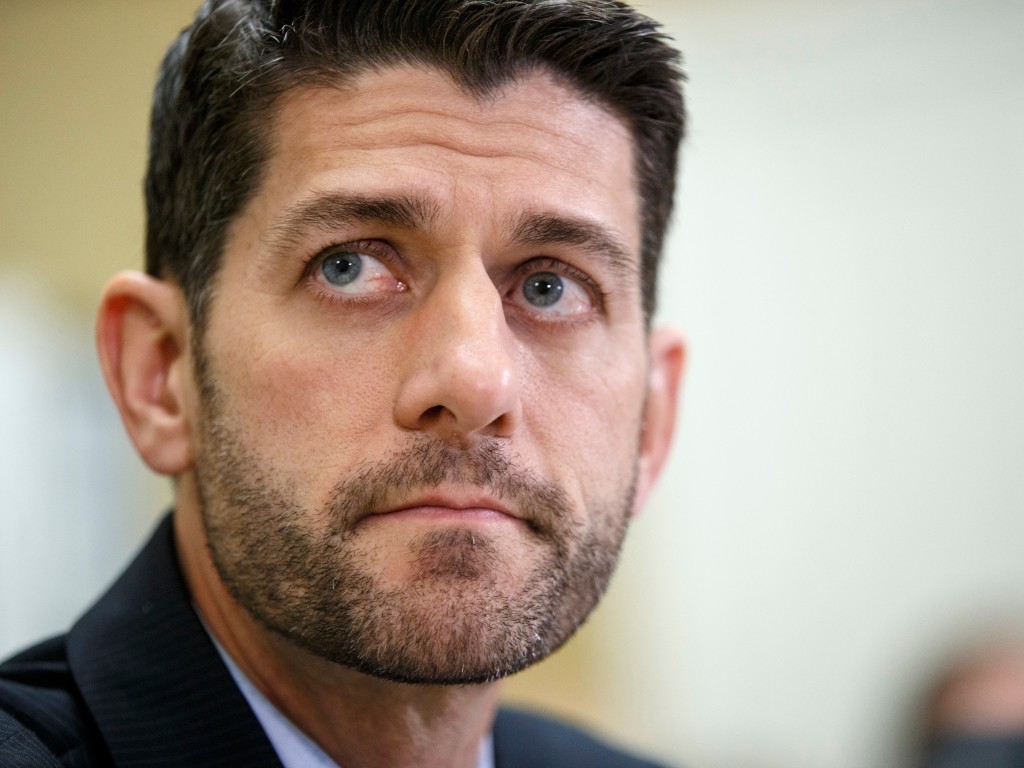
Every day another Republican lawmaker seems to wake up and decide that he – and in at least one case, she – might make a pretty good speaker of the House. The profusion of potential candidates, now approaching double digits, is happening even with all attention focused on Wisconsin Rep. Paul Ryan, the former GOP vice presidential nominee widely seen as the best person for the job. Ryan, who has made clear he does not want to be speaker, is home in Janesville, Wisconsin, thinking it over anyway under pressure from top party leaders. And with Congress out of session for a weeklong recess, Capitol Hill has fallen quiet after a series of wild days during which Speaker John Boehner shocked the House by announcing his planned resignation, and Boehner’s heir apparent, Majority Leader Kevin McCarthy, abruptly took himself out of the running. The stunning developments left a leadership vacuum at the pinnacle of Congress. Now into it are stepping a growing number of Republican lawmakers from around the country, some relative newcomers, others with experience to point to, united by a chance to lunge at the once-in-a-lifetime opportunity to become speaker of the U.S. House, second-in-line to the presidency. Why any of them would want a job that defeated the current occupant and scared off his No. 2 is another question. The daunting rift between establishment-minded lawmakers and the hard-line conservatives who pushed Boehner to the exits shows no sign of dissipating, and threatens to complicate life for whoever next occupies the speaker’s chair. Congress also faces a series of formidable tasks over the next several months, including increasing the federal borrowing limit to avoid a default and paying the government’s bills to stave off a shutdown. Nevertheless, the wannabe speakers are multiplying. “I am humbled to have my name mentioned as a potential candidate, and I am considering the pursuit of the speakership in response to those requests,” Rep. Bill Flores, R-Texas, wrote in a letter to fellow House members Wednesday. “If we all spend enough time on our knees praying for each other, we can heal our divisions and truly work together to restore America to the ‘Shining City on a Hill’ that President Reagan challenged us to become.” Rep. Mike Pompeo, R-Kansas, released a statement observing: “I know every member of the House is looking for the right person. If I can serve the American people and the conservative movement in any way, sign me up. However, a couple weeks ago I was floated as a presidential candidate, so I might be pretty busy.” And a freshman congressman from Montana, Ryan Zinke, got into the action. “We’re looking at it. Our phones are ringing off the hook because I think America wants something different,” Zinke said. “I haven’t decided, but what I have decided is that Congress better do our duty and defend our values of this country.” Several of the lawmakers sought to make clear that they were being urged by their fellow Republicans to run for speaker; not doing so out of their own ambitions. And several also took pains to make clear that they would run only if Ryan does not. “We are all hopeful that Paul is going to say that he would appreciate the opportunity to serve as speaker,” said Rep. Marsha Blackburn of Tennessee, adding that she’s been encouraged by colleagues to look at the job. “It is going to take a listening ear and a steady head to walk our conference through some of these issues,” she said. Others who’ve suggested their interest in the speakership, or contacted fellow lawmakers to sound them out, include GOP Reps. Michael McCaul and Michael Conaway of Texas, Lynn Westmoreland of Georgia, and Darrell Issa of California. Reps. Daniel Webster of Florida and Jason Chaffetz of Utah were running against McCarthy before he dropped out, and remain in the race. Still others, such as Rep. Matt Salmon of Arizona, have seen their names pushed by outside groups seeking new leadership for the House GOP. “These are all really, really, good people, and I think if they could convince the conference that they would run the conference in a way that’s more member-oriented, many of them could be good speakers,” GOP Rep. Mick Mulvaney of South Carolina, a founding member of the hard-line House Freedom Caucus, said in an interview after several potential candidates contacted him to gauge support. Although Ryan would be the prohibitive favorite for the job if he does seek it, Mulvaney and others disputed arguments that he’s the only one who could unite the House GOP. Ryan, an expert on budgetary matters who chairs the tax-writing Ways and Means Committee chairman, is already drawing criticism from some on the right for his support for comprehensive immigration legislation and government bailouts. “I like him and I respect him, and I think there are a number of directions he might take us that I don’t want to go, and immigration is one of those,” said Rep. Steve King, R-Iowa. “I don’t think he would be one who would transform (the House) and turn it into a membership-driven organization and I think this is our one chance to do that.” Republished with permission of the Associated Press.
Analysis: GOP is party desperately in search of a leader
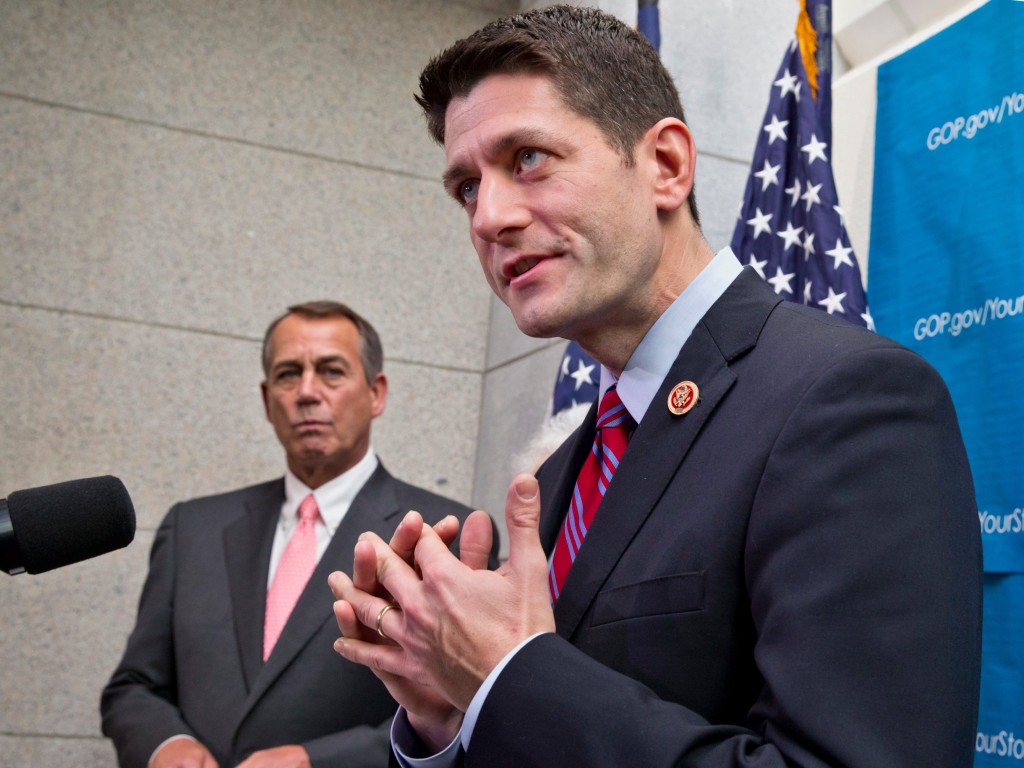
The GOP is a party in chaos, desperately in search of a leader. In the unruly U.S. House, Republicans enjoy a near-historic majority, yet deep divisions between ultra-conservatives and more traditional GOP lawmakers have left them at a loss over who should be in charge. In the Republican presidential primary, experienced governors and senators – long the party’s national leaders-in-waiting – are overshadowed by outsiders like Donald Trump who only seem to get stronger as they challenge the GOP establishment. Trump even claimed he helped push California Rep. Kevin McCarthy out of the race for House speaker this week, a shocking pullback by a lawmaker seen as the heir apparent. “They’re giving me a lot of credit for that, because I said you really need somebody very, very tough,” said Trump, the brash billionaire who has led GOP primary polls throughout the summer and fall. McCarthy was felled by the same factors that led current Speaker John Boehner to announce his resignation: a rebellion among members sent to Washington by voters who believe the party has compromised far too often with President Barack Obama and congressional Democrats. The challenge now facing Republicans is not only looking for leaders to unite the party’s warring factions, but determining whether finding them is even possible. For all the talk about ideology, the split among Republicans is often more about tactics. Boehner and McCarthy are both staunchly conservative lawmakers, but members elected in the tea party-era openly question whether they can be trusted to hold the line in budget negotiations and on other matters. In the House, some Republicans are begging Wisconsin Rep. Paul Ryan to step into the void. Ryan is no more conservative than Boehner – like the outgoing speaker, he has called for immigration reform – but he’s widely respected in the party and seen as one of its intellectual leaders. “It would be hard for people to confront Paul Ryan and say he’s not a good Republican or he’s not loyal,” Rep. Peter King, R-N.Y., said. “He has the stature nobody else has right now.” Yet it’s telling that Ryan, a budget expert and the GOP’s vice presidential pick in 2012, has so far said he doesn’t want the job. He’s left the clear impression that ascending to speaker in the current political environment would be more detrimental than helpful to his political future, which includes White House ambitions. Indeed, the next speaker will face a quick test to corral lawmakers who equate compromise with surrender. Congress must lift the nation’s debt limit by early November in order to avoid a default and faces a Dec. 11 deadline to pass a budget and keep the government open. A protracted fight over either issue would spill into the GOP presidential primary, forcing candidates to pick sides between the House’s small but vocal “hell no” caucus and leaders who warn the party would take the blame for a default or a federal shutdown. The risk for the party establishment is that those fights could harden support for presidential candidates running as political outsiders, namely Trump as well as retired neurosurgeon Ben Carson and former technology executive Carly Fiorina. Predictions that Trump, and now Carson and Fiorina, would fade in polls have so far proved unfounded, yet few Republican strategists believe any of the three could win the general election. If former Florida Gov. Jeb Bush, Sen. Marco Rubio or another experienced politician does become the GOP nominee, it’s unclear whether the hardliners would fall in line or simply abandon the party on Election Day by not showing up or backing a third-party contender. For Republicans aghast at the turmoil roiling their party, there’s this to cling to: The GOP’s electoral prospects beyond the White House remain strong. They’re sure to keep control of the House thanks to heavily gerrymandered districts, they have a legitimate shot at holding the Senate, and their prospects are good in several governors’ races. And while Democrats have demographic advantages in the presidential race, given their strength with Hispanics, blacks and younger Americans, voters may simply prefer a change rather than giving the party a third straight term in the White House. At least a few Republicans also appear to be clinging to the hope that the current chaos marks the low point for the party, not the start of a deeper descent. “It’s a rocky, difficult period,” said Rep. Tom Cole of Oklahoma, a Boehner ally. “But it’s probably a cathartic moment as well.” Republished with permission of the Associated Press.
