
Tom Kaine emerges as favorite in Hillary Clinton’s VP search
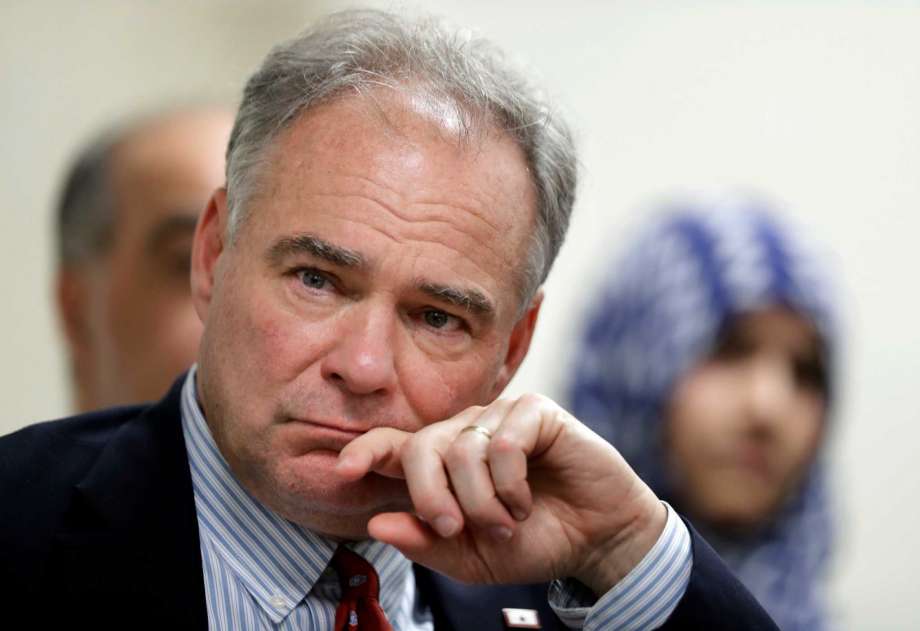
Virginia Sen. Tim Kaine has emerged as the leading contender to join the Democratic ticket as Hillary Clinton‘s running mate, according to two Democrats, who both cautioned that Clinton has not made a final decision and could yet change directions. The announcement of Clinton’s pick could come as early as Friday afternoon in Florida, a crucial general election battleground state. The timing is aimed at shifting attention away from the end of Donald Trump’s Republican convention and generating excitement before the start of Clinton’s own convention next week in Philadelphia. Kaine, 58, has been a favorite for the vice presidential slot since the start of Clinton’s search process. He has been active in the Senate on foreign relations and military affairs and built a reputation for working across the aisle as Virginia’s governor and mayor of Richmond. “I’m glad the waiting game is nearly over,” Kaine told reporters Thursday after an event in northern Virginia, deflecting questions about whether he was about to join the ticket. Agriculture Secretary Tom Vilsack, a longtime friend of Hillary and Bill Clinton, is still in the mix, according to one of the two Democrats, who is close to the Clintons. Both Democrats are familiar with the selection process and spoke on the condition of anonymity because they were not authorized to discuss it publicly. Clinton’s campaign declined to comment. Kaine’s selection would not be without complication. Liberals have expressed wariness of Kaine for his support for free trade, including the Trans-Pacific Partnership — which both Clinton and primary rival Bernie Sanders oppose. They also note that Kaine recently signed onto a letter asking for less burdensome regulation of regional banks. If Kaine was selected for the ticket, Virginia Gov. Terry McAuliffe, a Democrat and ally of the Clintons, would choose a temporary replacement, but the race for the remainder of Kaine’s term would take place in 2017, raising the possibility that Republicans could win the seat. Vilsack is the longest-serving member of President Barack Obama‘s Cabinet and has known Clinton for years. He first met her through his late brother-in-law, who worked with Clinton on the Watergate Committee in 1972, and she campaigned for Vilsack in 1998 during his surprise victory as Iowa governor. If he was added to the ticket, Vilsack could help Clinton in Iowa and connect with rural America. He also has a compelling personal story: He was orphaned at birth in Pittsburgh and his mother struggled with alcohol and drug addiction. He was traveling in Missouri this week to discuss the perils of drug abuse and the opioid epidemic. Clinton has also considered Massachusetts Sen. Elizabeth Warren, a favorite of liberals; Colorado Gov. John Hickenlooper; Labor Secretary Tom Perez; and Housing and Urban Development Secretary Julian Castro. Clinton opens a two-day campaign swing Friday in Florida. She’s expected to unveil her running mate at either a Friday afternoon rally at the state fairgrounds in Tampa or at a Saturday event at Florida International University in Miami, where two-thirds of the student body is Hispanic. The two locations give Clinton’s campaign the flexibility to make the announcement at the most optimal time. The campaign is expected to first inform donors, volunteers and activists by text message and has been encouraging supporters to sign up for such an update. After the convention, Clinton and her vice presidential choice will depart on a campaign bus tour, reminiscent of Bill Clinton’s “First 1,000 Miles” tour with Al Gore after the party’s 1992 convention. Kaine is a former chairman of the Democratic National Committee and worked as a lawyer on fair housing and civil rights issues. He has been considered a leading vice presidential contender for weeks based on his broad political experience in Virginia, another presidential battleground. “One of the main reasons that I’m being considered is because of Virginia,” Kaine said. “It’s not necessarily just because of me. It’s because Virginia is really important.” The Virginian is seen as a safe choice against Trump and his running mate, Indiana Gov. Mike Pence. Kaine could help Clinton woo moderate voters who have been turned off by Trump’s provocative rhetoric. Kaine campaigned with Clinton last week in northern Virginia, where he spoke briefly in Spanish and argued that Trump was unqualified, untested and untrustworthy. “Do you want a ‘you’re fired’ president or a ‘you’re hired’ president,” Kaine said in Annandale, Virginia, as Clinton nodded. “Do you want a trash-talking president or a bridge-building president?” Kaine took a year off from law school as a young man to work with Jesuit missionaries at a vocational school in Honduras. His friends have described him as someone steeped in his convictions and his Roman Catholic faith. He and his wife, Anne Holton, are longtime members of Richmond’s St. Elizabeth Catholic Church, a predominantly black congregation in a poor part of town. A native of Kansas City, Missouri, Kaine moved to Virginia after meeting Holton at Harvard Law School. She currently serves as Virginia’s secretary of education and is the daughter of former Virginia Gov. A. Linwood Holton Jr., a Republican. The couple have three children; their eldest son, Nat, is serving as a Marine. Republished with permission of the Associated Press.
GOP team addresses America Saturday
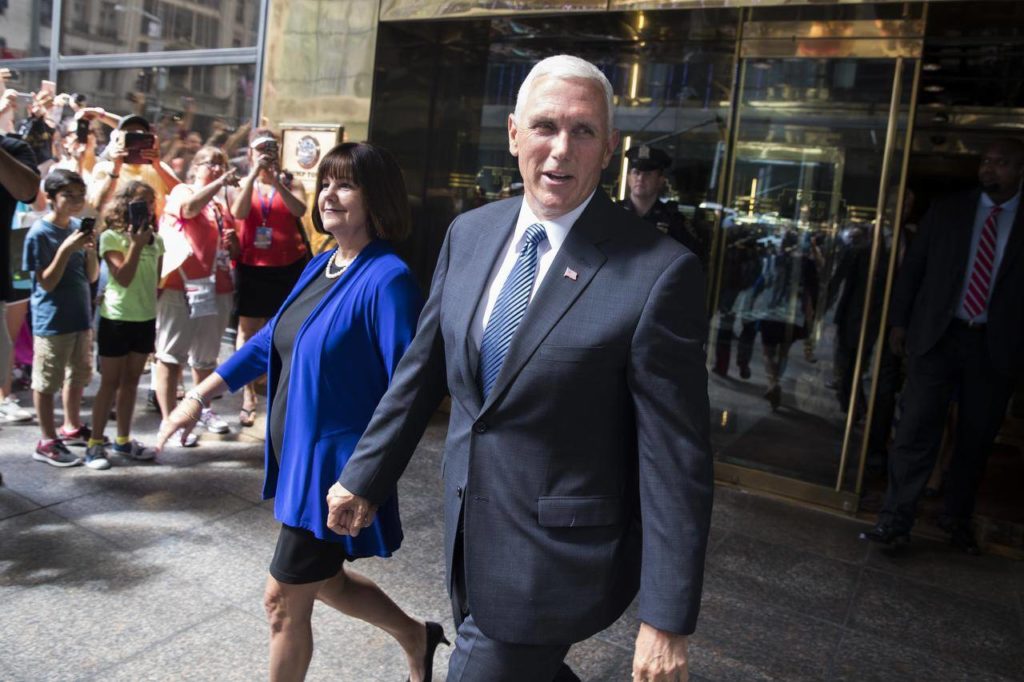
After frenzied, final decision-making, Donald Trump announced Indiana Gov. Mike Pence as his running mate Friday, adding an experienced politician with deep Washington connections to the Republican presidential ticket. Trump’s pick was aimed in part at easing some Republicans’ concerns about his temperament and lack of political experience. Pence spent 12 years in Congress before being elected governor and his demeanor is as calm as Trump’s is fiery. While some conservatives are skeptical of Trump’s political leanings, Pence has been a stalwart ally on social issues. Yet Pence is largely unknown to many Americans. And his solidly conventional political background runs counter to Trump’s anti-establishment mantra. The two men scheduled a news conference for Saturday in New York to present themselves to America as the Republican team that will take on Hillary Clinton and her Democratic running mate in November. The duo will head to Cleveland next week for the Republican National Convention. As Pence arrived for a private meeting with Trump Friday, he told reporters he “couldn’t be more happy for the opportunity to run with and serve with the next president of the United States.” In choosing Pence, Trump appears to be looking past their numerous policy differences. The governor has been a longtime advocate of trade deals such as NAFTA and the Trans-Pacific Partnership, both of which Trump aggressively opposes. Pence also has been critical of Trump’s proposed temporary ban on foreign Muslims entering the United States, calling the idea “offensive and unconstitutional.” The reaction to the Pence choice from Republican officials was overwhelmingly positive — no small feat for Trump, given how polarizing he’s been within his own party. “It was a pick that clearly shows he is pivoting to the general election,” said GOP chairman Reince Priebus, who was in the midst of an interview with The Associated Press when Trump announced his decision. “He is choosing a person who has the experience inside and outside Washington, Christian conservative, very different style that I think shows a lot of maturity.” Pence, a staunchly conservative 57-year-old, served six terms in Congress before being elected governor and could help Trump navigate Capitol Hill. He is well-regarded by evangelical Christians, particularly after signing a law that critics said would allow businesses to deny service to gay people for religious reasons. Clinton’s campaign moved quickly to paint him as the “most extreme pick in a generation.” “By picking Mike Pence as his running mate, Donald Trump has doubled down on some of his most disturbing beliefs by choosing an incredibly divisive and unpopular running mate,” said John Podesta, Clinton’s campaign chairman. Clinton spent Friday holding meetings in Washington about her own vice presidential choice. Massachusetts Sen. Elizabeth Warren, a favorite of liberals and one of the Democrats’ most effective Trump critics, and Colorado Gov. John Hickenlooper, were seen in separate cars that left Clinton’s home. Housing Secretary Julian Castro also met with Clinton, according to a person familiar with the meeting who spoke on condition of anonymity to describe the private gathering. Trump spent weeks weighing vice presidential contenders, including former House Speaker Newt Gingrich and New Jersey Gov. Chris Christie, and only zeroed in on Pence in recent days. In fact, the selection process appeared on the verge of sliding out of control in the final hours before the announcement, sparking speculation that Trump might be changing his mind. Word that Pence would be joining the Republican ticket began trickling out in news reports Thursday before Trump had made a final decision or called Pence to offer him the job, according to a Republican familiar with the situation. Trump was in California for fundraisers, separated from his closest aides, and was fuming about leaks that he viewed as an attempt to pressure him into the decision. Still, Trump called Pence Thursday afternoon to offer him the job and ask him to fly to New York for a Friday morning news conference. Pence accepted and boarded a private plane, along with his wife. A few hours later, a huge truck barreled through a crowded holiday celebration in Nice, France, killing more than 80 people. With Pence sitting in a New York hotel, Trump decided to postpone the announcement. The billionaire businessman then went on Fox News to say he had not yet settled on his “final, final” choice. He also held a midnight conference call with his top aides to discuss the situation, according to two people with knowledge of the call. By Friday, plans were back on track. Trump sent out a Twitter message saying he was pleased to announce Pence as his running mate. Moments later, one of Pence’s aides filed paperwork with the Indiana Secretary of State’s office withdrawing him from the governor’s race. Pence was up for re-election, and state law prohibits candidates from being on ballots in two contests. Trump’s formal announcement came about an hour before Pence’s noon Friday deadline for withdrawing. Paul Manafort, Trump’s campaign chairman, strongly rejected suggestions that the candidate considered changing his mind about Pence. “Never waffled once he made his decision,” Manafort wrote in an email. Gingrich, one of the finalists for the vice presidential spot, said he was “very comfortable” with Trump’s decision and praised Pence as someone who could help unite the party. But as of Friday afternoon, Gingrich had yet to share his support with Trump himself. He told The Associated Press he had not received a call from Trump telling him he wasn’t getting the job. Meanwhile, Trump did speak with Christie, according to a person familiar with their conversation. Ironically, Christie traveled with Trump to Indiana in April to help introduce the candidate to Pence when Trump was trying to win his endorsement ahead of India’s primary. Pence endorsed Trump’s rival Ted Cruz instead. Republished with permission of the Associated Press.
