
Presidential Primary Brief: 280 days until Election Day
28 days until AL Presidential Primary 280 days until Election Day Convention Dates: Republican July 18-21, 2016, Democratic July 25-28, 2016 Weekly Headlines: Skipping debate, Donald Trump gambles with Iowa Pressure grows on Paul to ditch presidential bid Poll: Sanders and Clinton in tight battle for Iowa Press Clips: Sanders challenges Clinton to 3 new debates (Politico 1/27/16) Hours after Hillary Clinton ratcheted up her pressure on him to accept an invitation to an unsanctioned debate on Feb. 4, Bernie Sanders escalated the debate by calling for three new debates. “From the beginning of this campaign Sen. Sanders has called for more debates. Secretary Clinton has not. Now she is asking to change the rules to schedule a debate next week that is not sanctioned by the DNC. Why is that? The answer is obvious. The dynamics of the race have changed and Sen. Sanders has significant momentum,” said Sanders campaign manager Jeff Weaver in a statement on Wednesday night, while Sanders was speaking to a packed audience here. Trump gets backing of S.C. lieutenant governor (Politico 1/27/16) South Carolina Lt. Gov. Henry McMaster has thrown his support behind Donald Trump and will appear alongside him at a rally Wednesday .In a statement from the Trump campaign, McMaster said he is “delighted” to support the businessman. “He is a man of accomplishment and speaks the truth in words everyone can understand, instills confidence in the people about our country’s bright future, and reflects and believes in the strength and determination necessary for success,” McMaster said. “These qualities — and his quiet compassion for those in need — are essential to ‘making America great again.’” Faith and the 2016 campaign (Pew Research Center 1/27/16) The conventional wisdom in American politics has long been that someone who is not religious cannot be elected president of the United States. Most Americans have consistently said that it is important to them that the president have strong religious beliefs. And a new Pew Research Center survey finds that being an atheist remains one of the biggest liabilities that a presidential candidate can have; fully half of American adults say they would be less likely to vote for a hypothetical presidential candidate who does not believe in God, while just 6% say they would be more likely to vote for a nonbeliever. Jeb Bush super PAC cash plummets (Politico 1/31/16) The super PAC dedicated to former Florida Gov. Jeb Bush’s flagging campaign for the GOP presidential nomination raised $15 million in the second half of the year ― a massive drop- off from the $103 million it raised in the first half ― according to a report filed Sunday night with the Federal Election Commission. The super PAC, Right to Rise, spent $54 million between the beginning of July and the end of last year, leaving it with $59 million in the bank at the beginning of this year, according to the report. Donald Trump reclaims lead in latest Iowa poll (USA Today 1/30/16) Donald Trump has muscled ahead in Iowa, regaining his lead on the brink of the first votes being cast in the 2016 presidential race. Trump stands at 28 percent, while rival Ted Cruz has slid to 23 percent. But there’s still a strong case for Cruz in this race — he’s more popular and respected than Trump, the final Des Moines Register/Bloomberg Politics Iowa Poll shows. “The drill-down shows, if anything, stronger alignment with Cruz than Trump, except for the horse race,” said J. Ann :, the pollster for the Iowa Poll. Fact check: The seventh Republican debate (USA Today 1/29/16) The Republican presidential candidates debated in Iowa Jan. 28 and stretched the facts: Sen. Marco Rubio went too far in claiming that Hillary Clinton “wants to put Barack Obama on the Supreme Court.” An Iowa resident suggested such an appointment to Clinton, and she said she’d take it “under advisement.” Rubio also said that the White House “still refuses to acknowledge” that the shooting of a Philadelphia police officer on Jan. 7 “had anything to do with terror.” DNC expected to sanction Feb. 4 debate in New Hampshire (Politico 1/31/16) The Democratic National Committee will formally sanction the Feb. 4 debate in New Hampshire, hosted by MSNBC, the network announced on Sunday. The debate will be held at University of New Hampshire in Durham at 9 p.m. ET and will be moderated by MSNBC anchors Chuck Todd and Rachel Maddow. All three Democratic presidential candidates, former secretary of state Hillary Clinton, Sen. Bernie Sanders and former Gov. Martin O’Malley are expected to attend. Email issues dog Hillary Clinton on eve of Iowa caucuses (New York Times 1/31/16) This is not what Hillary Clinton wanted to discuss the morning before the Iowa caucuses. But, in her brief appearance on ABC’s “This Week” on Sunday, Mrs. Clinton found herself defending her use of a private email server while serving as secretary of state and reinforcing that she did not knowingly send or receive classified emails. “She lied about the fact that there is nothing classified on my server. Why as long as you can get away with it?” Carly Fiorina says in ABC’s introduction of Mrs. Clinton, who appeared on the show right before her main rival, Senator Bernie Sanders of Vermont. “She put our national security at risk for her convenience,” Chris Christie says.
Turnout is name of the game in Monday’s Iowa caucuses
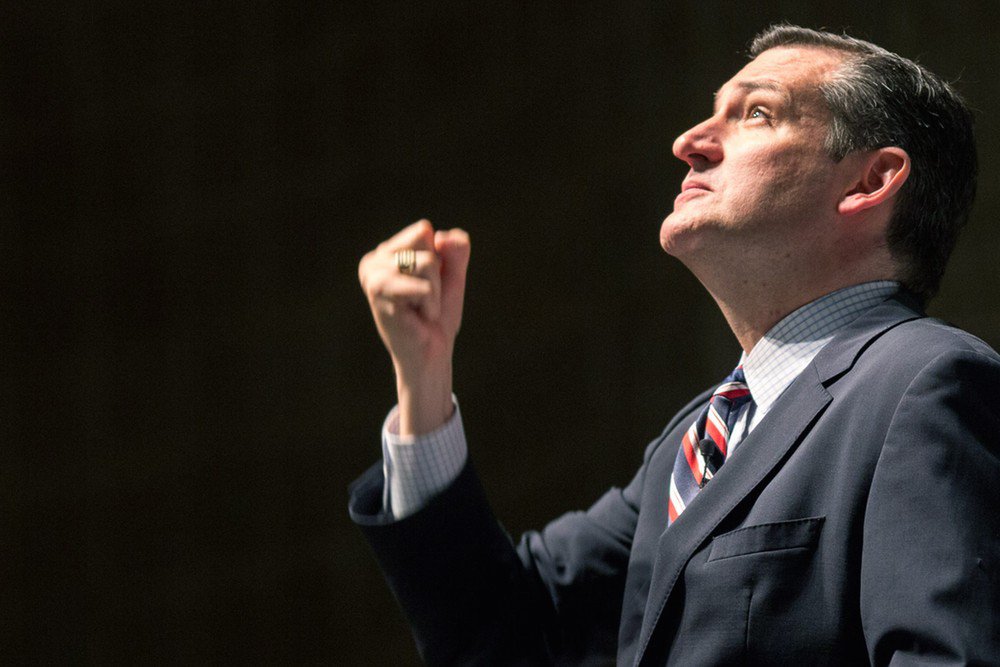
In a final frenzy to inspire supporters to turn out for Monday’s Iowa caucuses, the presidential contenders scrambled to close the deal with the first voters to have a say in the 2016 race for the White House. The result Sunday was a blur of sometimes conflicting messages. Even as the candidates begged backers to caucus, many hopefuls also tried to lower expectations and look ahead to the New Hampshire primary on Feb. 9 and later contests. Republican Donald Trump, who has a slight edge over Ted Cruz in Iowa, predicted that “many” senators “soon” would endorse him rather than their Texas colleague. Trump didn’t name any such senators, and none immediately emerged. Democratic Hillary Clinton, in a tight race with Vermont Sen. Bernie Sanders, suggested that political point-scoring helped explain the hubbub over the State Department’s announcement Friday that it was withholding some emails on the home server she used while secretary of state. One development — the weather — was beyond the candidates’ control. A snowfall forecast to start Monday night appeared more likely to hinder the hopefuls in their rush out of Iowa than the voters. Republican John Kasich already has decamped to New Hampshire. Iowa offers only a small contingent of the delegates who will determine the nominees, but the game of expectations counts for far more than the electoral math in the state. Campaigns worked aggressively to set those expectations in their favor (read: lower them) for Iowa, New Hampshire and beyond. Meantime, a pastor at a church outside Des Moines urged politicians to treat their opponents with love and not attack ads. With Cruz and his family in the audience, pastor Mike Housholder of Lutheran Church of Hope played two parody attack ads questioning the faith of church members. There is a better way, he said — by speaking the truth with love. He says if you can’t do that, don’t speak. Too late: The candidates were all over the airwaves Sunday, talking about each other in distinctly unloving ways. Trump, for example, called Cruz a liar at least three times on ABC’s “This Week” for having said in a Des Moines Register ad that Trump supports President Barack Obama‘s signature health care law. Trump says he wants people’s health care “taken care of” but not with the current program. He did not say how he’d pay for such coverage. The candidates’ agreed on one thing: It’s all about turnout now. “People are really enthusiastic, and if people come out to vote, I think you’re going to look at one of the biggest political upsets in the modern history of our country,” Sanders told CNN’s “State of the Union.” Clinton said she had been subjected to “years of scrutiny, and I’m still standing.” On ABC’s “This Week,” she said, “I feel vetted. I feel ready. I feel strong, and I think I’m the best person to be the nominee and to defeat whoever they nominate in November.” Trump said “I don’t have to win” in Iowa, before adding that he believes he has “a good chance” of a caucus victory. He said he was confident of taking New Hampshire and many other contests down the road. “One of the reasons that I’ll win and, I think, none of the other guys will win is because I’m going to get states that they’ll never get,” he told CBS’ “Face the Nation,” citing Pennsylvania, Ohio, Michigan, Florida, along with strong hopes for New York and Virginia. Cruz is conceding nothing. “What we’re seeing is the old Reagan coalition coming together. We’re seeing conservatives and evangelicals and libertarians and Reagan Democrats. And if conservatives come out, we’re going to win tomorrow,” the Texas senator told “Fox News Sunday.” Cruz directed much of his final advertising against Marco Rubio as the senators’ feud grew even more bitter in the final day. Cruz took to the airwaves to challenge the conservative credentials of Rubio, the Floridian running third in Iowa, according to the polls. One ad said of Rubio: “Tax hikes. Amnesty. The Republican Obama.” Rubio shot back, telling CNN that as voters learn more about Cruz’s record, they will understand that “he’s always looking to take whatever position it takes to win votes or raise money.” Rubio said Republicans won’t beat Clinton “with someone that will say or do anything to get elected.” In the last major preference poll before the caucuses, Trump had the support of 28 percent of likely Republican caucus-goers, with Cruz at 23 percent and Rubio at 15 percent. The Iowa Poll, published by The Des Moines Register and Bloomberg, also found Clinton with 45 percent support to Sanders’ 42 percent in the Democratic race. The poll was taken from Tuesday to Friday and has a margin of error of plus or minus 4 percentage points. Republished with permission of the Associated Press.
Cash flow could be issue for 4 GOP contenders seeking boost
Money may be growing tight for four Republican presidential hopefuls clustered under Donald Trump and Ted Cruz — just when they’re about to need it the most. Financial reports coming out Sunday will show who began the year with enough cash to put their long-range campaign plans into motion. For Chris Christie, Jeb Bush and John Kasich, the aim is a strong showing in New Hampshire on Feb. 9 that power-boosts them deep into primary season. Marco Rubio‘s imperative is to do well enough in the first four states to vote that he can make a sustained climb in the weeks that follow. That sort of long slog would be costly because it involves travel around the two dozen states that hold contests on or before March 15. And some of those states, including Virginia, Florida and Ohio, have expensive advertising markets. “If you’re going to proceed after New Hampshire, you’re absolutely going to need considerable funds,” said Fred Malek, who has helped four decades of Republican presidential candidates raise money. “The pace of the primaries builds up rapidly. It’s far better to already have the cash on hand rather than have to ramp up.” The financial health of the campaigns of Christie, Kasich, Bush and Rubio is critically important because they’re competing not only with each other, but with Trump, a billionaire who has vowed to spend whatever it takes to win, and Cruz, who began the year with $19 million in the bank — an amount that probably exceeds most of his rivals. The foursome is considered to be competing for mainstream Republicans in a campaign that has seen Trump and Cruz most effectively tap populist anger and disdain for the establishment. In addition to the candidates, the outside political groups known as super PACs helping them must turn in progress reports on their fundraising and spending Sunday. Stanley Hubbard, a billionaire Minnesota broadcast executive, said he’s poised to write a large check to a super PAC backing any one of his preferred candidates, Rubio, Christie and Bush, among others. “If we get someone who really has a chance of doing something, I’m ready,” he said. “Someone just needs to rise to the top.” Asked if he is confident anyone will have enough money to compete with Trump or Cruz, he said: “No, I do not feel confident. But I’m hopeful.” There are signs that Rubio, a Florida senator, could be facing a cash crisis. After his campaign began leasing corporate jets and hiring dozens of additional employees at the end of the year, it recently downsized its advertising plans in Iowa, New Hampshire and South Carolina, according to advertising tracker Kantar Media’s CMAG. His campaign said it would air a 30-minute Rubio town hall over the weekend on several Iowa TV stations. Federal broadcast filings show that sets him back at least $12,000. On Friday, Rubio acknowledged the obvious, telling reporters he’s not going to be the candidate with the most campaign cash. He also said he believes his campaign has spent money wisely, building up staffing slowly and trimming the ad buy to save money. For Bush, the budget crunch arrived in October, when a fundraising shortfall — combined with the realization that the primary could last well into 2016 — prompted him to narrow what had been a large national campaign to focus squarely on New Hampshire. “It’s super hard to raise money,” said Anthony Scaramucci, a New York-based top fundraiser for Bush. “We’ve knuckled down to the new reality.” But he said the Bush finance team is working furiously and “generating cash every day for the campaign.” Judging by their ad buys, Christie and Kasich haven’t been reaping much contributor cash, either. Even as they barnstorm New Hampshire, they’ve each spent only about $500,000 on commercials there, CMAG shows. That’s less than retired neurosurgeon Ben Carson, who has paid little mind to New Hampshire. Christie campaign strategist Mike DuHaime said he expects “a new influx” of cash if Christie performs well in New Hampshire and at least some of his competitors drop out. But under several scenarios, all four candidates could think they’ve done well enough to continue on. Come Sunday, fundraising reports answer the question which of the four is best financially prepared to do so. As of Sept. 30, the last time the campaigns had to report, Christie had collected $4.2 million for the year, Kasich $4.4 million, Rubio $15.5 million and Bush $24.8 million. Previous filings also hinted at a fundraising challenge facing them: They’re struggling to connect with low-dollar donors who can give again and again, replenishing campaign treasuries if the candidates survive deep into the primaries. For Christie, Bush and Kasich, people giving $200 or less were barely a blip in their fundraising totals. About 20 percent of Rubio’s operation is supported that way, compared with 42 percent of Cruz’s. That could be why all four lean heavily on super PACs to communicate with voters through paid media. While campaigns can raise no more than $2,700 from each donor for the primaries, super PACs can — and do — take million-dollar checks. These outside groups have accounted for almost 90 percent of the $129 million in radio and television ads aired by the four establishment Republicans, according to CMAG. But super PACs can only do so much, as Scott Walker and Rick Perry can attest. Both had well-funded outside efforts in their corner, but folded up their presidential bids when their campaigns couldn’t raise enough money to keep going. Republished with permission of the Associated Press.
Stage set for chaos as New Hampshire primary looms
Uncertainties are mounting in New Hampshire as Republican presidential candidates fail to sway the state’s many fence-sitters one way or the other, despite months of outreach by the various campaigns. More than 40 percent are not registered with any political party, giving them the power to choose which party they’d like to vote with come Feb. 9. Seeking to emerge as the establishment contender against billionaire Donald Trump and Texas Sen. Ted Cruz, four of those candidates — John Kasich, Chris Christie, Marco Rubio and Jeb Bush — are scrambling to find anything that will set them apart. With Trump maintaining a commanding lead in the state, the battle has intensified among the rest of the pack as they look to elbow each other out for a second-place finish. “What the hell is taking so long with you people?” New Jersey Gov. Christie half-joked at a town hall in Portsmouth last week. “I mean, c’mon now!” Kasich, Ohio’s sitting governor, is the latest to claim momentum in the rollercoaster race, pointing to endorsements from several major New Hampshire newspapers and an uptick in preference polls. Once an afterthought, most polls show Kasich is among the candidates vying for second place. He’s attracting relatively small crowds, but his rivals are taking no chances. The outside political organization backing Bush, called Right to Rise, has launched television ads declaring Kasich “wrong on New Hampshire issues,” citing his decision to expand Medicaid in Ohio — something New Hampshire has also done. “You also know that you’re rising when Jeb Bush’s operation starts throwing negative ads at you,” Kasich spokesman Chris Schrimpf said. “Three weeks ago they weren’t spending millions on TV against us.” The jabs go both ways. Several of Kasich’s top New Hampshire backers scheduled a press conference Friday, right across from Bush’s Manchester campaign office in a clear attempt to steal the former Florida governor’s thunder. The attacks are coming from all sides. The super PAC backing Rubio, Florida’s junior senator, is bashing nearly every other candidate on the air, while Christie’s campaign sends out emails almost daily highlighting inconsistencies in his opponents’ records. Some differ in their approach. Christie blatantly goes after his rivals, while Kasich professes positivity, leaving the trash talk to his campaign staff and the outside group backing him. But Mike Dennehy, a longtime GOP strategist in New Hampshire who is not with any campaign, said it’s a mistake for the candidates to launch their attacks at each other rather than Trump. “They’re all shooting each other up so much that none of them are going to create any distance between themselves,” Dennehy said. “They’re all going to end up tied for third place between eight and 11 percent, and then they’re doomed.” And some voters say the negativity is a turnoff. Judith McKenna, 66, said she emailed the Bush campaign to complain after receiving recorded phone calls promoting his candidacy and “trashing all the other candidates.” McKenna added that she’s leaning toward Rubio or Christie, whom she’s already seen twice. Despite having attended multiple town halls and candidate events, she said she’s still undecided — and she’s not alone. Bruce McCracken, a 66-year-old retired teacher, has seen nine presidential candidates in recent weeks, including Trump and Democrat Bernie Sanders. Yet, he’s still mulling whether to vote in the GOP or Democratic primary. He says Marco Rubio “shows more compassion” than other Republican candidates and feels Kasich’s experience as Ohio governor is a plus. But for now, at least, he’s leaning toward a vote for Sanders — senator in neighboring Vermont. But if Sanders maintains his comfortable lead in New Hampshire over Clinton, McCracken said he’d rather use his vote in the more unpredictable GOP contest and vote for someone other than Trump. “You do these calculations in New Hampshire,” he laughed. Andy Smith, a political scientist and director of the UNH Survey Center, says voters like McCracken, who are unsure which primary to vote in, are relatively unusual. Not so unusual, however, are voters who wait until the last minute to make up their minds. Data from a recent UNH poll shows that just 31 percent of GOP voters have ‘definitely decided’ on a candidate. And in the 2012 contest, 21 percent of Republican voters didn’t make up their minds until primary day, Smith said. This late in the game, the candidates wouldn’t mind a little more certainty. “There’s so many undecided people, and I wish they were all committed to me,” Kasich recently told reporters. “What am I not doing right?” Republished with permission of the Associated Press.
Debate takeaways: Without Donald Trump, spotlight on Ted Cruz, Marco Rubio
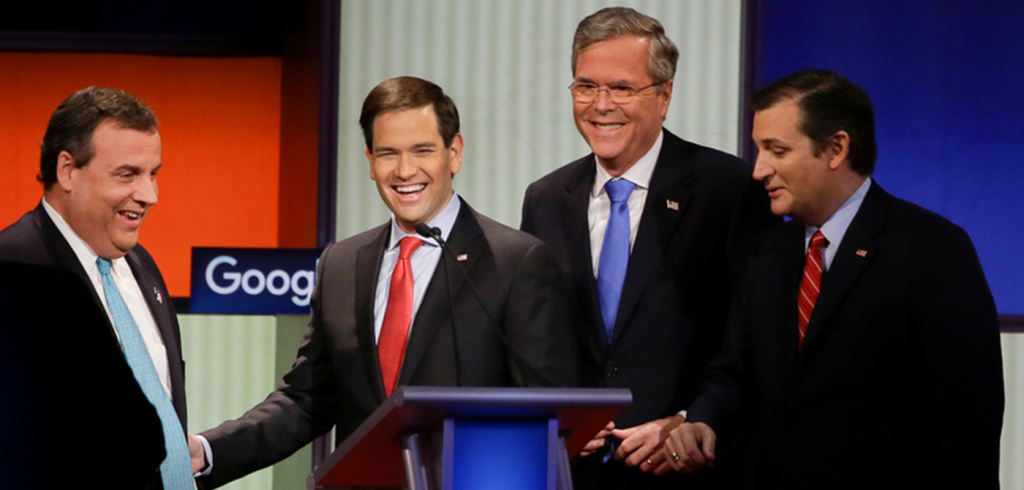
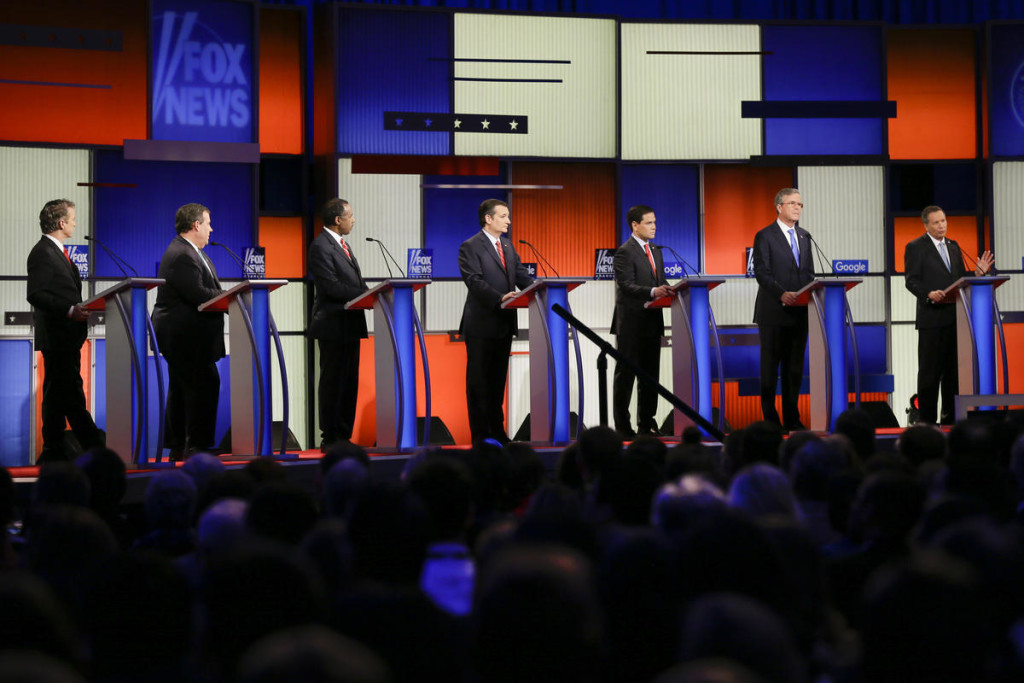
It was clear, even before it started, that Thursday night’s Republican presidential debate would be dramatically different. GOP front-runner Donald Trump had voluntarily given up his regular place at center stage. He skipped the debate, preferring to mount a rally across town to punish Fox News Channel for “toying” with him. The billionaire businessman’s absence was addressed early and then his Republican rivals quickly moved on, getting a far better opportunity to shine. Overall, the two-hour affair featured a sober tone focused more on substance than personality. There were exceptions, of course. Ted Cruz defended his authenticity and Marco Rubio faced pointed questions on immigration. But just days before Iowa’s leadoff caucuses, there were none of the breakout moments that have sometimes characterized the more colorful debates featuring Trump, battling Cruz for first place in the 2016 primary season’s opening contest. Some takeaways from Thursday’s Republican debate: ELEPHANT NOT IN THE ROOM Trump has repeatedly demonstrated his ability to dominate the stage. There is little doubt he helped his rivals by not showing up. He was mocked early and largely forgotten. Cruz set the tone with a sarcastic impression of his top rival: “I’m a maniac and everyone on this stage is stupid, fat and ugly,” Cruz said. “Now that we’ve gotten the Donald Trump portion out of the way …” Florida Sen. Marco Rubio also weighed in: “It’s not about Donald Trump. He’s an entertaining guy. He’s the greatest show on earth.” Beyond a few playful jabs, the two-hour debate was a Trump-free zone, one of the few such events in the race so far. CRUZ THE FRONT-RUNNER Cruz fought to make sure he was positioned at center stage in Trump’s absence, but did little to take advantage of the opportunity. He tried to embrace the role of de facto front-runner at the outset, pointing out that he was being attacked by several rivals — even before there were any pointed exchanges. Cruz later faced sharp questions on immigration, national security and, perhaps most importantly, whether he was trustworthy. Trust is the theme of the fiery conservative’s campaign, and several candidates questioned his authenticity. “Ted, throughout this campaign, you’ve been willing to say or do anything in order to get votes,” Rubio charged. Cruz fought back by accusing Rubio of bending to the will of donors on immigration, but it was hardly a decisive victory. NO AMNESTY FOR RUBIO Rubio did not help himself among the conservatives who question his position on immigration. The issue is by far his greatest vulnerability as he tries to convince skeptical GOP activists that he doesn’t support so-called amnesty. The debate moderators played a series of video clips highlighting Rubio’s apparent shift on the issue, which put the first-term senator on the defensive at the outset of a key exchange. At best, Rubio may have clouded the issue of whether he had backed off his earlier calls for comprehensive legislation that includes a pathway to citizenship. But rival Jeb Bush seemed to get the best of him in an exchange in which Bush questioned Rubio’s retreat on the issue. “You shouldn’t cut and run,” Bush charged. BUSH CLOUDS LANE Bush repeatedly beat back questions about his long-term viability in the 2016 contest, insisting he has a path to the nomination and would ultimately defeat leading Democrat Hillary Clinton. “We’re just starting. The first vote hasn’t been counted. Why don’t we let the process work?” Bush said. Overall, Bush had more success on the debate stage without having to contend with Trump. His strength — and full-steam-ahead approach — was a pointed reminder that the fight for the party’s mainstream wing is far from over. Bush and Rubio are competing with New Jersey Gov. Chris Christie and Ohio Gov. John Kasich to win over the GOP’s centrist wing. Some party officials hoped Rubio would have emerged as the consensus choice by now. Bush defended rounds of anti-Rubio attack ads. “This is beanbag compared to what the Clinton hit machine is going to do to the Republican nominee,” Bush said. TRUMP’S COUNTERPROGRAMMING It was a risky move politically, but Donald Trump helped raise $6 million to benefit veterans at an event 3 miles away from the debate stage. Instead of going after his rivals on national television, Trump read out the names of wealthy friends who’d pledged major contributions to veterans’ causes. When he announced he’d pledged $1 million himself, the crowd erupted in cheers. He explained to the Drake University crowd that he had little choice but to skip the debate. Trump admitted he didn’t know if the decision would hurt him in the polls, but tried to cast it as a sign of strength. “You have to stick up for your rights. When you’re treated badly, you have to stick up for your rights,” he said. As for the debate, Trump predicted it would have far fewer viewers without him on the stage. That may be true, but Iowa voters will decide in four days whether Trump hurt his chances in the 2016 race simply to prove a point. Material from The Associated Press was used in this report.
Viewer’s Guide: Donald Trump drama, closing arguments before Iowa
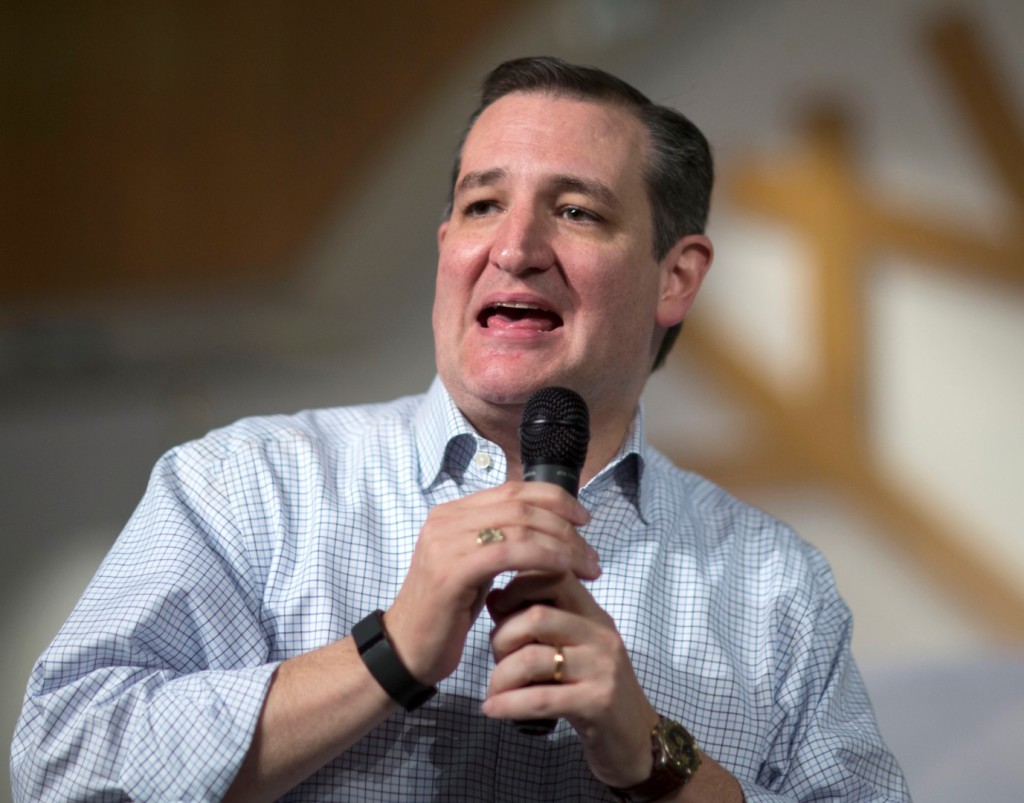
It’s one thing to attack Donald Trump when he’s standing on the presidential debate stage. But what about when he’s not? It’s a complicated question for the seven presidential candidates in the seventh prime time Republican presidential debate, who expect a no-show from the front-runner who has eclipsed the contest for months — on the brink of Monday’s Iowa caucuses. Trump has declared that because of what he calls unfair treatment by the network hosting the debate, Fox News Channel, he’ll have his own event at the very same time about two miles away at Drake University. His absence puts the rivals in a tough position while opening potential opportunity — do they go after him and give him even more attention? Or ignore him and fill the vacuum with their best possible closing arguments, grabbing attention that’s been tough to come by when Trump and his big personality fill the air time? Florida Sen. Marco Rubio, who is in third place in Iowa, tested a new line Wednesday, calling the debate drama a “sideshow” and the election choices, “serious.” Also in a delicate spot is the network, which has engaged in a fraught relationship with Trump for months after he tangled with moderator Megyn Kelly in the first debate in August. Fox News Channel has refused to remove Kelly from the question panel and issued a sarcastic statement mocking Trump for demanding they do so. The standoff poses a challenge for the network, which is popular with conservatives, over how it handles its relationship with the GOP presidential front-runner in real time — especially in his absence. The main debate stage will once again feature Rand Paul, who was bumped to the undercard debate last time. Also appearing: Sen. Ted Cruz, Ohio Gov. John Kasich, New Jersey Gov. Chris Christie, former Florida Gov. Jeb Bush, Rubio and retired neurosurgeon Ben Carson. Here are some things to watch for during the debate: TRUMP, OBVIOUSLY Trump’s debate boycott tests whether any word or action by the billionaire can dent his support among a core of conservative voters who want a change in Washington. Trump has predicted that Iowans won’t care whether he attends the debate, and even if he did, he wouldn’t be talking to the nation anyway. He’d be speaking to Iowans who will caucus Monday, using every moment to win the contest at hand. “Being second is terrible,” he has said. Another advantage to holding his own event: no moderators or rivals to challenge him. CRUZ The Texas senator and national debate champion held his own against Trump in past debates as the two have competed for the lead in Iowa. Without Trump on the stage, does Cruz adopt the posture of the de facto debate leader? That could risk looking presumptuous when a sizable percentage of Iowans say they could change their minds about whom they support. Cruz has been testing some humor, with an edge. “Apparently, Megyn Kelly is really, really scary, and Donald is a fragile soul,” Cruz said. “If she asks him mean questions, I mean, his hair might stand on end.” THE MODERATORS Look for someone on the panel of moderators to acknowledge the elephant that’s not in the room. But whether moderators will spend more time than that on Trump, who has spent months in a spat with Kelly over what he says is unfair treatment, is a delicate question. Late Wednesday, Trump tweeted that it was Fox’s mocking press release that inspired him to skip the debate, more so than Kelly. She has been adamant about playing the dispute straight, and has the firm backing of news executives. THE OTHER CANDIDATES Jump ball! The debate gives the field-minus-Trump more of a chance to make the most powerful closing arguments possible in the final face to face, televised meeting before the caucuses. Candidates such as Ohio Gov. John Kasich, who is looking past Iowa for a strong finish in next-up New Hampshire, have had little speaking time in past debates. The opportunity also is ripe for Rubio, who is seeking a strong finish in Iowa to claim the establishment mantle if outsiders Trump or Cruz falter. Look, too, for Bush to try to make gains. Republished with permission of the Associated Press.
NBC Poll: Donald Trump leads in Iowa, New Hampshire and South Carolina
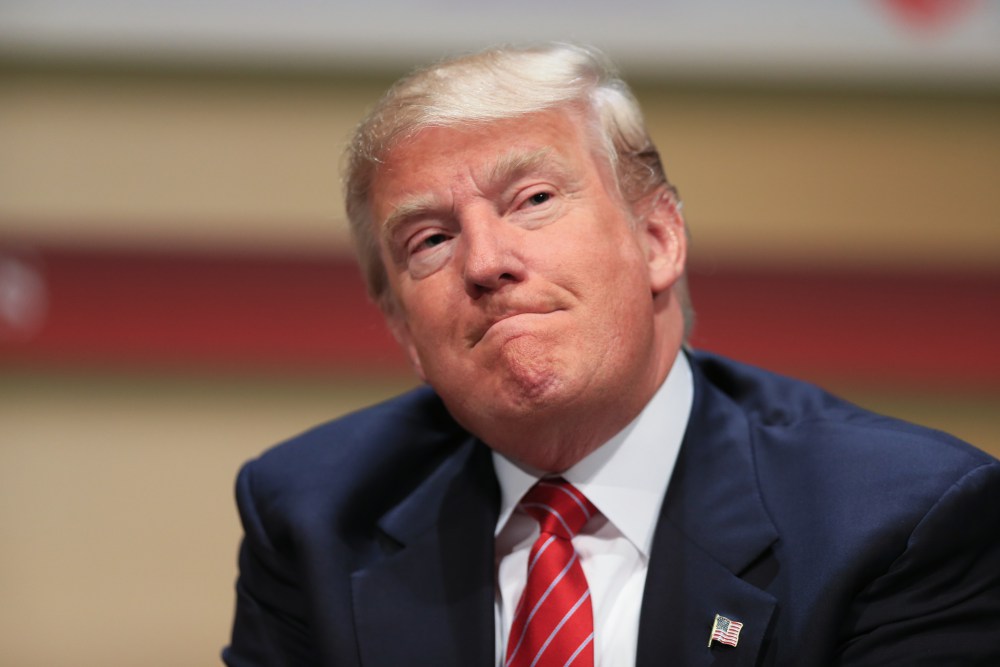
With four days before the Iowa caucuses, Donald Trump has pulled ahead of Ted Cruz in the Hawkeye State and holds commanding leads in New Hampshire and South Carolina. Among likely GOP caucus-goers, Trump leads Cruz in Iowa, 32 percent to 25 percent, according to NBC News/Wall Street Journal/Marist poll. Marco Rubio is in third with 18 percent, followed by Ben Carson at 8 percent. Jeb Bush is at 4 percent in the Iowa poll. The results mark a shift in opinions from just a few weeks ago, when Cruz held a 4-point lead over Trump. Hillary Clinton and Bernie Sanders are neck-in-neck in Iowa. Clinton leads Sanders 48 percent to 45 percent, well within the margin of error of 4.7 percent for likely Democratic caucus goers. The Iowa caucuses are Monday. In New Hampshire, the survey found Trump holds a double-digit lead over Cruz. Among likely Republican primary voters, Trump leads Cruz 31 percent to 12 percent. Rubio is tied with John Kasich for third with 11 percent, followed by Bush at 8 percent. Sanders has an overwhelming lead over Clinton in the Granite State, the poll found. Among likely Democratic primary voters, Sanders is at 57 percent, followed by Clinton at 38 percent. The New Hampshire primary is Feb. 9. In South Carolina, where voters head to the polls in late February, Trump leads Cruz, 36 percent to 20 percent. Rubio is in third with 14 percent among likely Republican primary voters, followed by Bush at 9 percent. Carson is at 8 percent. Clinton has a commanding lead over Sanders in South Carolina, where she leads 64 percent to 27 percent. The South Carolina Republican primary is Feb. 20; the Democratic primary is on Feb. 27.
Jeb Bush upbraids Donald Trump at New Hampshire Republican forum
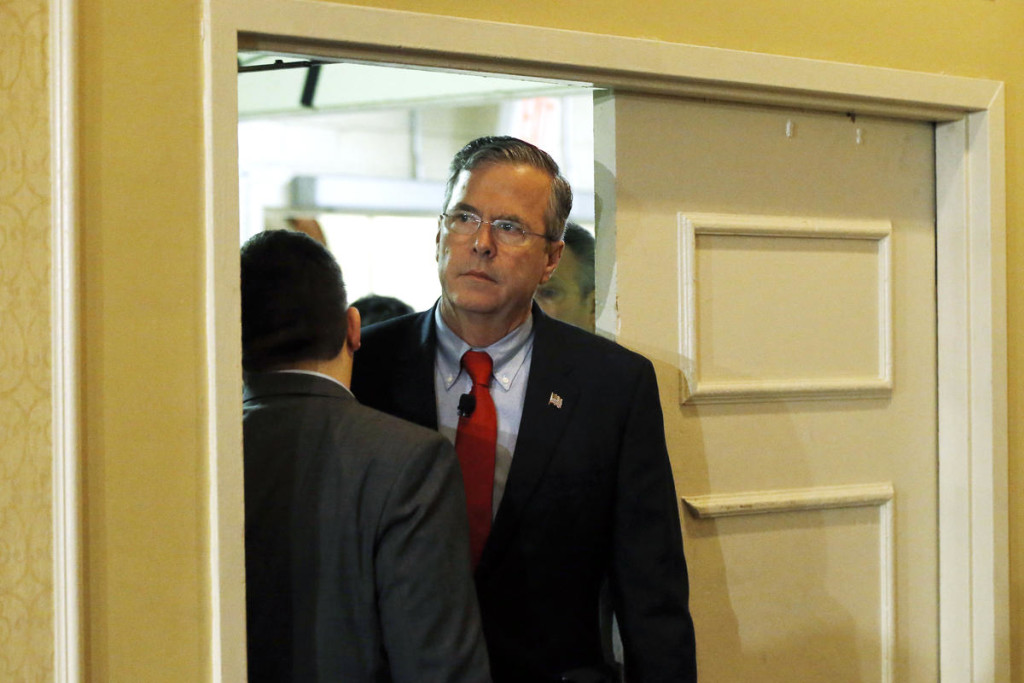
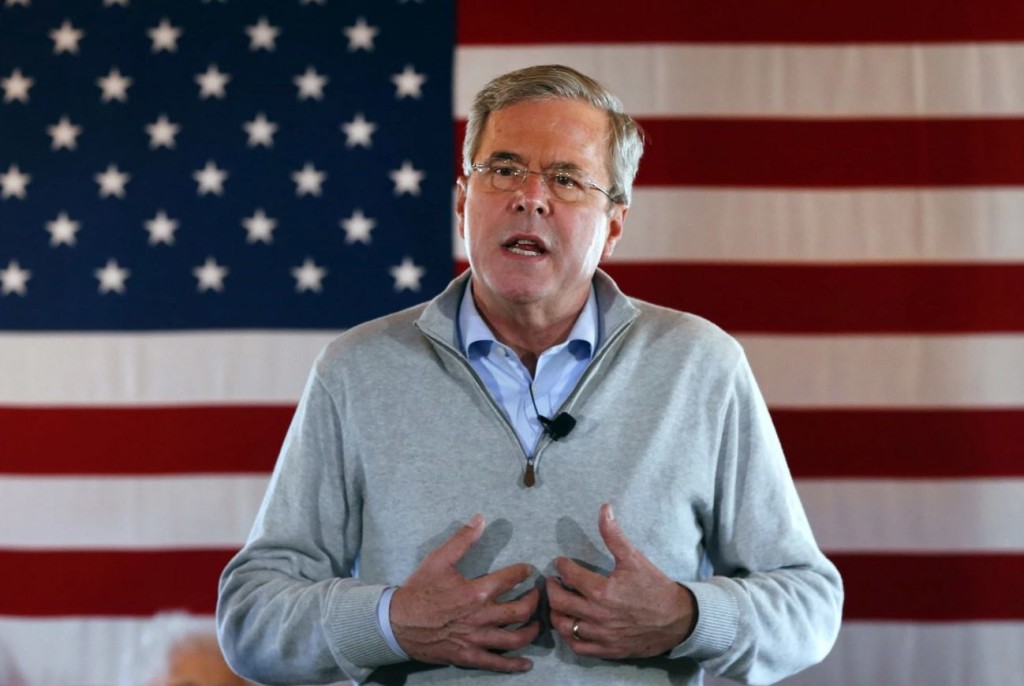
Former Florida Gov. Jeb Bush unleashed a fury of criticism against Donald Trump on Saturday before imploring New Hampshire voters to forgo the billionaire businessman in the state’s Feb. 9 primary. “You have a chance to reshape this whole primary,” Bush told hundreds of voters at a state Republican Party presidential candidate forum. Trump, who continues to dominate polling in the first primary state, did not attend the event. Nor did Texas Sen. Ted Cruz, who is neck-and-neck with Trump in first-to-nominate Iowa and rising in New Hampshire. A host of candidates fighting for survival in the 2016 race appeared alongside Bush. Among them: Florida Sen. Marco Rubio, Ohio Gov. John Kasich, Kentucky Sen. Rand Paul, former CEO Carly Fiorina and former Pennsylvania Sen. Rick Santorum. But only Bush delivered harsh words for Trump. “He’s a gifted entertainer, but he’s not a conservative,” Bush said, citing Trump’s past support for Democrats, including the Clintons, past stances on social issues and previous support for a single-payer health care system, noting “that’s Bernie Sanders’ position.” He slammed Trump for saying Sen. John McCain, a Vietnam prisoner of war and two-time New Hampshire presidential primary winner, is not a “war hero” because he was captured. Bush also reminded voters of Trump’s remarks about women and immigrants. “It is not strong to insult women; it is not a sign of strength when you insult Hispanics,” Bush said. “(Or) when you say that a prisoner of war is a loser because they got caught.” Rubio and Kasich, meanwhile, largely stayed away from attacking fellow Republicans. Rubio offered only veiled attacks against Cruz and New Jersey Gov. Chris Christie over taxes. Instead, he stuck largely to his campaign speech and focused his criticism on President Barack Obama and Democratic candidate Hillary Clinton. “We are on the road to decline right now, and the reason is because in 2008 America elected a president who wasn’t interested in fixing the problems of America,” Rubio said. He criticized Obama for his stance on gun rights, immigration, education, military and foreign policy. “The result is the anger and frustration that people are feeling now,” the Florida senator said, echoing the feelings of Trump’s supporters and populist message. But, without naming rivals Trump and Cruz, the Rubio said voters cannot “just elect any Republican.” Kasich, by contrast, said it’s pointless to spend time focusing on Obama, who has only months left in office. Kasich in recent days has said he plans to keep his focus on what’s ahead. But, he noted he’s excited about the prospect of challenging Clinton in a general election. “She’s a fragile candidate,” he said. “In the general, I’m gonna have a ball.” Paul criticized rival Rubio and other Republican senators for pushing to raise military spending, which he said would add to the $19 trillion national debt. The Kentucky senator, whose campaign is struggling to gain traction, also said that Rubio, Bush and other Republicans are eroding Americans’ civil liberties in the fight against terror. They “want more surveillance of you,” he said. Republished with permission of the Associated Press.
Donald Trump leads New Hampshire poll, but many voters still undecided
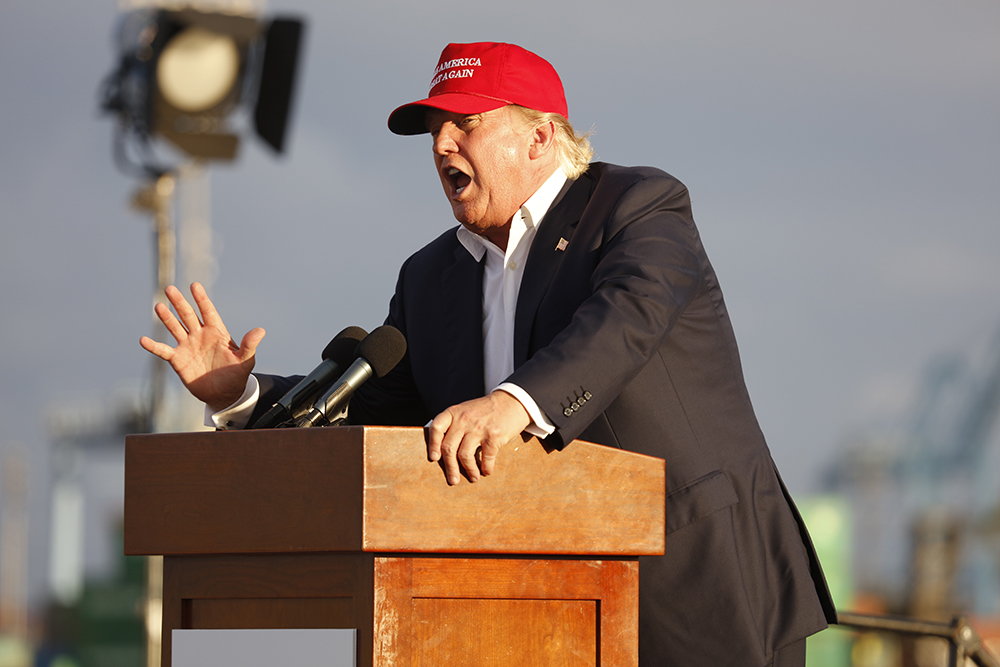
Donald Trump continues to lead the GOP field in New Hampshire, but a new WBUR survey found a significant share of the state’s undeclared voters has yet to settle on a candidate. The New Hampshire primary is three weeks away, and candidates have been campaigning in the Granite States for weeks now. The survey found a significant number undeclared primary voters still didn’t know which primary they were leaning toward voting in. The state’s undeclared voters represent about 44 percent of the state’s voters and can pick either ballot on election day. According to WBUR, these voters are “notoriously independent and play a crucial role in picking the winners.” Of those undeclared voters who said they were leaning toward the Republican primary, Trump was the top choice with 26 percent. John Kasich and Ted Cruz were tied at 15 percent; Jeb Bush was at 10 percent, and Marco Rubio was at 7 percent. Among those who were leaning toward the Democratic primary, Bernie Sanders has a wide margin over Hillary Clinton. Sanders, according to the poll, is at 60 percent, compared to Clinton’s 33 percent. The poll also found New Hampshire voters are warming to Sanders. About 59 percent of respondents said they had a favorable opinion of the Vermont senator, while 40 percent said they had had a favorable view of Kasich. About 65 percent of respondents said they had an unfavorable opinion of Trump, while 62 percent said they had an unfavorable view of Cruz. The New Hampshire primary is Feb. 9
Inside the New Hampshire pitch to those who don’t want Donald Trump
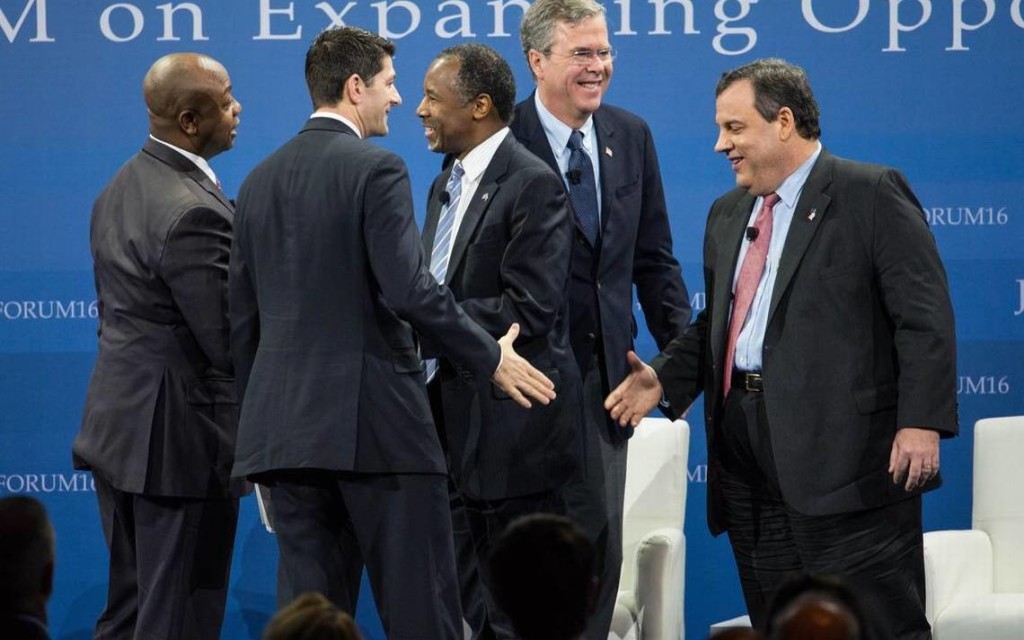
For all the passionate support Donald Trump has amassed in New Hampshire, many Republicans and independent voters are just as passionate about not voting for Donald Trump. They are an enticing target for the pack of Republicans off the front-runner’s pace, who seek to turn a second-place finish in the nation’s first primary — or maybe even an upset win — into validation they’re the candidate best able to challenge the brash real estate billionaire in South Carolina and beyond. Those voters are grappling with the weight of the world, as they take in town halls with Chris Christie and Jeb Bush, and attend rallies with Marco Rubio and meet and greets with John Kasich. “I only have, like, six weeks to make up my mind, and this is making me sick,” said Linda Fournier of Salem, who’s been keeping a close eye on the contest for nearly a year. “I actually go to bed at night worrying about this. This is just one vote, but it’s so important to me.” Those four candidates are generally viewed as able to win over a GOP establishment worried about the prospect of Trump or Texas Sen. Ted Cruz as their party’s nominee. They combine for about 45 percent of support in recent preference polls — enough to top Trump as one bloc, but fall far short split among them. New evidence of the intensity among the four is manifesting itself in the form of escalating attacks in ads, in interviews and at their events. The men all share similar ideas about policy and politics, but their pitches to voters differ as they seek to come out on top. What they all agree on: It’s in New Hampshire where their White House aspirations may find life — or come to an end. “You are among the most powerful people in the world right now,” Christie told voters at a recent town hall with the Manchester Rotary Club. “You and you alone will decide who the other 48 states have to pick from to be the Republican nominee for president of the United States.” • • • For Christie, the New Jersey governor who thrives on one-on-one interaction, the setting of choice has been town halls. Christie seeks to present himself as a relatable everyman, peppering the events with life stories and personal anecdotes, weaving between well-tested tear-jerkers and lines that leave participants laughing out loud. The free-wheeling events often stretch on for two hours or more, and attendees routinely walk away impressed. “He’s very down-to-earth. He cares,” said Anne Kagen, a nursing assistant from Manchester. “I like the way that he’s outspoken and right on point,” said George Castonguay, a fuel service technician from Manchester. Since the attacks in Paris and San Bernardino, Christie has increasingly put the focus on his record as a U.S. attorney, the job he held before he was governor. He calls himself a battle-tested crime fighter who has the fire to appeal to Trump voters who are angry about the country’s direction, but comes with the executive governing experience the former reality TV star lacks. He’s also tried to keep the focus on Hillary Clinton, making the case that he is the most prepared to take on the Democratic front-runner in the general election. “The American people, and this is getting more acute to me every day, understand that they need somebody from outside of Washington D.C., and somebody who is going to be strong and tough and honest,” Christie recently said. “I just don’t think Hillary Clinton fills any of those four.” • • • Bush, the former Florida governor, has spent much of the race trying to convince voters that he’s the candidate they need, even though he may not be the one who excites them most. In mid-December, Bush moved away from his on-and-off, sometimes indirect jabs at Trump. In its place came an uninhibited attack on the national GOP front-runner, who Bush calls the “chaos candidate” as he mocks his debate answers and policy proposals. “These are serious times. We need a serious leader,” Bush told voters recently in Littleton, offering himself as just such a leader. With his penchant for promoting what he calls “disruptive” policy reform, Bush presents his eight years as governor of Florida as the centerpiece of his candidacy. He touts Florida as “a diverse, vibrant” place, and a perennial swing state worth a whopping 29 electoral votes. He says often, “I know how to do this, because I was governor.” The self-described policy nerd also thrives during hour-long question-and-answer sessions that cap his New Hampshire campaign stops. In Dover last week Tuesday, Bush stood with arms crossed and head cocked staring at John Polychronis as the Dover Republican asked whether the spike in heroin abuse in the state meant American youth had lost faith in government. Bush replied that he does not possess answers to all of the nation’s ills, but pledged to work hard to find the answers if elected. “The way you restore confidence is by rolling up your sleeves and fixing things,” Bush said. “I like Marco Rubio because he’s moderate,” said Nancy Novelline-Clayburgh, a Republican voter from Portsmouth. “But Jeb Bush did a fantastic job as governor. And I think we’re better off electing a governor.” • • • Florida Senator Rubio centers his campaign pitch on his personal biography, attempting to craft an aspirational message that appeals to voters across a broad spectrum of the Republican Party. Rubio weaves together his past, as the son of Cuban immigrants who never led a rich lifestyle, with his present, particularly, his role as a young father seeking to give his children a brighter future. And while Rubio is fighting to be the mainstream alternative to Trump, he’s actively trying to distance himself from the “establishment” label. He often talks about his successful run for U.S. Senate in 2010, when he ran in a GOP primary against the state’s sitting governor. “When I decided to run
Jeb Bush is only candidate NH voters view unfavorably, Monmouth U. poll finds

For Jeb Bush and supporters, it’s probably wise not to rise or fall on the basis of a single poll. Case in point? New Hampshire. The Bush camp rallied this weekend around a poll that showed him moving up to second place in New Hampshire, getting 11.9 percent support. Flash forward to Monday, where a Monmouth University poll just released has him tied for 7th place, with just 4 percent of the vote. The story in this poll is that Donald Trump is rising in the Granite State, getting 32 percent support. That’s up from 26 percent when Monmouth pollsters asked the same question in November. Trump’s 6-point gain is the largest for any candidate in the GOP field. His favorability rating has also ticked up and now sits at 52 percent positive and 40 percent negative. Tied for second is Ted Cruz and Ohio Gov. John Kasich, well behind Trump with 14 percent each. Marco Rubio is in fourth place in the survey with 12 percent, and Chris Christie is fifth at 8 percent. “As Granite State voters start to firm up their decision, it’s looking more and more unlikely that Trump will be toppled from his perch,” said Monmouth polling director Patrick Murray. “The real fight is for second place.” Rounding out the field are businesswoman Carly Fiorina, at 5 percent, and Rand Paul and Bush, both tied at 4 percent. And Bush has the distinction of being the only Republican candidate in the survey who GOP voters view negatively. Only 39 percent of Republicans voters in New Hampshire have a positive view of Bush, compared to 47 percent who view him negatively. And remember Ben Carson? In the November version of the Monmouth poll, the retired neurosurgeon was in second place, with 16 percent support. Now? He’s in ninth place, with just 3 percent. Carson once had the highest favorability rating of any candidate in the field, but now he sits at 46 percent positive and 34 percent negative.
Ted Cruz, Donald Trump up in Iowa, but talk of “takedown” effort fades

Three weeks before Iowa kicks off the 2016 presidential campaign, Donald Trump and Ted Cruz are generating overwhelming enthusiasm among Republican voters in the state, along with concern, though not panic, among the party professionals who believe both are unelectable in November against the Democratic nominee. Despite such fears, talk of a “takedown” effort aimed at either Trump or Cruz appears to have faded as the Feb. 1 caucuses in Iowa near. For now, there is nervous acceptance that two of the Republican Party’s most divisive figures may stay at the top of the presidential pack well into the first month of voters’ getting their say. “Cruz would not only cost us the general, he would cost the GOP the future. Trump is not a Republican and he is not a conservative,” said Republican strategist Alex Castellanos, who is not affiliated with a 2016 campaign. “The geometry is conflicting: If you limit one, you aid the other. “At the end,” Castellanos said, “Republicans may face the devil’s bargain and have to settle for the lesser of two anti-establishment evils.” That feeling is echoed by party officials across the country, who acknowledged they have few tools to stop Cruz or Trump. Instead, there is hope that voters ultimately settle on what they consider a more viable alternative from a group of candidates that includes Florida Sen. Marco Rubio, New Jersey Gov. Chris Christie, former Florida Gov. Jeb Bush, and Ohio Gov. John Kasich. “Let’s see how the votes go before we panic,” said Washington-based Republican operative John Feehery, who has been critical of Cruz and Trump. There is little evidence of widespread alarm from establishment Republican leaders and their well-funded supporters. Despite their commanding presence in preference polls, Trump and Cruz have almost completely escaped paid attacks, particularly in Iowa. A Florida billionaire spent $40,000 on newspaper ads to hit at Trump in early December. One, in Iowa, called the political novice a “destroyer.” A group backing Kasich put $15,000 into an online anti-Trump attack in late November and early December, but there was no special focus on Iowa. A nonprofit group led by a political operative who has endorsed Rubio spent about $200,000 to air an ad in Des Moines that knocked Cruz for his opposition to National Security Agency surveillance, saying the Texas senator “voted to weaken America’s ability to identify and hunt down terrorists.” But that ad has not been on the air in at least a month, according to Kantar Media’s CMAG political advertising tracker. Republican National committeeman Ron Kaufman of Massachusetts said the party’s “centrist conservatives” will have to be patient until what they see as a more electable alternative to Trump and Cruz emerges. “This is about who’s going to be in the finals,” Kaufman said. “Clearly on one side it’s going to be Trump and/or Cruz. And for the centrist conservatives, it’s going to come down to one of three governors or Rubio.” That may explain why the attacks on Cruz and Trump pale in comparison to the amount spent disparaging other candidates. For example, a Rubio-boosting group recently put more than $1 million into sharp-elbowed anti-Christie attacks in New Hampshire. Rubio has been the target of close to $1 million in negative advertising, mostly in Iowa and mostly by Cruz boosters. There is unquestioned excitement among the GOP electorate in Iowa for the two front-runners. On Saturday, Cruz concluded a six-day, 28-stop trek across the state, drawing overflow crowds everywhere — from a pizza restaurant in Pocahontas to a small college in Sioux Center, where hundreds packed the auditorium, spilling into the stairwell and upper level. “There is no doubt that the Washington cartel is in full panic mode,” said an almost giddy Cruz this past week. “They are in full panic mode because they are seeing on the ground conservatives uniting.” At other stops, Cruz supporters stood outside in snow and sub-freezing temperatures, unable to get in for a seat, but still trying to listen through open doors. At a Friday morning event in Mason City, 48-year-old Robert Peterson said he was sold on Cruz, even though he said he had never before voted for a Republican presidential candidate. “It’s time for a change,” Peterson said, standing at the back of the room wearing a red “Cruz 2016” button and holding a red, white and blue Cruz sign. “The status quo has got to go.” It’s much the same for Trump, who is showing no signs of slowing down after leading most national preference polls since the summer. The brash real-estate billionaire and former reality television star routinely draws thousands of people to his rallies, packing high school auditoriums, arenas, convention centers — even an airplane hangar — across the country. Supporters began lining up at dawn for a 7 p.m. rally in Burlington, Vermont, this past week, while in Massachusetts and New Hampshire, hundreds stood outside in the bitter cold for hours waiting to get in. “Folks, we have a revolution going on,” Trump said in Lowell, Massachusetts, marveling at the thousands of people who filled the arena. “People are tired and they’re sick of the stupidity that we’re seeing coming out of Washington.” In the face of Trump’s prophesied revolution, the GOP establishment is preaching patience. “I don’t think there’s a sense it’ll be time to panic if Cruz and Trump are on top in Iowa or New Hampshire,” said Katie Packer, who served as deputy campaign manager to Mitt Romney in 2012 and is among Trump’s biggest critics. “We have to let the process play out.”
