
Fla. Rep. Frederica Wilson wants John Kelly apology as spat with Donald Trump endures
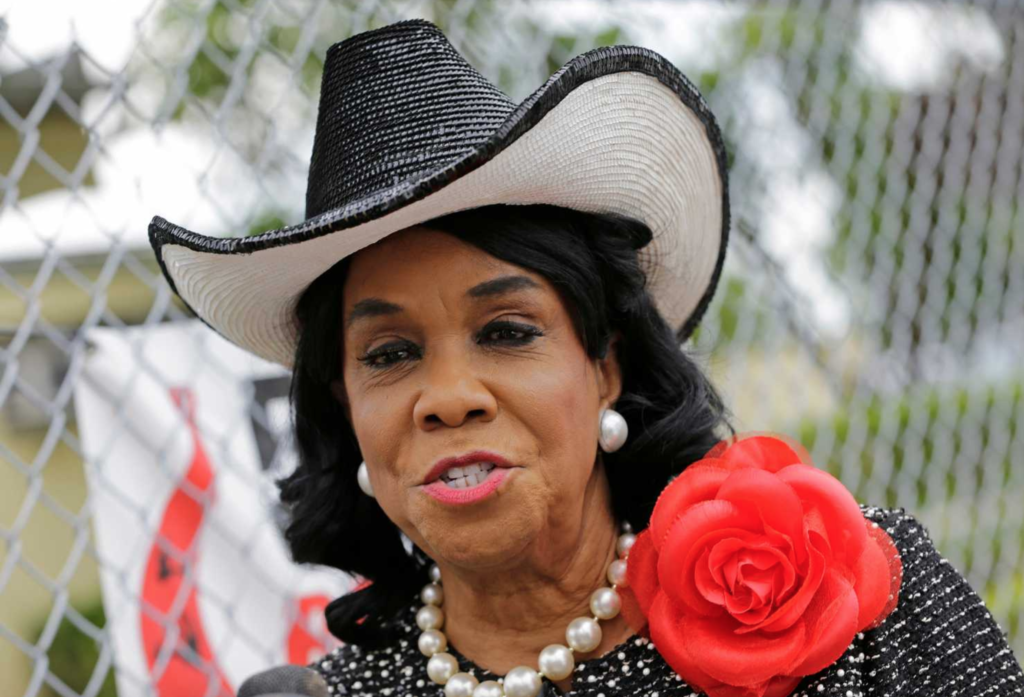
A Florida congresswoman on Sunday asked White House chief of staff John Kelly to apologize for making false claims about her while defending President Donald Trump‘s handling of condolences to a military family. Her comments and the president’s insulting tweets escalated a political fight surrounding the deaths of four service members in the African nation of Niger. Democratic Rep. Frederica Wilson on Sunday called Kelly a “puppet of the president” and accused him of character assassination for asserting that she was grandstanding at a building dedication in the memory of two slain FBI agents in 2015. Kelly said Wilson talked about how she had been the driving force behind raising money for the building, but a video of her remarks contradicted his account. The four U.S. soldiers were killed Oct. 4 in Niger when they were attacked by militants tied to the Islamic State. Wilson, speaking on MSNBC’s “AM Joy,” also criticized what she described as a lack of information from the Trump administration about the ambush. Trump again criticized her early Sunday, describing Wilson on Twitter as “the gift that keeps on giving for the Republican Party.” The fight began Tuesday when Trump told the widow of 25-year-old La David Johnson that her husband “knew what he signed up for.” Wilson was riding with the family and heard the call on speakerphone, sharing that comment publicly Trump accused Wilson of fabricating that statement, and the fight escalated throughout the week. Trump in other tweets called her “wacky” and accused her of “SECRETLY” listening to the phone call. Kelly entered the fray on Thursday with his comments about Wilson’s appearance at the FBI field office dedication. “The character assassination that he went through to call me … ‘an empty barrel,’ and all of the work that I’ve done in this community,” Wilson, who is from the Miami area, said Sunday. “Not only does he owe me an apology, but he owes an apology to the American people.” Republished with permission from the Associated Press.
Donald Trump’s unprecedented hands-on messaging carries risks
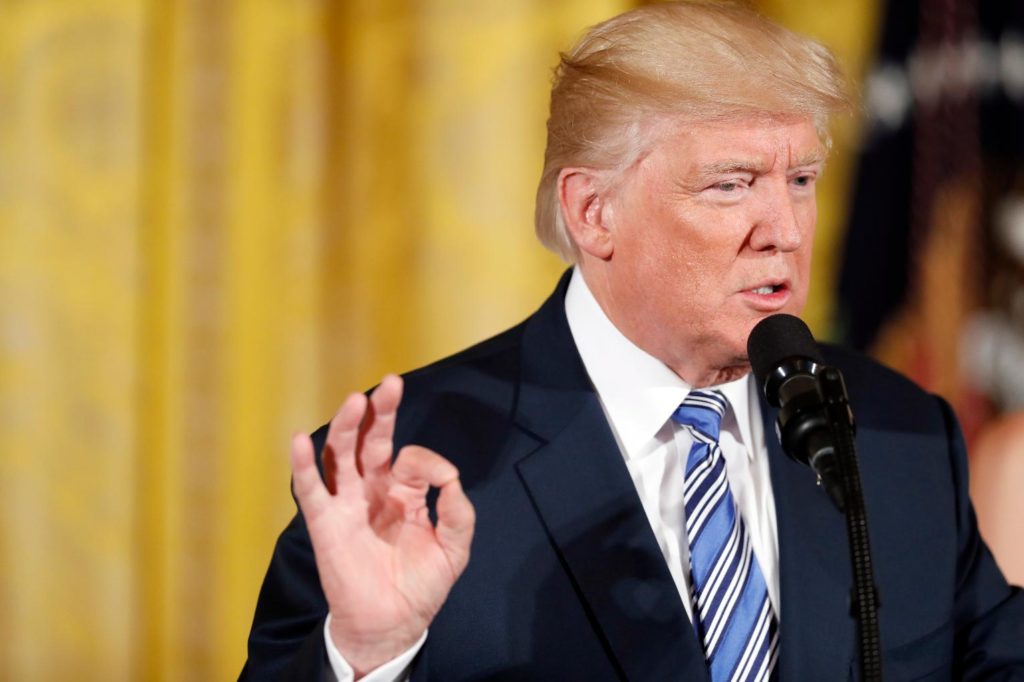
For the third time in six months, President Donald Trump is on the hunt for a new communications director. But in practice, the job is filled. It’s Trump who’s the White House’s leading expert and the final word on what and how he communicates with the public. Despite decrying most negative media coverage as “fake news” and personally insulting members of the media, he has inserted himself into the White House’s press operations in an unprecedented fashion for a president. Trump has dictated news releases and pushed those who speak for him to bend the facts to bolster his claims. He has ignored the advice of his legal team and thrown out carefully planned legislative strategies with a single 140-character tweet. His direct, hands-on style helped him win the White House and still thrills his supporters. It also, however, poses increasing political and potentially legal risks. The clearest example is his involvement in crafting a statement for son Donald Jr. about a meeting with a Kremlin-connected lawyer. That declaration was quickly proven erroneous and raised questions about whether the president was trying to cover for his son. Trump has struggled to find a communications adviser that meets his approval. His first, Mike Dubke, stayed behind the scenes and never clicked with Trump, leaving after three months. Then Sean Spicer, Trump’s oft-beleaguered press secretary, took on the communications director job as well. He resigned both posts last month when Trump brought in hard-charging New York financier Anthony Scaramucci. Scaramucci lasted only 11 days before being fired in the aftermath of an expletive-filled interview. A fourth candidate for the post, campaign spokesman Jason Miller, was named to the job during the transition but turned it down days later, citing a need to spend time with his family. More recently there have been some informal internal conversations about an increased communications role for White House aide Stephen Miller, according to an administration official who was not authorized to discuss private talks by name and requested anonymity. Those talks are still seen as preliminary. Miller recently clashed with some reporters over immigration policy at a contentious press briefing. This past week, as White House staffers readied a statement accompanying Trump’s signature on legislation approving toughened sanctions on Russia — a bill Trump criticized — word came down that the president wanted to add some off-topic language into the statement. That’s according to two officials familiar with the matter who spoke on condition of anonymity because they were not authorized to publicly talk about internal discussions. “I built a truly great company worth many billions of dollars,” the new section read. “That is a big part of the reason I was elected. As president, I can make far better deals with foreign countries than Congress.” That personal and boastful rhetoric is a far cry from the formal language normally found in presidential statements. It also appeared aimed at angering the same lawmakers he will need if he wants to pass any major legislation. “All presidents are their own best messengers,” said Ari Fleischer, press secretary for President George W. Bush. Fleischer said that Bush, too, would at times get involved with the White House press shop. Fleischer noted there was always a safety net of advisers at work. That does not appear to exist around the current president — particular around his Twitter account. “The lesson for this president is that it’s perfectly fine to be involved and to, at times, go around the mainstream media with Twitter,” Fleischer said. “But he needs to tweet smarter.” Corralling the president’s impulses is a challenge that now falls to new White House chief of staff John Kelly, a four-star Marine general tasked with straightening out an unruly West Wing. But many Trump allies don’t believe he’ll alter his ways. “The reality is President Trump is sitting in the Oval Office,” said Sam Nunberg, a former campaign staffer. “And before that, he was a mogul with a business that spanned continents. He did it his way. He’s not going to change. It got him where he is and it will keep him where he is.” Trump has long considered himself his own best spokesman and cares deeply about his public perception. While a budding real estate magnate in New York in the 1980s and 1990s, he was known to call reporters to plant anonymously sourced scoops about himself. He vaulted to national stardom with “The Apprentice” and micromanaged aspects of his appearances, including his hair and lighting. During the 2016 campaign, Trump was known to obsess over single images in a commercial or the font for an ad. As president, he frequently has raged about his communications staff, blaming them for White House’s stumbles while almost never taking responsibility himself. An avid consumer of cable news, Trump scolds surrogates when he thinks they are not adequately defending him on television. His frequently shifting positions also challenge his staffers, who have grown to be fearful of answering basic questions about the president’s beliefs for fear of later being contradicted, according to more than a half dozen White House officials and outside advisers speaking on the condition of anonymity to discuss private conversations. And the president has pushed staff to defend untruths, including when he ordered Spicer, in Spicer’s first White House briefing, to claim that the size of Trump’s inauguration crowd was larger than his predecessor’s, according to three White House officials and outside advisers familiar with the encounter. More untruths have followed. In March, Trump tweeted without evidence that President Barack Obama had wiretapped Trump Tower. And soon after firing FBI Director James Comey, Trump tweeted a warning that Comey had better hope there were no tapes of their White House conversations. There weren’t. Another statement has received bipartisan condemnation and could face scrutiny from investigators probing possible collusion between Trump’s campaign and Russian officials. As news broke last month that Trump Jr. had met with Russians in June 2016, the president’s eldest son released a statement
Let me help John Kelly out: 9 rules for White House staff in plain terms
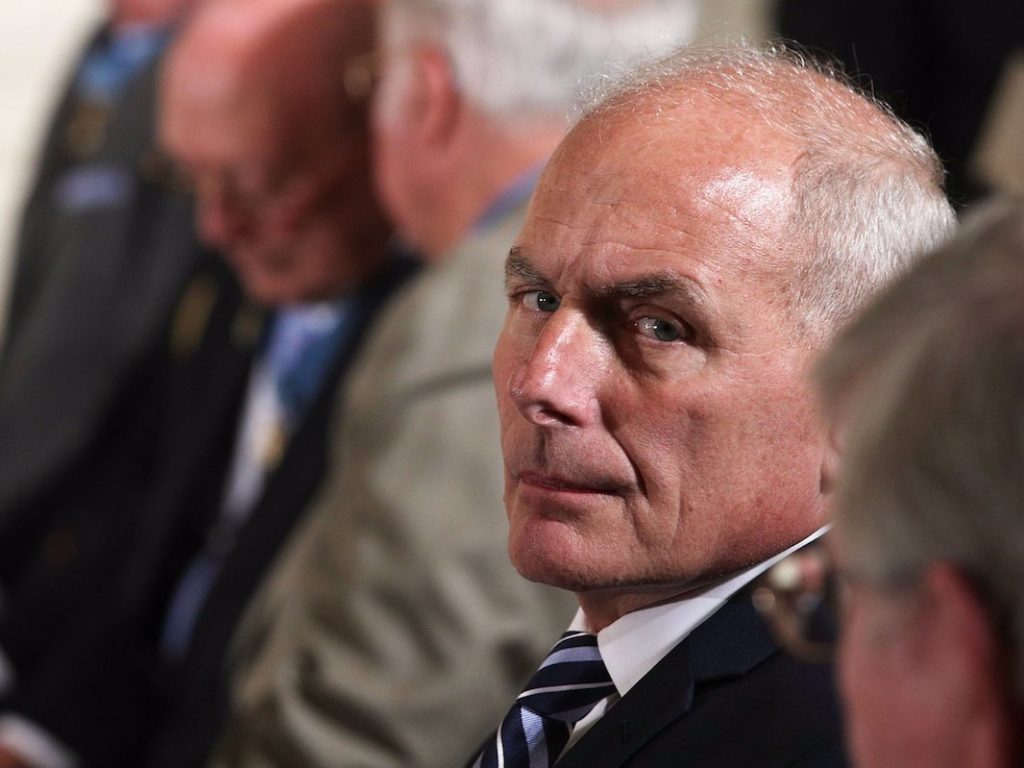
Looking at the home screen of Alabama Today last night, I noticed that the posts reflected that, in the fleeting time since leaving town for a college reunion in the great state of Colorado, the world had turned upside down. Not only was it a shake up for those whose lives and livelihoods depend on following the comings and goings at the White House, but also for those who follow Donald Trump‘s administration and actions of his staff. My last post was about the short-lived career of Anthony Scaramucci, “The Mooch,” as communications director. I didn’t get a chance to get the spelling of “Scaramucci” down (without double-checking it) before he was gone. But, alas, bye-bye. Don’t let the door hit you and all that — on better thought, go ahead. You deserve it. (For the humanity rant: Who sends the mother of their child a text message after she’s given birth to your child who’s in a NICU? Estranged or not there was no recovering from that factoid. Insults to senior white house staff aside I can think of some much better names than “The Mooch” for you on this one.) One only needed to read the New Yorker to know how short a life span would be for a comms director who didn’t have the wherewithal to go off the record before losing his mind. Even in a Donald Trump White House, Scaramucci’s tirade was over the top (and that’s saying a lot). Revisiting my first thought, perhaps the world is not upside down at the White House. On the contrary, maybe, finally, it is coming right side up. In his short time, there it seems as if General John Kelly is demonstrating that he is up to the task of getting the ship in order. Let me tell you, I know — from firsthand experience — there are significant challenges (though most of them not insurmountable) which come with working with, or for, an elected official who’s never held office. Kelly is off to a great start, identifying some of the biggest problems and attempting to fix them. In my years working for and around those who have never held office, here are some of the biggest challenges I’ve seen them face — due to staff ego and/or inexperience — and how to fix them. Exploiting the previous relationship with the boss Look we know you were in the trenches with him/her before things got real. When no one was paying attention and your odds were in the single digits. You were at the table giving advice and pep talks before going home to family and friends needing your own. Here’s the thing: Whatever title and job you have now, “official cheerleader” and “national brainstormer” is not it. You were hired to do a very specific job in a very specific way and if you weren’t your first job is to figure out what you should be doing and then run that by the COS. You may want to be the guy/girl in the room for every meeting, solving every problem, addressing every issue, but the only person with that job is the chief of staff. So, step back and look at what it is you were actually hired to do and do it. Stop looking for the big guy to wink and nod at you and to invite you over for a quick chat or dinner. You’re serving him best when you’re doing the duties you’ve been assigned and are doing them well. Remaining in camps You came in before the primary. They came in after. You were brought in by Mr. Y and Mrs. W insisted they be hired. Suck it up buttercup. The day you walked into your office everyone tossed their old jerseys, and though it’s not fair, yours was drenched with blood, sweat and tears; theirs still had the tags on it at the moment you’re on the same team now, and all that matters are the wins moving forward. You can be nostalgic for how you got your awesome title and your pretty office without begrudging the guy down the hall for coming into his a different way. That guy down the hall needs to be your new best friend because that’s how this game works. This is how future wars are won: Shoulder to shoulder with the guy who was there Day One and the guy who’s just starting his Day One. Ladder climbing You were there in the trenches, and you paid your dues on the battlefield of a crowded primary that was short staffed. You were laughed at when you told people who you believed in, and you were mocked when you insisted your guy was going to win. Now, all you’ve got for your trouble is a tiny space in the EEOB as an assistant to the assistant of a program you didn’t ask to be put in. (That is unless you’re one of the lucky ones not hidden away in an agency which the campaign pointed at throughout race as one that doesn’t even need to exist.) Sorry, not sorry. That’s the way things go sometimes. I’ve got good news and bad news: Good news — there’s going to be a lot of moving and shaking. Bad news — If you don’t stop moping around and become a standout you’re going to be passed over again, and again by the guy who’s doing the job they have, not the job they want. At the end of the day, that’s what you’re being paid for. The guy who hired you didn’t hire you for the job you want to have, though maybe one day you’ll earn that opportunity he hired you for the pencil pushing task at hand. So get to it. Pursuing another agenda You joined the campaign because the candidate spoke to you about a cause or two. They were going to shake up the world, and you would have a front-row seat. A cause near
Donald Trump hedges as military presents new Afghanistan strategy
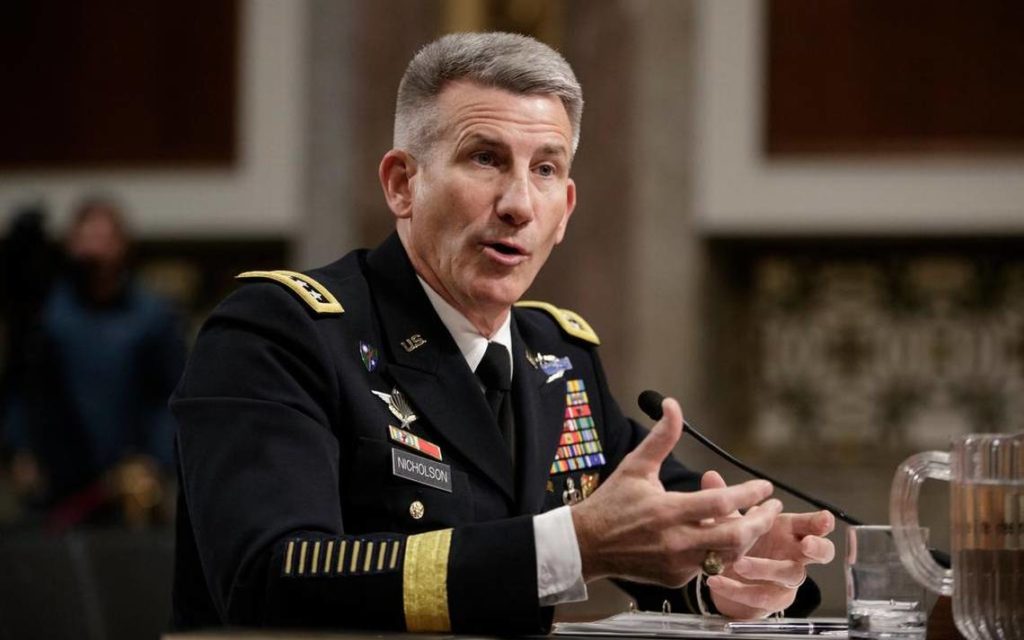
Frustrated by his options, President Donald Trump is withholding approval of a long-delayed Afghanistan war strategy and even mulling a radical shakeup in his national security team as he searches for a “game changer” after 16 years of indecisive conflict. In a recent Situation Room meeting that turned explosive, Trump raised the idea of firing Army Gen. John Nicholson, the top U.S. commander in Afghanistan, according to two officials with knowledge of the discussion. And he suggested installing his national security adviser, Gen. H.R. McMaster, to oversee the mission, said the officials, who weren’t authorized to talk publicly and requested anonymity. The drastic suggestions point to the desperation shared by many in Washington as military and other leaders look for a blueprint for “winning” the Afghan conflict. Trump has been frustrated by what he views as a stalemate. He wants a plan that will allow American forces to pull out once and for all. At a White House lunch with military brass last week, Trump publicly aired his misgivings, saying, “I want to find out why we’ve been there for 17 years.” The Pentagon wants to send almost 4,000 more American forces to expand training of Afghan military forces and beef up U.S. counterterrorism operations against al-Qaida, a growing Islamic State affiliate and other extremist groups. But the troop deployment, which would augment an already existing U.S. force of at least 8,400 troops, has been held up amid broader strategy questions, including how to engage regional powers in an effort to stabilize the fractured nation. These powers include U.S. friends and foes, from Pakistan and India to China, Russia and Iran. Pentagon plans aren’t calling for a radical departure from the limited approach endorsed by former President Barack Obama, and several officials have credited Trump with rightly asking tough questions, such as how the prescribed approach might lead to success. Trump hasn’t welcomed the military’s recommendations with “high-five enthusiasm,” a senior White House official said. Several meetings involving Trump’s National Security Council have been tense as the president demanded answers from top advisers about why American forces needed to be in Afghanistan. Another U.S. official with knowledge of the conversation reported Trump being less interested in hearing about how to restore Afghanistan to long-term stability, and more concerned about dealing a swift and definitive blow to militant groups in the country. The White House has even offered its own, outside-the-box thinking. Officials said Trump’s chief strategist, Steve Bannon, and his son-in-law and adviser, Jared Kushner, have been pushing a plan to have contractors fight the war in Afghanistan instead of U.S. troops. Blackwater Worldwide founder Erik Prince, the brother of Education Secretary Betsy DeVos, was approached by Trump’s top advisers to develop proposals to gradually swap out U.S. troops and put military contractors in their place, a military official said. The military has frowned on such proposals. It believes boosting troop levels will accelerate progress in training Afghan troops and its air force, and help counterterrorism teams pursue targets even more aggressively. They point to improvements among Afghan forces and in anti-corruption efforts. Military leaders — including McMaster, Defense Secretary Jim Mattis and Gen. Joseph Dunford, the Joint Chiefs of Staff chairman, are all said to be on the same page, as is Secretary of State Rex Tillerson. Military officials also have defended Nicholson, saying any punishment of him would be unfair because he hasn’t been given the forces he says he needs. His possible firing was first reported by NBC News. The White House, which declined multiple requests to comment, may shift itself on Afghanistan now that retired Marine Gen. John Kelly is Trump’s new chief of staff. Kelly hasn’t spoken about Afghanistan, however, since his appointment this week. Lawmakers are growing weary. In June, Mattis faced tough questions from Senate Armed Services Committee Chairman John McCain, who told him, “It makes it hard for us to support you when we don’t have a strategy.” Mattis conceded, “We are not winning in Afghanistan right now” and vowed to “correct this as soon as possible.” Doing so requires the president on board. While Trump has been keen to give military officials carte blanche on troop levels and other military affairs, his approach to Afghanistan has grown increasingly assertive. In some ways, his scrutiny of military plans has evoked that of Obama, whom Trump derided as a candidate for not heeding his generals’ advice. Republican lawmakers Thursday urged Trump to listen to his national security advisers on Afghanistan. “Every soldier over there is an insurance policy against our homeland being attacked,” Sen. Lindsey Graham, a leading hawk, told reporters. “My biggest fear is that if you don’t listen to the generals and you try to make this up as you go like Obama and Biden did, you’re going to wind up losing Afghanistan like you did Iraq and the consequences to America are worse.” U.S. indecision is causing Afghanistan’s neighbors to hedge their bets, Sen. Bob Corker, the Senate Foreign Relations Committee chairman, said. As long as they believe Washington is “six months away from stepping out, six months away from giving up,” they will continue to do so, Corker said. Republished with permission of The Associated Press.
Donald Trump’s new top aide assures Jeff Sessions his job is safe
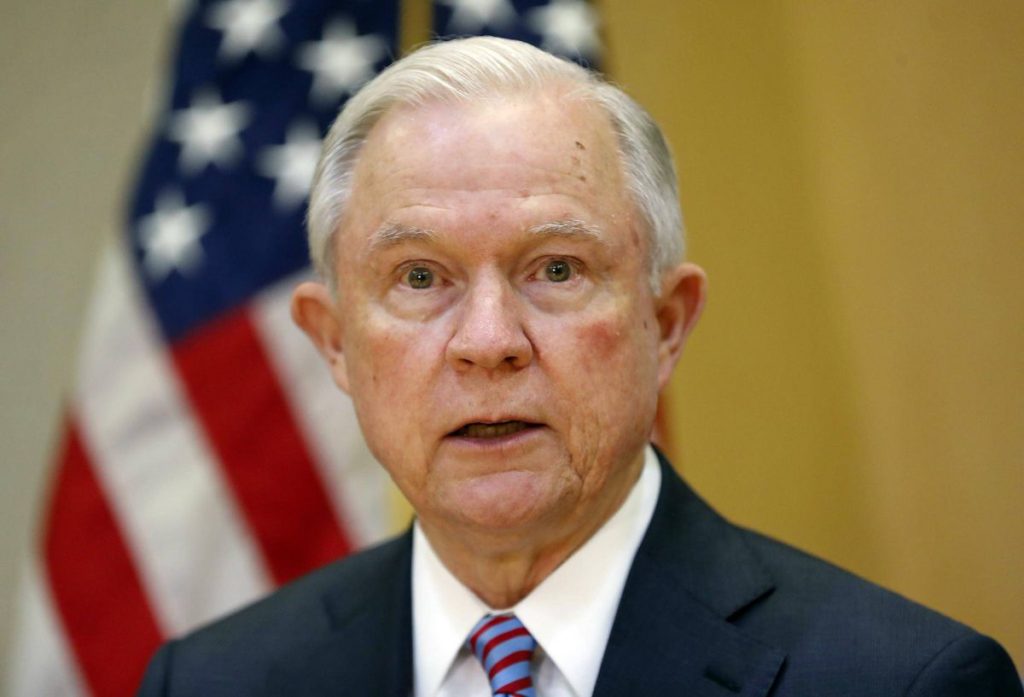
New White House chief of staff John Kelly, in one of his first acts in his new post, called Attorney General Jeff Sessions to reassure him that his position was safe despite the recent onslaught of criticism he has taken from President Donald Trump. Kelly called Sessions on Saturday to stress that the White House was supportive of his work and wanted him to continue his job, according to two people familiar with the call. The people demanded anonymity because they were not authorized to speak publicly about a private conversation. Kelly, who was appointed to the post the day before, described the president as still miffed at Sessions but did not plan to fire him or hope he would resign. Trump has seethed at Sessions, his one-time close ally, since the attorney general recused himself from the probe into Russia’s meddling into the 2016 election. The president viewed that decision as disloyal — the most grievous sin in Trump’s orbit. That simmering anger burst to the surface last week. In an unprecedented display of a president publicly criticizing a sitting member of his own Cabinet, Trump unleashed repeated attacks via Twitter. He called Sessions “beleaguered” and “very weak” and belittled his decision not to investigate Hillary Clinton. He said he was “disappointed” in Sessions and suggested that, had he known he would recuse himself, he never would had offered him the attorney general post. And he dismissed the value in Sessions’ early endorsement — he was the first senator to back Trump — while privately musing to aides about firing the attorney general. “We will see what happens,” Trump said of Sessions’ future when asked at a news conference last week. “Time will well. Time will tell.” Trump is known for openly considering staffing changes without following through. Likewise, Sessions’ newfound job security could also be viewed as temporary and subject to the president’s whims. The White House did not immediately respond to a request for comment about the conversation. The Department of Justice also did not immediately respond. White House press secretary Sarah Huckabee Sanders said Monday that “the president has 100 percent confidence in all members of his Cabinet” and dismissed talk that Sessions or other Cabinet members could be moved. Kelly, a retired general, was brought in from the Department of Homeland Secretary to restore some discipline and stability to a chaotic White House. The outreach to Sessions appears to have been a top priority in that effort. Despite Trump’s continuing anger, his allies quickly recognized the danger in attacking Sessions. The longtime Alabama senator was the forefather of many of Trump’s hardline immigration policies and remains very popular among the president’s conservative base. Sessions and Kelly have also been allies and traveled together to the Mexican border in April to highlight immigration plans when the chief of staff was in his former post as head of homeland security. Moreover, many Republican senators and influential members of the conservative media rushed to the attorney general’s defense when Trump went on the attack last week. They suggested that Sessions has been the most effective member of Trump’s Cabinet delivering on campaign promises, while some White House aides feared that firing Sessions could spark a significant political backlash. Instead, the White House has recently embraced some of Sessions’ directives. On Friday, Trump traveled to Long Island, New York, to tout his administration’s efforts to combat the MS-13 gang at the same time Sessions was in El Salvador for events concerning the same violent cartel. Though Trump did not mention Sessions by name, the attorney general told The Associated Press that he hoped to remain in the post and would serve as long as Trump wanted him. And on Wednesday, senior White House aide Stephen Miller — a former Sessions staffer who has written most of Trump’s speeches on immigration — delivered a full-throated case for slashing legal immigration. The proposal is unlikely to become law since it is opposed by several Republican senators, yet it is popular among much of the president’s base. Republished with permission of The Associated Press.
President Donald Trump says he won’t stay off social media
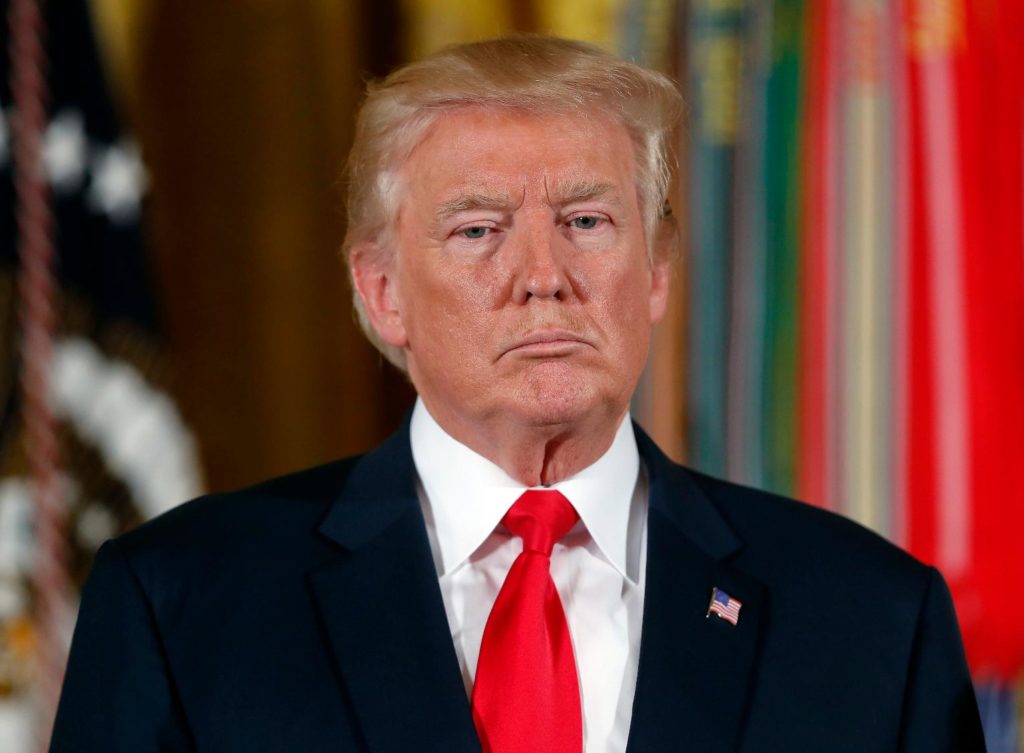
President Donald Trump may be trying for a reset in the West Wing, but he is making clear that he is not changing his Twitter habit. On Twitter Tuesday, Trump said: “Only the Fake News Media and Trump enemies want me to stop using Social Media (110 million people). Only way for me to get the truth out!” The tweet came one day after retired Gen. John Kelly took over as Trump’s new chief of staff. Tapped to bring order to the chaotic West Wing, Kelly quickly made his presence known Monday — ousting newly appointed communications director Anthony Scaramucci and revising the command structure so that all senior staffers report to him. Those moves were praised Monday by Trump allies and lawmakers, who expressed hope that Kelly would help stem internal conflicts and advance a policy agenda after six months of tumult. But less clear is how much control Kelly will have over Trump’s predilection for sowing conflict and making off-the-cuff comments on social media. White House spokeswoman Sarah Huckabee Sanders repeated Tuesday that Kelly had full control over the staff. Asked at a press briefing if senior advisers Ivanka Trump, Jared Kushner and others would be able to drop in to see the president, she said: “I don’t think anyone just wanders into the Oval Office.” Sanders added that “Gen. Kelly is going to work with the entire team as he has been doing over the last couple of days.” Sen. Lindsey Graham, speaking on NBC’s “Today Show,” said he was encouraged by Kelly’s new role, but stressed that he was looking for “discipline” from Trump in order to move forward with issues like health care and tax reform. “He has an obligation to be president for all of us and stop the chaos. Most of the chaos is generated by him and no one else,” Graham said. Republished with permission of The Associated Press.
Anthony Scaramucci out of White House job as John Kelly takes charge
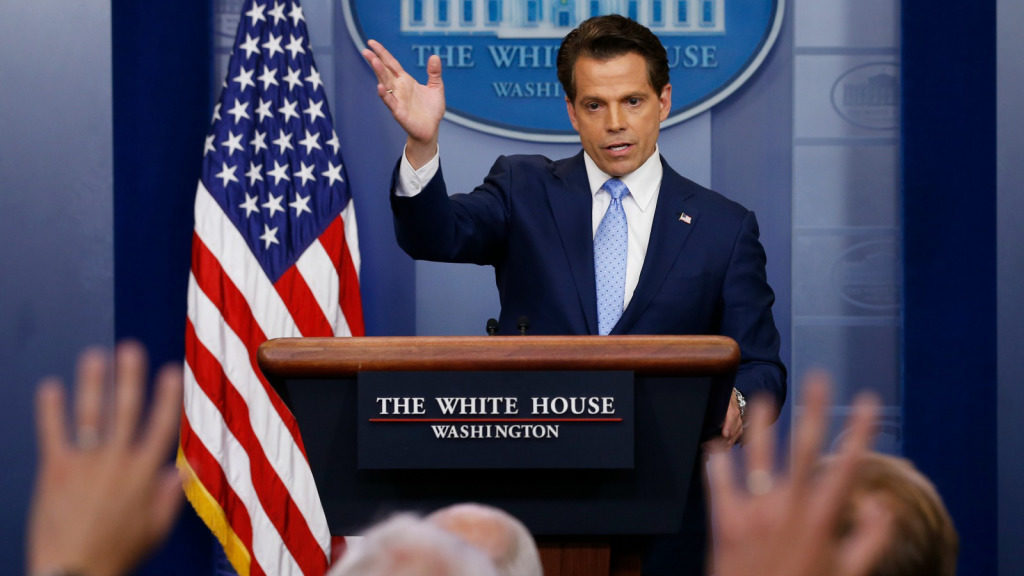
Anthony Scaramucci is out as White House communications director after just 11 days on the job – and just hours after former Gen. John Kelly took over as President Donald Trump‘s new chief of staff. Hoping to turn the page on a tumultuous opening chapter to his presidency, Trump had insisted earlier Monday that there was “no chaos” in his White House as he swore in the retired Marine general as his second chief of staff. Not long after, Scaramucci, who shocked many with his profane outburst last week against then-chief of staff Reince Priebus, was gone. In the words of the White House announcement, he was leaving because he “felt it was best to give Chief of Staff John Kelly a clean slate and the ability to build his own team.” The three-sentence release concluded, “We wish him all the best.” The statement about Scaramucci’s departure used the same “clean slate” language that departing press secretary Sean Spicer used to describe his own reason for resigning the day Trump brought Scaramucci aboard. Spicer remained in the White House on Monday, saying he was there to assist with the communications transitions. As the Scaramucci news spread, Kelly was in the East Room smiling and taking pictures with guests who were gathering for a Medal of Honor presentation. Earlier, in an Oval Office ceremony, Trump predicted Kelly, who previously served as Homeland Security chief, would do a “spectacular job.” And the president chose to highlight the rising stock market and positive jobs outlook rather than talk about how things might need to change in his White House under Kelly. Trump on Friday ousted Reince Priebus as chief of staff and turned to Kelly, who he hopes will bring military discipline to an administration weighed down by a stalled legislative agenda, infighting among West Wing aides and a stack of investigations. Scaramucci’s brief tenure shoved internal White House disputes into the open. In media interviews, he trashed Priebus as a “leaker” and senior White House aide Steve Bannon as a self-promoter. One of Scaramucci’s first – and it turns out only – acts was to force out a communications aide seen as loyal to Priebus. Spicer, Priebus and Bannon had all objected to Trump’s decision to hire Scaramucci, who would have reported directly to the president. While Trump is looking for a reset, he pushed back against criticism of his administration with this tweet: “Highest Stock Market EVER, best economic numbers in years, unemployment lowest in 17 years, wages raising, border secure, S.C.: No WH chaos!” In fact, economic growth averaged 2 percent in the first half of this year, a pace Trump railed against as a candidate and promised to lift to 3 percent. The stock market first hit a record under President Barack Obama and has kept growing. The unemployment rate, too, started to decline on Obama’s watch. And wage gains have been weak. Trump on Monday convened his first Cabinet meeting with Kelly at his side, telling his team it is “doing incredibly well” and “starting from a really good base.” On how he would deal with rising tensions with North Korea, Trump said only: “It will be handled.” Seated across from Trump was Attorney General Jeff Sessions, who has stayed on the job while Trump has publicly savaged him in interviews and on social media. Kelly’s success in a chaotic White House will depend on how much authority he is granted and whether Trump’s dueling aides will put aside their rivalries to work together. Also unclear is whether a new chief of staff will have any influence over the president’s social media histrionics. Former Trump campaign manager Corey Lewandowski, who was ousted from the campaign in June 2016, said on NBC’s “Meet the Press” that he expected Kelly would “restore order to the staff” but also stressed that Trump was unlikely to change his style. “I say you have to let Trump be Trump. That is what has made him successful over the last 30 years. That is what the American people voted for,” Lewandowski said. “And anybody who thinks they’re going to change Donald Trump doesn’t know Donald Trump.” Kelly’s start follows a wild week, marked by a profane tirade by Scaramucci, the president’s continued criticism of his attorney general and the failed effort by Senate Republicans to overhaul the nation’s health care law. In addition to the strains in the West Wing and with Congress, Kelly starts his new job as tensions escalate with North Korea. The United States flew two supersonic bombers over the Korean Peninsula on Sunday in a show of force against North Korea, following the country’s latest intercontinental ballistic missile test. The U.S. also said it conducted a successful test of a missile defense system located in Alaska. Sen. Dianne Feinstein, D-Calif., said on CBS’ “Face the Nation” that she hopes Kelly can “be effective,” and “begin some very serious negotiation with the North and stop this program.” Another diplomatic fissure opened Sunday when Russian President Vladimir Putin said the U.S. would have to cut its embassy and consulate staff in Russia by several hundred under new sanctions from Moscow. In a television interview, Putin indicated the cutback was retaliation for new sanctions in a bill passed by Congress and sent to Trump. Trump plans to sign the measure into law, the White House has said. After Putin’s remarks, the State Department deemed the cutbacks “a regrettable and uncalled for act” and said officials would assess the impact and how to respond to it. While Trump is trying to refresh his team, he signaled that he does not want to give up the fight on health care. On Twitter Sunday, he said: “Don’t give up Republican Senators, the World is watching: Repeal & Replace.” The protracted health care fight has slowed work on Trump’s other policy goals, including a tax overhaul and infrastructure investment. But Trump aides made clear that the president still wanted to see action on health care. White
Donald Trump’s six-month stall sparks a White House shake-up
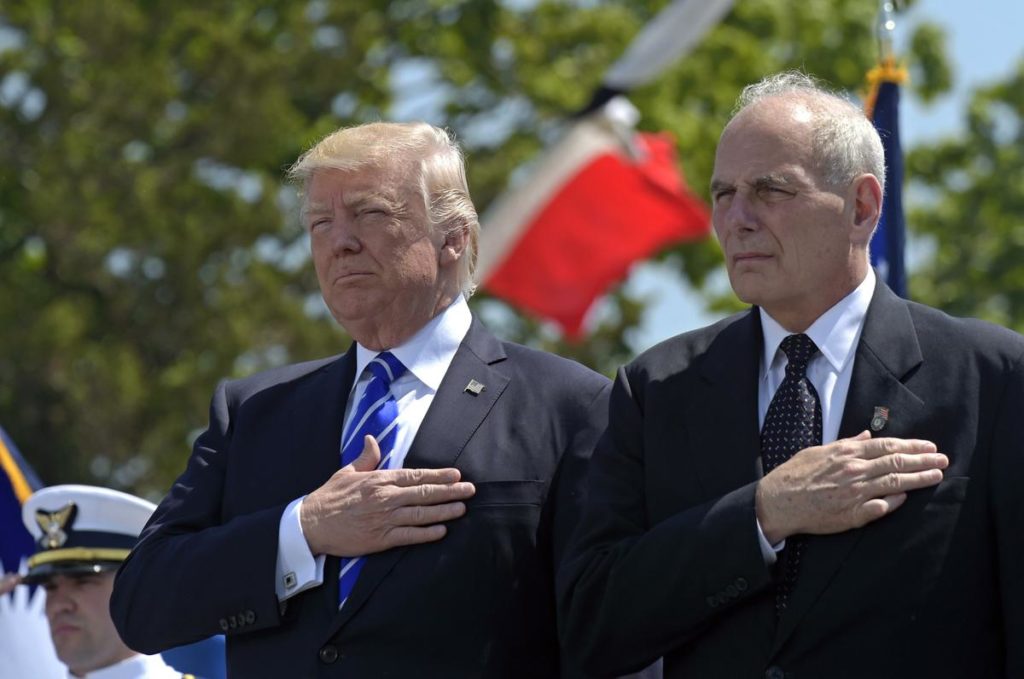
Six months into his presidency, Donald Trump is saddled with a stalled agenda, a West Wing that resembles a viper’s nest, a pile of investigations and a Republican Party that’s starting to break away. Trump on Friday indirectly acknowledged the troubled state of his unconventional White House when he abruptly replaced his chief of staff with hard-nosed retired Gen. John Kelly, until now the Homeland Security secretary. Kelly will take the desk of Reince Priebus, a Republican operative who was skeptical of Trump’s electoral prospects last year and ultimately came to be viewed by the president as weak and ineffective. Kelly’s ability to succeed will depend on factors outside his control, including whether Trump’s squabbling staff is willing to put aside the rivalries that have sowed disorder and complicated efforts to enact policy. But the big question is can Kelly do what Priebus couldn’t? And that’s curbing the president’s penchant for drama and unpredictability, and his tendency to focus more on settling scores than promoting a policy agenda. No other aide or adviser has been successful on that front. As a candidate, and now as president, Trump has cycled through campaign chiefs and advisers but has remained easily distracted by his personal interests and only loosely tethered to any policy plans. “Trump has spent a lot of his political capital on nothing but defending his own reputation,” Alex Conant, a Republican strategist, said of Trump’s first six months in office. “There is no sustained strategy. His attention seems to shift with whatever is leading cable news at that moment.” Staff shake-ups are a tried-and-true way for struggling presidents to signal that they are ready to shift course. In 1994, President Bill Clinton elevated budget director Leon Panetta to chief of staff with a mandate to bring more discipline to a loosely organized White House. President George W. Bush made the same move with Josh Bolten in 2006 as the Bush presidency buckled under criticism of his handling of the Iraq war and the federal government’s response to Hurricane Katrina. Rarely, however, do presidents face as much turmoil as quickly as Trump has. His Friday afternoon tweet announcing Kelly’s hiring capped a tumultuous week: —his new communications director, Anthony Scaramucci, spewed vulgarities in public at Priebus. —Trump drew blunt criticism from GOP lawmakers over his attacks on Attorney General Jeff Sessions for withdrawing from the federal investigation into Russian campaign interference. —Senate Republicans’ efforts to pass legislation that would have overhauled the nation’s health care law collapsed. Some Trump allies tried to pin the blame for the health debacle on Priebus. The former Republican National Committee chairman had sold himself to Trump as a well-connected Washington operator who could help round up votes on Capitol Hill. He encouraged Trump to press forward with a health care overhaul early in his presidency. But as Republicans sorted through the rubble of their health care failure, it was Trump, not his chief of staff, who was the target of criticism. “One of the failures was the president never laid out a plan or his core principles and never sold them to the American people,” said Rep. Charlie Dent, R-Pa. He said Trump “outsourced the whole issue to Congress.” Indeed, Trump’s relatively rare public appeals for the passage of health legislation suggested he was more interested in a political win than in the details of policy. A former Democrat who does not adhere to all GOP orthodoxy, Trump frequently shifted his own stance as to whether the Republicans should repeal and replace the Affordable Care Act at once or simply repeal the law for now. By week’s end, it was clear that some Republicans simply weren’t afraid of breaking with a weakened president. GOP Sens. Susan Collins of Maine, Lisa Murkowski of Alaska, and John McCain of Arizona, who was back in Washington after a brain cancer diagnosis, doomed a last-ditch bill in Friday’s early morning hours. Murkowski, who was targeted by Trump on Twitter for her opposition, showed little sign of being cowed by the president. “We’re here to govern, we’re here to legislate, to represent people that sent us here. And so every day shouldn’t be about campaigning. Every day shouldn’t be about winning elections. How about doing a little governing around here?” she asked. To this point, Trump has failed to shepherd a single substantial piece of legislation into law. His only major accomplishments have been by executive power — rolling back regulations and undoing a few of his predecessor’s achievements, like the Paris climate treaty — along with his successful nomination of Supreme Court Justice Neil Gorsuch. Kelly, who spent his career in the military before being nominated by Trump to run the sprawling Department of Homeland Security, has limited political and legislative experience. But at least for now, he has the trust of the president. “He has been a true star of my administration,” Trump declared. Republished with permission of The Associated Press.
Donald Trump fires Reince Priebus, names Homeland Security Secretary John Kelly as chief of staff
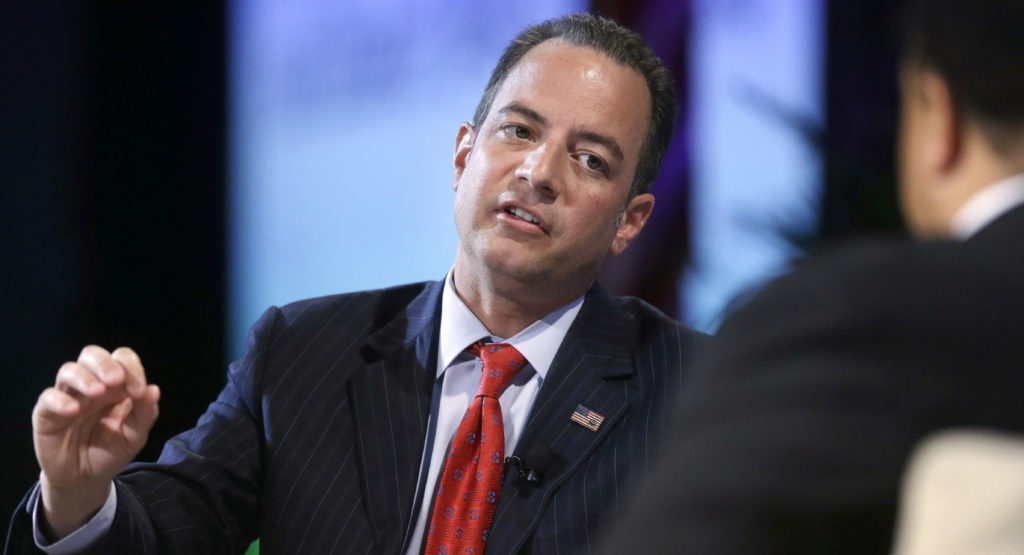
President Donald Trump tweeted on Friday afternoon that he is naming Homeland Security Secretary John Kelly as chief of staff, ousting Reince Priebus. I am pleased to inform you that I have just named General/Secretary John F Kelly as White House Chief of Staff. He is a Great American…. — Donald J. Trump (@realDonaldTrump) July 28, 2017 In the swirl of Shakespearean intrigue that surrounds Donald Trump’s White House, Priebus’ fortunes have long been a source of speculation, given his limited role, colorful band of rivals and the president’s public slights. Those questions sharply escalated this week with the arrival of Trump’s new communications director, who was hired over Priebus’ objections and reports directly to the president. Priebus’ already tense relationship with Anthony Scaramucci took a darker turn over the past 24 hours when the communications chief suggested in a late-night tweet that Priebus was one of the “leakers” that President Donald Trump has railed against. The New Yorker published a profanity-laced interview Thursday in which Scaramucci called Priebus a “paranoid schizophrenic.” Trump told The Wall Street Journal in an interview Tuesday that no staff shake-up was imminent. But he has privately floated potential replacements for Priebus, including Secretary John Kelly, deputy national security adviser Dina Powell, chief economic adviser Gary Cohn and former campaign adviser David Urban, according to three people who’ve been in conversation with the president and senior staffers recently. The president often throws out names casually in conversation that end up going nowhere, and there is no indication that anyone has been approached about the job. But Priebus’ power — which has been limited compared with past people with that title — has dwindled. Scaramucci is the latest top aide to be granted a direct line to Trump, and it has become increasingly unclear who actually reports to Priebus. The White House did not respond to requests for an organizational chart. After Trump boarded Air Force One on Friday for a trip to Long Island, New York, reporters saw Priebus and Scaramucci, who was on the telephone and carrying a bag, boarding the aircraft using the rear staircase. Priebus has grown increasingly isolated in the White House, as past Republican National Committee colleagues and other allies have left or been pushed out of the West Wing. Those who have departed include former deputy chief of staff Katie Walsh, outgoing press secretary Sean Spicer and press aide Michael Short. The chief of staff made an appearance Thursday at an East Room event where Trump honored first responders, acting as if nothing was amiss. Asked if Trump had confidence in his chief of staff, spokeswoman Sarah Huckabee Sanders did not answer directly, saying: “I think I’ve addressed this question when it comes to staffing and personnel many times, that if the president doesn’t, then he’ll make that decision. We all serve at the pleasure of the president and if he gets to a place where that isn’t the case, he’ll let you know.” Priebus did not respond to repeated requests for comment. On-the-job humiliation is often part of the deal in Trump’s White House, as Priebus well knows. At a meeting of auto company CEOs in Michigan in March, Trump praised the executives and then said, “And then I look at Reince,” drawing scattered laughs with a tone that suggested Priebus was a less impressive presence. Trump quickly added that Priebus has “done a great job.” Trump structured the White House in a way that undermined Priebus’ authority from Day One. In a highly unusual arrangement, he said Priebus and chief strategist Steve Bannon would serve as “equal partners” in implementing his agenda. In a typical White House, most staffers, including the communications director, report to the chief of staff. But in Trump’s White House, a long list of top advisers bypasses the middle man. Scaramucci, social media director Dan Scavino and counselor Kellyanne Conway all report directly to Trump, as do the president’s daughter Ivanka and son-in-law Jared Kushner, both senior advisers. “I plan on continuing to serve and report directly to President @realDonaldTrump at the @WhiteHouse, as I’ve done since 1/20/2017,” Scavino tweeted over the weekend. Trump has also maintained a near open-door policy, with top aides casually poking their heads in constantly to speak with the boss. “They’ve got all these chiefs running about with or without the title of chief,” said William Daley, the second chief of staff for President Barack Obama. He said that under Obama, there were high-ranking players with direct access to the president, but he was clued in on any policy or governing conversations, noting: “There was a sense that people were working together.” Ari Fleischer, who served as press secretary under George W. Bush, said there are multiple ways to effectively run the White House. George H.W. Bush ran a hierarchical West Wing with a powerful chief of staff who controlled access to the Oval Office. When his son came to office, he chose a different model, creating a system under which numerous senior aides were able to walk into the Oval Office and speak to the president, even if, on paper, they technically reported to someone else. The difference now, he said, is that Trump has created a faction-driven White House, noting: “I just think he has too many independent power centers and not enough team players.” The lone voice coming to Priebus’ defense Thursday was House Speaker Paul Ryan, who called the fellow Wisconsinite a “close friend” and said, “I think he’s doing a great job as chief of staff.” But from within the White House there was less vocal support. Asked on Fox Business Network whether Priebus is in trouble, Conway replied: “You’d have to ask the president that.” Republished with permission of The Associated Press.
When is a wall not a wall? GOP redefines Donald Trump’s border wall

Congressional Republicans have a new talking point about President Donald Trump‘s border wall: It’s not really a wall at all. Instead, the wall is “a bit of a metaphor as to border security,” in the words of Rep. Mario Diaz-Balart of Florida. Or, a “quote, wall,” as Sen. John McCain of Arizona put it: A combination of drones, towers, anti-tunneling devices and the like that add up to enhanced border security. The issue arose this week as Congress squabbled over government-wide spending legislation, including money for security measures along the U.S.-Mexico border. After the president backed off his demands in face of Democratic objections, the bill is not expected to include money specifically designated for constructing the “big, beautiful” border wall Trump repeatedly promised during the campaign. Instead the legislation will pay for other border security measures, perhaps including access roads and gates and technological improvements of various kinds. That might seem to fall short of Trump’s commitments. But according to Republicans like McCain and Diaz-Balart, Trump’s promised wall may be better understood as a figure of speech anyway. “In my view you’ve got to have an interpretation of a, quote, wall as a barrier to illegal drugs, illegal people, these gangs that are coming from the Central American countries, and that means using every bit of technology that you have,” said McCain, who dined with Trump at the White House Monday night. As for whether the president shares his views, McCain said: “I believe that he is at least considering that definition.” Experts and lawmakers of both parties have long dismissed the notion of a physical wall along the 2,000-mile border as unnecessary, impractical and excessively expensive, especially on portions of the border that run through the Rio Grande or sovereign Indian land. Cost estimates top $20 billion, and even Republicans dismiss Trump’s oft-repeated promise that Mexico will end up paying for it. Republicans in border states are particularly skeptical and none have embraced Trump’s promise of a physical wall. Homeland Security Secretary John Kelly has acknowledged there won’t be a wall “from sea to shining sea” and instead has discussed a combination of structures, technology and manpower. But Kelly has been firm that there would be some new physical structures at the border. Republicans who faced uncomfortable questions this week about the need to pay for an actual wall found refuge in Kelly’s positioning. “Listen to the way he defines it — that’s what we’re working on,” said Sen. John Hoeven, R-N.D. “This is about wall, fencing, repairs, technology, people, all in the right balance to do the best job. Boy, that seems pretty reasonable.” But some immigration hard-liners were outraged as fellow Republicans debated about what constituted a wall. “The pro-amnesty people are trying to redefine the word ‘wall,’” said Rep. Steve King, R-Iowa. “They don’t want security at the border, they never have, and we should not let them play linguistic or semantics games to try to pull down a mandate that the American people commanded when they went to the polls.” As for Trump himself, his description of his promised border wall has evolved since he first announced the plan during his campaign kick-off speech. “It is way past time to build a massive wall to secure our southern border – and nobody can build a bigger and better wall than Donald Trump,” he declared that June day. During the campaign, he repeatedly described an “impenetrable physical wall” along the length of the southern border that would be built from concrete, rebar and steel and stand as high as his venues’ ceilings. The wall would not have to be contiguous, he sometimes allowed, thanks to natural barriers. And it would have “a big, beautiful door” for people to enter legally. The physical wall would be enhanced with technology, including above-and below-ground sensors, towers, and aerial surveillance, he said. After the election, Trump seemed to relax his expectations, telling “60 Minutes” that he would be OK with a fence along certain stretches — though he maintained a wall remained more appropriate for others. But as recently as Tuesday Trump was back to touting his wall, insisting at a White House event: “The wall’s gonna get built” and the building will start “soon.” Republished with permission of the Associated Press.
Donald Trump taps military strategist as national security adviser
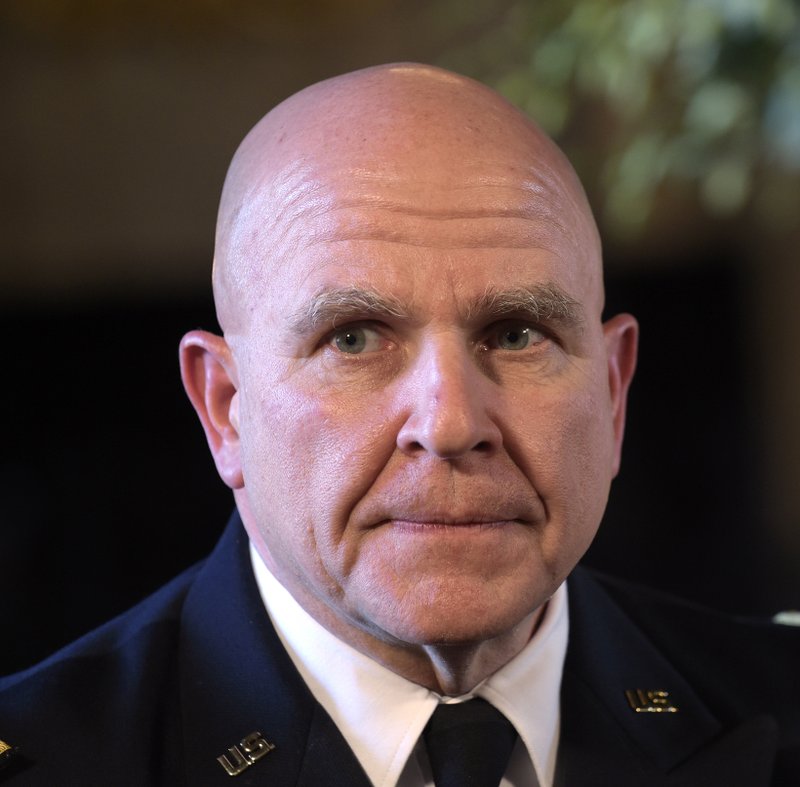
President Donald Trump has tapped Army Lt. Gen. H.R. McMaster, a prominent military strategist known as a creative thinker, as his new national security adviser, replacing the ousted Michael Flynn. Trump announced the pick Monday at his Palm Beach, Florida, club and said McMaster is “a man of tremendous talent and tremendous experience.” The president’s choice further elevated the influence of military officers in the new administration. Trump, who has no military or foreign policy experience, has shown a strong preference for putting generals in top roles. In this case, he tapped an active-duty officer for a post that’s sometimes used as a counterweight to the Pentagon. McMaster, who wore his uniform for the announcement, joins Defense Secretary Jim Mattis and Homeland Security Secretary John Kelly, both retired generals, in Trump’s inner circle of national security advisers. The White House said Monday McMaster plans to remain on active military duty. He will take on the challenge of leading a National Security Council that has not adjusted smoothly to Trump’s leadership. The president suggested he does not trust holdovers from the Obama administration and complained about leaks to reporters. His decision to put his top political adviser on the senior committee of the National Security Council drew sharp criticism. On Friday, the head of the council’s Western Hemisphere division was fired after he criticized Trump’s policies and his inner circle of advisers. Trump said Monday that retired Army Lt. Gen. Keith Kellogg, who had been his acting adviser, will now serve as the National Security Council chief of staff. He also said he would be asking John Bolton, a former U.S. ambassador to the United Nations, to work with them in a “somewhat different capacity.” McMaster is viewed as soldier-scholar and creative thinker. He has a doctoral degree in history from the University of North Carolina and has been heavily involved in the Army’s efforts to shape its future force and its way of preparing for war. He is currently the director of the Army Capabilities Integration Center, a sort of military think tank, at Fort Eustis, Virginia. Outside of the Army, he may be best known for his 1997 book, “Dereliction of Duty,” a searing indictment of the U.S. government’s mishandling of the Vietnam War and an analysis of what he called the “lies that led to Vietnam.” The book earned him a reputation for being willing to speak truth to power. McMaster commanded troops in both American wars in Iraq — in 1991, when he fought in a storied tank battle known as the Battle for 73 Easting, and again in 2005-2006 in one of the most violent periods of the insurgency that developed after the U.S.-led invasion in 2003. He is credited with using innovative approaches to countering the insurgency in the northern Iraqi city of Tal Afar when he commanded the 3rd Armored Cavalry Regiment. He later served as a special adviser to the top U.S. commander in Iraq. McMaster was Trump’s second choice to replace Flynn, who has been under FBI investigation for his contacts with Russian officials. Trump dismissed Flynn last week after revelations that the adviser had misled Vice President Mike Pence about the nature of his discussion with Russia’s ambassador to the U.S. during the presidential transition. Trump said in a news conference Thursday that he was disappointed by how Flynn had treated Pence, but did not believe Flynn had done anything wrong by having the conversations. Trump’s first choice to replace Flynn, retired Vice Adm. Robert Harward, turned down the offer. Trump announced his choice sitting between McMaster and Kellogg in a luxurious living room at the resort property. The president told reporters that Vice President Mike Pence had been involved in the process, but he did not elaborate. Trump brought four candidates for the position to Mar-a-Lago over the weekend for in-person interviews, McMaster among them. McMaster called the appointment a “privilege.” It was not clear how closely McMaster’s and Trump’s views align. On Russia, McMaster appears to hold a much dimmer view than Trump of Moscow’s military and political objectives in Europe. In remarks at the Center for Strategic and International Studies in May 2016, McMaster said Russia managed to annex Crimea and intervene militarily in eastern Ukraine “at zero cost” from the international community. McMaster said Moscow’s broader goal is to “collapse the post-Cold War security, economic and political order in Europe and replace that order with something that is more sympathetic to Russian interests.” In his current role, McMaster has been studying the way Russia developed and executed its campaigns in Crimea and Ukraine, where it used what some call “hybrid warfare” — part political, part disinformation, part military. Sen. John McCain, an increasingly vocal Trump critic, called McMaster an “outstanding” choice. “He is a man of genuine intellect, character, and ability. He knows how to succeed,” he said in a statement. “I give President Trump great credit for this decision, as well as his national security cabinet choices.” The position of national security adviser does not require Senate confirmation. Republished with permission of The Associated Press.
Senate confirms first wave of Donald Trump’s Cabinet nominees
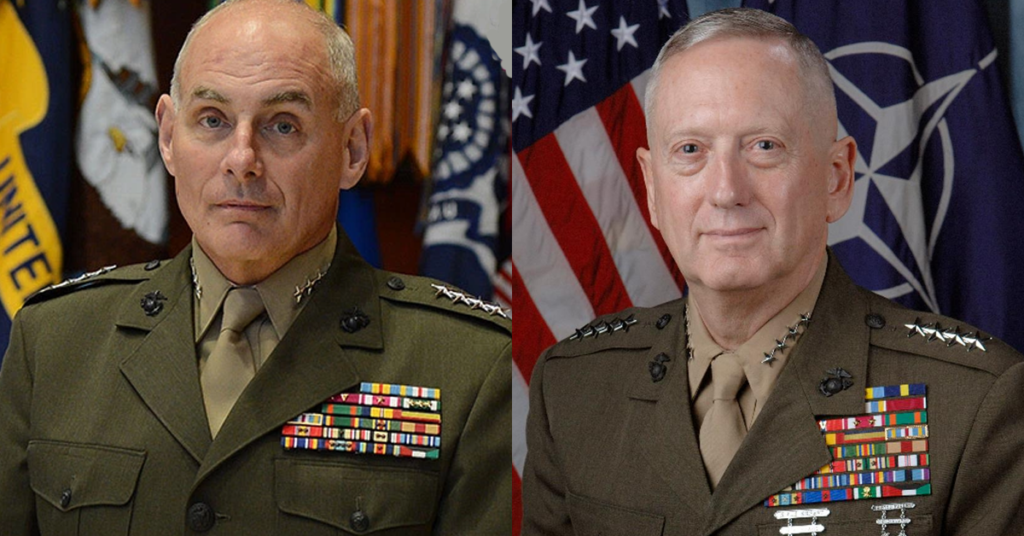
The Senate confirmed President Donald Trump‘s first Cabinet member Friday evening, formally approving retired Marine Gen. James Mattis to be his defense secretary. Less than twenty minutes later, they confirmed retired Marine Gen. John Kelly to be his secretary of Homeland Security. The final vote to confirm Mattis was 98-1 with New York Democratic Sen. Kirsten Gillibrand being the sole senator to vote against him. Alabama Sen. Jeff Sessions — Trump’s nominee for attorney general — chose to abstain from the vote. Lawmakers voted 88-11 in favor of Kelly, who succeeds Obama’s DHS Secretary Jeh Johnson. Kelly previously served as commander of U.S. Southern Command under President Barack Obama from 2012 until this January. Kentucky-Republican Senate Majority Leader Mitch McConnell also attemped to begin debate on Rep. Mike Pompeo’s Cabinet nomination as CIA Director following the Mattis and Kelly confirmations, but Oregon-Democrat Sen. Ron Wyden objected. “We need to confirm a new director today,” McConnell told his colleagues. “We need to confirm the rest of the Cabinet as quickly as we can.” Although Republicans have a Senate majority and will likely to confirm most, if not all, of Trump’s Cabinet, Democrats are able to slow the process by disagreeing to expedite Senate procedure. The Senate will instead begin the six-hour debate on Pompeo Monday. “No CIA director in history has ever been confirmed on Inauguration Day,” said Sens. Wyden, Patrick Leahy and Richard Blumenthal in a joint statement. “The importance of the position of CIA director, especially in these dangerous times, demands that the nomination be thoroughly vetted, questioned and debated.”
