
Week 1: Cabinet picks contradict Donald Trump stands on some issues
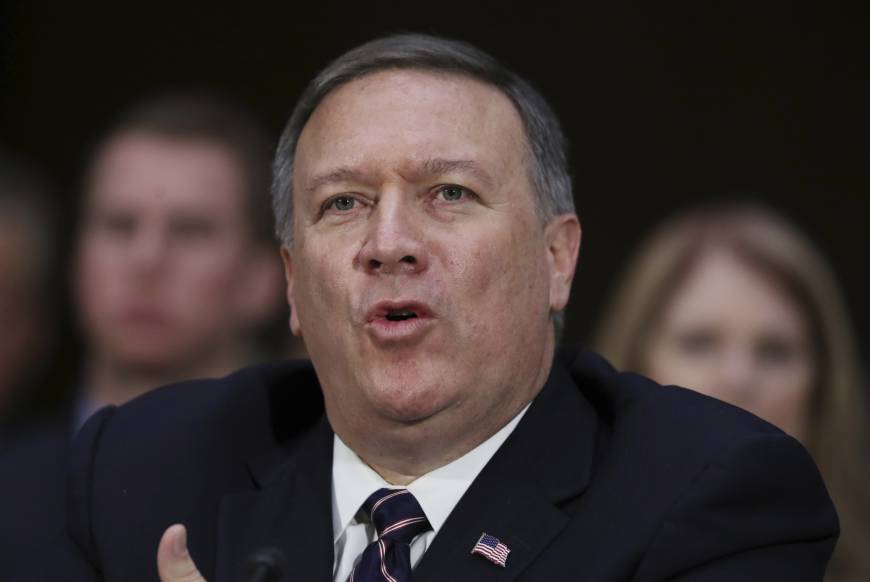
The lack of fireworks surrounding Senate consideration of President-elect Donald Trump‘s Cabinet picks may reflect a slew of statements his choices have made contradicting the billionaire businessman’s position on key issues. Trump acknowledged the differences early Friday, posting a message on his Twitter account saying: “All my Cabinet nominee are looking good and doing a great job. I want them to be themselves and express their own thoughts, not mine!” This week’s confirmation hearings produced an odd political chemistry where, for instance, one of the harshest examinations of a Trump Cabinet choice came from one of Trump’s fellow Republicans, presidential campaign rival Sen. Marco Rubio. Despite Democrats’ dismay over some of Trump’s selections, the hearings were relatively tranquil, with Democrats generally restrained even in quizzing the more contentious picks. The reason, according to a few Democrats: The nominees are proving more palatable than Trump himself. “As I meet members of the Cabinet I’m puzzled because many of them sound reasonable,” said Sen. Dick Durbin of Illinois, the No. 2 Senate Democrat. “Far more reasonable than their president.” That could change in weeks to come, because some of the most potentially explosive hearings are still pending, including the scrutiny of former Goldman Sachs partner Steven Mnuchin for Treasury secretary. Several of Trump’s Cabinet selections this week made statements this week contradicting policy stances espoused by their soon-to-be boss on issues ranging from Russia and NATO to climate change and Muslims. Sen. Jeff Sessions, picked for attorney general, said he’s against any outright ban on immigration by Muslims, in contrast to Trump’s onetime call to suspend admittance of Muslims until U.S. officials could learn more about nature of the threat of extremism. His secretary of state candidate, Rex Tillerson, took a relatively hard line on Washington’s dealings with Russia, even though Trump has been talking about improving relations between Washington and Moscow and held out for days before saying he accepted the intelligence community’s conclusion that Moscow meddled in the U.S. election process. Tillerson demurred, however, when one senator tried to lure him into calling President Vladimir Putin, whom he knows, a “war criminal,” although he emphasized support for NATO commitments that Trump had questioned. The secretary-of-state designate also said the United States should not back away from its efforts against nuclear proliferation, notwithstanding Trump’s suggestion earlier this year that some key U.S. allies like Japan and South Korea provide their own defense. Some of the toughest questioning of Tillerson came not from Democrats but from Rubio, who grilled the Exxon Mobil executive on human rights issues. As Mnuchin’s confirmation hearing approaches, Democrats have set up a website to solicit stories from the thousands of people whose homes were foreclosed on by OneWest Bank while he headed a group of investors who owned the bank. They hope to use Mnuchin’s nomination hearing to attack Trump’s populist appeal with working-class voters and cast themselves as defenders of the middle class. Thus far, though, Republicans are congratulating themselves for generally smooth sailing. And overall, the lack of drama may also be due to the decision by Democrats while in the Senate majority to lower the vote threshold for Cabinet nominees and others from 60 votes to 50, allowing Republicans to ensure approval as long as they can hold their 52-seat majority together. “The purpose of confirmation hearings is to examine the record and views of potential nominees and I think that’s what these hearings are doing,” said Sen. Ted Cruz, R-Texas. “I think it’s likely that all of the Cabinet nominees are going to be confirmed, I think the hearings have gone quite well this week.” A hearing Thursday for neurosurgeon Ben Carson to head the Department of Housing and Urban Development featured some pointed questioning from Massachusetts Sen. Elizabeth Warren, but also warm exchanges between Carson and other committee Democrats. Afterward Carson thanked the panel and said that it “was actually kind of fun.” Sessions was denied confirmation once before by the Senate, but that was three decades ago for a federal judgeship. This time around the Alabaman is a sitting senator and was treated gently, for the most part, by his colleagues, even when Democrats brought up the racial issues that brought him down him last time around. There was potential for drama as Sen. Cory Booker, D-N.J., broke with Senate tradition to testify against his colleague, but it came on the second day of the hearing after Sessions had finished testifying, so he was not even in the room. Tillerson had the rockiest outing thus far, with Rubio pressing him on Russia and Democratic Sen. Jeff Merkley of Oregon confronting him about climate change and other issues. With Rubio and others undecided on supporting Tillerson, his ultimate confirmation is in question. But even with Tillerson, Democrats seemed to pull their punches at times. “I don’t want to argue with you,” Sen. Tom Udall of New Mexico remarked at one point, seeming to speak for several colleagues. And it was practically bipartisan lovefests at the hearings for the choices for Central Intelligence Agency, Kansas Rep. Mike Pompeo; retired Gen. James Mattis for Defense; and retired Gen. John Kelly for Homeland Security. “Pompeo’s very popular, Mattis, Kelly — these are popular selections,” said Sen. John McCain, R-Ariz. The hearings seemed to underscore some emerging dynamics of Trump’s relations with Capitol Hill. Despite his highly unconventional approach, and his lack of Capitol Hill experience, many of his appointees and aides could have been selected by any other Republican, and the Senate is responding accordingly. And even where Trump’s surprising approach raises the potential for problems, congressional Republicans are working overtime to paper them over, not highlight them. “We are in complete sync,” House Speaker Paul Ryan, R-Wis., insisted Thursday in a discussion about a different topic, health care. That could change in weeks to come, as the Senate holds hearings on Mnuchin and other more divisive selections. These include conservative Rep. Tom Price for Health and Human Services; Oklahoma Attorney General Scott Pruitt,
Homeland Security pick cites securing border as top priority
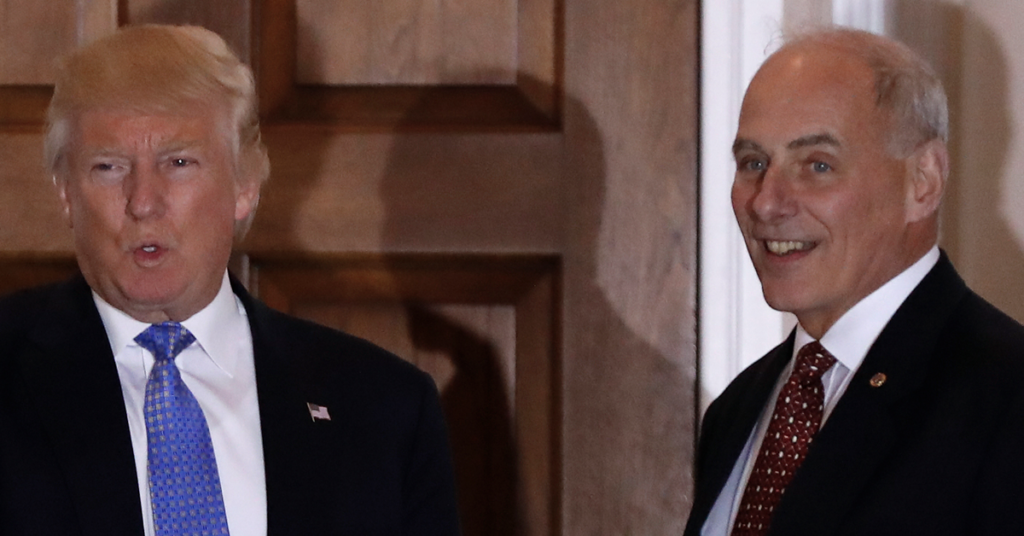
Donald Trump‘s choice to lead the Department of Homeland Security says closing the border to the “illegal movement of people and things” will be his top priority if confirmed. Retired Marine Gen. John Kelly outlined his priorities in a detailed questionnaire to senators. The questionnaire was released Tuesday ahead of Kelly’s confirmation hearing later in the day. Kelly embraced Trump’s call for a strong border wall with Mexico. He said that achieving his top priority of shutting down illegal movements “starts with physical obstacles like a border wall and supporting surveillance technologies.” He said it will also require constant patrols from federal and local law enforcement. The confirmation of Kelly, a retired Marine general, is almost assured, but members of the Senate Homeland Security and Governmental Affairs Committee will likely use the hearing to debate the tough immigration and border security policies that were centerpieces of Trump’s presidential campaign. Kelly is one of several retired generals tapped for top positions by Trump. That has raised some concerns about undue military influence in his administration, weakening the American tradition of civilian control of government. But Kelly is widely respected by Democrats and Republicans alike, and his military experience is applicable to his Homeland Security role. He’s the former head of the military’s Southern Command, based in South Florida, which routinely works with the Department of Homeland Security to combat human trafficking and drug smuggling. The military command has also partnered with Immigration and Customs Enforcement, a part of Homeland Security, to help rescue unaccompanied child immigrants trying to make their way from Central America to the United States alone. In the questionnaire, Kelly said he is committed to telling “truth to power.” The commitment addresses concerns that some lawmakers have about the president-elect’s willingness to take in points of view that clash with his own. Kelly told the committee that his that his greatest successes during 40-plus years in the military are: “taking care of my people, speaking ‘truth to power,’ and successfully completing every mission I have ever been assigned.” He said he has worked with many senior U.S. officials during his career. “I never hesitated to disagree with any of them, or make difficult recommendations when appropriate,” Kelly said. Also, in newly released ethics disclosures, Kelly said that if confirmed he will resign positions with multiple consulting and government contractor firms and defense contractor DynCorp. Kelly listed his salary with DynCorp, a company awarded a 2016 contract from DHS to train Immigration and Customs Enforcement agents, as more than $166,000. In a statement prepared for the Senate hearing, Republican chairman Ron Johnson of Wisconsin praised Kelly as having a “deep knowledge and understanding of the grave security threats facing our nation and the sacrifices that are required to keep us safe.” Kelly joined the Marine Corps in 1970. He is a battle-hardened, blunt-talking veteran who served three tours in Iraq. He was also the highest-ranking officer to lose a child in combat in Iraq or Afghanistan. His son, Marine 1st Lt. Robert Kelly, was killed in November 2010 in Afghanistan. Kelly would be the fifth person to lead the department, which includes agencies that protect the president, respond to disasters, enforce immigration laws, protect the nation’s coastlines, stop drug smuggling and secure air travel. Kelly, in his statement for the committee, said he has a “profound respect for the rule of law” and as secretary “will always strive to uphold it.” That is likely to resonate with Republicans, who have complained that President Barack Obama has been too lax in his enforcement of immigration laws and have generally supported Trump’s proposals. Trump has vowed to deport millions of immigrants living in the U.S. illegally, focusing first on criminals. Kelly is likely to be asked his views on how to accomplish that. Trump pledged during the campaign to build a border wall – and have Mexico pay for it – though since winning the White House he has softened his stance on both the kind of barrier he wants and how it will be financed. Last week, Republicans suggested the wall could be paid for from regular spending legislation authorized by Congress. Trump insists that Mexico would reimburse the United States for the costs, but Mexico says it will not do so. Republish with permission of The Associated Press.
