
Ted Cruz calls for special counsel to investigate Attorney General Merrick Garland
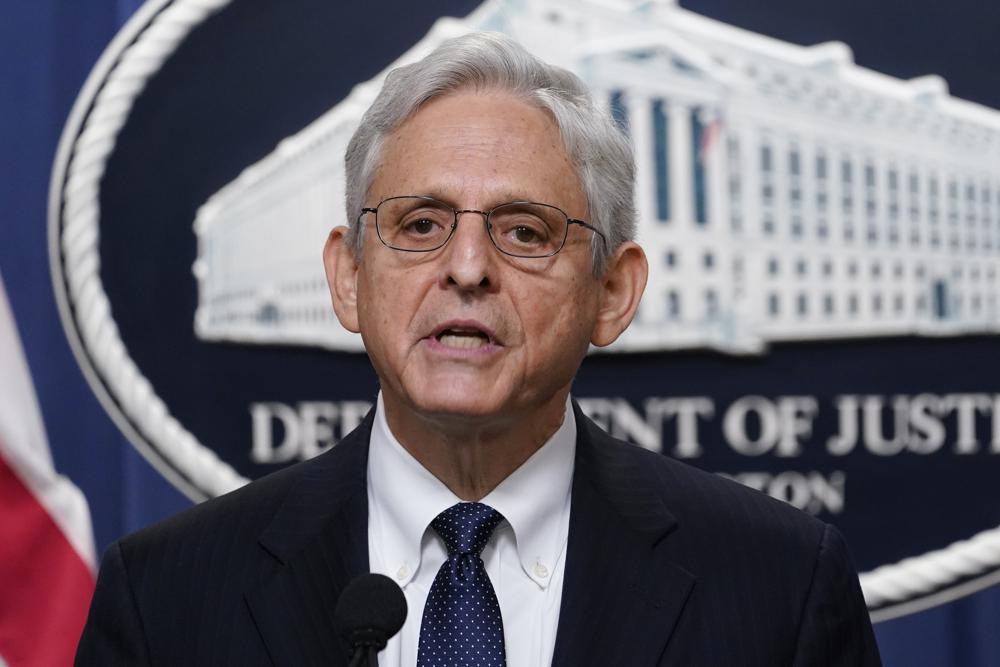
U.S. Sen. Ted Cruz, R-Texas, is calling for a special counsel to investigate Attorney General Merrick Garland over perjury and obstructing justice claims. Cruz did so as U.S. House Speaker Kevin McCarthy, R-California, said the House would begin an impeachment inquiry into Garland after IRS whistleblowers came forward to members of Congress alleging Garland blocked an investigation into Hunter Biden, President Joe Biden’s son, and lied about it under oath. McCarthy tweeted, “We need to get to the facts, and that includes reconciling these clear disparities. U.S. Attorney David Weiss must provide answers to the House Judiciary Committee. If the whistleblowers’ allegations are true, this will be a significant part of a larger impeachment inquiry into Merrick Garland’s weaponization of the DOJ.” IRS whistleblower Gary Shapley testified before Congress that the U.S. Attorney in charge of an investigation into Hunter Biden, David Weiss, said he wanted to bring charges but was prevented from doing so by Garland. McCarthy also told Fox News the inquiries would start by July 6. In his podcast, “Verdict with Ted Cruz,” on Monday, Cruz said, “The evidence is mounting and mounting and mounting … it is getting so bad even the corrupt corporate media cannot ignore this anymore.” Cruz played a clip of Garland saying at a news conference, “I certainly understand that some have chosen to attack the integrity of the Justice Department … by claiming that we do not treat like cases alike,” referring to what senators have argued when comparing how President Biden and former President Donald Trump have been treated by the department. “Nothing could be further from the truth. We make our cases based on the facts and the law,” Garland said. Cruz said Garland is “the one who has politicized this process and is burning down the integrity of the Department of Justice to the ground. The people accusing him work for him … they are his own … employees, and they’re … mad.” Cruz said Garland’s response was self-righteous and compared him to a despot. He also said what Garland said was “objectively false: ‘We use the same standards for everyone.’ Well, OK, you’re name is Biden you can have classified documents everywhere … but if you’re Trump, we’re sending in the stormtroopers.” “It’s time the Department of Justice needs to appoint a special counsel to investigate Merrick Garland for obstruction of justice and perjury,” he said. Cruz cited Shapley’s testimony, which indicated that Garland committed perjury and lied under oath to Congress. Garland then removed him from the case, which Cruz said is illegal and needs to be investigated. Cruz called for an investigation after he previously called out the deputy director of the FBI over bribery allegations related to both the president and his son, and is still demanding answers. Cruz also welcomed the House impeachment inquiry, saying, “There is serious evidence that Merrick Garland lied to me, under oath, when I questioned him about his role in obstructing the Hunter Biden probe.” When asked by Newsmax’s James Rosen about the accusations, White House spokesman John Kirby walked out of the room and wouldn’t answer questions. At another press briefing, when similar questions were asked, another White House spokesperson said she didn’t know what the reporters were referring to and didn’t have a comment. When asked if the White House believed Garland committed perjury, she smirked and made several facial expressions, shaking her head, and said, “I don’t have any comment on this.” Republished with the permission of The Center Square.
Joe Biden scraps planned visit to Australia, Papua New Guinea to focus on debt limit talks
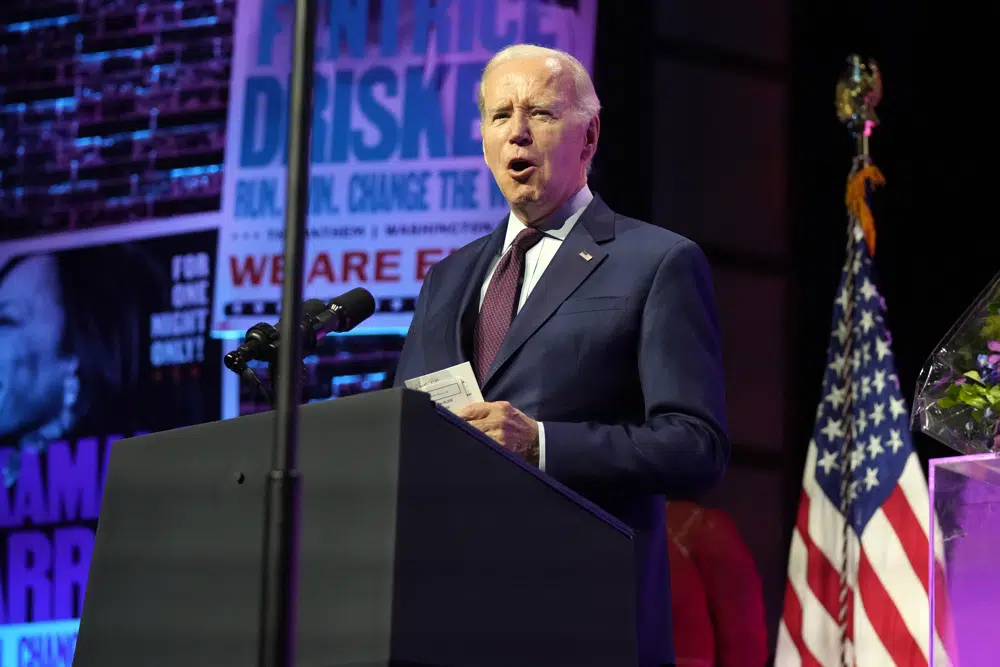
President Joe Biden said Tuesday he’s curtailing his upcoming trip to the Indo-Pacific, scrapping what was to be a historic stop in Papua New Guinea as well as a visit to Australia for a gathering with fellow leaders of the so-called Quad partnership so he can focus on debt limit talks in Washington. The scuttling of two of the three legs of the overseas trip is a foreign policy setback for an administration that has made putting a greater focus on the Pacific region central to its global outreach. Biden said he still plans to depart on Wednesday for Hiroshima, Japan, for a Group of Seven summit with leaders from some of the world’s major economies. He will return to the U.S. on Sunday. “I’m postponing the Australia portion of the trip and my stop in Papua New Guinea in order to be back for the final negotiations with congressional leaders,” Biden said at the start of a Jewish American Heritage Month event at the White House. He added, “The nature of the presidency is addressing many of the critical matters all at once. So I’m confident we’re going to continue to make progress toward avoiding the default and fulfilling America’s responsibility as a leader on the world stage.” Biden said he spoke to Australian Prime Minister Anthony Albanese earlier on Tuesday to inform him he was postponing a visit to Australia and invited him to Washington for an official state visit at a yet-to-be determined date. White House staff broke the news to Papua New Guinea Prime Minister James Marape. White House officials did not offer an immediate response to questions about when Biden might reschedule visits to the two countries. “Revitalizing and reinvigorating our alliances and advancing partnerships like the Quad remains a key priority for the President,” White House press secretary Karine Jean-Pierre said. “This is vital to our ability to advance our foreign policy goals and better promote global stability and prosperity. We look forward to finding other ways to engage with Australia, the Quad, Papua New Guinea, and the leaders of the Pacific Islands Forum in the coming year.” Japanese Prime Minister Fumio Kishida has invited Albanese, Indian Prime Minister Narendra Modi as well as Pacific Island leaders to come to Hiroshima during the G-7. Albanese, in an Australian Broadcasting Corp. interview, said that the Quad leaders are now hoping to hold a meeting in Hiroshima. “We’ll also hopefully be able to find a time when the four of us can sit down,” Albanese said. “We will have to organize the logistics of the Quad meeting now in Sydney, and we’ll be discussing with our partners in the U.S., but also Japan and India over the next day or so.” Biden had been scheduled to travel on to Papua New Guinea to meet with Pacific Island leaders and then to Australia for a meeting of the leaders of the Quad partnership, made up of the U.S., Australia, India, and Japan. The Papua New Guinea stop would have been the first visit by a sitting U.S. president to the island country of more than 9 million people. The Quad partnership first formed during the response to the 2004 Indian Ocean tsunami that killed some 230,000 people. Since coming into office, Biden has tried to reinvigorate the Quad as part of his broader effort to put greater U.S. focus on the Pacific and counter increasing economic and military assertiveness by China in the region. Biden announced his decision soon after he wrapped up a meeting on Tuesday afternoon with Republican House Speaker Kevin McCarthy, Senate Minority Leader Mitch McConnell, R-Ky., Senate Majority Leader Chuck Schumer, D-N.Y., and House Minority Leader Hakeem Jefferies, D-N.Y., for talks on the debt limit standoff. Earlier Tuesday, White House National Security Council spokesman John Kirby expressed administration officials’ frustration that the debt talks are having an impact on the president’s dealings on the international stage. “We wouldn’t have to have this conversation. I wouldn’t have to answer these questions if Congress just did the right thing,” Kirby said. Some Republican lawmakers questioned Biden’s decision to travel overseas considering the consequences of the debt limit talks. “I think he should not leave, and he should focus on the debt limit here at home,” Sen. Rick Scott, R-Fla. With the brief stop in Papua New Guinea to meet with Pacific Island leaders, Biden had hoped to demonstrate that the United States is committed to remaining engaged for the long term in the Pacific Islands. The area has received diminished attention from the U.S. in the aftermath of the Cold War, and China has increasingly filled the vacuum — through increased aid, development, and security cooperation. Biden has said that he’s committed to changing that dynamic. Last September, Biden hosted leaders from more than a dozen Pacific Island countries at the White House, announcing a new strategy to help to assist the region on climate change and maritime security. His administration also recently opened embassies in the Solomon Islands and Tonga, and has plans to open one in Kiribati. As vice president, Biden saw up close how domestic politics can complicate foreign policy during the 2013 government shutdown. President Barack Obama was forced to bail on attending the Asia-Pacific Economic Cooperation summit and the East Asia Summit in Brunei as well as a visit to Malaysia and the Philippines in the midst of a government shutdown as he negotiated with GOP leaders. President Bill Clinton opted to skip his scheduled participation in the APEC summit in Japan in the midst of the 1995 government shutdown. He opted to send Vice President Al Gore in his place. Republished with the permission of The Associated Press.
Tommy Tuberville criticized over hold on Defense Nominees
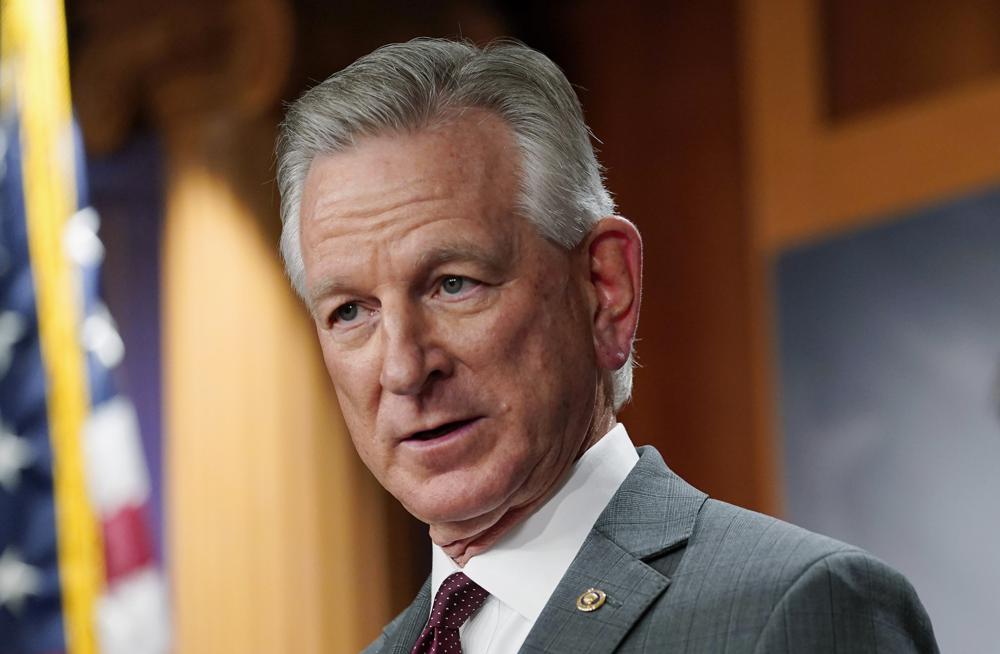
U.S. Senator Tommy Tuberville has been heavily criticized for holding defense nominees up by refusing to give unanimous consent to senior-level military and Department of Defense civilian promotions over his unhappiness with Defense Department efforts to thwart state laws limiting or banning abortions. Tuberville pushed back in a Senate floor speech on Wednesday. Tuberville pointed out that a simple vote of the full Senate in regular order would override Tuberville’s hold. It would require Senate Majority Leader Chuck Schumer to bring the promotions before the Senate in regular order. “Every single one of these nominees can receive a vote in the Senate if Senator Schumer wants it,” Tuberville said. “It’s not too much to ask of the United States Senate to do its job — to vote.” Senate Democrats and the White House are saying that national security is being threatened by Tuberville refusing to approve batches of the promotions by unanimous consent as is the standard practice of the Senate. John Kirby is the National Security Council (NSC) Coordinator for Strategic Communications. “So, I think you all know he’s blocking Defense Department nominations, including the promotions of over 160 senior military leaders — admirals and generals — and nominees for top acquisition and sustainment positions, civilian positions at DOD right at a time when the budget has gone forward, and you got the top leaders of the Defense Department testifying on this budget — biggest budget ever for DOD — and at a time when we are still trying to support Ukraine while we’re still facing challenges in the Indo-Pacific — a wide range of challenges; it’s not just all about China,” Kirby told reporters in a White House press briefing Wednesday. “I mean, look at what North Korea has done in recent days.” “And when you hold these promotions up, you — there is, as Secretary Austin said, a real ripple effect downstream because now people can’t move on to the next job, and they can’t leave the one that they’re in, and they can’t assume these new jobs of responsibility,” Kirby continued. “And it absolutely — if it goes on too long, it could absolutely have an effect on U.S. military readiness around the world. We noticed that there were some Senate Republicans yesterday who urged Senator Tuberville to drop these blocks themselves, and we certainly welcome that and agree with them.” Schumer has repeatedly blasted Tuberville for his refusal to give unanimous consent to the promotions. “It’s not very often that the majority leader of the Senate attacks a single senator by name three days in a row,” Tuberville said. “Now, in my former profession, I’ve been called everything. It doesn’t really bother me too much. But the majority leader has also tweeted about me. That’s good. So, let’s get the record straight as we speak. Right now, I want to talk about what I have done and what I am doing.” “First of all, I’m not blocking anyone from being confirmed. Every single one of these nominees can receive a vote if Senator Schumer wants it,” Tuberville said. “In fact, one of the civilian nominees is getting a vote this week. If Democrats are so worried about these nominations, let’s vote. If we’re not going to vote on taxpayer-funded abortion, then let’s vote on these nominees. Voting is our job. It’s not too much to ask of the United States Senate to do its job — to vote.” “Senator Schumer and some of the other senators have claimed that my hold on these nominees is unprecedented,” Tuberville continued. “Well, it’s not. My hold is far from unprecedented. In fact, Senator [Michael] Bennet himself threatened to do the exact same thing just a few months ago. Why? Because the Air Force’s planned to move Space Command from Colorado to Huntsville, Alabama…Two years ago, we had a senator from Illinois put a hold on 1,000 nominees over the promotion of one single officer. So far, my hold has affected 184 nominations.” “I am not going to be intimidated by a campaign of selective outrage,” Tuberville said. Tuberville is following through on his pledge to hold the confirmation of DoD nominees if the Pentagon moved forward with its new pro-abortion policy of funding travel and paid time off for service members and their dependents seeking an elective abortion. “We’re talking about taxpayers’ funding for travel and extra paid time to get elective abortions,” Tuberville said. “This policy includes spouses and dependents. We’re talking about taxpayer funding for somebody’s kids to go get an abortion in another state. This has never been in the policy until now.” The Alabama Republican Party announced on Facebook that they are joining a Family Research Council petition drive supporting Tuberville’s stance. “Join us as we stand with Senator Tommy Tuberville in his fight against the Department of Defense’s new abortion policy. Help Coach defend the unborn, preserve congressional authority, and prevent our military from becoming an abortion business. Add your name to the Family Research Council’s petition.” Tommy Tuberville has represented Alabama in the U.S. Senate since his election in 2020. To connect with the author of this story or to comment, email brandonmreporter@gmail.com.
Tommy Tuberville and Katie Britt claim Huntsville is the best place for Space Command

U.S. Senators Tommy Tuberville and Katie Britt both released statements reiterating their positions that Redstone Arsenal in Huntsville is the best permanent location for the headquarters of U.S. Space Command and will advance America’s vital national security interests. “Locating the permanent Space Command Headquarters on Redstone Arsenal undoubtedly remains in the best national security interest of the United States,” said Sen. Britt. “Huntsville finished first in both the Air Force’s Evaluation Phase and Selection Phase, leaving no doubt that the Air Force’s decision to choose Redstone as the preferred basing location was correct purely on the merits. That decision should remain in the Air Force’s hands and should not be politicized. Selecting a fifth-place finisher would obviously prioritize partisan political considerations at the expense of our national security, military modernization, and force readiness. Alabama’s world-class aerospace and defense workforce, capabilities, and synergies stand ready to fulfill the mission and strengthen our national security long into the future.” “The U.S. Air Force’s thorough selection process and decision to put SPACECOM headquarters in Alabama was based on evidence of what’s best for the military and the country,” said Sen. Tuberville. “The Air Force selected Redstone Arsenal in Huntsville, Alabama, over 65 other locations, including Colorado. Members of Congress from Colorado requested two additional studies when they didn’t get their way. Both of those studies confirmed that Huntsville was the number one location for SPACECOM — based on things like workforce, existing infrastructure, education, and cost of living. Colorado did not make the top three. The best place for Space Command is in Huntsville. This is not my opinion, this is fact.” News media reports confirm that a U.S. Government Accountability Office report dated May 2022 stated, “Air Force analysis identified Redstone Arsenal as the highest scoring location in the Evaluation Phase, the highest ranked location in the Selection Phase, and the location with the most advantages in the decision matrix. Air Force officials, including the then Secretary of the Air Force, stated that the decision to identify Redstone Arsenal as the preferred location stemmed from Air Force analysis showing it was the strongest candidate location.” The same report said Air Force documentation from January 2021 affirmed that “Redstone Arsenal rated the best of the six candidate locations based on the criteria and noted that selecting Peterson Air Force Base as the preferred location would not align with the results of Air Force Selection Phase analysis.” “[T]he January 2021 selection of Redstone Arsenal as the preferred location for U.S. Space Command headquarters was consistent with the Air Force’s analysis,” the GAO added. “Multiple senior officials we interviewed stated that they felt the process was unbiased, including the former Assistant Secretary of the Air Force for Installations, Environment and Energy; the former Secretary of the Air Force; the former Vice Chairman of the Joint Chiefs of Staff; the U.S. Space Command Combatant Commander; and the U.S. Space Force Chief of Space Operations.” Finally, per the GAO, “[T]he Air Force identified the ability to disperse combatant commands geographically as supporting its decision, and Air Force officials told us that they considered risk related to colocating U.S. Space Command and U.S. Northern Command at Peterson Air Force Base as a military judgment issue. The Air Force considered dispersing combatant commands in different geographic areas as a strategic advantage and a way to avoid placing two combatant commands at risk from the same threat.” In addition to the GAO report, the Air Force’s decision to locate the permanent Space Command HQ on Redstone Arsenal has been cleared by a Department of Defense Inspector General evaluation and has completed an environmental review. Tuberville said that reports that the Air Force’s selection process was political or contrary to the advice of Pentagon officials are not supported by fact. President Joe Biden’s administration has repeatedly confirmed the selection of Huntsville as a “strategic” and an “analytically based process.” On February 22, 2021, then-Pentagon Press Secretary John Kirby said in a statement, “Secretary Austin has communicated to Air Force leaders that he supports their decision-making process about the preferred location of Space Command headquarters.” On June 16, 2021, John Roth, President Biden’s Acting Secretary of the Air Force at the time, testified at a U.S. House Armed Services Committee hearing. In his testimony, Acting Secretary Ross said, “I have personally no evidence that the decision was politically motivated…[t]he selection of Huntsville as the preferred location by my predecessor was the result of our strategic basing process, and that process is an analytically based process.” Sen. Tuberville’s work to support the relocation has been ongoing. In 2020, the U.S. Air Force conducted an extensive search for the best location for the new home of SPACECOM, reviewing objective criteria like infrastructure, costs, mission capability, and the quality of the local community. Sixty-six locations in twenty-six states were evaluated, and in the end, Redstone ranked number one. At the request of other lawmakers, the U.S. Department of Defense Inspector General (DoD IG) and the U.S. Government Accountability Office (GAO) conducted investigations into U.S. Air Force’s site selection process for SPACECOM headquarters. To connect with the author of this story or to comment, email brandonmreporter@gmail.com.
Mike Rogers leads congressional delegation to Romania and Poland to oversee Ukrainian aid
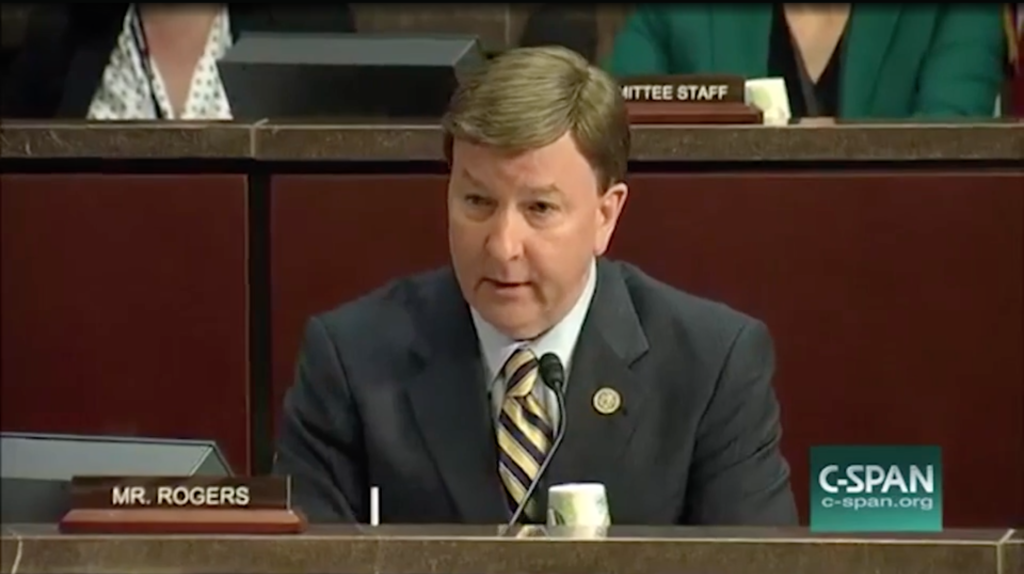
In his role as the Chairman of the powerful House Armed Services Committee, Congressman Mike Rogers led a Congressional Delegation (CODEL) to Romania and Poland to conduct oversight of the U.S. aid being sent to Ukraine. U.S. Reps. John Garamendi (D-California), Donald Norcross (D-New Jersey), Lisa McClain (R-Michigan), Andrew Clyde (R-Georgia), Nicole Malliotakis (R-New York), Mark Alford (R-Missouri), and Chairman Rogers released a statement following their trip. “The American people have every right to know that U.S. military equipment donated to Ukraine is being used for its intended purpose – Ukraine’s fight for national survival,” Rogers et al. said. “As a bipartisan Congressional delegation, we traveled to Poland and Romania to conduct oversight of this process. We came away with a clear understanding of the various safeguards the U.S. government, in partnership with the Ukrainians and other nations, have put in place to ensure each article is accounted for and tracked to the frontline of the war.” “We traveled to the International Donation Collection Center in Poland to see firsthand the accounting and tracking practices which provide accurate counts of shipments into Ukraine,” the congressional members continued. “While there, we also met with General [Antonio] Aguto and the Department of Defense’s Security Assistance Group Ukraine, who provided us with a comprehensive briefing which detailed how the U.S. tracks our donations directly to the frontline. We left that briefing confident in our ability to track U.S. equipment from the moment it leaves our possession and makes it into the hands of Ukrainian warfighters.” “We also relayed the concerns of Americans with the following message: should we confirm that any defense articles are siphoned off, diverted, or missing the flow of U.S. equipment would cease to be tenable,” Rogers and the group continued. “Our job of oversight is not done, and we will continue to monitor U.S. equipment flowing into Ukraine.” There have been some unsubstantiated reports that some of the first-world weaponry the United States and its allies have sent to Ukraine has found its way to international black markets arms dealers. On Sunday, National Security Council spokesman John Kirby said that the U.S. has no timeline for the end of American support to Ukraine. “We don’t know; we would like to see it end now,” Kirby said in an interview on “Fox News Sunday.” “As [President Biden] has said … we’re going to support Ukraine for as long as it takes, and he means that. As long as it takes.” The U.S. has sent $110 million to Ukraine, including 155 mm Paladin self-propelled howitzers, Stryker armored vehicles, Bradley infantry fighting vehicles, HMARS multiple launch rocket systems (MLRS), and even M1 Abrams main battle tanks. Congressman Michael McCaul (R-Texas), who chairs the House Foreign Affairs Committee, called for sending Ukraine F16 fighter jets. “We need to throw/ everything we can into this fight so that they can win, and [Volodymyr] Zelenskyy is going to tell us that soon, as well,” McCaul said. “He had a speech at the conference saying the same thing. And I think the momentum is building for this to happen.” “I hope so,” McCaul said when asked if the U.S. would send Ukraine the fighter jets. President Joe Biden will also travel to Poland to meet with allies on the Ukraine situation. Kirby said that Biden has no plans to personally enter Ukraine. “We obviously are maintaining a high degree of solidarity with the Ukrainian people,” Kirby said. “The United States leads the world in terms of contributions, whether it’s humanitarian assistance or military weapons to Ukraine, and we’re going to continue to use our convening power, to marshall the world, to galvanize support for Ukraine, but there are no plans for the president to enter Ukraine on this trip,” On Sunday U.S, Secretary of State Antony Blinken warned that China is considering supplying weaponry to aid Russia in its war in Ukraine. Mike Rogers is in his eleventh term representing Alabama’s Third Congressional District. To connect with the author of this story or to comment, email brandonmreporter@gmail.com.
Despite concerns, U.S. to send 31 Abrams tanks to Ukraine
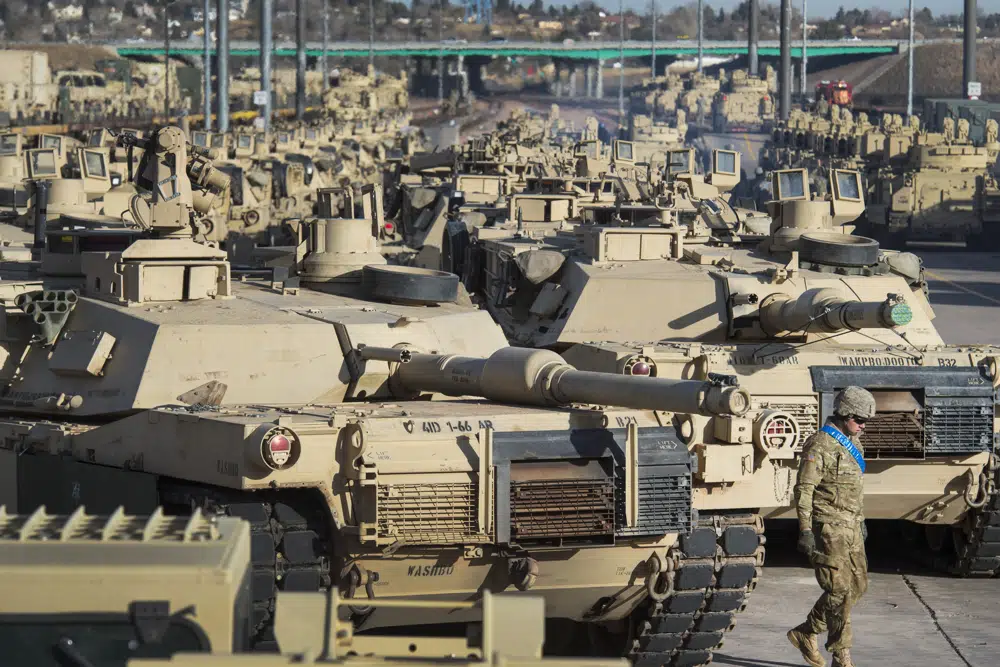
President Joe Biden announced Wednesday that the U.S. will send 31 M1 Abrams battle tanks to Ukraine, reversing months of persistent arguments that the tanks were too difficult for Ukrainian troops to operate and maintain. The U.S. decision came on the heels of Germany agreeing to send 14 Leopard 2 A6 tanks from its own stocks. Germany had said the Leopards would not be sent unless the U.S. put its Abrams on the table, not wanting to incur Russia’s wrath without the U.S. similarly committing its own tanks. Biden said that in total European allies have agreed to send enough tanks to equip two Ukrainian tank battalions or a total of about 62 tanks. “With spring approaching, Ukrainian forces are working to defend the territory they hold and preparing for additional counter offenses,” Biden said in his announcement of his decision to send the tanks. “To liberate their land, they need to be able to counter Russia’s evolving tactics and strategy on the battlefield in the very near term.” The announcement ends a standoff between Germany and the United States. Biden administration officials on Wednesday sought to downplay any friction between the two countries as both unveiled their plans. Both sides had participated in “good diplomatic conversations” that had made the difference and were part of the “extraordinary shift in Germany’s security policy” over providing weapons to Ukraine since Russia invaded in February, said a senior administration official, who briefed reporters Wednesday on the condition of anonymity to describe the new tank package before the announcement. The $400 million package announced Wednesday also includes eight M88 recovery vehicles — tank-like tracked vehicles that can tow the Abrams if it gets stuck. Altogether, France, the U.K., the U.S., Poland, Germany, the Netherlands, and Sweden will send hundreds of tanks and heavy armored vehicles to fortify Ukraine as it enters a new phase of the war and attempts to break through entrenched Russian lines. The U.S. tanks will be purchased through the Ukraine Security Assistance Initiative, which means it will take some time for the Ukrainian forces to receive the tanks and be able to deploy them on the battlefield. The Pentagon plans soon to begin training Ukrainian forces on the system outside of Ukraine. The U.S. has thousands of Abrams in stock. Still, it does not have “excess stock,” said White House National Security Council spokesman John Kirby. He said Ukraine’s military will have to go through significant preparation to learn to operate, maintain and sustain the Abrams. It’s a process that will take some months. Using the assistance initiative funding route, instead of dipping into the existing U.S. stockpile, means it is unlikely the tanks will be available to Ukraine before Russia’s anticipated spring offensive. Kirby declined to pinpoint when the Abrams will be delivered but said the German-made Leopards are expected to make their way to Ukrainian forces more quickly. The deployment also suggests that the U.S. and allies are girding to support Ukraine for a long war that shows no signs of coming to an end. Doug Bush, assistant secretary of the Army for acquisition, said the U.S. stock includes both the older variants and newer M1A2 Abrams variants, and when a “new” tank is needed, it starts with an older hull. “We don’t produce any tanks from scratch anymore,” Bush said. “We have a large stock of older M1s that we use as seed vehicles. Were we to ever run out of those, sure, we would build new. But right now, no matter which option we go, we don’t have to build completely new.” The Russian ambassador to Germany, Sergey Nechayev, called Berlin’s decision to send Leopard 2 tanks to Ukraine “extremely dangerous” and said it “shifts the conflict to a new level of confrontation.” Biden insisted the decision to provide the tanks should not be seen as an escalation by Russia. “It is not an offensive threat to Russia,” he said. “There is no offensive threat to Russia. If Russian troops return to Russia, where they belong, this war would be over today.” Ukrainian President Volodymyr Zelenskyy applauded Biden for the “powerful decision to provide Abrams,” declaring on Twitter that “the free world is united as never before” in the 11-month-old war. Until now, the U.S. had resisted providing its own M1 Abrams tanks to Ukraine, citing extensive and complex maintenance and logistical challenges with the high-tech vehicles. Washington believes it will be more productive to send the German Leopards since many allies have them, and Ukrainian troops will need less training than on the more difficult Abrams. Biden, in an exchange with reporters, bristled at the notion that Germany, which had declined to provide tanks until the U.S. agreed to provide its Abrams, forced his hand. “Germany didn’t force me to change (my) mind,” Biden said. “We wanted to make sure we were all together.” For the Abrams to be effective in Ukraine, its forces will require extensive training on combined arms maneuver — how the tanks operate together on the battlefield — and on how to maintain and support the complex, 70-ton weapon. The Abrams tanks use a turbine jet engine to propel themselves that burns through at least two gallons a mile (about 4.7 liters a kilometer) regardless of whether they are moving or idling, which means that a network of fuel trucks is needed to keep the line moving. “When they get there, we want to make sure that they fall on ready hands, and that the Ukrainians know how to use them, they know how to keep them running, and they’ve got the supply chain in place for spare parts and supplies, and anything else they need so that they can be more effective on the battlefield,” Kirby said. Republished with the permission of The Associated Press.
2 U.S. veterans from Alabama reported missing in Ukraine

Two U.S. veterans from Alabama who were in Ukraine assisting in the war against Russia haven’t been heard from in days and are missing, members of the state’s congressional delegation said Wednesday. Relatives of Andy Tai Ngoc Huynh, 27, of Trinity, and Alexander Drueke, 39, of Tuscaloosa, have been in contact with both Senate and House offices seeking information about the men’s whereabouts, press aides said. Rep. Robert Aderholt said Huynh had volunteered to go fight with the Ukrainian army against Russia, but relatives haven’t heard from him since June 8, when he was in the Kharkiv region of northeastern Ukraine, which is near the Russian border. Huynh and Drueke were together, an aide to Aderholt said. “As you can imagine, his loved ones are very concerned about him,” Aderholt said in a statement. “My office has placed inquires with both the United States Department of State and the Federal Bureau of Investigation trying to get any information possible.” Rep. Terri Sewell said Drueke’s mother reached out to her office earlier this week after she lost contact with her son. The U.S. State Department said it was looking into reports that Russian or Russian-backed separatist forces in Ukraine had captured at least two American citizens. If confirmed, they would be the first Americans fighting for Ukraine known to have been captured since the war began on February 24. “We are closely monitoring the situation and are in contact with Ukrainian authorities,” the department said in a statement emailed to reporters. It declined further comment, citing privacy considerations. John Kirby, a national security spokesman at the White House, said Wednesday that the administration wasn’t able to confirm the reports about missing Americans. “We’ll do the best we can to monitor this and see what we can learn about it,” he said. However, he reiterated his warnings against Americans going to Ukraine. “Ukraine is not the place for Americans to be traveling,” he said. “If you feel passionate about supporting Ukraine, there’s any number of ways to do that that that are safer and just as effective.” A court in Donetsk, under separatist control, sentenced two Britons and a Moroccan man to death last week. The Britons and Moroccan were accused of being mercenaries and seeking the violent overthrow of the separatist government in the Donetsk region. The Russian military has said it considers foreigners fighting with Ukraine to be mercenaries and claims they are not protected as combatants under the Geneva Convention. Huynh’s fiancee, Joy Black, posted publicly on Facebook that his family was in contact with the Drueke family and government officials and that nothing had been confirmed other than that the two were missing. “Please keep Andy and Alex, and all of their loved ones in prayer. We just want them to come home,” she wrote. U.S. Rep. Adam Kinzinger tweeted that the Americans “have enlisted in the Ukrainian army, and thus are afforded legal combatant protections. As such, we expect members of the Legion to be treated in accordance with the Geneva convention.” It was unclear whether Kinzinger, an Illinois Republican, had any further information about the men. He was commenting on a tweet sent earlier Wednesday by Task Force Baguette, a group of former U.S. and French servicemen, saying that two Americans fighting with them were captured a week ago. The group said Ukrainian intelligence confirmed the information. Early in the war, Ukraine created the International Legion for foreign citizens who wanted to help defend against the Russian invasion. Huynh spoke to his local newspaper, the Decatur Daily, shortly before flying to Eastern Europe in April. He explained that he was studying robotics at Calhoun Community College but couldn’t stop thinking about Russia’s invasion. “I know it wasn’t my problem, but there was that gut feeling that I felt I had to do something,” Huynh told the Decatur Daily. “Two weeks after the war began, it kept eating me up inside, and it just felt wrong. I was losing sleep. … All I could think about was the situation in Ukraine.” He said he decided to fly out once he learned that young Ukrainians were being drafted into service. “Right when they turned 18, they were forced to enlist in the military to defend their homeland,” Huynh said. “Honestly, that broke my heart. I would say that is probably the moment where I decided that I have to do something.” According to the newspaper, Huynh enlisted in the Marines when he was 19 and served for four years, though he did not see active combat. He was born and raised in Orange County, California, to Vietnamese immigrants and moved to northern Alabama two years ago to be closer to his fiancee, the newspaper reported. Republished with the permission of The Associated Press.
Joe Biden visits Lockheed plant as weapons stockpile strained
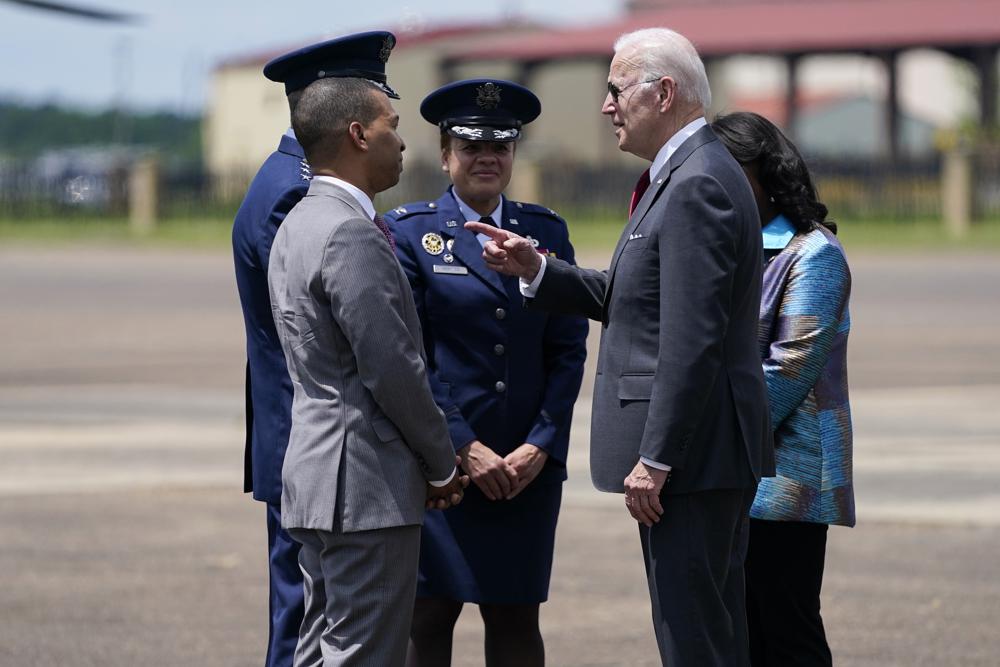
President Joe Biden on Tuesday visited a Lockheed Martin plant that manufactures an antitank weapons system, aiming to herald the U.S.-made arms as a gamechanger for Ukraine’s stiff resistance to Russia’s invasion. But Biden’s visit to the Alabama factory line is also drawing attention to a growing concern as the war drags on: Can the U.S. sustain the cadence in shipping vast amounts of arms to Ukraine while maintaining a healthy stockpile it may need if conflict erupts with North Korea, Iran or elsewhere? The U.S. has provided at least 7,000 Javelins, including some transferred during the Trump administration, or about one-third of its stockpile, to Ukraine in recent years, according to an analysis by Mark Cancian, a senior adviser with the Center for Strategic and International Studies international security program. The Biden administration says it has committed to sending 5,500 Javelins to Ukraine since the February 24 invasion. Analysts also estimate that the United States has sent about one-quarter of its stockpile of shoulder-fired Stinger missiles to Ukraine. Raytheon Technologies CEO Greg Hayes told investors last week during a quarterly call that his company, which makes the weapons system, wouldn’t be able to ramp up production until next year due to parts shortages. “Could this be a problem? The short answer is, ‘Probably, yes,’” said Cancian, a retired Marine colonel and former Office of Management and Budget specialist on Pentagon budget strategy, war funding, and procurement programs. He added that Stingers and Javelins were where “we’re seeing the most significant inventory issues,” and that production of both weapons systems has been limited in recent years. The Russian invasion offers the U.S. and European defense industry a big opportunity to bolster profits as lawmakers from Washington to Warsaw are primed to increase defense spending in response to Russian aggression. Defense contractors, however, face the same supply chain and labor shortage challenges that other manufacturers are facing, along with some others that are specific to the industry. Military spending by the U.S. and around the world was rising even before Russia’s Feb. 24 invasion. Biden’s proposed 2023 budget sought $773 billion for the Pentagon, an annual increase of about 4%. Globally, total military spending rose 0.7% to more than $2 trillion for the first time in 2021, according to an April report from the Stockholm International Peace Research Institute. The war will mean increased sales for some defense contractors, including Raytheon, which makes the Stinger missiles Ukrainian troops have used to knock out Russian aircraft. The company is also part of a joint venture with Lockheed Martin that makes the Javelins. Biden will visit Lockheed Martin’s facility in Troy, Alabama, which has the capacity to manufacture about 2,100 Javelins per year. The trip comes as he presses Congress to quickly approve his request for an additional $33 billion in security and economic assistance for Kyiv. Senate Majority Leader Chuck Schumer, D-N.Y., said Monday he hoped quick bipartisan agreement on the security package could be reached so the Senate could begin considering it “as early as next week.” A White House official, who was not authorized to comment publicly and insisted on anonymity, said the Pentagon is working with defense contractors “to evaluate the health of weapons systems’ production lines and examine bottlenecks” in the manufacturing process. The administration is also considering a range of options, if needed, to boost production of Javelins and Stingers, the official said. Pentagon press secretary John Kirby said Monday that America’s military readiness is not dependent on one system. He said that every time the Pentagon develops a package of weapons and systems to send to Ukraine, the chairman of the Joint Chiefs of Staff and the department do an assessment on what the impact will be on readiness. “It’s not about counting, say, Javelins and being able to say that when you reach a certain level, then all your readiness is gone,” Kirby said. “The Javelin is an anti-armor capability, so we judge it all as a conglomerate of what’s our ability to meet this particular mission set, realizing that a Javelin isn’t the only capability you have against armor.” The lightweight but lethal Javelin has helped the Ukrainians inflict major damage on Russia’s larger and better-equipped military. As a result, the weapon has gained almost mythic regard, celebrated with a Javelin song and images of Mary Magdalene carrying a Javelin becoming a meme in Ukraine. Lockheed Martin CEO James Taiclet said in a recent CNBC interview that demand for the Javelin and other weapon systems would increase broadly over time because of the Russian invasion. He said the company was working “to get our supply chain ramped up.” “We have the ability to meet current production demands, are investing in increased capacity, and are exploring ways to further increase production as needed,” Lockheed Martin, which is based in Bethesda, Maryland, said in a statement. Republished with the permission of the Associated Press.
Push to arm Ukraine putting strain on U.S. weapons stockpile

The planes take off almost daily from Dover Air Force Base in Delaware — hulking C-17s loaded up with Javelins, Stingers, howitzers, and other material being hustled to Eastern Europe to resupply Ukraine’s military in its fight against Russia. The game-changing impact of those arms is exactly what President Joe Biden hopes to spotlight as he visits a Lockheed Martin plant in Alabama on Tuesday that builds the portable Javelin anti-tank weapons that have played a crucial role in Ukraine. But Biden’s visit is also drawing attention to a growing concern as the war drags on: Can the U.S. sustain the cadence of shipping vast amounts of arms to Ukraine while maintaining the healthy stockpile it may need if a new conflict erupts with North Korea, Iran or elsewhere? The U.S. already has provided about 7,000 Javelins, including some that were delivered during the Trump administration, about one-third of its stockpile, to Ukraine, according to an analysis by Mark Cancian, a senior adviser with the Center for Strategic and International Studies international security program. The Biden administration says it has committed to sending about 5,500 to Ukraine since the Russian invasion more than two months ago. Analysts also estimate that the United States has sent about one-quarter of its stockpile of shoulder-fired Stinger missiles to Ukraine. Raytheon Technologies CEO Greg Hayes told investors last week during a quarterly call that his company, which makes the weapons system, wouldn’t be able to ramp up production until next year due to parts shortages. “Could this be a problem? The short answer is, ‘Probably, yes,’” said Cancian, a retired Marine colonel and former government specialist on Pentagon budget strategy, war funding, and procurement. He said that Stingers and Javelins were where “we’re seeing the most significant inventory issues,” and production of both weapons systems has been limited in recent years. The Russian invasion offers the U.S. and European defense industry a big opportunity to bolster profits as lawmakers from Washington to Warsaw are primed to increase defense spending in response to Russian aggression. Defense contractors, however, face the same supply chain and labor shortage challenges that other manufacturers are facing, along with some others that are specific to the industry. Military spending by the U.S. and around the world was rising even before Russia’s Feb. 24 invasion. Biden’s proposed 2023 budget sought $773 billion for the Pentagon, an annual increase of about 4%. Globally, total military spending rose 0.7% to more than $2 trillion for the first time in 2021, according to an April report from the Stockholm International Peace Research Institute. Russia ranked fifth, as its spending on weapons increased ahead of its invasion of Ukraine. The war will mean increased sales for some defense contractors, including Raytheon, which makes the Stinger missiles Ukrainian troops have used to knock out Russian aircraft. The company is also part of a joint venture with Lockheed Martin that makes the Javelins. Biden will visit Lockheed Martin’s facility in Troy, Alabama, which has the capacity to manufacture about 2,100 Javelins per year. The trip comes as he presses Congress to quickly approve his request for an additional $33 billion in security and economic assistance for Kyiv, Western allies, and restocking weapons the U.S. has sent to those countries. Senate Majority Leader Chuck Schumer, D-N.Y., said Monday he hoped quick bipartisan agreement on the security package could be reached so the Senate could begin considering it “as early as next week.” The president is expected to use his remarks to highlight the importance of the Javelins and other U.S. weaponry in helping Ukraine’s military put up a vigorous fight as he makes the case to keep security and economic assistance flowing. A White House official, who was not authorized to comment publicly and requested anonymity, said the Pentagon is working with defense contractors “to evaluate the health of weapons systems’ production lines and examine bottlenecks in every component and step of the manufacturing process.” The administration is also considering a range of options, if needed, to boost production of both Javelins and Stingers, the official said. Pentagon press secretary John Kirby said Monday that America’s military readiness is not dependent on one system, such as the Javelin. He said that every time the Pentagon develops a package of weapons to send to Ukraine, the chairman of the Joint Chiefs of Staff and the department assesses the broader impact. “It’s not about counting, say Javelins, and being able to say that when you reach a certain level, then all your readiness is gone,” Kirby said. “The Javelin is an anti-armor capability, so we judge it all as a conglomerate of what’s our ability to meet this particular mission set, realizing that a Javelin isn’t the only capability you have against armor.” Cancian, the former government specialist on defense budget strategy, said the fact that Stingers and Javelins were not included in the most recent tranche of weapons the Biden administration announced it was sending to Ukraine could be a sign that Pentagon officials are mindful about inventory as they conduct contingency planning for other possible conflicts. “There’s no question that whatever war plan they’re looking at, there is risk associated with the depleting levels of Stingers and Javelins, and I’m sure that they’re having that discussion at the Pentagon,” he said. The U.S. military effort to move weaponry to Eastern Europe for Ukraine’s fight has been Herculean. From Dover Air Base in Delaware, U.S. airmen have carried out nearly 70 missions to deliver some 7 million pounds of Javelins, Stingers, 155mm howitzers, helmets, and other essentials to Eastern Europe since February. Col. Matt Husemann, commander of the 436th Airlift Wing, described the mission as a “whole of government approach that’s delivering hope.” “It is awesome,” said Husemann, after providing AP with a recent tour of the airlift operation. The lightweight but lethal Javelin has helped the Ukrainians inflict major damage on Russia’s larger and better-equipped military. As a result, the weapon has gained almost mythic regard, celebrated with a Javelin song
Joe Biden announces heavy artillery, other weapons for Ukraine
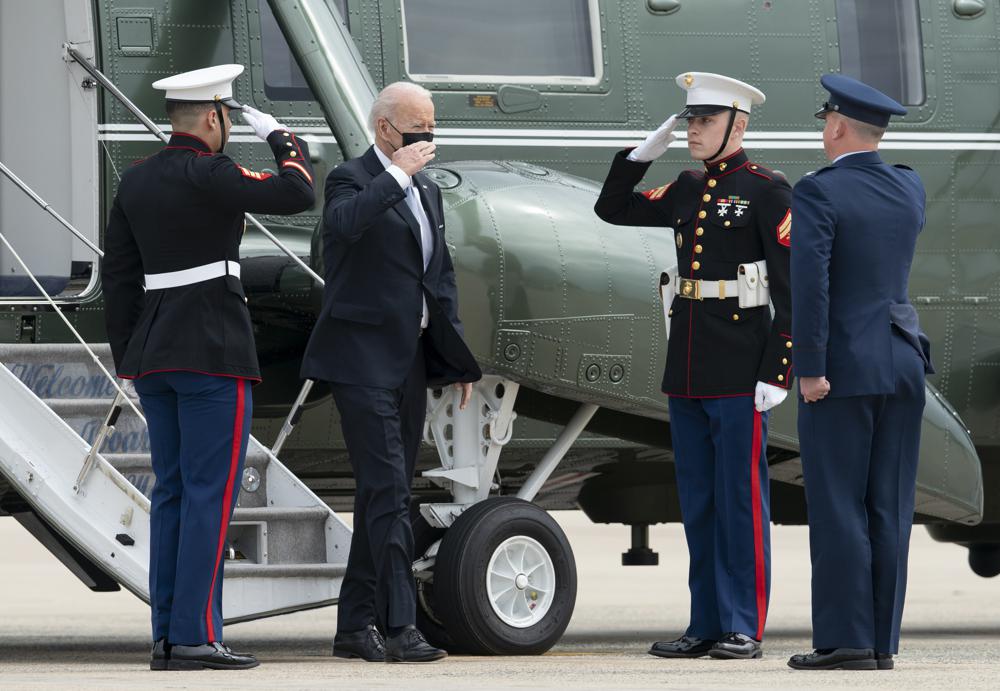
President Joe Biden pledged an additional $1.3 billion Thursday for new weapons and economic assistance to help Ukraine in its strong but increasingly difficult battle against the Russian invasion, and he promised to seek much more from Congress to keep the guns, ammunition, and cash flowing. The latest military aid, Biden said, will be sent “directly to the front lines of freedom.” “Putin is banking on us losing interest,” Biden said. The Russian president is betting that “Western unity will crack … and once again we’re going to prove him wrong.” The new package includes $800 million in military aid for much-needed heavy artillery, 144,000 rounds of ammunition, and drones for the escalating battle in the Donbas region of eastern Ukraine. It builds on roughly $2.6 billion in military assistance that Biden previously approved. There’s also a fresh $500 million in direct economic assistance to Ukraine for government salaries, pensions, and other programs. That raises the total U.S. economic support to $1 billion since Russia’s invasion began nearly two months ago. Ukrainian President Volodymyr Zelenskyy expressed his gratitude to the United States in his nightly address in Ukraine, saying the military aid was “just what we were waiting for.” Earlier in a virtual address to the World Bank meeting in Washington, he said his nation will also need up to $7 billion each month to make up for economic losses. With tens of thousands of buildings damaged and key infrastructure in ruins, Ukraine “will need hundreds of billions of dollars to rebuild,” Zelenskyy said. Biden underscored a need for the United States and Western allies to remain resolved in their support for Ukraine amid signs that Americans may becoming more wary of the war. A poll published Thursday by The Associated Press-NORC Center for Public Affairs Research shows Americans’ desire to get involved has waned somewhat. Some 32% say the U.S. should have a major role in the conflict. That’s ticked down from 40% last month, though it’s slightly higher than the 26% who said so in February. An additional 49% say the U.S. should have a minor role. The president also announced that Russian-affiliated ships would be barred from U.S. ports, though that appeared to be largely symbolic. Russian ships bring a tiny amount of the cargo unloaded in the U.S., and “my guess is that … a decent chunk of that was tankers transporting Russian oil, which is now banned anyway,” said Colin Grabow, a research fellow who studies trade at the Cato Institute. Overall, Biden said that the $6.5 billion in security assistance that Congress approved last month as part of a $13.6 billion package for Ukraine could soon be “exhausted.” With the latest announcement, Biden has approved about $3.4 billion in military aid since Feb. 24. Congress’ overall total also included about $6.8 billion in direct economic assistance to care for refugees and provide economic aid to allies in the region impacted by the war — and additional funding for federal agencies to enforce economic sanctions against Russia and protect against cyber threats. “Next week, I’m going to have to be sending to Congress a supplemental budget request to keep weapons and ammunition deployed without interruption,” Biden said. Congress has signaled it is receptive to further requests and has been expecting there would be a need for further help for the Ukrainians. But the issue could become entwined with partisan fights over pandemic spending and immigration, complicating the pathway. Senate Minority Leader Mitch McConnell, R-Ky., has expressed a willingness to consider more aid for Ukraine in recent weeks. “I think we need to say we want the Ukrainians to win, and we’re prepared to do everything we can to help them win,” McConnell said Monday in Shelbyville, Kentucky. “We want to do more,” House Speaker Nancy Pelosi, D-Calif., told reporters at the Capitol during an appearance with Ukrainian Prime Minister Denys Shmyhal. She said lawmakers would learn more about Biden’s latest funding request “in the next day or so, to be taken up as soon as we can. Next week.” Biden has chosen retired Lt. Gen. Terry Wolff, a National Security Council official during the Obama administration, to oversee the coordination of the security assistance to Ukraine, according to a White House official. The official, who spoke on the condition of anonymity to discuss the yet to be formally announced the appointment, said Wolff was brought to the White House National Security Council team in recent days. Biden spoke on the new assistance and more broadly about the situation in Ukraine, hours after Russian President Vladimir Putin claimed victory in the strategic city of Mariupol. Putin, however, ordered his troops not to risk more losses by storming the last pocket of Ukrainian resistance in the war’s iconic battleground. Biden in an exchange with reporters following his remarks, called Russia’s claim on Mariupol “questionable.” Russian forces have destroyed much of the southeastern port city, which has witnessed some of the fiercest fighting of the war. By Russian estimates, about 2,000 Ukrainian forces remain holed up in a sprawling steel plant, even as Russia continues to pound the industrial site and issue ultimatums for surrender. Biden sought to make clear to Russians that plenty more military assistance for Ukraine would be coming. “Sometimes we will speak softly and carry a large Javelin because we’re sending a lot of those,” Biden said, paraphrasing Theodore Roosevelt and referring to an anti-tank missile system. The new U.S. military assistance is to include 72 155mm howitzers, 144,000 artillery rounds, 72 vehicles used to tow to the howitzers onto battlefields, and over 121 Phoenix Ghost tactical drones, as well as field equipment and spare parts. Pentagon press secretary John Kirby said the drones were developed by the Air Force and fit a specific need of Ukrainian forces in the battle for the Donbas. The drones are produced by a U.S. company, Aevex Aerospace, in a program that began before Russia invaded on February 24. Kirby said the Phoenix Ghost is similar to the armed Switchblade kamikaze drones that the Pentagon
Joe Biden approves $800M in new military assistance for Ukraine
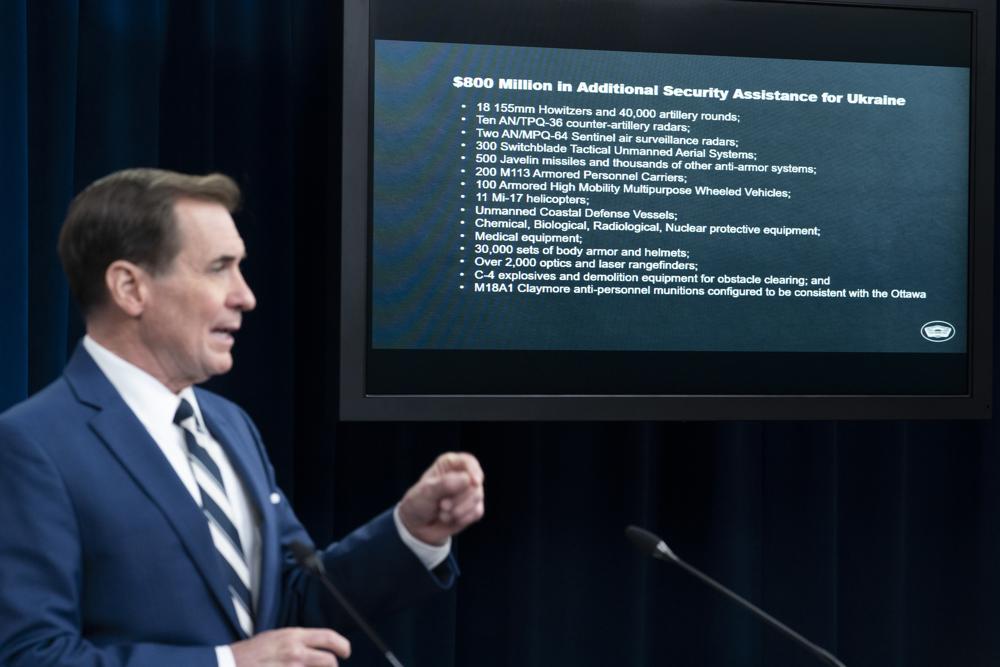
In anticipation of a new Russian offensive in eastern Ukraine, President Joe Biden on Wednesday approved an $800 million package of military assistance, including additional helicopters and the first provision of American artillery. The Ukrainians also will receive armored personnel carriers, armored Humvees, naval drone vessels used in coastal defense, and gear and equipment used to protect soldiers in chemical, biological, nuclear, and radiological attacks. “This new package of assistance will contain many of the highly effective weapons systems we have already provided and new capabilities tailored to the wider assault we expect Russia to launch in eastern Ukraine,” Biden said in a statement. “The steady supply of weapons the United States and its allies and partners have provided to Ukraine has been critical in sustaining its fight against the Russian invasion,” Biden added. “It has helped ensure that (Russia President Vladimir) Putin failed in his initial war aims to conquer and control Ukraine. We cannot rest now.” Biden announced the aid after a call with Ukrainian President Volodymyr Zelenskyy. It is the latest in a series of U.S. security assistance packages valued at a combined $2.6 billion that has been committed to Ukraine since Russia invaded on February 24. The weaponry and support material has played an important role in Ukraine’s successful defense thus far. Biden is under pressure from members of both parties in Congress to expand and accelerate U.S. aid. Robert Gates, a former CIA director and defense secretary, said Wednesday he believes the administration needs to push hard for weapon donations by NATO members in Eastern Europe, whose arsenals include Soviet-era tanks and other weaponry and equipment that could help Ukraine immediately. “The United States ought to be acting, 24/7 — how do we mobilize the equipment and how do we get it into Ukraine and into the hands of the Ukrainians,” Gates said in an online forum sponsored by the Carnegie Endowment for International Peace. “It’s critically important and critically urgent, and we ought to be sort of ransacking the arsenals of those states, and I think they would be cooperative, particularly” if they are given assurances that the Pentagon will provide American replacements for the donated weapons. The Pentagon said the $800 million package announced by Biden includes weapons and equipment that will require some training for a Ukrainian military not fully accustomed to American military technology. U.S. and allied forces had been present inside Ukraine to provide training for eight years before pulling out in advance of Russia’s latest invasion. The new arms package includes 18 of the U.S. Army’s 155mm howitzers and 40,000 artillery rounds, two air surveillance radars, 300 Switchblade “kamikaze” armed drones, and 500 Javelin missiles designed to knock out tanks and other armor. Also included are 10 counter-artillery radars used to track incoming artillery and other projectiles to determine their point of origin for counter-attacks. Pentagon press secretary John Kirby said delivery of the material will be expedited, but he offered no specific timetable. “This list came directly out of multiple conversations with Ukrainians in the last few days as we began to see the Russians now start to reprioritize the Donbas fight,” he said, referring to Russia’s shift from a failed offensive in Ukraine’s north aimed at Kyiv, the capital, to a force buildup in the country’s eastern Donbas region, where Russian-backed separatists have been fighting since 2014. Ukrainian military personnel will need training on the radars as well as the howitzers and the Switchblade drones, Kirby said. He said the training may be done by U.S. soldiers in Europe, and the arrangements are being worked out. “These are not highly complex systems,” Kirby said, and so extensive training will not likely be required. Among the other items in the package are 11 Soviet-era Mi-17 helicopters that the United States had planned to provide to Afghanistan before Biden last year decided to fully withdraw from the country. They are transport helicopters that also can function in an attack role. The Pentagon previously had sent five Mi-17s to Ukraine, Kirby said. Republished with the permission of the Associated Press.
White House: Intel shows Vladimir Putin misled by advisers on Ukraine

U.S. intelligence officials have determined that Russian President Vladimir Putin is being misinformed by advisers about his military’s poor performance in Ukraine, according to the White House. The advisers are scared to tell him the truth, the intel says. The findings, recently declassified, indicate that Putin is aware of the situation on information coming to him and there now is persistent tension between him and senior Russian military officials. The U.S. believes Putin is being misled not only about his military’s performance but also “how the Russian economy is being crippled by sanctions because, again, his senior advisers are too afraid to tell him the truth,” White House communications director Kate Bedingfield said Wednesday. Earlier, President Joe Biden said in an exchange with reporters that he could not comment on the intelligence. The administration is hopeful that divulging the finding could help prod Putin to reconsider his options in Ukraine, according to a U.S. official. The official was not authorized to comment and spoke on the condition of anonymity. The war has ground to a bloody stalemate in much of the country, with heavy casualties and Russian troop morale sinking as Ukrainian forces and volunteers put up an unexpectedly stout defense. But the publicity could also risk further isolating Putin, who U.S. officials have said seems at least in part driven by a desire to win back Russian prestige lost by the fall of the Soviet Union. “What it does is underscore that this has been a strategic blunder for Russia,” Bedingfield said of the intelligence finding. “But I’m not going to characterize how … Vladimir Putin might be thinking about this.” Meanwhile, Biden told Ukrainian President Volodymyr Zelenskyy during a 55-minute call that an additional $500 million in direct aid for Ukraine was on its way. It’s the latest burst in American assistance as the Russian invasion grinds on. Asked about the latest intelligence, Secretary of State Antony Blinken suggested that a dynamic within the Kremlin exists where advisers are unwilling to speak to Putin with candor. “One of the Achilles’ heels of autocracies is that you don’t have people in those systems that speak truth to power or have the ability to speak truth to power, and I think that’s what we’re seeing in Russia,” Blinken told reporters during a stop in Algeria on Wednesday. The unidentified official did not detail underlying evidence for how U.S. intelligence made its determination. The intelligence community has concluded that Putin was unaware that his military had been using and losing conscripts in Ukraine. They also have determined he is not fully aware of the extent to which the Russian economy is being damaged by economic sanctions imposed by the U.S. and allies. The findings demonstrate a “clear breakdown in the flow of accurate information” to Putin and show that Putin’s senior advisers are “afraid to tell him the truth,” the official said. Biden notified Zelenskyy about the latest tranche of assistance during a call in which the leaders also reviewed security aid already delivered to Ukraine and the effects that weaponry has had on the war, according to the White House. Zelesnkyy has pressed the Biden administration and other Western allies to provide Ukraine with military jets, something that the U.S. and other NATO countries have thus far been unwilling to accommodate out of concern it could lead to Russia broadening the war beyond Ukraine’s borders. Prior to Wednesday’s announcement of $500 million in aid, the Biden administration had sent Ukraine about $2 billion in humanitarian and security assistance since the start of the war last month. Congress approved $13.6 billion that Congress approved earlier this month as part of a broader spending bill. Bedingfield said the latest round of financial assistance could be used by the Ukrainian government “to bolster its economy and pay for budgetary expenses,” including government salaries and maintaining services. Ukraine’s presidential website says Zelenskyy told Biden: “We need peace, and it will be achieved only when we have a strong position on the battlefield. Our morale is firm, there is enough determination, but we need your immediate support.” Zelenskyy, in a Twitter posting, said that he also spoke to Biden about new sanctions against Russia. Bedingfield said the administration is looking at options to expand and deepen current sanctions. The new intelligence came after the White House on Tuesday expressed skepticism about Russia’s public announcement that it would dial back operations near Kyiv in an effort to increase trust in ongoing talks between Ukrainian and Russian officials in Turkey. Russian forces pounded areas around Ukraine’s capital and another city overnight, regional leaders said Wednesday. The Pentagon said Wednesday that over the past 24 hours, it had seen some Russian troops in the areas around Kyiv moving north toward or into Belarus. Pentagon press secretary John Kirby said in interviews with CNN and Fox Business that the U.S. does not view this as a withdrawal but as an attempt by Russia to resupply, refit, and then reposition the troops. Putin has long been seen outside Russia as insular and surrounded by officials who don’t always tell him the truth. U.S. officials have said publicly they believe that the limited flow of information –- possibly exacerbated by Putin’s heightened isolation during the COVID-19 pandemic -– may have given the Russian president unrealistic views of how quickly he could overrun Ukraine. The Biden administration, before the war, launched an unprecedented effort to publicize what it believed were Putin’s invasion plans, drawing on intelligence findings. While Russia still invaded, the White House was widely credited with drawing attention to Ukraine and pushing initially reluctant allies to back tough sanctions that have hammered the Russian economy. But underscoring the limits of intelligence, the U.S. also underestimated Ukraine’s will to fight before the invasion, said Lt. Gen. Scott Berrier, head of the Defense Intelligence Agency, in recent testimony before Congress. Republished with the permission of the Associated Press.
