
Firm Pentagon ‘no’ to Polish plan to send jets to Ukraine
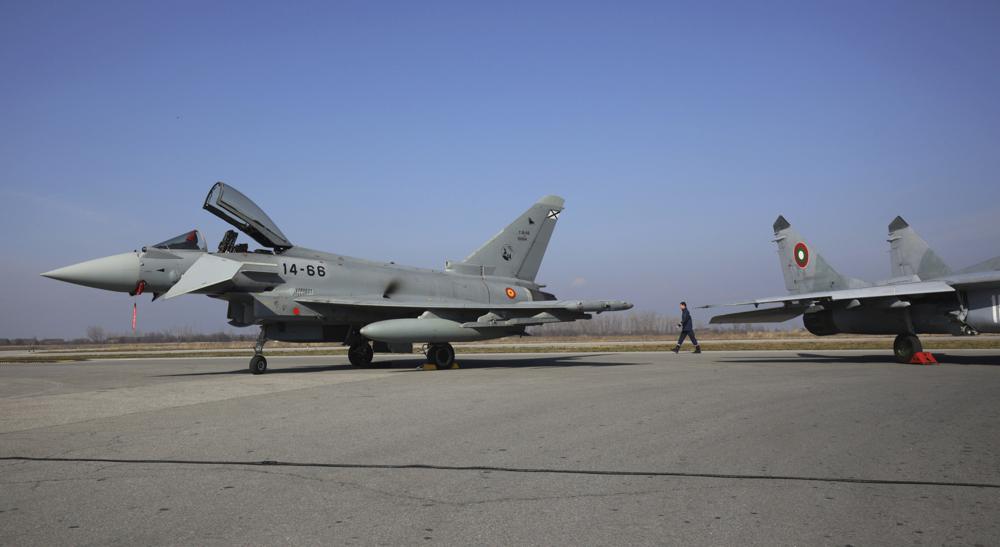
The Pentagon on Wednesday slammed the door on a Polish proposal for providing Ukraine with MiG fighter jets, saying allied efforts against the Russian invasion should be focused on more useful weaponry, and the MiG transfer with a U.S. and NATO connection would run a “high risk” of escalating the war. By rebuffing the proposal involving the Polish jets, the Pentagon appeared anxious to move beyond what had become an awkward disconnect with a NATO ally at a time when President Joe Biden has stressed the need for a unified and coordinated response to Russia’s war. Ukrainian President Volodymyr Zelenskyy has pleaded repeatedly for the U.S. to provide his military with more aircraft — presented as an apparent alternative to establishing a “no-fly zone” over Ukraine to suppress Russian air power. The “no-fly” idea was rejected earlier by Washington and NATO as an unnecessary risk of escalation. Last week, Secretary of State Antony Blinken had said Washington was looking at a proposal under which Poland would supply Kyiv with the Soviet-era fighters, which Ukrainian pilots are trained to fly, and in turn receive American F-16s to make up for the loss. But Poland wanted no part of that, concerned about involving itself too directly in conflict with Russia. Poland then said it was prepared to hand over all 28 of its MiG-29 planes — but to NATO by flying them to the U.S. airbase in Ramstein, Germany, from where they would somehow be flown to Ukraine. That was the arrangement the Pentagon turned aside. Marek Magierowski, Poland’s ambassador to the United States, indicated the Polish government had gotten the message. “Our American partners rejected this proposal because they have come to the conclusion that it was too escalatory,” Magierowski told CNN. He said Poland understands, and “this is what we need now to emphasize again — the unity and cohesion of NATO. So, let’s move on.” U.S. House Speaker Nancy Pelosi said that in a phone call, Zelenskyy on Wednesday again asked urgently for the United States to provide warplanes, anti-aircraft missiles, and other weaponry. However, Pentagon press secretary John Kirby told reporters that Defense Secretary Lloyd Austin discussed the MiG transfer proposal with his Polish counterpart and explained why Washington found it untenable. Kirby said the Biden administration is talking with other countries about “alternative options” for supporting Ukraine’s most pressing defense needs two weeks into its war, especially more ground-based weapons to counter Russian tanks and aircraft in what has been largely a ground war. Kirby said those could include surface-to-air missile batteries and shoulder-fired anti-aircraft missiles. “Secretary Austin thanked the minister for Poland’s willingness to continue to look for ways to assist Ukraine,” Kirby said. “He stressed that we do not support the transfer of additional fighter aircraft to the Ukrainian air force at this time and therefore have no desire to see them in our custody, either.” U.S. Vice President Kamala Harris arrived in Warsaw Wednesday night for consultations, but the White House said she was not directly involved with the matter of the planes. Kirby cited three main reasons Austin rejected the Polish offer, starting with the U.S. view that it would be wiser to provide Ukraine with weaponry that would more directly strengthen its defenses, including anti-armor and air defense systems. Kirby said the Russian air force, while much larger than Ukraine’s, has not played a lead role in the Russian offensive and has been of limited effectiveness due to Ukraine’s use of ground-based air defenses, which include Stinger missiles. Kirby said Ukraine still has a significant number of its own aircraft, and the U.S. believes that adding aircraft from other nations “is not likely to significantly change the effectiveness of the Ukrainian air force relative to Russian capabilities.” Also, the U.S. intelligence community has assessed that transferring MiG fighters to Ukraine “may be mistaken as escalatory and could result in significant Russian reaction that might increase the prospects of a military escalation with NATO,” Kirby said. Ukraine is not a NATO member, but some of its neighbors are, and the alliance is trying to avoid a spillover of the war. While Kirby’s statement appeared to bring an end to the Polish proposal, the appearance of a public disagreement among allies could have a more lasting impact. Last week, the U.S. government threw Poland a hot potato with the request to send the Soviet-made fighter jets. That plan took the U.S. off guard. By late Tuesday, the Pentagon called it “untenable.” On Wednesday, Secretary of State Blinken said that ultimately each country would have to decide for itself how to help Ukraine. Poland is a crucial ally in the Ukraine crisis. It is hosting thousands of American troops and is taking in more people fleeing the war in Ukraine than any other nation in the midst of the largest European refugee crisis in decades. It has suffered invasions and occupations by Russia for centuries and still fears Russia despite being a member of NATO. It already had to contend with the Russian territory of Kaliningrad on its northeastern border and is uncomfortably aware of Russian troops across another border with Belarus. In a visit Wednesday to Vienna, Polish Prime Minister Mateusz Morawiecki insisted that Poland is not a party to the Ukraine war and that any decision on whether to send the fighter jets could not be one for Warsaw alone. It carries the risk of “very dramatic scenarios, even worse than those we are dealing with today,” Morawiecki argued. Michal Baranowski, director of the Warsaw office of the German Marshall Fund think tank, told The Associated Press the Warsaw government “was blindsided and surprised” by Blinken’s public statement last week. “This was seen as pressure from the U.S. on Warsaw. And therefore, the reaction was to put the ball back in the U.S. government’s court,” Baranowski said. It all “should have been dealt with behind the scenes,” he said. Republished with the permission of the Associated Press.
Kabul airport attack kills 60 Afghans, 13 US troops
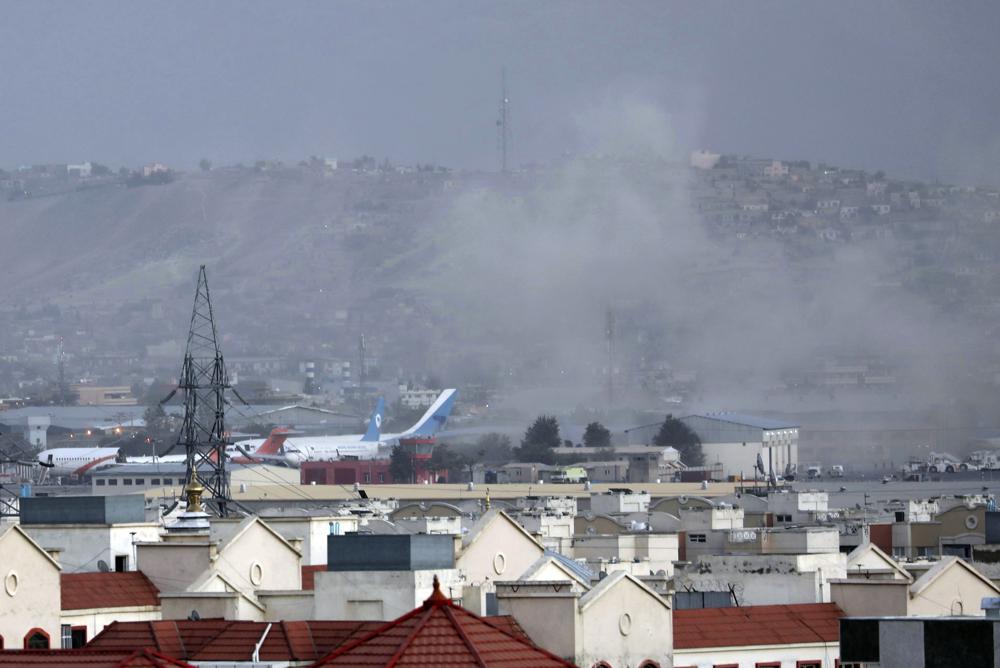
Two suicide bombers and gunmen attacked crowds of Afghans flocking to Kabul’s airport Thursday, transforming a scene of desperation into one of horror in the waning days of an airlift for those fleeing the Taliban takeover. The attacks killed at least 60 Afghans, and 12 U.S. troops, Afghan and U.S. officials said. The U.S. general overseeing the evacuation vowed the United States would “go after” the perpetrators of the bombings and warned that more such attacks are expected. “We are working very hard right now to determine attribution, to determine who is associated with this cowardly attack. And we’re prepared to take action against them,” Gen. Frank McKenzie, head of U.S. Central Command, told Pentagon reporters in a briefing. “Twenty-four-seven. We are looking for them.” Shortly after McKenzie spoke, the Islamic State group claimed responsibility for the killings on its Amaq news channel. McKenzie said the attacks would not stop the United States from evacuating Americans and others, and flights out were continuing. He said there was a large amount of security at the airport, and alternate routes were being used to get evacuees in. U.S. officials said 11 Marines and one Navy medic were among those who died. McKenzie said another 15 service members were wounded. Officials warned the toll could grow. More than 140 Afghans were wounded, an Afghan official said. One of the bombers struck people standing knee-deep in a wastewater canal under the sweltering sun, throwing bodies into the fetid water. Those who moments earlier had hoped to get on flights out could be seen carrying the wounded to ambulances in a daze, their own clothes darkened with blood. The IS affiliate in Afghanistan is far more radical than the Taliban, who recently took control of the country in a lightning blitz and condemned the attack. Western officials had warned of a major attack, urging people to leave the airport, but that advice went largely unheeded by Afghans desperate to escape the country in the last few days of an American-led evacuation before the U.S. officially ends its 20-year presence on Aug. 31. Emergency, an Italian charity that operates hospitals in Afghanistan, said it had received at least 60 patients wounded in the airport attack, in addition to 10 who were dead when they arrived. “Surgeons will be working into the night,” said Marco Puntin, the charity’s manager in Afghanistan. The wounded overflowed the triage zone into the physiotherapy area, and more beds were being added, he said. The Afghan official who confirmed the overall Afghan toll spoke on condition of anonymity because he was not authorized to brief media. Pentagon spokesman John Kirby said one explosion was near an airport entrance and another was a short distance away by a hotel. McKenzie said clearly some failure at the airport allowed a suicide bomber to get so close to the gate. He said the Taliban has been screening people outside the gates, though there was no indication that the Taliban deliberately allowed Thursday’s attacks to happen. He said the U.S. has asked Taliban commanders to tighten security around the airport’s perimeter. Adam Khan was waiting nearby when he saw the first explosion outside what’s known as the Abbey gate. He said several people appeared to have been killed or wounded, including some who were maimed. The second blast was at or near Baron Hotel, where many people, including Afghans, Britons, and Americans, were told to gather in recent days before heading to the airport for evacuation. Additional explosions could be heard later, but Taliban spokesman Zabihullah Mujahid said some blasts were carried out by U.S. forces to destroy their equipment. A former Royal Marine who runs an animal shelter in Afghanistan says he and his staff were caught up in the aftermath of the blast near the airport. “All of a sudden we heard gunshots and our vehicle was targeted, had our driver not turned around, he would have been shot in the head by a man with an AK-47,” Paul “Pen” Farthing told Britain’s Press Association news agency. Farthing is trying to get staff of his Nowzad charity out of Afghanistan, along with the group’s rescued animals. He is among thousands trying to flee. Over the last week, the airport has been the scene of some of the most searing images of the chaotic end of America’s longest war and the Taliban’s takeover, as flight after flight took off carrying those who fear a return to the militants’ brutal rule. When the Taliban were last in power, they confined women largely to their homes and widely imposed draconian restrictions. Already, some countries have ended their evacuations and begun to withdraw their soldiers and diplomats, signaling the beginning of the end of one of history’s largest airlifts. The Taliban have insisted foreign troops must be out by America’s self-imposed deadline of Aug. 31 — and the evacuations must end then, too. In Washington, U.S. President Joe Biden spent much of the morning in the secure White House Situation Room, where he was briefed on the explosions and conferred with his national security team and commanders on the ground in Kabul. Overnight, warnings emerged from Western capitals about a threat from IS, which has seen its ranks boosted by the Taliban’s freeing of prisoners during its advance through Afghanistan. Shortly before the attack, the acting U.S. ambassador to Kabul, Ross Wilson, said the security threat at the Kabul airport overnight was “clearly regarded as credible, as imminent, as compelling.” But in an interview with ABC News, he would not give details. Late Wednesday, the U.S. Embassy warned citizens at three airport gates to leave immediately due to an unspecified security threat. Australia, Britain, and New Zealand also advised their citizens Thursday not to go to the airport. Taliban spokesman Zabihullah Mujahid denied that any attack was imminent at the airport, where the group’s fighters have deployed and occasionally used heavy-handed tactics to control the crowds. After the attack, he appeared to shirk blame, noting the airport is controlled
Joe Biden holds to Kabul August 31 deadline despite criticism
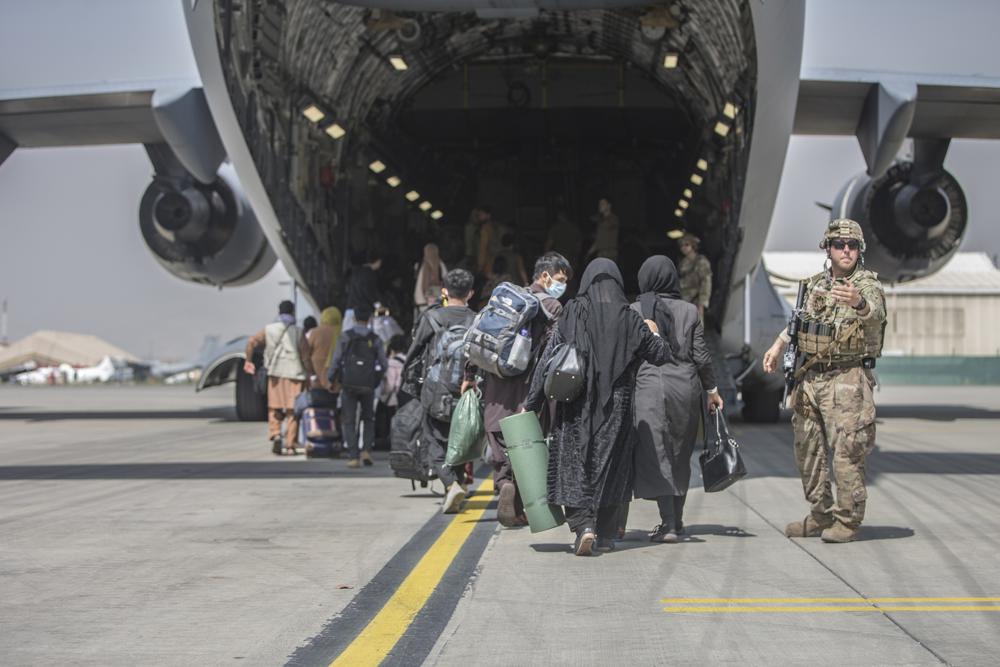
U.S. President Joe Biden declared Tuesday he is sticking to his August 31 deadline for completing a risky airlift of Americans, endangered Afghans, and others seeking to escape Taliban-controlled Afghanistan. The decision defies allied leaders who want to give the evacuation more time and opens Biden to criticism that he caved to Taliban deadline demands. “Every day we’re on the ground is another day that we know ISIS-K is seeking to target the airport and attack both us and allied forces and innocent civilians,” Biden said at the White House, referring to the Islamic State group’s Afghanistan affiliate, which is known for staging suicide attacks on civilians. He said the Taliban are cooperating and security is holding despite a number of violent incidents. “But it’s a tenuous situation,” he said, adding, “We run a serious risk of it breaking down as time goes on.” The United States in recent days has ramped up its airlift amid new reports of rights abuses that fuel concern about the fate of thousands of people who fear retribution from the Taliban and are trying to flee the country. The Pentagon said 21,600 people had been evacuated in the 24 hours that ended Tuesday morning, and Biden said an additional 12,000 had been flown out in the 12 hours that followed. Those include flights operated by the U.S. military as well as other charter flights. Biden said he had asked the Pentagon and State Department for evacuation contingency plans that would adjust the timeline for full withdrawal should that become necessary. Pentagon officials expressed confidence the airlift, which started on August 14, can get all Americans out by next Tuesday, the deadline Biden had set long before the Taliban completed their takeover. But unknown thousands of other foreign nationals remain in Afghanistan and are struggling to get out. The Taliban, who have wrested control of the country back nearly 20 years after being ousted in a U.S.-led invasion after the 9/11 attacks insist the airlift must end on August 31. Any decision by Biden to stay longer could reignite a war between the militants and the approximately 5,800 American troops who are executing the airlift at Kabul airport. In Kabul, Taliban spokesman Zabihullah Mujahid told a news conference the U.S. must stick to its self-imposed deadline, saying “after that, we won’t let Afghans be taken out” on evacuation flights. He also said the Taliban would bar Afghans from accessing roads to the airport while allowing foreigners to pass in order to prevent large crowds from massing. At the Pentagon, spokesman John Kirby said Aug. 31 leaves enough time to get all Americans out, but he was less specific about completing the evacuation of all at-risk Afghans. He said about 4,000 American passport holders and their family members had been evacuated from Kabul as of Tuesday. “We expect that number to grow in coming days,” Kirby said. With the full U.S. withdrawal looming, the Pentagon said several hundred U.S. troops have been withdrawn because they are no longer needed to complete the evacuation mission. Kirby said these are headquarters staff, maintenance personnel, and others. “It will have no impact on the mission at hand,” he said. It’s unclear how many Americans who want to leave are still in the country, but their status is a hot political topic for Biden. Some Republicans bristled Tuesday at the U.S. seeming to comply with a Taliban edict. “We need to have the top priority to tell the Taliban that we’re going to get all of our people out, regardless of what timeline was initially set,” said Rep. Steve Scalise of Louisiana. And Democratic Rep. Adam Schiff of California, chairman of the House Intelligence Committee, told reporters Monday that “it was hard for me to imagine” wrapping up the airlifts by the end of the month. One of the main refugee groups resettling Afghan evacuees in the United States said many people, including some American citizens, still were finding it impossible to get past Taliban checkpoints and crushing throngs outside the airport. “The United States cannot pat itself on the back for a job half-done,” said Krish O’Mara Vignarajah, president and CEO of Lutheran Immigration and Refugee Service. Biden decided in April that he was ending the U.S. war, which began in October 2001. Former President Donald Trump had earlier agreed in negotiations with the Taliban to end the war in May. However, Biden waited until the Taliban had swept to power this month, following the collapse of the U.S.-backed government and its army, to begin executing an airlift. Tragic scenes at the airport have transfixed the world. Afghans poured onto the tarmac last week and some clung to a U.S. military transport plane as it took off, later plunging to their deaths. At least seven people died that day, and another seven died Sunday in a panicked stampede. An Afghan soldier was killed Monday in a gunfight. British Prime Minister Boris Johnson said the Group of Seven nations will not recognize a Taliban government unless it guarantees people can leave the country if they wish, both before and after the August deadline. A day earlier, the director of the U.S. Central Intelligence Agency, William Burns, met with a top Taliban leader in Kabul. The extraordinary meeting reflected the gravity of the crisis and America’s need to coordinate with a Taliban group it has accused of gross human rights abuses. For now, the U.S. military coordinates all air traffic in and out of the Kabul airport, but the Taliban will take over thereafter the U.S. pullout. Meanwhile, a U.S. official said Burns, the CIA director, met with Taliban leader Mullah Abdul Ghani Baradar — an extraordinary moment for the U.S. spy agency, which for two decades targeted the Taliban in paramilitary operations. It was not clear what exactly they discussed. The CIA partnered with Pakistani forces to arrest Baradar in 2010, and he spent eight years in a Pakistani prison before the Trump administration persuaded Pakistan to release him in 2018
U.S. troops surge evacuations out of Kabul but threats persist
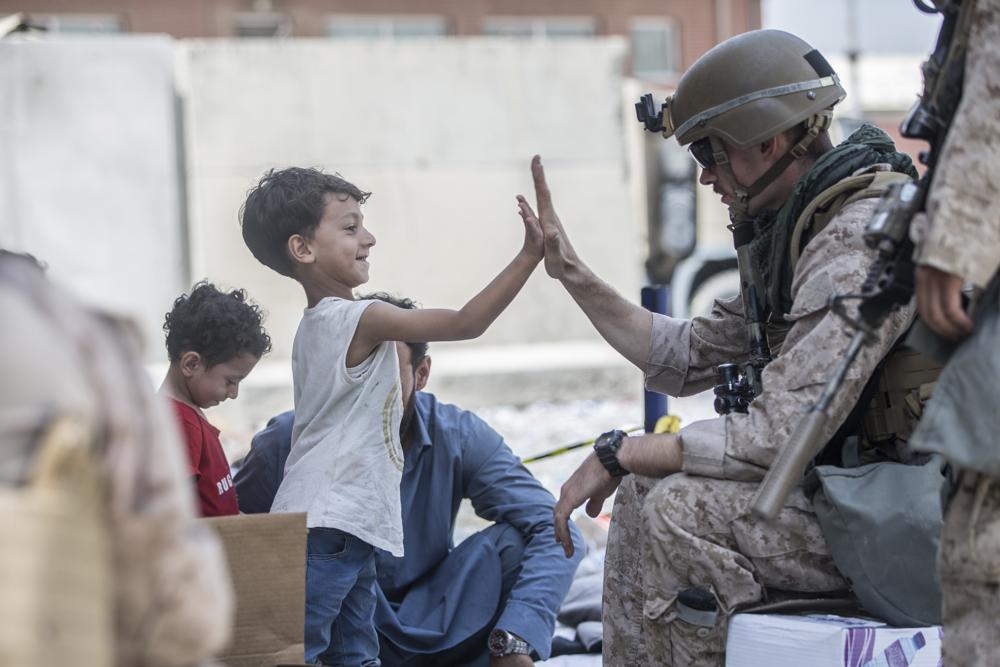
The U.S. military reported its biggest day of evacuation flights out of Afghanistan by far on Monday, but deadly violence that has blocked many desperate evacuees from entering Kabul’s airport persisted, and the Taliban signaled they might soon seek to shut down the airlifts. Twenty-eight U.S. military flights ferried about 10,400 people to safety out of Taliban-held Afghanistan over 24 hours that ended early Monday morning, and 15 C-17 flights over the next 12 hours brought out another 6,660, White House officials said. The chief Pentagon spokesman, John Kirby, said the faster pace of evacuation was due in part to coordination with Taliban commanders on getting evacuees into the airport. “Thus far, and going forward, it does require constant coordination and deconfliction with the Taliban,” Kirby said. “What we’ve seen is, this deconfliction has worked well in terms of allowing access and flow as well as reducing the overall size of the crowds just outside the airport.” With access still difficult, the U.S. military went beyond the airport to carry out another helicopter retrieval of Americans. U.S. officials said a military helicopter picked up 16 American citizens Monday and brought them onto the airfield for evacuation. This was at least the second such rescue mission beyond the airport; Kirby said that last Thursday, three Army helicopters picked up 169 Americans near a hotel just beyond the airport gate and flew them onto the airfield. President Joe Biden’s national security adviser, Jake Sullivan, said at the White House that talks with the Taliban are continuing as the administration looks for additional ways to safely move more Americans and others into the Kabul airport. “We are in talks with the Taliban on a daily basis through both political and security channels,” he said, adding that ultimately it will be Biden’s decision alone whether to continue military-led evacuation operations beyond Aug. 31. In a reminder of the urgency felt amid a dizzying array of security threats to the evacuation effort, the Pentagon posted a video of a laser near the airport targeting a U.S. Air Force C-17 aircraft and apparently attempting to disrupt the pilot during landing. After more than a week of evacuations plagued by major obstacles, including Taliban forces and crushing crowds that are making approaching the airport difficult and dangerous, the number of people flown out met — and exceeded — U.S. projections for the first time. The count was more than twice the 3,900 flown out in the previous 24 hours on U.S. military planes. Army Gen. Stephen Lyons, head of U.S. Transportation Command, which manages the military aircraft that are executing the Kabul airlift, told a Pentagon news conference that more than 200 planes are involved, including aerial refueling planes, and that arriving planes are spending less than an hour on the tarmac at Kabul before loading and taking off. He said the nonstop mission is taking a toll on aircrews. “They’re tired,” Lyons said of the crews. “They’re probably exhausted in some cases.” On a more positive note, Lyons said that in addition to the widely reported case of an Afghan woman giving birth aboard a U.S. evacuation aircraft, two other babies have been born in similar circumstances. He did not provide details. The Pentagon said it has added a fourth U.S. military base, in New Jersey, to three others — in Virginia, Texas, and Wisconsin — that are prepared to temporarily house arriving Afghans. Maj. Gen. Hank Williams, the Joint Staff deputy director for regional operations, told reporters there are now about 1,200 Afghans at those military bases. The four bases combined are capable of housing up to 25,000 evacuees, Kirby said. Afghan evacuees continued to arrive at Dulles International Airport outside of Washington. A bus carried some of the latest arrivals from Dulles airport to another site for what would be one of many processing stops before they reach new homes in the United States. Exhaustion clouded the faces of many of the adults. How does it feel to be here, a journalist asked one man. “We are safe,” he answered. An older woman sank with relief into an offered wheelchair, and a little girl carried by an older boy shaded her eyes to look curiously around. It was an interim stop for what had been a grueling struggle over days for many to get flights out of what is now Taliban-ruled Afghanistan. The scramble to evacuate left many arrivals carrying only a book bag or purse or a plastic shopping bag of belongings. Some arrived for their new lives entirely empty-handed. Biden said Sunday he would not rule out extending the evacuation beyond Aug. 31, the date he had set for completing the withdrawal of troops. And British Prime Minister Boris Johnson plans to press Biden for an extension to get out the maximum number of foreigners and Afghan allies possible. Biden is to face the U.S.’s G-7 allies in a virtual summit on Afghanistan Tuesday. Taliban spokesman Suhail Shaheen, in an interview with Sky News, said that Aug. 31 is a “red line” the U.S. must not cross and that extending the American presence would “provoke a reaction.” Since the Taliban seized the capital on August 15, completing a stunning rout of the U.S.-backed Afghan government and military, the U.S. has been carrying out the evacuation in coordination with the Taliban, who have held off on attacking under a 2020 withdrawal deal with the Trump administration. Monday’s warning signaled the Taliban could insist on shutting down the airlifts out of the Kabul airport in just over a week. Lawmakers, refugee groups, veterans’ organizations, and U.S. allies have said ending the evacuation then could strand countless Afghans and foreigners still hoping for flights out. Since August 14, the U.S. has evacuated and facilitated the evacuation of about 37,000 people. A firefight just outside the airport killed at least one Afghan soldier early Monday, German officials said. It was the latest in days of often-lethal turmoil outside the airport. People coming in hopes of escaping Taliban
