U.S. Supreme Court strikes down Alabama Congressional Districts
The U.S. Supreme Court, in a 5 to 4 ruling, has rejected Alabama’s Congressional District map in the case of Milligan versus Merrill. The Supreme Court ruled that the 2021 Congressional redistricting map drawn by the Alabama Legislature likely violates the Voting Rights Act by diluting the power of Black voters. Alabama is 27% Black, and they vote overwhelmingly Democratic, but Alabama has just one Black Democrat – Terri Sewell (D-AL07) in its congressional delegation. The six other districts are represented by White Republican men. A three-judge panel of Judges in the Eleventh Circuit Court of Appeals in Atlanta ruled in 2022 that the 2021 redistricting violated the Voting Rights Act. That order was, however, stayed by the Supreme Court until they could review the case themselves. The Court, in Thursday’s decision, ruled that the eleventh circuit was, in fact, correct. This sends the case back to them for review. Alabama Today spoke with former State Senator Jim McClendon, who chaired the Joint Committee on Redistricting, and State Representative Chris Pringle (R-Mobile). “That kind of surprised me,” McClendon said. “We went out of our way to follow every ruling and decision that was made when we made that map.” McClendon explained that while redrawing the districts will make it more likely that there will be two Black members of the Alabama congressional delegation, it does not make that certain and could even potentially jeopardize the one Black incumbent – Congresswoman Terri Sewell (D-AL07). “Terri Sewell is at risk,” McClendon said. “We gave her 55% (minority voters).” McClendon was doubtful that in the 2 to 5 district split, it would be possible to have that high of a minority participation. To get two majority-minority or at least two districts with a high minority influence will mean splitting Mobile County to put Prichard and the Black parts of Mobile into a district with the Black Belt and Montgomery. That second district will likely run from Tuscaloosa to Bessemer to Birmingham and could run as far north as Huntsville. “I am sure not sure who is going to draw them (the Legislature or the courts),” McClendon said of the new zoning maps. The three-judge panel had ordered the Legislature to redraw the maps and warned if the state didn’t, then the Court would. The state ignored the Court and instead pressed ahead with its appeal to the U.S. Supreme Court. The Supreme Court’s decision to stay the ruling meant that the 2022 election proceeded with that now-invalid congressional redistricting map. At least two of Alabama’s congressional incumbents will likely find themselves in the same district. If the three-judge panel allows the Legislature to do the Congressional redistricting, then there is likely to be a special session of the Alabama Legislature that will be needed sometime this fall. The plaintiffs presented two congressional redistricting maps to the Court. It is possible that the Court could simply order the state to adopt one of those two maps rather than preparing a fourth map. Whichever map ultimately is adopted, the 2024 congressional districts will not look much like the current districts. “There are a bunch of parasite lawyers” involved in redistricting litigation, McClendon said. “This will give them something to work on for two or three years.” Because Alabama lost the redistricting case, the state will have to pay for the legal fees of the plaintiffs’ lawyers. McClendon did not run for reelection in 2022, so he has been replaced as the Senate Chair on the redistricting committee by Sen. Steve Livingston (R-Scottsboro). Chief Justice John Roberts and Justice Brett Kavanaugh joined the Court’s three liberals in the majority. “As we explain below, we find Alabama’s new approach to §2 compelling neither in theory nor in practice. We accordingly decline to recast our §2 case law as Alabama requested,” Roberts wrote for the majority. Black Alabamians vote Democratic over 90% of the time, while Alabamians in recent elections vote Republican in excess of 80%. If those trends continue, the new redistricting will make two districts either lean Democrat or very competitive. The other five districts, however, will likely become much more White and likely even more conservative. To connect with the author of this story or to comment, email brandonmreporter@gmail.com.
Supreme Court rules in favor of Black Alabama voters in unexpected defense of Voting Rights Act
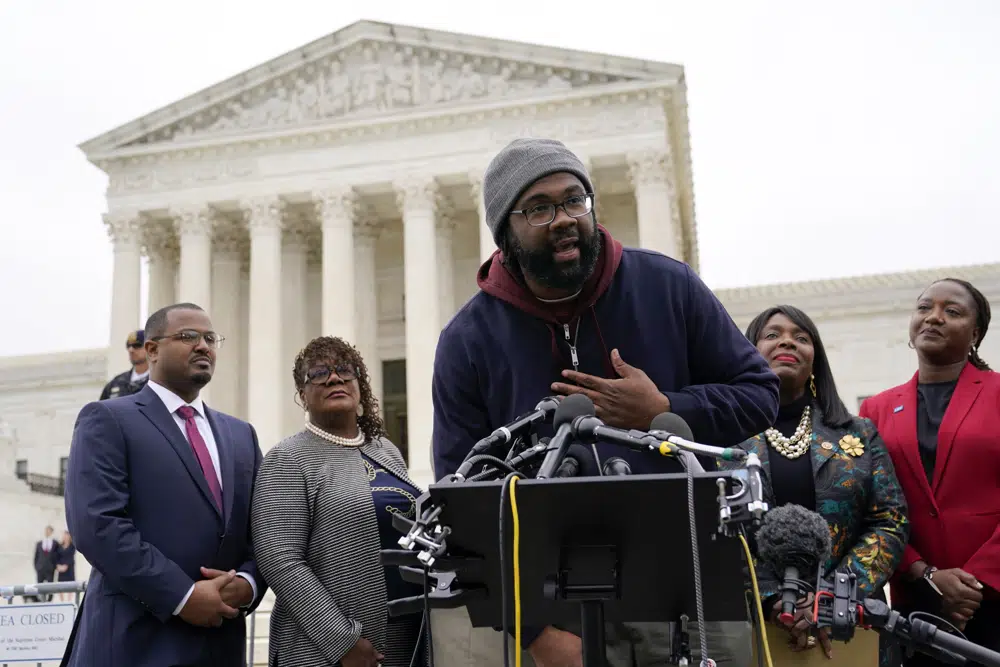
The Supreme Court on Thursday issued a surprising 5-4 ruling in favor of Black voters in a congressional redistricting case from Alabama, with two conservative justices joining liberals in rejecting a Republican-led effort to weaken a landmark voting rights law. Chief Justice John Roberts and Justice Brett Kavanaugh joined with the court’s liberals in affirming a lower-court ruling that found a likely violation of the Voting Rights Act in an Alabama congressional map with one majority Black seat out of seven congressional districts in a state where more than one in four residents is Black. The state now will have to draw a new map for next year’s elections. The decision was closely watched for its potential effect on control of the closely divided U.S. House of Representatives. Because of the ruling, Republican-led legislatures in Alabama and Louisiana will have to redraw maps so that they could increase Black representation. The outcome was unexpected in that the court had allowed the challenged Alabama map to be used for the 2022 elections — and in arguments last October, the justices appeared willing to make it harder to challenge redistricting plans as racially discriminatory under the Voting Rights Act of 1965. The chief justice himself suggested last year that he was open to changes in the way courts weigh discrimination claims under the part of the law known as section 2. But on Thursday, Roberts wrote that the court was declining “to recast our section 2 case law as Alabama requests.” Roberts was part of conservative high-court majorities in earlier cases that made it harder for racial minorities to use the Voting Rights Act in ideologically divided rulings in 2013 and 2021. The other four conservative justices dissented Thursday. Justice Clarence Thomas wrote that the decision forces “Alabama to intentionally redraw its longstanding congressional districts so that black voters can control a number of seats roughly proportional to the black share of the State’s population. Section 2 demands no such thing, and, if it did, the Constitution would not permit it.” The Biden administration sided with the Black voters in Alabama. Attorney General Merrick Garland applauded the ruling: “Today’s decision rejects efforts to further erode fundamental voting rights protections, and preserves the principle that in the United States, all eligible voters must be able to exercise their constitutional right to vote free from discrimination based on their race.” Evan Milligan, a Black voter and the lead plaintiff in the case, said the ruling was a victory for democracy and people of color. “We are grateful that the Supreme Court upheld what we knew to be true: that everyone deserves to have their vote matter and their voice heard. Today is a win for democracy and freedom not just in Alabama but across the United States,” Milligan said. The case stems from challenges to Alabama’s seven-district congressional map, which included one district in which Black voters form a large enough majority that they have the power to elect their preferred candidate. The challengers said that one district is not enough, pointing out that overall, Alabama’s population is more than 25% Black. A three-judge court, with two appointees of former President Donald Trump, had little trouble concluding that the plan likely violated the Voting Rights Act by diluting the votes of Black Alabamians. The panel ordered a new map drawn. But the state quickly appealed to the Supreme Court, where five conservative justices prevented the lower-court ruling from going forward. At the same time, the court decided to hear the Alabama case. Louisiana’s congressional map had separately been identified as probably discriminatory by a lower court. That map, too, remained in effect last year and now will have to be redrawn. Partisan politics underlies the case, and in a closely divided House of Representatives, Thursday’s ruling could have a significant effect. Republicans who dominate elective office in Alabama have been resistant to creating a second district with a Democratic-leaning Black majority, or close to one, that could send another Democrat to Congress. The judges found that Alabama concentrated Black voters in one district, while spreading them out among the others to make it much more difficult to elect more than one candidate of their choice. Alabama’s Black population is large enough and geographically compact enough to create a second district, the judges found. Denying discrimination, Alabama argued that the lower court ruling would have forced it to sort voters by race and insisted it was taking a “race-neutral” approach to redistricting. At arguments in October, Justice Ketanji Brown Jackson scoffed at the idea that race could not be part of the equation. Jackson, the court’s first Black woman, said that constitutional amendments passed after the Civil War and the Voting Rights Act a century later were intended to do the same thing, make Black Americans “equal to white citizens.” Republished with the permission of The Associated Press.
Supreme Court keeps immigration limits in place indefinitely
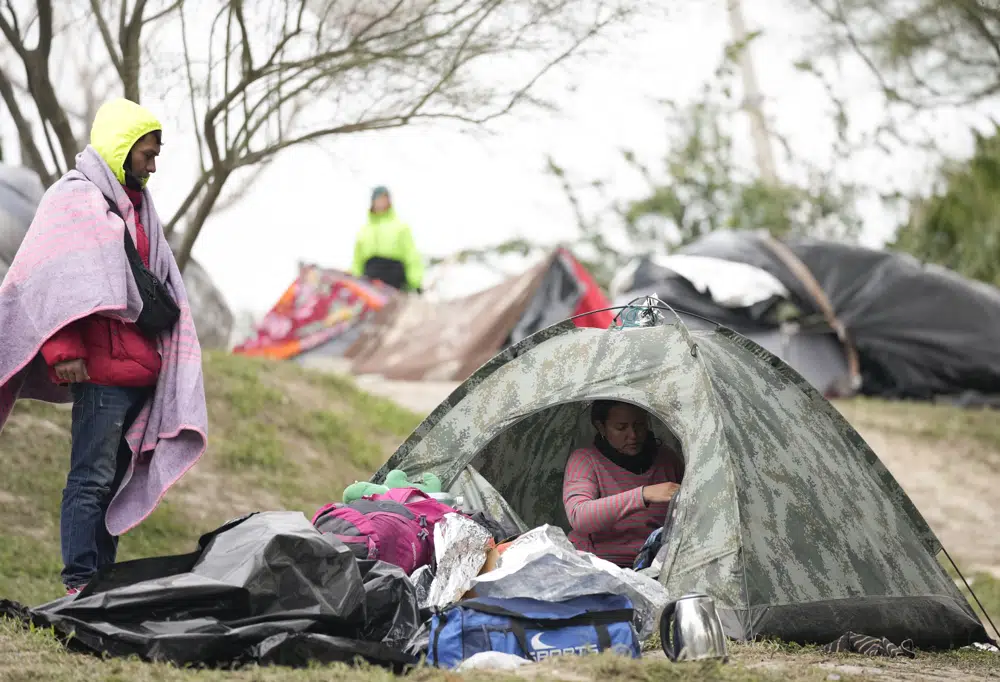
The Supreme Court is keeping pandemic-era limits on immigration in place indefinitely, dashing hopes of immigration advocates who had been anticipating their end this week. In a ruling Tuesday, the Supreme Court extended a temporary stay that Chief Justice John Roberts issued last week. Under the court’s order, the case will be argued in February, and the stay will be maintained until the justices decide the case. The limits, often referred to as Title 42 in reference to a 1944 public health law, were put in place under then-President Donald Trump at the beginning of the pandemic. Under the restrictions, officials have expelled asylum-seekers inside the United States 2.5 million times and turned away most people who requested asylum at the border on grounds of preventing the spread of COVID-19. Immigration advocates sued to end the policy, saying it goes against American and international obligations to people fleeing to the U.S. to escape persecution. They’ve also argued that the policy is outdated as coronavirus treatments improve. The Supreme Court’s decision comes as thousands of migrants have gathered on the Mexican side of the border, filling shelters and worrying advocates who are scrambling to figure out how to care for them. “We are deeply disappointed for all the desperate asylum seekers who will continue to suffer because of Title 42, but we will continue fighting to eventually end the policy,” said Lee Gelernt, a lawyer with the American Civil Liberties Union, which had been arguing to end Title 42′s use. The ruling Tuesday said specifically that the Supreme Court will review the issue of whether the states have the right to intervene in the legal fight over Title 42. Both the federal government and the immigration advocates have argued that the states waited too long to intervene and even if they hadn’t waited so long, that they don’t have sufficient standing to intervene. In a dissent, Justices Neil Gorsuch and Ketanji Brown Jackson said that even if the court were to find the states have the right to intervene and Title 42 was lawfully adopted “…. the emergency on which those orders were premised has long since lapsed.” The judges said the “current border crisis is not a COVID crisis.” “And courts should not be in the business of perpetuating administrative edicts designed for one emergency only because elected officials have failed to address a different emergency. We are a court of law, not policymakers of last resort,” the justices wrote. White House press secretary Karine Jean-Pierre said Tuesday that the Biden administration “will, of course, comply with the order and prepare for the Court’s review.” “At the same time, we are advancing our preparations to manage the border in a secure, orderly, and humane way when Title 42 eventually lifts and will continue expanding legal pathways for immigration,” Jean-Pierre added. “Title 42 is a public health measure, not an immigration enforcement measure, and it should not be extended indefinitely.” In November, a federal judge sided with advocates and set a December 21 deadline to end the policy. Conservative-leaning states appealed to the Supreme Court, warning that an increase in migration would take a toll on public services and cause an “unprecedented calamity” that they said the federal government had no plan to deal with. Roberts, who handles emergency matters that come from federal courts in the nation’s capital, issued a stay to give the court time to more fully consider both sides’ arguments. The federal government asked the Supreme Court to reject the states’ effort while also acknowledging that ending the restrictions abruptly would likely lead to “disruption and a temporary increase in unlawful border crossings.” The precise issue before the court is a complicated, largely procedural question of whether the states should be allowed to intervene in the lawsuit. A similar group of states won a lower court order in a different court district preventing the end of the restrictions after the Centers for Disease Control and Prevention announced in April that it was ending use of the policy. Until the judge’s November order in the advocates’ lawsuit, the states had not sought to take part in that case. But they say that the administration has essentially abandoned its defense of the Title 42 policy and they should be able to step in. The administration has appealed the ruling, though it has not tried to keep Title 42 in place while the legal case plays out. Republished with the permission of The Associated Press.
Supreme Court weighs ‘most important case’ on democracy
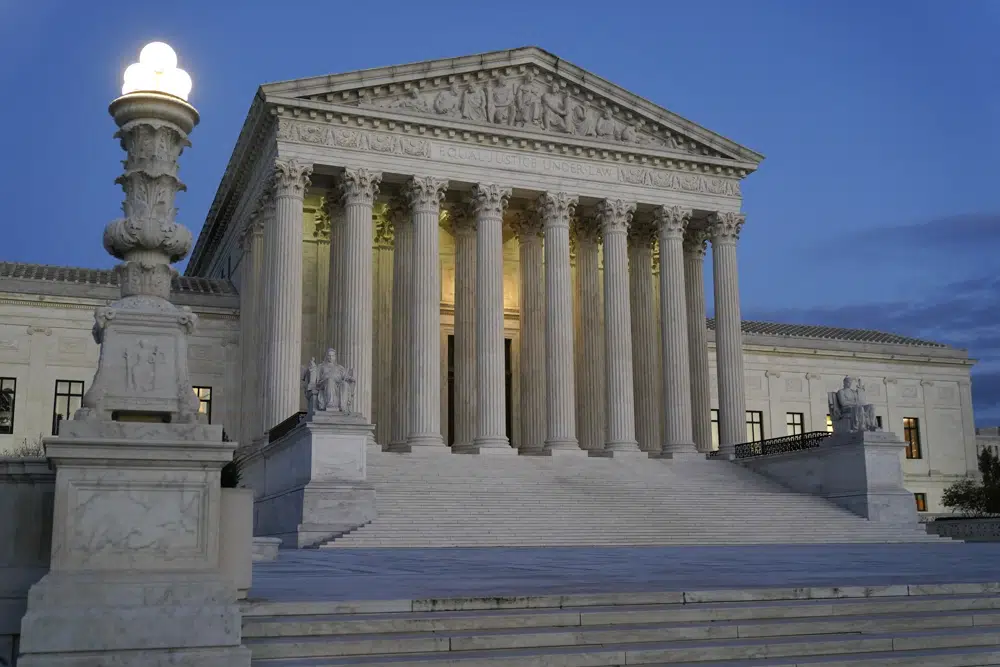
The Supreme Court is about to confront a new elections case, a Republican-led challenge asking the justices for a novel ruling that could significantly increase the power of state lawmakers over elections for Congress and the presidency. The court is set to hear arguments Wednesday in a case from North Carolina, where Republican efforts to draw congressional districts heavily in their favor were blocked by a Democratic majority on the state Supreme Court because the GOP map violated the state constitution. A court-drawn map produced seven seats for each party in last month’s midterm elections in highly competitive North Carolina. The question for the justices is whether the U.S. Constitution’s provision giving state legislatures the power to make the rules about the “times, places and manner” of congressional elections cuts state courts out of the process. “This is the single most important case on American democracy — and for American democracy — in the nation’s history,” said former federal judge Michael Luttig, a prominent conservative who has joined the legal team defending the North Carolina court decision. The Republican leaders of North Carolina’s legislature told the Supreme Court that the Constitution’s “carefully drawn lines place the regulation of federal elections in the hands of state legislatures, Congress, and no one else.” Three conservative justices already have voiced some support for the idea that the state court had improperly taken powers given by the Constitution when it comes to federal elections. A fourth has written approvingly about limiting the power of state courts in this area. But the Supreme Court has never invoked what is known as the independent state legislature theory. It was, though, mentioned in a separate opinion by three conservatives in the Bush v. Gore case that settled the 2000 presidential election. If the court were to recognize it now, opponents of the concept argue, the effects could be much broader than just redistricting. The most robust ruling for North Carolina Republicans could undermine more than 170 state constitutional provisions, over 650 state laws delegating authority to make election policies to state and local officials, and thousands of regulations down to the location of polling places, according to the Brennan Center for Justice at the New York University School of Law. Luttig, who advised former Vice President Mike Pence that he had no authority to reject electoral votes following the 2020 election, is among several prominent conservatives and Republicans who have lined up against the broad assertion that legislatures can’t be challenged in state courts when they make decisions about federal elections, including congressional redistricting. That group includes former California Gov. Arnold Schwarzenegger, law professor Steven Calabresi, a founder of the conservative Federalist Society, and Benjamin Ginsberg, a longtime lawyer for Republican candidates and the party. “Unfortunately, because of ongoing and widespread efforts to sow distrust and spread disinformation, confidence in our elections is at a low ebb,” Ginsberg wrote in a Supreme Court filing. “The version of the independent state legislature theory advanced by Petitioners, in this case, threatens to make a bad situation much worse, exacerbating the current moment of political polarization and further undermining confidence in our elections.” The arguments are taking place a day after the final contest of the 2022 midterms, the Georgia Senate runoff between Democratic Sen. Raphael Warnock and Republican Herschel Walker. In that contest, state courts ruled in favor of Democrats to allow for voting on the Saturday before the election, over the objections of Republicans. Jason Snead, of the conservative Honest Elections Project, said the case is an opportunity for the high court to rein in out-of-control state courts which are being pushed by Democratic attorneys to effectively create new rules governing voting, including the Georgia example. “We’ve seen a fairly pervasive attempt to use courts to rewrite election laws if those laws don’t suit partisan agendas,” Snead said in a call with reporters. “That’s not something we want to see when it flies in the face of the Constitution.” He is among proponents of the high court’s intervention who argue the case doesn’t represent “a threat to democracy.” The justices can instead write a narrow opinion that places limits on state courts without upsetting the choices New York and other states have made to restrict partisan redistricting, a group of New York voters wrote in a court filing. The New Yorkers implicitly recognize that if the court gives more power to state legislatures over drawing congressional lines, Republicans may not necessarily benefit. During the last redistricting cycle, states that used independent redistricting commissions rather than legislatures were largely Democratic-dominated ones. Commissions drew 95 House seats in states with Democratic legislatures and governors, as opposed to only 12 in states with GOP control. A ruling that grants legislatures ultimate power over redistricting could eradicate those commissions and let Democrats redraw a major chunk of the House map. “The bottom line is the impact of this fringe theory would be terrible,” said former Attorney General Eric Holder, chairman of the National Democratic Redistricting Committee. “It could unleash a wave of gerrymandering from both parties.” Even less dramatic changes may not necessarily tilt the GOP’s way on a national redistricting map that was essentially fought to a draw, and where state court rulings cost Democrats about as many House seats as Republicans. The Supreme Court refused to step into the North Carolina case in March, allowing the court-drawn districts to be used this year. Justices Samuel Alito, Neil Gorsuch, and Clarence Thomas dissented. Writing for the three, Alito said, “there must be some limit on the authority of state courts to countermand actions taken by state legislatures when they are prescribing rules for the conduct of federal elections. I think it is likely that the applicants would succeed in showing that the North Carolina Supreme Court exceeded those limits.” Justice Brett Kavanaugh has separately written about the need for federal courts to police the actions of state courts when it comes to federal elections. Chief Justice John Roberts’ record on this question gives both sides some hope. In 2015,
Black representation in Alabama tested before Supreme Court
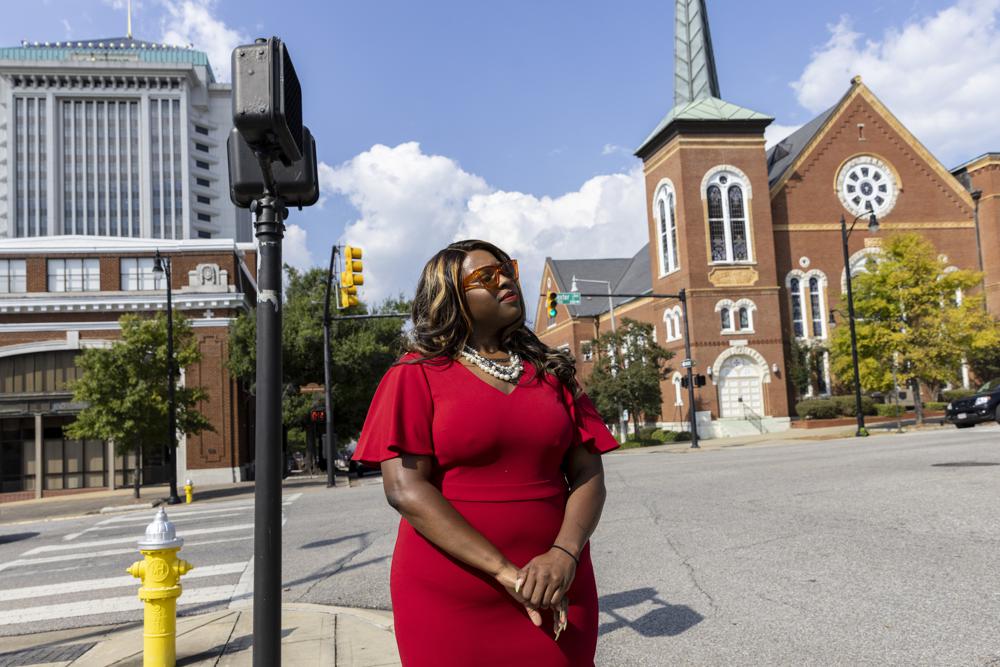
The invisible line dividing two of Alabama’s congressional districts slices through Montgomery, near iconic sites from the civil rights movement as well as ones more personal to Evan Milligan. There’s the house where his grandfather loaded people into his station wagon and drove them to their jobs during the Montgomery Bus Boycott as Black residents spurned city buses to protest segregation. It’s the same home where his mother lived as a child, just yards from a whites-only park and zoo she was not allowed to enter. The spot downtown where Rosa Parks was arrested, igniting the boycott, sits on one side of the dividing line, while the church pastored by the Rev. Martin Luther King Jr., who led the protests, sits on the other. The lines are at the center of a high-stakes redistricting case bearing Milligan’s name that will go before the U.S. Supreme Court on Tuesday, setting up a new test of the Voting Rights Act and the role of race in drawing congressional boundaries. At the center of the case is a challenge by various groups arguing that the state violated the federal Voting Rights Act by diluting the political power of Black voters when it failed to create a second district in which they make up a majority, or close to it. African Americans account for about 27% of the state’s population but are the majority in just one of the state’s seven congressional districts. “Our congressional map is not reflective of the population that lives in Alabama,” said Milligan, 41, one of several voters who joined interest groups in filing the lawsuit. The case the Supreme Court will take up Tuesday centers on whether congressional districts in Alabama were drawn to reduce the political influence of Black voters, but it’s also part of a much broader problem that undermines representative government in the U.S. Both major political parties have practiced gerrymandering — drawing congressional and state legislative boundaries to cement their hold on power — but Republicans have been in control of the process in far more states since after the 2010 elections. That has allowed them to win an outsized share of statehouse and U.S. House seats and means GOP policies — including on abortion restrictions — often don’t reflect the will of most voters. An Associated Press analysis from 2017 showed that Alabama had one of the most gerrymandered congressional maps in the country. Republicans dominate elected office in Alabama and are in charge of redistricting. They have been resistant to creating a second district with a Democratic-leaning Black majority that could send another Democrat to Congress. A three-judge panel that included two appointees of President Donald Trump ruled unanimously in January that the Alabama Legislature likely violated the Voting Rights Act with the map. “Black voters have less opportunity than other Alabamians to elect candidates of their choice to Congress,” the panel said. The judges ordered state lawmakers to draw new lines for this year’s election and create a second district where Black voters either made up a majority or near majority of the population. But on a 5-4 vote in February, the Supreme Court sided with Alabama to allow this year’s congressional elections to take place without adding a second predominantly Black district. Two justices suggested it was too close to spring primaries to make a change. The lawsuit claims the Alabama congressional map dilutes the voting strength of Black residents by packing a large number of them into a single district — the 7th, where 55% of voters are Black — while fragmenting other communities. That includes the state’s Black Belt region and the city of Montgomery. The current districts leave the vast majority of Black voters with no realistic chance to elect their preferred congressional candidates anywhere outside the 7th district, the lawsuit contends. “This is just about getting Black voters, finally, in Alabama, the opportunity to elect their candidates of choice. It’s not necessarily guaranteeing that they will have their candidate elected,” said Deuel Ross, senior counsel at the NAACP Legal Defense and Educational Fund, which is representing the plaintiffs. The groups contend that the state’s Black population is large enough and geographically compact enough to create a second district. Milligan, who is six generations removed from enslaved ancestors who lived in the Black Belt, ticked off the consequences for Black residents who are not able to have representation that aligns with their needs: addressing generational poverty, the lack of adequate internet service, Medicaid expansion and the desire for a broader array of health care services. “In choosing not to do that, you’re denying the people of the Black Belt the opportunity to elect an additional person that can really go to the mat on their interests,” said Ross, who is one of the attorneys who will argue the case in a challenge backed by the Biden administration. African Americans served in Alabama’s congressional delegation following the Civil War in the period known as Reconstruction. They did not return until 1993, a year after the courts ordered the state to reconfigure the 7th Congressional District into a majority-Black one, which has since been held by a succession of Black Democrats. That 1992 map remains the basis for the one in use today. “Under numerous court challenges, the courts have approved this basic plan. All we did is adjust it for population deviation,” said state Rep. Chris Pringle, a Republican and chairman of the legislative committee that drew the new lines. Alabama argued in court filings that the state’s Black population is too spread out to be able to create a second majority district without abandoning core redistricting principles such as keeping districts compact and keeping communities of interest together. Drawing such a district, the state argued, would require mapping acrobatics, such as connecting coastal areas in southwest Alabama to peanut farms in the east. In a statement to The Associated Press, Alabama Attorney General Steve Marshall said the map is “based on race-neutral redistricting principles that were approved by a bipartisan group of legislators.” He said it looks similar to
Adeline Von Drehle: SCOTUS decision may limit more than just the EPA

The Supreme Court wrapped up its history-making term last week with a shot across the bow at government regulatory agencies. One of its two final rulings, West Virginia v. EPA, saw the court rule 6-3 along ideological lines that the Clean Air Act does not give the Environmental Protection Agency broad authority to regulate greenhouse gas emissions from power plants. Ruling for the state of West Virginia, the conservative justices struck down EPA standards designed to fight climate change by reshaping electricity grids. Such standards qualify as “major questions,” wrote Chief Justice John Roberts in his majority opinion, requiring explicit authorization by Congress. Much of the interest in the case comes from those who fear the United States will no longer be able to meet its climate change commitments. In her dissent, Justice Elena Kagan wrote that the court was stripping the EPA of the power Congress gave it to respond to “the most pressing environmental challenge of our time.” President Joe Biden, in a statement issued at the White House Thursday, described the ruling as “another devastating decision that aims to take our country backwards.” The opinion completed a term in which an already conservative court lurched further to the right, striking down Roe v. Wade, expanding gun rights, embracing religious expression – and now cracking down on the so-called “administrative state.” Careful vetting of three justices appointed by former president Donald J. Trump by the conservative Federalist Society produced results long dreamed of by self-styled “originalist” theorists. Laurence Tribe, University Professor Emeritus of Constitutional Law at Harvard, told RealClearPolitics that the current court “is going rogue and seems almost drunk with the power acquired with its stacking by Trump and his three new Justices.” West Virginia’s victory may be only an opening salvo in a conservative war against the active federal government called into existence during the Great Depression. If every significant new challenge requires new Congressional authorization to act – as the Roberts opinion suggests – critics fear the executive branch could become just as gridlocked as the legislative branch. Roberts pointed in this direction by describing the dispute at hand as a “major questions case.” The major questions doctrine requires that agencies have explicit statutory authorization from Congress to make “decisions of vast economic and political significance.” The court “typically greet[s] assertions of extravagant statutory power over the national economy with skepticism,” Roberts wrote. To overcome that skepticism, “the Government must – under the major questions doctrine – point to clear congressional authorization to regulate in that manner.” The major questions doctrine plays an important role in administrative law because it allows Congress to find, in theory, a workable space between an unconstitutional delegation of power – a violation of Article I Section I of the Constitution, which states that “All legislative powers herein granted shall be vested in a Congress of the United States” – and a complete ban on delegation that would leave an already inactive Congress swamped with day-to-day responsibility for government agencies. One traditional view holds that Congress sets up a target, but agencies decide how to hit the target. In the West Virginia case, the EPA’s target was the reduction of carbon emissions. The EPA aimed to hit that target by requiring a gradual transition to green energy. New York University Law Professor Roderick M. Hills explained to RCP that the Roberts ruling suggests that Congressional legislation “doesn’t only contain the target,” it also regulates the means that the agency can use. So, if the agency chooses a novel or controversial method of achieving the congressionally specified goal, it might be going outside the statute. The issue with a doctrine that says an agency cannot do anything outside its statutory authorization, Hills said, “is that when a new problem arises, agencies are helpless. And the whole point of creating an agency is to respond to unforeseen circumstances.” The modern administrative state was born during the New Deal Era, when President Franklin D. Roosevelt sought a way to respond to the economic crisis quickly, bypassing bureaucratic red tape – or even congressional intent. There is always a trade-off, Hills said, between “lots and lots of democratic deliberation, and fast action. It’s like Elvis Presley said, a little less conversation, a little more action.” If the court requires agencies to go to Congress each time they seek new ways to address issues of major economic and political significance, Hills asserts, “We’re never going to do anything to respond to new problems because Congress is mired in gridlock.” He has a point, given that Congress currently has a 4% success rate of turning bills into laws. Some would argue that the slow pace of the congressional process is not only desirable, but constitutionally obligatory. Others think it’s unrealistic and, in some ways, undemocratic. Since the 1819 landmark decision McCulloch v. Maryland, the court has held that “the modern administrative state is constitutional,” Tribe told RCP. That case affirmed that Congress can turn over responsibility for detail-oriented action to freestanding government agencies. But it is unclear what is a detail and what is a significant, or “major,” issue. “The Constitution doesn’t say anything about major questions,” Hills told RCP. “If you think the most valuable thing is to have every issue passed upon by elected representatives, [the court] is right. If you think the most valuable thing, or at least an equally valuable thing, is to actually have policy that’s responsive to problems, then [the court] is wrong.” That said, for those who disagree with the EPA ruling, there’s a straightforward remedy that isn’t necessarily available when it comes to the court’s recent gun control decisions or the religious freedom cases. That’s because EPA’s regulatory overreach on climate change – at least according to the Supreme Court – did not run afoul of the pesky First Amendment or Second Amendment. In that sense, West Virginia v. EPA has something in common with the Dobbs decision: namely, the obvious possibility of a legislative fix. In
Kay Ivey blasts Supreme Court decision to halt “Remain in Mexico” policy
On Thursday, the U.S. Supreme Court ruled the Biden administration can end the Trump-era immigration policy called the Migrant Protection Protocols. The “Remain in Mexico” policy was at the center of efforts to deter asylum-seekers, forcing some to wait in Mexico. The legal fight in the immigration case was about whether U.S. immigration authorities, with far less detention capacity than needed, had to send people to Mexico or whether they had the discretion under federal law to release asylum-seekers into the United States while they awaited their hearings. The Department of Homeland Security began to implement the Migrant Protection Protocols (MPP) in January 2019. Under MPP, certainnon-Mexican nationals arriving by land from Mexico were returned to Mexico to await the results of their removal proceedings under section 1229a of the Immigration and Nationality Act (INA). Joe Biden suspended the program on his first day in office in January 2021. Lower courts ordered it reinstated in response to a lawsuit from Republican-led Texas and Missouri. Chief Justice John Roberts wrote that an appeals court “erred in holding that the” federal Immigration and Nationality Act “required the Government to continue implementing MPP.” Brett Kavanaugh noted that in general, when there is not enough detention capacity, both releasing asylum-seekers into the United States and sending them back to Mexico “are legally permissible options under the immigration statutes.” Along with Justice Kavanaugh, John Roberts, Stephen Breyer, Sonia Sotomayor, and Elena Kagan all ruled in favor of the Biden administration. Gov. Kay Ivey released a statement regarding the decision, saying that ending the policy only exacerbated the border crisis. “The Biden Administration’s decision to end President Trump’s Remain in Mexico policy is contributing to the full-blown crisis at the Southern Border and is having devastating effects on both U.S. citizens and migrants,”. Ivey stated. “This was reasonable, good policy, and ending this policy only exacerbates the problem, plain and simple. DHS does not have the capacity to detain the massive flow of individuals, and instead of choosing this clearly effective and legal option, they are releasing these people all across the country.” Ivey promised to continue to provide resources to border states. Ivey concluded, “Where the federal government has refused to secure the Southern Border, states like Texas, Alabama, and our neighbors have stepped up to provide resources. We will continue our fight to demand action from our government.”
Ketanji Brown Jackson sworn in, becomes 1st Black woman on Supreme Court
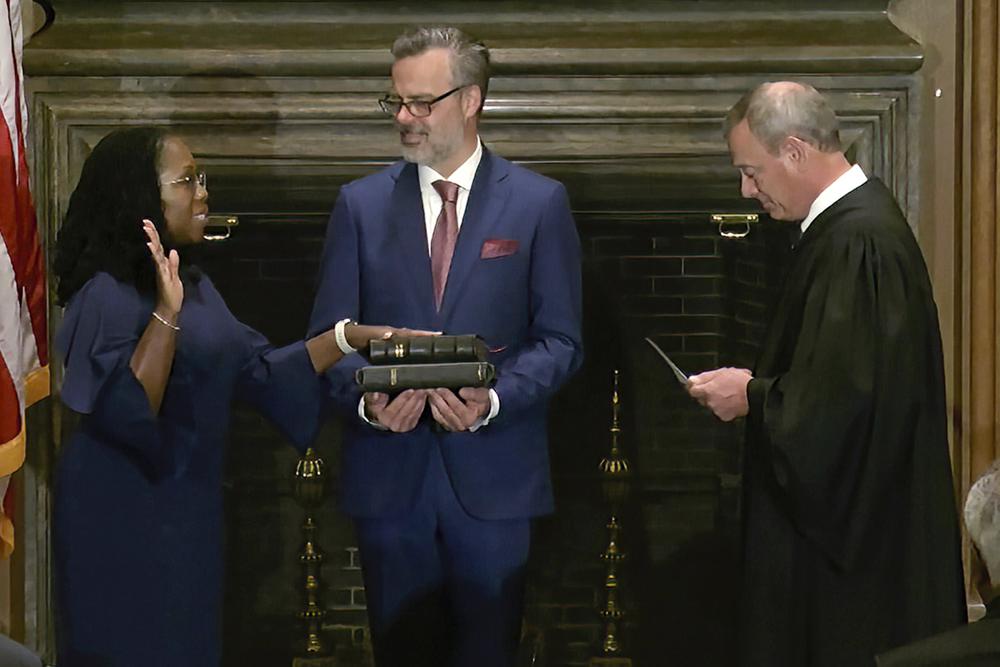
Ketanji Brown Jackson was sworn in to the Supreme Court on Thursday, shattering a glass ceiling as the first Black woman on the nation’s highest court. The 51-year-old Jackson is the court’s 116th justice, and she took the place of the justice she once worked for. Justice Stephen Breyer’s retirement was effective at noon. Moments later, joined by her family, Jackson recited the two oaths required of Supreme Court justices, one administered by Breyer and the other by Chief Justice John Roberts. “With a full heart, I accept the solemn responsibility of supporting and defending the Constitution of the United States and administering justice without fear or favor, so help me God,” Jackson said in a statement issued by the court. “I am truly grateful to be part of the promise of our great Nation. I extend my sincerest thanks to all of my new colleagues for their warm and gracious welcome.” Roberts welcomed Jackson “to the court and our common calling.” The ceremony was streamed live on the court’s website. All the justices except for Neil Gorsuch attended the swearing-in, the court said. There was no immediate explanation for Gorsuch’s absence. Jackson, a federal judge since 2013, is joining three other women — Justices Sonia Sotomayor, Elena Kagan, and Amy Coney Barrett. It’s the first time four women will serve together on the nine-member court. Biden nominated Jackson in February, a month after Breyer, 83, announced he would retire at the end of the court’s term, assuming his successor had been confirmed. Breyer’s earlier-than-usual announcement and the condition he attached was a recognition of the Democrats’ tenuous hold on the Senate in an era of hyper-partisanship, especially surrounding federal judgeships. The Senate confirmed Jackson’s nomination in early April, by a 53-47 mostly party-line vote that included support from three Republicans. Jackson had been in a sort of judicial limbo since, remaining a judge on the federal appeals court in Washington, D.C., but not hearing any cases. Biden elevated her to that court from the district judgeship to which she was appointed by President Barack Obama. Glynda Carr, president of Higher Heights for America, an organization that advocates for the growth of Black women’s political power, said the timing of Jackson’s swearing-in was bittersweet. “Although we celebrate her today, one Black woman or a cohort of Black women can’t save this democracy alone. We are a piece of it and we are doing our work, our part. She’s going to forever reshape and shape that court. But she’s just a piece of the work that needs to happen moving forward,” Carr said. Because of Jackson’s appointment, Judith Browne Dianis, a Black lawyer in Washington, said she intends to end her protest against joining the Supreme Court Bar. She started it when Justice Clarence Thomas was confirmed in 1991. She said that even the series of conservative rulings from the court over the past week cannot take away from the significance of Thursday’s ceremony. “This is a momentous occasion and it’s still a beautiful moment,” said Dianis, executive director of the civil rights group Advancement Project. But, Dianis added, “she’s joining the court at a time when conservatives are holding the line and trying to actually take us back, because they see the progress that’s being made in our country. It’s like the Civil War that never ended. That’s the court that she’s joining.” Jackson will be able to begin work immediately, but the court will have just finished the bulk of its work until the fall, apart from emergency appeals that occasionally arise. That will give her time to settle in and familiarize herself with the roughly two dozen cases the court already has agreed to hear starting in October as well as hundreds of appeals that will pile up over the summer. She helps form the most diverse court in its 232-year history and is the first former public defender to be a justice. The court that Jackson is joining is the most conservative that it has been since the 1930s. She is likely to be on the losing end of important cases, which could include examinations of the role of race in college admissions, congressional redistricting and voting rights that the court, with its 6-3 conservative majority, will take up next term. Today’s court now is surrounded by fencing, and justices and their families have 24-hour protection by the U.S. Marshals, the result of a law passed days after a man carrying a gun, knife and zip ties was arrested near Justice Brett Kavanaugh’s Maryland house after threatening to kill the justice. The bill was introduced in May shortly after the leak of a draft court opinion that would overrule Roe v. Wade and sharply curtail abortion rights in roughly half the states. The court issued final opinions earlier Thursday after a momentous and rancorous term that included overturning Roe v. Wade’s guarantee of the right to an abortion. One of Thursday’s decisions limited how the Environmental Protection Agency can use the nation’s main anti-air pollution law to reduce carbon dioxide emissions from power plants, a blow to the fight against climate change. Republished with the permission of The Associated Press.
Supreme Court limits EPA in curbing power plant emissions
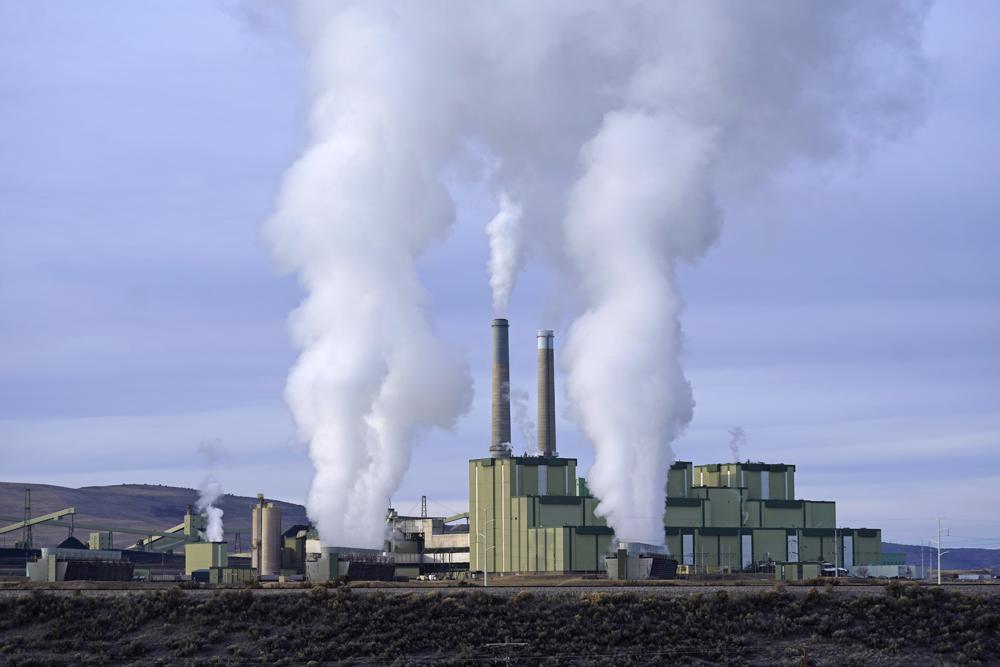
In a blow to the fight against climate change, the Supreme Court on Thursday limited how the nation’s main anti-air pollution law can be used to reduce carbon dioxide emissions from power plants. By a 6-3 vote, with conservatives in the majority, the court said that the Clean Air Act does not give the Environmental Protection Agency broad authority to regulate greenhouse gas emissions from power plants that contribute to global warming. The decision, said environmental advocates and dissenting liberal justices, was a major step in the wrong direction — “a gut punch,” one prominent meteorologist said — at a time of increasing environmental damage attributable to climate change amid dire warnings about the future. The court’s ruling could complicate the administration’s plans to combat climate change. Its detailed proposal to regulate power plant emissions is expected by the end of the year. Though the decision was specific to the EPA, it was in line with the conservative majority’s skepticism of the power of regulatory agencies, and it sent a message on possible future effects beyond climate change and air pollution. The decision put an exclamation point on a court term in which a conservative majority, bolstered by three appointees of former President Donald Trump, also overturned the nearly 50-year-old nationwide right to abortion, expanded gun rights, and issued major religious rights rulings, all over liberal dissents. President Joe Biden aims to cut the nation’s greenhouse gas emissions in half by the end of the decade and to have an emissions-free power sector by 2035. Power plants account for roughly 30% of carbon dioxide output. “Capping carbon dioxide emissions at a level that will force a nationwide transition away from the use of coal to generate electricity may be a sensible ‘solution to the crisis of the day,’” Chief Justice John Roberts wrote in his opinion for the court. But Roberts wrote that the Clean Air Act doesn’t give EPA the authority to do so and that Congress must speak clearly on this subject. “A decision of such magnitude and consequence rests with Congress itself, or an agency acting pursuant to a clear delegation from that representative body,” he wrote. In a dissent, Justice Elena Kagan wrote that the decision strips the EPA of the power Congress gave it to respond to “the most pressing environmental challenge of our time.” Kagan said the stakes in the case are high. She said, “The Court appoints itself—instead of Congress or the expert agency—the decisionmaker on climate policy. I cannot think of many things more frightening.” Biden, in a statement, called the ruling “another devastating decision that aims to take our country backwards.” He said he would “not relent in using my lawful authorities to protect public health and tackle the climate crisis.” And EPA head Michael Regan said his agency will move forward with a rule to impose environmental standards on the energy sector. West Virginia Attorney General Patrick Morrisey, who led the legal challenge to EPA authority, said the “EPA can no longer sidestep Congress to exercise broad regulatory power that would radically transform the nation’s energy grid and force states to fundamentally shift their energy portfolios away from coal-fired generation.” But University of Georgia meteorology professor Marshall Shepherd, a past president of the American Meteorological Society, said of the decision: “It feels like a gut punch to critical efforts to combat the climate crisis which has the potential to place lives at risk for decades to come.” Richard Revesz, an environmental expert at the New York University School of Law, called the decision “a significant setback for environmental protection and public health safeguards.” But he also said in a statement that EPA still has authority to address greenhouse gas emissions from the power sector. EPA Administrator Regan said the agency “will move forward with lawfully setting and implementing environmental standards that meet our obligation to protect all people and all communities from environmental harm.” Senate Democratic leader Chuck Schumer of New York said the consequences of Thursday’s decision “will ripple across the entire federal government, from the regulation of food and drugs to our nation’s health care system, all of which will put American lives at risk.” The court held that Congress must speak with specificity when it wants to give an agency authority to regulate on an issue of major national significance. Several conservative justices have criticized what they see as the unchecked power of federal agencies. Those concerns were evident in the court’s orders throwing out two Biden administration policies aimed at reducing the spread of COVID-19. Last summer, the court’s 6-3 conservative majority ended a pause on evictions over unpaid rent. In January, the same six justices blocked a requirement that workers at large employers be vaccinated or test regularly and wear a mask on the job. Underlying all these issues is a lack of action from Congress, reflecting bitter, partisan disagreements over the role of the federal government. On the environment, Biden’s signature plan to address climate, a sweeping social and environmental policy bill known as Build Back Better, is all but dead amid united opposition from congressional Republicans and conservative Democratic Sen. Joe Manchin from coal state West Virginia. Under a trimmed-down version, the legislation backed by Democrats would offer tax credits and spending to boost renewable power such as wind and solar and sharply increase the number of electric vehicles. The justices heard arguments in the case on the same day that a United Nations panel’s report warned that the effects of climate change are about to get much worse, likely making the world sicker, hungrier, poorer, and more dangerous in the coming years. The power plant case has a long and complicated history that begins with the Obama administration’s Clean Power Plan. That plan would have required states to reduce emissions from the generation of electricity, mainly by shifting away from coal-fired plants. But that plan never took effect. Acting in a lawsuit filed by West Virginia and others, the Supreme Court blocked it in 2016 by a 5-4 vote, with conservatives
Supreme Court: Joe Biden can end Donald Trump-era asylum policy
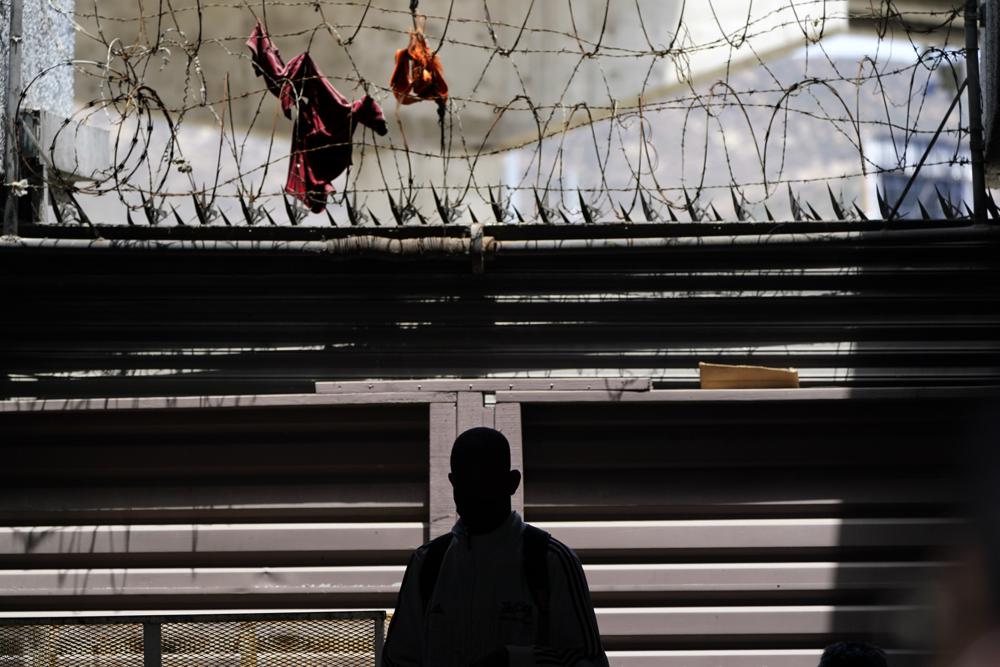
The Supreme Court said Thursday the Biden administration can scrap a Trump-era immigration policy that was at the center of efforts to deter asylum-seekers, forcing some to wait in Mexico. Two conservative justices joined their three liberal colleagues in siding with the White House. The justices’ decision came in a case involving former President Donald Trump’s “Remain in Mexico” policy, formally known as Migrant Protection Protocols, which enrolled about 70,000 people after it was launched in 2019. President Joe Biden suspended the program on his first day in office in January 2021. But lower courts ordered it reinstated in response to a lawsuit from Republican-led Texas and Missouri. The current administration has sent far fewer people back to Mexico than did the Trump administration. The ruling was released on the same day that the court dealt the administration a blow in an important environmental case about the nation’s main anti-air pollution law. That ruling could complicate the administration’s plans to combat climate change. The heart of the legal fight in the immigration case was about whether U.S. immigration authorities, with far less detention capacity than needed, had to send people to Mexico or whether those authorities had the discretion under federal law to release asylum-seekers into the United States while they awaited their hearings. After Biden’s suspension of the program, Homeland Security Secretary Alejandro Mayorkas ended it in June 2021. In October, the department produced additional justifications for the policy’s demise, but that was to no avail in the courts. Chief Justice John Roberts wrote that an appeals court “erred in holding that the” federal Immigration and Nationality Act “required the Government to continue implementing MPP.” Joining the majority opinion was fellow conservative Brett Kavanaugh, a Trump-appointee, as well as liberal justices Stephen Breyer, Sonia Sotomayor, and Elena Kagan. Kavanaugh also wrote separately and noted that in general, when there is insufficient detention capacity, both releasing asylum-seekers into the United States and sending them back to Mexico “are legally permissible options under the immigration statutes.” Cornell University law professor Stephen Yale-Loehr, an immigration expert, said the Biden administration does not need to take any further action to end the policy but that Texas and Missouri can pursue a challenge over whether the administration followed appropriate procedure in ending the program. Texas Attorney General Ken Paxton said in a statement that the decision was “unfortunate.” He argued it would make “the border crisis worse. But it’s not the end. I’ll keep pressing forward and focus on securing the border and keeping our communities safe in the dozen other immigration suits I’m litigating in court.” Because of lower court decisions, MPP resumed in December, but the administration has registered only 7,259 migrants in the program, about 6 of every 10 of them Nicaraguans. The administration has said it would apply the policy to nationalities that are less likely to be subject to pandemic-era asylum limits. Strained diplomatic relations with Nicaragua makes it extremely difficult for the U.S. to expel people back to their homeland under the pandemic rule, known as Title 42 authority. U.S. authorities stopped migrants 1.2 million times on the Mexico border from December through May, illustrating the limited impact that “Remain in Mexico” has had under Biden. Democratic-led states and progressive groups were on the administration’s side in the case. Republican-run states and conservative groups sided with Texas and Missouri. The case is Biden v. Texas, 21-954. Republished with the permission of The Associated Press.
Supreme Court overturns Roe v. Wade; states can ban abortion

The Supreme Court has ended constitutional protections for abortion that had been in place nearly 50 years in a decision by its conservative majority to overturn Roe v. Wade. Friday’s outcome is expected to lead to abortion bans in roughly half the states. The decision, unthinkable just a few years ago, was the culmination of decades of efforts by abortion opponents, made possible by an emboldened right side of the court that has been fortified by three appointees of former President Donald Trump. The ruling came more than a month after the stunning leak of a draft opinion by Justice Samuel Alito, indicating the court was prepared to take this momentous step. It puts the court at odds with a majority of Americans who favored preserving Roe, according to opinion polls. Alito, in the final opinion issued Friday, wrote that Roe and Planned Parenthood v. Casey, the 1992 decision that reaffirmed the right to abortion, were wrong the day they were decided and must be overturned. “We hold that Roe and Casey must be overruled. The Constitution makes no reference to abortion, and no such right is implicitly protected by any constitutional provision,” Alito wrote. Authority to regulate abortion rests with the political branches, not the courts, Alito wrote. Joining Alito were Justices Clarence Thomas, Neil Gorsuch, Brett Kavanaugh, and Amy Coney Barrett. The latter three justices are Donald Trump appointees. Thomas first voted to overrule Roe 30 years ago. Chief Justice John Roberts would have stopped short of ending the abortion right, noting that he would have upheld the Mississippi law at the heart of the case, a ban on abortion after 15 weeks, and said no more. Justices Stephen Breyer, Sonia Sotomayor, and Elena Kagan — the diminished liberal wing of the court — were in dissent. “With sorrow—for this Court, but more, for the many millions of American women who have today lost a fundamental constitutional protection—we dissent,” they wrote. The ruling is expected to disproportionately affect minority women who already face limited access to health care, according to statistics analyzed by The Associated Press. Thirteen states, mainly in the South and Midwest, already have laws on the books that ban abortion in the event Roe is overturned. Another half-dozen states have near-total bans or prohibitions after 6 weeks of pregnancy, before many women know they are pregnant. In roughly a half-dozen other states, the fight will be over dormant abortion bans that were enacted before Roe was decided in 1973 or new proposals to sharply limit when abortions can be performed, according to the Guttmacher Institute, a research group that supports abortion rights. More than 90% of abortions take place in the first 13 weeks of pregnancy, and more than half are now done with pills, not surgery, according to data compiled by Guttmacher. The decision came against a backdrop of public opinion surveys that find a majority of Americans oppose overturning Roe and handing the question of whether to permit abortion entirely to the states. Polls conducted by The Associated Press-NORC Center for Public Affairs Research and others also have consistently shown about 1 in 10 Americans want abortion to be illegal in all cases. A majority are in favor of abortion being legal in all or most circumstances, but polls indicate many also support restrictions, especially later in pregnancy. The Biden administration and other defenders of abortion rights have warned that a decision overturning Roe also would threaten other high court decisions in favor of gay rights and, even potentially, contraception. But Alito wrote in his draft opinion that his analysis addresses abortion only, not other rights that also stem from a right to privacy that the high court has found implicit, though not directly stated, in the Constitution. Abortion is different, Alito wrote, because of the unique moral question it poses. Whatever the intentions of the person who leaked Alito’s draft opinion, the conservatives held firm in overturning Roe and Casey. In his draft, Alito dismissed the arguments in favor of retaining the two decisions, including that multiple generations of American women have partly relied on the right to abortion to gain economic and political power. Changing the composition of the court has been central to the anti-abortion side’s strategy. Mississippi and its allies made increasingly aggressive arguments as the case developed, and two high-court defenders of abortion rights retired or died. The state initially argued that its law could be upheld without overruling the court’s abortion precedents. Then-Gov. Phil Bryant signed the 15-week measure into law in March 2018, when Justices Anthony Kennedy and Ruth Bader Ginsburg were still members of a five-justice majority that was mainly protective of abortion rights. By early summer, Kennedy had retired and was replaced by Justice Brett Kavanaugh a few months later. The Mississippi law was blocked in lower federal courts. But the state always was headed to the nation’s highest court. It did not even ask for a hearing before a three-judge panel of the 5th U.S. Circuit Court of Appeals, which ultimately held the law invalid in December 2019. By early September 2020, the Supreme Court was ready to consider the state’s appeal. The court scheduled the case for consideration at the justices’ private conference on Sept. 29. But in the intervening weeks, Ginsburg died, and Barrett was quickly nominated and confirmed without a single Democratic vote. The stage now was set, although it took the court another half year to agree to hear the case. By the time Mississippi filed its main written argument with the court in the summer, the thrust of its argument had changed, and it was now calling for the wholesale overruling of Roe and Casey. The first sign that the court might be receptive to wiping away the constitutional right to abortion came in late summer when the justices divided 5-4 in allowing Texas to enforce a ban on the procedure at roughly six weeks, before some women even know they are pregnant. That dispute turned on the unique structure of the
Supreme Court expands gun rights, with nation divided

In a major expansion of gun rights after a series of mass shootings, the Supreme Court said Thursday that Americans have a right to carry firearms in public for self-defense, a ruling likely to lead to more people legally armed. The decision came out as Congress and states debate gun-control legislation. About one-quarter of the U.S. population lives in states expected to be affected by the ruling, which struck down a New York gun law. The high court’s first major gun decision in more than a decade split the court 6-3, with the court’s conservatives in the majority and liberals in dissent. Across the street from the court, lawmakers at the Capitol sped toward passage of gun legislation prompted by recent massacres in Texas,New York and California. Senators cleared the way for the measure, modest in scope but still the most far-reaching in decades. Also Thursday, underscoring the nation’s deep divisions over the issue, the sister of a 9-year-old girl killed in the school shooting in Uvalde, Texas, pleaded with state lawmakers to pass gun legislation. The Republican-controlled legislature has stripped away gun restrictions over the past decade. President Joe Biden said in a statement he was “deeply disappointed” by the Supreme Court ruling. It “contradicts both common sense and the Constitution, and should deeply trouble us all,” he said. He urged states to pass new laws. “I call on Americans across the country to make their voices heard on gun safety. Lives are on the line,” he said. The decision struck down a New York law requiring people to demonstrate a particular need for carrying a gun in order to get a license to carry a gun in a concealed way in public. The justices said that requirement violates the Second Amendment right to “keep and bear arms.” Justice Clarence Thomas wrote for the majority that the Constitution protects “an individual’s right to carry a handgun for self-defense outside the home.” That right is not a “second-class right,” Thomas wrote. “We know of no other constitutional right that an individual may exercise only after demonstrating to government officers some special need.” California, Hawaii, Maryland, Massachusetts, New Jersey, and Rhode Island all have laws similar to New York’s. Those laws are expected to be quickly challenged. Gov. Kathy Hochul, D-N.Y., said the ruling came at a particularly painful time, with New York mourning the deaths of 10 people in a shooting at a supermarket in Buffalo. “This decision isn’t just reckless. It’s reprehensible. It’s not what New Yorkers want,” she said. Gun control groups called the decision a significant setback. Michael Waldman, president of the Brennan Center for Justice and an expert on the Second Amendment, wrote on Twitter that the decision could be the “biggest expansion of gun rights” by the Supreme Court in U.S. history. Republican lawmakers were among those cheering the decision. Tom King, president of the plaintiff New York State Rifle and Pistol Association, said he was relieved. “The lawful and legal gun owner of New York State is no longer going to be persecuted by laws that have nothing to do with the safety of the people and will do nothing to make the people safer,” he said. “And maybe now we’ll start going after criminals and perpetrators of these heinous acts.” The court’s decision is somewhat out of step with public opinion. About half of the voters in the 2020 presidential election said gun laws in the U.S. should be made more strict, according to AP VoteCast, an expansive survey of the electorate. An additional one-third said laws should be kept as they are, while only about 1 in 10 said gun laws should be less strict. About 8 in 10 Democratic voters said gun laws should be made more strict, VoteCast showed. Among Republican voters, roughly half said laws should be kept as they are, while the remaining half closely divided between more and less strict. In a dissent joined by his liberal colleagues, Justice Stephen Breyer focused on the toll from gun violence. Since the beginning of this year, “there have already been 277 reported mass shootings — an average of more than one per day,” Breyer wrote. He accused his colleagues in the majority of acting “without considering the potentially deadly consequences” of their decision. He said the ruling would “severely” burden states’ efforts to pass laws “that limit, in various ways, who may purchase, carry, or use firearms of different kinds.” Several other conservative justices who joined Thomas’ majority opinion also wrote separately to add their views. Justice Samuel Alito criticized Breyer’s dissent, questioning the relevance of his discussion of mass shootings and other gun death statistics. Alito wrote that the court had decided “nothing about who may lawfully possess a firearm or the requirements that must be met to buy a gun” and nothing “about the kinds of weapons that people may possess.” “Today, unfortunately, many Americans have good reason to fear they will be victimized if they are unable to protect themselves.” The Second Amendment, he said, “guarantees their right to do so.” Justice Brett Kavanaugh, joined by Chief Justice John Roberts, noted the limits of the decision. States can still require people to get a license to carry a gun, Kavanaugh wrote, and condition that license on “fingerprinting, a background check, a mental health records check, and training in firearms handling and in laws regarding the use of force, among other possible requirements.” Backers of New York’s law had argued that striking it down would lead to more guns on the streets and higher rates of violent crime. Gun violence, on the rise during the coronavirus pandemic, has spiked anew. Gun purchases have also risen. In most of the country, gun owners have little difficulty legally carrying their weapons in public. But that had been harder to do in New York and the handful of states with similar laws. New York’s law, in place since 1913, says that to carry a concealed handgun in public, a person applying for a license has to show “proper cause,” a specific need to