
Alabama House passes bipartisan $45 million in tax cuts bill

On Tuesday, the Alabama House of Representatives voted to pass legislation eliminating all state income taxes on workers getting paid overtime. The sponsor estimates this amount to be a $40 million income tax cut for hourly workers. House Bill 217 (HB217) is sponsored by House Minority Leader Anthony Daniels. “This will put money back into the local economy because those workers will spend that money in their local areas,” Daniels explained. “This helps the hourly workers.” Daniels was asked what states have this. “This is a new idea that has never been tested, which is why we have a three-year sunset in case we need to go back and look at this,” Daniels said. “A lot of employers say that their employers will not work overtime because of the tax hit that they receive. This will allow companies to increased production with a smaller workforce.” Rep. Barbara Drummond said, “You have created a box that no one else has. I applaud you for bringing this bill.” Rep. Danny Garrett said, “The three-year sunset is so that we have an opportunity to evaluate it.” “I think this gets our labor force participation and productivity up,” Garrett said. Rep. Napoleon Bracy said, “In my day job, I have a responsibility to hire 1,200 people in the next three years. It is very hard to find them. The craft workers at our facility work Monday through Thursday ten hours a day. They are off Friday, Saturday, and Sunday. It is real hard to get them to come in on their off days because the tax burden is so heavy on them.” “The hospitals are real excited about this,” Bracy added. “This lets us get more from the workers that we already have.” State Rep. John Rogers asked, “How much is this going to cost the employer?” Daniels said, “This will cost the employer nothing. For the employee, they will see less money taken from their checks.” Rogers asked, “This will help us with corrections officers?” Daniels said, “This will encourage them to work longer hours because they get to keep more of that money.” House Majority Leader Scott Stadthagen said, “This is what we are down here for to make a difference.” “From what I am hearing along the borders, they are losing workers to other states,” Daniels said. “This will help with that.” The House voted to adopt the committee sub. State Rep. Paul Lee asked, “What does an employer have to do?” Daniels answered, “They just don’t collect the tax after the first forty hours. There are no fines or fees with this.” “This will not go into effect this calendar year,” Daniels explained. “This will go into effect in the next calendar year.” “The cost will be about $45 million,” Daniels estimated. The lost revenue will come from the education trust fund (ETF) budget. “The local economy will benefit more from this than the state,” Daniels said. What workers would have paid in income taxes will be spent at local stores and businesses, so that will bring in $1.8 million in additional sales taxes.” Lee said, “This is a very good Republican bill, and I appreciate you bringing it.” HB217 passed the House of Representatives 105 to 0. 100 members signed on as cosponsors of this legislation. This legislation will now go to the Senate for their consideration. Wednesday will be day 17 of the 2023 Alabama Regular Legislative Session. To connect with the author of this story or to comment, email brandonmreporter@gmail.com.
Legislature passes changes to sheriff succession

On Thursday, the Alabama Senate voted in favor of legislation that would mandate that in the event of a vacancy in the office of sheriff that the next highest-ranking member of that department would assume the sheriff’s responsibilities until the governor can appoint a replacement. House Bill 276 (HB276) is sponsored by State Representative Ron Bolton. The legislation was carried in the Senate by Sen. Steve Livingston. “This changes an 1874 rule that the coroner would assume those duties,” Livingston told the Senate. Bolton explained that in the event of a vacancy in the sheriff’s office, the highest-ranking member of that department would take control of the department. This could be because of the death of the sheriff, the sheriff has been charged with a crime, or the sheriff has resigned or retired. Bolton said, “They will automatically take control of that office until the governor makes the appointment.” Bolton said that he has spoken with the sheriffs and that the Alabama Sheriffs Association helped to draft the bill. Rep. John Rogers asked, “What if the highest-ranking deputy has some charges pending against him?” Bolton said, “He would be removed himself. It would go to the next-ranking deputy.” Rep. Juandalynn Givan asked, “Did you talk to the sheriffs about this, and specifically, did you talk with Jefferson County Sheriff Mark Pettway about this?” Bolton said, “I did. I taught Sheriff Pettway in the academy 27 years ago. The Sheriffs Association helped draft the bill, and I spoke with Sheriff Pettway about this when he is in town. Bolton said that the law establishing that the coroner assumes the powers of a sheriff in the event of a vacancy dates back to 1852. “It has been amended a number of times, but it has never been changed in terms of succession,” Bolton said. According to the synopsis, “Under existing law, when the office of the sheriff of a county is vacant or in certain other circumstances when existing law has provided that it is not appropriate for the sheriff to serve, the county coroner discharges the duties of the sheriff. This bill would provide that when the office of sheriff is vacant or when certain other circumstances exist, the highest ranking deputy sheriff in the county would serve as acting sheriff.” HB276 passed the Senate 33 to 0. It passed the House of Representatives 104 to 0 last week. It now goes to Gov. Kay Ivey for her consideration. Wednesday was day 17 of the 2023 Alabama Regular Legislative Session. To connect with the author of this story or to comment, email brandonmreporter@gmail.com.
Legislature votes to regulate psychoactive cannabinoids

On Wednesday, the Alabama Legislature approved legislation that set the minimum age to purchase psychoactive cannabinoids at 21. The House of Representatives made several changes to the legislation when they passed it on Tuesday. Specifically, the House voted to jettison a 5% tax on the products that the Senate had included in their version of the bill. The House substitute also added a requirement for stores to put those products out of the reach of children and in child-proof containers. On Wednesday afternoon, the Senate voted to concur with the House changes and send the legislation to the Governor. Senate Bill 66 (SB66) is sponsored by State Senator Tim Melson. It was carried in the Alabama House of Representatives by State Representative Russell Bedsole. Bedsole explained that the legislation deals with psychoactive cannabinoids: Delta 8 and Delta 10. “This legislation contains penalties if you are caught selling this,” Bedsole said. “There are penalties if you are caught in possession of these if you are under 21.” Bledsole explained that these products are packaged in such a way that they are designed and target children. “There is no oversight,” Bedsole said. “Oftentimes, the THC content is much higher than advertised on the packaging.” Rep. Juandalynn Givan said, “Thank you for bringing this. We have had some problems in Jefferson County with students purchasing candies and getting sick. We need to get a handle on what is going on with these candies. We had an incident with a young girl last week in Jefferson County who got really sick from one of these candies.” Givan said that these products sold on the shelves differ from marijuana. “The weed man is my friend,” Givan said. “This bill has nothing to do with the weed man. This is being sold in the open market in convenience stores on the shelf. There is also a problem with cough syrup and other products on the shelf.” “People don’t realize how dangerous these products are,” Bedsole said. “I hope there is a task force like Steve Marshall used to shut these bingos down,” Givan said. “I pray that there is a task force that goes into these stores.” Rep. Chris Sells said, “It is a great bill. I support anything that helps the children.” Rep. Anthony Daniels said, “I don’t understand why we have not to this point cracked down on this. It has had a negative impact on our communities.” Bedsole said, “Originally, this had a tax of five percent on it when it came out of the Senate. That tax has been removed.” “This product must be placed in a place not accessible to children,” Bedsole said. “This product should be behind the counter.” “There will be some form of community service for those below 21 found to be in possession,” Bedsole said, Rep. Barbara Drummond said, “I am so happy to see this bill as well as others that will come. I am for anything that we can do to protect children.” Rep. John Rogers asked, “How do you stop an adult from giving it to the kids?” “You can ask that question about so many laws that are on our books,” Bedsole answered. “We believe this bill is a good first step.” “The sub that came out of committee did not have an additional tax,” Bedsole said. The House voted to adopt the committee substitute 105 to 0. “I have a friendly amendment,” said Rep. Reed Ingram. “All the amendment does is that all the packaging has to be in a child-resistant container.” Bedsole replied, “I do consider the amendment to be a friendly amendment.” The House voted to adopt the Ingram amendment 105 to 0. Rep. Ron Bolton brought an amendment that raised the penalty for a third offense for violating this statute to $400. “The judge could still make the decision to require community service,” Bolton said. SB66 passed the House 105 to 0 On Wednesday, it returned to the Senate. Sen. Melson asked that the Senate concur with the House changes. “All they actually did was remove the tax that we had,” Melson said. “They also put it behind the counter and also put it in child-proof containers. I would like to concur with the House.” The full Senate voted to concur 33 to 0. SB66 now goes to the Governor for her consideration. Thursday will be day 18 of the 2023 Alabama Regular Legislative Session. To connect with the author of this story or to comment, email brandonmreporter@gmail.com.
House passes legislation so drug dealers can be charged with manslaughter in overdose deaths
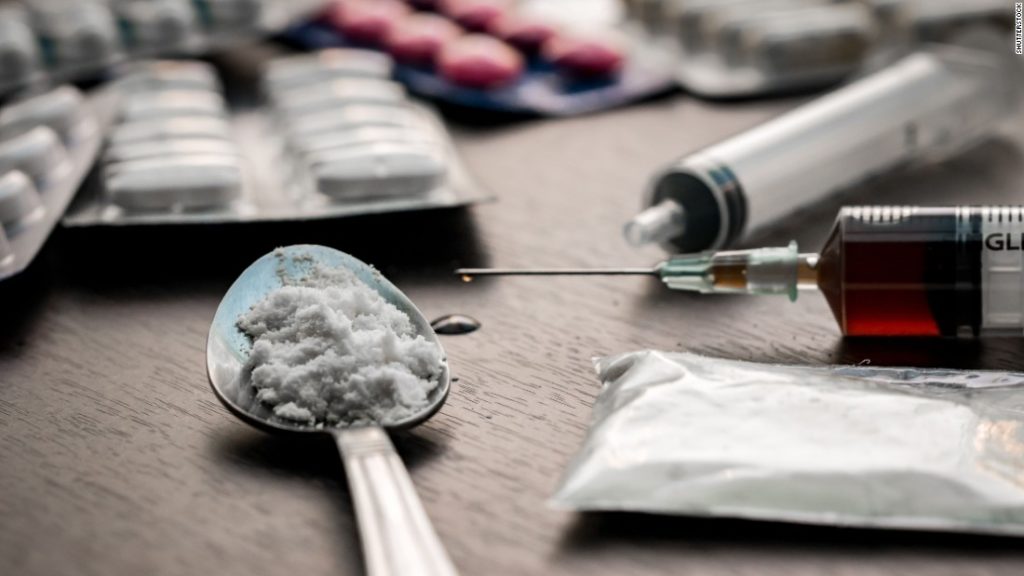
On Thursday, the Alabama House of Representatives passed legislation allowing prosecutors to charge a drug dealer with manslaughter if they provide a controlled substance that causes someone to die. House Bill 82 (HB82) was sponsored by State Representative Chris Pringle. Pringle explained that he had friends in Mobile who mortgaged their house, mortgaged everything they had to pay for their son to get through rehab. His drug dealer stalked him. The drug dealer kept calling him, followed him to Narcan on meetings, and even lied to his mother to get his number. Finally, he broke him down. “The drug dealer talked her son into buying an oxycodone laced with fentanyl, and he died,” Pringle said. Pringle explained that with HB82, “If you give someone a controlled substance and you are not a doctor or a pharmacist, and you kill someone, you can be charged with manslaughter.” Juandalynn Givan expressed concerns that college students could get charged with manslaughter if they do drugs with their friends and one of their friends overdosed and died. “I have walked on college campuses, and some of them are walking around like zombies,” Givan said. “We all know how it is on gameday and sometimes at other times.” “Let’s talk about the transfer of the offense to a third party,” Givan said. “We have kids who play around and buy drugs, not knowing that that drug was laced with fentanyl. If their friend died, that person would then be charged with manslaughter.” “If you are dealing a controlled substance, and you are not licensed to distribute a controlled substance, and you kill somebody, you get charged with manslaughter. You killed your friend, and you will have to live with that,” Pringle said. “If you go to Atlanta and buy 2,000 oxycodone pills from your dealer, and you sell them in Birmingham, and people start dying, then you are guilty of killing them.” “Why do we not have anything in the bill about knowingly,” Givan said. “I want to make sure that there is not an unintended consequence with the bill. It is a good bill.” Pringle said, “This is the same exact bill that has passed out of this chamber before.” The bill has passed out of the House three years in a row but has stalled in the Alabama Senate. Givan said, “Folks are lacing marijuana with fentanyl and all kinds of things.” Rep. Allen Treadaway said, “I don’t think people realize just how bad things are. Over 100,000 people have died in this country in the last year due to drug overdoses. Jefferson County had a 400 percent increase in fentanyl deaths. Students that take Ritalin to stay up studying, and if they take a Ritalin laced with fentanyl and they are dying.” Rep. Jim Hill said, “I support the bill because it is a reasonable consequence of what we are trying to do. If you sell a controlled substance and if that substance leads to the death of a third person, you either knew or you should have known what the consequences are.” Rep. Laura Hall said, “We already know who the drug dealers are.” Pringle said, “We addressed that with Mr. [Matt] Simpson’s bill dealing with the trafficking of controlled substances.” “After my friend’s son died, another child took a fentanyl-laced oxycodone from that person and died,” Pringle said. “They are charging that person now.” “This clarifies that under the law, they can be charged with manslaughter,” Pringle said. “The district attorneys want clarification that they can charge the drug dealers that are killing our children with manslaughter.” “I am talking about putting them in jail for killing people,” Pringle explained. “I think the drug dealers should be put in jail for dealing drugs. I think the drug dealers that are killing people should be put in jail for killing people.” “I personally think there are a lot more fentanyl deaths occurring than are being reported,” Pringle continued. “That is why we are putting more money in forensic labs.” Rep. Kenyatta Hassell expressed concerns that the user could alter the drugs after they purchase them from the dealer. “If he alters that drug himself, he is going to be charged,” Hassell said. “It is a real concern that if the user modified the drug himself.” “We acknowledge that people give drugs to people all the time,” said Rep. Chris England. “Under this law, they could be prosecuted for manslaughter. This is one of those bills that probably has more unintended consequences than intended consequences.” Rep. John Rogers brought an amendment adding the word “knowingly” to the bill. “I consider this a friendly amendment and ask that members vote for it,” Pringle said. The amendment was adopted on a 104 to 0 vote. “The last place you want to put a person with an addiction problem is to put them in prison,” England said of two people who use drugs together, and one of them dies. “Your bill would make that person a murderer or convicted of manslaughter.” “You’re automatically assuming that a person who is using a controlled substance is a bad person,” England said, charging that HB82 was “overcriminalization.” HB82 passed the House with a bipartisan majority of 88 to 11. The bill now goes to the Senate for their consideration. To connect with the author of this story or to comment, email brandonmreporter@gmail.com.
House passes bill addressing Sheriff’s succession rules
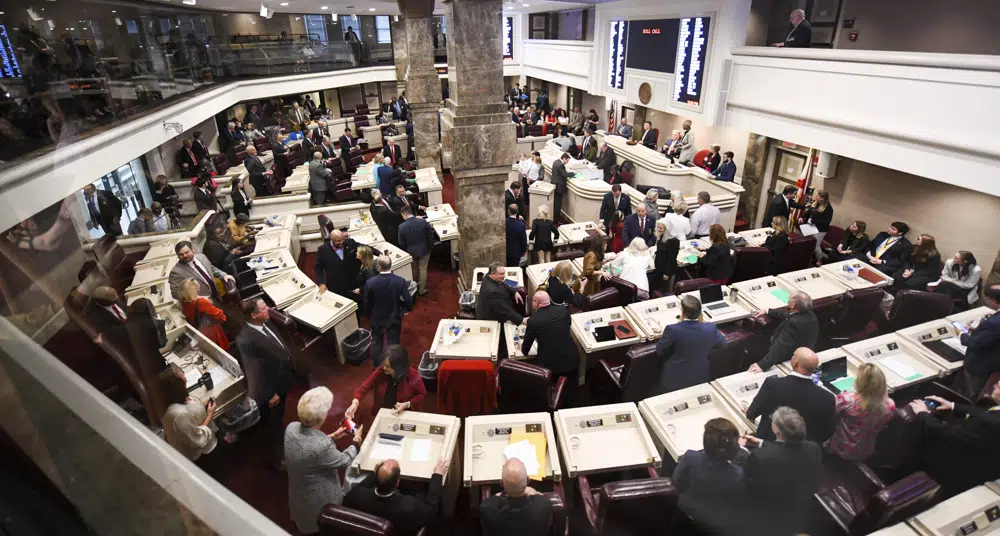
On Thursday, the Alabama House of Representatives passed legislation establishing that in the event of a sheriff dying, quitting, or being charged with a serious crime, the next senior officer in the department would take control of that department until the Governor appoints a successor. House Bill 276 (HB276) is sponsored by State Representative Ron Bolton. According to the synopsis, “Under existing law, when the office of the sheriff of a county is vacant or in certain other circumstances when existing law has provided that it is not appropriate for the sheriff to serve, the county coroner discharges the duties of the sheriff. This bill would provide that when the office of sheriff is vacant or when certain other circumstances exist, the highest ranking deputy sheriff in the county would serve as acting sheriff.” Bolton explained that in the event of a vacancy in the sheriff’s office, the highest-ranking member of that department would take control of the department. Bolton said, “They will automatically take control of that office until the governor makes the appointment.” Rep. David Standridge said, “I want to make sure that that deputy wouldn’t lose their job when a new sheriff is appointed if it is not him or her that is appointed.” Bolton said he would be open to amending the bill to include that stipulation when the bill is in the Senate. Rep. Pebblin Warren said, “The only thing that really concerns me is that the sheriff, in most cases, is the most liked person in the county. The chief deputy may not be well-liked. What is the current law?” Bolton said, “The current law puts the coroner in charge instead of the senior deputy.” Warren asked, “And that person will stay in office until the governor makes an appoint?” Bolton answered, “That is correct.” Warren said, “I personally know of a situation where the sheriff was popular, and the chief deputy was liked by no one.” Rep. John Rogers asked, “What if the highest-ranking deputy has some charges pending against him?” Bolton said, “He would be removed himself. It would go to the next-ranking deputy.” Rep. Juandalynn Givan asked, “Did you talk to the sheriffs about this, and specifically, did you talk with Jefferson County Sheriff Mark Pettway about this?” Bolton said, “I did. I taught Sheriff Pettway in the academy 27 years ago. The Sheriffs Association helped draft the bill, and I spoke with Sheriff Pettway about this when he is in town. Bolton said that the law establishing that the coroner assumes the powers of a sheriff in the event of a vacancy dates back to 1852. “It has been amended a number of times, but it has never been changed in terms of succession,” Bolton said. HB276 passed the House of Representatives 104 to 0. It now goes to the Senate for their consideration. HB276 was Rep. Bolton’s first bill to pass the House for the freshman lawmaker. Thursday was day 15 of the 2023 Alabama Regular Legislative Session. To connect with the author of this story or to comment, email brandonmreporter@gmail.com.
Twelve more bills to watch introduced in the legislative session
The 2023 Alabama Regular Legislative Session is almost half over. Tuesday will be legislative day 14. To this point, State Legislators have introduced 618 bills in the current legislative session. Alabama Today has been monitoring bills as they are introduced. Here are twelve of the most recently introduced bills to watch. House Bill 370 (HB370) is sponsored by Representative John Rogers. According to the synopsis, HB370 “would require the Alabama State Law Enforcement Agency to establish and maintain a database that includes a list of individuals with communication disabilities or disabilities that can impair communications, to be available to law enforcement officers. This bill would require the Alabama Department of Public Health to develop a form for individuals to voluntarily register for inclusion in the database.” Senate Bill 237 (SB237) is sponsored by Senator Tom Butler. According to the synopsis, “Under existing law, the Alabama Memorial Preservation Act of 2017 prohibits architecturally significant buildings, memorial buildings, memorial streets, and monuments that are located on public property and have been so situated for 40 or more years from being relocated, removed, altered, renamed, or otherwise disturbed unless the Committee on Alabama Monument Protection grants a waiver, and provides penalties for violations. This bill would require a controlling governmental entity that replaces a memorial building to maintain the original name or erect a marker memorializing the name. This bill would provide that a petition for waiver is deemed denied if the Committee on Alabama Monument Protection fails to act on an application for waiver within 90 days. This bill would revise the penalties for violations and would authorize the Attorney General to commence a civil action. This bill would also require the Alabama State Council on the Arts to oversee the design, construction, and installation of a replica of the Saturn 1B Rocket, previously located at the I-65 Ardmore Welcome Center in Elkmont, Alabama, at the most northern I-65 rest stop in the state.” House Bill 364 (HB364) is sponsored by State Rep. Steve Hurst. HB364 would require a public K-12 school or a local board of education to accept cash and any other form of payment of its choosing for admission to school-sponsored sporting events that are open to the public. Some venues have gone to credit card payments only during the COVID-19 pandemic. House Bill 354 (HB354) is sponsored by State Rep. Mack Butler. HB354 “would provide that classroom instruction or discussions related to gender identity or sexual orientation may not be provided to public school students in kindergarten through eighth grade or to public school students in a manner that is not age or developmentally appropriate. This bill would require the State Board of Education to adopt procedures for notifying a student’s parent if there is a change in the student’s services or monitoring relating to the student’s mental, emotional, or physical health and would prohibit local boards of education from adopting policies to the contrary. This bill would require each local board of education, at the beginning of each school year, to notify parents of the health care services available to students and allow parents to opt their child out of any health care service.” Senate Bill 224 (SB224) is sponsored by Sen. Vivian Figures. According to the synopsis, “Under existing law, the crime of transmitting obscene material to a child by computer is a Class B felony. This bill would clarify that for the purpose of this crime, a child is a person who is under 16 years of age. Under existing law, a person commits the crime of distributing a private image if he or she knowingly posts, emails, texts, transmits, or otherwise distributes a private image with the intent to harass, threaten, coerce, or intimidate the person depicted in certain circumstances. This bill would clarify that a criminal proceeding for a violation of distributing a private image could be brought in any county in which any part of the crime took place, in the county of residence of the victim, or any county where the image was received. Also, under existing law, a violation of incest is a Class C felony. This bill would provide that a violation of incest when the victim is under 16 years of age is a Class A felony. Also, under existing law, a person may not be convicted of the crime of incest or of an attempt to commit incest unless there is corroborated testimony. This bill would remove the requirement of corroborated testimony.” Senate Bill 234 (SB234) is a state constitutional amendment by Sen. Merika Coleman. SB234 would end the state’s four percent sales tax on groceries but would replace the lost revenue by ending the state’s allowing income taxpayers to deduct their federal income tax. A family of four who spends $110 a week on groceries would save $229 on the reduced sales tax on groceries. With a typical household taxable income of $54,062, they pay $4,726 in federal income taxes. Currently, they would deduct that from their state-taxable income. If SB234 passes and they lose that deduction, they would pay $281 in additional Alabama income taxes. In this example, that family would pay $52 more in taxes. A low-income family or a retired couple with no investment income would come out ahead by not having to pay the grocery tax. A high-income family will pay more taxes in this scenario if SB234 becomes law. Senate Bill 232 (SB232) is sponsored by Sen. Chris Elliott. SB232 would authorize peer-to-peer car-sharing programs, which are business platforms that connect vehicle owners with drivers, to enable the sharing of vehicles for financial consideration in this state. House Bill 342 (HB342) is sponsored by Rep. Susan Dubose. The bill states, “Under existing law, the State Superintendent of Education is authorized to issue professional educator certificates to qualified individuals who complete an alternative teacher preparation program offered by an approved alternative teacher education preparation organization. This bill would provide additional requirements for programs to provide alternative certifications for educators.” House Bill 339 (HB339) is sponsored by Rep. Chris Pringle. The bill states, “Under existing law, the second or runoff
Alabama House passes bill to cut back ‘good time’ incentives for inmates
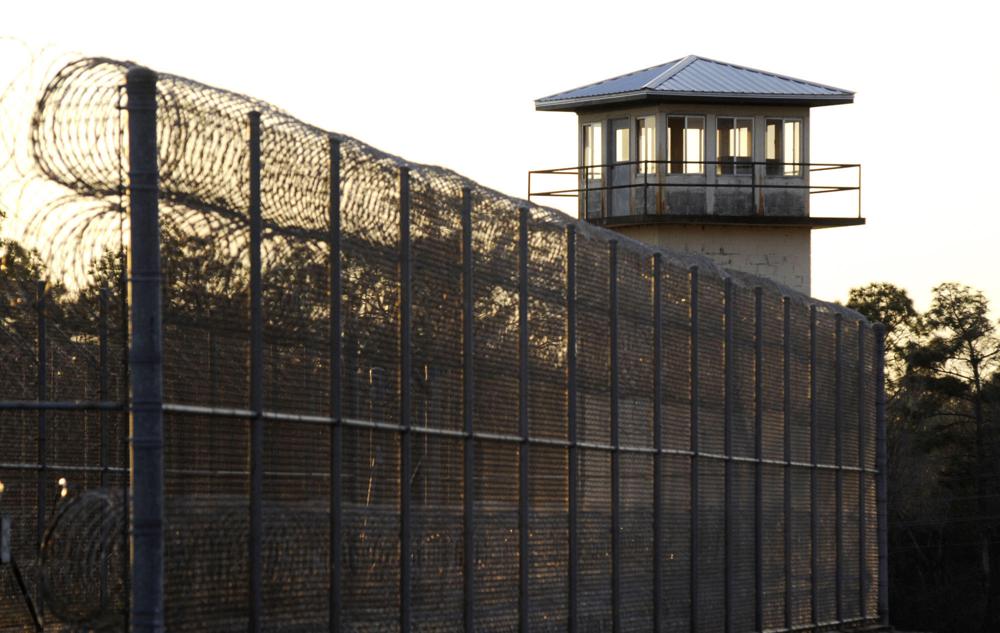
On Tuesday, the Alabama House of Representatives voted to pass legislation that would decrease the amount of time inmates of Alabama’s prisons can get reduced from their sentences for good behavior while incarcerated. It also further limits which prisoners are eligible for good time incentives. Senate Bill 1 (SB1) – the Deputy Brad Johnson Act – is sponsored by State Sen. April Weaver. The legislation was carried in the House by State Rep. Russell Bedsole. SB1 is titled in remembrance of Bibb County Sheriff’s Deputy Brad Johnson – who was gunned down by a dangerous felon released by the Alabama Department of Corrections (ADOC) on good time. Bedsole – a Shelby County Deputy – said that passage of SB1 would make Alabama communities safer. “We know that we can’t totally solve crime in our communities. Just incarceration alone is not the answer.” SB1 reduces the number of reductions in sentences served that a prisoner can earn for good behavior, further limits the number of prisoners eligible for good time incentives, and requires ADOC to make reports on the application of good time incentives. “The reporting will come back to the legislature,” Bedsole explained. “We are not putting a mandate on them to go out and buy new reporting software.” House Minority Leader Anthony Daniels said that the abuses in the system occurred during the previous ADOC leadership. “It is not fair to hold the current leadership responsible for the failings of the past leadership,” Daniels said. State Rep. Phillip Pettus told Bedsole, “I appreciate what you have done on this. I hope that we don’t have another picture up here of another law enforcement officer up here.” State Rep. John Rogers called the bill “Overkill.” Rogers said the real problem is the lack of rehabilitation of prisoners in ADOC custody. “You have countries all over the world that rehabilitate prisoners, but we do not do it here in Alabama,” Rogers said. “Why would you punish the entire system? I hope that you pull this bill.” “You have got one guard for every 200 prisoners,” Rogers said. “We have had four women get pregnant in prison in a women’s prison. How does a woman get pregnant in all women’s prison?” “We need new prisons, but you have to have money to pay guards a decent wage,” Rogers said. Bedsole said, “Did you know that a person who commits a murder in prison can still get good time?” Rep. Christopher England said, “For 100 and some years, Democrats controlled the Legislature. You know one thing that Democrats absolutely screwed up? Prisons and justice. Then Republicans got in there. For six years, we created class D felonies – everybody doesn’t like that now – Community corrections, drug courts, and we worked on releasing prisoners. You know what happened? Crime went down, and the number of prisoners went down. We had a horrible tragedy happen in Marshall County (the Jimmy Spencer slayings of three people while on parole). In November 2019, we reformed the parole system. Now we aren’t letting anybody out. The new Republicans that are here have completely unraveled how we deal with prisons. The prison population has also skyrocketed. You know what also happened: crime skyrocketed. Now it has gotten to the opposite extreme where we don’t let anybody out. The parole board is only giving parole to ten percent of prisoners eligible for parole.” “You know what else has happened – crime has gone up,” England said. “We need all the space and resources we can get, and we are wasting it on people who are no danger to the community.” England said that releasing prisoners on parole where they are under supervision is better than waiting for the end of their sentence and then releasing them with no supervision requirements. “Over 90% of the people that go into the prison system get out,” England said. “Would you rather them get out with supervision or with no supervision?” Rep. A.J. McCampbell said, “As a former law enforcement officer, we recognize that every day we are putting our lives on the line. I hate what happened to Officer Johnson. I really do.” “We have got a lot of calamity and failure of our whole (prison) system,” McCampbell continued. “We don’t have any real solutions.” “It is unreal how many people have been denied,” McCampbell said. “Parole is supposed to be at a time where we have an opportunity to look at people while they are out in the community.” “The mistreatment that they receive in these institutions dehumanizes these people,” said Rep. Mary Moore. Bedsole said that SB1, “Revises our good time statute that has been in place since 1980. We are changing the amount of good time days we are offering. We are lowering them.” After a lengthy debate, the House of Representatives passed SB1. As it has already passed the Senate, it now has gone to the Governor’s office for her consideration. According to the synopsis, SB1 would, “Reduce the amount of correctional incentive time a prisoner receives; to require a prisoner to remain in a certain classification for a longer period of time before moving up to a higher classification; to provide for additional circumstances in which a prisoner may be required to forfeit his or her correctional incentive time; and to require the Department of Corrections to provide annual reports to the Legislature, the Governor, and the Attorney General regarding correctional incentive time. Thursday will be day 10 of the 2023 Alabama Regular Legislative Session. The Alabama Constitution limits the Legislature to no more than thirty legislative days during a regular session. To connect with the author of this story or to comment, email brandonmreporter@gmail.com.
Alabama House votes to increase penalties on fentanyl trafficking
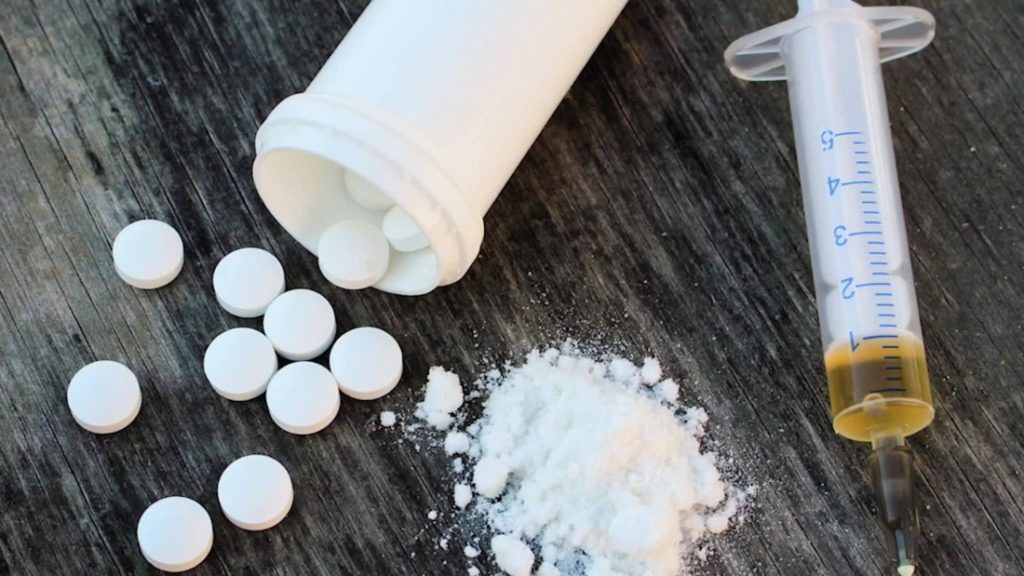
On Thursday, the Alabama House of Representatives unanimously voted in favor of legislation to substantially increase the length of sentences for persons convicted of trafficking fentanyl in the state. House Bill 1 (HB1) is sponsored by State Representative Matt Simpson. “This is going after the distributors, the trafficker, the people bringing this into the communities,” Simpson explained. Fentanyl is a powerful opioid that was designed to make hospital patients unconscious during surgery. It has become the drug of choice for drug dealers as it is cheap, plentiful, highly addictive, and produces a very powerful high. Opioids, and especially fentanyl, have resulted in a massive increase in the number of Americans dying from drug overdoses. A recent report showed 107,000 Americans were killed by drug overdoses in the last 12 months. Rep. Terri Collins said, “Thank you for bringing this bill.” “I have had so many people call me about this,” Collins said. “It is a weapon of mass destruction. Having strong penalties are so important.” HB1, as written, sets the amounts of fentanyl that would constitute trafficking under Alabama law and the sentences in the Alabama criminal code for being caught smuggling or distributing those amounts in the state. Rep. John Rogers said, “I like this bill. I heard on Channel 13 that just a little residue of fentanyl in a pocket can be harmful for a child. In Birmingham, a child gave away some candy at school, and they had to send seven kids to the hospital because of fentanyl residue. “I am very excited about your bill,” Rogers said. “Can it be mixed with the water, like at the waterworks? Simpson replied, “I don’t think that fentanyl is soluble in water.” “Your bill is very good,” Rogers said. “Last week in Birmingham, five people died of fentanyl overdose, and they did not know they had fentanyl.” Simpson said, “We are trying to educate the public. The attorney general has negotiated a $300 million opioid case verdict. That is going to be used to educate the public. Half is going to the cities, and half going to the counties.” Some drug dealers lace other drugs like marijuana, cocaine, methamphetamine, counterfeit prescription drugs, and even candies with fentanyl to increase their clientele. Rogers said, “We have got people selling these dirty, dirty drugs. We have got people saying I don’t want regular marijuana. They want that dirty, dirty stuff. It smells really bad. I can smell it walking down the street in Birmingham.” Simpson said that his bill targets traffickers, not street dealers. “This is not the guy on the street,” Simpson said. “This is the main traffickers.” “I do have it broken down by weight,” Simpson said. “Just two milligrams is a lethal dose.” Rogers said, “Kids are getting it. That is what scares me more than anything else.” State Rep. Thomas Jackson said, “I want to commend you for bringing this bill. I am from southwest Alabama. Baldwin County has a problem. The state has a problem. We don’t know how many people we know who may die from this. We need to make them pay a price so deep that they never see the light again.” “We have had friends in our community that died from fentanyl,” Rep. Thomas said. “We have got a problem at the south border, and if we don’t curtail it now, we are going to lose so many people.” State Rep. Barbara Drummond has successfully sponsored legislation to limit the sale of vaping products to minors. Drummond said, “I am an advocate for young people and vaping. This piece of legislation is so important. Recently a young person’s vape pipe was laced with fentanyl. This stuff is coming out of China, and it is so dangerous.” HB1 passed the House 105 to 0. The passage was followed by a standing ovation on the floor of the House. 101 members of the House signed on as co-sponsors. Alabama Today asked Simpson how much prison time someone caught with 100 pounds of fentanyl would get under this. “Life,” Simpson replied. “This stuff is so dangerous that if police officers even get it on their hands, they are having (health) problems.” The bill had the support of every single member, and 101 of the 105 signed on as co-sponsors. “The biggest message I got from today is that this is bipartisan,” Simpson said. “That shows how dangerous fentanyl is in our communities.” Simpson explained to reporters that the bill addresses pure fentanyl, not fentanyl mixed with other drugs. “The code already has mixtures in the statute,” Simpson said. “If you have a gram of pure fentanyl that could kill 500 people.” Simpson said that the bill sends a message to drug traffickers. “We wanted them to know we are coming after you, and you are going to go to jail for a long time,” Simpson said. “One pill can kill you,” Simpson said. “Fentanyl is fifty to a hundred times more powerful than morphine. When you talk to pathologists, they will tell you that 80% of overdose deaths are fentanyl.” Simpson said that he has talked with the Attorney General, and the state’s half of the opioid settlement should go to educate the public on the dangers of fentanyl and for drug treatment. “Once somebody gets on fentanyl, we need to spend the money to get people off of fentanyl,” Simpson said. Speaker of the House Nathaniel Ledbetter said that passing HB1 and the bill overhauling adoption laws were his two biggest priorities for the session. “We have changed lives for generations to come with these two bills,” Ledbetter said. “These were my top two priorities. I am excited to get those two major bills passed out of the House.” Reporters asked Speaker Ledbetter what the difference was between fentanyl and drugs that came before, like cocaine. “The difference is how deadly it is,” Ledbetter replied. “There is enough fentanyl coming across our borer to kill every man, woman, and child in the United States. Simpson is an attorney and former prosecutor who serves on the House Judiciary Committee
House passes ARPA funding legislation
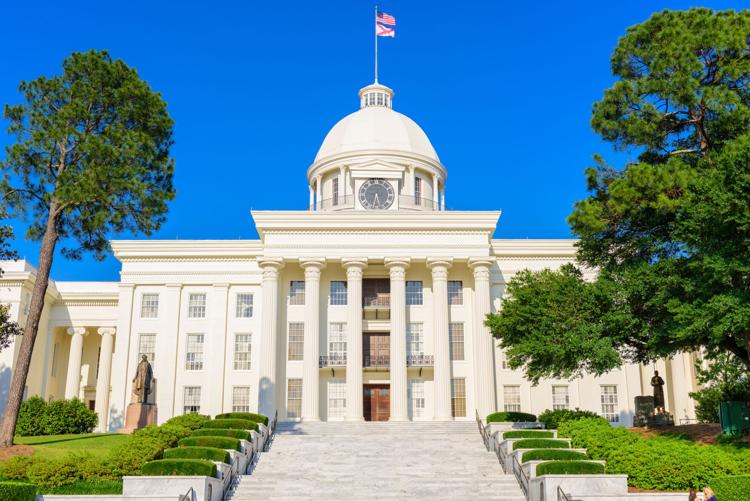
On Tuesday, the Alabama House of Representatives passed the American Rescue Plan Act (ARPA) appropriations legislation – House Bill 1. The legislation, House Bill 1, is sponsored by State Rep. Rex Reynolds, who chairs the powerful House Ways and Means General Fund Committee. Reynolds explained that the state had received approximately $2.1 billion in ARPA funding from the federal government. Half of that money has already been appropriated by the Legislative and is in the process of being allocated by the executive branch to projects across Alabama. This tranche of ARPA money is about $1,060,000. $339,175,000 will go for healthcare needs, including $25 million for Mental health and $9 million for the expansion of telemedicine. $260 million will be used for broadband, including a cybersecurity component. $395 million will go to water and sewer projects. $55 million will be used to compensate state agencies for the negative impacts of the COVID-19 pandemic. The Alabama Department of Labor will get $5 million to recover some of their costs for dealing with the surge in unemployment applications and other costs. $1,179,000 will go for administrative costs of overseeing and allocating the money. Rep. Mary Moore asked if there was sufficient legislative oversight in place. Reynolds said, “The Legislative Oversight Committee gives this body oversight in case they may need to reallocate those funds when the Legislature is not in session.” “There might be a project in my district that is not reallocated,” Moore said. House Minority Leader Anthony Daniels said to Reynolds, “I just came down to give you a compliment, and I appreciate all the hard work you have done in this bill. This has been a great process, and everybody has had an opportunity to be involved in this process.” State Rep. John Rogers expressed concern that a project in his district might be reallocated when he is unavailable. “I may be in Alaska – I may be in Florida laying on a beach drinking a martini,” Rogers said. Reynolds replied, “As part of the ARPA funds when the ARPA funds were allocated, that legislation created that Oversight Committee for the ARPA funds. I think you can feel comfortable in the authority given to that committee.” Reynolds explained, “Executive Budget Office would have to come back in and exercise the executive authority they have under that bill,” if insufficient funds are allocated to a project. “You can go to their website and see the progress of individual projects.” “Huntsville is like Birmingham – they got money coming in that we don’t know about,” Rogers said. “What I want to know is how much they really got that didn’t come through us?” Reynolds said the Oversight Committee “is a 14-member body including budget chairs. It is spelled out in the 2022 legislation that we passed last year.” State Rep. Juandalynn Givan asked, “Could you give me a breakdown of how much is coming to Jefferson County?” “No, I do not have access to that,” Reynolds said. “This legislation we are asking you to pass does not break that down by county.” 63 of the 67 counties have received money already, but four have not. “We have language in this bill that says that those applications should have priority,” Reynolds said. “We would not want to preset that based on county, because you want to prioritize that by need, and one county would not have the same need as another need.” Givan replied, “My folks don’t really care how much went to this or that county. What they want to know is how much of the bacon is coming back to the district. We need to be able to report that back to our people.” Reynolds replied, “The money will not be allocated until after we pass this bill.” Givan said, “I was here in another session, and we appropriated over a billion dollars, including ARPA dollars, for prisons that still are not built yet.” Givan was angry that no ARPA money was appropriated to bail out Birmingham Southern College – a private college in financial distress. “We can’t figure out how to find $37 million for ARPA money for an educational institution, but we could find money to build prisons. Lord knows we don’t need to lose another educational institution in the state of Alabama,” Givan said. Givan complained that public housing communities in Alabama, even in urban areas, still do not have broadband. HB1 passed the House 102 to 3. 71 members cosponsored the resolution. Reynolds was also the sponsor of House Bill 2. This bill appropriates money from supplemental 2022 funds to spend $59,997,772 to pay off the remaining debt owed to the Alabama Trust Fund during the previous decade. “This is a good bill. This body knew that this was the time to pay those bills,” Reynolds said. The House passed HB2 104 to 0. 94 members cosponsored HB2. Both bills now go to the Alabama Senate for their consideration. Speaker of the House Nathaniel Ledbetter told the members before the House adjourned, “Good work today, a great investment in our state. Congratulations.” The Legislature is currently in a special session called by Alabama Governor Kay Ivey last week to address the issue of the ARPA funds. To connect with the author of this story or to comment, email brandonmreporter@gmail.com.
Steve Flowers: Incumbency prevails in 2022 State House races
Folks, believe it or not, we are closing in on six months before next year’s election year. The primary election is set for May 24, 2022. In Alabama, all our major constitutional officers are on the ballot next year. The governor’s office is the premier race in the state, and that coveted and powerful post is set for its four-year quadrennial run. Therefore, this big political year is referred to as the gubernatorial year. Those of us who follow Alabama politics have been salivating with anticipation for a cavalcade of great races. However, the power of incumbency has devasted the big year into a yawn. All the major state offices are held by popular incumbents, who are either running unopposed or have minimal opposition. The consolation prize was that there would be the legislative races. After all, this is where the real power in the state rests. You can simply look at where the special interest and PAC money is spent to verify that fact. However, the omnipotent power of incumbency has also encroached on those races. The Alabama House of Representatives has 105 members. There are 77 Republicans and 28 Democrats. The large majority of incumbents are running for reelection – both Republicans and Democrats. The overwhelming majority of these incumbents will have no opposition. However, in the House, there will be some major changes in leadership because of retirement or moving on to new posts. Speaker of the House Mac McCutcheon is not running for reelection. This has created an interesting and spirited race within the Republican Caucus ranks for Speaker. In addition, Victor Gaston of Mobile, who is Speaker Pro Tem, is also retiring. Bill Poole of Tuscaloosa, who chaired the powerful House Ways and Means Education Budget Committee, has left the House to be the State Finance Director. House Rules Committee Chairman Mike Jones of Andalusia is running for the open Senate seat of retiring Senator Jimmy Holley. Two of the freshman House members are running for statewide office. Wes Allen of Troy is running for Secretary of State, and Andrew Sorrell of Tuscumbia is running for State Auditor. In addition, Connie Rowe of Jasper is leaving the House to become an administrative assistant to Lt. Gov. Will Ainsworth. Some of the veteran House members who are choosing to hang up their legislative cleats include Howard Sanderford of Huntsville, Mike Ball of Huntsville, K.L. Brown of Jacksonville, Kerry Rich of Marshall, Allen Farley of Jefferson, Harry Shiver of Baldwin, Mike Holmes of Elmore, and Becky Nordgren of Etowah. The most noteworthy retiree may be Representative Steve McMillan of Baldwin County, who is retiring after serving close to 43 years in the House. Steve has been a quiet yet very effective voice for the people of Baldwin County. They all will be missed. Some of the high profile and powerful members of the House, who will return for another four years with no or token opposition, are Steve Clouse of Ozark, Nathaniel Ledbetter of Dekalb County, and Danny Garrett, Jim Carns, David Wheeler, and David Faulkner of Jefferson. Danny Garrett has ascended to Chairman of the House Ways and Means Education. Other leaders returning are Chris Pringle, Reed Ingram, Randall Shedd, Tracy Estes, Chris Sells, David Standridge, Ginny Shaver, Jim Hill, Alan Baker, Joe Lovvorn, Chris Blackshear, Kyle South, Paul Lee, Jeff Sorrells, Rhett Marques, Steve Hurst, Joe Faust, and Margie Wilcox. The Democratic leadership will remain intact. There is an illustrious array of House Democratic leaders, including Anthony Daniels, Chris England, Laura Hall, Peb Warren, Barbara Boyd, A.J. McCampbell, Berry Forte, Dexter Grimsley, Thomas Jackson, Kevin Lawrence, Mary Moore, Juandalynn Givan, and veteran John Rogers. Two of the Democratic House veterans from Jefferson County, Louise Alexander and Merika Coleman, are both running for an open Jefferson County Senate Seat, leaving both their House seats up for grabs. There may be an increase in the number of females in the House of Representatives. It has already begun with the election of Cynthia Almond of Tuscaloosa, who was elected without opposition to replace Bill Poole. In addition, Patrice Penni McClammy won the Montgomery District 76 seat of her late father, Thad McClammy. She won with no opposition. See you next week. Steve Flowers is Alabama’s leading political columnist. His weekly column appears in over 60 Alabama papers. He served 16 years in the state legislature. Steve may be reached at www.steveflowers.us.
Jim Zeigler v. Kay Ivey suit on prison lease plan dismissed
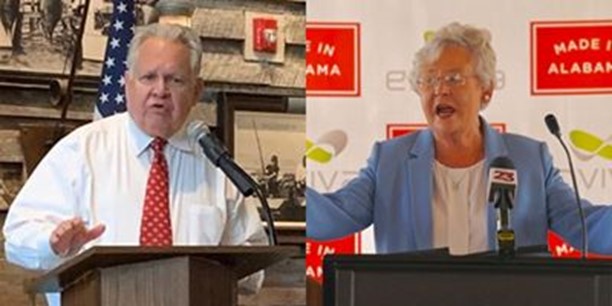
A circuit judge has dismissed the lawsuit filed by four plaintiffs seeking to block Gov. Kay Ivey’s prison lease plan. After a hearing Friday, Judge Greg Griffin ruled today that the suit cannot go forward and dismissed it. The suit alleged that the $3.6 billion prison lease plan is illegal because it was not approved by the legislature. State Auditor Jim Zeigler, the lead plaintiff, made this statement: “We are studying the Judge’s order. We will make a decision this week on whether to appeal. We will continue our fight to block the prison plan by raising issues that would cause potential investors to withdraw. We believe that investors see the fatal flaws in this plan and will not touch it with a 10-foot pole.” The three underwriters for the plan have withdrawn — Barclays, KeyBank and Stifel. The plan would contract with three consortiums of private businesses, two led by CoreCivic of Nashville. The contractors would pay to build three super-prisons in Bibb, Elmore and Escambia Counties of Alabama. Two of the contracts were signed Feb. 1 with the one in Bibb County pending. “The Ivey plan would force Alabama taxpayers to pay rents starting at $94 million a year and going up to $106 million. At the end of 30 years, the state would own equity in the prisons of zero. No equity. This is a bad business plan,” Zeigler said. “The Ivey plan does not address the problems in the prison system – safety of staff and other inmates; overcrowding; mental health; suicide; recidivism; and inadequate job training. The plan merely throws over $3.6 billion of taxpayer money into rented buildings,” Zeigler said. Zeigler (R-Mobile) is joined in the suit by three other plaintiffs – State Rep. John Rogers (D-Birmingham); Leslie Osborne, a property owner adjacent to the proposed prison site in Elmore County; and Rev. Kenny Glasgow, a prisoner rights activist from Dothan.
Judge hears arguments in lawsuit over Alabama prison leases
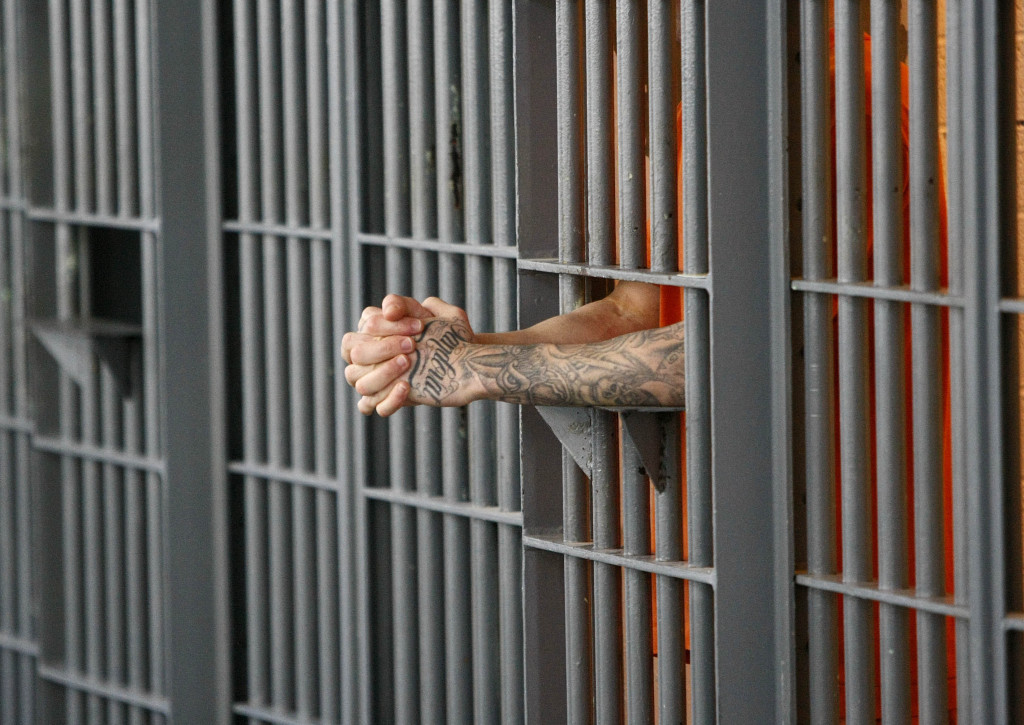
A judge said Friday that he will decide soon whether to let a lawsuit go forward challenging Alabama Gov. Kay Ivey’s plan to lease privately owned prisons. Montgomery Circuit Judge Greg Griffin heard arguments in the state’s request to dismiss the lawsuit that contends the plan violates state law because the massive $3 billion expenditure was not approved by the Alabama Legislature. Griffin indicated he would rule by Monday. Attorney Kenny Mendelson, of Montgomery, filed the lawsuit in Montgomery County Circuit Court on behalf of four plaintiffs – Republican State Auditor Jim Zeigler; Democratic state Rep. John Rogers, of Birmingham; Leslie Ogburn, a homeowner near the proposed prison site outside Tallassee; and prisoner rights activist Rev. Kenny Glasgow of Dothan. “This is a legislative function. It’s up to them to decide whether to fund prisons or not to fund prisons. And what the (prison commissioner) and the governor have attempted to do is say, ‘We are going to go ahead and obligate the state anyway,’” Mendelson said after court. Much of the arguments on Friday centered on whether the state’s financial obligation under the leases is a debt. Assistant Attorney General Jim Davis told Griffin that court rulings have made clear that a lease is not the same as a debt. “It is not a debt as a matter of law,” Davis said. The governor in February agreed to lease two mammoth prisons as a partial solution to the state’s troubled correction system. The two 30-year lease agreements are with separate entities of CoreCivic, one of the nation’s largest private prison companies. The governor’s office is negotiating with another company to build a third prison in Bibb County. Ivey has said new prisons are a crucial first step to overhauling the state’s troubled and aging prison system and that new facilities will be safer and enable more training and rehabilitative efforts. Critics said the $3 billion plan is unnecessarily expensive and does not address critical issues of training, violence, and understaffing. The proposed prisons would be owned by the private companies but staffed and run by the Alabama Department of Corrections. Ogburn said homeowners and businesses in Elmore County have concerns about being near the planned prison that would house about 3,000 inmates. She said the community didn’t know about the proposals until surveyors were on the site. “The biggest concern is the shadiness. They did all of this behind closed doors,” Ogburn said. The governor’s lease plan has been besieged by setbacks including the withdrawal of finance companies. Republished with the permission of the Associated Press.
