
Email Insights: Bloomberg confirms last underwriter out of Kay Ivey prison lease deal
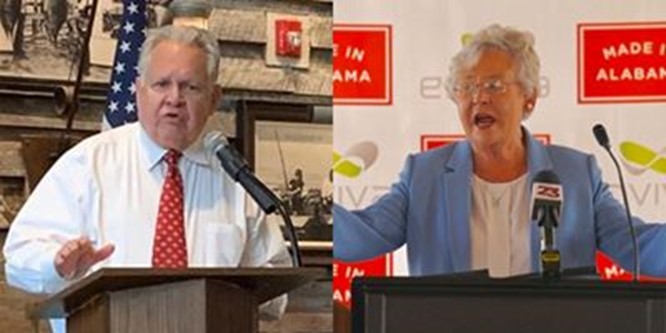
Alabama State Auditor Jim Zeigler says the last underwriter for financing an Alabama prison lease plan has backed out. Zeigler, a vocal opponent of the plan, says it “should be pronounced dead.” Stifel Bank of Cleveland, Ohio follows the two lead underwriters which withdrew from the project April 19 – Barclays of London and KeyBank of Cleveland. The project was to be led by CoreCivic, a Nashville firm in the private prison business. Stifel’s Senior Vice President of Investor Relations, Joel M. Jeffrey, said in an e-mail Monday, May 10: “…this transaction has already been withdrawn from the market. Further, you should understand that Stifel is no longer engaged with CoreCivic, any conduit, or the State of Alabama regarding the financing of the project.” Bloomberg News confirmed the contents of the email and that Stifel is out of the Alabama prison lease project. The plan would contract with three consortiums of private businesses, two led by CoreCivic. The contractors would pay to build three super-prisons in Bibb, Elmore, and Escambia Counties of Alabama. Two of the contracts were signed Feb. 1 with the one in Bibb County pending. “The Kay Ivey plan would force Alabama taxpayers to pay rents starting at $94 million a year and going up to $106 million. At the end of 30 years, the state would own equity in the prisons of zero. No equity. This is a bad business plan,” Zeigler said. “The Ivey plan does not address the problems in the prison system – safety of staff and other inmates; overcrowding; mental health; suicide; recidivism; and inadequate job training. The plan merely throws over $3.6 billion of taxpayer money into rented buildings,” Zeigler said. A bipartisan lawsuit seeking to enjoin the Ivey plan is set Friday, May 14 in Circuit Court of Montgomery County at 9 a.m. Judge Greg Griffin will hear motions to dismiss filed by the state. Zeigler is joined in the suit by three other plaintiffs – State Rep. John Rogers (D-Birmingham); Leslie Osborne, a property owner adjacent to the proposed prison site in Elmore County; and Rev. Kenny Glasgow, a prisoner rights activist from Dothan. The plaintiffs allege that the plan violates the state constitution by creating state debt and violates a law requiring legislative approval to lease a prison. (Please see E-mail below to opponent of the Ivey prison lease plan) As we have communicated, we are interested in your perspective generally and specifically regarding the correctional system in the state of Alabama. With respect to your request that Stifel withdraw from the former transaction led by Barclays, we note that this transaction has already been withdrawn from the market. Further, you should understand that Stifel is no longer engaged with CoreCivic, any conduit or the State of Alabama regarding the financing of this project. As a matter of professional conduct, we endeavor not to discuss prospective or hypothetical transactions, and, to avoid misunderstanding, we will not do so on Tuesday. If you want further information on this specific project, you should reach out to the appropriate person in the government of the State of Alabama. That aside, we look forward to our call. Sincerely, Joel M. Jeffrey Senior Vice President STIFEL | INVESTOR RELATIONS
Hearing set May 14 in Jim Zeigler suit against Kay Ivey prison lease plan
A hearing has been set on state motions to dismiss a lawsuit by State Auditor Jim Zeigler and three other plaintiffs who seek to block a $3.6 billion prison lease plan by Gov. Kay Ivey. Montgomery County Circuit Judge Greg Griffin will hear a filing by Attorney General Steve Marshall to take over Zeigler’s official claim and then dismiss it. He will also hear motions to dismiss the entire case. The hearing is 9 a.m. Friday, May 14 at the Montgomery County Courthouse. The plaintiffs allege that the prison plan violates the state constitution by creating state debt over a 30-year period. They also allege that the plan violates state law by not having approval by the Alabama legislature. Zeigler calls the plan “a 30-year mistake.” “The Ivey plan would force Alabama taxpayers to pay rents starting at $94 million a year and going up to $106 million. At the end of 30 years, the state would own equity in the prisons of zero. No equity. This is a bad business plan,” Zeigler said. “The plan does not address the problems in the prison system – safety of staff and other inmates; overcrowding; mental health; suicide; recidivism; and inadequate job training. The plan merely throws over $3.6 billion of taxpayer money into rented buildings,” Zeigler said. “We thought this plan had been killed off April 19 when the two largest underwriters pulled out of the project, but the Ivey administration is stubbornly pushing forward. There are two giant signed contracts already executed. This lawsuit is needed to make sure the plan is good and dead,” Zeigler said Thursday. Other plaintiffs are State Rep. John Rogers (D-Birmingham); Leslie Ogburn, a homeowner adjacent the proposed prison site near Tallassee, Al; and Rev. Kenny Glasgow, a prisoner rights activist in Dothan. Zeigler says an intentional decision was made to file a non-partisan lawsuit.
Email Insights: Jim Zeigler says suit filed to block prison lease plan

A civil suit was filed Tuesday to enjoin a prison lease plan by the Alabama Department of Corrections and Gov. Kay Ivey. The suit alleges that the prison lease plan is illegal in that it did not receive approval by the Alabama legislature and other legal deficiencies. The Montgomery County Circuit Court filing was made by Montgomery attorney Kenny Mendelson on behalf of four plaintiffs. Mendelson had been the attorney in the first civil suit against then-governor Robert Bentley that paved the way to Bentley’s resignation. Four plaintiffs bringing the suit are State Auditor Jim Zeigler (R); State Rep. John Rogers of Birmingham (D); Leslie Ogburn, a homeowner near the proposed prison site outside Tallassee, Alabama; and prisoner rights activist Rev. Kenny Glasgow of Dothan. Zeigler said there was a strategic decision to file a bi-partisan suit. “This prison plan would be a 30-year mistake. It would force Alabama taxpayers to pay rents starting at $94 million a year and going up to $106 million. At the end of 30 years, the state would own equity in the prisons of zero. No equity. This is a bad business plan,” Zeigler said. “The plan does not address the problems in the prison system – safety of staff and other inmates; overcrowding; mental health; suicide; recidivism; and inadequate job training. The plan merely throws over $3.6 billion of taxpayer money at the problems,” Zeigler said. “We thought this plan had been killed off April 19 when the two largest underwriters pulled out of the project, but the Ivey administration is stubbornly pushing forward. There are two giant signed contracts already executed. This lawsuit is needed to make sure the plan is good and dead,” Zeigler said. Here is a copy of the civil suit.
‘Aniah’s Law’ denying bail in more cases heads to voters
Alabama lawmakers have approved a proposal intended to give judges more discretion to deny bail to people accused of violent crimes that is named in honor of a college student killed in 2019. Legislators last week approved the proposed constitutional amendment rewriting a section of the Alabama Constitution to clarify a list of offenses where a judge can deny bail. The offenses include murder, kidnapping, rape, and first-degree robbery. Voters must approve the amendment before it can be added to the constitution. The proposal is called Aniah’s Law for 19-year-old Aniah Blanchard who was killed after being abducted from an Auburn gas station. The suspect in her killing was free on bond in an earlier kidnapping case, authorities said. “Too many of those who are accused of violent crimes are bonding out of jail and committing even more serious offenses, and it is time for law-abiding Alabamians to start fighting back,” Republican Rep. Chip Brown of Mobile, the sponsor of the bill, said in a statement. The Alabama Constitution now says that defendants have a right to bail “except for capital offenses, when the proof is evident or the presumption great; and that excessive bail shall not in any case be required.” The amendment would continue to say that defendants have a right to bail unless “charged with an offense enumerated by the Legislature by general law; and that excessive bail shall not in any case be required.” A companion bill lists the offenses where bail could be denied including murder, assault in the first degree, kidnapping, rape, sexual torture, domestic violence, first-degree burglary, first-degree robbery, arson, terrorism and aggravated child abuse. While the bill passed overwhelmingly in the Alabama Legislature, at least one lawmaker questioned the need for it. Democratic Rep. John Rogers of Birmingham said he supported the bill but said judges can already deny bail to a person they think is a public threat or set it so high that the person has no chance of release. Brown responded that judges interpret the constitutional right to bond differently and said this would set a clear standard. Blanchard, the stepdaughter of UFC fighter Walt Harris, was a student at Southern Union State Community College. She was last seen Oct. 23, 2019, at a gas station in Auburn and her remains were later found in a wooded area. Blanchard’s mother told WBRC-TV that she was thankful for the passage of the bill. “I didn’t want my daughter to have to give her life, but she did, and she fought hard and so we are going to fight for her and everyone and to just keep Alabama safe,” Blanchard’s mother, Angela Hailey-Harris, said. “That is my mission now,” Harris told the station. “To make sure everyone knows that when they are going to vote, it is on the ballot. I don’t think I will ever feel like I can breathe again, but at least I will feel like my daughter didn’t die for nothing. That she gave her life to save other lives.” The measure will go before voters next year. Republished with the permission of the Associated Press.
Alabama House approves ‘Aniah’s Law’ named for slain teen

The Alabama House of Representatives on Tuesday approved a pair of bills intended to give judges more discretion to deny bail for people accused of violent crimes, a proposal inspired by the death of a college student. Representatives approved two bills to create Aniah’s Law, a measure named after 19-year-old Aniah Blanchard who was killed after being abducted from an Auburn gas station. At the time of the abduction, the suspect in the case was free on bond in an earlier kidnapping case. Republican Rep. Chip Brown, the sponsor of the bill, said law enforcement officials have asked for the bill for several years. “They believe this bill can save lives,” Brown, R-Mobile, said. The House passed the two bills by votes of 101-0 and 102-0. One is a constitutional amendment since the Alabama Constitution says people charged with crimes have a right to bail unless they are charged with capital murder. The proposal lists other crimes in which a judge may deny bond following a hearing. The crimes include murder, kidnapping, first-degree assault, rape, first-degree robbery, first-degree burglary, and aggravated child abuse. The bills now move to the Alabama Senate. Because it involves a constitutional amendment, the proposal would also have to be approved by voters. Blanchard, the stepdaughter of UFC fighter Walt Harris, was a student at Southern Union State Community College. She was last seen Oct. 23, 2019, at a gas station in Auburn, and her remains were later found in a wooded area. During the short debate, Rep. Merika Coleman, who is the cousin of Blanchard’s stepmother, fought back tears as she described the teen. “No other family should have to go through what this family went through,” Coleman, D-Pleasant Grove said. “She was a beautiful young woman. She had a full life ahead of her. She could have accomplished so much,” Coleman said. Democratic Rep. John Rogers of Birmingham said he supported the bill but questioned the need for the legislation. He said judges can deny bail or set it so high that the person has no chance of release. “Any judge worth his salt is going to do the same thing anyway,” Rogers said. Brown responded that judges interpret the right to bond differently and said this would set a standard. Republished with the permission of the Associated Press.
Bradley Byrne fights to make Senate runoff
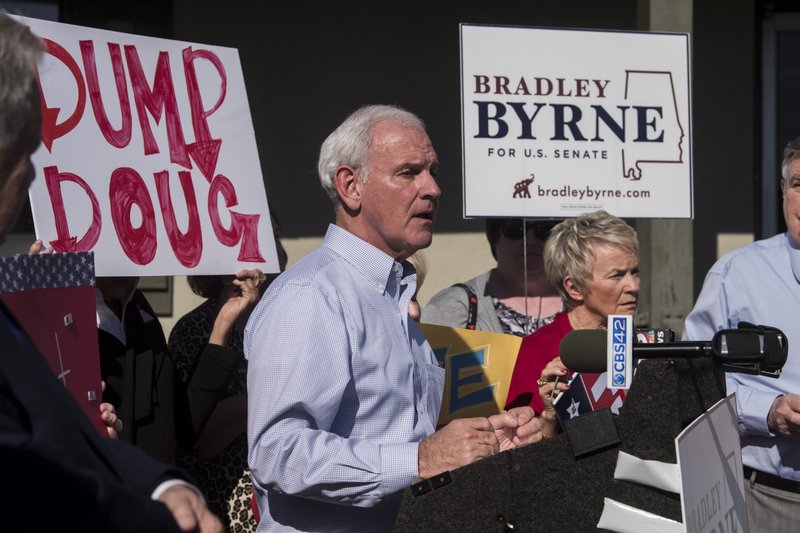
Byrne is battling to make the anticipated runoff in the GOP primary.
House votes to make it a hate crime to target police
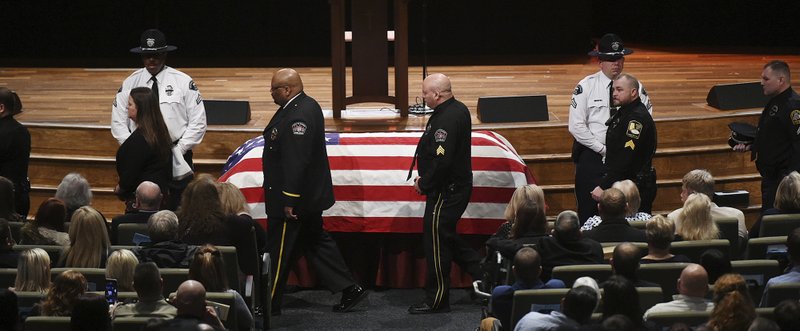
The bill found broad support in both parties in the House.
Lawmaker’s censure sought after comments about Trump Jr.

Alabama lawmakers abruptly adjourned after one lawmaker called for the censure of another over comments that included calling the president’s son “evidently retarded.” Republican Rep. Arnold Mooney of Shelby County on Wednesday went to the House microphone to read a letter seeking censure of Rep. John Rogers, a Democrat. Mooney said Rogers brought “shame” on Alabama with comments he made after debate on a proposed abortion ban. Rogers used the slur to describe Donald Trump Jr. and also suggested he should have been aborted. House Speaker Mac McCutcheon gaveled down Mooney, saying he could submit the letter but there was “no call for this.” Democrats accused Mooney of grandstanding after announcing his campaign for U.S. Senate. Mooney read the letter after Rogers had threatened to filibuster bills that evening. Lawmakers then adjourned.
Alabama lawmaker John Rogers seeks to separate MLK, Robert E. Lee holidays
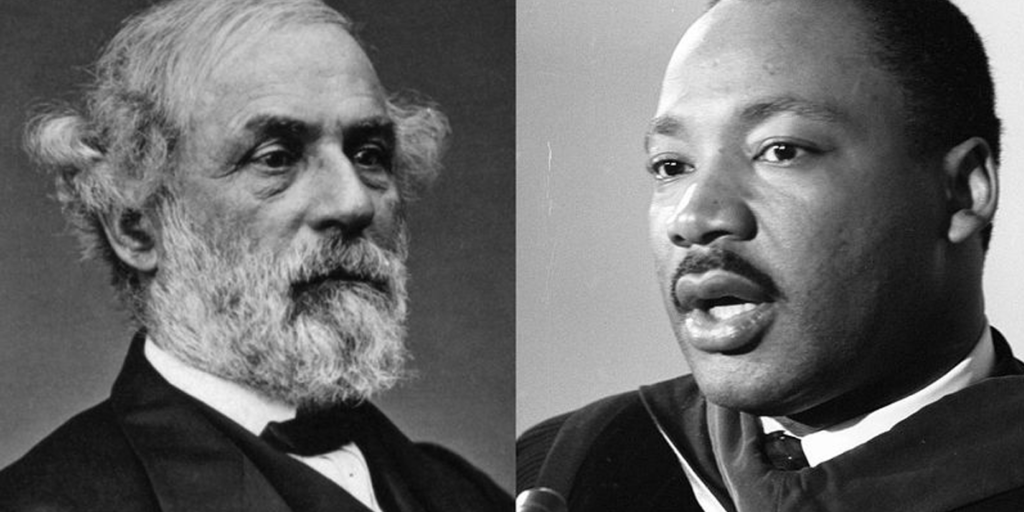
A Birmingham lawmaker wants to separate the Alabama holiday that jointly honors slain civil rights leader Martin Luther King Jr. and Confederate Gen. Robert E. Lee. Mississippi and Alabama are the only two states that on Monday will jointly honor King and Lee with a single state holiday. State Rep. John Rogers, a Birmingham Democrat, plans to introduce legislation to split the two and move Lee’s holiday to Confederate Memorial Day, which is held in April. “A lot of black folks feel like it diminishes Martin Luther King’s day to put it on the same day as Robert E. Lee,” Rogers said. Rogers said the state would still honor Lee but on a different day. He said he hoped that, and the fact that it would not alter the number of state holidays, would increase lawmakers’ receptiveness to the idea. Previous efforts to eliminate, or consolidate, Confederate holidays in Alabama have been unsuccessful. “I think it’s got a fair chance, but I don’t know. It is Alabama,” Rogers said of the outlook for his legislation. The Birmingham Democrat joked that neither man would likely want to be celebrated with the other. Martin Luther King Jr. Day is a federal holiday that was designated by Congress in 1983. Alabama already had a state holiday on the third Monday in January honoring Lee. For decades, Alabama has had a single holiday honoring both men. King was born Jan. 15, 1929. Lee was born Jan. 19, 1807. Alabama has three state holidays honoring Confederate figures. In addition to King-Lee Day, the state marks Confederate Memorial Day in April and the birthday of Confederate President Jefferson Davis in June. Legislation filed by Democrats in Mississippi would do away with the official state holidays honoring Lee and Confederate Memorial Day. The Mississippi Department of Revenue this week drew a backlash on Twitter for a tweet noting that the office would be closed Monday “in honor of General Robert E. Lee’s birthday and Martin Luther King Jr. Day.” The department later deleted the tweet. Wayne Flynt, the author of several history books on Southern history, said white Southerners in the late 1800s and early 1900s began creating monuments and memorials to the Confederacy and soldiers who died in the Civil War. Some Southern states have eliminated or reduced Confederate holidays, seeking to cut ties with the Old South and slavery. Arkansas in 2017 ended its dual holiday for Lee and King. The state now honors King alone in January. Georgia in 2015 struck the name “Confederate Memorial Day.” It is now known as “state holiday.” Asked for comment on the Alabama bill, Alabama Gov. Kay Ivey’s press office said she would review the proposal. “Like the members of the Alabama Legislature, Governor Ivey gives each piece of legislation full consideration. The governor will review the bill as it makes its way through the legislative process,” Ivey spokesman Daniel Sparkman wrote in an email. Alabama lawmakers designated Dec. 1 as a day to honor civil rights leader Rosa Parks. However, the day honoring Parks is not a full-fledged holiday in which state offices close. The Alabama legislative session begins March 5. Republished with permission from the Associated Press.
Birmingham moves closer to new downtown stadium

The Alabama House of Representatives this week passed a Jefferson County auto lease tax to help build a downtown stadium and renovate the Birmingham Jefferson Convention Complex (BJCC). The bill imposes a 3 percent tax on automobile leases and rentals in the county to help support the new stadium, renovations and expansion at the BJCC. The bill, which had already won the Alabama Senate’s approval, passed 14-3 in the House and will now go to Gov. Kay Ivey. “The action (by) the Alabama House took us one step closer to Birmingham having state-of-the art facilities to better compete for tourism, sporting and entertainment business,” said Birmingham Mayor Randall Woodfin. “In addition, expanding and renovating the BJCC will generate millions of dollars over the next decade for the city that will go to neighborhood revitalization.” The rental tax is expected to generate about $3.5 million a year to help pay the debt service on the project, which the BJCC Authority estimates will be about $21.5 million a year. The auto lease and rental tax will not cost residents a dime because residents don’t lease vehicles to get around their own town, Woodfin said. Also, the city needs to modernize its entertainment and sports venues to compete with Atlanta, New Orleans and Nashville, which have updated facilities that Birmingham lacks, he said. State Rep. Jack Williams, R-Vestavia Hills, who sponsored the bill in the House, said passage of the legislation will lead to the renovation of the Legacy Arena at the BJCC and to the construction of a 55,000-seat outdoor stadium. “This project will create 3,700 new construction jobs in Birmingham and Jefferson County and a $130 million payroll,” he said. Renovations would allow the city to again attract NCAA tournament games that bring thousands of visitors and millions in revenue, Williams said. Woodfin agreed. “This public/private partnership between the city, county, BJCC, UAB and the corporate community will create thousands of jobs for citizens in Birmingham, and be a significant shot in the arm for our economy for decades to come,” he said. State Reps. John Rogers, Mary Moore and Juandalynn Givan, all of Birmingham, voted against the lease and rental tax. Rogers said the BJCC would benefit from the additional revenue and not the city, which city officials disputed. Money for neighborhoods In February, the Birmingham City Council voted overwhelmingly to approve a resolution of intent to provide $90 million in funding — $3 million annually for 30 years — for the construction of a multipurpose facility at the BJCC. Woodfin has argued that money from tourism could generate revenue that could be used in the neighborhoods. “There has been zero funding for street paving over the last several years. That’s a need. We have a $428 million budget and we’ve put less than $2 million in getting rid of dilapidated houses. That’s a need. Tourism is a need as well. Economic development is a need. Investing in our existing infrastructure, including the $5 million we’ve already put into the BJCC Legacy Arena, is a need. This is not an isolated topic. We’re not talking about an investment in a stadium alone. It’s an investment in the BJCC and our communities.” After taking office in November, the mayor said he needed to find money to pave the streets. “I have to find money to invest in curbs, sidewalks and lights and neighborhood revitalization. That money does not exist today. We could cut a lot of money or we could borrow money, but that’s not an idea any of us want to take. I think the return of this [new and updated entertainment and sports venues] gets us to where those things can happen. If we’re going to generate new revenue, where is that going to go? It will go toward those priorities that we don’t currently have funding for.” According to the resolution approved by the council in February, certain conditions have to be met before any money is allocated. In January, the Jefferson County Commission approved $30 million in funding for 30 years; the largest contribution will be coming from the BJCC, which will pay $10.7 million in annual debt service for 30 years. The University of Alabama at Birmingham will lease the stadium for $4 million annually for its football games. Additional funding is expected from corporate sponsors as well. The $174 million stadium is part of a $300 million master plan that includes a remodeling of the BJCC’s Legacy Arena and outside piazza. According to an independent feasibility study commissioned by the BJCC, the stadium could be completed as early as 2020, in time for the 2021 World Games, and generate roughly $5.5 million per year in tax revenue during the construction phase and as much as $9.9 million a year after construction. No specific number has been given as to how much tax revenue will be earmarked for neighborhood revitalization, but Woodfin has indicated it will be a substantial portion, if not all of it. This story originally appeared on The Birmingham Times’ website. Republished with permission from the Alabama NewsCenter.
Roy Moore’s campaign communications director, John Rogers, resigns
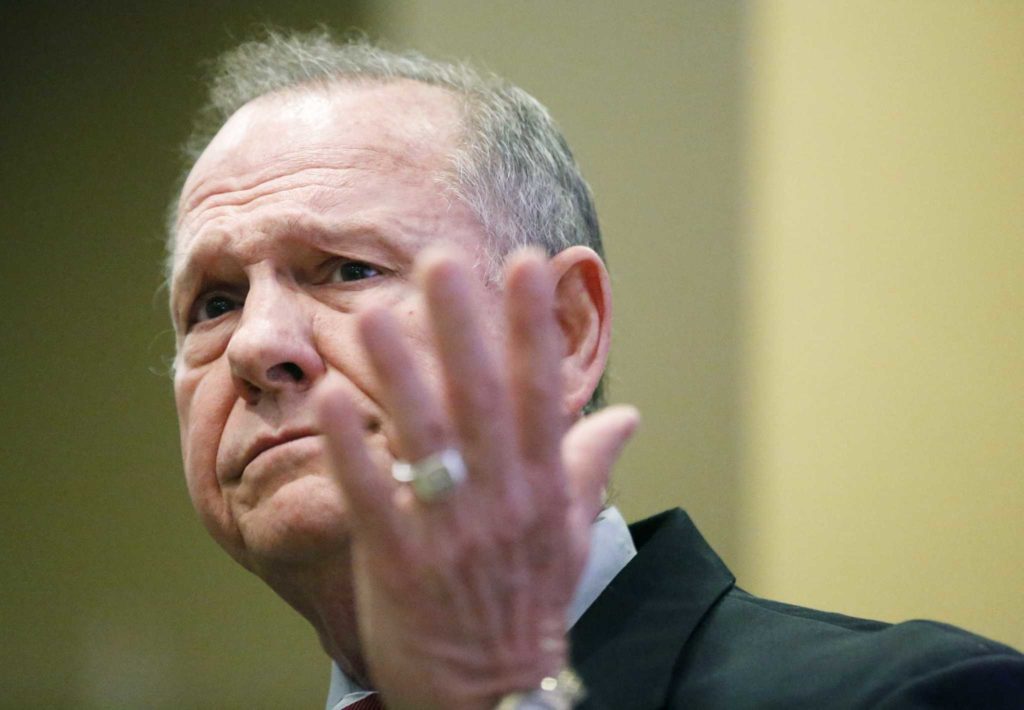
John Rogers, the communications director for Alabama GOP Senate candidate Roy Moore, resigned from his position on the campaign Wednesday. Campaign chairman Bill Armistead confirmed the news. “As we all know, campaigns make changes throughout the duration of the campaign, as do those working in the campaign,” Armistead said in a statement. “John made the decision to leave the campaign last Friday – any representations to the contrary are false – and we wish him well.” Armistead also said that effective immediately, Hannah Ford, who serves as Deputy Campaign Manager, would be the media contact for the final three weeks of the campaign. Rogers’ decision to leave, just weeks before the Dec. 12 special election, comes as Moore continues to draw criticism in the wake of The Washington Post’s explosive report on Thursday Nov. 9 with the accounts of four women who claim Moore sexually pursued them when he was in his 30s and they were in their teens. Moore vehemently denies the accusations.
House members clash over 2 Republican-sponsored bills
House Democrats started today’s session by fighting vehemently against a bill brought forth by Rep. Arnold Mooney (R-Birmingham), HB37, which would add Alabama’s status as a “Right-to-Work” to the state constitution. The bill would further prohibit employers from requiring membership in a union or dismissing employees for their status as a union or non-union member. Though a handful of House Republicans spoke in favor of the bill, noting that Alabama’s status as a “Right-to-Work” state has attracted large businesses like Polaris and Mercedes, the vast majority of comment on the bill came from House Democrats in opposition to the bill. Members of the party took turns at the podium, stalling a vote on the bill for more than two hours. “I know y’all call it ‘right to work,’ but it’s really ‘right to fire,’” Rep. John Rogers (D-Birmingham) said. Several other opponents noted that Alabama is already a “Right-to-Work” state by statute and wondered why there was a need for the bill. Mooney clarified that having Alabama’s “Right-to-Work” status codified in the constitution would encourage more businesses to locate to Alabama. Rep. Patricia Todd (D-Birmingham) also voiced opposition to the bill over the fact that Alabama’s constitution is already among the longest in the world, saying that while other states can carry a pocket-sized version of their constitution Alabamians would “need a cart to carry our constitution around.” Rep. John Knight (D-Montgomery) concurred, adding that there are many issues that are more deserving of codification in the state constitution. Knight offered an amendment to the bill guiding new businesses to give preferential hiring treatment to veterans. “This will send a strong message to veterans across this state that we support them,” Knight said before the amendment was approved, 67 to 28. According to statistics from the Bureau of Labor Statistics, the three states with the lowest unemployment rates in the nation, North Dakota, Nebraska and South Dakota, are “Right-to-Work” states. Contrarily, the states with the highest unemployment rates in the nation, New Mexico, the District of Columbia and Alaska, are not. After a bit more discussion, Mooney’s bill was defeated by a margin of 60 to 24. Next the House took up HB45 from Rep. April Weaver (R-Shelby), which outlaws the sell of fetal tissue and provides parents with the right to respectfully dispose of a deceased child’s remains. Again only a few comments were made in support of the bill with the majority of comment coming from opposing Democrats, especially those who linked the legislation to the recently debunked Planned Parenthood sting videos. “I’m not going to argue the merits for or against abortion,” Todd said. “But I am going to point out the hypocrisy of this bill. It seems like (Republicans) only care about those nine months when they’re in the womb.” Todd added that the House should take up measures to ensure that children aren’t forced to live in poverty or go without basic needs. Though debate on the bill had not yet completed, the House adjourned until 1 p.m. Tuesday.
