
Steve Marshall announces the arrest of State Representative Kelvin Lawrence
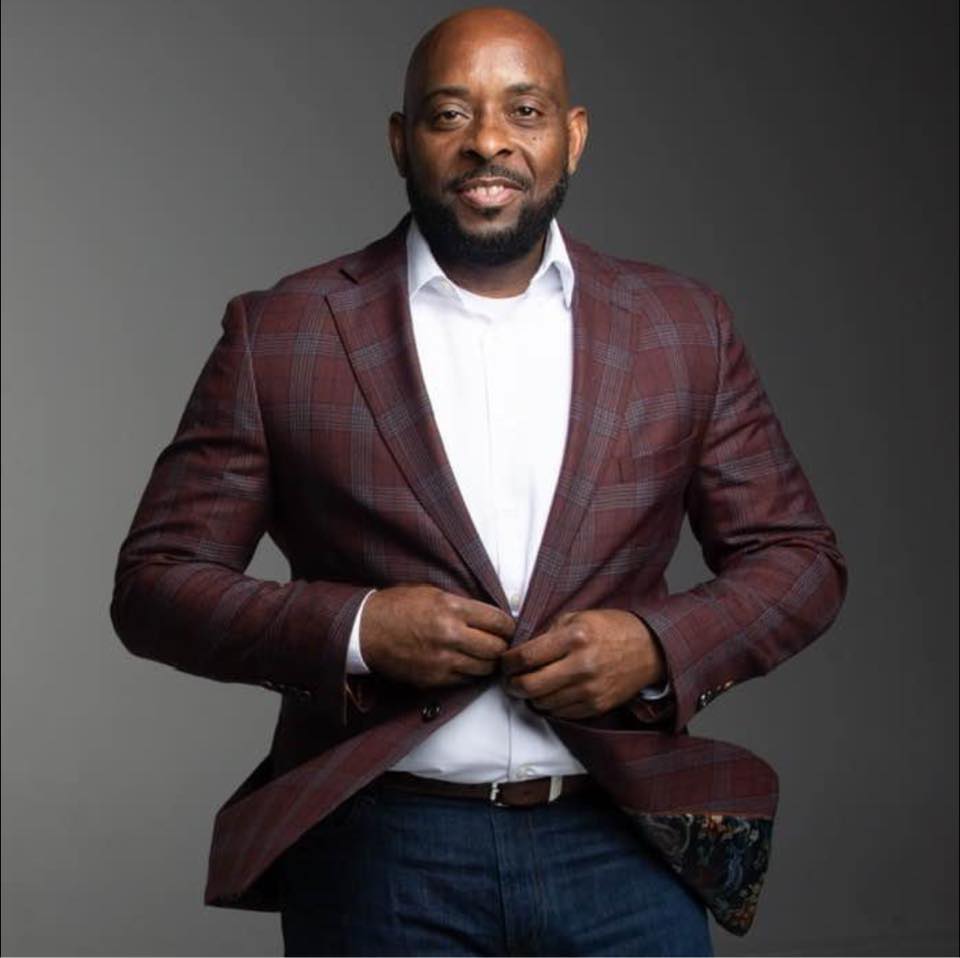
Alabama Attorney General Steve Marshall announced today that Representative Kelvin Jamichael Lawrence of Hayneville, AL was arrested on two felony charges. According to the press release, “Lawrence, 50, a resident of Lowndes County, was charged with forgery in the second degree and with criminal possession of a forged instrument in the second degree. The indictment alleges that Lawrence, with the intent to defraud, falsely made, completed, or altered a builder’s license. Both forgery and criminal possession of a forged instrument are Class C felonies punishable by 1 year and 1 day to 10 years in prison. The case is being prosecuted by the Special Prosecutions Division. No further information about the investigation or about Lawrence’s alleged crimes may be released at this time.” During his 2018 campaign, WSFA reported that Lawrence was the “owner of two Subways in Hayneville and Fort Deposit and a licensed home builder.”
Speaker Nathaniel Ledbetter appoints House Members to serve on a study commission evaluating Alabama’s labor force participation

Alabama has the lowest unemployment rate in state history. There are job openings all over the state that businesses and governments cannot fill, yet the state has one of the country’s worst labor force participation rates. That Alabamians are choosing to stay home rather than join the booming economy has increasingly perplexed state leaders. “Despite having one of the lowest unemployment rates in the country and a record number of Alabamians working, the percentage of Alabamians participating in the labor force is lower than almost any other state,” Governor Kay Ivey wrote recently. “While we are increasing that by the tens of thousands, we have to change this statistic. Getting folks off the sidelines and into the labor force is my next priority.” On Monday, Speaker of the House Nathaniel Ledbetter announced members of the Alabama House of Representatives that will serve on an ad hoc committee studying Alabama’s labor force participation rates and identifying barriers to workforce entry. “Alabama is witnessing record-breaking economic growth and historically low unemployment rates,” Ledbetter said. “Despite these numbers, in Alabama, there are roughly 140,000 job openings and, at the same time, 48,834 unemployed workers across our state. That means we are lacking nearly 100,000 workers over 16 years old, which puts our labor force participation rate at a mere 57 percent—one of the lowest rates in the entire country.” The House members appointed to serve on the study commission will be Rep. Reed Ingram (R–Pike Road), who will serve as the Chairman of the Committee. Rep. Danny Garrett (R–Trussville); Rep. Donna Givens (R–Robersdale); House Minority Leader Anthony Daniels (D–Huntsville); Rep. James Lomax (R–Huntsville); Rep. Barbara Drummond (D–Mobile); Rep. Mike Kirkland (R–Scottsboro); Rep. Bill Lamb (R–Tuscaloosa); Rep. Kelvin Lawrence (D–Hayneville); Rep. Curtis Travis (D–Tuscaloosa); Rep. Chris Pringle (R–Mobile); Rep. Matt Woods (R–Jasper); Rep. Wes Kitchens (R–Guntersville); Rep. Jim Carns (R–Birmingham); and House Majority Leader Scott Stadthagen (R–Hartselle). “Over the coming months, it will be imperative for this group to build on the progress of, and collaborate with, existing entities such as the Lt. Governor’s Commission on 21st Century Workforce, the Alabama Community College System, Alabama higher-education institutions, and essential stakeholders across the private sector,” Ledbetter said. The study commission is expected to address areas including extending adequate childcare to families, examining the correlation between productivity growth and labor output, ensuring wages and salaries are competitive, addressing workforce housing concerns, and offering improved and more expansive mental health programs and services to citizens. “An insufficiency of resources such as these creates barriers to workforce entry as much as an absence of quality education,” Ledbetter postulated. The study commission is slated to host their first meeting on Thursday, October 5, at 10:00 a.m. in room 617 of the Alabama State House. To connect with the author of this story or to comment, email brandonmreporter@gmail.com.
Nathaniel Ledbetter announces House members who will serve on labor force participation study
With unemployment still sitting at a record low of 2.1%, the state is looking for ways to increase the number of Alabamians in the workforce. Speaker of the House Nathaniel Ledbetter announced on Monday key House members that will serve on an ad hoc committee studying Alabama’s labor force participation rates and identifying barriers to workforce entry. In July, Gov. Kay Ivey said labor force participation was a top priority. “Despite having one of the lowest unemployment rates in the country and a record number of Alabamians working, the percentage of Alabamians participating in the labor force is lower than almost any other state,” Gov. Ivey wrote in an op-ed. “While we are increasing that by the tens of thousands, we have to change this statistic. Getting folks off the sidelines and into the labor force is my next priority.” In September, Alabama Department of Labor Secretary Fitzgerald Washington announced that Alabama’s Labor Force Participation Rate (LFPR) rose only slightly in August to 57.0%. This is up from last August’s rate of 56.9%. “Alabama is witnessing record-breaking economic growth and historically low unemployment rates,” Ledbetter said in a press release. “Despite these numbers, in Alabama, there are roughly 140,000 job openings and, at the same time, 48,834 unemployed workers across our state. That means we are lacking nearly 100,000 workers over 16 years old, which puts our labor force participation rate at a mere 57 percent—one of the lowest rates in the entire country.” “Yet again, we are announcing record-breaking economic statistics this month,” said Secretary Washington. “While our labor force participation rate remained unchanged, we are continuing to work with marginalized groups to get them into our labor force.” The House Members serving on the study commission will be Rep. Reed Ingram (R–Pike Road) – Chairman; Rep. Danny Garrett (R–Trussville); Rep. Donna Givens (R–Robersdale); Rep. Anthony Daniels (D–Huntsville); Rep. James Lomax (R–Huntsville); Rep. Barbara Drummond (D–Mobile); Rep. Mike Kirkland (R–Scottsboro); Rep. Bill Lamb (R–Tuscaloosa); Rep. Kelvin Lawrence (D–Hayneville); Rep. Curtis Travis (D–Tuscaloosa); Rep. Chris Pringle (R–Mobile); Rep. Matt Woods (R–Jasper); Rep. Wes Kitchens (R–Guntersville); Rep. Jim Carns (R–Birmingham); Rep. Scott Stadthagen (R–Hartselle). “Over the coming months, it will be imperative for this group to build on the progress of, and collaborate with, existing entities such as the Lt. Governor’s Commission on 21st Century Workforce, the Alabama Community College System, Alabama higher-education institutions, and essential stakeholders across the private sector,” stated Ledbetter. Some specific areas the study commission will address are extending adequate childcare to families, examining the correlation between productivity growth and labor output, ensuring wages and salaries are competitive, addressing workforce housing concerns, and offering improved and more expansive mental health programs and services. “An insufficiency of resources such as these creates barriers to workforce entry as much as an absence of quality education,” Ledbetter concluded.
Federal court hearing on redistricting case set for today
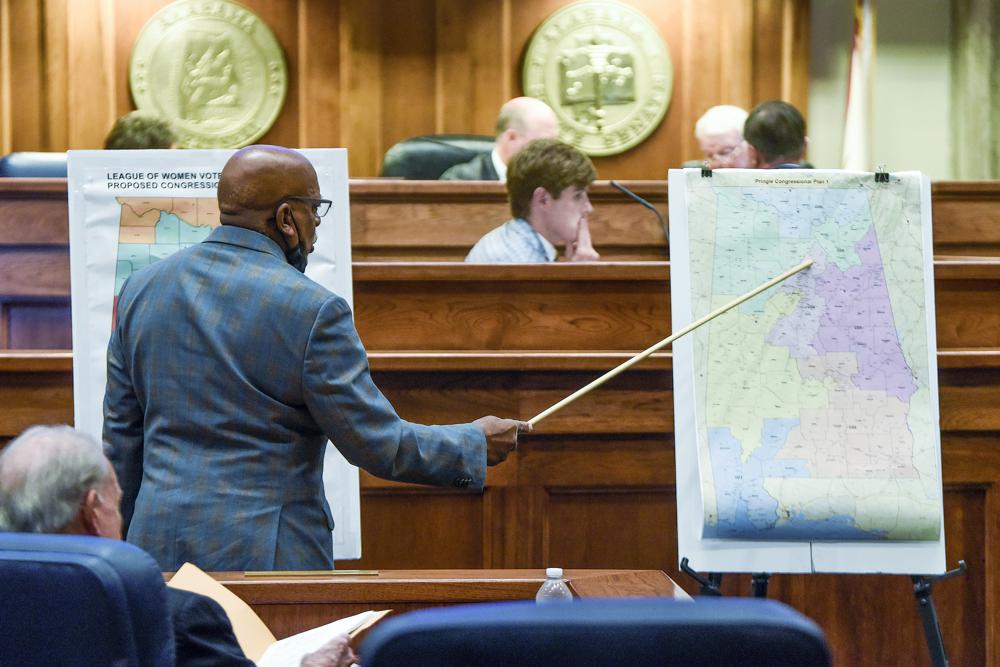
The entire political world in Alabama will be watching Monday to see what the court does with Alabama’s disputed redistricting case. A hearing is scheduled for Monday, August 14, in federal court at 9:00 a.m. CDT at the Hugo L. Black United States Courthouse in Birmingham. The hearing will focus on whether the map recently passed by the Alabama State Legislature complies with section two of the Voting Rights Act of 1965. Civil rights groups sued the state challenging the redistricting map that the Legislature passed in 2021. A three-judge panel of the Eleventh Circuit Court of Appeals in Atlanta ordered a halt to the 2022 election over concerns the map violated the 58-year-old Voting Rights Act. The U.S. Supreme Court intervened at the request of the state and allowed the election to proceed with the 2021 map. In June, the Supreme Court ruled in a 5 to 4 ruling that the congressional map likely violated the VRA and referred the case back to the three-judge panel. The Legislature was given until July 21 to submit a new map. The parties that sued the state and Alabama Democrats had wanted the Legislature to submit a map with two majority-minority districts. The Legislature, voting along party lines, refused and instead introduced and passed a controversial new map that simply increased Alabama’s Second Congressional District from 30% Black to 39.9%. That map kept the Gulf Coast, the Wiregrass, and Montgomery County whole; but was denounced by Democrats. The civil rights groups suing the state in federal court in Allen versus Milligan are asking the court to reject this new map. Members of the Alabama House Democratic Caucus, including House Minority Leader Anthony Daniels (D-Huntsville), will be outside the courtroom on Monday to issue their response following the conclusion of Monday’s hearing. Joining Daniels will be Caucus Chair Barbara Drummond (Mobile), Caucus Policy Chair Adline Clarke (Mobile), Caucus Secretary/ Treasurer Kelvin Lawrence (Hayneville), Rep. Patrice McClammy (Montgomery), Rep. Phillip Ensler (Montgomery), Rep. Chris England (Tuscaloosa), Rep. Patrick Sellers (Birmingham), Rep. Rolanda Hollis (Birmingham), Rep. Curtis Travis (Tuscaloosa), Rep. Napoleon Bracy (Mobile), Rep. Tashina Morris (Montgomery), Rep. A.J. McCampbell (Demopolis), and Rep. Sam Jones (Mobile) to comment on the court proceeding. “As we gather for the August 14th federal court hearing in Birmingham, Alabama, surrounded by the hallowed sites of the Civil Rights movement, we are reminded that this moment is inseparable from that struggle,” Daniels said. “We hope and pray that this court hearing, this next step, is a step forward on a continued path towards fair representation for all.” The Alabama House Democratic Caucus endorsed a redistricting plan, proposed by the Milligan and Caster plaintiffs, that would have created two majority Black congressional districts while respecting traditional redistricting guidelines. That map was rejected by the Republican supermajority and largely excluded from consideration during the legislative process. The major party primaries are on March 5, with candidate qualifying opening on October 16, so knowing where the congressional district lines are for that pending election is of some importance. To connect with the author of this story or to comment, email brandonmreporter@gmail.com.
Steve Flowers: Legislature organizes for Quadrennium
The legislature had their every four-year organizational session earlier this month. It is exactly what the title states. They are organizing for the next quadrennium of lawmaking. They officially chose their leadership and adopted the rules for the two chambers. The 105-member House of Representatives and 35-member State Senate are elected for four-year terms, the same as the governor and other constitutional offices. However, unlike the governor, who was sworn in on Monday, January 16, as set out in the state constitution, the legislature takes office the day after they are elected in November. The state House of Representatives will have 77 Republicans and 28 Democrats. That is a veto-proof, bulldozer-shoving, anything-you-want supermajority. The Democrats have very little say with those overwhelming numbers. Two days after they were elected in November, the 77-member Republican majority met in a private caucus meeting in Montgomery and selected their leadership. Therefore, the vote for Speaker of the House two weeks ago was simply a formality. The House has chosen Representative Nathaniel Ledbetter to be the Speaker of the House. Speaker Ledbetter hails from Rainsville in DeKalb County. He is a former Mayor of Rainsville. He has only been in the House of Representatives for eight years, having been first elected in 2014. He was chosen to be the majority leader in the House in his freshman year. He was close to the former Speaker Mac McCutcheon, and he served on both the powerful agenda-setting Rules Committee, as well as the Ways and Means Education Budget Writing Committee. Representative Chris Pringle of Mobile has been chosen to be Speaker Pro Tem of the House, which is the second highest position within the body. He has served previously for 16 years in the House from the Port City. He succeeds fellow Mobilian Victor Gaston in this post. There are two young stalwarts who will be serving in Republican Party positions within the House. Representative Scott Stadthagen of Decatur will be the new House Majority Leader. Representative Wes Kitchens of Arab will serve as the Republican Leadership Caucus Vice Chair. Representative Debbie Wood from the Valley will serve as the Republican Caucus Secretary/Treasurer. The three most powerful posts in the House are the chairmanships of the two money committees and the agenda-setting Rules Committee. Representative Danny Garrett of Trussville in Jefferson County will continue to Chair the Ways and Means Education Budget Committee. Representative Rex Reynolds of Huntsville will be the General Fund Ways and Means Chairman. Reynolds replaces longtime Ways and Means Chairman Steve Clouse of Ozark. Representative Joe Lovvorn of Auburn will be the new Rules Committee Chairman. Representative Jim Hill of St. Clair will chair Judiciary. He is a former circuit Judge and a veteran of the House. All of these House leadership positions are held by Republicans. To the victor goes the spoils. The Democrats have a veteran and sterling team heading their Caucus Leadership in the House. Anthony Daniels of Huntsville will be the Democratic Minority Leader. Barbara Drummond of Mobile will be the Caucus Chair. Mary Moore of Birmingham will be the Vice Chair, and Kelvin Lawrence of Hayneville will be Secretary/Treasurer of the Democratic Caucus. The 35-member Alabama State Senate returns almost intact with their continuity and quality leadership. They will dominate and provide a stable State of Ship to help lead the state. Republicans control this upper chamber to the same degree that the GOP members do in the House. Republicans outnumber Democrats 28 to 7 in the Senate. State Senator Jabo Waggoner of Jefferson County begins his 50th year in the legislature. This is a state record. He is definitely destined for the state history books. Jabo will continue to Chair the powerful Rules Committee. Greg Reed of Walker County will be Pro Tem of the Senate again. The Majority Leader will again be Clay Scofield of Marshall County. The two money committee chairmen will continue to be in charge of how the state revenues are spent. Senator Arthur Orr of Decatur will chair Finance and Taxation/Education. Senator Greg Albritton of Escambia will chair Finance and Taxation/General Fund. These two men will be very powerful. Popular state Senator Will Barfoot of Pike Road will chair Judiciary in the Senate. Senator Clyde Chambliss of Prattville has become a stalwart leader in the Senate. He will be Majority Whip. Lieutenant Governor Will Ainsworth presides over the Senate. The Regular Session begins in early March. See you next week. Steve Flowers is Alabama’s leading political columnist. His weekly column appears in over 60 Alabama newspapers. He served 16 years in the state legislature. Steve may be reached at www.steveflowers.us.
Alabama House Democrats re-elect Anthony Daniels as House Minority Leader
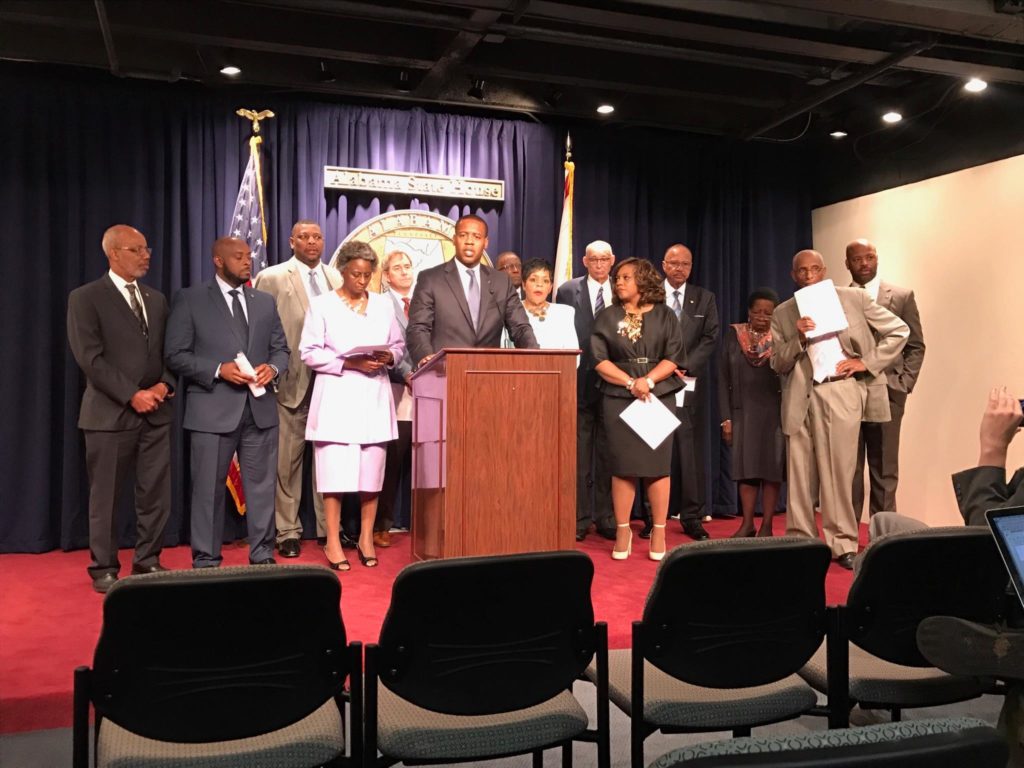
On Monday, the 28 members comprising the Alabama House Democrats elected their caucus leadership for the upcoming 2023-2024 legislative sessions. The caucus elected Rep. Anthony Daniels as Alabama House Minority Leader, Rep. Barbara Drummond as Caucus Chair, Rep. Mary Moore as Caucus Vice Chair, and Rep. Kelvin Lawrence as Caucus Secretary/Treasurer. After the election, Daniels stated, “I am honored and humbled to have the opportunity to work again with such a talented and dedicated group of leaders who remain dedicated to improving the quality of life for all Alabamians. We will continue to promote practical and meaningful legislation and policies that highlight our pro-growth, pro-innovation platform. Right now, we are already working hard to prepare our 2023 legislative agenda to continue our focus on strengthening economic growth, access to quality health care, education innovation, mental health care, affordable housing, and justice for all.” Last week, Republicans selected State Rep. Nathaniel Ledbetter of Rainsville to be the next speaker of the House of Representatives. He will replace House Speaker Mac McCutcheon, who did not run for re-election. Ledbetter was elected to the Alabama Legislature in 2014. He served as GOP majority leader. He is the former mayor of Rainsville. The Legislature will start its regular session in March.
Republican Karla Knight Maddox running for Alabama House District 69
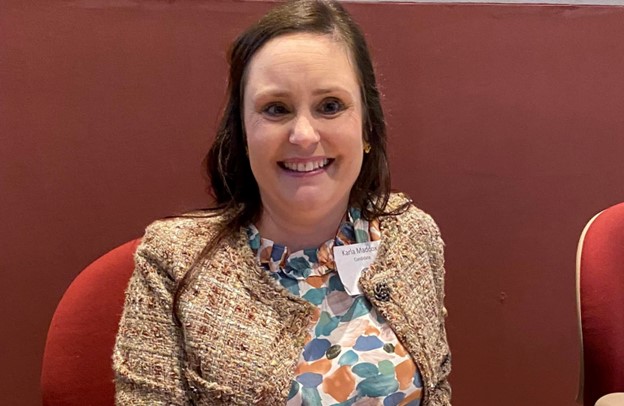
Karla Knight Maddox is the Republican nominee for Alabama House of Representatives District 69. District 69 includes much of southern Montgomery County and parts of Lowndes, Wilcox, and Autauga County. Long a safe Democratic district, this sprawling rural Black Belt district is now one of the most purple districts in the state due to migration and redistricting. Maddox is challenging Democratic incumbent Kelvin Lawrence who has represented District 69 since 2014. Maddox is a wife and mother in Autauga County who has suspended her small business to run full-time for this office. In a lengthy phone interview on Wednesday, Karla spoke with Alabama Today about her campaign. “There are a lot of eyes on this district,” Maddox said. “This district has been blue for so long that they were not aware that it was now winnable after the new lines were drawn.” “I talk to people all the time that thought they were in District 88, that just became aware that they are in District 69,” Maddox said. “Some people are still not aware that they are now in 69.” “There are 10,000 registered Republicans in this district and 9,000 registered Democrats,” Maddox explained. “I am not just talking to Republicans. That would be a waste of time, but I am also talking with Democrats, independents, Libertarians, and whatever third party groups people identify themselves as now.” Greg Pool is the chairman of the Montgomery County Republican Party. “I can’t believe how competitive this seat has gotten,” Pool told Alabama Today. “I want my children and my future grandchildren to be able to look back at the 2022 midterm election and realize that this election made a huge difference in their lives,” Maddox said. “I don’t make promises. I just don’t because too much can happen, but I am the person that the mayor, the county commission, the police chief, and the school board can come to with a problem, and I will do everything possible, including writing a grant for them to help them with that issue. I want to represent this district in a way that it has not been represented in a long time.” Alabama is one of a handful of states that taxes basic foodstuffs. “We have an opportunity to finally do away with the grocery tax,” Maddox said. “My plan is to take it off of fresh fruit and vegetables, meat, butter, eggs, bread, flour, and all the things that you need to prepare a meal for your family at home and keep it on Coca-Colas, Tostitos, beer, and all the extra things that you buy.” Maddox said that her plan would benefit families and low-income people without all of the cost of eliminating the tax altogether. “If the Legislature wants to pass a full removal of the grocery tax, I will support it,” Maddox said. “Either proposal, I will vote for it.” “My children are 16 and 13, and my grocery bill has doubled. That’s tough on families,” Maddox said. “Families need the help (the reduction on the food tax). With the cost of food now, there is not a lot of money left over for gas.” Maddox favors a lottery, but only if it is patterned after the Georgia Hope Scholarship lottery. Maddox grew up in Houston County but was in Georgia for her college years, where she attended college. “Gambling is already in Alabama,” Maddox said. “I am a huge fan of Georgia’s lottery scholarships. That helped pay for me to go to college: all of my tuition and part of my books. It also paid for my brother’s college and part of my sister’s.” The state of Alabama is expected to finish this week with approximately $2 billion in surplus that it did not need for anything in the 2022 fiscal year. That money has rolled over into the 2023 fiscal year that begins Saturday – October 1. Alabama Today asked Maddox what the state should do with that money: make tax rebates to citizens or use it to make strategic investments. “As a wife and mother, I like the tax rebates, but as a businesswoman, I can see making the investments with the money,” Maddox said. “I am still studying this issue. I need to see exactly what they are talking about before giving an opinion.” The state has been facing a lot of criticism lately on prisons. They are understaffed, aging, and the prisoners complain about the horrible conditions, violence, and the poor-quality food. There is currently a work stoppage by some of the inmates. “We have underfunded prisons and jails,” Maddox said. “We need to look at where these issues are coming from. We can find funding, but instead of putting a band-aid on the problem, we need also address what is causing the problem. In some cases, that teen or young adult would be better served in a mental health program rather than in jail or prison, and in some instances, drug rehab would be a better option rather than being locked up.” “If you are some drug kingpin, you are going to jail,” Maddox said, emphasizing that the state needs to be tough on crime. “I am in favor of the death penalty,” Maddox. “I do believe that some crimes are so bad that they need to be paid for through the death penalty.” “From the research I have done, lethal injection is the most humane method of execution,” Maddox said. Gov. Ivey recently awarded $82 million in grant money to build a middle mile network to expand rural broadband in the state. Alabama Today asked Maddox if that benefitted District 69. “Absolutely, that will definitely benefit district 69,” Maddox said. “Wilcox and Lowndes have big coverage gaps, and even here in Autauga County, the schools have to deploy the school buses out around the county to serve as mobile wi-fi hot spots so that the children can do their work on e-learning days.” “There is the cost of the driver and the fuel; how much money is that costing?” Maddox said. “Technology is a game-changer. We need broadband.” Maddox is a strong supporter of school choice in Alabama. “A lot
Hundreds of Alabama systems apply for water, sewer grants
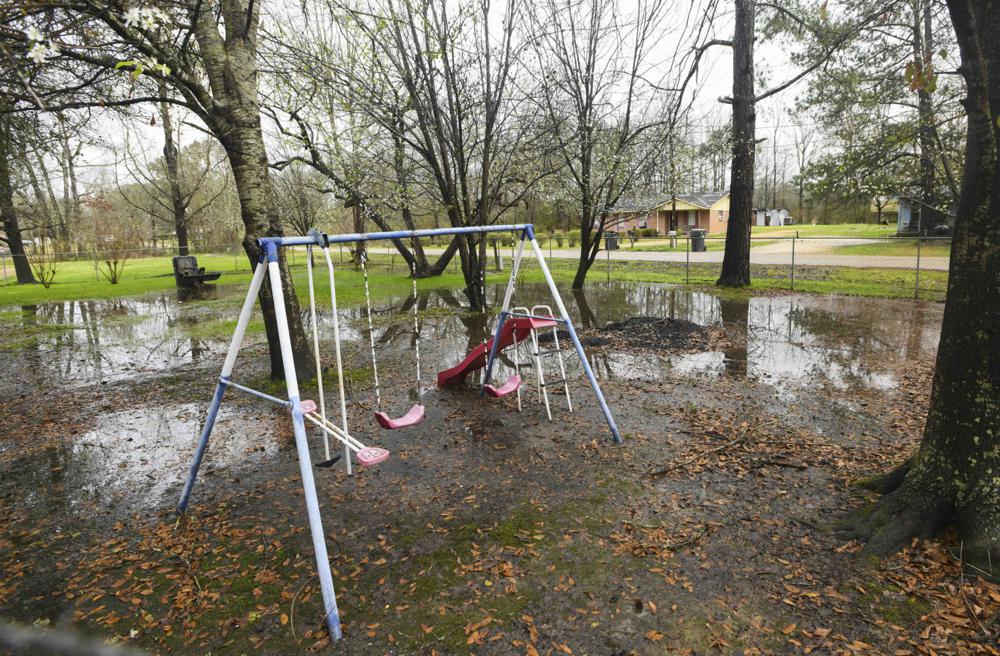
More than 400 Alabama water and sewer systems have applied for grants funded by pandemic relief money, according to the Alabama Department of Environmental Management. Alabama lawmakers this winter voted to use $225 million out of the state’s share of American Rescue Plan funding to fund high-need water and sewer projects. “This is an historic opportunity to address longstanding water, and sewer needs to benefit hundreds of thousands, and potentially millions, of Alabamians,” ADEM Director Lance LeFleur said in a statement. The state will use $120 million for previously identified emergency or high-need projects and will not require a local match; $100 million for grants that may require a local match based on ability to pay; and $5 million to address longstanding problems in the Black Belt region of the state. Rep. Kelvin Lawrence, a Democrat from Hayneville, said in a press release that the funding could be life-changing for many people in his Black Belt district. Wastewater treatment is a decades-old problem in parts of the area, where poor communities often lack traditional sewer lines. Septic tank systems are a poor alternative in some areas because the region’s heavy clay soil traps water near the surface. “Whether you’re rich, poor, young or old, black or white, it doesn’t matter. Every citizen in the state of Alabama should be afforded the opportunity to have clean drinking water and also to dispose of their waste in a proper way so they won’t have to worry about dealing with health issues,” Lawrence said. The Justice Department said it had started an environmental justice investigation into impoverished Lowndes County’s wastewater problems, which have left some residents with sewage in their yards. Republished with the permission of the Associated Press.
Committee advances ‘divisive concepts’ bill without additional debate
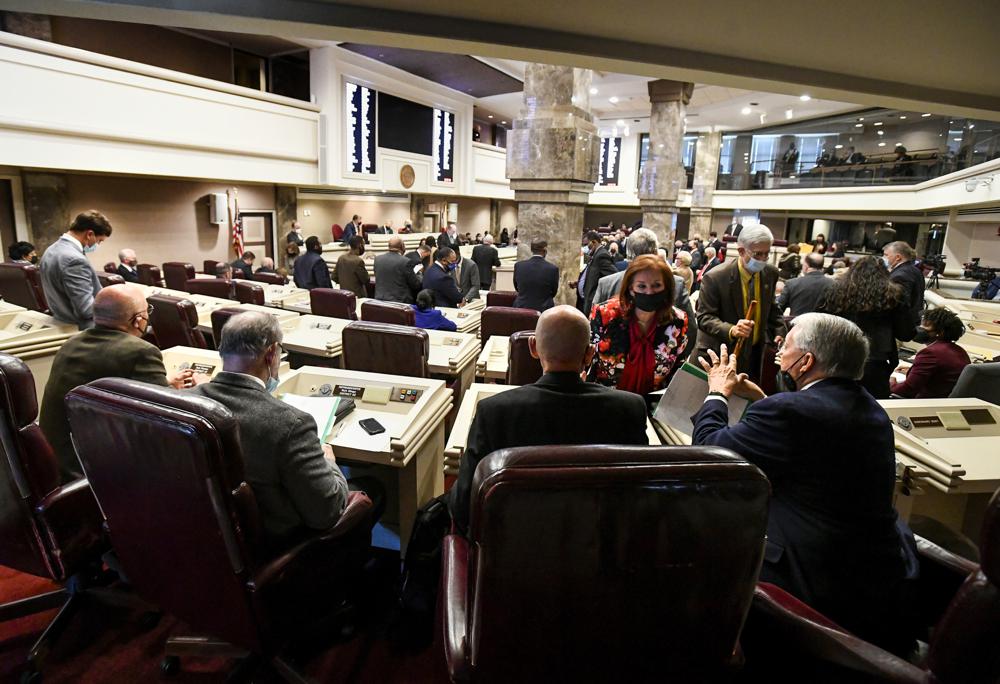
An Alabama legislative committee on Tuesday took seconds to advance a bill banning “divisive concepts” in classroom lessons and in state diversity training, including that white people should feel guilt over the actions of their ancestors. African American members of the House State Government Committee objected to the voice vote, which took place within 20 seconds of the bill being brought for discussion and without opposed lawmakers getting an opportunity to speak. The bill now moves to the full House of Representatives. “I think it is unjust,” Rep. Rolanda Hollis, a Democrat from Birmingham, said after the meeting of the quick approval. Hollis said she wanted to offer an amendment to the measure, adding, “This bill right here, it stops us from being able to teach history, real history.” The bill by Republican Rep. Ed Oliver of Dadeville would prohibit a list of “divisive concepts” from being taught in schools and in diversity training for state entities. The banned concepts would include that the United States is “inherently racist or sexist” and that anyone should be asked to accept “a sense of guilt, complicity, or a need to work harder solely on the basis of his or her race or sex.” It would also prohibit “fault, blame, or bias” from being assigned to a race, sex, or religion, or to members of a race, sex, or religion, solely on the basis of their race, sex, or religion. “I don’t think you should be teaching children because of their skin color that they are necessarily bad, or they can’t succeed because of their skin color,” Committee Chairman Chris Pringle, a Republican from Mobile, said of why he planned to vote for the bill on the House floor. The legislation comes as Republicans in several states seek to ban either so-called critical race theory or put guidelines on how race is discussed in the classroom. Republican supporters have said it would steer classroom lessons to facts, rather than ideology, and prevent educators and diversity trainers from stoking divisions. While opponents said it is motivated by election-year politics and would have a chilling effect on classroom lessons and discussions in an effort to “whitewash” history. The list in the Senate bill is similar to a 2020 executive order President Donald Trump issued banning “divisive concepts” in training federal employees that has since been repealed. Similar language has since popped up in bills in dozens of states. The bill would prevent a public K-12 school or state agency from teaching one of the “divisive concepts” to students, employees, and contractors. A college could “teach about doctrines pertaining to a divisive concept” as part of a larger course of instruction but could not compel “students to assent to the concept.” Rep. Kelvin Lawrence, a Democrat from Hayneville, said the bill is vaguely worded and he is concerned it will make professors fearful of delving into certain topics. “They’re just going to avoid teaching those things, and unfortunately, that’s a critical part of our history, a critical part of what has happened in America and what continues to happen,” Lawrence said. Democratic Rep. Chris England, who is chairman of the Alabama Democratic Party, criticized the way the committee handled the bill. He tweeted that Republicans on the committee silenced the opposition to “pass a bill that will prohibit free speech and whitewash history.” Pringle defended the swift approval, noting the bill had been discussed at two previous meetings, including one with a public hearing. “What more is there to say that we haven’t heard in the public hearing or the debate we had last week,” Pringle said. The committee had previously deleted language in the original version that dealt with how slavery should be taught. A similar bill is pending in the Alabama Senate. Republished with the permission of the Associated Press.
Alabama House committee approves bills benefitting state employees

Alabama state employees could receive pay increases and one-time, lump-sum retirement contributions based on a package of bills under consideration. House Bill 202 and companion legislation Senate Bill 110 are calling for 4% salary increases for employees in the state’s next fiscal year that begins October 1. Lawmakers this legislative cycle also have introduced HB 404 and SB 111, which would provide retirees with a one-time bonus check if ultimately adopted. The proposal also has been referred to as a longevity bonus. Based on the draft language, the lump sump pay would be based on a formula of $2 per month for each year of service the retiree attained while on the state payroll. The provision applies to past employees who retired prior to March 1. The bills were most recently discussed at the state House Ways and Means Committee on March 9 and received favorable votes on a third reading. State Sen. Greg Albritton, R-Atmore, is the sponsor of SB 110 and SB 111. He spoke to his House colleagues at the recent meeting about the bills, particularly the call to increase base wages. “I think this bill is very much needed, especially when you consider the increased costs,” Albritton said of HB 202 and SB 110. On the House side, state Rep. Kelvin Lawrence, D-Hayneville, is the sponsor of HB 202, and state Rep. Chris Sells, R-Greenville, is the sponsor of HB 404. State officials have offered analyses on the fiscal impact of each of the legislative proposals. The 4% pay bump naturally would impact one of the state’s largest expense line items – personnel. “This bill will increase the personnel costs of state agencies by an estimated $87.8 million in fiscal year 2023, with an estimated $27.7 million of this increase paid from the state general fund,” financial analyst J.T. Mathis wrote in a fiscal note. The impact of the one-time lump sum payout to retirees has a more complex impact on the state’s bottom line. “According to the actuary for the Retirement Systems of Alabama, this bonus will cost an estimated total of $15 million, of which the state general fund portion is estimated at $4.2 million,” analyst Daniel Davenport wrote in a fiscal note. Moreover, in FY 2024, Davenport wrote the rate for recipients into the state Employees’ Retirement System “will increase by 0.98% of payroll for state employees, and the ERS employer rate paid by state agencies will increase by 1.18% for state police” if the bill is adopted in its current draft form. Republished with the permission of The Center Square.
Alabama tourism committee advances lottery and casino bill

An Alabama legislative committee swiftly advanced lottery and casino legislation on Wednesday, acting after a public hearing dominated by opponents who said the proposal would hand the licenses to a few powerful operators. The Senate Tourism Committee voted for the proposed constitutional amendment authorizing a state lottery, sports betting, eight full casinos with slots and table games, and two smaller gambling sites that could have up to 300 slot machines each. It now moves to the Senate floor. Republican Sen. Greg Albritton, the sponsor of the proposal, told the committee it was time for the state to address the issue of gambling. He argued his bill would give Alabamians a much-wanted state lottery and “grab control” of gambling by allowing a limited number of casino sites. “The people have been ready for this vote for years,” Albritton said of the proposal, which would go to a statewide vote in November if approved by lawmakers. Opponents argued that the bill would essentially hand the licenses to a few select operators. The casinos would be located at existing state dog tracks and sites owned by the Poarch Band of Creek Indians. “We shouldn’t be, as a Legislature, in the posture of picking winners and losers,” Rep. Kelvin Lawrence, a Democrat from Hayneville, told the committee. He said it would close an existing facility in his county by limiting the number of machines. Those speaking against the bill in the public hearing included both longtime opponents of legalized gambling and representatives of existing electronic bingo operations that would likely be shuttered under the proposal. Casinos would be located at the site of four existing dog tracks in Greene, Jefferson, Macon, and Mobile counties. The Poarch Band of Creek Indians would have a casino at each of the three tribal sites as well as a new location located in either DeKalb County or Jackson County. The licenses at the track locations would be competitively bid, although the track owners would have the opportunity to come in and make a final bid for the license. It would authorize two smaller satellite operations in Houston and Lowndes counties with up to 300 slot machines each. “The competitive bid process that it mentions in this piece of legislation is actually more of a rigged bid process because the current owner is given the opportunity to offer one dollar over the winning bid to secure the license at the end of the day,” Heather Coleman Davis, a lobbyist representing another Greene County operation, told the committee. The proposal would require a change to the Alabama Constitution. It must be approved by three-fifths of lawmakers and then a majority of state voters to take effect. The gambling proposal, along with a companion bill to create a state gaming commission and operating rules, now goes to the Alabama Senate, where similar legislation was approved last year. Tourism Committee Chairman Del Marsh urged the House of Representatives to take up the proposal if it is approved by the Senate. He said it is the top issue he is asked about when he goes home to his Anniston district. “I think the people of this state want to have something to vote on and make a decision on,” Marsh said. Alabama is just one of five states — along with Nevada, Utah, Alaska, and Hawaii — without a state lottery. State voters in 1999 rejected a lottery proposed by then-Gov. Don Siegelman. Since then, efforts to legalize casinos or create a state lottery have failed under a fatal mix of conservative opposition to legalized gambling and turf wars over who could operate lucrative electronic gambling machines. Albritton has previously acknowledged that it would be difficult to pass legislation that just put the licenses out for bid. The existing facilities carry political clout and support from local legislators who don’t want to see local jobs disappear. Republished with the permission of the Associated Press.
State lottery, casino bill proposed in Alabama Legislature

An Alabama lawmaker on Thursday introduced a proposal to create a lottery and allow multiple casinos, as well as sports betting, in the state, but the bill faces a ticking legislative clock and long-term divisions that have sunk previous gambling proposals. “It’s time Alabama got in the game,” Republican Sen. Greg Albritton said at a news conference. Albritton said the state is missing out on hundreds of millions of dollars in revenue each year. “We need to take action on this now,” he said. “Waiting another year is not going to help us.” The bill introduced Thursday would create a state lottery with proceeds going to fund college scholarships and other education needs. It would also authorize eight casinos with table games and online sports betting at sites owned by the Poarch Band of Creek Indians and at existing dog tracks. It would also authorize two smaller operations with up to 300 slot machines. Four casinos would be located at the site of existing dog tracks: Greenetrack in Greene County, the Birmingham Race Course in Jefferson County, VictoryLand in Macon County, and the Mobile County Greyhound Racing facility in Mobile County. The licenses would be competitively bid, although the track owners would have the opportunity to come in and make a final bid for the license. A fifth casino operated by the Poarch Band of Creek Indians would be located in either DeKalb County or Jackson County. The tribe, under federal law, would also be allowed table games at its three existing locations. Two smaller sites — one in Lowndes County and one in Houston County — would be allowed to operate a limited number of electronic gambling machines. Rep. Kelvin Lawrence, a Democrat from Hayneville, said the bill would likely lead to the closure of both existing electronic bingo facilities in Lowndes County. A single site in the county could have up to 300 gambling machines under the proposal. “It’s just an effort to appease us, but it basically puts us on life support. … We’re talking about a community that is underprivileged, 90% poverty. It would be a catastrophe if those facilities are closed,” Lawrence said. If approved by lawmakers, the proposal would go before voters in November. Albritton said he wants a committee vote on the proposal Tuesday. However, there are 12 meeting days remaining in the 30-day regular legislative session, giving the measure a small window to win approval. “We’ll have to see how the body reacts to the work that he’s done in regard to this very important issue,” Senate President Pro Tempore Greg Reed said when asked about the bill’s chances. The latest bill is similar to one state senators approved last year, but the measure failed in the Alabama House of Representatives. Alabama is just one of five states — along with Nevada, Utah, Alaska, and Hawaii — without a state lottery. Voters in 1999 rejected a lottery proposed by then-Gov. Don Siegelman. Since then, efforts to legalize casinos or create a state lottery have failed under a fatal mix of conservative opposition to legalized gambling and turf wars over who will get the licenses for the lucrative games. Republished with the permission of the Associated Press.
