
U.S. Supreme Court refuses to hear case challenging Alabama death penalty
In a victory for supporters of the state’s capital punishment regime, the U.S. Supreme Court on Monday refused to take up the case of a convicted murderer who sought to challenge Alabama’s death penalty law. The high court refused to issue a petition for certiorari in the case of , essentially denying the case has the proper legal standing to be heard. The move is an especially significant win for advocates of Alabama’s death penalty because it has recently received jurisprudential scrutiny related to a case in Florida, which State Attorney General Luther Strange welcomed the move by justices in a statement Monday afternoon. “The Supreme Court’s decision to deny this petition establishes, yet again, that Alabama capital sentencing system is constitutional,” said Strange, a Republican who supports capital punishment. “As I have previously explained, the Court’s decision about Florida law in Hurst has no bearing on the constitutionality of Alabama’s materially different capital sentencing system.” “It is time for criminal defense lawyers to stop making specious arguments and for public officials to recognize that Alabama’s capital sentencing is constitutional under current U.S. Supreme Court precedent,” added Strange. Shanklin was convicted of capital murder and the lesser charge of attempted murder, which a jury ruled he committed during a violent armed robbery in 2009 in Cordova. A jury in Walker County Circuit Court recommended that Shanklin be sentenced to life without parole. But the judge – using the provision at issue in the Florida and Alabama cases – circumvented the jury’s decision and sentenced Shanklin to death because of his long criminal history and the aggravated nature of his crime.
Luther Strange praises U.S. Senate for passage of CARA, bill to combat opioid epidemic

Last week, the U.S. Senate passed the Comprehensive Addiction and Recovery Act (CARA), a bill aimed at providing states with the necessary tools to combat the scourge of heroin and opioid abuse that has plagued the nation recently. The legislation passed with only one vote in opposition, and a companion bill is set to go before the U.S. House of Representatives soon. Alabama Attorney General Luther Strange was quick to praise the Senate’s action. “While stronger enforcement is needed to reduce the disastrous impact of illegal drugs upon our society, we must also address the reality of addiction including the availability of effective treatment,” Strange said in a news release. “The Comprehensive Addiction and Recovery Act provides a nationwide plan to tackle drug addiction with the goal of saving lives. We are grateful to the Senate for its passage of this legislation and urge the U.S. House to give CARA swift approval.” Strange and 37 Attorneys General from across the country penned a letter in September 2015 urging lawmakers to pass the legislation. Further, the Attorney General’s 2015 Law Enforcement Summit, which was attended by more than 700 officers from across the state, focused on ways to fight the drug epidemic through education and enforcement techniques. CARA includes provisions to tackle the following: Expand prevention and educational efforts – particularly aimed at teens, parents and other caretakers, and aging populations – to prevent the abuse of opioids and heroin, and to promote treatment and recovery; Expand the availability of naloxone to law enforcement agencies and other first responders to help in the reversal of overdoses to save lives; Expand resources to identify and treat incarcerated individuals suffering from addiction disorders promptly by collaborating with criminal justice workers and by providing evidence-based treatment; Expand disposal sites for unwanted prescription medications to keep them out of the hands of children and adolescents; Launch an evidence-based opioids and heroin treatment and intervention program to assist in treatment and recovery throughout the country; and Strengthen prescription drug-monitoring programs to help states monitor and track prescription drug diversion and to help at-risk individuals access services.
Luther Strange moves to have death penalty ruling vacated
On Thursday, Attorney General Luther Strange said the state has filed a petition with the Alabama Court of Criminal Appeals to order a Jefferson County trial court to vacate an earlier ruling on the state’s death penalty. Last week, the court ruled that the state’s “capital sentencing scheme” is unconstitutional. The petition filed Thursday notes that the lower court has “no power to prevent the state from seeking the death penalty in capital murder cases,” according to a news release from the Attorney General’s office. Portions of the petition read as follows: The trial court’s order ignores on-point precedent from the Supreme Court of the United States and the Supreme Court of Alabama. The trial court does not have the power to prevent the State of Alabama from seeking the death penalty when and if the defendant is convicted of capital murder. Although recent legal developments may call into question the imposition of the death penalty under certain circumstances, the trial court’s order is indefensible. It eliminates the State’s ability to seek the death penalty for four offenders. And it does so as a facial matter before they have even been found guilty. To ensure that these and other prosecutions can move forward in an orderly and equitable manner, the Court should grant the petition for writ of mandamus and direct the trial court to vacate its order declaring Alabama’s ‘capital sentencing scheme’ to be facially unconstitutional. The petition further notes that Alabama’s death penalty is constitutional under the Sixth Amendment and that the trial court has no other findings to support its assertion that the death penalty is unconstitutional. “The trial court’s order is nothing less than a declaration that it will not follow Alabama law or the precedents of the Supreme Court of Alabama,” the petition reads in part. “The State has a clear legal right to seek the death penalty.”
Alabama e-book buyers to share $400 million Apple price-fixing settlement

Alabamians who bought e-books from 2010 to 2012 will soon get a piece of the multimillion-dollar settlement with Apple Inc. Alabama Attorney General Luther Strange announced Tuesday that the U.S. Supreme Court denied a request from Apple to review a lower court ruling, which found the tech company liable for its role in raising the price of electronic books. Apple is purported to have conspired with “five major publishers” to increase book rates and the ruling will set into motion a repayment of $400 million to consumers who paid “artificially inflated price for E-books.” “This court action means that Apple will be held accountable for its price-fixing actions, and that consumers who were damaged will receive compensation for their losses,” Strange said in a news release. “This should send a message throughout the nation that such schemes will not be tolerated.” Others involved in the case include Penguin Group (USA), Inc. (now Penguin Random House), Holtzbrinck Publishers LLC, Hachette Book Group Inc., HarperCollins Publishers LLC and Simon & Schuster Inc. Alabama joined with more than 30 other states in investigating and prosecuting the antitrust case, alongside the Department of Justice. The original ruling against Apple came in July 2013 from the U.S. District for the Southern District of New York. The U.S. Court of Appeals for the 2nd Circuit upheld the ruling in June 2015, and the decision by the Supreme Court eliminates any other path forward for Apple. The five publishers settled before the start of the trial, paying about $166 million to consumers, but because the states’ settlement with Apple was contingent on the trial’s outcome, the tech giant will not face the maximum penalty. Along with the $400 million, Apple will be forced to pay an additional $20 million to reimburse states for fees and costs, as well as to resolve claims for civil penalties. Details on how consumers will be reimbursed will be released once finalized.
Judge rules Alabama death penalty mechanism unconstitutional
An Alabama judge threw out the state’s system for imposing the death penalty the same day Florida lawmakers passed a bill to revamp a similar sentencing mechanism. Jefferson County Circuit Judge Tracie Todd sided Thursday with defense attorneys who had cited a recent U.S. Supreme Court decision that Florida’s law was unconstitutional. Juries recommend sentences in Alabama and Florida death penalty cases, but judges have the final decision. The Florida Legislature on Thursday passed a bill that would overhaul that state’s law. Prosecutors argued Alabama’s law was different in key aspects, but Todd disagreed. Todd’s decision bars prosecutors from seeking the death penalty against four men charged in three slayings. Alabama Attorney General Luther Strange says his office is reviewing Todd’s order and expects to file an appeal. Republished with permission of the Associated Press.
Attorney General announces weapons permit holders can now purchase guns without background check

Attorney General Luther Strange has announced a streamlining of state law for gun enthusiasts: if you already have a concealed weapons permit, you no longer have to submit to a background check for additional firearms purchases. Strange said Thursday the move to lift the background requirement for up to five years just makes good common sense. “Alabama concealed carry permit holders in good standing have already passed a background check and there is no need to force them to submit to additional checks if they intend to buy a firearm within five years of receiving their permit,” said Strange, a Republican first elected in 2010. Until now, holders of Alabama’s Permit to Carry Pistol in Vehicle or Concealed on Person had to submit an additional background check request for each subsequent weapon they purchased. Strange negotiated the change with the federal Bureau of Alcohol, Tobacco and Firearms, housed in the U.S. Department of Justice. “I’m pleased that the ATF has approved my request to exempt Alabama conceal carry permit holders from having to undergo additional background checks each time they want to buy a firearm,” said Strange. Alabama now joins 23 other states given National Instant Criminal Background Check exemptions for concealed carry permit holders.
Attorney General, coalition of states announce plan to ask federal court to vacate EPA rule
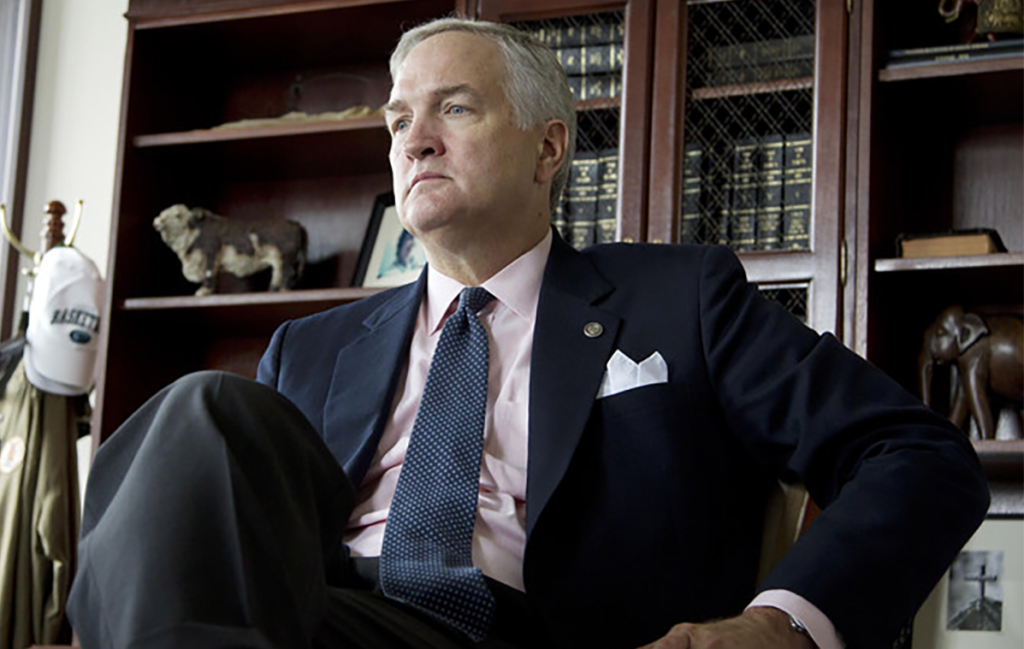
Alabama Attorney General Luther Strange announced over the weekend he would join a group of mostly Republican states to ask a federal court permanently nix Environmental Protection Agency-proposed carbon rules which recently had a setback in the U.S. Supreme Court. The EPA proposal – dubbed the Clean Power Plan – seeks to reduce carbon emissions by reining in or closing many coal-fired power plants that emit carbon pollution. Strange and a coalition of other state attorneys general filed litigation on Friday that would “go ahead and rule against the plan” now that the Supreme Court has issued a stay against it, holding up progress until further review. “Ten days after winning a stay in the United States Supreme Court of President Obama’s so-called Clean Power Plan, Alabama and a majority of U.S. states are asking the U.S. Circuit Court in Washington, D.C. to permanently vacate the Obama administration’s illegal carbon rule, once and for all,” said Strange, who has long opposed the carbon emissions plan. Strange explained his rationale for filing the claim in a statement Sunday afternoon, calling the environmental agency’s proposal a “power grab” by the federal government. “The EPA not only goes too far in seeking to impose arbitrary and overly restrictive limitations on carbon dioxide emissions, but it does so with the goal of changing America’s energy sources. The EPA’s costly carbon rule is little more than a power grab and just the latest in a long list of Obama administration attempts to end-run Congress,” Strange said. The case is now in the hands of the U.S. Court of Appeals for the District of Columbia Circuit, which will issue a ruling on the merits of the case. Oral arguments are set to begin in June after the court reviews the litigation. “Relying on an obscure provision of the Clean Air Act, EPA’s Rule seeks to effect an ‘aggressive transformation’ of the mix of electricity generation in nearly every State by systematically ‘decarbonizing’ power generation and ushering in a new ‘clean energy’ economy,” the case filed Friday reads. “Although Congress has debated a number of bills designed to achieve that very result, it has not yet adopted any such legislation. Frustrated with Congress, EPA now purports to have discovered sweeping authority in Clean Air Act section 111(d)—a provision that has been used only five times in 45 years—to issue a ‘Power Plan’ that forces States to fundamentally reorganize electricity generation throughout the country.” Strange is not alone among Alabama leaders in opposing the plan. U.S. Reps. Martha Roby and Gary Palmer have derided the plan as a job killer that could cause “enormous harm” to the American economy.
Luther Strange “disappointed” by appeals court ruling in religious liberty case, vows to fight on
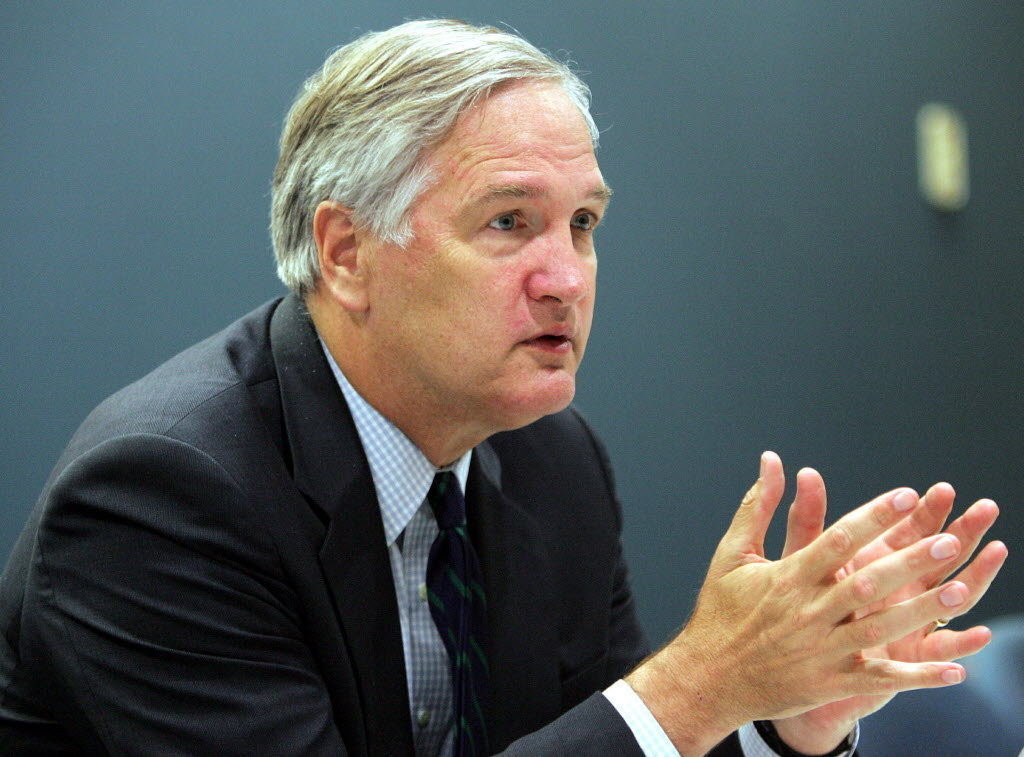
Alabama Attorney General Luther Strange said he was disappointed by a recent federal appellate panel’s decision in a religious liberties case involving broadcast company Eternal Word Television Network, where the Catholic network sought exemptions from a contraception coverage mandate in the Affordable Care Act. EWTN, based in Birmingham, lost their appeal 2-1 on Thursday in the 11th U.S. Circuit Court of Appeals. The prevailing justices ruled the firm must provide contraception coverage to their employees, regardless of their convictions against the practice contraception, which is prohibited in orthodox Catholic doctrine. Strange, however, pointed to another upcoming case whose outcome could vindicate the broadcasters’ court defeat. “I am disappointed in the ruling but the battle to defend religious liberty from federal assault continues as Alabama and 19 other states have joined a similar lawsuit, “Zubik v. Burwell,” before the U.S. Supreme Court this year,” said Strange. “Religious nonprofits like EWTN provide a tremendous service to the public and have no less a constitutional right to exercise their religious beliefs than an individual citizen.” The state of Alabama was a co-plaintiff in EWTN’s case against the federal government’s infringement upon the liberty of religious nonprofits and supported its appeal when a lower court first ruled against them in 2014. Though there are fines associated EWTN’s non-compliance with the law, they have so far been spared having to pay them by an court injunction, pending the outcome by the Zubik case. That decision was also announced Thursday.
House members request federal probe into Mike Hubbard ethics trial

More than 35 Alabama legislators, both Republican and Democrat, have signed on to a letter urging U.S. Attorney General Loretta Lynch and U.S. Attorney for the Middle District of Alabama George Beck to open a U.S. Department of Justice investigation into aspects of House Speaker Mike Hubbard‘s ethics trial. According to the letter, Miles M. “Matt” Hart, an attorney in the office of Alabama Attorney General Luther Strange, has been allowed to “improperly use a grand jury” in efforts against Hubbard. Further, the letter claims that Hart has provided “selective information” commandeered through the grand jury to a political opponent of Hubbard. The letter lays out a twisted tale of corruption based on testimony from attorney Baron Coleman. Coleman was an organizer and consultant with the campaign of Sandy Toomer, who ran against Hubbard in 2014. According to Coleman, Hart provided him with “confidential grand jury information” to be used against Hubbard during that campaign. Coleman claims that he had between 50 and 100 conversations with Hart and used the information discussed therein to create a “whisper campaign” in Hubbard’s home district, Lee County. Coleman specifies that he was provided with the identities of persons appearing before the grand jury, assurances that the jury would indict Hubbard and that the Attorney General’s office had sufficient information to “counter any perceived prejudice or trouble inside the office.” The “assurances” occurred before the grand jury finished hearing testimony and Coleman claims that “each piece of information came from Matt Hart and was provided to the citizens of Lee County” by Coleman and others who believed the information to be factual. The letter goes on to say that Hart threatened to bring Coleman before a grand jury if he ever revealed that he had “a pipeline of information out of the Attorney General’s office.” Further, Coleman claims that when he was subpoenaed by Hubbard’s defense team Hart offered to work with him on answers to “potential questions regarding Speaker Hubbard, the grand jury proceedings” and more. The letter goes on to call into question the timing of Hubbard’s indictments, which occurred only two weeks before his re-election. “The timing of the indictments, coupled with Mr. Coleman’s sworn testimony and the statements if others … gives our members grave concerns that the Alabama Attorney General’s Office has used the power of its office in a coordinated effort to defeat Speaker Hubbard in his election,” the letter says. Though Strange has officially recused himself from “the matter regarding Speaker Hubbard,” and may not believe he has the power to “overrule, discipline, or investigate” Hart, the letter calls for an “unbiased investigation” to be made into the statements made by Coleman. “For the sake of all involved – including Speaker Hubbard, Mr. Hart, General Strange, and the citizens of Alabama – this matter and these claims should be thoroughly investigated by an unbiased body with the resources and experience to do so,” the letter states. “It is our hope that Attorney General Strange will join us in asking the Justice Department to conduct an investigation into these matters involving his office to ensure that the rights of Speaker Hubbard and all Alabama citizens, those rights guaranteed to us in the Constitution of the United States, are protected.” The Attorney General’s office did not immediately return requests for comment. Alabama Today has secured a copy of the letter sent to Lynch and Beck. Check out the full letter and affidavit below: Click to read full document and affidavit.
Attorney General reviews reports of gun law violations by cities
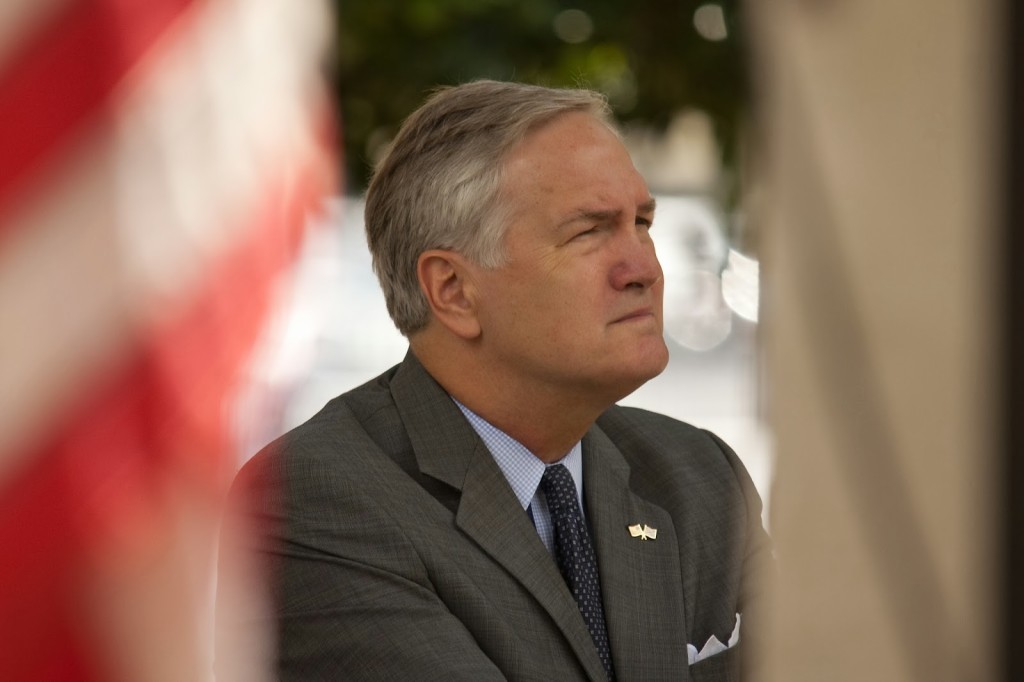
Alabama Attorney General Luther Strange announced the results of three investigations into alleged violations of state gun laws by three municipalities on Wednesday. Strange found city-owned facilities in Daleville, Vestavia Hills and Decatur illegally banned the possession of firearms, contrary to a state statute governing the carrying of guns in public places. The attorney general’s office received a complaint that the city of Vestavia prohibited firearms at half a dozen public parks and recreational sites. Strange met with the city attorney and advised them to remove signs in front of the facilities that advised residents they could not possess a firearm there. After the removal and assurances residents’ rights to carry would not be abridged, no further action was deemed necessary by Strange. Similar steps were taken at the Daleville Cultural and Convention Center and a Decatur Utilities office. In each case, complaints were brought by private residents under a state law enforcement process which triggers a review from the attorney general.
Montgomery convention seeks to tackle Alabama human trafficking

A multitude of groups gathered at Embassy Suites in Montgomery Friday for a convention aimed at finding ways to end the scourge of human trafficking in the state, the majority of which threatens minors. Rep. Jack Williams (R-Vestavia Hills) chairs the state’s Human Trafficking Task Force and was on-hand to welcome guests to Friday morning’s convention. “I don’t want to sound like Donald Trump,” Williams said. “But this is going to be a great conference.” “The whole idea here is to exchange ideas and learn,” Williams continued, after brief statements from Alabama Attorney General Luther Strange. “The issue that we’re dealing with, for many, many years, was an issue in the rough part of town. This is no longer an urban problem, this is a problem that’s pushing outward.” At the conclusion of Williams’ statements, Raleigh Avenue Baptist Church Pastor Nic Seaborn made brief statements concerning his own encounters with the illegal sex trade in Alabama, which he said is taking place only blocks from his church. “The problem of sex trafficking is knocking on our door,” Seaborn said, as he rapped on the podium. “It’s like a cancer, it is spreading into our neighborhoods.” The first speaker of the day was Rachel Harper of Shared Hope International, who touched on the specifics of Alabama’s human trafficking problems and ways to tackle it. Just between January and February of this year, more than 1,900 ads for female escorts were displayed in Alabama. An Alabama State University study found that, in the 15 markets explored, one in 20 men are soliciting sex online, about 90,000 men in Alabama. “It’s everywhere,” Harper said. “It’s rampant.” Harper noted that 80 percent of buyers say jail time or public exposure would thwart their efforts, but Alabama is lacking in substantive laws to protect children and prosecute buyers. According to a presentation from Harper, Alabama is one of only a handful of states with no Commercial Sexual Exploitation of Children (CSEC) laws, meaning the state’s laws are designed to capture traffickers rather than buyers, which are more often than not complicit in the maltreatment of enslaved children. In Alabama, the law requires proof of “force, fraud or coercion” before a human trafficking charge can be levied, leaving buyers an out if they claim ignorance to the age or conditions of the purchased sex worker. Further, according to Harper’s presentation, there is no legal differentiation in the state between purchasing sex from an adult or a child. While the various groups gathered distributed handouts regarding ways to identify endangered children – inability/fear to make eye contact, may have “brand” tattoo, lying about age or possessing false identification and more – people are encouraged not to attempt to rescue victims. Human trafficking, also known as “Modern Day Slavery,” is the second largest criminal industry in the world and generates about $32 billion annually and predominantly victimizes females, a large portion of which are children. Williams plans to bring forth a “Safe Harbor Act” during this year’s legislative session, which will ensure that children ensnared by human trafficking are classified as victims rather than criminals.
Alabama joins amicus brief supporting tighter standards for abortion clinics
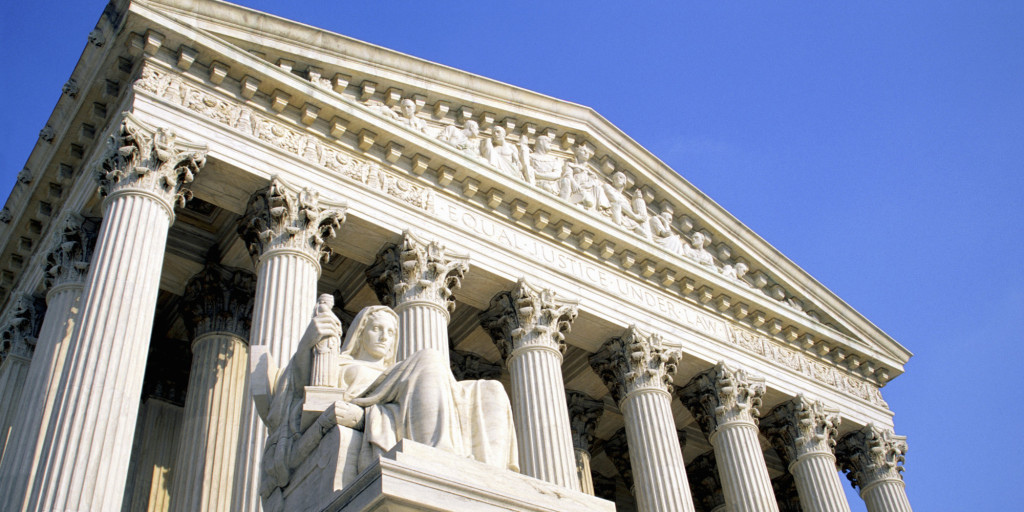
Attorney General Luther Strange has signed on to a federal amicus brief on behalf of Alabama that seeks to bolster the legal case for requiring doctors at abortion clinics to have admitting privileges to a hospital in order to perform pregnancy terminations. Alabama becomes to 24th U.S. state to stand with Texas officials in “Whole Woman’s Health v Cole,” a case challenging the state’s law requiring doctors to meet the higher emergency standards. Alabama’s own law to that effect was previously struck down by U.S. District Judge Myron Thompson, ruling it unduly restricts a woman’s constitutionally guaranteed access to the procedure. Alabama is bolstered by recent decisions in favor of Texas’ right to mandate admission privileges, and many conservative attorneys general hope the trend will allow their own state laws to remain on the books. The states are pleading their case in an amicus or “friend of the court” brief, filed to provide information to the justices of the U.S. Supreme Court they hope will inform their opinion in the case. “There is no justification for affording preferred treatment to abortion rights by unleashing on each State the unwieldy inquiry of whether clinic regulations permit adequate access to abortions,” the state’s maintain in their brief hoping to sway the court. “The Court has always recognized the States’ interest in regulating health and safety – for all patients, including women seeking abortions. It has identified as obvious areas for state oversight, the regulation of doctors and their staff, of medical facilities, and of emergency plans,” it reads. The other states joining with Texas and now Alabama are Arizona, Arkansas, Florida, Georgia, Idaho, Indiana, Kansas, Louisiana, Michigan, Mississippi, Montana, Nebraska, Nevada, North Dakota, Ohio, Oklahoma, South Carolina, South Dakota, Tennessee, Utah, West Virginia, and Wyoming.
