
AG Luther Strange attends SCOTUS oral arguments for multi-state lawsuit over executive amnesty
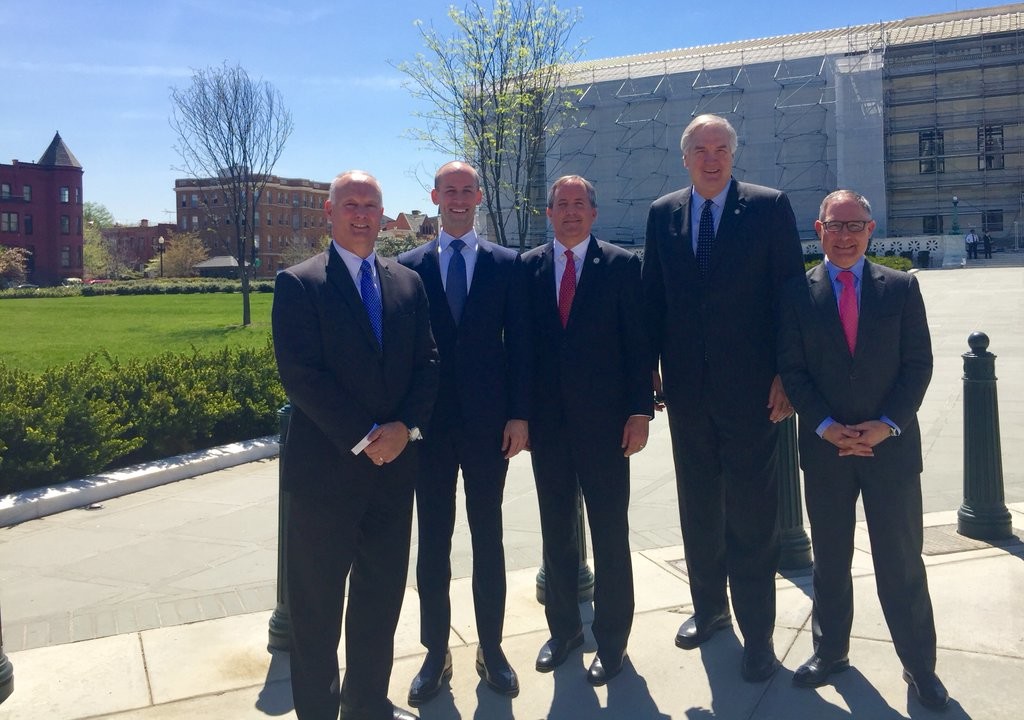
Alabama Attorney General Luther Strange attended the U.S. Supreme Court oral arguments Monday morning in the federal lawsuit against the Obama administration’s executive amnesty order. The case, known as United States v. Texas, calls into question President Barack Obama’s actions aimed at allowing millions of undocumented immigrants to apply for government programs that could make them eligible for work authorization and associated benefits. “Today marked a major milestone in the States’ effort to stop the cavalier and unconstitutional actions of the Obama administration in exceeding its legal authority over Congress and the States,” said Attorney General Strange. Alabama is part of the 26-state coalition led by Texas suing the federal government to block the implementation of President Obama’s unconstitutional executive action legalizing the status of over four million illegal aliens. “This lawsuit, backed by a majority of U.S. states, is about more than the federal government’s attempt to grant amnesty to millions of illegal aliens,” further observed Attorney General Strange. “This lawsuit is about the President’s illegal attempt to change federal law in order to achieve what he was unable to do when Congress voted down his amnesty legislation.” Strange continued, “Through his executive action, the President made dramatic changes that extend legal benefits to people who are openly violating the law, without so much as the notice and opportunity for comment that is required for changes in the federal rule-making process. These actions are unconstitutional and illegal, and will severely impact the States with increased costs for law enforcement, health care and education.” Based on questions asked during the 90-minute oral argument, the case essentially tests the limits of presidential powers. “Two lower federal courts have agreed with our position that the President’s executive order harms the States, and in November the U.S. Fifth Circuit Court of Appeals granted our request for an injunction pending the hearing of this case before the U.S. Supreme Court. I believe the High Court must consider the impact of the majority of States opposing this illegal executive order and I am hopeful it will be ruled unconstitutional,” Strange concluded. The 26 states suing the Obama administration over its executive amnesty plan include Texas, Alabama, Arizona, Arkansas, Florida, Georgia, Idaho, Indiana, Kansas, Louisiana, Maine, Michigan, Mississippi, Montana, Nebraska, Nevada, North Carolina, North Dakota, Ohio, Oklahoma, South Carolina, South Dakota, Tennessee, Utah, West Virginia and Wisconsin. A ruling on the matter is expected from the justices by the end of June.
Bradley Byrne latest to join chorus decrying new pro-union labor rule
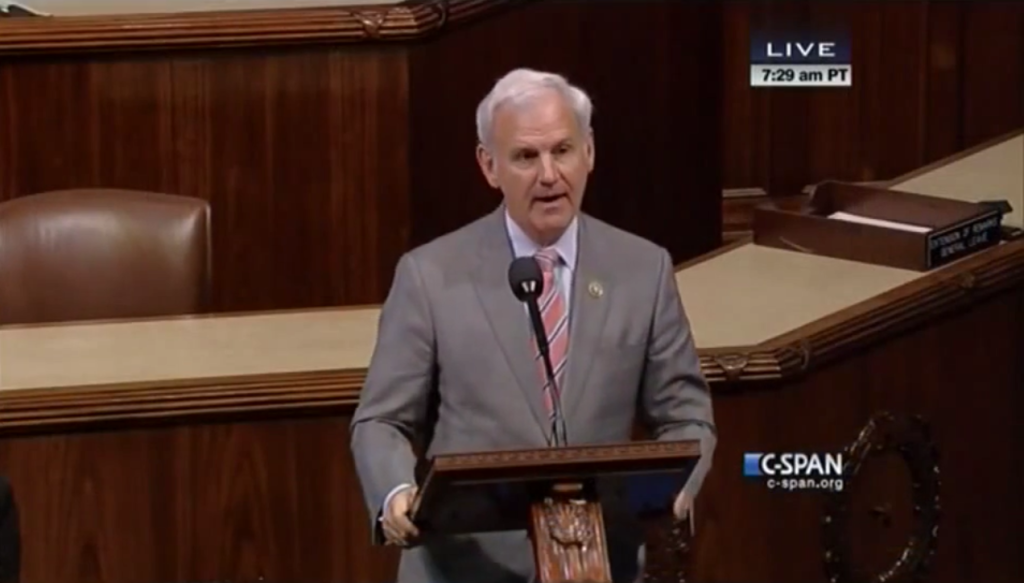
Alabama Congressman Bradley Byrne (R-AL01) reaffirmed Friday afternoon his adamant opposition to a new rule from the U.S. Labor Department, the Persuader Advice Exemption Rule, by introducing a measure to block the regulation. The Congressional Review Act of 1996 established “fast-track” procedures by which Congress can block many of the rules and regulations issued by federal agencies and their bureaucracies by passing and enacting a joint resolution of disapproval. H.J.Res. 87, Byrne’s joint resolution condemning the labor rule, is extraordinarily simple. The two page document simply says “Providing for congressional disapproval under chapter 8 of title 5, United States Code, of the final rule of the Department of Labor relating to ‘Interpretation of the ‘Advice’ Exemption in Section 203(c) of the Labor-Management Reporting and Disclosure Act’. Resolved by the Senate and House of Representatives of the United States of America in Congress assembled, That Congress disapproves the rule submitted by the Department of Labor relating to ‘‘Interpretation of the ‘Advice’ Exemption in Section 203(c) of the Labor-Management Reporting and Disclosure Act’’ (81 Fed. Reg. 15923 (March 24, 2016)), and such rule shall have no force or effect.” The rule, which is being called a “radical reinterpretation” of existing rules, would require greater disclosure of the communication between employers and outside counsel regarding union and worker organization activities. “I am proud to introduce legislation to protect hardworking Americans and employers from a rule that would restrict privacy, upend the attorney-client relationship, and limit employee access to information during an organizing campaign,” said Byrne in a press release Friday afternoon. “Worst of all, no one would be hurt more by the persuader rule than small- to medium-sized businesses. The rule is ultimately just another attempt by the Obama administration to upset decades of legal precedent and put the interests of Big Labor bosses over what is best for American workers. Congress must act to stop this flawed rule from moving forward,” continued Byrne. Earlier this week Attorney General Luther Strange added Alabama to the list of states opposing the rule, filing an amicus brief in an Arkansas Federal Court. While Byrne, Strange, and officials in the states fighting the rule say it’s an undue intrusion into what should be considered client-attorney privilege, according to Secretary of Labor Thomas Perez, “The final rule … is designed to ensure workers have the information they need to make informed decisions about exercising critical workplace rights such as whether to form a union or join a union.”
Alabama Attorney General joins opposition to new Obama administration labor rule
Alabama Attorney General Luther Strange announced Wednesday the state is joining an effort against a regulation promulgated recently by the Obama administration, asking for an injunction against the U.S. Department of Labor’s new Persuader Advice Exemption Rule. The rule, which is being called a “radical reinterpretation” of existing rules, would require greater disclosure of the communication between employers and outside counsel regarding union and worker organization activities. “Small businesses make up over 90 percent of all businesses both in Alabama and across America,” said Attorney General Strange in a press release Wednesday afternoon. “These local job providers can least afford further unwarranted federal mandates that will erode their ability to compete. The new federal labor rule would reverse long-standing protections for confidential attorney-client communications and would place undue burdens on small business.” Alabama joins Arizona, Arkansas, Michigan, Nevada, Oklahoma, South Carolina, Texas, Utah, and West Virginia in filing for the preliminary injunction. The rule has been in the works for several years, drawing in the meantime ire from a variety of different parties, including the American Bar Association. The ABA, in a 2011 letter to the Department, took several issues with the then-proposed rule, but pointed out it would be in violation of the professional standards of the Association, as well as many state bar associations. “The Department’s Proposed Rule is inconsistent with ABA Model Rule of Professional Conduct 1.6 dealing with ‘Confidentiality of Information’ and with the many binding state rules of professional conduct that closely track the ABA Model Rule,” wrote the ABA. “The Proposed Rule could seriously undermine both the confidential client-lawyer relationship and the employers’ fundamental right to counsel; and The scope of the information that the Department’s Proposed Rule would require lawyers engaged in direct or indirect persuader activities to disclose encompasses a great deal of confidential financial information about clients that has no reasonable nexus to the “persuader activities” that the Act seeks to monitor.” While AG Strange, and officials in the states fighting the rule say it’s an undue intrusion into what should be considered client-attorney privilege, according to Secretary of Labor Thomas Perez, “The final rule … is designed to ensure workers have the information they need to make informed decisions about exercising critical workplace rights such as whether to form a union or join a union.” The amicus brief was filed in Arkansas federal district court.
Luther Strange calls on EPA to cancel rule to limit emissions from modified cars
Alabama Attorney General Luther Strange is calling on federal environmental authorities to drop a proposal that would stop off-road racing hobbyists from removing or reconfiguring emissions control devices on modified street vehicles. Strange joined Attorneys General from seven other states in sending a letter to EPA Administrator Gina McCarthy asking her not to implement the proposed rule, saying it would effectively stall the industry related to conversion of street vehicles to racing vehicles. “In another example of federal bureaucrats seeking to expand their regulatory reach, the EPA is pushing a proposed change to the federal Clean Air Act to effectively prohibit street vehicles from being converted into off-road race cars,” said Strange. Strange said the move by regulators, if implemented, would be an economic blow to mechanics and parts suppliers who participate in the cottage industry of car modification. “In Alabama and across the country, modifying race cars is a popular pastime and a significant contributor to the economy,” said Strange. “In 2014, $36 billion was spent nationally on automotive specialty equipment parts and accessories. Off-road racing parts businesses which sell their products in Alabama and elsewhere, as well as local racetracks, would be adversely affected by the implementation of the new EPA rule.” The proposed rule mandates that “Certified motor vehicles and motor vehicle engines and their emission control devices must remain in their certified configuration even if they are used solely for competition or if they become non-road vehicles or engines.” The letter from Strange and the other attorneys general claims the EPA rule change is contrary to existing statute, and conflicts with the expressed intent of Congress not to subject race cars to the same federal emission standards as street vehicles. According to Strange, potecting race cars from emissions requirements was such a concern when Congress passed the Clean Air Act in 1970 that Alabama Congressman Bill Nichols – who represented Talladega, the notorious hometown of Deep South auto racing – specifically asked that the environmental reform law not penalize “vehicles and vehicle engines manufactured for, modified for or utilized in organized motorized racing events.” The other state joining Strange were Arkansas, Georgia, Louisiana, Michigan, Nevada, Ohio, and West Virginia, all states with Republican attorneys general.
Alabama Attorney General: Daily fantasy sports leagues are illegal gambling
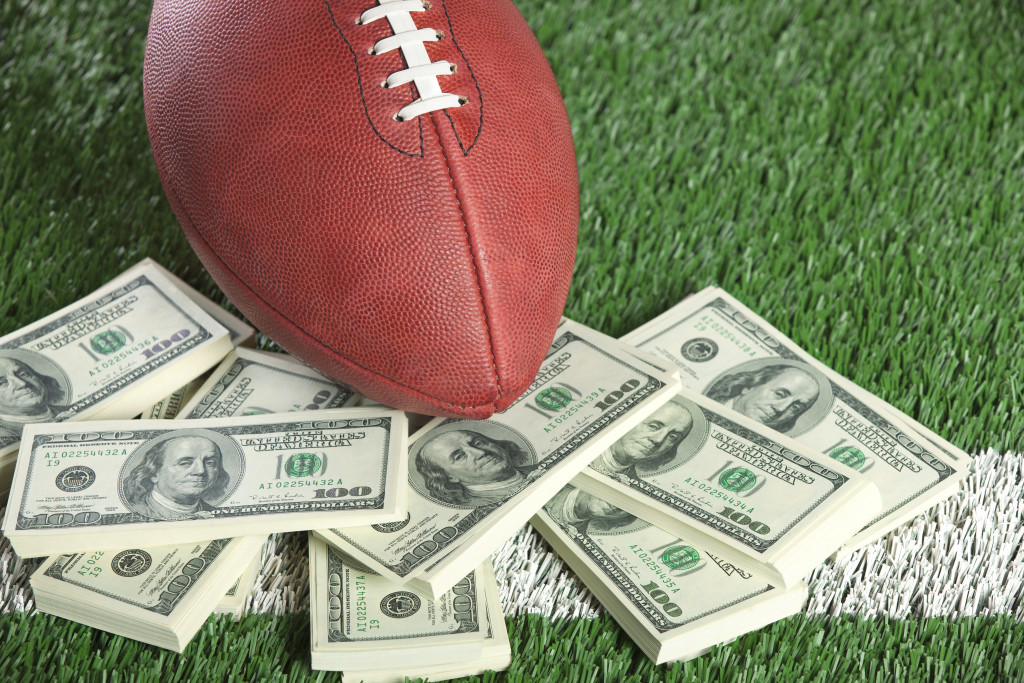
Televisions, smartphones, and computers were flooded during the 2015-2016 football season with advertisements for a relatively new form of fantasy sports. Between FanDuel and DraftKings, sports fans across the country were inundated with commercials promising a fast-paced game with the potential for high payouts. But on Tuesday, Alabama Attorney General Luther Strange sent cease-and-desist letters to two Daily Fantasy Sports companies, after determining that paid daily fantasy sports contests constitute illegal gambling. In daily fantasy sports (DFS), participants pay to create a roster of players, then pit their roster against those of other participants. Whomever’s roster performs the best that day within a certain pool wins prize money through the site. “As Attorney General, it is my duty to uphold Alabama law, including the laws against illegal gambling,” said Strange in a news release Tuesday afternoon. “Daily fantasy sports operators claim that they operate legally under Alabama law. However, paid daily fantasy sports contests are in fact illegal gambling under Alabama law.” According to Alabama code section 13A-20-12, a person participates in gambling if he or she “stakes or risks something of value upon the outcome of a contest of chance or a future contingent event not under his control or influence, upon an agreement or understanding that he or someone else will receive something of value in the event of a certain outcome.” Gambling in Alabama is illegal, with a few exceptions including buying securities and commodities, insurance, and some grandfathered activities. DFS sites often contend they are games of skill, not of chance, and thus aren’t covered under most states’ gambling laws, but Strange contends this is not sufficient to keep them legal in Alabama. “There is, of course, a measure of skill involved in creating a fantasy roster,” wrote the AG’s office. “But in the end, contestants have no control over the performance of the players on their rosters. For example, a player could fall ill before a game, be injured in pre-game warm-ups, or miss a large portion of the game due to injury or equipment failure. All of these factors, and many more, are outside the control of a fantasy sports player. Thus, the results of paid daily fantasy sports contests depend to a large degree on chance.” Two bills currently stalled in committee, SB114 by Sen. Paul Sanford (R-Huntsville) and HB56 by Rep. Connie Rowe (R-Jasper) would each establish regulatory rules regarding fantasy sports games in the state. The bills would require contest operators to institute procedures for consumer protection, require audits of operators and provide penalties for those operating outside of the established regulations. Were they to be passed, the bills would undo Strange’s decision, making the industry immune from being considered a gambling operation in the state. AG Strange says Alabama is the twelfth state to declare DFS to be illegal.
Luther Strange celebrates Alabama Supreme Court ruling against Victoryland
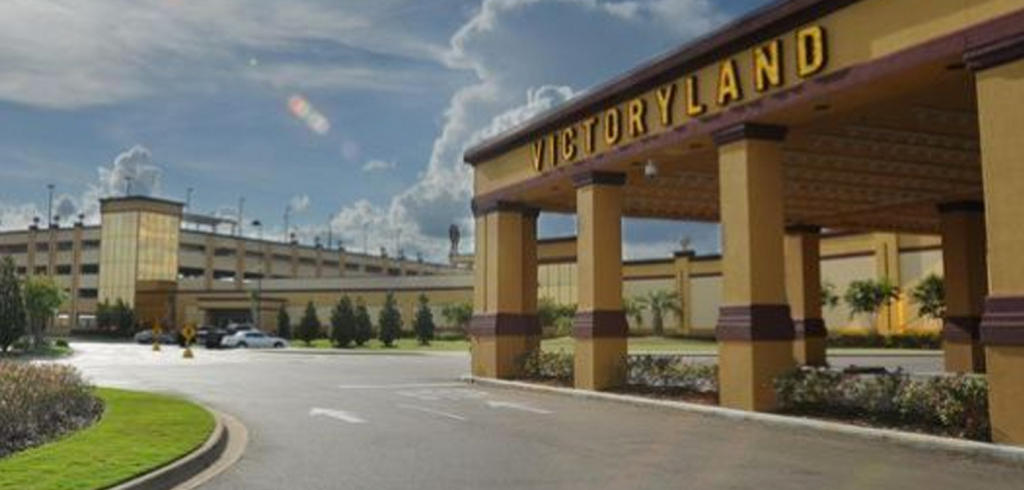
On Friday, Attorney General Luther Strange released a statement praising the Alabama Supreme Court for ruling against Victoryland in a case over the gambling hall’s use of electronic bingo machines. Strange called the ruling a “resounding victory for the rule of law and the definitive word that electronic bingo is illegal in Alabama.” “The Alabama Supreme Court’s ruling is abundantly clear that electronic bingo is illegal and repeated court challenges to the contrary will not change that fact,” Strange said in the statement. “I cannot say it any better than the court itself.” In it’s ruling, the state’s high court said the following: Today’s decision is the latest, and hopefully the last, chapter in the more than six years’ worth of attempts to defy the Alabama Constitution’s ban on ‘lotteries.’ It is the latest, and hopefully the last, chapter in the ongoing saga of attempts to defy the clear and repeated holdings of this Court beginning in 2009 that electronic machines like those at issue here are not the ‘bingo’ referenced in local bingo amendments. It is the latest, and hopefully the last, chapter in the failure of some local law-enforcement officials in this State to enforce the anti-gambling laws of this State they are sworn to uphold, thereby necessitating the exercise and performance by the attorney general of the authority and duty vested in him by law, as the chief law-enforcement officer of this State, to enforce the criminal laws of this State. And finally, it is the latest, and hopefully last, instance in which it is necessary to expend public funds to seek appellate review of the meaning of a simple term — ‘bingo’ – which, as reviewed above, has been declared over and over and over again by this Court. There is no longer any room for uncertainty, nor justification for continuing dispute, as to the meaning of that term. And certainly the need for any further expenditure of judicial resources, including the resources of this Court, to examine this issue is at an end. All that is left is for the law of this State to be enforced.” “I consider the work of my office in bringing the issue of electronic gambling to the courts for final judgement to now be complete,” Strange remarked. “It is now up to the Governor, ALEA, and local authorities to ensure that the law is properly enforced. I am proud of the work of the many local law enforcement jurisdictions who have performed their duty to enforce our laws and I am equally proud of my legal team in bringing this case and the question of electronic bingo to a successful conclusion.”
Comprehensive list of who has asked Robert Bentley to step down
Calls for Alabama Governor Robert Bentley to resign have grown during the past week, as more recordings allegedly between the governor and his former senior adviser Rebekah Caldwell Mason were released. Here is a comprehensive list of the elected officials, state leaders, and groups who have called for the governor’s resignation. Elected officials Rep. Ed Henry, Republican of Hartselle* Rep. Will Ainsworth, Republican of Guntersville** Minority Leader Craig Ford, Democrat of Gadsden Rep. David Standridge, Republican of Hayden Rep. Johnny Mack Morrow, Democrat of Red Bay Sen. Bill Holtzclaw, Republican of Madison Sen. Shay Shelnut, Republican of Trussville Rep. Danny Garrett, Republican of Trussville Groups College Republican Federation of Alabama Montgomery County Republican Party Alabama Republican Assembly Other Prominent Individuals Terry Dunn, former Public Service Commissioner and member of ALGOP Executive Committee Who Has Stayed Silent Alabama Attorney General Luther Strange‘s office released a statement saying they would investigate any wrongdoing, but cited a “longstanding policy regarding pending criminal investigations,” announcing no further information or comment would be released. Republican legislative leadership, including House Speaker Mike Hubbard and Senate President Pro Tem Del Marsh have each been silent on their thoughts about the matter. Likewise, members of the federal delegation have chosen to stay above the fray. Bentley, himself, says he’ll stay in office, calling the scandal “old issues.” “Obviously, there are concerns across the state,” said Bentley. “I’ve got to give the explanation I can give and let them know what we’re going to do and basically tell them how sorry I am. Have I made mistakes? Yes, I have. And I admit those. We’ve addressed those and we properly addressed those several months ago. “These are old issues. It’s just now that people have heard about them. But we’re going to address those and we’re going to move on.” Other Perspectives While reactions to the allegations themselves have been growing, statements made in the aftermath have added another level of commentary to the discussion. Alabama Policy Institute Vice President Katherine Robertson took issue with Mason’s characterization of heightened scrutiny of her relationship with the governor as “gender bias.” “Is there gender bias in Montgomery?” Robertson wrote. “In some cases, but Mrs. Mason cannot claim it. Where true bias exists, people are treated in a certain way (usually negative) due to some preconceived notion about them, whether based on their age, appearance, or ethnicity – not based in reason. “Knowing the evidence that was now available to the public, Mrs. Mason did not deny anything, but in a desperate diversion, tried to claim that her gender was to blame for her present predicament.” Minority Leader Craig Ford added another perspective to the mix in an op-ed for Alabama Political Reporter Thursday, saying the scandal may impact the state’s ability to recruit companies. “His actions are costing Alabama jobs,” Ford said. “There are business owners and leaders of industry who don’t want to sit down with this governor because of the image of corruption that has engulfed the state. We have lost so much opportunity because of this mess. How in the world can we bring anyone else in? What CEO or other corporate group would want to come down here right now? “We are competing against Florida, Georgia, Tennessee and other states that are going to use all of this against us. The governor has provided our competitors with an unfair advantage, and it is absolutely costing us economically.” The timing of the allegations have added another twist to any forced resignation or impeachment attempts. With the legislature on spring break until Tuesday, April 5th, lawmakers have had ample time to whip potential votes on each side of a potential impeachment. Likewise, Speaker Hubbard’s impending trial could throw a wrench into attempts to remove the governor. AL.com writer Kyle Whitmire speculated the Speaker’s legal troubles and the governor’s relationship with Mason are more closely intertwined than it appears on the surface. “The governor, with Mason whispering in his ear and a lawyer with assorted loyalties at his side, took an active and disruptive role in a criminal prosecution of Mike Hubbard,” wrote Whitmire. “That’s the story, not the sex. And no matter the myriad open questions that might take months or years to answer, if ever, one question has a clear answer. Cui bono? Who benefits. Bentley might have blown himself up trying to throw a bomb under Matt Hart‘s chair, but either way, it works for Mike Hubbard.” *Rep. Henry announced Wednesday he will bring forth articles of impeachment when the state legislature returns from spring break. ** Rep. Ainsworth has said he is researching, and will introduce, recall legislation, giving the people of Alabama recourse against elected officials during their terms. ALToday will update the list as more information becomes available.
Ala. AG Luther Strange clarifies state’s position on electronic bingo
On Wednesday, Alabama Attorney General Luther Strange released a copy of his response to a request from United States Attorney George Beck, who asked for clarification on the state’s position on the legality of electronic bingo machines in the state March 21. The request specifically requested information regarding gaming on tribal and non-tribal property. In the letter, Strange notes that Beck’s request likely stemmed from a lawsuit between Strange and Tuskegee Mayor Johnny Ford. Ford sured Strange “several years ago,” but the suit was eventually dropped and Ford’s attorney sanctioned for filing a “legally frivolous lawsuit.” Strange goes on to note that neither “electronic bingo” or “bingo machines” appear in the Code of Alabama and only defines an illegal gambling device as “any device, machine, paraphernalia or equipment that is normally used or usable in the playing phases of any gambling activity, whether that activity consists of gambling between persons or gambling by a person involving the playing of a machine.” The Alabama Code further defines slot machines as “a gambling device that, as a result of the insertion of a coin or other object, operated, either completely automatically or which the aid of some physical act by the play, in such manner that, depending upon elements of chance, it may eject something of value,” a tenet that essentially outlaws electronic bingo machines in the state. Strange’s response goes continues that tribal gaming is overseen by the federal government and the National Indian Gaming Commission has ruled that federal law allows for electronic bingo machines to be operated on native land despite a state ban on the instruments. The response references multiple court rulings that have upheld Alabama’s stance that bingo machines are in fact illegal gambling devices, including a 2009 ruling from the U.S. District Court for the Northern District of Alabama. That court ruled that the way bingo machines operate “compel[s] the conclusion that the electronic bingo games at issue in this case constitute illegal slot machines under Alabama law.” In 2012, the Jefferson County Circuit Court found that “the devices before the Court are slot machines or gambling devices proscribed” by the Code of Alabama. The Houston County Circuit Court, and eventually the Alabama Supreme Court, came to the same conclusion. Strange notes his office negotiated memoranda of understanding (MOUs) with multiple out-of-state slot- machine companies in 2011, which required those companies to remove their devices from Alabama’s jurisdiction or “suffer civil and criminal penalties.” These entities have nothing to do with a tribal-state compact, as such a compact is an agreement between a tribe and a state. However, the Poarch Band of Creek Indians, which currently operates casinos in Atmore, Wetumpka and Montgomery, is not a party to any of those MOUs. Strange added that gambling regulators in other states have imposed fines on some slot-machine companies for their participation in illegal gambling in Alabama prior to 2011.
Barack Obama’s executive actions challenged by multi-state coalition
On Monday, Alabama Attorney General Luther Strange announced that the state has joined 26 others in filing a merits brief with the U.S. Supreme Court opposing executive actions by President Barack Obama. The statement claims Obama’s actions will grant amnesty to four million illegal immigrants. The other states involved in the lawsuit include Texas, Arizona, Arkansas, Florida, Georgia, Idaho, Indiana, Kansas, Louisiana, Maine, Michigan, Mississippi, Montana, Nebraska, Nevada, North Carolina, North Dakota, Ohio, Oklahoma, South Carolina, South Dakota, Tennessee, Utah, West Virginia and Wisconsin. The brief contends that the administration’s Deferred Action for Parents of Americans and Lawful Permanent Residents (DAPA) is “unconstitutional and defies states’ rights.” The law allows illegal immigrants, who have lived in the country since 2010 and have children who are American citizens or lawful permanent residents, to apply for a renewable, three year work permit and avoid deportation. Texas has not only noted the unconstitutionality of the law, but has added that the added burden and expense of issuing driver’s license to undocumented immigrants. Further, a Texas court ruled that the new law violates the tenets of the Immigration and Nationality Act of 1952. According to a 2015 study by the Migration Policy Institute, about 3.6 million undocumented immigrants would be eligible for DAPA. The report further notes that “more than 10 million people live in households with at least one potentially DAPA-eligible adult, including some 4.3 million children under age 18 – an estimated 85 percent of whom are U.S. citizens.” “The president’s immigration order is an outright attempt to sidestep the power of Congress which had earlier refused to pass blanket amnesty for millions of illegal aliens,” Strange said in the statement. “This president has demonstrated over and over the will to circumvent Congress and the limits on his own constitutional authority in order to achieve a political goal.” The Supreme Court is set to hear oral arguments over the law, which has been delayed until all legal proceedings are completed, on April 18.
Luther Strange celebrates “precedent-setting” ruling in theft of property cases
Alabama Attorney General Luther Strange recently released a statement hailing what he called a “precedent-setting” ruling that will have a wide-reaching consequences in theft of property cases. The ruling was made by the Alabama Supreme Court on Friday in the case of James R. Hall v. State of Alabama. As former commander of the Houston County chapter of Disabled American Veterans (DAV), Hall wrote a $1,500 check to himself from a DAV account. After other board members called the transaction into question, Hall refused to pay back the money. On Feb. 9, 2015, Hall was convicted of second-degree theft of property and sentenced to two years in prison. On appeal, Hall asserted the charges should be dropped, that he was convicted of “theft of currency” while he actually stole a check. The Court of Criminal Appeals upheld the conviction and the Alabama Supreme Court followed that affirmation with a decision that “overruled cases relying on antiquated methods for valuating currency.” When referencing “antiquated methods of valuating currency,” Strange’s statement makes the following comparison: “For example, in long past years, five silver coins would have been worth less than five gold coins, so the value of what was stolen depended on its particular nature. Today’s Alabama Supreme Court decision modernized the law to reflect modern financial practices, which recognize that the value of currency is standardized and is not dependent on whether the medium of exchange is currency, check, debit card, or credit card.” “This is an important case that changes previous holdings which would have resulted in criminals being set free because of an insignificant technicality in the language of an indictment,” Strange said in a prepared statement. “This means that criminals will be held to account for their theft, whether it be of currency, a check, or other medium of monetary exchange.”
Luther Strange says his office will investigate ”potential wrongdoing” at ALEA
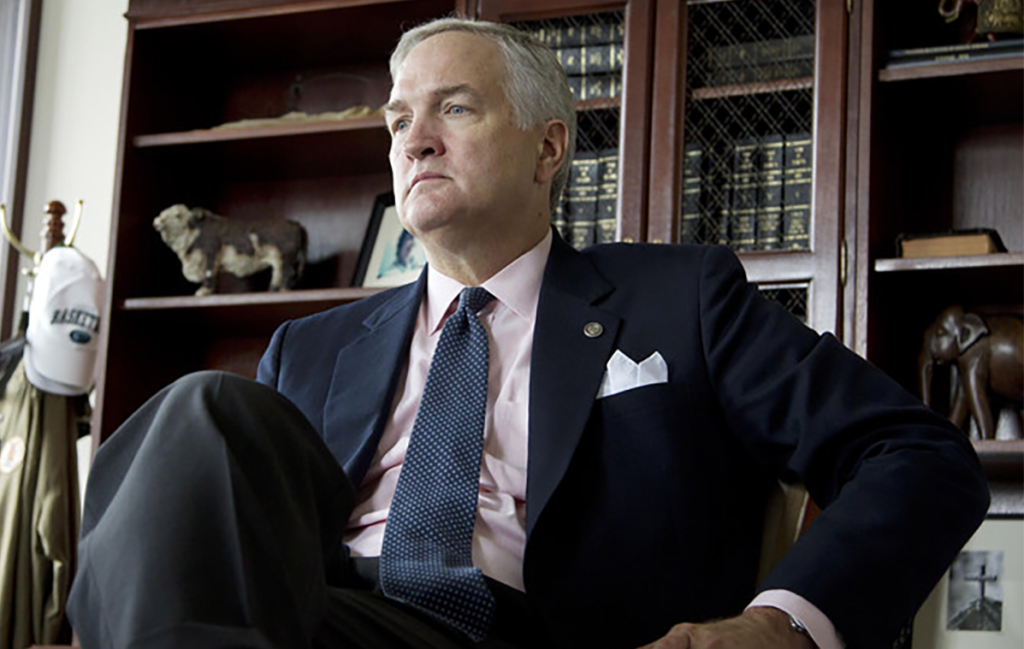
Revelations surfaced this week that an internal probe at the Alabama Law Enforcement Agency uncovered financial inconsistencies and a possible misuse of state money. Shortly after the news broke of the possible indiscretions, ALEA Secretary Spencer Collier was terminated and a war of words ensued between him and Gov. Robert Bentley. Consequently, Attorney General Luther Strange released a statement about his office’s role: “In light of the accusations of potential wrongdoing that have been made over the last two days, and the numerous inquiries that my office has received, I would like to assure the public that the Attorney General’s Office takes very seriously any allegations involving potential criminal misconduct. My office has a strong record of probing illegal activity in this state and we will continue to do our job.” Strange added that, because of his office’s “longstanding policy regarding pending criminal investigations,” no further information would be released at this time.
Committees OK bills to allow Alabama casinos to operate bingo machines

Committees approved two bills Wednesday aimed at gambling halls VictoryLand and GreeneTrack to resume operations without interference from state law enforcement. The Senate Committee on Tourism and Marketing approved SB320 from Sen. William Beasley (D-Clayton), which would allow VictoryLand in Macon County to operate the same bingo machines being used by the Poarch Creek Indians at casinos in Wetumpka, Atmore and Montgomery. Beasley’s bill would codify the legality of the machines and allow the now-closed casino to resume normal operations. He said the bill would stand to reinforce the current amendment allowing bingo in the county and help to recoup the more than 2,000 jobs lost when the gambling hall was closed down. The bill was approved with little discussion. The House Committee on Economic Development and Tourism approved HB419 from Rep. Artis McCampbell (D-Livingston), does essentially the same thing as Beasley’s: It codifies the legality of bingo on electronic devices used by Native American casinos and establishes a gaming commission to oversee the operations. However, McCampbell’s legislation is a constitutional amendment, which means that, if it is passed by the legislature, the voters of Greene County would have the final say in whether or not is in enacted. Beasley’s bill will have to go before the governor if it is able to clear the legislature. Gov. Robert Bentley said last year that he has no further plans to go after gambling operations in the state. Further, Attorney General Luther Strange, who had previously taken the lead in unraveling many state gaming operations, has demonstrated an unwillingness to attack such operations recently. The two bills aim to ensure that the gambling halls are safe from prosecution once Bentley’s time has expired. After gaining favorable reports, both bills are slated to go before their respective houses when the legislative session resumes April 5.
