
GOP filibuster blocks Democrats’ big voting rights bill
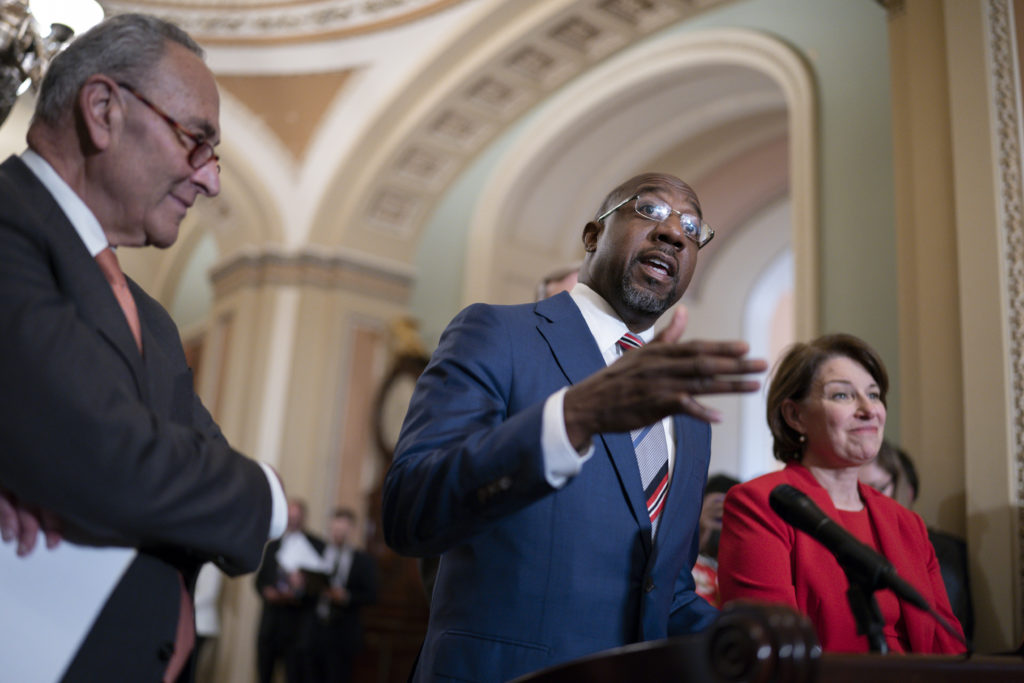
The Democrats’ sweeping attempt to rewrite U.S. election and voting law suffered a major setback in the Senate Tuesday, blocked by a filibuster wall of Republican opposition to what would be the largest overhaul of the electoral system in a generation. The vote leaves the Democrats with no clear path forward, though President Joe Biden declared, “This fight is far from over.” The bill, known as the For the People Act, would touch on virtually every aspect of how elections are conducted, striking down hurdles to voting that advocates view as the Civil Rights fight of the era, while also curbing the influence of money in politics and limiting partisan influence over the drawing of congressional districts. But many in the GOP say the measure represents instead a breathtaking federal infringement on states’ authority to conduct their own elections without fraud — and is meant to ultimately benefit Democrats. It failed on a 50-50 vote after Republicans, some of whom derided the bill as the “Screw the People Act,” denied Democrats the 60 votes needed to begin debate under Senate rules. Vice President Kamala Harris, the first Black woman to hold her office, presided over the chamber as the bill failed to break past that filibuster barrier. Biden praised Senate Democrats for standing together “against the ongoing assault of voter suppression that represents a Jim Crow era in the 21st Century.” In a statement from the White House, he said that in their actions, though unsuccessful on Tuesday, they “took the next step forward in this continuous struggle.” The rejection forces Democrats to reckon with what comes next for their top legislative priority in a narrowly divided Senate. They’ve touted the measure as a powerful counterweight to scores of proposals advancing in GOP-controlled statehouses making it more difficult to vote. “Once again, the Senate Republican minority has launched a partisan blockade of a pressing issue,” Senate Majority Leader Chuck Schumer said from the chamber floor. He vowed that the vote was the “starting gun” and not the last time voting rights would be up for debate. Whatever Democrats decide, they will likely be confronted with the same challenge they faced Tuesday when minority Republicans used the filibuster — the same tool that Democrats employed during Donald Trump’s presidency — to block consideration of the bill. Republicans showed no sign of yielding. Republican leader Mitch McConnell called the bill a “a solution looking for a problem” and vowed to “put an end to it.” Texas Sen. Ted Cruz dismissed it as “partisan legislation, written by elected Democrats, designed to keep elected Democrats in office.” And, more graphically, Sen. Shelley Moore Capito called the bill “a despicable, disingenuous attempt to strip states of their constitutional right to administer elections” that “should never come close to reaching the president’s desk.” Pressure has been mounting on Democrats to change Senate rules or watch their priorities languish. A group of moderate Democratic senators, however, including Sens. Joe Manchin and Kyrsten Sinema, have ruled that out, denying the votes needed to make a filibuster change. Biden has vowed what the White House calls the “fight of his presidency” over ensuring Americans’ access to voting. But without changes to Senate rules, key planks of his agenda, including the voting bill, appear stalled. Sen. Raphael Warnock, a Georgia Democrat and senior pastor at the Atlanta church Martin Luther King Jr. once led, called minority Republicans’ willingness to prevent debate on the voting bill a “dereliction” of duty. “What could be more hypocritical and cynical than invoking minority rights in the Senate as a pretext for preventing debate about how to preserve minority rights in the society,” Warnock said during a floor speech Tuesday. The changes being enacted in many Republican states are decried by voting rights advocates who argue the restrictions will make it more difficult for people to cast ballots, particularly minority residents who tend to support Democrats. Republicans, cheered on by Trump, talk instead about fighting potential voting fraud and say the Democrats’ concerns are wildly overblown. As the Senate discussion churns, more changes could be coming to the bill. Democrats want to protect against intimidation at the polls in the aftermath of the 2020 election. They propose enhancing penalties for those who would threaten or intimidate election workers and creating a “buffer zone” between election workers and poll watchers, among other possible changes. They also want to limit the ability of state officials to remove local election officials. Georgia Republicans passed a law earlier this year that gives the GOP-dominated Legislature greater influence over a state board that regulates elections and empowers it to remove local election officials deemed to be underperforming. But Democrats have divisions of their own. Until Tuesday, it wasn’t even clear that they would be united on the vote to bring the bill up for debate. Manchin, a moderate from West Virginia, announced earlier this month that he couldn’t support the bill because it lacked Republican support. Manchin flipped his vote to a “yes” after Democrats agreed to consider his revised version. His proposal was endorsed by former President Barack Obama and called a “step forward” by Biden’s administration. Manchin has proposed adding provisions for a national voter ID requirement, which is anathema to many Democrats, and dropping a proposed public financing of campaigns. Those changes did little, however, to garner the bipartisan support Manchin was hoping for. Senate Republicans said they would likely reject any legislation that expands the federal government’s role in elections. McConnell dismissed Manchin’s version as “equally unacceptable.” Sen. Lisa Murkowski, a moderate Alaska Republican, said some aspects of the Democratic bill were laudable and she supports other voting rights legislation, like a reinstatement of the Voting Rights Act struck down by the Supreme Court in 2013. But, ultimately, she said the “sprawling” bill amounted to “a one-size-fits-all mandate coming out of Washington D.C.” that “in many cases doesn’t work.” Months in the making, Tuesday’s showdown had taken on fresh urgency as Trump continues to challenge
Paul DeMarco: Push to ban critical race theory from being taught in Alabama schools gaining momentum
The debate over critical race theory has swept the nation and has become a contentious issue at school board meetings in almost every state. At least four states have banned the controversial plan that arose from Marxist ideology and is being used by some educators to advocate that the United States was established on racist beliefs and systemic racism is inherent in every organization and government body. Critical race theory teaches that the American concept of a color-blind society and that judging one by the content of their character and the color of their skin as espoused by Martin Luther King, Jr. is flawed. Alabama has also joined the debate and there are already efforts to stop these types of programs from being taught in state schools. The state school board has already debated a resolution that may be considered in August to prohibit discussions of critical race theory from taking place in Alabama public schools. And Alabama State Representative Chris Pringle from Mobile will be introducing a bill next during the next legislative session in 2022 that would prohibit public K-12 schools from teaching critical race theory. Parents of Alabama students around the state are already taking this up with local school boards so I anticipate that this bill will be addressed and passed early next year by the Alabama Legislature. Paul DeMarco is a former member of the Alabama House of Representatives.
Congress approves bill to make Juneteenth a federal holiday; Mo Brooks and Mike Rogers voted against
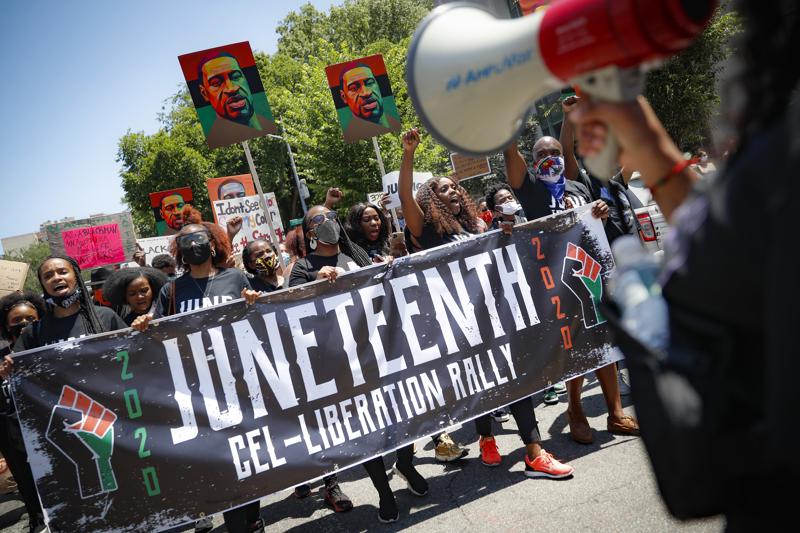
The United States will soon have a new federal holiday commemorating the end of slavery in the nation. The House voted 415-14 Wednesday to make Juneteenth, or June 19th, the 12th federal holiday. The bill now goes to President Joe Biden’s desk, and he is expected to sign it into law. Juneteenth commemorates the day the last enslaved African Americans learned they were free. Confederate soldiers surrendered in April 1865, but word didn’t reach the last enslaved Black people until June 19, when Union soldiers brought the news of freedom to Galveston, Texas. That was also about 2 1/2 years after the Emancipation Proclamation freed slaves in the Southern states. It’s the first new federal holiday since Martin Luther King Jr. Day was created in 1983. “Our federal holidays are purposely few in number and recognize the most important milestones,” said Rep. Carolyn Maloney, D-N.Y. “I cannot think of a more important milestone to commemorate than the end of slavery in the United States.” Rep. Sheila Jackson Lee, D-Texas, speaking next to a large poster of a Black man whose back bore massive scarring from being whipped, said she would be in Galveston this Saturday to celebrate along with Republican Sen. John Cornyn of Texas. “Can you imagine?” said the rather short Jackson Lee. “I will be standing maybe taller than Sen. Cornyn; forgive me for that because it will be such an elevation of joy.” The Senate passed the bill a day earlier under a unanimous consent agreement that expedites the process for considering legislation. It takes just one senator’s objection to block such agreements. “Please, let us do as the Senate. Vote unanimously for passage,” Rep. David Scott, D-Ga., pleaded with his colleagues. The vote comes as lawmakers struggle to overcome divisions on police reform legislation following the killing of George Floyd by police and as Republican state legislators push what experts say is an unprecedented number of bills aimed at restricting access to the ballot box. While Republicans say the goal is to prevent voter fraud, Democrats contend that the measures are aimed at undermining minority voting rights. Several members of the Congressional Black Caucus took to the floor to speak in favor of the bill. Rep. Bonnie Watson Coleman, D-N.J., said she viewed Juneteenth as a commemoration rather than a celebration because it represented something that was delayed in happening. “It also reminds me of what we don’t have today,” she said. “And that is full access to justice, freedom, and equality. All these are often in short supply as it relates to the Black community.” The bill was sponsored by Sen. Edward Markey, D-Mass., and had 60 co-sponsors. Democratic leaders moved quickly to bring the bill to the House floor after the Senate’s vote the day before. Some Republican lawmakers opposed the effort. Rep. Matt Rosendale, R-Mont., said creating the federal holiday was an effort to celebrate “identity politics.” “Since I believe in treating everyone equally, regardless of race, and that we should be focused on what unites us rather than our differences, I will vote no,” he said in a press release. The vast majority of states recognize Juneteenth as a holiday or have an official observance of the day, and most states hold celebrations. Juneteenth is a paid holiday for state employees in Texas, New York, Virginia, and Washington. Under the legislation, the federal holiday would be known as Juneteenth National Independence Day. Rep. Clay Higgins, R-La., said that he would vote for the bill and that he supported the establishment of a federal holiday, but he was upset that the name of the holiday included the word “independence” rather than “emancipation.” “Why would the Democrats want to politicize this by co-opting the name of our sacred holiday of Independence Day?” Higgins asked. Rep. Brenda Lawrence, D-Mich., replied, “I want to say to my white colleagues on the other side: Getting your independence from being enslaved in a country is different from a country getting independence to rule themselves.” She added: “We have a responsibility to teach every generation of Black and white Americans the pride of a people who have survived, endured, and succeeded in these United States of America despite slavery.” The 14 House Republicans who voted against the bill were Andy Biggs of Arizona, Mo Brooks of Alabama, Andrew Clyde of Georgia, Scott DesJarlais of Tennessee, Paul Gosar of Arizona, Ronny Jackson of Texas, Doug LaMalfa of California, Thomas Massie of Kentucky, Tom McClintock of California, Ralph Norman of South Carolina, Mike Rogers of Alabama, Rosendale of Montana, Chip Roy of Texas, and Tom Tiffany of Wisconsin.
Selma-to-Montgomery march camps top list of endangered sites
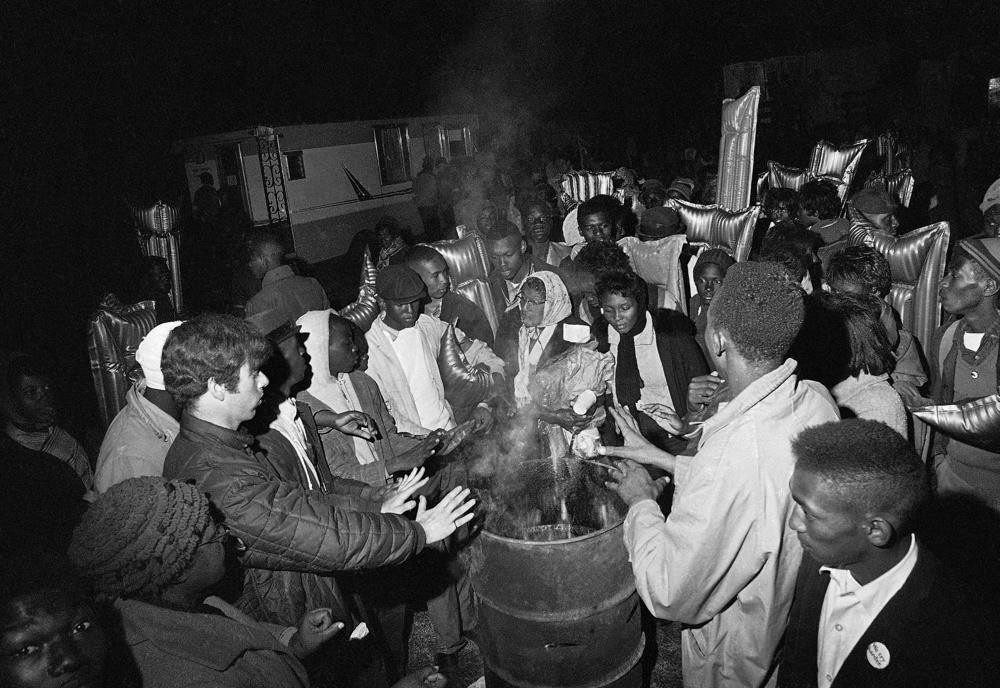
The landmark voting rights march from Selma to Montgomery in 1965 didn’t happen in just one day: Participants spent four nights camping along the roughly 55-mile (89-kilometer) route through Alabama, sleeping in tents and near farm buildings under the watch of guards to prevent white supremacist attacks. Now threatened by decades of weather and wear, the campsites used by those marchers are among the nation’s most endangered historic places, according to a new assessment by a preservation group. The sites, along with 10 other locations in nine states, need immediate attention or risk being lost, according to the nonprofit National Trust for Historic Preservation. Three of the campsites are privately owned, rural acreage along U.S. 80, which links Selma and the capital city, and the fourth is the City of St. Jude, a Roman Catholic complex where marchers spent the night before thousands followed the Rev. Martin Luther King Jr. to the Alabama Capitol on March 25, 1965, to demonstrate for voting rights for Black people. The march route looks different today than it did 56 years ago — what was then a two-lane road is now four lanes, with added traffic and new construction. While leaving the details of preservation to families that own the camp land and local officials, the trust is shedding light on the sites and others at a time when voting rights and racial justice are again a national issue. “These 11 places celebrate the interconnection of American culture and acknowledge it as a multicultural fabric that, when pieced together, reveals our true identity as a people,” said Paul Edmondson, president of the Washington-based organization, which releases a list of endangered places annually. Other places on the 2021 list include: – Trujillo Adobe, the remains of an early Latino settlement dating back nearly 160 years in Riverside, California. – Summit Tunnels 6 & 7 and Summit Camp Site in Truckee, California, which tell the story of Chinese railroad workers who built the Transcontinental Railroad in the 1860s. – Georgia B. Williams Nursing Home in Camilla, Georgia, once the state’s only Black-owned birthing place for African American women. – Boston Harbor Islands, archaeological and historic sites on 34 islands just off the coast of Boston. – Morningstar Tabernacle No. 88 Order of Moses Cemetery and Hall, a historic Black settlement dating to the late 1800s in Cabin John, Maryland. – Home of Sarah Elizabeth Ray, a Black woman and activist who launched a legal fight after being denied entry to a segregated ferry in Detroit in 1945. – The Riverside Hotel, which housed Black blues musicians and others during the Jim Crow era in Clarksdale, Mississippi. – Pine Grove Elementary School, built for Black children by philanthropist Julius Rosenwald in 1917 in Cumberland, Maryland. – Threatt Filling Station, which catered to Black travelers on Route 66, and a family farm in Luther, Oklahoma. – Oljato Trading Post, built in 1921 and one of the few Navajo trading posts remaining in the region around San Juan County, Utah. The Selma-to-Montgomery March began two weeks after Alabama state troopers beat marchers attempting to leave Selma on a day that came to be called “Bloody Sunday.” Sites in Selma and the route to Montgomery are now part of the Selma-to-Montgomery National Historic Trail. Under the watch of members of the Alabama National Guard, marchers first stopped about 7 miles east of Selma at land owned by David Hall, a Black farmer who risked harassment from white neighbors upset about the march. A photo of marchers showed them gathered around a fire built in an old metal drum for warmth, and Hall’s granddaughter Davine Hall said visitors still stop by. “Sometimes we come outside and there’s a whole yard of bike riders, people who stopped by and want a tour,” said Hall, who splits time between the family land and California. “Sometimes they actually ask if they can spend the night.” The next rainy night they stayed on the property of Rosie Steele, followed by a stay on land owned by Robert Gardner, where Tuskegee University students supplied dinner and marchers slept on donated swimming pool air mattresses, many of which deflated overnight. Gardner’s daughter, Cheryl Gardner Davis, was 4 at the time and still remembers the crowds and noise. A white neighbor threatened her father for welcoming the marchers, she said, and for years the family kept quiet about the experience. “I remember my father telling us that we couldn’t go anywhere by ourselves, that we always had to have an adult with us. He said if we saw a car along the road that was the FBI watching over us,” said Davis. “It was a little scary.” Dozens of marchers spent the night along the way, and their numbers grew exponentially by the time the march reached downtown Montgomery. While the families who owned the campsites had little contact through the decades, planning is underway to preserve homes that were on the Hall and Gardner sites in 1965 and perhaps turn them into educational venues, said Phillip Howard, a Birmingham-area consultant working on the project with The Conservation Fund. On the final night of the march, about 3 miles (4.83 kilometers) from Alabama’s Capitol, demonstrators camping at the City of St. Jude were entertained by stars including Harry Belafonte; Tony Bennett; Peter, Paul and Mary; Sammy Davis Jr. and Joan Baez before the final leg of the journey. The chapel there remains much as it was then. Today near the Capitol, a stone historical marker recounts the events of 1965, when King addressed an estimated 25,000 people at the end of the march. Plain steel signs identify the campsites used by the marchers along the way, but there’s little else to signify their importance. Republished with the permission of the Associated Press.
Alabama, Mississippi mark Confederate Memorial Day
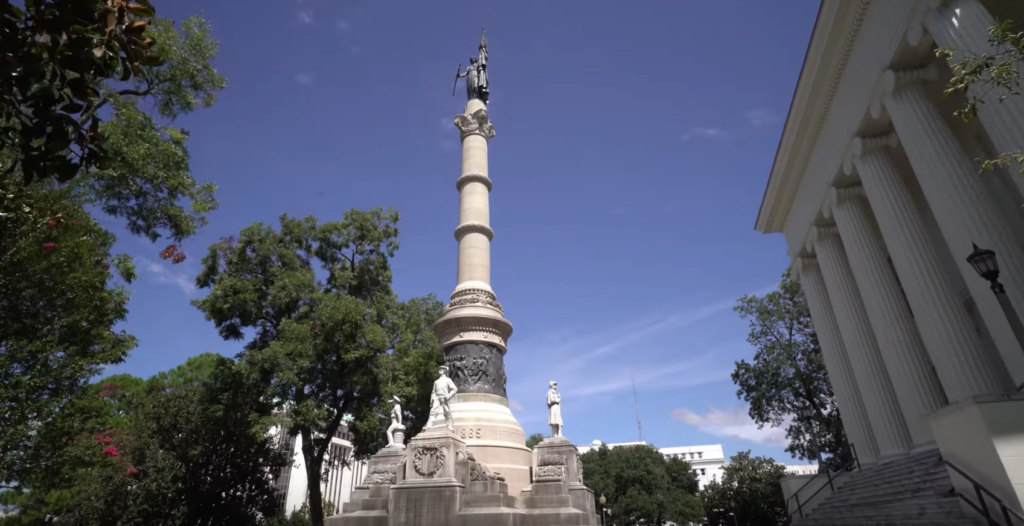
State offices were closed Monday in Alabama and Mississippi for Confederate Memorial Day, which a watchdog group used to call for the removal of additional monuments to the Confederacy. The Montgomery-based Southern Poverty Law Center, in a statement, said Confederate symbols erected by Southern heritage groups were used by white supremacists “as tools of racial terror” and said 170 were removed across the nation last year. “We recognize that removing these symbols is only the first step. We must work for racial justice and an honest reckoning with our country’s past and present. That cannot be accomplished by removing a memorial or renaming a school, but it is a necessary step,” said the statement. Alabama and Mississippi have two more Confederate-related state holidays besides Confederate Memorial Day. Both states jointly observe Robert E. Lee Day with Martin Luther King, Jr. Day in January, and Alabama marks the birthday of Confederate President Jefferson Davis in February. Mississippi marks Davis’s birthday on federal Memorial Day in May. Confederate Memorial Day was made a state holiday in Alabama in 1901, the same year the state’s Constitution, which was intended to guarantee white supremacy, was approved. South Carolina will mark Confederate Memorial Day on May 10. Texas observes Confederate Heroes Day in January. Republished with the permission of the Associated Press.
States declare emergencies, close capitols ahead of rallies
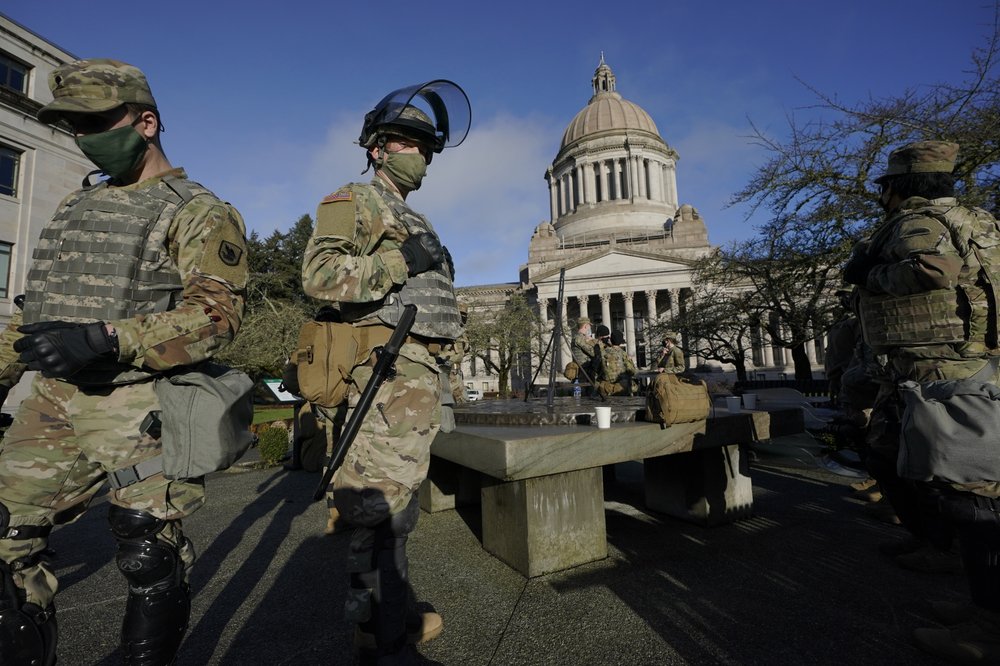
Responding to warnings of potentially violent demonstrations, governors across the nation are calling out National Guard troops, declaring states of emergency and closing their capitols to the public ahead of President-elect Joe Biden’s inauguration next week. Though details remain murky, demonstrations are expected at state capitols beginning Sunday and leading up to Biden’s succession of President Donald Trump on Wednesday. State officials hope to avoid the type of violence that occurred Jan. 6, when a mob of Trump supporters stormed the U.S. Capitol, leaving a Capitol Police officer and four others dead. The FBI has warned of the potential for violence at all state capitols and has said it is tracking an “extensive amount of concerning online chatter,” including calls for armed protests. Governors across the country are sending thousands of National Guard troops to Washington, D.C., where the National Mall has been closed to the general public as part of an intense security effort. More than a dozen governors also have called out the Guard to protect their own state capitols and aid local law enforcement officers. “We are prepared for the worst, but we remain hopeful that those who choose to demonstrate at our Capitol do so peacefully, without violence or destruction of property,” Michigan State Police Col. Joe Gasper said Friday, as Democratic Gov. Gretchen Whitmer announced the Guard’s role. Crews installed a six-foot fence around the Michigan Capitol ahead of expected protests, and ground-level windows were boarded up at a nearby building that houses the governor’s office. Gasper said an increased state police presence would remain at the statehouse at least through mid-February. Some windows also were boarded at capitols in Wisconsin and Illinois, both of which activated the National Guard to help with security. Though the Wisconsin Capitol already was closed to the public because of the coronavirus, Democratic Gov. Tony Evers’ administration told those who had been coming into the Capitol to instead work remotely for the rest of the month. Law enforcement officials were reducing parking around the capitol building in Madison this weekend and urging people to avoid the area as they braced for potential unrest. There was only one known organized event for the day, an anti-fascist demonstration where free food, drinks and clothes were to be distributed. California Gov. Gavin Newsom is mobilizing up to 1,000 National Guard members over concerns of civil unrest. State officials on Thursday erected a chain link fence around the Capitol, bolstering other temporary and permanent barriers. The California Highway Patrol is refusing to issue permits for rallies at the Capitol. “We’re treating this very seriously and deploying significant resources to protect public safety, critical infrastructure and First Amendment Rights,” Newsom said in a video message. “But let me be clear: There will be no tolerance for violence.” Other governors were encouraging people to stay away from capitol buildings during the coming days. Ohio Gov. Mike DeWine, a Republican, closed the Capitol until after Biden’s inauguration and activated hundreds of National Guard members. Citing the possibility of armed protests, Kansas Gov. Laura Kelly on Friday began a one-week restriction on public access to the Capitol. Only those who have business with the Legislature or governor’s office will be allowed inside, and they will have to provide an email showing they have a meeting or are testifying to a legislative committee. Kelly and Pennsylvania Gov. Tom Wolf closed their Capitol buildings for a couple days next week, coinciding with the presidential inauguration. The Pennsylvania Capitol complex already had been closed to the general public because of the coronavirus pandemic, but the new order advises state employees who work in person to take off Tuesday and Wednesday; Monday is the Martin Luther King Jr. holiday. “While we are not aware of any specific threats at this time, we want to act with an abundance of caution to keep employees safe,” Wolf’s administration said on its website. Uncertainty heading into the weekend was a common theme among state officials and law enforcement officers. Many were enhancing security based on past demonstrations or general warnings but without specific expectations about how many protesters, if any, would show up outside state capitol buildings in the coming days. The National Guard is supplementing security at Washington’s capitol, where people broke a gate and entered the grounds of the governor’s mansion last week. But Washington State Patrol spokesman Chris Loftis said Friday that there are “no known explicit threats” detailing the time, place and action of future demonstrations. “We cannot be dismissive of the possible dangers but we should not be alarmists either,” Loftis said in an email to media. The state patrol “has been directed to meet this discomforting uncertainty with caution, preparedness, resolve, and calm — certainly, a wise course of action for all.” Legislatures in several states, including Michigan, also were canceling or limiting their work next week. Oregon’s Legislature will convene Tuesday. But the House and Senate have canceled floor sessions and committee hearings, and there will be no in-person meetings. Senate President Peter Courtney, a Democrat from Salem, said the decision was made after consulting with police. Last month, a violent crowd entered the Oregon Capitol, fought with police and damaged the building. The Republican-led South Carolina House and Senate won’t convene in full session next Tuesday or Wednesday, and committees will meet virtually. The Capitol building will be closed from Saturday through Wednesday “out of an abundance of caution,” state and local authorities said in a joint statement. Republican leaders of the Missouri House also canceled session for next week. Though several House members had expressed security concerns following the unrest in the nation’s capitol, a written statement from GOP leadership cited a rising number of COVID-19 cases in the Capitol building as a reason for the cancellation. New Mexico Gov. Michelle Lujan Grisham, a Democrat, and Utah Gov. Spencer Cox, a Republican, both declared states of emergency on Thursday ahead of potential demonstrations at their capitols. Fencing was installed in a wide radius around
Raphael Warnock, Jon Ossoff win in Georgia, handing Dems Senate control
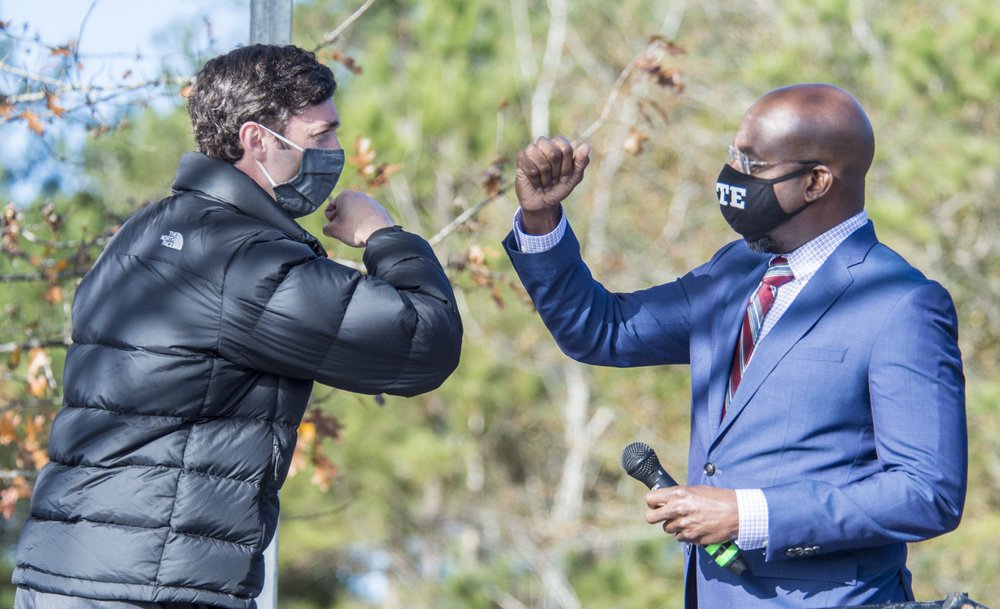
Democrats won both Georgia Senate seats — and with them, the U.S. Senate majority — as final votes were counted Wednesday, serving President Donald Trump a stunning defeat in his turbulent final days in office while dramatically improving the fate of President-elect Joe Biden’s progressive agenda. Jon Ossoff and Raphael Warnock, Democratic challengers who represented the diversity of their party’s evolving coalition, defeated Republicans David Perdue and Kelly Loeffler two months after Biden became the first Democratic presidential candidate to carry the state since 1992. Warnock, who served as pastor for the same Atlanta church where civil rights leader the Rev. Martin Luther King Jr. preached, becomes the first African American from Georgia elected to the Senate. And Ossoff becomes the state’s first Jewish senator and, at 33 years old, the Senate’s youngest member. This week’s elections were expected to mark the formal finale to the tempestuous 2020 election season, although the Democrats’ resounding success was overshadowed by chaos and violence in Washington, where angry Trump supporters stormed the U.S. Capitol to stop Congress from certifying Biden’s victory. Wednesday’s unprecedented siege drew fierce criticism of Trump’s leadership from within his own party, and combined with the bad day in Georgia, marked one of the darkest days of his divisive presidency. Still, the Democrats’ twin victories in Georgia represented a striking shift in the state’s politics as the swelling number of diverse, college-educated voters flex their power in the heart of the Deep South. They also cemented the transformation of Georgia, once a solidly Republican state, into one of the nation’s premier battlegrounds for the foreseeable future. In an emotional address early Wednesday, Warnock vowed to work for all Georgians whether they voted for him or not, citing his personal experience with the American dream. His mother, he said, used to pick “somebody else’s cotton” as a teenager. “The other day, because this is America, the 82-year-old hands that used to pick somebody else’s cotton picked her youngest son to be a United States senator,” he said. “Tonight, we proved with hope, hard work and the people by our side, anything is possible.” Loeffler, who remains a senator until the results of Tuesday’s election are finalized, returned to Washington on Wednesday morning to join a small group of senators planning to challenge Congress’ vote to certify Biden’s victory. She didn’t get a chance to vocalize her objection before the violent protesters stormed the Capitol. Georgia’s other runoff election pitted Perdue, a 71-year-old former business executive who held his Senate seat until his term expired Sunday, against Ossoff, a former congressional aide and journalist. “This campaign has been about health and jobs and justice for the people of this state — for all the people of this state,” Ossoff said in a speech broadcast on social media Wednesday morning. “Whether you were for me, or against me, I’ll be for you in the U.S. Senate. I will serve all the people of the state.” Trump’s false claims of voter fraud cast a dark shadow over the runoff elections, which were held only because no candidate hit the 50% threshold in the general election. He raised the prospect of voter fraud as votes were being cast and likened the Republicans who run Georgia’s election system to “chickens with their heads cut off” during a Wednesday rally in Washington. Gabriel Sterling, a top official with the Georgia secretary of state’s office and a Republican, said there was “no evidence of any irregularities.” “The biggest thing we’ve seen is from the president’s fertile mind of finding fraud where none exists,” he said. Both contests tested whether the political coalition that fueled Biden’s November victory was an anti-Trump anomaly or part of a new electoral landscape. To win in Tuesday’s elections — and in the future — Democrats needed strong African American support. AP VoteCast, a survey of more than 3,700 voters in Tuesday’s contests, found that Black voters made up roughly 30% of the electorate, and almost all of them — 94% — backed Ossoff and Warnock. The Democrats also relied on the backing of younger voters, people earning less than $50,000 annually, and newcomers to the state. The Republican coalition backing Loeffler and Perdue was the mirror opposite: white, older, wealthier, and longtime Georgia residents. The coalition closely resembles the one that narrowly handed Georgia’s Electoral College votes to Biden in November, making him the first Democratic presidential candidate to win the state in almost three decades. Trump’s claims about voter fraud in the 2020 election, while meritless, resonated with Republican voters in Georgia. About 7 in 10 agreed with his false assertion that Biden was not the legitimately elected president, AP VoteCast found. Election officials across the country, including the Republican governors in Arizona and Georgia, as well as Trump’s former attorney general, William Barr, have confirmed that there was no widespread fraud in the November election. Nearly all the legal challenges from Trump and his allies have been dismissed by judges, including two tossed by the Supreme Court, where three Trump-nominated justices preside. Publicly and privately, some Republicans acknowledged that Trump’s monthslong push to undermine the integrity of the nation’s electoral system may have contributed to the GOP’s losses in Georgia. “It turns out that telling the voters that the election was rigged is not a great way to turn out your voters,” said Utah Sen. Mitt Romney, a Republican and a frequent Trump critic. Even with Trump’s claims, voters in both parties were drawn to the polls because of the high stakes. AP VoteCast found that 6 in 10 Georgia voters say Senate party control was the most important factor in their vote. Turnout exceeded both sides’ expectations. Ultimately, more people cast ballots in the runoffs than voted in Georgia’s 2016 presidential election. Former President Barack Obama, the nation’s first Black president, issued a statement praising the election of Georgia’s first African American senator and his ability to improve divisions in Washington. “Georgia’s first Black senator will make the (Senate)
Steve Flowers: We lost some good ones this year
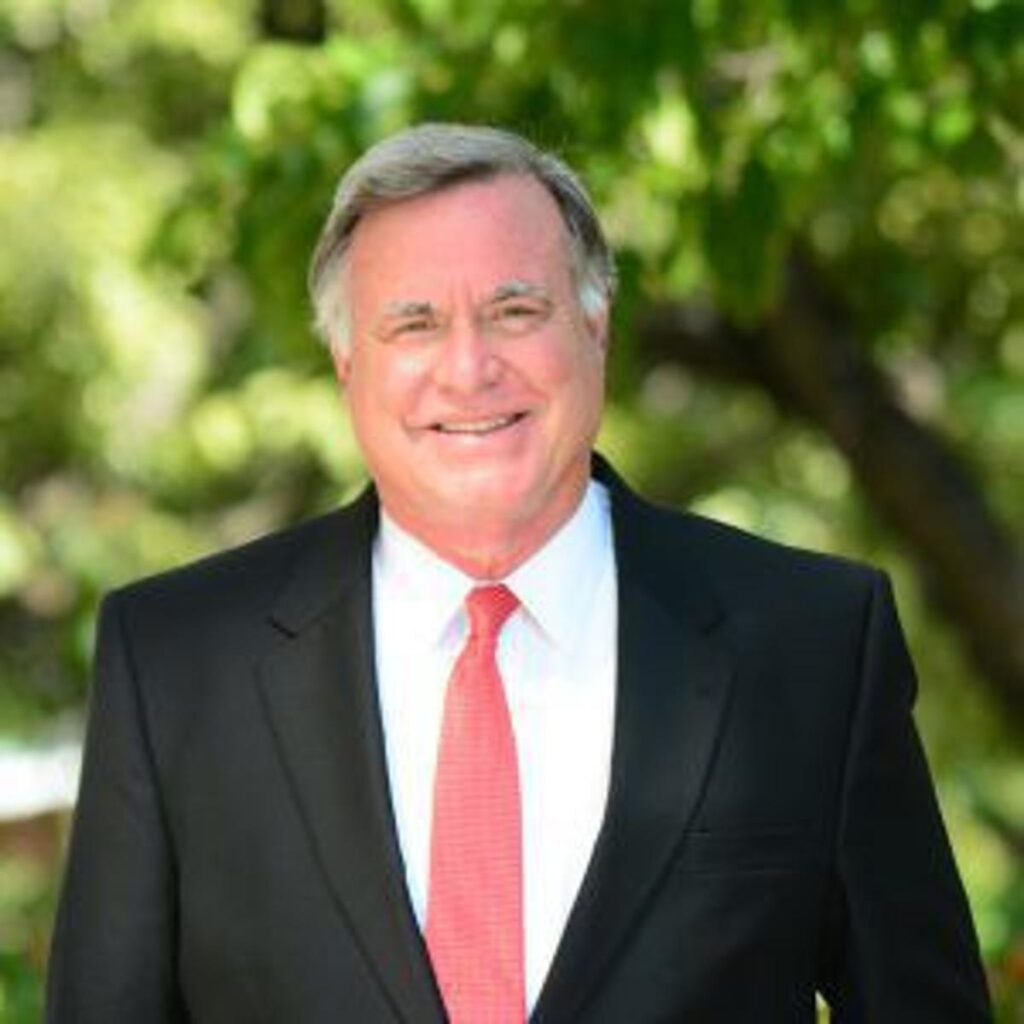
As is my annual ritual, my yearend column pays tribute to Alabama political legends who have passed away during the year. Sonny Cauthen passed away in Montgomery at age 70. He was the ultimate inside man in Alabama politics. Sonny was a lobbyist before lobbying was a business. He kept his cards close to his vest, and you never knew what he was doing. Sonny was the ultimate optimist who knew what needed to be achieved and found like-minded allies with whom to work. When he had something to get done, he bulldozed ahead and achieved his mission. Sonny was a yellow dog Democrat who believed in equal treatment and rewarding hard work. He was an avid outdoorsman and hunter and mentored a good many young men in Montgomery. Another Montgomerian who will never be forgotten was Representative Alvin Holmes, who passed away at 81. Like Sonny, Alvin was born and raised and lived his entire life in his hometown of Montgomery. He, too, was a real Democrat and an icon in Alabama politics. Alvin represented the people of Montgomery for 44-years in the Alabama House of Representatives. He was one of the most dynamic and outspoken legislators in Alabama history, as well as one of the longest-serving members. I had the opportunity to serve with Alvin for close to two decades in the legislature. We shared a common interest in Alabama political history. In fact, Alvin taught history at Alabama State University for a long time. He was always mindful of the needs of his district, as well as black citizens throughout the state. Alvin was one of the first Civil Rights leaders in Montgomery and Alabama. He helped organize the Alabama Democratic Conference and was Joe Reed’s chief lieutenant for years. Ironically, we lost another Civil Rights icon this year. John Lewis was born in rural Pike County in the community of Banks. After graduating from college, John joined the Dr. Martin Luther King as a soldier in the army for Civil Rights. John was beaten by Alabama State Troopers near the Edmund Pettus Bridge on the infamous Bloody Sunday Selma to Montgomery march. He became a Civil Rights legend in America. He was one of Dr. King’s closest allies. John became almost as renowned worldwide as a Civil Rights leader as Dr. King. John moved to Atlanta with Dr. King and was elected to the U.S. Congress from Atlanta and served 33 years with distinction. Even though John was a national celebrity, he would take time out of his busy schedule to drive from Atlanta to rural Pike County to go to church with his mother at her beloved Antioch Baptist Church. John died of pancreatic cancer in July at age 80. Another Alabama political legend, John Dorrill, passed away in January at age 90. Ironically, John Dorrill and John Lewis were both born and raised in rural Pike County near Troy. John Dorrill went to work for the powerful Alabama Farmers Federation shortly after graduating from Auburn. He worked for the Federation for 43 years. For the last 20 years of his career, he oversaw and was the mastermind of their political plans and operations as Executive Director of the Federation. He retired and lived out his final years on his ancestral home place in Pike County. John Dorrill was one of my political mentors and friends. Another Montgomery political icon, former Republican State Senator Larry Dixon, passed away only a few weeks ago from COVID-19 complications at age 78. He served over 20 years in the state legislature. Larry epitomized the conservative Republican, and his voting record was right in line with his Montgomery constituency. He was known as “Montgomery’s State Senator,” but his ultimate legacy may be as a great family man. Larry was a devoted husband to his wife, Gaynell, and father to his two daughters. Larry was a good man. Former Alabama Supreme Court Judge Hugh Maddox recently passed away at age 90. Judge Maddox served 31 years on the Alabama Supreme Court before his retirement in 2001. One of my favorite fellow legislators and friends, Representative Richard Laird of Roanoke, passed away last week from COVID-19. He was 81 and served 36 years in the Alabama House of Representatives. Richard was a great man and very conservative legislator. In addition to Richard Laird, Alvin Holmes, and Larry Dixon, several other veteran Alabama legislators passed away this year, including Ron Johnson, Jack Page, and James Thomas. We lost some good ones this year, who will definitely be missed as we head into 2021. Happy New Year. Steve Flowers is Alabama’s leading political columnist. His weekly column appears in over 60 Alabama newspapers. He served 16 years in the state legislature. Steve may be reached at www.steveflowers.us.
Alvin Holmes dies at 81; had served decades in Alabama House
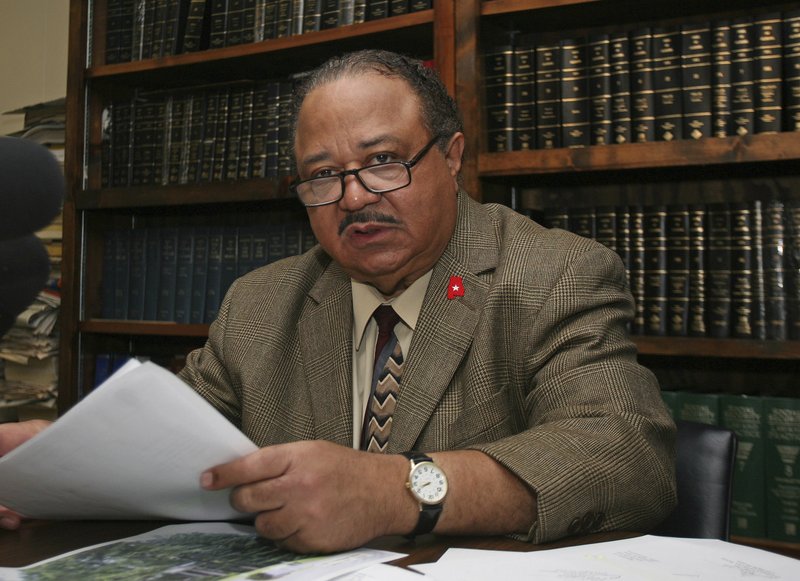
Former state Rep. Alvin Holmes, who had been the longest-serving member of the Alabama House of Representatives before his 2018 defeat, has died. He was 81. Alabama House of Representatives spokesman Clay Redden confirmed Holmes’ death Saturday. Holmes, one of the first African Americans elected to the Alabama Legislature after the civil rights era, was for decades a fixture at the Statehouse. His political career included battles over issues ranging from removing Jim Crow language from the state Constitution to taking the Confederate flag off of the Alabama Capitol. With his trademark outspokenness, he had panache for humorous, and sometimes controversial, moments. Holmes was first elected to the House of Representatives in 1974, just four years after African Americans — who hadn’t served since Reconstruction — returned to the Legislature. “I came to the Statehouse out of the civil rights movement. I said I wanted to go up there and make a change,” Holmes said after his defeat in 2018. Holmes had said the accomplishments he was most proud of included establishing Martin Luther King Day as a state holiday and pushing for the hiring of African Americans for professional positions at the Alabama Legislature. He was among lawmakers who fought to take the Confederate battle flag off the Alabama Capitol’s dome where it had formerly flown as a symbol of Southern defiance to integration. He sponsored a constitutional amendment to remove an interracial marriage ban from the Alabama Constitution and unsuccessfully fought for years to get sexual orientation included in the state hate crime statute. House Speaker Mac McCutcheon said Holmes was a champion for civil rights and for all taxpayers. “He took stands to ensure African Americans were treated fairly and that tax dollars were spent wisely. Representatives Holmes could be forceful at times and give no ground on issues he was passionate about, but no one ever questioned his sincerity. I was proud to call him a friend,” McCutcheon said. The short, mustached Holmes had a flair for humor and bluntness at the House microphone, a skill he said he knowingly deployed at times to draw attention to issues. Once, during a floor debate, Holmes pulled out a wad of cash and said he would give $700 to anyone who showed him Bible verses specifying that marriage is between only a man and a woman. The challenge prompted a flood of calls into the statehouse switchboard. “What’s wrong with the beer we got? I mean the beer we got drinks pretty good don’t it.” he also once asked during a debate on a bill, promoted by beer enthusiasts, to allow the sale of higher alcohol content brews. Rep. Christopher England, who also serves as chairman of the Alabama Democratic Party, said Holmes was a great Democrat and a fighter. “He stood on the frontlines of the fight for civil rights and was willing to sacrifice everything in his fight for justice for all. …. Alabama has lost a giant, whose wit, intelligence, fearlessness, selfless determination, and leadership will be sorely missed.” Republished with the permission of the Associated Press.
Troy University names building for civil rights icon John Lewis
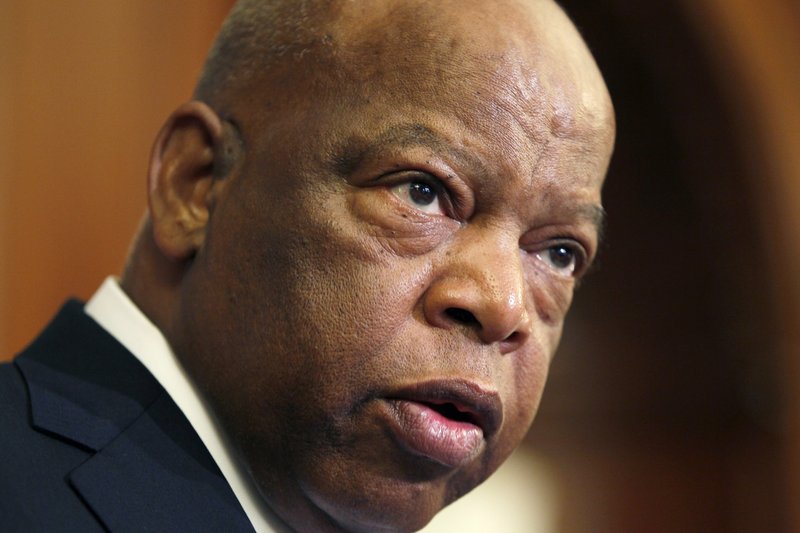
The Troy University Board of Trustees voted Wednesday to rename historic Bibb Graves Hall — currently named for a former governor who had ties to the Ku Klux Klan— in honor of Lewis.
John Lewis mourned as ‘founding father’ of better America
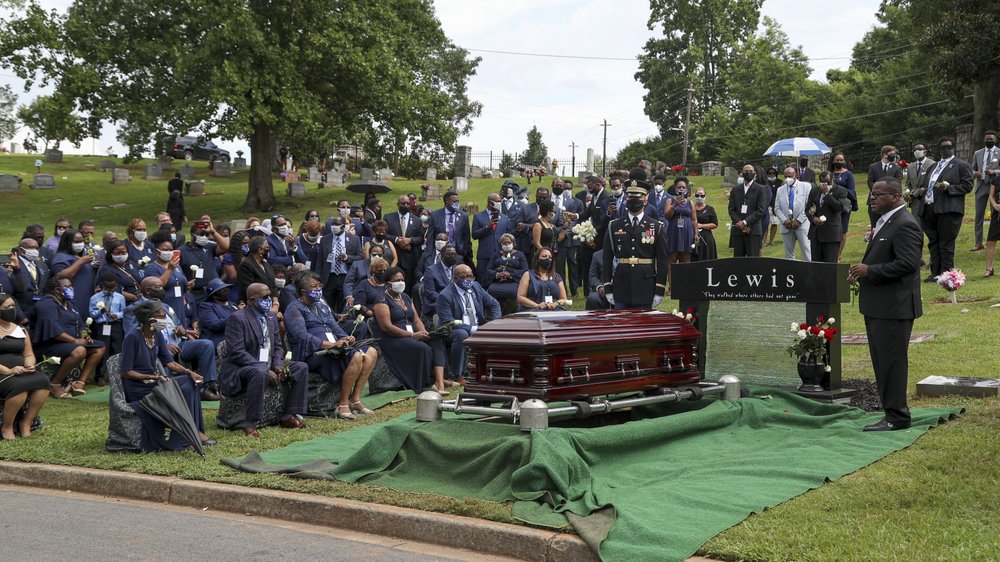
Former President Barack Obama called Lewis “a man of pure joy and unbreakable perseverance” during a fiery eulogy that was both deeply personal and political.
Civil rights icon Rep. John Lewis lies in state at Capitol
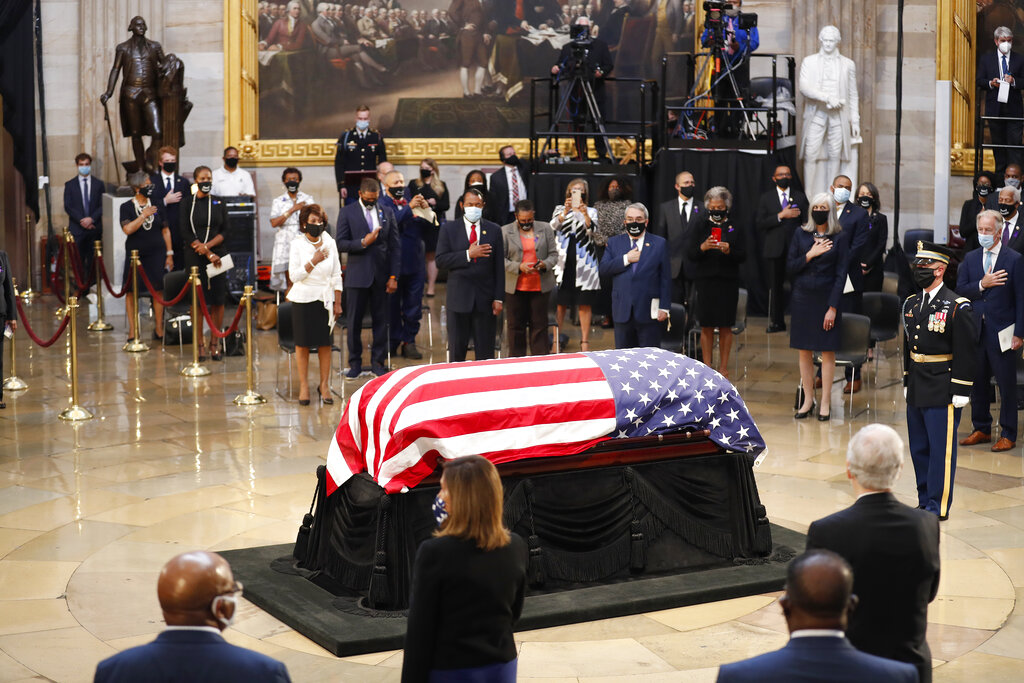
In a solemn display of bipartisan unity, congressional leaders praised Democratic Rep. John Lewis as a moral force for the nation on Monday in a Capitol Rotunda memorial service rich with symbolism and punctuated by the booming, recorded voice of the late civil rights icon. House Speaker Nancy Pelosi called Lewis the “conscience of the Congress” who was “revered and beloved on both sides of the aisle, on both sides of the Capitol.” Senate Majority Leader Mitch McConnell praised the longtime Georgia congressman as a model of courage and a “peacemaker.” “The arc of the moral universe is long, but it bends toward justice,” McConnell, a Republican, said, quoting the Rev. Martin Luther King Jr. “But that is never automatic. History only bent toward what’s right because people like John paid the price.” Lewis died July 17 at the age of 80. Born to sharecroppers during Jim Crow segregation, he was beaten by Alabama state troopers during the civil rights movement, spoke ahead of King’s “I Have a Dream” speech at the 1963 March on Washington and was awarded the Medal of Freedom by the nation’s first Black president in 2011. Dozens of lawmakers looked on Monday as Lewis’ flag-draped casket sat atop the catafalque built for President Abraham Lincoln. Several wiped away tears as the late congressman’s voice echoed off the marble and gilded walls. Lewis was the first Black lawmaker to lie in state in the Rotunda. “You must find a way to get in the way. You must find a way to get in trouble, good trouble, necessary trouble,” Lewis intoned in a recorded commencement address he’d delivered in his hometown of Atlanta. “Use what you have … to help make our country and make our world a better place, where no one will be left out or left behind. … It is your time.” Members of the Congressional Black Caucus wore masks with the message “Good Trouble,” a nod to Lewis’ signature advice and the COVID-19 pandemic that has made for unusual funeral arrangements. The ceremony was the latest in a series of public remembrances. Pelosi, who counted Lewis as a close friend, met his casket earlier Monday at Joint Base Andrews in Maryland, and Lewis’ motorcade stopped at Black Lives Matter Plaza near the White House as it wound through Washington before arriving at the Capitol. The Democratic speaker noted that Lewis, frail with cancer, had come to the newly painted plaza weeks ago to stand “in solidarity” amid nationwide protests against systemic racism and police brutality. She called the image of Lewis “an iconic picture of justice” and juxtaposed it with another image that seared Lewis into the national memory. In that frame, “an iconic picture of injustice,” Pelosi said, Lewis is collapsed and bleeding near the Edmund Pettus Bridge in Selma, Alabama, on March 7, 1965, when state troopers beat him and other Black Americans as they demanded voting rights. Following the Rotunda service, Lewis’ body was moved to the steps on the Capitol’s east side in public view, an unusual sequence required because the pandemic has closed the Capitol to visitors. Late into the night, a long line of visitors formed outside the Capitol as members of the public quietly, and with appropriate socially distant spacing, came to pay their respects to Lewis. Presumptive Democratic presidential nominee Joe Biden paid his respects late Monday afternoon. The pair became friends over their two decades on Capitol Hill together and Biden’s two terms as vice president to President Barack Obama, who awarded Lewis the Presidential Medal of Freedom in 2011. Notably absent from the ceremonies was President Donald Trump. Lewis once called Trump an illegitimate president and chided him for stoking racial discord. Trump countered by blasting Lewis’ Atlanta district as “crime-infested.” Trump said Monday that he would not go to the Capitol, but Vice President Mike Pence and his wife paid their respects. Just ahead of the ceremonies, the House passed a bill to establish a new federal commission to study conditions that affect Black men and boys. Born near Troy, Alabama, Lewis was among the original Freedom Riders, young activists who boarded commercial passenger buses and traveled through the segregated Jim Crow South in the early 1960s. They were assaulted and battered at many stops, by citizens and authorities alike. Lewis was the youngest and last-living of those who spoke on the steps of the Lincoln Memorial at the March on Washington. The Bloody Sunday events in Selma two years later forged much of Lewis’ public identity. He was at the head of hundreds of civil rights protesters who attempted to march from the Black Belt city to the Alabama Capitol in Montgomery. The marchers completed the journey weeks later under the protection of federal authorities, but then-Alabama Gov. George C. Wallace, an outspoken segregationist at the time, refused to meet the marchers when they arrived at the Capitol. President Lyndon Johnson signed the Voting Rights Act of 1965 on Aug. 6 of that year. Lewis spoke of those critical months for the rest of his life as he championed voting rights as the foundation of democracy, and he returned to Selma many times for commemorations at the site where authorities had brutalized him and others. “The vote is precious. It is almost sacred,” he said again and again. “It is the most powerful nonviolent tool we have in a democracy.” The Supreme Court scaled back the seminal voting law in 2012; an overhauled version remains bottle-necked on Capitol Hill, with Democrats pushing a draft that McConnell and most of his fellow Republicans oppose. The new version would carry Lewis’ name. Lewis crossed the Edmund Pettus Bridge for the last time Sunday on a horse-drawn carriage before an automobile hearse transported him to the Alabama Capitol, where he lay in repose. He was escorted by Alabama state troopers, this time with Black officers in their ranks, and his casket stood down the hall from the office where Wallace had peered out of
