
Steve Scalise, Jim Jordan announce bids to replace Kevin McCarthy as Speaker of the House

By Casey Harper | The Center Square House Judiciary Chair Rep. Jim Jordan, R-Ohio, and Majority Leader Steve Scalise, R-La, both announced Wednesday their bid to replace Kevin McCarthy, R-Calif., as Speaker of the House. A vote for a new Speaker is reportedly not expected until Oct. 11, giving lawmakers about a week to plan their next move. McCarthy, who was pushed out after striking a deal with Democrats to keep the government open, said he does not plan to run again for the position. “I think Matt has planned this all along,” McCarthy told reporters. “It didn’t matter what transpired. He would’ve done it if we were in shutdown or not.” Scalise’s and Jordan’s announcement comes after a handful of House Republicans joined Democrats to oust Kevin McCarthy, R-Calif., from his role as Speaker of the House, the first time Congress has ever done so. Now, the House has until mid-November to elect a new Speaker and pass some kind of spending measure or face a government shutdown. Scalise sent a letter to House Republicans asking for their support. “Our strength as a Conference comes from our unity, and we have seen when we unite as a Conference, we can deliver wins for the American people,” the letter said. “Now we need to take those unified positions and work to extract conservative wins from the Democrat Senate and White House by leveraging upcoming deadlines. While we need to be realistic about what can be achieved, if we stay united, we can preserve leverage for the House to secure tangible wins in our impending policy fights.” Jordan sent a similar letter to his fellow Republicans asking for their support. “We must address rising crime in major cities and reject soft-on-crime, pro-criminal policies,” the letter said. “We must get our fiscal house in order and reduce spending so that we can leave more to the next generation than a crushing deficit. We must do our constitutional oversight of the federal bureaucracy to ensure they work for the American people not the other way around. And we must continue working to secure the border and protect our national security. “I respectfully ask for your support for Speaker of the House of Representatives,” the letter added. Jordan’s move was welcomed by some Republicans like Rep. Matt Gaetz, R-Fla., who filed the motion to oust McCarthy. “We should get to electing a new, more conservative and more trustworthy Speaker immediately,” Gaetz wrote on X, formerly known as Twitter. “I’m calling on [Patrick McHenry] who is currently the Speaker Pro Tem, to reconsider the decision that he just made to send everyone in Congress home for a week. This is not the time to go home for a week. We should stay and elect a new Speaker.” Other potential frontrunners to replace McCarthy include Majority Whip Tom Emmer, R-Minn., and Rep. Kevin Hern, R-Okla, who suggested he might run. Some lawmakers spoke out to make clear they are not running. “While I appreciate the confidence of some colleagues and their request that I step into the Speaker race, my team and I have been doing important work on the Homeland Security Committee – and we still have much more to do to hold President [Joe] Biden and Secretary [Alejandro] Mayorkas for one of the worst national security failures in the history of the country,” Rep. Mark Green, chair of the Homeland Security Committee, wrote on X. “Therefore, I am not throwing my name into the race,” he added. With the existing divide in the party, it may be impossible for any Speaker to be successful. “The most important issue facing the next House speaker is soaring federal debt pushing the nation to the brink of fiscal disaster,” Chris Edwards, an expert at the Cato Institute, told The Center Square. “Interest rates on 10-year government bonds have shot up far above projections to 4.8 percent and rising, which will raise the burden of accumulated debt to crushing levels. “America needs a new House speaker – and presidential candidates – who put spending restraint and debt reduction as top national priorities,” he added. Republished with the permission of The Center Square.
Gary Palmer says Republicans must come together and choose a leader who can unify the party

On Tuesday, Congressman Matt Gaetz (R-Florida) led a successful effort to oust Rep. Kevin McCarthy (R-California) as the Speaker of the House. All of Alabama’s Republican congressional delegation supported McCarthy, but under the rules of the House, McCarthy’s ouster had enough votes to succeed given the razer-thin GOP majority in the Congress. Following the removal and McCarty’s telling the Republican Caucus that he would not run again, U.S. Representative Gary Palmer (R-AL06) released a statement. “What we just experienced has never occurred in the history of our nation,” said Rep. Palmer. “For the first time, a Speaker of the House has been removed. This action is reflective of how divided our nation is, including among Republican members of the House. While I am deeply disappointed about where we are, we still must find a way to govern.” McCarthy’s ouster comes at a critical time with the 12 spending bills still not having passed either House of Congress and the federal government having to operate under a 45-day continuing resolution that McCarthy negotiated on Saturday. “Our country faces a $33 trillion debt crisis threatening the future of all Americans – those living and those yet to be born,” said Rep. Palmer. “Our border is not secure, threatening not only our economy but also our national security. As Republicans, we must find a way to come together and choose a leader who can unify our party and has the ability to address these issues head on. We have a job to do for the American people, and they deserve a unified majority focused on what’s best for the nation.” The last GOP Speaker battle was an intense affair that required 15 votes of the House before McCarthy was finally elected as the 55th Speaker. At one point, it appeared as if Congressman Mike Rogers (R-AL03) had to be restrained from attacking Gaetz after Gaetz’s faction thwarted the 14th vote to elect McCarthy as the Speaker of the House. His tenure lasted less than nine months. The Speaker Pro Tempore – Patrick McHenry (R-North Carolina), has assumed the daily duties of Speaker in the wake of McCarthy’s ouster and ahead of the GOP choosing a new leader. Palmer is in the leadership in the House as the head of the House Republican Policy Committee. He represents Alabama’s Sixth Congressional District and has already announced that he is running for re-election next year. To connect with the author of this story or to comment, email brandonmreporter@gmail.com.
Kevin McCarthy ousted from speakership
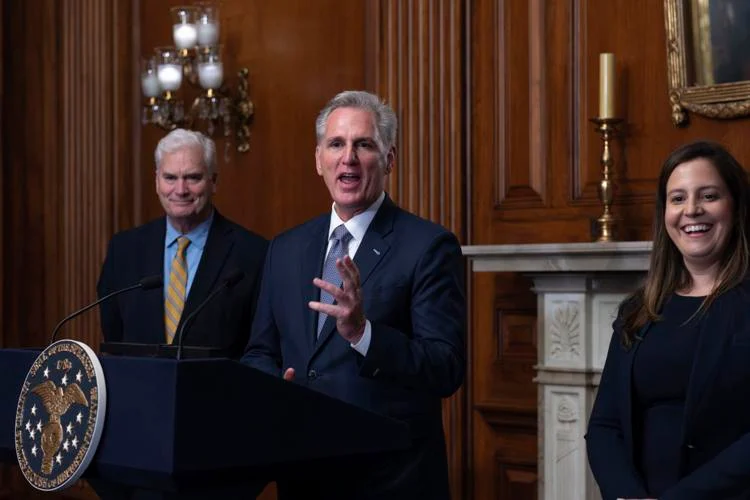
By Casey Harper | The Center Square The House of Representatives voted 216-210 Tuesday to vacate the Speakership, leaving the position open and likely kicking off a marathon of votes to either replace or reinstate California Republican Kevin McCarthy. A handful of House Republicans joined Democrats to oust McCarthy on Tuesday afternoon. McCarthy told reporters earlier Tuesday that he expected to survive the proceedings. As party leadership, he chose to bring the motion to vacate up quickly for a vote Tuesday afternoon. “You know, if I counted how many times somebody wanted to knock me out, I would have been gone a long time ago,” he told reporters. McCarthy only took on the speakership earlier this year after more than a dozen votes while holdout Republicans demanded concessions. One of those concessions was that a single lawmaker could file a motion to vacate the speakership and force a vote, something U.S. Rep. Matt Gaetz, R-Fla., started off when filing the motion to vacate late Monday. Gaetz said McCarthy broke his promises, pointing in particular to the latest Continuing Resolution to fund the government until mid-November. That deal with House Democrats provided for disaster relief and essentially maintained spending at current levels to buy more time just hours before a government shutdown over the weekend. McCarthy was able to whittle down the lawmakers who voted against him last time around to get the votes he needed to become Speaker, and he may be able to do it again unless another strong Republican successfully challenges him. Currently, there is no obvious choice to replace McCarthy. “I think Matt has planned this all along,” McCarthy told reporters. “It didn’t matter what transpired. He would’ve done it if we were in shutdown or not. I firmly believe it is the right decision to keep government open, to make sure our military is still paid, our border agents are still paid, and if that makes a challenge based upon whether or not I should be Speaker, I’ll take that fight.” Gaetz warned over the weekend that he would file the motion to vacate. He has demanded answers about an alleged side deal he says McCarthy made with the White House over more Ukraine funding, a sticking point and red line for some conservative Republicans who are unwilling to send the large sums overseas any longer. “I rise to raise a question,” Gaetz said from the House floor Monday. “What was the secret side deal on Ukraine? House Democrats and President [Joe] Biden have said that as Speaker McCarthy was asking Republicans to vote for a Continuing Resolution to take up the plus-up Ukraine money, that the Speaker of the House was actually cutting a side deal to bring Ukraine legislation to this floor with President Biden and House Democrats.” As The Center Square previously reported, Gaetz and other Republicans have pushed for passing all 12 appropriations bills in the traditional procedure instead of repeated Continuing Resolutions with topline numbers decided by a handful of members. But McCarthy says certain Republicans have slowed the appropriations process so that Congress did not meet the government shutdown deadline in time. Lawmakers passed several of those appropriations in the House already, though not enough to fully fund the government. Several were passed at the last minute last week before the shutdown. Now, the House must continue to hold votes for a new Speaker, with either McCarthy being reinstated or another taking his place all as the next shutdown deadline draws nearer. “I have enough Republicans where at this point next week one of two things will happen: Kevin McCarthy won’t be the Speaker of the House or he will be the Speaker of the House working at the pleasure of the Democrats,” Gaetz told reporters Monday evening. Republished with the permission of The Center Square.
Matt Gaetz threatens motion to vacate Kevin McCarthy, demands answers on alleged Ukraine deal
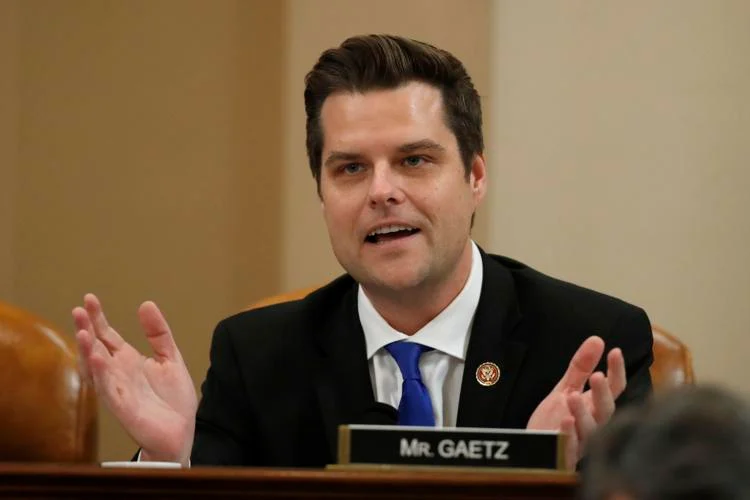
By Casey Harper | The Center Square U.S. House Speaker Kevin McCarthy worked with Democrats to fund the government with just hours to spare on Saturday, but that move may cost him his role as speaker. Now, Congress has bought itself about 45 more days to once again fund the government or face a shutdown, but possibly replacing a House speaker in that time would dramatically complicate that effort. U.S. Rep. Matt Gaetz, R-Fla., who has been McCarthy’s most outspoken critic, said on CNN’s “State of the Union” Sunday that he will file a motion to vacate McCarthy this week. Gaetz and some other Republicans have been adamant about no longer passing short-term spending resolutions and returning to the traditional method of passing a budget via 12 separate appropriations bills. “I think we need to rip off the Band-Aid,” Gaetz said. “I think we need to move on with new leadership that can be trustworthy.” However, Gaetz said before the motion on Monday that he wanted answers from McCarthy concerning an alleged “secret side deal on Ukraine” the Speaker made with President Joe Biden. “I rise to raise a question,” Gaetz said from the House floor Monday. “What was the secret side deal on Ukraine? House Democrats and President Biden have said that as Speaker McCarthy was asking Republicans to vote for a Continuing Resolution to take up the plus-up Ukraine money, that the Speaker of the House was actually cutting a side deal to bring Ukraine legislation to this floor with President Biden and House Democrats.” Gaetz went on to suggest those answers could help rally support for his anti-McCarthy effort. “There may be other votes coming today or later this week that could be implicated by the answers to these questions,” Gaetz continued. “Members of the Republican party might vote differently on a motion to vacate and if they heard what the Speaker had to share with us about his secret side deal with Joe Biden on Ukraine. I’ll be listening. Stay tuned.” McCarthy was narrowly elected as Speaker after more than a dozen votes as several conservative House Republicans held out, demanding concessions from leadership. One of those concessions was that a single disgruntled member could file a motion to remove McCarthy as Speaker. McCarthy has managed to avoid that motion so far, but the near shutdown of the government drew even more scrutiny of the Speaker and at least one Republican threatening to file the motion to remove McCarthy. On Friday, McCarthy put forward a Continuing Resolution that cut spending, bolstered the border, and kept the government open for another 30 days. A cadre of more than 20 Republicans voted against the measure, effectively killing it since no Democrats would support the spending cuts and border policies. The failure of that attempt raised concerns that the government would in fact partially shut down at midnight Sunday morning. But McCarthy called lawmakers back to work Saturday and passed a bipartisan “clean” 45-day extension, meaning current spending levels were extended with some funding for disaster relief. The Senate quickly approved the measure, and Biden signed it just before midnight. Notably, that measure omitted more funding for Ukraine in its war against the Russian invasion, a war that Republicans have become increasingly less willing to fund. After Gaetz’s ongoing opposition to McCarthy, some Republicans have discussed trying to oust him from his position. Gaetz is currently being probed by the ethics committee, and the findings of that inquiry could theoretically drum up the 2/3 support needed to oust a sitting lawmaker. The probe reportedly centers around allegations of public corruption, sexual misconduct, and drug use. Gaetz fired back in a fundraising post on X, formerly known as Twitter, on Monday afternoon. “They want to expel me from Congress for holding [Speaker McCarthy] to his own word,” Gaetz said. “They want me gone so they can spend your money and destroy our country without a battle. Help me fight back. Every little bit counts. Join my team. Fight with me.” Republished with the permission of The Center Square.
Congress passes stopgap funding bill, avoiding shutdown
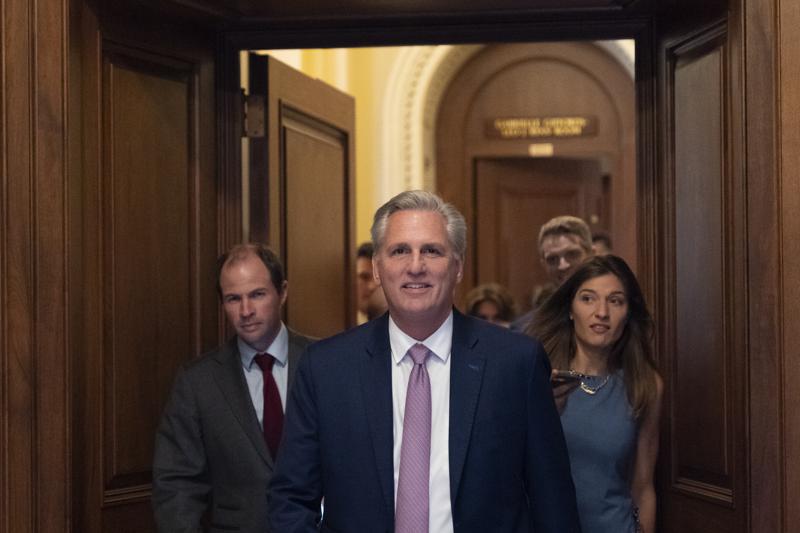
By Dan McCaleb | The Center Square President Joe Biden late Saturday night signed a stopgap funding bill that will temporarily keep the federal government open. The president’s signature came shortly after Republican House Speaker Kevin McCarthy, with a midnight Saturday deadline looming before a partial government shutdown, brokered a deal with Democrats on what he called a “clean funding bill.” The measure, which will keep the federal government open into mid-November, includes $16 billion in disaster relief funding but no additional financial aid for Ukraine, according to several national media outlets. It passed the House, 335-91, and then moved to the Senate, where it passed 88-9. “I just signed a law to keep the government open for 47 days. There’s plenty of time to pass Government funding bills for the next fiscal year, and I strongly urge Congress to get to work right away,” Biden tweeted. “The American people expect their government to work. Let’s make sure it does.” The brokered deal could have significant implications for McCarthy. The more conservative members of the House Republican caucus opposed the measure, and U.S. Rep. Matt Gaetz told CNN Sunday that he will try to remove McCarthy from his leadership post this week. Republished with the permission of The Center Square.
Shutdown inches closer as U.S. House GOP fails to pass defense bill, lawmakers exit D.C.
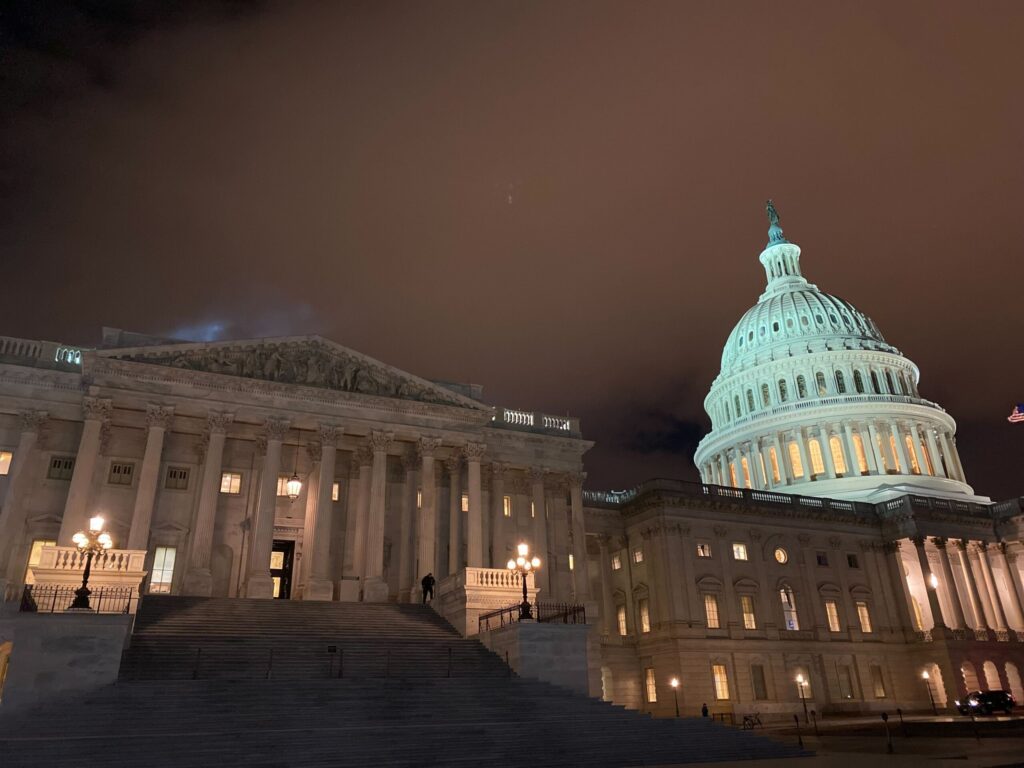
by Jennifer Shutt, Alabama Reflector September 21, 2023 WASHINGTON — U.S. House Republicans were unable for a third time Thursday to begin debate on the Defense funding bill, throwing another wrench into Speaker Kevin McCarthy’s leadership tenure. The 212-216 vote that rejected the rule for the $826 billion Defense spending measure was unexpected, coming less than a day after House GOP lawmakers gathered in a room in the Capitol basement to broker a path forward. Arizona Rep. Eli Crane and Georgia Rep. Marjorie Taylor Greene switched their votes to oppose the rule, after voting on Tuesday to adopt it. Colorado Rep. Ken Buck and South Carolina Rep. Ralph Norman both supported adoption of the rule on Thursday after opposing it earlier in the week. Other Republicans voting no included Andy Biggs of Arizona, Dan Bishop of North Carolina, and Matt Rosendale of Montana. The rule would have allowed the House to begin officially debating the bill and voting on nearly 200 amendments. The failed vote led McCarthy to reverse course on the schedule, with many lawmakers heading home for the weekend on Thursday instead of sticking around for votes throughout the weekend. McCarthy had said exactly one week ago, “When we come back, we’re not going to leave. We’re going to get this done.” The update to the House schedule sent around Thursday afternoon said ”ample notice will be given ahead of any potential votes tomorrow or this weekend.” The stalemate and change of plans does not bode well for efforts to approve the short-term spending bill that’s needed to stave off a partial government shutdown when the new fiscal year begins Oct. 1. McCarthy has yet to unify his members amid deep disagreements about how much the federal government should spend and what policy restrictions should be included in full-year bills as well as the stopgap measure. The ongoing dispute has ground the House chamber to a halt as McCarthy searches for a way to unify his razor-thin majority without turning to Democrats to pass a bipartisan bill. Arkansas Republican Rep. Steve Womack, a senior appropriator, said Thursday that his fellow lawmakers need to accept the Senate will re-work any partisan bills the House sends over. “Remember, this is all going to go to the Senate, so people don’t need to get real hot and bothered over where we are today,” Womack said. “It’s going to be based on what comes back and whether or not it can get to the floor.” Discussions among House Republicans, he said, are likely to become “heated” once the Senate re-works a short-term spending bill and sends it back to the House for a final approval vote. Infighting and political differences within the House Republican Conference have so far prevented GOP lawmakers from reaching agreement on their opening offer on a short-term spending bill, which is also called a continuing resolution or CR. Defense spending bill falters Before the Thursday vote, McCarthy had been somewhat optimistic the House could finally approve the rule and begin debate on the full-year Defense spending measure. Greene wrote on X that she switched her vote “because they refused to take the war money for Ukraine out and put it in a separate bill.” The rule approved 184 amendments for floor debate and votes, including one from Florida’s Matt Gaetz that would have prohibited “security assistance for Ukraine.” Crane wrote on X on Thursday that he believes votes “on CRs, omnibus bills and raising the debt ceiling should never take place.” “I’m going to do whatever I can to change the way this place works,” he wrote. Oklahoma Republican Rep. Tom Cole, chair of the Rules Committee, switched his vote on Thursday to a no vote after voting yes a few minutes earlier. The procedural maneuver allows him to bring the rule back up for a vote at a later time. The whip count error appeared to be a surprise for Defense Appropriations Chair Ken Calvert, a California Republican; ranking member Betty McCollum, a Minnesota Democrat; and staff — all of whom were seated at the tables on the House floor ready to lead debate on the measure. The Republican table held thick white binders as well as a large accordion folder, all filled with paperwork, and the Democratic table was stacked with paperwork as well. It’s highly unlikely that staff would have brought all the materials needed to debate the bill and amendments if they knew the rule vote was going to fail. ‘At least a short-term shutdown’ In addition to strong disagreement among House Republicans about the full-year spending bills, the House GOP Conference has yet to solidify a plan to pass the short-term stopgap spending bill that’s needed to hold off a funding lapse. Idaho Republican Rep. Mike Simpson, chair of the Interior-Environment spending subcommittee, said he expects there will be “at least a short-term shutdown” as the House and Senate try to reach agreement on a short-term spending bill. “That’s a lot of work to do in a very short time,” Simpson said. House Freedom Caucus Chair Scott Perry, a Pennsylvania Republican, said Thursday that he hasn’t seen details on any new short-term spending bills that might come to the floor. “I haven’t seen the language of any additional CR,” he said. Kansas Sen. Jerry Moran, the top Republican on the Commerce-Justice-Science spending panel, said he’s “hoping the House chaos is set aside.” “I keep saying I’m not voting for another CR again, but I keep voting for them because the outcome is worse with a shutdown,” Moran said. “But this just needs to be resolved in the House. I don’t think there’s a problem in the Senate that would cause a shutdown.” Any short-term spending bill will have to be bipartisan in order to get through the Democratically controlled Senate, where at least 60 votes are needed to limit debate on legislation. That could take more time than lawmakers have before Oct. 1, he said. “Nothing about this is conducive to getting
House Republicans amend the NDAA addressing Tommy Tuberville’s concerns
On Thursday, Congressional Republicans added several partisan amendments to the 2024 National Defense Authorization Act, including one overturning the DoD policy on abortions. The amended NDAA passed the U.S. House of Representatives on Friday. President Joe Biden said it is “irresponsible” for U.S. Senator Tommy Tuberville to block the confirmation of military officers in protest of a Defense Department policy that pays for travel for service members and their dependents to go out of state to get an abortion in state’s that have banned or restricted elective abortions. “He’s jeopardizing U.S. security by what he’s doing,” Biden said of Sen. Tommy Tuberville. “It’s just totally irresponsible, in my view.” Biden had demanded that Republicans address the Tuberville issue. “I expect the Republican Party to stand up — stand up and do something about it,” Biden continued. “The idea that we don’t have a chairman of the Joint Chiefs of Staff, the idea that we have all these promotions that are in abeyance right now and we don’t know what’s going to happen, the idea they were injecting into fundamental foreign policy decisions what in fact is a domestic social debate on social issues, is bizarre. I don’t ever recall it happening, ever. And it’s just totally irresponsible, in my view.” “I’m confident that the mainstream Republican Party no longer, does not support what he’s doing, but they got to stand up and be counted,” Biden said. “That’s how it ends.” House Republicans responded Thursday by amending the NDAA on the House floor. The House passed an amendment by Rep. Ronny Jackson (R-Texas) prohibiting the Secretary of Defense from paying for or reimbursing expenses relating to abortion services 221 – 213. Only two Republicans voted against including Jackson’s abortion amendment. The House also passed several other GOP priorities. The House passed an amendment by Rep. Matt Rosendale (R-Montana) that prohibits TRICARE from covering and the Department of Defense from furnishing sex reassignment surgeries and gender hormone treatments for transgender individuals 222 – 211. The House passed an amendment by Rep. Ralph Norman (R-South Carolina) prohibiting the provision of gender transition procedures, including surgery or medication, through the Exceptional Family Member Program 222 to 210. The House passed an amendment to prohibit federal funds from being used to establish a position within the Department of Defense for anything similar to Chief Diversity Officers or Senior Advisors for Diversity and Inclusion 217 – 212. The House passed an amendment by Rep. Lauren Boebert (R-Colorado) prohibiting the Department of Defense Education Activity schools from purchasing and having pornographic and radical gender ideology books in their libraries. The House passed an amendment by Rep. Warren Davidson (R-Ohio) that requires a study and report on health conditions arising in members of the Armed Forces after the administration of the COVID-19 vaccine by a voice vote. Rep. Boebert proposed an amendment prohibiting Defense Department schools from having “pornographic and radical gender ideology books in their libraries.” That passed 222-209. Rep. Norman’s amendment to ban Diversity, Equity, and Inclusion within the Department of Defense was narrowly adopted 214-213 on the second vote. An amendment from Rep. Eli Crane (R-Arizona) prohibiting the Pentagon from requiring training in certain “race-based concepts” was adopted 214-210. Not all amendments passed. A series of five proposals to limit U.S. involvement in Ukraine failed. An amendment from Rep. Matt Gaetz (R-Florida) to prohibit using federal funds for training on diversity, equity, and inclusion was rejected Thursday in a 210-221 vote. The House rejected an amendment from Reps. Davidson and Chip Roy (R-Texas) that “expresses a sense of Congress that the U.S. should not continue subsidizing NATO member countries who choose not to invest in their own defense by meeting” established financial contribution targets. The vote was 212-218, with two Democrats voting to support the measure and eight Republicans voting against it. An amendment to prohibit the transfer of cluster munitions to Ukraine was rejected 147-276-2. 98 Republicans and 49 Democrats voted in favor, and 121 Republicans and 155 Democrats voted against. The House rejected an amendment prohibiting using federal funds to rename military bases. The Republican changes to the NDAA meant that it lost Democratic support in the final vote. Democrats denounced the amendment as a cruel, harmful amendment to roll back a DoD policy helping service women travel to get the reproductive health care they need, putting the health and lives of over 230,000 women in uniform at risk. Democrats also denounced amendments that strip medically-necessary care for LGBTQ+ service members. Congresswoman Terri Sewell (D-AL07) voted against the NDAA due to the Republican changes on the floor. “For the past 62 years, Republicans and Democrats have come together to craft bipartisan defense authorization bills that would support our troops and strengthen our national security,” said Rep. Sewell. “But this year, rather than continuing that essential tradition, Speaker [Kevin] McCarthy has caved to the most extreme members of his party and allowed the radical right wing to poison the defense bill with culture war provisions that would undermine our military readiness and harm our service members.” “I did not take this vote lightly,” continued Sewell. “I have proudly voted in favor of the annual defense bill every year since coming to Congress. But I cannot and will not support a bill that would rip basic health care away from our service members and make bigotry and discrimination a centerpiece of our defense policy. Republicans need to stop playing politics with our national security.” The NDAA authorizes funding levels for the Department of Defense (DoD) and allows the Armed Forces to pay, train, and equip U.S. service members, support America’s allies worldwide, and carry out essential national security operations. House Minority Leader Hakeem Jeffries (D-New York), Minority Whip Katherine Clark (D-Massachusetts), and Democratic Caucus Chair Pete Aguilar (D-California) released a joint statement after the chamber approved a number of conservative amendments to the NDAA. “Extreme MAGA Republicans have chosen to hijack the historically bipartisan National Defense Authorization Act to continue attacking reproductive freedom and jamming their right-wing ideology down the throats of the American people,” the Democratic trio wrote in a joint statement. To connect with the author of this story or to comment, email brandonmreporter@gmail.com
House Republicans pass U.S. debt bill, push Joe Biden on spending
House Republicans narrowly passed sweeping legislation Wednesday that would raise the government’s legal debt ceiling by $1.5 trillion in exchange for steep spending restrictions, a tactical victory for Speaker Kevin McCarthy as he challenges President Joe Biden to negotiate and prevent a catastrophic federal default this summer. Biden has threatened to veto the Republican package, which has almost no chance of passing the Democratic Senate in the meantime, and the president has so far refused to negotiate over the debt ceiling, which the White House insists must be lifted with no strings to ensure America pays its bills. But McCarthy’s ability to swiftly unite his slim majority and bring the measure to passage over opposition from Democrats and even holdouts in his own party gives currency to the Republican speaker’s strategy to use the vote as an opening bid forcing Biden into talks. The two men could hardly be further apart on how to resolve the issue. The bill passed by a razor-thin 217-215 margin. “We’ve done our job,” McCarthy said after the vote. “The president can no longer ignore” the issue by not negotiating with the House Republicans, he declared. As the House debated the measure, Biden on Wednesday indicated he was willing to open the door to talks with McCarthy, but not on preventing a first-ever U.S. default that would shake America’s economy and beyond. “Happy to meet with McCarthy, but not on whether or not the debt limit gets extended,” Biden said. “That’s not negotiable.” Passage of the sprawling 320-page package in the House is only the start of what is expected to become a weekslong political slog as the president and Congress try to work out a compromise that would allow the nation’s debt, now at $31 trillion, to be lifted to allow further borrowing and stave off a fiscal crisis. The nation has never defaulted on its debt, and the House Republican majority hopes to maneuver Biden into a corner with its plan to roll back federal spending to fiscal 2022 levels and cap future spending increases at 1% over the next decade, among other changes. McCarthy worked nonstop to unite his fractious Republican majority, the “five families,” including the conservative Freedom Caucus and others, making post-midnight changes in the House Rules Committee in the crush to win over holdouts. Facing a revolt from Midwestern Republicans over doing away with biofuel tax credits that were just signed into law last year by Democrat Biden, GOP House members relented and allowed the tax credits to stay on the books in their bill. “Our delegation has stood united for Iowa’s farmers and producers fighting to amend the bill to protect biofuels tax credits,” said the four House Republicans from Iowa in a joint statement announcing their support for the bill. Republicans also agreed to more quickly launch the bolstered work requirements for recipients of government aid, starting in 2024 as proposed by another holdout, Freedom Caucus’ Rep. Matt Gaetz, R-Fla., who has led previous challenges to McCarthy. Republicans hold a five-seat House majority and faced several absences this week, leaving McCarthy with almost no votes to spare. In the end the speaker lost four Republican no votes, and all Democrats opposed. “This bill is unacceptable, it’s unreasonable, it’s unworkable, it’s unconscionable — and it’s un-American,” said the Democratic leader Hakeem Jeffries of New York. “That’s why we oppose it.” Democrats derided the Republican plan as a “ransom note,” a “shakedown,” and “an unserious bill” that was courting financial danger. But as McCarthy worked to shore up support, some of the most conservative rank-and-file Republican members who have never voted for a debt ceiling increase in their quest to slash spending said they were preparing to do just that, rallying behind the speaker’s strategy to push Biden to the negotiating table. Rep. Ralph Norman, R-S.C., a member of the Freedom Caucus, said he “wanted double” the deficit savings contained in the bill but would vote for it “because it starts the ball, it gets us in the arena to solve the debt problem.” It’s a first big test for the president and the Republican speaker, coming at a time of increased political anxiety about the ability of Washington to solve big problems amid the need to raise the federal debt limit in a matter of weeks. The Treasury Department is taking “extraordinary measures” to pay the bills, but funding is expected to run out this summer. Economists warn that even the serious threat of a federal debt default would send shockwaves through the economy. In exchange for raising the debt limit by $1.5 trillion into 2024, the bill would roll back overall federal spending and: — Claw back unspent COVID-19 funds. — Impose tougher work requirements for recipients of food stamps and other government aid. — Halt Biden’s plans to forgive up to $20,000 in student loans and — End many of the landmark renewable energy tax breaks Biden signed into law last year. It would tack on a sweeping Republican bill to boost oil, gas, and coal production. A nonpartisan Congressional Budget Office analysis estimated the Republican plan would reduce federal deficits by $4.8 trillion over the decade if the proposed changes were enacted into law. Several Republicans from the party’s right-wing, eager for even stricter spending cuts, said the bill was at least a starting point as they prepared to vote for McCarthy’s strategy and bolster his hand in talks with Biden. Freshman Rep. Derrick Van Orden, R-Wis., said: “It’s our obligation to get Speaker McCarthy to the table.” Others, though, remained noncommittal or flat-out no’s. Rep. Andy Biggs, the former chairman of the Freedom Caucus, said he had wanted Republicans to do more to end deficit spending. Tim Burchett, R-Tenn., said of the nation’s nearly $32 trillion in debt, “That’s my major concern.” In the Senate, leaders were watching and waiting. Senate Majority Leader Chuck Schumer said House passage of the legislation would be a “wasted effort” and that McCarthy should come to the table with Democrats to pass a straightforward debt-limit bill without GOP priorities
Kevin McCarthy preps House GOP debt deal to draw Joe Biden into talks

Speaker Kevin McCarthy convened House Republicans behind closed doors Tuesday to build support for his plan to allow the nation’s debt limit to rise in return for strictly limiting future federal spending increases to 1% a year. It’s a bid, including other major policy changes, to draw President Joe Biden into negotiations. The typically fractured House Republican majority has appeared surprisingly open to the plan, which McCarthy outlined in a high-profile speech Monday on Wall Street, but it remains a work in progress. While the proposal has almost no chance of passage in the Democratic Senate, McCarthy wants to pass it in the Republican House to kickstart White House talks. “I’m confident we’ll have it and comfortable we’ll pass it,” said Rep. Tom Cole, R-Okla., the chairman of the Rules Committee, who said a bill could come up for a vote as soon as next week. Even some of McCarthy’s skeptics from the House Freedom Caucus — including those who initially refused to back him to be speaker — seemed ready to give his debt ceiling proposal a look. But others remained deeply skeptical, showing the limits of the embattled speaker’s grip on his majority. Rep. Matt Gaetz, R-Fla., a McCarthy holdout for speaker, said Tuesday he was unsold on the plan and suggested changes. And Rep. Clay Higgins, R-La., said as he exited the session, “There is no ‘this.’ We’re discussing what the ‘this’ will be.” The nation’s legal debt limit must be raised soon to keep the U.S. from defaulting on its fiscal obligations. That high-stakes fight will play out in the weeks ahead as Biden confronts the new era of divided government with Republicans in charge of the House and eager to flex their majority power. If McCarthy succeeds in having the House pass his proposal, he would be able to enter into talks with the White House, showing that he has the backing of his fellow GOP lawmakers. Biden administration officials have privately expressed doubts about the benefits of negotiating with McCarthy out of skepticism that he can rally conservative Republican votes. Democratic Minority Leader Hakeem Jeffries quipped on CNBC that the House Republicans’ budget plan is “in the witness protection program.” The proposal the Republican speaker outlined is far-reaching and expected to be rejected by the White House. It would raise the debt limit into next year — putting it squarely into the 2024 presidential election in exchange for rolling back spending to fiscal 2022 levels, recouping tens of billions of dollars of unspent COVID-19 relief funds, and imposing a 1% cap on future non-defense spending each year for the decade. The 1 percent spending cap would not include mandated Social Security and Medicare money. Additionally, McCarthy’s plan would impose new work requirements on recipients of government aid, cutting billions from the federal safety net. And it would tack on H.R. 1, a sweeping energy package of oil and gas drilling and permit changes that would undo much of Biden’s climate change agenda. The Treasury Department has said the government probably will need to raise the debt ceiling, now at $31 trillion, by summer. For now, Treasury is taking “extraordinary measures” to allow continued borrowing to pay off already accrued bills, but that will eventually run out. Unable to pass an actual Republican budget through the House, as Biden challenges him to do, McCarthy instead has been working furiously behind the scenes with his leadership team to unite the “five families” — the often warring factions of Republican caucuses, including the House Freedom Caucus — to join together on his new plan. He and the leadership team discussed the ideas Tuesday at the House Republicans’ private session in hopes of turning the slides of ideas into a firm legislative package. “I find all indications to be we’re going to put a very serious proposal on the floor and pass it with 218 or more votes,” said Freedom Caucus member Rep. Dan Bishop, R-N.C., as lawmakers arrived at the Capitol late Monday evening, referring to the majority needed for passage. But by Tuesday, no vote was set, according to a person familiar with the private meeting and granted anonymity to discuss it. “I still have more questions than answers at this point,” said Rep. Nancy Mace, R-S.C., complaining there were only a few slides of information. In many ways, this is the easy part for McCarthy: A vote as soon as next week would hardly be binding since the proposal would be dead on arrival in the Senate. That political dynamic may make it easier for McCarthy to rally his ranks behind the plan if Republicans see it as merely a starting point in negotiations designed to push Biden to the table. House Freedom Caucus Chairman Rep. Scott Perry, R-Pa., said late Monday the plan was a step in the right direction, but he still needed details. “Kevin McCarthy is going to get 218 votes on this deal,” said Rep. Dusty Johnson, R-S.D., a chairman of the conservative Main Street Caucus, referring to the majority needed for passage. Said Rep. Kevin Hern of Oklahoma, the chairman of the powerful Republican Study Committee: “There’s still hard work ahead of us, but I believe we can get 218 votes by the end of next week.” Senate Majority Leader Chuck Schumer said if McCarthy continues down this path of negotiating over the need to raise the debt limit, the U.S. would be headed for a default. “No one should confuse this wish list as anything more than a recycling of the same bad ideas we’ve heard about for weeks, and it’s still not clear that Speaker McCarthy has the votes to even pass this,” Schumer said. Republished with the permission of The Associated Press.
House GOP meet with Volodymyr Zelenskyy as far right opposes more aid

A handful of congressional Republicans met Tuesday with Ukrainian President Volodymyr Zelenskyy in a signal of continued U.S. support even as hard-right members of the party vow to block future aid to the embattled country. The newly appointed chairman of the House Foreign Affairs Committee led a small delegation to Kyiv to meet with Zelenskyy for the first time since the start of the war a year ago and since Republicans won the majority in the House of Representatives in November. Chairman Mike McCaul and four other Republican lawmakers said they discussed at length what Ukraine’s military needs to fight off Russian aggression. Zelenskyy provided them with a list of weapons, including longer-range artillery and air-to-surface missile systems. The meeting came one day after President Joe Biden made an unannounced trip to Kyiv to reaffirm U.S. support for Ukraine as the war heads into its second year. Biden has been trying to keep the allies unified in their support for Ukraine as the war is expected to intensify with spring offensives. The biggest hurdle facing the president is House Republicans. McCaul’s visit Tuesday is the latest in a series of efforts by the Texas Republican to make the case to his party for why the U.S. should continue spending billions of dollars on the war effort. “We have seen time and again, the majority of Republicans and Democrats support our assistance to Ukraine. But the Biden administration needs to lay out their long-term strategy,” McCaul said in a statement. “There are some Members who would be more supportive if they saw a long-term strategy that was based on a Ukrainian victory rather than sending just enough support to prolong the war but not win it.” A spokesperson for McCaul noted the delegation has been focused on oversight and ensuring there are guardrails in place for any future aid to Ukraine. A far-right faction of the Republican Party has been expressing its opposition to continued U.S. support to Ukraine since last spring. That campaign intensified this month when a group of 11 House Republicans led by Rep. Matt Gaetz of Florida put forward a “Ukraine Fatigue” resolution. It stated that the U.S. “must end its military and financial aid to Ukraine” and urged the combatants to “reach a peace agreement.” “America is in a state of managed decline, and it will exacerbate if we continue to hemorrhage taxpayer dollars toward a foreign war,” Gaetz said. Thus far, the U.S. has provided four rounds of aid to Ukraine in response to Russia’s invasion, totaling about $113 billion, with some of the money going toward replenishment of U.S. military equipment that was sent to the front lines. Congress approved the latest round of aid in December. While the package was designed to last through the end of the fiscal year in September, much depends upon events on the ground. For his part, Zelenskyy has been working with both Democrats and Republicans to ensure their support once the country runs out of aid, likely to happen in late summer. “It’s really very important. We’re thankful for the U.S., for its people,” Zelenskyy said in a video posted by his office after the meeting. In comments later on social media, Zelenskyy added, “Thank you, American congressmen, for supporting Ukraine and understanding the importance of stepping up aid to help us achieve victory over the aggressor.” Republished with the permission of The Associated Press.
Barry Moore cosponsors resolution calling for end of Ukraine aid
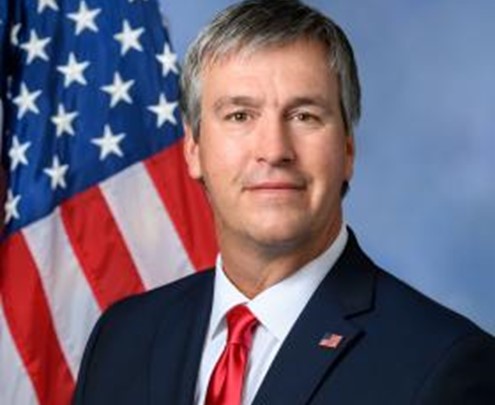
Congressman Barry Moore was one of ten cosponsors of a controversial Ukraine Fatigue resolution introduced by Congressman Matt Gaetz calling for an end to military and financial aid to Ukraine and calling for Ukraine and Russia to reach a peace deal ending the war. “The only person earning an easier buck than Ukrainian war profiteers is Hunter Biden’s art dealer,” said Rep. Moore on Twitter. Congress should support @RepMattGaetz’s resolution and end taxpayer-funded blank checks to Ukraine.” Moore was the only member of the Alabama delegation to join the resolution calling for an end to military aid for Ukraine – which is fighting off a massive invasion by Russia. The other nine cosponsors are Rep. Andy Biggs, Rep. Lauren Boebert, Rep. Paul Gosar, Rep. Marjorie Taylor Greene, Rep. Anna Paulina Luna, Rep. Thomas Massie, Rep. Mary Miller, Rep. Ralph Norman, and Rep. Matt Rosendale. “President Joe Biden must have forgotten his prediction from March 2022, suggesting that arming Ukraine with military equipment will escalate the conflict to ‘World War III,’” Rep. Gaetz said. “America is in a state of managed decline, and it will exacerbate if we continue to hemorrhage taxpayer dollars toward a foreign war. We must suspend all foreign aid for the War in Ukraine and demand that all combatants in this conflict reach a peace agreement immediately.” Moore has had a history of being skeptical of military aid for Ukraine. On January 20, Moore joined a letter led by Rep. Dan Bishop and Senator J.D. Vance to President Biden’s Office of Management and Budget (OMB) Director Shalanda Young demanding a “full crosscutting report” to Congress that includes “U.S. government-wide expenditures for Ukraine and ‘countries impacted by the situation in Ukraine’ since Feb. 24, 2022.” “With an ever-growing federal budget and national debt, Alabamians deserve to know how their tax dollars are being spent – or misspent – on a war between Ukraine and Russia,” said Moore. “I am proud to join Rep. Dan Bishop and Senator J.D. Vance to demand answers and transparency from the Biden administration on these huge outlays of American taxpayer dollars.” In the 117th Congress, Moore signed a resolution led by Rep. Marjorie Taylor Green requesting an audit of all American taxpayer dollars sent to Ukraine. “I was in Ukraine before Afghanistan fell, and at that point in time, the parliament was extremely concerned about [American] energy policy and how we were allowing Putin to basically move the [Nord Stream 2] Pipeline and start production,” Moore said in November. “Even then, parliament saw the issue, but when I got here and started talking to other members, the same group of people here gave Trump such a hard time about a few billion dollars at the U.S. southern border.” “As fentanyl and drugs and illegals poured across our southern border, a few billion dollars, four billion, was just a little too much money,” Moore continued. “And now we are looking at $40 billion one week, $14 billion the next week with little to no oversight. Ukraine is a young democracy, and we are sending American taxpayer money over there with no oversight. It creates problems, it creates corruption, it’s not good for the American taxpayer or the American people.” Gaetz and Moore’s position is not shared by even many Republicans. Congressman Mike Rogers, who chairs the powerful House Armed Services Committee, has been a vocal proponent of military aid for Ukraine. “Now is the time for the Biden and Scholz governments to follow the lead of our U.K. and Eastern European allies – Leopard 2 tanks, ATACMS, and other long-range precision munitions should be approved without delay,” Chairman Rogers said. The United States is providing Ukraine with over $100 billion in aid – including M1 Abrams main battle tanks, Lancer anti-tank missiles, Bradley infantry fighting vehicles, Stryker combat vehicles, Stinger surface-to-air missiles, Patriot surface-to-air missile systems, multiple rocket launch systems (MRLS), 155 mm Paladin self-propelled artillery systems, and other weapons. Ukrainian President Volodymyr Zelensky is now asking the United States and allies to provide Ukraine with modern jet fighters, including F16s. Zelensky has been meeting with European leaders this week and appears to be close to a deal with EU members on fighter jets. There is wide speculation that in the coming weeks that Russia will launch a massive new offensive in the war. Moore is in his second term representing Alabama’s Second Congressional District. To connect with the author of this story or to comment, email brandonmreporter@gmail.com.
Robert L. McCollum considers challenging Rep. Mike Rogers

On Monday, Robert McCollum announced that he is considering running in the Alabama Republican primary for Congress. McCollum told Alabama Today that he is forming an exploratory committee to look at challenging long-time incumbent Congressman Mike Rogers (R-AL03). McCollum said that he had been considering a run anyway but was motivated to move up his timeline for the 2024 race after the Friday night incident where Rogers had to be restrained by Rep. Richard Hudson on the floor of the U.S. House of Representatives Friday night from coming after Rep. Matt Gaetz. Rogers was angered by Gaetz’s refusal to change his vote from present to in favor of Rep. Kevin McCarthy for Speaker of the House. “After the disaster on the house floor, it became clear to me that the people of the 3rd congressional district deserve better than that. That was the most childish thing I had ever seen,” McCollum said. “What have we become? What happened to respect for our colleagues? What happened to spirited debates and not playground brawls?” Rogers has apologized for losing his temper with Gaetz. “.@RepMattGaetz and I have a long and productive working relationship, that I am sure will continue. I regret that I briefly lost my temper on the House Floor Friday evening and appreciate Matt’s kind understanding,” Rogers wrote on Twitter Sunday. Gaetz has accepted the apology and said he and Rogers have a strong working relationship. McCollum claimed that he found the incident “embarrassing” for the state and the district but had already been considering challenging Rogers because he was dissatisfied with how Rogers was representing the district. “The people of the 3rd district deserve someone that is going to represent them and not the Washington establishment!” McCollum said. “Someone that will work tirelessly with his colleagues to get the best for the American people!” Rogers, who is the Ranking Member of the powerful House Armed Services Committee in the 117th Congress, is expected to Chair the committee in the 118th Congress. McCollum said that under the circumstances, Rogers should not be chairing any committee. “Congressman Rogers should step down from any committee or chairmanship,” McCollum said. “That kind of behavior should not be rewarded nor tolerated.” Rogers was accused of being intoxicated at the time of the incident by Rep. Tim Burchett (R-Tennessee). “Congressional leaders should not be allowed to drink on the house floor!” McCollum said. “Our leaders should have more respect for our capital and the meaning of it!” Rogers released a statement following McCarthy’s election as Speaker of the House on the 15th ballot. “I am excited to see Kevin McCarthy elected Speaker of the House,” Rogers said. “Now it is time for the House to do the work the American people sent us here to do.” McCollum appealed to voters for their support. “I’m not going to sit here and promise that I will be 100% perfect – no one but God is! But what I can promise you is honest representation, conservative representation, sober representation, and strong conservative representation of Alabama’s 3rd congressional district!” McCollum said in a statement. “That is why today I’m announcing I will be forming an exploratory committee for Alabama’s 3rd congressional district currently held by Mike Rogers; we deserve better!” Robert Lane McCollum is a native of Tallapoosa County. He is a graduate of Horseshoe Bend High School. He has been a small business owner. McCollum was defeated by Public Service Commissioner Chip Beeker in the 2022 Republican primary runoff. Rogers has represented the Third Congressional District since 2003. He previously represented Calhoun County in the Alabama House of Representatives and on the County Commission. The 2024 Alabama Republican Primary is tentatively scheduled for March 5, 2024. To connect with the author of this story, or to comment, email brandonmreporter@gmail.com.
