
House Republicans to target border crisis, IRS funding, more with new majority
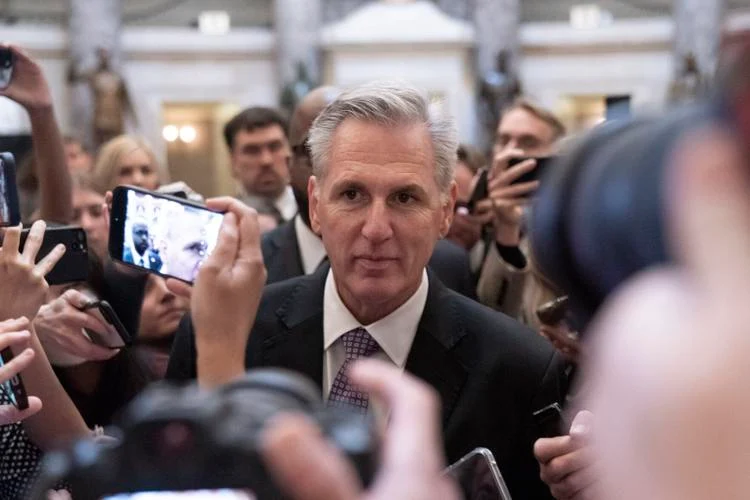
Now that U.S. House Republicans have a leader in Speaker Kevin McCarthy, R-Calif., they are turning their eyes toward an agenda with investigations and a few key legislative goals. McCarthy gave a window into those plans during his acceptance speech over the weekend, taking aim at the border crisis, IRS funding, and education. The new Republicans’ rules package included a promise to vote on those issues as well as abortion and others as part of the deal that got McCarthy the needed Speaker votes over the weekend. “This is what we’ve been fighting for,” U.S. Rep. Matt Gaetz, R-Fla., one of McCarthy’s most vocal opponents, wrote on Twitter, referring to the rules package. While the Republican holdouts will see some rules changes because of their resistance, they are still a small minority in the House and will likely be unable to steer the legislative ship. One of the items that does seem most promising for broader support is the push to undo President Joe Biden’s aggressive expansion of the IRS, a move that sparked controversy as Biden promised to partially pay for his rash of recent spending by auditing more Americans. “According to CBO, Democrats’ supercharged IRS will cause audit rates to ‘rise for all taxpayers, ’ and a conservative analysis shows that returning audit rates to 2010 levels would mean 1.2 million more audits with over 700,000 of those falling on taxpayers making $75,000 or less,” the Republican press office for House Ways and Means said in a statement. Other tax items that could see legislative action are a bill to make the Tax Cuts and Jobs Act permanent, a vote to repeal the inflation tax on capital gains as well as the 1099-K IRS paperwork provision. With a divided Senate and a Democratic president, though, Republicans will have trouble pushing through any conservative legislation. What they can do and have made clear they will focus on are using their investigatory powers to unearth more information on a string of controversies in recent years. After taking the majority in November, House Republicans on the Judiciary and Oversight Committees were quick to announce their plans to investigate Hunter Biden, the president’s son. Lawmakers at a news conference argued that Hunter Biden in particular used his father’s influence to negotiate business deals overseas that may have used federal resources and even compromised the Biden family. “Evidence obtained by Committee Republicans reveals Joe Biden lied to the American people about his involvement in his family’s business schemes,” said House Oversight Committee Ranking Member James Comer, R-Ky. “The Biden family business model is built on Joe Biden’s political career and connections with Joe Biden as the ‘chairman of the board.’ Biden family members sold access for profit around the world to the detriment of American interests. If deals compromise President Biden with foreign adversaries and they are impacting his decision making, this is a threat to national security.” House Republicans have also put Big Tech in their sight, as a string of news reports have shown that the White House, federal law enforcement, and tech companies have apparently worked together for years to censor Americans on a range of issues, most notably COVID-19. House Oversight Republicans recently sent a letter to Facebook and Twitter on that very issue, demanding more information. “Committee Republicans continue to investigate whether U.S. government officials have participated in suppression and censorship of lawful speech in violation of the U.S. Constitution,” the letter said. “Reports continue to surface that social media companies acted on the behest of government agencies and officials when removing, restricting, or disclaiming content. The American people and their elected representatives must know the extent to which their government has engaged in prohibited censorship to expose and prevent this unlawful conduct.” Despite these ambitions, this legislative term is effectively shorter than most. Soon, it will be a presidential election year. Both parties will become focused on campaigning and fundraising, which means legislating will largely take a back seat. Committee investigations, though, could be used to push for media attention. “Aside from the House’s policy agenda, conservatives will have new opportunities to carry out the much-needed oversight investigations into the administration’s incompetence at the southern border, the origins of COVID-19, Hunter Biden’s laptop and shady business dealings, and the Big Tech censorship of these stories,” said Heritage Action Executive Director Jessica Anderson. “These investigations need to both expose the truth and follow through with accountability measures.” Republished with the permission of The Center Square.
Kevin McCarthy elected the 55th Speaker of the House
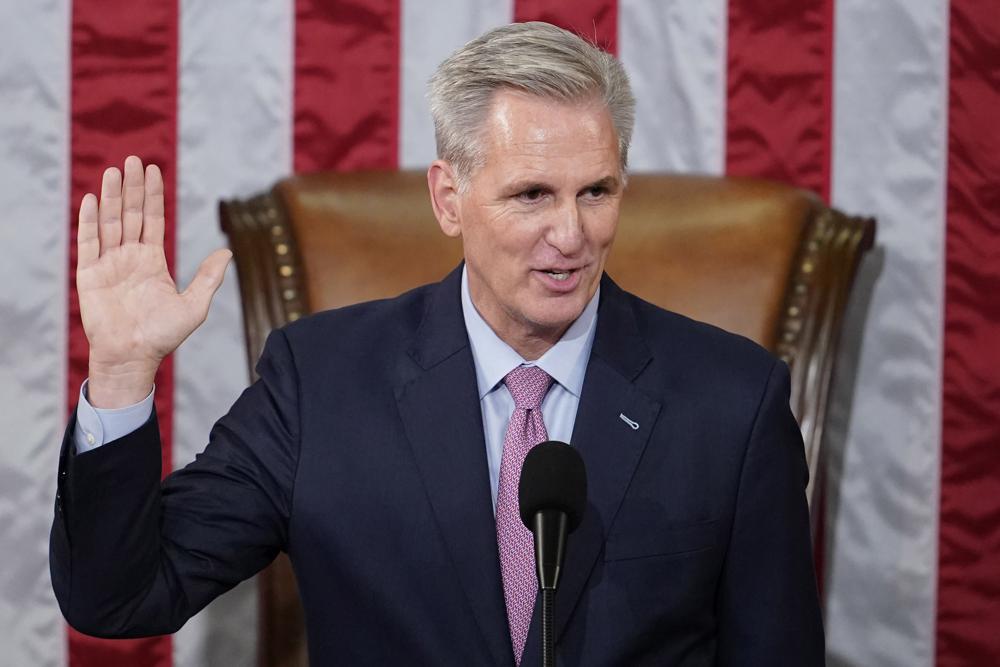
Congressman Kevin McCarthy became the 55th Speaker of the House early Saturday on the 15th ballot. McCarthy prevailed 216 to 212 for House Minority Leader Hakeem Jeffries. Six hardline Republican dissidents voted present, lowering the threshold needed to win to just 215 votes. Democratic incumbent Donald McEachin lost his battle with cancer after re-election; thus, the number of Congress members in the body is 434 instead of 435. “You know – my father always told me: It’s not how you start, it’s how you finish,” McCarthy said in his acceptance speech. “And now we need to finish strong for the American people. If the son of a fireman and grandchild of immigrants can rise to the highest position in the most important legislative body in the world. And if my colleague Hakeem Jeffries, with his life story, can rise to lead his party, then opportunity and democracy still thrive in America.” “As Speaker of the House, my ultimate responsibility is not to my party, my conference, or even our Congress. My responsibility – our responsibility – is to our country,” McCarthy said. “Two months ago, you voted for a new direction for our country. You embraced our Commitment to America. And now, we are going to keep our commitment to you. It’s a commitment for an economy that is strong – where you can fill up your tank and feed your family, where paychecks grow, not shrink. A commitment for a nation that’s safe – where communities are protected, law enforcement is respected, and criminals are prosecuted. A commitment for a future that is built on freedom – where children come first and are taught to dream big because, in America, dreams can still come true. A commitment for a government that is accountable – where Americans get the answers they want, need, and deserve.” “Our system is built on checks and balances,” McCarthy continued. “It’s time for us to be the check and provide some balance to the President’s policies. There is nothing more important than making it possible for American families to live and enjoy the lives they deserve. That is why we commit to stop wasteful Washington spending to lower the price of groceries, gas, cars, and housing and stop the rising national debt. We pledge to cut the regulatory burden, lower energy costs for families, and create good-paying jobs for workers by unleashing reliable, abundant American-made energy. Our first bill will repeal funding for 87,000 new IRS agents. Because the government should be here to help you, not go after you. We’re going to pass bills to fix the nation’s urgent challenges – from the wide open southern border to America-Last energy policies to woke indoctrination in our schools. We will also address America’s long-term challenges: the debt and the Chinese Communist Party. Congress must speak with one voice on both of these issues.” Alabama Congressman Mike Rogers drew national headlines during the 14th vote when he had to be restrained by incoming National Republican Congressional Committee (NRCC) Chairman Rep. Richard Hudson from coming after Rep. Matt Gaetz, who had voted present on the 14th vote and refused to change his vote to in favor of McCarthy. Rogers has called the dissident Republicans who opposed McCarthy and the will of 90% of the House Republican Caucus “legislative terrorists.” Rogers is expected to be the Chairman of the powerful House Armed Services Committee. What punishment will be levied against Rogers, if any, for his outburst on the floor of the House is unknown at this time. Matt Gaetz wrote on Twitter yesterday, “@RepMikeRogersAL and I have a six-year productive, working relationship. We’re going to work together wonderfully going forward. I don’t think there should be any punishment or reprisal just because he had an animated moment. He has my forgiveness.” Rogers responded to Gaetz on Twitter, stating, “@RepMattGaetz and I have a long and productive working relationship, that I am sure will continue. I regret that I briefly lost my temper on the House Floor Friday evening and appreciate Matt’s kind understanding.” All six of Alabama’s Republican Congressmen were unwavering in their steadfast support of McCarthy on all 15 of the votes in the House of Representatives that have been occurring since the start of the 118th Congress on Tuesday. Congresswoman Terri Sewell, Alabama’s only Democrat in the state’s congressional delegation – voted for Jeffries. Whatever happened between Rogers and Gaetz worked. Republicans were about to adjourn until Monday when Gaetz approached McCarthy and asked that the House hold one more vote. All six of the remaining holdouts flipped to vote present, allowing McCarthy to win on the 15th ballot. The historic drama of the 15 votes for Speaker of the House and McCarthy’s steadfast refusal to stand aside and allow someone else to run for Speaker – something he did in 2015 giving us Speaker of the House Paul Ryan, who was Speaker from 2015 to 2018 – became a selling point for the election of McCarthy. No Speaker has needed a second vote since 1923. Rep. Patrick McHenry, a longtime friend of McCarthy, gave the 15th nominating speech for McCarthy. “He’s relentless. The man does not quit,” McHenry said of McCarthy. President Joe Biden released a statement congratulating McCarthy following the early Saturday vote. “Jill and I congratulate Kevin McCarthy on his election as Speaker of the House,” Biden said. “The American people expect their leaders to govern in a way that puts their needs above all else, and that is what we need to do now. As I said after the midterms, I am prepared to work with Republicans when I can, and voters made clear that they expect Republicans to be prepared to work with me as well. Now that the leadership of the House of Representatives has been decided, it is time for that process to begin.” “Today we learned that my plan to build an economy that works from the bottom up and the middle out has achieved the lowest unemployment rate in 50 years,” Biden continued. “And that we made 2021 and 2022 the best
Matt Gaetz, Freedom Caucus held line on McCarthy speakership over seven bills
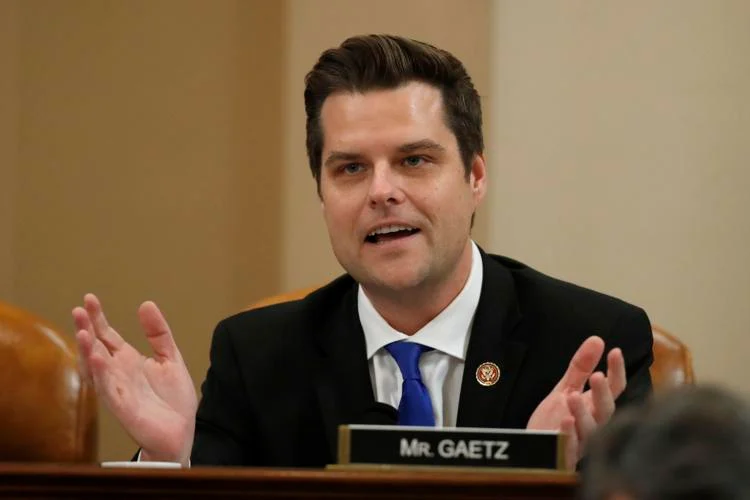
U.S. Rep. Matt Gaetz, R-Florida, was among 20 House members withholding support from new Speaker Kevin McCarthy until the California Republican would commit to bringing seven bills to a vote, as well as agreeing to other concessions. McCarthy, who was elected after 15 rounds of voting, is ranked the second-most politically left member among House Republicans, according to a govtrack.us 2020 analysis. McCarthy agreed to a list of concessions made by conservative members of the Freedom Caucus, including Gaetz, who tweeted, “this is what we’ve been fighting for.” The seven bills include one that would rescind funding for “certain balances made available to the Internal Revenue Service,” including the administration’s plan to hire 87,000 IRS agents to expand tax audits of Americans. Two bills related to abortion: one would prohibit taxpayer-funded abortions; the other would amend Title 18 of the U.S. Code to provide safeguards for children who survive abortions or attempted abortions. Two commit to border security measures: to suspend the illegal “entry of aliens” and require the national criminal background check system to notify U.S. Immigration and Customs Enforcement and relevant state and local agencies whenever an illegal foreign national attempts to receive a firearm. Another bill would prohibit the Secretary of Energy from sending petroleum products from the Strategic Petroleum Reserve to China. Another would amend the Omnibus Crime Control and Safe Streets Act to direct district attorneys and prosecutors’ offices to report to the U.S. Attorney General’s office. Among the concessions agreed to, negotiated by Rep. Chip Roy, R-Texas, include capping spending at 2022 levels for fiscal 2024, establishing a subcommittee to investigate the Justice Department, allowing more Freedom Caucus representatives on the Rules Committee, and returning to a one-member threshold for a motion to vacate the speaker’s office, which is what it was before 2019. Another concession includes the ability for any member of any party to offer amendments on the floor during appropriations, which Congress hasn’t done since May 2016. Roy said he also demanded that members of Congress have at least 72 hours to read bills before they are voted on instead of bills being “rammed through the Rules Committee and sent to the floor,” where they are expected to pass them without knowing what’s in them. Roy told CNN that what the 20 holdouts were able to accomplish was “history because this hasn’t happened in the last 100 years.” McCarthy’s election was the 15th time it took multiple votes to elect a speaker of the House, with the most contentious taking 133 votes over two months. Conservative House members also sought to hold McCarthy accountable for voting with Democrats and against conservative principles. According to Conservative Review, McCarthy earned an F grade for his voting record, which over the last six years shows a history of supporting unlimited spending of taxpayer money, increasing the debt ceiling, voting against funding border security measures, and voting for amnesty for illegal foreign nationals. The analysis evaluated key votes over the last six years, identifying 24 to give him a failing grade. According to CR’s analysis, in 2022, McCarthy voted for the NDAA without requiring the Department of Defense to rescind its COVID-19 vaccine mandate; voted to fund an initial $40 billion in aid to Ukraine without accountability for how the money is spent or stipulations that Ukraine pay it back. He has since voted to send an additional $45 billion to Ukraine while also cutting funding for U.S. border security. He also voted to pass a $1.5 trillion Omnibus bill “funding [Joe] Biden’s vaccine mandates,” and voted to bail out the U.S. Postal Service and “stick Medicare with the bill,” CR notes. In 2020, McCarthy voted for $1.4 trillion in special interest spending in a “so-called COVID relief bill;” to pass the NDAA without Section 230 reforms; and for the “‘gag and vote for it’ small-business-killing coronavirus emergency legislation.” In 2019, McCarthy voted to pass a $555 billion “Christmas minibus spending spree;” to suspend the debt ceiling, cancel budget caps and increase spending by $321 billion. to pass a $19 billion spending bill without funding border security and, according to Conservative Review, to “surrender on the border wall; empower drug cartels and human traffickers;” and to “reduce accountability in Congress by making federal pay mandatory spending.” Republished with the permission of The Center Square.
Kevin McCarthy makes big gains for speaker, but still falls short
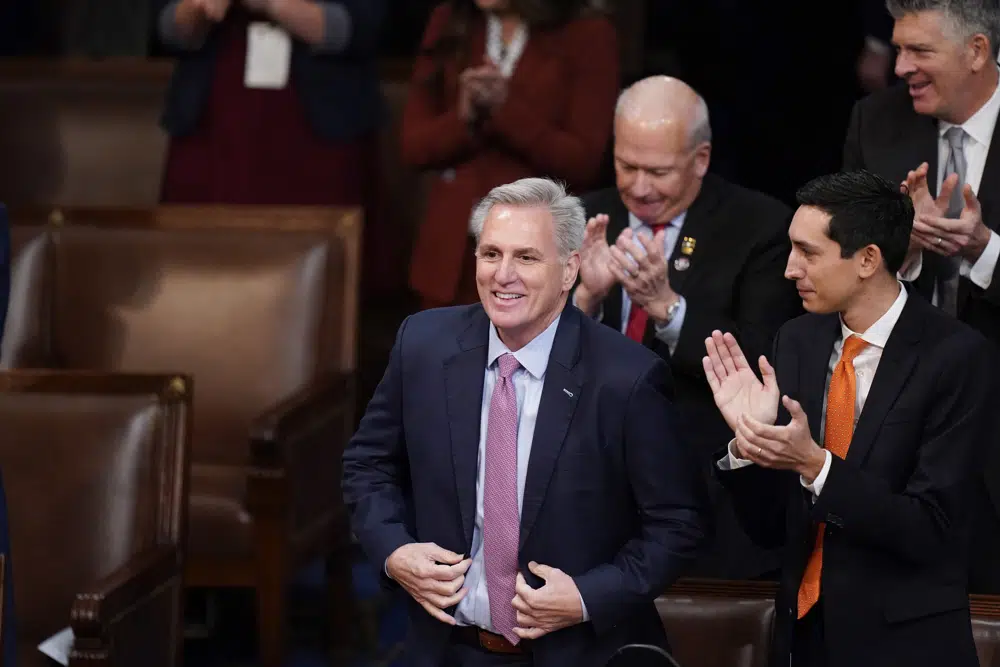
Republican leader Kevin McCarthy flipped 15 colleagues to support him in dramatic votes for House speaker on Friday, making extraordinary gains on the fourth day and the 12th and 13th ballots of a grueling standoff that was testing American democracy and the Republicans’ ability to govern. The changed votes from conservative holdouts, including the chairman of the chamber’s Freedom Caucus, put McCarthy closer to seizing the gavel for the new Congress — but not yet able. The stunning turnaround came after McCarthy agreed to many of the detractors’ demands — including the reinstatement of a longstanding House rule that would allow any single member to call a vote to oust him from office. That change and others mean the job he has fought so hard to gain will be weakened. After McCarthy won the most votes for the first time on the 12th ballot, a 13th was swiftly launched, this time just between McCarthy and the Democratic leader, with no nominated Republican challenger to siphon GOP votes away. But six GOP holdouts still cast their ballots for unnominated others, denying him the majority needed. The showdown that has stymied the new Congress came against the backdrop of the second anniversary of the January 6, 2021, attack on the Capitol, which shook the country when a mob of then-President Donald Trump’s supporters tried to stop Congress from certifying the Republican’s 2020 election defeat to Democrat Joe Biden. A few minutes before voting began in the House chamber, Republicans tiring of the spectacle walked out when one of McCarthy’s most ardent challengers railed against the GOP leader. “We do not trust Mr. McCarthy with power,” said Republican Matt Gaetz of Florida as colleagues streamed out of the chamber in protest of his remarks. Contours of a deal with conservative holdouts who have been blocking McCarthy’s rise emerged, but an agreement had seemed still out of reach after three dismal days and 11 failed votes in a political spectacle unseen in a century. But an upbeat McCarthy told reporters as he arrived at the Capitol Friday morning, “We’re going to make progress. We’re going to shock you.” One significant former holdout, Republican Scott Perry, chairman of the conservative Freedom Caucus, tweeted after his switched vote for McCarthy: “We’re at a turning point.” But several holdouts remained. The final 12th vote tally: McCarthy, 213 votes; Democrat Hakeem Jeffries 211. Other Republicans Jim Jordan and Kevin Hern picked up protest votes. With 431 members voting, McCarthy was still a few votes short of a majority. When Rep. Mike Garcia nominated McCarthy for a 12th time, he also thanked the U.S. Capitol Police who were given a standing ovation for protecting lawmakers and the legislative seat of democracy on January 6. The agreement McCarthy presented to the holdouts from the Freedom Caucus and others centers around rules changes they have been seeking for months. Those changes would shrink the power of the speaker’s office and give rank-and-file lawmakers more influence in drafting and passing legislation. Even if McCarthy is able to secure the votes he needs, he will emerge as a weakened speaker, having given away some powers, leaving him constantly under threat of being voted out by his detractors. But he would also be potentially emboldened as a survivor of one of the more brutal fights for the gavel in U.S. history. At the core of the emerging deal is the reinstatement of a House rule that would allow a single lawmaker to make a motion to “vacate the chair,” essentially calling a vote to oust the speaker. McCarthy had resisted allowing a return to the longstanding rule that former Speaker Nancy Pelosi had done away with, because it had been held over the head of past Republican Speaker John Boehner, chasing him to early retirement. But it appears he had no other choice. The chairman of the chamber’s Freedom Caucus, Scott Perry of Pennsylvania, who had been a leader in Trump’s efforts to challenge his presidential election loss to Democrat Joe Biden, appeared receptive to the proposed package, tweeting an adage from Ronald Reagan, “Trust but verify.” Other wins for the holdouts include provisions in the proposed deal to expand the number of seats available on the House Rules Committee, to mandate 72 hours for bills to be posted before votes, and to promise to try for a constitutional amendment that would impose federal limits on the number of terms a person could serve in the House and Senate. Lest hopes get ahead of reality, conservative holdout Ralph Norman of South Carolina said: “This is round one.” It could be the makings of a deal to end a standoff that has left the House unable to fully function. Members have not been sworn in, and almost no other business can happen. A memo sent out by the House’s chief administrative officer Thursday evening said that committees “shall only carry out core Constitutional responsibilities.” Payroll cannot be processed if the House isn’t functioning by January 13. After a long week of failed votes, Thursday’s tally was dismal: McCarthy lost seventh, eighth, and then historic ninth, 10th, and 11th rounds of voting, surpassing the number from 100 years ago in the last drawn-out fight to choose a speaker. The California Republican exited the chamber and quipped about the moment: “Apparently, I like to make history.” Feelings of boredom, desperation, and annoyance seemed increasingly evident. Democrats said it was time to get serious. “This sacred House of Representatives needs a leader,” said Democrat Joe Neguse of Colorado, nominating his own party’s leader, Hakeem Jeffries, as speaker. What started as a political novelty, the first time since 1923 a nominee had not won the gavel on the first vote, has devolved into a bitter Republican Party feud and deepening potential crisis. Democratic leader Jeffries of New York won the most votes on every ballot but also remained short of a majority. McCarthy ran second, gaining no ground. Pressure has grown with each passing day for McCarthy to somehow find the votes he needs or
Kevin McCarthy fails to win House Speakership after 11 votes
On Thursday, the U.S. House of Representatives voted to choose its next Speaker of the House. Ninety percent of House Republicans, including all of the Congressional Republicans from Alabama, voted to make longtime House Majority Leader Rep. Kevin McCarthy the Speaker, but that was still far short of the 218 votes needed to elect McCarthy Speaker. The 11:00 am CST Speaker of the House vote was followed by four more votes before the House adjourned until Friday. The four failed Speaker votes on Thursday, followed three votes on Wednesday and three on Tuesday, for a total of 11 failed Speaker elections to this point. The small group of ultra-conservative Republicans in the House that oppose McCarthy are led by Reps. Andy Biggs, Matt Gaetz, and Bob Good. They insist that they can hold out indefinitely and will not be swayed by critics to soften their stand against McCarthy, whom they view as too moderate. Democrats, on the other hand, have voted unanimously for their new leader Rep. Hakeem Jeffries. Congresswoman Terri Sewell has voted for Jeffries. Congresswoman Alexandria Ocasio Cortez has told reporters that House Democrats will not help elect McCarthy. Alabama’s Republican Congressmen Jerry Carl, Barry Moore, Mike Rogers, Robert Aderholt, Dale Strong, and Gary Palmer have all steadfastly supported McCarthy throughout this process. “I am supporting Kevin McCarthy in the House the entire time,” said Barry Moore in a video statement on Facebook. “We have been working on trying to get a consensus on who the Speaker will be.” “I have been with Kevin because I said I would be with Kevin,” Moore said. “I have told Kevin that he has my support.” The House cannot conduct business until it has a Speaker in place, so essentially, the first, second, and third days of the 118th Congress accomplished nothing. House committee staff may not get paid if the House does not pass rules for the 118th Congress – something that it can’t do until after the House has a Speaker. According to a memo released Thursday, the deadline for passing the rules package is next Friday. “Committees need to be aware that should a House Rules package not be adopted by end of business on January 13, no committee will be able to process payroll since the committee’s authority for the new Congress is not yet confirmed,” the memo said. Without a Speaker of the House, House Republicans’ expansive agenda can’t move forward. New members, including Alabama’s Dale Strong, have been unable to even be sworn in. The incoming chairs for the Intelligence, Armed Services, and Foreign Affairs committees are blocked from attending classified national security briefings until the rules are adopted for the 118th Congress, and committee chairs are formally appointed by the Speaker. McCarthy’s inability to even get a vote of support from the squabbling members of his own caucus has called into question whether or not he will be able to effectively lead the majority party moving forward – even if he is chosen as the next Speaker of the House. McCarthy and his allies have shown no sign of bringing forward a new candidate. McCarthy was previously passed over for Speaker in 2015 after ultraconservatives objected. Congressman Paul Ryan was chosen as Speaker then. This is the first time since 1923 that the Speaker of the House was not chosen on the first vote. There has not been this many failed votes on the Speaker since the Civil War. The House of Representatives will convene on Friday at 11:00 am CST to vote for a twelfth time. “I guarantee this much – it will be better than Nancy Pelosi,” Moore said, acknowledging that he was not sure who would ultimately get the Speakership. To connect with the author of this story, or to comment, email brandonmreporter@gmail.com.
Alabama’s Republican Congressmen support Kevin McCarthy
On Tuesday and Wednesday, the U.S. House of Representatives voted six times to pick the next Speaker of the House, and Republicans have failed to reach a consensus on who will lead the body for the 118th Congress. Six times Republicans have been divided on who they want to lead the body and have been unable to come to a conclusion. Most of the Republicans in the body, including all six Republican members of the Alabama congressional delegation, have voted for California Congressman Kevin McCarthy (R-California), but 19 members led by Reps. Andy Biggs, Matt Gaetz, and Bob Good have staunchly opposed McCarthy’s nomination. Republicans hold a majority in the House of 222 to 212 (one Democratic member died post-election). It takes 218 votes to secure the speakership. McCarthy got 203 votes on the first two votes but has failed to sway any of the 19 ultra-conservative holdouts who have opposed him. Democrats, including Congresswoman Terri Sewell, have been united in their support of Democratic Minority Leader Hakeem Jeffries. Democrats could side with either of the squabbling Republican factions to create a “unity” government, but Republicans on both sides of this inner GOP feud have publicly rejected any negotiations with Democrats to find a resolution. Former President Donald Trump has endorsed McCarthy. “VOTE FOR KEVIN, CLOSE THE DEAL, TAKE THE VICTORY, & WATCH CRAZY NANCY PELOSI FLY BACK HOME TO A VERY BROKEN CALIFORNIA,” Trump wrote on Truth Social on Wednesday. Former State Rep. Perry Hooper Jr. told Alabama Today that the former President should come to D.C. to negotiate a settlement. “All of these 19 or 20 come from big MAGA districts,” Hooper explained. “He is a great negotiator.” McCarthy has been the House Minority/Majority leader for years. He was the leading candidate to be Speaker of the House in 2015 when members of the House Freedom Caucus forced out then-Speaker John Boehner. Members of the Freedom Caucus refused to support McCarthy then, leading to the elevation of Rep. Paul Ryan to Speaker. Ryan left Congress in 2018. This public spat between angry House Republicans is the first time since 1923 that the House failed to choose a speaker on the first ballot. Republicans had been planning to announce a number of initiatives, including investigations of Hunter Biden’s alleged influence peddling, the chaotic American withdrawal from Afghanistan, and the Biden administration’s handling of the southern border situation. All of those plans are on hold and have been overshadowed by the back-and-forth personal attacks by rival Republican congress members and have called into question the ability of the Republican House members to govern effectively. “The American people are expecting us to work to stop inflation, deal with the crisis at our southern border and hold the Biden Administration accountable,” Congressman Robert Aderholt said. “The sooner we elect a Republican Speaker, the sooner we can start.” As of press time, there has been no agreement on who will lead the House for the next two years. To connect with the author of this story, or to comment, email brandonmreporter@gmail.com.
Todd Carney: Florida primary races to watch

The results of the Florida primaries, which will take place on August 23, will likely have a major impact on the midterms and on the political landscape. Florida Republican Gov. Ron DeSantis will likely win reelection in November, but Democrats are seriously contesting the governorship. Democrats’ two major candidates are agriculture commissioner Nikki Fried and Congressman Charlie Crist, a former governor. Fried has faced ethical questions, has run an erratic campaign, and lags in the polls. Crist, who has been in politics for 30 years, has lost runs for statewide office twice in a row and last won an office statewide 16 years ago. It’s not clear who the better general election candidate would be. Fried is a fresh face and has won statewide more recently than Crist, but her far-left positions and scandals have hurt her. Crist is more moderate and came close to winning the governorship in 2014, but his reelection victory for Congress in 2020 was underwhelming, and many consider him a washed-up perennial candidate. DeSantis looks pretty certain to beat either one, but DeSantis’s reelection margin could influence his standing as a potential presidential candidate. In the race for Florida’s first congressional district, Congressman Matt Gaetz is the incumbent. The federal government has been conducting a sex-trafficking investigation into Gaetz. He has one main challenger, Mark Lombardo, a businessman, and veteran. Gaetz has spent about $5 million more than Lombardo. Despite his ethical issues, if Gaetz wins the primary, he will likely win the general election. A Lombardo victory, on the other hand, would free Republicans of Gaetz as a problem. Congresswoman Kat Cammack represents Florida’s third congressional district. Cammack is a rising star who had no problems until a few weeks ago when she compared opponents of gay marriage to racists. But Cammack has a significant funding advantage and high-profile endorsements. If she loses, it will demonstrate again the potency of cultural issues. If she wins, she could position herself for a later run at higher office. Florida’s seventh district has four main Republican candidates: businessman and veteran Cory Mills, state representative and National Guard officer Anthony Sabatini, former congressional aide Rusty Roberts, and pastor and veteran Brady Duke. Mills has led most polls and has received endorsements from classic conservative figures. Sabatini is very controversial and has secured endorsements from far-right figures. The race is likely to go Republican, but if Sabatini gets the nomination, he could put the seat at risk this November. Crist gave up his seat in the 13th district to run for governor and redistricting made it more Republican. Businesswoman and veteran Anna Paulina Luna has led most polling, raised lots of money, and has prominent endorsements. Luna is also a telegenic Latina, so if she wins, she will likely have a bright future in the GOP. Attorney Kevin Hayslett is running and has received support from several local politicians. Attorney and former congressional aide Amanda Makki is running as well. She is also telegenic and has a fascinating personal story – she fled Iran due to oppression. So she could become a prominent figure if she wins. Florida has a new seat, the 15th district, up for election. All media outlets rate it as “likely Republican.” State representative Jackie Toledo is a conservative Latina who will likely become a significant voice in the GOP if she wins. Former secretary of state Laurel Lee has raised a substantial sum of money and enjoys the backing of prominent party officials. As a charismatic female, she could also gain a high profile if she wins. State senator Kelli Stargel is also running and received endorsements from some local officials. Veterans Kevin McGovern and Demetries Grimes have raised money effectively as well and could be competitive. Florida’s primaries could decide control of the House of Representatives or at least play a significant role in the margins of a Republican majority, should the party win one. The state’s primaries could also help shape the future look of the Republican caucus. And finally, the primaries could serve to help or hinder DeSantis’s likely presidential ambitions. Todd Carney is a lawyer and frequent contributor to RealClearPolitics. He earned his juris doctorate from Harvard Law School. The views in this piece are his alone and do not reflect the views of his employer. Republished with the permission of The Center Square.
Barry Moore to join colleagues at D.C. hearing on ‘Bidenflation’
Congressman Andy Biggs will hold an off-site hearing on Tuesday to discuss what he terms “Bidenflation” and “Biden’s energy crisis.” Alabama Congressman Barry Moore will attend the hearing. The hearing will be at the Heritage Foundation in Washington D.C., from 3:00-5:00 pm EDT, and will feature nearly 20 prominent House Republican lawmakers. Four expert witnesses will provide testimony. According to the Heritage Foundation website, the group’s mission is to “formulate and promote public policies based on the principles of free enterprise, limited government, individual freedom, traditional American values, and a strong national defense.” According to the press release, this hearing will “examine the Biden Administration’s policies that have led to a disastrous economic and energy state for the country.” The hearing also aims to determine how Republicans in Congress can “hold Joe Biden more accountable for his reckless leadership.” Other congressional members attending the hearing are Reps. Chip Roy, Claudia Tenney, Dan Bishop, Marjorie Taylor-Greene, Lauren Boebert, Matt Gaetz, Louie Gohmert, Doug Lamalfa, Ralph Norman, Byron Donalds, Ben Cline, Yvette Herrell, Andrew Clyde, Bob Good, and Andy Harris. Witnesses include former Governor of Texas and former Department of Energy Secretary Rick Perry, Heritage Foundation Distinguished Fellow Stephen Moore, President of Western Energy Alliance Kathleen Sgamma, and Alex Epstein, President of the Center for Industrial Progress.
Steve Marshall joins 16 attorneys general to file legal brief in support of Florida law banning sanctuary cities
Seventeen Republican attorneys general have filed an amicus brief with the 11th Circuit Court of Appeals in support of a Florida law banning sanctuary cities. The brief was filed by the attorneys general of Alabama and Georgia, Steve Marshall and Christopher Carr. Joining them were the attorneys general of Alaska, Arizona, Arkansas, Indiana, Kansas, Kentucky, Mississippi, Missouri, Montana, Nebraska, Oklahoma, South Carolina, Texas, Utah, and West Virginia. The Florida case is currently on appeal from the U.S. District Court for the Southern District of Florida, Miami Division. In 2019, the Florida legislature passed a bill signed into law by Gov. Ron DeSantis requiring state and local government officials and employees to comply with federal immigration enforcement. DeSantis said he was proud to sign the bill “to uphold the rule of law and ensure that our communities are safe.” He thanked state legislators “and the Angel Parents for their commitment to seeing this bill across the finish line. Their leadership has made Florida safer.” Shortly thereafter, the city of South Miami sued, and later several other groups, claiming the law discriminated against foreign nationals living in Florida illegally. U.S. District Court Judge Beth Bloom granted the city’s request for an injunction, halting the law from going into effect. Florida then appealed. The attorneys general argue Bloom legislated from the bench and exceeded her constitutional authority. “The amici States must constantly defend against legal challenges to state statutes brought by those who oppose the results of the legislative process,” they argue in the brief. “These litigants invite federal courts to substitute their own judgment for that of the legislature. Too often, courts accept the invitation to usurp the legislative role by ascribing invidious intent to legislative enactments based on sheer policy disagreement, dressed up as supposed discrimination. “The Constitution forbids that, and for good reason. … Federal courts are poorly positioned to weigh the many interests at stake. Their decisions are rendered without public debate. And, because they are not elected, they cannot be held accountable by the people.” They argue Bloom “fell prey to exactly this temptation.” “A legislative judgment that the country’s existing laws should be enforced is not an extreme or suspect position,” they argue. “Yet the district court held the law facially invalid because it was supposedly enacted with discriminatory intent, even though the law specifically prohibits racial discrimination. The Court did not point to any discrimination apparent in the text of the law (there is none).” AG Marshall said, “An unelected federal judge apparently disagrees with Florida’s political judgment about whether immigration laws should be enforced, but that should not be relevant,” adding that he hopes the court undoes Bloom’s “troubling ruling and puts an end to this practice of legislation by judicial fiat.” In Florida, AG Ashley Moody’s brief filed with the 11th Circuit argued Judge Bloom “committed numerous errors to arrive at the remarkable conclusion that the Florida Legislature had secret racist motivations in enacting SB 168.” “The law promotes public safety in facilitating federal immigration enforcement against criminal aliens while expressly prohibiting racial discrimination in its implementation,” the brief states. “The district court found a hidden racist motive only by ignoring key provisions of the statute, failing to afford the Legislature a presumption of good faith and placing great weight on the thinnest of evidence.” There are currently more than 300 so-called sanctuary cities in the U.S. whose officials won’t cooperate with federal immigration enforcement, the Federation for American Immigration Reform (FAIR) estimates. “Many sanctuary policies restrict law enforcement agencies from cooperating with federal immigration officials, including prohibiting their compliance with immigration detainers,” it states. According to U.S. Immigration and Customs Enforcement estimates, more than 2.1 million illegal immigrants are living in the U.S., with more than 1.9 million of them having deportation orders from a judge. In a recent letter to Department of Homeland Security Secretary Alejandro Mayorkas, Florida Congressman Matt Gaetz estimates that it would take 14.5 years to deport “just the aliens DHS has released under the Biden Administration,” into the interior of the U.S., including Florida. This is in addition to the 1.9 million with deportation orders who haven’t been deported. He also recently cited DHS data indicating that the Biden administration has the lowest deportation rate in the history of the agency. According to DHS data, 48% fewer criminal illegal immigrants have been arrested, and 63% fewer convicted criminals have been deported under the administration, he said. Republished with the permission of The Center Square.
Barry Moore joins lawmakers demanding hearing over treatment of January 6 defendants
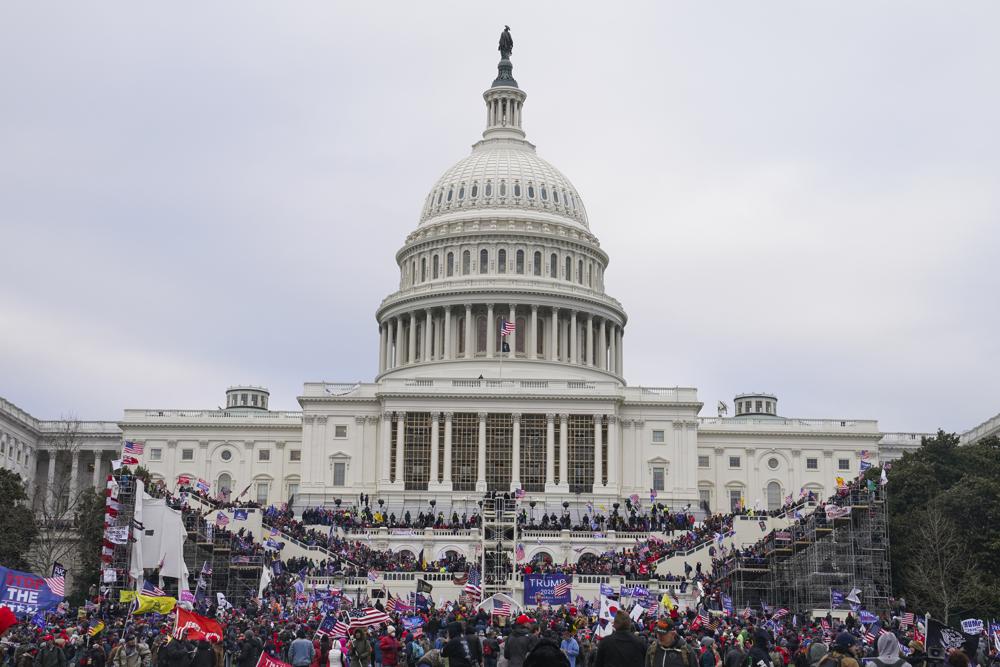
Rep. Barry Moore, along with 20 colleagues, sent a letter to Chairman Jerry Nadler and Chairwoman Carolyn Maloney asking that House Judiciary and House Oversight & Reform Committees hold hearings on the treatment of January 6 defendants being held at the D.C. Department of Corrections. The letter states that the defendants are being held in solitary confinement and are not being given needed medical treatment. U.S. District Judge Royce C. Lamberth asked the Department of Justice to conduct a civil rights investigation into the conduct of the D.C. jail regarding a patient who needed treatment for non-Hodgkins. Lamberth stated, “It’s clear to me the civil rights of the defendant were violated by the D.C. Department of Corrections.” “Regardless of the charges an incarcerated person faces, correctional authorities should respect and uphold their civil rights and protect their health and safety. In this country, they have the presumption of innocence. They have not faced trial. And even convicted criminals should get adequate medical care and proper food. They are human beings. The reports coming out of the D.C. Department of Corrections are deeply concerning, and Congress should use our oversight authority to investigate,” said Rep. Moore. Moore stated on Twitter, “Regardless of the charges and incarcerated person faces, correctional authorities should respect and uphold their civil rights & protect their health & safety. In this country they have the presumption of innocence.” “There is clear mistreatment of the individuals being held in the D.C. jail for charges related to January 6th,” stated Biggs. “There is NO excuse for keeping them in these abhorrent conditions and continuing to impose solitary confinement – a punishment that even some on the Left have condemned. It’s time for Chairman Nadler and Chairwoman Maloney to set aside any political motivations, do their job, and hold hearings so that we can get to the bottom of this.” Reps. Marjorie Taylor Greene and Mary Miller expressed disapproval for Deputy Warden Kathleen Landerkin’s actions. Rep. Greene stated, “The atrocious and inhumane conditions for PRE-TRIAL detainees at the D.C. Gulag are a clear example of the two-tiered justice system in America. BLM / Antifa domestic terrorists are allowed to walk free after burning down our cities with violent riots, but suspected J6 defendants are subjected to worse treatment than convicted terrorists in Gitmo. This situation must be investigated, and the officials responsible must be terminated from their positions, starting with avowed Trump-hater Deputy Warden Kathleen Landerkin.” “Deputy Warden Landerkin is using her position to torture her political opponents in a system where justice is supposed to be blind,” stated Miller. “There is clear mistreatment of the individuals being held in the D.C. jail for charges related to January 6th,” stated Andy Biggs. “There is NO excuse for keeping them in these abhorrent conditions and continuing to impose solitary confinement – a punishment that even some on the Left have condemned. It’s time for Chairman Nadler and Chairwoman Maloney to set aside any political motivations, do their job, and hold hearings so that we can get to the bottom of this.” The letter was also signed by Scott Perry, Jeff Duncan, Lauren Boebert, Andy Biggs, Debbie Lesko, Andy Harris, Randy Weber, Bill Posey, Russ Fulcher, Matthew Rosendale, Sr., Louie Gohmert, Andrew Clyde, Mary Miller, Marjorie Taylor Greene, Jody Hice, Matt Gaetz, Bob Good, Michael Cloud, Ralph Norman, and Clay Higgins.
Barry Moore cosigns letter to boot Liz Cheney and Adam Kinzinger out of GOP conference
Congressman Barry Moore signed a letter to Minority Leader Kevin McCarthy requesting a reconsideration of a GOP Conference Rule change that would remove members who accept committee assignments or serve on a committee without a recommendation from the Republican Steering Committee or the Republican Leader. The letter, written by Arizona Rep. Andy Biggs, comes in response to the select committee investigating the January 6th attack on the Capitol. McCarthy was given five picks to serve on the committee. However Nancy Pelosi rejected two, and McCarthy pulled his other three as well. Pelosi, in an effort to maintain a bipartisan committee, asked Liz Cheney and Adam Kinzinger to serve on the committee, and they accepted. Congressman Moore stated, “It is absurd that a formal rule prohibiting this behavior is necessary, but Republicans must be united to defeat Nancy Pelosi’s socialist takeover of America, and the Republican conference should swiftly make this rule change to expel anyone who has chosen to take marching orders from her.” “Accepting committee assignments from Speaker Pelosi and ignoring the long-standing practice and rule of being nominated by designated GOP members is a betrayal to our party’s efforts against Pelosi and the Far Left’s attacks,” stated Biggs. “As Republican Members of Congress, it is our duty to strategize effective measures that protect America’s foundational values. We cannot allow our party, which stands as a bulwark against the socialist agenda of the Democrats, to be infiltrated by individuals who are coordinating with members of the opposition. Our party’s integrity, and the voice of conservative Americans who voted for us, must be protected and upheld.” Removal from the conference requires a two-thirds vote of all its members. Only the party leader can bring such a motion to a vote. Kinzinger’s spokesperson Maura Gillespie said in a statement that the congressman is looking for answers about the January 6 attack. “When a Member makes repeated calls to remove Representatives Kinzinger and Cheney from the Conference, it certainly calls into question their true motives,” Gillespie said. “Especially when that Member pushes conspiracy theories to their constituents and outright lies for their own personal gain.” The letter to McCarthy states, “Congresswoman Cheney and Congressman Kinzinger are two spies for the Democrats that we currently invite to the meetings, despite our inability to trust them.” On Twitter, Kinzinger responded, “I think this is interesting. Just coming off a member declaring bloodshed will happen, many pushing Covid denialism and Jan 6 trutherism….The GOP has a choice. I am even more committed to getting the truth now.” In July, Cheney posted on Twitter, “We cannot leave the violence of January 6th – and its causes – uninvestigated. We must know what happened at the Capitol and the White House on the day.” Matt Gaetz, one of the 16 cosigners commented, “Instead of investigating the Jihad Squad’s connections to groups that foment political violence like BLM and Antifa, Liz Cheney and Adam Kinzinger have taken on Pelosi appointments to target the Republican Firebrands in Congress. Kevin McCarthy should remove them from their committees immediately.” Rep. Marjorie Taylor Greene stated, “Liz Cheney and Adam Kinzinger knew all along the Jan. 6 committee was Witch Hunt 2.0, just like the one Democrats launched against President Trump. They’ve sold out Republicans and they must be thrown out of the GOP conference!” Additional cosigners of the letter are Reps. Jody Hice, Matt Gaetz, Andrew Clyde, Marjorie Taylor Greene, Lauren Boebert, Dan Bishop, Randy Weber, Ralph Norman, Andy Harris, Scott Perry, Bill Posey, Madison Cawthorn, Mary Miller, Louie Gohmert, and Bob Good.
Conservatives decry door-to-door vaccine checks

Two Alabama leaders, Mo Brooks and Barry Moore, and dozens of other members of Congress sent a joint letter to President Joe Biden last week regarding his decision to implement door-to-door checks on the American people to coerce them into receiving the COVID-19 vaccine: The letter states, “Your administration’s decision to go door-to-door to coerce individuals to receive a COVID-19 vaccine is deeply disturbing and violates the privacy of Americans. The private health information of millions of Americans should never be a matter of concern for the federal government. Americans must be free to make their own personal health choices.” The concern, coming mostly from Republicans, comes from a statement from President Biden on July 6, when he stated, “Now we need to go to community by community, neighborhood by neighborhood, and oftentimes, door to door – literally knocking on doors – to get help to the remaining people protected from the virus.” During the White House briefing, the president also called on providing vaccines to all healthcare providers, including pediatricians, and discussed providing mobile clinics that could be set up at events like sports events and festivals. Even though Alabama has one of the lowest rates of COVID-19 vaccinations in the country, there are no plans to start a door-to-door campaign. According to NBC15, Dr. Karen Landers commented that it was a strategy that was discussed but that the state is not adopting it. Dr. Landers stated, “No, we are not doing that in this point in time as far as going door to door.” “Persons just really not necessarily being receptive to persons coming on to their property or coming to their door with information,” she said. Jim Zeigler recently called on Governor Kay Ivey to ban what he called “door-to-door vaccine squads” in Alabama. Zeigler asked Ivey to “use the strongest steps to clearly direct federal agents and their recruits that their entry onto home properties in Alabama could legally be considered trespassing.” Arizona Rep. Andy Biggs said in a statement, “Door-to-door vaccine checks on Americans are a blatant abuse of government authority and a pure power play by the Biden administration. The federal government has no right to track the private health information of Americans or to intimidate people into getting the vaccine. Instead of meddling in private medical decisions, the Biden administration should focus on addressing the border crisis, the rampant rise in inflation, and the crime wave that is plaguing American cities – all crises it created. The door-to-door spying on Americans is one more example of the burgeoning surveillance state by the national government.” Biggs posted on Twitter, “I just sent a letter to Biden demanding answers on his door-to-door vaccine checks. The fed gov has no right to track the private health information of Americans or to intimidate people into getting the vaccine.” Other leaders that signed the letter include David Schweikert, Paul Gosar, Ralph Norman, Bob Good, Warren Davidson, Marjorie Taylor Greene, Thomas Tiffany, Jody Hice, Lauren Boebert, Alex Mooney, Chip Roy, Andy Harris, Scott DesJarlais, Andrew Clyde, Yvette Herrell, H. Morgan Griffith, Bill Posey, Randy Weber, Michael Cloud, Dan Bishop, Ben Cline, Mary Miller, Louie Gohmert, Debbie Lesko, Mike Garcia, and Matt Gaetz.
