
Alabama House Committee approves bill dividing BP oil spill settlement

The Alabama House Budget Committee approved a bill Wednesday dividing the $20 billion settlement BP is scheduled to pay the state over 18 years for the 2010 BP oil spill in the Gulf of Mexico. HB569 divides the funds to pay off state debts and as well as road projects in coastal Alabama counties. The plan, sponsored by Ozard Republican Rep. Steve Clouse, would also help close the gap in next year’s Medicaid shortfall — freeing up $55 million of the necessary $85 million officials say is needed to maintain services across the state. The bill moves forward to the full House for consideration, which could happen as early as Thursday.
Pediatricians say state Medicaid cuts will reduce kids’ health care access

The state’s leading association of practicing pediatric doctors warned looming cuts to state Medicaid program could hurt Alabama’s children big time on Tuesday. The Alabama Chapter of the American Academy of Pediatrics held a conference call with reporters, warning them planned a planned reduction in the amount of money allocated to Medicaid will lead to a downward spiral in levels of care and quality. “Regardless of where you live in the state, the expected cuts to Alabama’s Medicaid program will significantly impact care to all children,” said Cathy Wood, MD, a pediatrician at Partners in Pediatrics Clinic in Montgomery and the president of the group. “Alabama’s children need homes for their medical care. Cutting Medicaid will disrupt a very fragile healthcare system in our state and we fear will ultimately crush it,” said Wood. Lawmakers in the Alabama Senate approved a budget which included $85 million fewer dollars for Medicaid-funded care than the state Medicaid Agency said it requires to keep care at the same – already underwhelming – status quo levels. Gov. Robert Bentley – who once went out on a political limb to support expanding Medicaid under the Affordable Care Act – now seems to have backed down to pressure, saying he would direct the agency to make cuts to sustain the program according to the new budget figures rather than seek greater funding. 500,000 children are enrolled in Medicaid, meaning nearly a huge share of the most vulnerable populations in America are relying on the outcome of the budget battle. The pediatricians said Tuesday that if the current budget were enacted, close to half would stop taking Medicaid for a portion of their patients, such as new patients, or patients from a certain geographic are, while about half would have to lay off staff. Additionally, the doctors’ group reported, more than one-third would stop taking Medicaid altogether, while one-sixth said they would retire or move out of state, depending on where they were in their careers.
Alabama lawmakers to hold hearings on state’s Medicaid dilemma

The countdown is on for Alabama lawmakers to come up with a solution for $85 million shortfall to fund the state’s Medicaid program in the eight remaining legislative days — or else risk coming back for a special session. Part of an ongoing budget impasse, funding for the state’s Medicaid program — which covers approximately a million Alabamians — has been an hot-button topic in the Legislature this year. Last month Alabama Gov. Robert Bentley vetoed the state’s General Fund budget over the lack of Medicaid funding, but lawmakers bucked his veto and voted to override it. The House and Senate general fund budget committee have scheduled a joint meeting Wednesday to discuss the Medicaid shortfall. Bentley and Alabama Medicaid Commissioner Stephanie Azar have said the program will see cuts in Medicaid services without additional funds, which could force the state to eliminate prescription drug coverage for adults, adult eyeglasses, prosthetics, outpatient dialysis, or requiring patients to go to one big box pharmacy, among other possibilities. “I think today it is very important for recipients to know that their access to care is at risk and for the Medicaid providers in the state to start preparing for the impact of these cuts,” Azar said.
Bentley Administration announces creation of Children’s Cabinet
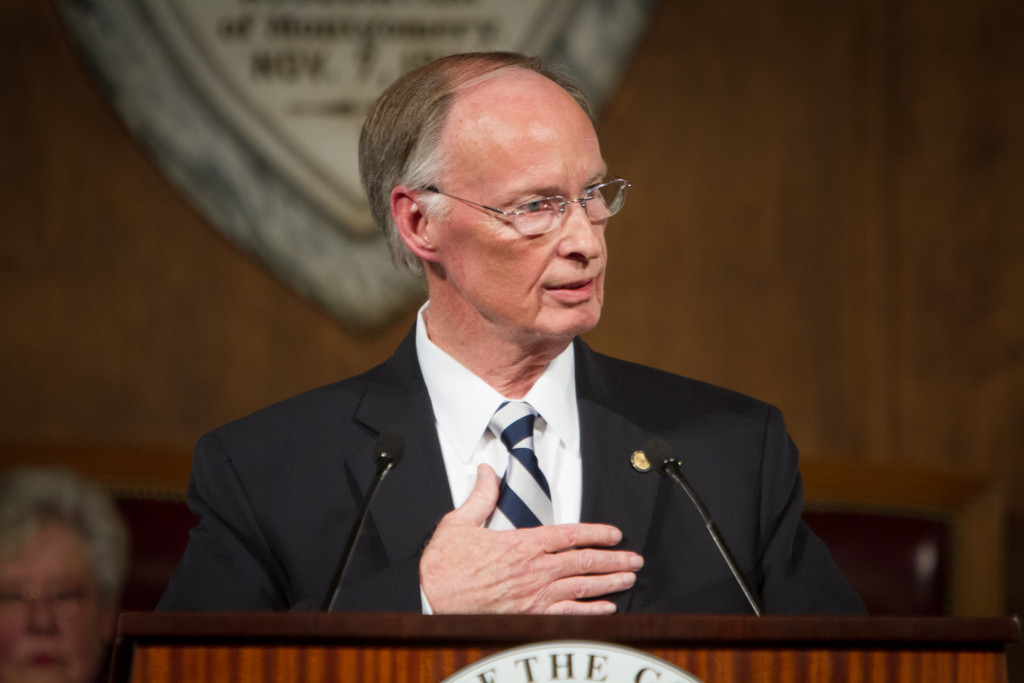
Alabama Governor Robert Bentley announced Tuesday afternoon the creation of the Alabama Children’s Cabinet. The Cabinet will include members of existing state agencies who will work together to “maximize efficiency in the use of state resources, reduce duplication of services and create a greater return of state tax dollars,” according to a press release from the governor’s office announcing the new body. “Alabama’s children are our future, and we must ensure that their needs are being met just as we do with adults,” said Bentley at the announcement of the Cabinet’s creation. “Whether it is education, health care, nutrition programs, or other needs, children need someone to advocate for what is best for them. We have put together a great group of individuals, already working hard on children’s issues, that has the knowledge and experience necessary to improve the lives of the children of Alabama. The Children’s Cabinet will be an important group dedicated to Alabama’s children” This group will work to develop measures of accountability to improve effectiveness in achieving positive outcomes for children. — Gov. Robert Bentley (@GovernorBentley) April 12, 2016 We’ve put together a great group of individuals that have the knowledge & experience necessary to improve the lives of Alabama children. — Gov. Robert Bentley (@GovernorBentley) April 12, 2016 The Cabinet will consist of the director, or an appointed delegate from the State Department of Education, Alabama Department of Human Resources, Alabama Medicaid Agency, Alabama Department of Public Health, Alabama Department of Mental Health, Alabama Department of Early Childhood Education, Alabama Department of Youth Services, Alabama Department of Rehabilitation Services, Alabama Department of Child Abuse and Neglect Prevention, and the Governor’s Office of Minority Affairs. The Cabinet, created by Executive Order 17, is created effective immediately, and must meet monthly, and is given authority to develop its own rules. According to the governor’s office, the members of the Children’s Cabinet will receive no additional compensation for the position.
Robert Bentley says Alabama will see cuts in Medicaid services due to budget

Following the Alabama Legislature’s vote to override Gov. Robert Bentley‘s veto of the General Fund budget, Bentley announced announced at a press conference Wednesday the Alabama Medicaid Agency is considering several significant cuts to their services in an effort to operate within the means of the new 2017 budget. Bentley said the budget comes up $85 million short of what the federal government requires for assistance. “For a number of years we have tried to make our Medicaid agency more effective, more steam-lined, and more efficient,” Bentley said. “We have tried to improve the lives of the people in this state, the one million people who depend on medicaid… and we did that.” Bentley said he has asked the Medicaid Agency, which provides health care to roughly one million Alabamians, to come up with a list of possible cuts to be reviewed within the coming days. Medicaid Commissioner Stephanie Azar joined Bentley listing some options up for consideration such as eliminating prescription drug coverage for adults, adult eyeglasses, prosthetics, outpatient dialysis, or requiring patients to go to one big box pharmacy, among others. “I think today it is very important for recipients to know that their access to care is at risk and for the Medicaid providers in the state to start preparing for the impact of these cuts,” Azar said. The governor has previously suggested he might call a special session on Medicaid funding, but said Wednesday that he has yet to make a decision. “We are going to have to make some very tough decisions. After we look at the options, we will make those tough decisions,” said Bentley.
Alabama lawmakers return to decisions on budget, prisons
Alabama lawmakers return from spring break Tuesday with decisions ahead of them on several major pieces of legislation. The session can last until May 16. Here is what to look for in the final weeks of the 2016 legislative session. GENERAL FUND BUDGET VETO: Gov. Robert Bentley is expected to veto the state’s general fund budget over Medicaid funding. The lawmaker-passed spending plan provides $85 million less than what Bentley says is needed to adequately fund the state’s Medicaid program. Legislative leaders have said they plan to override the governor’s veto, a procedure that requires a majority vote of all the members in the Senate and House. ___ FALLOUT FROM GOVERNOR’S SCANDAL: Bentley recently admitted that he had “inappropriate” conversations with a top female staffer after racy recordings surfaced. The admission comes as the politically wounded governor is trying to make headway on his budget and prison construction proposals. At least one lawmaker has said he wants to consider an impeachment resolution, but other Republicans called that discussion premature. ___ GASOLINE TAX: The proposal would raise the state’s gasoline tax to pay for road and bridge construction. The proposal would raise the gasoline tax by 6 cents per gallon. The tax would then be adjusted every four years to equal the average tax in Alabama’s four border states. ___ PAYDAY LOAN: The bill would put a Colorado-style restriction on the payday loan industry by giving borrowers at least six months to pay back the loan instead of just a few days or weeks. The bill would also require that people be allowed to make installment payments. ___ PRISON CONSTRUCTION: The governor is seeking an $800 million bond issue to build four new large prisons — three for men and one for women. Most existing prisons would be closed under the plan. The governor’s major initiative for the session is still awaiting its first floor vote. ___ LOTTERY: Lottery bills have so far stalled in the Alabama Legislature under a mix of opposition to gambling, disagreements on how a state lottery should be structured and a push to include casino gambling. The bills, so far, have not gotten a floor vote in either chamber. ___ TENURE/TEACHER EVALUATIONS: The bill would extend the time to obtain tenure from three to five years. It would also create an evaluation system in which 25 percent of a teacher’s annual evaluation score would come from measures of student achievement growth by using ACT Aspire or other test scores. Senate President Pro Tem Del Marsh named the bill his priority for the session, but it has hit opposition from the Alabama Education Association. Marsh said he is anxious to try to get to the bill to the Senate floor. ___ Republished with permission of the Associated Press.
Alabama ranked 3rd most federally dependent state

With the tax deadline less than a month away, the personal finance website WalletHub followed up on its report on the States with the Highest & Lowest Tax Rates with an in-depth analysis of 2016’s Most & Least Federally Dependent States to determine how dependent states with the lowest tax rates are compared with those paying the highest. The results? For a state that pride’s itself on conservative, small-government values Alabama and Uncle Sam are a lot closer than many Alabamians would imagine. According to the analysis, Alabama ranked as the 3rd most federally dependent state in the nation, relying heavily on Uncle Sam to support the state’s finances. Federal Dependency of Alabama (1=Most, 25=Avg.): 3rd: Return on Taxes Paid to the Federal Government 9th: Federal Funding as a Percentage of State Revenue 9th: Share of Federal Jobs While not the results many would expect from a Red State — one that voted Republican in the 2012 presidential election — with an average dependency ranking of 17.13, WalletHub found Red States are altogether more reliant on federal funding than Blue States, which ranked 33.23 on average. The revelation of federal dependence where bold, efficient stewardship was once thought to preside, begs the question: Are Alabamians being taxed appropriately? With an $85 Medicaid shortfall in the General Fund budget and a special session on the horizon, it’s a question the Alabama Legislature will soon face. As for how neighboring states fared, Alabama was in good company — Mississippi ranked the most federally dependent state in the nation, Louisiana 4th and Tennessee 5th. Here’s how Alabama compares to the rest of the country: Source: WalletHub In order to identify which states most and least depend on federal support, WalletHub’s analysts compared the 50 states across across across two key dimensions, namely “State Residents Dependency” and “State Government Dependency” looking at 2013-2014 data collected from the Internal Revenue Service, U.S. Census Bureau, USAspending.gov, Bureau of Labor Statistics and Governing.com.
Robert Bentley announces plans to veto General Fund budget
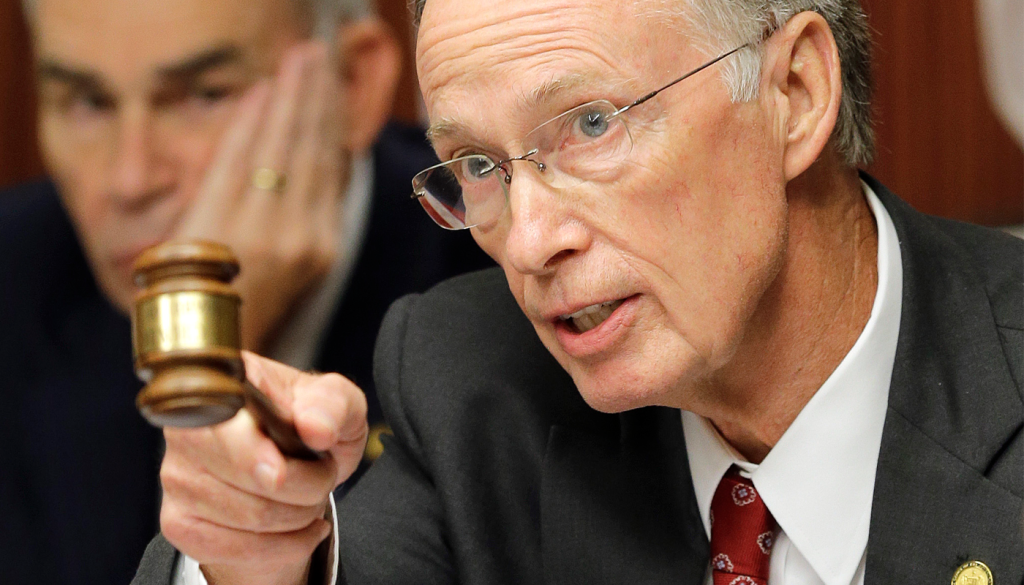
Gov. Robert Bentley has released a statement announcing his plans to veto the recently passed General Fund budget, which fails to adequately fund the state’s Medicaid program. “The General Fund Budget is unacceptable because it lacks adequate funding for essential government services,” Bentley said in the Thursday statement. “The proposed appropriation falls short of what the Medicaid Agency will require to provide services for the over one million Alabamians, most of them children, covered by Medicaid.” Bentley also noted that the current budget will render Medicaid reform measures passed in 2013 “unsustainable.” “The state has already made great progress to remodel and streamline the Medicaid model to a regional managed-care system,” Bentley remarked. “That progress will be lost without adequate funding from the General Fund.” In the statement, Bentley also mentioned his concerns about funding for the Alabama Department of Corrections, which he says is necessary to “address the prison crisis long-term.” “We have made strong reforms in the prison system; however, insufficient funding hinders the department’s efforts for further reform,” Bentley said. “We have witnessed the dangerous conditions inside our state-operated prisons, and the Alabama Legislature must prioritize prison system safety with adequate appropriations.” Bentley further chastised lawmakers for using “millions” in one-time BP settlement money to pay for “recurring expenses,” a move the governor claims is “fiscally irresponsible and shortsighted.” “Because of these concerns, I will veto the General Fund Budget and send it back to the Legislature on April 5th when they return,” Bentley said in closing. “I am committed to working with the Legislature to address our General Fund budget challenges.” Unlike other states, which require a two-thirds vote to overturn a veto, Alabama only requires a simple majority in both houses to override the governor’s veto. Because of that, the Republican majority in the state legislature will easily be able to undo Bentley’s action.
Alabama legislative week in review: March 21 – March 25, 2016
Legislators briefly passed through Montgomery this week with an eye toward their spring break, which began Thursday and won’t have them back in the statehouse until April 5. Despite only two legislative action days this week, both bodies took up high-profile legislation. Tuesday, the 17th day of the legislative session, got under way with the Alabama House of Representatives clearing the long-contested bill to provide a path to visitation rights for grandparents. HB334 from Rep. Mike Jones (R-Andalusia) passed with an affirmative vote from 97 lawmakers, though debate came over the fact that the bill may circumvent the will of fit parents to make decisions regarding the welfare of their children. Over in the Senate, lawmakers passed SB260 from Sen. Clay Scofield (R-Guntersville). The bill would bar the state from taking money from the state’s park system to prop up the General Fund. The practice is a legitimate concern, as lawmakers have taken $15 million from state park coffers over the past five years to deposit into the General Fund. The Senate also cleared HB34 from Rep. Mac McCutcheon (R-Capshaw). The bill, which was carried by Sen. Greg Reed (R-Jasper), provides tax breaks for state ports in an effort to remain competitive among states with similar incentives. Supporters say the move will attract large businesses and bring jobs to the state. The Senate continued on its roll Wednesday with the passage of SB205 from Sen. Paul Sanford (R-Huntsville), which would prohibit the location of abortion clinics within 2,000 feet of a school and bar the Alabama Department of Public Health from reissuing licenses to any clinic in violation of the new law. The Senate also approved a General Fund budget, which lacks sufficient funding for Medicaid, despite a veto threat from Gov. Robert Bentley. The Senate’s session came to a halt when it stalled a vote on Bentley’s landmark prison transformation bill. In committee hearings this week, the Mobile delegation declined a bill along party lines that would allow county residents to vote on whether or not to raise the local minimum wage to $10.10 an hour. A house committee approved a bill that will put to a vote the notion that a person is a person from the time of fertilization, effectively outlawing abortion in the state. A Senate committee took up a bill that would decriminalize possession of the epilepsy-relieving drug cannabidiol (CBD), but did not vote on the measure. It will likely come up for discussion again when legislators return from spring break April 5.
Senate passes General Fund budget with $85 million Medicaid shortfall

The Alabama Senate approved a $1.8 billion General Fund budget Wednesday that will provide level-funding to most state agencies, despite a threat from Gov. Robert Bentley that he would veto any budget that did not adequately fund Medicaid. The budget passed by the Senate leaves Alabama’s Medicaid program about $85 million short of the money it had requested. The point of contention for Alabama lawmakers was Bentley’s plan to pull $181 million from education to fund the increase in Medicaid allocations. Senate Pro Tem Del Marsh has said repeatedly throughout the session that there is no appetite among lawmakers to pull from the education budget or to raise taxes any further. The House passed the budget last week and House Speaker Mike Hubbard (R-Auburn) echoed much of Marsh’s sentiments. Hubbard said that the requested increase to Medicaid’s coffers would come at the expense of other state agencies. A failure to provide Medicaid with adequate funding would obliterate the state’s earlier announced plans to institute a Regional Care Operation (RCO) programs. With the RCO plan in jeopardy, many state lawmakers have backed out of their previous promises to see the program come to life. “Alabama took bold steps towards improving healthcare in our state with our plan for regional care organizations and today’s announcement proves our efforts are paying off,” Hubbard said when the plan was announced. “This investment could lead to a more streamlined and localized system, produce better outcomes, and save millions of taxpayer dollars in the long-term.” “The Federal government has determined that Alabama has been innovative with our plan to transition to regional care organizations,” Marsh said at the time. “Over time it will save the taxpayers millions of dollars and will serve as a potential model for states as an alternative to expanding Medicaid.” Despite Bentley’s repeated threats to veto the budget, Alabama Republicans who favor the bill would easily be able to override such a move by the governor.
House OKs General Fund despite opposition, threat of veto
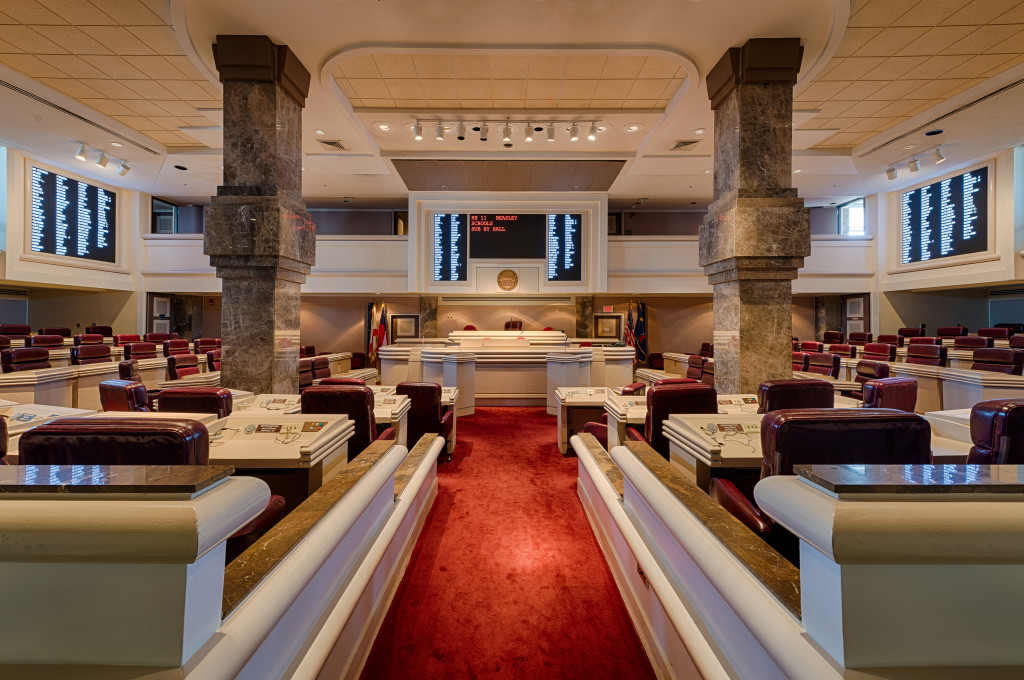
The Alabama House of Representatives passed a General Fund budget Tuesday, which leaves in place a roughly $85 million budget shortfall for the state’s Medicaid program. Gov. Robert Bentley has already signaled that a failure to fully fund Medicaid would cause him to veto the bill and likely call for a special session. House Democrats fought vehemently against bringing the budget to the floor, noting that a failure to fully fund Medicaid would obliterate the state’s recently announced Regional Care Organization (RCO) program and leave millions of needy Alabamians with no healthcare. Despite that, the bill made it to the floor and was debated for several hours. In the chamber, Democrats again railed against the legislation in the five-hour skirmish and members of both parties chastised Bentley for providing some Cabinet members with a significant raise while the state’s General Fund crumbles. Republicans struck back, claiming that the additional money for Medicaid just is not there and there is little to no appetite for raising taxes in an effort to collect more revenue. After passage of the bill, the Arise Citizens’ Policy Project (ACPP) released a statement condemning the General Fund budget’s failure to fully fund Medicaid. “These Medicaid cuts would be devastating for Alabamians, our economy and our entire health care system,” said ACPP Executive Director Kimble Forrister. “They could force many rural hospitals to close and prompt many pediatricians to leave the state. They would end coverage of essential services like outpatient dialysis and adult eyeglasses. And they would end promising new Medicaid reforms that would save money and keep people healthier.” “We simply can’t afford these Medicaid cuts,” Forrister continued. “It’s wrong to put health care at risk for children, seniors, and people with disabilities in Alabama. It’s time to get serious about raising the revenue needed to invest in a healthier Alabama for all.” With its passage in the House, the bill will go before the Senate. If the Senate passes the measure, Bentley has said he will veto the legislation and require lawmakers to take it up again.
Despite Democrats’ opposition, General Fund budget has its day before the House

Taking a strategy from last week’s playbook, Alabama House Democrats began a filibuster as the Special Order Calendar was brought up for discussion. The calendar includes the General Fund budget, which raised the ire of Dems because of its lack of adequate Medicaid funding. The current budget leaves in place an about $100 million shortfall in the Medicaid budget and will obliterate plans announced by Gov. Robert Bentley to institute a Regional Care Organization (RCO) program in the state. Both Bentley and House Speaker Rep. Mike Hubbard (R-Auburn) have signaled that there will likely be a special session called to address the shortfall in Medicaid. According to statements made by Hubbard, Republicans are slow to fully fund the Medicaid program because it puts a strain on all other state agencies. Along with prisons, Medicaid takes up about 62 percent of the state’s budget. “I stand here today because I am concerned about where we are on the Medicaid budget,” said Rep. Juandalynn Givan (D-Birmingham). “Yet again, we will have failed the people who need it the most. We find money here in this state for everything in this state that we need to find it for. I still cannot fathom why we need to have a special session, yet again, to fix a problem here in this state that we should be addressing right now.” Givan noted that more than a million Alabamians receive Medicaid benefits and lawmakers should be looking at ways to raise revenue to fund the program. Rep. William Buskey (D-Mobile) referred to constituent concerns over a “bare-bones budget.” “I don’t think it’s bare bones,” Buskey said. “I think it cuts through the flesh, almost to the marrow.” “I believe healthcare is paramount to everything we do,” said Rep. Darrio Melton (D-Dallas). “Healthcare drives so much of our economic development. Let’s make health care strong.” Democrats stalled for more than two hours, but eventually a vote was taken and the Special Order Calendar was approved.
