
Mike Hubbard expects special session over Medicaid funding

Though the House of Representatives ended its week on a low note, as Democrats filibustered plans to bring forth a General Fund void of adequate Medicaid funding Thursday, House Speaker Mike Hubbard (R-Auburn) was enthusiastic. “I think it was a productive week,” Hubbard said. Hubbard celebrated the House’s passage of a slew of bills, as well as committee work to move the General Fund onto the House floor Tuesday, but was fatalistic in his assessment of how the General Fund will play out. According to Hubbard, Medicaid has long been syphoning an enormous portion of the state’s General Fund allocations to the detriment of other departments. He noted that most House Republicans don’t have the appetite to continue providing the increases the program has become accustomed to. “The money to appropriate is there,” Hubbard said. “The problem is that Medicaid wants all of it and then some.” Hubbard noted that he expects Gov. Robert Bentley to call a special session if the General Fund fails to fully fund Medicaid, but said it would be a mistake to call legislators back immediately after the close of the regular session. He added that it might be prudent to see how the November General Election plays out, as changes to healthcare may be on the horizon. Along with the prison system, Medicaid takes up roughly 62 percent of the General Fund budget. The only way to fund it at the desired amount, Hubbard said, would be to cut about $85 million from other departments’ budgets – Medicaid will receive an additional $15 million this year, but still faces a shortfall of roughly $100 million. “We’re not going to fund Medicaid at the expense of educating our kids,” Hubbard said. During the session, Rep. John Knight (D-Montgomery) mentioned that the state should look into raising more revenue, likely through tax hikes. However, Hubbard noted that moves to increase revenue from last year’s cigarette tax increase was difficult to pass and doesn’t believe House members would be willing to fight it out again this year. Though he believes the Democrats will filibuster the budget when it comes to the floor next week, Hubbard still thinks bringing it now is a good idea as lawmakers are still angling for passage before spring break.
Democrats filibuster plans to bring up General Fund budget next week
Word came through the pipeline early Thursday from an intern of Rep. Craig Ford (D-Gadsden) that House Democrats would be filibustering the introduction of the Special Order Calendar, approved by the Rules Committee, which aims to bring forth the General Fund budget for discussion next week. True to form, Dems did just that when Rep. Mac McCutcheon (R-Huntsville) moved for approval of the calendar. Rep. John Knight (D-Montgomery) spoke first and chastised members of the Rules Committee for putting forth legislation for discussion which hasn’t addressed paramount problems of the state. “If we’re not going to fund Medicaid, there’s no need for us to have any kind of order,” Knight said. “There will be no order in this House until we decide to fund Medicaid.” Knight said more than 500,000 Alabama children use Medicaid and choosing not to adequately fund the program would take away those children’s health care. Knight encouraged members to meet with Gov. Robert Bentley and others to find a solution, possibly cutting other programs to fund it. “If we can’t do that, there’s no need in us being here,” Knight said. “We were elected to do our jobs. We came together on the education budget, so we must do the same thing as it relates to the General Fund budget.” Rep. Mary Moore (D-Birmingham) also railed against the calendar, urging lawmakers to do whatever is required to provide relief to Alabama’s most needy citizens and make sure that Medicaid funding is a priority for the state. Rep. Ralph Howard (D-Greensboro) spoke out against the General Fund’s failure to adequately fund Medicaid, leaving an about $100 million shortfall in the program and obliterating Alabama’s plans to institute the Regional Care Organization (RCO) plan. “I represent a lot of poor people and healthcare is something that’s very important to them,” Howard said. “I just wanted to convey to this body that we really need to take a look at what we do for those poor people.” Howard noted that Perry County hasn’t had a hospital in many years and rural hospitals are being decimated by the state’s failure to fund Medicaid. “It needs to be the will of this body, and the Senate and the governor, to really try to make Alabama a better place,” Howard said. “And I don’t think there’s a better place to start than healthcare. Those are good people in rural Alabama and they deserve better.” As Howard completed his statements, Rep. Danny Crawford (R-Athens) made a motion to adjourn and the House agreed.
Senate committee green-lights 2 Medicaid bills

The Senate Committee on General Fund Finance and Taxation gave a favorable report on two Medicaid-related bills Tuesday, one aimed at curbing fraud and another aimed at increasing funding. SB284 from Sen. Trip Pittman (R-Daphne) specifies that a person must “knowingly engage” in Medicaid fraud in order to be charged for the crime and applies “safe harbor” laws, similar to those in federal law, which are established to protect certain “business arrangements.” Further, the legislation would provide for prosecuting corporations, as well as individuals, and put in place a six-year statute of limitations on the prosecution of such charges. “I believe this kind of legislation, not only provides the vehicle to better enforce the law, it will help to encourage compliance,” Pittman said. “We all want to trust, but this ensure that things are being done properly.” Concern was voiced over the bill’s call for charging offenders with a Class C felony for offenses amounting to more than $10,000 in fraud, noting that a Class D felony would be more in line with a nonviolent offense, but Pittman noted that such crimes rob people desperate for assistance. “I would say, if you’re taking taxpayer money, these types of crimes are of the worst type,” Pittman said, and with that the committee green-lighted the bill to be sent before the Senate. SB136 from Sen. Vivian Figures (D-Mobile) offered a bill that provide an additional 5-mill property tax, the proceeds going to help fund the state’s beleaguered Medicaid program. Figures noted that the additional tax would amount to about $15 for a property worth $50,000 and would generate $280 million annually starting in 2019. The bill had widespread support from committee members during discussion, many noting that Alabama’s Medicaid program is among the state’s biggest expenses and that such a move would go a long way in addressing that problem. Further, many praised the legislation for putting the issue before the public for a vote, rather than simply applying a tax increase. The legislation narrowly gained a favorable report, since six senators voted against it.
Barack Obama touts success of Affordable Care Act, Alabama enrollment grows

President Barack Obama celebrated his landmark Affordable Care Act (ACA), also known as “Obamacare”, Thursday, which now boasts an enrollment of 20 million, according to a story in the New York Times. Nearly 200,000 Alabamians have signed up for insurance under the ACA as of the most recent open enrollment period, an increase of roughly 25,000 over the same period last year. According to the most recent numbers from the U.S. Department of Health and Human Services (HHS), many Alabamians have seen immense benefits from the program. 89 percent of Alabamians receiving coverage under the ACA are receiving average tax savings of $266 and 70 percent of Alabama consumers are getting health insurance for $100 or less. A Gallup poll referenced in the HHS study showed that Alabama’s uninsured rate had dropped from 17.7 percent to 14.5 percent, but noted that the state could insure another 235,000 with the expansion of Medicaid. Jim Carnes, Policy Director for Alabama noted that the expansion of Medicaid in the state would be a boon for healthcare and have a significant economic impact as well. “We have a lot of folks in the lower income level who aren’t able to apple for coverage,” Carnes said, noting he is hopeful that Alabama will follow the lead of other red states, such as Kentucky and Arkansas, which have already expanded Medicaid. Further, Carnes noted the federal funds available for expanding Medicaid, which pay 100 percent of the cost of doing so for the first three years, would go along way in stabilizing Alabama’s rural hospitals and ensuring that doctors are staying in those areas. An estimate of insurance costs through the ACA can be calculated at www.healthcare.gov – the calculated cost for a family of four, with two parents around 30 years old with no other healthcare access and no prior health issues, plans range between $214 and $391 a month after a tax credit of just over $240. There are 12 plans available from either Blue Cross/Blue Shield of Alabama or UnitedHealthcare. The Alabama Department of Public Health did not respond to requests for comment regarding the impact the ACA has had on Alabama citizens.
Federal officials OK multimillion-dollar waiver to state’s Medicaid program

The Alabama Medicaid Agency’s regional care organization plan was approved for a federal waiver by the federal Centers for Medicare and Medicaid Services (CMS), Gov. Robert Bentley confirmed Tuesday. The waiver will give Regional Care Organizations (RCOs) up to $328 million in federal money over a three-year period to help the state’s RCOs start and pay for projects that could boost access to medical care, improve quality and reduce costs. “Together with the Alabama Legislature, we have made significant progress in the way the Alabama Medicaid Agency operates, making it more effective and efficient,” said Bentley. “I appreciate the Centers for Medicare and Medicaid Services for approving Alabama’s plan to use regional care organizations and the National Governors Association for its help during the process.” Bentley said the state could qualify for up to an additional $420 million in federal money over a five-year period, bringing the total to more than $748 million to help start and improve its RCO program. “Alabama took bold steps towards improving healthcare in our state with our plan for regional care organizations and today’s announcement proves our efforts are paying off,” Alabama House Speaker Mike Hubbard (R-Auburn) said. “This investment could lead to a more streamlined and localized system, produce better outcomes, and save millions of taxpayer dollars in the long-term.” Senate President Pro Tempore Del Marsh (R-Anniston) agrees. “The Federal government has determined that Alabama has been innovative with our plan to transition to regional care organizations,” Marsh said. “Over time it will save the taxpayers millions of dollars and will serve as a potential modal for states as an alternative to expanding Medicaid.” Governor Bentley established the Alabama Medicaid Advisory Commission in October of 2012 to evaluate the financial stability of the Alabama Medicaid Agency. In 2013 the Alabama Legislature passed legislation based on the Commission’s work and implemented a managed care structure. In total, RCOs have been put in place in five state regions and are designed to provide care to around 650,000 Alabamians on full Medicaid. “This is a significant step in our efforts to transform the delivery of services to Medicaid patients,” Bentley continued. “I will work closely with members of the Alabama Legislature in the 2016 Regular Session to ensure the Medicaid RCO model is adequately funded so we can continue our efforts in Medicaid transformation.” The five-year agreement with CMS begins April 1.
Jim Zeigler lays out his objections in State of the State rebuttal
The following was delivered in full by State Auditor Jim Zeigler in response to Gov. Robert Bentley’s 2016 State of the State address. See our coverage of the speech here. The State of the State is a mess. This could not have been made more clear as Governor Bentley once again betrayed Alabama taxpayers with plans for bigger government and increased spending as a solution to our problems. This embrace of Democrat principles comes in the wake of a tumultuous 2015 in which Gov. Bentley disappointed Alabamians with flip-flopping and repeated betrayal of our values and his campaign promises. This stew needs to be stirred. As the Governor said: “The urgency, the challenge is now.” The legislature has received budget requests that are out of balance. They are about $225 million in the hole on day one. The Governor decided not to present any plans for solving that shortfall. The good news is that he did not propose any tax increases. The bad news is that he did not present any plans for saving money in state government by eliminating: Waste, mismanagement, duplication, and low-priority spending. And he did not present any plans for promoting: New efficiencies, cost-savings, and better ways to get things done for less money. We have an admission by the Governor that there is a huge imbalance in budget requests over revenues. We have the Governor’s decision not to do anything about it. What we saw was a complete abandonment of budgetary duties by the Governor. He has abdicated his leadership. One of the problems in the Bentley administration is that the Governor and his advisers believe a budget shortfall can be solved only in two ways – by raising taxes on the citizens of Alabama or by cutting services to the citizens. As a result of this misconception, we saw six state parks closed by the Bentley administration. We saw a bungling attempt to close drivers’ license offices in 31 counties. And we saw the State Auditor’s office cut by about 25%, much more than any other agency was cut. I suggest a third alternative – not raising taxes on the public and not cutting services to the public – but a better option I call THINKING OUTSIDE THE TAX. THINKING OUTSIDE THE TAX is delivering needed state services at a lower cost. A substantially lower cost. This cannot be done with the same old approaches that got us into this deficit situation. It will take entirely new approaches. Thinking outside the tax. One example is the state Medicaid budget. It is one of the largest and fastest-growing parts of Alabama’s general fund budget. With the growth of our elderly population, the Medicaid budget by itself has the potential to bankrupt state government. Unless we think outside the tax. I have an option for consideration of the legislature and the Medicaid agency. I call it the LIVE AT HOME PLAN. Right now, it costs the Medicaid agency around $6,000 a month to pay for a Medicaid patient in a nursing home. And for the rest of the seniors’ life no matter how long they live. Granny would prefer not to go to the nursing home. She and her family would rather she live and die in the comfort of her own home. Unfortunately, Alabama Medicaid pays for only a small number of patients on home care. The irony is that home care can cost Medicaid less than half of what the nursing home costs. Around $3,000 a month or less, rather than $6,000. A few baby steps have already been taken toward Medicaid home care. This has been enough to show that home care works. It is cheaper – half price or less. And the seniors and family are happier with Granny living at home. What we are suggesting is not an unrealistic, novel program but an aggressive stepping up of Medicaid home care that has already been proven to work. Nursing homes and their important lobby should not be opposed to the Live at Home Plan for two reasons. One, many nursing homes are at capacity and have waiting lists. As the number of seniors increases, the waiting lists will become longer. The Live at Home Plan can help solve this problem of growing waiting lists. Second, a small but growing number of nursing homes are diversifying and adding home care services in addition to the residential nursing care, a logical extension. The legislature should look at an automatic or expedited certificate of need approval for nursing homes wanting to add Medicaid home care. This provision could help win support of the important nursing home lobby. The Live at Home Plan would save Alabama Medicaid tens of millions of dollars a year, starting immediately. THINKING OUTSIDE THE TAX. A second large and growing area of expense is state prisons. The Governor proposed a bond issue for prisons, which would of course have to be repaid by obligating Alabama taxpayers over 20 years. Studies have concentrated primarily on how to solve the prison crowding problem in order to avoid a potential federal court takeover. What the studies largely did not do was THINKING OUTSIDE THE TAX. Alabama taxpayers provide more money each year for a prisoner than for a school student. And more money for a convict that for active-duty military. Alabama taxpayers do not want to pay more for inmates than for students and military. We badly need a return to old, time-honored approaches to corrections. Approaches that cost far less than providing the present prison facilities. THINKING OUTSIDE THE TAX. We will ask the legislature to consider a far cheaper way to safely reduce our prison population than simply building more facilities at taxpayer expense. So-called experts have had years to come with solutions to Alabama’s prison crowding problem. They have not done so, at a risk of federal court intervention. When those failed experts hear of this novel approach, which is actually an adaptation of an old-fashioned, time-honored approach, they will scoff and make fun. Don’t listen to these business-as-usual failures. Consider the common sense approach I have named “VOLUNTARY RELOCATION.” Here is how it could work, with emphasis on WORK: Qualifying inmates who have served a certain amount of time would be allowed to VOLUNTEER for voluntary relocation. As a condition of early release, they would agree to go at least
Lawmakers frustrated with state Medicaid program’s $157M budget request

Alabama’s Medicaid commissioner told lawmakers Wednesday that the agency will need an additional $156 million to maintain services next year, a funding request that caused lawmakers to criticize the expense of the health care program and its recipients. Medicaid Commissioner Stephanie Azar said the program faces increased costs from inflation and owes money to the federal government because of overpayment. “I don’t envy the legislature in trying to determine that revenue, but it’s not going to be a good set of circumstances. If we were to be level-funded like we were last year, we would have to cut every optional service that we have, such as hospice, outpatient dialysis and other optional programs,” Azar said. Azar said the agency will need at least close to that amount to continue the implementation to managed care through Regional Care Organizations, something the state hopes will help contain cost in the future. One million Alabamians receive Medicaid. A little more than half of those recipients are children under the age of 18. Azar said there are very few abled-bodied adults who receive Medicaid in Alabama. Lawmakers expressed frustration about the cost of the health care program for the poor and disabled and some criticized recipients. “Unless we can get control of Medicaid, it could be the downfall of everything,” Rep. Lynn Greer, a Rogersville Republican. Sen. Larry Stutts, an obstetrician, said he has seen Medicaid patients call ambulances when they are in labor, while his private-insurance patients never arrive at the hospital that way. “When we look at what we’re asking taxpayers to subsidize, it’s absurd how much waste there is,” said Republican Stutts of Muscle Shoals. Other members criticized emergency room usage by Medicaid recipients. Democrats on the committee said most people on Medicaid in Alabama are children of the working poor or are disabled adults, and might have difficulty getting to medical appointments because of transportation issues. “They’re really poor people, correct,” said Democrat Rep. John Knight of Montgomery. Azar said there is little the state can do to restrict programs since the federal government provides 70 percent of the money and sets the Medicaid rules. Republished with permission of the Associated Press.
Email insights: Robert Bentley says no to Medicaid expansion in Alabama
Alabama Governor Robert Bentley has recently announced he will not move forward with a proposal to expand Medicaid and thus Obamacare to Alabama. Bentley’s December decision closes a year-long debate as to whether the Yellowhammer state should expand its Medicaid program. Just last month, the governor’s appointed Alabama Health Care Improvement Task Force recommended the governor and the Legislature find a way to provide health insurance for Alabamians without coverage saying that expansion could provide coverage to roughly 290,000 Alabamians, including 185,000 who are working. Monday, Americans for Prosperity – Alabama emailed their supporters the news of the Governor’s decision. Below is the full text of their email: Good news from Governor Bentley. Governor Robert Bentley recently announced that he will NOT go forward with a proposal to expand Medicaid and bring more of ObamaCare to Alabama. This was a plan that was estimated to cost $710 million over the next six years. In the Governor’s own words, “we can’t afford it.” Plus, take a look at how much other states have already blown their Medicaid budgets! This is a plan that sounds like the kind thing to do, but it’s dragging states down and threatening other important spending like education and roads. Take a few seconds and thank Governor Bentley for his fiscally responsible decision not to burden Alabama with the cost of further supporting an already-broken Medicaid system. Thank you for standing with us on ObamaCare and so much more! Much lies ahead, Americans for Prosperity
Planned Parenthood Southeast, Robert Bentley come to terms after lawsuit
The administration of Gov. Robert Bentley is no longer at odds with the regional arm of the womens’ health group Planned Parenthood as of Monday afternoon. Bentley announced his decision after the group assured the state that it complies with Alabama law and does not harvest organs from unborn children, which Bentley said he had “deep concern” over. The national Planned Parenthood organization has been under fire since edited video emerged earlier this year purporting to show representatives of the group soliciting money in exchange for tissue from aborted fetuses. Bentley canceled a contract the group received with Alabama’s Medicaid system back in August. A federal judge ruled he did not have the authority to do that two months later. Today’s agreement signals Bentley will not appeal the decision. “The national pressure from Alabama and other states led Planned Parenthood to change its practices and no longer engage in the despicable and inhumane practice of selling organs of unborn children,” Bentley said. “I will always fight to protect the rights of the unborn. If any medical provider in Alabama engages in practices that are contrary to accepted standards in the future, we will use every means necessary and available to ensure that those practices end.” A copy of the agreement can be found here, courtesy of the governor’s official site. The agreement contains a provision that the state will continue its contract and reimburse the group for legal fees in exchange for assurance of a formal separation of the regional group from national Planned Parenthood, and other sundry items. State Auditor Jim Zeigler issued a sternly-worded response to the move, disapproving of Bentley’s agreement to mend fences with the nation’s leading provider of women’s health services. “Gov Bentley dropped the Planned Parenthood appeal, is paying them $51,000 extra of Alabama taxpayer money, and continues the contract with them,” said Zeigler. “The state had only paid about $4,300 to Planned Parenthood this year but now is paying them an additional $51,000. This matter was badly mishandled, bungled. It ended up helping Planned Parenthood and costing Alabama taxpayers.” “The Governor’s attorneys should have identified and alleged a legal reason to cancel the contract. They could have easily done this but instead gave no reason. They invited failure by mishandling the entire matter.”
Governor Robert Bentley says he is “looking” at Medicaid expansion
The conservative Republican governor of a Deep South state, where the Affordable Care Act is often reviled in GOP circles, says his administration is mulling an expansion of the state’s Medicaid program. Alabama Gov. Robert Bentley said Thursday after a speech at a legal conference that his administration is considering expansion, but has not made a final decision. Bentley, who is a doctor, said he was concerned about the health care access for the state’s working poor and rural health care infrastructure. However, Bentley said a stumbling block is figuring out a way to fund the state’s share of costs. Thirty states have expanded Medicaid under President Barack Obama‘s health care law. The governor has previously said he might support a state-designed program with work and premium requirements on recipients. Republished with permission of The Associated Press.
Tim Melson: Improving Alabama healthcare starts with funding Alabama Medicaid

I am deeply concerned about the future of healthcare in this state as a result of the ripple effects of proposed cuts to Alabama Medicaid. If we want to improve and grow as a state and have job opportunities for our citizens, we cannot afford to let this happen. Healthcare is a multi-billion dollar business in this state, employing hundreds of thousands of Alabamians. And I am among the many that believe Medicaid helps secure the foundation of our state healthcare ecosystem. While Governor Bentley’s original 2016 budget included a 20% increase for Medicaid funding, the one passed in the regular session and vetoed by the governor cut Medicaid funding by roughly 5%. During the special session cuts of anywhere from 5% to 25% were proposed, and even after a special legislative session we still do not have a General Fund budget. Worse, the actual cuts would be much greater, considering that for every dollar in state funding that is cut we lose roughly $3 in federal matching funds. A $156 million cut then really means $600 million less injected into our healthcare system. So why does this potential loss matter? Because many of Alabama’s rural hospitals, pediatrician offices, and other healthcare professionals are already teetering on the edge of closure. In 1980, 85% of hospitals in rural counties delivered babies (over half of all deliveries are paid for by Medicaid). Now only 17 rural counties have a hospital with delivery services or an OB/GYN. Because over 1 million people are covered by Alabama Medicaid right now, and more than half of those are children. That represents nearly 21% of the state’s population. It is a cross-section of our state’s population that affects rural, suburban, and urban. Because Children’s Hospital in Birmingham, one of the finest medical facilities of its kind in the country, recently issued a statement revealing that over 60% of its patients are covered by Alabama Medicaid. If you cut funding for those children, what is the likelihood that the hospital can continue to serve non-Medicaid patients? Pretty slim. Because at the other end of the age spectrum, Medicaid also forms the backbone of the nursing home system in this state. If funding is lost there, everyone in a nursing home, not just Medicaid patients, will be harmed. Two out of every three residents are there because of the coverage from Alabama Medicaid. In other words, cutting Medicaid means cuts to every medical practice and every healthcare facility. That means a lack of access to quality care for all citizens, not just those covered by Medicaid. This is all compounded by the fact that the agency is in the middle of a massive structural reform that will save taxpayers hundreds of millions of dollars…assuming funding is granted by the legislature. With these changes, care will be based on outcomes. That means funding crucial preventative and maintenance services that will cut costs by reducing the need for emergency services. Medicaid is at a turning point in Alabama. We can choose to reform and improve the system or continue harsh cuts that will perpetuate the degradation of healthcare across the state. So I call on my fellow Alabamians to talk to their state representatives and state senators. Urge them to find a solution that does not include dismantling our healthcare system. Cutting Medicaid means cutting healthcare. For everybody. Tim Melson represents District Six in the Alabama Senate, which is comprised of all or parts of Madison, Limestone, and Lauderdale counties. He is a retired anesthesiologist and deeply involved in community service.
Ahead of Special Session, auditor Jim Zeigler warns unfair budget cuts are on the table
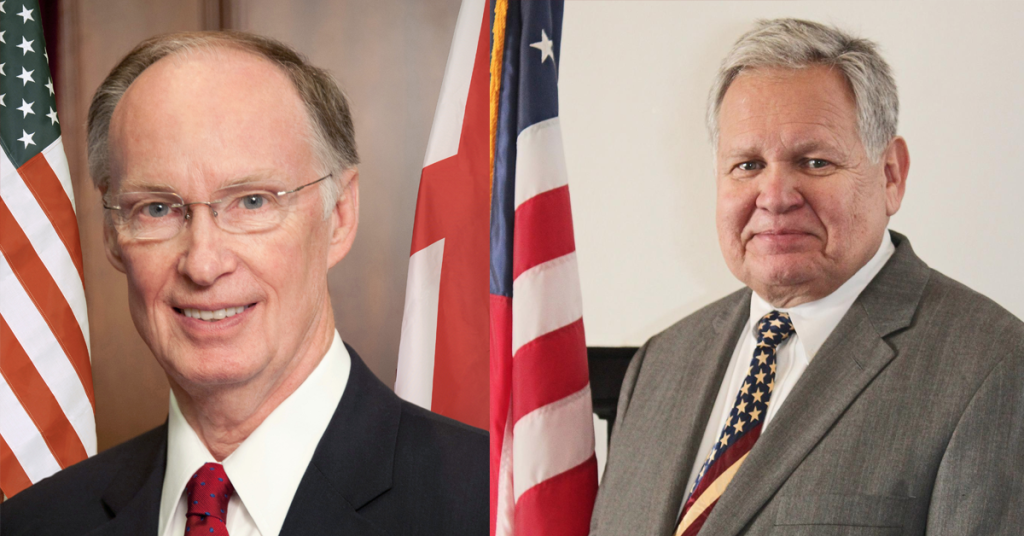
State Auditor Jim Zeigler issued an announcement this morning in which he said the looming combination of budget cuts and tax increases the Gov. Robert Bentley and the Legislature will mull unfairly burden “the little guys.” Zeigler put out a list of possible reductions in the governor’s budget proposal, which Bentley says may be necessary should the executive and legislative branches again fail to reach a deal to backfill a $250 million shortfall currently projected in next year’s budget. Included are cuts to state parks, most drivers license officers, Medicaid for indigent Alabamians, the elimination of some 99 state troopers, and reductions in state hunting and fishing services. Zeigler took umbrage that highly visible public services max face the ax while administrative costs incurred by the governor himself and his staff are not on the chopping block. “It is obvious that the Bentley advisers are targeting cuts on the little guy but none on higher-up politicos. And none on the Governor’s office itself,” Zeigler said Tuesday. “This is an obvious strategy to get citizens concerned about the cuts to pressure the legislature to pass the Bentley tax package.” “My prediction is it will not work. Just ask voters in Baldwin, Lawrence, Colbert and Jackson Counties and in the City of Athens. They all voted down tax increases by wide margins in the past six months,” said Zeigler noting the recent local resurgence of anti-tax sentiment that had abated somewhat amid the economic recovery. Zeigler noted the absence of proposed cuts to items like the following: “The Governor’s fleet of airplanes and helicopters and their frequent use? The Governor’s entourage he carries around with him and their large costs, including over-time? The number of state vehicles issued to officials who do not need them for after-hours duty? The high-priced SUVs and other luxury vehicles? The ultra-high salaries of some officials?” read Zeigler’s extended rhetorical question. “No. No cuts threatened to the Governor’s staff and to politicos.” “The Bentley advisers are not listening to the citizens; they only listen to Montgomery insiders,” Zeigler continued. The Special Session begins this evening at 5 p.m. at the state Capitol Building in Montgomery.
