
Five Democrats have qualified for Second Congressional District
Five Democrats have qualified to run for Congress in the Second Congressional District. The list of qualified candidates includes James Averhart, State Rep. Napoleon Bracy, State Rep. Jeremy Gray, Phyllis Harvey-Hall, and Willie J. Lenard. James Averhart is a retired U.S. Marine, who ran previously in CD1 against Jerry Carl in 2020. He lives in Mobile. “The American citizenry deserves and expects more of its leadership,” Averhart said. “We should no longer settle for those who continue to promulgate untruths and spew divisive rhetoric. We deserve leadership who will extol the truth and hold in high regard a united nation.” Napoleon Bracy is a long-time State Representative representing Prichard – one of the poorest major cities in Alabama. Bracy works for Austal USA. “We are taking this thing to Congress,” Bracy said. “This district is made up of so many cities, communities, and neighborhoods just like the one I grew up in—places hurting with high poverty and crime rates, unemployment that just doesn’t have a lot of opportunities, some of it is because they’ve been overlooked. This gives us an opportunity to finally have a seat at the table and get the things we deserve.” Jeremy Gray represents Lee and Russell Counties in the Alabama House of Representatives. “It’s time for a new generation of leadership to bend the arc of justice,” Gray said. “Because the American Dream should be a promise, not a privilege.” “For too many in Alabama, working hard simply isn’t enough to keep food on the table and a roof over our heads,” Gray said. “Our community needs leadership so that we have opportunities not just to get by but to thrive. “For too many in Alabama, working hard simply isn’t enough to keep food on the table and a roof over our heads. Our community needs leadership so that we have opportunities not just to get by but to thrive. That’s why I’m excited to announce that I’m running for Congress – to give voice to these challenges in Washington and to find solutions that will improve the lives of everyone in our community.” “Growing up in Opelika, I was raised in a small house by a single mother and my grandma,” Gray continued. “We lived paycheck to paycheck. But in my Grandma’s house, we made space for everyone. On the football field, I learned the value of teamwork. In the Alabama State House, I fought for the most vulnerable among us.” Gray is the House Minority Whip. Phyllis Harvey-Hall ran for the Second Congressional District in 2022 and 2020, losing both times to Barry Moore (R). Hall is a career educator with both bachelor’s and advanced degrees, “It’s time that Alabama’s 2nd district has a leader that will represent them and bring communities together,” said Harvey-Hall on Facebook. “It’s time for Alabama to have a leader that will fight for everyone to have a better quality of life.” Willie J. Lenard is much less known at this point. He has qualified but has not yet released a statement or started a campaign website. We will have more details in the coming days. State Sens. Kirk Hatcher and Merika Coleman have talked about running but, to this point, have not qualified with the Alabama Democratic Party. Friday is the last day to qualify with either major party. The primary is on March 5. The eventual winner of the Democratic party nomination will face the Republican nominee a year from now in the November election. To connect with the author of this story or to comment, email brandonmreporter@gmail.com.
Rep. Jeremy Gray enters Alabama’s 2nd Congressional District race
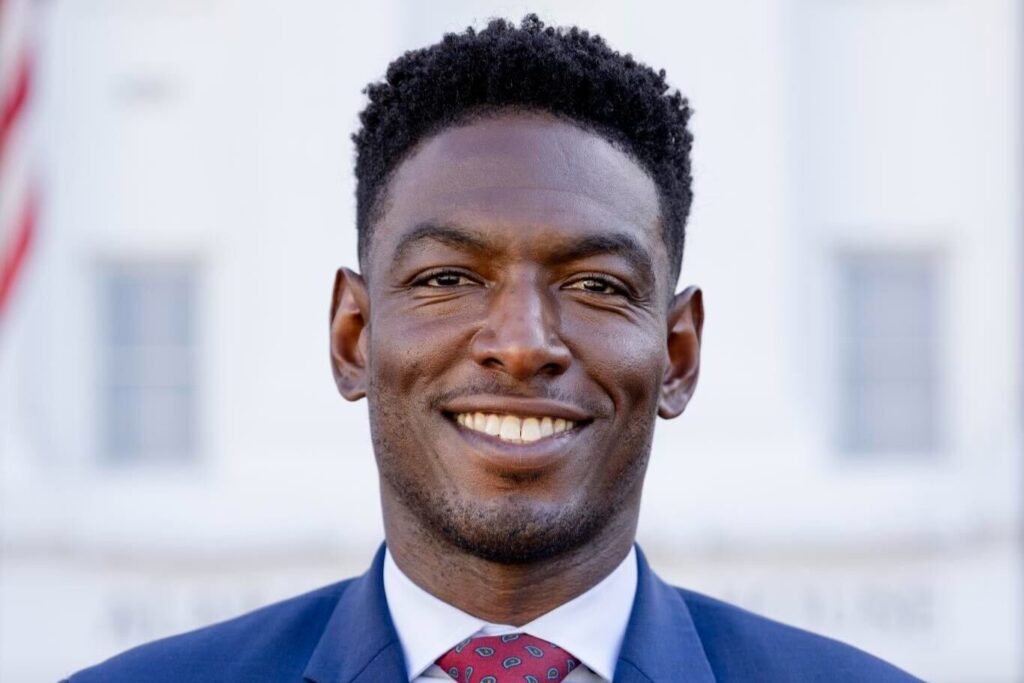
Jemma Stephenson, Alabama Reflector Rep. Jeremy Gray, D-Opelika, jumped into the 2nd Congressional District race on Thursday, becoming the third Democratic member of the Legislature to enter the contest. Gray, first elected to the Alabama House of Representatives in 2018, cited issues including reliable housing, childcare, and women’s rights in an announcement on Facebook. “It’s time for a new generation of leadership to bend the arc of justice,” the statement said. “Because the American Dream should be a promise, not a privilege.” In a video accompanying donation requests, Gray also cited his legislation that allowed yoga exercises to be performed in Alabama schools, ending a nearly three-decade-long ban. Gray, a business owner and personal trainer, played college football for North Carolina State University and later played in the Canadian Football League and Arena Football League. A federal court last month approved new congressional maps for the state. The map created a new 2nd Congressional District with a Black Voting Age Population of 48.7%. Due to the racial polarization of Alabama’s voting patterns – where white Alabamians tend to vote Republican and Black Alabamians tend to vote Democratic – the district is seen as a potential pick-up for Democrats. Sen. Kirk Hatcher, D-Montgomery, and Rep. Napoleon Bracy, D-Prichard, have also said they will run for the seat. Democrats Terrell Anderson, Phyllis Harvey-Hall, and Austin Vigue are also running for the seat. Attorney Caroleene Dobson is running on the Republican side. House Minority Leader Anthony Daniels, D-Huntsville, and Sen. Merika Coleman, D-Birmingham, have also said they may enter the race. Former Sen. Dick Brewbaker of Pike Road, a Republican, is also considering a run. The 2nd Congressional District includes Montgomery and the southern Black Belt. Alabama Reflector is part of States Newsroom, a network of news bureaus supported by grants and a coalition of donors as a 501c(3) public charity. Follow Alabama Reflector on Facebook and Twitter.
Napoleon Bracy, Kirk Hatcher enter Democratic race for 2nd congressional district

by Jemma Stephenson, Alabama Reflector Two Democratic state legislators have entered the race for Alabama’s new 2nd Congressional District, and a third said Monday he will decide whether to get in in the next 10 days. Sen. Kirk Hatcher, D-Montgomery, said in an interview Monday that he will run for the seat. The district stretches from the Mississippi border to the Georgia line and includes Montgomery and much of the Black Belt. “We have an opportunity in this district, for these counties represented, to impact a whole host of issues,” said Hatcher. Rep. Napoleon Bracy, D-Prichard, said in a statement Monday he would also run for the new seat. “This is our time, our time to have a seat at the table built on the backs of those who, my entire lifetime, had been disregarded by their Congressional representatives due to their voting record or area code,” the statement said. House Minority Leader Anthony Daniels, D-Huntsville, said in a phone interview Monday he would make a decision about the race before Nov. 9. The new 2nd Congressional District, created by a federal court order at the beginning of October, has a Black Voting Age Population (BVAP) of about 48.7%. With patterns of racial polarization in voting in Alabama, where white Alabamians tend to support Republicans and Black Alabamians tend to support Democrats, the seat is considered a pick-up opportunity for Democrats. U.S. Rep. Terri Sewell, D-Birmingham, is currently the only Democrat in Alabama’s seven-member U.S. House delegation. Hatcher, the director of Project Head Start in Montgomery, said he wanted to be an advocate for additional educational resources and for the military bases within the district. Hatcher also said he wants to get more “equity” when it comes to infrastructure issues. “I’m one of those individuals who’s not going in to upset the apple cart,” he said. “I go in to see what works.” Hatcher was elected to the Alabama House in 2018. He won election to the Alabama Senate in 2021 and was re-elected in 2021. Alabama Political Reporter first reported Hatcher’s candidacy. Hatcher said Monday he had the support of Montgomery Mayor Steven Reed, who had been seen as a top candidate for the race. Reed told Al.com’s Mike Cason earlier this month that he was considering a run. Adam Muhlendorf, a spokesman for Reed, said Monday the mayor had no comment on his congressional plans. Bracy, a member of the Alabama House since 2010, touted his legislative leadership, including his prior service as chair of the Alabama Legislative Black Caucus in 2013. “At the heart of progress is education, healthcare, economics, and workforce development,” Bracy’s statement said. “And in communities where poverty is still real and economic development is scarce, we have watched the world grow around us while feeling the strain of disinvestment with no one to stand in the gap.” Bracy did not provide further comment beyond the statement. Daniels, who has touted his connections with Bullock County, said he had a track record of delivering programs around the state, including a bill passed in the Republican-controlled Legislature this spring to exempt overtime pay from income tax. He also cited work on behalf of Democratic candidates around the state. “What have you done to make an impact? That’s what voters want to know,” he said. Other figures may jump into the race. Sen. Merika Coleman, D-Pleasant Grove, said Monday that she was still exploring a candidacy, but she had not decided. She has filed with the FEC due to technicalities around her exploratory committee. Former Sen. Dick Brewbaker, R-Pike Road, said Monday he is still considering a run in the district. U.S. Rep Barry Moore’s chief of staff confirmed to Al.com’s John Sharp that he would be running in the new 1st Congressional District, setting up a primary battle with current U.S. Rep. Jerry Carl, R-Mobile. The new map drew Moore, currently the U.S. representative for the 2nd Congressional District, into the 1st Congressional District. Brewbaker said that Moore’s decision “clears the way for me to run in the 2nd.” “But until I qualify, I don’t want to make an official announcement because you never know what God has for a person,” he said. One other candidate confirmed their candidacy Monday. Phyllis Harvey-Hall said in a phone interview Monday that she is running to be the “people’s candidate” and pointed to her previous runs in the district. Hall’s concerns included women’s healthcare and autonomy, as well as hospitals in rural areas. “So I’m running to be a people’s candidate, the voice and someone that’s going to fight for the things that we need today,” she said. Federal Election Commission filings also show that Harvey-Hall filed on Oct. 18, Terrell Anderson filed in April, and Austin Vigue filed in 2022. The Democratic primary for the seat will take place in March. Editor Brian Lyman contributed to this report. Alabama Reflector is part of States Newsroom, a network of news bureaus supported by grants and a coalition of donors as a 501c(3) public charity. Alabama Reflector maintains editorial independence.Follow Alabama Reflector on Facebook and Twitter.
Akiesha Anderson: Alabama’s grocery tax reduction: A penny saved, a better future paved
The first stop on the road to untaxing groceries in Alabama is straight ahead. Lawmakers achieved a significant victory for the people this year by passing legislation to cut the state’s 4-cent grocery tax by half. That change will begin this Labor Day weekend, as the first 1-cent reduction takes effect September 1. Ultimately, this small change likely will result in large savings for Alabamians who are working hard to make ends meet. Once the new law is fully implemented, many families will have hundreds of dollars more available each year to spend on food or other expenses. For decades, Alabama Arise has focused on reducing and ultimately eliminating the state sales tax on groceries, which essentially taxes survival. At the beginning of the 2023 legislative session, Alabama stood as one of only three states with no tax break on groceries. Thanks to determined advocacy by Arise members and other advocates, our state is off that shameful list at last. The story behind the legislative triumph Arise collaborated this year with many partners and lawmakers to introduce and pass the grocery tax reduction. That list includes the Alabama Grocers Association, Lt. Gov. Will Ainsworth, Sens. Andrew Jones and Merika Coleman, and Reps. Danny Garrett and Penni McClammy. This year’s breakthrough also would not have happened without other legislative champions who laid the groundwork for this moment, including former Reps. John Knight and Thad McClammy, former Sen. Hank Sanders and Reps. Laura Hall, and Mary Moore. The grocery tax law’s passage is a testament to the importance of continuing to hold the line and fight for change for as long as it takes. It’s also a testament to the importance of seizing the moment when opportunity arrives. Something spectacular happened this year as the stars finally aligned after decades of advocacy. When this year’s session began, many Alabamians were struggling with inflation and higher costs for essentials like eggs and bread. Simultaneously, the state was witnessing strong revenue growth. As elected officials began talking about one-time tax rebates, advocates recognized an opportune moment to make permanent progress on reducing the state grocery tax. And the revenue growth ensured this reduction would not cause severe harm to funding for our children’s public schools. A positive step forward State leaders seized this window of opportunity and united across partisan lines to reduce the grocery tax. It was amazing to witness the culmination of decades of hard work. And it was inspiring to see nearly every legislator co-sponsoring this monumental legislation. Many lawmakers tout this as the state’s largest tax cut ever, and it is one that will provide the biggest everyday benefit to people with low incomes. Ultimately, Alabama Arise remains dedicated to transforming the state’s regressive tax system into a more progressive one. Progressive tax systems levy taxes based on one’s ability to pay, whereas regressive systems work in the reverse. The grocery tax has long exemplified regressive taxation, burdening those with fewer resources by requiring them to pay proportionally more than wealthier individuals. Reducing the state grocery tax is a step in the right direction for tax justice. This penny saved is symbolic of a better future being paved for Alabama. What lies ahead Arise will continue advocating to eliminate the state grocery tax while protecting Education Trust Fund revenues. We look forward to working with the new Joint Study Commission on Grocery Taxation to find a sustainable path forward. Rebalancing Alabama’s upside-down tax system will require both lower taxes for people with low incomes and higher taxes for wealthy households and highly profitable corporations that can afford to pay more. As this year’s grocery tax reduction takes effect, we celebrate its many champions – most notably the Alabamians who stayed vigilant to ensure their voices translated into tangible policy improvements. We also celebrate this policy change as a symbol of progress and unity, and as a testament to what state leaders can accomplish when they put partisanship aside to pass legislation with profound benefits for individuals and communities. Cheers to eliminating the first cent, and to the ongoing journey toward a more prosperous and equitable Alabama! Akiesha Anderson is policy and advocacy director of Alabama Arise, a statewide, member-led nonprofit organization advancing public policies to improve the lives of Alabamians who are marginalized by poverty. Arise’s membership includes faith-based, community, nonprofit and civic groups, grassroots leaders, and individuals from across Alabama.
Redistricting plan goes to a conference committee
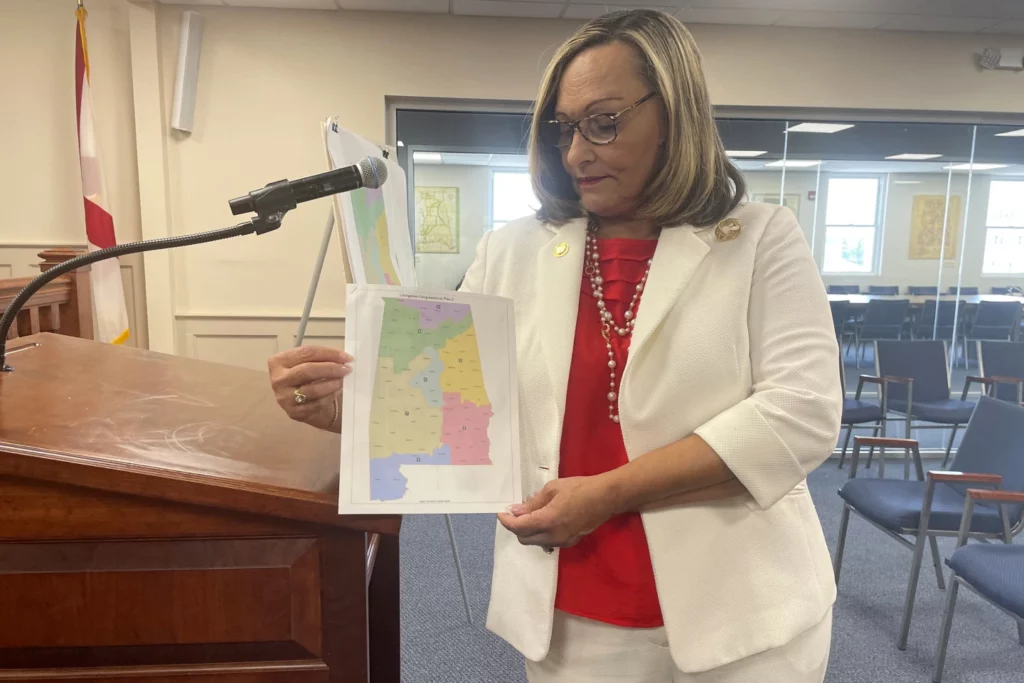
On Friday, the Alabama House of Representatives passed a Republican congressional redistricting plan that it hopes will comply with the Voting Rights Act of 1965. The Alabama Senate voted 30 to 0 to non-concur with the House plan. The redistricting plan has been referred to a conference committee to produce a compromise version that is acceptable to both Houses of the Legislature. For redistricting to pass out of the Legislature, the six-member conference committee has to reach a compromise. Then both Houses of the Legislature must vote to concur with the findings of the conference committee. Senate Bill 5 is sponsored by State Senator Steve Livingston (R-Scottsboro). The bill was carried in the House of Representatives by State Representative Chris Pringle (R-Mobile). Both Livingston and Pringle have introduced competing versions of the redistricting bill. The version of the bill that passed in the House is the Pringle version, the community of interest plan. Pringle’s plan would redraw Alabama’s Second Congressional District, currently represented by Congressman Barry Moore (R-AL02), to increase the Black voting age population in CD2 from 30% of the population to over 42%. Senate Democrats have introduced multiple plans that would produce two majority-minority districts. Livingston’s competing plan passed out of the Senate on Wednesday. Pringle says that his plan’s CD2 would meet the Supreme Court’s ruling that the state provides an opportunity for Blacks to pick a candidate of their choice. Democrats disagree. “You are giving me an opportunity to lose,” said Senate Minority Leader Bobby Singleton (D-Greensboro). “There ain’t no opportunity there for Blacks or Democrats in that district,” said Sen. Rodger Smitherman (D-Birmingham). Democrats maintain that it is necessary for there to be two majority-minority congressional districts for Black voters to have an opportunity to choose their own representation. They also maintain that that is what the court intended. Sen. Merika Coleman (D-Birmingham) said, “I contend that for African Americans to choose the candidate of their choice that we have to have a majority of African-Americans.” “It is irresponsible for the legislature to do what it is doing,” Coleman said. “The court ordered two districts that have 50% African Americans.” “The three-judge panel said that a proper remedy could consist of two majority-minority districts or quite close to it,” said Rep. Artis “A.J.” McCampbell (D-Livingston). The House of Representatives passed SB5 76 to 26. The Senate, in their own debate on redistricting, then voted 30 to 0 to concur with the House version of SB5 and go to a conference committee. Senate President Pro Tempore Greg Reed (R-Jasper) appointed Sens. Livingston, Smitherman, and Clay Scofield (R-Guntersville) to the conference committee. Speaker of the House Nathaniel Ledbetter (R-Rainsville) appointed Pringle, Chris England (D-Tuscaloosa), and Chris Sells (R-Greenville) to the conference committee. Both Houses of the Legislature will return on Friday afternoon, presumably to vote on the conference committee report. To connect with the author of this story or to comment, email brandonmreporter@gmail.com.
Terri Sewell hopeful two of Alabama’s seven congressional districts will become majority-minority
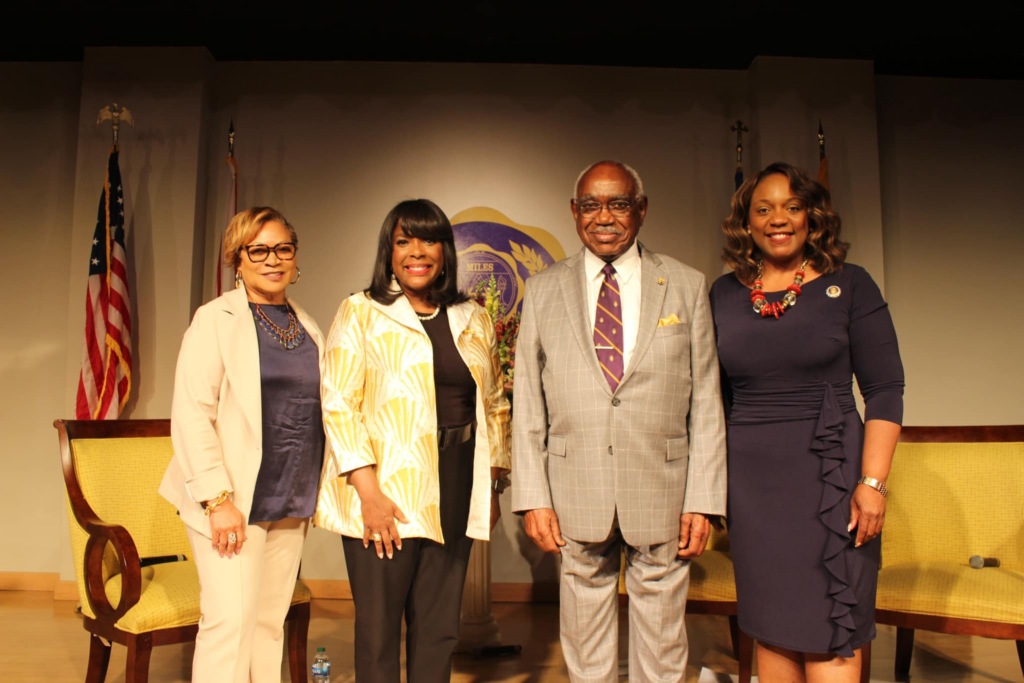
Congresswoman Terri Sewell (D-AL07) participated in a symposium on the Milligan v. Allen decision at Miles College on Tuesday. There Sewell said she would not be satisfied with less than “50 percent plus one or more” African American in two of Alabama’s congressional districts. The Legislature redistricted the state in 2021, but the federal courts have since ruled that the Legislature’s redistricting violated the Voting Rights Act of 1965 and have ordered the Legislature to draw two majority-minority districts or at least two districts that were largely minority. Sewell said that the recent Supreme Court decision affirming the three-judge panel of the Eleventh Circuit Court of Appeals decision was a surprise given previous court decisions by this current court. “We all expected the Supreme Court to once again gut the Voting Rights Act,” Sewell said. “I am so excited about the historic nature of our victory,” Sewell said. “It was a historic victory for not just Black Americans, but it was a victory for democracy.” Sewell continued, “It is going to force the Alabama Legislature to draw a new congressional districting map by July 21. It (the ruling) does not say that we have to have two majority minorities districts.” On Twitter, Sewell wrote, “The fight for voting rights is the fight of a lifetime. We’ve made progress, but if we are not vigilant about advancing it, we will lose it. Thank you @MilesCollege for hosting this critical and timely discussion! I was honored to join these distinguished guests!” Retired federal Judge U.W. Clemons said that he felt that the map adopted would be one that kept counties together as much as possible. “I think the three-judge panel will give great deference to the map that respects the integrity of the counties,” Clemons said. “I am looking for 50% (Black voters) plus more in each of the districts,” Sewell said. “I am convinced that not only will this decision affect Alabama, it will affect the nation,” Clemons said. “The Supreme Court abided by the precedent set in Thornburgh versus Gingrich.” Clemons explained that “three conditions” exist for creating a majority-minority district under the Thornburgh v. Gingrich precedent. “It has to have a large enough population of minority voters,” Clemons explained. “It has to be able to draw a cohesive district, and there has to be a history of the majority voting in a racially polarizing way. We meet all of those conditions here in Alabama.” “Brown versus the Topeka Board of Education was first argued before the Supreme Court in 1952,” Clemons said. Clemons explained that the ruling determined that separate but equal education was inherently unequal. “That ruling was the first evidence during my life for that there was a God,” Clemons said, adding that this ruling also was likely due to God. Clemons is retired from the federal bench, but he is not retired. “This ruling has the potential to reshape this nation,” Clemons said. Clemons said concerns about the public popularity of the current court may have motivated Chief Justice John Roberts to write this opinion in Milligan versus Allen. “This court has the lowest credibility of any Supreme Court that has ever sat,” Clemons said. “The Chief Justice felt that he had to try to maintain at least some credibility with the public. It is a signal that he, as a chief justice, is representing the nation.” “The Milligan case will have profound impact across this nation,” Sewell said. State Senator Merika Coleman (D-Birmingham) said. “It truly is profound what has happened with the Milligan case.” Coleman continued, “Of course, there will be some people who will try to do something that is not what the court said. A Senator I will not name here told me on the phone: We are just going to give you two districts that are 47% African American.” Coleman said that the maps that the Legislature draws will still have to be shown to Milligan and the other plaintiffs in the case, and they can either accept them or ask that the three-judge panel appoint a special master to draw the districts. “If they draw two districts that are 47% African American, a special master will have to come in,” Coleman said. “We want to be able to draw those districts ourselves.” “We already have a safe African American congressional district,” Coleman said. Coleman said that both districts need to be “50 percent plus one or more Black voting age population.” “We have a real opportunity to pick our candidate of choice,” Coleman said. “I have absolutely no faith that the Alabama Legislature is going to do the right thing. It never has,” Clemons said. “The courts are going to do it.” “Neither Democrats or Republicans want the special master to come in,” Coleman said. “Congressional District Two is the one where my former colleague Barry Moore is.” “The Legislature is going to do what it usually does,” Clemons said, “In 1872, we had one Black member of Congress. In 1874, we had one member of Congress.” Alabama would not have another Black member of Congress until Earl Hilliard in 1992. Hilliard’s Seventh Congressional District was 65% African American. Today the Seventh Congressional District is represented by Sewell. “It was 61% African American before redistricting,” Sewell explained. “It dropped to 55% in this redistricting. “It would not be fair for it to fall to below 50%.” Clemons said that it is important that Blacks are united politically. “If the Black Community had four political parties and all four were equal in strength, we would not be politically cohesive,” Clemons said. “For better or worse, most Black communities are Democrats. Frankly, our being Democrats means that we are politically cohesive.” Sewell said that, “Change comes when ordinary people fight to do better, and they work on the ground.” Sewell predicted that if the Democrats pick up a new majority-minority seat in Alabama, Louisiana, Arkansas, Georgia, Florida, and South Carolina, “the first African-American man Hakeem Jeffries will become the Speaker of the House.” The Governor has called a special session for redistricting to start on July 17.
Terri Sewell to commemorate 10th anniversary of landmark Shelby County versus Holder ruling
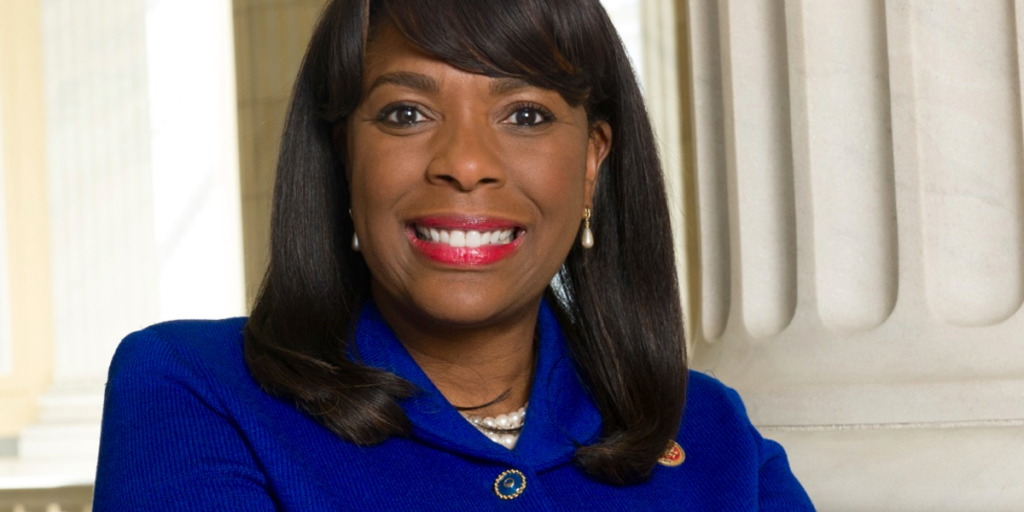
Congresswoman Terri Sewell will commemorate the 10th anniversary of the landmark Shelby County vs. Holder Supreme Court decision with two events on Tuesday and Wednesday. On June 25, 2013, the Supreme Court ruled that the controversial preclearance section 5 of the Voting Rights Act was archaic and no longer legally enforceable, upsetting many in the civil rights community, including Rep. Sewell. “Exactly 10 years ago, the Supreme Court gutted the Voting Rights Act of 1965 in its disastrous Shelby County vs. Holder decision, unleashing a wave of voting restrictions across the nation,” Rep. Sewell said Sunday on Facebook. Sewell is the author and lead sponsor of the John R. Lewis Voting Rights Advancement Act. If passed, the bill would restore the requirement that southern states receive preclearance from the U.S. Department of Justice Civil Rights Division before legislatures can pass changes to their voting rules or decennial redistricting. The federal courts have recently found Alabama in violation of the remaining intact provisions of the Voting Rights Act of 1965 with its congressional redistricting in the Allen vs. Milligan decision. Congresswoman Sewell will be joined by retired federal Judge U.W. Clemon, State Senator Rodger Smitherman (D-Birmingham), State Senator Merika Coleman (D-Birmingham), Miles College President Bobbie Knight, Fairfield Mayor Eddie Penny, Birmingham Mayor Randall Woodfin, and Birmingham Times Executive Editor Barnett Wright for a panel discussion on the Supreme Court’s Allen v. Milligan Decision on Tuesday at Miles College. Sewell will be joined on Wednesday by President & CEO of The Leadership Conference on Civil and Human Rights Maya Wiley, former U.S. Senator Doug Jones (D-Alabama), the President & General Counsel of MALDEF Thomas A. Saenz, the Associate Director-Counsel, NAACP Legal Defense Fund (LDF) Tona Boyd, Staff Attorney, Native American Rights Fund (NARF) Jacqueline De Leon, Birmingham Civil Rights Institute President & CEO DeJuana Thompson, the executive director of Alabama Forward Evan Milligan, the Co-Founder & Executive Director of Black Voters Matter Cliff Albright, the Vice President of Census & Voting Programs for Asian Americans Advancing Justice (AAJC) Terry A. Minnis, the Co-Director of the Voting Rights Project for Lawyers’ Committee for Civil Rights Under Law Marcia Johnson, and the Alabama Policy Director for the Southern Poverty Law Center Jerome Dees. The group will hold a symposium, “Shelby County a Decade Later: The Path Forward in Our Ongoing Fight for the Right to Vote,” at the historic 16th Street Baptist Church in Birmingham on Wednesday. Sewell is the Ranking Member of the House Committee on Administration Subcommittee on Elections. Sewell is in her seventh term representing Alabama’s Seventh Congressional District. To connect with the author of this story or to comment, email brandonmreporter@gmail.com.
Democratic leadership address the Supreme Court rejection of Alabama’s congressional redistricting
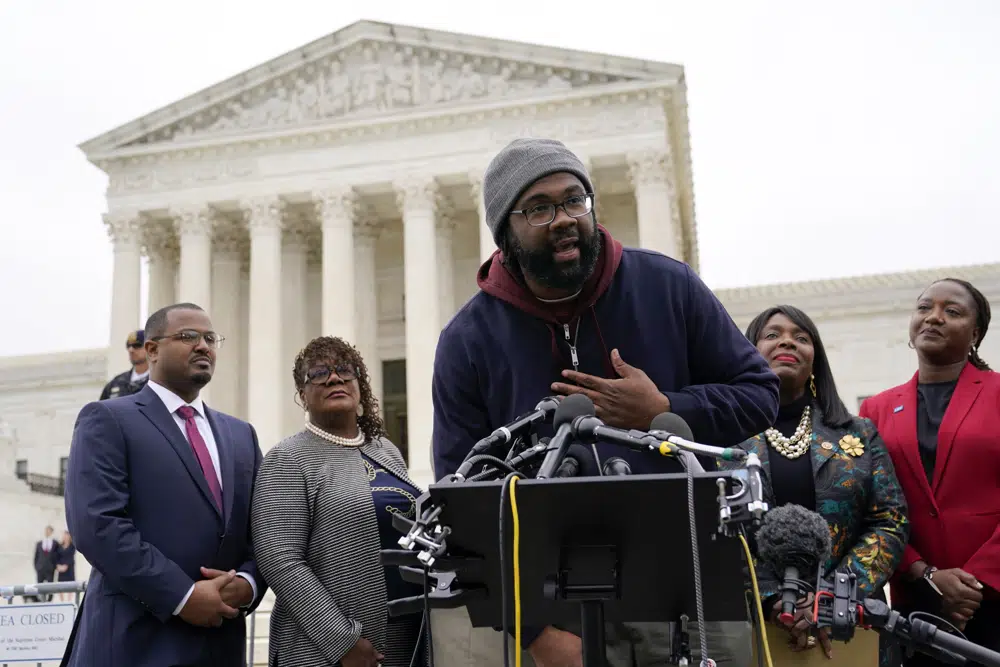
On Thursday, the United States Supreme Court ruled that Alabama must redraw the state’s congressional map to allow an additional Black majority district to account for the fact that the state is 27% Black. The Alabama House Democratic Caucus and the Alabama Legislative Black Caucus both applauded the ruling. Alabama House Minority Leader Anthony Daniels (D-Huntsville) said, “During a severely short and limited map-drawing process, our Caucus spoke at length about our view of the law and provided ways the state could craft at least two districts that reflect fair political opportunities for African American voters.” “We are therefore pleased that the Supreme Court affirmed the decision of the unanimous district court, which found the Alabama maps were discriminatory,” Daniels continued. “We stand ready to participate meaningfully with our colleagues to create a new map that fully complies with the law.” Rep. Terri Sewell wrote on Twitter, “Wow!!! The Supreme Court just upheld Section 2 of Voting Rights Act of 1965 and protected the voices of Black and minority voters. This is a historic victory not only for Black voters in Alabama, but for Democracy itself.” In a press release, Sewell said, “This is a historic victory, not only for Black voters in Alabama, but for Democracy itself. With this decision, the Supreme Court is saying loudly and clearly that the voices of minority voters matter and that fair representation must be upheld. I know that John Lewis and the Foot Soldiers of the Voting Rights Movement are smiling as they look down on us. Today, their sacrifice was rewarded. Our work is not over. We must continue the fight for fair representation by passing the John R. Lewis Voting Rights Advancement Act to restore the full protections of the Voting Rights Act of 1965.” State Senator Merika Coleman (D-Birmingham) is the Chair of the Alabama Legislative Black Caucus. “From the beginning of this case, we have strongly denounced racial gerrymandering and will continue our efforts to ensure that districts are drawn equitably and fairly,” said Sen. Coleman. “I applaud Chief Justice (John) Roberts for preserving Section 2 of the Voting Rights Act. This is a major victory for Black voters in Alabama, as well as the entire nation.” State Representative Napoleon Bracy, Jr. (D-Prichard) is the Vice Chair of the Alabama Black Legislative Caucus. “In a resounding victory for fair representation, the Supreme Court’s unexpected decision stands as a powerful testament to the importance of upholding the Voting Rights Act,” Rep. Bracy said. “By prohibiting racial gerrymandering in Alabama, the Court reaffirms the principle that every citizen’s voice deserves to be heard, regardless of their race. This ruling sends a clear message that political power should not be diluted through discriminatory practices, ensuring that the spirit of democracy remains strong and inclusive in Alabama.” In 2021, the Alabama state legislature produced new congressional maps which closely paralleled the previous 2012 redistricting with just one Black majority district. In a narrow 5-4 decision, the majority of the Court sided with the plaintiffs and affirmed that Section 2 of the Voting Rights Act requires the Alabama legislature to draw a second district where minority voters can elect a candidate of their choice. The decision will also have an impact across the South, as today’s decision clears the way for additional minority districts to be drawn in other states with challenged maps, like Georgia and Louisiana. “It is hard to imagine many more fundamental ‘prerequisites’ to voting than determining where to cast your ballot or who you are eligible to vote for,” Chief Justice John Roberts wrote. The 34-page decision in Milligan penned by Roberts recommits to the Voting Rights Act’s promise as the foundation for justice for all, not just some. Roberts was joined by Justices Sonia Sotomayor, Elena Kagan, Kentaji Brown Jackson, and Brett Kavanaugh. Jeff Loperfido is the Interim Chief Counsel for Voting Rights at the Southern Coalition for Social Justice. “This is a great day for democracy and for the voting rights of Black and Brown communities throughout the South who continue to be the targets of discriminatory laws that seek to silence their voices and stifle their growing political power,” said Loperfido. “The Court’s forceful repudiation of Alabama’s extreme and disingenuous ‘race-blind’ mapping theory is a testament to the important role the Voting Rights Act plays in rooting out discriminatory electoral practices.” The Legal Defense Fund (LDF), American Civil Liberties Union, ACLU of Alabama, Hogan Lovells LLP, and Wiggins, Childs, Pantazis, Fisher & Goldfarb brought the case in November 2021 on behalf of Evan Milligan, Khadidah Stone, Letetia Jackson, Shalela Dowdy, Greater Birmingham Ministries, and the Alabama State Conference of the NAACP. It was argued before the Court on Oct. 4, 2022. The case goes back to the three-judge panel of the Eleventh Circuit Court of Appeals in Atlanta that originally ruled against the State of Alabama. The Supreme Court had stayed its ruling last year at the request of Alabama Governor Kay Ivey, Alabama Attorney General Steve Marshall, and then-Secretary of State John Merrill. The three-judge panel will decide whether to order the Legislature to redraw the districts following the orders of the Court or order the state to adopt a zoning map drawn by the courts. Two alternative maps were presented to the Court by the plaintiffs. The easiest thing would be for the three judges to order the state to accept one of those maps. Whatever happens, Alabama’s Congressional maps will look substantially different than they are today by the end of the year. This will likely impact hundreds of thousands of Alabama voters. The major party primaries for the congressional districts will be on March 6. To connect with the author of this story or to comment, email brandonmreporter@gmail.com.
Alabama lawmakers end session marked by tax cuts

Alabama lawmakers on Tuesday concluded the 2023 legislative session that was marked by tax cut measures and ended with the shelving of some controversial measures, including a bill that would make it a crime to help a non-family member fill out an absentee ballot. Republican and Democratic leaders cited the tax cut measures, which included removing half of the 4% state sales tax on groceries, as well as a temporary tax cut on overtime pay. “Those tax cuts were focused on working Alabamians,” said Senate President Pro Tempore Greg Reed, R-Jasper. House Speaker Nathaniel Ledbetter said the session resulted in the “largest tax cut in Alabama history” with the partial removal of the state sales tax on food. “It’s been a historic session, in my opinion, and it’s the work of the body that has made that possible,” he said. Some lawmakers, mostly Democrats, had attempted for more than a decade to remove the sales tax on food, but the effort failed amid concerns about the cost to education funding. The effort drew broad bipartisan support this year in the face of soaring grocery prices and larger-than-usual tax collections. Sen. Merika Coleman, D-Pleasant Grove, who had pushed for the full removal, said she was “excited that the people of Alabama will get some sort of relief on their grocery taxes.” Lawmakers on Tuesday shelved a number of controversial measures rather than get bogged down in contentious floor debates on the final night of the legislative session. The absentee ballot proposal, which cleared the House on a party-line vote, had emerged as one of the most contentious issues of the session. It did not get a vote in the Alabama Senate. Republicans had said the measure was needed to prevent voter fraud, including so-called ballot harvesting, but opponents called it an attempt at voter suppression by threatening people with jail time for helping someone vote. Kathy Jones, president of the League of Women Voters of Alabama, said she was relieved the bill did not pass. She said it would have authorized the state to “intimidate, arrest and prosecute patriotic, law-abiding citizens for merely helping their friends and neighbors be able to vote absentee.” Other measures that died on the final meeting day of the session included an effort to strengthen the state public records law and a long-running effort to require students to complete kindergarten or demonstrate first-grade readiness, before starting first grade. Ledbetter said Alabama Gov. Kay Ivey’s office had concerns about the public records bill. “We are very disappointed that we didn’t get the bill passed this year. The governor’s legal team did not agree with the finite timeline to produce a public record,” Felicia Mason, executive director of the Alabama Press Association, wrote in an email. The Republican governor had expressed her support for the first-grade readiness bill in her State of the State address. The House had approved the measure, but it did not get a vote in the Alabama Senate where a Democratic senator had raised concerns. Rep. Pebblin Warren, D-Tuskegee, said she will bring the bill back next year. “We’re going to keep on trying for our babies, and I’m going to keep on fighting,” Warren said. Republished with the permission of The Associated Press.
Bill would give victims of childhood sex abuse more time to file civil lawsuits

Alabama legislation that would give victims of childhood sexual abuse more time to sue their abusers has stalled in a committee amid opposition from insurance companies, the bill’s sponsor said. The Senate Judiciary Committee has not scheduled a vote on the bill that would extend the statute of limitations for civil actions from six years to 36 years. “How low do you have to be to victimize a child? How low do we have to be as the body not to take the issue up?” Sen. Merika Coleman, the bill’s sponsor, said Tuesday at the Senate microphone as she expressed frustration over the bill’s delay. Coleman said she met with insurance industry representatives Wednesday morning. She said they expressed concerns about possible liability for entities, such as a church, that might not have had knowledge about the abuse. She said they are working to craft language that targets the perpetrator but “does not hit folks that had no knowledge.” “My major concern, of course, is finding some type of justice for these folks that have been victimized,” Coleman said. Alabama law currently gives a six-year window into adulthood, ending at age 25, for a person to file a civil lawsuit over sexual abuse they suffered as a child. That timeframe is too short for victims, who often don’t publicly disclose what happened to them until adulthood, proponents of the bill said. The bill would raise the timeframe to 36 years, or age 55. Victims of childhood abuse are working to change the law in Alabama and elsewhere. Fifteen states have lifted statutes of limitations for child sexual abuse, according to Child USAdvocacy, a nonprofit that advocates for better laws to protect children. Jeff Helms, director of public relations for the Alabama Farmers Federation and Alfa Insurance, said the legislation could impact all insurers. He said the Alabama Insurance Coalition is working with Coleman regarding their concerns. Stuart Vance, one of three men who said they were abused by a private school teacher in the 1970s and 1980s told the Judiciary Committee last week that he would love to debate insurance industry representatives about the bill. “They insured the Boy Scouts, churches, and other organizations that knowingly hid predators in their midst. If the insurance industry has a problem with our law, they really should take it up with the organizations they insured and not the survivors whose lives were damaged and destroyed,” he said. Republished with the permission of The Associated Press.
Alabama senators back bill to cut state sales tax on food

Every member of the Alabama Senate on Thursday backed legislation to cut the state sales tax on groceries by half, as food bill relief emerges as a bipartisan issue for lawmakers in the face of rising prices. The bill introduced by Republican Sen. Andrew Jones of Centre would gradually reduce the sales tax on food from 4% to 2% — taking off .5% each year — provided there is more than enough state revenue to offset the loss to the education budget, which relies on sales and income taxes. All 35 state senators have signed on as a sponsor, or cosponsor. The broad support boosts the legislation’s chances of winning approval after similar bills have stalled in Montgomery for decades. “This is going to help people afford groceries, put food on the table,” Jones said. The legislation, which next heads to a Senate committee for debate, is less sweeping than other proposals that would eliminate the groceries sales tax. Jones said he is seeking a reduction in a way that won’t hurt funding for public schools. Alabama Arise, an organization that lobbies for policies that would benefit low-income families, said the average Alabama family spends $600 a year on the state grocery tax. Various lawmakers, mostly Democrats, have proposed removing the grocery tax since the early 1990s, but the proposals failed partly because of their impact on the education budget. But the idea has gained traction among lawmakers in both parties as the state sees both an unusual budget surplus and families experience rising food costs. Removing the 4% tax on groceries would cost $608 million, according to the Legislative Services Agency. Jones’ bill would eliminate half that amount when fully implemented. Competing proposals vary on if the tax would be removed entirely, what foods would be included, and if the lost revenue would be replaced. Sen. Merika Coleman, D-Pleasant Grove, said she supports Jones’ bill but prefers a version that offers more immediate relief to families and also replaces funding for public schools. Coleman has sponsored legislation that would let voters decide whether to replace the money by ending a tax deduction that allows Alabamians to deduct federal income tax payments from their income before calculating their state income taxes. She said the tax break disproportionately lowers taxes for the wealthiest people. “But again, any type of relief that folks from the state of Alabama can get, I’m going to support,” Coleman said. Republished with the permission of The Associated Press.
Twelve more bills to watch introduced in the legislative session
The 2023 Alabama Regular Legislative Session is almost half over. Tuesday will be legislative day 14. To this point, State Legislators have introduced 618 bills in the current legislative session. Alabama Today has been monitoring bills as they are introduced. Here are twelve of the most recently introduced bills to watch. House Bill 370 (HB370) is sponsored by Representative John Rogers. According to the synopsis, HB370 “would require the Alabama State Law Enforcement Agency to establish and maintain a database that includes a list of individuals with communication disabilities or disabilities that can impair communications, to be available to law enforcement officers. This bill would require the Alabama Department of Public Health to develop a form for individuals to voluntarily register for inclusion in the database.” Senate Bill 237 (SB237) is sponsored by Senator Tom Butler. According to the synopsis, “Under existing law, the Alabama Memorial Preservation Act of 2017 prohibits architecturally significant buildings, memorial buildings, memorial streets, and monuments that are located on public property and have been so situated for 40 or more years from being relocated, removed, altered, renamed, or otherwise disturbed unless the Committee on Alabama Monument Protection grants a waiver, and provides penalties for violations. This bill would require a controlling governmental entity that replaces a memorial building to maintain the original name or erect a marker memorializing the name. This bill would provide that a petition for waiver is deemed denied if the Committee on Alabama Monument Protection fails to act on an application for waiver within 90 days. This bill would revise the penalties for violations and would authorize the Attorney General to commence a civil action. This bill would also require the Alabama State Council on the Arts to oversee the design, construction, and installation of a replica of the Saturn 1B Rocket, previously located at the I-65 Ardmore Welcome Center in Elkmont, Alabama, at the most northern I-65 rest stop in the state.” House Bill 364 (HB364) is sponsored by State Rep. Steve Hurst. HB364 would require a public K-12 school or a local board of education to accept cash and any other form of payment of its choosing for admission to school-sponsored sporting events that are open to the public. Some venues have gone to credit card payments only during the COVID-19 pandemic. House Bill 354 (HB354) is sponsored by State Rep. Mack Butler. HB354 “would provide that classroom instruction or discussions related to gender identity or sexual orientation may not be provided to public school students in kindergarten through eighth grade or to public school students in a manner that is not age or developmentally appropriate. This bill would require the State Board of Education to adopt procedures for notifying a student’s parent if there is a change in the student’s services or monitoring relating to the student’s mental, emotional, or physical health and would prohibit local boards of education from adopting policies to the contrary. This bill would require each local board of education, at the beginning of each school year, to notify parents of the health care services available to students and allow parents to opt their child out of any health care service.” Senate Bill 224 (SB224) is sponsored by Sen. Vivian Figures. According to the synopsis, “Under existing law, the crime of transmitting obscene material to a child by computer is a Class B felony. This bill would clarify that for the purpose of this crime, a child is a person who is under 16 years of age. Under existing law, a person commits the crime of distributing a private image if he or she knowingly posts, emails, texts, transmits, or otherwise distributes a private image with the intent to harass, threaten, coerce, or intimidate the person depicted in certain circumstances. This bill would clarify that a criminal proceeding for a violation of distributing a private image could be brought in any county in which any part of the crime took place, in the county of residence of the victim, or any county where the image was received. Also, under existing law, a violation of incest is a Class C felony. This bill would provide that a violation of incest when the victim is under 16 years of age is a Class A felony. Also, under existing law, a person may not be convicted of the crime of incest or of an attempt to commit incest unless there is corroborated testimony. This bill would remove the requirement of corroborated testimony.” Senate Bill 234 (SB234) is a state constitutional amendment by Sen. Merika Coleman. SB234 would end the state’s four percent sales tax on groceries but would replace the lost revenue by ending the state’s allowing income taxpayers to deduct their federal income tax. A family of four who spends $110 a week on groceries would save $229 on the reduced sales tax on groceries. With a typical household taxable income of $54,062, they pay $4,726 in federal income taxes. Currently, they would deduct that from their state-taxable income. If SB234 passes and they lose that deduction, they would pay $281 in additional Alabama income taxes. In this example, that family would pay $52 more in taxes. A low-income family or a retired couple with no investment income would come out ahead by not having to pay the grocery tax. A high-income family will pay more taxes in this scenario if SB234 becomes law. Senate Bill 232 (SB232) is sponsored by Sen. Chris Elliott. SB232 would authorize peer-to-peer car-sharing programs, which are business platforms that connect vehicle owners with drivers, to enable the sharing of vehicles for financial consideration in this state. House Bill 342 (HB342) is sponsored by Rep. Susan Dubose. The bill states, “Under existing law, the State Superintendent of Education is authorized to issue professional educator certificates to qualified individuals who complete an alternative teacher preparation program offered by an approved alternative teacher education preparation organization. This bill would provide additional requirements for programs to provide alternative certifications for educators.” House Bill 339 (HB339) is sponsored by Rep. Chris Pringle. The bill states, “Under existing law, the second or runoff
