
Al Cardenas worries about the drift of the current GOP
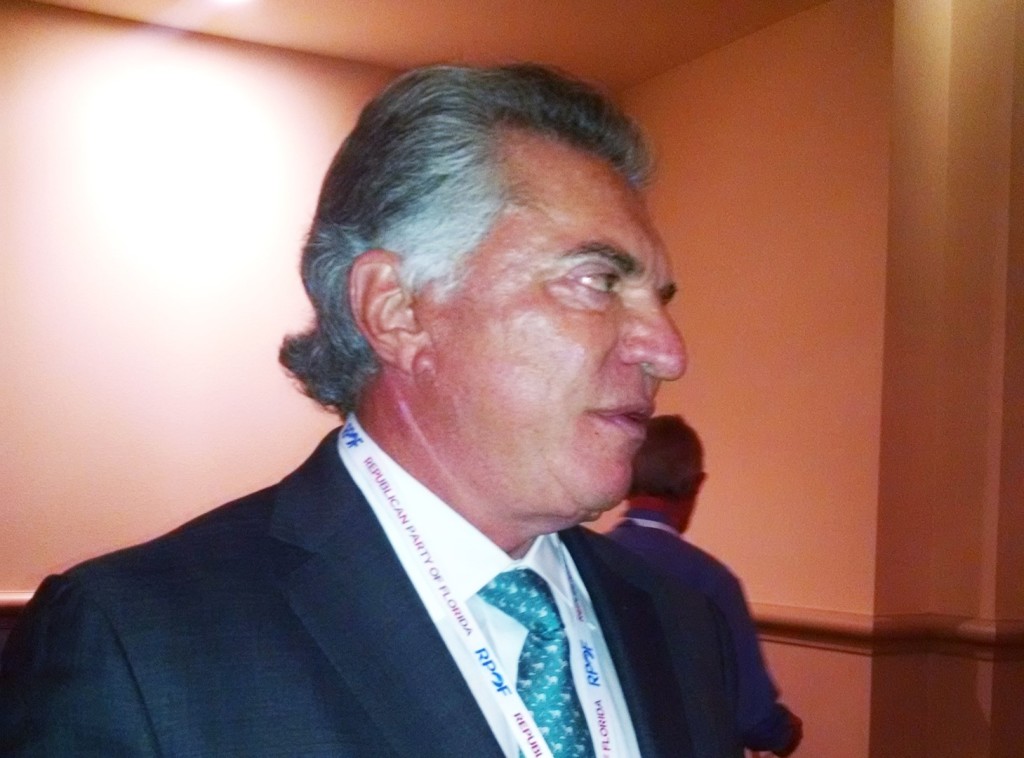
Al Cardenas‘ perspective on what’s going on with the Republican Party in 2015 is worth listening to. The former two-term Republican Party of Florida Chairman and head of the Washington-based American Conservative Union from 2011-2014 (which hosts the annual CPAC conference every winter) is backing Jeb Bush this cycle, but also has ties to Marco Rubio. Cardenas spoke at the Sunshine Summit on Friday afternoon, but his comments to a handful of reporters in the hallways of the Rosen Shingle Creek hotel in Orlando were as interesting as anything he said on stage. When asked about the state of the national GOP, Cardenas sounded somewhat alarmed. “I’m a firm believer that’s all’s well that ends well. That continues to be my hope. All is not well now. I don’t think the Republican Party as a brand for a long term future can be successful, given what I’m watching. To be successful, you gotta appeal to people’s higher instincts, not lower instincts. You have to inspire people to be better, not to be mad or angry. And you’ve gotta convince them that you can lead them to a better tomorrow, rather than to get even with the bad guys. And if our party is unable to do that, through our eventual leadership, then our party is going to face some long term consequences.” Noting how much success the Republican Party has had nationally since Barack Obama was elected (816 Democratic lawmakers have lost their jobs in state legislatures since 2009, as well as the party taking control of the House and Senate), Cardenas says the contrast is stark when it comes to executive leadership in Washington. “My hope is that whomever we select as our nominee can get the party nationally to meet up with the bar we’ve set up with the states,” he says, adding that he’s not certain at this time if Donald Trump or Ben Carson can beat Hillary Clinton at this time. When asked about the report that Right to Rise, Jeb Bush’s super PAC, may spend millions (perhaps tens of millions) to go after Marco Rubio, Cardenas said that shouldn’t be surprising, since politics always comes down to going after your opponents. “I don’t talk to Mike Murphy (Right to Rise’s strategic leader), as the top-tier gets redefined and we get into next year, all four or five top-tier candidates are going to begin contrasting with each other. Trump’s doing it, Ted Cruz has begun doing it with Marco, Ben Carson has tried to stay out of the fray, but I don’t believe that will last for long. … I think all of them will get into that contrasting business, and I think the only reason you’re paying a lot of attention to it is because of their relationship. If it wasn’t for that, you’d think of it as, ‘Hey, everybody is going to be involved with that.’”
NARAL Pro-Choice America revels in Jeb Bush vs. Marco Rubio abortion spat
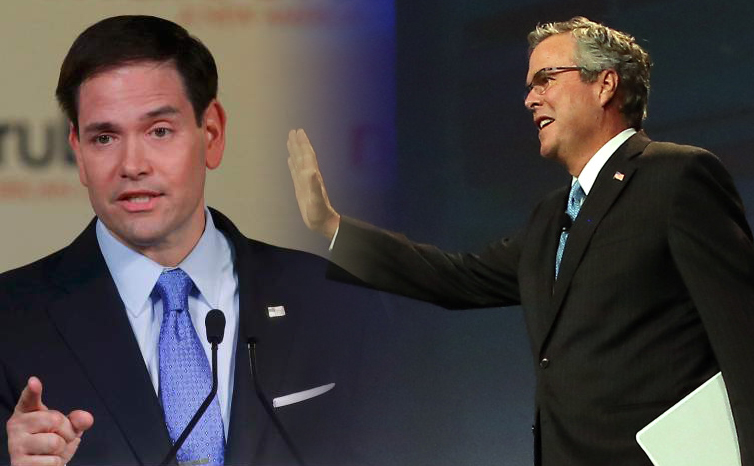
According to a report in Tuesday’s New York Times, Right to Rise, the Jeb Bush-backed Super PAC, may be attacking Marco Rubio for his position on abortion rights. The newspaper reports that Mike Murphy, Right to Rise’s chief strategist, recently showed some Republicans a video portraying Rubio as too extreme on abortion. In the first GOP presidential debate, in August, Rubio said that he had “never advocated” laws that would allow abortions, even in cases of rape or incest. That stance is to the right of what other recent Republican presidential candidates have taken on in the past, and apparently Right to Rise thinks it’s too extreme. Whether Republican primary voters think it is remains uncertain. Weighing in on the report is Ilyse Hogue, president of the pro-abortion rights group, NARAL Pro-Choice America. “We welcome Governor Bush and his team to reality,” Hogue said in a prepared statement. “We’re glad they finally figured out what we’ve been saying for years: The Republican position on abortion as advanced by Rubio and many others is way out of the mainstream and turns off voters. That being said, it is pretty striking to watch the far-right attack the extreme far-right on this issue. Grab the popcorn folks, it’s about to get interesting.”
Email insights: Counting out Jeb Bush is a big mistake
For anyone who appreciates presidential politics, it would be a fool’s errand to write off Jeb Bush’s presidential campaign. In a new email update from Right to Rise PAC — providing exclusive information from the campaign trail – the former Florida governor is far from finished, despite “lagging national polls” and receiving less airtime than any other candidate during the “much-maligned” CNBC debate. According to Right to Rise chair Mike Murphy, Bush will ultimately prevail, particularly over last week’s “noise and chatter.” History bears this out, he adds. “We’ve cautioned before on national polls and we’ll repeat it: at this time four years ago the national polls had anointed Herman Cain the frontrunner.” As focus groups have indicated, the race is anyone’s to win, with Bush making respondents “maybe list” 90 percent of the time. And Bush – who is in the midst of a campaign renaissance – was “on fire” at a New Hampshire rally this week. The same holds true at other events in Florida, Iowa, New Hampshire and South Carolina. Murphy’s email provides clips of a few of the events, showing Bush is much more on his game than what is portrayed in recent reports. As for the other Floridian in the race, Marco Rubio may be enjoying somewhat of a surge in popularity, but that only means that the national media will be “finally taking a serious look” at his record. And that’s not good for the freshman Senator, Murphy says. “It is important that every GOP candidate get fully vetted by the voters before we put that candidate up against Hillary Clinton and the Democrat machine,” he writes. Most important in this race – as should be in any political contest – are issues. Right to Rise promises to provide a series of fair, issue-centered contrasts between Bush, other serious candidates and Democrats. Taking in account the support of dedicated professionals like Murphy and Right to Rise, counting out Bush (at any point) would certainly be a big mistake.
Jeb Bush super PAC considering staff for early voting states
The outside political group supporting Jeb Bush‘s bid for president with tens of millions of dollars in television advertising is considering placing organizing staff in Iowa and New Hampshire, a move that would follow the decision of his formal campaign to refocus its efforts on the two early-voting states. Senior advisers to the group tried to paint an upbeat picture of Bush’s White House prospects at the outset of two days of concurrent meetings held for major donors to Bush’s campaign and the group, a super PAC known as Right to Rise USA. Scheduled months ago as a reward for top money-raisers for the candidate once viewed as having the clearest shot at the GOP nomination, the retreat ending Monday comes just days after Bush’s formal campaign cut employee salaries by 40 percent and said it would move jobs from its Miami headquarters to the leadoff-voting states. A faithful core of roughly 175 Bush supporters made the trip to Houston for the meetings, fewer than expected due in part to the rains that pounded south Texas in the wake of Hurricane Patricia. Among the invited were people who had raised at least $50,000 for the campaign, and major super PAC donors also had access to some events. Among them was a session with Mike Murphy, a longtime Bush aide who is leading Right to Rise. He played five ads for the donors as they fired off questions about when the super PAC, which is not subject to the contribution limits placed on campaigns and pulled in a record haul of $103 million in the first six months of the year, would start spending big. Already, Right to Rise has spent $14.7 million on ads through the end of this week, mainly in Iowa, New Hampshire and South Carolina, the first three states on the 2016 nominating calendar. The group has reserved another $30 million in advertising through the week of Feb. 18. But Right to Rise officials said options for what else the cash-rich super PAC can do are top of mind among some donors, including whether the group should hire staff to marshal a get-out-the-vote effort on Bush’s behalf in Iowa and New Hampshire. “We’re looking at some of that. The campaign is front and center on that. But there are a lot of supporters around the country who might want to be organized to do some stuff like that,” said a senior Right to Rise official, speaking on condition of anonymity because the plans are still being developed. “There are limits to what a super PAC can do there,” the official added. “But there’s some energy we might channel.” Bush’s super PAC has from its outset been primed to do more than just run television advertising, the activity of choice for super PACs in the 2012 presidential campaign. While federal law does not allow formal campaigns and super PACs to coordinate their activities, Bush has long planned for Right to Rise to perform some functions of a traditional campaign. “Our primary mission is to tell Jeb’s story through paid advertising, but we’re always exploring other ways we can help amplify his positive message,” said Right to Rise spokesman Paul Lindsey. Bush and Right to Rise are not alone in taking this approach. The outside group backing former technology executive Carly Fiorina handles the vast majority of communications with supporters. This past weekend, a super PAC supporting Ohio Gov. John Kasich marshalled 40 volunteers to go door-to-door in New Hampshire to promote his White House bid. Bush was loudly cheered as he took the stage before a group of Right to Rise donors Sunday afternoon at a downtown hotel ballroom. Bush’s father, former President George H.W. Bush, and mother, Barbara, had arrived at the hotel for events scheduled to include a Sunday dinner with the candidate, and with their eldest son, former President George W. Bush. Jay Zeidman, a Houston fundraiser for Bush who attended the Right to Rise briefing on Sunday, said he felt “reassured” after listening to the super PAC leadership, which underlined in its presentation to several dozen attendees that in past election cycles the front-runner had yet to emerge by mid-October. “They’re going to be the asset that we thought all along,” he said of Right to Rise, which sketched out a massive advertising plan. He said the “capital” and “leadership” that Right to Rise has makes it — and therefore Bush — a formidable competitor in the primary. Although neither Bush nor his campaign can direct the super PAC’s spending, the close relationship between the two entities was on display Sunday, as donors hopscotched between Right to Rise and official campaign events. Many attendees sported lanyards bearing logos of both the campaign and the super PAC. In a light moment aimed at underscoring their concern for following the law, Bush stepped off a hotel elevator and spotted Murphy, his longtime political confidant. The two men hugged, before parting in silence. Republished with permission of the Associated Press.
Jeb Bush donors pitch ‘long haul’ after initial ‘shock and awe’
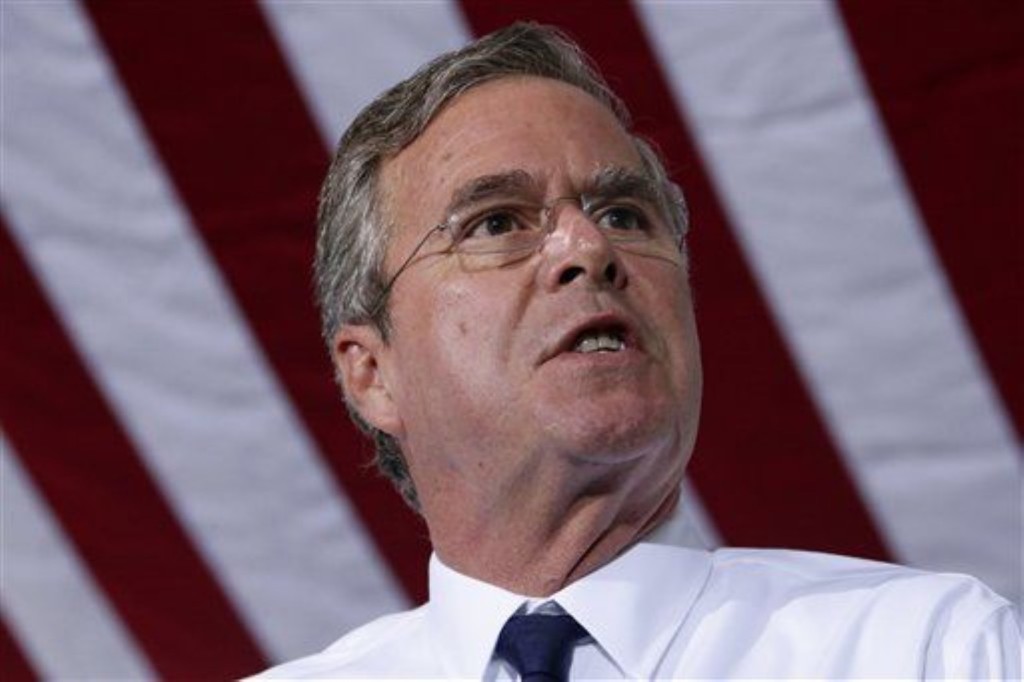
Jeb Bush‘s challenge in the first half of the year was daunting yet simple. To be considered a fundraising success, the Republican presidential candidate had to hit the magic number of $100 million, an ambitious goal set by some in his campaign. And he did. As another fundraising period ends, what now constitutes success for Bush isn’t as clear cut. No longer the front-runner in preference polls, Bush won’t repeat as the champion at raising money in the GOP’s 2016 field, lapped in the past three months by retired surgeon Ben Carson and perhaps by Texas Sen. Ted Cruz, too. “They created such a high bar,” said Spencer Zwick, a top Republican donor who was 2012 GOP presidential nominee Mitt Romney‘s finance chief. “Now anything less than $100 million in a quarter seems small.” But Bush’s financial team and strategists argue that he should now be judged by a different benchmark. Their mantra: He’s built to last. Using phrases like “go the distance,” ”marathon” and “long haul,” they argue that the former Florida governor is uniquely positioned to outlast other candidates, regardless of the fundraising number he posts for the third quarter. “If we were frozen with just the resources we have right now, he could still be in the game right to the very end,” said Kenneth Lipper, a New York financier and top fundraiser for Bush. “Longevity is the right word.” Bush’s finance team describes his fundraising in the past three months as “respectable” and “fine,” while declining to provide the specifics on just how much they raised. That detail will come later this month in a report filed with federal regulators. It’s true that the summer months of the year before the election are typically the bleakest time for candidates to raise money. Romney collected $14.2 million during the same period in 2011, the least of any three-month period between the beginning of his campaign and when he secured the Republican presidential nomination. Yet the summer didn’t slow down Carson, who has never run for office and has raised $20 million since July. Bush aides say they also expect to be topped by Cruz, the Texas senator with unvarnished contempt for his own party’s leadership and an enthusiastic tea party following. Bush has scored harder-to-measure fundraising gains, such as winning the support of Anthony Scaramucci, a national fundraising leader for former candidate Scott Walker. Next week, Bush heads back to Chicago, where he quickly converted former Romney supporters early this year, for a series of fundraisers hosted by wealthy donors who helped get his super PAC soaring. Bush’s fundraising still has a distinctly presidential look, in part because it includes so many who raised money for his father and brother. Bush’s major donors will gather in Houston at the end of the month for a “Jeb celebration” that includes Presidents George H.W. and George W. Bush. “For others, stardom is ephemeral. I’m very happy to see Jeb hold his own,” said Fred Zeidman, a Houston businessman raising money for Bush. “We have the most money and we can outlast. He’s showing the discipline of a long-term candidate.” Unlike Walker, who dropped out of the race because he couldn’t raise enough money to pay for his 100-employee political operation, Bush’s campaign fundraising and campaign scale are in sync, his donors said. That doesn’t mean they are comfortable where they are, or expect to be any time soon, said longtime Bush supporter Al Hoffman, the founder of Florida’s largest real estate development company. “We’re all worried. That’s what we do, we worry all the time,” Hoffman said. “But it’s a healthy sense of anxiety that we can always do more that keeps us going.” Craig Duchossois, a Chicago-area private equity investor and Bush donor, said national polls showing Bush in single digits unnerves some less-seasoned donors. He admits some movement this fall by Bush in early-voting state surveys “certainly would be encouraging.” But he argues that more than anything else, success for Bush at this stage is raising enough money for his actual campaign to stay in the race and take advantage of his super PAC. Helped by two dozen million-dollar checks, it amassed $103 million in donations through the end of June — more than double any other candidate-specific super PAC. “Let me suggest to you that fundraising is not the metric as important for Jeb as it is for everyone else,” said Duchossois, who hosted an event for Bush’s super PAC in February. “Jeb’s goal, and what we consider success, is getting his message across.” Bush, who as a candidate can no longer direct the super PAC, left it in the hands of his top media strategist, Mike Murphy. It has started spending its millions introducing Bush as “a committed conservative” to voters in Iowa, New Hampshire and South Carolina. The tentacles of the official campaign, which also just began advertising, have spread well beyond those early voting states. That’s partly why Austin Barbour said he joined Bush’s campaign after former Texas Gov. Rick Perry, the candidate he’d been helping, dropped out last month. Barbour will help Bush organize a push for wins on March 1, when voters in a dozen states including Texas and Virginia cast their primary ballots. “The campaigns that have the resources to go deep into April,” Barbour said, “those are the ones that are going to survive and thrive. You’ve got to be prepared to go the distance.” Republished with permission of the Associated Press.
For half a sentence, Jeb Bush is an official 2016 candidate
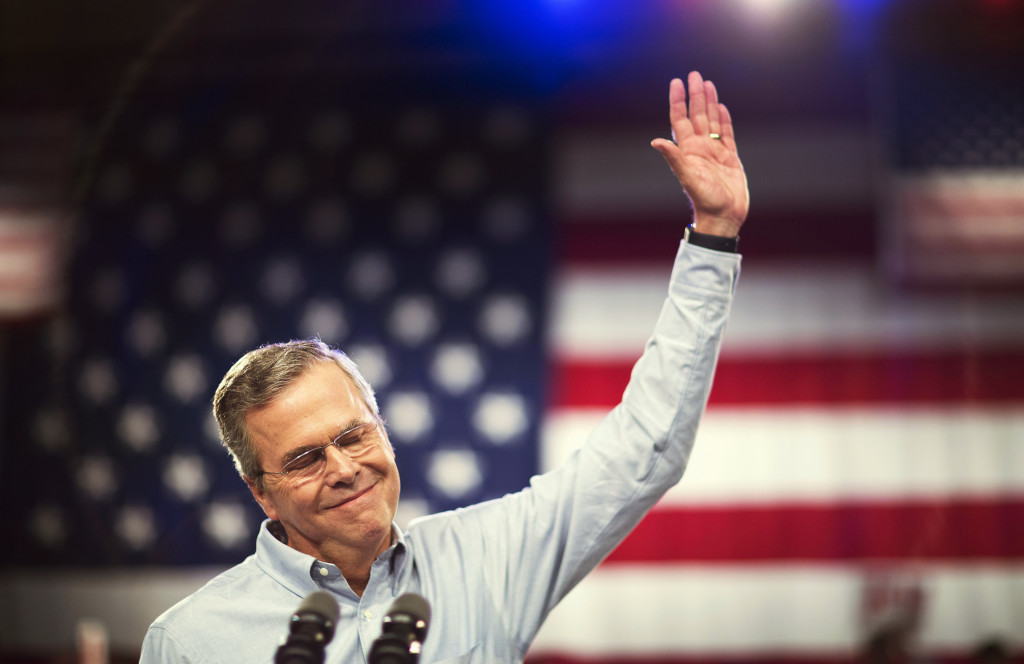
Over and over again, Jeb Bush has said he’s still thinking about whether to run for president. But for half a sentence Wednesday, Bush let on it’s a decision he’s already made. And he’s in the race for the White House. Talking with reporters after a town hall in Reno, Nevada, the former Florida governor said, “I’m running for president in 2016 and the focus is going to be about how we, if I run, how do you create high sustained economic growth.” Bush noted several times in the same conversation he is still thinking about whether to run and caught himself before ending the sentence in which he said he was running by adding that caveat. Earlier in the same exchange, when asked about his brother, former President George W. Bush, he said, “If I run, it will be 2016, not 2000.” But the caveat is important. It’s one Bush has uttered countless times since January, traveling to early-voting and battleground states and meeting voters. It’s what has allowed him to raise limitless money to fuel a super PAC expected to complement his campaign once he officially announces his candidacy. Bush’s team had nothing to say about his slip. Once a White House hopeful launches a formal campaign, he or she can no longer coordinate activities with a super PAC. That’s why people who are running a presidential campaign in all but name hold off on declaring their intentions until the time suits them — even as they make speeches, meet donors and undertake other activities that are clearly the work of a presidential contender. Bush’s super PAC, Right to Rise, is expected, under the guidance of longtime adviser Mike Murphy, to conduct many of the functions a candidate’s campaign would — but without coordination with Bush or the federal contribution limits that go with a campaign. At the event in Reno, the former Florida governor again refused to say whether he would have proceeded with the 2003 invasion of Iraq if he’d been in brother and former President George W. Bush’s shoes. Anyone in hindsight “would have made different decisions,” he told reporters. “There is no denying that. But to delve into that and not focus on the future, I think is where I need to draw the line.” Pressed by a voter at the town hall-style meeting about the war, Bush said: “Talking about the future is more than fair. Talking about the past, saying how would you have done something after the fact is a little tougher, and it doesn’t necessarily change anything.” Bush later noted that such voter encounters stand in contrast to what he described as Democratic candidate Hillary Clinton‘s campaign. “You can’t script your way to the presidency, put yourself in a protective bubble and never interact with people — only talk with people that totally agree with you,” Bush said. “That’s not going to work. That’s not very sincere.” Republished with permission of the Assoociated Press.
Super PACs rise in influence in 2016 campaign
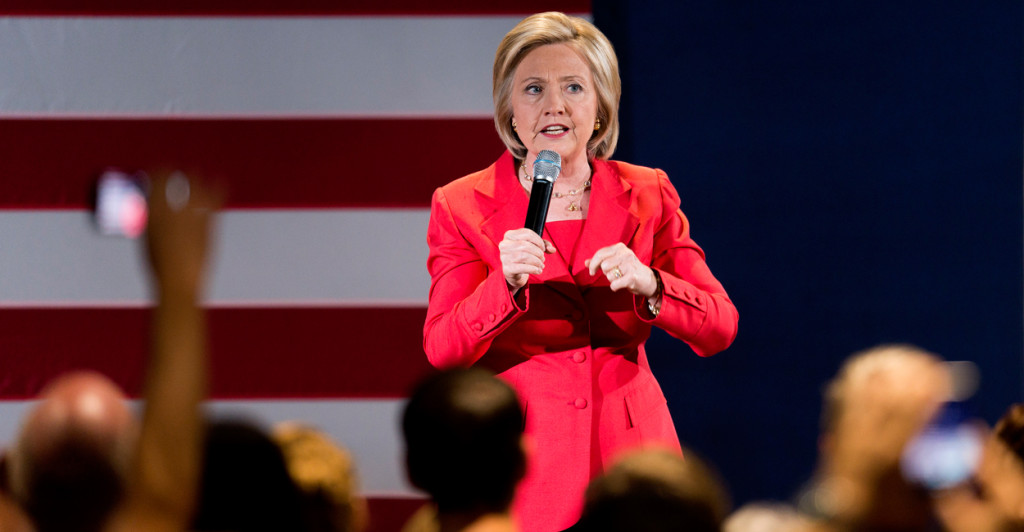
When Hillary Rodham Clinton takes the stage at fundraisers thrown by a group that wants to elect her president, she’s not presented as a White House candidate. She’s a “special guest.” When Jeb Bush raises money for a group preparing to run major parts of his all-but-certain presidential campaign, he doesn’t ask for the cash himself. And the hundreds of millions these groups will raise? They have to spend it without talking strategy with the candidates and campaigns they support. The groups are called super PACs, and their influence in selecting the next president will be without precedent. Born out of two Supreme Court decisions in 2010, they are governed by rules some see as a game of winks and nods, enforced by an agency bedeviled by partisan gridlock. As with most things in Washington, there’s not even agreement on whether they are a problem to solve, or are a solution to celebrate. “What’s really going on largely is a breakdown of the enforcement system of the campaign finance laws,” said Craig Holman of the left-leaning consumer group Public Citizen. “The Federal Election Commission is just broken.” Countered David Keating of the right-leaning Center for Competitive Politics, “I think this is overblown. The line has been drawn: It’s the First Amendment. So if people want to speak, let them.” The primary benefit for campaigns of the super PACs is that they can raise and spend unlimited amounts of money to advocate for and against candidates, with only a few rules holding them back. Among the rules is a ban on campaigns and super PACs working together. They cannot discuss political strategy or share key information such as internal polling. While candidates can attend super PAC events, they cannot technically ask for the unlimited donations that make the groups such a powerful force. “Most of these super PACs that are going to be spending millions of dollars, I think they have a good understanding of what the law is,” Keating said. But even should they break the rules, there are questions about what price they might pay. The six commissioners of the Federal Election Commission are split evenly between Republicans and Democrats, and they have only once cited someone for breaking the rules. In February, the campaign manager for a failed Virginia Republican congressional candidate pleaded guilty to funneling money illegally from a super PAC to bolster his campaign. Clinton has decried the existence of “unaccounted money” in politics and has suggested a constitutional amendment to overturn the case that helped usher in the new system. Yet during a California fundraising trip last week, she took her first steps to embrace Priorities USA Action, a Democratic super PAC that helped support President Barack Obama in 2012. Like other candidates, Clinton cannot legally ask donors to give more than $5,000 to the group. But she can appear as a “special guest.” Her husband, former President Bill Clinton, has headlined Priorities events in the past. On the Republican side, Bush is taking it even further. The former Florida governor is preparing to delegate many of the operations of his expected campaign to his allied Right to Rise super PAC, using the group to produce campaign ads, conduct voter data analysis and run get-out-the-vote efforts. Mike Murphy, one of Bush’s closest political advisers, is expected to lead the super PAC and is intimately involved in Bush’s current operation, where he guides staffing decisions, courts donors and shapes political strategy. Bush takes care to say he’s not yet a candidate, allowing him to work with Murphy and the super PAC in a way that won’t be allowed once he’s in the race. A dozen White House prospects are already benefiting from allied super PACs, frequently led by former political advisers and business partners. For example, Kentucky Sen. Rand Paul will benefit from a super PAC run by his former campaign manager, who is also married to Paul’s niece. Texas Sen. Ted Cruz‘s college roommate is working prominently in a network of four allied super PACs, while a longtime friend and financial backer, Dathan Voelter, is the treasurer. Voelter said the pro-Cruz groups have already raised more than $31 million. During his run for re-election in 2012, Obama never really warmed up to the super PAC world and the group supporting him, Priorities USA Action. He declined to appear at fundraising events even though his opponent, Republican Mitt Romney, frequently attended gatherings held by Restore Our Future, a pro-Romney super PAC. Seeking to succeed Obama in the White House, Clinton and her allies have taken steps recently to strengthen Priorities USA Action. Among them: She will appear at the group’s events and reach out to potential donors, something Obama declined to do. The group is also bringing aboard Guy Cecil, a former staff member of Clinton’s 2008 presidential campaign who remains close to Bill Clinton and previously worked for a firm stocked with longtime Clinton advisers. Republished with permission of The Associated Press.
Jeb Bush preparing to delegate many campaign tasks to super PAC
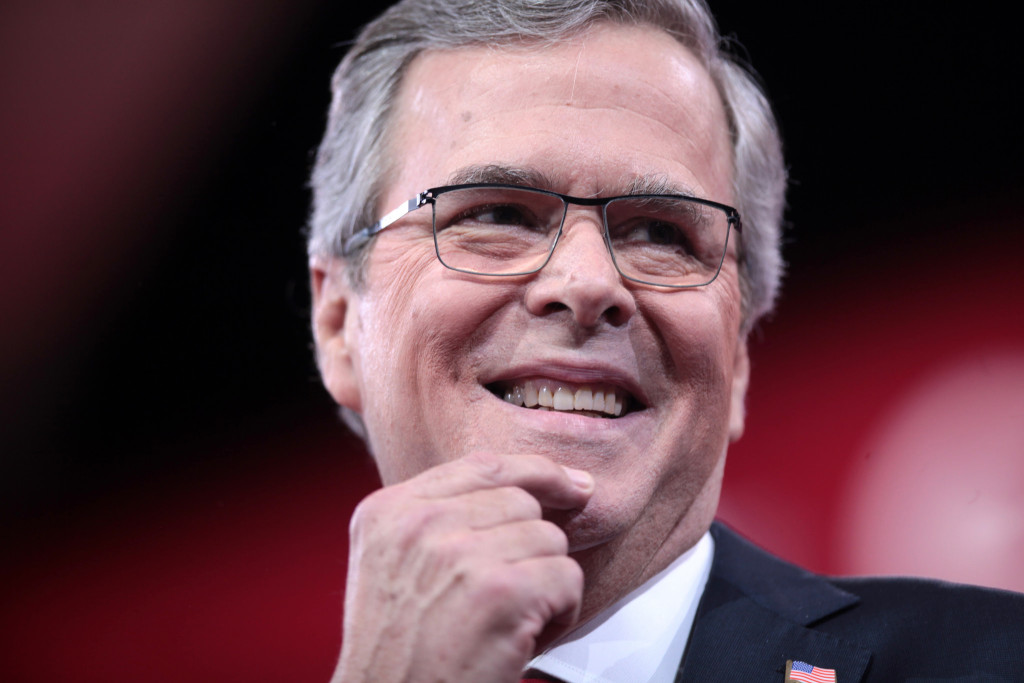
Jeb Bush is preparing to embark on an experiment in presidential politics: delegating many of the nuts-and-bolts tasks of seeking the White House to a separate political organization that can raise unlimited amounts of campaign cash. The concept, in development for months as the former Florida governor has raised tens of millions of dollars for his Right to Rise super PAC, would endow that organization not just with advertising on Bush’s behalf, but with many of the duties typically conducted by a campaign. Should Bush move ahead as his team intends, it is possible that for the first time a super PAC created to support a single candidate would spend more than the candidate’s campaign itself — at least through the primaries. Some of Bush’s donors believe that to be more than likely. The architects of the plan believe the super PAC’s ability to legally raise unlimited amounts of money outweighs its primary disadvantage, that it cannot legally coordinate its actions with Bush or his would-be campaign staff. “Nothing like this has been done before,” said David Keating, president of the Center for Competitive Politics, which opposes limits on campaign finance donations. “It will take a high level of discipline to do it.” The exact design of the strategy remains fluid as Bush approaches an announcement of his intention to run for the Republican nomination in 2016. But at its center is the idea of placing Right to Rise in charge of the brunt of the biggest expense of electing Bush: television advertising and direct mail. Right to Rise could also break into new areas for a candidate-specific super PAC, such as data gathering, highly individualized online advertising and running phone banks. Also on the table is tasking the super PAC with crucial campaign endgame strategies: the operation to get out the vote and efforts to maximize absentee and early voting on Bush’s behalf. The campaign itself would still handle those things that require Bush’s direct involvement, such as candidate travel. It also would still pay for advertising, conduct polling and collect voter data. But the goal is for the campaign to be a streamlined operation that frees Bush to spend less time than in past campaigns raising money, and as much time as possible meeting voters. Bush’s plans were described to The Associated Press by two Republicans and several Bush donors familiar with the plan, who spoke on condition of anonymity because the former Florida governor has not yet announced his candidacy. “This isn’t the product of some genius thinking,” said a Republican familiar with the strategy. “This is the natural progression of the rules as they are set out by the FEC.” Bush spokeswoman Kristy Campbell said: “Any speculation on how a potential campaign would be structured, if he were to move forward, is premature at this time.” The strategy aims to take maximum advantage of the new world of campaign finance created by a pair of 2010 Supreme Court decisions and counts on the Federal Election Commission to remain a passive regulator with little willingness to confront those pushing the envelope of the law. One reason Bush’s aides are comfortable with the strategy is because Mike Murphy, Bush’s longtime political confidant, would probably run the super PAC once Bush enters the race. Meanwhile, David Kochel, a former top adviser to Mitt Romney‘s campaigns and an ally of Bush senior adviser Sally Bradshaw, would probably be the pick to lead Bush’s official campaign. “Every campaign is going to carefully listen to the lawyers as to what is the best way to allocate their resources and how to maximize them,” said Al Cardenas, former chairman of the American Conservative Union and a Bush adviser. “Nobody wants to relinquish any advantage.” For Bush, the potential benefits are enormous. Campaigns can raise only $2,700 per donor for the primary and $2,700 for the general election. But super PACs are able to raise unlimited cash from individuals, corporations and groups such as labor unions. In theory, that means a small group of wealthy Bush supporters could pay for much of the work of electing him by writing massive checks to the super PAC. Bush would begin a White House bid with confidence that he will have the money behind him to make a deep run into the primaries, even if he should stumble early and spook small-dollar donors, starving his own campaign of the money it needs to carry on. Presidential candidates in recent elections have also spent several hours each day privately courting donors. This approach would not eliminate that burden for Bush, but would reduce it. “The idea of a super PAC doing more … means the candidate has to spend less time raising money and can spend more time campaigning,” said longtime Mitt Romney adviser Ron Kaufman, who supports Bush. The main limitation on super PACs is that they cannot coordinate their activities with a campaign. The risk for Bush is that his super PAC will not have access to the candidate and his senior strategists to make pivotal decisions about how to spend the massive amount of money it will take to win the Republican nomination and, if successful, secure the 270 electoral votes he will need to follow his father and brother into the White House. “The one thing you give away when you do that is control,” Kaufman said. Bush will also be dogged by advocates of campaign finance regulation. The Campaign Legal Center, which supports aggressive regulation of money and politics, has already complained to the FEC that Bush is currently flouting the law by raising money for his super PAC while acting like a candidate for president. Others are on guard, too. “In our view, we are headed for an epic national scandal,” said Fred Wertheimer, president of the pro-regulation group Democracy 21. “We intend to carefully and closely monitor all the candidates and their super PACs, because they will eventually provide numerous examples of violations.” All of the major candidates for president
