
Dividing party, Republicans poised to challenge Joe Biden win

Republicans mounting an unprecedented challenge to Joe Biden’s election win are setting up a congressional showdown on Wednesday that threatens to divide their party and the country for years to come. With protestors already gathering in Washington to support President Donald Trump, the House and the Senate will convene a joint session to count the electoral votes cast in November’s election. Trump has repeatedly said there was widespread fraud, but his claims have been roundly rejected by Republican and Democratic election officials in state after state and by judges, including at the Supreme Court, further cementing Biden’s victory. Trump sees the joint session of Congress as one of his final attempts to overturn the results, even though there is no credible path for that to happen. Echoing Trump’s baseless claims, some of his Republican allies in Congress plan to formally object to the results, focusing on six battleground states — Arizona, Georgia, Michigan, Nevada, Pennsylvania, and Wisconsin. But a growing number of their GOP colleagues, especially in the Senate, said they would not sign on. If an objection has support from both a House member and a senator in writing, then both chambers will vote on it. That could happen three or more times on Wednesday as Republican Sens. Josh Hawley of Missouri, Ted Cruz of Texas, and Kelly Loeffler of Georgia, along with at least ten other GOP senators, have indicated they will support at least some of the House challenges. It is unclear just what the Republican senators will do, but the process could drag into the night as the two chambers will have to consider each objection individually. There could be more than 100 Republicans in the House willing to object. The challenge to the presidential election is on a scale unseen since the aftermath of the Civil War, though the typically routine process of confirming Electoral College votes has been hit with brief objections before. In 2017, several House Democrats challenged Trump’s win, but Biden, who presided at the time as the vice president, swiftly dismissed them to assert Trump’s victory. In 2005, a challenge by a Democratic House member and a Democratic senator to George W. Bush’s victory in Ohio was quickly dismissed by both chambers. The effort this week is expected to be much broader but is all but certain to fail. Biden is set to be inaugurated Jan. 20. Republicans had not yet settled on a full strategy the night before the joint session. A late-night meeting on Monday convened by Cruz reached few conclusions, according to two Republicans familiar with the situation and granted anonymity to discuss it. Cruz will object to electoral results from Arizona, another Republican said — likely to be the first objection considered, in a state Biden won. Hawley has said he will object to the Pennsylvania results, and Loeffler may object to Georgia, where she was vying to keep her seat in a runoff election on Tuesday. With mounting desperation, Trump declared at a campaign rally for Loeffler and David Perdue in Georgia Monday that he would “fight like hell” to hold on to the presidency and he appealed to Republican lawmakers to reverse his election loss. Perdue is seeking another six years in the Senate, but his term expired Sunday. The days ahead will be defining for his presidency. Trump is whipping up crowds and people are gathering in Washington, where security is on alert. Lawmakers are being told to arrive early at the Capitol and some are considering sleeping overnight in their offices to ensure they can safely access the building amid the protests. Vice President Mike Pence will be closely watched as he presides over the session. He is under growing pressure from Trump and others to tip the results in Trump’s favor. But Pence has a ceremonial role that does not give him the power to affect the outcome. “I promise you this: On Wednesday, we’ll have our day in Congress,” Pence said while himself campaigning in Georgia ahead of Tuesday’s runoff elections that will determine control of the Senate. But he did not detail what that meant. The high-stakes decisions on whether to ally with Trump are splitting the Republican Party. A range of Republican officials — including Gov. Larry Hogan of Maryland; Rep. Liz Cheney of Wyoming, the third-ranking House GOP leader; and former House Speaker Paul Ryan — have criticized the GOP efforts to overturn the election. And more than a dozen Republican senators have said they will not support the effort. “The 2020 election is over,” said a statement Sunday from a bipartisan group of 10 senators, including Republicans Susan Collins of Maine, Lisa Murkowski of Alaska, Bill Cassidy of Louisiana, and Mitt Romney of Utah. Several others have said they, too, will not back objections, including Republican Sens. John Thune of South Dakota, the No. 2 Republican in the Senate who said last month he thought any challenges would go down “like a shot dog.” In a statement Tuesday, South Carolina Sen. Tim Scott said that as he reads the Constitution, “there is no constitutionally viable means for the Congress to overturn an election wherein the states have certified and sent their electors.” Senate Majority Leader Mitch McConnell has tried to prevent his party from engaging in the battle, which could help define the GOP in the post-Trump era and create lingering resentments among Republican voters. Both Hawley and Cruz are potential 2024 presidential contenders, vying for Trump’s base of supporters. Some other potential candidates, including Arkansas Sen. Tom Cotton, have chosen not to challenge the results. Cruz’s coalition of 13 senators has said it will vote to reject the Electoral College tallies unless Congress launches a commission to immediately conduct an audit of the election results. Congress is unlikely to agree to that. Facing the criticism from many in his own party, Cruz has attempted to put a finer point on his challenge. The commission remains his focus, he has said, not to undo the election
Republicans condemn ‘scheme’ to undo election for Donald Trump

The unprecedented Republican effort to overturn the presidential election has been condemned by an outpouring of current and former GOP officials warning the effort to sow doubt in Joe Biden’s win and keep President Donald Trump in office is undermining Americans’ faith in democracy. Trump has enlisted support from a dozen Republican senators and up to 100 House Republicans to challenge the Electoral College vote when Congress convenes in a joint session to confirm President-elect Joe Biden’s 306-232 win. With Biden set to be inaugurated Jan. 20, Trump is intensifying efforts to prevent the traditional transfer of power, ripping the party apart. Despite Trump’s claims of voter fraud, state officials have insisted the elections ran smoothly and there was no evidence of fraud or other problems that would change the outcome. The states have certified their results as fair and valid. Of the more than 50 lawsuits the president and his allies have filed challenging election results, nearly all have been dismissed or dropped. He’s also lost twice at the U.S. Supreme Court. On a call disclosed Sunday, Trump can be heard pressuring Georgia officials to “find” him more votes. But some senior lawmakers, including prominent Republicans, are pushing back. “The 2020 election is over,” said a statement Sunday from a bipartisan group of 10 senators, including Republicans Susan Collins of Maine, Lisa Murkowski of Alaska, Bill Cassidy of Louisiana, and Mitt Romney of Utah. The senators wrote that further attempts to cast doubt on the election are “contrary to the clearly expressed will of the American people and only serve to undermine Americans’ confidence in the already determined election results.” Republican Gov. Larry Hogan of Maryland said, “The scheme by members of Congress to reject the certification of the presidential election makes a mockery of our system and who we are as Americans.” Former House Speaker Paul Ryan, a Republican, said in a statement that “Biden’s victory is entirely legitimate” and that efforts to sow doubt about the election “strike at the foundation of our republic.” Rep. Liz Cheney of Wyoming, the third-ranking House Republican, warned in a memo to colleagues that objections to the Electoral College results “set an exceptionally dangerous precedent.” One of the more outspoken conservatives in Congress, Arkansas Republican Sen. Tom Cotton, said he will not oppose the counting of certified electoral votes on Jan. 6. “I’m grateful for what the president accomplished over the past four years, which is why I campaigned vigorously for his reelection. But objecting to certified electoral votes won’t give him a second term—it will only embolden those Democrats who want to erode further our system of constitutional government.” Cotton said he favors further investigation of any election problems, separate from the counting of the certified Electoral College results. Other prominent former officials also criticized the ongoing attack on election results. In a brief op-ed in The Washington Post, the 10 living former defense secretaries — half who served Republican presidents — said “the time for questioning the results has passed; the time for the formal counting of the electoral college votes, as prescribed in the Constitution and statute, has arrived.” The unusual challenge to the presidential election, on a scale unseen since the aftermath of the Civil War, clouded the opening of the new Congress and is set to consume its first days. The House and Senate will meet Wednesday in a joint session to accept the Electoral College vote, a typically routine process that’s now expected to be a prolonged fight. Trump is refusing to concede, and pressure is mounting on Vice President Mike Pence to ensure victory while presiding in what is typically a ceremonial role over the congressional session. Trump is whipping up crowds for a rally in Washington. The president tweeted Sunday against the election tallies and Republicans not on his side. Biden’s transition spokesman, Mike Gwin, dismissed the senators’ effort as a “stunt” that won’t change the fact that Biden will be sworn in Jan. 20. House Speaker Nancy Pelosi said in a letter to colleagues that while there is “no doubt” of Biden’s victory, their job now “is to convince more of the American people to trust in our democratic system.” The effort in the Senate was being led by Sens. Josh Hawley, R-Mo., and Ted Cruz, R-Texas. Hawley defended his actions in a lengthy email to colleagues, explaining that his Missouri constituents have been “loud and clear” with their belief that Biden’s defeat of Trump was unfair. “It is my responsibility as a senator to raise their concerns,” Hawley wrote late Saturday. Hawley plans to object to the state tally from Pennsylvania. But that state’s Republican senator, Pat Toomey, criticized the attack on Pennsylvania’s election system and said the results that named Biden the winner are valid. Cruz’s coalition of 11 Republican senators vows to reject the Electoral College tallies unless Congress launches a commission to immediately conduct an audit of the election results. They are zeroing in on the states where Trump has raised unfounded claims of voter fraud. Congress is unlikely to agree to their demand. The group, which presented no new evidence of election problems, includes Sens. Ron Johnson of Wisconsin, James Lankford of Oklahoma, Steve Daines of Montana, John Kennedy of Louisiana, Marsha Blackburn of Tennessee, and Mike Braun of Indiana. New senators in the group are Cynthia Lummis of Wyoming, Roger Marshall of Kansas, Bill Hagerty of Tennessee, and Tommy Tuberville of Alabama. The convening of the joint session to count the Electoral College votes has faced objections before. In 2017, several House Democrats challenged Trump’s win but Biden, who presided at the time as the vice president, swiftly dismissed them to assert Trump’s victory. Rarely have the protests approached this level of intensity. The moment is a defining one for the Republican Party in a post-Trump era. Both Hawley and Cruz are potential 2024 presidential contenders, cementing their alignment with Trump’s base of supporters. Others are trying to forge a different path for the GOP. Pence will be carefully watched as he presides over what is expected
Mitch McConnell warns GOP off Electoral College brawl in Congress
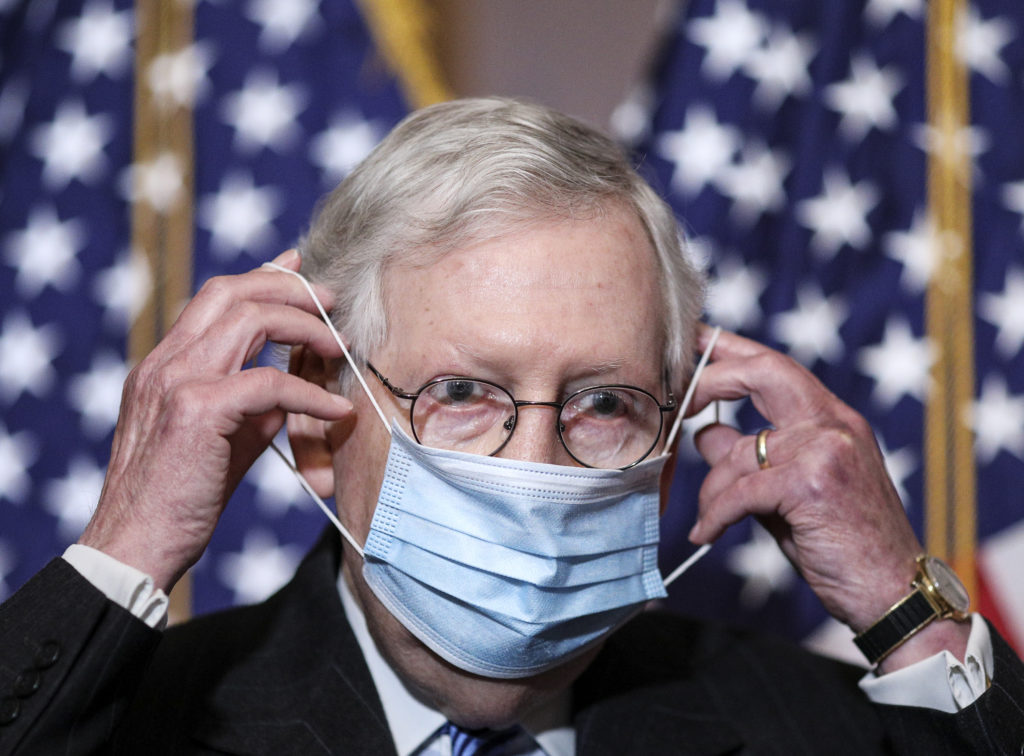
Fending off a messy fight that could damage Republicans ahead of Georgia Senate runoffs, Majority Leader Mitch McConnell warned fellow GOP senators on Tuesday not to join President Donald Trump’s extended assault on the Electoral College results. In public remarks and private warnings, McConnell worked to push ahead to the Biden era and unite a fractured Republican Party ahead of the runoff elections that will determine Senate control. First, the Republican leader heaped praise on Trump’s “endless” accomplishments as he congratulated President-elect Joe Biden during a morning Senate speech. Then he pivoted, privately warning Republican senators away from disputing the Electoral College tally when Congress convenes in a joint session Jan. 6 to confirm the results. That fight would yield a “terrible vote” for Republicans, McConnell told the senators, according to two people granted anonymity to discuss the call, which was first reported by Politico. They would have to choose whether to back Trump or publicly buck him. Republicans are worried about bad effects on the Jan. 5 Georgia runoff election, where two incumbent Republican senators, David Perdue and Kelly Loeffler, face Democratic challengers Jon Ossoff and Raphael Warnock in a state that flipped in November for Biden. McConnell has been a strong supporter of most Trump efforts. But the turn of events six weeks after Election Day showed the Kentucky senator, backed by his leadership team, seeking to normalize relations with the coming Biden presidency while avoiding the spectacle of pitched floor fight that would divide the party as Trump reluctantly leaves office. “I want to congratulate President-elect Joe Biden,” McConnell said as he opened the Senate. “Many of us had hoped the presidential election would yield a different result,” he said. “But our system of government has the processes to determine who will be sworn in on Jan. 20. The Electoral College has spoken.” Biden told reporters that he called to thank McConnell for the remarks and the two had a “good conversation.” As he departed to campaign in Georgia, he said he told McConnell there are “things we can work together on.” The Senate leader’s sprint into action after weeks of silence followed other leading Republicans who spoke up after the Electoral College voted late Monday. They finally said aloud what many Republicans had been signaling privately — that Biden is the winner of the presidential election, and they are essentially abandoning Trump’s election attacks. From there, the floodgates opened. Several GOP senators confirmed they had spoken with Biden, including Trump ally Lindsey Graham of South Carolina and Mitt Romney of Utah, the GOP’s 2012 presidential nominee. Some have had meetings with Biden’s nominees for administration posts. In his phone call, Romney expressed admiration for Biden’s willingness to endure the rigors of a presidential campaign and serve in the nation’s highest office, the senator’s office said. The two also discussed the challenging political environment ahead. Senate Democratic leader Chuck Schumer said now that McConnell has spoken, “enough is enough.” Trump should “end his term with a modicum of grace and dignity,” Schumer said. For his part, Trump continued to push his baseless claims of “voter fraud” in a new tweet on Tuesday. Some GOP lawmakers have vowed to carry the fight to Jan. 6 when Congress votes to accept or reject the Electoral College results. Others have said Trump’s legal battles should continue toward resolution by Inauguration Day, Jan. 20. House Republican leader Kevin McCarthy declined to comment Tuesday when asked if he was ready to acknowledge Biden as the president-elect. One House Republican, Rep. Mo Brooks of Alabama, is planning to challenge the Electoral College results when Congress convenes for the joint session. At that time, any challenge in Congress would need to be raised by at least one member of the House and Senate. It’s unclear if any GOP senator will join in making the case. McConnell and his lieutenants, including Sens. John Thune of South Dakota and Roy Blunt of Missouri, warned the senators off any Electoral College challenge, calling it dead-end since any action would need sign-off by Democrats who have the House majority under Speaker Nancy Pelosi, according to one of the people familiar with Tuesday’s call. The GOP leaders further warned senators that forcing their colleagues into a vote on Electoral College challenges would prove difficult, especially for those facing their own reelections in 2022. No Republican senator spoke up in contradiction. Republican Sen. Ron Johnson of Wisconsin, who as chairman of the Homeland Security Committee is convening a hearing Wednesday on election fraud, has “no plans” to join with House Republicans and challenge the results, according to spokesman Austin Altenburg. McConnell surprised Washington on Tuesday when he opened the Senate addressing the election. The GOP leader called Biden someone “who has devoted himself to public service for many years.” He also congratulated Kamala Harris, saying “all Americans can take pride that our nation has a female vice president-elect for the very first time.” McConnell prefaced his remarks with sweeping praise of Trump’s four years in office, saying the president delivered on a promise to “shake up Washington.” He cited the president’s nomination and Senate confirmation of three Supreme Court justices, among other accomplishments. With states having affirmed the election results, the Republicans faced a pivotal choice — to acknowledge Biden the president-elect or keep standing silently by as Trump wages a potentially damaging campaign to overturn the election. “At some point, you have to face the music,” Thune, the No. 2 GOP leader, said late Monday. “Once the Electoral College settles the issue today, it’s time for everybody to move on.” Historians and election officials have warned that Trump’s unfounded claims of voter fraud threaten to erode Americans’ faith in the election system. Trump is trying to throw out the ballots of thousands of Americans, particularly those who voted by mail, in dozens of lawsuits that have mostly failed. His legal team is claiming irregularities, even though Attorney General William Barr, who abruptly resigned Monday, has said there is no evidence of widespread fraud that would alter the
Donald Trump, Joe Biden prepare to debate at a time of mounting crises

The Tuesday night debate will offer a massive platform for Trump and Biden to outline their starkly different visions for a country facing multiple crises.
Donald Trump interviews Amy Barrett while weighing a high court nominee
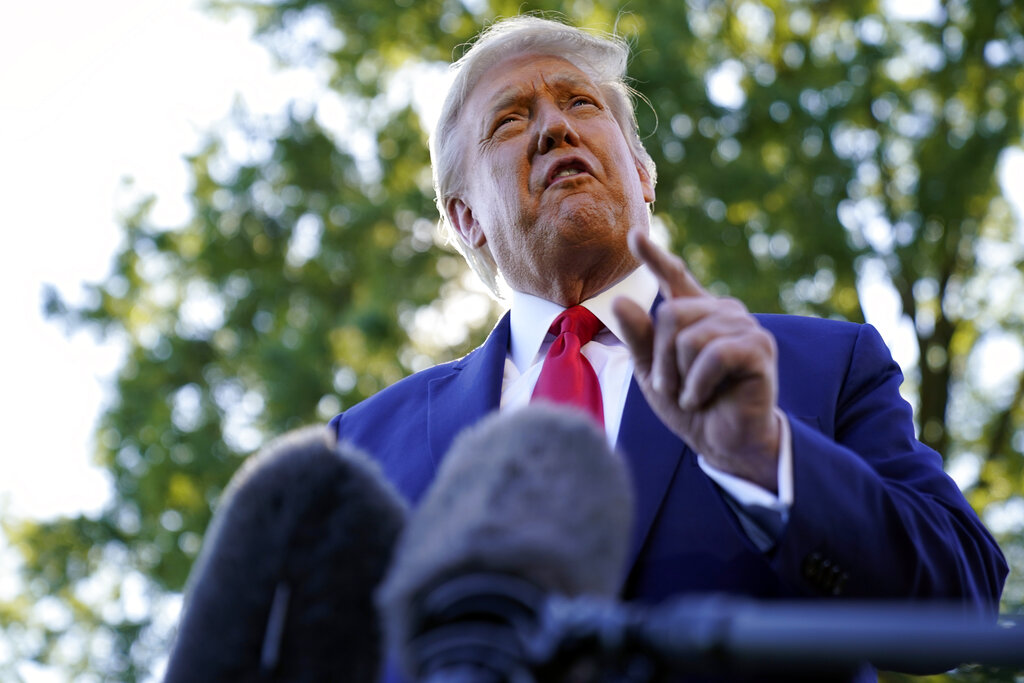
Trump said Monday he expects to announce his choice by week’s end, before the burial next week of Ginsburg.
Joe Biden to GOP senators: Don’t jam through Ruth Bader Ginsburg nominee
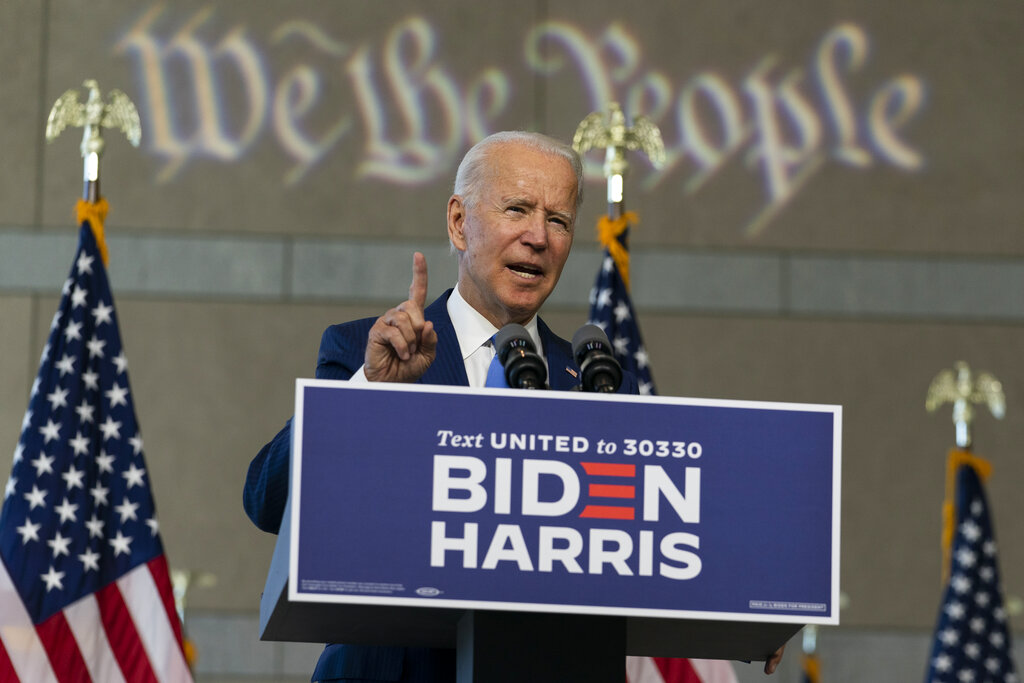
The extraordinary televised plea from the Democratic presidential candidate to Republican senators reflected the ferocious maneuvering that has followed Ginsburg’s death.
White House, GOP agree to virus testing but aid bill shifts

Senate Republicans and the White House reached a tentative agreement late Wednesday for more testing funds in the next COVID-19 relief package, but deep disagreements over the scope of the $1 trillion in federal aid have forced a shift in strategy. Facing a GOP revolt, Senate Majority Leader Mitch McConnell was preparing to roll out a “handful” of COVID-19 aid bills instead of a single package, according to a top lawmaker involved in the negotiations. The legislation is now expected as soon as Thursday. “Very productive meeting,” Treasury Secretary Steven Mnuchin said while exiting a late session at the Capitol. A key holdup remains President Donald Trump’s push for a payroll tax cut, according to a Republican granted anonymity to discuss the private talks. Hardly any GOP senators support the idea. Instead, McConnell and some Republicans prefer another round of direct $1,200 cash payments to Americans. Mnuchin said the negotiators have agreed to an amount on direct payments, but declined to share details. The rest of the legislation is taking shape even as key Senate Republicans are rejecting the overall rescue, which is almost certain to grow. There will be no new money for cash-strapped states and cities, which are clamoring for funds, but they will be provided with additional flexibility to tap existing aid funds. Republicans propose giving $105 billion to help schools reopen and $15 billion for child care centers to create safe environments for youngsters during the pandemic. The centerpiece of the GOP effort remains McConnell’s liability shield to protect businesses, schools, and others from COVID-related lawsuits. The bills will also include tax breaks for businesses to hire and retain workers and to help shops and workplaces retool with new safety protocols. Still unresolved is how to phase out the $600 weekly unemployment benefit boost that is expiring, starting Friday. Republicans appear to be settling on $200 benefit that would ultimately be adjusted according to state jobless benefits rates. The breakthrough on testing money, though, was key after days of debate between Republicans and the White House, showing a potential shift in the administration’s thinking about the importance of tracking the spread of the virus. Republicans wanted $25 billion but the Trump administration said the $9 billion in unspent funds from a previous aid deal was sufficient. The two sides settled on adding $16 billion to the unspent funds to reach $25 billion, senators said. Despite deep differences among Republicans, McConnell is trying to push forward with what he calls a “starting point” in negotiations with Democrats. “I think what the leader has decided he wants to do is to have a handful of bills now instead of just one bill, so maybe that comes together,” Sen. Roy Blunt, R-Mo., told reporters at the Capitol. Exasperated Democrats warned the GOP infighting with Trump is delaying needed relief to Americans during the crisis, with the U.S. pandemic death toll climbing past 142,000. With millions out of work and a potential wave of evictions ahead, the severity of the prolonged virus outbreak is testing Washington’s ability to respond. Schools are delaying fall openings, states are clamping down with new stay-home orders and the fallout is rippling through an economy teetering with high unemployment and business uncertainty. A new AP-NORC poll shows very few Americans want full school sessions without restrictions in the fall. “We’re hopeful we’ll be able to get there,” McConnell told reporters earlier Wednesday. Pressure is mounting as the virus outbreak deepens, and a $600 weekly unemployment boost and a federal eviction moratorium come to an end starting Friday. But some GOP senators simply oppose big spending. “I just don’t see the need for it,” Sen. Ron Johnson, R-Wis., told reporters Wednesday. Democrats, who already approved House Speaker Nancy Pelosi’s more sweeping $3 trillion package two months ago, said time is running out for Trump and his GOP allies to act. “We’re still on the 20-yard line?” Senate Democratic Leader Chuck Schumer said, referring to White House comments. “Where have the Republicans been?” The White House negotiators, Mnuchin and Mark Meadows, the president’s acting chief of staff, arrived late at the Capitol. After a raucous meeting Tuesday, senators did not discuss the package at Wednesday’s lunch. Still, Meadows said other talks had progressed, pushing Republicans to “the 35-yard line.” As the Republicans battle over their priorities, Democrats warn they are wasting precious time. “We are just days away from a housing crisis that could be prevented,” said Sen. Elizabeth Warren, D-Mass. As Trump and his GOP allies are tangled over details, a stopgap measure may be needed to prevent the unemployment benefits from being shutoff. “We cannot allow there to be a cliff in unemployment insurance given we’re still at about 11% unemployment,” said Sen. Rob Portman, R-Ohio. Portman’s bill to provide tax cuts to retool workplaces with safety features appears to be included. Another Republican, Sen. Joni Ernst of Iowa, has been pushing for child care funds. Of the $105 billion for education, Republicans want propose $70 billion to help K-12 schools reopen, $30 billion for colleges, and $5 billion for governors to allocate. The Trump administration wanted school money linked to reopenings, but in McConnell’s package, the money for K-12 would likely be split between those that have in-person learning and those that don’t. Sen. Marco Rubio, R-Fla., said there will be another boost for small business lending in the Payroll Protection Program. “It’s going to be big,” he said. Mnuchin and Meadows made it clear during a private meeting Tuesday with Pelosi and Schumer that the White House was resisting Democratic proposals for new spending on virus testing, housing aid or money for cash-strapped states, according to a person granted anonymity to discuss the private talks. Republicans said some $150 billion allotted previously to state governments is sufficient to avert sweeping layoffs, and they said more housing protections are not needed. Democrats are calling for $430 billion to reopen schools, bigger unemployment benefits and direct aid checks, and a sweeping $1 trillion for state and local governments. They also want a
Republicans, with exception of Donald Trump, now push mask-wearing
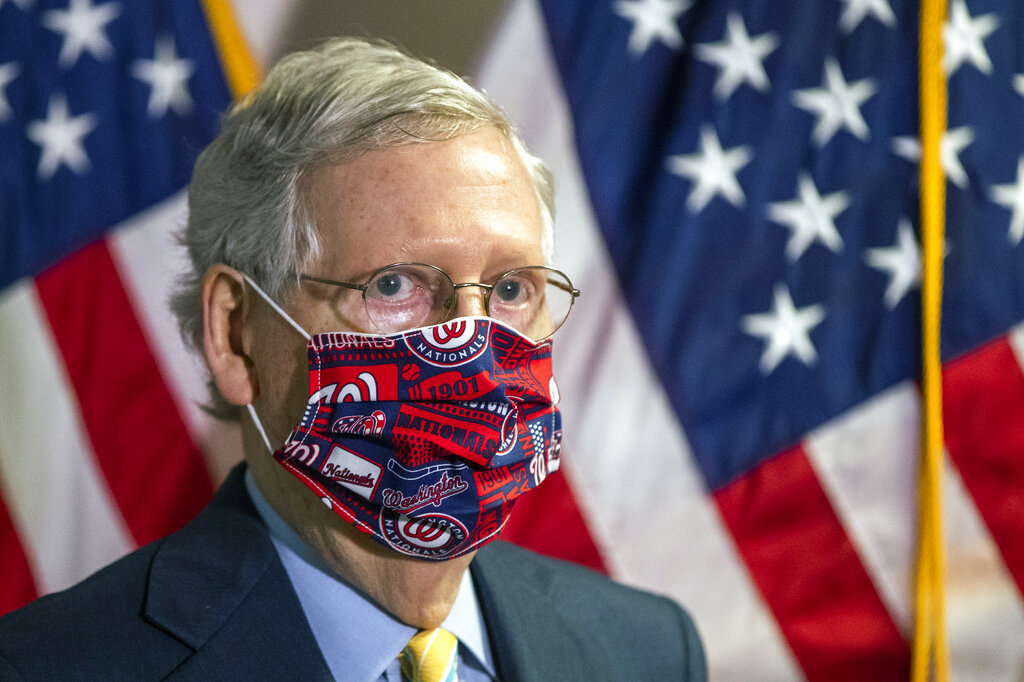
GOP officials are pushing back against the notion that masks are about politics, as President Donald Trump suggests, and telling Americans they can help save lives.
Democrats propose sweeping police overhaul; Donald Trump criticizes

Before unveiling the package, House and Senate Democrats held a moment of silence at the Capitol’s Emancipation Hall.
Congressional rescue talks churn as crisis deepens
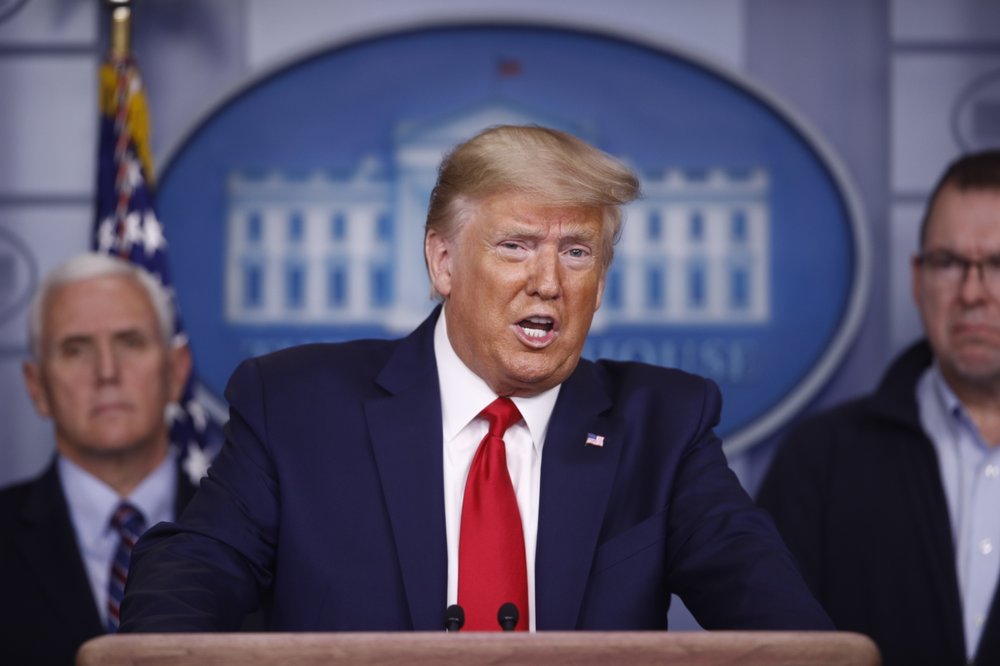
Washington labored under the size and scope of the rescue package that’s more ambitious than any in recent times.
Donald Trump’s economic aid could approach $1T, senators say
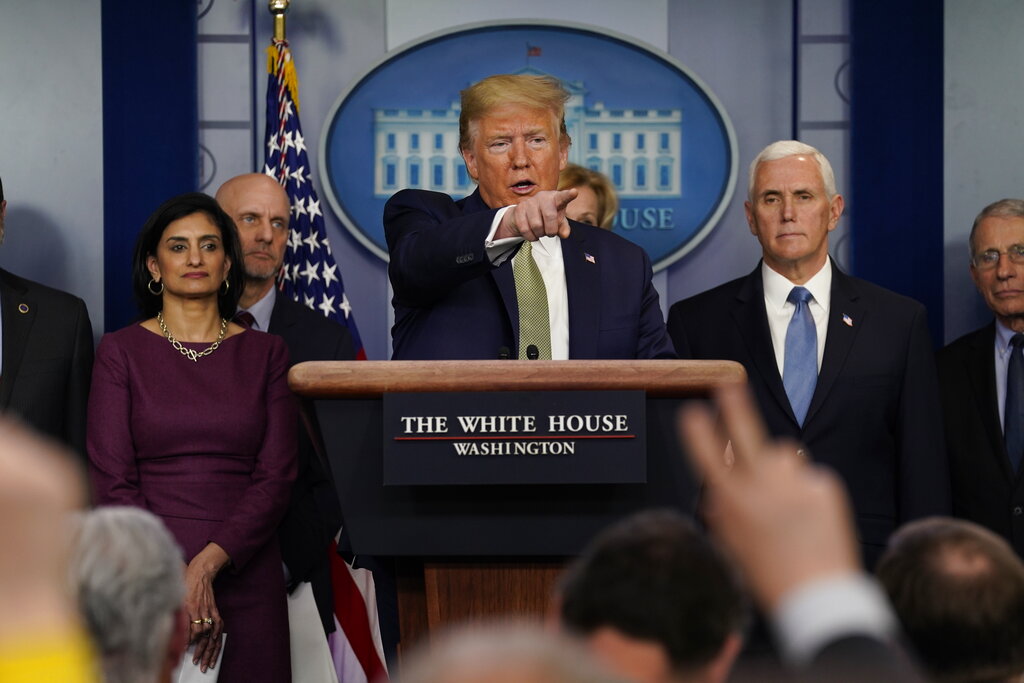
The Trump administration is asking congress to appropriate funds directly to Americans in an effort to shore up households and the economy.
Outside Interest: go all-in for Tommy Tuberville with 2 ads

Two groups recently started running ads in support of Tommy Tuberville in Alabama’s US Senate race.
