
Donald Trump wins New Hampshire after Iowa disappointment
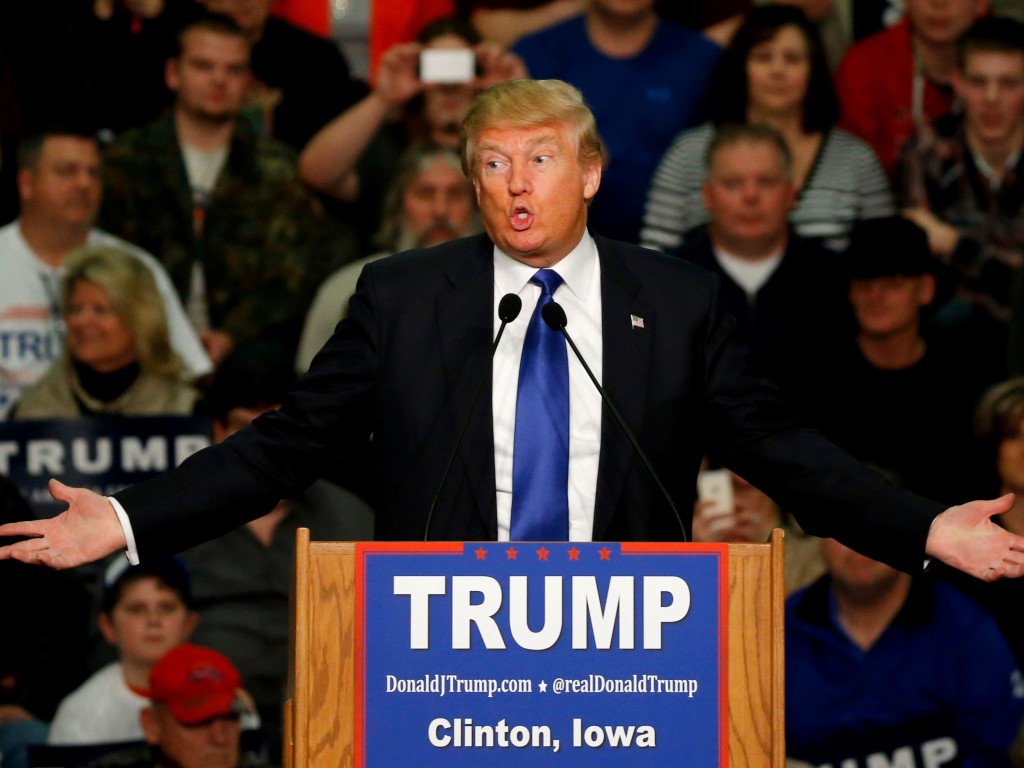
Donald Trump nailed down a solid first electoral win in New Hampshire’s presidential primary Tuesday, demonstrating his unorthodox campaign can translate large crowds at rambunctious rallies into the votes that determine delegates. His Republican rivals pinned their hopes on a strong second-place finish, looking to break from the pack and ensure the survival of their campaigns. Stung by his second-place showing in Iowa last week, Trump had been determined to make New Hampshire his proving ground for a campaign that has defied convention wisdom from the start. Early exit polls showed he drew support from voters looking for an outsider and from those who made up their minds a while ago. Count car salesman Val Goldenberg as one of those Trump voters. At a Nashua polling place, Goldenberg said he voted for the billionaire because he likes the business mogul’s “non-politician” credentials. “I think America really needs a good shake-up,” Goldenberg said. Eighty-four-year-old Mary O’Malley of Manchester picked Trump because “he’s not part of the establishment. He’s going to get things done and he’s not going to put up with any baloney.” For the rest of the Republican field, Tuesday’s results will shed light on which of the more establishment-friendly candidates advance to later contests, including Florida Sen. Marco Rubio, former Florida Gov. Jeb Bush, Ohio Gov. John Kasich and Gov. Chris Christie of New Jersey. Rubio had arrived in New Hampshire with a burst of momentum following his better-than-expected third-place finish in Iowa last week, but a shaky debate performance Saturday sparked criticism from his rivals that the 44-year old freshman senator lacks the experience to lead the nation. Texas Sen. Ted Cruz, coming off a strong victory in Iowa, has not polled as well in New Hampshire — his rivals seeing that as an opportunity to try to cap his momentum in the second nomination contest. A strong performance in New Hampshire was critical for Kasich, who all but skipped Iowa’s caucuses to continue grinding out town halls in New Hampshire. During a visit to a Concord polling place Tuesday, the Ohio governor said a Kasich win with a positive message could open up a “new chapter” in American politics. His voters included Miranda Yeaton, a mother of two young daughters in Concord who said Trump scared her and that she liked Kasich’s record as governor. “If he can do it for Ohio he can probably do it for the rest of America,” she said. Republican voters were very negative about how things are going in Washington these days, according to early results from an exit poll conducted by Edison Research for the Associated Press and the television networks. Nearly half of Republicans said they were dissatisfied and 4 in 10 were angry. Trump did best with voters who were angry; dissatisfied voters were somewhat less likely to break for Trump. The exit polls also showed Republicans were much more negative about their politicians than Democrats were about theirs. Nearly half of Republicans said they feel betrayed by politicians from the Republican Party. In contrast, less than 20 percent of Democrats said they felt betrayed by Democratic politicians. The New Hampshire stakes were high: Bush, Kasich and Christie, in particular, have bet their White House aspirations on New Hampshire, hoping a strong showing here will lead to an influx of new donor money and attention as the election moves south. Republished with permission of the Associated Press.
New Hampshire primary puts values of retail campaigning to the test
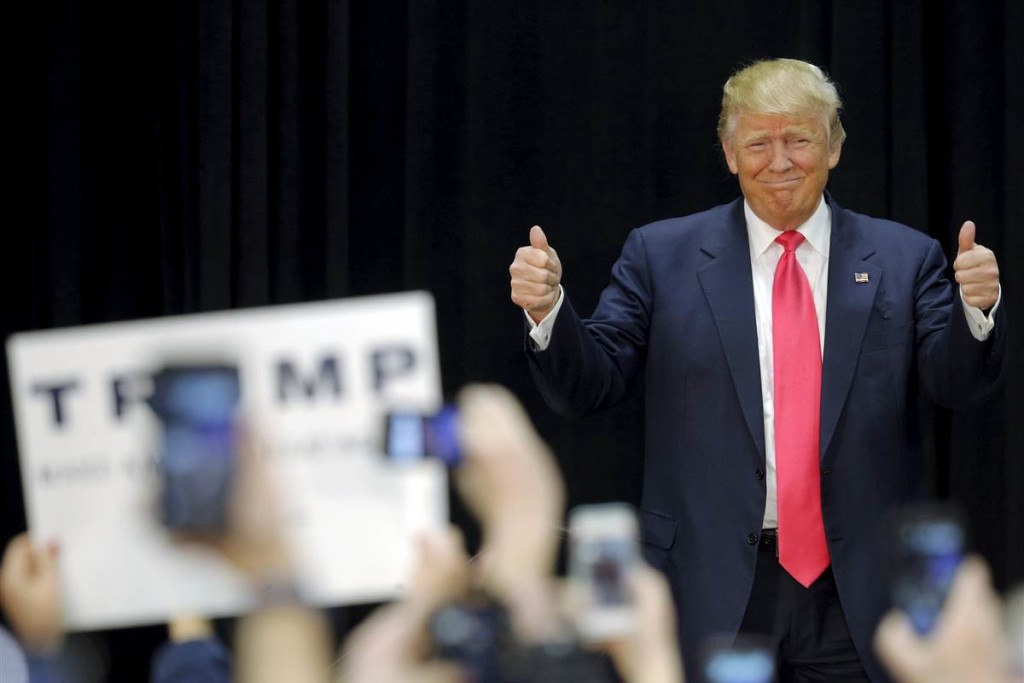
Donald Trump upended the traditions of New Hampshire campaigning when he opted for mega-rallies over living room conversations and diner stops, yet the businessman is hoping for a win in the state’s Tuesday primary. The trio of governors vying for second place are betting a near-constant presence in the state and a one-on-one approach is what really matters in New Hampshire. In between are Marco Rubio and Ted Cruz, two candidates running a 50-state strategy that’s meant fewer stops through the first primary state, albeit trips that include a traditional grassroots flavor. Tuesday’s results will be a test over which approach works in today’s political landscape. Some candidates offer dire warnings that a win for Trump will put the primary at risk, while others say the hand-wringing is overblown. Republished with permission of the Associated Press.
After Iowa, Donald Trump showing off effort to win in New Hampshire
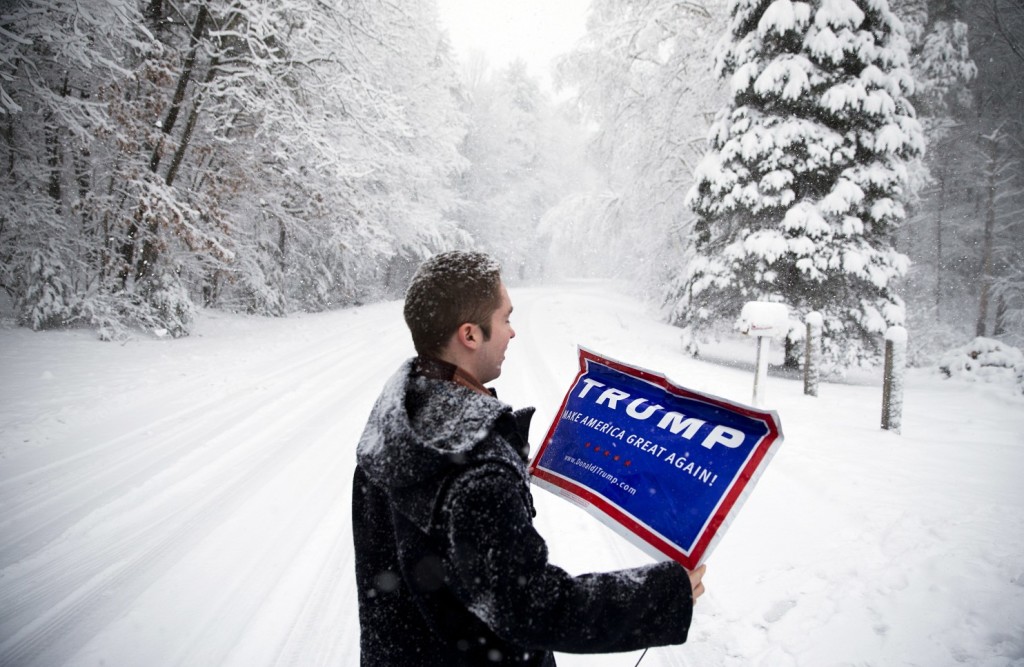
With wet snow already ankle deep and falling fast, Dave Chiokadze and James Radcliffe trekked down one long driveway after another in search of potential votes for Donald Trump. “It’s like the Revolutionary War,” joked Chiokadze as they made their way house to house along a Londonderry street, knocking on doors that were flagged by a smart-phone app and leaving long lines of footsteps in their wake. The 22-year-olds, out-of-state volunteers involved in politics for the first time, are on the front lines of Trump’s effort in New Hampshire, where the Republican presidential candidate is hoping for his first victory of the 2016 campaign in the state’s primary on Tuesday. Trump had a disappointing runner-up finish last Monday in leadoff Iowa, which has a byzantine caucus process that puts a premium on organizing supporters to make sure they turn out. Now, he and his team are intent on making a greater push to get out the vote in the opening primary state “Look, I’ve never done this before. I’ve been a politician for seven months. I’m against governors and senators. They’ve done it their whole lives,” Trump said in an interview with The Associated Press on Friday. “It would seem to me that people would just go out and vote.” Trump said he “never realized” the need to encourage supporters to actually take part in the caucuses. “Now, I think we’re going to have an OK ground game.” Or at the very least, one that Trump is willing to show off. His campaign shrouded its Iowa operations in secrecy. In New Hampshire, it has opened the door to what appears to be more robust effort to ensure his legion of supporters becomes an army of voters. At his state headquarters in Manchester, volunteers were hard at work on two recent weekdays. They made calls using an automated phone dial system in a room decorated with black-and-white photographs of the man they’re working to elect. Malcolm McGough, 58, a volunteer from West Hartford, Connecticut, said he had been working 13-hour days making calls. “It’s really about asking them whether they’re going to get out and vote on Tuesday and whether they support Mr. Trump,” McGough said. He said he had made 1,150 calls for Trump on Wednesday alone. Kevin Bray, 51, another volunteer, said he had driven more than 20 hours in the rain from Nixa, Missouri, after seeing the results in Iowa. “Iowa happened and I woke up really irritated,” he said. “I said, you know, I want to make a difference.” He said he arrived on Wednesday morning and told Trump’s team to put him to work. In a back room of the office, a white board displays ambitious goals for each day. On Thursday, the team aimed to make 30,000 calls and knock on 2,500 doors. By early afternoon, campaign officials said they were partway to their goals. Their seven teams of volunteers sent to neighborhoods across the state had reported knocking on 823 doors so far. On Friday, campaign staff hoped to boost the number to 5,000, as more than 100 new volunteers arrived from states such as New York and Pennsylvania to help. The team has run out of the 20,000 cards it printed to hand out during visits and was printing 25,000 more. “I think look, we’ll take nothing for granted,” said Trump campaign manager Corey Lewandowski, a New Hampshire resident overseeing the effort. “We’re going to do everything we can to try and talk to every voter possible. So we’ve made a lot of phone calls and knocked on a lot of doors and we’re going to do a lot of stops. “And obviously,” Lewandowski said, “Mr. Trump gets the biggest crowds, so he gets to see the most people.” He said the outreach was aimed specifically at voters identified as having a high likelihood of being open to supporting Trump. Volunteers said they included many independent voters and those without a history of voting in the primary. Steve Duprey, a political professional in New Hampshire who helped shepherd GOP Sen. John McCain’s winning 2008 campaign in the state, described the Trump ground game as “aggressive and sophisticated.” “I think they have a first-rate operation in New Hampshire and I think they were under the radar for a couple of months,” Duprey said. To be sure, Trump hasn’t completely changed his approach in the wake of his Iowa defeat. He skipped town for a rally in South Carolina on Friday and has largely forgone the small-scale town halls and meet-and-greets that are the usual fare for potential presidents in Iowa and New Hampshire. That’s something some of his supporters in Iowa said was a hurdle to success there. “It was challenging,” said Iowa state Sen. Brad Zaun, a prominent Trump supporter. “Everybody talks about the 99 county tour. I think if we could have gotten him there more often, it would have increased his numbers. … I wanted him to do smaller events. We could not get that done.” The winner in Iowa, Texas Sen. Ted Cruz, did visit all those counties. Cruz also developed and relied on a sophisticated, data-driven approach that targeted specific, individual voters. In New Hampshire this past week, many voters interviewed said they had yet to receive mail or phone calls from Trump’s campaign. Even as Trump acknowledged that investing additional time and money in Iowa may have helped win the caucuses, he continued to boast about spending less than the other candidates. Trump spent just $1.2 million on consultants in areas such as field operations in the final four months of the year, along with $235,000 to the data firm L2. Cruz spent more than $3 million on data provider Cambridge Analytica alone in the quarter, and $900,000 on political strategy consulting. Trump also continues to be badly outspent on television by candidates of significantly lesser means, advertising tracker Kantar Media’s CMAG shows. The $3 million he’s spent so far on TV and radio ads in New
George W. (finally) to campaign for Jeb Bush
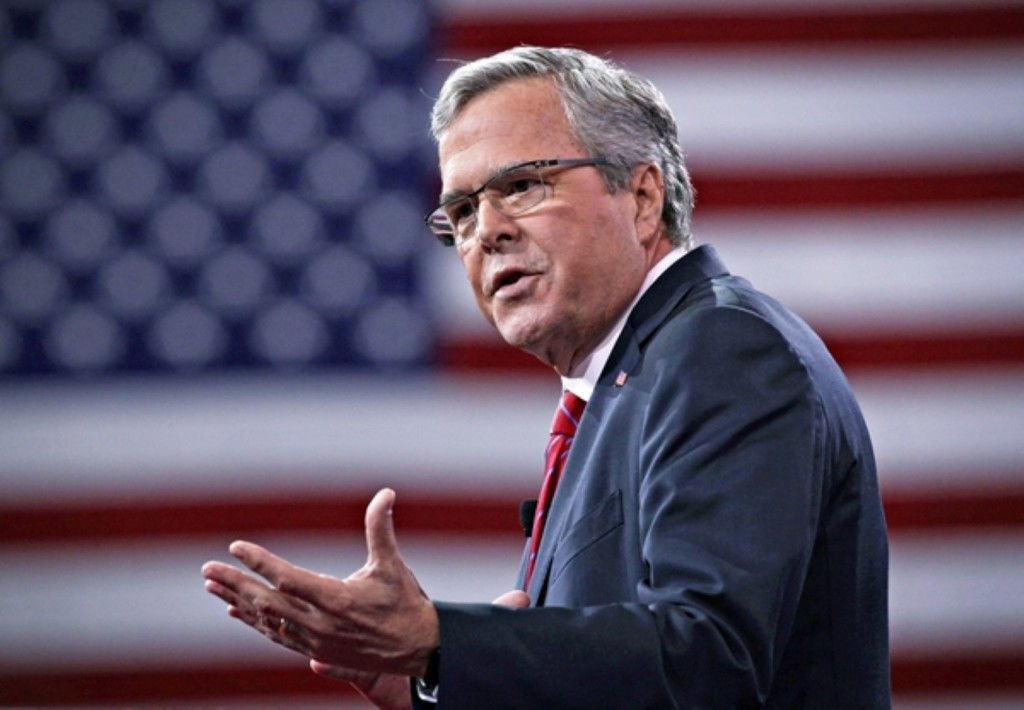
Jeb Bush’s South Carolina director says the presidential candidate may finally appear on the campaign trail alongside his brother, former President George W. Bush. Brett Doster says “George W. Bush is the most popular Republican alive” and that the GOP in South Carolina is “eager” for the visit. South Carolina holds a Feb. 20 primary, 11 days after New Hampshire. Jeb Bush has a large organization in the state, which gave his father and brother hard-fought primary victories on their paths to the 1988 and 2000 nominations, respectively. Doster says plans are not final, but notes that George W. Bush is popular among a cross-section of important South Carolina GOP groups, from evangelical Christians to the military community and large veterans presence. Republished with permission of the Associated Press.
Marco Rubio looks to NH to peg himself as a Republican for all
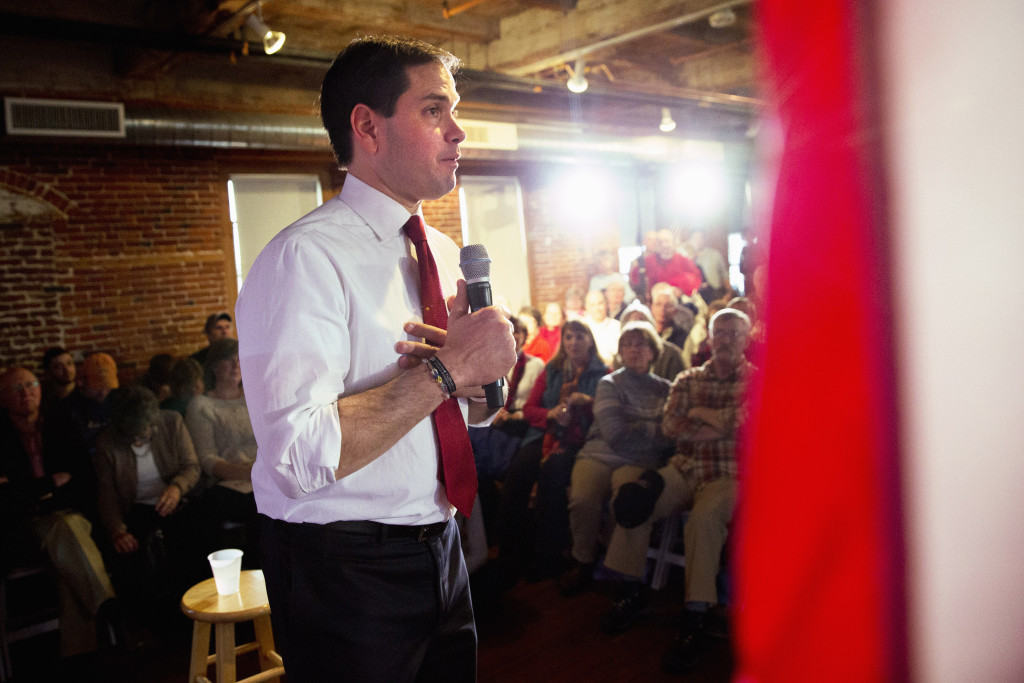
Republican presidential candidate Marco Rubio is using every bit of momentum his campaign received from the Iowa caucuses to show New Hampshire voters that he – not his competition – is the Republican for all Americans. Rubio describes caucus winner Ted Cruz as chronically “calculating” and points to the failure of others to pull in higher numbers as testament to their inability to lead. He calls New Jersey Gov. Chris Christie a sore loser after Christie accused him of being the “boy in the bubble” who won’t take questions. Rubio’s attacks on his opponents come with one glaring exception: billionaire Donald Trump, who edged him for a second-place finish in Monday’s caucuses. Rubio has reasoned that Trump has unveiled insufficient policy, and therefore, hasn’t given him reason enough to criticize him, even though they disagree on several fundamental issues. Instead, Rubio appears to be biding his time, quietly courting his rivals’ potential voters. By doing so, he’s pursuing a course of consolidation. “He needs to coalesce the vote before he can challenge Trump,” said Republican pollster Greg Strimple, who is unaligned with any of the campaigns. He said he has been impressed with what he calls the Rubio team’s “message and strategic discipline.” Rubio captured headlines with his strong third-place finish in the leadoff contest Monday, finishing behind Cruz – the heavy favorite among Iowa’s disproportionately influential evangelical conservatives – and less than a percentage point behind Trump, who had seesawed with Cruz between first and second place in most preference polls in Iowa. If Rubio tops Cruz in New Hampshire’s primary on Tuesday and finishes ahead of candidates such as former Florida Gov. Jeb Bush and New Jersey Gov. Chris Christie, he will have more evidence to support a point he’s been hammering for weeks: He is the candidate to unite the party. “When I am our nominee I can bring this party together,” Rubio told more than 300 people at a campaign event Wednesday in Bow, New Hampshire. “We cannot win if we are divided against each other.” While Republican voters in Iowa skew more toward the evangelical conservative, the New Hampshire Republican primary often draws independents and more fiscally conservative voters. Rubio’s campaign is hoping he can show support in two states with very different electorates as evidence of a campaign with longevity and fortitude. With his wife and four children in tow, Rubio maintained a dizzying schedule in New Hampshire this week, squeezing every drop of energy out of his better-than-expected finish in Iowa. By Tuesday, a sleep-deprived Rubio kicked off the day in New Hampshire doing 15 television and radio interviews to local stations. Rubio’s bus was rolling up to the lakes region north of Concord on Wednesday on a schedule of a dozen public appearances between Tuesday and Saturday’s last pre-primary debate at St. Anselm’s college in Manchester. While Rubio was criticizing various rival candidates at times during the interviews, Trump’s name never came up. When asked about it, he said Trump has laid out few plans, and that he had no public policy quarrel with Trump. “So when the time comes and it’s appropriate, we’ll do so,” he said. Still, Trump differs sharply from Rubio on immigration policy by supporting the deportation of all people in the U.S. illegally. Rubio supports deporting “criminal aliens” but is open to a process by which people in the country illegally may stay after immigration security is addressed. On Tuesday, a woman asked Rubio his opinion of Trump’s public mockery of a New York Times reporter who is disabled. “I think we all, obviously, not just disagree with it, but find it distasteful,” Rubio answered quietly. “I think he’s been called out for that repeatedly and I think people see it for what it is.” It’s part of a pattern of careful treatment of Trump by Rubio. By contrast, former Florida Gov. Jeb Bush released a full-page newspaper ad attacking Trump and was airing a two-minute campaign ad in New Hampshire featuring clips of Trump’s on-air insults. Republished with permission of the Associated Press.
NBC Poll: Donald Trump leads in Iowa, New Hampshire and South Carolina
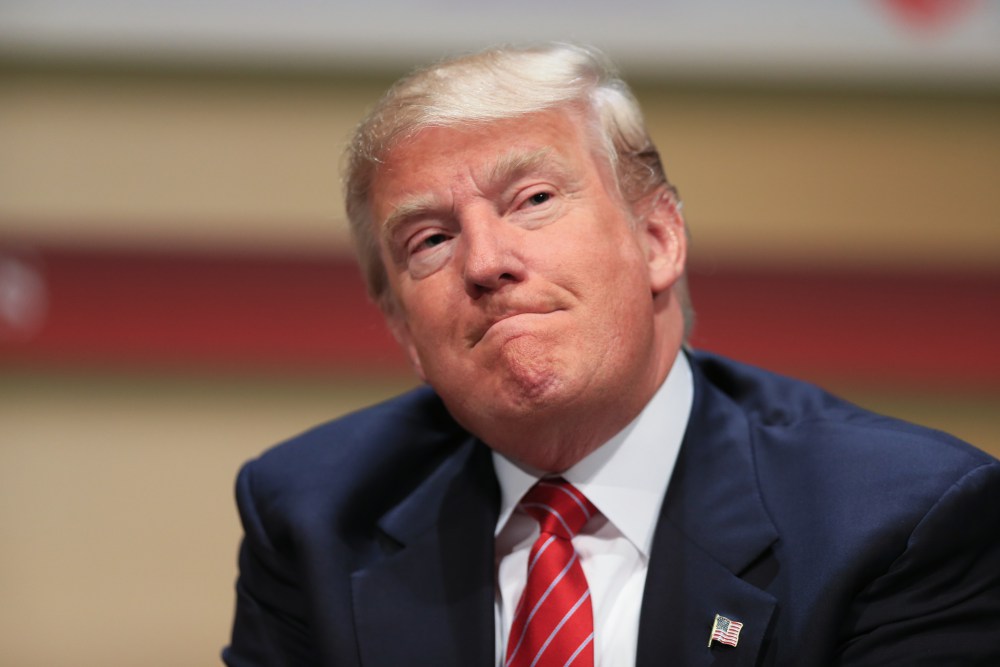
With four days before the Iowa caucuses, Donald Trump has pulled ahead of Ted Cruz in the Hawkeye State and holds commanding leads in New Hampshire and South Carolina. Among likely GOP caucus-goers, Trump leads Cruz in Iowa, 32 percent to 25 percent, according to NBC News/Wall Street Journal/Marist poll. Marco Rubio is in third with 18 percent, followed by Ben Carson at 8 percent. Jeb Bush is at 4 percent in the Iowa poll. The results mark a shift in opinions from just a few weeks ago, when Cruz held a 4-point lead over Trump. Hillary Clinton and Bernie Sanders are neck-in-neck in Iowa. Clinton leads Sanders 48 percent to 45 percent, well within the margin of error of 4.7 percent for likely Democratic caucus goers. The Iowa caucuses are Monday. In New Hampshire, the survey found Trump holds a double-digit lead over Cruz. Among likely Republican primary voters, Trump leads Cruz 31 percent to 12 percent. Rubio is tied with John Kasich for third with 11 percent, followed by Bush at 8 percent. Sanders has an overwhelming lead over Clinton in the Granite State, the poll found. Among likely Democratic primary voters, Sanders is at 57 percent, followed by Clinton at 38 percent. The New Hampshire primary is Feb. 9. In South Carolina, where voters head to the polls in late February, Trump leads Cruz, 36 percent to 20 percent. Rubio is in third with 14 percent among likely Republican primary voters, followed by Bush at 9 percent. Carson is at 8 percent. Clinton has a commanding lead over Sanders in South Carolina, where she leads 64 percent to 27 percent. The South Carolina Republican primary is Feb. 20; the Democratic primary is on Feb. 27.
Poll: Donald Trump pulls ahead in Iowa, maintains top spot in New Hampshire
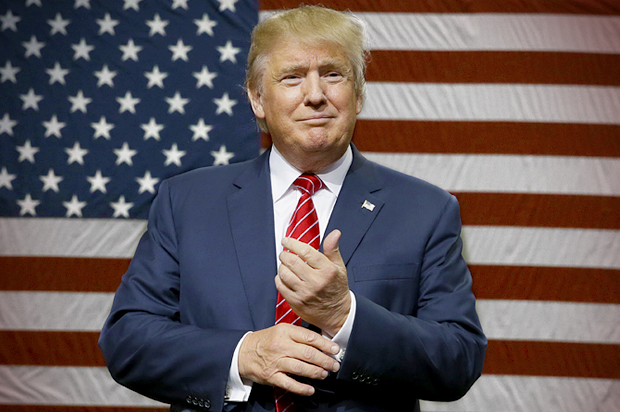
Donald Trump is gaining ground in Iowa, a new Fox News poll found. With one week before the Iowa caucuses, Trump leads Ted Cruz, 34 percent to 23 percent. The most recent poll showed Marco Rubio was in third at 12 percent, followed by Ben Carson at 7 percent. Rand Paul, the poll found, was polling at 6 percent in Iowa. The poll found 20 percent of likely Republican caucusgoers said they would refuse to vote for Trump if he was the Republican nominee; 14 percent said they would refuse to vote for Jeb Bush if he was the nominee. The Fox News poll was conducted Jan. 18 through Jan. 21. The results show a shift in opinions from earlier Fox News surveys, which found Cruz was leading the pack in Iowa. The Iowa caucuses are Feb. 1 Trump still dominates in New Hampshire, found a Fox News poll conducted during the same time period. That survey shows Trump leads Cruz, 31 percent to 14 percent. Rubio is in third at 13 percent, John Kasich follows at 9 percent. Bush and Chris Christie are tied at 7 percent. The New Hampshire primary is Feb. 9.
Donald Trump leads New Hampshire poll, but many voters still undecided
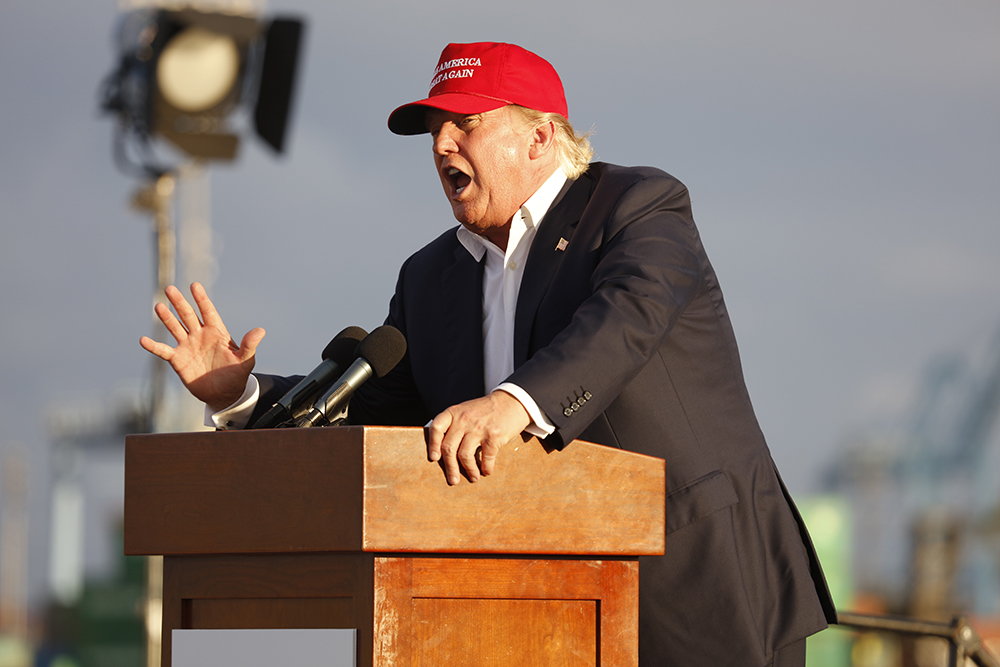
Donald Trump continues to lead the GOP field in New Hampshire, but a new WBUR survey found a significant share of the state’s undeclared voters has yet to settle on a candidate. The New Hampshire primary is three weeks away, and candidates have been campaigning in the Granite States for weeks now. The survey found a significant number undeclared primary voters still didn’t know which primary they were leaning toward voting in. The state’s undeclared voters represent about 44 percent of the state’s voters and can pick either ballot on election day. According to WBUR, these voters are “notoriously independent and play a crucial role in picking the winners.” Of those undeclared voters who said they were leaning toward the Republican primary, Trump was the top choice with 26 percent. John Kasich and Ted Cruz were tied at 15 percent; Jeb Bush was at 10 percent, and Marco Rubio was at 7 percent. Among those who were leaning toward the Democratic primary, Bernie Sanders has a wide margin over Hillary Clinton. Sanders, according to the poll, is at 60 percent, compared to Clinton’s 33 percent. The poll also found New Hampshire voters are warming to Sanders. About 59 percent of respondents said they had a favorable opinion of the Vermont senator, while 40 percent said they had had a favorable view of Kasich. About 65 percent of respondents said they had an unfavorable opinion of Trump, while 62 percent said they had an unfavorable view of Cruz. The New Hampshire primary is Feb. 9
Marco Rubio speaks New Hampshire House of Representatives on Wednesday
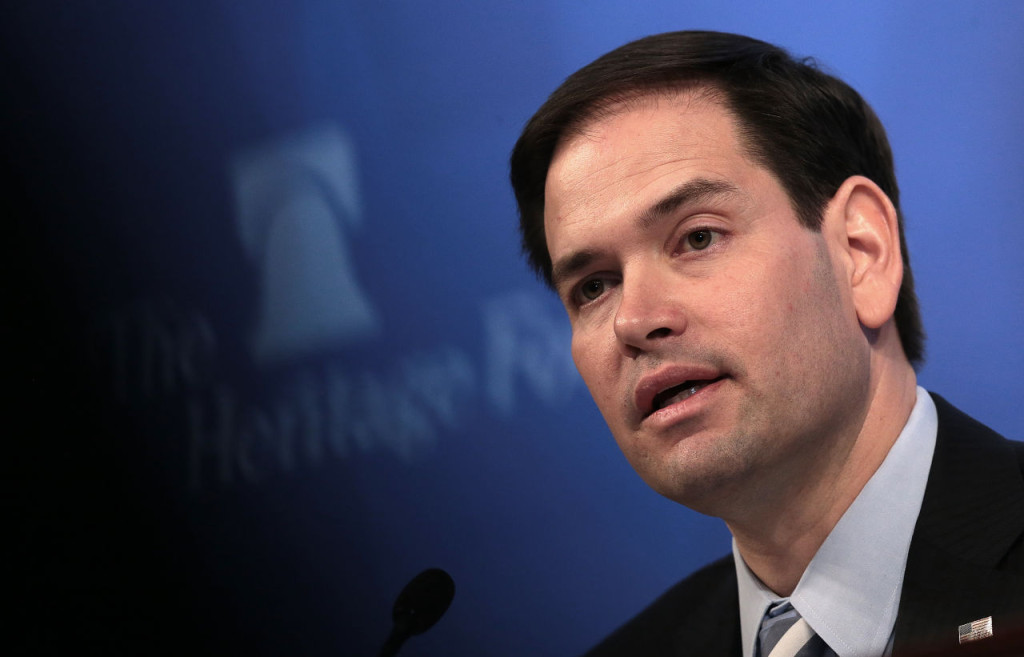
Marco Rubio may be on familiar territory during a trip to New Hampshire this week. Rubio is set to head to the Granite State on Wednesday, according to his campaign. The Florida senator is scheduled to address the New Hampshire House of Representatives on Wednesday morning. The address could remind campaign watchers of Rubio’s early days in politics. He was elected to the Florida House of Representatives in 2000 and was House Speaker from 2006 to 2008. The speech is scheduled for 10:20 a.m. Wednesday at the New Hampshire State House in Concord. Earlier Wednesday, Rubio is set to attend a town-hall meeting Plymouth, New Hampshire. The swing through New Hampshire comes three weeks before that state’s primary. Rubio is polling in second place in New Hampshire with 12.8 percent. He trails GOP front-runner Donald Trump, who is at 30.4 percent, according to RealClearPolitics. Rubio isn’t heading just to New Hampshire this week. He’s also campaigning in Iowa and has several town hall meetings scheduled for Monday. The Iowa caucuses are in two weeks on Feb. 1.
Inside the New Hampshire pitch to those who don’t want Donald Trump
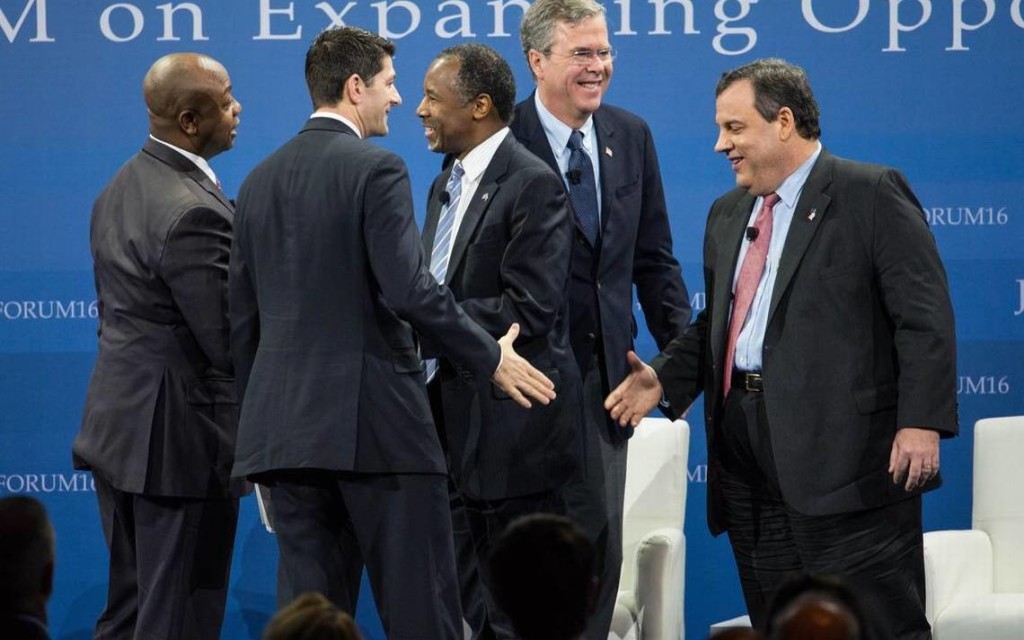
For all the passionate support Donald Trump has amassed in New Hampshire, many Republicans and independent voters are just as passionate about not voting for Donald Trump. They are an enticing target for the pack of Republicans off the front-runner’s pace, who seek to turn a second-place finish in the nation’s first primary — or maybe even an upset win — into validation they’re the candidate best able to challenge the brash real estate billionaire in South Carolina and beyond. Those voters are grappling with the weight of the world, as they take in town halls with Chris Christie and Jeb Bush, and attend rallies with Marco Rubio and meet and greets with John Kasich. “I only have, like, six weeks to make up my mind, and this is making me sick,” said Linda Fournier of Salem, who’s been keeping a close eye on the contest for nearly a year. “I actually go to bed at night worrying about this. This is just one vote, but it’s so important to me.” Those four candidates are generally viewed as able to win over a GOP establishment worried about the prospect of Trump or Texas Sen. Ted Cruz as their party’s nominee. They combine for about 45 percent of support in recent preference polls — enough to top Trump as one bloc, but fall far short split among them. New evidence of the intensity among the four is manifesting itself in the form of escalating attacks in ads, in interviews and at their events. The men all share similar ideas about policy and politics, but their pitches to voters differ as they seek to come out on top. What they all agree on: It’s in New Hampshire where their White House aspirations may find life — or come to an end. “You are among the most powerful people in the world right now,” Christie told voters at a recent town hall with the Manchester Rotary Club. “You and you alone will decide who the other 48 states have to pick from to be the Republican nominee for president of the United States.” • • • For Christie, the New Jersey governor who thrives on one-on-one interaction, the setting of choice has been town halls. Christie seeks to present himself as a relatable everyman, peppering the events with life stories and personal anecdotes, weaving between well-tested tear-jerkers and lines that leave participants laughing out loud. The free-wheeling events often stretch on for two hours or more, and attendees routinely walk away impressed. “He’s very down-to-earth. He cares,” said Anne Kagen, a nursing assistant from Manchester. “I like the way that he’s outspoken and right on point,” said George Castonguay, a fuel service technician from Manchester. Since the attacks in Paris and San Bernardino, Christie has increasingly put the focus on his record as a U.S. attorney, the job he held before he was governor. He calls himself a battle-tested crime fighter who has the fire to appeal to Trump voters who are angry about the country’s direction, but comes with the executive governing experience the former reality TV star lacks. He’s also tried to keep the focus on Hillary Clinton, making the case that he is the most prepared to take on the Democratic front-runner in the general election. “The American people, and this is getting more acute to me every day, understand that they need somebody from outside of Washington D.C., and somebody who is going to be strong and tough and honest,” Christie recently said. “I just don’t think Hillary Clinton fills any of those four.” • • • Bush, the former Florida governor, has spent much of the race trying to convince voters that he’s the candidate they need, even though he may not be the one who excites them most. In mid-December, Bush moved away from his on-and-off, sometimes indirect jabs at Trump. In its place came an uninhibited attack on the national GOP front-runner, who Bush calls the “chaos candidate” as he mocks his debate answers and policy proposals. “These are serious times. We need a serious leader,” Bush told voters recently in Littleton, offering himself as just such a leader. With his penchant for promoting what he calls “disruptive” policy reform, Bush presents his eight years as governor of Florida as the centerpiece of his candidacy. He touts Florida as “a diverse, vibrant” place, and a perennial swing state worth a whopping 29 electoral votes. He says often, “I know how to do this, because I was governor.” The self-described policy nerd also thrives during hour-long question-and-answer sessions that cap his New Hampshire campaign stops. In Dover last week Tuesday, Bush stood with arms crossed and head cocked staring at John Polychronis as the Dover Republican asked whether the spike in heroin abuse in the state meant American youth had lost faith in government. Bush replied that he does not possess answers to all of the nation’s ills, but pledged to work hard to find the answers if elected. “The way you restore confidence is by rolling up your sleeves and fixing things,” Bush said. “I like Marco Rubio because he’s moderate,” said Nancy Novelline-Clayburgh, a Republican voter from Portsmouth. “But Jeb Bush did a fantastic job as governor. And I think we’re better off electing a governor.” • • • Florida Senator Rubio centers his campaign pitch on his personal biography, attempting to craft an aspirational message that appeals to voters across a broad spectrum of the Republican Party. Rubio weaves together his past, as the son of Cuban immigrants who never led a rich lifestyle, with his present, particularly, his role as a young father seeking to give his children a brighter future. And while Rubio is fighting to be the mainstream alternative to Trump, he’s actively trying to distance himself from the “establishment” label. He often talks about his successful run for U.S. Senate in 2010, when he ran in a GOP primary against the state’s sitting governor. “When I decided to run
Hillary Clinton trying to light fire among Iowa activists
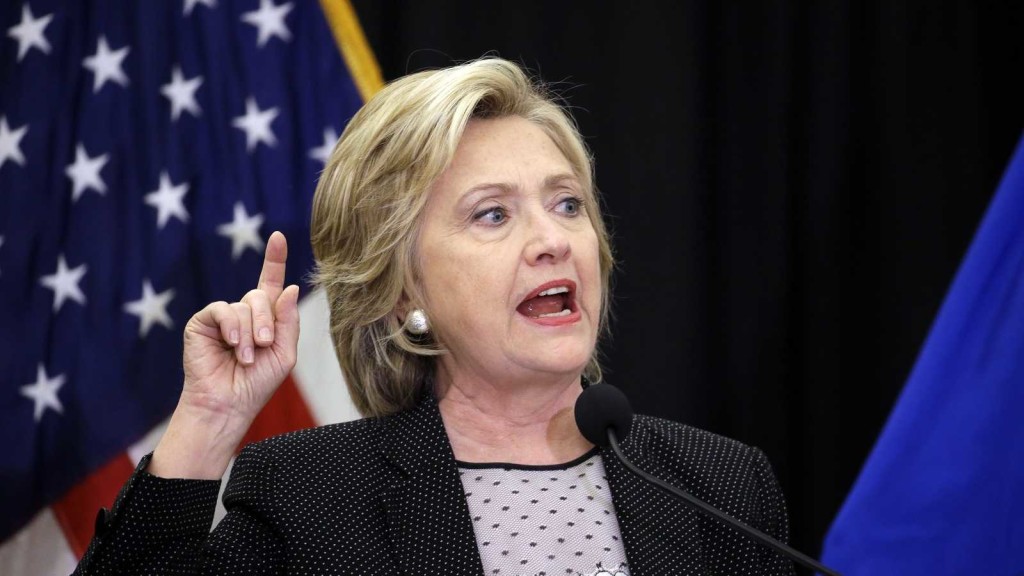
National polls notwithstanding, Hillary Clinton is guarding against complacency as she travels along the snow-covered fields of Iowa. “I need you,” she says repeatedly on the rope-line between handshakes and selfies. Wary of another mishap in Iowa, Clinton is preaching a message of urgency, challenging her supporters to dig in during the final month before the state’s lead-off presidential caucus. She casts her candidacy as a check against Republicans and avoids mentioning her main Democratic rival, Bernie Sanders, whose polling numbers remain at striking distance. “We can’t take anything for granted,” Clinton said at Des Moines’ State Historical Museum Monday night, a replica of a massive wooly mammoth looming off to the side as she spoke. “It doesn’t happen just because we wish it. It doesn’t happen because it’s inevitable.” Clinton’s presidential bid faltered in Iowa in 2008, when she finished third against then-Sens. Barack Obama and John Edwards. She defeated Obama in the New Hampshire primary but the future president prevailed after outlasting Clinton in a series of contests during the spring. This time, Clinton has built a formidable team of field organizers around Iowa, mindful of the ground game edge that Obama had in the state in 2007 and 2008. Polls have shown Sanders leading in New Hampshire, his neighbor to the east, giving Clinton little margin for error here. If the former secretary of state stumbles in Iowa again and is defeated by Sanders in New Hampshire, it would almost certainly renew worries about her ability to unify the party’s liberal and moderate factions. She enjoys strong support among Latino and black voters who are pivotal in Nevada and South Carolina, the third and fourth contests, but consecutive losses might diminish her standing. “If I get off to a good start here in Iowa, we’re halfway home,” Clinton said in Davenport. During a stop Tuesday night in Council Bluffs, she urged Democrats to consider a candidate’s “electability and how we make sure we have a Democrat going back in the White House in January 2017.” Few and far between are the days between now and the Feb. 1 caucuses in which Clinton or one of her messengers aren’t scheduled to campaign around Iowa. Former President Bill Clinton will be in Cedar Rapids and Dubuque on Thursday on behalf of his wife, and is certain to return. Her team is also dispatching backers like Virginia Gov. Terry McAuliffe, a top adviser during her 2008 campaign, and actress Lena Dunham of HBO’s “Girls” in the coming days. “Nobody’s complacent because of the 2007 and 2008 experience. This is not a done deal,” said Agriculture Secretary Tom Vilsack, a former Iowa governor introducing Clinton at events on Monday. “I like what she’s doing — she’s reminding people what’s at stake here. That’s a motivating factor.” Much of Clinton’s message revolves around defending Obama’s legacy. She warns that a Republican president would repeal Obama’s health care law, slash taxes on the wealthy, and undercut executive actions on gun violence and pollution. Part of her goal is to make a personal connection with voters over issues, as she puts it, “that keep families up at night.” In Sioux City on Tuesday, she rolled out a new initiative to provide more federal resources for 3.5 million Americans with autism. Last month, she announced a $2 billion plan to address Alzheimer’s during a stop in Fairfield, Iowa, and she frequently talks about substance abuse and mental health problems at events. Democrats say Sanders appears to have made a more emotional connection with his supporters — even though polls show him trailing here — while Clinton is viewed as the party’s standard-bearer and favorite to win the nomination. “He seems more genuine,” said Dan McCarthy of Bettendorf, a defense worker who spoke about Sanders as he sat with his mother before a Clinton event in Davenport. “I don’t like the idea of having the same people over and over again. You’re not going to change anything.” McCarthy said he was supporting the Vermont senator while his mother, Joan, said she was still assessing the Democratic field. But Clinton’s argument brought at least one fence-sitter onto her side in Des Moines. “To me, it’s who is more electable,” said Al Hart, a retired social studies teacher from Ankeny who said he decided to support Clinton after listening to her speech at the museum. “I think she’s got the fire in belly to get elected. She’s been through this before.” Grant Woodard, a Des Moines lawyer and veteran of several Democratic campaigns, said the size of the caucus would play a major role given Sanders’ attempt to attract college students and first-time caucus-goers. Most expect it to fall somewhere between 2008’s record of about 240,000 and the 125,000 who participated in 2004. “Sanders people are more motivated but I am not sure there’s enough of them,” Woodard said. As for Clinton, he said the challenge was simple: “How do you keep them motivated when folks think this is in the bag?” Republished with permission of the Associated Press.
Can independent Bernie Sanders get on NH Democratic primary ballot?
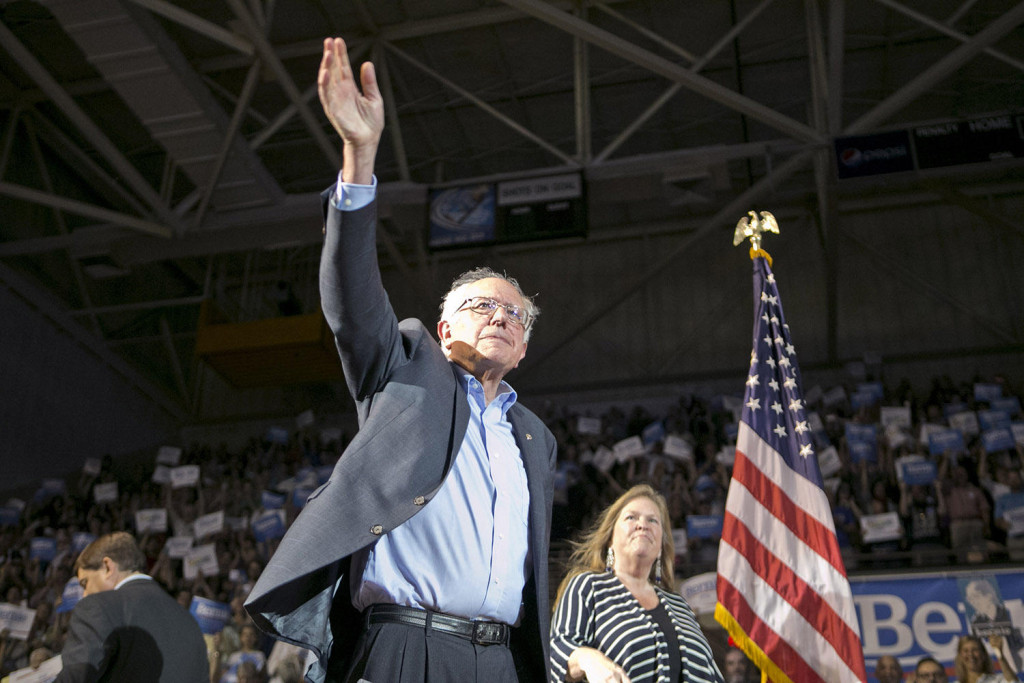
From his run for mayor of Burlington to numerous campaigns for Congress, Vermont Sen. Bernie Sanders has for more than three decades eschewed traditional party labels in his pursuit of political office, winning election after election as an independent. As he seeks the presidency as a Democrat, that unwillingness to be pigeonholed could be a liability in New Hampshire. To get on the ballot in the first-in-the-nation primary state, candidates must fill out paperwork that requires them to identify as a registered member of a political party. “I don’t know if it will be a problem,” New Hampshire Secretary of State Bill Gardner said when asked whether Sanders’ independent status could keep him off the ballot. New Hampshire officials won’t take up a case against Sanders without a complaint, Gardner said. A formal challenge to Sanders’ eligibility would likely make its way to the state’s Ballot Law Commission, the arbiter of such questions. Former Republican U.S. Rep. Charlie Bass raised the issue of Sanders’ eligibility in a recent Washington Post opinion piece. “In short, Sanders is not a Democrat, has not been elected as a Democrat, has never served as a Democrat and cannot plausibly claim, at least in New Hampshire, to be a Democrat,” Bass wrote. Sanders’ campaign isn’t worried. “We think it will work out,” Sanders’ spokesman Michael Briggs told The Associated Press. “The senator has said that he’ll do whatever it takes that he can do to qualify for the ballot.” Although New Hampshire’s form asks candidates to declare their party registration, Vermont is one of a number of states where voters do not register with a party. Candidates, however, must consent to run in a specific party’s primary, said Chris Winters, Vermont’s deputy secretary of state. In Sanders’ 2006 and 2012 elections to the U.S. Senate, he consented to run in the Democratic primary. After getting the most votes in that contest, Sanders then rejected the nomination and ran as an independent in the general election, Winters said. In the past, Sanders often has said he doesn’t see enough daylight between Democrats and Republicans, arguing that both are too aligned with moneyed interests. During an unsuccessful 1986 race for governor as an independent, Sanders said, “It is time to stop the Tweedledee, Tweedledum politics of the Republican and Democratic parties.” It’s not as if his home-state Democrats are pining for a national party standard-bearer: Vermont Democrats including Gov. Peter Shumlin, former Gov. Howard Dean and Sen. Patrick Leahy are all backing former Secretary of State Hillary Rodham Clinton in the 2016 campaign. In Congress, Sanders caucuses with Democrats and is the party’s ranking member on the Senate Budget Committee. State and national Democratic officials don’t think the paperwork question will affect Sanders. “He is a Democratic candidate for president,” said Ray Buckley, chairman of the New Hampshire Democratic Party. He said the state party would immediately go to court to have Sanders’ name placed on the ballot if there is a challenge. So far, other Democrats expected on the ballot are Clinton, former Rhode Island Gov. Lincoln Chafee, former Maryland Gov. Martin O’Malley and former U.S. Sen. Jim Webb of Virginia. Clinton’s campaign says it is prepared for a competitive primary and fully expects Sanders to be on the New Hampshire primary ballot. Gardner, a staunch protector of the state’s primary, said the wording about being registered in a party is included to help ensure integrity in elections. In New Hampshire, a voter must register with a particular party to vote in that party’s primary. “What applies to the voters, applies to the candidates,” he said. But, Gardner said, it’s too early to speculate on Sanders’ political fate. “It’s a whole series of hypotheticals,” he said. Republished with permission of The Associated Press.
