
Did your state senator vote for or against the pro-life bill? Here’s the full list

On Tuesday, the Alabama State Senate approved the strongest pro-life law in the nation, by a 25-6 vote, with one abstention. Here’s the full list of who voted for and against H.B. 314, otherwise known as the pro-life, anti-abortion bill: Voted in favor of the pro-life bill: Atmore-Republican, State Sen. Greg Albritton Tuscaloosa-Republican, State Sen. Gerald Allen Montgomery-Republican, State Sen. Will Barfoot Madison–Republican, State Sen. Tom Butler Pratville-Republican, State Sen. Clyde Chambliss Geneva–Republican, State Sen. Donnie Chesteen Fairhope–Republican, State Sen. Chris Elliott Huntsville–Republican, State Sen. Sam Givhan Cullman-Republican, State Sen. Garlan Gudger Centre-Republican, State Sen. Andrew Jones Trussville-Republican, State Sen. Steve Livingston Anniston-Republican, State Sen. Del Marsh Springville-Republican, State Sen. Jim McClendon Florence-Republican, State Sen. Tim Melson Decatur-Republican, State Sen. Arthur Orr Opelika-Republican, State Sen. Randy Price Jasper-Republican, State Sen. Greg Reed Birmingham-Republican, State Sen. Dan Robert Guntersville-Republican, State Sen. Clay Scofield Mobile-Republican, State Sen. David Sessions Trussville-Republican, State Sen. Shay Shelnutt Sheffield-Republican, State Sen. Larry Stutts Vestavia Hills-Republican, State Sen. Jabo Waggoner Alabaster-Republican, State Sen. Cam Ward Wilmer-Republican, State Sen. Jack Williams Voted against the pro-life bill: Clayton-Democrat, State Sen. Billy Beasley Montgomery-Democrat, State Sen. David Burkette Birmingham-Democrat, State Sen. Linda Coleman-Madison Mobile-Democrat, State Sen. Vivian Figures Greensboro-Democrat, State Sen. Bobby Singleton Birmingham-Democrat, State Sen. Rodger Smitherman Abstained Selma-Democrat, State Sen. Malika Sanders-Fortier
Alabama Senate takes a stand for life, approves nation’s strongest pro-life law
On Tuesday, the Alabama State Senate approved the strongest pro-life law in the nation, by a 25-6 vote, with one abstention. House Bill 314, sponsored by Decatur-Republican, State Rep. Terri Collins, establishes the personhood of the baby in the womb and criminalizes surgical abortions as soon as a pregnancy can be medically determined, in almost all cases except if a doctor determines that the pregnancy poses a serious health risk to the mother. “Roe v. Wade has ended the lives of millions of children. While we cannot undo the damage that decades of legal precedence under Roe has caused, this bill has the opportunity to save the lives of millions of unborn children,” said Pratville-Republican, State Sen. Clyde Chambliss, who sponsored HB314 in the Senate. “Life and liberty are not man given; they are given by our Creator. Today, Alabama made clear that we will protect our rights and the rights of our unborn children.” “In 1973, unelected judges on the Supreme Court cut short the vigorous national debate over abortion, and imposed a top-down, abortion-on-demand agenda on the entire country. Advances in science since 1973, particularly in ultrasound technology, shows what we know intuitively – a baby in the womb is a person,” Chambliss continued. Unless there is a serious health risk to the mother, the bill would make it a Class A felony for a doctor to perform an abortion, punishable by life or 10 to 99 years in prison, and a Class C felony for attempting to perform an abortion, punishable by one to 10 years in prison. “In November, the voters of Alabama overwhelmingly approved Amendment Two to declare Alabama a pro-life state, and the State Legislature is now carrying out the express will of the people, which is to protect the sanctity of life,” Jasper-Republican, Senate Majority Leader Greg Reed added. “HB314 simply recognizes that an unborn baby is a child who deserves protection — and despite the best efforts of abortion proponents, this bill will become law because Alabamians stand firmly on the side of life.” House Bill 314 was approved 74-3 by the Alabama House of Representatives back on April 30. Representative Collins praised the State Senate for approving HB314. “This bill is about challenging Roe v. Wade and protecting the lives of the unborn, because an unborn baby is a person who deserves love and protection,” Collins said. What happens next The bill now moves to Gov. Kay Ivey for her signature. Should she sign the bill it is all but guaranteed that it will be challenged in court.
Alabama just one of several states considering pro-life legislation

The Louisiana legislature is halfway toward passing a law — like the ones enacted in Mississippi and Georgia — that will ban abortions after a fetal heartbeat is detected, about six weeks into a pregnancy and before many women know they’re pregnant. Alabama is on the cusp of approving an even more restrictive bill. State governments are on a course to virtually eliminate abortion access in large chunks of the Deep South and Midwest. Ohio and Kentucky also have passed heartbeat laws; Missouri’s Republican-controlled legislature is considering one. Their hope is that a more conservative U.S. Supreme Court will approve, spelling the end of the constitutional right to abortion. “For pro-life folks, these are huge victories,” said Sue Liebel, state director for the Susan B. Anthony List, an anti-abortion advocacy group. “And I think they’re indicative of the momentum and excitement and the hope that’s happening with changes in the Supreme Court and having such a pro-life president.” For abortion rights supporters, meanwhile, the trend is ominous. Said Diane Derzis, owner of Mississippi’s sole abortion clinic, the Jackson Women’s Health Organization: “I think it’s certainly more dire than it ever has been. They smell blood and that’s why they’re doing this.” Already, Mississippi mandates a 24-hour wait between an in-person consultation. That means women must make at least two trips to her clinic, often traveling long distances. Other states have passed similar, incremental laws restricting abortion in recent years, and aside from Mississippi, five states have just one clinic — Kentucky, Missouri, North and South Dakota, and West Virginia. But the latest efforts to bar the procedure represent the largest assault on abortion rights in decades. Lawmakers sponsoring the bans have made it clear their goal is to spark court challenges in hopes of ultimately overturning the 1973 Roe v. Wade decision legalizing abortion. Those challenges have begun. Derzis’ attorneys are scheduled to go before a judge on May 21, seeking to prevent Mississippi’s heartbeat law from taking effect July 1. A judge in Kentucky blocked enforcement of that state’s heartbeat ban after the American Civil Liberties Union filed suit on behalf of the clinic in Louisville. Similar legal action is expected before bans can take effect in Ohio and Georgia, where Republican Gov. Brian Kemp signed the latest heartbeat bill into law Tuesday. Kemp said he welcomed the fight, vowing: “We will not back down.” Georgia’s ban doesn’t take effect until Jan. 1. But the impact was immediate.An abortion clinic operated by The Women’s Centers in Atlanta began receiving anxious calls from patients soon after Kemp signed the law. Many callers had plans to travel from outside the state for abortions. Georgia’s heartbeat ban would have a wider impact because the state has 17 abortion clinics — more than the combined total in the other four Southern states that have passed or are considering bans. “On a typical day we will see people from North Carolina, Tennessee, Alabama, South Carolina — all over the region,” said Dr. Lisa Haddad, the Atlanta clinic’s medical director. “And my thought is we’re not going to see those people coming here because they assume it’s already illegal in Georgia.” Dr. Ernest Marshall, co-founder of Kentucky’s last remaining abortion clinic in Louisville, said in an email that banning abortions before most women know they’re pregnant would “have a disproportionate impact on poor women and communities of color throughout the South.” Advocates for abortion rights expect judges to halt enforcement of any new bans while lawsuits work their way through the courts. That could take years. “These laws are blatantly unconstitutional,” said Elisabeth Smith, chief counsel for state policy and advocacy for the Center for Reproductive Rights, which also has filed suit over Mississippi’s ban. “But if they were allowed to go into force, they would have devastating consequences for the residents of all of these states.” If heartbeat bans are upheld, many women who are poor and have limited means to travel would have few options other than to try to terminate their own pregnancies, Haddad said, possibly using abortion drugs purchased online. Others would have to drive or fly across multiple states, said Elizabeth Nash, a state policy analyst for the Guttmacher Institute, a research group that supports abortion rights. “People would go to Florida, people would continue to go to Memphis,” Nash said. “How many states do you have to cross before you can access abortion services? It exacerbates all the issues we’ve already seen around taking time off from work and having the money to travel.” Proposed heartbeat bans failed to pass this year in several Republican-led states, including Texas. There, GOP lawmakers lost ground to Democrats in the 2018 elections, and some abortion foes were wary after courts struck down prior abortion restrictions in the state. Such efforts also fell short in Florida, South Carolina, Tennessee and West Virginia. Alabama lawmakers postponed until next week a vote on a proposal that would make performing nearly all abortions a felony. The measure has passed the state House, and the Senate suspended debate Thursday amid a heated dispute over whether exemptions for rape and incest should be stripped from the bill. “You can’t put a price on unborn life,” Eric Johnston, president of the Alabama Pro-Life Coalition, said Wednesday, as a legislative committee heard testimony on the state’s proposed ban. “What you have to do is protect the people that live in this state and that includes unborn children.” But Jenna King-Shepherd told Alabama lawmakers she believed the abortion she had at age 17 allowed her to finish college. She said her father, a part-time Baptist preacher furious about her pregnancy, drove her to the abortion clinic because he trusted her to make the right choice. “I’m not asking you to support access to abortion,” King-Shepherd said. “I’m only asking you to let women, their families, their physicians and their God make this decision on how they want to start their families in private and trust them to do that.” Republished
John Giles: Amendment Two — Choice vs. Life
November 6, 2018 is the mid-term election, and in addition to a slate of candidates, Alabamians will be voting on four amendments to the Alabama Constitution. Allow me to focus on Amendment Two. If passed, the Alabama Constitution will recognize and support the sanctity of unborn life. Generally, there are three visible sides to this debate: those who want unlimited abortion, those who want to protect the sanctity of all human life from conception to natural death (except for the life of the mother), and those who are opposed to abortion (except in the case of rape, incest and life of the mother). In full disclosure, it is no surprise that I will be voting YES without blinking for Amendment Two. Please don’t hang up the phone on me just yet; let’s get into the facts on this, so you can make a sound, rational decision. Planned Parenthood (PP) is leading the effort to vote NO on this amendment. Why are they so adamant about keeping abortion legal in America; could it be large sums of money and their core philosophy? Even in the disturbing wake of mounting video-recorded evidence of PP selling baby body parts, they are still receiving in excess of $500 million annually of federal tax dollars. In addition to the federal funding, PP charges anywhere from $350 – $950 for first trimester abortions and much more for second trimester abortions. PP is federally recognized as a 501(c)(3) nonprofit, which excludes them from income tax. I am not sure how they do this, but even though nonprofits are precluded by the IRS from engaging in elections, PP is publicly reported to be spending $20 – $30 million supporting Democrats for Congress in this general election cycle. I ran a 501(c)(4) nonprofit, and while we could participate in voter education and lobbying, we could not engage in “express advocacy” or endorsing any candidate. Amazingly, the IRS attacked conservative Tea Party members, but they look the other way on PP, which is pouring huge sums of money into Alabama to defeat this amendment. PP was founded by Margaret Sanger (1883 -1996), who was a turn of the century birth control activist, sex educator, writer, and nurse. I challenge you to look her up yourself, because she had some very radical, liberal ideas. Most of her philosophical quotes are morally repugnant, even by the norms of her era, but they are imbedded into the molecular makeup of PP. Sanger formed PP to exterminate blacks. In 1939, she started: “The Negro Project” for the purpose of radically curbing the birth of black children. If this offends you, like it bristles me, check out this Sanger quote: “The most merciful thing that a large family does to one of its infant members is to kill it.” Sanger had an abhorrent, horrific, belief system and appalling tone; but at least she was honest in the goals of PP, which are prevalent today. Three high profile Republican women, along with the Alabama Exchange (ad hoc group consisting of several pro-life organizations) are leading the vote YES effort in the state. Terry Lathan (Chair of the Alabama Republican Party), Twinkle Andress Cavanaugh (President of the Alabama Public Service Commission) and Mary Sue McClurkin (Shelby County Republican Representative) are leading the GOP get out the vote effort. Thank you ladies, for your leadership. This will be primarily a grassroots and social media driven outreach, and it will not match the well-funded PP opposition to Amendment Two. PP will showcase in their ads that voting YES to the amendment will eliminate access to women, who are pregnant due to rape or incest. One of the three categories mentioned at the beginning of this article are those opposed to abortion except in the case of rape, incest and life of the mother. Pay close attention to this statistic: The Guttmacher Institute, which is a research division founded by PP, by its own data, states that rape, incest and the life of the mother represents less than 1 percent of all abortions. So another perspective is the reciprocal, which means that over 99 percent of all abortions are emergency measures for birth control, and they are not cases of rape, incest or the health of the mother as marketed by PP. Liberal Democrats, PP, and the media will focus their entire attention on less than 1% of all abortions. The life of the mother discussion is a non-issue. When the life of the expecting mother is at stake, like a tubal pregnancy and the like, the tending physician will always put the life of the mother over her unborn child. Their argument is distorted at best, but now we take a close look at the deception around Roe v Wade. If you follow my writings, there is no misunderstanding about my feelings of judicial activism and making law from the bench. Roe v. Wade was a classic model case as the pinnacle of judicial activism. Norma McCorvey (9/22/1947 – 2/18/2017), whom Deborah (my wife) and I knew, was the legal pseudo “Jane Roe” in Roe v. Wade. Before becoming a Christian, McCorvey became a lesbian and ran an abortion clinic; her life was a wreck. McCorvey later in life repented, became an active pro-life Christian and our friend Reverend Flip Benham baptized her. Self-proclaimed feminist liberal lawyers, Sarah Weddington and Linda Coffee were seeking out the perfect case to make abortion legal in America. McCorvey, a single, divorced, alcoholic woman became pregnant with her third child in 1969, wanted to abort her child, but in Texas abortion was illegal, except for the life of the mother. Imagine that; except for California and New York, prior to 1973, abortion was illegal in America, except in the case of the life of the mother (like a tubal pregnancy). It was handled as a Tenth Amendment, states rights issue. McCorvey was not a pretty, eye-candy kind of girl, but rather a downtrodden alcoholic, so the lawyers kept her
Abortion rights could be litmus test for high court nominee

Republican Sen. Susan Collins, a key vote on President Donald Trump‘s pick for the Supreme Court, said Sunday she would oppose any nominee she believed would overturn the landmark Roe v. Wade decision that legalized abortion. The White House is focusing on five to seven potential candidates to fill the vacancy of retiring Justice Anthony Kennedy, a swing vote on the court. The Maine senator said she would only back a judge who would show respect for settled law such as the 45-year-old Roe decision, which has long been anathema to conservatives. “I would not support a nominee who demonstrated hostility to Roe v. Wade because that would mean to me that their judicial philosophy did not include a respect for established decisions, established law,” Collins said. Such a judge, she said, “would not be acceptable to me because that would indicate an activist agenda.” Trump spent the weekend at his New Jersey golf club conferring with his advisers, including White House counsel Don McGahn, as he considers his options to fill the vacancy that might make precedent-shattering court decisions on abortion, health care, gay marriage and other issues. The president told reporters Friday that he was homing in on up to seven candidates, including two women, and would announce his choice on July 9. Trump is expected to begin his search in earnest this week at the White House and said the process could include interviews at his golf club before he reaches a final decision following the Fourth of July holiday. During his 2016 campaign and presidency, Trump embraced anti-abortion groups and vowed to appoint federal judges who will favor efforts to roll back abortion rights. But he told reporters on Friday that he would not question potential high-court nominees about their views on abortion, saying it was “inappropriate to discuss.” The Supreme Court legalized abortion in 1973, but anti-abortion advocates hope Roe v. Wade will soon be overruled if Trump gets the chance to appoint a justice who could cast a potentially decisive vote against it. Without Kennedy, the high court will have four justices picked by Democratic presidents and four picked by Republicans, giving Trump the chance to shift the ideological balance toward conservatives for years to come. Both Chief Justice John Roberts and Justice Neil Gorsuch, Trump’s first pick to the high court, have indicated more broadly that they respect legal precedent. On Sunday, Leonard Leo, an outside adviser to Trump on judicial nominations, said he expected Trump to select a nominee who is mindful of precedent but who is also more “originalist and textualist.” That judicial approach typically involves a more literal interpretation of the Constitution, and not reading into the Constitution language that doesn’t explicitly appear. Roe, for instance, relied on a right to privacy, which is not explicitly mentioned in the Constitution. Possible nominees being eyed include Thomas Hardiman, who serves alongside Trump’s sister on the Philadelphia-based 3rd U.S. Circuit Court of Appeals, and Raymond Kethledge, a federal appeals court judge who clerked for Kennedy. Also of interest are Amul Thapar, who serves on the federal appeals court in Cincinnati; Brett Kavanaugh, a former clerk for Kennedy who serves on the federal appeals court in Washington, D.C.; and Amy Coney Barrett, who serves on the federal appeals court in Chicago. Echoing Leo’s view, Sen. Lindsey Graham, R-S.C., a member of the Judiciary Committee, said he didn’t think Trump would be overly focused on the Roe ruling. “You don’t overturn precedent unless there’s a good reason,” Graham said. “I would tell my pro-life friends: You can be pro-life and conservative, but you can also believe in ‘stare decisis,’” he said, citing the legal term involving legal precedent that means “to stand by things decided.” Republicans hold a narrow 51-49 majority in the Senate, and it’s even closer because of the absence of ailing Sen. John McCain of Arizona. Even though Mitch McConnell changed Senate rules last year to allow confirmation by simple majority, if Democrats hold together, he cannot afford defections. Vice President Mike Pence can be called on to break a tie. Collins appeared on ABC’s “This Week” and CNN’s “State of the Union,” Leo spoke on “Fox News Sunday” and Graham was on NBC’s “Meet the Press.” Republished with permission from the Associated Press.
Scott Dawson calls for investigation of all Alabama abortion clinics
Gubernatorial candidate Scott Dawson called for the investigation of all Alabama abortion clinic’s on Friday; after it was reported that a Montgomery abortion clinic failed to report potential sexual abuse 13 year-old patient. According to AL.com, the girl first visited the clinic in January 2016 and gave the clinic a birth date in July 2000, which would have made her 15. Two weeks later when she returned to have the abortion she brought her birth certificate showing that she was born in July 2002, meaning she was actually 13 at the time the abortion was performed. The girl had a second abortion in April of 2017, when she was 14 years old. In January of this year, the Alabama Department of Public Health (ADPH) sent an inspector to interview the director of the clinic who verified the information and only reported the patient and both abortions to ADPH after the inspection. The clinic has since provided the ADPH with a complete correction plan to revise how it obtains and reviews information from minors. “The news coming out of Montgomery breaks my heart and the apathy exhibited by our Montgomery politicians is angering,” declared Dawson. “When a 13-year-old child—with non-English speaking parents—is given an abortion, without a third-party counselor and no suspicion of sexual abuse and no report, we know Montgomery needs new leadership. Where is law enforcement? If this were a public school employee who had failed to report potential sexual abuse, they would be without a job and under investigation.” Dawson said as Governor he will immediately call for a full investigation of all abortion clinics across the state. “As Governor, I will immediately call for full investigation of all abortion clinics in the State of Alabama and at minimum, I will see to it that the Department of Public Health is held accountable to enforce their own rules, and that entities operating like this will be closed,” explained Dawson. “In Alabama, we treasure all human life—the born, the unborn, and certainly 13-year-old children who may need to be rescued from an abusive situation. Just because a clinic can legally murder, doesn’t mean they get a pass on the laws of this state.” Dawson faces Incumbent governor Kay Ivey, Huntsville mayor Tommy Battle, and State Sen. Bill Hightower in the June 5 Republican primary.
Martha Roby picks up endorsement from National Right to Life
On Tuesday, National Right to Life announced its endorsement of Alabama 2nd District U.S. Rep. Martha Roby in her re-election efforts. The pro-life group praised Roby’s strong pro-life voice in Congress. “All voters who are concerned with the right to life and with the protection of the most vulnerable members of the human family should vote to return Representative Roby to Congress so that she can continue to work to advance vital pro-life public policies,” the group said in a statement. They also pointed out her 100 percent score based on her pro-life voting record and highlighted her leadership on several related legislative items: Roby cosponsored and voted in favor of the Pain-Capable Unborn Child Protection Act, legislation that would ban abortion after 20 weeks. Roby cosponsored and voted in favor of the No Taxpayer Funding for Abortion Act, a bill that would establish a permanent, government-wide policy against funding abortions or health insurance plans that cover them. Roby voted to block federal funding for Planned Parenthood. “I am grateful to the National Right to Life Committee for its unwavering commitment to the pro-life cause,” Roby said of the endorsement. “I am honored to have the support of this important organization, and I look forward to continuing our work together on behalf of those who cannot fight for themselves.”
Martha Roby: It’s about time
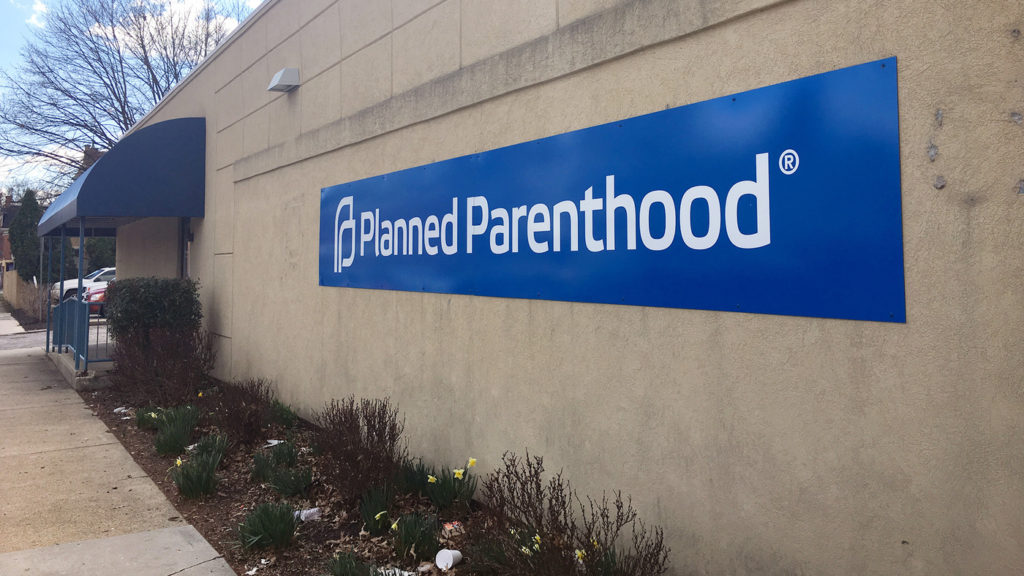
Congress was recently informed by Department of Justice officials of their intention to follow up on calls to investigate the appalling practice of abortion providers harvesting and trafficking fetal organs for profit. It’s about time. As you may remember, in July of 2015, senior Planned Parenthood officials were caught on camera discussing how abortion procedures could be systematically altered in order to preserve certain organs so they could be sold to researchers. One described in disturbing terms how a person performing an abortion could “crush” here and “crush” there, being careful to preserve certain body parts because they are valuable on the research market. Another discussed developing a kind of menu for organs and how lucrative these arrangements could be. It was sick, callous, and completely inhuman. It also happens to be against the law. The purchase and sale of human fetal tissue is prohibited by federal law, as is altering the timing or method of an abortion to gain material for research. Planned Parenthood has claimed that its abortion clinics only collect “tissue” legally for research purposes and that any payments are simply cost reimbursements. However, the menu and price scheme discussed on camera strongly suggest a competitive market at play, and it was clear that officials were willing to alter abortion procedures in order to preserve certain in-demand organs. Planned Parenthood also later reversed its policy and stopped clinics from accepting payments for tissue – a change that seems unnecessary if they weren’t doing anything wrong. Several of my colleagues and I immediately called for an investigation into these disturbing revelations. Unfortunately, our demands fell on deaf ears. Even after multiple congressional committees referred their own investigations to the authorities at the Department of Justice, then-Attorney General Loretta Lynch declined to pursue an investigation. At the time, I said it was disappointing, but hardly surprising. It’s no secret that Planned Parenthood throws around considerable political weight in Washington. In this country, no one is above the law. That’s why I was so very pleased to receive word that the Department of Justice, now under the leadership of Attorney General Jeff Sessions, appears to be following up on the evidence and taking our calls for an investigation seriously. In a letter to the Senate Judiciary Committee, Assistant Attorney General Stephen Boyd, who I’m proud to say was formerly my Chief of Staff, requested un-redacted documents from the Committee’s investigation into the suspected harvesting and trafficking of fetal tissue. Assistant Attorney General Boyd said for now the documents are being used for investigative purposes only, and a formal resolution may be required for further proceedings, such as a grand jury. I appreciate the Department’s attention to this matter, and I can say for certain that I won’t be the only one watching this closely. When the terrible videos first surfaced in 2015, I went directly to the House floor and spoke out to raise awareness about this outrageous activity. Someone later told me that I was the first person to speak on the floor about the scandal. Let me be clear: If I have to, I will be the last. I said then, “I promise… we are not done talking about this.” I am pleased that with the new leadership at the Department of Justice, that has proven to be true. I’ll keep you informed as we learn more about this investigation. ••• Martha Roby represents Alabama’s Second Congressional District. She lives in Montgomery, Alabama with her husband Riley and their two children.
Federal court clears way for immigrant teen to get abortion
A U.S. appeals court has cleared the way for a 17-year-old immigrant held in federal custody to obtain an abortion. The ruling Tuesday by the full U.S. Court of Appeals for the District of Columbia Circuit overruled a decision by a three-judge panel of the court that at least temporarily blocked the teen from having the procedure. The panel ruled Friday that the government should get more time to try to release the teen, who is being held in a Texas facility, so she could obtain the abortion outside government custody. The panel ruled 2-1 that the government should have until Oct. 31 to release the girl into the custody of a so-called sponsor, such as an adult relative in the U.S. The teen could then obtain the procedure. Republished with permission from the Associated Press.
Alabama Court of Civil Appeals says judge wrongly blocked minor’s abortion

The Alabama Court of Civil Appeals on Thursday overruled a lower court judge who refused to give a minor permission for an abortion despite finding she was “sufficiently mature” enough to make the decision. Alabama law requires unemancipated minors must have the permission of her parent or guardian to have an abortion. In this case, the minor petitioned a juvenile court for a judgment waiving the requirement of parental consent to allow her to have an abortion. The juvenile court conducted a hearing and on August 16, 2017, the court entered a judgment denying the minor’s petition. She appealed. The appellate court said the judge misapplied the law and thus reversed the decision. “The juvenile court’s judgment is reversed, and this court hereby renders a judgment granting a statutory waiver of parental consent,” read the opinion of the Court of Civil Appeals.
AG candidate Sam McLure outs Montgomery abortion doc, suggests she be tried for murder
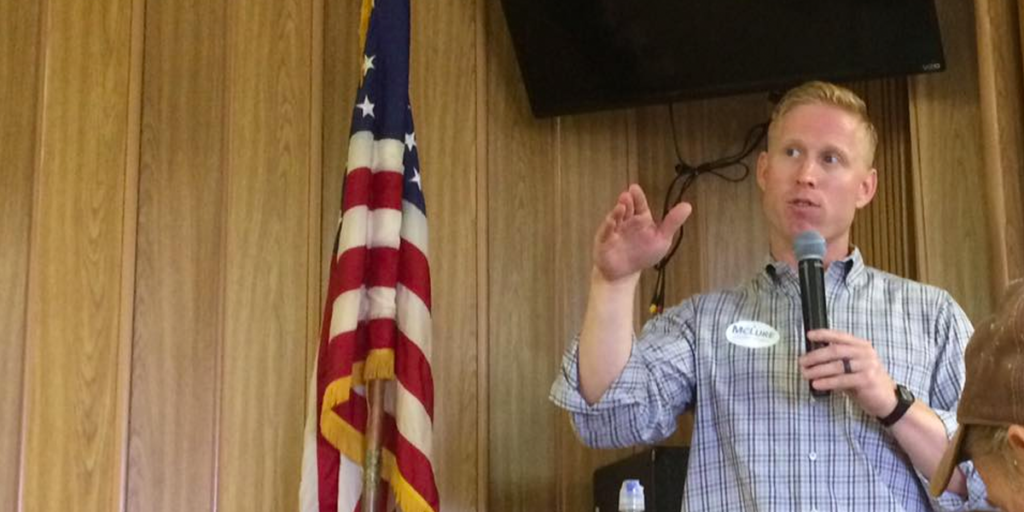
Sam McLure, a Birmingham lawyer who’s running for Alabama Attorney General is making a name for himself on Facebook with a controversial weekend post. On Saturday, McLure took to the social media platform to call out an abortion doctor in Montgomery, Ala. “This woman killed babies on Friday in Montgomery. Can anyone publicly defend why she should not be prosecuted for murder?” he posted on his campaign Facebook page linking to the pro-life website, AbortionDocs.org. The site, provides the doctor’s Sacheen Nathan, personal information. Complete with address, photo and other personal info. The site’s mission statement says it aims “to provide, comprehensive, up-to-date information about the abortion cartel and its abuses so that the whole truth about the horrific nature of their grisly business can be exposed and stopped through peaceful, legal means.” According to comments on McLure’s page, many think he crossed the line in the post where he essentially doxed — publishing private or identifying information about (a particular individual) on the Internet, typically with malicious intent.the doctor — Nathan. “This is how people get killed,” commented Dylan Haynes of Birmingham, Ala. “Abortion is legal. I don’t think you should run for attorney general if you don’t understand that,” added Jacksonville, Ala.’s Jennifer Albright Kiker. Despite it’s legality in the Yellowhammer State, McLure is no stranger to standing up against the abortion industry. The conservative adoption lawyer suggested the state form a militia in support standing up to federal of ending abortion “The Second Amendment provides ‘for a well regulated militia.’ Where is Alabama’s militia? The armed people of Alabama are the militia and they would prevent a Federal officer from moving against a Pro-Life Alabama Governor who ended abortion in the State. You must be willing to die for your political beliefs and to protect your neighbor’s lives,” McLure said to the Alabama Constitution Party at their summer meeting in Prattville’s Islamorada Fish Company Restaurant at Bass Pro Shop, Alabama Political Reporter reported last week. McLure is seeking the GOP nomination for Attorney General against incumbent AG Steve Marshall who’s running for a first full term following his appointment by former Gov. Robert Bentley in February 2017 he appointed Luther Strange to the U.S. Senate. He’s also running against former U.S. Attorney Alice Martin, and Chess Bedsole, a criminal court judge who served as President Donald Trump’s Alabama campaign Chairman Attorney. According to Alabama Votes, the state of Alabama’s official election center, McLure has $1,593 cash on hand as of Sept. 3 for this campaign.
Pre-abortion sonogram bill delayed in Alabama Senate
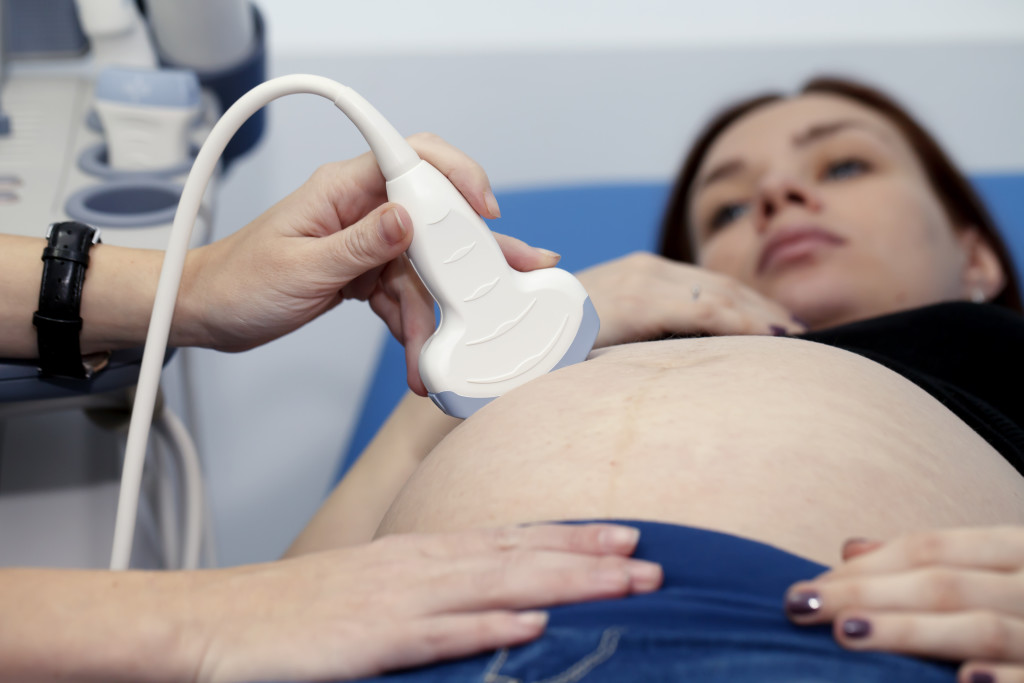
A controversial piece of legislation was delayed in the Alabama Senate Health Committee on Wednesday SB 272, the Ultrasound Access Act, was scheduled for a public hearing, and has yet to be rescheduled. The measure would require a woman seeking an abortion to get a sonogram two days before the scheduled procedure and listen to a detailed, verbal description of the development of the fetus including an “audible heartbeat if present.” Additionally, a woman could receive a free sonogram image upon request. Sponsored by Tuscaloosa-Republican Rep. Gerald Allen, the bill also requires doctors to say how much they are paid for the abortion procedure. Calling it a “Conflict of Interest Disclaimer” the legislation endeavors to let the mother knows how much money the doctor will lose if the she chooses to opt out of the abortion. A federal appeals court blocked a similar law in North Carolina in 2014, and just law week a similar bill in Indiana was blocked by a federal judge on the grounds that it creates a “clearly undue” burden on women.
