
Following the money: Who may be affected by Publix stopping political donations?
Despite supporters standing by them with a “#SupportPublix” movement. Publix supermarkets announced that they are suspending political contributions in response to a “die in” protest led by some Parkland school shooting survivors. Who might this affect in Alabama? According to Alabama’s Secretary of State’s contribution records Publix has given a total of $77,420 in political contributions since 2013. That is significantly lower than their massive $2,000,000 plus in contributions this cycle alone in the state of Florida where their headquarters are based. Of their money most went to the Alabama Retailers PAC which received $35,920. The Alabama Grocers Association which received $21,500, Alabama 2014 PAC (A conservative PAC run by Bob Reily) got $10,000 and COMP PAC (A workers compensation PAC) received $10,000. Who is Alabama Retail PAC endorsing this cycle? They just released their full list. For the state’s constitutional offices, RetailPAC endorses: Governor Kay Ivey* Lieutenant Governor: Twinkle Cavanaugh Attorney General Steve Marshall* Secretary of State John Merrill* State Treasurer: John McMillan For the Grocers Association? Their full list is on their website. For constitutional offices candidates endorsed by SACKPAC are: Governor – Kay Ivey (R) Lieutenant Governor – Twinkle Andress Cavanaugh (R) Attorney General – Steve Marshall (R) Secretary of State – John Merrill (R) Treasurer – John McMillan (R) Commissioner, Alabama Department of Agriculture & Industries – Rick Pate (R) We will continue following the Publix contributions story and will be updating the site with additional news as it breaks.
Publix supermarket suspends political giving amid anti-NRA protest

Survivors of the Parkland school shooting lay down in “die ins” at two Publix supermarkets Friday to protest the chain’s support for a gubernatorial candidate aligned with the National Rifle Association, as the company announced a suspension of political contributions. The students from Marjory Stoneman Douglas High School shouted “USA, not NRA!” and caused brief delays at the checkout as customers navigated carts around them on the floor. Pro-NRA counter-protesters also showed up at one store, and two men almost came to blows before police intervened. “A lot of people don’t support who Publix is supporting,” said Haylee Shepherd, a 15-year-old sophomore at Stoneman Douglas, who joined 13 fellow protesters on the floor for about 10 minutes at one of the stores. “It’s going to reflect on them as a brand and people shopping there.” Publix has been criticized by the students for supporting Agriculture Commissioner and gubernatorial candidate Adam Putnam, a Republican who has called himself a “proud NRA sellout.” The activists have called for a boycott of the supermarket. Publix announced earlier this week that it would “reevaluate” its donations amid the outcry. In another statement Friday, company spokeswoman Maria Brous said the chain would halt its contributions for now as it continues that reevaluation. Senior David Hogg, one of the most vocal student activists for gun reform and one of the founders of March for Our Lives, helped organize the protest. It came a week after 10 were killed at a high school in Santa Fe, Texas, and the same day that authorities said an Indiana middle school student opened fire inside his science classroom, wounding a classmate and a teacher. At one point, a counter protester, Bill Caracofe, stuck his middle finger an inch from Hogg’s face outside the grocery store just a few miles from the school where 17 of Hogg’s classmates and teachers were gunned down. “There are millions and millions of people who don’t worship everything that comes out of his mouth,” said Caracofe, who joined about a dozen NRA supporters who counter-protested inside the store. He said the students’ anger toward Publix should be directed at the sheriff’s office and school district for failing to protect them. Hogg said such reactions are common, saying the media has falsely portrayed him as someone who wants to seize guns. He said he supports the Second Amendment but wants tighter regulations, universal background checks and training for people who own AR-15s and similar semi-automatic rifles. Publix has been a strong Putnam supporter. Campaign finance records show that Publix, its top executives and board members, and their family members have donated more than $750,000 altogether to Putnam or his political committee. A former top Publix executive who is related to the chairman of Putnam’s committee has donated an additional $65,000. The suspension announced Friday applies only to money from the company, which has given $413,000 to Putnam over about three years. The supermarket chain is one of a long line of Florida corporations that has helped bankroll Putnam’s candidacy. Over the last three years Putnam has also gotten substantial financial help from Walt Disney Co., Florida Power & Light and U.S. Sugar. Disney has given more than $800,000 to Putnam’s political committee, including a $50,000 check it gave him earlier this month. Publix said it supports candidates focused on building the economy. “We regret that some of our political contributions have led to an unintentional customer divide instead of our desire to support a growing economy in Florida,” the company said in a statement. Republished with permission from the Associated Press.
Standing with Publix and the Second Amendment tomorrow and in the future
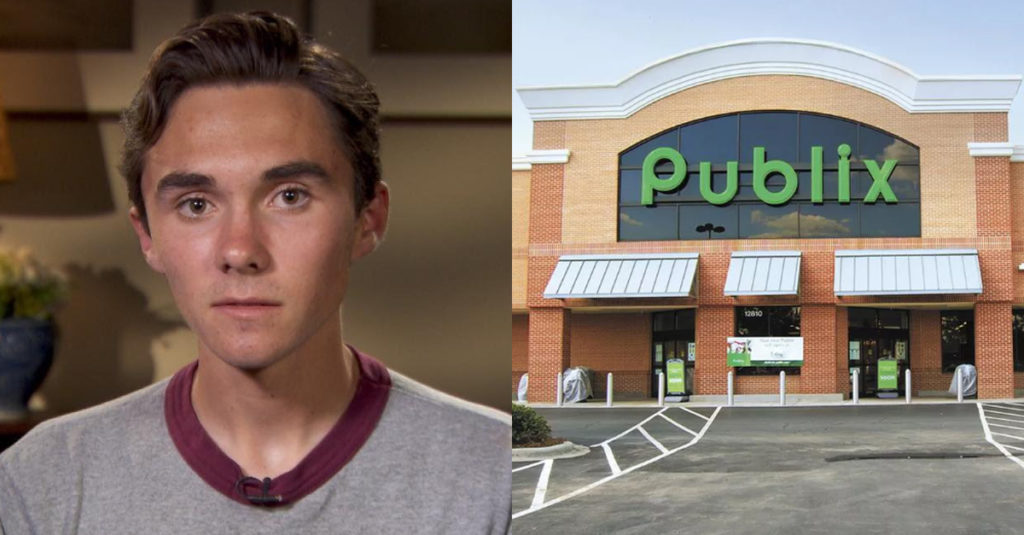
Parkland survivor David Hogg — currently one of the nation’s most outspoken, anti-gun advocates — is making headlines yet again. He’s unsuccessfully called for boycotts of Fox News host Laura Ingram and then BlackRock and Vanguard but why let those failures keep him down if at first and second times you don’t succeed Hogg clearly believe you should try again. This time he’s calling for the boycott and a “die in” of Publix supermarkets tomorrow (Friday, May 25, 2018), because the central-Florida based grocer supported Rep. Adam Putnam, an NRA-endorsed candidate, in the state’s gubernatorial election. His tweet says he’s going to be crashing his local stores but invites others to join at other locations. Meaning even here in Alabama we may see an activists or two (however unlikely) in our stores. .@Publix is a #NRASellOut In Parkland we will have a die in the Friday (the 25th) before memorial day weekend. Starting at 4pm for 12 min inside our 2 Publix stores. Just go an lie down starting at 4. Feel free to die in with us at as many other @Publix as possible. — David Hogg (@davidhogg111) May 23, 2018 While I wholeheartedly disagree with both Hogg’s message and his tactics (hello, encouraging people to go lay down in grocery stores is absurd) I do applaud the fact that he’s engaged. I’ve said it before that my support of constitutional rights, in this case the First Amendment doesn’t just apply to those I agree with. I’m all for protecting the rights of those I disagree with if only the other side felt the same. That said, Hogg’s right to assembly, in this case, is up to Publix what happens once they’re there. I for one and hoping they don’t idly stand by while people make a scene in their stores and disrupt the lives of those simply going about their daily business trying to feed themselves and their families. Even the leftist (or are they progressive?) organization, ACLU will tell you that when protesting on private property the property owners have the right to tell you to leave. I see this as a as call to arms (figuratively speaking of course – Disclaimerfor those who would say I’m encouraging otherwise) to those of us who support Second Amendment rights and Publix’s right to support the candidates of their choice, to show up at our local Publix tomorrow and spend our money in opposition to the sideshow that Hogg is trying to create. What Hogg (or more accurately the gun control lobby and agenda pushers whispering in his ear) is focusing on is Publix’s political donations. What he misses is how much Publix does for the communities around its stores. Not just in Florida where they are based, but in every state, including Alabama where they have locations. I’ve researched Publix and its charitable giving. The company gives a TON of money to the Yellowhammer State and to entities that support our local communities. Here are just a few highlights of their Alabama-based charitable giving in just the last year: $500,000 in Alabama to help alleviate hunger as part of a wider, $5 million donation Four Alabama Habitat for Humanity affiliates supported to build houses and foster hope as part of a $5 million donation $569,100 to the Central United Way of Alabama Join me tomorrow in shopping at one of Publix’s 68 Alabama stores in a public show of support to thank them for all that they do in our neighborhoods. We cannot let our voices be drowned out by the voices who fail to to offer true and real solutions to the tragic shootings happening in our schools, but instead are painting good companies like Publix as bad guys.
Stephen Stetson: ‘Ban the box’ to enhance the chance for Alabama workers, employers to succeed
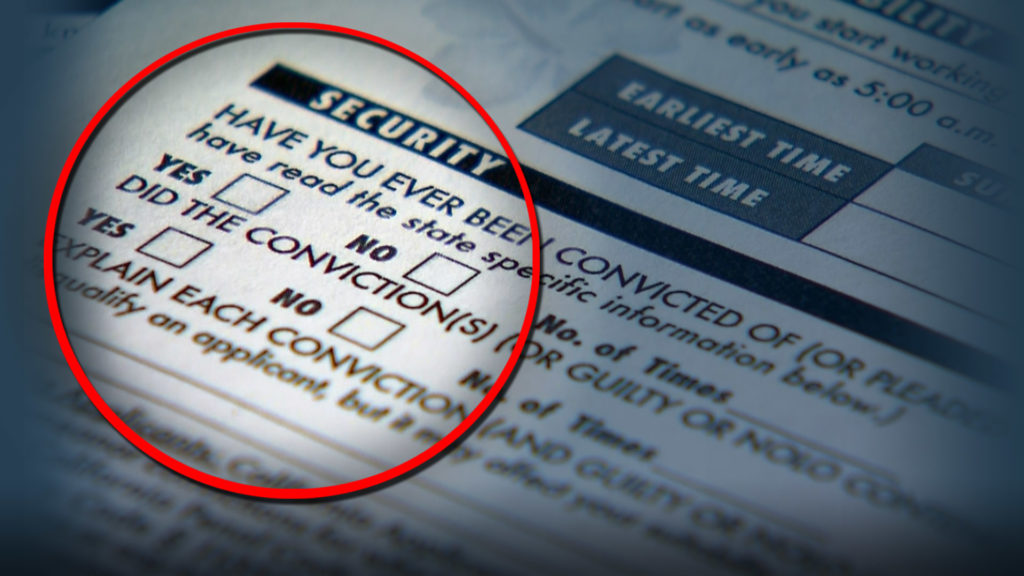
It’s rare to have a political revelation in the bread aisle. But two recent trips to the grocery store gave me a sense of a needed change in Alabama’s criminal justice system. Both Winn-Dixie and Publix carry Dave’s Killer Bread, which comes in bags with a logo of a guy with a mustache and a mullet holding an electric guitar. But the most interesting thing about this bread isn’t the branding — it’s the story behind it. Dave’s Killer Bread makes a conscious effort to employ people with criminal convictions. One in three of its employees has a criminal background. “We believe that everyone is capable of greatness, and we have seen firsthand the powerful transformation that is possible when someone is given a second chance,” the company’s website says. “Our goal is to serve as an example to other employers that hiring people with criminal backgrounds can strengthen not only their workforce and company culture, but their local communities as well.” This is powerful stuff — not to mention that I ended up buying a loaf and making some of the best toast I’ve ever had. It was a timely reminder that Alabama lawmakers are examining the state’s rules about job application processes in response to a nationwide nonpartisan movement to “ban the box” — that is, to remove the criminal history checkbox on job applications. Alabama would do well to move in this direction. Some of our neighbors already have this policy. Georgia Gov. Nathan Deal signed an executive order last year removing the criminal history question from applications for state jobs. Louisiana and Tennessee followed suit this year. In all, 24 states have some form of “ban the box” policy. Nine of them forbid private-sector employers from making the inquiry at the initial job application stage as well. Let’s be clear: These policies don’t mean employers can’t ask about applicants’ histories. It just means they get to build a first impression based on qualifications in the person’s resume. Study after study shows you get better candidates when you let them explain in person any previous mistakes they may have made. The “ban the box” movement isn’t just the product of criminal justice reform groups. It also has the support of some of our country’s largest employers, including Home Depot, Target, and Wal-Mart. All of them realize we’re better off when we don’t screen people out of the hiring process with a single question on an application. Nobody benefits from permanently locking people out of meaningful employment. Once people have served their time and paid their debt to society, they ought to be able to rejoin the economy and contribute in a meaningful way. When their job applications are rejected out of hand due to a previous run-in with the law, people can become alienated, frustrated, and hopeless. This same logic also applies to another change Alabama lawmakers need to make: updating the law to allow more people to regain voting rights. Certain crimes permanently disqualify people from voting, but amazingly, Alabama has no clear list of which offenses actually count as these “crimes of moral turpitude.” The Legislature should end that uncertainty in 2017. People with criminal convictions can, and must, re-enter society after fulfilling the terms of their punishments. They should be allowed to work and vote and make meaningful contributions to society. Some simple changes to our laws can help reduce recidivism and smooth the extremely difficult path facing people seeking to start a new life after prison. Getting re-entry policies right isn’t always easy. But “ban the box” and voting rights restoration are two policy changes that would make Alabama safer and more prosperous. Companies benefit when they hire from the fullest range of people in the applicant pool, and we all benefit when people are more invested in their community’s future. That’s why the legal barriers to re-entry in Alabama should become toast — and not the delicious kind. ••• Stephen Stetson is a policy analyst for Arise Citizens’ Policy Project, a nonprofit, nonpartisan coalition of congregations, organizations and individuals promoting public policies to improve the lives of low-income Alabamians. Email: stephen@alarise.org.
Business group: Birmingham got $1.1 billion in capital investment in 2015
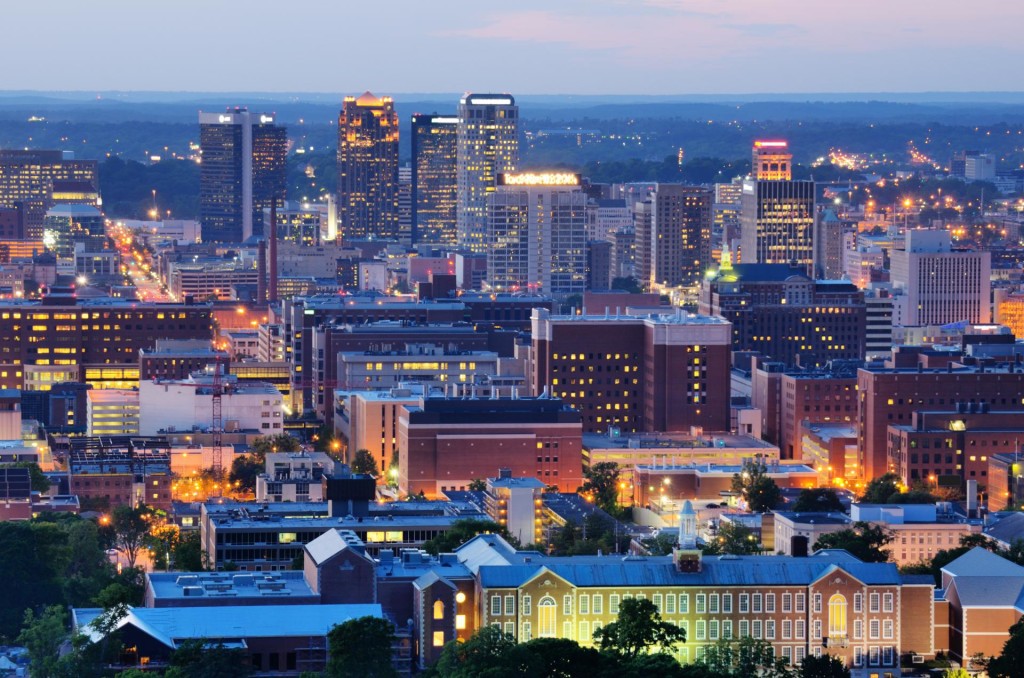
It has become conventional wisdom to take note of Birmingham’s economic resurgence of late. The ongoing construction, growing payrolls, and general sense that there’s more to do all seem to testify, providing their own wordless evidence. The Birmingham Business Alliance added a more concrete contribution to the chorus on Monday, announcing the findings of a new report saying the Magic City has taken nearly $1.1 billion in new capital investment in 2015. According the report, Birmingham added 3,509 current or announced jobs to boot. The BBA, a consortium of Birmingham industry interests, also trumpeted several new developments related to business and job growth, such as a new $34 million Publix distribution center that will add 200 jobs; a $45 million renovation of the Empire Building which will yield a new Empire Hotel; a new $100 million Yorozu Corp. metal stamping facility in Jasper set to create 300 jobs; and a $530 million, 354-job commitment from auto supplier Kamtek to grow their operations in Birmingham. Ninety companies announced jobs overall, according to the report. The BBA will release its full report at the 2016 Economic Growth Summit at the Harbert Center in downtown Birmingham on May 12. “This was a milestone year in terms of economic development and investment in the continued growth of our region,” said the group’s 2016 chairman, University of Alabama at Birmingham President Ray Watts in a prepared statement.
