
Starbucks chairman questions country’s ‘moral fiber’
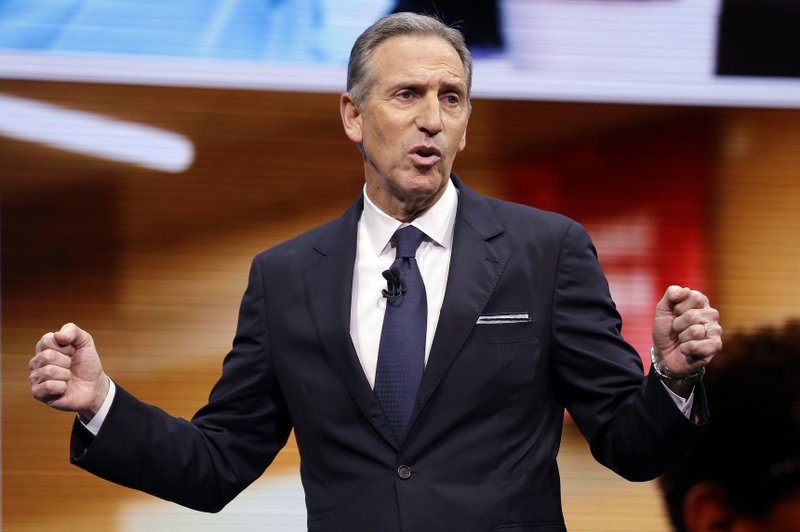
Starbucks chairman Howard Schultz says the events surrounding a white nationalist rally in Charlottesville, Virginia, last weekend have put the “moral fiber” of the country in question. Schultz said at an employee forum in Seattle on Tuesday that he has “profound concern about the lack of character, morality, humanity,” displayed at the rally, according to a recap of the meeting posted on Starbucks’ website. “The moral fiber, the values, and what we as a country have stood for is literally hanging in the abyss,” Schultz told employees. “We are at a critical juncture in American history. That is not an exaggeration. We are at and facing a crucible in which our daily life is being challenged and being questioned about what is right and what is wrong.” A throng of hundreds, mostly white men and many carrying guns, converged on the college town Saturday yelling anti-Semitic and racist slurs and carrying Confederate flags and neo-Nazi and KKK signs. A street fight broke out between them and counter-protesters, and a woman was killed and others injured when a man drove a car into people marching against the rally. After the violence, President Donald Trump was blasted for putting the blame on both sides and saying both sides included “very fine people.” Schultz was not a member of either of Trump’s two panels of business leaders that dissolved Wednesday after several CEOs stepped down in protest of Trump’s comments. And he told his employees Tuesday he’d let the actions and words of the president speak for themselves. “What we witnessed this past weekend … is against every sense of what is right,” he said. “My fear is not only that this behavior is being given permission and license, but its conduct is being normalized to the point where people are no longer hiding their face.” Telling employees he was speaking to them “as an American, as a Jew, as a parent, as a grandparent,” Schultz said it’s hard to remain optimistic about the country’s future “in the midst of such a storm,” but he still is. Starbucks and Schultz have been outspoken on social issues. Republish with permission of The Associated Press.
SPLC names 917 “hate groups” across country, 27 in Alabama
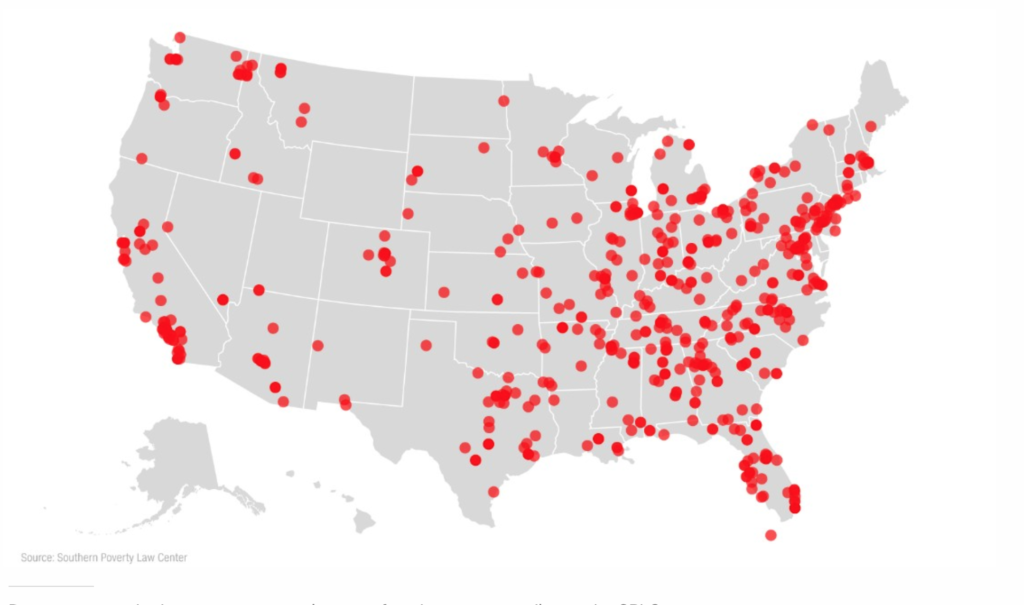
At least 27 “hate groups” are operating in Alabama, according to Birmingham’s Southern Poverty Law Center (SPLC), a non-profit that claims it is “dedicated to fighting hate and bigotry and to seeking justice for the most vulnerable members of our society.” The center has various categories for the 27 groups, which are part of 917 designated groups nationwide, like Neo-Nazis, White Nationalists, Racist Skinheads, Anti-Immigrant, Anti-LGBT and Black Separatists among other categories. The list is compiled as part of the Hatewatch project and designates a hate group as an organization with “beliefs or practices that attack or malign an entire class of people, typically for their immutable characteristics.” “Over the course of a year, we have a team of investigators that scours the internet for racist publications and real world activities to find out which groups exist, which groups are still active and which groups come along,” said Ryan Lenz, a senior investigative reporter for the SPLC’s Hatewatch project. But not everyone agrees with the SPLC’s “hate” classification of the 917 groups. Some critics of the SPLC say the group’s activism biases how it categorizes certain groups. Many mainstream conservative groups, such as the Family Research Council, the Pacific Justice Institute and the Alliance Defending Freedom were put on the SPLC list. “Why is the Southern Poverty Law Center doing this? It’s simple. They want to vilify and isolate anyone that doesn’t agree with their very extremist leftist policy and ideology,” Brad Dacus president of the Pacific Justice Institute, which specializes in religious-liberty cases, told CNN. “This isn’t about defending civil rights; this is about attacking civil rights.” Data for the “Hate Map” list was compiled using hate group publications and websites, citizen and law-enforcement reports, sources from the field and news reports, the SPLC says.
Colleges brace for more violence amid rash of hate on campus
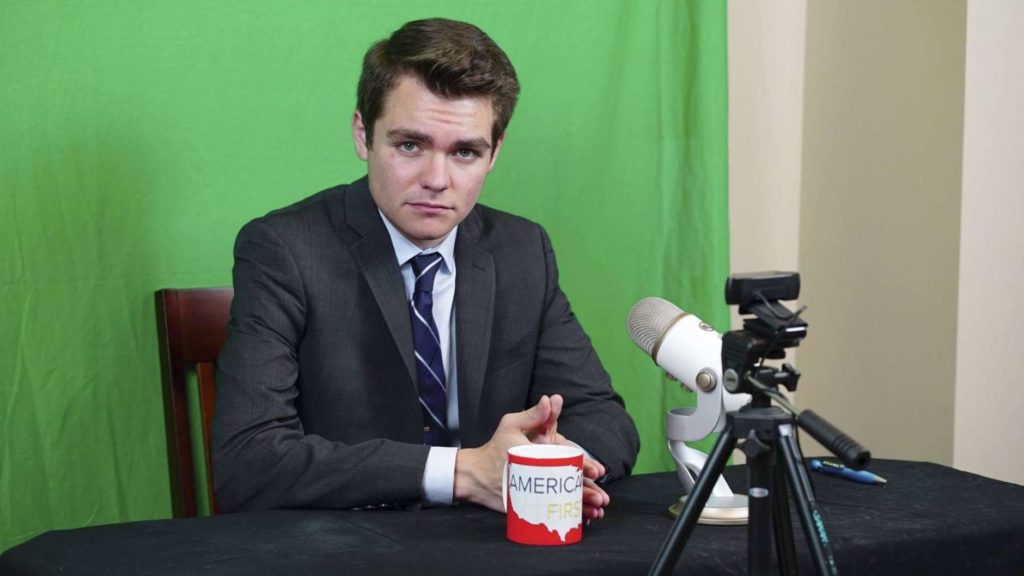
Nicholas Fuentes is dropping out of Boston University and heading south, pressing ahead with his right-wing politics despite receiving online death threats. The 19-year-old joined a white nationalist rally in Charlottesville, Virginia, last weekend and posted a defiant Facebook message promising that a “tidal wave of white identity is coming,” less than an hour after a car plowed into a crowd of counter-protesters. Now, he’s hoping to transfer to Auburn University in Alabama. “I’m ready to return to my base, return to my roots, to rally the troops and see what I can do down there,” Fuentes said in an interview this week. At college campuses, far-right extremist groups have found fertile ground to spread their messages and attract new followers. And for many schools, the rally in Virginia served as a warning that these groups will no longer limit their efforts to social media or to flyers furtively posted around campus. “It seems like what might have been a little in the shadows has come into full sun, and now it’s out there and exposed for everyone to see,” said Sue Riseling, a former police chief at the University of Wisconsin-Madison who is executive director of the International Association of Campus Law Enforcement Administrators. The violence in Charlottesville introduced many Americans to a new brand of hate, bred on internet message boards and migrating to the streets with increasing frequency. On the eve of Saturday’s rally, young white men wearing khakis and white polo shirts marched through the University of Virginia’s campus, holding torches as they chanted racist and anti-Semitic slogans. The next morning, many donned helmets and shields and clashed with counter-protesters before a car drove into the crowd, killing a 32-year-old woman and injuring 19 others. On Monday, Texas A&M University canceled plans for a “White Lives Matter” rally in September. On Wednesday, the University of Florida denied a request for white nationalist Richard Spencer to rent space on campus for a September event. Spencer and his supporters are promising court challenges. Expecting more rallies to come, Riseling’s group is planning a series of training events to help campus police prepare. “If you’re sitting on a campus where this hasn’t happened, consider this your wake-up call that it might,” she said. Last school year, racist flyers popped up on college campuses at a rate that experts called unprecedented. The Anti-Defamation League counted 161 white supremacist “flyering incidents” on 110 college campuses between September and June. Oren Segal, director of the group’s Center on Extremism, said the culprits can’t be dismissed as harmless trolls. “You might have a few that don’t take it seriously. But those that do, those are the ones we’re concerned about,” Segal said. Matthew Heimbach, the 26-year-old leader of the white nationalist Traditionalist Worker Party, admits that dropping leaflets on campuses is a cheap way to generate media coverage. “A dollar worth of paper, if it triggers the right person, can become $100,000 in media attention,” he said. As a student at Towson University in Maryland, Heimbach made headlines for forming a “White Student Union” and scrawling messages like “white pride” in chalk on campus sidewalks. His college years are behind him, but Heimbach still views colleges as promising venues to expand his group’s ranks. College students are running four of his group’s chapters, he said. “The entire dynamic has changed,” Heimbach said. “I used to be the youngest person at white nationalist meetings by 20 or 30 years.” The Foundation for the Marketplace of Ideas, a self-described “alt-right” nonprofit educational group, says it’s offering legal assistance to students caught hanging up posters or flyers containing “hate facts.” The “alt-right” is a fringe movement loosely mixing white nationalism, anti-Semitism and anti-immigration populism. One of the foundation’s attorneys, Jason Van Dyke, said he represented a student at Southern Methodist University who was accused last year of posting flyers on campus that said, “Why White Women Shouldn’t Date Black Men.” The student wasn’t suspended or expelled, Van Dyke added. “Just because speech makes someone uncomfortable or offends somebody does not make it a violation of the student code of conduct,” he said. Scores of schools publicly denounced the violence in Virginia this week, including some that learned they enroll students who attended the “Unite the Right” rally. The University of Nevada, Reno, said it stands against bigotry and racism but concluded there’s “no constitutional or legal reason” to expel Peter Cvjetanovic, a 20-year-old student and school employee who attended the rally, as an online petition demanded. Other schools, including Washington State University, condemned the rally but didn’t specifically address their students who attended it. Campus leaders say they walk a fine line when trying to combat messages from hate groups. Many strive to protect speech even if it’s offensive but also recognize hate speech can make students feel unsafe. Some schools have sought to counter extremist messages with town halls and events promoting diversity. Others try to avoid drawing attention to hate speech. After flyers promoting white supremacy were posted at Purdue University last school year, Purdue President Mitch Daniels refused to dwell on the incident. “This is a transparent effort to bait people into overreacting, thereby giving a minuscule fringe group attention it does not deserve, and that we decline to do,” Daniels said in a statement at the time. Cameron Padgett, a 23-year-old senior at Georgia State University, only dabbled in campus activism before he decided to organize a speaking engagement for Spencer this year. Padgett sued – successfully – for Spencer to speak at Auburn University in April after the school tried to cancel the event. “My motivation from the beginning was just free speech,” he said. Padgett calls himself an “identitarian” – not a white nationalist – and insists “advocating for the interests of white people” doesn’t make him a racist. Padgett said he hasn’t faced harassment for working with Spencer and doesn’t fear any. “There are a lot of people who just sit behind keyboards,” he said. “But what are
Christian Cámara: No, white supremacists at Charlottesville were not ‘good people
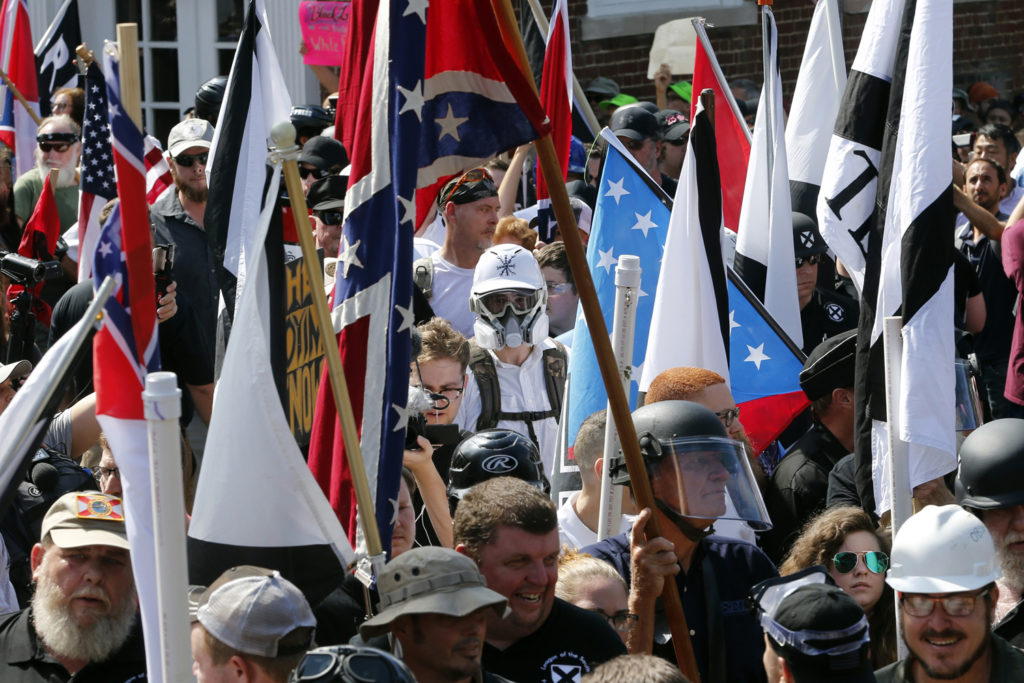
There is much emotion on both sides of the current debate over race relations, even among people of good will. There are contentious questions to address, such as: should we remove Confederate statues? Should we allow racists to protest in public spaces? Are our elected leaders to blame for escalating tensions? Is one side more at fault for recent violence? I think these are all fair questions that good people might disagree on without necessarily making them “Fake News-Loving Commies” or “Nazi-Sympathizing Racists.” Thankfully, those two groups represent a tiny fraction of the population, but they unfortunately generate most of the coverage. Although I agree with much of the president’s response to Charlottesville, I fundamentally disagree with him on at least one statement: that there were good people on both sides. I believe there are many decent, non-racists who oppose the removal of Confederate monuments, and some might have very well attended to protest the removal of the Lee statue. However, it is hard to believe that any good person would have stuck around more than five minutes after noticing that an innocent event to protest the removal of a statue was actually a grotesque gathering of Nazi sympathizers, white supremacists and other malcontents. Therefore, I would take issue with the president’s assertion that there were “good people on both sides” that day. Good people on both sides of the issue? Yes. Present that day? No. I do, however, agree with him that elements inside the counter protest indeed included bad people looking to cause trouble: Antifa and other communist groups that likely instigated violence. Of course, the diabolical terrorist act of plowing a car into a crowd falls squarely on the driver and whoever else might have helped him. So as we look to address this escalating racial tension, decent Americans on all sides of this issue should agree to uphold certain principles. First, we must reject any assault on free speech. As detestable as these racist groups are, they have a constitutionally protected right to express their views—and yes, even their hate—so long as their actions don’t trample on other people’s rights through violence or other means. If they choose to live life hating others and expressing their hate, their right to do so trumps our sensibilities and our justified reaction to be offended by them. Indeed, I may not agree with one iota of what they’re saying, but I’ll defend their right to say and think it. However, with rights come responsibilities, and with responsibilities come consequences. They must also understand that, although we support their right to think and speak what they think, we regular Americans can and will exercise our right to condemn them for their vile views. That may include exposing and ostracizing them, though I do caution that we should be careful not to misidentify the innocent. But those who are accurately identified may be subject to public ridicule and contempt, and the repercussions thereof. Secondly, our elected officials, including President Donald Trump, need to exercise some moral clarity. There is no moral equivalence between a bunch of racist, Nazi-sympathizing white nationalists and those who protest them. Indeed, there were violent troublemakers within the counter protesters’ ranks. But to equate the entire diverse group of counter protesters to the overwhelmingly racist other side is just plain wrong. Likewise, Democrats and others on the left need to come down as hard on the violent communists as they do on the violent racists. In short, all sides need to come down hard on violence. No more sugar-coating or excusing why one side can be violent and the other side shouldn’t be. Finally, we all must adhere to the rule of law. Emotions cannot compel us to break the law. As much as some detest the existence of Confederate monuments and what they represent, we law-abiding Americans cannot and should not endorse or tolerate an angry mob destroying or vandalizing any property, much less physically assaulting people. Neither a constitutional republic nor its civil society can survive if the rule of law is replaced with mob rule. Debates can be had about what to do with Confederate memorials, and legislative bodies may elect to keep, remove or relocate them through normal deliberative processes. But to support or encourage angry mobs to enter and destroy property undermines the most basic tenets of a representative democracy governed by laws—not to mention that it would likely instigate the opposing side to retaliate unlawfully, thus escalating violence on all sides. As much as I utterly loathe racism, racists have a right to be racist, albeit peacefully and in such a way as it does not trample on other people’s rights. If we use the power of government—or worse, mob rule—to silence or crush undesirable thoughts, then we ourselves risk becoming just a different brand of fascists, but fascists nonetheless. ••• Christian R. Cámara is R Street’s Southeast region director and a senior fellow and co-founder of the institute. He previously was Florida director of the Heartland Institute’s Center on Finance, Insurance and Real Estate.
Donald Trump says racism is ‘evil,’ condemns KKK and neo-Nazis as ‘thugs’
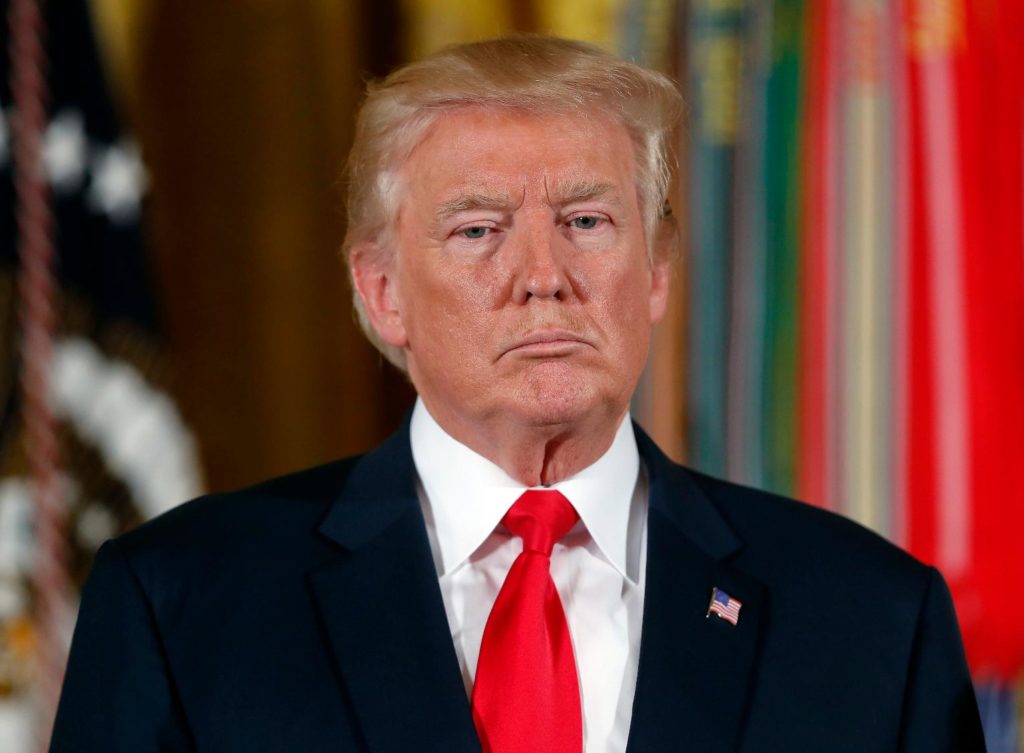
Under relentless pressure, President Donald Trump on Monday named and condemned “repugnant” hate groups and declared that “racism is evil” in a far more forceful statement than he’d made earlier after deadly, race-fueled weekend clashes in Charlottesville, Virginia. Trump’s initial failure on Saturday to denounce the groups by name – instead he bemoaned violence on “many sides” – prompted criticism from fellow Republicans as well as Democrats. This time, the president described members of the KKK, neo-Nazis and white supremacists who take part in violence as “criminals and thugs” in a prepared statement he read at the White House. “Racism is evil,” he said, singling out the hate groups as “repugnant to everything that we hold dear as Americans.” “Those who spread violence in the name of bigotry strike at the very core of America,” he said. In his remarks he also called for unity. “We must love each other, show affection for each other and unite together in condemnation of hatred, bigotry and violence. We must rediscover the bonds of love and loyalty that bring us together as Americans,” he said. Trump also, for the first time, mentioned Heather Heyer by name, as he paid tribute to the woman killed when a car plowed into a group of anti-racist counter-protesters in Charlottesville. The president left after his statement without acknowledging reporters’ shouted questions. At an event on trade later in the day, he was asked why it took two days for him to offer an explicit denunciation of the hate groups. “They have been condemned,” Trump responded before offering a fresh criticism of some media as “fake news.” Trump noted that the Justice Department has opened a civil rights investigation into the car crash that killed Heyer. “To anyone who acted criminally in this weekend’s racist violence, you will be held fully accountable. Justice will be delivered,” he said. His attorney general, Jeff Sessions, said earlier Monday that the violence “does meet the definition of domestic terrorism in our statute.” Sessions told ABC’s “Good Morning America,” ”You can be sure we will charge and advance the investigation toward the most serious charges that can be brought, because this is an unequivocally unacceptable and evil attack that cannot be accepted in America.” Trump gave his statement after meeting with Sessions and FBI Director Christopher Wray. In the hours after the incident on Saturday, Trump addressed the violence in broad strokes, saying that he condemns “in the strongest possible terms this egregious display of hatred, bigotry and violence on many sides, on many sides.” That was met with swift bipartisan criticism. Virginia Gov. Terry McAuliffe, a Democrat, said he spoke to Trump in the hours after the clashes and twice told the president “we have to stop this hateful speech, this rhetoric.” He said he urged Trump “to come out stronger” against the actions of white supremacists. Republicans joined Democrats in criticizing the president for not specifically calling out white nationalists. Sen. Cory Gardner of Colorado said Sunday on NBC, “This isn’t a time for innuendo or to allow room to be read between the lines. This is a time to lay blame.” The White House scrambled to stem the tide of criticism, dispatching aides to the Sunday talk shows and sending out a statement that more forcefully denounced the hate groups. But the White House did not attach a name to the statement. Usually, a statement would be signed by the press secretary or another staffer; not putting a name to one eliminates an individual’s responsibility and often undercuts the significance. White nationalists had assembled in Charlottesville to vent their frustration against the city’s plans to take down a statue of Confederal Gen. Robert E. Lee. Counter-protesters massed in opposition. Alt-right leader Richard Spencer and former Ku Klux Klan leader David Duke attended the demonstrations. Duke told reporters that the white nationalists were working to “fulfill the promises of Donald Trump.” Trump’s initial comments drew praise from the neo-Nazi website Daily Stormer, which wrote: “Trump comments were good. He didn’t attack us. He just said the nation should come together. Nothing specific against us. … No condemnation at all.” The website had been promoting the Charlottesville demonstration as part of its “Summer of Hate” edition. Trump, as a presidential candidate, frequently came under scrutiny for being slow to offer his condemnation of white supremacists. His strongest denunciations of the movement have not come voluntarily, only when asked, and he occasionally has trafficked in retweets of racist social media posts during his campaign. His chief strategist, Steve Bannon, once declared that his former news site, Breitbart, was “the platform for the alt-right.” Early Monday, the CEO of the nation’s third largest pharmaceutical company said he was resigning from the President’s American Manufacturing Council, citing “a responsibility to take a stand against intolerance and extremism.” Trump lashed back almost immediately at Merck CEO Kenneth Frazier on Twitter, saying Frazier “will have more time to LOWER RIPOFF DRUG PRICES!” Republished with permission of The Associated Press.
How Robert E. Lee went from hero to racist icon
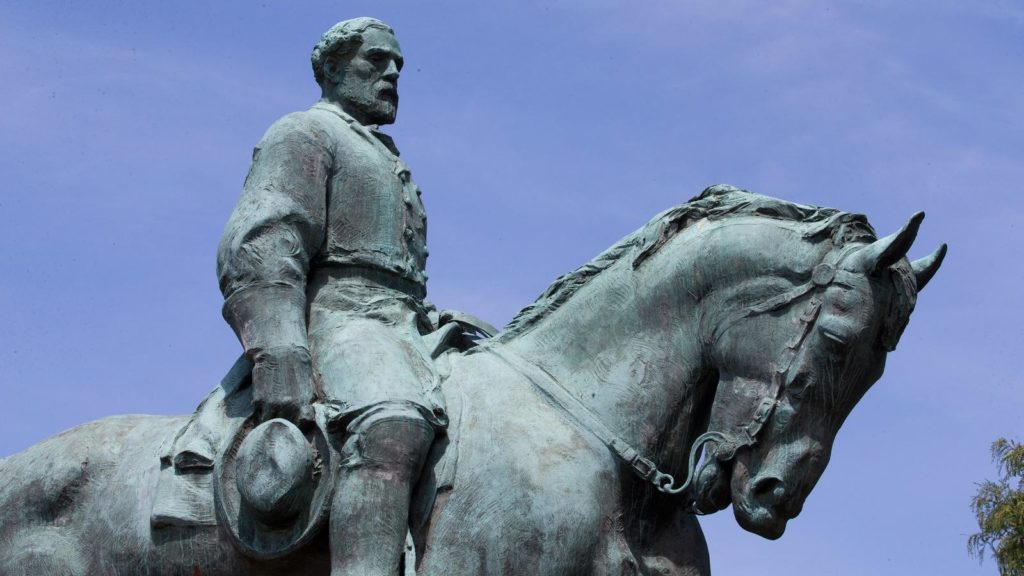
Confederate Army Gen. Robert E. Lee was vilified during the Civil War only to become a heroic symbol of the South’s “Lost Cause” — and eventually a racist icon. His transformation, at the center of the recent violence in Charlottesville, Virginia, reflects the changing moods in the United States around race, mythology and national reconciliation, historians say. Lee monuments, memorials and schools in his name erected at the turn of the 20th Century are now facing scrutiny amid a demographically changing nation. But who was Robert E. Lee beyond the myth? Why are there memorials in his honor in the first place? ___ THE SOLDIER A son of American Revolutionary War hero Henry “Light-Horse Harry” Lee, Robert E. Lee graduated second in his class at West Point and distinguished himself in various battles during the U.S.-Mexico War. As tensions heated around southern secession, Lee’s former mentor, Gen. Winfield Scott, offered him a post to lead the Union’s forces against the South. Lee declined, citing his reservations about fighting against his home state of Virginia. Lee accepted a leadership role in the Confederate forces although he had little experience leading troops. He struggled but eventually became a general in the Confederate Army, winning battles largely because of incompetent Union Gen. George McClellan. He would win other important battles against other Union’s generals, but he was often stalled. He was famously defeated at Gettysburg by Union Maj. Gen. George Meade. Historians say Lee’s massed infantry assault across a wide plain was a gross miscalculation in the era of the rifle. A few weeks after becoming the general in chief of the armies of the Confederate states, Lee surrendered to Union Gen. Ulysses S. Grant at Appomattox Court House in Virginia on April 9, 1865. ___ THE SLAVE OWNER A career army officer, Lee didn’t have much wealth, but he inherited a few slaves from his mother. Still, Lee married into one of the wealthiest slave-holding families in Virginia — the Custis family of Arlington and descendants of Martha Washington. When Lee’s father-in-law died, he took leave from the U.S. Army to run the struggling estate and met resistance from slaves expecting to be freed. Documents show Lee was a cruel figure with his slaves and encouraged his overseers to severely beat slaves captured after trying to escape. One slave said Lee was one of the meanest men she had ever met. In a 1856 letter, Lee wrote that slavery is “a moral & political evil.” But Lee also wrote in the same letter that God would be the one responsible for emancipation and blacks were better off in the U.S. than Africa. ___ THE LOST CAUSE ICON After the Civil War, Lee resisted efforts to build Confederate monuments in his honor and instead wanted the nation to move on from the Civil War. After his death, Southerners adopted “The Lost Cause” revisionist narrative about the Civil War and placed Lee as its central figure. The Last Cause argued the South knew it was fighting a losing war and decided to fight it anyway on principle. It also tried to argue that the war was not about slavery but high constitutional ideals. As The Lost Cause narrative grew in popularity, proponents pushed to memorialize Lee, ignoring his deficiencies as a general and his role as a slave owner. Lee monuments went up in the 1920s just as the Ku Klux Klan was experiencing a resurgence and new Jim Crow segregation laws were adopted. The Robert E. Lee statue in Charlottesville, Virginia, went up in 1924. A year later, the U.S. Congress voted to use federal funds to restore the Lee mansion in the Arlington National Cemetery. The U.S. Mint issued a coin in his honor, and Lee has been on five postage stamps. No other Union figure besides President Abraham Lincoln has similar honors. ___ A NEW MEMORY A generation after the civil rights movement, black and Latino residents began pressuring elected officials to dismantle Lee and other Confederate memorials in places like New Orleans, Houston and South Carolina. The removals partly were based on violent acts committed white supremacists using Confederate imagery and historians questioning the legitimacy of The Lost Cause. A Gen. Robert E. Lee statue was removed from Lee Circle in New Orleans as the last of four monuments to Confederate-era figures to be removed under a 2015 City Council vote. The Houston Independent School District also voted in 2016 to rename Robert E. Lee High School, a school with a large Latino population, as Margaret Long Wisdom High School. Earlier this year, the Charlottesville, Virginia, City Council voted to remove its Lee statue from a city park, sparking a lawsuit from opponents of the move. The debate also drew opposition from white supremacists and neo-Nazis who revered Lee and the Confederacy. The opposition resulted in rallies to defend Lee statues this weekend that resulted in at least three deaths. Republished with permission of The Associated Press.
Politicizing and profiting from hate: Politico looks at Southern Poverty Law Center

This month Politico Magazine took an in-depth look at a well-known Alabama organization — the Southern Poverty Law Center. Since the election of President Donald Trump, the Montgomery-based nonprofit that tracks hate groups and crimes across the country has found itself “back into the center of the national conversation, giving the group the kind of potent foil it hasn’t had since the Klan,” reads the article. According to Politico, since the election, the SPLC says it has more than doubled its Twitter following and has seen its Facebook following move from 650,000 to over a million. But as Politico points out, the group has a dueling reputation. Many view the SPLC as just another way to earn a buck off of America’s most pressing issues. “These are the twin legacies of Montgomery’s most famous nonprofit: Since 1971, the SPLC has fought racial discrimination in the South and established itself as the nation’s most prominent hate-group watchdog, most notably winning legal fights that put some of the last nails in the coffin of the Ku Klux Klan. It has also built itself into a civil rights behemoth with a glossy headquarters and a nine-figure endowment, inviting charges that it oversells the threats posed by Klansmen and neo-Nazis to keep donations flowing in from wealthy liberals,” states the article. The glossy headquarters the article references is a striking structure in Alabama’s capital city — “a six-story postmodern edifice that could be the outhouse for Frank Gehry’s Guggenheim Museum in Bilbao” — filled with over 250 staffers and offices in four states. The group is largely funded by a massive $200 million endowment. According to the SPLC website, at the end of the past fiscal year, the endowment stood at $302.8 million. Politico simplifies its point — “fighting racism can be very good business.”
Selma to share part of $24M Kellogg Foundation grant to fight racism
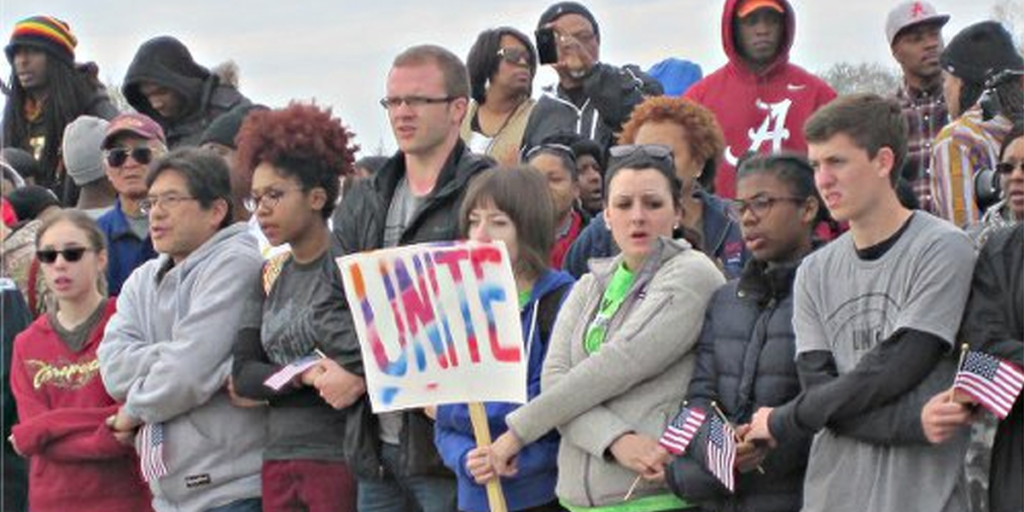
The next time you hear that familiar snap-crackle-pop as you pour milk over a bowl of Kellogg’s Rice Krispies, be reminded that the foundation behind your breakfast cereal is actively working to do some good in the world. The W.K. Kellogg Foundation (WKKF) — founded by breakfast cereal pioneer Will Keith Kellogg and one of the largest philanthropic foundations in the United States — announced Wednesday it will award $24 million in grants as part of its new racial healing initiative to Selma, Ala. and 13 other communities across the country. The grants are part of the foundation’s trailblazing program, Truth, Racial Healing & Transformation (TRHT), which is intended “to improve our ability as communities and as a country to see ourselves in each other, so that we can share a more equitable future for all children to thrive,” said La June Montgomery Tabron, president and CEO of the Kellogg Foundation. “This work is essential because we must bridge the divides in our country. Now more than ever, we must all act in big and small ways to help people heal from the effects of racism.” Moving into its implementation phase, WWKF will award 10 grants to organizations over the next two-to-five years in 14 places to implement the foundation’s TRHT process and framework. Using the framework as a guide, TRHT will endeavor to create local, regional and national transformational change in the areas of: Narrative Change: examining how to create and distribute new complex and complete narratives in entertainment, journalism, digital and social media, school curricula, museums, monuments and parks and in the way we communicate that can influence people’s perspectives, perceptions and behaviors about and toward one another so that we can work more effectively and productively toward community-based change. Racial Healing and Relationship Building: focusing on ways for all of us to heal from the wounds of the past, to build mutually respectful relationships across racial and ethnic lines that honor and value each person’s humanity, and to build trusting intergenerational and diverse community relationships that better reflect our common humanity Separation: examining and finding ways to address segregation, colonization and concentrated poverty in neighborhoods to ultimately ensure equitable access to health, education and jobs. Law: reviewing discriminatory civil and criminal laws and the public policies that come from them and recommending solutions that will produce a just application of the law. Economy: studying structured inequality and barriers to economic opportunities and recommending approaches that can create an equitable society. “The Kellogg Foundation has a strong belief in the inherent capacity of people to effect change in their lives,” Tabron added. “We are very optimistic that these leaders and communities will do the hard work needed to succeed in the transformation they seek.” Along with Selma, the grants are also going to: Alaska; New Orleans; Baton Rouge, La.; Buffalo, N.Y.; Chicago; Dallas; Los Angeles; Richmond, Va; St. Paul, Minn.; and Battle Creek, Flint, Kalamazoo and Lansing, Mich.
Terri Sewell: Remembering Bloody Sunday
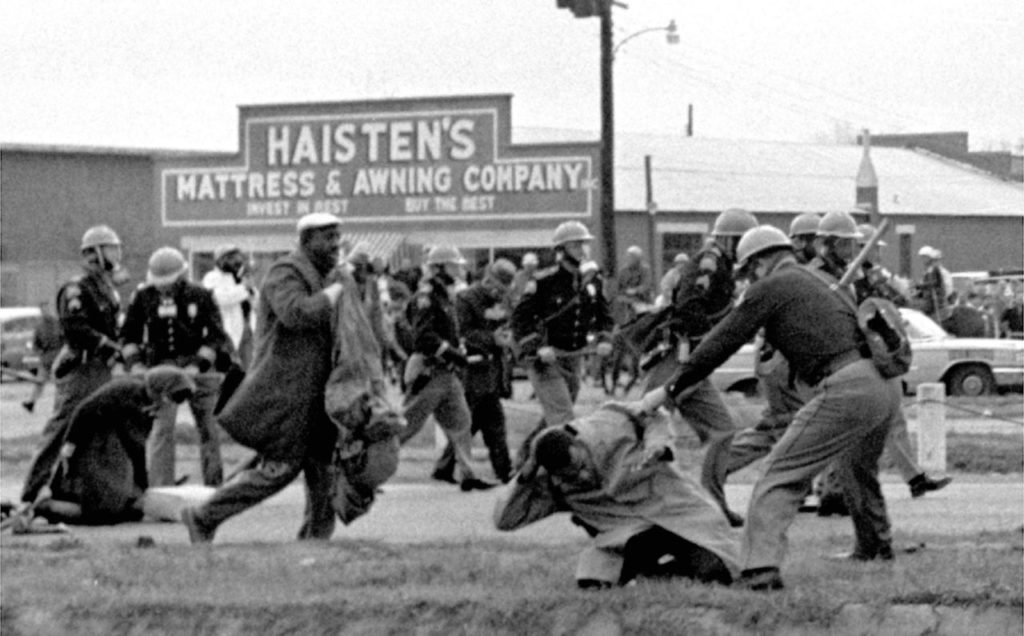
History is never stagnant. The saga of American democracy and the battle for the right to vote has its moments of inspiration, just as it has moments of defeat. The story this year’s chapter will tell is in our hands. Fifty-two years ago today, 600 marchers in Selma, Ala., brought the reality of racism and segregation into living rooms nationwide. That day, hundreds of voting rights supporters were viciously beaten by state troopers as they attempted to cross the Edmund Pettus Bridge. The brutal stories of Bloody Sunday reframed the issue of racism for the American public and ultimately led to passage of the Voting Rights Act of 1965 (VRA), our nation’s most powerful tool for protecting the vote. But the story of America’s fight for fair elections is never finished. After 48 years of bipartisan support from Congress and the White House, the VRA was gutted by the Supreme Court in its 2013 Shelby v. Holder decision, eliminating key protections for minority voters. On the 50th Anniversary of Bloody Sunday in 2015, our nation had an opportunity to undo that damage. That year, I joined President Barack Obama, President George W. Bush and a bipartisan group of more than 100 Members of Congress in Selma to commemorate the voting rights movement. It was an atmosphere of hope and unity in opposition to the hate and racism of our country’s past. Yet we returned to Washington, and Congress did nothing to restore the VRA. Today’s anniversary of Bloody Sunday is another opportunity to recommit to protecting voting rights for all Americans, but it is also a moment to reflect on the fresh urgency of that work. Old battles have become new again. This year’s commemoration of Bloody Sunday comes on the heels of the announcement that the Justice Department would drop challenges to a discriminatory Texas voter ID law, even after that law was struck down twice by courts for undermining minority voting rights. This year’s commemoration was also set against the backdrop of an executive order barring immigrants from Muslim-majority countries from coming into the United States. When Dr. Martin Luther King, Jr. completed his Selma to Montgomery march in 1965, after multiple attempts blocked by the police, he spoke to a crowd of nearly 50,000 supporters. In his speech, he told his audience that “no tide of racism can stop us.” This year I find those words have new resonance. Perhaps Dr. King was right – maybe hate is a tide: one that rolls in and out. This year, we face a rising tide of intolerance that’s had an immeasurable impact on my community. Last week, a bomb threat was called into a Birmingham Jewish community center in my district, the third threat in just one month’s time. I received messages from families who attend the center and were frightened for their safety and hurt by the threats against them. I’ve received messages from Muslim constituents who have family abroad, afraid that a travel ban will block them from seeing their loved ones. I’ve met with constituents worried for undocumented members of their community living in the United States. Looking back at photos from Bloody Sunday, the fear and pain that I see in the eyes of those who marched does not seem so foreign. I recognize the hurt of a people assaulted, threatened, and excluded because of who they are. But I also see courage. When I look at pictures of marchers like Amelia Boynton Robinson, I see a black woman who stood up to hate wherever she encountered it. This year, the 1965 Selma to Montgomery marches do not seem like a thing of the past, but instead a model for our work. We have to act as those in the voting rights movement did, and stand together for the rights of all Americans. I am a direct beneficiary of the movement. I was born the year that the Selma to Montgomery marches took place, and I owe those who fought, bled and died a debt of gratitude that I can never repay. But their story, and the story of America’s voting rights movement, is never finished. When Americans today suffer from some of the same injustices suffered 52 years ago, we cannot ignore the work left to be done. If the brutal stories of Bloody Sunday teach us anything this year, it’s that we must not only remember, but also dedicate ourselves to action. Together, we have a tide to turn back. ••• This article first appeared on TheHill.com. ••• Rep. Terri A. Sewell (D-Ala.) is serving her fourth term representing Alabama’s 7th District. She sits on the House Permanent Select Committee on Intelligence and was recently appointed to the House Ways and Means Committee.
Selma to commemorate”Bloody Sunday” will host largest voting rights commemoration event in US
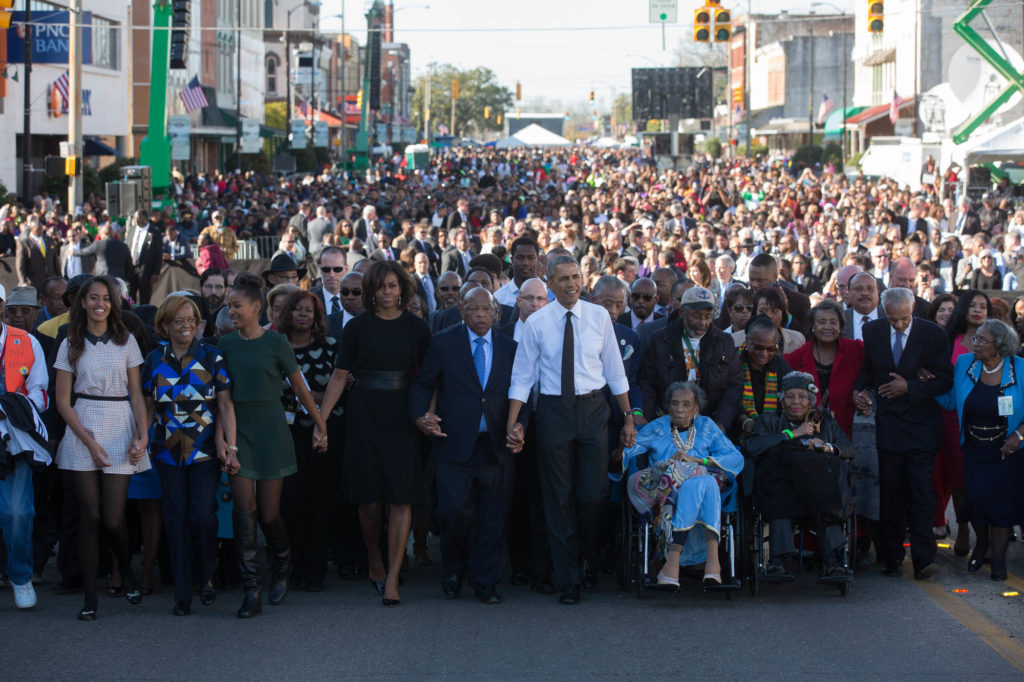
On Thursday, March 2 through Sunday, March 5, Selma, Ala. will host the largest voting rights commemoration event in the country — the Bridge Crossing Jubilee 2017 — remembering the 52nd anniversary of the Selma to Montgomery “Bloody Sunday” march. This annual event commemorates “Bloody Sunday,” when on March 7, 1965, a group of roughly 525 African American protesters planned to cross the Edmund Pettus Bridge on their civil rights march to Montgomery to demand the right to vote. At the bridge they where they were met by more than 50 state troopers and a few dozen men on horseback. When the demonstrators refused to turn back, they were brutally beaten, leaving at least 17 hospitalized, and 40 others injured. The violent attack, which was broadcast on national television, caught the attention of millions of Americans and was aptly dubbed “Bloody Sunday” and ultimately became a rallying point for civil rights leaders. While details of this year’s event are still being finalized, there will be workshops on the following topics: Voting Immigration Criminal Justice Education Economic Empowerment Health and Environment Special Workshop by SNCC Legends Additionally, the weekend will feature over 40 events including: Parade Blues Hip-hop and gospel music festival Step show Pageant Mock trial Unity breakfast Freedom Flame Awards Hip-hop summit Storytelling by Living History Makers March re-enactment and more Those interested in attending may purchase tickets online.
Black lawmakers to speak out against Jeff Sessions in hearing
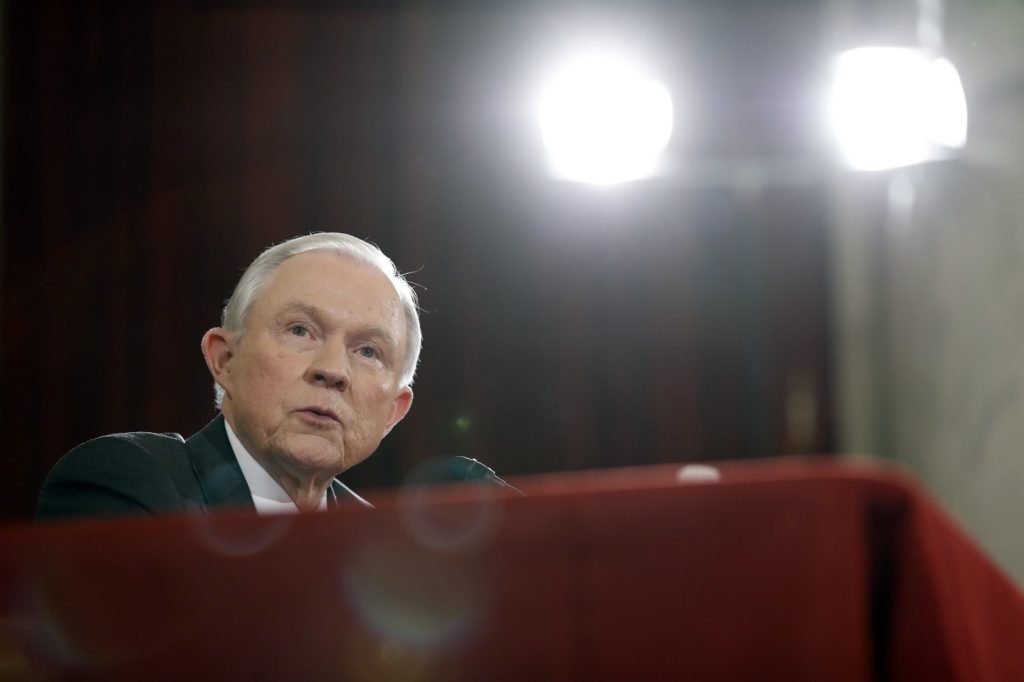
Donald Trump‘s pick for attorney general, Sen. Jeff Sessions, used strong words in the first day of his Senate confirmation hearings to deny any hints of a racist past. On day two, a group of black lawmakers will speak out against his nomination — including New Jersey Democrat Cory Booker, who will take the rare step of testifying against a current Senate colleague. Booker’s testimony underscores Democratic unease with the Alabama Republican, who was rejected for a federal judgeship by the Senate Judiciary Committee three decades ago amid accusations of racial impropriety. Sessions on Tuesday called those accusations “damnably false,” denying that he had ever called the NAACP “un-American” and saying he had never harbored racial hostility. He said the allegations – which included that he had referred to a black attorney in his office as “boy” – are part of a false caricature. “It wasn’t accurate then,” Sessions said. “It isn’t accurate now.” Sessions has solid support from the Senate’s Republican majority and from some Democrats in conservative-leaning states, and is expected to easily win confirmation. Still, he faces a challenge persuading skeptical Democrats that he’ll be fair and committed to civil rights, a chief priority of the Justice Department during the Obama administration, as the country’s top law enforcement official. Republicans on the panel defended Sessions, with Texas Sen. Ted Cruz describing how Sessions helped secure convictions in a 1981 murder of a black teenager when he was a federal prosecutor. Two Ku Klux Klan members, Henry Hays and James Knowles, were arrested and convicted. “I know we need to do better, we can never go back,” Sessions said. “I am totally committed to maintaining the freedom and equality that this country has to provide to every citizen, I can assure you.” Booker calls his opposition “a call to conscience” and said he didn’t make the decision to speak at the hearing lightly. “The attorney general is responsible for ensuring the fair administration of justice, and based on his record, I lack confidence that Senator Sessions can honor this duty,” Booker said. Senate officials searched and could find no other case in the country’s history when a sitting senator testified against a colleague picked for a Cabinet post. Civil rights icon Rep. John Lewis, a Georgia Democrat, is also expected to testify against Sessions. Congressional Black Caucus Chairman Rep. Cedric Richmond, a Democrat from Louisiana, also will be appearing, as will David Cole, the legal director of the American Civil Liberties Union. Sessions also will have advocates in the hearing room Wednesday, including former Attorney General Michael Mukasey. As Sessions was questioned Tuesday, protesters repeatedly interrupted the proceedings. Some loudly called Sessions a racist, and two were dressed as members of the Klu Klux Klan. They were quickly hustled out by police. In his testimony, Sessions laid out a sharply conservative vision for the Justice Department he would oversee, pledging to crack down on illegal immigration, gun violence and the “scourge of radical Islamic terrorism.” He vowed to stay independent from the White House and stand up to Trump when necessary. He also distanced himself from some of Trump’s public pronouncements. Sessions said waterboarding, a now-banned interrogation technique for which Trump has at times expressed support, was “absolutely improper and illegal.” Though he said he would prosecute immigrants who repeatedly enter the country illegally and criticized as constitutionally “questionable” an executive action by President Barack Obama that shielded certain immigrants from deportation, he said he did “not support the idea that Muslims, as a religious group, should be denied admission to the United States.” Trump earlier in his campaign called for a temporary total ban on Muslims entering his country but has more recently proposed “extreme vetting.” And Sessions asserted that he could confront Trump if needed, saying an attorney general must be prepared to resign if asked to do something “unlawful or unconstitutional.” He also promised to recuse himself from any investigation there might be into Democrat Hillary Clinton, whom he had criticized during the presidential campaign. Trump said during the campaign he would name a special prosecutor to look into Clinton’s use of a private email server, but he has since backed away. The FBI and Justice Department declined to bring charges last year. Sessions was first elected to the Senate in 1996 and before that served as Alabama attorney general and a U.S. attorney. He’s been a reliably conservative voice in Congress, supporting government surveillance programs, objecting to the proposed closure of the Guantanamo Bay detention facility – a sharp departure from Obama’s Justice Department – and opposing a 2013 bipartisan immigration bill that included a pathway to citizenship for the estimated 11 million immigrants living in the U.S. illegally. Republish with permission of The Associated Press.
Jeff Sessions: there was an organized effort to caricature me as something that wasn’t true
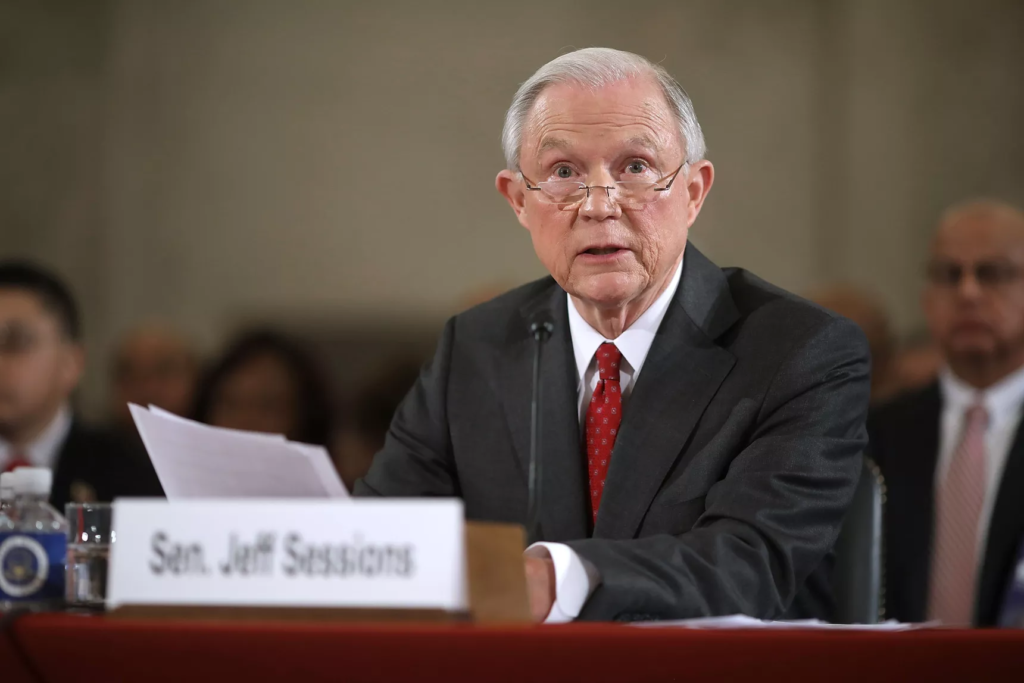
Sen. Jeff Sessions addressed accusations of racism Tuesday during his Senate confirmation hearing for U.S. Attorney General — explaining he was first unfairly caricatured as racist during his 1986 confirmation hearing to be President Ronald Reagan’s nominee for U.S. District Judge for the Southern District of Alabama. “When I came up as a United States Attorney, I had no real support group, I didn’t prepare myself well in 1986, and there was an organized effort to caricature me as something that wasn’t true,” Sessions said before the Senate Judiciary Committee. “I hope my tenure in this body has shown you that the caricature that was created of me was not accurate. It wasn’t accurate then, and it’s not accurate now,” he continued. Fellow Southern, Republican Sen. Lindsey Graham asked Sessions, “I am from South Carolina so I know what it means to be accused of being a conservative from the South — meaning a racist or a bigot. How does that make you feel?” “It was very painful, I didn’t know how to respond, and didn’t respond very well. I hope my tenure in this body has shown you that the caricature that was created of me wasn’t accurate, it wasn’t accurate then and it’s not accurate now,” the junior senator from Alabama added. Sessions was denied the federal judgeship in 1986 after issues were raised about comments he had made regarding the Klu Klux Klan. Tuesday’s hearing is the first of two days of hearings scheduled for Sessions’ confirmation as attorney general under President-elect Donald Trump.
