
Rosa Parks wouldn’t give up her seat on the bus, 61 years ago today
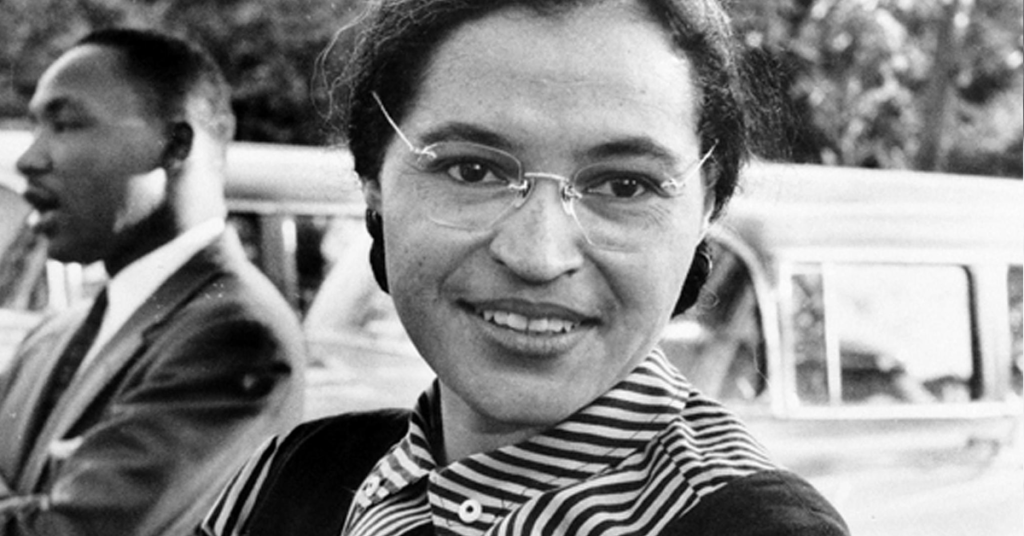
61 years ago today, on Dec. 1, 1955, while riding home from her job as a department-store seamstress Rosa Parks became a part of American history when she refused to give up her seat for a white man on a public bus in Montgomery, Ala. “Upon arrival the bus driver said he had a colored female sitting in the white section of the bus, and would not move back,” the responding police officers said in their report. The 42-year-old Parks was taken to the Montgomery jail where she was charged with violating the city’s segregation law. Her act of civil disobedience prompted a 381-day boycott of the Montgomery bus system organized by Martin Luther King Jr. that garnered national attention and ultimately led to the landmark 1956 U.S. Supreme Court ruling that outlawed segregation on public transportation. Affectionately deemed “the mother of the civil rights movement” Parks was often quoted as saying she refused to give up her seat that day because she was “tired.” Undeniably she was tired, though she later explained it was not physical fatigue alone, but also weariness of spirit that led her to stand her ground that fateful December Thursday. “People always say that I didn’t give up my seat because I was tired, but that isn’t true,” Parks said in her 1992 book, Rosa Parks: My Story. “I was not tired physically, or no more tired than I usually was at the end of a working day. I was not old, although some people have an image of me as being old then. I was 42. No, the only tired I was, was tired of giving in.” Parks remained in Montgomery until 1957, when she and her husband moved out of the state following unbearable harassment and death threats. She died in 2005 at the age of 92 and went on to become the 30th person Congress honored by having her coffin sit in the Capitol Rotunda in recognition of her contribution to advancing civil and human rights. She was the first woman accorded the privilege. “I have learned over the years that when one’s mind is made up, this diminishes fear; knowing what must be done does away with fear,” said Parks in the 2000 book Quiet Strength: the Faith, the Hope, and the Heart of a Woman Who Changed a Nation.
Alabama mayor makes racist remarks online after losing to black opponent
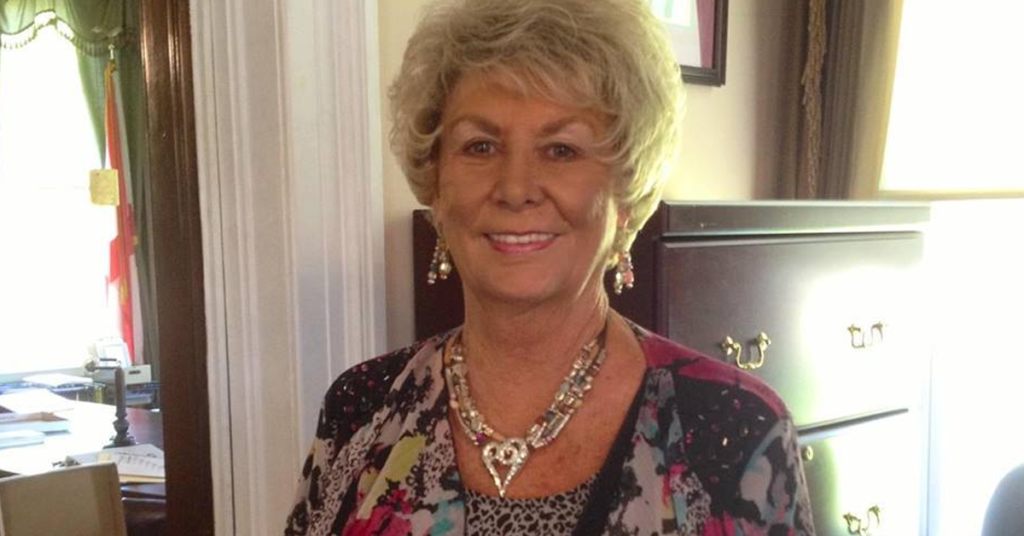
Midland City, Alabama interim Mayor Patsy Capshaw Skipper lost her campaign Tuesday and is now under fire for allegedly making racist remarks about her opponent on social media. According to a screenshot from Facebook, Skipper bemoaned, “I lost. The ni**er won,” when she was asked about the election results. Skipper lost 148 to 233 votes to former assistant city clerk JoAnn Bennett Grimsley, who will be the town’s first African-American mayor. Former Midland mayor, Virgil Skipper, retired in February due to health reasons. The Midland City town council then selected Patsy, Virgil’s wife, 3-1 to the position of interim mayor. Patsy Skipper was running to keep the position. Alabama Today tried to reach out to Skipper Thursday evening for comment, but was unable to reach her. According to the Dothan Eagle, Skipper said she believes she’s been hacked.
Ku Klux Klan dreams of rising again 150 years after founding
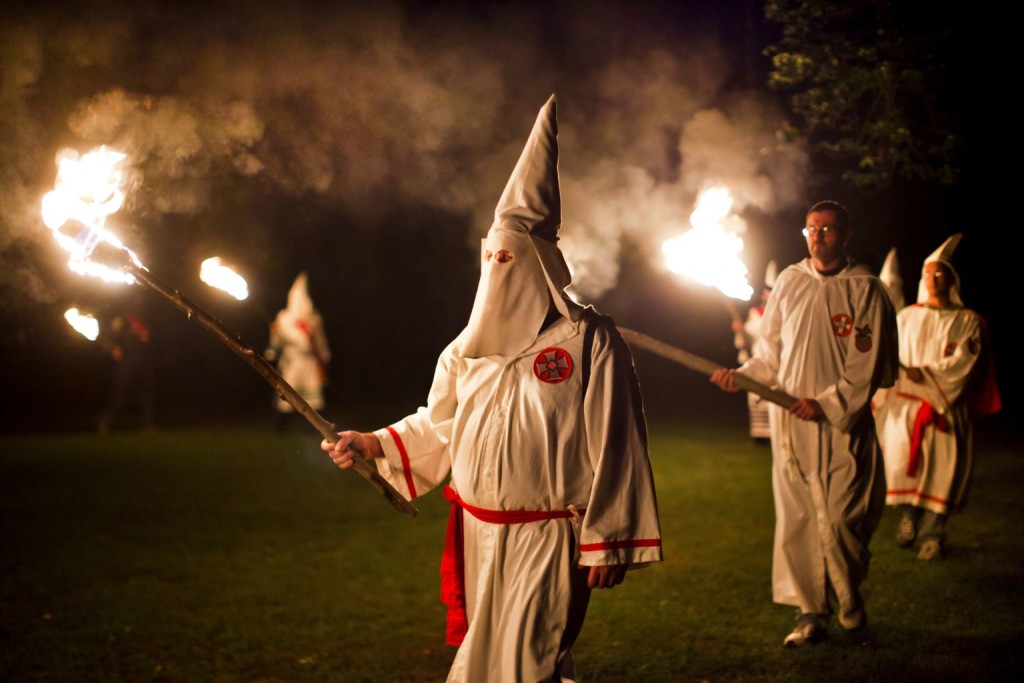
Born in the ashes of the smoldering South after the Civil War, the Ku Klux Klan died and was reborn before losing the fight against civil rights in the 1960s. Membership dwindled, a unified group fractured, and one-time members went to prison for a string of murderous attacks against blacks. Many assumed the group was dead, a white-robed ghost of hate and violence. Yet today, the KKK is still alive and dreams of restoring itself to what it once was: an invisible empire spreading its tentacles throughout society. As it marks 150 years of existence, the Klan is trying to reshape itself for a new era. Klan members still gather by the dozens under starry Southern skies to set fire to crosses in the dead of night, and KKK leaflets have shown up in suburban neighborhoods from the Deep South to the Northeast in recent months. Perhaps most unwelcome to opponents, some independent Klan organizations say they are merging with larger groups to build strength. “We will work on a unified Klan and/or alliance this summer,” said Brent Waller, imperial wizard of the United Dixie White Knights in Mississippi. In a series of interviews with The Associated Press, Klan leaders said they feel that U.S. politics are going their way, as a nationalist, us-against-them mentality deepens across the nation. Stopping or limiting immigration — a desire of the Klan dating back to the 1920s — is more of a cause than ever. And leaders say membership has gone up at the twilight of President Barack Obama‘s second term in office, though few would provide numbers. Joining the Klan is as easy as filling out an online form — provided you’re white and Christian. Members can visit an online store to buy one of the Klan’s trademark white cotton robes for $145, though many splurge on the $165 satin version. While the Klan has terrorized minorities during much of the last century, its leaders now present a public front that is more virulent than violent. Leaders from several different Klan groups all said they have rules against violence aside from self-defense, and even opponents agree the KKK has toned itself down after a string of members went to prison years after the fact for deadly arson attacks, beatings, bombings and shootings. “While today’s Klan has still been involved in atrocities, there is no way it is as violent as the Klan of the ’60s,” said Mark Potok of the Southern Poverty Law Center, an advocacy group that tracks activity by groups it considers extremist. “That does not mean it is some benign group that does not engage in political violence,” he added. Historian David Cunningham, author of “Klansville, U.S.A.: The Rise and Fall of the Civil Rights-Era Ku Klux Klan,” notes that while the Klan generally doesn’t openly advocate violence, “I do think we have the sort of ‘other’ model of violence, which is creating a culture that supports the commission of violence in the name of these ideas.” Klan leaders told the AP that most of today’s groups remain small and operate independently, kept apart by disagreements over such issues as whether to associate with neo-Nazis, hold public rallies or wear the KKK’s trademark robes in colors other than white. So-called “traditional” Klan groups avoid public displays and practice rituals dating back a century; others post web videos dedicated to preaching against racial diversity and warning of a coming “white genocide.” Women are voting members in some groups, but not in others. Some leaders will not speak openly with the media but others do, articulating ambitious plans that include quietly building political strength. Some groups hold annual conventions, just like civic clubs. Members gather in meeting rooms to discuss strategies that include electing Klan members to local political offices and recruiting new blood through the internet. It’s impossible to say how many members the Klan counts today since groups don’t reveal that information, but leaders claim adherents in the thousands among scores of local groups called Klaverns. Waller said his group is growing, as did Chris Barker, imperial wizard of the Loyal White Knights of the Ku Klux Klan in Eden, North Carolina. “Most Klan groups I talk to could hold a meeting in the bathroom in McDonald’s,” Barker said. As for his Klavern, he said, “Right now, I’m close to 3,800 members in my group alone.” The Anti-Defamation League, the Jewish protection group that monitors Klan activity, describes Barker’s Loyal White Knights as the most active Klan group today, but estimates it has no more than 200 members total. The ADL puts total Klan membership nationwide at around 3,000. The Alabama-based SPLC says there’s no evidence the Klan is returning to the strength of its heyday. It estimates the Klan has about 190 chapters nationally with no more than 6,000 members total, which would be a mere shadow of its estimated 2 million to 5 million members in the 1920s. “The idea of unifying the Klan like it was in the ’20s is a persistent dream of the Klan, but it’s not happening,” Potok said. Formed just months after the end of the Civil War by six former Confederate officers in Pulaski, Tennessee, the Klan originally seemed more like a college fraternity with ceremonial robes and odd titles for its officers. But soon, freed blacks were being terrorized, and the Klan was blamed. Hundreds of people were assaulted or killed within the span of a few years as whites tried to regain control of the defeated Confederacy. Congress effectively outlawed the Klan in 1871, leading to martial law in some places and thousands of arrests, and the group died. The Klan seemed relegated to history until World War I, when it was resurrected. It grew as waves of immigrants arrived aboard ships from Europe and elsewhere, and grew more as the NAACP challenged Jim Crow laws in the South in the 1920s. Millions joined, including community leaders like bankers and lawyers. That momentum declined, and best estimates place
Samford University apologizes for T-shirt with racist image
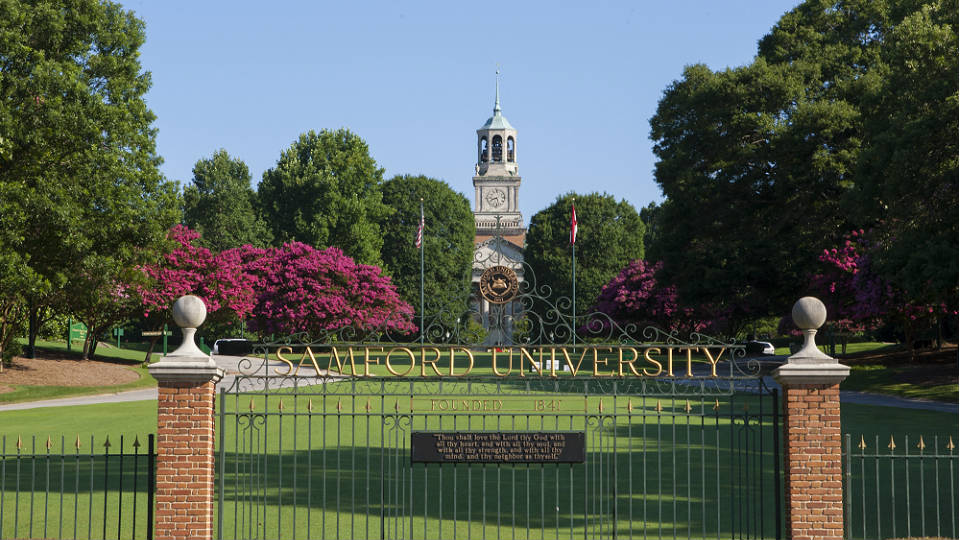
An Alabama university apologized Friday publicly after discovering T-shirts depicting a black man eating watermelon had been printed by a sorority, which said members initially failed to notice the racist illustration. “I was repulsed by the image,” Samford University President Andy Westmoreland said in an email to students and employees. “I lack the words to express my own sense of frustration.” Administrators are conducting a review that could lead to disciplinary action against the Alpha Delta Pi chapter at Samford, where the embarrassing disclosure came as students and faculty were celebrating graduations at the Birmingham campus Friday. The T-shirts depicted a map of Alabama marked with an array of images — including an illustration of a black man holding a slice of watermelon to his mouth in the map’s southeast corner. University spokesman Philip Poole said the shirts were ordered as keepsakes for the sorority’s spring formal. “In selecting the T-shirt, we failed to focus on the specific images in the design,” Lauren Hammond, president of the sorority’s Samford chapter, said in a statement issued through its national headquarters Friday. “We are horrified by our oversight. Had we recognized what the design details depicted, we would never have purchased the shirts.” Hammond said sorority members have been told not to wear the shirts, which she said were being collected so they could be destroyed. Karina Shaver, who identified herself in an email as a media representative for Alpha Delta Pi, said chapter members originally found the map image using a Google search. Poole said an employee of the campus Greek Life office found out the shirts had been delivered and alerted administrators Thursday afternoon. In a statement apologizing for the shirts, Samford officials said the sorority ordered the offending T-shirts even after their design had been rejected when it was submitted to the university for approval. “The shirt design absolutely contradicts the values of respect and dignity that our organization prides itself on,” said a statement from Alpha Delta Pi’s national headquarters. “We do not tolerate, and would never intentionally approve any design with racial stereotypes/overtones or any other offensive images or language.” Republished with permission of the Associated Press.
SPLC condemns Donald Trump retweet of “White Genocide” Twitter user
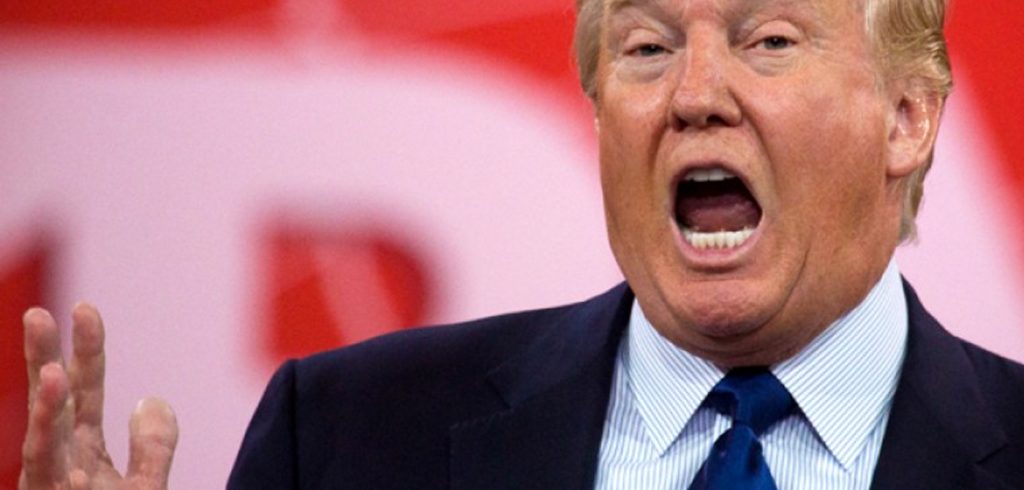
The Montgomery-based Southern Poverty Law Center (SPLC) is condemning “racist” remarks from Republican presidential front runner Donald Trump. On Friday, Trump used his official Twitter account to disseminate a message from @WhiteGenocideTM, an account that has claimed “Hitler SAVED Europe” and “Jews/Israel did 9/11,” while lashing out at another Republican presidential candidate, former Florida Gov. Jeb Bush. The site is named for an idea, which is increasingly popular with “white nationalists,” that Caucasians in America are facing a “white genocide.” The concept has been popularized in modern days in Robert Whitaker’s “The Mantra,” which ends with the following phrase: “Anti-racist is code word for anti-white.” According to The Hill, the site shows its location as “Jewmerica” with a profile photo of George Lincoln Rockwell, founder of the American Nazi Party. “He’s endorsed an idea that has been one of the more powerful [ideas] that the white nationalist movement has made in some time,” the SPLC’s Senior Writer and Online Editor for Hatewatch Ryan Lenz said. “(White genocide) is a completely fabricated notion. The fact that he has endorsed an idea championed by Klansman and white nationalists is disheartening.” The tweet has already attracted attention from white nationalist organizations like Stormfront, an organization which describes itself as a “community of racial realists and idealists,” even going as far as to say they are “white nationalists.” In support of Trump’s comments, a Stormfront follower said the following on the organization’s website: “(T)his is a GOOD thing. (Trump) willingly retweeted the name. The name was chosen to raise awareness of our plight. Helped propagate it. We should be grateful.” Another user said “A resounding applause to you, Herr Trump. And please pay no mind to the anti-White idiots insulting you.” While Lenz would not go so far as to allege that such ideology is becoming common in the Republican Party, he noted that how the party responds will make all the difference in how such concepts are addressed by American conservatives. “What happens now relies on how the party responds,” Lenz said. “It does seem to be pushing the political conversation in a direction that the Republican Party might not be ready to handle.”
KKK distributes fliers in Mobile featuring Martin Luther King Jr.
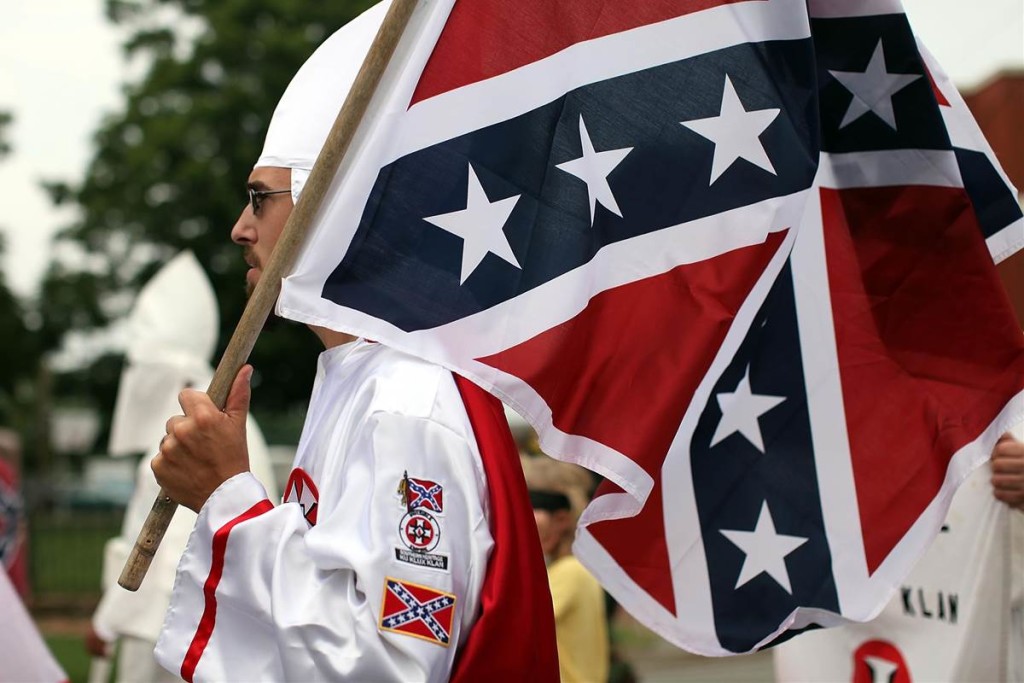
During the weekend the Loyal White Knights of the Ku Klux Klan, based in Pelham, North Carolina, distributed fliers throughout Mobile, Alabama, referencing Dr. Martin Luther King Jr. The fliers were found by residents, and promptly discarded, only one day before the country celebrated King’s legacy Monday. The fliers, like ones previously distributed across the state, were in plastic bags and found on lawns throughout the city’s Midtown neighborhood. In 2014, fliers were distributed throughout Tallassee and, in 2015, similar flyers were distributed in Selma on the 50th anniversary of Bloody Sunday. According to multiple reports, the fliers contained a “happy birthday” message to King and further said “The blacks have NAACP, the Mexicans have La Raza, the Jews have JDL, and white people have the KKK.” Though a phone call to the group was unsuccessful, the voice mailbox opened with: “Hey whitey, how do you feel about this Martin Luther King Day?” The message went on to disparage King in a variety of ways, using expletives and insulting racist language. It also urged the day be used to celebrate the legacy of Gen. Robert E. Lee. The group’s website calls itself an organization for “White Christian Men & Women Working to Secure A Future, For Pure White Americans” and rejects assertions it’s a hate group. If any of the fliers’ distributors are found, criminal littering charges could be levied, police said.
Martin Dyckman: As rhetoric descends, up pops evil

John Kasich has taken heat for a web ad that subtly compares Donald Trump to Adolf Hitler. Narrated by a former Vietnam POW, retired Air Force Col. Tom Moe, it paraphrases German pastor Martin Niemoller’s famous statement of regret that he did not speak up for the tyrant’s victims until he became one “and there was no one left to speak for me.” Hitler analogies should be rare and expressed carefully lest comparisons to lesser evils trivialize his monstrosities. Too many events have already been compared to the Holocaust, for example. But let’s see what the ad says: You might not care if Donald Trump says Muslims should register with their government, because you’re not one. And you might not care if Donald Trump says he’s going to round up all the Hispanic immigrants, because you’re not one. And you might not care if Donald Trump says it’s OK to rough up black protesters, because you’re not one. And you might not care if Donald Trump wants to suppress journalists, because you’re not one. But think about this: If he keeps going, and he actually becomes president, he might just get around to you. And you better hope there’s someone left to help you. Although Kasich tried Sunday to disclaim the implication as Moe’s words, not his, the candidate’s super PAC produced it and he deserves the responsibility and the credit. That’s right, credit. It would be just as wrong to ignore Hitler’s examples as to trivialize them. History often repeats itself. Bad history should be taken as warning. It does not necessarily trivialize Hitler to observe that Trump’s strategy and tactics recall some of those favored by the one-time Austrian army corporal. Like Hitler, Trump is a demagogue. He demonizes minority targets. He relishes personal insults. He revels in baseless insinuations, as in persistently questioning President Obama’s citizenship. He invents his own “facts,” such as having personally witnessed crowds of Muslims cheering 9/11. He lies with glee – the bigger the lie the better – and then lies again when he denies saying or implying what millions of people heard and saw him say. His fundamental theme is to inflame the suspicions of people who think their country is failing itself, failing them, and riddled with conspiracies. So was Hitler’s. He sold himself as the avenger for all that was wrong and everyone who felt wronged. So does Trump. As Hitler exploited Germany’s economic crisis and inflamed the belief that Germany’s defeat in World War I owed to the country being sold out from within – by communists and Jews – rather than to exhaustion and failure at arms, Trump wants Americans to believe our country is failing. He promises to “make America great again,” as if it no longer is. It’s a witch’s brew of bigotry, paranoia and scapegoating – and it’s working. The more outrageously he behaves, the more devoted his mob seems to become. None of this is necessarily means that a president Trump would emulate how Hitler misused power. But he has said – and should be taken at his word – that he would try to round up and expel an estimated 11 million people without any care for the staggering consequences to them or to the industries – agriculture, construction, and hospitality in particular – that would collapse in their absence. How this could be done without concentration camps taxes the imagination. When he talks loosely about surveillance of mosques and identity cards for Muslims, the image that comes to mind is of yellow stars on clothing and passports stamped “Jude.” We have already shown a vulnerability to forfeiting our freedoms in the name of “security.” As the columnist Leonard Pitts wrote recently, Sept. 11 not only destroyed lives and buildings: … It also shredded the Constitution and made America unrecognizable to itself. The government tortured. It disappeared people. It snooped through innocent lives. It created a secret ‘no-fly list’ of supposed terrorists that included many people with zero connection to terrorism … it also gave the president unilateral power to execute American citizens suspected of terrorism without trial or even judicial oversight. And here comes Trump, who calls for waterboarding, which is torture. Where would that stop? Establishment, politicians, journalists, and campaign contributors still have some trouble believing that Trump could secure the Republican nomination, let alone win the White House. But it bears remembering that Hitler never won an election either. He used his strong showing in German’s 1932 election, and the unrequited passion of his followers, to blackmail an aging President Paul von Hindenburg into appointing him chancellor. Hindenburg’s death a year later sealed Germany’s doom. When Trump demands “respect,” is it the vice presidency he has in mind? Or some other lever of power? The truly tragic side to this is that Americans have many rightful complaints. The middle class is marginalized and floundering. Young people can’t afford homes and can’t envision a bright future. The government is unable or unwilling to admit and rectify its responsibility for widening income disparity. Wall Street remains much too unaccountable. Health care reform is incomplete and out-of-pocket costs continue to spiral. But there’s an anti-establishment presidential candidate who speaks to all these concerns without the bigotry, bombast, boorishness and bullying that characterize Trump. He is Bernie Sanders, whose additional virtues include the experience and judgment that Trump so boastfully lacks. He’s a reformer but he’s not a demagogue. He’s not a racist. He’s a humane, decent man. He’s everything that Trump is not. And if Trump doesn’t like being compared to Hitler, let him stop sounding like him. Martin Dyckman is a retired associate editor of the St. Petersburg Times. He lives near Asheville, North Carolina.
In new White House bid, Hillary Clinton embraces race as a top issue
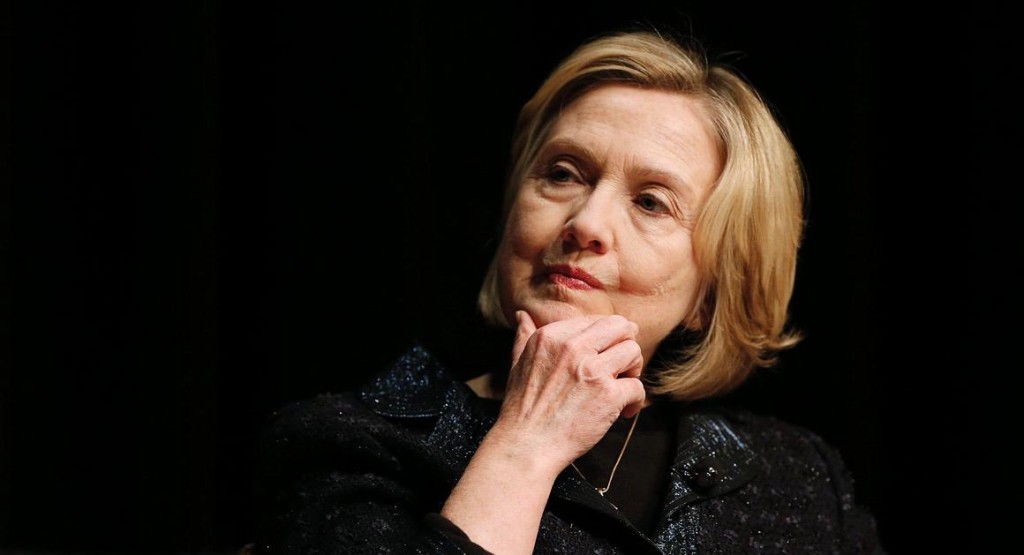
In her second bid for the presidency, Hillary Rodham Clinton is discussing “systemic racism” and making the issue a hallmark of her campaign as she looks to connect with the black voters who supported rival Barack Obama in 2008. At multiple stops in South Carolina, Clinton on Thursday bemoaned “mass incarceration,” an uneven economy, increasingly segregated public schools and poisoned relations between law enforcement and the black community. She praised South Carolina leaders, including Republican Gov. Nikki Haley, for removing the Confederate battle flag from statehouse grounds after a white gunman’s massacre of nine people at a historic black church in Charleston, but she warned that the act is only symbolic. “America’s long struggle with racism is far from finished,” the former secretary of state said before a mostly white audience at a Greenville technical college. Hours earlier, with a majority black audience at a West Columbia church, she declared, “Anybody who says we don’t have more progress to make is blind.” At both stops, she added some symbolism of her own, trumpeting the mantra “Black Lives Matter,” which has become a rallying cry of and name for the activists who have organized protests in several cities amid several high-profile cases of black citizens being killed during encounters with police. “This is not just a slogan,” Clinton said. “This should be a guiding principle.” The bold approach is a contrast to her 2008 campaign. That year, she didn’t talk so directly about race as she faced off against Obama, who would go on to become the nation’s first black president. Instead, she ran as the battle-tested, experienced counter to the first-term U.S. senator from Illinois. Clinton doesn’t frame her unabashed commentary on race in a political context; aides repeatedly explain her strategy as “working to win every vote” and nothing more. Yet it’s clear that Clinton feels no constraints going into 2016, as perhaps she did eight years ago. It’s also no surprise that her new-found freedom is on display in South Carolina. African-Americans make up about 28 percent of the population and a majority of the Democratic primary electorate, the first of the early-voting states to feature a significant bloc of black voters. Obama trounced Clinton here in 2008, 56 percent to 27 percent, as many black voters flocked to his candidacy once he demonstrated white support in the Iowa caucuses and New Hampshire primary. That leaves Clinton both to reverse a bitter primary defeat, while using South Carolina as a test run for a potential general election in which she would need strong black support to reassemble Obama’s winning coalition in swing states like Virginia, Florida and Ohio. If Clinton’s approach is born of necessity, it also comes with potential pitfalls. Last month, she angered some activists by using the phrase “all lives matter” during a speech a few miles from Ferguson, Mo., where Michael Brown died at the hands of a white police officer. Clinton used those words as part of an anecdote about her mother, whom she said taught her that “all lives matter,” but some activists thought it demeaned the significance of the “Black Lives Matter” effort. Her Democratic rivals Martin O’Malley and Bernie Sanders drew similar outrage last week at the liberal Netroots Nation convention. O’Malley, the former Maryland governor, ended up apologizing after snapping at hecklers: “Black lives matter. White lives matter. All lives matter.” Clinton said Thursday that she won’t “comment on what anybody else said.” She also faces questions about her advocacy for tougher sentencing laws that her husband signed as president. Bill Clinton recently expressed regret over the laws, but his wife stopped short of calling the laws a mistake. “We were facing different problems in the `80s and `90s,” she told reporters, saying crime in cities “was causing an outcry across the nation,” including in poor and minority neighborhoods. “I think now, 20 years on, we can say some things worked and some things didn’t work,” she continued. “One of the big problems that didn’t work is that we had too many people, particularly African-American men, who were being incarcerated for minor offenses.” Clinton also must avoid any residue from Bill Clinton’s remarks during and after the South Carolina primary in 2008. Clinton, who was extremely popular among black voters when he was president, expressed open frustration at Obama’s rise. After Obama won South Carolina, the former president dismissed the victory as akin to the Rev. Jesse Jackson‘s victory in 1988. A black South Carolina native, Jackson won the state’s caucus that year, but he was never a serious contender for the nomination. Meanwhile, Clinton says she will continue declaring that “black lives matter.” “I think this has become an important statement of a movement,” she said, “to try to raise difficult issues about race and justice that the country needs to address.” Republished with permission of The Associated Press.
Hillary Clinton says Confederate flag has no place in US
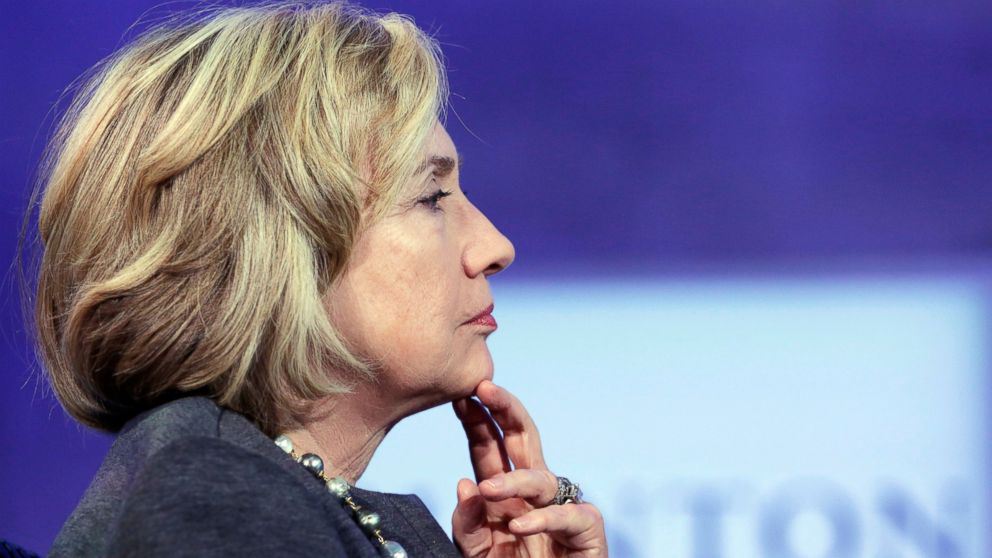
Hillary Rodham Clinton said Tuesday the Confederate battle flag should not be displayed “anywhere,” weighing in as South Carolina lawmakers seek to remove it from the grounds of their statehouse. The Democratic presidential candidate called the deadly shootings of nine black church members in Charleston, South Carolina, “an act of racist terrorism perpetrated in a house of God.” Clinton called the Confederate flag a “symbol of our nation’s racist past that has no place in our present or our future. It shouldn’t fly there. It shouldn’t fly anywhere.” Clinton joined with church members in the St. Louis suburbs, near the violent protests touched off last year in nearby Ferguson after the death of Michael Brown, an unarmed young black man who was shot by a white police officer. Clinton said she appreciated the work of South Carolina Gov. Nikki Haley, a Republican, and state lawmakers who are working to remove the Confederate flag from the statehouse grounds. She also commended Wal-Mart Stores Inc., the Arkansas-based company on whose board she once served, for announcing it would remove any product from its stores that features the Confederate flag. She encouraged other companies to follow that example while noting that Amazon, eBay and Sears have done so. Clinton has put America’s struggle with race relations at the forefront of her presidential campaign in recent weeks and urged church members here to find ways to turn their grief, anger and despair into purpose and action. The Clinton campaign said she was initially scheduled to discuss economic issues during her stop in Missouri, but after the Charleston shooting, she said she wanted to hold the event in a church and discuss race. Clinton largely avoided giving race relations a prominent place in her 2008 Democratic campaign against Barack Obama, who was vying to become the nation’s first black president at the time. Yet she’s leaned into a number of issues closely watched by African-Americans this time, discussing the need to change the criminal justice system, improve access to voting and help minority small business owners. Clinton’s campaign hopes to mobilize black voters in large numbers in the 2016 election, building upon the coalition of minority, young and liberal voters who powered Obama’s two White House campaigns. The message has taken on fresh urgency since last week’s church massacre in Charleston, South Carolina, which happened shortly after Clinton campaigned in the city. In Florissant, Clinton proposed a package of policies to promote racial equality, including tax breaks for struggling communities, help for minority and female entrepreneurs, early childhood education, “common sense” gun restrictions and universal voter registration. She told congregants that “all lives matter,” a variation of the “Black Lives Matter” slogan that arose from the Florida shooting death of black teenager Trayvon Martin. Clinton cited her background growing up in the Methodist church, recalling: “I grew up in an all-white middle-class suburb. I didn’t have a black friend, neighbor or classmate until I went to college and I am so blessed to have so many in my life since.” Pointing to the Charleston shooting, she urged attendees, “Do not be overcome with evil but overcome evil with good.” The former secretary of state was greeted by the Rev. Traci Blackmon, pastor of Christ the King United Church of Christ, which hosted the event. She told the audience that the Charleston shooting shows “we also must take this moment to not just focus who pulled the trigger that day but on the policies, the people and the structures that are pulling the trigger daily.” Republished with permission of The Associated Press.
The confederate flag debate is cheating us out of real solutions
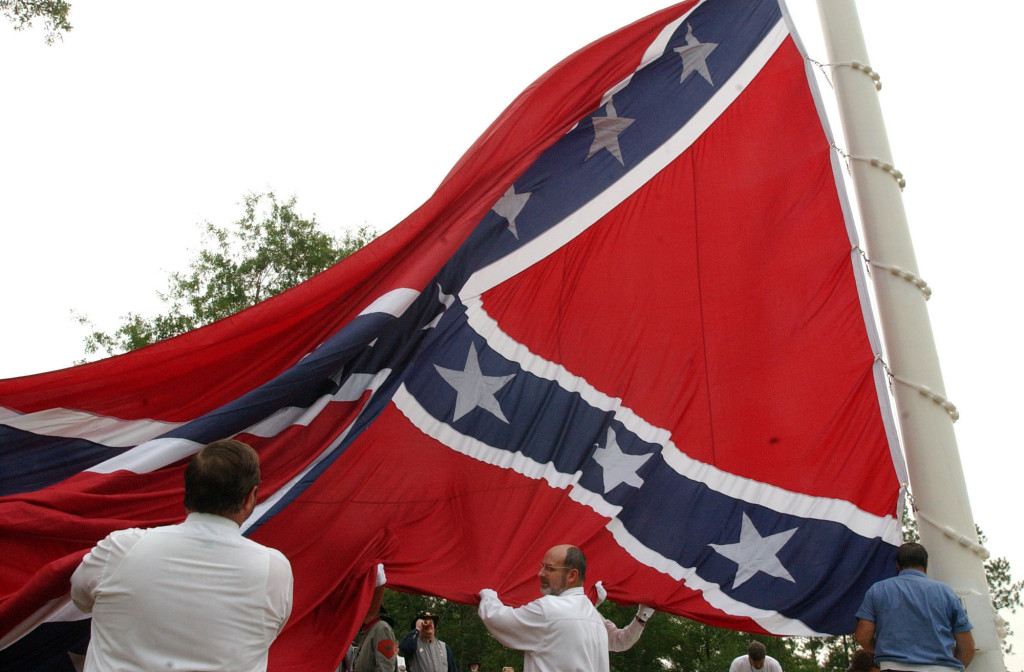
My thoughts are scattered as I read the multiple stories calling to remove the confederate flag from public places and retail stores. I’ve seen more chatter surrounding the confederate flag debate than the shooter or his 9 victims combined in the last 24-hours. Rather than writing a novel on the topic here are three quick thoughts: Governor Nikki Haley did the right thing calling for the flag to be taken down in South Carolina this week. Everyone is entitled to their opinions about the symbolism of the flag but right now what we need is solidarity and to not pour fuel on the raging fire of racial tensions nationally. I ordinarily wouldn’t support this type of bowing to pubic pressure but this time it’s appropriate. Before it gets out of hand though let’s not kid ourselves that’s what’s happening; the argument against the flag is not an argument based on facts or a historical truth it is purely based on feelings but if ever there were a time to give a little this may be it. The flag debate and the political posturing that has come from it is a distraction from the real issues: racism and racial bias. These are real the issues that are keeping our nation from moving forward not the flag. The flag just gives people a tangible target. Seeing the flag removed from state capitols and taken off store shelves makes people feel like they’ve won a victory but the fact is we are no closer to preventing another tragic shooting without it there than we were with it flying and we are no closer to understanding what motivated the horrific shooting. All of the real issues and questions we need to address aren’t solved by removing flags. Some of those questions are: Was this incident and are future ones preventable? How do we recognize and respond to threats? How do we address the growing racial divide in our country and the economic and social impacts they have? This issue is evolving and it seems the strength of the movement against not just the flags but all historic references the confederacy is growing. It will be interesting to see how this plays out and more importantly how we get back to a conversation about the issues that matter.
Angi Stalnaker: No flag can erase all of the hate and racism and violence in the world
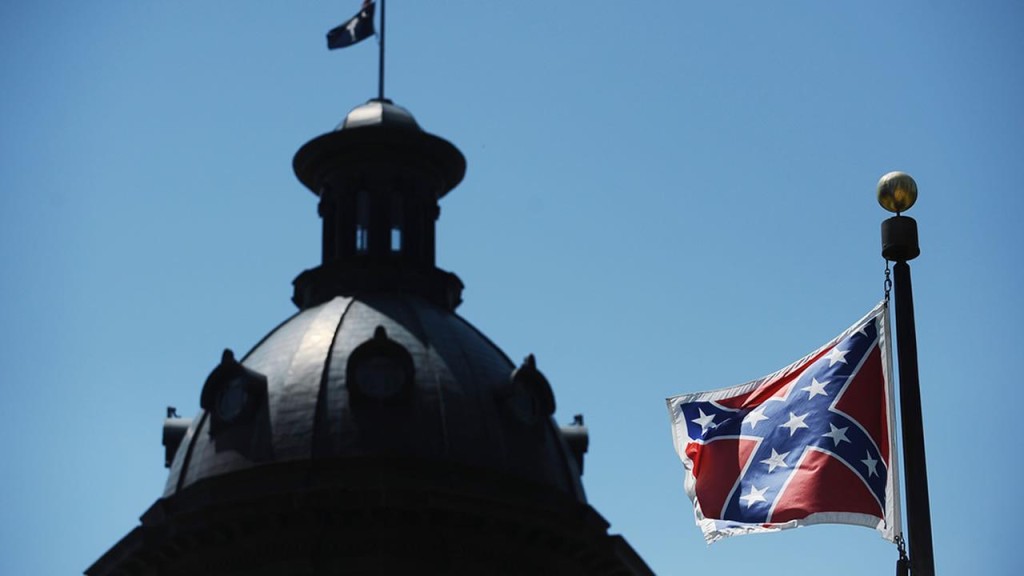
I wish that we could erase all of the hate and racism and violence in the world by eliminating the Confederate Flag. Oh how I wish it was that easy. If taking down displays of that flag would turn our world into a place where racism no longer existed and where hate crimes never again happened, I would tear the flags off of the Confederate Memorial myself. I would make it my life’s mission to eradicate the Confederate Flag from this planet. The fact is, though, that flag didn’t cause the tragic events in Charleston. Those who are using the deaths of 9 innocent churchgoers as an opportunity to focus on a flag are doing a disservice to the memories of those Christian men and women who died last week at the hands of a hate filled mad man and they are doing an even bigger disservice to our society as a whole.Some people are inherently evil. Some people are raised to hate. Some people are insane. Unfortunately, those are the facts of the real world. No flag can change those facts. The tragedy that occurred last Wednesday in a small town in South Carolina is tragic and horrible. Those 9 men and women died at the hands of evil. Their deaths are an opportunity to have a real discussion about what happened and how it could have been prevented. We should discuss why the shooter’s friends are telling news reporters that their “friend” told them he wanted to shoot up a University and told them last Wednesday would be the day he went on that shooting spree, yet none of these friends went to authorities or warned anyone that they knew someone who was planning a mass shooting. We should discuss how certain medications like suboxone have terrible side effects that seem to push certain people to commit unspeakable acts of violence. We should discuss how the mental health community responds to the needs of individuals who clearly need help. We should discuss why racism still exists. We should talk about how children of all races play nicely with each other but as they grow up, some of those innocent children begin to view race in a different way. We should have a lot of candid discussions after the Charleston church massacre but if we focus on a flag, we are missing a real opportunity to have meaningful conversations about hate and evil and violence. Abolishing the Confederate flag won’t change the hearts or minds of a single violent, mentally disturbed racist but why should would be focus on the real problems when we can argue about a square piece of fabric instead. Sure, that makes sense. Angi Stalnaker is Alabama native and political consultant who has worked on numerous statewide, legislative and constitutional amendment races for conservative causes and candidates. She is the founder of Virtus Solutions, a full service government relations and communications firm.
Judges will only consider race in legislative district fight

Judges say they will only look at accusations of racial gerrymandering as they review Alabama’s legislative districts for a second time. A judicial panel ruled in a Friday decision that they will only examine whether majority-black legislative districts were unconstitutionally gerrymandered. The U.S Supreme Court in March said the lower court must take another look at whether Alabama’s Republican-led legislature relied too heavily on race in drawing the lines. Black lawmakers challenged the plan, saying it limited minority voting power by packing black voters into designated districts. An attorney representing black lawmakers said he was disappointed and will ask the court to reconsider. He said the judges should also consider whether lawmakers improperly split counties as they drew the districts. Republished with permission of The Associated Press.
