
In Jeb Bush ad “Leader”, he says he’ll take out ISIS
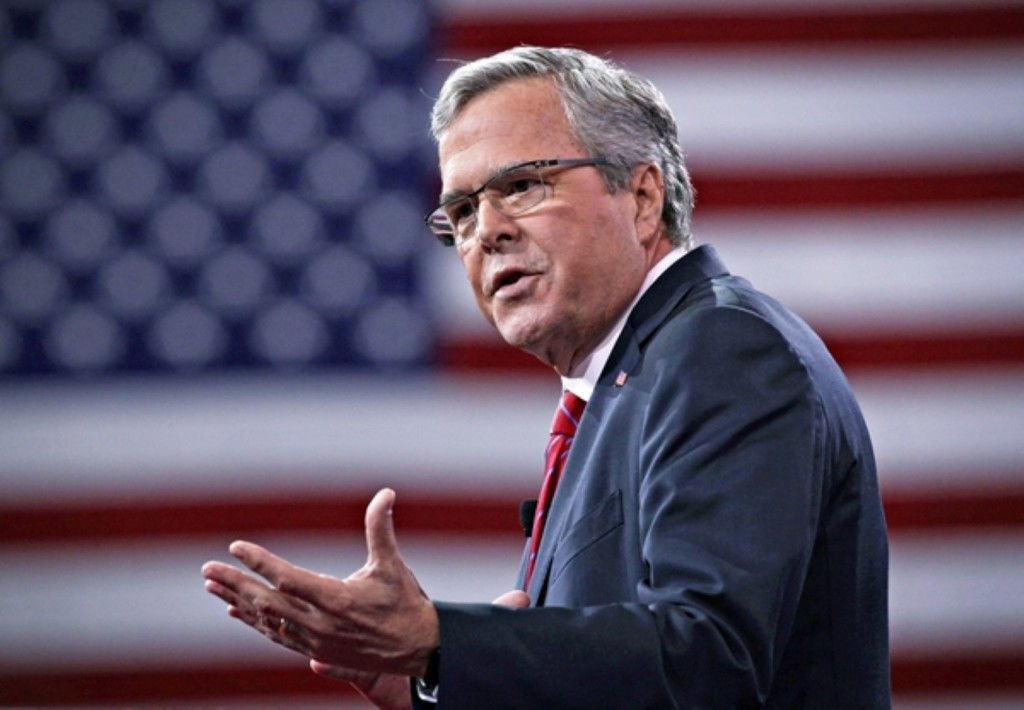
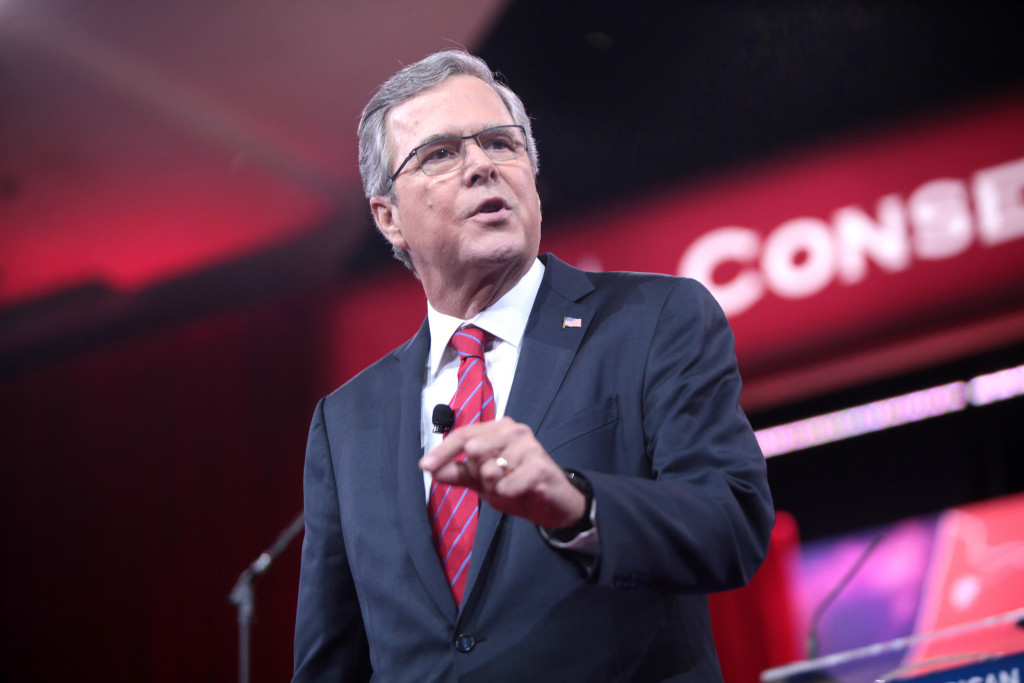
It’s not exactly news that Jeb Bush is having trouble breaking through in the polls. In a survey released on Friday by CNN/ORC, the former Florida Governor is mired at just 3 percent nationally. He’s not doing much better in Iowa, where a Monmouth University poll showed him at 4 percent on Monday. But nobody is on the air more than Bush, thanks to the financial resources that his Super PAC Right to Rise has at its disposal. His latest ad is called, “Leader,” where he says “we are what war with Islamic terror.” Watch:
Email insights: Counting out Jeb Bush is a big mistake
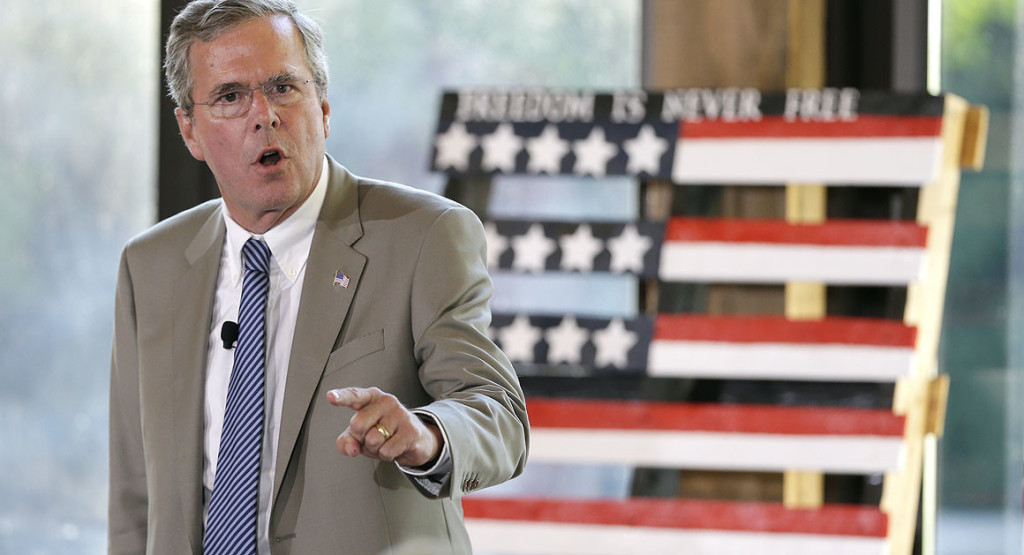
For anyone who appreciates presidential politics, it would be a fool’s errand to write off Jeb Bush’s presidential campaign. In a new email update from Right to Rise PAC — providing exclusive information from the campaign trail – the former Florida governor is far from finished, despite “lagging national polls” and receiving less airtime than any other candidate during the “much-maligned” CNBC debate. According to Right to Rise chair Mike Murphy, Bush will ultimately prevail, particularly over last week’s “noise and chatter.” History bears this out, he adds. “We’ve cautioned before on national polls and we’ll repeat it: at this time four years ago the national polls had anointed Herman Cain the frontrunner.” As focus groups have indicated, the race is anyone’s to win, with Bush making respondents “maybe list” 90 percent of the time. And Bush – who is in the midst of a campaign renaissance – was “on fire” at a New Hampshire rally this week. The same holds true at other events in Florida, Iowa, New Hampshire and South Carolina. Murphy’s email provides clips of a few of the events, showing Bush is much more on his game than what is portrayed in recent reports. As for the other Floridian in the race, Marco Rubio may be enjoying somewhat of a surge in popularity, but that only means that the national media will be “finally taking a serious look” at his record. And that’s not good for the freshman Senator, Murphy says. “It is important that every GOP candidate get fully vetted by the voters before we put that candidate up against Hillary Clinton and the Democrat machine,” he writes. Most important in this race – as should be in any political contest – are issues. Right to Rise promises to provide a series of fair, issue-centered contrasts between Bush, other serious candidates and Democrats. Taking in account the support of dedicated professionals like Murphy and Right to Rise, counting out Bush (at any point) would certainly be a big mistake.
Jeb Bush team bullish on Iowa
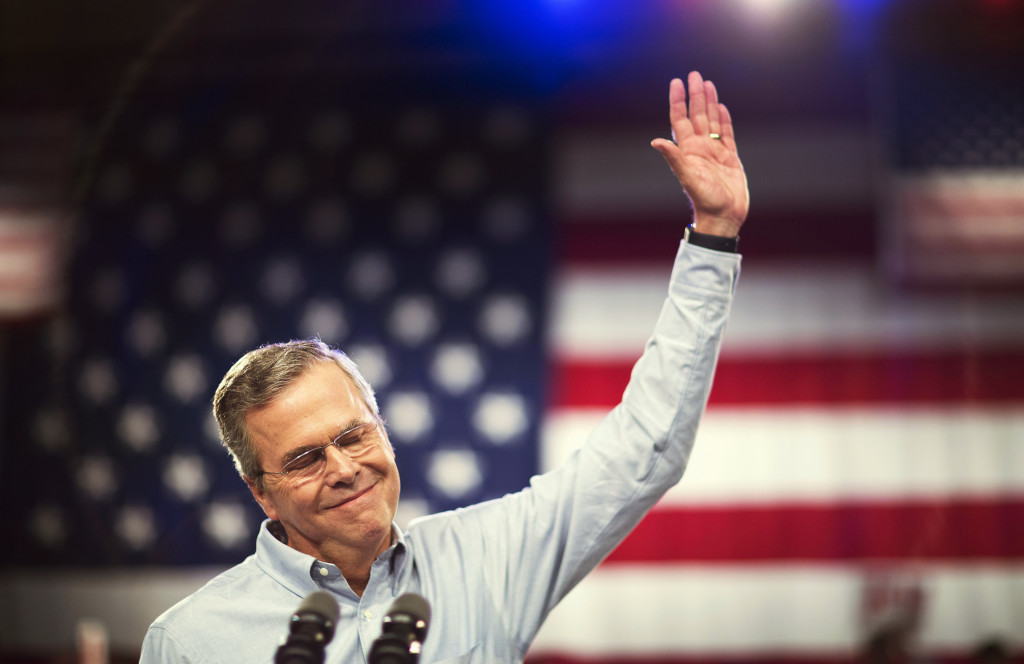
When Jeb Bush announced this year that he wouldn’t participate in the Iowa Straw poll in August, it was immediately viewed by some pundits as the equivalent of the Bush campaign pulling out the white flag, essentially giving up on the socially conservative state. In retrospect, his pullout was ahead of the curve in other Republicans bailing out on the event, which was officially canceled a few weeks later. And according to the latest polls, Bush is competitive in the Hawkeye State. Leading his campaign in Iowa is Annie Kelly, who was working with Bush’s Right to Rise Pac before she was placed in charge of Iowa. In 2011, she was deputy state director for Tim Pawlenty’s Iowa campaign, and then managed then-U.S. Rep. Tom Latham’s successful Iowa re-election campaign. “We are 27 weeks out of the caucuses. We’re in full campaign swing out here,” Kelly told Bush donors on a nationwide conference call on Monday afternoon. With as many as 17 candidates to be on the ballot when Iowans caucus on Feb. 1, Kelly predicted that the winning candidate is likely to need only to get to 17 or 18 percent to be successful – or a total of 23,000 votes. “The difference between first and third place could be a couple of hundred (votes),” Kelly said. “I say that to emphasize that the stakes are very high here – media coverage all is really driven by the performance in Iowa.” With 99 counties in Iowa and 1,774 precincts in the state, Kelley said it was crucial to captains in everyone of those precincts. She called that a “big ask,” saying that person isn’t being asked to show up at a precinct on caucus night to show support, but also must attend at least one training session, and prepare to give a public speech in front of all of their neighbors. An NBC News/Marist poll released over the weekend shows Scott Walker in the lead in Iowa with 19 points, Donald Trump second with 17 points, and Bush third at 12 percent. Kelly concluded by saying that the job of the organizers in Iowa was to build a “high floor,” with the candidate and his communications team in charge of the ceiling.
Jeb Bush returns to South Florida for grassroots PAC fundraiser
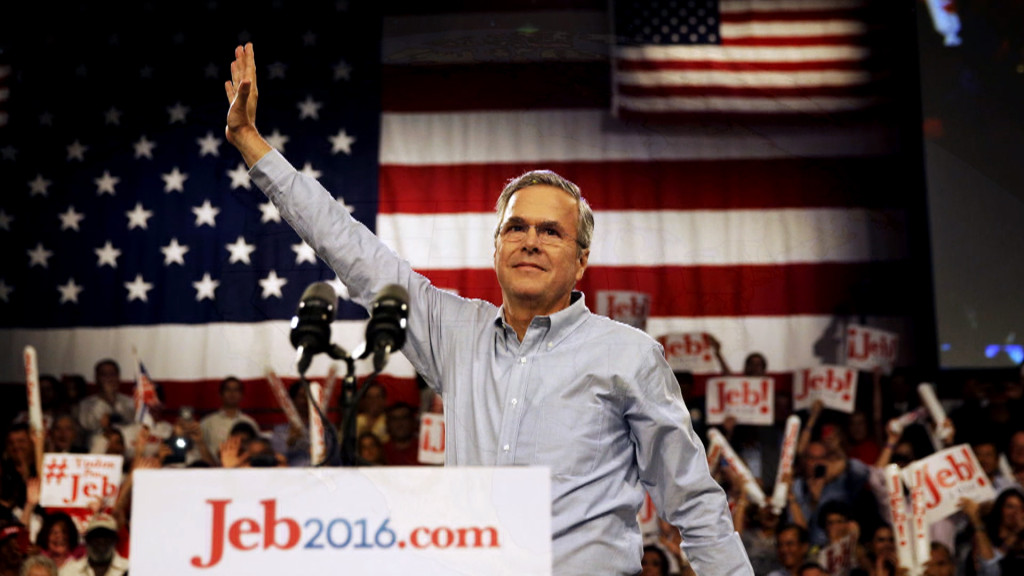
Jeb Bush returned to his South Florida political roots on Monday with a $25-a-person fundraiser for his political action committee, a contrast with recent private high-roller events. The Republican former Florida governor appeared at the Right to Rise PAC event in a local community center wearing a white Cuban-style guayabera shirt and frequently shifted from English to Spanish. About 450 people attended in a heavily Hispanic suburb west of Miami, including Bush’s wife Columba and son Jeb Jr. Neither of them addressed the crowd. Bush has not yet officially declared his candidacy for the GOP presidential nomination but has been raising money for the PAC. A recent two-day retreat at a swank Miami Beach hotel was closed to the press and open mainly to 300 invited, wealthy donors. The Monday event, meanwhile, was dubbed the “Miami Hometown Reception” and was held at a building named for Jorge Mas Canosa, a prominent Cuban-American exile leader. Former U.S. Rep. Lincoln Diaz-Balart introduced Bush to the friendly crowd. In his speech, Bush discussed familiar conservative themes such as lower taxes, immigration reform, fewer regulations and a more robust U.S. foreign policy. Bush also said that voters want political parties to cooperate in tackling issues. “I know for a fact we need to start solving problems again in Washington, D.C.,” Bush said. “This is going to be an extraordinary time, but first we have to fix these things.” Bush has headlined more than 60 fundraisers this year and claims he has already set a record for raising GOP cash. Right to Rise does not plan to release fundraising figures until July. Republished with permission of The Associated Press.
Jeb Bush, Hillary Clinton on different paths for early fundraising
Jeb Bush wants Republicans to know he’s breaking fundraising records. Hillary Rodham Clinton wants Democrats to think she won’t. While many Republicans expect Bush to have raised $100 million by the time he declares his candidacy, Clinton advisers say that’s their modest goal for the entire primary season. The reality is that both campaigns will be flush with high-dollar donors. Bush and Clinton could each pull in more than $1 billion if they become their party’s nominee. But the disparate early signals Bush and Clinton are sending about campaign cash underscore the contrasting ways the heirs to two political families are positioning themselves in the 2016 presidential contest. For Bush, building a fundraising juggernaut is seen as a way to surge ahead of rivals while ensuring he has the money to stay competitive if the race drags on into next spring or summer. The former Florida governor isn’t expected to launch his campaign until at least June, giving him more time to raise money aggressively for his Right to Rise super PAC before he’s legally barred from coordinating with the organization. For Clinton, who so far faces no serious primary competition, lowering fundraising expectations is a bid to dispel the notion that she is her party’s inevitable nominee. She’s holding a smattering of lower dollar campaign fundraisers, with tickets running $2,700 per person, during the next two weeks. Clinton had originally planned to wait until May to start fundraising, but told advisers she was concerned about the prowess of Bush’s money operation and wanted to start sooner, according to a person familiar with the campaign plans. That person was not authorized to discuss the campaign’s plans and insisted on anonymity. Clinton has so far taken no direct action to bolster the Democratic super PAC, Priorities USA Action, nor has she signaled to supporters that they should be funneling money to it. Instead, the Clinton campaign is trying to infuse its fundraising operation with more of a grassroots feel. Top donors are being asked to call and email their contacts, then track their contributions on personalized fundraising pages. There’s a greater emphasis on attracting smaller donors, something President Barack Obama did effectively during his two campaigns. “It’s good politics,” said Ira Leesfield, a Miami lawyer and longtime Clinton financial backer. “If a person sends 100 bucks, 50 bucks, they’re probably going to go out and vote.” Another benefit for skipping opulent fundraising parties? “No one has to hire a caterer,” Leesfield quipped. Bush invited more than 300 donors to Miami’s glamorous South Beach this week for a private two-day retreat at an eco-friendly seaside hotel. Donors received policy briefings from Bush advisers and mingled at a rooftop cocktail party. Bush, who has headlined more than 60 fundraisers this year, told donors he had set a record for Republican political fundraising. Right to Rise doesn’t plan to release any fundraising numbers until July and Bush did not provide donors a figure to back up his assertion. Advisers said Bush was comparing his current totals with the $37 million his brother George W. Bush raised in the first four months of the 2000 campaign, before the era of super PACs and unlimited donations. It appears likely Bush will hit $100 million by the time his super PAC releases figures this summer. While most Republican strategists expect Bush to lead his rivals in the early fundraising race, it’s unclear how significant his advantage will be. Sens. Marco Rubio of Florida, Ted Cruz of Texas and Rand Paul of Kentucky have all displayed fundraising prowess. And some billionaire donors are yet to commit to a candidate. Without the big gang of rivals, Clinton sees little incentive in focusing on fundraising at this stage, at least publicly. Her finance team has set a $100 million goal for the primary and does not plan to take general election money initially. During her failed 2008 race against Obama, Clinton raised $229 million before bowing out of the primary, though some of that money was allocated for the general election. Clinton’s first campaign predated the 2010 Supreme Court decision clearing the way for super PACs to collect unlimited donations. Priorities USA raised about $75 million for Obama’s re-election, significantly less than Republican outside groups. But it attracted attention for aggressive advertisements criticizing Republican nominee Mitt Romney‘s business record, sometimes relying on cheaper online ad buys or free media, rather than purchasing extensive — and expensive — TV time. Priorities USA officials say they expect the organization to keep a narrow focus on television and digital advertisements during the 2016 contest. Bush, meanwhile, is considering a plan that would shift some core campaign functions to his super PAC. Republished with permission of The Associated Press.
Jeb Bush donors see him lay out contours of 2016 campaign

Jeb Bush‘s super PAC is raising eye-popping sums in a multipronged effort to define the former Florida governor for Republican presidential primary voters before his rivals can, donors say. The likely candidate met more than 300 of his top donors near Miami Beach’s glamorous South Beach on Sunday and Monday, and began laying out what a 2016 campaign would look like, introducing advisers and outlining issues he would stress. Ever mindful of the public’s supposed aversion to political dynasties, Bush’s team sees it as a priority to cast the brother and son of former presidents as his own man, several who attended the meeting said. “That’s why they are going to define him as a person, so people will have a reason to listen,” said Bill Kunkler, a Bush donor from Chicago who attended. “Then voters can make an informed decision.” The meeting, with a rooftop cocktail party at a luxury seaside hotel, was a way for Bush to thank his most generous contributors, who have helped him sprint through the first months of the year in fundraising as he prepared for an expected candidacy for the nomination. “We’re here to celebrate the successes, not the excesses,” said Al Hoffman, a longtime Bush family friend and veteran donor. “We’re sure to be pounded on raising excessive money. But the point is, when you raise money for a campaign, there’s never enough.” Bush or his aides would not disclose how much he has raised in the more than 60 fundraisers he’s headlined since opening the Right to Rise PAC and super PAC in January. Kunkler said the super PAC’s financial disclosure in July will be a “wowza” moment, and others have said they expect Bush to post a figure multiple times the amount collected by rivals. Bush armed his most loyal and influential supporters, who had contributed at least $25,000 to his super PAC, with information they would need to recruit 10 to 20 others each, donors said. He also introduced members of the team, such as likely campaign manager David Kochel, a strategist with deep background in Iowa who advised Mitt Romney in 2012 and 2008. One of Bush’s challenges could be to avoid the wealthy Romney’s stumbles connecting with low- and middle-income Americans in the 2012 contest. Also at the meeting, Bush, who is bilingual, held a session on outreach to Hispanics, who voted overwhelmingly for President Barack Obama in 2012. He’s traveling to Puerto Rico and headlining a Hispanic Christian leadership conference in Houston this week. On the matter of political dynasties, voter sentiment is somewhat mixed, but a recent national survey suggests Bush’s team is right to be wary. In an NBC News/Wall Street Journal poll last month, 60 percent of registered voters — including 42 percent of Republicans — said Bush represents a return to policies of the past. Almost 40 percent of registered voters said they would feel more comfortable if the nominees were not a Clinton or a Bush. Hillary Rodham Clinton, married to former President Bill Clinton, is seeking the 2016 Democratic presidential nomination. With the aggressive super PAC approach, Bush is at the forefront of a shift in presidential politics made possible by a 2010 Supreme Court decision allowing these organizations to raise unlimited sums from individuals and groups such as corporations and labor unions. They must report their contributions and donors, but are not held to the contribution limits placed on federal campaigns, $2,700 per donor for the primary, and $2,700 for the general election. Bush’s dozens of fundraisers frontload his super PAC financially and politically before he becomes a candidate. Once that happens, he will not be allowed to coordinate strategy with the group or directly raise money for it. When Bush announces his campaign, Hoffman said, “it will be a sprint until the finish.” Republicans familiar with his strategy say Bush is planning to use his super PAC to carry out functions typically done by campaigns, although Bush aides insist he will have enough money to run a robust candidate-driven organization as well. Republished with permission of The Associated Press.
