
Federal court hearing on redistricting case set for today
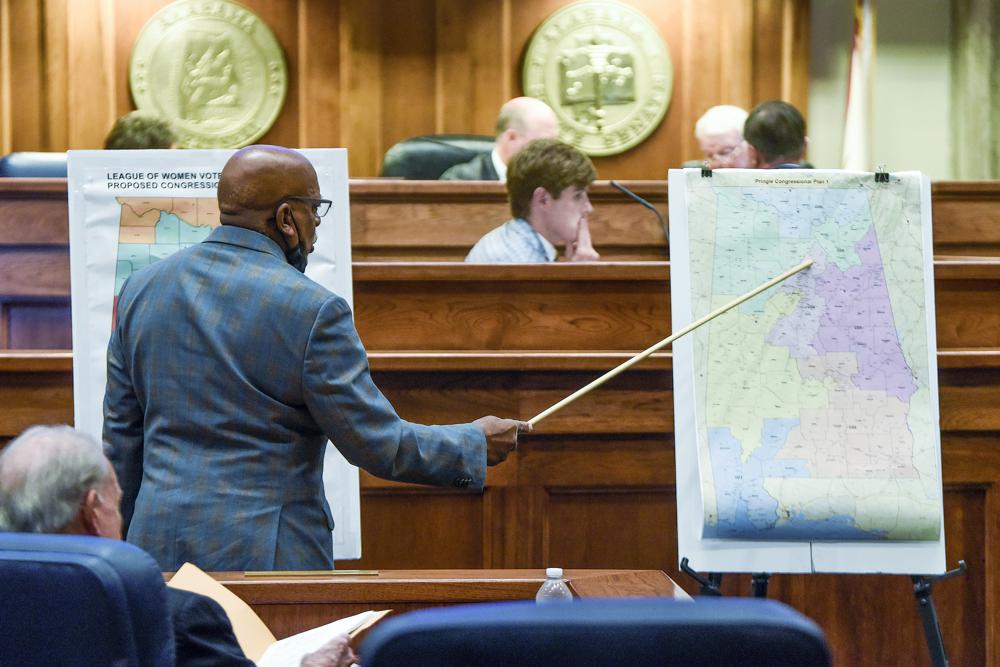
The entire political world in Alabama will be watching Monday to see what the court does with Alabama’s disputed redistricting case. A hearing is scheduled for Monday, August 14, in federal court at 9:00 a.m. CDT at the Hugo L. Black United States Courthouse in Birmingham. The hearing will focus on whether the map recently passed by the Alabama State Legislature complies with section two of the Voting Rights Act of 1965. Civil rights groups sued the state challenging the redistricting map that the Legislature passed in 2021. A three-judge panel of the Eleventh Circuit Court of Appeals in Atlanta ordered a halt to the 2022 election over concerns the map violated the 58-year-old Voting Rights Act. The U.S. Supreme Court intervened at the request of the state and allowed the election to proceed with the 2021 map. In June, the Supreme Court ruled in a 5 to 4 ruling that the congressional map likely violated the VRA and referred the case back to the three-judge panel. The Legislature was given until July 21 to submit a new map. The parties that sued the state and Alabama Democrats had wanted the Legislature to submit a map with two majority-minority districts. The Legislature, voting along party lines, refused and instead introduced and passed a controversial new map that simply increased Alabama’s Second Congressional District from 30% Black to 39.9%. That map kept the Gulf Coast, the Wiregrass, and Montgomery County whole; but was denounced by Democrats. The civil rights groups suing the state in federal court in Allen versus Milligan are asking the court to reject this new map. Members of the Alabama House Democratic Caucus, including House Minority Leader Anthony Daniels (D-Huntsville), will be outside the courtroom on Monday to issue their response following the conclusion of Monday’s hearing. Joining Daniels will be Caucus Chair Barbara Drummond (Mobile), Caucus Policy Chair Adline Clarke (Mobile), Caucus Secretary/ Treasurer Kelvin Lawrence (Hayneville), Rep. Patrice McClammy (Montgomery), Rep. Phillip Ensler (Montgomery), Rep. Chris England (Tuscaloosa), Rep. Patrick Sellers (Birmingham), Rep. Rolanda Hollis (Birmingham), Rep. Curtis Travis (Tuscaloosa), Rep. Napoleon Bracy (Mobile), Rep. Tashina Morris (Montgomery), Rep. A.J. McCampbell (Demopolis), and Rep. Sam Jones (Mobile) to comment on the court proceeding. “As we gather for the August 14th federal court hearing in Birmingham, Alabama, surrounded by the hallowed sites of the Civil Rights movement, we are reminded that this moment is inseparable from that struggle,” Daniels said. “We hope and pray that this court hearing, this next step, is a step forward on a continued path towards fair representation for all.” The Alabama House Democratic Caucus endorsed a redistricting plan, proposed by the Milligan and Caster plaintiffs, that would have created two majority Black congressional districts while respecting traditional redistricting guidelines. That map was rejected by the Republican supermajority and largely excluded from consideration during the legislative process. The major party primaries are on March 5, with candidate qualifying opening on October 16, so knowing where the congressional district lines are for that pending election is of some importance. To connect with the author of this story or to comment, email brandonmreporter@gmail.com.
Personnel Update: State Rep. Rolanda Hollis to be Sworn in as New Board Chair for Women in Training, Inc.
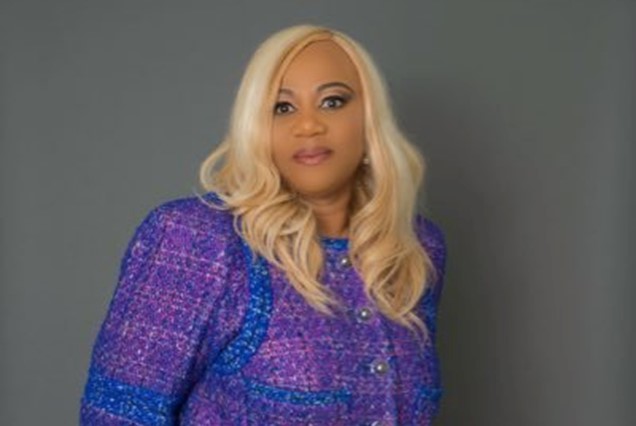
On Thursday, State Representative Rolanda Hollis (D-Birmingham) will be sworn in as Board Chair for Women in Training, Inc., a nonprofit organization. Women in Training, Inc. (WIT) distributes “WITKITS” of menstrual, hygiene, and dental products to underserved girls and youth who identify as nonbinary. “WIT’s co-founders, Breanna and Brooke Bennett – who also serve on the board – are my ‘sheroes’ for their work to end period poverty, and it is my honor to work alongside them, the rest of the board and our volunteers to make feminine hygiene products accessible to all girls across the state of Alabama,” Rep. Hollis said. The swearing-in ceremony will be on July 20, 2023, and will begin at 5:30 PM with a reception and ceremony at the Montgomery Museum of Fine Arts. Rep. Hollis has been a strong advocate for young girls, nonbinary youth, and ending “period poverty.” In 2022, Hollis sponsored House Bill 50 (HB 50), Alabama’s “period poverty” bill, which became law in April after three years of advocacy by Hollis, WIT, and WIT’s supporters. The law allocates $200,000 to the Alabama Department of Education to provide grants for menstrual products to students in Title I schools across the state. During the 2023 Alabama Regular Legislative Session, Rep. Hollis sponsored House Bill 3 (HB3), which bans smoking and vaping in a motor vehicle when a child under 14 is present. The Legislature passed the bill, which was signed into law by Alabama Governor Kay Ivey as Act Number 2023-93. To connect with the author of this story or to comment, email brandonmreporter@gmail.com.
Alabama House passes financial education legislation
On Tuesday, the Alabama House of Representatives passed legislation requiring Alabama public schools to teach public high school students about personal financial literacy. House Bill 164 (HB164) is sponsored by State Representatives Andy Whitt (R-Harvest). Rep. Whitt is a retired banker. “I have got story after story from thirty years of banking experience of young people who did not have a checking account,” said Whitt. “They go to convenience stores and check cashing places to get their paychecks cashed. One young fellow was working two hours a week just to be able to get his check cashed each week.” “In states with financial literacy, it has been shown that credit scores rise 20- or 30-points saving thousands of dollars on home mortgages,” Whitt said. Whitt said that the class would be “looking at high-interest loans – credit cards. Are there other options? It will look at the percent going into taxes. People don’t understand that when you get paid ten dollars an hour, you are not bringing home ten dollars an hour.” Whitt explained that HB164 gives schools flexibility in how this is taught to give the latitude to put it in a math class. “They have the ability to do that. It may be in a career tech class,” Whitt said. Rep. Roland Hollis said, “Thank you for bringing this. We have kids right now that cannot write a check.” Hollis is a businesswoman. “They need to know the business,” Hollis said. “We have kids who cannot even count the money back to you.” State Rep. Mary Moore said, “My concern is that the people who teach the curriculum; they have to be trained. You got some educators who do not manage their own money well, and they are going to teach children?” Whitt said, “This will be started in high school between the ninth and eleventh grade.” “I think you need to start in middle school,” Moore said. “The earlier you can start it, the better.” Whitt said there would be a test on financial literacy at the end of the instruction. “We are testing our little children to death,” Moore said. “And we are burdening our poor teachers with more paperwork than they can handle now.” Whitt said that this bill is just the start of the process and would bring other financial literacy bills in the future. “Orientation for junior colleges” is a possibility, Whitt said. “I hope this is my first step moving forward.” “This is important – very necessary,” said Rep. Danny Garrett. “A lot of people today don’t write checks. You are looking at EBT cards. They also tend not to carry cash. We are talking about 21st-century financial education.” State Rep. Thomas Jackson said, “Being an educator myself, how times have changed since I was in the classroom. People don’t want checks. They don’t want paper. People deal in electronic payments now.” Jackson said that many students come from poverty, so they have little experience managing money. “The reason they don’t know is that they have nothing to manage,” Jackson said. “Put money in the program and the experience and knowledge in how to get this off the paper and into the classroom.” Whitt said that the education would teach students about savings and investments. State Rep. Laura Hall asked if they would teach the students about Bitcoin. “Bitcoin – that is not covered,” Whitt said. “If you understand Bitcoin, let me know.” House Bill 164 passed the House 104 to 0. Ninety-eight members of the House signed on as cosponsors of HB164. The legislation now goes to the State Senate for their consideration. Tuesday was the eleventh legislative day of the 2023 Alabama Regular Legislative Session. To connect with the author of this story or to comment, email brandonmreporter@gmail.com.
Alabama House passes legislation outlawing smoking or vaping in a vehicle with children present
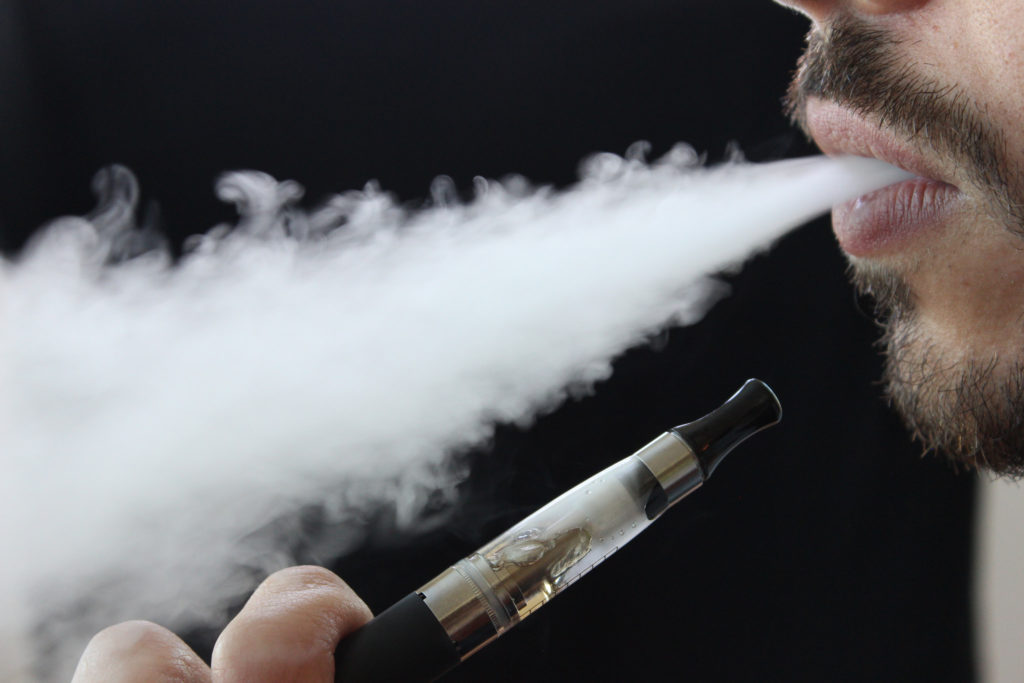
On Tuesday, the Alabama House of Representatives voted in favor of legislation to make it illegal to smoke or vape with a child present in the vehicle. House Bill 3 (HB3) was sponsored by State Rep. Rolanda Hollis. Hollis said, “This is about protecting kids.” According to the synopsis, “Existing law does not prohibit smoking or vaping in a motor vehicle when a child is present. This bill would prohibit smoking or vaping in a motor vehicle when a child under 14 years of age is present.” Hollis said that the law would apply whenever a child was in the car, whether the window was open or not, whether or not the vehicle was moving, and even if the door was open. Rep. Matt Simpson said, “Thank you for bringing this bill. How long have you been working on this?” Hollis said, “Seven years.” Simpson asked why marijuana was not included in the legislation. “It is illegal,” Hollis explained. “We will add it if it becomes legal.” Hollis explained that there are 67 toxins found in cigarette smoke and that vaping can be just as dangerous. Simpson said that with vaping, “We don’t know if there are illegal drugs in there or not. We don’t know if there is marijuana. We don’t know if there is fentanyl.” Rep. Barbara Drummond said, “I am going to be bringing several bills on vaping.” “A violation of this section is punishable by a fine not exceeding one hundred dollars ($100) for each violation,” the legislation states. “A violation of this section may be investigated and charged only as a secondary violation following the lawful stop of a motor vehicle based on probable cause of a separate violation of law, and the issuance of a citation or warrant of arrest for that violation.” Rep. Juandalynn Givan said that she was concerned that this would give police more of an opportunity to pull over motorists just for holding a vape. The legislation passed the House on an 84 to 15 vote. According to the National Center for Biotechnology Information of the National Institutes of Health (NIH), “Children are particularly at risk for the effects of second-hand smoke because their bodies are still growing and they breathe at a faster rate than adults.” A study revealed that second-hand smoke/passive smoking among children leads to acute respiratory illness in children as pneumonia, bronchitis, middle ear problem, cough & wheeze. HB3 now goes to the Alabama Senate for their consideration. The Senate is where this legislation has gotten held up in previous sessions. Tuesday was the Fifth Legislative Day of the 2023 Alabama Regular Legislative Session. To connect with the author of this story or to comment, email brandonmreporter@gmail.com.
Committee advances ‘divisive concepts’ bill without additional debate
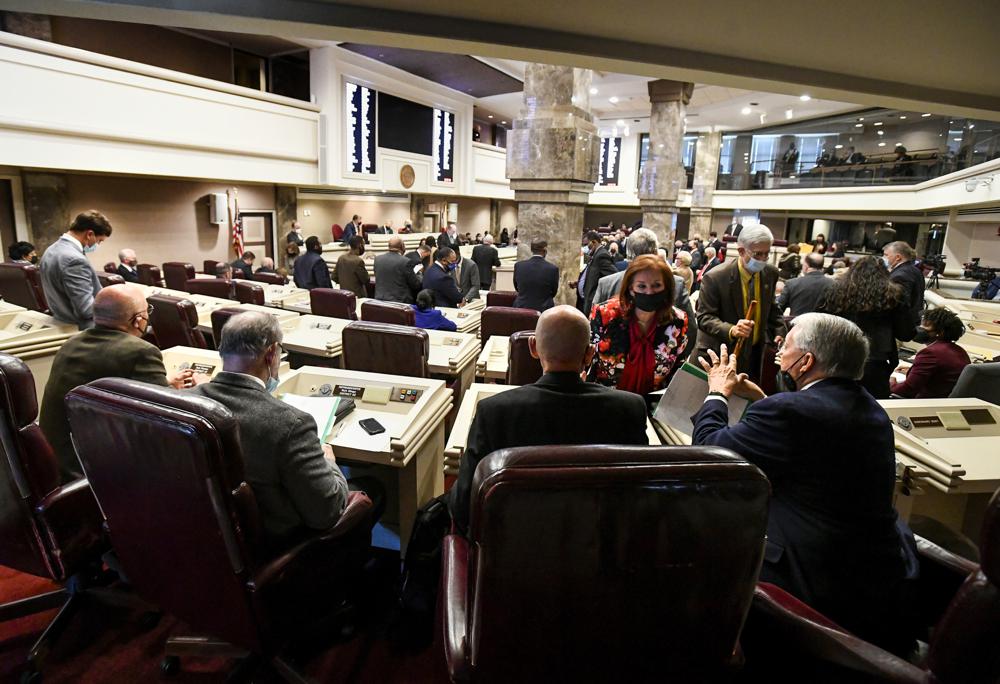
An Alabama legislative committee on Tuesday took seconds to advance a bill banning “divisive concepts” in classroom lessons and in state diversity training, including that white people should feel guilt over the actions of their ancestors. African American members of the House State Government Committee objected to the voice vote, which took place within 20 seconds of the bill being brought for discussion and without opposed lawmakers getting an opportunity to speak. The bill now moves to the full House of Representatives. “I think it is unjust,” Rep. Rolanda Hollis, a Democrat from Birmingham, said after the meeting of the quick approval. Hollis said she wanted to offer an amendment to the measure, adding, “This bill right here, it stops us from being able to teach history, real history.” The bill by Republican Rep. Ed Oliver of Dadeville would prohibit a list of “divisive concepts” from being taught in schools and in diversity training for state entities. The banned concepts would include that the United States is “inherently racist or sexist” and that anyone should be asked to accept “a sense of guilt, complicity, or a need to work harder solely on the basis of his or her race or sex.” It would also prohibit “fault, blame, or bias” from being assigned to a race, sex, or religion, or to members of a race, sex, or religion, solely on the basis of their race, sex, or religion. “I don’t think you should be teaching children because of their skin color that they are necessarily bad, or they can’t succeed because of their skin color,” Committee Chairman Chris Pringle, a Republican from Mobile, said of why he planned to vote for the bill on the House floor. The legislation comes as Republicans in several states seek to ban either so-called critical race theory or put guidelines on how race is discussed in the classroom. Republican supporters have said it would steer classroom lessons to facts, rather than ideology, and prevent educators and diversity trainers from stoking divisions. While opponents said it is motivated by election-year politics and would have a chilling effect on classroom lessons and discussions in an effort to “whitewash” history. The list in the Senate bill is similar to a 2020 executive order President Donald Trump issued banning “divisive concepts” in training federal employees that has since been repealed. Similar language has since popped up in bills in dozens of states. The bill would prevent a public K-12 school or state agency from teaching one of the “divisive concepts” to students, employees, and contractors. A college could “teach about doctrines pertaining to a divisive concept” as part of a larger course of instruction but could not compel “students to assent to the concept.” Rep. Kelvin Lawrence, a Democrat from Hayneville, said the bill is vaguely worded and he is concerned it will make professors fearful of delving into certain topics. “They’re just going to avoid teaching those things, and unfortunately, that’s a critical part of our history, a critical part of what has happened in America and what continues to happen,” Lawrence said. Democratic Rep. Chris England, who is chairman of the Alabama Democratic Party, criticized the way the committee handled the bill. He tweeted that Republicans on the committee silenced the opposition to “pass a bill that will prohibit free speech and whitewash history.” Pringle defended the swift approval, noting the bill had been discussed at two previous meetings, including one with a public hearing. “What more is there to say that we haven’t heard in the public hearing or the debate we had last week,” Pringle said. The committee had previously deleted language in the original version that dealt with how slavery should be taught. A similar bill is pending in the Alabama Senate. Republished with the permission of the Associated Press.
House committee advances lottery, casino bill

Lottery and casino legislation will be decided in the last two days of the legislative session after being advanced Tuesday by the House Economic Development and Tourism Committee. The committee voted to send the bill to the floor of the House of Representatives. The decision came after a public hearing in which opponents said the bill picks “winners and losers” by naming the nine casino locations. And proponents said it was time to give Alabama voters the opportunity to vote on gambling for the first time in two decades. If approved by lawmakers, the measure would go before voters in November 2022. The bill would establish a state lottery. Casinos would be located at Victory Land dog track in Macon county, Greentrack dog track in Greene County, Mobile County Race Course in Mobile County, and the Crossing at Big Creek in Houston County. The Poarch Band of Creek Indians would also have casinos at its three locations plus the final bid for a new north Alabama site in either Jackson or DeKalb counties. “So, 1999 was the last time the citizens of Alabama had an opportunity to vote on a comprehensive gaming plan or any type of gambling in the state. Since then, almost 200 pieces of legislation pertaining to gambling, gaming lottery have been introduced in some form,” Republican Rep. Chris Blackshear of Phenix City said. Opponents said the legislation has the government picking “winners and losers.” “It literally takes the name of a business and imbeds it in our Constitution. When have you ever seen that happen?” said Phil Williams, a former state senator who now heads the conservative Alabama Policy Institute. Some opponents argued it was unfair to exclude existing electronic bingo locations in Greene and Lowndes county operating under current constitutional amendments. The state has been a long-running legal battle over the legality of the slot machine lookalikes. Rep. Kelvin Lawrence, R-Hayneville, said the proposal as written would close an existing electronic bingo hall in Lowndes County, one of the poorest counties in the state while allowing a new casino location in north Alabama. “You are not only pouring salt in the wound, you are digging the hole, putting us in it, and burying us. That’s not fair,” Lawrence said. The proposal would name the sites for the casinos, but the casino license would be put up for bid. Some lawmakers asked what would happen if the site owner does not win the license. Blackshear said he thought if another entity won the license, it would be “very difficult to walk away from a sale, a partnership or a lease agreement.” “That’s so gangster, though?” Rep. Rolanda Hollis, D-Birmingham said. The Alabama Senate last month voted 23-9. However, the measure is facing a tough vote and a ticking legislative clock in the House of Representatives. Lawmakers have two meeting days remaining. Lawmakers plan to meet Thursday and then conclude the session May 17. The debate on the substantial piece of legislation comes at a time when the public is being largely excluded from the Alabama Statehouse because of the COVID-19 pandemic. While the public hearing was broadcast on the Legislature’s website, people have largely been unable to attend legislative proceedings. Republican Rep. Reed Ingram of Pike Road urged lawmakers to take a pause instead of trying to push out the bill in the last two days of session. He said lawmakers could resume debate during a special session for redistricting later this year. Democratic Rep. Berry Forte of Eufaula said the state has waited long enough. He said when he drives to Georgia from his east Alabama district, all he sees are Alabama cars with people buying lottery tickets. “I think we should vote on it and let the folks decide if we need it or not,” Forte said. Republished with the permission of the Associated Press.
Proposal in Alabama to up protection for Confederate statues
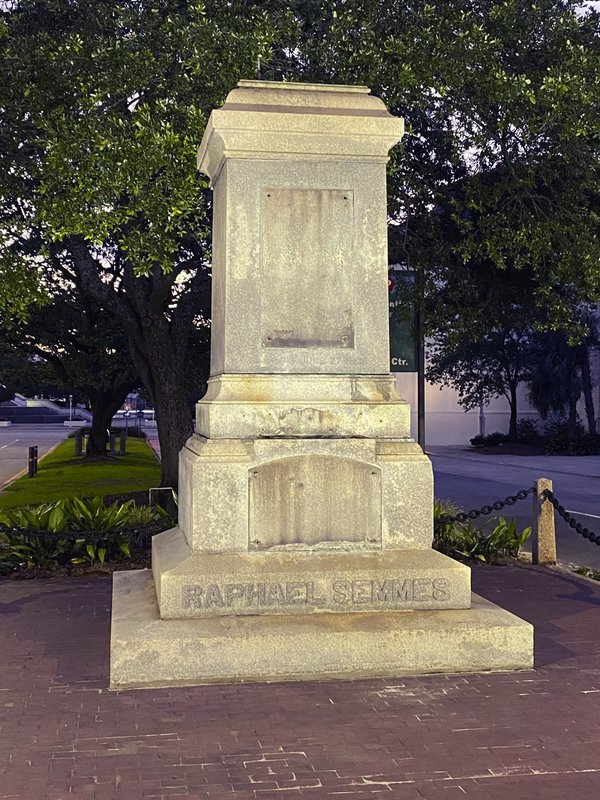
An Alabama lawmaker who disputes that slavery was the cause of the Civil War has proposed fining cities $10,000 a day for taking down Confederate and other longstanding monuments, a bill that drew contentious debate on Wednesday. The House State Government Committee held a public hearing on the bill by Republican Rep. Mike Holmes of Wetumpka that would dramatically increase fines for violating the 2017 Memorial Preservation Act. Current law levies a flat $25,000 fine, which some cities have paid as a cost of removing controversial monuments to other locations. “It’s a deterrent. The citizens of Alabama are upset at the damaging and destroying of these monuments,” Holmes said after the meeting. Holmes said he brought the bill as cities and counties began removing Confederate emblems. The bill drew heated debate as Black lawmakers described why the monuments are viewed as offensive. Some speakers at the public hearing claimed that the Civil War was not about slavery, a notion that is contrary to the widely accepted view that it was the root cause of the conflict. “Some of these monuments are a disgrace to some of us,” said Rep. Rolanda Hollis, a Black Democrat from Birmingham. “People that look like me, they were kidnapped. They were raped. They were beaten and nothing was done about it.” Holmes on Wednesday, and earlier this session, said he did not believe the Civil War was about slavery. Several speakers in favor of the bill repeated that view, which drew a sharp rebuke from some Black lawmakers. “It further shows white supremacy,” Democratic Rep. Juandalynn Givan, D-Birmingham, said of Holmes’ bill. “Why would you fine somebody $10,000 a day? That is ludicrous. But yet you say you are here for the people. And then you don’t know why the freaking war was fought,” Givan said, adding that “maybe they need to get a book and read.” The House Judiciary Committee earlier rejected a bill by Givan that would let cities and counties move the monuments to another location, such as a local park or state agency land, for preservation. The local governments would have to pay for the relocation. Committee Chairman Chris Pringle said it he was not sure when the bill will get a committee vote. Holmes told reporters Wednesday that he did not believe the Civil War was about slavery. “It was a tax thing. Tariffs going in and out of the ports,” Holmes said. Asked about Alabama’s 1861 Articles of Secession that says Alabama wanted to form a new government with other slave states, Holmes replied, “I’ve never seen that. Do you have proof of that?” After being shown the document on the Alabama’s bicentennial website, Holmes said he didn’t read it that way. “It is the desire and purpose of Alabama to meet the slaveholding state of the South who may approve such purpose in order to frame a provisional as well as Permanent Government upon the Principles of the Constitution of the United States,” the document reads. Historian Wayne Flynt, a former Auburn University history professor and the author of more than a dozen books, including co-writing “Alabama: A History of a Deep South State, said that slavery was the “key to the Civil War” but he said white southerners sometimes resisted that because they don’t want to admit their ancestors would fight to maintain slavery. “Coming to terms with history is something that we don’t do well in Alabama. Coming to terms with history admits that slavery was morally wrong, that it was a travesty of Christianity and therefore we could not possibly have done that,” Flynt said. “I’m sorry I’m not still teaching Alabama history because I would enroll them for free in my class,” Flynt quipped. Republished with the permission of the Associated Press.
Rolanda Harris introduces bill requiring men to get a vasectomy at age 50 or after third child

An Alabama state lawmaker has proposed legislation that would require men to get vasectomies within one month of their 50th birthday or the birth of their third biological child, depending on “whichever comes first.” “Under existing law, there are no restrictions on the reproductive rights of men,” the bill reads. “This bill would require a man to undergo a vasectomy within one month of his 50th birthday or the birth of his third biological child, whichever comes first.” Birmingham-Democrat, State Rep. Rolanda Hollis introduced House Bill 238 on Thursday, which states a man would have to pay for the procedure “at his own expense.” Hollis explained to ABC 33/40 her thinking behind the controvserial bill. “Many have seen HB-238 as an outrageous overstep; yet, year after year the majority party continues to introduce new legislation that tries to dictate a woman’s body and her reproductive rights. We should view this as the same outrageous overstep in authority,” she said. “The Vasectomy bill is meant to to neutralize last year’s abortion ban bill, and sends the message that men should not be legislating what women do with their bodies.” Abortion bill in question The abortion bill Hollis is referencing is 2019’s abortion ban that Gov. Kay Ivey signed into law, which made it made it a felony for doctors in the state to perform abortions in all cases except where the mother’s life is in danger. However, the bill was blocked from ever taking effect by U.S. District Judge Myron Thompson back in November.
Bill to prohibit smoking in car with minors receives favorable committee report
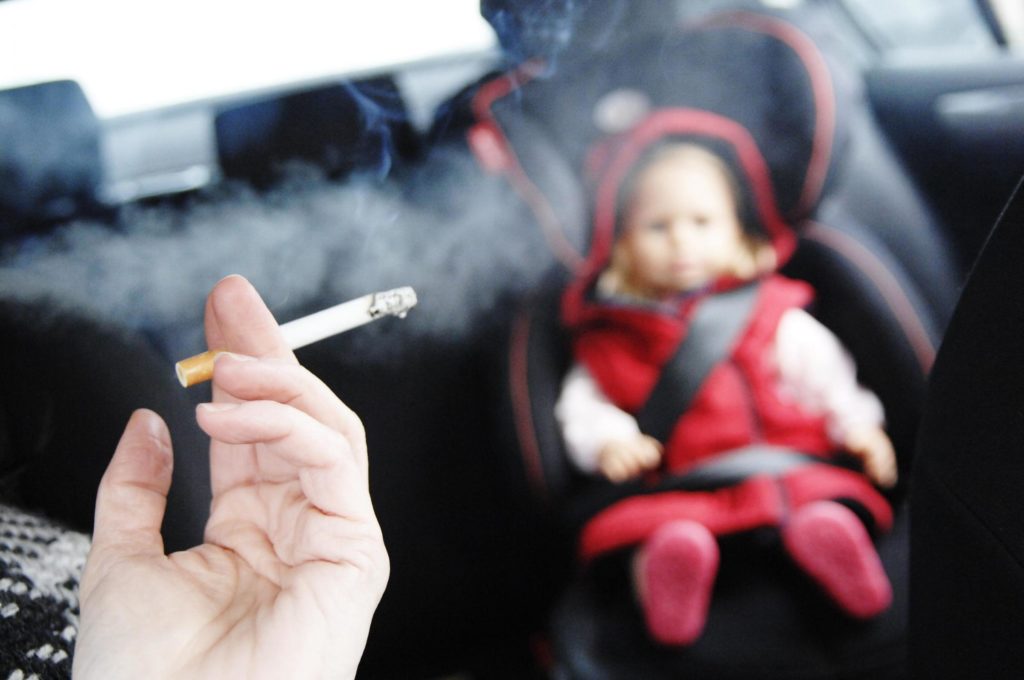
Under existing Alabama law, there is no prohibition against smoking tobacco products in a motor vehicle when a child is also present in the vehicle. But that could all change if a bill sponsored by Birmingham-Democrat, State Rep. Rolanda Hollis passes the legislature this session. House Bill 46 would make it illegal to smoke in a vehicle with minors under the age of 14, and would fine adults who choose to break the law up to $100. The legislation received a unanimous favorable report from the Alabama House Health Committee on Thursday. “You, as an adult, have a choice,” Hollis told WSFA-12. “You can get out of the car, but as a kid, you don’t have a choice. So, you’re in a packed compact car with smoke.” According to the National Center for Biotechnology Information of the National Institutes of Health (NIH), “Children are particularly at risk for the effects of second-hand smoke because their bodies are still growing and they breathe at a faster rate than adults.” In fact, a study revealed that second-hand smoke/passive smoking among children leads to acute respiratory illness in children as pneumonia, bronchitis, middle ear problem, cough & wheeze. According to the American Non-Smokers Rights Foundation, 10 states currently prohibit smoking in a personal vehicle when a child is present. This is Harris’ third time proposing the legislation.
2018: Year of the Woman in Alabama politics, primary update

If there ever was a “Year of the Woman” in Alabama, it’s 2018. Following the national trend, more Alabama women are stepping up to run for political office as a major party candidate than ever before, according to the Center for American Women and Politics at Rutgers University. But how did the female candidates fare in the June 5 primaries? Below is a list of women who prevailed in their races. Statewide Executive Office Currently only two women serve in statewide elected executive positions — Gov. Kay Ivey and Alabama Public Service Commission President Twinkle Andress Cavanaugh. But after last night’s election results, those numbers could change in November. Governor Gov. Kay Ivey (Republican candidate) triumphed over her three male opponents, and will face Walt Maddox in November’s general election. Lt. Governor Twinkle Andress Cavanaugh (Republican candidate) will face Will Ainsworth in a runoff election, July 17. Secretary of State Heather Milam (Democratic candidate) won her primary election, and will face John Merrill in the November general election. Alabama Court of Civil Appeals Christy Olinger Edwards (Place 1, Republican candidate) won her spot over Michelle Manley Thomason, another female republican candidate. U.S. Congress Currently only two women represent the Yellowhammer State in the United States Congress — 2nd District U.S. Rep. Martha Roby and 7th District U.S. Rep. Terri Sewell. Five other women ran for office in U.S. house races. Alabama 2nd District in the U.S. House of Representatives Rep. Martha Roby (incumbent, Republican candidate) was forced into a runoff set for July 17 with former Rep. Bobby Bright. Tabitha Isner (Democratic candidate) won the democratic primary for the 2nd district and will face either Roby or Bright in November. Alabama 3rd District in the U.S. House of Representatives Mallory Hagan (Democratic candidate) won the democratic primary for the 3rd district and will face incumbent Mike Rogers in the November general election. Alabama 7th District in the U.S. House of Representatives Rep. Terri Sewell (incumbent, Democratic candidate) was the only candidate in her race. State Legislature Amy Wasyluka (Democratic candidate) won the State Senate District 2 race Deidra Willis (Democratic candidate) won the State Senate, District 7 race Vivian Davis Figures (Democratic candidate) won the State Senate, District 33 race Laura Hall (Democratic candidate) won the State House District 19 race Barbara Bigsby Boyd (Democratic candididate) won the State House District 32 race Debbie Hamby Wood (Republican candidate) won the State House District 38 race April Weaver (Republican candidate) won the State House District 49 race Louise “Lulu” Alexander (Democratic candidate) won the State House District 56 race Rolanda Hollis (Democratic candidate) won the State House District 58 race Mary Moore (Democratic cadet) won the State House District 59 race Juandalynn Givan (Democratic candidate) won the State House District 60 race Elaine Beech (Democratic candidate) won the State House District 65 race Pebblin Walker Warren (Democratic candidate) won the State House District 82 race Pat “Patsy” Jones (Democratic candidate) won the State House District 83 race Adline C. Clarke (Democratic candidate) won the State House District 97 race
Push for greater equality: Adline Clarke proposes ‘gender pay gap’ bill

It’s a fact: women earn less than men. According to the U.S. Department of Labor, women who worked full-time, year-round in 2014 earned on average, 79% of men’s median annual earnings. That’s not sitting well with one Alabama lawmaker who’s hoping her gender pay gap legislation makes it across the finish line as the 2018 legislative session nears its close. HB368, sponsored by Mobile-Democrat State Rep. Adline Clarke, would prohibit employers from paying their employees less than the wage they would pay a member of the opposite sex for a similar job or responsibilities when viewed as a composite of skill, effort, and responsibility, as specified. Alabama is one of only two states, along with Mississippi, without an equal pay law. “Nearly every state has a law prohibiting employers differently based solely on gender. I’m disappointed. I would have thought we would have passed a long long before now,” Clarke told AL.com “Timing is everything.” However, HB368, also known as the “Gender Pay Gap,” would not just make wage inequality illegal, but would also add several provisions to the law including: Requires an employer to affirmatively demonstrate that a wage differential is based upon one or more specified factors Prohibits an employer from discharging, or in any manner discriminating against. or retaliating against an employee for the enforcement of these provisions Provides for enforcement of the bill Provides that an employer may not prohibit an employee from disclosing the employee’s own wages, discussing the wages of others, inquiring about another employee’s wages, or aiding or encouraging any other employee to exercise his or her rights under these provisions And requires an employer to maintain a record of wages paid to his 15 or her employee for a certain amount of time. The proposal, filed on Feb. 1, is scheduled to appear before the Alabama House State Government Committee on March 21. Alexander City-Republican State Rep. Mark Tuggle, the committee’s chairman, hopes to have Clarke’s proposal on the committee agenda next week. The bill currently has 26 co-sponsors, both Republicans and Democrats: Autauga County-Democrat Kelvin Lawrence Mobile County-Democrat Barbara Drummond Barbour County-Democrat Barry Forte Perry County-Democrat Prince Chestnut Jefferson County-Democrat Rolanda Hollis Madison County-Democrat Anthony Daniels Jefferson County-Democrat Rod Scott Tallapoosa County-Democrat Pebblin Warren Choctaw County-Democrat Elaine Beech Madison County-Democrat Laura Hall Jefferson County-Democrat Merika Coleman Jefferson County-Democrat Mary Moore Mobile County-Democrat Napolean Bracy Blount County-Republican Connie Rowe Shelby County-Republican April Weaver Talladega County-Democrat Barbara Boyd Jefferson County-Democrat Juandalynn Givan Etowah County-Republican Becky Nordgren Morgan County-Republican Terri Collins Montgomery County-Democrat John F. Knight Montgomery County-Democrat Thad McClammy Tuscaloosa County-Democrat Artis McCampbell Mobile County-Democrat James Buskey Bibb County-Democrat Ralph Howard Lauderdale County-Democrat Marcel Black Houston County-Democrat Dexter Grimsley
Bill pre-filed in Alabama House would ban smoking with minors in car
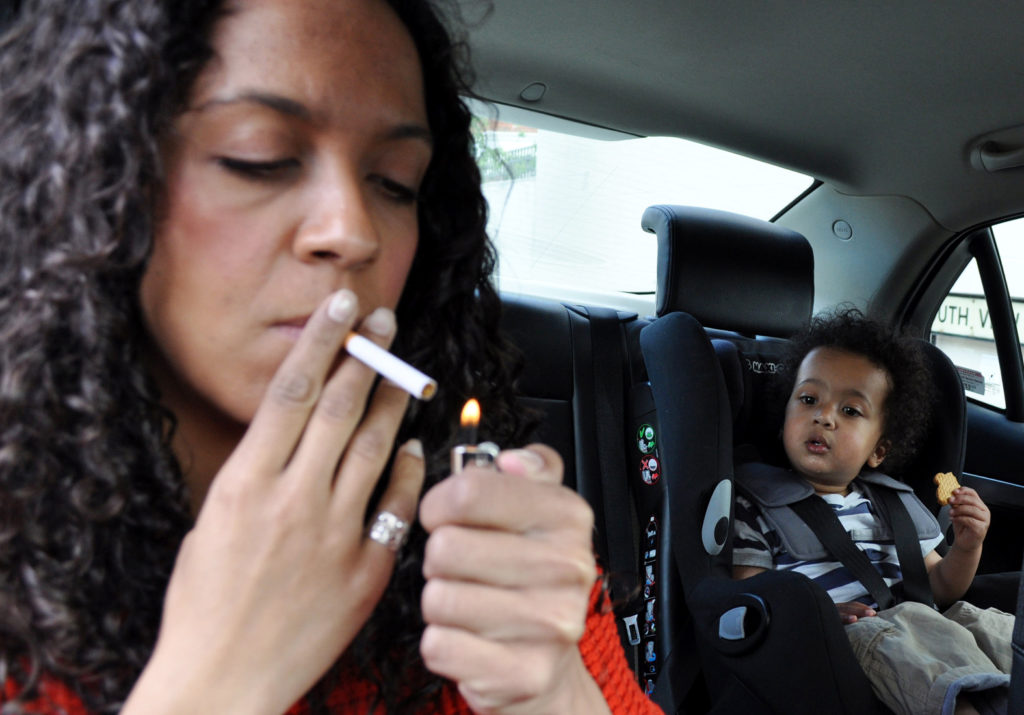
A bill that could stop Alabamians from smoking with children in the car has been pre-filed with the state House. Birmingham-Democrat state Rep. Rolanda Hollis pre-filed HB26, which would make it illegal to smoke a tobacco product in a motor vehicle — whether in motion or at 24 rest — when anyone under 18 is also present. The penalty for violating the law would be a $100 fine. According to the Centers for Disease Control and Prevention (CDC), secondhand smoke kills over 38,000 Americans each year. Children exposed to secondhand smoke are at an increased risk for sudden infant death syndrome (SIDS), acute respiratory infections, ear problems, severe asthma, and reduced lung function. Should Alabama pass Hollis’ bill, it would become the ninth state, along with Guam and Puerto Rico, to have laws on the book that prohibit smoking in the car with children. According to the Public Health Law Center, as of June 2017, here are the current statewide smoking bans: Arkansas: Up to $25; may be eliminated if violator enters a cessation program California: Up to $100 Louisiana: $150 or a minimum of 24 hours of community service Maine: 1st year after enactment, written warning; thereafter, $50 fine or warning Oregon: 1st offense, $250; subsequent violations, $500 Utah: Maximum fine of $45; may be suspended if violator has no prior convictions and enrolls in cessation program Vermont: Maximum fine of $100 Virginia: Subject to fine of $100 If passed, Hollis’ bill would go into effect on the first day of the third month following its approval by Gov. Kay Ivey.
