
Abrasive Ted Cruz tries to use personality to his advantage
Ted Cruz‘s reputation as an arrogant, grating, in-your-face ideologue has dogged him throughout the Republican presidential race. But it hasn’t stopped the Texas senator’s rise. Cruz is increasingly embracing his irascible persona, trying to turn what could be a liability into an asset. “If you want someone to grab a beer with, I may not be that guy,” Cruz said at a Republican debate this fall when asked to describe his biggest weakness. “But if you want someone to drive you home, I will get the job done and I will get you home.” Cruz and his supporters relish his outsider status, highlighting his conflicts with fellow Republican senators. Not one has endorsed him for president. A group backing Cruz’s candidacy sent out a fundraising email plea in December with the subject line “Washington hates Ted Cruz.” Cruz frequently rails against the “Washington cartel,” which he argues is scared that conservatives are uniting behind him, and says he’s glad that “Washington elites” despise him. Cruz supporters, including some who turned up for a large rally at an evangelical church near Richmond, Virginia, in December, are embracing the abrasiveness that’s caused Cruz to clash with other Republicans. “They view him as a renegade in the GOP,” said Carter Cobb, 56 and retired from the Navy, from Mechanicsville, Virginia. “He doesn’t toe the party line. That’s what we’re trying to get away from.” To Cobb and others, Cruz is the only candidate willing to make anyone angry and stand up for what he believes in. “It makes me like him all the more. I’ve always liked people who were on the outside,” said Daniel Daehlin, 51, from Richfield, Minnesota. “Ronald Reagan never got along with the establishment. They hated him in 1976 and ’80. I like Mr. Smith Goes to Washington — someone who goes there, speaks his mind and doesn’t try to cater to the inside-the-Beltway crowd.” Myra Simons, a Cruz backer from Murfreesboro, Tennessee, agrees. “Are we going to elect someone just because you can’t sit across the table and have dinner with them?” Simons said. “Or are you going to stand with someone who stands with the Constitution and is serious about the trouble our country is in?” Cruz made his reputation in the Senate by refusing to compromise. He filibustered for 21 hours against President Barack Obama‘s health care law. The confrontational strategy he championed resulted in a 16-day partial government shutdown and alienated GOP leaders. But his reading of “Green Eggs and Ham” during that filibuster became a seminal moment for Cruz. He frequently refers to it, including in a recent television ad he ran in Iowa where he reads to his two daughters from reimagined holiday stories with a conservative bent such as “The Grinch Who Lost Her Emails.” While the ad was designed to be funny, Cruz is not known for his sense of humor. Foreign Policy magazine once described him as “the human equivalent of one of those flower-squirters that clowns wear on their lapels.” The national collegiate debating champion has shown his brusque side in the presidential debates, including the most recent one in Las Vegas when he refused to stop talking even as moderator Wolf Blitzer of CNN tried to shut him down. Craig Mazin, who was Cruz’s freshman roommate at Princeton, went so far as to tell the Daily Beast in a 2013 interview that he would be happier with anyone other than Cruz as president. “I would rather pick somebody from the phone book,” Mazin said. But Cruz has shown a lighter side that his campaign says demonstrates he’s not as unlikable as his reputation suggests. Cruz acted out scenes from “The Princess Bride” during a November interview at WMUR in New Hampshire, and that clip has been watched more than 250,000 times on YouTube. After rival Donald Trump referred to Cruz as “a little bit of a maniac,” the Cruz campaign tried to laugh it off by posting a video on Twitter of the song “Maniac” from the film “Flashdance.” Research shows that the importance of a candidates’ likability may be overrated anyway, said David Redlawsk, a Rutgers University expert in Iowa electoral politics who is spending the fall at Drake University in Des Moines, Iowa. “Voters are looking for a whole range of things,” Redlawsk said, “and likability is just one small part of that.” Republished with permission of the Associated Press.
Rick Santorum tells #SunshineSummit U.S. is verging ‘on global war’

Hours after the terrorist attacks in Paris, Republican presidential candidate Rick Santorum told a Sunshine Summit crowd on Saturday that the U.S. was “on the verge of a global war.” “The world is on fire,” he said. “You’re going to be electing a wartime president … We better elect someone with experience, (not) someone who isn’t ready.” Santorum, a former U.S. senator for Pennsylvania, served on the Armed Services committee, supported the Iraq War and backed Iranian sanctions. He blamed the soft foreign policy of President Barack Obama and Democratic presidential candidate Hillary Clinton, formerly Obama’s secretary of state, for abandoning Iraq “against all the generals’ recommendations.” Santorum said of Parisians, “We will stand with them, pray with them and — if we had better leadership — help them.” He angrily mocked Obama’s concern of carbon dioxide, the main cause of global warming, being a greater threat than Islamic extremists. The terror attacks in Paris that claimed over 100 victims were claimed by Islamic State, the Mideast jihadist organization. “Hold your breath, otherwise you’re going to destroy the world,” Santorum said. Islamic State wants to rule under a 7th century form of Islam, he said, and he’d “bomb them back to the 7th century.” He reminded the audience of what he called the other threat in the region, Iran, which he said is still on the path of developing weapons despite a nuclear deal. “Iran with a nuclear weapon is a threat to every man and woman in this country,” he told the audience. The next president needs to be more like Ronald Reagan, someone that “the other side, the enemy, knows who they’re dealing with.” Santorum is at 0.8 percent in the polls, according to the latest average calculated by The Huffington Post. He’s a devout Catholic and social conservative known for his stands against gay marriage and abortion. Santorum also pushed an amendment to the No Child Left Behind Act while in the U.S. Senate that called for the teaching of intelligent design, the view that an “intelligent cause” is responsible for changes in nature, not Darwinian natural selection. The 57-year-old ran for president in 2012, when his rise in popularity peaked with his win of the Iowa caucuses — though by a slim 34 votes. He went on to win several more primaries before taking a dive in the polls and ending his campaign that April.
News that Ben Carson only became Republican a year ago isn’t really news
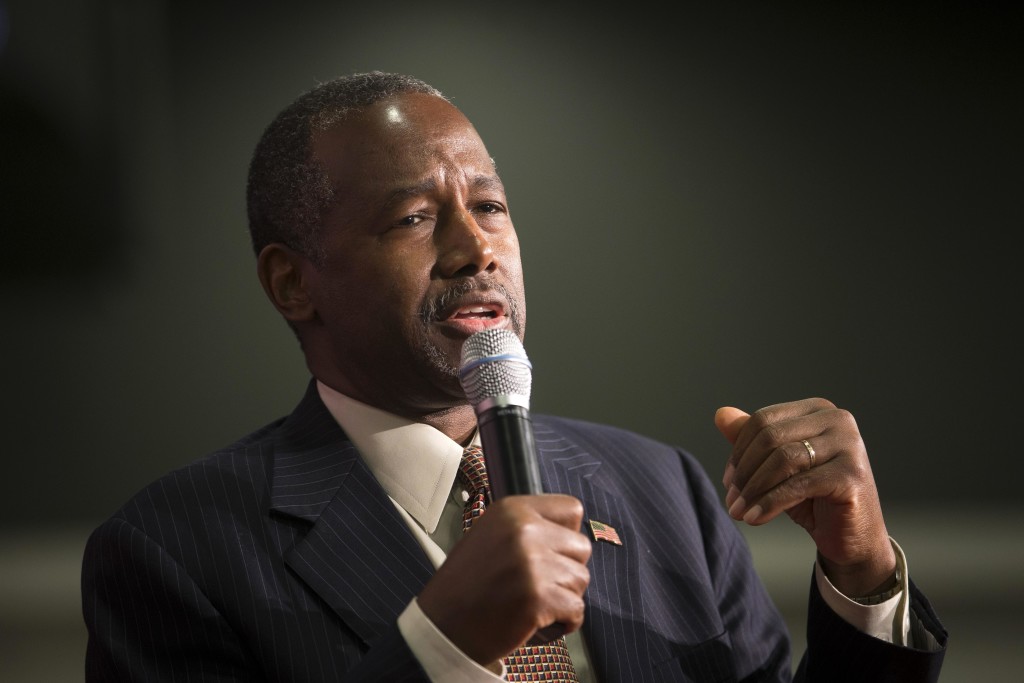
Dr. Ben Carson has been getting hammered in recent days for some of his outlandish comments on the campaign trail. Both the New York Times‘ Charles Blow and the Washington Post’s Eugene Robinson have slammed the GOP presidential candidate for his comments on what he would do if confronted by a mass killer who wanted to shoot him, as well as his invoking Nazi Germany when talking about gun control. Carson has dismissed such complaints, and on The O’Reilly Factor on Monday night, host Bill O’Reilly defended him, saying, “There’s something about you that really annoys the secular-progressives.” But it’s not just liberals who are scrutinizing the retired pediatric neurosurgeon, who has maintained in the top tier of GOP candidates right behind Donald Trump in most national and statewide polls in the Republican presidential contest. On a conservative website called the The American Mirror, blogger Kyle Olson breathlessly reports that Carson never affiliated with the Republican Party until he changed his voter registration in Palm Beach County on October 31,2014. He goes on to writes that Carson was previously affiliated with the Independence Party of Florida, and prior to moving to Florida, he was registered as an independent in Maryland since 2001, not having voted in any primaries through the next 10 years. However, Carson has never been shy about admitting that though he was once a Republican, he left the party decades ago before registering again with the GOP last October in Palm Beach County, where he currently lives. “It’s truly a pragmatic move because I have to run in one party or another. If you run as an independent, you only risk splitting the electorate,” Carson told The Washington Times in an interview last fall before he made the change. “I clearly would not be welcome in the Democratic Party, and so that only leaves one party.” Carson says he grew up as a Democrat but switched his party affiliation to Republican in the 1980s after listening to Ronald Reagan. However, he left the party and switched to being an independent about 15-20 years ago after getting a “sour taste” watching Republicans go after Bill Clinton regarding the Monica Lewinsky affair. “I just saw so much hypocrisy in both parties,” he told the Times. The story was picked up and ran online by conservative news sites like TeaParty.org, WorldNetDaily and the DailyCaller.
Jeb Bush calls Washington culture “incompetent” and “corrupt” in new ad
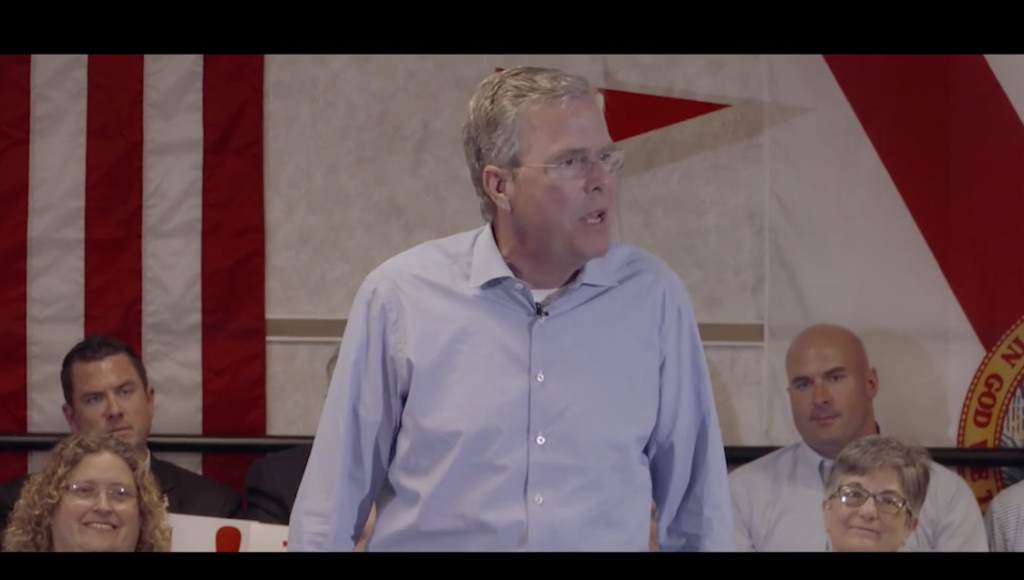
In a new 90-second video called, “Why I’m Running, “Jeb Bush is shown displaying a fire in his belly in clips from a town hall meeting where he touts his success in Florida as governor, and blasts Washington D.C. and Barack Obama directly. “The source of optimism I have is because I know the American people and its ability to innovate, create, to disrupt, its belief in the future,” Bush says in one clip. “There’s no way that Barack Obama or the progressive liberals in Washington can take away the bigness of this place.” The ad begins with Bush criticizing the D.C. culture, calling it “incompetent” and “in some cases, corrupt,” but says that doesn’t mean it has to be that way (as photos of Obama and Hillary Clinton are shown). He then goes positive and boasts about how he reformed Florida. “What we have to do is stop saying how angry we are about it, and win the election so we can fix it!,” he says, “it’s not about yapping, it’s not about talking, it’s about doing …” The ad will reportedly be screened prior to Bush’s appearance tonight at the Scott County Republican Party Ronald Reagan dinner in Bettendorf, Iowa. Watch below:
In op-ed, Jeb Bush links his tax reform package to California’s iconic Prop 13
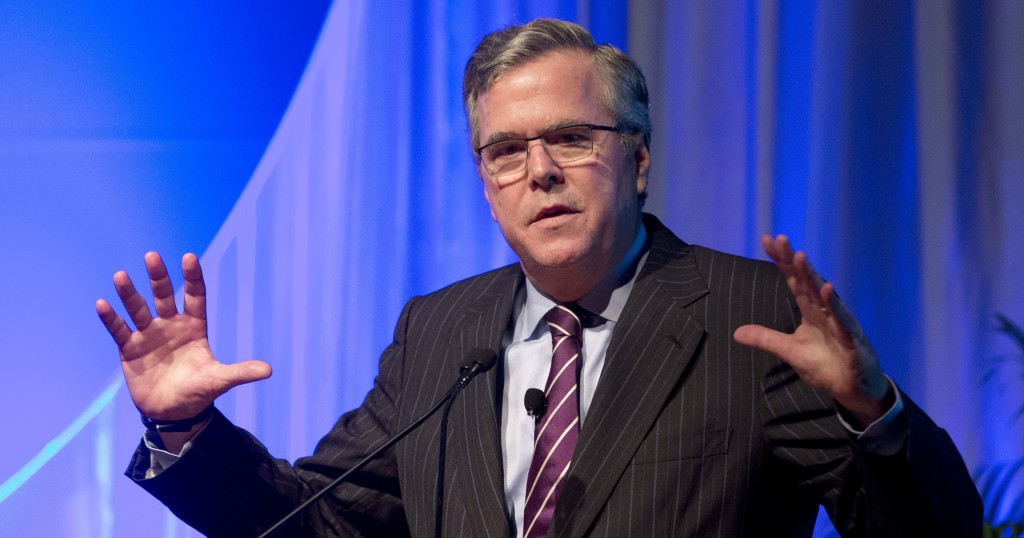
With the second Republican Party presidential debate taking place this week at the Ronald Reagan Library in Simi Valley, we’re hearing more references than ever references by the GOP candidates to the the nation’s 40th president, who remains as powerful an iconic figure as anyone in Republican politics. That certainly includes Jeb Bush, whose op-ed in today’s Orange County Register is titled, “A Reagan inspired tax reform plan.” He begins the piece by celebrating the fact that the debate (to be televised by CNN at 8 p.m. Eastern on Wednesday) takes place in Southern California, “the birthplace of the tax-cut movement in America.” He’s right about that. It was in 1978 that Californians voted on Proposition 13, also known as “Jarvis/Gann.” It was named after two Southern California conservative activists, Howard Jarvis, and Paul Gann, who would end losing to Democrat Alan Cranston in a bid for the U.S. Senate in 1980. Prop 13 was a political earthquake. It put a strict cap on property taxes, which in the 1970s were going through the roof in the Golden State. It was opposed by then Governor Jerry Brown, who immediately supported it after it won decisively at the polls. “President Reagan wisely identified that the American people were fed up with paying exorbitant taxes and weary from the failed economic policies of the Jimmy Carter administration,” Bush writes in the piece. “During his run for the presidency in 1980, Reagan put dramatic tax relief at the center of his campaign, calling for an across-the-board reduction in marginal tax rates. As president, Reagan succeeded in ending the Carter malaise by bringing the top marginal tax rate down from 70 percent to 28 percent and, in the process, unleashing a period of economic growth and prosperity that renewed the American Dream.” Bush then segues to his recently announced tax reform plan, a plan that he says will put the country on a path to 4 percent growth, something that neither his father nor brother was ever able to achieve in their collective 12 years in the White House. “Like President Reagan, I intend to dramatically reform our tax code, consolidating today’s seven brackets to three (28 percent, 25 percent and 10 percent) and eliminating special interest loopholes and carve-outs that disproportionately benefit the wealthy.” Bush writes that he will “relish” the opportunity to contrast his vision for sparking economic growth with Donald Trump, who he accuses of having supporting “the liberal big government, high tax philosophy espoused by Nancy Pelosi, Elizabeth Warren, Hillary Clinton and Barack Obama.” Here’s the piece in its entirety: The Republican candidates for president will debate Wednesday at the Reagan Library in Simi Valley. It is fitting that this important debate be held in Southern California, the birthplace of the tax-cut movement in America. Thirty-seven years ago, Howard Jarvis, a Southern California businessman and political activist, spearheaded Proposition 13, a ballot measure to place a strict cap on property taxes. Californians, who had endured massive increases in the taxes on their homes, revolted against the status quo in Sacramento and passed Prop. 13 overwhelmingly, sparking a nationwide movement to cut taxes that Ronald Reagan referred in his autobiography to as a “prairie fire.” President Reagan wisely identified that the American people were fed up with paying exorbitant taxes and weary from the failed economic policies of the Jimmy Carter administration. During his run for the presidency in 1980, Reagan put dramatic tax relief at the center of his campaign, calling for an across-the-board reduction in marginal tax rates. As president, Reagan succeeded in ending the Carter malaise by bringing the top marginal tax rate down from 70 percent to 28 percent and, in the process, unleashing a period of economic growth and prosperity that renewed the American Dream. After six and half years of the Obama administration, the nation again finds itself at a critical crossroads. President Obama has increased taxes by nearly $2 trillion and left us with one of the weakest recoveries in our nation’s history, so weak that, for many, the recession never stopped due to the hardships they are personally experiencing. What these working and middle-class Americans see as a recession, the Democrats and liberal academics call “the new normal.” I refuse to accept that. That is why I have outlined a bold tax reform plan that will help put us on the path to 4 percent economic growth, 19 million new jobs and rising wages for working families. Like President Reagan, I intend to dramatically reform our tax code, consolidating today’s seven brackets to three (28 percent, 25 percent and 10 percent) and eliminating special interest loopholes and carve-outs that disproportionately benefit the wealthy. Under my plan, millions of working families will have their income tax liabilities eliminated, and the average middle-class family will receive a tax reduction of approximately $2,000. For a working family earning under $40,000, we’ll eliminate their income tax liability altogether. I also am proposing major corporate tax reform to make American businesses more competitive. U.S. businesses pay the highest tax rate in the industrialized world. Under my plan, the top rate would fall from 35 percent to 20 percent, five points lower than China’s corporate rate. This tax cut for job providers will turbocharge our economy, lead to productivity gains and make it possible for American businesses to provide higher wages to their workers, something that is critically important since the middle class hasn’t received a pay raise in 15 years. I relish the opportunity Wednesday to contrast my vision for sparking economic growth and lifting up the middle class with those of other candidates, like Donald Trump, who have supported the liberal big government, high tax philosophy espoused by Nancy Pelosi, Elizabeth Warren, Hillary Clinton and Barack Obama. This issue isn’t just about numbers. It’s the difference between working Americans staying ahead or falling behind. The difference between being stuck in this “new normal” or growing at a pace that lifts up everyone. As president, I will be committed to leading in the
Jeb Bush releases ad pushing his tax cut plan
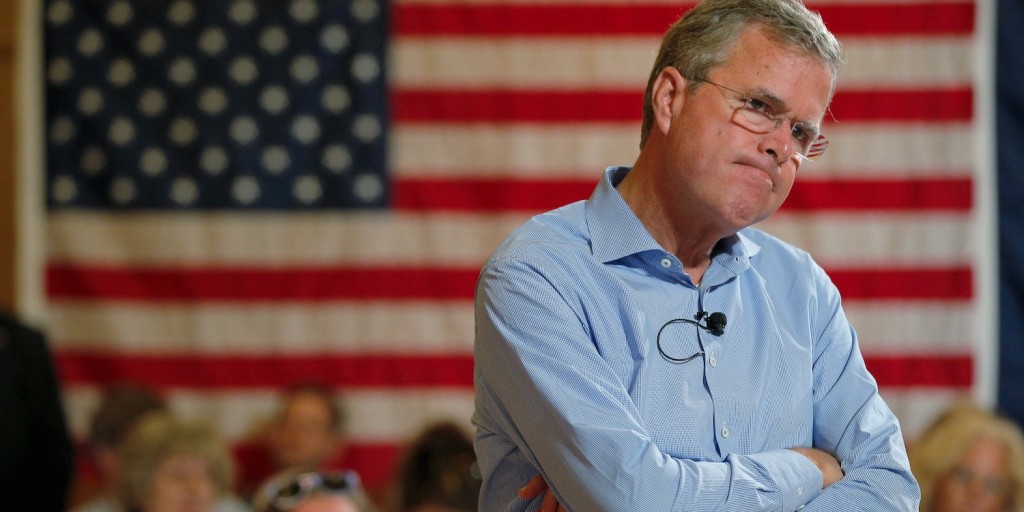
Jeb Bush unveiled his tax plan last week at a poultry-cooling equipment facility in North Carolina, and his campaign team has edited footage from that event into a new ad they released on Sunday. The plan would reduce the number of tax brackets that Americans pay into from seven to three, reducing the lowest amount that anyone would pay to 28 percent, which was the highest level when Ronald Reagan left office in 1988. Middle-class tax rates would fall to 10 percent for families with incomes up to $89,000 and to 25 precent for incomes up to $163,800. Corporate, capital gains and dividend taxes would all fall to 20 percent, while the estate tax is eliminated. Bush also would provide immediate expensing of plant and equipment for businesses, which the Tax Foundation says is the most pro-growth tax fix to create jobs and higher incomes. In a nod to the economic populism, he would also eliminate the advantage for private-equity and other high-dollar financial managers known as the “carried interest” loophole. “For years, wealthy individuals have deducted a much greater share of their income than everyone else,” Bush wrote in a Wall Street Journal op-ed. “We will retain the deductibility of charitable contributions but cap the deductions used by the wealthy and Washington special interests, enabling tax-rate cuts across the board for everyone.” Check out the video below:
Fed-up and angry supporters let Trump defy political gravity
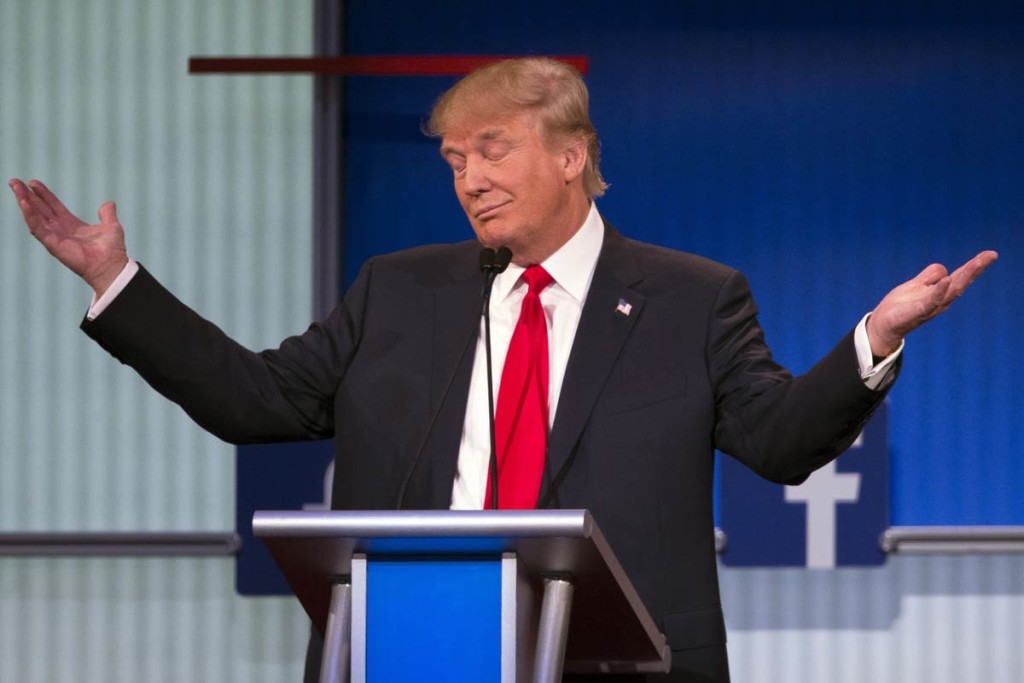
Donald Trump insults and exaggerates. He dismisses the need for public policy ideas, gets confused about world affairs and sometimes says things that flat out aren’t true. And the cheers from his supporters only grow louder. By the standard that voters typically use to judge presidential candidates, Trump probably should not have survived his first day in the 2016 race. Yet as the summer draws to a close and the initial votes in the nominating calendar appear on the horizon, Trump has established himself as the Republican front-runner. Listen to these voters: “It’s totally refreshing. He’s not politically correct. He has a backbone and he cannot be bought,” said Leigh Ann Crouse, 55, of Dubuque, Iowa. “This country needs a businessman just like him to put us back on track, to make us stop being the laughing stock of this world,” said Ken Brand, 56, of Derry, New Hampshire. “He says everything that I would like to say, but I’m afraid to say. What comes out of his mouth is not what he thinks I want to hear,” said Janet Boyden, 67, of Chester, Massachusetts. They are among the dozens of voters interviewed in the past two weeks by The Associated Press to understand how Trump has defied the laws of political gravity. Uniting them is a deep-rooted anger and frustration with the nation’s political leaders – President Barack Obama and conservative Republicans who, these voters say, haven’t sufficiently stood up to the Democratic administration. Some haven’t voted in years, or ever, and may not next year. But at this moment, they are entranced by Trump’s combination of utter self-assurance, record of business success and a promise that his bank account is big enough to remain insulated from the forces they believe have poisoned Washington. By the way, they say it’s not that they are willing to look past Trump’s flaws to fix what they believe ills the country. It’s that those flaws are exactly what makes him the leader America needs. “At least we know where he stands,” said Kurt Esche, 49, an independent who was at Trump’s recent rally outside Boston. “These other guys, I don’t trust anything that comes out of their mouths. They’re lying to get elected. This guy’s at least saying what he believes.” “He may have started as a joke,” Esche said, “but he may be the real deal.” — Crouse is a merchandise processor at a retail distributor outside Dubuque, the Mississippi River town where Trump tossed Univision anchor Jorge Ramos from a news conference. A political independent who has never participated in Iowa’s leadoff presidential caucuses, Crouse said she began following Trump from the moment he referred to Mexican immigrants as criminals during his campaign kickoff. “He’s just attracting people who are frustrated, and as you can see, there are a lot of us,” she said. Illegal immigration is the perfect summation of Trump’s unorthodox campaign. He claims it’s an issue the GOP would not be discussing if not for his presence in the race, even though the topic has been at the center of political debate for years. It’s the only one on which he has made a concrete proposal; his rivals, by comparison, have rolled out lots of ideas on a range of issues. Here’s Trump’s pitch: deport millions of people who are living in the United States illegally and build a border wall. Critics deride this approach as naïve, but his supporters say it’s the obvious solution. “As crazy as it might be, I think he’s addressing something that needs to be heard,” said Randy Thomas, 40, of Bedford, New Hampshire. “I think he’s saying something that everybody thinks always has to be addressed. If you have a country of laws, you have to abide by the laws.” Republican pollster Frank Luntz, who recently held a discussion with a group of nearly 30 Trump backers in Virginia, said such support is emblematic of Trump’s popularity. It stems less from their love for the candidate and more from a belief those in power have failed. “He activates the anger and frustration they have toward Washington and Wall Street,” Luntz said. — For many, Trump’s rise is a reaction to Obama, long criticized by opponents as a weak leader who appeases America’s enemies rather than asserting U.S. dominance on the global stage. The voters interviewed by AP said much of Trump’s appeal stems from their belief he is a decisive and forceful leader who never backs down or apologizes, even when maybe he should. Many appear convinced that the sheer force of Trump’s personality can reverse decades of global realignment, and that his pledges to rid the country of people living in the U.S. illegally and penalize imported goods will restore manufacturing jobs lost to China and boost an economy still scarred by the recession. “We’re just so weak. We’re not respected anymore,” said Jerry Welshoff, 56, of Franklin, Massachusetts. He arrived at a recent Trump event near Boston unsure about the candidate; he emerged sold on the candidate. “We’ve appeased everything. We can’t negotiate. I would want Donald Trump to sit across a table from (Russian President Vladimir) Putin or Iran or the Mexican prime minister to cut a deal because he’s done it his whole life,” he said. The frustration among voters isn’t limited to their feelings about Obama. Welshoff said the Republican Party has done nothing but acquiesce to Obama despite taking control of Congress in 2014. It’s the same complaint heard from Duane Ernster, 57, of Dubuque. He is disappointed by the few accomplishments of tea party candidates elected to Congress in 2010. “Things just didn’t happen. It just hasn’t happened the way we’d hoped,” he said. “Maybe we need a warrior instead of a politician. People compare Mr. Trump to Putin. There’s something to be said about the man, who takes care of the Russian people.” Others are simply blown away by Trump’s wealth and his promise to pay for his campaign out of his own
Jim Zeigler: My take on Donald Trump event in Mobile
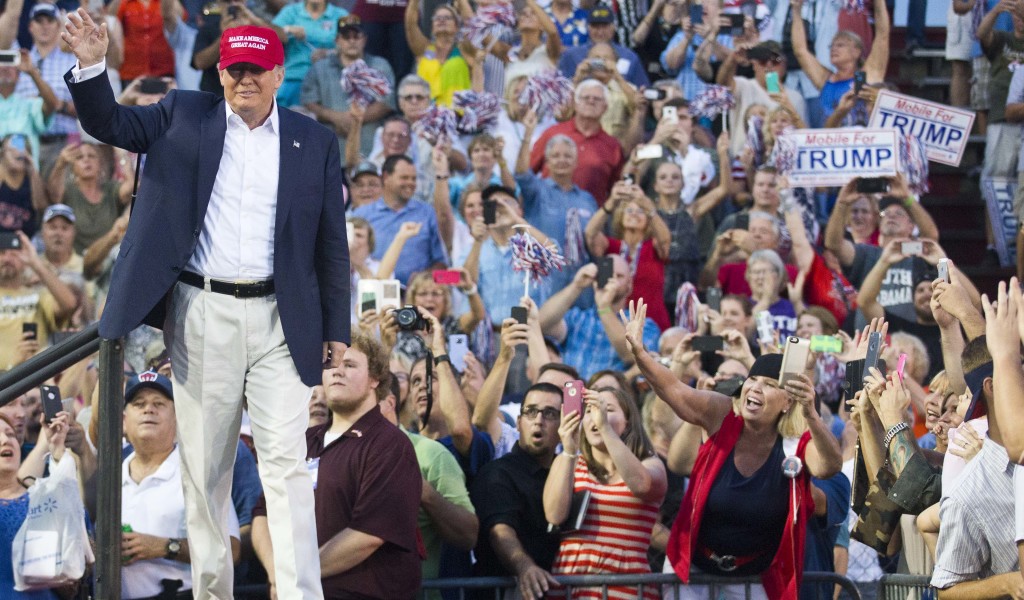
At the Donald Trump event in Mobile last Friday, I felt the electricity, the enthusiasm, the excitement, and the pure joy. I saw the thousands that showed up on short notice. Trump’s was the best rally have I ever been to, and I have been to many – George Wallace, Big Jim Folsom, Bobby Kennedy, Barry Goldwater, Richard Nixon, Zig Ziglar, and Glenn W. Turner. Sadly, I never experienced a Ronald Reagan rally in person. I have witnessed George Wallace resonating with the folks opposed to federal encroachment on rights of states and individuals. I have seen Nixon quietly appeal to the “silent majority.” The Trump supporters are some of the same folks, but the silent majority has gone vocal — loudly expressive. What is producing the strong public response to Trump? Here is the Zeigler take on this: The celebrity factor. People are drawn to The Apprentice, a reality TV superstar, a billionaire tycoon. People are fed up. They are disgusted with politics as usual. They want an aggressive outsider. People agree with Trump on stopping illegal immigration; on stopping dumb U.S. deals with Iran, China and others; on incompetents in high places; on stopping the giving away of U.S. industries and jobs to other countries. Trump is Ross Perot on steroids. They are entertained by and feel good about Trump’s in-your-face style and with graphic descriptions of others. The other presidential candidates can often be boring. Trump is anything but boring. The public is always wondering what he will say next. Trump is the un-Obama. Repeal ObamaCare. Stop the dumb Iran deal. Put competent people in the administration. Run the government like a business tycoon, not a community organizer. Jim Zeigler is the Alabama State Auditor. You can follow him on his Facebook page Zeigler “Waste Cutter”.
Ex-Donald Trump aide still supports businessman’s White House race
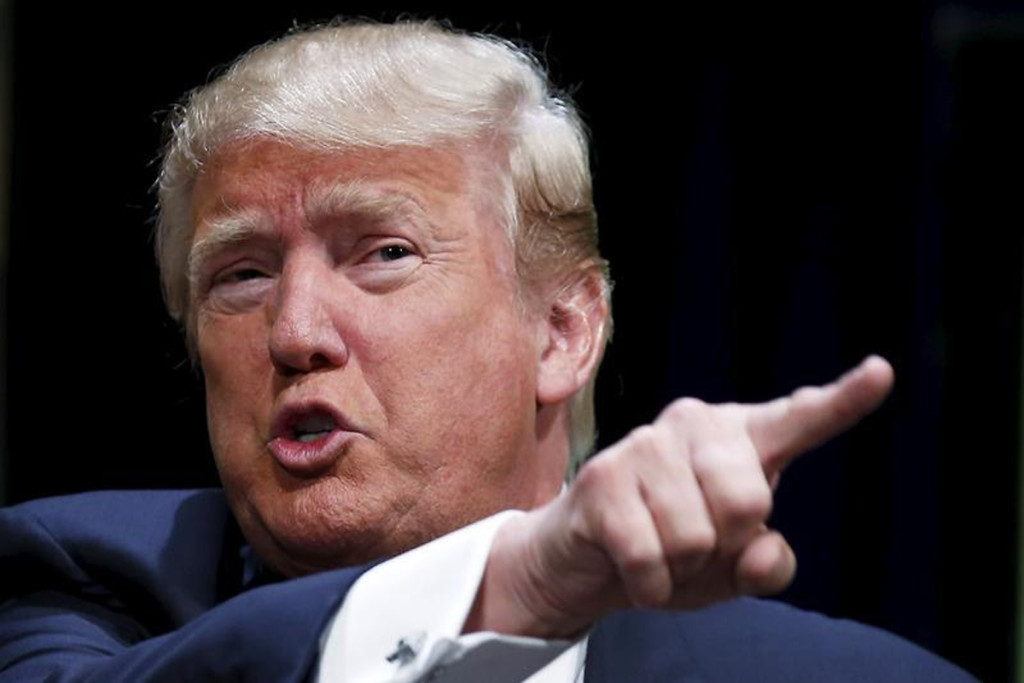
A former adviser who says he quit Donald Trump‘s presidential campaign is calling the billionaire real estate mogul the best bet to shake up a “broken” U.S. political system. Roger Stone says he resigned because he felt Trump was getting too distracted by marginal issues like his feud with Fox News personality Megyn Kelly. There have been conflicting reports about the circumstances surrounding Stone’s departure, including contentions by the campaign that he was fired. Yet Stone, who’s consulted eight presidential campaigns, says he supports Trump. He tells NBC’s Today show Tuesday that Trump is the only candidate who “has the gumption and independence” to shake up the system. Stone adds that he wishes Trump would give more attention to “big-picture issues,” in the style of former President Ronald Reagan. Republished with permission of the Associated Press.
Steven Kurlander: Donald Trump “phenomenon” defines new age of American ShockReality politics
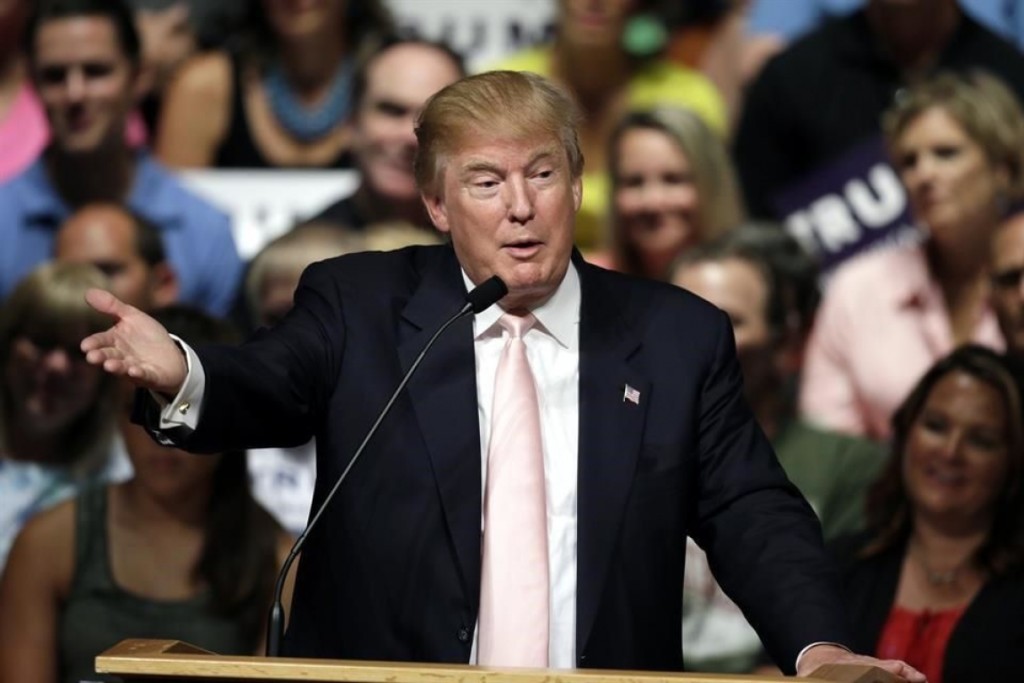
Whether you love him or hate him (I don’t think there’s an in-between), you have to admit Donald Trump has established his personal brand and fortune throughout the years by being extremely brash, creative, and smart: all with a very flippant attitude. Whether you like him or not, you have to admit that first in real estate, then reality TV, and now in politics, Trump has led the way in redefining the conventional and in turn achieving power, success, notoriety, power, and wealth. Now with Trump’s run for the White House, he is redefining American politics in terms of translating his brash, contentious style into what may be an unbeatable methodology of capturing the hearts and minds of disgruntled American voters. Trump has never been afraid to say what’s on the tip of his tongue. In the past, this propensity to attack, detract, and offend has lessened his intellectual credibility by defining his vision as Kardashian reality star style banter. But now his push-the-limit style converted into political rhetoric in a serious run for the White House, is playing well to many voters. He can berate Mexicans and Chinese, call John McCain a fake hero, be accused of raping his ex-wife and consorting with the mob, and even be described as uncharitable in his giving. Right now, he’s more than Ronald Reagan teflon, he’s kryptonite. Whether they are Republican, Democrat or a growing number of independent voters, American voters are tired most living paycheck to paycheck with no hope of digging out of debt. They are frustrated with a lackluster economy, ineffective governance in both Washington and state capitals, and continuous undeclared war. Most importantly, no matter where they stand in the political spectrum, the electorate is fed up with traditional mainstream politics, and even fringe Tea Party and leftist politics, too. In his ShockReality manner, Trump is spouting off truisms that Americans are feeling, but won’t enunciate on their own. If you believe the polls, Trump’s ShockReality messaging is playing well with the Republican base,. with him leaping ahead in a crowded pack of GOP hopefuls. No matter what he says, Americans now used to years of watching reality TV, want more from him, even demand more, with really no severe consequences to his popularity in a fast 24-7 news cycle that keeps moving on to the next sound bite. Some, though, say it’s one thing to practice ShockReality politics, it’s another to get down to the basics of backing up acerbic banter with hard policy. A major criticism, which shows signs of being out of touch with the true state of American politics, says he needs to come up with solutions and not just lash out about systemic problems in 2015 America. In recognizing his success so far in his messaging, David A. Fahrenthold in The Washington Post wrote: “But, so far, he’s missing something basic: a policy platform. A formal list of Trump’s ideas for America.” Here’s the game changer that Trump recognizes and no one else wants to admit: Americans don’t need or demand a policy platform for a presidential candidate to earn their vote. They just want some serious change, no matter how it comes. They want instead, a president, or any politician, who is sympathetic to their many frustrations and fearless enough to say what they feel, what they want, and want they need. It’s simple: They want a great America again. And Trump’s ShockReality political style works better than the Tea Party rhetoric precisely because it is not chained down in inflexible ideology. Instead, it stimulates a hope that President Obama correctly identified and ran on in 2008, but failed, like George W. Bush before him to deliver during his term in office. Donald Trump, and even now Joe Biden too with his own style of shooting off his mouth, is about to change American presidential politics for good. Calling Trump’s ShockReality messaging a phenomenon, and discounting his 2016 run, in our age of disdain is not only a mistake, but a lack of vision of the future of American politics. Steven Kurlander blogs at Kurly’s Kommentary (stevenkurlander.com) and writes for Context Florida and The Huffington Post and can be found on Twitter @Kurlykomments. He lives in Monticello, N.Y.
As Republican infighting grows, donors call for calm
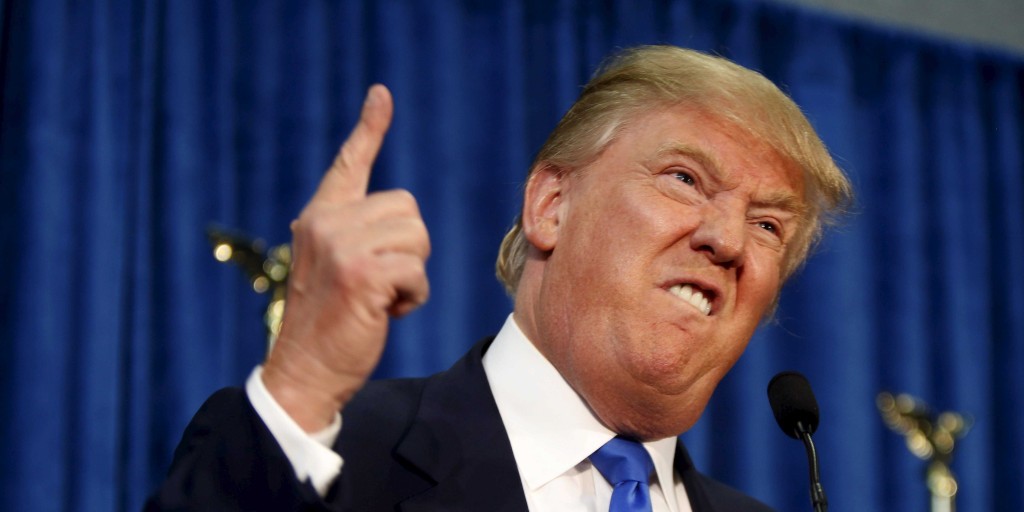
Worried about “Republican on Republican violence,” top party donors are taking action, with one firing off a letter calling for more civility and another seeking to block businessman Donald Trump from the debate stage altogether. Foster Friess, a Wyoming-based investor and one of the party’s top 20 donors in the last presidential contest, issued a letter to 16 White House prospects and the Republican National Committee late last week calling for candidates to stay on the “civility reservation.” “Our candidates will benefit if they all submit to Ronald Reagan‘s 11th Commandment, `Thou shall not speak ill of a fellow Republican,’” Friess wrote in a copy of the letter sent to Republican National Committee chairman Reince Priebus and obtained by The Associated Press. In the dispatch, Friess cites the backing of casino magnate Sheldon Adelson and Chicago Cubs co-owner Todd Ricketts. “Would you join the effort to inspire a more civil way of making their points?” Friess wrote. “If they drift off the `civility reservation,’ let’s all immediately communicate that to them.” The call for calm comes as the sprawling Republican field shows signs it could tip into a bare-knuckles struggle for the nomination — a scenario that the party’s elite donors see as a distressing echo of four years ago. New Jersey Gov. Chris Christie on Monday charged that Republicans don’t need Texas Sen. Ted Cruz‘s “lectures.” Wisconsin Gov. Scott Walker repeatedly dismisses Republicans in Congress as doing little. And Kentucky Sen. Rand Paul regularly jabs his Republican opponents by name. Yet no candidate has injected more provocation into the 2016 Republican presidential primary than Trump. While few party officials see the reality television star as a credible candidate, he has lashed out at a growing number of Republican critics who have condemned his recent description of Mexican immigrants as criminals and rapists. Trump over the weekend posted a message from another user on his Twitter account charging that former Florida Gov. Jeb Bush “has to like the Mexican illegals because of his wife,” Columba, who was born in Mexico. Campaigning in New Hampshire over the weekend, Bush said he “absolutely” took the remark personally. Trump has not apologized, but spokeswoman Hope Hicks on Monday said, “This was a retweet from somebody else” about a news story. But Trump stood firm on his comments about immigrants Monday, saying “the Mexican government is forcing their most unwanted people into the United States,” and “criminals, drug dealers, rapists” are among them. He said “many fabulous people” come from Mexico and the U.S. is better for them, but this country is “a dumping ground for Mexico.” Republican donor John Jordan said Monday that GOP leaders should take steps to block Trump’s access to the first presidential debate in early August. Organizers at Fox News, backed by the Republican National Committee, have released guidelines allowing the top 10 candidates in national polling to participate. Trump would qualify under the current terms, while contenders such as Ohio’s two-term Gov. John Kasich would not. “Someone in the party ought to start some sort of petition saying, `If Trump’s going to be on the stage, I’m not going to be on there with him,’” Jordan told AP on Monday. “I’m toying with the idea of it.” “It’s something I feel strongly about as somebody who not only cares about the Republican Party, but also Latinos,” Jordan said. Even as the other candidates say they’re trying to avoid intraparty backbiting, however, they can’t seem to avoid it. In an interview Sunday on NBC’s Meet the Press, Cruz refused to condemn Trump’s comments, saying he’s not going to perpetrate “Republican-on-Republican violence.” Christie, who entered the presidential race last week, wasn’t having it. “I find it ironic, right, that Ted Cruz is giving lectures on Republican-on-Republican violence,” Christie said on Fox News, accusing the Texan of sponsoring hardball ads against Republican Sen. Lamar Alexander in 2014 primaries. “I mean, all due respect, I don’t need to be lectured by Ted Cruz.” The Republican National Committee has dramatically reduced the number of primary debates before the 2016 contest largely to avoid the kind of attacks that bloodied their 2012 nominee, Mitt Romney. As the last GOP nomination heated up in January 2012, Romney and former House Speaker Newt Gingrich got particularly nasty. Gingrich joined Obama supporters in attacking Romney’s business background, calling him a “vulture capitalist.” Donors remember those exchanges well and fear a repeat of primary vitriol would lead to another general election loss. “Ninety-nine percent of leading donors saw the candidates carve each other up in the 2012 primaries and come out weaker for it and are determined not to let that happen again,” said Fred Malek, who has helped raise money for GOP presidential candidates for four decades. Responding to Friess’ letter, former Arkansas Gov. Mike Huckabee wrote he plans on “becoming the nominee by playing a better game, not by breaking the legs of my rivals.” “I hope that we don’t commit fratricide again as a party,” Huckabee wrote, according to a copy of his response obtained by AP. Republished with permission of The Associated Press.
Marco Rubio returns to childhood home: Las Vegas, not Miami
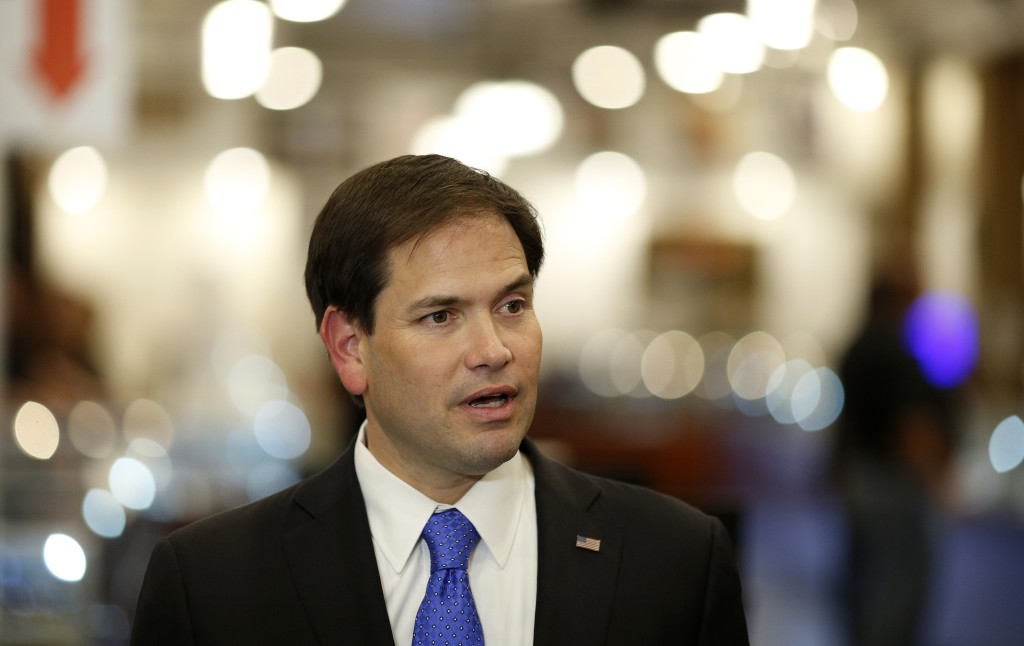
When Marco Rubio attends his 44th birthday party and fundraiser at the home of the host of the Pawn Stars reality show Thursday, it won’t be his first birthday in Las Vegas. The Cuban-American son of South Florida spent part of his childhood in Las Vegas, from 1979 to 1985, where he joined the Mormon church, became a fierce union supporter at a tender age and grew alienated from his Cuban-American peers before returning to Miami for high school. In those formative years, Rubio impressed schoolmates and neighbors as a curious and driven boy who talked too much in class and showed early signs of the policy wonk and competitive player he would become. Rubio’s Vegas sojourn is more than a biographical quirk. It could also help the Florida senator in an early-voting state that is critical to his hopes of winning the Republican presidential nomination. As the son of casino workers who lived in a modest house in a blue-collar neighborhood, Rubio can speak in a personal way to the heavily immigrant population of service workers who have helped turn Nevada into a Democratic-leaning swing state during presidential elections. “It helps him tell a really good story in Vegas,” said Yvanna Cancela, political director of the Culinary Workers Union, which represents many casino workers. “He can talk about his mom the housekeeper and his dad the bartender, and hundreds of thousands of people will identify with that.” Still, many casino workers don’t vote in the Republican caucuses and Rubio must distinguish himself in a large pack of rivals. Nick Phillips, political director of the Clark County Republican Party, said he has only recently begun hearing about Rubio from activists. Wisconsin Gov. Scott Walker and Kentucky Sen. Rand Paul have been getting more attention. Three of Rubio’s aunts had settled in Nevada by the time his family relocated there in 1979, searching for a quieter life than in crime-ridden Miami. Rubio’s father, Mario, came five months earlier to look for a bartending job. Rubio, then 8, his parents, younger sister Veronica and grandfather moved into a four-bedroom house on a cul-de-sac at the northern edge of town. In his memoir, An American Son, Rubio recounts a wholesome neighborhood atmosphere with afternoon games of cowboys and Indians, Cub Scout trips and church events. Rubio, his sister and mother were all baptized in the Church of Jesus Christ of Latter-day Saints, to which his aunt’s family living nearby already belonged. His father did not join the church, partly because of its prohibition on alcohol and caffeine, but took the family to Utah to see famous Mormon sites. Rubio and some of his cousins formed a youth band called the Sunshine Cousins, modeled on the Osmonds, the most famous Mormons of the day. Rubio eventually returned to Catholicism and took his first communion at age 13. However, Rubio’s campaign says he has not asked the LDS church to remove his name from the list of the faithful. The church considers people who have been baptized to be Mormons unless they formally withdraw their names from the religion. Bryan Thiriot lived across the street and he and his four brothers played regularly with the Rubio kids. He recalls Rubio bee-lining to the current events and magazine section at the library and talking so much in his 4th grade class that the teacher sat him in a corner to memorize the dictionary. He also liked to discuss Social Security in elementary school. Rubio was crazy about football, but he saw the Thiriot boys hitting a tennis ball off the side of their house. The next day the Thiriots discovered him relentlessly doing the same. “He’s always wanted to improve,” Thiriot said. “You could tell something special was going to happen with him.” The Rubio household was distinguished by its conservatism. Thiriot recalls Rubio saying Ronald Reagan was the nation’s greatest president. But Rubio also became a strong union supporter. His father was a Culinary union member, and Rubio joined him on the picket lines when the union went on strike at the casino where he worked in 1984. “I was excited to be part of the cause and join forces with striking workers,” Rubio wrote. “I became a committed union activist.” The strike went nowhere, and the family’s precarious finances were pressed. Mario Rubio returned to work. “I accused him of selling out and called him a scab,” Marco Rubio wrote. “It hurt him and I’m ashamed of it.” The next year the Rubios moved back to Miami, where Marco started high school. He had grown accustomed to Las Vegas’ diversity, playing on a largely black football team and befriending Anglos and Mexican-Americans. He wrote in his memoir that he was startled returning to his predominantly Cuban-American South Florida community. Back in Nevada, cousin Mo Denis became a Democratic state senator. In 2012, Denis stood outside a Mitt Romney campaign event that Rubio headlined in Las Vegas to give the Democratic rebuttal. Denis says his cousin’s mind was broadened by his years in Nevada. “He definitely had a different view of things in Las Vegas than he would have in Miami,” Denis said. Republished with permission of The Associated Press.
