
Marco Rubio to headline Samford University forum Saturday

Republican U.S. Sen. Marco Rubio is set to be the solo headliner at Samford University’s Republican presidential candidate forum Saturday after fellow presidential candidate Sen. Ted Cruz cancelled. Three other Republicans in the race, businessman Donald Trump, Ohio Gov. John Kasich and pediatric neurosurgeon Ben Carson are also skipping the event. The forum is one of the last opportunities for candidates to plead their case to Alabama voters ahead of Super Tuesday next week, when Alabama and a dozen other states hold nominating elections. Event organizer Yellowhammer News said the sold-out event will still go on as planned, despite Rubio being the only candidate in attendance. Cruz’s cancellation came down from a political consultant not long after a new poll put out by Birmingham-based consulting firm Master Image showed the Texas senator in a third place among Yellowhammer State voters. The poll, released Wednesday, put Trump in the lead with 36 percent, followed by Rubio with 19 percent. Cruz got 12 percent support, with Carson taking 8 percent and Kasich landing in last place with 7 percent. About 17 percent of the 1,556 Alabama Republicans polled said they were still undecided. The poll may foreshadow a disappointing Tuesday for Cruz, whose campaign strategy relies on picking up delegates in the “SEC Primary” states, where evangelicals have a larger role at the polls. The junior senator from Texas had 17 percent support among Alabama Republicans in January, but his numbers had slipped to around 13 percent this month.
Marco Rubio asks supporters to vote on next “Unedited” campaign ad
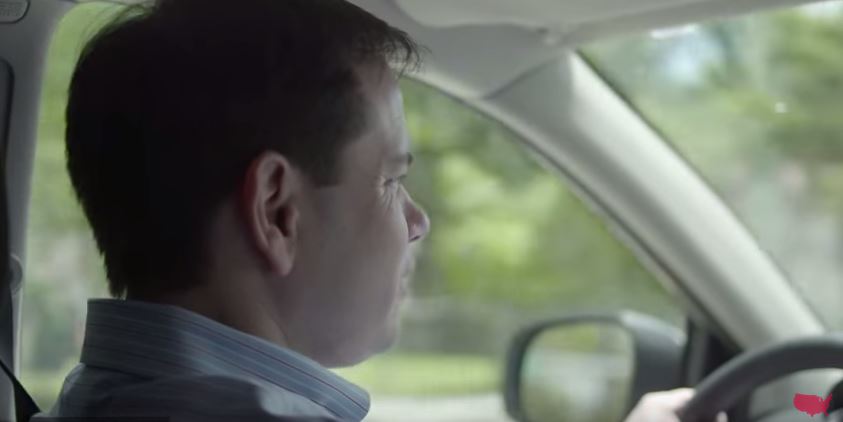
Marco Rubio goes interactive in his latest fundraising pitch, letting supporters choose the ending to his next campaign video. Visitors to MarcoRubio.com will have the privilege – for a $5 donation – to select the last half-minute of “Marco Unedited,” the upcoming digital ad from the Republican presidential hopeful. The video with the most votes becomes the official ad. Rubio fans have one five 30-second clips to choose, each with the Florida Senator behind the wheel while he chats on various subjects, focusing on what sets him apart from the (now-16 candidate) GOP field. Each one hits a mark on Rubio’s narrative. Themes include his immigrant backstory and how he is not from power or privilege – a direct hit on rival Jeb Bush. Another has Rubio talking about “what drives him while driving” on the road to the White House. “Only a president can lead towards a new American century.” Fortunately, in all of the videos, he keeps his eyes firmly on the road. Each clip is also available online at YouTube and Rubio’s campaign website. This Reminds You Of How Special America Is: Marco Talks About What Drives Him, While Driving: An American Era Full Of Challenges And Opportunities: How Special Is America? Ask An Immigrant: Marco Isn’t From Power Or Privilege:
Marco Rubio slowly builds Mormon strategy to win Nevada caucus

Seemingly every day, Marco Rubio announces another Nevada-area endorsement. As Jon Ralston notes in the Reno Gazette-Journal, many are familiar to locals: state Sen. Patty Farley, Assemblyman Erv Nelson, and ex-state Sen. Warren Hardy. Others, however, are not as well known, which leads Ralston to ask: who they are and why they are so important? Rubio, languishing near the bottom of many national polls, is systematically building an organization ahead of the Nevada caucus, replicating the successful strategy Mitt Romney used in 2012. The Florida senator is establishing a network of well-connected Mormon activists, which could bring the turnout needed for a Nevada win. In Thursday’s GOP debate, Donald Trump could bring his showy antics to once again change the GOP presidential race, but Nevada remains a free-for-all. And recruiting Church of the Latter Day Saints leaders proves Rubio is taking Nevada seriously, challenging Jeb Bush for frontrunner status, regardless of polling. Bush’s operation in Nevada, using the same staff members who helped Romney win there, is also tapping the Mormon network, with the hope that the state’s governor – a fellow Catholic – will come out in support. Rubio telegraphed his strategy by naming Lt. Gov. Mark Hutchison, himself a Mormon, as state chairman. Hutchison, once a high-profile LDS leader, joined Daniel Stewart, an aide and well-regarded LDS attorney, in Hutchison & Co. to assemble a roster of Rubio supporters. According to Ralston, the list includes John Gibson, leader of the conservative Keystone group, and Kevin Stolworthy, who holds a high-ranking position as a stake president (stakes are similar to a Catholic diocese) in the LDS church. Wayne Tew is another LDS stake president. Nelson and Hardy are also LDS. It’s also important to note that Rubio spent time as a child in the LDS in Las Vegas before converting to Catholicism. Few talk openly about candidate ties to Mormonism because the church insists on staying out of politics, Ralston writes. That said, Bush is competing with Rubio for the LDS vote — 25 percent of the 2012 caucus turnout, even as the Mormon population of Nevada is only estimated to be as low as 5 percent. Yet their turnout is excessively higher among the faithful. “Mark (Hutchison) is a great get for Rubio, but Bush will have some significant LDS names as well and probably more of them,” one insider familiar with the Mormon vote told Ralston. “Both Bush and Rubio will do well as they are both seen as socially conservative, family-first type of guys.” Campaigns are courting LDS support and their importance in the caucus, despite relatively small numbers. While only 7 percent of registered Republicans voted in the 2012 Nevada caucus; with any higher turnout, Mormon influence will be considerable. Rubio courting that voting bloc is critical when the Nevada caucus is held in February. But, as Ralston says, six months is a long time.
