
Senators weigh COVID risk for Amy Coney Barrett Supreme Court hearing
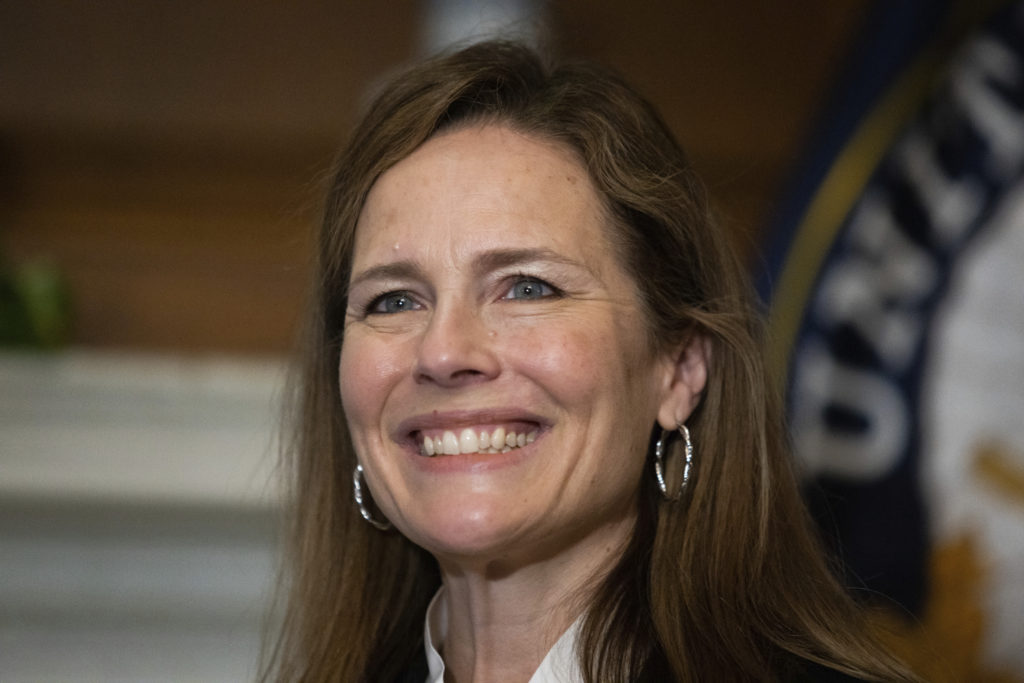
Supreme Court nominee Amy Coney Barrett vows to be a justice “fearless of criticism” as the split Senate charges ahead with confirmation hearings on President Donald Trump’s pick to cement a conservative court majority before Election Day. Barrett, a federal appeals court judge, draws on faith and family in her prepared opening remarks for the hearings, which begin Monday as the country is in the grips of the coronavirus pandemic. She says courts “should not try” to make policy, and believes she would bring “a few new perspectives” as the first mother of school-age children on the nine-member court. Trump chose the 48-year-old judge after the death of Justice Ruth Bader Ginsburg, a liberal icon. “I have been nominated to fill Justice Ginsburg’s seat, but no one will ever take her place,” Barrett says in her remarks to the Senate Judiciary Committee. The Associated Press obtained a copy of her statement on Sunday. Barrett says she has resolved to maintain the same perspective as her mentor, the late Justice Antonin Scalia, who was “devoted to his family, resolute in his beliefs, and fearless of criticism.” Republicans who control the Senate are moving at a breakneck pace to seat Barrett before the Nov. 3 election, in time to hear a high-profile challenge to the Affordable Care Act and any election-related challenges that may follow voting. Democrats are trying in vain to delay the fast-track confirmation, raising fresh concerns about the safety of meeting as two GOP senators on the panel tested positive for COVID-19. The committee released a letter from the Architect of the Capitol on Sunday that says the hearing room has been set up in consultation with the Office of Attending Physician with appropriate distance between seats and air ventilation systems that meet or exceed industry standards. Still, California Sen. Kamala Harris, the Democratic vice presidential nominee who is also a committee member, plans to participate remotely from her Senate office due to coronavirus concerns, her spokesman said Sunday. Two members who have tested positive for the virus, Sen. Mike Lee, R-Utah and Sen. Thom Tillis, R-N.C., have not said if they will attend in person. Lee’s spokesman said the senator is symptom-free but would be making a decision on whether to attend Monday morning, per his doctor’s orders. A spokesman for Tillis did not respond to multiple requests for comment. Harris and others said the hearings should not move forward without plans to test those attending for COVID. One Republican, Sen. Joni Ernst of Iowa, said “it would be smart to do that,” according to the Des Moines Register. Aside from media, few, if any, members of the public will be allowed to attend. Senate Democratic leader Chuck Schumer of New York told the AP that the committee’s chairman, Sen. Lindsey Graham, R-S.C., has “an obligation to be tested” for COVID-19 beforehand because he has been exposed to those with the disease. Graham told Fox News Channel’s “Sunday Morning Futures” that he took a test last week and is “negative.” He said, “We’re going to work safely.” The hearings are taking place less than a month after the death of Ginsburg gave Trump the chance to entrench a conservative majority on the court with his third justice. Another reason for moving quickly: It may be harder to confirm Trump’s pick before the end of the congressional session if Democrat Joe Biden were to win the White House and Democrats gain seats in the Senate. No Supreme Court has ever been confirmed so close to a presidential election. The country will get an extended look at Barrett over three days, beginning with her opening statement late Monday and hours of questioning Tuesday and Wednesday. “She’s going to wow them,” said Carrie Severino, president of Judicial Crisis Network, which backs conservative nominees. Barrett is telling senators that “courts are not designed to solve every problem or right every wrong in our public life.” “Policy decisions and value judgments of government must be made by the political branches,” she said in the prepared remarks. “The public should not expect courts to do so, and courts should not try.” A mother of seven, she also says she uses her children as a test when deciding cases, asking herself how she would view the decision if one of her children were the party she was ruling against. “Even though I would not like the result, would I understand that the decision was fairly reasoned and grounded in the law?” she says. A Catholic, she says she believes in the “power of prayer.” Her religious views and past leadership role in a faith community pose a challenge for Democrats as they try to probe her judicial approach to abortion, gay marriage and other social issues without veering into inappropriate questions of her faith. Ordinarily, Barrett would get to show off her family. But the White House event announcing her nomination, in which most of the audience did not wear masks, has been labeled a “superspreader” for the coronavirus. More than two dozen people linked to the Sept. 26 Rose Garden event, including the two GOP senators, have contracted COVID-19 since then. Barrett and her family went maskless at the event. Barrett and her husband, Jesse, tested positive for the virus earlier this year and recovered, two administration officials have said. Democrats already were enraged that Republicans are moving so quickly having refused to consider President Barack Obama nominee in February 2016, before that year’s election. The Senate did not grant Judge Merrick Garland even a hearing, much less a vote. Outside groups are pushing Democrats to make a strong case against what they call an illegitimate confirmation so close to the election, when people are already voting in some states. “The public is with them that this shouldn’t happen before the election,” said Brian Fallon, executive director of Demand Justice, which advocates against right-leaning nominees. Democrats have made clear that they will press Barrett on health care, especially with the imminent Supreme Court arguments, and abortion, among other issues where her vote
Doug Jones: Donald Trump nominee is torpedo aimed at Affordable Care Act
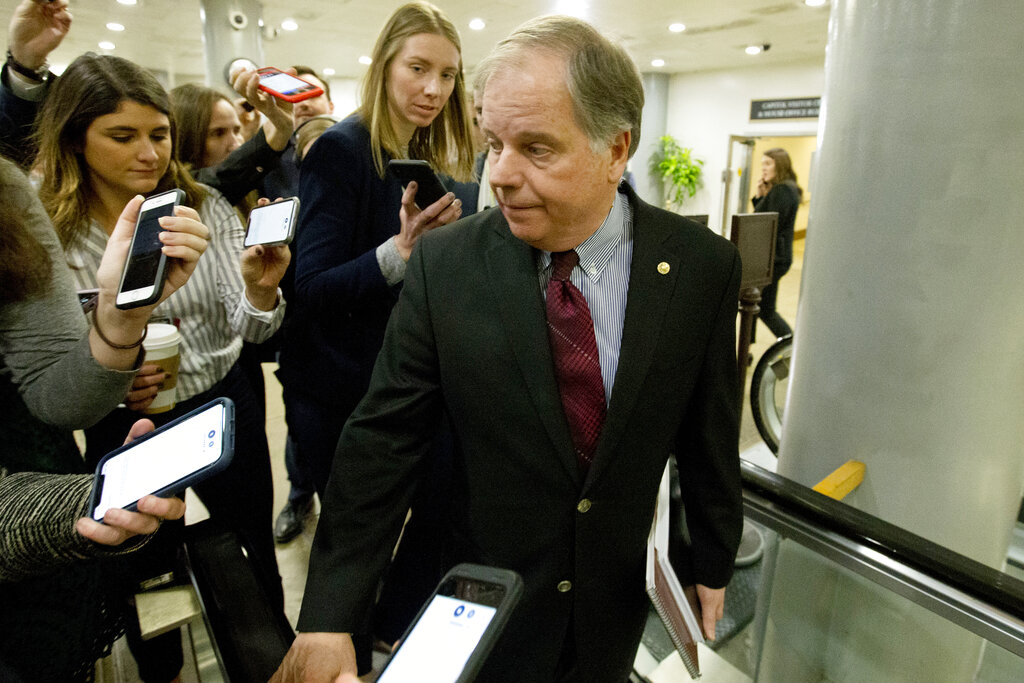
In a Facebook campaign event, Alabama’s Democratic senator said he is very concerned about the potential loss of the Affordable Care Act as it faces a Supreme Court test.
Bradley Byrne: A new Supreme Court Justice
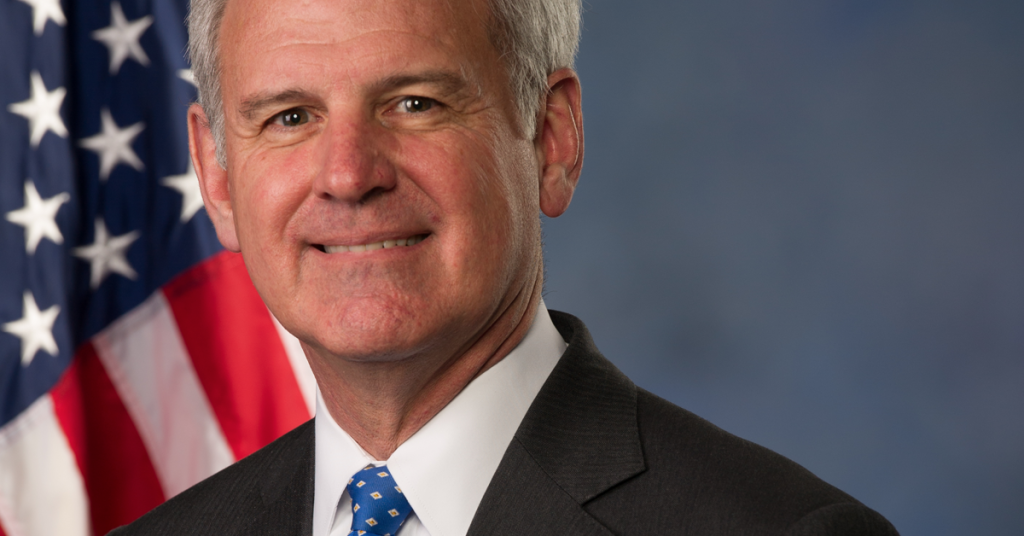
Bradley Byrne outlines his reasons for supporting President Trump’s nomination of Amy Coney Barrett.
Donald Trump, Joe Biden prepare to debate at a time of mounting crises

The Tuesday night debate will offer a massive platform for Trump and Biden to outline their starkly different visions for a country facing multiple crises.
Donald Trump picks conservative Amy Coney Barrett for Supreme Court
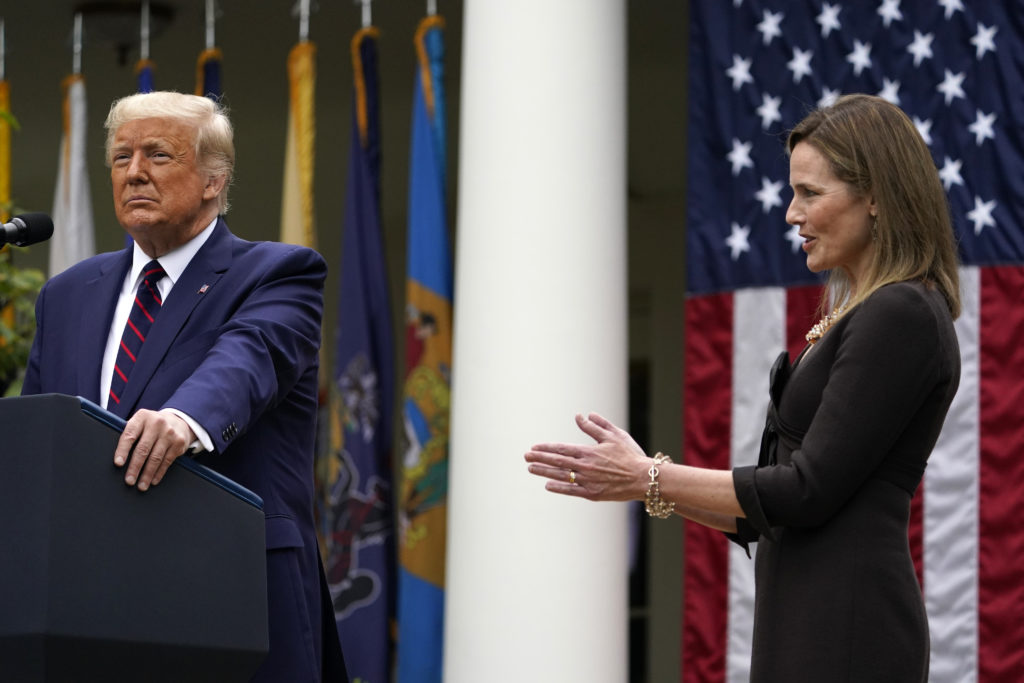
President Donald Trump nominated Judge Amy Coney Barrett to the Supreme Court on Saturday, capping a dramatic reshaping of the federal judiciary that will resonate for a generation and that he hopes will provide a needed boost to his reelection effort. Republican senators are already lining up for a swift confirmation of Barrett ahead of the Nov. 3 election, as they aim to lock in conservative gains in the federal judiciary before a potential transition of power. Trump, meanwhile, is hoping the nomination will serve to galvanize his supporters as he looks to fend off Democrat Joe Biden. Trump hailed Barrett as “a woman of remarkable intellect and character,” saying he had studied her record closely before making the pick. “I looked and I studied, and you are very eminently qualified,” he said as Barrett stood next to him in the Rose Garden. An ideological heir to the late conservative Justice Antonin Scalia, Barrett would fill the seat vacated after the Sept. 18 death of liberal icon Ruth Bader Ginsberg, in what would be the sharpest ideological swing since Clarence Thomas replaced Justice Thurgood Marshall nearly three decades ago. She would be the sixth justice on the nine-member court to be appointed by a Republican president, and the third of Trump’s first term in office. For Trump, whose 2016 victory hinged in large part on reluctant support from conservative and white evangelicals on the promise of filling Scalia’s seat with a conservative, the latest nomination in some ways brings his first term full circle. Even before Ginsburg’s death, Trump was running on having confirmed in excess of 200 federal judges, fulfilling a generational aim of conservative legal activists. “This is my third such nomination after Justice Neil Gorsuch and Justice Brett Kavanaugh, and it is a very proud moment indeed,” Trump said in the Rose Garden. Trump joked that the confirmation process ahead “should be easy” and “extremely non-controversial,” though it is likely to be anything. No court nominee has been considered so close to a presidential election before, with early voting already underway. He encouraged Democrats to take up her nomination swiftly and to “refrain from personal and partisan attacks.” In 2016, Republicans blocked President Barack Obama’s nomination of Merrick Garland to the Supreme Court to fill the election-year vacancy, saying voters should have a say in the lifetime appointment. Senate Republicans say they will move ahead, arguing the circumstances are different now that the White House and Senate are controlled by the same party. Senate Majority Leader Mitch McConnell said the Senate will vote “in the weeks ahead” on Barrett’s confirmation, adding that Trump “could not have made a better decision” in nominating the appellate court judge. The announcement came before Ginsburg was buried beside her husband next week at Arlington National Cemetery. On Friday, she was the first woman to lie in state at the Capitol, and mourners flocked to the Supreme Court for two days before that to pay respects. The set design, with large American flags hung between the Rose Garden colonnades, appeared to be modeled on the way the White House was decorated when President Bill Clinton named Ginsburg as his nominee in 1993. Barrett said she was “truly humbled” by the nomination, adding that she would be “mindful of who came before me.” She praised Ginsburg upon accepting the nomination, saying, “She has won the admiration of women across the country and indeed all across the world.” Within hours of Ginsburg’s death, Trump made clear he would nominate a woman for the seat, and later volunteered he was considering five candidates. But Barrett was the early favorite, and the only one to meet with Trump. Barrett has been a judge since 2017 when Trump nominated her to the Chicago-based 7th U.S. Circuit Court of Appeals. But as a longtime University of Notre Dame law professor, she had already established herself as a reliable conservative in the mold of Scalia, for whom she clerked in the late 1990s. She would be the only justice on the current court not to have received her law degree from an Ivy League school. The eight current justices all attended either Harvard or Yale. The staunch conservative had become known to Trump in large part after her bitter 2017 appeals court confirmation included allegations that Democrats were attacking her Catholic faith. The president also interviewed her in 2018 for the vacancy created by the retirement of Justice Anthony Kennedy, but Trump ultimately chose Brett Kavanaugh. Trump and his political allies are itching for another fight over Barrett’s faith, seeing it as a political windfall that would backfire on Democrats. Catholic voters in Pennsylvania, in particular, are viewed as a pivotal demographic in the swing state that Biden, also Catholic, is trying to recapture. While Democrats appear powerless to stop Barrett’s confirmation in the GOP-controlled Senate, they are seeking to use the process to weaken Trump’s reelection chances. Barrett’s nomination could become a reckoning over abortion, an issue that has divided many Americans so bitterly for almost half a century. The idea of overturning or gutting Roe v. Wade, the landmark 1973 decision that legalized abortion, has animated activists in both parties for decades. Now, with the seemingly decisive shift in the court’s ideological makeup, Democrats hope their voters will turn out in droves because of their frustration with the Barrett pick. Trump has also increasingly embraced the high court — which he will have had an outsize hand in reshaping -– as an insurance policy in a close election. Increases in mail, absentee, and early voting brought about by the coronavirus pandemic have already led to a flurry of election litigation, and both Trump and Biden have assembled armies of lawyers to continue the fight once vote-counting begins. Trump has been open about tying his push to name a third justice to the court to a potentially drawn-out court fight to determine who will be sworn in on Jan. 20, 2021. “I think this
Progressives pledge to keep pushing Joe Biden to expand court
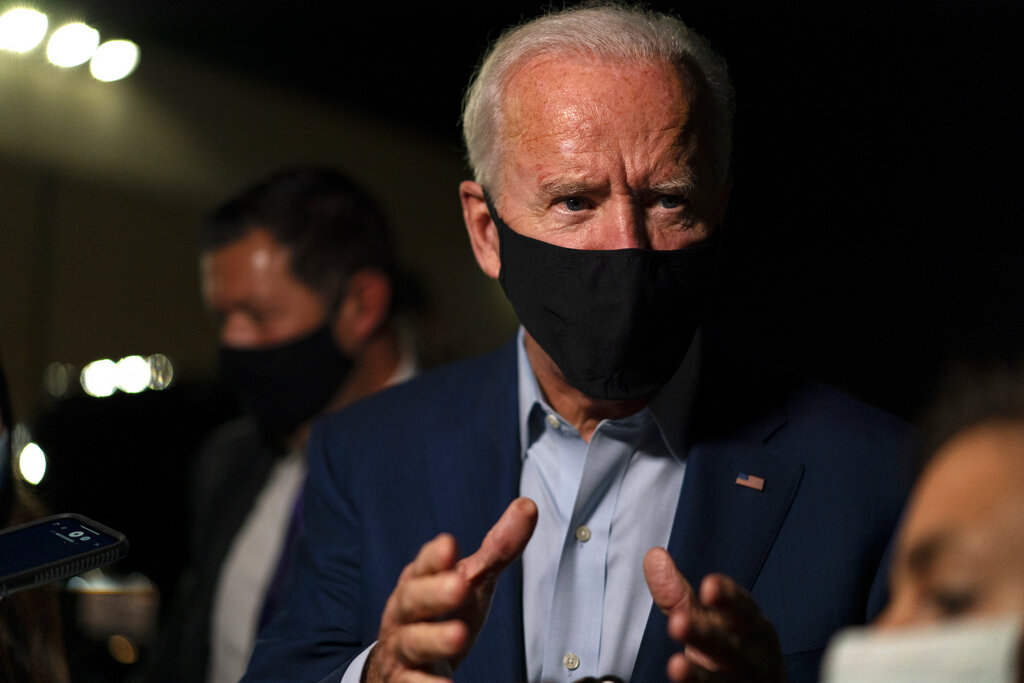
Some activists on the left are pressing Biden to endorse expanding the number of high court justices should he win the White House and Democrats take control of the Senate.
Despite Donald Trump attacks, both parties vow orderly election
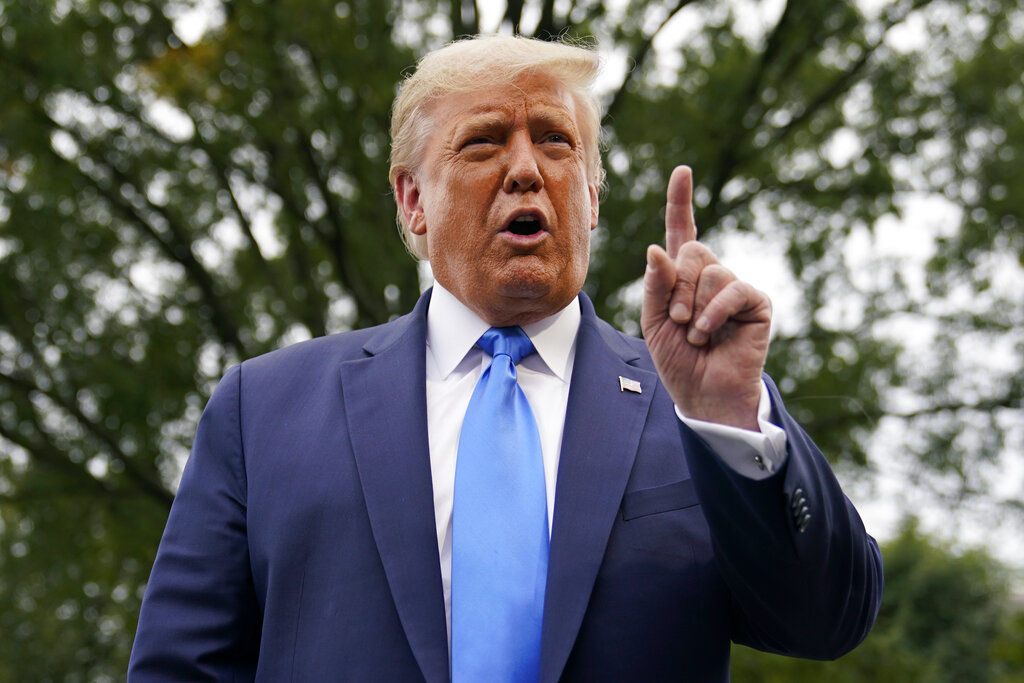
Many lawmakers, including from Trump’s own Republican Party, vowed to make sure voters’ wishes are followed ahead of Inauguration Day in January.
Bradley Byrne: Help is on the way after Hurricane Sally
Bradley Byrne discusses disaster aid for southwest Alabama in the wake of Hurricane Sally.
Who’s a hypocrite? GOP, Dems debate past comments on court
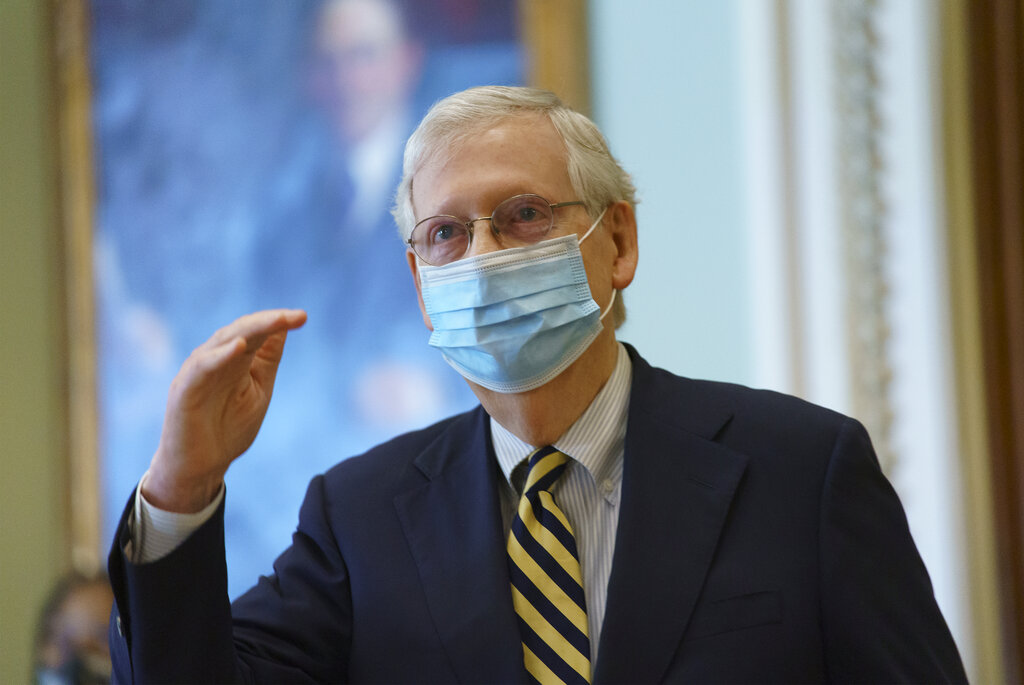
Senate Majority Leader Mitch McConnell has vowed that President Donald Trump’s as-yet unnamed nominee will receive a vote on the Senate floor “this year.”
Paul DeMarco: Passing of Justice Ruth Bader Ginsburg will impact Alabama U.S. Senate race

Paul DeMarco outlines just how the Ginsburg vacancy will impact Alabama’s upcoming U.S. Senate race.
GOP hopeful Supreme Court battle will help shift election
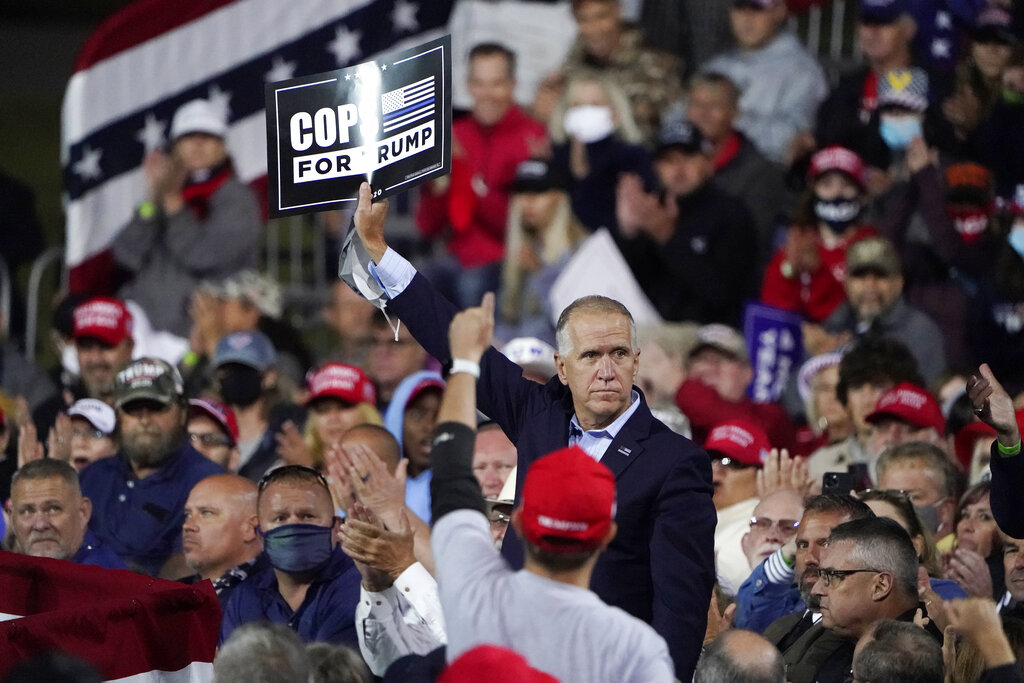
Republicans are looking to a Supreme Court nomination fight to unite a deeply fractured party as it faces the very real possibility of losing the White House and control of the Senate this fall.
Joe Biden to GOP senators: Don’t jam through Ruth Bader Ginsburg nominee
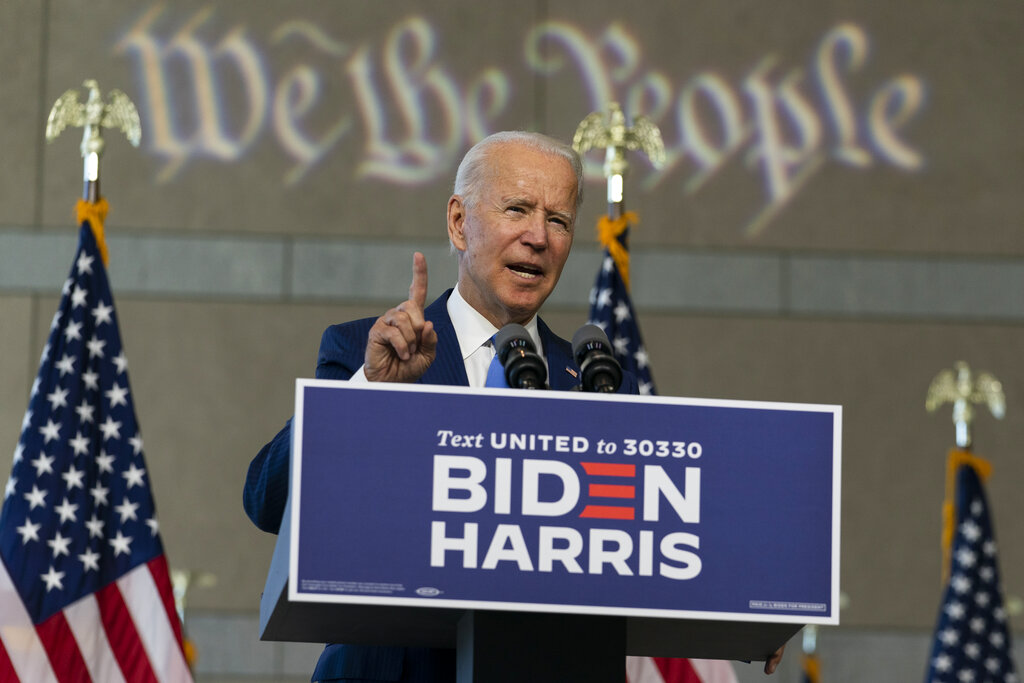
The extraordinary televised plea from the Democratic presidential candidate to Republican senators reflected the ferocious maneuvering that has followed Ginsburg’s death.
